EP0507039B1 - Verbindungen mit fungizider Wirkung - Google Patents
Verbindungen mit fungizider Wirkung Download PDFInfo
- Publication number
- EP0507039B1 EP0507039B1 EP91610051A EP91610051A EP0507039B1 EP 0507039 B1 EP0507039 B1 EP 0507039B1 EP 91610051 A EP91610051 A EP 91610051A EP 91610051 A EP91610051 A EP 91610051A EP 0507039 B1 EP0507039 B1 EP 0507039B1
- Authority
- EP
- European Patent Office
- Prior art keywords
- compound
- compounds
- composition
- formula
- active
- Prior art date
- Legal status (The legal status is an assumption and is not a legal conclusion. Google has not performed a legal analysis and makes no representation as to the accuracy of the status listed.)
- Expired - Lifetime
Links
Images
Classifications
-
- A—HUMAN NECESSITIES
- A01—AGRICULTURE; FORESTRY; ANIMAL HUSBANDRY; HUNTING; TRAPPING; FISHING
- A01N—PRESERVATION OF BODIES OF HUMANS OR ANIMALS OR PLANTS OR PARTS THEREOF; BIOCIDES, e.g. AS DISINFECTANTS, AS PESTICIDES OR AS HERBICIDES; PEST REPELLANTS OR ATTRACTANTS; PLANT GROWTH REGULATORS
- A01N43/00—Biocides, pest repellants or attractants, or plant growth regulators containing heterocyclic compounds
- A01N43/02—Biocides, pest repellants or attractants, or plant growth regulators containing heterocyclic compounds having rings with one or more oxygen or sulfur atoms as the only ring hetero atoms
- A01N43/04—Biocides, pest repellants or attractants, or plant growth regulators containing heterocyclic compounds having rings with one or more oxygen or sulfur atoms as the only ring hetero atoms with one hetero atom
- A01N43/14—Biocides, pest repellants or attractants, or plant growth regulators containing heterocyclic compounds having rings with one or more oxygen or sulfur atoms as the only ring hetero atoms with one hetero atom six-membered rings
- A01N43/16—Biocides, pest repellants or attractants, or plant growth regulators containing heterocyclic compounds having rings with one or more oxygen or sulfur atoms as the only ring hetero atoms with one hetero atom six-membered rings with oxygen as the ring hetero atom
-
- C—CHEMISTRY; METALLURGY
- C07—ORGANIC CHEMISTRY
- C07D—HETEROCYCLIC COMPOUNDS
- C07D311/00—Heterocyclic compounds containing six-membered rings having one oxygen atom as the only hetero atom, condensed with other rings
- C07D311/02—Heterocyclic compounds containing six-membered rings having one oxygen atom as the only hetero atom, condensed with other rings ortho- or peri-condensed with carbocyclic rings or ring systems
- C07D311/78—Ring systems having three or more relevant rings
- C07D311/80—Dibenzopyrans; Hydrogenated dibenzopyrans
- C07D311/82—Xanthenes
- C07D311/84—Xanthenes with hetero atoms or with carbon atoms having three bonds to hetero atoms with at the most one bond to halogen, e.g. ester or nitrile radicals, directly attached in position 9
- C07D311/86—Oxygen atoms, e.g. xanthones
-
- C—CHEMISTRY; METALLURGY
- C12—BIOCHEMISTRY; BEER; SPIRITS; WINE; VINEGAR; MICROBIOLOGY; ENZYMOLOGY; MUTATION OR GENETIC ENGINEERING
- C12N—MICROORGANISMS OR ENZYMES; COMPOSITIONS THEREOF; PROPAGATING, PRESERVING, OR MAINTAINING MICROORGANISMS; MUTATION OR GENETIC ENGINEERING; CULTURE MEDIA
- C12N1/00—Microorganisms, e.g. protozoa; Compositions thereof; Processes of propagating, maintaining or preserving microorganisms or compositions thereof; Processes of preparing or isolating a composition containing a microorganism; Culture media therefor
- C12N1/14—Fungi; Culture media therefor
- C12N1/145—Fungal isolates
-
- C—CHEMISTRY; METALLURGY
- C12—BIOCHEMISTRY; BEER; SPIRITS; WINE; VINEGAR; MICROBIOLOGY; ENZYMOLOGY; MUTATION OR GENETIC ENGINEERING
- C12P—FERMENTATION OR ENZYME-USING PROCESSES TO SYNTHESISE A DESIRED CHEMICAL COMPOUND OR COMPOSITION OR TO SEPARATE OPTICAL ISOMERS FROM A RACEMIC MIXTURE
- C12P17/00—Preparation of heterocyclic carbon compounds with only O, N, S, Se or Te as ring hetero atoms
- C12P17/16—Preparation of heterocyclic carbon compounds with only O, N, S, Se or Te as ring hetero atoms containing two or more hetero rings
- C12P17/162—Heterorings having oxygen atoms as the only ring heteroatoms, e.g. Lasalocid
-
- C—CHEMISTRY; METALLURGY
- C12—BIOCHEMISTRY; BEER; SPIRITS; WINE; VINEGAR; MICROBIOLOGY; ENZYMOLOGY; MUTATION OR GENETIC ENGINEERING
- C12R—INDEXING SCHEME ASSOCIATED WITH SUBCLASSES C12C - C12Q, RELATING TO MICROORGANISMS
- C12R2001/00—Microorganisms ; Processes using microorganisms
- C12R2001/645—Fungi ; Processes using fungi
Definitions
- This invention relates to fungicidally active compounds, methods of producing such compounds, microorganisms capable of producing said compounds, compositions containing said compounds, and the use of such compositions for controlling fungi in valuable crops, animals, including birds and mammals, and in the preservation of wood, paints and edible products.
- Examples thereof are e.g. an isoquinoline alkaloid, chrysantone, isolated from Ascochyta chrysanthemi (Phytochemistry, 28(3): 923 - 927, 1989), which is a phytotoxin, and which also exhibits an inhibitory effect on the growth of Bacillus cereus, B. subtilis, Escherichia coli and a weak antifungal activity on Cladosporium cucumerinum.
- Ascotoxin (Decumbin) produced by A. imperfecta ( Y. Suzuki, H. Tanake, H. Aoki and T. Tamura, Agric. Biol. Chem. 1970, 34 , 395), is a strong plant pathogen with a phytotoxic activity exhibiting a strong inhibition of the growth of lucerne and rape.
- the isolated compound has the formula (b) below:
- Cytochalasin A and B produced by A. heteromorpha are well known myco- and phytotoxins belonging to the cytochalasins a class of mold metabolites exhibiting various effects.
- the cytochalasins are all characterized by a highly substituted isoindole ring to which is fused a macrocyclic ring.
- An example is cytochalasin B of formula (c) below:
- Solanopyrones A and C two well known phytotoxins of formula (d) and (e), respectively, have been isolated from A. rabiei (Phytochem., 28:(10) 2627-2630, 1989)
- Secalonic acid G have been isolated from fungus Pyrenochaeta terreatris (Tetrahedron Letters, 1978, 47, 4633-4636).
- the present invention in its first aspect concerns compounds of the general formula I.
- the invention in its second aspect relates to processes used for the production of the compounds of formula I. These processes comprise use of a specific microorganism as well as chemical processes for full and/or semi synthetic production of said compounds.
- compositions comprising the novel compounds of formula I in combination with suitable excipients, such as diluents, carriers, etc.
- the invention in a fourth aspect relates to methods of combating plant diseases by application of compositions comprising the compounds of formula I to infested areas on the plant.
- the invention relates to the use of the compounds of formula I for combating or controlling plant diseases, especially fungal attack.
- the invention relates to an isolated pure culture of the microorganism Ascochyta sp. (CMI CC No. 337158).
- CMI CC No. 337158 a strain of the fungus Ascochyta sp.
- CMI CC being an international depository under the Budapest Treaty affords permanence of the deposit in accordance with rule 9 of said treaty.
- CMI CC 337158 belongs to the class Deuteromycetes, sub-class Coelomycetidae, and family Sphaerioidaceae.
- the fungus is a species of the genus Ascochyta which was isolated in 1988 from a leaf of Panicum maximum.
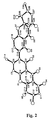
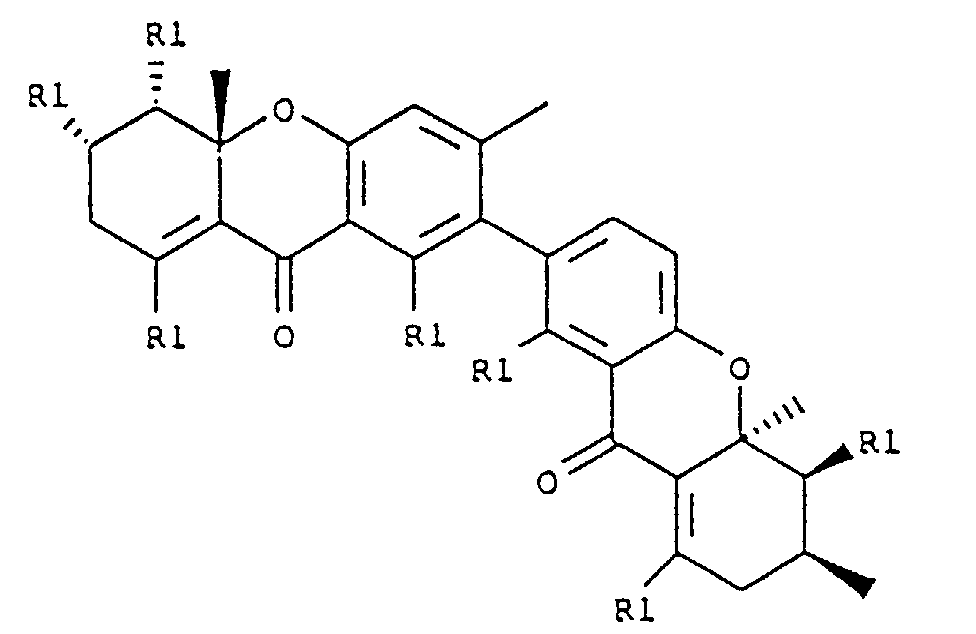
- the invention relates in its first aspect to compounds of formula I wherein R1 is independently hydroxyls, acylated hydroxyls with 1 to 6 carbon atoms, or glucosylated hydroxyls with 1 to 5 sugar moities.
- the invention relates to a compound (Ia) of formula I wherein R1 is hydroxyl groups.
- the compound of formula Ia was isolated as a metabolite from a novel species of the genus Ascochyta, Ascochyta sp. (CMI CC No. 337158).
- the invention relates to processes for the production of the novel compounds of formula I.
- the compound of formula Ia may be prepared by aerobic cultivation on suitable nutrient media under conditions hereinafter described with a strain of the fungus Ascochyta sp. (CMI CC 337158) and thereafter recovering the active component from the fermentation medium.
- CMI CC 337158 a strain of the fungus Ascochyta sp.
- the natural metabolite may subsequently be modified chemically in order to obtain various derivatives thereof.
- the derivatives may be produced in order to improve certain properties with the metabolite such as its solubility in aqueous media, its hydrophobicity, hydrophilicity, stability, specificity, etc.
- compounds according to the invention may be produced by well known chemical synthetic processes using available starting materials.
- One group of derivatives is compounds of formula I, wherein one or several hydroxy groups have been glycosylated.
- Another group comprises compounds of formula I, wherein one or several hydroxy groups have been acylated
- composition of the invention in addition to said fungicidally active compounds of formula I may also contain other active ingredients such as other biocides, pesticides, herbicides, insecticides, nematocides, acaricides or plant nutrients or fertilizers.
- EBIS ergosterol biosynthesis inhibitors
- These are generally imidazole or triazole derivatives and examples include those known by the common names prochloraz (which is particularly preferred), triadimefon, propiconazole, diclobutrazol, triadiminol, flusilazole, flutriafol, myclobutanil, penconazole, quinconazole, imazalil and diniconazole.
- non azole EBis include nuarimol, fenarimol, fenpropimorph, tridemorph and fenpropidine.
- anilides e.g. carboxin, matalaxyl, furalaxyl, ofurace, benalaxyl, mepronil, flutolanil, pencycuron and oxadixyl
- benzimidazoles e.g. benomyl and carbendazim
- pyrazophos tolclofos-methyl and fosetyl aluminum
- miscellaneous compounds including iminoctadine, guazatine, dicloran, chlorothalonil, pyrifexox, ethirimol, cymoxanil and anilazine.
- a composition of the invention for combating fungi may comprise said active compound of formula I alone with a suitable carrier or diluent, but it may also be combined with other active ingredients such as antibioticum.
- a fungicidal composition according to the invention having a fungicidally active compound of the invention as its active ingredient may for agronomical and/or horticultural applications be formulated by mixing the active principle with suitable inert and compatible carriers or diluents to obtain a composition of the type generally used in agricultural compositions such as a wetable powder, an emulsifiable concentrate, a granular formulation, a water soluble powder, an alginate, a zanthan gum and/or an aerosol.
- solid carriers bentonite diatomeceous earth, apatite, gypsum, talc, pyrophylite, vermiculite, ground shells, and clay may be mentioned.
- a surface active agent may also be added with the purpose of producing a homogeneous and stable formulation.
- the diluent or carrier in the composition of the invention can as indicated be a solid or a liquid optionally in association with a surface-active agent, for example a dispersing agent, emulsifying agent or wetting agent.
- Suitable surface-active agents include anionic compounds such as a carboxylate, for example a metal carboxylate of a long chain fatty acid; an N-acylsarcosinate; mono- or di-esters of phosphoric acid with fatty alcohol ethoxylates or salts of such esters; fatty alcohol sulphates such as sodium dodecyl sulphate, sodium octadecyl sulphate or sodium cetyl sulphate; ethoxylated fatty alcohol sulphates; ethoxylated alkylphenol sulphates; lignin sulphonates; petroleum sulphonates; alkyl aryl sulphonates such as alkyl-benzene sulphonates or lower alky
- butyl-naphthalene sulphonate salts of sulphonated naphthalene-formaldehyde condensates; salts of sulphonated phenol-formaldehyde condensates; or more complex sulphonates such as the amide sulphonates, e.g. the sulphonated condensation product of oleic acid and N-methyl taurine or the dialkyl sulphosuccinates, e.g. the sodium sulphonate of dioctyl succinate.
- amide sulphonates e.g. the sulphonated condensation product of oleic acid and N-methyl taurine or the dialkyl sulphosuccinates, e.g. the sodium sulphonate of dioctyl succinate.
- Nonionic agents include condensation products of fatty acid esters, fatty alcohols, fatty acid amides or fatty-alkyl- of alkenyl-substituted phenols with ethylene oxide, fatty esters of polyhydric alcohol ethers, e.g. sorbitan fatty acid esters, condensation products of such esters with ethylene oxide, e.g. polyoxyethylene sorbitan fatty acid esters, block copolymers of ethylene oxide and propylene oxide, acetylenic glycols such as 2,4,7,9-tetraethyl-5-decyn-4,7-diol, or ethoxylated acetylenic glycols.
- a cationic surface-active agent examples include, for instance, an aliphatic mo-no-, di-, or polyamine as an acetate, naphthenate or oleate; an oxygen-containing amine such as an amine oxide or polyoxyethylene alkylamine; an amide-linked amine prepared by the condensation of a carboxylic acid with a di- or polyamine; or a quaternary ammonium salt.
- compositions of the invention can take any form known in the art for the formulation of agrochemicals, for example, a solution, a dispersion, an aqueous emulsion, a dusting powder, a seed dressing, a dispersible powder, an emulsifiable concentrate or granules. Moreover, it can be in a suitable form for direct application or as a concentrate or primary composition which requires dilution with a suitable quantity of water or other diluent before application.
- An emulsifiable concentrate comprises the active ingredient dissolved in a water-immiscible solvent which is formed into an emulsion with water in the presence of an emulsifying agent.
- a dusting powder comprises the active ingredient intimately mixed and ground with a solid pulverulent diluent, for example, kaolin.
- a granular solid comprises the active ingredient associated with similar diluents to those which may be employed in dusting powders, but the mixture is granulated by known methods. Alternatively it comprises the active ingredient absorbed or adsorbed on a pre-granular diluent for example, Fuller's earth, attapulgite or limestone grit.
- Wettable powders, granules or grains usually comprise the active ingredient in admixture with a suitable surfactant and an inert powder diluent such as china clay.
- Another suitable concentrate is a flowable suspension concentrate which is formed by grinding the active ingredient with water or other liquid, a wetting agent and suspending agent.
- a composition of the invention may be used for the manufacture of agents for combating fungi for treating animals including mammals.
- Compounds of the invention may be used as the active compounds in such agent, which may be formulated by mixing a compound of formula I with suitable inert and compatible carriers known in the art for use in topical formulations, or for use as a systemic agent, as applicable.
- concentration of the active compounds of the invention described herein in the compositions of the invention may vary within a wide range depending on the type of formulation and the field of application.
- the active compound of the invention may be applied in concentrations ranging from about 0.01 ⁇ g/ml to 100 ⁇ g/ml for use in controlling fungi in animals.
- the invention in its fourth aspect relates to a method for combating fungi by the use of compounds or compositions of the invention for the manufacture of an agent for treating animals, including mammals, wherein an effective amount of a fungicidally active compound of formula I is applied to a region to be treated.
- the invention also relates to the use of compounds or compositions of the invention for combating fungi on plants.
- compositions of the invention may for agronomical or horticultural uses be applied to a region to be treated either directly to the soil as a pre-emergence treatment or to the foliage or fruits of the plants as a post-emergence treatment. Depending on the crop and circumstances the treatment may be postponed until seeds or fruits appear on the plants, wherein fungi are to be controlled.
- the active preparation or the compositions of the invention can be applied directly to the plant by, for example, spraying or dusting either at the time when the fungus has begun to appear on the plant or before the appearance of fungus as a protective measure. In both such cases the preferred mode of application is by foliar spraying. It is generally important to obtain good control of fungi in the early stages of plant growth as this is the time when the plant can be most severely damaged.
- the spray or dust can conveniently contain a pre-or post-emergence herbicide if this is thought necessary.
- a suitable rate of application is from 0.001 to 10 kg per hectare, preferably from 0.05 to 1 kg per hectare.
- the active preparation of the invention alone or in combination with a conventional biocide can also be applied to seeds or habitat.
- the preparation can be applied directly to the soil before, at or after drilling so that the presence of active ingredient in the soil can control the growth of fungi which may attack seeds.
- compositions may be applied in amounts corresponding to from about 1 g to about 100 kg fungicidally active compound per hectare.
- the active preparation alone or in admixture with the conventional biocide can be applied in any manner which allows it to be intimately mixed with the soil such as by spraying, by broadcasting a solid form of granules, or by applying the active ingredient at the same time as drilling by inserting it in the same drill as the seeds.
- a suitable application rate is within the range of from 0.01 to 20 kg per hectare, more preferably from 0.05 to 5 kg per hectare.
- the concentration of the fungicidally active compounds of the invention in the compositions of the present invention when used alone or in combination with a conventional fungicide, as applied to plants is preferably within the range from about 0.01 to about 3.0 per cent by weight, especially 0.01 to 1.0 per cent by weight.
- the amount of active compound can vary widely and can be, for example, in the range from about 5 to about 95 per cent by weight of the composition.
- the concentration of the other fungicidally active ingredient in the mixed composition of the present invention, as applied to plants is preferably within the range of 0.001 to 10 per cent by weight, especially 0.01 to 5 per cent by weight.
- the amount of other active ingredient can vary widely and can be, for example, from 5 to 80 per cent by weight of the composition.
- composition of the invention may be applied to a region to be treated when the diagnosis has been established by the veterinarian or physician.
- the fungicidally active compounds of the invention may be used for the preservation of wood by adding said compounds to wood preservation and/or impregnation compositions.
- the active compounds of the invention may be useful as a fungicide and preservant in paints - both to prevent growth in the paint during storage, and growth on the painted object such as the plastered surface of a house.
- fungicidally active compounds of the invention may due to their low toxicity be used for the preservation of edible goods such as jams, marmelade, or other such items where the principle may be added subsequent to any cooking process.
- fungicidally active compounds of the invention may be used as fungicidal additive to growth media for various microorganisms such as E. coli, Pseudomonas aeroginosa, Serpula lacrymans and Cladosporium sp.
- CMI CC 337158 is a new species in the genus Ascochyta. It belongs to the section Ascochytella. It is closely related to A. zeicola Ellis & Everhart, but differs in having a small percentage of 2-3 septate conidia. With age some pycnidia produce >70% 2-3 septate conidia.
- the fungus may be grown on agar slants containing the following ingredients in grams/litre: yeast extract 4.0 potassium dihydrogen phosphate 1.0 magnesium sulphate heptahydrate 0.1 glucose 15 Bacto®(Difco Laboratories, Detroit, USA) agar 20
- This substrate is autoclaved at 121°C for 20 or 40 minutes and will, hereinafter, be referred to as YPG agar.
- Slants contain 12ml YPG agar and after inoculation they are incubated at 20-25°C for 7 days or longer.
- a substrate for shake flasks was prepared using tap water with the following ingredients in grams per litre: maltodextrin-Glucidex®6 90 ammonium sulphate 1.0 corn steep liquor 25 potassium dihydrogen phosphate 0.5
- the pH is adjusted to 4.5 before the substrate is sterilized at 121°C for 40 minutes.
- a 500 ml Erlenmeyer flask with 100 ml of substrate was inoculated with 10 6 spores from a YPG agar slant previously inoculated with CMI CC 337158.
- the flasks were shaken at 230 rpm at 25°C for 3-7 days whereafter the fermentation broth was centrifuged.
- the supernatant containing the fungicide was thereby separated from the mycelium.
- the mycelium was discarded and the supernatant was analyzed for fungicidal activity.
- the fungicide can also be produced in surface cultures in accordance with well known procedures.
- the fermentation can also be carried out in media containing other sources of carbon and nitrogen assimilable by the microorganism and generally low levels of inorganic salts.
- the media may be supplemented with trace metals, although if complex sources of carbon and nitrogen are employed, they are usually present in the complex sources.
- the fungicides of formula I are active over a wide range of temperatures and pHs.
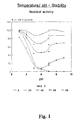
- the stability at pH 3 - 9 and from 5° - 55° C for compound Ia is shown in the figure.
- the experiment was carried out in citrate/phosphate buffer from pH 3-7, and Tris/HCl buffer from 7 to 9. After adjustment of the pH, the samples were allowed to stand at the respective temperatures for 17.5 hours. Then the residual activity was measured, and the values calculated as a percentage of the activity of the zero sample.
- Figure 1 shows the relationship between residual activity and pH for a number of temperatures. From the figure it is seen that the compounds of the invention exhibit good stability at rboth low and high pH values with a stability minimum around pH 4 to pH 7. Also, Figure 1 shows that the compounds of the invention exhibits the best stability at low temperatures.
- the compound of formula Ia of this invention could be extracted from the culture broth as follows:
- the upper phase (ethylacetate) was placed in a deep freezer over night, in order to freeze out the water, which the next day was quickly filtered off on a fiberglass filter GF/F (Whatman). The waterfree filtrate was then concentrated by vacuum evaporation at 20°C to 100 ml.
- the lower phase was extracted once more with one volume of ethylacetate.
- the ethylacetate phase from this extraction was treated as mentioned above. After concentration it was mixed with the first ethylacetate concentrate, and then further concentrated to 50 ml by vacuum evaporation.
- the 50 ml concentrate was placed in a separating funnel with 300 ml acetonitrile and was then extracted with 2 x 500 ml hexane. After extraction 370 ml acetonitrile phase was concentrated to about 100 ml and was then left overnight in the refrigerator to crystallize.
- the crystals were isolated and dissolved in a small amount of acetonitrile filtered on a 0.45 ⁇ m membrane filter and then placed at room temperature to crystallize for 3 - 4 hours.
- the crystals were separated from the mother liquid and dried after rinsing with a small amount of acetonitrile.
- the mother liquid was further concentrated and another crystallization was made. This was continued until no further crystallization took place.
- the amount of crystals obtained was about 800 mg, corresponding to a recovery of one third of the activity found in the culture broth.
- the structure was determined using X-ray crystallography on crystals achieved from recrystallization from acetonitrile. The structure was confirmed by the 1 H and 13 C NMR and mass spectroscopic determinations.
- Electron impact (EI) mass spectrum was performed at 70 eV on a VG 70-250 SQ spectrometer with direct insertion via an insertion probe heated from 30°C to 300°C in 100°C/min. The scanning speed was 10 s/decade in the range 80 to 800 Dalton, and the resolution was 3300. Exact mass: measured 566.1786 calculated for C 30 H 30 O 11 566.1788. MS m/z (%): 566 (100), 548 (35), 530 (22), 500 (42), 472 (25), 407 (17).
- the petri dishes were incubated at 20-25°C for 2 days.
- the presence of a fungicide will reveal itself as a clear non-growth zone around the holes - the larger the zone the stronger the fungicide.
- the supernatant under these conditions produced a clear zone of 20 mm. This was already visible after 1 day.
- Culture broth containing the fungicide and viable spores and mycelium showed no effect on mice, intraperitoneally applied at the rate of 20ml per kg body weight.
- the broth contained approximately 1x10 7 viable counts/ml.
- the partially purified broth containing 35 ⁇ g/ml of the compound of formula Ia of the invention has been found to have an inhibitory effect on the growth of fungi belonging to the following classes:
- Aspergillus fumigatus Rhizomucor pusillus causing mucormycosis
- Candida albicans causing candidiasis, onychomycosis, tinea corporis, tinea pedis, vaginitis, and thrush
- Aspergillus fumigatus causes aspergillosis in humans and other mammals, and birds.
- Coniophora souna, Gloeophyllum trabeum, and Poria placenta all are wood destroying fungi.
- the remaining fungi in the list are all regarded as plant pathogens.
- the partially purified broth containing 35 ⁇ g/ml of the compound of formula Ia of the invention has been found to have an inhibitory effect on the growth of bacteria belonging to the following orders:
- the inhibitory effect of the culture broth is not very strong against Staphylococcus aureus.
- the culture broth does not seem to inhibit the growth of Pseudomonas aeroginosa, Escherichia coli, Serpula lacrymans and Cladosporium herbarium.
- Tomato plants (variety "First in Field", 5 weeks old) were treated with a liquid suspension containing 0.1 mg active ingredient per ml. The plants were kept 24 hours in a green house to dry before they were inoculated with a spore suspension containing about 10 5 spores per ml in 25% grapefruit juice. The plants were then incubated for 6 days (16 hours light (1000 lux) and 8 hours dark at 15°C to 20°C) in clear polyethylene bags to raise the relative humidity to 95% to 100%. No attack from the fungus was observed. Control plants that were treated as above except for the application of the active ingredient in suspension were all overgrown with Botrytis cinerea.
- Barley plants (variety "Catin Carlsberg", 1 week old) were treated with culture broth containing 0.01-1.0 mg active ingredient per ml. The plants were kept for 24 hours in a green house to dry before they were inoculated by shaking diseased plants over them. The density of spores were about 100 spores per mm 2 . The plants were then incubated for 8 days (16 hours light (5000-6000 lux) and 8 hours dark at 18°C to 23°C. No attack from the fungus was observed, while control plants that were treated as above except for the application of the active ingredient were all heavily infected.
Landscapes
- Chemical & Material Sciences (AREA)
- Life Sciences & Earth Sciences (AREA)
- Organic Chemistry (AREA)
- Engineering & Computer Science (AREA)
- Zoology (AREA)
- Wood Science & Technology (AREA)
- Health & Medical Sciences (AREA)
- Biotechnology (AREA)
- Genetics & Genomics (AREA)
- General Health & Medical Sciences (AREA)
- Bioinformatics & Cheminformatics (AREA)
- Microbiology (AREA)
- Biochemistry (AREA)
- General Engineering & Computer Science (AREA)
- Agronomy & Crop Science (AREA)
- Medicinal Chemistry (AREA)
- Chemical Kinetics & Catalysis (AREA)
- Pest Control & Pesticides (AREA)
- Plant Pathology (AREA)
- Dentistry (AREA)
- Environmental Sciences (AREA)
- Botany (AREA)
- Mycology (AREA)
- General Chemical & Material Sciences (AREA)
- Tropical Medicine & Parasitology (AREA)
- Virology (AREA)
- Biomedical Technology (AREA)
- Agricultural Chemicals And Associated Chemicals (AREA)
- Organic Low-Molecular-Weight Compounds And Preparation Thereof (AREA)
- Medicines Containing Material From Animals Or Micro-Organisms (AREA)
- Peptides Or Proteins (AREA)
- Steroid Compounds (AREA)
Claims (21)
- Verbindungen der Formel I
- Verbindung nach Anspruch 1, wobei die Reste R1 Hydroxylgruppen bedeuten

- Verfahren zur Herstellung von Verbindungen der allgemeinen Formel I nach Anspruch 1, durcha) aerobe Züchtung eines Stamms des Pilzes Ascochyta sp. (CMI CC 337158) auf geeigneten Nährmedien unter geeigneten Bedingungen,b) anschließende Gewinnung der aktiven Komponenten aus dem Fermentationsmedium undc) gegebenenfalls Modifizierung der aktiven Verbindungen, um eine Verbindung der gewünschten Formel I zu erhalten.
- Verfahren nach Anspruch 3, wobei die aktive Verbindung die Formel Ia aufweist und direkt in Stufe (b) erhalten wird.
- Fungizide Zusammensetzung, enthaltend als Wirkstoff eine Verbindung nach einem der Ansprüche 1 oder 2.
- Zusammensetzung nach Anspruch 5, wobei die Verbindung in einer Menge von 0,001 bis 100 µg/ml vorhanden ist.
- Fungizide Zusammensetzung, enthaltend als Wirkstoff eine Verbindung nach einem der Ansprüche 1 oder 2 in Kombination mit weiteren bioziden Mitteln.
- Zusammensetzung nach Anspruch 7, wobei das weitere biozide Mittel aus der Gruppe, Pestizide, Herbizide, Insektizide, Nematozide, Akarizide oder Pflanzen-Nährstoffe und -Düngemittel ausgewählt ist.
- Zusammensetzung nach Anspruch 7, wobei es sich beim weiteren bioziden Mittel um ein weiteres Fungizid handelt, das aus der Gruppe Ergosterol-Biosynthese-Inhibitoren ("EBIS", Azole oder Nicht-azole), Anilide, Benzimidazole, Carbamate, Dicarboximide und Phosphorderivate ausgewählt ist.
- Zusammensetzung nach Anspruch 9, wobei es sich beim weiteren Fungizid um ein Carbamat oder ein Ergosterol-Biosynthese-Inhibitor-Anilid und vorzugsweise um ein Ergosterol-Biosynthese-Inhibitor-Anilid handelt.
- Zusammensetzung nach einem der Ansprüche 7 bis 10, wobei der weitere Wirkstoff in einer Menge von 0,001 bis 10 Gew.-% und vorzugsweise von 0,01 bis 5 Gew.-% vorhanden ist.
- Verfahren zur Bekämpfung von Pilzen an einem Pflanzenstandort mit Pilzbefall oder mit der Gefährdung durch Pilzbefall, umfassend das Aufbringen einer Zusammensetzung nach einem der Ansprüche 6 bis 11 an diesem Standort.
- Verfahren nach Anspruch 12 zur Bekämpfung eines Befalls durch Pilzspezies der Gattungen Pythium, Phytophthora, Rhizomucor, Erysiphe, Saccharomyces, Aspergillus, Penicillium, Fusarium, Botrytis, Cercospora, Candida, Coniophora, Gloephyllum und Poria.
- Verfahren nach Anspruch 13 zur Bekämpfung von Botrytis cinera, Erysiphe graminis und Kartoffelfäule (Phytophtora infestans).
- Verwendung einer Verbindung der allgemeinen Formel (I) nach den Ansprüchen 1 und 2 zur Herstellung eines Pilzbekämpfungsmittels zur Behandlung von Tieren, einschließlich des Menschen.
- Verwendung einer Verbindung der allgemeinen Formel (I) nach den Ansprüchen 1 und 2 zur Bekämpfung von Pilzen an Pflanzen.
- Verwendung einer Verbindung der allgemeinen Formel (I) nach den Ansprüchen 1 und 2 zur Holzkonservierung.
- Verwendung einer Verbindung der allgemeinen Formel (I) nach den Ansprüchen 1 und 2 zur Konservierung von Anstrichmitteln.
- Verwendung einer Verbindung der allgemeinen Formel (I) nach den Ansprüchen 1 und 2 zur Konservierung von eßbaren Produkten.
- Verwendung einer Verbindung der allgemeinen Formel (I) nach den Ansprüchen 1 und 2 als Additiv zu Wachstumsmedien.
- Isolierte reine Kultur des Mikroorganismus Ascochyta sp. (CMI CC Nr. 337158).
Applications Claiming Priority (2)
| Application Number | Priority Date | Filing Date | Title |
|---|---|---|---|
| DK1461/90 | 1990-06-15 | ||
| DK146190A DK146190D0 (da) | 1990-06-15 | 1990-06-15 | Hidtil ukendte forbindelser |
Publications (2)
| Publication Number | Publication Date |
|---|---|
| EP0507039A1 EP0507039A1 (de) | 1992-10-07 |
| EP0507039B1 true EP0507039B1 (de) | 1997-09-17 |
Family
ID=8105087
Family Applications (1)
| Application Number | Title | Priority Date | Filing Date |
|---|---|---|---|
| EP91610051A Expired - Lifetime EP0507039B1 (de) | 1990-06-15 | 1991-06-14 | Verbindungen mit fungizider Wirkung |
Country Status (4)
| Country | Link |
|---|---|
| EP (1) | EP0507039B1 (de) |
| AT (1) | ATE158289T1 (de) |
| DE (1) | DE69127688T2 (de) |
| DK (1) | DK146190D0 (de) |
Families Citing this family (8)
| Publication number | Priority date | Publication date | Assignee | Title |
|---|---|---|---|---|
| US5622988A (en) * | 1990-06-15 | 1997-04-22 | Novo Nordisk A/S | Use of a low molecular weight metabolite from fungus for reducing prolonged coagulation time |
| JPH10117769A (ja) * | 1996-10-17 | 1998-05-12 | Japan Tobacco Inc | アスコキタ属に属する微生物及びその用途 |
| EP1295877A1 (de) * | 2001-09-21 | 2003-03-26 | Basf Aktiengesellschaft | Xanthonderivate, Verfahren zu ihrer Herstellung und ihre Verwendung zur Bekämpfung von Schadpilzen sowie sie enthaltende Mittel |
| EP2379096B1 (de) | 2008-12-19 | 2019-10-30 | Baxalta GmbH | Tfpi-inhibitoren und anwendungsverfahren |
| DK2547355T3 (en) | 2010-03-19 | 2017-03-20 | Baxalta GmbH | TFPI INHIBITORS AND METHODS OF USE |
| NZ724133A (en) | 2012-03-21 | 2020-07-31 | Baxalta Inc | Tfpi inhibitors and methods of use |
| CN113527247B (zh) * | 2021-08-18 | 2023-02-03 | 中国热带农业科学院热带作物品种资源研究所 | 一种嗜氮酮类多聚体化合物及其制备方法和应用 |
| CN114292254B (zh) * | 2021-12-28 | 2023-10-20 | 浙江工业大学 | 一种四氢氧杂蒽酮二聚体类化合物及其制备方法与应用 |
-
1990
- 1990-06-15 DK DK146190A patent/DK146190D0/da not_active Application Discontinuation
-
1991
- 1991-06-14 AT AT91610051T patent/ATE158289T1/de active
- 1991-06-14 DE DE69127688T patent/DE69127688T2/de not_active Expired - Fee Related
- 1991-06-14 EP EP91610051A patent/EP0507039B1/de not_active Expired - Lifetime
Non-Patent Citations (1)
| Title |
|---|
| Merck Index 1983, N°2784 * |
Also Published As
| Publication number | Publication date |
|---|---|
| EP0507039A1 (de) | 1992-10-07 |
| DK146190D0 (da) | 1990-06-15 |
| DE69127688D1 (de) | 1997-10-23 |
| DE69127688T2 (de) | 1998-04-09 |
| ATE158289T1 (de) | 1997-10-15 |
Similar Documents
| Publication | Publication Date | Title |
|---|---|---|
| US20090257984A1 (en) | Antifungal compositions containing the endophyte fungus alternaria alternata and or its metabolites, as antagonist agents of plasmopara viticola | |
| EP0507039B1 (de) | Verbindungen mit fungizider Wirkung | |
| US5654271A (en) | Fungicidally active compounds | |
| US5672492A (en) | Fungicidally active compounds | |
| US4806565A (en) | Antifugal tri-yne carbonates | |
| AU622423B2 (en) | A fungicidal active principle from cercospora | |
| DE69721805T2 (de) | Sordarin und dessen derivate als fungizide für planzenkulturen | |
| JP3333512B2 (ja) | 殺菌及び殺虫化合物 | |
| AU4945893A (en) | A fungicidal compound | |
| US5596015A (en) | Fungicidally active compounds | |
| WO1993012659A1 (en) | Agricultural use of certain compounds, compositions and methods for producing said compounds | |
| JP4332698B2 (ja) | メントール誘導体、その製法及び該メントール誘導体を有効成分とする抗菌剤又は殺菌剤 | |
| WO1997023486A1 (en) | Active bio-compounds | |
| EP0234752A1 (de) | Antifungizide beta-lactone | |
| CA2231833A1 (en) | New furyl-pyridone compounds, useful as fungicides and obtained from the fungus cladobotryum | |
| JPH07505781A (ja) | 抗菌的に活性な化合物 | |
| WO1996026199A1 (en) | Active bio-compounds | |
| MXPA96001913A (en) | Fungicide agents ll-15g256-gamma, ll-15g256-delta and ll-15g256-epsilon produced by ll-15g256hypoxylon oceanic | |
| WO1996016014A1 (en) | Active bio-compounds |
Legal Events
| Date | Code | Title | Description |
|---|---|---|---|
| PUAI | Public reference made under article 153(3) epc to a published international application that has entered the european phase |
Free format text: ORIGINAL CODE: 0009012 |
|
| AK | Designated contracting states |
Kind code of ref document: A1 Designated state(s): AT BE CH DE DK ES FR GB GR IT LI LU NL SE |
|
| 17P | Request for examination filed |
Effective date: 19920819 |
|
| 17Q | First examination report despatched |
Effective date: 19940102 |
|
| GRAG | Despatch of communication of intention to grant |
Free format text: ORIGINAL CODE: EPIDOS AGRA |
|
| GRAH | Despatch of communication of intention to grant a patent |
Free format text: ORIGINAL CODE: EPIDOS IGRA |
|
| GRAH | Despatch of communication of intention to grant a patent |
Free format text: ORIGINAL CODE: EPIDOS IGRA |
|
| GRAA | (expected) grant |
Free format text: ORIGINAL CODE: 0009210 |
|
| AK | Designated contracting states |
Kind code of ref document: B1 Designated state(s): AT BE CH DE DK ES FR GB GR IT LI LU NL SE |
|
| PG25 | Lapsed in a contracting state [announced via postgrant information from national office to epo] |
Ref country code: IT Free format text: LAPSE BECAUSE OF FAILURE TO SUBMIT A TRANSLATION OF THE DESCRIPTION OR TO PAY THE FEE WITHIN THE PRESCRIBED TIME-LIMIT;WARNING: LAPSES OF ITALIAN PATENTS WITH EFFECTIVE DATE BEFORE 2007 MAY HAVE OCCURRED AT ANY TIME BEFORE 2007. THE CORRECT EFFECTIVE DATE MAY BE DIFFERENT FROM THE ONE RECORDED. Effective date: 19970917 Ref country code: BE Effective date: 19970917 Ref country code: CH Free format text: LAPSE BECAUSE OF FAILURE TO SUBMIT A TRANSLATION OF THE DESCRIPTION OR TO PAY THE FEE WITHIN THE PRESCRIBED TIME-LIMIT Effective date: 19970917 Ref country code: AT Effective date: 19970917 Ref country code: ES Free format text: THE PATENT HAS BEEN ANNULLED BY A DECISION OF A NATIONAL AUTHORITY Effective date: 19970917 Ref country code: GR Free format text: LAPSE BECAUSE OF FAILURE TO SUBMIT A TRANSLATION OF THE DESCRIPTION OR TO PAY THE FEE WITHIN THE PRESCRIBED TIME-LIMIT Effective date: 19970917 Ref country code: DK Free format text: LAPSE BECAUSE OF NON-PAYMENT OF DUE FEES Effective date: 19970917 Ref country code: LI Free format text: LAPSE BECAUSE OF FAILURE TO SUBMIT A TRANSLATION OF THE DESCRIPTION OR TO PAY THE FEE WITHIN THE PRESCRIBED TIME-LIMIT Effective date: 19970917 Ref country code: NL Free format text: LAPSE BECAUSE OF FAILURE TO SUBMIT A TRANSLATION OF THE DESCRIPTION OR TO PAY THE FEE WITHIN THE PRESCRIBED TIME-LIMIT Effective date: 19970917 |
|
| REF | Corresponds to: |
Ref document number: 158289 Country of ref document: AT Date of ref document: 19971015 Kind code of ref document: T |
|
| REG | Reference to a national code |
Ref country code: CH Ref legal event code: EP |
|
| REF | Corresponds to: |
Ref document number: 69127688 Country of ref document: DE Date of ref document: 19971023 |
|
| PG25 | Lapsed in a contracting state [announced via postgrant information from national office to epo] |
Ref country code: SE Effective date: 19971217 |
|
| ET | Fr: translation filed | ||
| NLV1 | Nl: lapsed or annulled due to failure to fulfill the requirements of art. 29p and 29m of the patents act | ||
| REG | Reference to a national code |
Ref country code: CH Ref legal event code: PL |
|
| PG25 | Lapsed in a contracting state [announced via postgrant information from national office to epo] |
Ref country code: LU Free format text: LAPSE BECAUSE OF NON-PAYMENT OF DUE FEES Effective date: 19980614 |
|
| PLBE | No opposition filed within time limit |
Free format text: ORIGINAL CODE: 0009261 |
|
| 26N | No opposition filed | ||
| PGFP | Annual fee paid to national office [announced via postgrant information from national office to epo] |
Ref country code: FR Payment date: 20000612 Year of fee payment: 10 |
|
| PGFP | Annual fee paid to national office [announced via postgrant information from national office to epo] |
Ref country code: GB Payment date: 20000614 Year of fee payment: 10 Ref country code: DE Payment date: 20000614 Year of fee payment: 10 |
|
| REG | Reference to a national code |
Ref country code: GB Ref legal event code: 732E |
|
| PG25 | Lapsed in a contracting state [announced via postgrant information from national office to epo] |
Ref country code: GB Free format text: LAPSE BECAUSE OF NON-PAYMENT OF DUE FEES Effective date: 20010614 |
|
| GBPC | Gb: european patent ceased through non-payment of renewal fee |
Effective date: 20010614 |
|
| PG25 | Lapsed in a contracting state [announced via postgrant information from national office to epo] |
Ref country code: FR Free format text: LAPSE BECAUSE OF NON-PAYMENT OF DUE FEES Effective date: 20020228 |
|
| PG25 | Lapsed in a contracting state [announced via postgrant information from national office to epo] |
Ref country code: DE Free format text: LAPSE BECAUSE OF NON-PAYMENT OF DUE FEES Effective date: 20020403 |