EP0486607B1 - Verfahren zum übertragen sowie zum automatischen empfangen von datensignalen in einem fernsehsignal - Google Patents
Verfahren zum übertragen sowie zum automatischen empfangen von datensignalen in einem fernsehsignal Download PDFInfo
- Publication number
- EP0486607B1 EP0486607B1 EP90913136A EP90913136A EP0486607B1 EP 0486607 B1 EP0486607 B1 EP 0486607B1 EP 90913136 A EP90913136 A EP 90913136A EP 90913136 A EP90913136 A EP 90913136A EP 0486607 B1 EP0486607 B1 EP 0486607B1
- Authority
- EP
- European Patent Office
- Prior art keywords
- data
- videotext
- special
- page
- receiver
- Prior art date
- Legal status (The legal status is an assumption and is not a legal conclusion. Google has not performed a legal analysis and makes no representation as to the accuracy of the status listed.)
- Expired - Lifetime
Links
Images


Classifications
-
- H—ELECTRICITY
- H04—ELECTRIC COMMUNICATION TECHNIQUE
- H04N—PICTORIAL COMMUNICATION, e.g. TELEVISION
- H04N7/00—Television systems
- H04N7/08—Systems for the simultaneous or sequential transmission of more than one television signal, e.g. additional information signals, the signals occupying wholly or partially the same frequency band, e.g. by time division
- H04N7/087—Systems for the simultaneous or sequential transmission of more than one television signal, e.g. additional information signals, the signals occupying wholly or partially the same frequency band, e.g. by time division with signal insertion during the vertical blanking interval only
- H04N7/088—Systems for the simultaneous or sequential transmission of more than one television signal, e.g. additional information signals, the signals occupying wholly or partially the same frequency band, e.g. by time division with signal insertion during the vertical blanking interval only the inserted signal being digital
- H04N7/0882—Systems for the simultaneous or sequential transmission of more than one television signal, e.g. additional information signals, the signals occupying wholly or partially the same frequency band, e.g. by time division with signal insertion during the vertical blanking interval only the inserted signal being digital for the transmission of character code signals, e.g. for teletext
-
- H—ELECTRICITY
- H04—ELECTRIC COMMUNICATION TECHNIQUE
- H04N—PICTORIAL COMMUNICATION, e.g. TELEVISION
- H04N7/00—Television systems
- H04N7/025—Systems for the transmission of digital non-picture data, e.g. of text during the active part of a television frame
-
- H—ELECTRICITY
- H04—ELECTRIC COMMUNICATION TECHNIQUE
- H04N—PICTORIAL COMMUNICATION, e.g. TELEVISION
- H04N7/00—Television systems
- H04N7/08—Systems for the simultaneous or sequential transmission of more than one television signal, e.g. additional information signals, the signals occupying wholly or partially the same frequency band, e.g. by time division
- H04N7/087—Systems for the simultaneous or sequential transmission of more than one television signal, e.g. additional information signals, the signals occupying wholly or partially the same frequency band, e.g. by time division with signal insertion during the vertical blanking interval only
- H04N7/088—Systems for the simultaneous or sequential transmission of more than one television signal, e.g. additional information signals, the signals occupying wholly or partially the same frequency band, e.g. by time division with signal insertion during the vertical blanking interval only the inserted signal being digital
- H04N7/0888—Subscription systems therefor
Definitions
- the invention relates to a transmission method according to the preamble of claim 1 and to a receiving method according to the preamble of claim 2.
- Methods of this type are from the British Broadcasting Corporation research report BBC RD 1988/1 dated March 1988 and from the article "BBC - datacast - The transmission system ", published in Conference Proceedings of the Institute of Electronic & Radio Engineers London, Volume 69, pages 93 to 98, September 1986.
- the UK Teletext specification (cf. BBC Research Report BBC European 1988/1) provides for the transmission of data signals in a television signal to use a specially marked teletext line asynchronously to a teletext cycle.
- This teletext line is a so-called "pseudo-row" which is not evaluated by teletext decoders of the so-called "level 1" of the teletext standard WST (world system teletext).
- WST world system teletext
- supplementary data regarding the restricted basic character set of "Level 1" are transmitted in the pseudo-series in order to represent special characters, fine structures or shades of color.
- software data for remote programming of personal computers can be transmitted ("tele-software").
- ARD and ZDF The teletext transmission and distribution devices used in the Federal Republic of Germany and Berlin (West) by ARD and ZDF are no more capable than the teletext receivers currently sold on the German market, especially if they are independent of the teletext page structure the teletext cycle are inserted, to be transmitted or evaluated. Accordingly, the UK teletext transmission of data signals was not adopted in the television text specification by ARD / ZDF / DBP.
- the object of the invention is to provide a transmission of data signals in a television signal that is compatible with the television text specification of ARD / ZDF / DBP.
- the aim is to provide a particularly simple, automated possibility for receiving and evaluating the data signals in such a compatible data signal transmission.
- the teletext special page shown schematically in FIG. 1 is transmitted non-cyclically in the teletext cycle and consists of a packet of data signals.
- the package length is variable to ensure adaptation to the respective application.
- the length of the data packets is expediently matched to the number of lines available in each television field. This does not always have to be lines in the vertical blanking interval (picture return), although this form of application is the most common. If no picture portion is overtargeted in the television signal, practically all lines of each field are available for the transmission of the data signals.
- each special teletext page consists of a packet header of, for example, 24x8 bits and a control and / or user data packet of, for example, 40x8 bits.
- the package header is in the first row # 0 of the teletext special page, while the control and / or user data are divided into rows # 1 to # 23 of the teletext special page.
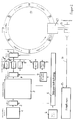
- the useful data are generated in a data source 1 on the transmitting side and transferred as "data transmission" to an encoder 2, which encodes the useful data in the teletext code.
- the coded data transmission shown as a separate block 3 is formed in the packet formatter 6 to form a user data packet.
- the coding and the packet formation in blocks 2 and 6 are carried out under the control of a control circuit 5, which converts the specifications coming from a control input 4 regarding the data format of the data packets into corresponding control information for blocks 2 and 6.
- the n user data packets generated by the packet formatter 6 are illustrated in FIG. 2 as blocks 8 1 to 8 n .
- a control data packet which is illustrated as block 9 in FIG. 2 and is generated by a control packet generator 7 under the control of the control circuit 5.
- the user data packets 8 1 to 8 n and the control data packet 9 are supplied by the packet transmitter 10 to a teletext computer 12 as a teletext special page according to FIG. 1.
- the packets 8 1 to 8 n and 9 contain the packet header and control and user data in the desired format according to FIG. 1.
- the non-cyclic data stream emanating from the packet transmitter 10 is mixed by the teletext computer 12 with the cyclic data stream of the "normal" teletext pages indicated as ring magazine 11, i.e. inserted as a special page between two "normal" teletext pages.
- the teletext computer 12 feeds the teletext data (which now contain the special page according to the invention) to an adding stage 13 in the usual way. which inserts the teletext data into a video signal in accordance with television standards, e.g. in the lines provided for this in the vertical blanking interval of each field.
- the video signal with the inserted teletext data including the special teletext page according to the invention reaches the receiver 15, which is shown in detail in FIG. 3.
- the TV tuner 159 of the receiver 15 shown in FIG. 3 converts the video / teletext signal, which is transmitted at a high frequency, for example, into a baseband signal, from which the teletext part is separated in a teletext data separation stage 154.
- the received teletext data stream at the output of the data separation stage 154 is continuously searched by a teletext page acquisition stage 157 for the occurrence of the teletext special page number preprogrammed on the reception side. This preprogramming is carried out via a page number input 155, which is connected to a control circuit 153, which in turn is the acquisition stage 157 controls.
- the searched teletext special page number occurs in the received teletext data stream, the special page is decoded and temporarily stored in the teletext page memory 158.
- the temporarily stored special teletext page is examined under the control of the control circuit 153 in an evaluation stage 152 to determine whether it contains a control data packet provided for control at the receiving end and, in the affirmative, whether its data transmission identifier matches a preprogrammed identifier on the receiving end. This last-mentioned preprogramming takes place via an identifier input 156, which is connected to the control circuit 153.
- the temporarily stored special teletext page and, if applicable, all special teletext pages subsequently received under the same special teletext page number are processed in the evaluation stage and decoded in the downstream decoder 151.
- the resulting data signal corresponds to the data transmission at the output of data source 1 (FIG. 2).
- This data signal can e.g. stored on a personal computer and further processed.
Landscapes
- Engineering & Computer Science (AREA)
- Multimedia (AREA)
- Signal Processing (AREA)
- Television Systems (AREA)
- Radar Systems Or Details Thereof (AREA)
- Cosmetics (AREA)
- Compositions Of Macromolecular Compounds (AREA)
- Polymerisation Methods In General (AREA)
- Addition Polymer Or Copolymer, Post-Treatments, Or Chemical Modifications (AREA)
- Alarm Systems (AREA)
- Networks Using Active Elements (AREA)
- Color Television Systems (AREA)
Description
- Die Erfindung bezieht sich auf ein Übertragungsverfahren gemäß dem Oberbegriff des Patentanspruchs 1 sowie auf ein Empfangsverfahren gemäß dem Oberbegriff des Patentanspruchs 2. Verfahren dieser Art sind aus dem Forschungsbericht BBC RD 1988/1 vom März 1988 der British broadcasting Corporation und aus dem Artikel "BBC - datacast - The transmission system", erschienen in Conference Proceedings of the Institute of Electronic & Radio Engineers London, Band 69, Seiten 93 bis 98, September 1986 bekannt.
- Zur Übertragung von Datensignalen in einem Fernsehsignal ist in der U.K. Teletext-Spezifikation vorgesehen (vgl. BBC Research Report BBC European 1988/1), asynchron zu einem Teletextzyklus eine besonders gekennzeichnete Teletextzeile zu verwenden. Bei dieser Teletextzeile handelt es sich um eine sogenannte "Pseudoreihe", die von Teletext-Dekodern des sogenannten "Level 1" des Teletext-Standards WST (world system teletext) nicht ausgewertet wird. In den Pseudoreihen werden in den Ausbaustufen "Level 2" und "Level 3" des WST-Standards Ergänzungsdaten bezüglich des eingeschränkten Grundzeichensatzes von "Level 1" übertragen, um Sonderzeichen, Feinstrukturen oder Farbschattierungen darzustellen. Im Falle einer davon unabhängigen Datensignalübertragung können insbesondere Softwaredaten zur Fernprogrammierung von Personalcomputern übertragen werden ("Tele-Software").
- Die in der Bundesrepublik Deutschland und Berlin(West) von ARD und ZDF verwendeten Videotextsende- und -verteileinrichtungen sind ebensowenig wie die derzeit auf dem deutschen Markt vertriebenen Videotext-Empfänger in der Lage, Pseudoreihen, insbesondere, wenn sie unabhängig von der Videotext-Seitenstruktur in den Videotext-Zyklus eingefügt sind, zu übertragen bzw. auszuwerten. Dementsprechend wurde in der Fernsehtext-Spezifikation von ARD/ZDF/DBP die UK-Teletext vorgesehene Übertragung von Datensignalen nicht übernommen.
- Die Aufgabe der Erfindung besteht darin, eine mit der Fernsehtext-Spezifikation von ARD/ZDF/DBP kompatible Übertragung von Datensignalen in einem Fernsehsignal anzugeben. Ferner wird angestrebt, bei einer derartigen kompatiblen Datensignalübertragung eine besonders einfache, automatisierte Möglichkeit zum Empfang und zur Auswertung der Datensignale zu schaffen.
- Diese Aufgabe wird hinsichtlich der Übertragung von Datensignalen durch die kennzeichnenden Merkmale des Patentanspruchs 1 gelöst. Hinsichtlich des Empfangs solcher übertragenen Datensignale wird die Aufgabe durch die kennzeichnenden Merkmale des nebengeordneten Patentanspruchs 2 gelöst.
- Die Erfindung wird anhand der Zeichnungen näher erläutert. Es zeigt:
- Fig. 1
- eine schematische Darstellung einer nach dem erfindungsgemäßen Verfahren übertragenen und empfangenen Videotext-Sonderseite;
- Fig. 2
- ein Blockschaltbild eines Ausführungsbeispiels für den sender- und empfängerseitigen Schaltungsaufbau zur Durchführung des erfindungsgemäßen Verfahrens, und
- Fig. 3
- ein Blockschaltbild für den in Fig. 2 nur als Schaltungsblock angedeuteten Empfängerteil.
- Die in Fig. 1 schematisch aargestellte Videotext-Sonderseite wird im Videotextzyklus nicht-zyklisch übertragen und besteht aus einem Paket von Datensignalen. Die Paketlänge ist dabei variabel, um eine Anpassung an die jeweilige Anwendungsform zu gewährleisten. Zweckmäßigerweise wird die Länge der Datenpakete auf die Anzahl der in jedem Fernsehhalbbild verfügbaren Zeilen abgestimmt. Dies brauchen nicht notwendigerweise stets Zeilen in der vertikalen Austastlücke (Bildrücklauf) sein, obwohl diese Anwendungsform die häufigste ist. Falls nämlich kein Bildanteil im Fernsehsignal übertargen wird, stehen praktisch sämtliche Zeilen jedes Halbbildes für die Übertragung der Datensignale zur Verfügung.
- Wie Fig. 1 zeigt,besteht jede Videotext-Sonderseite aus einem Paketkopf von beispeilsweise 24x8 Bit sowie aus einem Steuer- und/oder Nutzdatenpaket von beispielsweise 40x8 Bit. Der Paketkopf befindet sich in der ersten Reihe #0 der Videotext-Sondernseite, während sich die Steuerund/oder Nutzdaten auf die Reihen #1 bis #23 der Videotext-Sonderseite aufteilen.
- Bei dem schematischen Schaltbild der sende- und empfangsseitigen Einrichtungen zur Durchführung des Verfahrens nach Fig. 2 werden sendeseitig die Nutzdaten in einer Datenquelle 1 erzeugt und als "Datensendung" an einen Codierer 2 übergeben, welcher die Nutzdaten im Videotextcode codiert. Die als gesonderter Block 3 dargestellte codierte Datensendung wird in dem Paketformatierer 6 zu einem Nutzdatenpaket geformt.
- Die Codierung und die Paketbildung in den Blöcken 2 und 6 erfolgt unter der Steuerung einer Steuerschaltung 5, welche die von einer Steuereingabe 4 kommenden Vorgaben bezüglich des Datenformats der Datenpakete in entsprechende Steuerinformationen für die Blöcke 2 und 6 umsetzt.
- Die von dem Paketformatierer 6 erzeugten n Nutzdatenpakete sind in Fig. 2 als Blöcke 8¹ bis 8n veranschaulicht. Zu diesen Nutzdatenpaketen kommt - wie aus Fig. 1 ersichtlich ist, ein Steuerdatenpaket hinzu, das in Fig. 2 als Block 9 veranschaulicht ist und von einem Steuerpaketgenerator 7 unter der Steuerung der Steuerschaltung 5 erzeugt wird. Die Nutzdatenpakete 8¹ bis 8n und das Steuerdatenpaket 9 werden von dem Paketsender 10 als Videotext-Sonderseite gemäß Fig. 1 einem Videotextrechner 12 zugeführt. Dabei enthalten die Pakete 8¹ nis 8n und 9 den Paketkopf und Steuer- und Nutzdaten in dem gewünschten Format nach Fig. 1.
- Der vom Paketsender 10 ausgehende nicht-zyklische Datenstrom wird von dem Videotextrechner 12 mit dem als Ringmagazin 11 angedeuteten zyklischen Datenstrom der "normalen" Videotextseiten gemischt, d.h., als Sonderseite zwischen zwei "normale" Videotextseiten eingefügt. Der Videotextrechner 12 führt die Videotextdaten (welche nunmehr die erfindungsgemäße Sonderseite enthalten) in üblicher Weise einer Addierstufe 13 zu. welche die Videotextdaten in ein Videosignal fernsehnormgerecht einfügt, z.B. in die hierfür vorgesehenen Zeilen in der vertikalen Austastlücke jedes Halbbildes.
- Über den schematisch als Leitung angedeuteten Übertragungsweg 14 (breitbandige Kabelverbindung, Lichtwellenleiterverbindung, terrestrische Rundfunkstrecke, Satelliten-Rundfunkstrecke) gelangt das Videosignal mit den eingefügten Videotextdaten einschließlich erfindungsgemäßer Videotext-Sonderseite zu dem Empfänger 15, welcher in Fig. 3 im einzelnen gezeigt ist.
- Der in Fig. 3 gezeigte TV-Tuner 159 des Empfängers 15 wandelt das z.B. hochfrequent übertragene Video/Videotext-Signal in ein Basisbandsignal um, von dem in einer Videotext-Datentrennstufe 154 der Videotextanteil abgetrennt wird. Der empfangene Videotext-Datenstrom am Ausgang der Datentrennstufe 154 wird laufend durch eine Videotext-Seiten-Aquisitionsstufe 157 auf das Auftreten der empfangsseitig vorprogrammierten Videotext-Sonderseiten-Nummer abgesucht. Diese Vorprogrammierung erfolgt über eine Seitennummern-Eingabe 155, welche mit einer Steuerschaltung 153 verbunden ist, die wiederum die Aquisitionsstufe 157 steuert. Bei Auftreten der gesuchten Videotext-Sonderseiten-Nummer im empfangenen Videotext-Datenstrom wird die Sonderseite decodiert und in dem Videotext-Seitenspeicher 158 zwischengespeichert.
- Die zwischengespeicherte Videotext-Sonderseite wird unter der Steuerung der Steuerschaltung 153 in einer Auswertestufe 152 dahingehend untersucht, ob darin ein zur empfangsseitigen Steuerung vorgesehenes Steuerdaten-Paket enthalten ist und bejahendenfalls, ob dessen Datensendungskennung mit einer empfangsseitig vorprogrammierten Kennung übereinstimmt. Diese letztgenannte Vorprogrammierung erfolgt über eine Kennungseingabe 156, die mit der Steuerschaltung 153 verbunden ist.
- Bei Übereinstimmung der Kennungen wird die zwischengespeicherte Videotext-Sonderseite und gegebenenfalls alle anschließend unter derselben Videotext-Sonderseiten-Nummer empfangenen Videotext-Sonderseiten in der Auswertestufe verarbeitet und in dem nachgeschalteten Decoder 151 decodiert. Das resultierende Datensignal entspricht der Datensendung am Ausgang der Datenquelle 1 (Fig. 2). Dieses Datensignal kann z.B. auf einem Personalcomputer abgespeichert und weiterverarbeitet werden.
Claims (5)
- Verfahren zum übertragen von Datensignalen in einem Fernsehsignal - insbesondere innerhalb eines Videotext-Datenstroms - bei dem die Datensignale als Videotext-Sonderseiten paketweise übertragen werden, dadurch gekennzeichnet, daß die variable Länge der nicht-zyklisch übertragenen Datenpakete auf die Anzahl der für die übertragung verfügbaren Zeilen je Fernsehhalbbild abgestimmt wird und daß jede Videotext-Sonderseite aus einem Paketkopf sowie einem Steuer- und/oder Nutzdatenpaket besteht, wobei der Paketkopf in der ersten Reihe und die Steuer- und/oder Nutzdaten in den restlichen Reihen der Videotext-Sonderseite übertragen wird.
- Verfahren zum automatischen Empfangen der nach dem Verfahren gemäß Anspruch 1 übertragenen Datensignale, dadurch gekennzeichnet, daßa) der empfangene Videotext-Datenstrom laufend auf das Auftreten einer empfangsseitig vorprogrammierten Videotext-Sonderseitenummer abgesucht wird;b) bei Auftreten der gesuchten Videotext-Sonderseitennummer im Videotext-Datenstrom die gesuchte Videotext-Sonderseite dekodiert und zwischengespeichert wird;c) der Dateninhalt der zwischengespeicherten Videotext-Sonderseite dahingehend untersucht wird, ob darin ein zur empfangsseitigen Steuerung vorgesehenes Steuer-Datenpaket enthalten ist, dessen Datensendungskennung ggf. mit einer empfangsseitig vorprogrammierten Kennung auf Übereinstimmung verglichen wird, undd) bei Übereinstimmung die Datensignale der zwischengespeicherten Videotext-Sonderseite und ggf. alle anschließend unter derselben Videotext-Sonderseitennummer empfangenen Videotext-Sonderseiten empfangsseitig verarbeitet werden.
- Verfahren nach Anspruch 2, dadurch gekennzeichnet, daß zur empfangsseitigen Vorprogrammierung innerhalb des Videotext-Datenstroms Übersichtsseiten für künftige Datensendungen vorgesehen sind, wobei die einzelnen Datensendungen durch unterschiedliche, zugehörige Videotext-Sonderseitennummern und Datensendungskennungen markiert sind und daß bei Anwahl der benutzerseitig gewünschten Datensendungen die zugehörigen Videotext-Sonderseitenummern und Datensendungskennungen aus der betreffenden Übersichtsseite in den Empfänger übernommen und dort gespeichert werden.
- Verfahren nach Anspruch 2 oder 3, dadurch gekennzeichnet, daß innerhalb jedes Steuer-Datenpaketes eine Codekennung zur empfangsseitigen Identifikation des senderseitig benutzten Codes für die Datennutzsignale enthalten ist, welche bei Vorliegen einer Teilnehmerberechtigung die empfangsseitige Dekodierung der Datennutzsignale steuert.
- Verfahren nach einem der Ansprüche 2 bis 4, dadurch gekennzeichnet, daß die Sendungsbestände von Datensendungsarchiven, deren Kennungen öffentlich angekündigt sind, über einen vom Benutzer zur Sendeanstalt schaltbaren Rückkanal abrufbar sind, wobei die abgerufenen Datensendungen zu gegebener Zeit übertragen und von dem abrufenden Teilnehmer automatisch mit Hilfe der Vorprogrammierung der betreffenden Videotext-Sonderseitennummern und Datensendungskennungen empfangen werden.
Applications Claiming Priority (3)
| Application Number | Priority Date | Filing Date | Title |
|---|---|---|---|
| DE3926685A DE3926685A1 (de) | 1989-08-12 | 1989-08-12 | Verfahren zum uebertragen von datensignalen in einem fernsehsignal sowie zum automatischen empfangen von derart uebertragenen datensignalen |
| DE3926685 | 1989-08-12 | ||
| PCT/EP1990/001323 WO1991003127A1 (de) | 1989-08-12 | 1990-08-10 | Verfahren zum übertragen sowie zum automatischen empfangen von datensignalen in einem fernsehsignal |
Publications (2)
| Publication Number | Publication Date |
|---|---|
| EP0486607A1 EP0486607A1 (de) | 1992-05-27 |
| EP0486607B1 true EP0486607B1 (de) | 1994-12-21 |
Family
ID=6387010
Family Applications (1)
| Application Number | Title | Priority Date | Filing Date |
|---|---|---|---|
| EP90913136A Expired - Lifetime EP0486607B1 (de) | 1989-08-12 | 1990-08-10 | Verfahren zum übertragen sowie zum automatischen empfangen von datensignalen in einem fernsehsignal |
Country Status (12)
| Country | Link |
|---|---|
| EP (1) | EP0486607B1 (de) |
| JP (1) | JP3370665B2 (de) |
| KR (1) | KR0166382B1 (de) |
| AT (1) | ATE116087T1 (de) |
| AU (1) | AU6297890A (de) |
| CA (1) | CA2059552A1 (de) |
| DD (1) | DD297291A5 (de) |
| DE (2) | DE3926685A1 (de) |
| FI (1) | FI920572A7 (de) |
| HK (1) | HK8096A (de) |
| HU (1) | HUT63286A (de) |
| WO (1) | WO1991003127A1 (de) |
Families Citing this family (4)
| Publication number | Priority date | Publication date | Assignee | Title |
|---|---|---|---|---|
| EP0570785B1 (de) * | 1992-05-19 | 1997-10-01 | THOMSON multimedia | Verfahren und Einrichtung zur Gerätesteuerung mit Datenübertragung in Fernsehzeilen |
| ES2109390T3 (es) * | 1992-05-19 | 1998-01-16 | Thomson Multimedia Sa | Metodo y aparato para control de dispositivos por transmision de datos en lineas de tv. |
| ES2078164B1 (es) * | 1993-12-14 | 1997-12-01 | I D Tec S L | Sistema de generacion, transmision y difusion de paginas videotex. |
| KR100640913B1 (ko) | 1999-07-31 | 2006-11-02 | 엘지전자 주식회사 | 디지털 방송 수신기의 수신 데이터스트림 저장/재생 장치 및방법 |
Family Cites Families (3)
| Publication number | Priority date | Publication date | Assignee | Title |
|---|---|---|---|---|
| FR2393480A2 (fr) * | 1977-06-03 | 1978-12-29 | Telediffusion Fse | Systeme de diffusion de donnees |
| FR2466917A2 (fr) * | 1979-09-27 | 1981-04-10 | Telediffusion Fse | Systeme de diffusion de donnees |
| IT1211278B (it) * | 1987-09-02 | 1989-10-12 | Olivetti & Co Spa | Sistema di trasmissione e o ricezione di programmi per calcolatori e o dati attraverso il teletext |
-
1989
- 1989-08-12 DE DE3926685A patent/DE3926685A1/de active Granted
-
1990
- 1990-08-10 HU HU92376A patent/HUT63286A/hu unknown
- 1990-08-10 CA CA002059552A patent/CA2059552A1/en not_active Abandoned
- 1990-08-10 WO PCT/EP1990/001323 patent/WO1991003127A1/de not_active Ceased
- 1990-08-10 AU AU62978/90A patent/AU6297890A/en not_active Abandoned
- 1990-08-10 JP JP51213190A patent/JP3370665B2/ja not_active Expired - Fee Related
- 1990-08-10 EP EP90913136A patent/EP0486607B1/de not_active Expired - Lifetime
- 1990-08-10 DE DE59008095T patent/DE59008095D1/de not_active Expired - Lifetime
- 1990-08-10 AT AT90913136T patent/ATE116087T1/de not_active IP Right Cessation
- 1990-08-10 FI FI920572A patent/FI920572A7/fi unknown
- 1990-08-10 DD DD90343375A patent/DD297291A5/de not_active IP Right Cessation
- 1990-08-10 KR KR1019920700310A patent/KR0166382B1/ko not_active Expired - Fee Related
-
1996
- 1996-01-18 HK HK8096A patent/HK8096A/xx not_active IP Right Cessation
Also Published As
| Publication number | Publication date |
|---|---|
| HUT63286A (en) | 1993-07-28 |
| DE3926685A1 (de) | 1991-03-14 |
| DE59008095D1 (de) | 1995-02-02 |
| JP3370665B2 (ja) | 2003-01-27 |
| CA2059552A1 (en) | 1991-02-13 |
| FI920572A0 (fi) | 1992-02-11 |
| DD297291A5 (de) | 1992-01-02 |
| ATE116087T1 (de) | 1995-01-15 |
| KR0166382B1 (ko) | 1999-03-20 |
| AU6297890A (en) | 1991-04-03 |
| EP0486607A1 (de) | 1992-05-27 |
| WO1991003127A1 (de) | 1991-03-07 |
| HK8096A (en) | 1996-01-26 |
| HU9200376D0 (en) | 1992-04-28 |
| FI920572A7 (fi) | 1992-02-11 |
| JPH05502342A (ja) | 1993-04-22 |
| DE3926685C2 (de) | 1993-01-28 |
Similar Documents
| Publication | Publication Date | Title |
|---|---|---|
| DE69709566T2 (de) | Rundfunk- und Kommunikations-Empfangsgerät | |
| DE3856057T2 (de) | Fernseh-Übertragungssystem | |
| DE2705342C3 (de) | Farbfernsehsystem mit zusätzlicher Übertragung von Tonsignalen auf der hinteren Austastschulter | |
| DE69416719T2 (de) | Verfahren zur Programmierung eines Aufzeichnungsgeräts und Programmiergerät | |
| DE1929083B2 (de) | Schaltungsanordnung zur verschiebung von zusaetzlichen nachrichtensignalen in andere zeilenraeume eines fernsehsignals | |
| DE3145407A1 (de) | Verfahren und einrichtung zum programmieren eines fernsehempfangs-tuners | |
| DE69834219T2 (de) | Demultiplexer | |
| EP0387517B1 (de) | Einrichtung zur Verarbeitung von Fernseh-Empfangssignalen zum Zweck der Erkennung und Wahl des Bildformates | |
| DE3926685C2 (de) | ||
| DE3842412A1 (de) | Videorecorder mit einem fernsehtextdecoder | |
| DE69522078T2 (de) | Übertragung von abstimmdaten von rundfunksendern zu einem empfänger | |
| EP0226802B1 (de) | System zur Übertragung von Fernsehinformationen | |
| EP0373708A2 (de) | Anordnung zum Uebertragen und Signalquelle zum Abgeben digitaler Bildsignale | |
| EP0312798A1 (de) | Verfahren zur Programmierung eines Emfängers mit Videorecorder zur Aufzeichnung von über Satellit übertragenen Fernseh-Programmbeiträgen | |
| DE69621219T2 (de) | Verfahren und vorrichtung zum senden und empfangen von teletextseiten | |
| DE60033100T2 (de) | Empfangseinrichtung zum empfangen von teletextinformationen mit mitteln zum selbständigen ermitteln eines geeigneten zeichensatzes | |
| EP0496268B1 (de) | Empfangsgerät zum Empfangen von Teletextsignalen | |
| EP0238526A1 (de) | Mit hilfe von videotextsignalen programmierbarer videorecorder | |
| DE102005039507A1 (de) | Programmdiversity | |
| EP0762682B1 (de) | Endgerät für den Empfang digitaler Rundfunksignale | |
| DE19641897C2 (de) | System zur Übertragung und Verteilung von Fernsehsignalen mit dynamischer Zuweisung der Übertragungskapazität | |
| DE3739288A1 (de) | Verfahren zur digitalen uebertragung von mac-fernsehsignalen, sowie schaltungsanordnung dafuer | |
| DE69801583T2 (de) | Verfahren zur übertragung von datenpaketen zwischen einem digitalen fernsehsender und fernsehempfängern | |
| DE19621609A1 (de) | Verfahren zur Verarbeitung von Daten mit einem Rundfunkempfänger | |
| EP0742668A2 (de) | Verfahren zum Wiedergeben von Datensignalen in Fernseh- oder Hörfunk-Programmkanälen |
Legal Events
| Date | Code | Title | Description |
|---|---|---|---|
| PUAI | Public reference made under article 153(3) epc to a published international application that has entered the european phase |
Free format text: ORIGINAL CODE: 0009012 |
|
| 17P | Request for examination filed |
Effective date: 19920131 |
|
| AK | Designated contracting states |
Kind code of ref document: A1 Designated state(s): AT BE CH DE DK ES FR GB IT LI LU NL SE |
|
| 17Q | First examination report despatched |
Effective date: 19940222 |
|
| RAP1 | Party data changed (applicant data changed or rights of an application transferred) |
Owner name: THOMSON CONSUMER ELECTRONIC SALES GMBH |
|
| GRAA | (expected) grant |
Free format text: ORIGINAL CODE: 0009210 |
|
| AK | Designated contracting states |
Kind code of ref document: B1 Designated state(s): AT BE CH DE DK ES FR GB IT LI LU NL SE |
|
| PG25 | Lapsed in a contracting state [announced via postgrant information from national office to epo] |
Ref country code: IT Free format text: LAPSE BECAUSE OF FAILURE TO SUBMIT A TRANSLATION OF THE DESCRIPTION OR TO PAY THE FEE WITHIN THE PRE;WARNING: LAPSES OF ITALIAN PATENTS WITH EFFECTIVE DATE BEFORE 2007 MAY HAVE OCCURRED AT ANY TIME BEFORE 2007. THE CORRECT EFFECTIVE DATE MAY BE DIFFERENT FROM THE ONE RECORDED.SCRIBED TIME-LIMIT Effective date: 19941221 Ref country code: ES Free format text: THE PATENT HAS BEEN ANNULLED BY A DECISION OF A NATIONAL AUTHORITY Effective date: 19941221 Ref country code: DK Effective date: 19941221 Ref country code: NL Effective date: 19941221 Ref country code: BE Effective date: 19941221 |
|
| REF | Corresponds to: |
Ref document number: 116087 Country of ref document: AT Date of ref document: 19950115 Kind code of ref document: T |
|
| REF | Corresponds to: |
Ref document number: 59008095 Country of ref document: DE Date of ref document: 19950202 |
|
| GBT | Gb: translation of ep patent filed (gb section 77(6)(a)/1977) |
Effective date: 19950118 |
|
| ET | Fr: translation filed | ||
| PG25 | Lapsed in a contracting state [announced via postgrant information from national office to epo] |
Ref country code: SE Effective date: 19950321 |
|
| NLV1 | Nl: lapsed or annulled due to failure to fulfill the requirements of art. 29p and 29m of the patents act | ||
| PG25 | Lapsed in a contracting state [announced via postgrant information from national office to epo] |
Ref country code: LU Free format text: LAPSE BECAUSE OF NON-PAYMENT OF DUE FEES Effective date: 19950831 |
|
| PLBE | No opposition filed within time limit |
Free format text: ORIGINAL CODE: 0009261 |
|
| STAA | Information on the status of an ep patent application or granted ep patent |
Free format text: STATUS: NO OPPOSITION FILED WITHIN TIME LIMIT |
|
| 26N | No opposition filed | ||
| REG | Reference to a national code |
Ref country code: GB Ref legal event code: 746 Effective date: 19971022 |
|
| REG | Reference to a national code |
Ref country code: GB Ref legal event code: IF02 |
|
| REG | Reference to a national code |
Ref country code: FR Ref legal event code: D6 |
|
| PGFP | Annual fee paid to national office [announced via postgrant information from national office to epo] |
Ref country code: CH Payment date: 20070815 Year of fee payment: 18 Ref country code: AT Payment date: 20070813 Year of fee payment: 18 |
|
| PGFP | Annual fee paid to national office [announced via postgrant information from national office to epo] |
Ref country code: GB Payment date: 20070803 Year of fee payment: 18 |
|
| PGFP | Annual fee paid to national office [announced via postgrant information from national office to epo] |
Ref country code: FR Payment date: 20070821 Year of fee payment: 18 |
|
| REG | Reference to a national code |
Ref country code: CH Ref legal event code: PL |
|
| GBPC | Gb: european patent ceased through non-payment of renewal fee |
Effective date: 20080810 |
|
| PG25 | Lapsed in a contracting state [announced via postgrant information from national office to epo] |
Ref country code: AT Free format text: LAPSE BECAUSE OF NON-PAYMENT OF DUE FEES Effective date: 20080810 |
|
| REG | Reference to a national code |
Ref country code: FR Ref legal event code: ST Effective date: 20090430 |
|
| PG25 | Lapsed in a contracting state [announced via postgrant information from national office to epo] |
Ref country code: LI Free format text: LAPSE BECAUSE OF NON-PAYMENT OF DUE FEES Effective date: 20080831 Ref country code: CH Free format text: LAPSE BECAUSE OF NON-PAYMENT OF DUE FEES Effective date: 20080831 |
|
| PG25 | Lapsed in a contracting state [announced via postgrant information from national office to epo] |
Ref country code: FR Free format text: LAPSE BECAUSE OF NON-PAYMENT OF DUE FEES Effective date: 20080901 |
|
| PG25 | Lapsed in a contracting state [announced via postgrant information from national office to epo] |
Ref country code: GB Free format text: LAPSE BECAUSE OF NON-PAYMENT OF DUE FEES Effective date: 20080810 |
|
| PGFP | Annual fee paid to national office [announced via postgrant information from national office to epo] |
Ref country code: DE Payment date: 20090527 Year of fee payment: 20 |
|
| PG25 | Lapsed in a contracting state [announced via postgrant information from national office to epo] |
Ref country code: DE Free format text: LAPSE BECAUSE OF EXPIRATION OF PROTECTION Effective date: 20100810 |