EP0476230B1 - Verlängertes Kraftkochen mit dem Waschkreislauf zugefügter Weisslauge - Google Patents
Verlängertes Kraftkochen mit dem Waschkreislauf zugefügter Weisslauge Download PDFInfo
- Publication number
- EP0476230B1 EP0476230B1 EP91108241A EP91108241A EP0476230B1 EP 0476230 B1 EP0476230 B1 EP 0476230B1 EP 91108241 A EP91108241 A EP 91108241A EP 91108241 A EP91108241 A EP 91108241A EP 0476230 B1 EP0476230 B1 EP 0476230B1
- Authority
- EP
- European Patent Office
- Prior art keywords
- digester
- kraft
- white liquor
- recirculation loop
- conduit
- Prior art date
- Legal status (The legal status is an assumption and is not a legal conclusion. Google has not performed a legal analysis and makes no representation as to the accuracy of the status listed.)
- Expired - Lifetime
Links
Images
Classifications
-
- D—TEXTILES; PAPER
- D21—PAPER-MAKING; PRODUCTION OF CELLULOSE
- D21C—PRODUCTION OF CELLULOSE BY REMOVING NON-CELLULOSE SUBSTANCES FROM CELLULOSE-CONTAINING MATERIALS; REGENERATION OF PULPING LIQUORS; APPARATUS THEREFOR
- D21C9/00—After-treatment of cellulose pulp, e.g. of wood pulp, or cotton linters ; Treatment of dilute or dewatered pulp or process improvement taking place after obtaining the raw cellulosic material and not provided for elsewhere
- D21C9/10—Bleaching ; Apparatus therefor
- D21C9/147—Bleaching ; Apparatus therefor with oxygen or its allotropic modifications
-
- D—TEXTILES; PAPER
- D21—PAPER-MAKING; PRODUCTION OF CELLULOSE
- D21C—PRODUCTION OF CELLULOSE BY REMOVING NON-CELLULOSE SUBSTANCES FROM CELLULOSE-CONTAINING MATERIALS; REGENERATION OF PULPING LIQUORS; APPARATUS THEREFOR
- D21C3/00—Pulping cellulose-containing materials
- D21C3/02—Pulping cellulose-containing materials with inorganic bases or alkaline reacting compounds, e.g. sulfate processes
-
- D—TEXTILES; PAPER
- D21—PAPER-MAKING; PRODUCTION OF CELLULOSE
- D21C—PRODUCTION OF CELLULOSE BY REMOVING NON-CELLULOSE SUBSTANCES FROM CELLULOSE-CONTAINING MATERIALS; REGENERATION OF PULPING LIQUORS; APPARATUS THEREFOR
- D21C3/00—Pulping cellulose-containing materials
- D21C3/22—Other features of pulping processes
- D21C3/24—Continuous processes
-
- D—TEXTILES; PAPER
- D21—PAPER-MAKING; PRODUCTION OF CELLULOSE
- D21C—PRODUCTION OF CELLULOSE BY REMOVING NON-CELLULOSE SUBSTANCES FROM CELLULOSE-CONTAINING MATERIALS; REGENERATION OF PULPING LIQUORS; APPARATUS THEREFOR
- D21C7/00—Digesters
-
- D—TEXTILES; PAPER
- D21—PAPER-MAKING; PRODUCTION OF CELLULOSE
- D21C—PRODUCTION OF CELLULOSE BY REMOVING NON-CELLULOSE SUBSTANCES FROM CELLULOSE-CONTAINING MATERIALS; REGENERATION OF PULPING LIQUORS; APPARATUS THEREFOR
- D21C9/00—After-treatment of cellulose pulp, e.g. of wood pulp, or cotton linters ; Treatment of dilute or dewatered pulp or process improvement taking place after obtaining the raw cellulosic material and not provided for elsewhere
- D21C9/10—Bleaching ; Apparatus therefor
- D21C9/147—Bleaching ; Apparatus therefor with oxygen or its allotropic modifications
- D21C9/153—Bleaching ; Apparatus therefor with oxygen or its allotropic modifications with ozone
-
- D—TEXTILES; PAPER
- D21—PAPER-MAKING; PRODUCTION OF CELLULOSE
- D21C—PRODUCTION OF CELLULOSE BY REMOVING NON-CELLULOSE SUBSTANCES FROM CELLULOSE-CONTAINING MATERIALS; REGENERATION OF PULPING LIQUORS; APPARATUS THEREFOR
- D21C9/00—After-treatment of cellulose pulp, e.g. of wood pulp, or cotton linters ; Treatment of dilute or dewatered pulp or process improvement taking place after obtaining the raw cellulosic material and not provided for elsewhere
- D21C9/10—Bleaching ; Apparatus therefor
- D21C9/16—Bleaching ; Apparatus therefor with per compounds
- D21C9/163—Bleaching ; Apparatus therefor with per compounds with peroxides
Definitions
- the invention relates to a method as claimed in claim 1 and to an apparatus as claimed in claim 9.
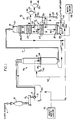
- FIG. 1 An exemplary apparatus for kraft pulping according to the invention is illustrated in Figure 1.
- Entirely standard components include a chips bin 10 for receiving a feed of chips 11 or like cellulosic comminuted fibrous material. From the chips bin 10, the material goes to a horizontal steaming vessel 12, and a vertical conduit 13, kraft white liquor from the source 14 being added to the material in the conduit 13 to slurry the material as it is fed to the high pressure feeder 15. From the high pressure feeder 15 the material entrained in kraft white liquor passes to an optional impregnation vessel 16, and then in line 17 to the top 18 of a continuous digester 19. At the top of the digester 19 there is a liquid/material separation device 20, which preferably comprises a plurality of bull screens with switching withdrawal from the screens, or the like. The digester 19 also includes a central portion 21 and a bottom 22.
- one or more screens 23, and conduit 24, are provided as means for extracting black liquor from the digester 19.
- the black liquor is typically passed in conduit 24 to a series of flash tanks 25, as is conventional.
- withdrawal screens 27 are also provided, being connected by a withdrawal conduit to a pump 28 and a heater 29 for re-introduction of the withdrawn liquid at point 30 of a re-introduction conduit, the point 30 typically being slightly above the screens 27.
- kraft pulp is withdrawn in conduit 33 (a scraper or like conventional components can also be utilized), and wash liquor from source 34 is added in introduction conduit 35.
- a wash screen (one or more rows) 37 Adjacent the bottom of the digester 19 a wash screen (one or more rows) 37 is provided, liquid being withdrawn therethrough in a withdrawal conduit under the influence of pump 38, and then passing through heater 39 into a re-introduction conduit to be introduced at point 40 just above the screen 37. From the point 40 up to the screens 23, liquid flows countercurrently to the material -- as designated by arrows 42 -- while above the screens 23 it flows cocurrently.
- a conduit 46 is provided for interconnecting the main conduit 44 to the withdrawal conduit in the second, wash, recirculation loop provided by elements 37 through 40.
- sufficient kraft white liquor is added in conduit 46 so as to achieve significantly enhanced viscosity and strength properties of the pulp produced compared to the practice of the same method without the introduction of kraft white liquor in conduit 46.
- the amount of kraft white liquor added in conduit 46 is at least about 5% of the total amount of kraft liquor utilized to effect kraft pulping, and typically is about 10-20% (e.g. about 15%).
- Kraft white liquor preferably is also added -- as is known per se -- in conduit 45 in addition to conduit 46, the amount added in conduit 45 being at least about 10%, and preferably about 10-20%.
- the apparatus of Figure 1 also includes a recirculation loop at a central portion of the impregnation vessel 16, including screen 48, withdrawal conduit 49, pump 50, and re-introduction conduit/point 51.
- Kraft white liquor from source 14 also is preferably added as indicated by lines or points 52, 53, 54 to the recirculation loop in the impregnation vessel 16, and to the recirculation conduits from the digester to the impregnation vessel 16, and from the impregnation vessel 16 to the high pressure feeder 15.
- Normally the majority of the white liquor used in the conventional continuous kraft pulping process is added at the points or conduits 52 - 54.
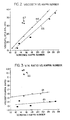
- FIG. 2 Graphical representations of some of the improved results achieved according to the present invention are illustrated in Figures 2 and 3.
- the first procedure -- illustrated by line 55 -- is conventional continuous kraft cooking.
- the second procedure -- illustrated by line 56 -- is for the Kamyr MCCTM system and process.
- the data points 57 illustrate results achieved by practicing the present invention.
- all parameters were maintained essentially the same except for the addition of kraft white liquor, and the temperature in the wash zone according to the invention was raised to about 140-175°C, compared to about 125-130°C for conventional kraft cooking and Kamyr's MCCTM process.
- the conditions resulting in the plots in Figures 2 and 3 are set forth in the following table:
- the addition of white liquor at 53 is normally about 50-60% of the total white liquor added, and about 10-20% at 54 (with about 10-20% at 45, and 5-20% at 46).
- Figure 3 graphically illustrates the same test results as Figure 2, only the viscosity/Kappa Number ratio is plotted against Kappa Number.
- the graphical representation 60 is attained during conventional kraft cooking, the graphical representation 61 during the practice of the Kamyr MCCTM process and system, and the data points 62 in the practice of the present invention.
- the viscosity of the plots produced according to the invention is at least 30% greater than for the best prior art system (MCCTM), and can be expected to be at least 20% greater.
- the viscosity of the final pulp produced increase, the strength properties (tear, tensile, and burst) are also increased for a given Kappa Number. Further, unexpectedly, the entire digester becomes easier to operate. The easier operation of the digester alone is enough to warrant utilization of the method according to the invention.
Landscapes
- Life Sciences & Earth Sciences (AREA)
- Engineering & Computer Science (AREA)
- Wood Science & Technology (AREA)
- Chemical & Material Sciences (AREA)
- Inorganic Chemistry (AREA)
- Paper (AREA)
- Cookers (AREA)
- Detergent Compositions (AREA)
- Diaphragms For Electromechanical Transducers (AREA)
- Pharmaceuticals Containing Other Organic And Inorganic Compounds (AREA)
- Physical Or Chemical Processes And Apparatus (AREA)
- Nitrogen Condensed Heterocyclic Rings (AREA)
- Medicines Containing Antibodies Or Antigens For Use As Internal Diagnostic Agents (AREA)
Claims (11)
- Verfahren zum kontinuierlichen Kraftauslaugen von zerkleinertem Zellulosefasermaterial mit einem aufrechtstehenden Zellulosekocher (19) mit einem Deckel (18), einem Boden (22) und Rumpfabschnitten (21), mit den Schritten:
(a) Einfüllen von zerkleinertem Zellulosefasermaterial, das in Kraft-Weißlauge mitgeführt wird, in den Deckel des Zellstoffkochers; (b) Abscheiden von Ablauge aus mindestens einem Filter (23) zwischen dem Deckel und dem Rumpfabschnitt des Zellstoffkochers; (c) Entziehen und Umwälzen von Flüssigkeit in einem Rumpfabschnitt des Zellstoffkochers in einer ersten Umwälzschleife (28, 29), wobei die in den Zellstoffkocher zurückfließende Lauge teilweise darin aufwärts, gegenläufig zum Materialstrom fließt; (d) Hinzufügen von Waschflüssigkeit (34) in den Boden des Zellstoffkochers; (e) Entziehen von Kraftzellstoff aus dem Boden des Zellstoffkochers; (f) Abziehen und Umwälzen von Flüssigkeit nahe dem Boden des Zellstoffkochers in einer zweiten Wasch- und Umwälzschleife (38, 39); (g) Hinzufügen von Weißlauge zur ersten Umwälzschleife; und (h) Hinzufügen von Kraft-Weißlauge (14) zur zweiten Umwälzschleife, wobei die in den Zellstoffkocher zurückfließende Lauge teilweise darin aufwärts, gegenläufig zum Materialstrom fließt; und wobei die Menge von Weißlauge, die in der zweiten Umwälzschleife hinzugefügt wird, ausreichend ist, um die Viskosität und die Festigkeitseigenschaften des erzeugten Zellstoffs im Vergleich zur Anwendung des gleichen Verfahrens mit dem gleichen Material, der gleichen Kappazahl, und anderen Parametern nur ohne den Schritt (h) zu steigern. - Verfahren nach Anspruch 1, ferner dadurch gekennzeichnet, daß der Schritt (h) so ausgeführt ist, daß ca. 5 bis 20% der Gesamtmenge der Kraft-Weißlauge, die für das Kraftauslaugen verwendet wird, während der Ausführung des Schritts (h) hinzugefügt wird.
- Verfahren nach Anspruch 1, ferner dadurch gekennzeichnet, daß die Schritte (a) bis (f) so ausgeführt werden, daß der Großteil der Kraft-Weißlauge im Schritt (a) und mindestens 5% der gesamten Kraftlauge, die zum Kraftkochen verwendet wird, im Schritt (h) hinzugefügt wird und die Temperatur im Schritt (h) ungefähr 140 bis 175°C beträgt.
- Verfahren nach Anspruch 1, ferner unter Verwendung eines Imprägnierkessels (16) und einer Leitung (17), die zwischen den Imprägnierkessel und den Zellstoffkocher gelegt ist, und ferner dadurch gekennzeichnet, daß der Schritt (a) durch Einspeisen von Kraft-Weißlauge (14) in die Leitung und in den Imprägnierkessel ausgeführt und der Großteil der eingespeisten Kraft-Weißlauge in die Leitung und in den Imprägnierkessel eingespeist wird, wobei ungefähr 5 bis 20% der Kraft-Weißlauge, die für das Kraftkochen verwendet wird, in dem Schritt (h) und ungefähr 10 bis 20% der verwendeten Kraft-Weißlauge in dem Schritt (g) hinzugefügt werden.
- Verfahren nach Anspruch 1, ferner dadurch gekennzeichnet, daß sowohl in der ersten als auch in der zweiten Umwälzschleife die Flüssigkeit gepumpt (durch 28, 38) und aufgeheizt (durch 29, 39) wird, bevor sie in den Zellstoffkocher zurückgeführt wird, und ferner dadurch gekennzeichnet, daß die Schritte (g) und (h) durch Einleiten der Kraft-Weißlauge vor dem Pumpen (bei 45, 46) und Aufheizen der zurückfließenden Flüssigkeit in die Umwälzschleife ausgeführt werden.
- Verfahren nach Anspruch 1, ferner dadurch gekennzeichnet, daß der Schritt (h) so ausgeführt ist, daß die Viskosität des erzeugten Kraftzellstoffs bei einer gegebenen Kappazahl um mindestens ungefähr 20% im Vergleich zu dem Zellstoff gesteigert wird, der nur durch die Anwendung der obigen Schritte (a) bis (g) erzeugt wird.
- Verfahren nach Anspruch 6, ferner gekennzeichnet durch den Schritt des Beibehaltens der Temperatur in der Waschzone bei ungefähr 140 bis 175°C.
- Verfahren nach Anspruch 1, ferner dadurch gekennzeichnet, daß der Schritt (h) so ausgeführt ist, daß die Viskosität des erzeugten Kraftzellstoffs bei einer gegebenen Kappazahl um mindestens ungefähr 30% gesteigert wird im Vergleich zu dem Zellstoff, der nur durch die Anwendung der obigen Schritte (a) bis (g) erzeugt wird, unter Beibehaltung der Temperatur in der Waschzone bei ungefähr 140 bis 175°C und Hinzufügen von ungefähr 15% Kraft-Weißlauge in die Leitung (46), ungefähr 10% in die Leitung (45) und dem Rest in die Leitung (53 und 54).
- Vorrichtung zum kontinuierlichen Kraftauslaugen von zerkleinertem Zellulosefasermaterial mit:einem aufrechtstehenden Zellstoffkochkessel (19) mit einem Deckel (18), einem Boden (22) und Rumpfabschnitten (21); Mitteln (17) zum Einführen von zerkleinertem Zellulosefasermaterial, das in Weißlauge mitgeführt wird, in den Deckel des Zellstoffkochers; Mitteln (23, 24) zum Abscheiden von Ablauge aus mindestens einem Filter (23) zwischen dem Deckel des Zellstoffkochers und dem Rumpfabschnitt; Mitteln (27, 28) an dem Rumpfabschnitt des Zellstoffkochers zum Entziehen und Umwälzen von Flüssigkeit in einer ersten Umwälzschleife; Mitteln (34, 35) zum Hinzufügen von Waschflüssigkeit an dem Boden des Zellstoffkochers; Mitteln (33) zum Entziehen von Kraftzellstoff aus dem Boden des Zellstoffkochers; Mitteln (37, 38) neben dem Boden des Zellstoffkochers zum Entziehen und Umwälzen von Lauge in einer zweiten Wasch- und Umwälzschleife; und Mitteln (14, 44, 45) zum Einführen von Weißlauge in die erste Umwälzschleife;gekennzeichnet durch Mittel (14, 44, 46) zum Einführen von Weißlauge in die zweite Umwälzschleife.
- Vorrichtung nach Anspruch 9, ferner dadurch gekennzeichnet, daß jede Umwälzschleife eine Entnahmeleitung, eine Pumpe (28, 38), eine Heizung (39, 29) und Wiedereinlaßleitungen (30, 40) aufweist, und daß das Mittel zum Einleiten von Weißlauge in jede Umwälzschleife ein Mittel (45, 46) zum Einleiten der Lauge in die Entnahmeleitung vor der Pumpe und der Heizung aufweist.
- Vorrichtung nach Anspruch 9, ferner mit einem aufrechtstehenden Imprägnierkessel (16) mit einem Deckel und einem Boden und mit einer Leitung (17) zum Verbinden des Bodens des Imprägnierkessels mit dem Deckel des Zellstoffkochers und mit einer Umwälzschleife (54) zum Umwälzen von Lauge aus dem Deckel des Zellstoffkochers in den Boden des Imprägnierkessels und mit Mitteln (48 bis 51) in einem Rumpfabschnitt des Imprägnierkessels zum Abziehen und Umwälzen von Lauge in einer dritten Umwälzschleife, und mit Mitteln (14, 52) zum Einleiten von Weißlauge in die dritte Umwälzschleife.
Applications Claiming Priority (2)
| Application Number | Priority Date | Filing Date | Title |
|---|---|---|---|
| US58304390A | 1990-09-17 | 1990-09-17 | |
| US583043 | 1990-09-17 |
Publications (3)
| Publication Number | Publication Date |
|---|---|
| EP0476230A2 EP0476230A2 (de) | 1992-03-25 |
| EP0476230A3 EP0476230A3 (en) | 1993-06-09 |
| EP0476230B1 true EP0476230B1 (de) | 1996-12-18 |
Family
ID=24331461
Family Applications (1)
| Application Number | Title | Priority Date | Filing Date |
|---|---|---|---|
| EP91108241A Expired - Lifetime EP0476230B1 (de) | 1990-09-17 | 1991-05-22 | Verlängertes Kraftkochen mit dem Waschkreislauf zugefügter Weisslauge |
Country Status (10)
| Country | Link |
|---|---|
| EP (1) | EP0476230B1 (de) |
| JP (1) | JP3029492B2 (de) |
| AT (1) | ATE146538T1 (de) |
| BR (1) | BR9103650A (de) |
| CA (1) | CA2037717C (de) |
| DE (1) | DE69123670D1 (de) |
| FI (1) | FI103815B1 (de) |
| NO (1) | NO179918C (de) |
| RU (1) | RU2089694C1 (de) |
| ZA (1) | ZA912117B (de) |
Cited By (1)
| Publication number | Priority date | Publication date | Assignee | Title |
|---|---|---|---|---|
| US6966970B2 (en) * | 2001-05-02 | 2005-11-22 | Kvaerner Pulping Ab | Method for supplying washing liquid to a process for cooking cellulose pulp |
Families Citing this family (24)
| Publication number | Priority date | Publication date | Assignee | Title |
|---|---|---|---|---|
| CA2089516A1 (en) * | 1992-02-21 | 1993-08-22 | Kaj Henricson | Chlorine free pulping and bleaching sequence |
| US5401361A (en) * | 1992-08-19 | 1995-03-28 | Kamyr, Inc. | Completely coutercurrent cook continuous digester |
| SE501848C2 (sv) * | 1992-11-18 | 1995-06-06 | Kvaerner Pulping Tech | Metod att koka massa kontinuerligt vid konstant temperatur |
| SE500455C2 (sv) * | 1992-11-18 | 1994-06-27 | Kamyr Ab | Förfarande vid kontinuerlig kokning under förhöjt tryck och temperatur av fibermateral i en vertikal kokare |
| WO1994024362A1 (en) * | 1993-04-20 | 1994-10-27 | Kamyr Ab | Method of continuously cooking pulp |
| US5766413A (en) * | 1993-04-23 | 1998-06-16 | Kvaerner Pulping Ab | Process for isothermal cooking pulp in a continuous digester |
| US5536366A (en) * | 1993-05-04 | 1996-07-16 | Ahlstrom Machinery Inc. | Digester system for implementing low dissolved solids profiling |
| US5824188A (en) * | 1993-05-04 | 1998-10-20 | Ahlstrom Machinery Inc. | Method of controlling the pressure of a continuous digester using an extraction-dilution |
| US5575890A (en) * | 1993-05-04 | 1996-11-19 | Kamyr, Inc. | Method for selectively increasing the sulfide ion concentration and sulfidity of kraft cooking liquor during kraft cooking of wood |
| US5489363A (en) * | 1993-05-04 | 1996-02-06 | Kamyr, Inc. | Pulping with low dissolved solids for improved pulp strength |
| US6132556A (en) * | 1993-05-04 | 2000-10-17 | Andritz-Ahlstrom Inc. | Method of controlling pulp digester pressure via liquor extraction |
| SE502667C2 (sv) * | 1993-07-12 | 1995-12-04 | Kvaerner Pulping Tech | Behandling av fibermaterial med komplexbildare före kokning |
| WO1996007786A1 (en) * | 1994-09-02 | 1996-03-14 | Kamyr, Inc. | Continuous kraft cooking with black liquor pretreatment |
| SE506458C2 (sv) * | 1996-02-09 | 1997-12-15 | Kvaerner Pulping Tech | Kontinuerlig kokning av cellulosahaltigt material med värmeväxling mellan kokaravdrag och cirkulerande kokvätska |
| BE1011503A3 (fr) * | 1997-10-17 | 1999-10-05 | Solvay Interox | Fabrication de pate a papier chimique. |
| SE0004049L (sv) * | 2000-11-03 | 2001-11-05 | Kvaerner Pulping Tech | Kontinuerlig kokning av massa med avdrag av begagnad koklut dels från kokaren, dels från en efterföljande tryckdiffusör |
| SE518542C2 (sv) * | 2001-03-21 | 2002-10-22 | Kvaerner Pulping Tech | Kontinuerlig kokare förfarande för drift av kontinuerlig kokare och återföringssystem för kokvätska i en kontinuerlig kokare |
| GB0119237D0 (en) * | 2001-08-07 | 2001-10-03 | Bioregional Minimills Uk Ltd | Paper plant |
| RU2407768C2 (ru) * | 2005-06-03 | 2010-12-27 | Андриц Аг | Способ снижения потребления электроэнергии при производстве термомеханической древесной массы посредством высокотемпературного размола древесной массы низкой и средней концентрации |
| RU2335590C1 (ru) * | 2007-01-16 | 2008-10-10 | Витаутас Валентинович Сенкус | Способ изготовления устойчивой железнодорожной шпалы с использованием отходов горно-металлургического производства |
| US20090038767A1 (en) * | 2007-08-07 | 2009-02-12 | Andritz Inc. | Method and System for Semi-Chemical Pulping |
| CA2638196C (en) | 2007-08-07 | 2015-12-15 | Andritz Inc. | Method and system for semi-chemical pulping |
| US7828930B2 (en) * | 2007-11-20 | 2010-11-09 | International Paper Company | Use of polysulfide in modified cooking |
| SE539706C2 (en) * | 2014-11-07 | 2017-11-07 | Valmet Oy | Method for recovering hydrolyzate |
Family Cites Families (3)
| Publication number | Priority date | Publication date | Assignee | Title |
|---|---|---|---|---|
| US3215588A (en) * | 1963-08-15 | 1965-11-02 | Lummus Co | Continuous impregnation, cooking, and washing of fibrous material |
| US3427218A (en) * | 1964-07-10 | 1969-02-11 | Kamyr Ab | Method of performing counter-current continuous cellulose digestion |
| US5053108A (en) * | 1989-06-28 | 1991-10-01 | Kamyr Ab | High sulfidity cook for paper pulp using black liquor sulfonization of steamed chips |
-
1991
- 1991-03-07 CA CA002037717A patent/CA2037717C/en not_active Expired - Lifetime
- 1991-03-21 ZA ZA912117A patent/ZA912117B/xx unknown
- 1991-05-22 EP EP91108241A patent/EP0476230B1/de not_active Expired - Lifetime
- 1991-05-22 AT AT91108241T patent/ATE146538T1/de not_active IP Right Cessation
- 1991-05-22 DE DE69123670T patent/DE69123670D1/de not_active Expired - Lifetime
- 1991-08-26 BR BR919103650A patent/BR9103650A/pt not_active IP Right Cessation
- 1991-09-10 JP JP3230501A patent/JP3029492B2/ja not_active Expired - Lifetime
- 1991-09-16 NO NO913639A patent/NO179918C/no not_active IP Right Cessation
- 1991-09-16 RU SU915001635A patent/RU2089694C1/ru active
- 1991-09-17 FI FI914353A patent/FI103815B1/fi not_active IP Right Cessation
Cited By (1)
| Publication number | Priority date | Publication date | Assignee | Title |
|---|---|---|---|---|
| US6966970B2 (en) * | 2001-05-02 | 2005-11-22 | Kvaerner Pulping Ab | Method for supplying washing liquid to a process for cooking cellulose pulp |
Also Published As
| Publication number | Publication date |
|---|---|
| AU7830591A (en) | 1992-03-19 |
| JP3029492B2 (ja) | 2000-04-04 |
| BR9103650A (pt) | 1992-05-19 |
| RU2089694C1 (ru) | 1997-09-10 |
| CA2037717A1 (en) | 1992-03-18 |
| NO913639D0 (no) | 1991-09-16 |
| JPH04300378A (ja) | 1992-10-23 |
| FI914353A7 (fi) | 1992-03-18 |
| ZA912117B (en) | 1991-11-27 |
| NO179918C (no) | 1997-01-08 |
| CA2037717C (en) | 1996-03-05 |
| NO179918B (no) | 1996-09-30 |
| FI103815B (fi) | 1999-09-30 |
| FI914353A0 (fi) | 1991-09-17 |
| EP0476230A3 (en) | 1993-06-09 |
| AU647129B2 (en) | 1994-03-17 |
| ATE146538T1 (de) | 1997-01-15 |
| EP0476230A2 (de) | 1992-03-25 |
| NO913639L (no) | 1992-03-18 |
| DE69123670D1 (de) | 1997-01-30 |
| FI103815B1 (fi) | 1999-09-30 |
Similar Documents
| Publication | Publication Date | Title |
|---|---|---|
| EP0476230B1 (de) | Verlängertes Kraftkochen mit dem Waschkreislauf zugefügter Weisslauge | |
| EP1308555B1 (de) | Kontrolle der gelösten Feststoffe bei der Zellstoffherstellung | |
| EP0527294B1 (de) | Behandlung von Hackschnitzel mit Schwarzlauge | |
| US20050087314A1 (en) | Pulp cooking with particular alkali profiles | |
| US20040089431A1 (en) | Method for alkaline batch cooking of fiber material | |
| EP0138484A2 (de) | Mechanischer Aufschluss von Papierbrei | |
| US6332954B2 (en) | Continuous digester system having a top separator | |
| US5885414A (en) | Method of producing pulp with high alkali cooking in the last cooking stage | |
| US5328564A (en) | Modified digestion of paper pulp followed by ozone bleaching | |
| WO1994009203A1 (en) | Completely countercurrent cook continuous digester | |
| EP0557112A1 (de) | Verfahren zum chlorfreien Aufschluss und Bleichen | |
| WO1995008021A1 (en) | Eop stage for chlorine free bleaching | |
| WO1996034143A1 (en) | Impregnation of cellulose-containing material with black liquor in a single vessel digester | |
| EP0963480B1 (de) | Verfahren und vorrichtung zur kontinuierlichen kochung von zellstoff | |
| US20040089430A1 (en) | Method for alkaline cooking of fiber material | |
| RU2793493C2 (ru) | Способ изготовления растворимой древесноволокнистой массы | |
| US20030131956A1 (en) | Continuous pulping processes and systems | |
| JP2003301392A (ja) | リグノセルロース物質の蒸解方法 |
Legal Events
| Date | Code | Title | Description |
|---|---|---|---|
| PUAI | Public reference made under article 153(3) epc to a published international application that has entered the european phase |
Free format text: ORIGINAL CODE: 0009012 |
|
| AK | Designated contracting states |
Kind code of ref document: A2 Designated state(s): AT DE FR GB IT SE |
|
| PUAL | Search report despatched |
Free format text: ORIGINAL CODE: 0009013 |
|
| AK | Designated contracting states |
Kind code of ref document: A3 Designated state(s): AT DE FR GB IT SE |
|
| 17P | Request for examination filed |
Effective date: 19931103 |
|
| 17Q | First examination report despatched |
Effective date: 19940316 |
|
| GRAG | Despatch of communication of intention to grant |
Free format text: ORIGINAL CODE: EPIDOS AGRA |
|
| GRAH | Despatch of communication of intention to grant a patent |
Free format text: ORIGINAL CODE: EPIDOS IGRA |
|
| GRAH | Despatch of communication of intention to grant a patent |
Free format text: ORIGINAL CODE: EPIDOS IGRA |
|
| GRAA | (expected) grant |
Free format text: ORIGINAL CODE: 0009210 |
|
| AK | Designated contracting states |
Kind code of ref document: B1 Designated state(s): AT DE FR GB IT SE |
|
| PG25 | Lapsed in a contracting state [announced via postgrant information from national office to epo] |
Ref country code: IT Free format text: LAPSE BECAUSE OF FAILURE TO SUBMIT A TRANSLATION OF THE DESCRIPTION OR TO PAY THE FEE WITHIN THE PRE;WARNING: LAPSES OF ITALIAN PATENTS WITH EFFECTIVE DATE BEFORE 2007 MAY HAVE OCCURRED AT ANY TIME BEFORE 2007. THE CORRECT EFFECTIVE DATE MAY BE DIFFERENT FROM THE ONE RECORDED.SCRIBED TIME-LIMIT Effective date: 19961218 Ref country code: FR Effective date: 19961218 Ref country code: AT Effective date: 19961218 |
|
| REF | Corresponds to: |
Ref document number: 146538 Country of ref document: AT Date of ref document: 19970115 Kind code of ref document: T |
|
| REF | Corresponds to: |
Ref document number: 69123670 Country of ref document: DE Date of ref document: 19970130 |
|
| PG25 | Lapsed in a contracting state [announced via postgrant information from national office to epo] |
Ref country code: DE Effective date: 19970319 |
|
| EN | Fr: translation not filed | ||
| PG25 | Lapsed in a contracting state [announced via postgrant information from national office to epo] |
Ref country code: GB Effective date: 19970522 |
|
| PLBE | No opposition filed within time limit |
Free format text: ORIGINAL CODE: 0009261 |
|
| STAA | Information on the status of an ep patent application or granted ep patent |
Free format text: STATUS: NO OPPOSITION FILED WITHIN TIME LIMIT |
|
| 26N | No opposition filed | ||
| GBPC | Gb: european patent ceased through non-payment of renewal fee |
Effective date: 19970522 |
|
| PGFP | Annual fee paid to national office [announced via postgrant information from national office to epo] |
Ref country code: SE Payment date: 20100510 Year of fee payment: 20 |
|
| REG | Reference to a national code |
Ref country code: SE Ref legal event code: EUG |