EP0458072B1 - Immunologic enhancement of the somatogenic effect of somatotropin with an antibody - Google Patents
Immunologic enhancement of the somatogenic effect of somatotropin with an antibody Download PDFInfo
- Publication number
- EP0458072B1 EP0458072B1 EP91106423A EP91106423A EP0458072B1 EP 0458072 B1 EP0458072 B1 EP 0458072B1 EP 91106423 A EP91106423 A EP 91106423A EP 91106423 A EP91106423 A EP 91106423A EP 0458072 B1 EP0458072 B1 EP 0458072B1
- Authority
- EP
- European Patent Office
- Prior art keywords
- pst
- atcc
- monoclonal antibody
- antibodies
- growth
- Prior art date
- Legal status (The legal status is an assumption and is not a legal conclusion. Google has not performed a legal analysis and makes no representation as to the accuracy of the status listed.)
- Expired - Lifetime
Links
Images


Classifications
-
- A—HUMAN NECESSITIES
- A61—MEDICAL OR VETERINARY SCIENCE; HYGIENE
- A61K—PREPARATIONS FOR MEDICAL, DENTAL OR TOILETRY PURPOSES
- A61K39/00—Medicinal preparations containing antigens or antibodies
-
- C—CHEMISTRY; METALLURGY
- C07—ORGANIC CHEMISTRY
- C07K—PEPTIDES
- C07K16/00—Immunoglobulins [IG], e.g. monoclonal or polyclonal antibodies
- C07K16/18—Immunoglobulins [IG], e.g. monoclonal or polyclonal antibodies against material from animals or humans
- C07K16/26—Immunoglobulins [IG], e.g. monoclonal or polyclonal antibodies against material from animals or humans against hormones ; against hormone releasing or inhibiting factors
-
- A—HUMAN NECESSITIES
- A61—MEDICAL OR VETERINARY SCIENCE; HYGIENE
- A61K—PREPARATIONS FOR MEDICAL, DENTAL OR TOILETRY PURPOSES
- A61K39/00—Medicinal preparations containing antigens or antibodies
- A61K39/395—Antibodies; Immunoglobulins; Immune serum, e.g. antilymphocytic serum
-
- A—HUMAN NECESSITIES
- A61—MEDICAL OR VETERINARY SCIENCE; HYGIENE
- A61P—SPECIFIC THERAPEUTIC ACTIVITY OF CHEMICAL COMPOUNDS OR MEDICINAL PREPARATIONS
- A61P43/00—Drugs for specific purposes, not provided for in groups A61P1/00-A61P41/00
Definitions
- This invention relates to the preparation of antibodies, in particular monoclonal antibodies, to porcine somatotropin (pST). When these antibodies are administered together with pST, the growth of vertebrates is greater than that achieved with the administration of pST alone.
- This invention also relates to the general finding that the administration of antibodies to somatotropins of vertebrates, together with such somatotropins, results in an increase in growth of vertebrates which, as compared with the administration of such somatotropins alone, persists over prolonged periods.
- Somatotropin is a polypeptide secreted by the anterior pituitary in warm-blooded animals and acts through specific cell surface receptors located primarily in the liver (Hughes, J. P. and Friesen, H. G., Ann. Rev. Physiol. , 47 , 469-482 (1985)). Somatotropin is useful to enhance growth of such animals as bovine (cattle), porcine (pigs), caprine (goat), avian (chicken, turkey, geese, etc.) and rabbit, among others. Somatotropin is also useful to enhance the growth of other vertebrates, such as fish.
- the growth hormone pST is native to swine and accounts for maturation of the animal, including increasing the growth rate and the lean to fat ratio. It has been found that pST is a single chain polypeptide of 191 amino acids with two cystine bridges linking residues 53-164 and 181-189, respectively (Abdel-Meguid, S.S., et al., Proc. Nat. Acad. Sci. , 84 , 6434-6437 (1987).
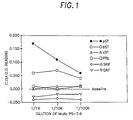
- Figure 1 depicts a study of the immunospecificity of monoclonal antibody PS-7.6 to various antigens, where pST, bST and cST are, respectively, porcine, bovine and chicken somatotropin, PRL is prolactin, SRIF is somatostatin and GRF is growth hormone releasing factor.
- monoclonal antibody is abbreviated as "MoAb”.
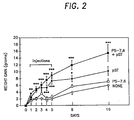
- Figure 2 depicts a time course study comparing the effect on the growth of hypophysectomized rats of treatment with pST alone, monoclonal antibody PS-7.6 alone, pST in combination with monoclonal antibody PS-7.6, or no treatment.
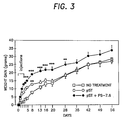
- Figure 3 depicts a long-term (56 days) time course study comparing the effect on the growth of hypophysectomized rats of treatment with pST alone, pST in combination with monoclonal antibody PS-7.6, or no treatment.
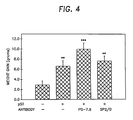
- Figure 4 depicts the effect on the growth of hypophysectomized rats treated with pST alone, pST in combination with control immunoglobulin from SP2/0 myeloma ascites, pST in combination with monoclonal antibody PS-7.6, or no treatment.
- Figure 5 depicts the dose response of the administration of monoclonal antibody PS-7.6 plus pST on the growth of hypophysectomized rats, in comparison with pST alone and no treatment (without pST).
- Figure 6 depicts the effect of treatment frequency (one injection per day) with pST alone or pST in combination with monoclonal antibody PS-7.6 on the growth of hypophysectomized rats.
- Figure 7 depicts the effect on the growth of hypophysectomized rats treated with pST alone, pST in combination with monoclonal antibodies PS-3.12, PS-7.6 and PS-8.3, respectively, or no treatment.
- This invention is directed to the generation of antibodies, in particular monoclonal antibodies, to pST.
- Such antibodies are then administered together with pST to vertebrates, such as warm-blooded animals and fish, to enhance their growth performance by potentiating the activity of pST.
- these antibodies are administered to vertebrates which are thereafter treated with pST.
- the monoclonal antibodies to pST of this invention affect the activity of pST in the following ways:
- This invention is also directed to the more general observation that the improved growth resulting from the administration of antibodies to somatotropin (including, but not limited to pST) in combination with said somatotropin is not a transient phenomenon. Rather, vertebrate weights continue to exceed those of vertebrates treated with somatotropin alone over a given period of time.
- the antibodies potentiate the activity of a somatotropin over prolonged periods of time when a vertebrate is administered an effective growth enhancing amount of a somatotropin and an effective somatotropin-potentiating amount of one or more antibodies to said somatotropin, such that the weight of the vertebrate continues to exceed that of a vertebrate treated with the same amount of said somatotropin alone over a given period of time.
- monoclonal antibodies are prepared by immunizing mice with a somatotropin, removing the spleens of the mice, preparing suspensions of lymphocytes, fusing these lymphocytes to mouse myeloma cells, culturing the cells and collecting supernatants of surviving hybridomas for antibody screening by solid-phase enzyme-linked immunosorbent assay (ELISA). Those hybridomas which produce desired antibodies are further subcloned and injected in mice. Ascites are then collected from the peritoneal cavities of mice and immunoglobulin (Ig) is purified by either ammonium sulfate precipitation or a protein A affinity column by fast protein liquid chromatography (FPLC). Samples of Ig so purified are assayed against antigens using ELISA to identify the antibodies formed.
- a somatotropin removing the spleens of the mice, preparing suspensions of lymphocytes, fusing these lymphocytes to mouse myeloma cells, culturing the
- polyclonal antibodies to a somatotropin are generated and purified from immunized warm-blooded animals such as swine and rabbits.
- Polyclonal antibodies are generated by immunizing vertebrates with such a somatotropin.
- Polyclonal antibodies are recovered by first obtaining a blood sample from an immunized animal after a time sufficient from administration of the somatotropin for antibodies to be formed.
- the serum (which contains the antibodies) is isolated by conventional means such as centrifugation. Serum is separated into fractions containing Ig and lacking immunoglobulin (non-Ig) by means such as FPLC. Only the Ig fraction contains antibodies to the peptides.
- the antibodies are then isolated from the Ig fraction by sodium dodecyl sulfate-polyacrylamide gel electrophoresis (SDS-PAGE). The purity of the antibodies so isolated is greater than 98% as determined by SDS-PAGE.
- the antibody titer level is assayed using ELISA according to conventional procedures.
- somatotropin exemplified in this application is pST
- a person skilled in the art may utilize the techniques described herein to generate monoclonal and polyclonal antibodies to other somatotropins.
- the monoclonal and polyclonal antibodies of this invention may be used in two ways to potentiate and enhance the growth-promoting activity of a somatotropin.
- an antibody is administered to a vertebrate together with a somatotropin, such as pST.
- the vertebrate is treated with one or more doses of an anti-somatotropin antibody and is subsequently treated with somatotropin.
- more than one antibody to the particular somatotropin may be used.
- the invention also contemplates the administration of combinations of anti-somatotropin antibodies or their antigenic equivalents.
- the antibodies may be administered by conventional routes such as subcutaneous injection, intramuscular injection and intravenous flow, as well as transdermal and oral administration. It is preferred to administer the antibodies in association with a suitable carrier. It is particularly preferred to use a dosage regimen where an initial administration of the antibodies is followed by one or more booster administrations of the same antibodies at regular time intervals.
- hypox-rats are growth-deficient as a result of surgical removal of their pituitary glands. Hypox-rats serve as a useful model for studying the effect of somatotropin on growth (Groesbeck, M. D. and Parlow, A. F., Endocrinology , 120 , 2582-2590 (1987).
- the pST used may be isolated from natural sources or may be prepared using recombinant techniques such as those described in published European patent applications 104,920 or 111,389. The sources of and the method of isolation/preparation of pST itself forms no part of this invention.
- the antibodies may also be used together with recombinant pST in which the amino acid sequence of native pST has been modified using a technique such as site-directed mutagenesis, so long as the growth enhancing function of pST is maintained. See, for example, published European patent application 303,972.
- the antibody PS-7.6 is found to possess particularly strong potentiation of pST activity and is chosen for further analysis.
- Monoclonal antibodies PS-3.12 and PS-8.3 are also found to give strong potentiation of pST activity.
- Monoclonal antibody PS-7.6 is an IgG1 subtype immunoglobulin with k light chain characteristics.
- An immunospecificity study ( Figure 1) indicates that it is highly reactive with pST, weakly with bST, but not with cST, PRL, SRIF or GRF.
- the potentiation of activity of a somatotropin over prolonged periods of time by antibodies to said somatotropin is demonstrated using a similar hypox-rat assay.
- the growth of the animals is monitored for a longer period.
- the method is exemplified using pST and a monoclonal antibody to pST. Injections with pST alone for five days produce a noticeable weight gain in hypox-rats, but the effect is significant only up to eight days and completely coincides with the growth rate of untreated animals by day 28 ( Figure 3).
- treatment with monoclonal antibody PS-7.6 extends the elevated growth pattern at a significant level to 28 days.
- mice six to ten weeks of age, are purchased from Charles River Breeding Laboratories, Wilmington, MA. These mice are immunized with 100 ⁇ g pST emulsified in complete Freund's adjuvant and boosted with 50 ⁇ g of pST every three weeks thereafter. Their spleens are removed three days after the last boosting and single cell suspensions of lymphocytes are prepared.
- lymphocytes are fused with SP2/0 mouse myeloma cells lacking hypoxanthine phyosphoribosyl transferase (HPRT) with 50% polyethylene glycol, suspended in Dulbecco's modified Eagle medium (D-MEM) containing 20% fetal calf serum (Gibco), 0.175 ⁇ g/ml aminopterin, 13.6 ⁇ g/ml hypoxanthine, 3.88 ⁇ g/ml thymidine and 50 ⁇ g/ml gentamicin (HAT medium), and finally dispensed in 96-well culture plates.
- D-MEM Dulbecco's modified Eagle medium
- HAT medium fetal calf serum
- hybridomas produce clones of particular interest. Samples of these hybridomas have been deposited with the American Type Culture Collection and have been assigned accession numbers as shown in Table 1, together with the designations of the monoclonal antibodies of interest produced by those hybridomas: TABLE 1 Hybridoma Accession Number Monoclonal Antibody PS-3.12 ATCC HB 10415 MoAb PS-3.12 PS-7.6 ATCC HB 10416 MoAb PS-7.6 PS-8.3 ATCC HB 10417 MoAb PS-8.3
- the selected clones are injected intraperitoneally into Balb/C mice which are primed with PristaneTM for the production of antibody-containing ascites.
- Identification of the isotype of the monoclonal antibodies is carried out with an antibody isotyping kit (Zymed Laboratories, South San Francisco, CA).
- the monoclonal antibody designated PS-7.6 is selected as exemplary for further study in this Example 1.
- Antigens are dissolved in PBS and 1 ⁇ g in 100 ⁇ l is added to each well of a 96-well flat bottom polystyrene plate. After being incubated for one hour, the plate is washed three times with PBS containing 0.05% Tween-20TM by an automatic plate washer (Dynatech Wash II, Chantilly, VA). Each well is dispensed with 200 ⁇ l of 2% bovine serum albumin (Sigma) and the plate is incubated for another hour.
- Test samples are added to the wells, incubated for 30 minutes, washed six times with PBS, and added with 100 ⁇ l of alkaline phosphatase-conjugated goat anti-mouse IgG F(ab')2 (Zymed Laboratories, South San Francisco, CA). The plate is washed again after a 30 minute incubation and 100 ⁇ l of p-nitrophenyl phosphate (1mg/ml, Sigma) in 0.1M diethanolamine, pH 10.3, is added as substrate for color development. Finally, the colorimetric response is recorded as optical density (OD) by an ELISA plate reader at a wavelength of 405 nm. The incubation procedure is always performed at 37°C.
- the immunospecificity of the PS-7.6 monoclonal antibody is tested in a solid phase ELISA.
- Various antigens are coated in the wells of a 96-well plate and a series of dilutions of monoclonal antibody PS-7.6 ascites is added for interaction.
- Figure 1 indicates that monoclonal antibody PS-7.6 responds to pST antigen markedly well. It also indicates a slight cross-reactivity with bST, but not with cST, PRL, SRIF and GRF.
- the isotype of monoclonal antibody PS-7.6 determined by an antigen-dependent, biotin-avidin amplified ELISA is IgG1 with k light chain characteristics.
- the immunoreactivity of the monoclonal antibodies generated as described above is examined in conjunction with pST.
- Female Sprague-Dawley rats, 21 days of age and weighing 50-65g, are obtained from the Taconic Farm, Germantown, NY.
- the bioassay is carried out with these hypox rats deficient in growth as a result of surgical removal of their pituitary glands. After delivery, these rats are kept for an additional 7-10 days of observation to ensure a complete hypophysectomy. Animals are randomly allocated to eight rats per group. Two groups of control animals are always included in all experiments. The first group consists of untreated hypox-rats which serve as negative controls.
- the other control group consists of hypox-rats which receive a minimal effective dose of pST (5 ⁇ g) by daily injection and thus serve as positive controls.
- Antibody 0.5 to 1mg
- 5 ⁇ g of pST at room temperature for one hour is administered subcutaneously to each experimental rat at the neck region. The growth of these animals is individually monitored and recorded as weight gain during the course of the experiment.
- results are presented as mean weight gain together with the standard error of means for each group of eight rats.
- the statistical evaluation is carried out by the least-squares analysis of variance for randomized design using the General Linear Models procedure of the Statistical Analysis System. Unless otherwise noted, the analysis is made by comparison with negative controls who received no treatment.
- the growth-enhancing effect of monoclonal antibody PS-7.6 administered with pST is evaluated in hypox-rats. Hypox-rats are divided into four groups as described above. Daily injections of untreated control animals with 5 ⁇ g of pST for five days produce a significant weight gain as evidenced by an increase of the slope of their growth pattern. However, the effect is short-lived, because the accelerated growth curve of these control animals slows down as soon as the treatment of pST is terminated at day 5. Untreated controls show a retarded growth rate over a period of 16 days ( Figure 2). In contrast, the growth-promoting effect of pST is enhanced and extended over the 16 day period by monoclonal antibody PS-7.6 when both are incubated at room temperature for one hour prior to administration. Injections of monoclonal antibody PS-7.6 alone are ineffective.
- hypox-rats are injected daily with 5 ⁇ g per day of pST or pST plus one mg monoclonal antibody PS-7.6 for one to five consecutive days and the growth is scored at day eight.
- the effect of pST alone is not evident until these rats receive three injections or more ( Figure 6).
- a marked increase in weight gain by a combination treatment of pST and monoclonal antibody PS-7.6 is evident right after the second injection.
- a significant difference in weight gain is maintained between the two treatment groups after five injections; indeed the group receiving a combination of pST and monoclonal antibody PS-7.6 has a larger increase in weight gain after only two injections than that of the group receiving pST alone after five injections.
- Steps 1-4 of Example 1 are repeated to generate, purify and characterize monoclonal antibodies PS-3.12 and PS-8.3. Growth enhancement with these antibodies is evaluated in hypox-rats in comparison with monoclonal antibody PS-7.6. Hypox-rats are divided into five groups in an adaptation of the procedure in step 5 of Example 1. The first group is untreated controls; the second group receives 5 ⁇ g of pST by injection for five days; the other groups receive 5 ⁇ g of pST for five days plus 1.0 mg of monoclonal antibodies PS-3.12, PS-7.6 and PS-8.3, respectively. The results after five days are presented in Figure 7.
Landscapes
- Health & Medical Sciences (AREA)
- Chemical & Material Sciences (AREA)
- Life Sciences & Earth Sciences (AREA)
- Medicinal Chemistry (AREA)
- General Health & Medical Sciences (AREA)
- Immunology (AREA)
- Organic Chemistry (AREA)
- Animal Behavior & Ethology (AREA)
- Veterinary Medicine (AREA)
- Pharmacology & Pharmacy (AREA)
- Public Health (AREA)
- Epidemiology (AREA)
- Engineering & Computer Science (AREA)
- Mycology (AREA)
- Microbiology (AREA)
- Bioinformatics & Cheminformatics (AREA)
- Biochemistry (AREA)
- Endocrinology (AREA)
- Biophysics (AREA)
- Genetics & Genomics (AREA)
- Molecular Biology (AREA)
- Proteomics, Peptides & Aminoacids (AREA)
- Nuclear Medicine, Radiotherapy & Molecular Imaging (AREA)
- Chemical Kinetics & Catalysis (AREA)
- General Chemical & Material Sciences (AREA)
- Medicines Containing Antibodies Or Antigens For Use As Internal Diagnostic Agents (AREA)
- Preparation Of Compounds By Using Micro-Organisms (AREA)
- Peptides Or Proteins (AREA)
- Cosmetics (AREA)
- Medicines That Contain Protein Lipid Enzymes And Other Medicines (AREA)
- Feed For Specific Animals (AREA)
- Fodder In General (AREA)
- Micro-Organisms Or Cultivation Processes Thereof (AREA)
Applications Claiming Priority (2)
| Application Number | Priority Date | Filing Date | Title |
|---|---|---|---|
| US07/521,695 US6165465A (en) | 1990-05-15 | 1990-05-15 | Immunologic enhancement of the somatogenic effect of somatotropin with an antibody |
| US521695 | 1990-05-15 |
Publications (2)
| Publication Number | Publication Date |
|---|---|
| EP0458072A1 EP0458072A1 (en) | 1991-11-27 |
| EP0458072B1 true EP0458072B1 (en) | 1995-09-13 |
Family
ID=24077752
Family Applications (1)
| Application Number | Title | Priority Date | Filing Date |
|---|---|---|---|
| EP91106423A Expired - Lifetime EP0458072B1 (en) | 1990-05-15 | 1991-04-22 | Immunologic enhancement of the somatogenic effect of somatotropin with an antibody |
Country Status (18)
| Country | Link |
|---|---|
| US (1) | US6165465A (da) |
| EP (1) | EP0458072B1 (da) |
| JP (1) | JPH04228091A (da) |
| KR (1) | KR910019639A (da) |
| AT (1) | ATE127849T1 (da) |
| AU (1) | AU648303B2 (da) |
| CA (1) | CA2042437A1 (da) |
| DE (1) | DE69112904T2 (da) |
| DK (1) | DK0458072T3 (da) |
| ES (1) | ES2076399T3 (da) |
| FI (1) | FI98828C (da) |
| GR (1) | GR3017412T3 (da) |
| IE (1) | IE69575B1 (da) |
| IL (1) | IL97933A (da) |
| NO (1) | NO911877L (da) |
| NZ (1) | NZ238070A (da) |
| PT (1) | PT97650B (da) |
| ZA (1) | ZA913646B (da) |
Family Cites Families (12)
| Publication number | Priority date | Publication date | Assignee | Title |
|---|---|---|---|---|
| CA1341012C (en) * | 1982-09-27 | 2000-06-06 | Biogen, Inc. | Dna sequences, recombinant dna molecules and processes for producing swine growth hormone-like polypeptides |
| AU2092983A (en) * | 1982-11-08 | 1984-05-17 | Genentech Inc. | Porcine growth hormone produced by recombinant dna technology |
| US4925922A (en) * | 1983-02-22 | 1990-05-15 | Xoma Corporation | Potentiation of cytotoxic conjugates |
| CA1259923A (en) * | 1983-08-17 | 1989-09-26 | Roger Aston | Physiologically active compositions |
| US4599229A (en) * | 1985-09-09 | 1986-07-08 | International Minerals & Chemical Corp. | Method of promoting animal growth using antibodies against somatostatin |
| US4764475A (en) * | 1986-12-01 | 1988-08-16 | The University Of British Columbia | Pancreas dependant immunoassay for determining subpopulations of monoclonal antibodies to somatostatin. |
| GB8707398D0 (en) * | 1987-03-27 | 1987-04-29 | Coopers Animal Health | Biologically active molecules |
| FI900075L (fi) * | 1987-07-06 | 1990-01-05 | Peptide Technology Ltd | Medvaexthormon bindande peptid. |
| GB8718937D0 (en) * | 1987-08-11 | 1987-09-16 | Coopers Animal Health | Biologically active molecules |
| NZ225760A (en) * | 1987-08-14 | 1991-02-26 | Bio Technology General Corp | Expression plasmids containing the deo promoter and bacterial hosts containing these plasmids |
| US4837202A (en) * | 1987-09-14 | 1989-06-06 | Pitman-Moore, Inc. | Method for stimulating the immune system |
| DK8189A (da) * | 1988-01-12 | 1989-07-13 | Bunge Australia | Antigen-antistof-konjugater, deres fremstilling og anvendelse |
-
1990
- 1990-05-15 US US07/521,695 patent/US6165465A/en not_active Expired - Fee Related
-
1991
- 1991-04-10 IE IE119891A patent/IE69575B1/en not_active IP Right Cessation
- 1991-04-22 DK DK91106423.6T patent/DK0458072T3/da active
- 1991-04-22 AT AT91106423T patent/ATE127849T1/de not_active IP Right Cessation
- 1991-04-22 ES ES91106423T patent/ES2076399T3/es not_active Expired - Lifetime
- 1991-04-22 DE DE69112904T patent/DE69112904T2/de not_active Expired - Fee Related
- 1991-04-22 EP EP91106423A patent/EP0458072B1/en not_active Expired - Lifetime
- 1991-04-24 IL IL9793391A patent/IL97933A/en not_active IP Right Cessation
- 1991-04-29 AU AU76064/91A patent/AU648303B2/en not_active Ceased
- 1991-05-07 NZ NZ238070A patent/NZ238070A/xx unknown
- 1991-05-13 JP JP3135262A patent/JPH04228091A/ja active Pending
- 1991-05-13 CA CA002042437A patent/CA2042437A1/en not_active Abandoned
- 1991-05-14 KR KR1019910007773A patent/KR910019639A/ko not_active Ceased
- 1991-05-14 PT PT97650A patent/PT97650B/pt not_active IP Right Cessation
- 1991-05-14 ZA ZA913646A patent/ZA913646B/xx unknown
- 1991-05-14 FI FI912341A patent/FI98828C/fi active
- 1991-05-14 NO NO91911877A patent/NO911877L/no unknown
-
1995
- 1995-09-14 GR GR950401504T patent/GR3017412T3/el unknown
Also Published As
| Publication number | Publication date |
|---|---|
| GR3017412T3 (en) | 1995-12-31 |
| DE69112904D1 (de) | 1995-10-19 |
| ATE127849T1 (de) | 1995-09-15 |
| FI912341L (fi) | 1991-11-16 |
| KR910019639A (ko) | 1991-12-19 |
| PT97650B (pt) | 1998-08-31 |
| ZA913646B (en) | 1992-02-26 |
| JPH04228091A (ja) | 1992-08-18 |
| CA2042437A1 (en) | 1991-11-16 |
| AU7606491A (en) | 1991-11-21 |
| EP0458072A1 (en) | 1991-11-27 |
| FI912341A0 (fi) | 1991-05-14 |
| AU648303B2 (en) | 1994-04-21 |
| NO911877D0 (no) | 1991-05-14 |
| NZ238070A (en) | 1993-08-26 |
| DK0458072T3 (da) | 1995-11-13 |
| US6165465A (en) | 2000-12-26 |
| FI98828C (fi) | 1997-08-25 |
| IE911198A1 (en) | 1991-11-20 |
| IL97933A (en) | 1995-08-31 |
| IE69575B1 (en) | 1996-10-02 |
| PT97650A (pt) | 1992-03-31 |
| ES2076399T3 (es) | 1995-11-01 |
| NO911877L (no) | 1991-11-18 |
| DE69112904T2 (de) | 1996-05-15 |
| FI98828B (fi) | 1997-05-15 |
| IL97933A0 (en) | 1992-06-21 |
Similar Documents
| Publication | Publication Date | Title |
|---|---|---|
| US6419928B1 (en) | Monoclonal antibodies to transforming growth factor-beta and methods of use | |
| FI104180B (fi) | Menetelmä polypeptidin vasta-aineen ekä IL-4 välittämien tilojen hoitoon tarkoitetun seoksen valmistamiseksi | |
| US4864019A (en) | Antibodies to inhibin and conjugates produced therefrom | |
| US4652629A (en) | Synthetic peptide-based anti-rabies compositions and methods | |
| CA1259923A (en) | Physiologically active compositions | |
| EP0458072B1 (en) | Immunologic enhancement of the somatogenic effect of somatotropin with an antibody | |
| US5210180A (en) | Enhancement of porcine somatotropin activity | |
| EP0502416B1 (en) | Stimulation of growth with anti-idiotypic antibodies raised against an antibody specific for porcine somatotropin | |
| Cobbold et al. | Immunosuppression with monoclonal antibodies—rules for effective serotherapy | |
| AU704010B2 (en) | Novel peptides useful in enhancement of FSH action | |
| KR940005665A (ko) | 분리된 폴리펩티드, 이를 암호하는 핵산 분자, 상기 폴리펩티드를 포함하는 조성물 및 이를 사용하는 방법 | |
| Capiaumont et al. | Assay of a seric human hexapeptide (HWESAS) using a monoclonal antibody and ELISA | |
| US4707356A (en) | Synthetic peptide-based anti-rabies compositions and methods | |
| US5066593A (en) | Synthetic peptide-based anti-rabies compositions and methods | |
| Zhang et al. | Modulation of the Effectiveness of Growth Hormone with a Monoclonal Antibody. | |
| Murgita | Studies on the control of antibody formation: the effect of passively administered antibody on the primary immune response. | |
| JPH03128329A (ja) | 虚血性心疾患の予防・治療剤 | |
| JPH11302193A (ja) | 血管新生阻害剤 |
Legal Events
| Date | Code | Title | Description |
|---|---|---|---|
| PUAI | Public reference made under article 153(3) epc to a published international application that has entered the european phase |
Free format text: ORIGINAL CODE: 0009012 |
|
| AK | Designated contracting states |
Kind code of ref document: A1 Designated state(s): AT BE CH DE DK ES FR GB GR IT LI LU NL SE |
|
| 17P | Request for examination filed |
Effective date: 19920507 |
|
| RAP1 | Party data changed (applicant data changed or rights of an application transferred) |
Owner name: AMERICAN CYANAMID COMPANY |
|
| 17Q | First examination report despatched |
Effective date: 19931223 |
|
| GRAA | (expected) grant |
Free format text: ORIGINAL CODE: 0009210 |
|
| AK | Designated contracting states |
Kind code of ref document: B1 Designated state(s): AT BE CH DE DK ES FR GB GR IT LI LU NL SE |
|
| REF | Corresponds to: |
Ref document number: 127849 Country of ref document: AT Date of ref document: 19950915 Kind code of ref document: T |
|
| REF | Corresponds to: |
Ref document number: 69112904 Country of ref document: DE Date of ref document: 19951019 |
|
| ET | Fr: translation filed | ||
| REG | Reference to a national code |
Ref country code: ES Ref legal event code: FG2A Ref document number: 2076399 Country of ref document: ES Kind code of ref document: T3 |
|
| REG | Reference to a national code |
Ref country code: DK Ref legal event code: T3 |
|
| REG | Reference to a national code |
Ref country code: GR Ref legal event code: FG4A Free format text: 3017412 |
|
| ITF | It: translation for a ep patent filed | ||
| PLBE | No opposition filed within time limit |
Free format text: ORIGINAL CODE: 0009261 |
|
| STAA | Information on the status of an ep patent application or granted ep patent |
Free format text: STATUS: NO OPPOSITION FILED WITHIN TIME LIMIT |
|
| 26N | No opposition filed | ||
| PGFP | Annual fee paid to national office [announced via postgrant information from national office to epo] |
Ref country code: LU Payment date: 19980123 Year of fee payment: 8 |
|
| PGFP | Annual fee paid to national office [announced via postgrant information from national office to epo] |
Ref country code: GB Payment date: 19980312 Year of fee payment: 8 |
|
| PGFP | Annual fee paid to national office [announced via postgrant information from national office to epo] |
Ref country code: AT Payment date: 19980319 Year of fee payment: 8 |
|
| PGFP | Annual fee paid to national office [announced via postgrant information from national office to epo] |
Ref country code: DK Payment date: 19980320 Year of fee payment: 8 |
|
| PGFP | Annual fee paid to national office [announced via postgrant information from national office to epo] |
Ref country code: NL Payment date: 19980324 Year of fee payment: 8 |
|
| PGFP | Annual fee paid to national office [announced via postgrant information from national office to epo] |
Ref country code: SE Payment date: 19980407 Year of fee payment: 8 |
|
| PGFP | Annual fee paid to national office [announced via postgrant information from national office to epo] |
Ref country code: FR Payment date: 19980408 Year of fee payment: 8 |
|
| PGFP | Annual fee paid to national office [announced via postgrant information from national office to epo] |
Ref country code: ES Payment date: 19980422 Year of fee payment: 8 |
|
| PGFP | Annual fee paid to national office [announced via postgrant information from national office to epo] |
Ref country code: DE Payment date: 19980429 Year of fee payment: 8 |
|
| PGFP | Annual fee paid to national office [announced via postgrant information from national office to epo] |
Ref country code: GR Payment date: 19980430 Year of fee payment: 8 |
|
| PGFP | Annual fee paid to national office [announced via postgrant information from national office to epo] |
Ref country code: BE Payment date: 19980512 Year of fee payment: 8 |
|
| PGFP | Annual fee paid to national office [announced via postgrant information from national office to epo] |
Ref country code: CH Payment date: 19980708 Year of fee payment: 8 |
|
| PG25 | Lapsed in a contracting state [announced via postgrant information from national office to epo] |
Ref country code: LU Free format text: LAPSE BECAUSE OF NON-PAYMENT OF DUE FEES Effective date: 19990422 Ref country code: GB Free format text: LAPSE BECAUSE OF NON-PAYMENT OF DUE FEES Effective date: 19990422 Ref country code: AT Free format text: LAPSE BECAUSE OF NON-PAYMENT OF DUE FEES Effective date: 19990422 |
|
| PG25 | Lapsed in a contracting state [announced via postgrant information from national office to epo] |
Ref country code: SE Free format text: LAPSE BECAUSE OF NON-PAYMENT OF DUE FEES Effective date: 19990423 Ref country code: ES Free format text: THE PATENT HAS BEEN ANNULLED BY A DECISION OF A NATIONAL AUTHORITY Effective date: 19990423 |
|
| PG25 | Lapsed in a contracting state [announced via postgrant information from national office to epo] |
Ref country code: LI Free format text: LAPSE BECAUSE OF NON-PAYMENT OF DUE FEES Effective date: 19990430 Ref country code: GR Free format text: LAPSE BECAUSE OF NON-PAYMENT OF DUE FEES Effective date: 19990430 Ref country code: DK Free format text: LAPSE BECAUSE OF NON-PAYMENT OF DUE FEES Effective date: 19990430 Ref country code: CH Free format text: LAPSE BECAUSE OF NON-PAYMENT OF DUE FEES Effective date: 19990430 Ref country code: BE Free format text: LAPSE BECAUSE OF NON-PAYMENT OF DUE FEES Effective date: 19990430 |
|
| BERE | Be: lapsed |
Owner name: AMERICAN CYANAMID CY Effective date: 19990430 |
|
| PG25 | Lapsed in a contracting state [announced via postgrant information from national office to epo] |
Ref country code: NL Free format text: LAPSE BECAUSE OF NON-PAYMENT OF DUE FEES Effective date: 19991101 |
|
| GBPC | Gb: european patent ceased through non-payment of renewal fee |
Effective date: 19990422 |
|
| REG | Reference to a national code |
Ref country code: CH Ref legal event code: PL |
|
| PG25 | Lapsed in a contracting state [announced via postgrant information from national office to epo] |
Ref country code: FR Free format text: LAPSE BECAUSE OF NON-PAYMENT OF DUE FEES Effective date: 19991231 |
|
| NLV4 | Nl: lapsed or anulled due to non-payment of the annual fee |
Effective date: 19991101 |
|
| EUG | Se: european patent has lapsed |
Ref document number: 91106423.6 |
|
| REG | Reference to a national code |
Ref country code: FR Ref legal event code: ST |
|
| PG25 | Lapsed in a contracting state [announced via postgrant information from national office to epo] |
Ref country code: DE Free format text: LAPSE BECAUSE OF NON-PAYMENT OF DUE FEES Effective date: 20000201 |
|
| REG | Reference to a national code |
Ref country code: DK Ref legal event code: EBP |
|
| REG | Reference to a national code |
Ref country code: ES Ref legal event code: FD2A Effective date: 20020204 |
|
| PG25 | Lapsed in a contracting state [announced via postgrant information from national office to epo] |
Ref country code: IT Free format text: LAPSE BECAUSE OF NON-PAYMENT OF DUE FEES;WARNING: LAPSES OF ITALIAN PATENTS WITH EFFECTIVE DATE BEFORE 2007 MAY HAVE OCCURRED AT ANY TIME BEFORE 2007. THE CORRECT EFFECTIVE DATE MAY BE DIFFERENT FROM THE ONE RECORDED. Effective date: 20050422 |