EP0446327B1 - Autonomes registrierverfahren eines funktelefons - Google Patents
Autonomes registrierverfahren eines funktelefons Download PDFInfo
- Publication number
- EP0446327B1 EP0446327B1 EP90914275A EP90914275A EP0446327B1 EP 0446327 B1 EP0446327 B1 EP 0446327B1 EP 90914275 A EP90914275 A EP 90914275A EP 90914275 A EP90914275 A EP 90914275A EP 0446327 B1 EP0446327 B1 EP 0446327B1
- Authority
- EP
- European Patent Office
- Prior art keywords
- radiotelephone
- registration
- count
- time
- channel
- Prior art date
- Legal status (The legal status is an assumption and is not a legal conclusion. Google has not performed a legal analysis and makes no representation as to the accuracy of the status listed.)
- Expired - Lifetime
Links
Images

Classifications
-
- H—ELECTRICITY
- H04—ELECTRIC COMMUNICATION TECHNIQUE
- H04W—WIRELESS COMMUNICATION NETWORKS
- H04W60/00—Affiliation to network, e.g. registration; Terminating affiliation with the network, e.g. de-registration
- H04W60/02—Affiliation to network, e.g. registration; Terminating affiliation with the network, e.g. de-registration by periodical registration
-
- H—ELECTRICITY
- H04—ELECTRIC COMMUNICATION TECHNIQUE
- H04W—WIRELESS COMMUNICATION NETWORKS
- H04W52/00—Power management, e.g. Transmission Power Control [TPC] or power classes
- H04W52/02—Power saving arrangements
- H04W52/0209—Power saving arrangements in terminal devices
- H04W52/0225—Power saving arrangements in terminal devices using monitoring of external events, e.g. the presence of a signal
- H04W52/0245—Power saving arrangements in terminal devices using monitoring of external events, e.g. the presence of a signal according to signal strength
-
- H—ELECTRICITY
- H04—ELECTRIC COMMUNICATION TECHNIQUE
- H04W—WIRELESS COMMUNICATION NETWORKS
- H04W60/00—Affiliation to network, e.g. registration; Terminating affiliation with the network, e.g. de-registration
- H04W60/04—Affiliation to network, e.g. registration; Terminating affiliation with the network, e.g. de-registration using triggered events
-
- H—ELECTRICITY
- H04—ELECTRIC COMMUNICATION TECHNIQUE
- H04W—WIRELESS COMMUNICATION NETWORKS
- H04W88/00—Devices specially adapted for wireless communication networks, e.g. terminals, base stations or access point devices
- H04W88/02—Terminal devices
-
- Y—GENERAL TAGGING OF NEW TECHNOLOGICAL DEVELOPMENTS; GENERAL TAGGING OF CROSS-SECTIONAL TECHNOLOGIES SPANNING OVER SEVERAL SECTIONS OF THE IPC; TECHNICAL SUBJECTS COVERED BY FORMER USPC CROSS-REFERENCE ART COLLECTIONS [XRACs] AND DIGESTS
- Y02—TECHNOLOGIES OR APPLICATIONS FOR MITIGATION OR ADAPTATION AGAINST CLIMATE CHANGE
- Y02D—CLIMATE CHANGE MITIGATION TECHNOLOGIES IN INFORMATION AND COMMUNICATION TECHNOLOGIES [ICT], I.E. INFORMATION AND COMMUNICATION TECHNOLOGIES AIMING AT THE REDUCTION OF THEIR OWN ENERGY USE
- Y02D30/00—Reducing energy consumption in communication networks
- Y02D30/70—Reducing energy consumption in communication networks in wireless communication networks
Definitions
- This invention relates generally to the cellular radiotelephone communications field and particularly to the autonomous registration seizure attempts of a cellular radiotelephone device.
- a cellular radiotelephone operating in a cellular communications system must identify itself to the system servicing the radiotelephone, allowing the system to interface the radiotelephone to the landline telephone system.
- the identification typically informs the system that the radiotelephone is active in that particular system in addition to telling the system the telephone number assigned to the radiotelephone. This identification is accomplished when the radiotelephone is powered up and receiving but not transmitting, in other words, in an idle state.
- Autonomous registration is such an identification method (U.S. Patent No. 4,775,999 to Williams, assigned to Motorola, describes such a registration method). This registration is performed at various time intervals to indicate that the radiotelephone is active in the system. The time interval is determined by the system's master clock and the next registration count maintained by the radiotelephone.
- the master clock value is transmitted by the cellular system, at regular intervals, to all the radiotelephones being operated within the system via the registration identification message.
- This clock, counting at a set rate, is typically the same throughout the entire cellular system within a metropolitan area.
- the radiotelephone's next registration count is a threshold count used to determine when the next autonomous registration will occur.
- the radiotelephone receives the master clock count from the system, it compares the clock count to the next registration count. If the clock count is equal to or past the next registration count, a register condition is detected and the radiotelephone will attempt to access the system to accomplish the registration process. A number of steps, as illustrated in Fig. 1, must be performed for a successful registration.
- the radiotelephone receives the master clock data from a channel and compares it to the next registration threshold value (A) to determine if registration should be performed. This process is continued until the master clock value equals or exceeds the threshold.
- the radiotelephone rescans (F) the channels to determine if it still has the best channel. Due to the mobility of the radiotelephone, it may have moved out of one cell's coverage area into another since the last scan. The quality of the channel's signal is determined by signal strength.
- the radiotelephone attempts (B), for a predefined number of times until successful, to seize the best channel. Every time the radiotelephone attempts seizure it turns on its carrier and typically transmits its telephone number to the system. The system may also require the radiotelephone to transmit its serial number at this time. This step is a handshaking process between the system and the radiotelephone.
- the radiotelephone waits (C) a predetermined length of time for the system to acknowledge that it correctly received the registration information from the radiotelephone.
- a typical length of time the radiotelephone waits is five seconds. If the system answers back, within this time, that it correctly received the information from the radiotelephone, a successful registration has occurred.
- the next registration threshold in the radiotelephone is replaced by the master clock count that triggered the registration process added to an offset. This count, that varies between different systems, is typically an hour. Once the threshold is updated, the radiotelephone returns to the idle state until the next master clock count that passes the next registration threshold is received, causing the entire registration process to occur again.
- next registration threshold is replaced by the master clock count that triggered the registration process typically added to a random offset (G). Once this is done, the radiotelephone returns to the idle state, waiting for the next registration.
- the problem with the present method of registration occurs when the radiotelephone is unable to successfully seize a channel (B). Unsuccessful seizure can occur in poor cellular coverage areas. If this situation arises, the radiotelephone will repetitively attempt to seize a channel upon receipt of the next master clock value, typically within eight seconds of the last failed attempt. This occurs because the next registration threshold is not updated with a new threshold. In this case, the old threshold is being compared to the new master clock value received and the new clock value will always exceed the next registration threshold, therefore requiring another registration attempt immediately.
- the radiotelephone During each attempt to seize the channel, the radiotelephone is turning on its transmitter to transmit its telephone number to the system. Each time the transmitter is turned on, extra power is required to drive it. This is typically not a problem with mobile radiotelephones where the vehicle electrical system provides virtually limitless power. In battery powered portable and transportable radiotelephones, however, these repetitive seizure attempts will increase battery drain, thereby shortening the operation time of the radiotelephone's battery.
- the invention disclosed herein is a method for autonomous registration of a radiotelephone within a cellular communications system.
- the method consists of monitoring communications channels for the receipt of a clock count from the system.
- the received clock count is compared to the radiotelephone's registration count. If the clock count is larger, the radiotelephone continues with the registration procedure. If the count is smaller, the radiotelephone continuously monitors the channels until a larger count is received.
- the registration procedure begins with the radiotelephone attempting to seize a channel, turning on the carrier each time an attempt is made.
- the radiotelephone will attempt a predetermined number of times to seize a channel. If it is successful, it waits a predetermined length of time for the system to answer back, confirming the information sent by the radiotelephone. Once confirmed, the radiotelephone's registration threshold count is replaced by the master clock count that triggered the registration process added to an offset and the radiotelephone returns to an idle state until a clock count is received that matches or exceeds the new threshold count.
- the carrier is turned off and the registration count is replaced by the master clock count added to either a random count, a fixed count, or a real time value, depending upon the embodiment in use. Once the registration count is updated, the radiotelephone returns to the idle state until a clock count is received that matches or exceeds the new threshold count.
- the seizure attempts by the radiotelephone can be reduced by approximately 80% since the radiotelephone will wait an average of five clock counts before another attempt. This reduces the drain on the radiotelephone's battery, thereby allowing the battery to perform for its entire operational time.
- FIG. 1 illustrates the prior art method of autonomous registration.
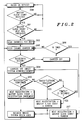
- FIG. 2 illustrates the preferred embodiment in accordance with the present invention.
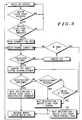
- FIG. 3 illustrates an alternate embodiment in accordance with the present invention.
- the method of autonomous registration for a radiotelephone in a cellular radiotelephone communications system increases the time between the failed registration attempts by the radiotelephone, thereby reducing the number of times the radiotelephone's transmitter is activated for registration. This in turn reduces the drain on the radiotelephone's power source.
- the autonomous registration procedure is initiated by the radiotelephone receiving a master clock count that is equal to or greater than the next registration threshold value for the radiotelephone (201).
- the radiotelephone then rescans (202) a set of predetermined system channels to determine if it still has the best channel, measured by the signal strength.
- the radiotelephone next attempts to seize this channel (203).
- the radiotelephone will typically attempt to seize the channel ten times.
- the radiotelephone will turn its transmitter on and transmit its telephone number to the system.
- the system may also require the radiotelephone to transmit its serial number at this time.
- the radiotelephone now waits (204) a predetermined length of time, typically five seconds, for the system to acknowledge that the radiotelephone has completed a successful registration. If the system answers back, within the predetermined length of time, that the radiotelephone has been registered, a successful registration has occurred.
- a predetermined length of time typically five seconds
- the next registration threshold in the radiotelephone is updated by adding an offset to the master clock count that triggered the registration process. This count could be an hour depending upon the system.
- the radiotelephone returns to the idle state until the next master clock count that passes the threshold is received, causing the entire registration process to occur again.
- next registration threshold is replaced by the master clock count that triggered the registration process added to a random offset count (208). Once this is done, the radiotelephone returns to the idle state, waiting for the next master clock count to equal or exceed this value.
- the next registration threshold is updated (207) with a delay time added to the count of the master clock that was received.
- the delay time in the preferred embodiment, is a random integer within the range of zero to ten.
- the radiotelephone returns to the idle state (208) for the length of time specified by the new next registration threshold. This length of time is until a master clock count is received that equals or exceeds the new next registration threshold (201) when the autonomous registration process starts over.
- the delay time (301), in an alternate embodiment, can also be a predetermined length of time or count. This predetermined time can be any integer.
- This method of autonomous registration can reduce the number of seizure attempts typically made by a radiotelephone in a poor coverage area by eighty percent over the prior art. This is a result of the radiotelephone waiting an average of five master clock counts before making another registration attempt.
- the reduced number of registration attempts means a reduction in the number of times the radiotelephone's transmitter is turned on, thereby reducing the power drain on the radiotelephone's power source. For battery operated radiotelephone's, this translates into allowing the radiotelephone to operate for its rated battery life.
Landscapes
- Engineering & Computer Science (AREA)
- Computer Networks & Wireless Communication (AREA)
- Signal Processing (AREA)
- Mobile Radio Communication Systems (AREA)
Claims (10)
- Verfahren zur autonomen Registrierung eines Funktelefongerätes in einem Funktelefon-Kommunikationssystem mit einer Vielzahl von Funkkanälen, wobei das Funktelefongerät Registrierungsinformation auf wenigstens einem Funkkanal empfängt und Registrierungsinformation auf wenigstens einem Funkkanal sendet, wenn das Funktelefongerät eine Taktzählung auf einem Funkkanal empfängt, die gleich einer nächsten Registrierungsschwellwertzählung ist oder diese überschreitet, wobei das Verfahren die Schritte umfaßt:(A) Abtasten der Vielzahl von Funkkanälen und Versuchen, einen besten Kanal der Vielzahl von Funkkanälen zu belegen, Wiederholen Schritt (A), bis erfolgreich, aber nicht mehr als eine vorbestimmte Anzahl von Malen;(B) wenn der beste Kanal nach der vorbestimmten Anzahl von Malen nicht erfolgreich belegt wird, Ersetzen der nächsten Registrierungsschwellwertzählung durch einen ersten Zunahmebetrag, Warten auf die Taktzählung, die gleich der nächsten Registrierungsschwellwertzählung ist oder diese überschreitet, und Wiederholen ab Schritt (A);(C) Warten für eine vorbestimmte Dauer auf den Empfang eines Registrierungsbestätigungswertes;(D) wenn der Registrierungsbestätigungswert in einer geringeren Zeit als die vorbestimmte Dauer empfangen wird, Ersetzen der nächsten Registrierungsschwellwertzählung durch einen zweiten Zunahmebetrag, Warten auf die Taktzählung, die gleich der nächsten Registrierungsschwellwertzählung ist oder diese überschreitet, und Wiederholen ab Schritt (A), und(E) Ersetzen der nächsten Registrierungsschwellwertzählung durch einen dritten Zunahmebetrag, Warten auf die Taktzählung, die gleich der nächsten Registrierungsschwellwertzählung ist oder diese überschreitet, und Wiederholen ab Schritt (A).
- Verfahren nach Anspruch 1, bei dem die vorbestimmte Anzahl von Malen zehn ist.
- Verfahren nach Anspruch 1, bei dem der erste Zunahmebetrag eine der Taktzählung hinzugefügte Zufallszahl ist.
- Verfahren nach Anspruch 3, bei dem die Zufallszahl eine Ganzzahl im wesentlichen in einem Bereich von null bis zehn ist.
- Verfahren nach Anspruch 1, bei dem der zweite Zunahmebetrag eine Ganzzahl ist, die im wesentlichen gleich einem Echtzeitwert von einer Stunde ist.
- Verfahren nach Anspruch 1, bei dem der dritte Zunahmebetrag eine der Taktzählung hinzugefügte Zufallszahl ist.
- Verfahren nach Anspruch 6, bei dem die Zufallszahl eine Ganzzahl im wesentlichen in einem Bereich von null bis zehn ist.
- Verfahren nach Anspruch 1, bei dem die vorbestimmte Dauer fünf Sekunden beträgt.
- Verfahren nach Anspruch 1, bei dem der erste Zunahmebetrag eine vorbestimmte Zahl ist.
- Verfahren nach Anspruch 9, bei dem die vorbestimmte Zahl eine Ganzzahl im wesentlichen in einem Bereich von null bis zehn ist.
Applications Claiming Priority (3)
| Application Number | Priority Date | Filing Date | Title |
|---|---|---|---|
| US416208 | 1989-10-02 | ||
| US07/416,208 US4972355A (en) | 1989-10-02 | 1989-10-02 | Method for radiotelephone autonomous registration |
| PCT/US1990/004717 WO1991005413A1 (en) | 1989-10-02 | 1990-08-22 | A method for radiotelephone autonomous registration |
Publications (3)
| Publication Number | Publication Date |
|---|---|
| EP0446327A1 EP0446327A1 (de) | 1991-09-18 |
| EP0446327A4 EP0446327A4 (en) | 1992-09-16 |
| EP0446327B1 true EP0446327B1 (de) | 1994-12-28 |
Family
ID=23649024
Family Applications (1)
| Application Number | Title | Priority Date | Filing Date |
|---|---|---|---|
| EP90914275A Expired - Lifetime EP0446327B1 (de) | 1989-10-02 | 1990-08-22 | Autonomes registrierverfahren eines funktelefons |
Country Status (7)
| Country | Link |
|---|---|
| US (1) | US4972355A (de) |
| EP (1) | EP0446327B1 (de) |
| CN (1) | CN1018512B (de) |
| AU (1) | AU627079B2 (de) |
| CA (1) | CA2041636C (de) |
| DE (1) | DE69015611T2 (de) |
| WO (1) | WO1991005413A1 (de) |
Families Citing this family (21)
| Publication number | Priority date | Publication date | Assignee | Title |
|---|---|---|---|---|
| JP2664821B2 (ja) * | 1991-07-24 | 1997-10-22 | 三菱電機株式会社 | セルラー電話の自動位置登録方法 |
| US5307400A (en) * | 1991-11-25 | 1994-04-26 | Telefonaktiebolaget L M. Ericsson | Call routing in mobile telephone systems |
| EP0825792A3 (de) * | 1992-01-29 | 1998-05-27 | Kabushiki Kaisha Toshiba | Verfahren zur Benutzungserlaubnis eines Funkkommunikationgerätes in einem Funkkommunikationssystem |
| US5211191A (en) * | 1992-05-12 | 1993-05-18 | Linda Dmytryk | Dishwasher bag |
| US5442806A (en) | 1993-06-08 | 1995-08-15 | Oki Telecom | Preferred carrier selection method for selecting any available cellular carrier frequency when neither home nor preferred cellular carrier frequencies are available |
| KR960700616A (ko) * | 1993-11-24 | 1996-01-20 | 타게 뢰흐그렌; 얼링 블로메 | 아날로그 통신 시스템을 위한 증명 방법(authentication for analog communication systems) |
| GB9518805D0 (en) * | 1995-09-14 | 1995-11-15 | At & T Wireless Communicat | Improvements relating to a telecommunication system |
| US5710972A (en) * | 1995-11-16 | 1998-01-20 | Motorla, Inc. | Method and apparatus for deferring zone resistrations from a PSU-pager when the PSU's own call rate is less than or equal to a transmitted threshold |
| DE19631874A1 (de) * | 1996-08-07 | 1998-02-12 | Philips Patentverwaltung | Mobilfunkendgerät |
| FR2757733B1 (fr) * | 1996-12-20 | 1999-03-05 | Pailhe Jean Bernard | Procede de localisation de terminaux mobiles dans un reseau de radiocommunication, et terminaux mobiles pour la mise en oeuvre du procede |
| US6493552B1 (en) * | 1997-12-04 | 2002-12-10 | Ericsson Inc. | Method for recovering service after registration failure in a cellular system |
| EP0936830A1 (de) * | 1998-02-11 | 1999-08-18 | ICO Services Ltd. | Zwangspositionsaktualisierung |
| US6119012A (en) * | 1998-11-13 | 2000-09-12 | Ericsson Inc. | Method and system for dynamically and periodically updating mobile station location data in a telecommunications network |
| US6141535A (en) * | 1999-05-17 | 2000-10-31 | Motorola, Inc. | Communication systems for controlling registration of selective call devices |
| US7068674B1 (en) | 1999-08-23 | 2006-06-27 | Lg Electronics Inc. | Method of controlling connection between nodes in digital interface |
| CA2518785C (en) * | 2003-02-14 | 2010-11-30 | Research In Motion Limited | Apparatus, and associated method, for facilitating control of control signaling performed by a mobile node operable in a radio communication system |
| CN1310568C (zh) * | 2003-02-17 | 2007-04-11 | 中国移动通信集团公司 | 对移动终端用户身份进行安全认证的方法 |
| DE102004043211A1 (de) * | 2004-09-03 | 2006-03-09 | Biotronik Crm Patent Ag | Vorrichtung und Verfahren zum Betreiben eines mobilen Kommunikationsgerätes |
| KR100652713B1 (ko) * | 2005-02-26 | 2006-12-01 | 엘지전자 주식회사 | 휴대단말기의 홈시스템 검색장치 및 방법 |
| US7283819B2 (en) * | 2005-04-25 | 2007-10-16 | Research In Motion Limited | Method and apparatus for CDMA timer-based registration on a mobile device |
| EP2953407B1 (de) | 2014-06-05 | 2018-12-05 | Telia Company AB | Optimierung der Netzwerkressourcennutzung |
Family Cites Families (16)
| Publication number | Priority date | Publication date | Assignee | Title |
|---|---|---|---|---|
| US3906166A (en) * | 1973-10-17 | 1975-09-16 | Motorola Inc | Radio telephone system |
| US4400585A (en) * | 1979-11-30 | 1983-08-23 | Motorola, Inc. | Method and apparatus for automatically attempting to seize a radio channel in a multichannel communication system |
| JPS57129035A (en) * | 1980-12-18 | 1982-08-10 | Gen Electric | Radio telephone system |
| GB8419003D0 (en) * | 1984-07-25 | 1984-08-30 | Racal Res Ltd | Portable telephones |
| US4724537A (en) * | 1984-09-18 | 1988-02-09 | Harris Corporation | Method and apparatus for managing the use of an electronic lock for a mobile radio telephone |
| US4736404A (en) * | 1985-03-29 | 1988-04-05 | American Telephone And Telegraph Company, At&T Technologies Inc. | Security arrangement for cordless telephone system |
| US4654879A (en) * | 1985-03-29 | 1987-03-31 | Itt Corporation | Cellular mobile radio subscriber location detection |
| JPS61274531A (ja) * | 1985-05-30 | 1986-12-04 | Nec Corp | チヤネル選択方式 |
| JPH06101698B2 (ja) * | 1986-04-25 | 1994-12-12 | 日本電気株式会社 | 無線電話装置 |
| JPH0815353B2 (ja) * | 1986-10-30 | 1996-02-14 | 日本電気株式会社 | コ−ドレス電話装置 |
| US4775999A (en) * | 1986-10-31 | 1988-10-04 | Motorola, Inc. | Registration of radiotelephones in networked cellular radiotelephone systems |
| US4775995A (en) * | 1986-12-22 | 1988-10-04 | Motorola, Inc. | Adaptive splatter control |
| JP2693761B2 (ja) * | 1987-04-03 | 1997-12-24 | 日本電気株式会社 | 移動通信方式 |
| US4837858A (en) * | 1987-04-30 | 1989-06-06 | Motorola, Inc. | Subscriber unit for a trunked voice/data communication system |
| JP2516983B2 (ja) * | 1987-06-19 | 1996-07-24 | 松下通信工業株式会社 | 無線電話装置 |
| US4821310A (en) * | 1987-12-22 | 1989-04-11 | Motorola, Inc. | Transmission trunked radio system with voice buffering and off-line dialing |
-
1989
- 1989-10-02 US US07/416,208 patent/US4972355A/en not_active Expired - Lifetime
-
1990
- 1990-08-22 DE DE69015611T patent/DE69015611T2/de not_active Expired - Fee Related
- 1990-08-22 EP EP90914275A patent/EP0446327B1/de not_active Expired - Lifetime
- 1990-08-22 AU AU64273/90A patent/AU627079B2/en not_active Ceased
- 1990-08-22 CA CA002041636A patent/CA2041636C/en not_active Expired - Fee Related
- 1990-08-22 WO PCT/US1990/004717 patent/WO1991005413A1/en not_active Ceased
- 1990-09-25 CN CN90107966A patent/CN1018512B/zh not_active Expired
Also Published As
| Publication number | Publication date |
|---|---|
| CA2041636A1 (en) | 1991-04-03 |
| AU6427390A (en) | 1991-04-28 |
| CN1018512B (zh) | 1992-09-30 |
| DE69015611D1 (de) | 1995-02-09 |
| CA2041636C (en) | 1993-11-16 |
| WO1991005413A1 (en) | 1991-04-18 |
| EP0446327A1 (de) | 1991-09-18 |
| DE69015611T2 (de) | 1995-07-27 |
| AU627079B2 (en) | 1992-08-13 |
| US4972355A (en) | 1990-11-20 |
| EP0446327A4 (en) | 1992-09-16 |
| CN1050804A (zh) | 1991-04-17 |
Similar Documents
| Publication | Publication Date | Title |
|---|---|---|
| EP0446327B1 (de) | Autonomes registrierverfahren eines funktelefons | |
| EP0462572B1 (de) | Vielfachzugriffsprotokoll | |
| US4779274A (en) | Request repeat method for data communication | |
| CA1217234A (en) | Data signalling system | |
| US6751456B2 (en) | Communication control for a user of a central communication center | |
| CA2366343C (en) | Apparatus and method for use in paging mode in wireless communications systems | |
| EP0154288B1 (de) | Verfahren zum Senden von Rufauslösesignalen begrenzter Dauer sowie ortsfeste Station und tragbare Einheit unter Anwendung des Verfahrens | |
| EP0985285B1 (de) | Registrierungsverfahren in einem kommunikationssystem | |
| EP1191733A1 (de) | Übertragung im ARQ-Modus, bei der eine Basisstation den Status der an eine Mobilstation übertragenen Rahmen bestimmt | |
| CA2051212C (en) | Packet data communication system | |
| US6898414B2 (en) | Method for acknowledging messages in a communication system | |
| US6915130B1 (en) | Method and apparatus for scan operation in an integrated voice and data communication system | |
| US5227775A (en) | Method and arrangement for channel monitor and control | |
| EP1073289B1 (de) | Rundfunkkommunikationsverfahren, Mobilkommunikationssystem und Mobilstation zur Durchführung des Rundfunkkommunikationsverfahrens | |
| CA1316986C (en) | Method and arrangement for channel monitor and control | |
| HK1007210B (en) | A method and arrangement for channel monitor and control | |
| EP0865709B1 (de) | Selektiv-ruf sende-empfänger und verfahren zur neu-registrierung dafür | |
| KR19980025079A (ko) | 양방향 송수신 통신을 실현하는 기지국 및 이동국을 갖는 양방향 무선 페이징 시스템 | |
| WO1984000651A1 (en) | General purpose data control terminal | |
| JP3668288B2 (ja) | 無線回線を用いるデータ伝送方法および装置 | |
| HK1040033A1 (en) | Method of processing and transmitting incoming call pages including information allowing a determination of the time allowed for response and related user terminals and communication systems | |
| JPS6230438A (ja) | 無線通信方式 | |
| WO1997005750A1 (en) | Method and apparatus for facilitating location tracking of a portable subscriber unit | |
| JPH07111475A (ja) | 移動無線機のグループ通信方式 | |
| HK1016809B (en) | Selective call transceiver and method of re-registering same |
Legal Events
| Date | Code | Title | Description |
|---|---|---|---|
| PUAI | Public reference made under article 153(3) epc to a published international application that has entered the european phase |
Free format text: ORIGINAL CODE: 0009012 |
|
| 17P | Request for examination filed |
Effective date: 19910516 |
|
| AK | Designated contracting states |
Kind code of ref document: A1 Designated state(s): DE FR GB IT SE |
|
| A4 | Supplementary search report drawn up and despatched |
Effective date: 19920731 |
|
| AK | Designated contracting states |
Kind code of ref document: A4 Designated state(s): DE FR GB IT SE |
|
| 17Q | First examination report despatched |
Effective date: 19940328 |
|
| GRAA | (expected) grant |
Free format text: ORIGINAL CODE: 0009210 |
|
| ITF | It: translation for a ep patent filed | ||
| ET | Fr: translation filed | ||
| EAL | Se: european patent in force in sweden |
Ref document number: 90914275.4 |
|
| REF | Corresponds to: |
Ref document number: 69015611 Country of ref document: DE Date of ref document: 19950209 |
|
| PLBE | No opposition filed within time limit |
Free format text: ORIGINAL CODE: 0009261 |
|
| STAA | Information on the status of an ep patent application or granted ep patent |
Free format text: STATUS: NO OPPOSITION FILED WITHIN TIME LIMIT |
|
| 26N | No opposition filed | ||
| REG | Reference to a national code |
Ref country code: GB Ref legal event code: IF02 |
|
| PGFP | Annual fee paid to national office [announced via postgrant information from national office to epo] |
Ref country code: GB Payment date: 20060706 Year of fee payment: 17 |
|
| PGFP | Annual fee paid to national office [announced via postgrant information from national office to epo] |
Ref country code: FR Payment date: 20060803 Year of fee payment: 17 |
|
| PGFP | Annual fee paid to national office [announced via postgrant information from national office to epo] |
Ref country code: IT Payment date: 20060831 Year of fee payment: 17 Ref country code: DE Payment date: 20060831 Year of fee payment: 17 |
|
| PGFP | Annual fee paid to national office [announced via postgrant information from national office to epo] |
Ref country code: SE Payment date: 20060804 Year of fee payment: 17 |
|
| EUG | Se: european patent has lapsed | ||
| GBPC | Gb: european patent ceased through non-payment of renewal fee |
Effective date: 20070822 |
|
| PG25 | Lapsed in a contracting state [announced via postgrant information from national office to epo] |
Ref country code: SE Free format text: LAPSE BECAUSE OF NON-PAYMENT OF DUE FEES Effective date: 20070823 |
|
| REG | Reference to a national code |
Ref country code: FR Ref legal event code: ST Effective date: 20080430 |
|
| PG25 | Lapsed in a contracting state [announced via postgrant information from national office to epo] |
Ref country code: DE Free format text: LAPSE BECAUSE OF NON-PAYMENT OF DUE FEES Effective date: 20080301 |
|
| PG25 | Lapsed in a contracting state [announced via postgrant information from national office to epo] |
Ref country code: FR Free format text: LAPSE BECAUSE OF NON-PAYMENT OF DUE FEES Effective date: 20070831 |
|
| PG25 | Lapsed in a contracting state [announced via postgrant information from national office to epo] |
Ref country code: GB Free format text: LAPSE BECAUSE OF NON-PAYMENT OF DUE FEES Effective date: 20070822 |
|
| PG25 | Lapsed in a contracting state [announced via postgrant information from national office to epo] |
Ref country code: IT Free format text: LAPSE BECAUSE OF NON-PAYMENT OF DUE FEES Effective date: 20070822 |
|
| P01 | Opt-out of the competence of the unified patent court (upc) registered |
Effective date: 20230520 |