EP0444664B1 - Resistenzgene gegen Fusarsäure - Google Patents
Resistenzgene gegen Fusarsäure Download PDFInfo
- Publication number
- EP0444664B1 EP0444664B1 EP91103006A EP91103006A EP0444664B1 EP 0444664 B1 EP0444664 B1 EP 0444664B1 EP 91103006 A EP91103006 A EP 91103006A EP 91103006 A EP91103006 A EP 91103006A EP 0444664 B1 EP0444664 B1 EP 0444664B1
- Authority
- EP
- European Patent Office
- Prior art keywords
- fusaric acid
- plasmid
- microorganism
- gene
- fusaric
- Prior art date
- Legal status (The legal status is an assumption and is not a legal conclusion. Google has not performed a legal analysis and makes no representation as to the accuracy of the status listed.)
- Expired - Lifetime
Links
- DGMPVYSXXIOGJY-UHFFFAOYSA-N Fusaric acid Chemical compound CCCCC1=CC=C(C(O)=O)N=C1 DGMPVYSXXIOGJY-UHFFFAOYSA-N 0.000 title claims abstract description 328
- 108090000623 proteins and genes Proteins 0.000 title claims abstract description 117
- 239000013612 plasmid Substances 0.000 claims abstract description 90
- 239000012634 fragment Substances 0.000 claims abstract description 81
- 244000005700 microbiome Species 0.000 claims abstract description 34
- 241000588749 Klebsiella oxytoca Species 0.000 claims abstract description 20
- 241000589513 Burkholderia cepacia Species 0.000 claims abstract description 15
- 102000004169 proteins and genes Human genes 0.000 claims description 37
- 235000018102 proteins Nutrition 0.000 claims description 36
- 238000000034 method Methods 0.000 claims description 35
- 150000001413 amino acids Chemical group 0.000 claims description 23
- 235000001014 amino acid Nutrition 0.000 claims description 7
- 229940024606 amino acid Drugs 0.000 claims description 7
- 230000001131 transforming effect Effects 0.000 claims description 5
- DHMQDGOQFOQNFH-UHFFFAOYSA-N Glycine Chemical compound NCC(O)=O DHMQDGOQFOQNFH-UHFFFAOYSA-N 0.000 claims description 4
- FFEARJCKVFRZRR-BYPYZUCNSA-N L-methionine Chemical compound CSCC[C@H](N)C(O)=O FFEARJCKVFRZRR-BYPYZUCNSA-N 0.000 claims description 4
- 238000004519 manufacturing process Methods 0.000 claims description 4
- 229930182817 methionine Natural products 0.000 claims description 4
- 239000004475 Arginine Substances 0.000 claims description 2
- DCXYFEDJOCDNAF-UHFFFAOYSA-N Asparagine Natural products OC(=O)C(N)CC(N)=O DCXYFEDJOCDNAF-UHFFFAOYSA-N 0.000 claims description 2
- WHUUTDBJXJRKMK-UHFFFAOYSA-N Glutamic acid Natural products OC(=O)C(N)CCC(O)=O WHUUTDBJXJRKMK-UHFFFAOYSA-N 0.000 claims description 2
- 239000004471 Glycine Substances 0.000 claims description 2
- QNAYBMKLOCPYGJ-REOHCLBHSA-N L-alanine Chemical compound C[C@H](N)C(O)=O QNAYBMKLOCPYGJ-REOHCLBHSA-N 0.000 claims description 2
- DCXYFEDJOCDNAF-REOHCLBHSA-N L-asparagine Chemical compound OC(=O)[C@@H](N)CC(N)=O DCXYFEDJOCDNAF-REOHCLBHSA-N 0.000 claims description 2
- CKLJMWTZIZZHCS-REOHCLBHSA-N L-aspartic acid Chemical compound OC(=O)[C@@H](N)CC(O)=O CKLJMWTZIZZHCS-REOHCLBHSA-N 0.000 claims description 2
- AGPKZVBTJJNPAG-WHFBIAKZSA-N L-isoleucine Chemical compound CC[C@H](C)[C@H](N)C(O)=O AGPKZVBTJJNPAG-WHFBIAKZSA-N 0.000 claims description 2
- ROHFNLRQFUQHCH-YFKPBYRVSA-N L-leucine Chemical compound CC(C)C[C@H](N)C(O)=O ROHFNLRQFUQHCH-YFKPBYRVSA-N 0.000 claims description 2
- COLNVLDHVKWLRT-QMMMGPOBSA-N L-phenylalanine Chemical compound OC(=O)[C@@H](N)CC1=CC=CC=C1 COLNVLDHVKWLRT-QMMMGPOBSA-N 0.000 claims description 2
- QIVBCDIJIAJPQS-VIFPVBQESA-N L-tryptophane Chemical compound C1=CC=C2C(C[C@H](N)C(O)=O)=CNC2=C1 QIVBCDIJIAJPQS-VIFPVBQESA-N 0.000 claims description 2
- OUYCCCASQSFEME-QMMMGPOBSA-N L-tyrosine Chemical compound OC(=O)[C@@H](N)CC1=CC=C(O)C=C1 OUYCCCASQSFEME-QMMMGPOBSA-N 0.000 claims description 2
- KZSNJWFQEVHDMF-BYPYZUCNSA-N L-valine Chemical compound CC(C)[C@H](N)C(O)=O KZSNJWFQEVHDMF-BYPYZUCNSA-N 0.000 claims description 2
- ROHFNLRQFUQHCH-UHFFFAOYSA-N Leucine Natural products CC(C)CC(N)C(O)=O ROHFNLRQFUQHCH-UHFFFAOYSA-N 0.000 claims description 2
- KDXKERNSBIXSRK-UHFFFAOYSA-N Lysine Natural products NCCCCC(N)C(O)=O KDXKERNSBIXSRK-UHFFFAOYSA-N 0.000 claims description 2
- 239000004472 Lysine Substances 0.000 claims description 2
- ONIBWKKTOPOVIA-UHFFFAOYSA-N Proline Natural products OC(=O)C1CCCN1 ONIBWKKTOPOVIA-UHFFFAOYSA-N 0.000 claims description 2
- MTCFGRXMJLQNBG-UHFFFAOYSA-N Serine Natural products OCC(N)C(O)=O MTCFGRXMJLQNBG-UHFFFAOYSA-N 0.000 claims description 2
- AYFVYJQAPQTCCC-UHFFFAOYSA-N Threonine Natural products CC(O)C(N)C(O)=O AYFVYJQAPQTCCC-UHFFFAOYSA-N 0.000 claims description 2
- 239000004473 Threonine Substances 0.000 claims description 2
- QIVBCDIJIAJPQS-UHFFFAOYSA-N Tryptophan Natural products C1=CC=C2C(CC(N)C(O)=O)=CNC2=C1 QIVBCDIJIAJPQS-UHFFFAOYSA-N 0.000 claims description 2
- KZSNJWFQEVHDMF-UHFFFAOYSA-N Valine Natural products CC(C)C(N)C(O)=O KZSNJWFQEVHDMF-UHFFFAOYSA-N 0.000 claims description 2
- 235000004279 alanine Nutrition 0.000 claims description 2
- ODKSFYDXXFIFQN-UHFFFAOYSA-N arginine Natural products OC(=O)C(N)CCCNC(N)=N ODKSFYDXXFIFQN-UHFFFAOYSA-N 0.000 claims description 2
- 235000009582 asparagine Nutrition 0.000 claims description 2
- 229960001230 asparagine Drugs 0.000 claims description 2
- 235000003704 aspartic acid Nutrition 0.000 claims description 2
- OQFSQFPPLPISGP-UHFFFAOYSA-N beta-carboxyaspartic acid Natural products OC(=O)C(N)C(C(O)=O)C(O)=O OQFSQFPPLPISGP-UHFFFAOYSA-N 0.000 claims description 2
- 235000018417 cysteine Nutrition 0.000 claims description 2
- XUJNEKJLAYXESH-UHFFFAOYSA-N cysteine Natural products SCC(N)C(O)=O XUJNEKJLAYXESH-UHFFFAOYSA-N 0.000 claims description 2
- 235000013922 glutamic acid Nutrition 0.000 claims description 2
- 239000004220 glutamic acid Substances 0.000 claims description 2
- ZDXPYRJPNDTMRX-UHFFFAOYSA-N glutamine Natural products OC(=O)C(N)CCC(N)=O ZDXPYRJPNDTMRX-UHFFFAOYSA-N 0.000 claims description 2
- HNDVDQJCIGZPNO-UHFFFAOYSA-N histidine Natural products OC(=O)C(N)CC1=CN=CN1 HNDVDQJCIGZPNO-UHFFFAOYSA-N 0.000 claims description 2
- AGPKZVBTJJNPAG-UHFFFAOYSA-N isoleucine Natural products CCC(C)C(N)C(O)=O AGPKZVBTJJNPAG-UHFFFAOYSA-N 0.000 claims description 2
- 229960000310 isoleucine Drugs 0.000 claims description 2
- COLNVLDHVKWLRT-UHFFFAOYSA-N phenylalanine Natural products OC(=O)C(N)CC1=CC=CC=C1 COLNVLDHVKWLRT-UHFFFAOYSA-N 0.000 claims description 2
- OUYCCCASQSFEME-UHFFFAOYSA-N tyrosine Natural products OC(=O)C(N)CC1=CC=C(O)C=C1 OUYCCCASQSFEME-UHFFFAOYSA-N 0.000 claims description 2
- 239000004474 valine Substances 0.000 claims description 2
- 238000012258 culturing Methods 0.000 claims 1
- 108020004414 DNA Proteins 0.000 description 63
- 241000588724 Escherichia coli Species 0.000 description 36
- 108700026244 Open Reading Frames Proteins 0.000 description 35
- 241000196324 Embryophyta Species 0.000 description 28
- 241000589516 Pseudomonas Species 0.000 description 21
- 201000010099 disease Diseases 0.000 description 19
- 208000037265 diseases, disorders, signs and symptoms Diseases 0.000 description 19
- UHPMCKVQTMMPCG-UHFFFAOYSA-N 5,8-dihydroxy-2-methoxy-6-methyl-7-(2-oxopropyl)naphthalene-1,4-dione Chemical compound CC1=C(CC(C)=O)C(O)=C2C(=O)C(OC)=CC(=O)C2=C1O UHPMCKVQTMMPCG-UHFFFAOYSA-N 0.000 description 18
- 241000223218 Fusarium Species 0.000 description 18
- 108010042407 Endonucleases Proteins 0.000 description 16
- 102000004533 Endonucleases Human genes 0.000 description 16
- 241000233866 Fungi Species 0.000 description 16
- 210000004027 cell Anatomy 0.000 description 13
- 238000000354 decomposition reaction Methods 0.000 description 13
- 238000001784 detoxification Methods 0.000 description 13
- 108091081024 Start codon Proteins 0.000 description 11
- 238000003776 cleavage reaction Methods 0.000 description 11
- 230000007017 scission Effects 0.000 description 11
- 239000013598 vector Substances 0.000 description 11
- 238000013518 transcription Methods 0.000 description 10
- 230000035897 transcription Effects 0.000 description 10
- 239000000047 product Substances 0.000 description 9
- 241000894006 Bacteria Species 0.000 description 8
- 238000004458 analytical method Methods 0.000 description 7
- 238000013519 translation Methods 0.000 description 7
- 241000227653 Lycopersicon Species 0.000 description 6
- 235000007688 Lycopersicon esculentum Nutrition 0.000 description 6
- 238000012217 deletion Methods 0.000 description 6
- 230000037430 deletion Effects 0.000 description 6
- 101150069125 fadB gene Proteins 0.000 description 6
- 102000004190 Enzymes Human genes 0.000 description 5
- 108090000790 Enzymes Proteins 0.000 description 5
- 101150071111 FADD gene Proteins 0.000 description 5
- 101150004992 fadA gene Proteins 0.000 description 5
- 101150016526 fadE gene Proteins 0.000 description 5
- 239000001963 growth medium Substances 0.000 description 5
- 238000000338 in vitro Methods 0.000 description 5
- 108020005038 Terminator Codon Proteins 0.000 description 4
- AVKUERGKIZMTKX-NJBDSQKTSA-N ampicillin Chemical compound C1([C@@H](N)C(=O)N[C@H]2[C@H]3SC([C@@H](N3C2=O)C(O)=O)(C)C)=CC=CC=C1 AVKUERGKIZMTKX-NJBDSQKTSA-N 0.000 description 4
- 229960000723 ampicillin Drugs 0.000 description 4
- 238000010367 cloning Methods 0.000 description 4
- 238000001962 electrophoresis Methods 0.000 description 4
- 238000005516 engineering process Methods 0.000 description 4
- 239000000499 gel Substances 0.000 description 4
- 108091008146 restriction endonucleases Proteins 0.000 description 4
- OKTJSMMVPCPJKN-UHFFFAOYSA-N Carbon Chemical compound [C] OKTJSMMVPCPJKN-UHFFFAOYSA-N 0.000 description 3
- 102000003960 Ligases Human genes 0.000 description 3
- 108090000364 Ligases Proteins 0.000 description 3
- 229910052799 carbon Inorganic materials 0.000 description 3
- 238000010353 genetic engineering Methods 0.000 description 3
- -1 i.e. Proteins 0.000 description 3
- 238000003780 insertion Methods 0.000 description 3
- 230000037431 insertion Effects 0.000 description 3
- BPHPUYQFMNQIOC-NXRLNHOXSA-N isopropyl beta-D-thiogalactopyranoside Chemical compound CC(C)S[C@@H]1O[C@H](CO)[C@H](O)[C@H](O)[C@H]1O BPHPUYQFMNQIOC-NXRLNHOXSA-N 0.000 description 3
- 238000002360 preparation method Methods 0.000 description 3
- 238000012216 screening Methods 0.000 description 3
- 231100000419 toxicity Toxicity 0.000 description 3
- 230000001988 toxicity Effects 0.000 description 3
- 239000003053 toxin Substances 0.000 description 3
- 231100000765 toxin Toxicity 0.000 description 3
- 108700012359 toxins Proteins 0.000 description 3
- 101150084750 1 gene Proteins 0.000 description 2
- 241001524679 Escherichia virus M13 Species 0.000 description 2
- 108020005350 Initiator Codon Proteins 0.000 description 2
- 241000588748 Klebsiella Species 0.000 description 2
- 101000626626 Serratia marcescens Type II restriction enzyme SmaI Proteins 0.000 description 2
- 101100020289 Xenopus laevis koza gene Proteins 0.000 description 2
- 238000000246 agarose gel electrophoresis Methods 0.000 description 2
- 230000001580 bacterial effect Effects 0.000 description 2
- 238000006243 chemical reaction Methods 0.000 description 2
- 108010052305 exodeoxyribonuclease III Proteins 0.000 description 2
- 238000002474 experimental method Methods 0.000 description 2
- 238000000855 fermentation Methods 0.000 description 2
- 230000004151 fermentation Effects 0.000 description 2
- 208000015181 infectious disease Diseases 0.000 description 2
- 238000002955 isolation Methods 0.000 description 2
- 239000002609 medium Substances 0.000 description 2
- 230000008659 phytopathology Effects 0.000 description 2
- 238000011160 research Methods 0.000 description 2
- 238000002415 sodium dodecyl sulfate polyacrylamide gel electrophoresis Methods 0.000 description 2
- 239000002689 soil Substances 0.000 description 2
- 230000000153 supplemental effect Effects 0.000 description 2
- JHBUKILEDQJIQU-UHFFFAOYSA-N 5-butyl-n-methylpyridine-2-carboxamide Chemical compound CCCCC1=CC=C(C(=O)NC)N=C1 JHBUKILEDQJIQU-UHFFFAOYSA-N 0.000 description 1
- 229920001817 Agar Polymers 0.000 description 1
- 108020000946 Bacterial DNA Proteins 0.000 description 1
- 108010089921 CTCGAG-specific type II deoxyribonucleases Proteins 0.000 description 1
- 108010072454 CTGCAG-specific type II deoxyribonucleases Proteins 0.000 description 1
- 244000241235 Citrullus lanatus Species 0.000 description 1
- 235000012828 Citrullus lanatus var citroides Nutrition 0.000 description 1
- 208000035473 Communicable disease Diseases 0.000 description 1
- 241000219112 Cucumis Species 0.000 description 1
- 235000015510 Cucumis melo subsp melo Nutrition 0.000 description 1
- 240000008067 Cucumis sativus Species 0.000 description 1
- 235000010799 Cucumis sativus var sativus Nutrition 0.000 description 1
- 108010005054 Deoxyribonuclease BamHI Proteins 0.000 description 1
- 108010047524 Deoxyribonuclease HindIII Proteins 0.000 description 1
- 108090000204 Dipeptidase 1 Proteins 0.000 description 1
- 108010033155 GGGCCC-specific type II deoxyribonucleases Proteins 0.000 description 1
- 240000005979 Hordeum vulgare Species 0.000 description 1
- 235000007340 Hordeum vulgare Nutrition 0.000 description 1
- 206010020649 Hyperkeratosis Diseases 0.000 description 1
- 102000004160 Phosphoric Monoester Hydrolases Human genes 0.000 description 1
- 108090000608 Phosphoric Monoester Hydrolases Proteins 0.000 description 1
- 244000061458 Solanum melongena Species 0.000 description 1
- 235000002597 Solanum melongena Nutrition 0.000 description 1
- FJJCIZWZNKZHII-UHFFFAOYSA-N [4,6-bis(cyanoamino)-1,3,5-triazin-2-yl]cyanamide Chemical compound N#CNC1=NC(NC#N)=NC(NC#N)=N1 FJJCIZWZNKZHII-UHFFFAOYSA-N 0.000 description 1
- 230000009471 action Effects 0.000 description 1
- 239000008272 agar Substances 0.000 description 1
- 238000013459 approach Methods 0.000 description 1
- 238000000376 autoradiography Methods 0.000 description 1
- 102000006635 beta-lactamase Human genes 0.000 description 1
- 210000000170 cell membrane Anatomy 0.000 description 1
- 230000008859 change Effects 0.000 description 1
- 238000012790 confirmation Methods 0.000 description 1
- 238000011161 development Methods 0.000 description 1
- 230000018109 developmental process Effects 0.000 description 1
- 230000001747 exhibiting effect Effects 0.000 description 1
- 239000012530 fluid Substances 0.000 description 1
- 244000000004 fungal plant pathogen Species 0.000 description 1
- 230000035784 germination Effects 0.000 description 1
- 238000011534 incubation Methods 0.000 description 1
- 230000002401 inhibitory effect Effects 0.000 description 1
- 238000011835 investigation Methods 0.000 description 1
- 238000013507 mapping Methods 0.000 description 1
- 239000003550 marker Substances 0.000 description 1
- 230000007246 mechanism Effects 0.000 description 1
- 230000010534 mechanism of action Effects 0.000 description 1
- 238000013508 migration Methods 0.000 description 1
- 230000005012 migration Effects 0.000 description 1
- 239000000203 mixture Substances 0.000 description 1
- 230000035699 permeability Effects 0.000 description 1
- 229930000184 phytotoxin Natural products 0.000 description 1
- 238000007747 plating Methods 0.000 description 1
- 230000035755 proliferation Effects 0.000 description 1
- 239000011541 reaction mixture Substances 0.000 description 1
- 239000011369 resultant mixture Substances 0.000 description 1
- 230000000717 retained effect Effects 0.000 description 1
- 239000012723 sample buffer Substances 0.000 description 1
- 239000006152 selective media Substances 0.000 description 1
- 230000001954 sterilising effect Effects 0.000 description 1
- 238000004659 sterilization and disinfection Methods 0.000 description 1
- 239000013589 supplement Substances 0.000 description 1
- 230000009466 transformation Effects 0.000 description 1
- 238000011144 upstream manufacturing Methods 0.000 description 1
- 239000002023 wood Substances 0.000 description 1
Images



Classifications
-
- C—CHEMISTRY; METALLURGY
- C07—ORGANIC CHEMISTRY
- C07K—PEPTIDES
- C07K14/00—Peptides having more than 20 amino acids; Gastrins; Somatostatins; Melanotropins; Derivatives thereof
- C07K14/195—Peptides having more than 20 amino acids; Gastrins; Somatostatins; Melanotropins; Derivatives thereof from bacteria
- C07K14/24—Peptides having more than 20 amino acids; Gastrins; Somatostatins; Melanotropins; Derivatives thereof from bacteria from Enterobacteriaceae (F), e.g. Citrobacter, Serratia, Proteus, Providencia, Morganella, Yersinia
- C07K14/26—Klebsiella (G)
-
- C—CHEMISTRY; METALLURGY
- C07—ORGANIC CHEMISTRY
- C07K—PEPTIDES
- C07K14/00—Peptides having more than 20 amino acids; Gastrins; Somatostatins; Melanotropins; Derivatives thereof
- C07K14/195—Peptides having more than 20 amino acids; Gastrins; Somatostatins; Melanotropins; Derivatives thereof from bacteria
- C07K14/21—Peptides having more than 20 amino acids; Gastrins; Somatostatins; Melanotropins; Derivatives thereof from bacteria from Pseudomonadaceae (F)
-
- C—CHEMISTRY; METALLURGY
- C12—BIOCHEMISTRY; BEER; SPIRITS; WINE; VINEGAR; MICROBIOLOGY; ENZYMOLOGY; MUTATION OR GENETIC ENGINEERING
- C12N—MICROORGANISMS OR ENZYMES; COMPOSITIONS THEREOF; PROPAGATING, PRESERVING, OR MAINTAINING MICROORGANISMS; MUTATION OR GENETIC ENGINEERING; CULTURE MEDIA
- C12N15/00—Mutation or genetic engineering; DNA or RNA concerning genetic engineering, vectors, e.g. plasmids, or their isolation, preparation or purification; Use of hosts therefor
- C12N15/09—Recombinant DNA-technology
- C12N15/11—DNA or RNA fragments; Modified forms thereof; Non-coding nucleic acids having a biological activity
- C12N15/52—Genes encoding for enzymes or proenzymes
-
- Y—GENERAL TAGGING OF NEW TECHNOLOGICAL DEVELOPMENTS; GENERAL TAGGING OF CROSS-SECTIONAL TECHNOLOGIES SPANNING OVER SEVERAL SECTIONS OF THE IPC; TECHNICAL SUBJECTS COVERED BY FORMER USPC CROSS-REFERENCE ART COLLECTIONS [XRACs] AND DIGESTS
- Y10—TECHNICAL SUBJECTS COVERED BY FORMER USPC
- Y10S—TECHNICAL SUBJECTS COVERED BY FORMER USPC CROSS-REFERENCE ART COLLECTIONS [XRACs] AND DIGESTS
- Y10S435/00—Chemistry: molecular biology and microbiology
- Y10S435/8215—Microorganisms
- Y10S435/822—Microorganisms using bacteria or actinomycetales
- Y10S435/852—Klebsiella
-
- Y—GENERAL TAGGING OF NEW TECHNOLOGICAL DEVELOPMENTS; GENERAL TAGGING OF CROSS-SECTIONAL TECHNOLOGIES SPANNING OVER SEVERAL SECTIONS OF THE IPC; TECHNICAL SUBJECTS COVERED BY FORMER USPC CROSS-REFERENCE ART COLLECTIONS [XRACs] AND DIGESTS
- Y10—TECHNICAL SUBJECTS COVERED BY FORMER USPC
- Y10S—TECHNICAL SUBJECTS COVERED BY FORMER USPC CROSS-REFERENCE ART COLLECTIONS [XRACs] AND DIGESTS
- Y10S435/00—Chemistry: molecular biology and microbiology
- Y10S435/8215—Microorganisms
- Y10S435/822—Microorganisms using bacteria or actinomycetales
- Y10S435/874—Pseudomonas
Definitions
- the present invention relates to fusaric acid resistant genes cloned from fusaric acid decomposing or detoxifying microorganisms, plasmids having the genes, host cells transformed by the plasmids, proteins having amino acid sequences specified by the base sequences of the genes, respectively and capable of participating in the decomposition or detoxification of fusaric acid and production processes of the proteins, and utilization of the genes and proteins.
- Wilting disease which causes plants to wilt or droop to die is a serious disease for cucurbitaceous plants such as cucumber, water melon and melon and solanaceous plants such as tomato and egg plant.
- Wilting disease is induced by soil-inhabiting fungi of the genus Fusarium. Soil sterilization and the avoidance of continuous cultivation of a particular crop are the only measures effective for the control of wilting disease caused by fungi of the genus Fusarium. These measures are however difficult to practice for most farmers from both technical and economical viewpoints, yet any effective control method which may substitute for these measures has remained unavailable.
- Fusaric acid (5-n-butylpicolinic acid) is known to be a toxin which is produced by plant pathogenic fungi of the genus Fusarium and non-specifically acts on a wide variety of plant cells [Wood, R.K. et al., "Phytotoxins in plant diseases", Academic Press, New York (1972); Durbin, R.D., "Toxins in plant diseases", Academic Press, New York (1982); Gaumann, E., Phytopathology, 47 , 34 (1958)].
- fusaric acid is known to exhibit, for example, strong toxicity on tomato callus cells and tomato stems and leaves, to increase the plasma membrane permeability of tomato cells whereby the exudation of the tissue fluid is induced to accelerate death [Matsuo, Hayami et al., "Sakumotsu no Fusarium Byo (Fusarium disease of crops)", Zenkoku Noson Kyokai (National Association of Agricultural Communities)], to inhibit germination and rooting of barley [Foy, C.L. and Change, I., Adv. Pestic. Sci., 3 , 499 (1979)], and to show proliferation inhibitory effects against fungi and bacteria [Kalyamasundram, R., Plant Dis. Probl., 1, 142 (1970)].
- Fusaric acid is metabolized and converted to N-methylfusaric acid amide in plant tissues of these resistant tomato varieties.
- a variety with stronger fusaric acid resistance shows greater fusaric acid converting action.
- plants having such resistance to fusaric acid have been found to be resistant to wilting disease caused by Fusarium oxysporium [Shahin, E.A. and Spirey, R., Theor. Appl. Genet., 73, 164 (1986); Toyoda, H., et al., Phytopathology, 78 , 1307 (1988)].
- Fusaric acid is known to exhibit not only wilting toxicity against plants but also toxicity against microorganisms such as bacteria.
- fusaric acid resistant microorganisms capable of growing on or in a culture medium containing fusaric acid
- the present inventors isolated several types of microorganisms from soil.
- the isolation methods, mycological characteristics, fusaric acid resisting mechanism, etc. of these fusaric acid resistant microorganisms are disclosed in detail in Japanese Patent Application Laid-Open Nos. 198974/1988 and 198987/1988.
- One of the above fusaric acid resistant microorganisms has been identified as Pseudomonas cepasia .
- This bacterium has been found to have fusaric acid decomposing ability and also to be able to grow using fusaric acid as a sole carbon source, in other words, to have fusaric acid assimilating ability.
- fusaric acid which is the non-specific toxin produced by the fungus of the genus Fusarium can be decomposed and eliminated.
- decomposition or detoxification of fusaric acid by one of the above fusaric acid resistant microorganisms can be an effective means. It is however very difficult to bring such a fusaric acid resistant microorganism into contact with fusaric acid produced within a plant due to infection by a fungus of the genus Fusarium.
- An object of the present invention is to provide a gene capable of participating in the decomposition or detoxification of fusaric acid derived from microorganisms and effective for the control of plant diseases such as wilting disease by fungi of the genus Fusarium and also information on the structure of the gene.
- Another object of the present invention is to provide a protein which is coded by the gene and can participate in decomposing or detoxifying fusaric acid.
- a fusaric acid resistant gene exists in a fusaric acid resistant microorganism, namely, a microorganism capable of growing on or in a culture medium containing fusaric acid and of decomposing fusaric acid or detoxifying it to plants and can be obtained from such a microorganism.
- a fusaric acid resistant gene derived from a fusaric acid decomposing or detoxifying microorganism.
- a DNA fragment comprising a fusaric acid resistant gene derived from a fusaric acid decomposing or detoxifying microorganism.
- a plasmid comprising a fusaric acid resistant gene derived from a fusaric acid decomposing or detoxifying microorganism.
- a host cell comprising a plasmid which has a fusaric acid resistant gene derived from a fusaric acid decomposing or detoxifying microorganism.
- the fusaric acid decomposing or detoxifying microorganism may preferably be Pseudomonas cepasia or Klebsiella oxytoca.
- the base sequences of a DNA fragment derived from Pseudomonas cepasia and capable of coding a protein, which can participate in the decomposition or detoxification of fusaric acid and the amino acid sequences of a protein capable of participating in the decomposition or detoxification of fusaric acid, said amino acid sequences being identified from the above base sequences.
- a DNA fragment derived from Klebsiella oxytoca and capable of coding a protein which can participate in the decomposition or detoxification of fusaric acid, and the restriction map of the DNA fragment.
- the whole base sequence of the DNA fragment of 5.4 kb containing the fusaric acid resistant genes derived from Pseudomonas cepasia has been determined, resulting in the identification of the structure of the fusaric acid resistant genes and also the structure of those proteins (i.e., amino acid sequence).
- the entire base sequence of the DNA fragment of 3.6 kb containing the fusaric acid resistant gene derived from Klebsiella oxytoca has also been determined.
- the gene structure and, moreover, the protein structure (amino acid sequence) have also been specified.
- fusaric acid resistant plants by introducing these fusaric acid resistant genes in plant cells. Since fusaric acid resistant plants obtained in this manner are resistant to wilting disease and the like caused by fungi of the genus Fusarium , the problems in controlling diseases caused by such fungus of the genus Fusarium have been overcome.
- fusaric acid resistant microorganisms include, for example, bacteria belonging to the genus Pseudomonas and those belonging to the genus Klebsiella.
- preferred bacteria belonging to the genus Pseudomonas include Pseudomonas cepasia , especially Pseudomonas cepasia UK-1 strain (FERM BP-1385).
- preferred bacteria belonging to the genus Klebsiella include Klebsiella oxytoca , particularly Klebsiella oxytoca HY-1 strain (FERM BP-3221).
- Klebsiella oxytoca particularly Klebsiella oxytoca HY-1 strain (FERM BP-3221).
- the mycological characteristics of the above bacteria, their culture conditions, and the decomposition or detoxification of fusaric acid by them are disclosed in detail in Japanese Patent Application Laid-Open No. 198974/1988 and Japanese Patent Application No. 22957/1990.
- Pseudomonas cepasia UK-1 strain can decompose and detoxify fusaric acid and can grow using fusaric acid as a sole carbon source.
- Klebsiella oxytoca HY-1 strain can decompose and detoxify fusaric acid but cannot grow using fusaric acid as a sole carbon source.
- the fusaric acid resistant gene of the present invention can be obtained by preparing a gene library of one of the above microorganisms, which has fusaric acid decomposing or detoxifying ability, using Escherichia coli as a host and then screening a fusaric acid resistant recombinant strain of Escherichia coli from the gene library.
- the gene library can be prepared by cleaving a DNA, which has been isolated from a cell of the microorganism, with a suitable restriction enzyme, i.e., restriction endonuclease (hereinafter simply called "endonuclease" for the sake of brevity), inserting a desired segment in a vector and then transforming Escherichia coli with the resultant recombinant plasmid. Since host Escherichia coli cannot grow in a culture medium containing fusaric acid, only the recombinant strain of Escherichia coli , said strain containing the gene capable of participating in the decomposition or detoxification of fusaric acid, can grow in the culture medium.
- a suitable restriction enzyme i.e., restriction endonuclease
- the restriction map of the inserted DNA fragment is prepared. After DNA fragments which have been obtained by cleaving the inserted DNA fragment by various endonucleases on the basis of the restriction map are inserted in vectors, Escherichia coli is transformed, followed by the screening of clones which exhibit resistance to fusaric acid. With respect to the clone having the shortest inserted DNA fragment out of the clones capable of exhibiting fusaric acid resistance, the base sequence of the shortest inserted DNA fragment is determined.
- ORFs open reading frames
- mutant genes with the reading frames of the individual ORFs shifted are prepared by conducting cleaving at cleavage sites, which are present in the respective ORFs, with an endonuclease, converting the cleaved ends of the resulting fragments to blunt ends with Klenow enzyme and then re-ligating the fragments together into a circular form.
- Strains of Escherichia coli which have been transformed by these mutant genes, respectively, show no fusaric acid resistance. This indicates that the individual ORFs are coding a protein capable of participating in the decomposition or detoxification of fusaric acid.
- the followings are an exemplary base sequence relating to fusaric acid resistance, which had been determined in the above-described manner by using Pseudomonas cepacia as a source microogranism, and an illustrative amino acid sequence derived therefrom:
- A alanine
- C cysteine
- D aspartic acid
- E glutamic acid
- F phenylalanine
- G glycine
- H histidine
- I isoleucine
- K lysine
- L leucine
- M methionine
- N asparagine
- P proline
- Q glutamine
- R arginine
- S serine
- T threonine
- V valine
- W tryptophan
- Y tyrosine.
- a plant cell having fusaric acid resistance can be obtained by inserting the above gene between a promoter and a terminator, said promoter and terminator functioning in a plant cell, to transform the latter plant cell.
- a fusaric acid resistant plant can then be obtained by allowing the above-transformed plant cell to grow to the plant. Since the fusaric acid resistant plant obtained in the manner described above is resistant to diseases caused by fungi of the genus Fusarium, the above method can be used as a control method effective against wilting disease and the like caused by such fungi of the genus Fusarium although their control has heretofore been very difficult.
- plant cells each of which has been transformed by the gene capable of participating in the decomposition or detoxification of fusaric acid are resistant to fusaric acid, so that they can be used as selective markers.
- Plant cells can be transformed by a known method, for example, by the method making use of a Ti plasmid ["Zoku Seikagaku Jikken Koza 1, Idenshi Kenkyuho II (Supplemental Handbook of Biochemical Experiments, Vol. 1 - Gene Studying Methods II)", pp 205, compiled by Biochemical Society of Japan, Tokyo Kagaku Dojin (1986)] or by the direct gene introduction method ( ibid ., pp 211).
- the identification of the structure of the fusaric acid resistant gene has led to the identification of the protein which can participate in decomposing or detoxifying fusaric acid.
- Mass production of the protein by a genetic engineering technique can contribute to the control of wilting disease and the like caused by fungi of the genus Fusarium.
- a gene library was also prepared by a method similar to the one described above except that DNA fragments cleaved by the endonuclease BamHI/HindIII were inserted in the vector pUC19.
- a secondary selective medium Davis' minimum agar containing 50 ⁇ g/m l of ampicillin, 1 mM of IPTG and 100 ⁇ g/ml of fusaric acid
- a clone having the plasmid pBEl was selected from the gene library of Pseudomonas cepasia .
- pBEl contained an EcoRI fragment of 8.5 kb derived from Pseudomonas cepasia .
- the Escherichia coli strain JM109 containing pBEl was named " Escherichia coli SAM 1552" and was deposited under the deposit number FERM BP-3285 with Fermentation Research Institute, Agency of Industrial Science and Technology, Ministry of Industrial Trade and Technology, Government of Japan.
- a clone having the plasmid pFAR1 was selected from the gene library of Klebsiella oxytoca .
- pFAR1 contained a BamH/Hind III fragment of 3.6 kb derived from Klebsiella oxytoca .
- the strain JM109 containing pFAR1 was named " Escherichia coli SAM 1553" and was deposited under the deposit number FERM BP-3286 with Fermentation Research Institute, Agency of Industrial Science and Technology, Ministry of Industrial Trade and Technology, Government of Japan.
- the plasmids pBEl and pFAR1 were separately cleaved by various endonucleases.
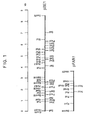
- the sizes of the resultant DNA fragments were measured by agarose gel electrophoresis, whereby their restriction maps were prepared.
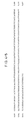
- the restriction maps of the DNA fragments inserted in the above plasmids are shown in FIG. 1.
- the fusaric acid decomposing or detoxifying gene is believed to be expressed under the control of a promoter derived from Klebsiella oxytoca , said promoter being present on the inserted DNA fragment of 3.6 kb.
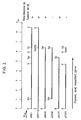
- each fusaric acid resistant gene was determined more specifically by preparing a variety of deleted plasmids on the basis of the corresponding restriction map and investigating the fusaric acid resistance of Escherichia coli strains transformed by the deleted plasmids, respectively. Based on the results, sub-cloning of the fusaric acid resistant genes was conducted.
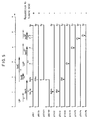
- FIG. 2 shows the deleted plasmids of the plasmid pBEl having the EcoRI fragment of 8.5 kb derived from Pseudomonas cepasia and the fusaric acid resistance of the recombinants obtained by the transformation of Escherichia coli JM109 with these deleted plasmids.
- the fusaric acid resistance of each strain was then tested by allowing the strain to grow in Davis' minimal medium which contained 500 ⁇ g/ml of fusaric acid in addition to 50 ⁇ g/m l of ampicillin and 1 mM of IPTG.
- the EcoRI fragment which had been inserted in the plasmid pBEl and is shown in FIG. 1 was cleaved at the StuI site present only near 6.4 kb and an SacI linker (5'-CGAGCTCG-3') was inserted there, whereby a plasmid pBE-ta with the downstream reading frames shifted was prepared.
- An SacI fragment of 6.4 kb formed by cleaving the plasmid pBE-ta at SacI was inserted to the SacI site of the vector pUC19.
- the resultant plasmid was named "pBAA1".
- a further plasmid pBAM was next prepared by deleting a region of the plasmid pBAA1, said region extending from the SmaI site contained in the multi-cloning site of the vector pUC19 (the left end) to the SmaI site at 1 kb.
- Escherichia coli JM109 was transformed by those plasmids and the fusaric acid resistance of the resultant transformants was investigated.
- the transformants by the plasmids pBE1-ta and pBAA1 showed fusaric acid resistance but the transformant by the plasmid pBAM did not exhibit fusaric acid resistance.
- the plasmid pBAA1 was then partly digested by an endonuclease XhoI and the resultant fragments were re-ligated, whereby a plasmid pFZR1 was obtained.
- the plasmid pFZR1 was different from the plasmid pBAA1 in that a right-hand region of about 1.3 kb had been deleted.
- the base sequence of the DNA fragment coding the fusaric acid resistant gene derived from Pseudomonas cepasia was determined.
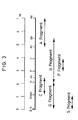
- the region whose base sequence was determined was about 7.0 kb long, extending from the EcoRI site to the AccI site of the EcoRI fragment of 8.5 kb in the plasmid pBEl (see FIG. 3). This region is coding the fusaric acid resistant genes described in Example 3.
- the EcoRI/AccI fragment of 7.0 kb was first cleaved by various endcnucleases on the basis of the restriction map shown in FIG. 1.
- the resulting DNA fragments were cloned to the phage M13.
- the individual DNA fragments are mutually overlapped as illustrated in FIG. 3.
- the phage M13 cloned with the individual fragments was infected to Escherichia coli JM 109, whereby double-stranded phage DNAs were prepared.
- Escherichia coli JM109 was transformed by the individual double-stranded phage DNAs with a deletion introduced in one direction, said DNAs having been obtained by the method described above, whereby phage clones with a deletion inserted in one direction were prepared.
- a double-stranded phage DNA was prepared from each phage clone. The degree of the deletion was investigated from a cleavage pattern by restriction endonucleases. From suitable clones, single-stranded phage DNAs were prepared. Using those single-stranded phage DNAs as templates, the base sequence of the inserted DNA fragments was determined by the dideoxy technique [Sanger, F., et al., Proc. Natl. Acad. Sci.
- the base sequence of each DNA fragment shown in FIG. 3 was determined by uniting the base sequences of DNA fragments inserted in deleted phage clones. The base sequences of the individual DNA fragments shown in FIG. 3 were then united together, whereby the base sequence of the entire EcoRI/AccI fragment of 7.0 kb was determined.
- the base sequence of the DNA fragment coding the fusaric acid resistant gene derived from Klebsiella oxytoca was 3.6 kb long, extending from BamHI to HindIII of plasmid pFAR1 (see FIG. 1).
- the entire base sequence of the DNA fragment of 3.6 kb was determined by ascertaining the base sequence of single-stranded phages, in which a deletion had been introduced in one direction, and then connecting them.
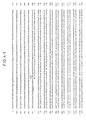
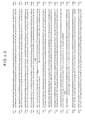
- the EcoRI/AccI fragment of 7.0 kb derived from Pseudomonas cepacia consists of 7006 base pairs. Of these base pairs, the entire base sequence (5437 base pairs) of the smallest region which extends from EcoRI to SphI and shows fusaric acid resistance is shown in FIG. 4.
- ORF open reading frames
- ATG or GTG initiator codon
- TAA, TAG or TGA terminator codon
- Such ORFs were assumed to be directed from the left to the right in FIG. 5, because the transformant having the plasmid pBEll which was similar to the plasmid pBEl except for the insertion of the EcoRI fragment of 8.5 kb in the opposite direction did not show fusaric acid resistance.
- ORFs consisting of 250 base pairs or more ten ORFs were found (see FIG. 5). Of these ORFs, especially among ORFs having the SD sequence, which can bind with a ribosome [Shine, J.
- ORF3-1;531 ⁇ 1830 this indicates starting at the initiator codon ATG of the 531 th base pair and ending at the terminator of the 1830 th base pair; this definition will be applied equally hereinafter
- ORF2-2;1847 ⁇ 2273, ORF1-2;2314 ⁇ 3352, ORF3-2; 3414 ⁇ 4038 and ORF3-3;4473 ⁇ 4977 were estimated as ORFs of a protein having bearing on fusaric acid resistance.
- an inverted repeat structure having stable hairpin loops and capable of functioning as a terminator for transcription is observed between the 5125 th base pair and the 5157 th base pair.
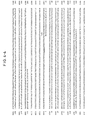
- the entire base sequence of the DNA fragment of 3.6 kb derived from Klebsiella oxytoca is shown in FIG. 7.
- ORFs open reading frames
- ATG or GTG initiator codon
- TAA, TAG or TGA terminator codon
- the plasmid pBEl-sc was cleaved by EcoRI to obtain EcoRI fragments of 1.8 kb and 6.7 kb, respectively. Those fragments were separately inserted in the vector pUC19, whereby plasmids pSC-181 and pSC-671 were prepared.
- the plasmids were collected from their corresponding transformants and then cleaved by endonucleases for their analysis.
- the plasmid containing the EcoRI linker inserted at the SmaI site of the 1036 th base pair was named "pTA-S1".
- the DNA fragment inserted in the plasmid pBEl contains two ApaI sites (1031,1920).
- the plasmid pBEl-ta was partly digested by the endonuclease ApaI, and the resultant linear DNA molecules were collected in the same manner as described above. After the cleaved ends of the DNA molecules were converted to blunt ends by Klenow enzyme, those DNA molecules were re-ligated by T4 ligase, whereby mutant plasmids with the downstream reading frames shifted were prepared.
- the plasmid in which the linker was inserted at the ApaI site of the 1031 th base pair and its downstream reading frames were shifted was named "pTA-A1", while the plasmid in which the linker was inserted at the ApaI site of the 1920 th base pair and its downstream reading frames were shifted was named "pTA-A2".
- pTA-A1 The plasmid in which the linker was inserted at the ApaI site of the 1031 th base pair and its downstream reading frames were shifted was named "pTA-A1”
- pTA-A2 There are five cleavage sites (897,2926,3921,4544,4740) for the endonuclease PstI in the inserted DNA.
- mutant plasmids pTA-P2(2926), pTA-P3(3921), pTA-P4(4544) and pTA-P5(4740) in which the reading frames were shifted were prepared by the above-described method (note: the parenthesized numbers indicate the base pair numbers at the sites downstream of which the reading frames were shifted.).
- the individual ORFs in the inserted fragment were inserted in the same direction as in the lac promoter of the vector pUC19.
- the fusaric acid resistance of recombinant strains of Escherichia coli was investigated. Although the recombinant strain of Escherichia coli transformed by the plasmid pBEl-sc was resistant to fusaric acid, the recombinant strains of Escherichia coli transformed by the other plasmids (pSC181, pSC671, pTA-S1, pTA-A1, pTA-A2, pTA-P2, pTA-P3, pTA-P4 and pTA-P5) did not show fusaric acid resistance (see FIG. 5).
- ORF1-1(301 ⁇ 586) and ORF2-1 (368 ⁇ 959) have no bearing on fusaric acid resistance but ORF3-1(459 ⁇ 1837) do have bearing on fusaric acid resistance (the parenthesized numbers appearing after each ORF indicate the base pair numbers of the translation initiator codon and terminator codon, respectively, and the parenthesized number following each endonuclease indicates the base pair number at the cleavage site.).
- ORF3-1 contains four initiator codons ATG upstream of the cleavage site (1031) for SmaI. Of these, the ATG(531) immediately before which the SD sequence was observed was estimated as an initiator codon and the gene coding that ORF was named "fadA" (see FIG. 5).
- the endonuclease BstPl (1828) cleaves immeidately after the terminator codon (1830) of ORF3-1 and immediately before the initiator codon (1847) of ORF2-2. Fusaric acid resistance was however retained when the EcoRI linker was introduced at the BstPI site and its downstream reading frames were shifted. Further, no fusaric acid resistance was exhibited when the EcoRI linker was introduced at both the ApaI site (1920) and the PstI site (2926) and their downstream reading frames were shifted. It has hence become clear that ATG(2314) in ORF1-2 (1708 ⁇ 3352) and ORF2-2 are indispensable for fusaric acid resistance.
- plasmid DNA Added successively to 2.5 ⁇ g of plasmid DNA were 7.5 ⁇ l of supplement solution, 3 ⁇ l of amino acid solution, 2 ⁇ l (1.11 MBq) of L-[35S methionine] and 5 ⁇ l of S-30 extract. They were mixed thoroughly, followed by incubation at 37°C for 1 hour. Methionine chase solution (5 ⁇ l ) was added. After the resultant mixture was incubated at 37°C for 5 minutes, the mixture was ice-cooled to terminate the reaction. The reaction mixture (6 ⁇ l) was added with an equiamount of a sample buffer of the twofold concentration, followed by treatment at 95°C for 5 minutes. Thereafter, proteins were fractionated by SDS-polyacrylamide gel electrophoresis.
- the SDS-polyacrylamide gel electrophoresis was conducted following the method proposed by Laemmli, U.K. et al. in Nature, 227, 680 (1970). The gel concentration was 15%. After the electrophoresis, the gel was dried by a gel drier. The thus-dried gel was subjected to autoradiography, whereby in vitro transcription and coding products were analyzed.
Landscapes
- Health & Medical Sciences (AREA)
- Chemical & Material Sciences (AREA)
- Genetics & Genomics (AREA)
- Life Sciences & Earth Sciences (AREA)
- Organic Chemistry (AREA)
- Engineering & Computer Science (AREA)
- Molecular Biology (AREA)
- General Health & Medical Sciences (AREA)
- Biochemistry (AREA)
- Biophysics (AREA)
- Biomedical Technology (AREA)
- General Engineering & Computer Science (AREA)
- Bioinformatics & Cheminformatics (AREA)
- Proteomics, Peptides & Aminoacids (AREA)
- Zoology (AREA)
- Biotechnology (AREA)
- Medicinal Chemistry (AREA)
- Wood Science & Technology (AREA)
- Gastroenterology & Hepatology (AREA)
- Microbiology (AREA)
- Plant Pathology (AREA)
- Physics & Mathematics (AREA)
- Micro-Organisms Or Cultivation Processes Thereof (AREA)
- Agricultural Chemicals And Associated Chemicals (AREA)
- Organic Low-Molecular-Weight Compounds And Preparation Thereof (AREA)
- Peptides Or Proteins (AREA)
- Preparation Of Compounds By Using Micro-Organisms (AREA)
Claims (19)
- Verfahren für die Herstellung einer transformierten Pflanze mit Fusarinsäureresistenz, das die folgenden Schritte umfasst:(i) Einführen eines Fusarinsäureresistenzgens, das von einem fusarinsäurezersetzenden oder fusarinsäureentgiftenden Mikroorganismus abgeleitet ist, zwischen einem Promotor und einem Terminator, so dass eine Expressionskassette entsteht,(ii) Einführen der Expressionskassette in eine Pflanzenzelle,(iii) dem Promotor und dem Terminator der Expressionskassette ermöglichen, in der Pflanzenzelle zu funktionieren,(iv) Transformieren der Pflanzenzelle zu einer transformierten Pflanzenzelle, und(v) Erhalten einer transformierten Pflanze aus der transformierten Pflanzenzelle.
- Das Verfahren nach Anspruch 1, wobei der Mikroorganismus Pseudomonas cepacia ist.
- Das Verfahren nach Anspruch 1, wobei der Mikroorganismus Klebsiella oxytoca ist.
- Das Verfahren nach Anspruch 1, wobei der Mikroorganismus Pseudomonas cepacia ist und das Gen für die Aminosäuresequenzen der folgenden Formeln (1) bis (V) oder für dazu bezüglich der Verleihung von Fusarinsäureresistenz im Wesentlichen äquivalente Aminosäuresequenzen codiert:
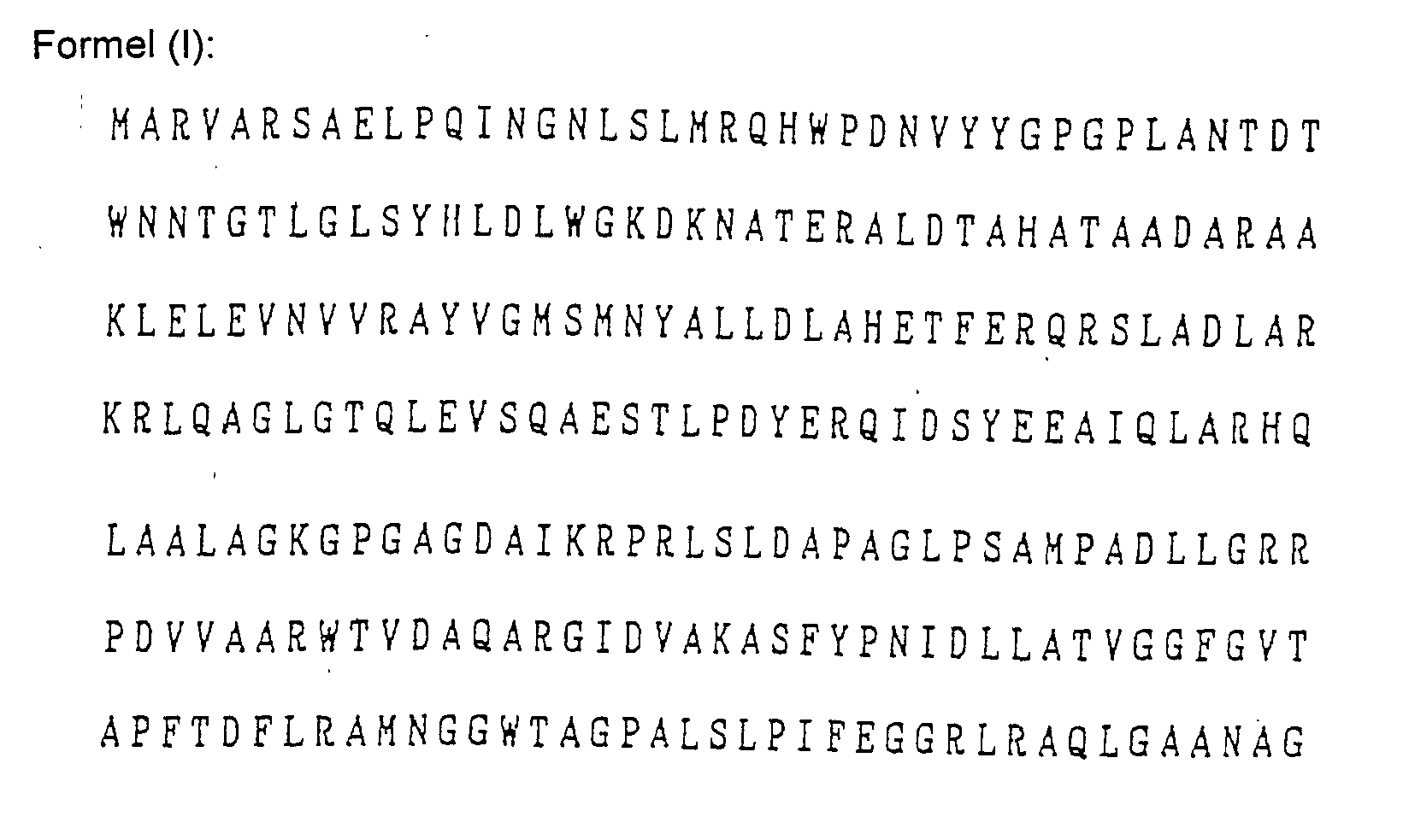

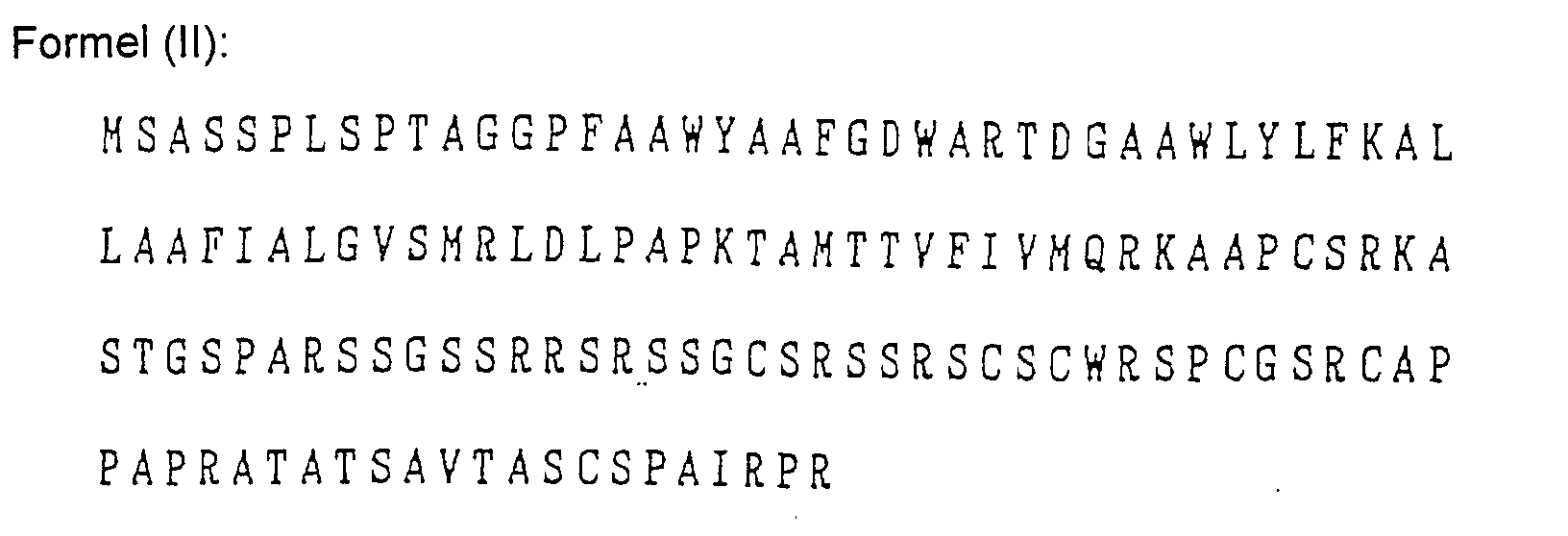
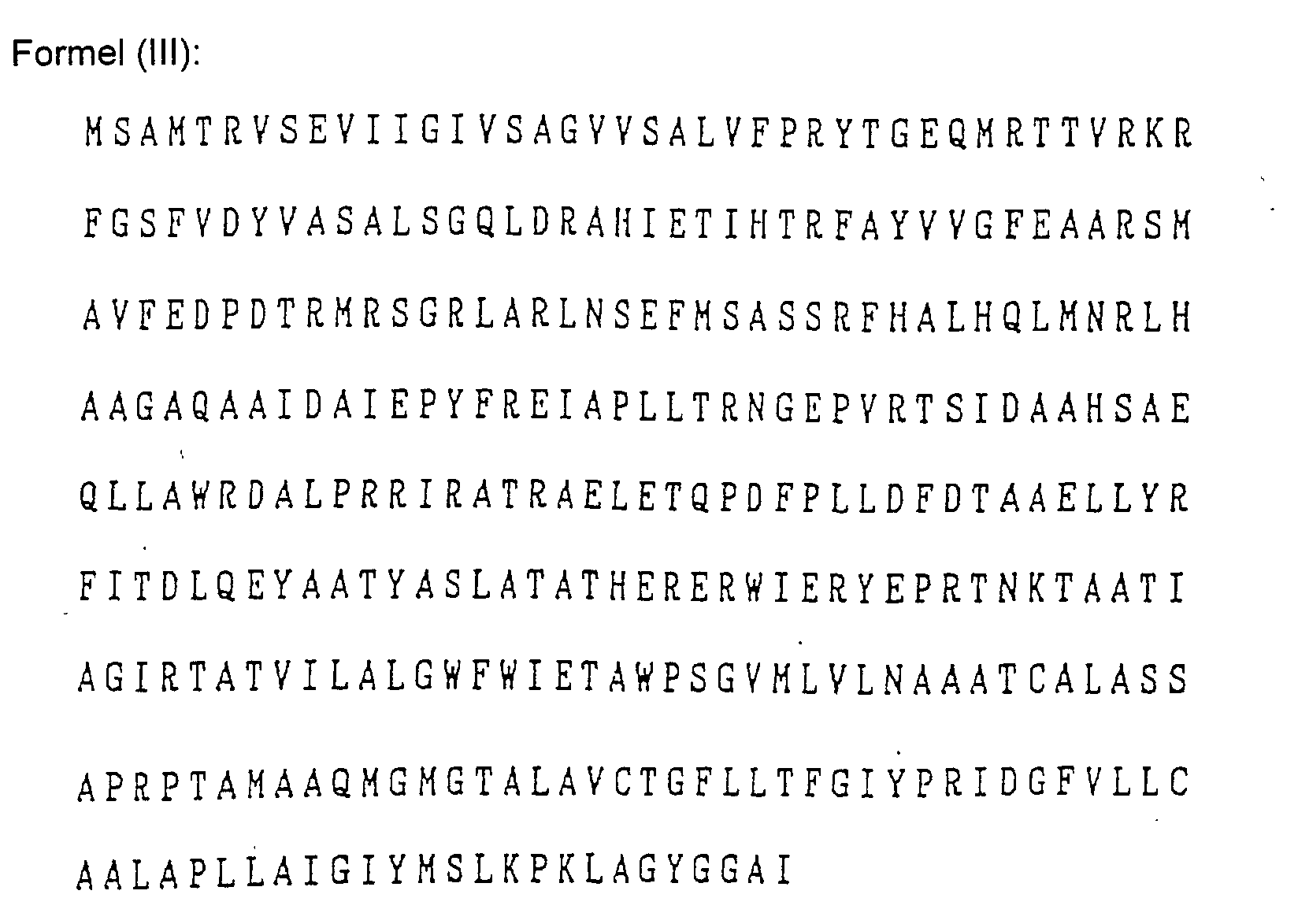
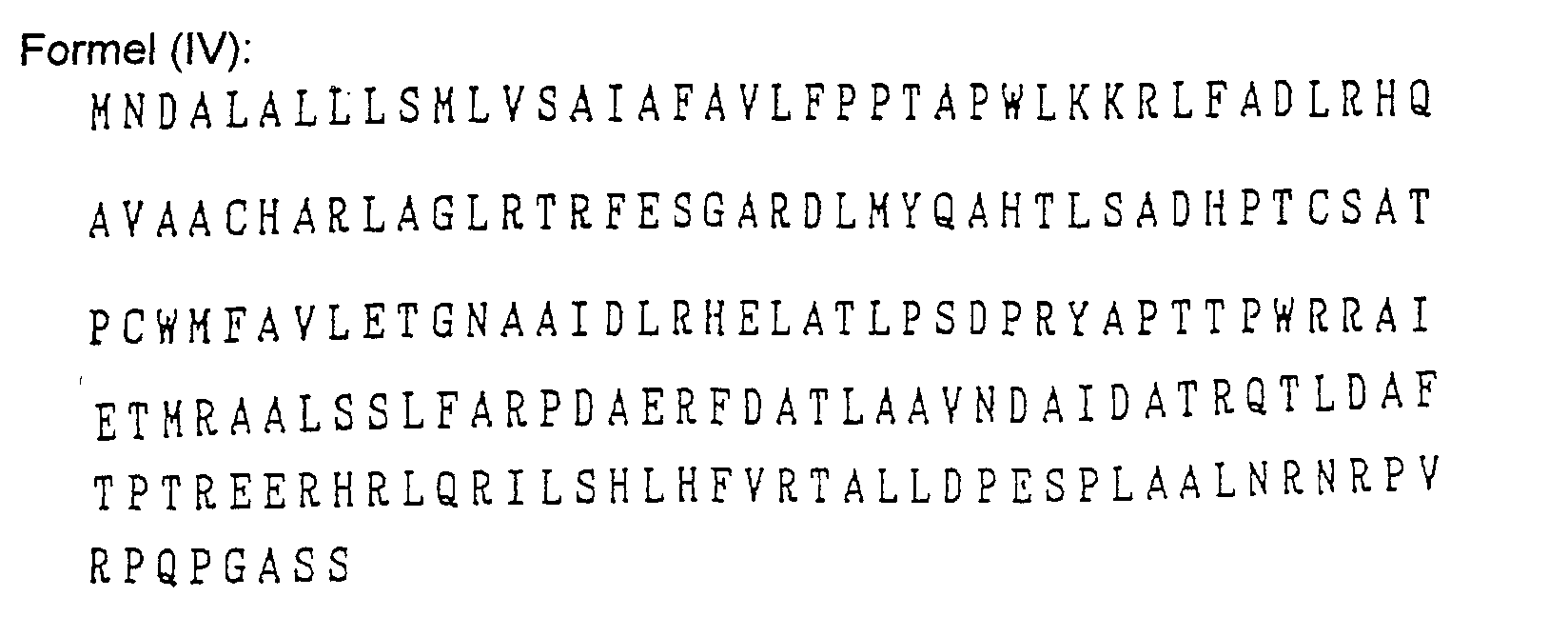 wobei die Buchstaben des Alphabets für die folgenden Aminosäuren stehen: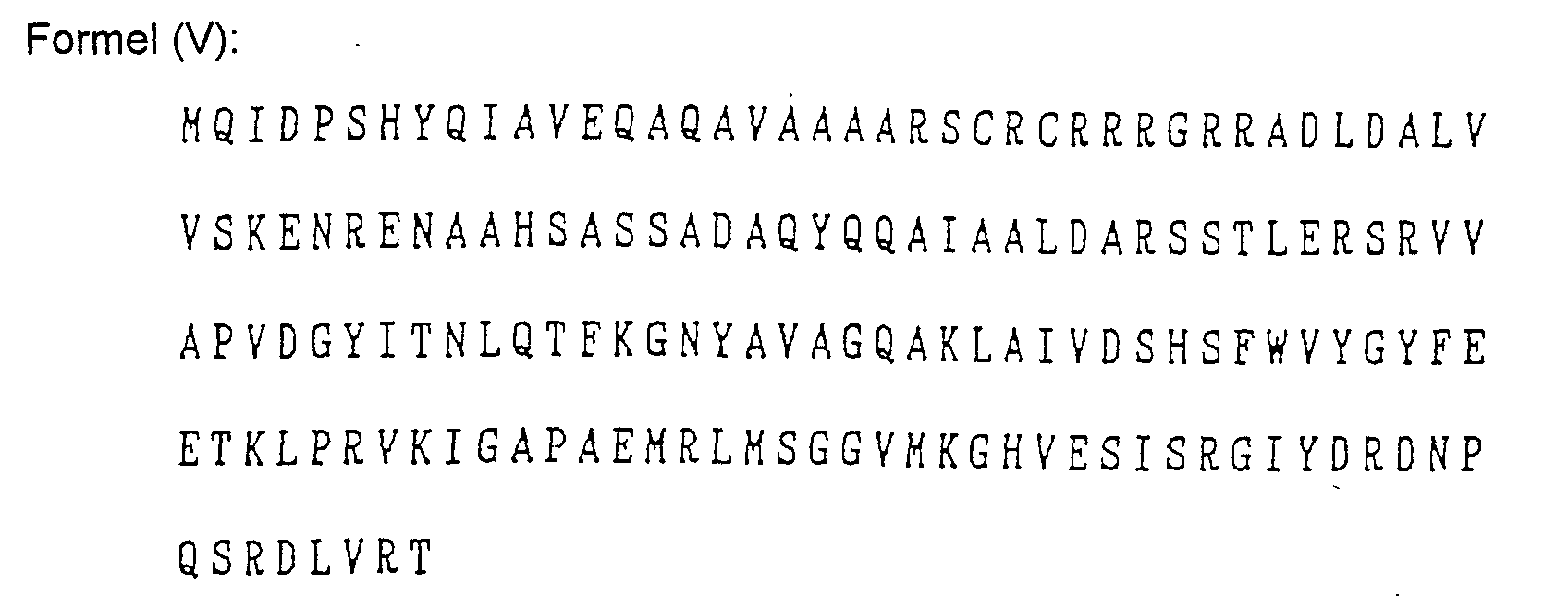
A: Alanin, C: Cystein, D: Asparaginsäure, E: Glutaminsäure, F: Phenylalanin, G: Glycin, H: Histidin, I: Isoleucin, K: Lysin, L: Leucin, M: Methionin, N: Asparagin, P: Prolin, Q: Glutamin, R: Arginin, S: Serin, T: Threonin, V: Valin, W: Tryptophan und Y: Tyrosin. - Das Verfahren nach Anspruch 1, wobei der Mikroorganismus Pseudomonas cepacia ist und das Gen die Basensequenz gemäß einer der folgenden Formeln (VI) bis (X) aufweist:
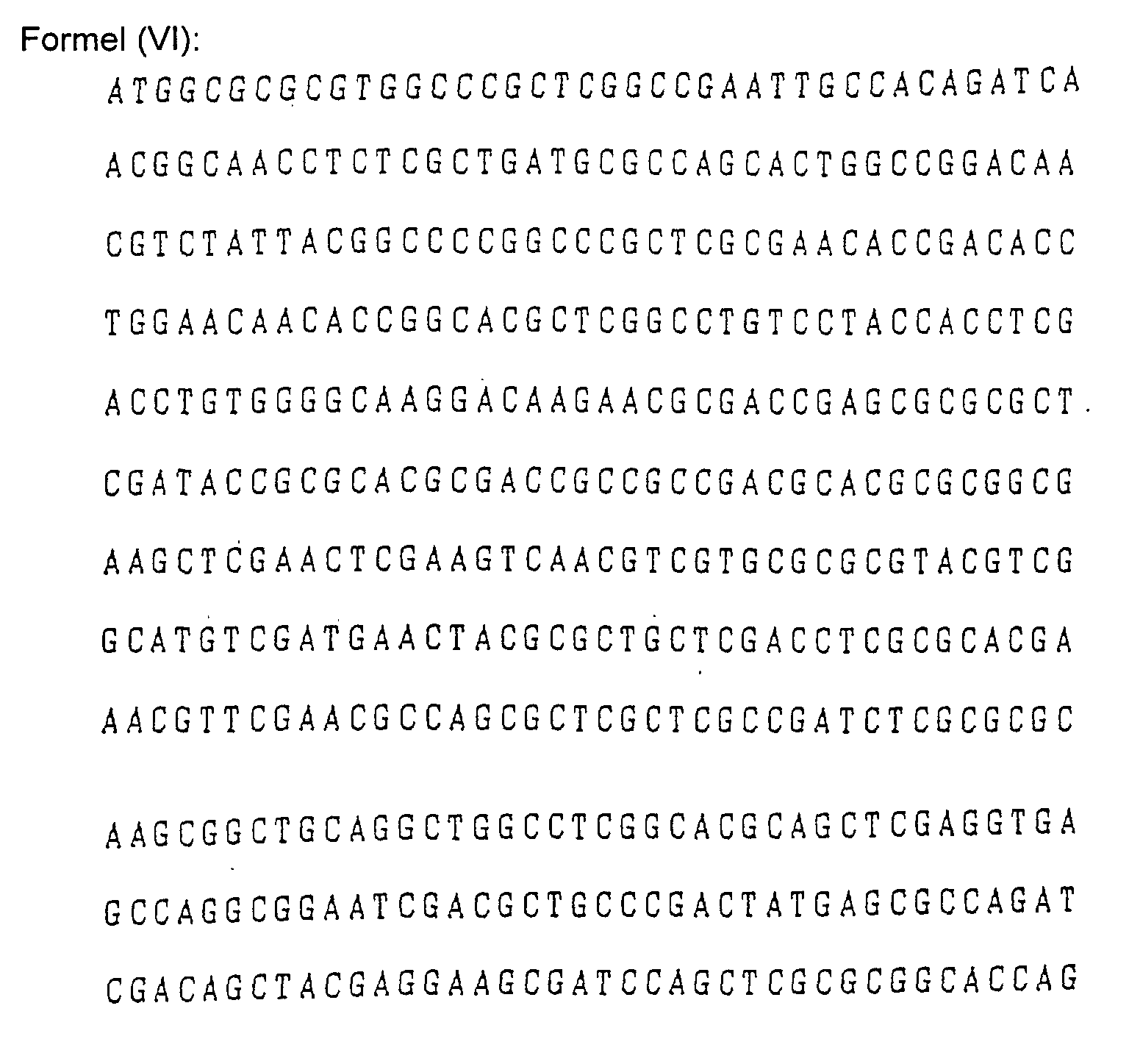
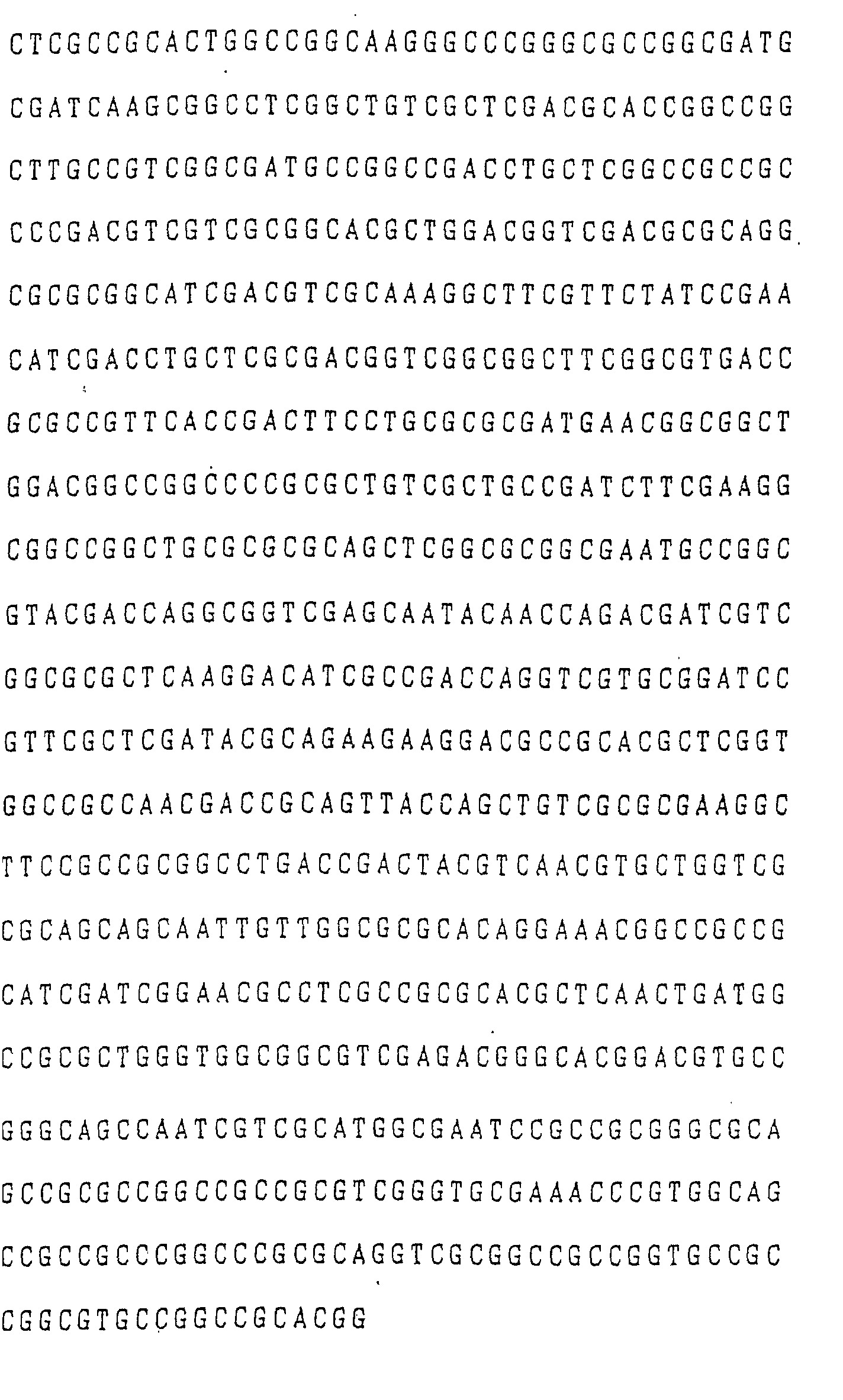
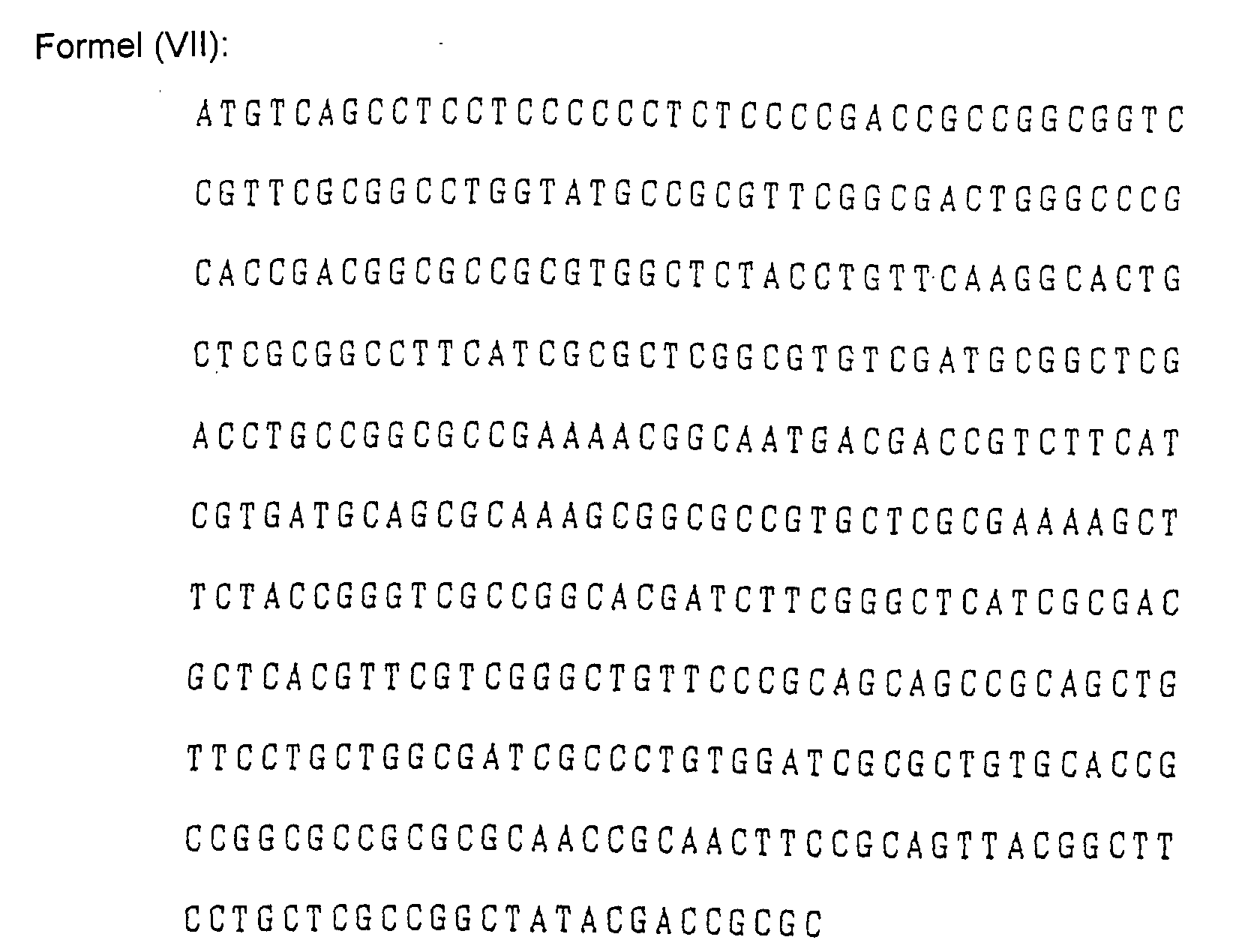
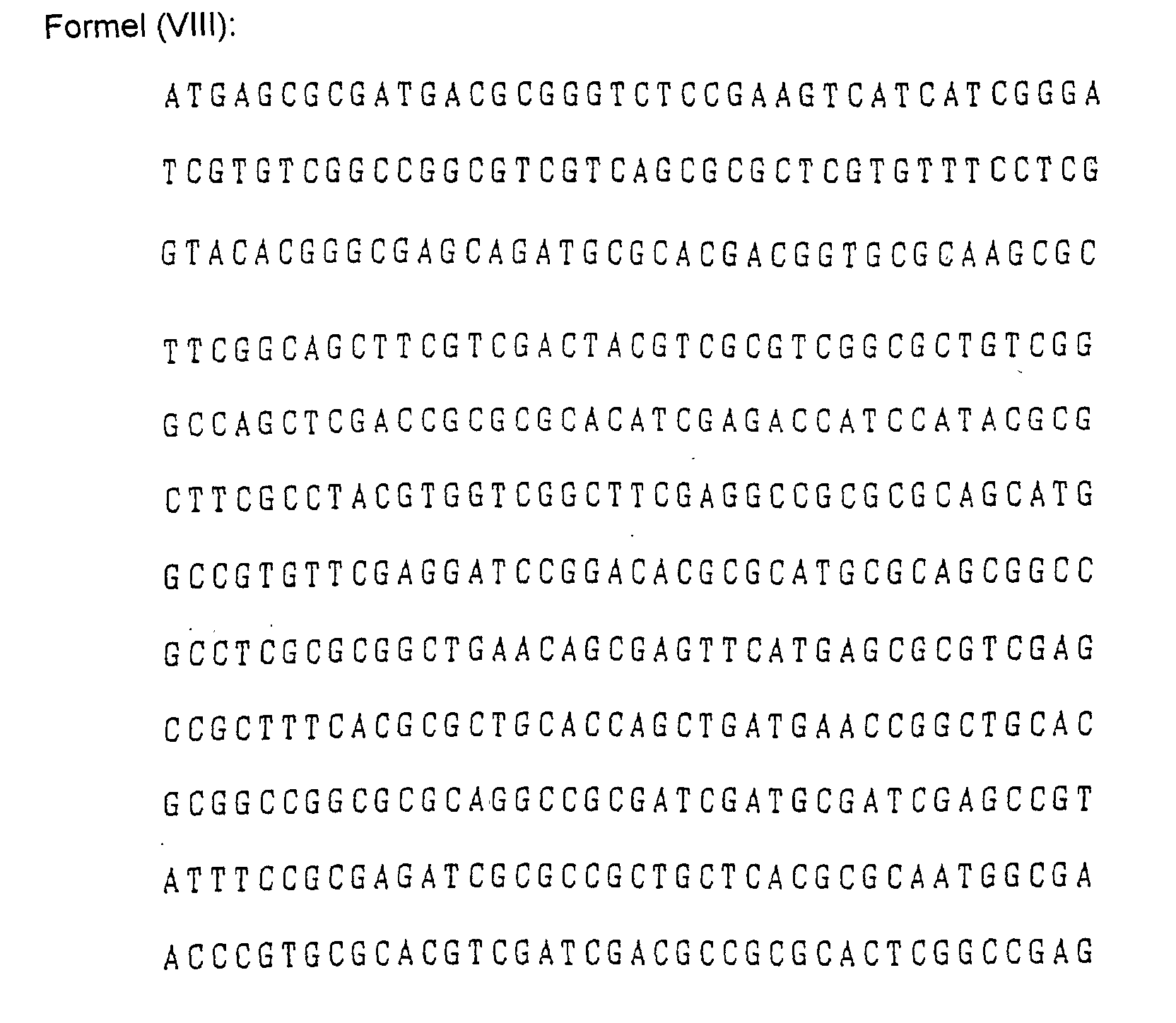
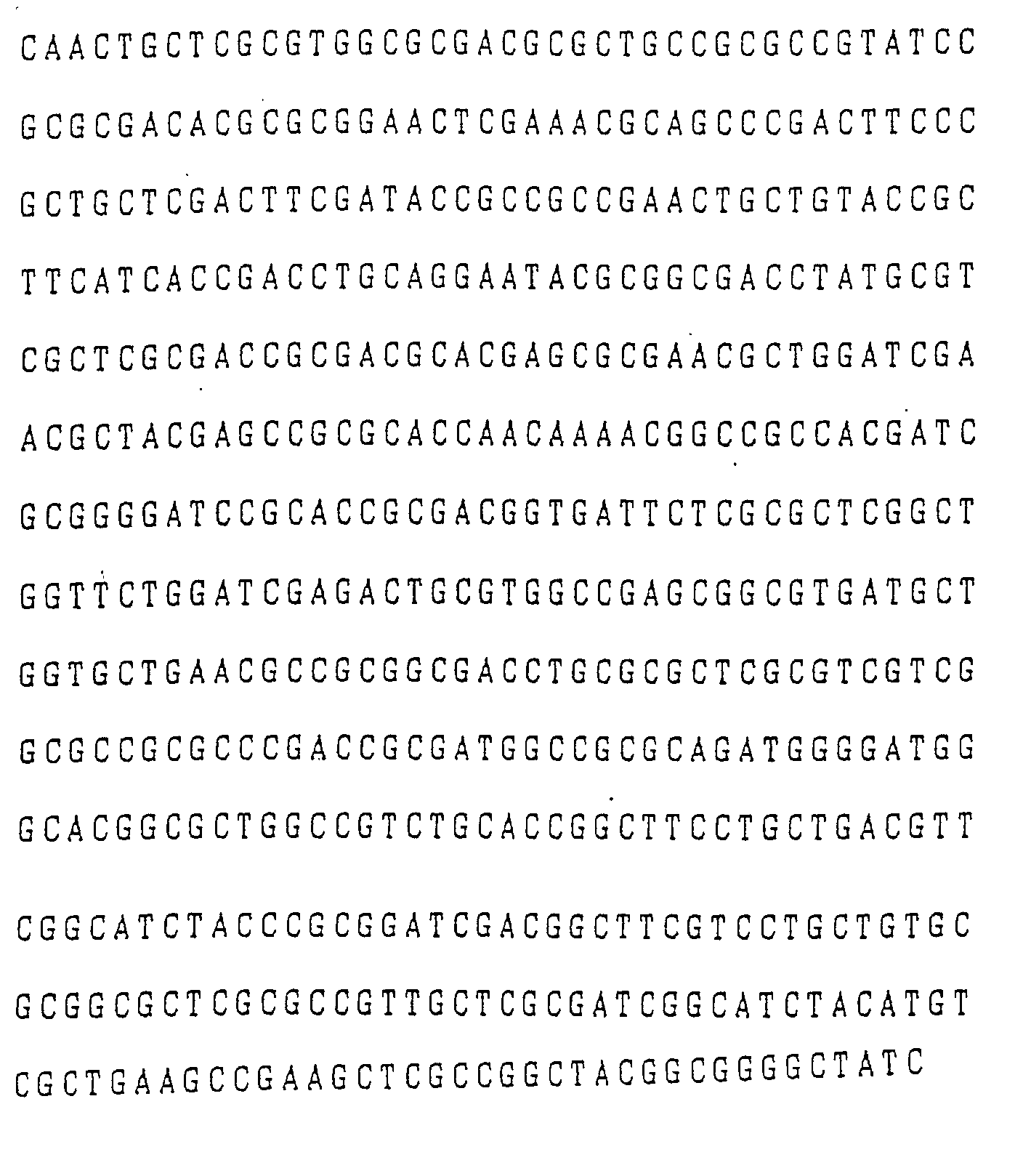
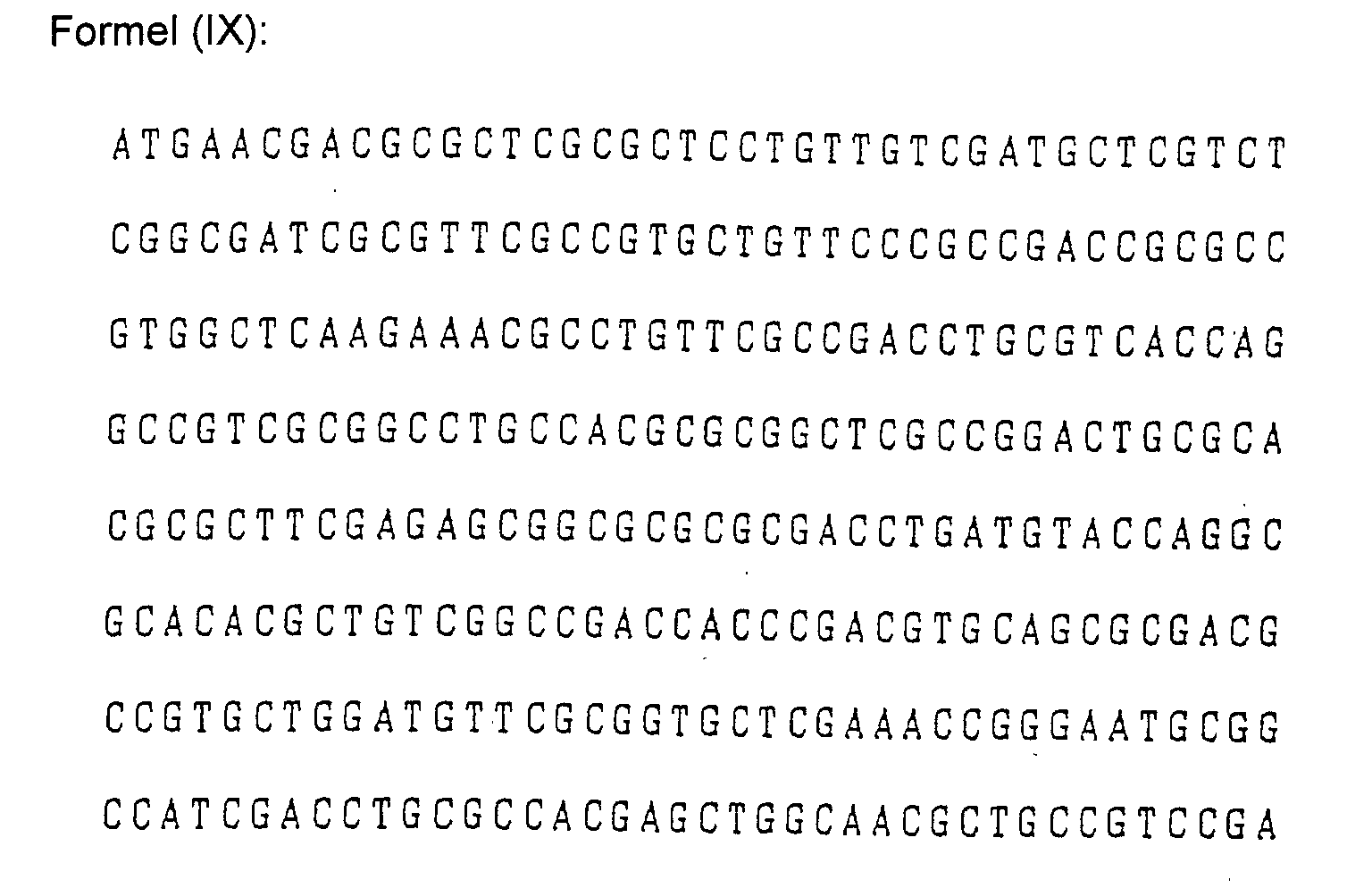
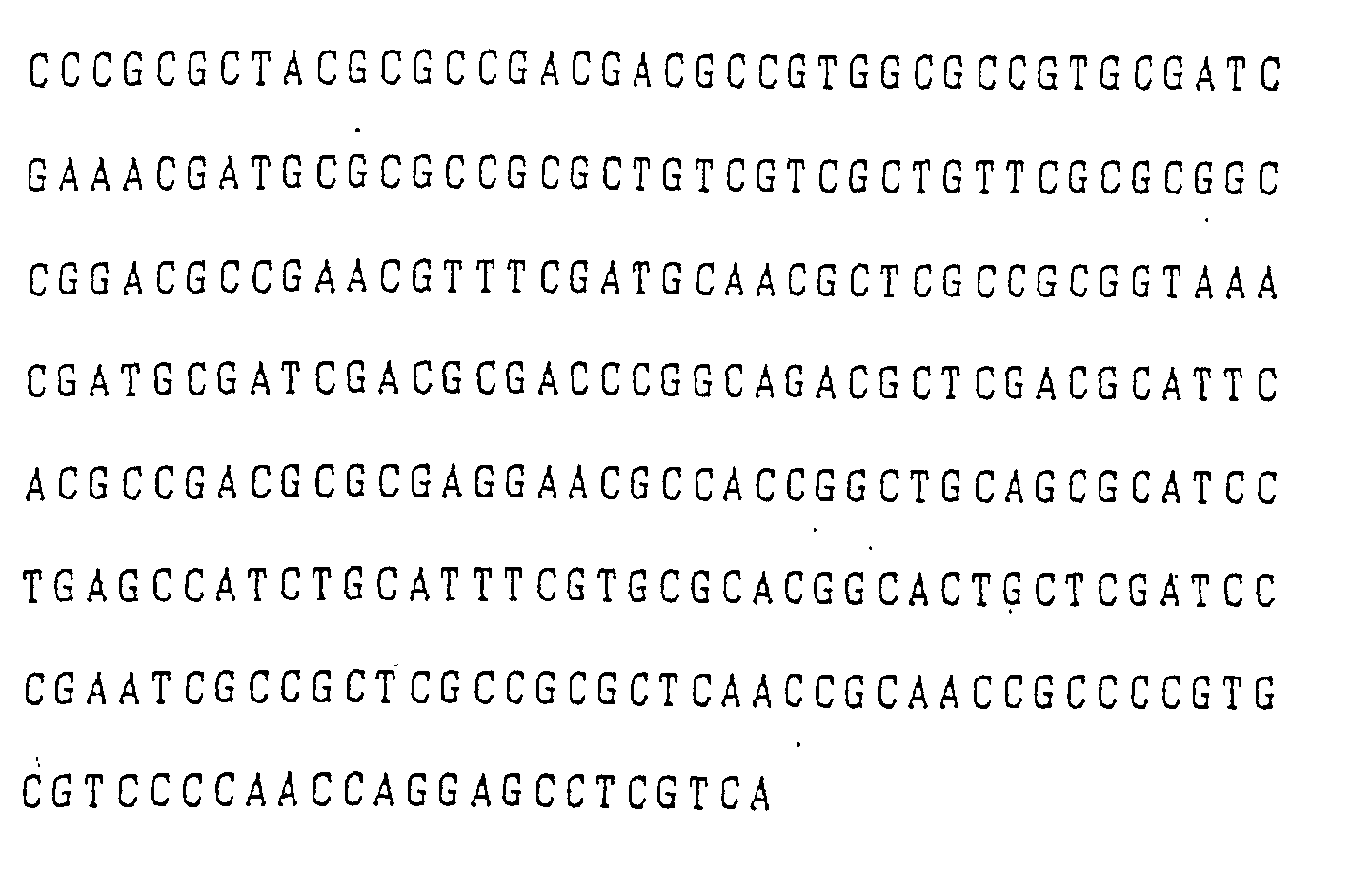
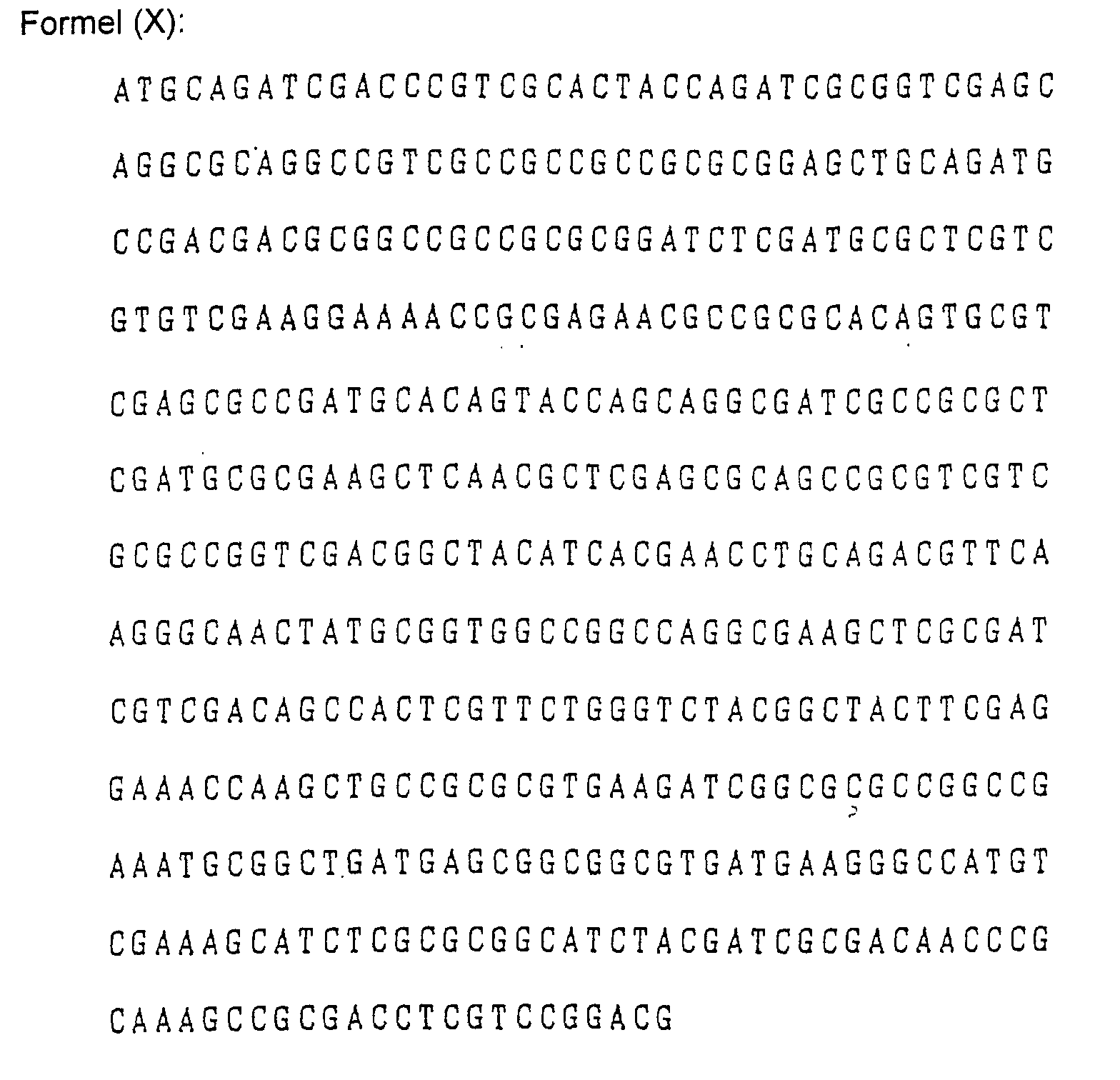
- Das Verfahren nach Anspruch 1, wobei das Gen in einem DNA Fragment enthalten ist.
- Das Verfahren nach Anspruch 6, wobei der Mikroorganismus Pseudomonas cepacia ist und das DNA Fragment die in der oberen Spalte von Fig. 1 gezeigte Restriktionskarte aufweist.
- Das Verfahren nach Anspruch 6, wobei der Mikroorganismus Klebsiella oxytoca ist und das DNA Fragment die in der unteren Spalte von Fig. 1 gezeigte Restriktionskarte aufweist.
- Das Verfahren nach Anspruch 6, wobei der Mikroorganismus Pseudomonas cepacia ist und das DNA Fragment die Basensequenz gemäß einer der Formeln (VI) bis (X) von Anspruch 5 aufweist.
- Das Verfahren nach Anspruch 1, wobei das Gen in einem Plasmid enthalten ist.
- Das Verfahren nach Anspruch 10, wobei der Mikroorganismus Pseudomonas cepacia ist und das Plasmid die in der oberen Spalte von Fig. 1 gezeigte Restriktionskarte aufweist.
- Das Verfahren nach Anspruch 10, wobei der Mikroorganismus Klebsielle oxytoca ist und das Plasmid die in der unteren Spalte von Fig. 1 gezeigte Restriktionskarte aufweist.
- Das Verfahren nach Anspruch 10, wobei der Mikroorganismus Pseudomonas cepacia ist und das Plasmid die Basensequenz gemäß einer der Formeln (VI) bis (X) von Anspruch 5 aufweist.
- Das Verfahren nach Anspruch 10, wobei das Plasmid in einer Wirtszelle enthalten ist.
- Das Verfahren nach Anspruch 14, wobei das Plasmid ein DNA Fragment abgeleitet von Pseudomonas cepacia enthält und das DNA Fragment die in der oberen Spalte von Fig. 1 gezeigte Restriktionskarte aufweist.
- Das Verfahren nach Anspruch 14, wobei das Plasmid ein DNA Fragment abgeleitet von Klebsiella oxytoca enthält und das DNA Fragment die in der unteren Spalte von Fig. 1 gezeigte Restriktionskarte aufweist.
- Das Verfahren nach Anspruch 14, wobei das Plasmid ein DNA Fragment enthält abgeleitet von Pseudomonas cepacia enthält und das DNA Fragment die Basensequenz gemäß einer der Formeln (VI) bis (X) von Anspruch 5 aufweist.
- Verfahren zur Herstellung eines Proteins, das bei der Zersetzung oder Entgiftung von Fusarinsäure mitwirken kann, wobei das Verfahren die Kultivierung von Wirtszellen, deren jede mit einem Plasmid transformiert wurde, das ein Gen zum Kodieren der Aminosäuresequenz gemäß den Formeln (1) bis (V) von Anspruch 4 oder einer dazu biologisch im Wesentlichen äquivalenten Aminosäuresequenz enthält, und die anschließende Reinigung und Isolierung des Proteins aus der erhaltenen Kultur umfasst.
- Verwendung eines Proteins, das gemäß dem Verfahren von Anspruch 18 erhältlich ist und das die Aminosäuresequenz gemäß den Formeln (1) bis (V) von Anspruch 4 oder eine dazu biologisch im Wesentlichen äquivalente Aminosäuresequenz aufweist, zur Mitwirkung bei der Zersetzung oder Entgiftung von Fusarinsäure.
Applications Claiming Priority (6)
| Application Number | Priority Date | Filing Date | Title |
|---|---|---|---|
| JP4548190 | 1990-02-28 | ||
| JP4548190 | 1990-02-28 | ||
| JP45481/90 | 1990-02-28 | ||
| JP03044027A JP3115340B2 (ja) | 1990-02-28 | 1991-02-18 | フザリン酸耐性遺伝子 |
| JP4402791 | 1991-02-18 | ||
| JP44027/91 | 1991-02-18 |
Publications (3)
| Publication Number | Publication Date |
|---|---|
| EP0444664A2 EP0444664A2 (de) | 1991-09-04 |
| EP0444664A3 EP0444664A3 (en) | 1991-10-23 |
| EP0444664B1 true EP0444664B1 (de) | 2001-11-28 |
Family
ID=26383878
Family Applications (1)
| Application Number | Title | Priority Date | Filing Date |
|---|---|---|---|
| EP91103006A Expired - Lifetime EP0444664B1 (de) | 1990-02-28 | 1991-02-28 | Resistenzgene gegen Fusarsäure |
Country Status (6)
| Country | Link |
|---|---|
| US (1) | US5292643A (de) |
| EP (1) | EP0444664B1 (de) |
| JP (1) | JP3115340B2 (de) |
| AT (1) | ATE209440T1 (de) |
| DE (1) | DE69132828T2 (de) |
| ES (1) | ES2169020T3 (de) |
Families Citing this family (5)
| Publication number | Priority date | Publication date | Assignee | Title |
|---|---|---|---|---|
| WO1994003065A1 (en) * | 1992-07-31 | 1994-02-17 | The University Of Sydney | Biocontrol of fungal infection using pseudomonas strains |
| PT932663E (pt) * | 1996-11-22 | 2000-12-29 | Pioneer Hi Bred Int | Composicoes e metodos para eliminar a toxicidade da moniliformina |
| EP1592654A2 (de) * | 2003-01-17 | 2005-11-09 | E.I. du Pont de Nemours and Company | Efflux proteine aus der pet familie |
| EP1587927A2 (de) * | 2003-01-17 | 2005-10-26 | E.I. du Pont de Nemours and Company | Regulator/promotor zur einstellbaren genexpression und metabolitenwahrnehmung |
| NL2022581B1 (en) * | 2019-02-14 | 2020-08-27 | Koppert Bv | Composition comprising a mixture of dna molecules, uses thereof as biological inhibitor and method for production |
Family Cites Families (7)
| Publication number | Priority date | Publication date | Assignee | Title |
|---|---|---|---|---|
| DE3784563T2 (de) * | 1986-07-03 | 1993-09-23 | Occidental Chem Co | Mikroorganismen fuer die zersetzung von giftigem abfall. |
| JPS63198974A (ja) * | 1987-02-13 | 1988-08-17 | Daikin Ind Ltd | フザリン酸分解能を有する微生物およびそれを用いたフザリン酸分解方法 |
| JPS63198607A (ja) * | 1987-02-13 | 1988-08-17 | Daikin Ind Ltd | フザリウム病防除法 |
| AU605489B2 (en) * | 1986-07-11 | 1991-01-17 | Daikin Industries, Ltd. | A method for the prevention of fusarium diseases and microorganisms used for the same |
| CA1293701C (en) * | 1986-07-28 | 1991-12-31 | Peter J. Dart | Agricultural products and methods |
| JPH022957A (ja) * | 1988-06-14 | 1990-01-08 | Hitachi Electron Eng Co Ltd | プリント配線試験用プローズ装置 |
| JPH03228673A (ja) * | 1990-01-31 | 1991-10-09 | Daikin Ind Ltd | フザリン酸を無毒化する微生物およびそれを用いたフザリン酸の無毒化方法 |
-
1991
- 1991-02-18 JP JP03044027A patent/JP3115340B2/ja not_active Expired - Fee Related
- 1991-02-28 DE DE69132828T patent/DE69132828T2/de not_active Expired - Fee Related
- 1991-02-28 EP EP91103006A patent/EP0444664B1/de not_active Expired - Lifetime
- 1991-02-28 US US07/661,610 patent/US5292643A/en not_active Expired - Lifetime
- 1991-02-28 ES ES91103006T patent/ES2169020T3/es not_active Expired - Lifetime
- 1991-02-28 AT AT91103006T patent/ATE209440T1/de not_active IP Right Cessation
Also Published As
| Publication number | Publication date |
|---|---|
| EP0444664A3 (en) | 1991-10-23 |
| DE69132828T2 (de) | 2002-06-20 |
| DE69132828D1 (de) | 2002-01-10 |
| US5292643A (en) | 1994-03-08 |
| EP0444664A2 (de) | 1991-09-04 |
| ES2169020T3 (es) | 2002-07-01 |
| JP3115340B2 (ja) | 2000-12-04 |
| ATE209440T1 (de) | 2001-12-15 |
| JPH04211376A (ja) | 1992-08-03 |
Similar Documents
| Publication | Publication Date | Title |
|---|---|---|
| Mahenthiralingam et al. | Cloning and sequencing of the gene which encodes the highly inducible acetamidase of Mycobacterium smegmatis | |
| Long et al. | Symbiotic loci of Rhizobium meliloti identified by random TnphoA mutagenesis | |
| Robson et al. | Structural genes for the vanadium nitrogenase from Azotobacter chroococcum. | |
| Hani et al. | Expression and characterization of Campylobacter jejuni benzoylglycine amidohydrolase (hippuricase) gene in Escherichia coli | |
| Merrick et al. | Mutations in genes downstream of the rpoN gene (encoding σ54) of Klebsiella pneumoniae affect expression from σ54‐dependent promoters | |
| Nardi-Dei et al. | Comparative studies of genes encoding thermostable L-2-halo acid dehalogenase from Pseudomonas sp. strain YL, other dehalogenases, and two related hypothetical proteins from Escherichia coli | |
| Dibb et al. | Identification of a rhizosphere protein encoded by the symbiotic plasmid of Rhizobium leguminosarum | |
| DE69030615T2 (de) | Neue Polypeptide, DNA-Sequenzen, die deren Expression erlauben, Verfahren zur Vorbereitung und Verwendung | |
| Ausubel et al. | Molecular genetic analysis of Klebsiella pneumoniae nitrogen-fixation (nif) genes | |
| US5292643A (en) | Fusaric acid resistant genes | |
| DE69333954T2 (de) | An der streptogramin biosynthese beteiligte polypeptide, ihre kodierenden nukleotidsequenzen und ihre verwendung | |
| AU5208400A (en) | Screening method for peptides | |
| US6855536B2 (en) | Materials and methods for the enhancement of effective root nodulation in legumes | |
| JPH03500606A (ja) | プロテアーゼ欠損グラム陽性菌類及び組換え体産生用宿主有機体としての用途 | |
| Sharypova et al. | Isolation and characterization of Rhizobium meliloti Tn5 mutants showing enhanced symbiotic effectiveness | |
| EP0868431B1 (de) | Protein mit pflanzenschützenden eigenschaften | |
| Stacey et al. | Rhizobium inoculation of legumes | |
| Gresshoff | Molecular biology of symbiotic nitrogen fixation | |
| CN101570755B (zh) | 一种细菌源蛋白酶抑制剂新基因及其表达与应用 | |
| DK1015579T4 (en) | Clostridium toxin as well as process for the preparation of immunogenic compositions | |
| EP0342658B1 (de) | Biosynthetisches Verfahren zur Herstellung von chemischen Verbindungen | |
| US4983519A (en) | Recombinant DNA clones of essential nodulation genes of bradyrhizobium japonicum | |
| CN101213307B (zh) | 来自粗糙脉孢菌的s-腺苷甲硫氨酸-6-n-赖氨酸-甲基转移酶,编码其的因,包含其的载体和宿主细胞,以及使用该宿主细胞生产三甲基赖氨酸的方法 | |
| Ward et al. | Required for Effective Nodulation of Lotus pedunculatus | |
| McKnight et al. | Comparative genomics of ‘Xanthomonas cannabis’ reveals an emerging, diverse pathogen |
Legal Events
| Date | Code | Title | Description |
|---|---|---|---|
| PUAI | Public reference made under article 153(3) epc to a published international application that has entered the european phase |
Free format text: ORIGINAL CODE: 0009012 |
|
| PUAL | Search report despatched |
Free format text: ORIGINAL CODE: 0009013 |
|
| AK | Designated contracting states |
Kind code of ref document: A2 Designated state(s): AT BE CH DE DK ES FR GB GR IT LI LU NL SE |
|
| RIN1 | Information on inventor provided before grant (corrected) |
Inventor name: TOYODA, HIDEYOSHI Inventor name: UTSUMI, RYUTARO Inventor name: OBATA, KAZUAKI Inventor name: SHIBANO, YUJI |
|
| AK | Designated contracting states |
Kind code of ref document: A3 Designated state(s): AT BE CH DE DK ES FR GB GR IT LI LU NL SE |
|
| 17P | Request for examination filed |
Effective date: 19920310 |
|
| 17Q | First examination report despatched |
Effective date: 19931006 |
|
| GRAG | Despatch of communication of intention to grant |
Free format text: ORIGINAL CODE: EPIDOS AGRA |
|
| GRAG | Despatch of communication of intention to grant |
Free format text: ORIGINAL CODE: EPIDOS AGRA |
|
| GRAG | Despatch of communication of intention to grant |
Free format text: ORIGINAL CODE: EPIDOS AGRA |
|
| GRAH | Despatch of communication of intention to grant a patent |
Free format text: ORIGINAL CODE: EPIDOS IGRA |
|
| GRAH | Despatch of communication of intention to grant a patent |
Free format text: ORIGINAL CODE: EPIDOS IGRA |
|
| GRAA | (expected) grant |
Free format text: ORIGINAL CODE: 0009210 |
|
| AK | Designated contracting states |
Kind code of ref document: B1 Designated state(s): AT BE CH DE DK ES FR GB GR IT LI LU NL SE |
|
| PG25 | Lapsed in a contracting state [announced via postgrant information from national office to epo] |
Ref country code: AT Free format text: LAPSE BECAUSE OF FAILURE TO SUBMIT A TRANSLATION OF THE DESCRIPTION OR TO PAY THE FEE WITHIN THE PRESCRIBED TIME-LIMIT Effective date: 20011128 Ref country code: BE Free format text: LAPSE BECAUSE OF FAILURE TO SUBMIT A TRANSLATION OF THE DESCRIPTION OR TO PAY THE FEE WITHIN THE PRESCRIBED TIME-LIMIT Effective date: 20011128 Ref country code: CH Free format text: LAPSE BECAUSE OF FAILURE TO SUBMIT A TRANSLATION OF THE DESCRIPTION OR TO PAY THE FEE WITHIN THE PRESCRIBED TIME-LIMIT Effective date: 20011128 Ref country code: NL Free format text: LAPSE BECAUSE OF FAILURE TO SUBMIT A TRANSLATION OF THE DESCRIPTION OR TO PAY THE FEE WITHIN THE PRESCRIBED TIME-LIMIT Effective date: 20011128 Ref country code: GR Free format text: LAPSE BECAUSE OF FAILURE TO SUBMIT A TRANSLATION OF THE DESCRIPTION OR TO PAY THE FEE WITHIN THE PRESCRIBED TIME-LIMIT Effective date: 20011128 Ref country code: LI Free format text: LAPSE BECAUSE OF FAILURE TO SUBMIT A TRANSLATION OF THE DESCRIPTION OR TO PAY THE FEE WITHIN THE PRESCRIBED TIME-LIMIT Effective date: 20011128 |
|
| REF | Corresponds to: |
Ref document number: 209440 Country of ref document: AT Date of ref document: 20011215 Kind code of ref document: T |
|
| REG | Reference to a national code |
Ref country code: CH Ref legal event code: EP |
|
| REG | Reference to a national code |
Ref country code: GB Ref legal event code: IF02 |
|
| REF | Corresponds to: |
Ref document number: 69132828 Country of ref document: DE Date of ref document: 20020110 |
|
| PG25 | Lapsed in a contracting state [announced via postgrant information from national office to epo] |
Ref country code: SE Free format text: LAPSE BECAUSE OF FAILURE TO SUBMIT A TRANSLATION OF THE DESCRIPTION OR TO PAY THE FEE WITHIN THE PRESCRIBED TIME-LIMIT Effective date: 20020228 Ref country code: LU Free format text: LAPSE BECAUSE OF NON-PAYMENT OF DUE FEES Effective date: 20020228 Ref country code: DK Free format text: LAPSE BECAUSE OF FAILURE TO SUBMIT A TRANSLATION OF THE DESCRIPTION OR TO PAY THE FEE WITHIN THE PRESCRIBED TIME-LIMIT Effective date: 20020228 |
|
| ET | Fr: translation filed | ||
| NLV1 | Nl: lapsed or annulled due to failure to fulfill the requirements of art. 29p and 29m of the patents act | ||
| REG | Reference to a national code |
Ref country code: CH Ref legal event code: PL |
|
| REG | Reference to a national code |
Ref country code: ES Ref legal event code: FG2A Ref document number: 2169020 Country of ref document: ES Kind code of ref document: T3 |
|
| PLBE | No opposition filed within time limit |
Free format text: ORIGINAL CODE: 0009261 |
|
| STAA | Information on the status of an ep patent application or granted ep patent |
Free format text: STATUS: NO OPPOSITION FILED WITHIN TIME LIMIT |
|
| 26N | No opposition filed | ||
| PGFP | Annual fee paid to national office [announced via postgrant information from national office to epo] |
Ref country code: DE Payment date: 20070222 Year of fee payment: 17 |
|
| PGFP | Annual fee paid to national office [announced via postgrant information from national office to epo] |
Ref country code: GB Payment date: 20070228 Year of fee payment: 17 Ref country code: ES Payment date: 20070228 Year of fee payment: 17 |
|
| PGFP | Annual fee paid to national office [announced via postgrant information from national office to epo] |
Ref country code: IT Payment date: 20070623 Year of fee payment: 17 |
|
| PGFP | Annual fee paid to national office [announced via postgrant information from national office to epo] |
Ref country code: FR Payment date: 20070208 Year of fee payment: 17 |
|
| GBPC | Gb: european patent ceased through non-payment of renewal fee |
Effective date: 20080228 |
|
| REG | Reference to a national code |
Ref country code: FR Ref legal event code: ST Effective date: 20081031 |
|
| PG25 | Lapsed in a contracting state [announced via postgrant information from national office to epo] |
Ref country code: DE Free format text: LAPSE BECAUSE OF NON-PAYMENT OF DUE FEES Effective date: 20080902 |
|
| PG25 | Lapsed in a contracting state [announced via postgrant information from national office to epo] |
Ref country code: FR Free format text: LAPSE BECAUSE OF NON-PAYMENT OF DUE FEES Effective date: 20080229 |
|
| REG | Reference to a national code |
Ref country code: ES Ref legal event code: FD2A Effective date: 20080229 |
|
| PG25 | Lapsed in a contracting state [announced via postgrant information from national office to epo] |
Ref country code: GB Free format text: LAPSE BECAUSE OF NON-PAYMENT OF DUE FEES Effective date: 20080228 |
|
| PG25 | Lapsed in a contracting state [announced via postgrant information from national office to epo] |
Ref country code: ES Free format text: LAPSE BECAUSE OF NON-PAYMENT OF DUE FEES Effective date: 20080229 |
|
| PG25 | Lapsed in a contracting state [announced via postgrant information from national office to epo] |
Ref country code: IT Free format text: LAPSE BECAUSE OF NON-PAYMENT OF DUE FEES Effective date: 20080228 |