EP0435946B1 - Methode für die änderung der bindung eines zelladhäsionrezeptors - Google Patents
Methode für die änderung der bindung eines zelladhäsionrezeptors Download PDFInfo
- Publication number
- EP0435946B1 EP0435946B1 EP89911334A EP89911334A EP0435946B1 EP 0435946 B1 EP0435946 B1 EP 0435946B1 EP 89911334 A EP89911334 A EP 89911334A EP 89911334 A EP89911334 A EP 89911334A EP 0435946 B1 EP0435946 B1 EP 0435946B1
- Authority
- EP
- European Patent Office
- Prior art keywords
- binding
- integrin
- ligand
- fibronectin
- cation
- Prior art date
- Legal status (The legal status is an assumption and is not a legal conclusion. Google has not performed a legal analysis and makes no representation as to the accuracy of the status listed.)
- Expired - Lifetime
Links
- 0 CC[C@@](C)N1*C1 Chemical compound CC[C@@](C)N1*C1 0.000 description 2
Images


Classifications
-
- A—HUMAN NECESSITIES
- A61—MEDICAL OR VETERINARY SCIENCE; HYGIENE
- A61K—PREPARATIONS FOR MEDICAL, DENTAL OR TOILETRY PURPOSES
- A61K33/00—Medicinal preparations containing inorganic active ingredients
- A61K33/24—Heavy metals; Compounds thereof
-
- C—CHEMISTRY; METALLURGY
- C07—ORGANIC CHEMISTRY
- C07K—PEPTIDES
- C07K14/00—Peptides having more than 20 amino acids; Gastrins; Somatostatins; Melanotropins; Derivatives thereof
- C07K14/435—Peptides having more than 20 amino acids; Gastrins; Somatostatins; Melanotropins; Derivatives thereof from animals; from humans
- C07K14/705—Receptors; Cell surface antigens; Cell surface determinants
- C07K14/70546—Integrin superfamily
- C07K14/7055—Integrin beta1-subunit-containing molecules, e.g. CD29, CD49
-
- A—HUMAN NECESSITIES
- A61—MEDICAL OR VETERINARY SCIENCE; HYGIENE
- A61K—PREPARATIONS FOR MEDICAL, DENTAL OR TOILETRY PURPOSES
- A61K33/00—Medicinal preparations containing inorganic active ingredients
- A61K33/06—Aluminium, calcium or magnesium; Compounds thereof, e.g. clay
-
- A—HUMAN NECESSITIES
- A61—MEDICAL OR VETERINARY SCIENCE; HYGIENE
- A61K—PREPARATIONS FOR MEDICAL, DENTAL OR TOILETRY PURPOSES
- A61K33/00—Medicinal preparations containing inorganic active ingredients
- A61K33/24—Heavy metals; Compounds thereof
- A61K33/244—Lanthanides; Compounds thereof
-
- A—HUMAN NECESSITIES
- A61—MEDICAL OR VETERINARY SCIENCE; HYGIENE
- A61P—SPECIFIC THERAPEUTIC ACTIVITY OF CHEMICAL COMPOUNDS OR MEDICINAL PREPARATIONS
- A61P43/00—Drugs for specific purposes, not provided for in groups A61P1/00-A61P41/00
-
- G—PHYSICS
- G01—MEASURING; TESTING
- G01N—INVESTIGATING OR ANALYSING MATERIALS BY DETERMINING THEIR CHEMICAL OR PHYSICAL PROPERTIES
- G01N33/00—Investigating or analysing materials by specific methods not covered by groups G01N1/00 - G01N31/00
- G01N33/48—Biological material, e.g. blood, urine; Haemocytometers
- G01N33/50—Chemical analysis of biological material, e.g. blood, urine; Testing involving biospecific ligand binding methods; Immunological testing
- G01N33/53—Immunoassay; Biospecific binding assay; Materials therefor
- G01N33/5306—Improving reaction conditions, e.g. reduction of non-specific binding, promotion of specific binding
-
- G—PHYSICS
- G01—MEASURING; TESTING
- G01N—INVESTIGATING OR ANALYSING MATERIALS BY DETERMINING THEIR CHEMICAL OR PHYSICAL PROPERTIES
- G01N33/00—Investigating or analysing materials by specific methods not covered by groups G01N1/00 - G01N31/00
- G01N33/48—Biological material, e.g. blood, urine; Haemocytometers
- G01N33/50—Chemical analysis of biological material, e.g. blood, urine; Testing involving biospecific ligand binding methods; Immunological testing
- G01N33/53—Immunoassay; Biospecific binding assay; Materials therefor
- G01N33/566—Immunoassay; Biospecific binding assay; Materials therefor using specific carrier or receptor proteins as ligand binding reagents where possible specific carrier or receptor proteins are classified with their target compounds
Definitions
- Adhesion processes are mediated by cell surface receptors which specifically recognize and bind to adhesion ligands.
- integrins Many of the known adhesion receptors belong to a family of receptors called integrins.
- the integrin family includes receptors for fibronectin, vitronectin, and fibrinogen as well as receptors for von Willebrand factor, laminin, complement component C3bi and some cell-cell adhesion receptors.
- the integrins are heterodimeric membrane proteins with large extracellular domains and small cytoplasmic tails.
- the ligand proteins of those integrins with known ligands share one common feature: the tripeptide Arg-Gly-Asp (RGD) is an essential part of the protein structure recognized by the receptor.
- RGD tripeptide Arg-Gly-Asp
- Integrin-mediated adhesion processes can be manipulated by providing either immobilized or soluble Arg-Gly-Asp containing peptides.
- the ability to manipulate such processes has enormous potential application.
- the characteristics and uses of Arg-Gly-Asp containing peptides are described in, for example, U.S. Pat. Nos. 4,578,079 and 4,614,517 and in Pierschbacher and Ruoslahti, Nature 309:30 (1984) and Pierschbacher and Ruoslahti, PNAS 81:5985 (1984).
- the binding of adhesion receptors to their ligands requires the presence of divalent cations such as Ca2+ or Mg2+.
- divalent cations such as Ca2+ or Mg2+.
- the alpha subunits of the receptors contain several short amino acid sequences that are similar to the Ca2+-binding sites of other known Ca2+-binding proteins and the divalent cations presumably act through these sequences.
- the present invention resides in the finding that the binding avidity of cell surface receptors for their ligands can be modified by providing certain cations.
- the receptor is the fibronectin, vitronectin, laminin, or a collagen receptor, although other integrins can also be used.
- the cations which result in an increase in binding avidity are the cations Mn2+, Co2+, Cd2+ and Ni2+.
- the cation is not Zn2+ or Al3+, nor a physiological concentration of Ca2+ or Mg2+. Gd3+ results in decreased avidity of the fibronectin and vitronectin receptors for their ligands.
- the invention refers to the use of cations having integrin-binding-modifying activity for the manufacture of a medicament for modifying the binding avidity of integrins.
- the inventive concept can further be employed in the context with a ligand matrix column in order to increase the yield of receptors purified therewith.
- the invention can also be used to increase the binding of receptors to a substrate, as in an ELISA or radioreceptor assay, and to increase the migration of cells.
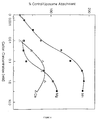
- Figure 1 shows the effect of cations on the binding of fibronectin receptor liposomes to fibronectin.
- Receptor liposomes prepared without added cations were mixed with the indicated concentrations of CaCl2, MgCl2 or MnCl2 and their ability to attach to plastic microtiter wells coated with fibronectin was assayed.
- the results from three experiments are expressed as a percentage of control attachment, which was measured in the presence of 1 mM CaCl2 and 1 mM MgCl2 and set equal to 100%.
- Figure 2 shows attachment of fibronectin receptor liposomes to fibronectin in the presence of the 110 kDa fibronectin fragment.
- Receptor liposomes were prepared with either 1 mM CaCl2 and 1 mM MgCl2 or with 1 mM MnCl2. The average of results from three experiments is expressed as percentage of control attachment measured in the presence of appropriate cations without inhibitor.
- Figure 3 shows attachment as described in Figure 2 using as the soluble inhibitor GRGDSP.
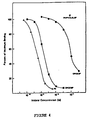
- Figure 4 shows the binding of the fibronectin receptor to fibronectin in ELISA and inhibition of the binding by soluble ligands.
- Microtiter wells were coated with 1 ⁇ g/ml of fibronectin, and purified receptor was allowed to bind to the coated wells in the presence of increasing concentrations of fibronectin, GRGDSP, GRGESP or an unrelated peptide. The binding of the receptor to the well was detected with enzyme-labelled antibodies.
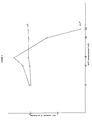
- FIG. 5 shows Membrane Invasion Culture System (MICS) Assay of A375 cells in the presence of various concentrations of Mn2+ or Ca2+. A 30% increase in invasion is seen at 100 ⁇ M MnCl2.
- MIMS Membrane Invasion Culture System
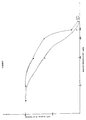
- Figure 6 shows inhibition of A375M invasion with GRGDSP in the presence of 100 ⁇ M CaCl2 or 100 ⁇ M MnCl2, using the MICS Assay.
- the invention relates to the discovery that the presence of Mn2+ increases the binding avidity of integrins for their ligands.
- integrins include fibronectin, laminin, vitronectin and collagen receptors. It is now known that other cations as well modify the binding of integrins to their ligands. All integrin ⁇ subunits for which the amino acid sequence is known contain sequences that resemble known Ca2+-binding sites in other proteins. While not wishing to be bound by this explanation, it appears that the presence of these sequences renders the receptors sensitive to the presence of Mn2+.
- Integrins in general and their subunits are described in detail in Ruoslahti and Pierschbacher, Science 238:491 (1987). All terminology used herein conforms to the definitions and descriptions provided by this reference. In essence, these integrins comprise a family of related cell surface heterodimeric glycoproteins that are involved in mediating cell adhesive interactions.
- the integrins include, but are not limited to, receptors for fibronectin, vitronectin, collagens, laminin, tenascin, and the cell surface protein IIb/IIIa that recognizes fibrinogen, fibronectin, Von Willebrand factor and thrombospondin.
- the leukocyte adhesion receptors LFA-1, Mac-1 and gp 150/95 are also members of the integrin family of receptors.
- the term "cations" shall include those ions having a positive charge, preferably 2+ or 3+. These include metals and the rare earth metals such as the lanthanide series.
- modification of receptor binding encompasses both changes in binding avidity and changes in binding affinity.
- Increased binding affinity reflects an increase in the strength of binding between individual receptors and their ligands.
- Increased binding avidity may reflect either increased binding affinity or an increase in the total number of receptor molecules binding to ligands.
- the present invention relates to the striking effect which the presence of Mn2+ produces on the binding of the fibronectin receptor to fibronectin. Both the binding avidity and the binding affinity are greatly increased in the presence of Mn2+. Moreover, Mn2+ has been demonstrated to increase the binding avidity of other integrins examined for at least one of their ligands, as measured by one or more of the assays described in the Examples below. These integrins include the fibronectin, vitronectin, collagen Types I and IV and laminin receptors.
- cations also exhibit effects on the binding avidity of the fibronectin receptor and other integrins.
- metals include, but are not limited to, Co2+, Cd2+, Ni2+ and Gd3+.
- the former three effect an increase in binding avidity.
- Gd3+ produces a decrease in binding avidity, and can be used to mitigate the integrin activity in general.
- modification of binding avidity can be detected by several different assays performed in the presence or absence of various concentrations of cations.
- assays to detect the binding of integrin-containing liposomes to particular ligands the use of labelled antibodies to determine binding between integrins and ligands, the use of labelled integrins to determine integrin-ligand binding and affinity chromatography to determine the binding of integrins to a ligand-conjugated matrix. Because each of these assays may reflect different aspects of binding avidity, such as binding affinity or an increase in the number of receptors available for binding, the various assays may not all show a similar effect. Cations which affect the binding activity of integrins are considered to have integrin-binding-modifying activity.
- binding avidity is demonstrated by one or more assays to be increased in the presence of a cation
- the cation is considered to have integrin-binding-promoting activity.
- binding avidity is demonstrated by one or more assays to be decreased in the presence of a cation
- the cation is considered to have integrin-binding-inhibiting activity.
- integrin-binding-promoting cations modify binding avidity of integrins has a number of applications.
- integrin-binding-promoting cations may be provided, either alone or in conjunction with other cations, such as the physiologically prevalent Ca2+ and Mg2+.
- the purification of integrins such as on a ligand-conjugated matrix column, can be facilitated.
- Such column purification is described in Pytela, et al., PNAS 82:5766-5770 (1985).
- a ligand reactive with the integrin of interest is conjugated to an appropriate support matrix, such as Sepharose R , although other matrix material such as Sephadex R or agarose may be used.
- Such ligands include intact integrin ligands, as well as fragments thereof, such as the 110 kD fragment of fibronectin, and synthetic Arg-Gly-Asp-containing peptides.
- a solution containing the desired integrin is passed over the column, thereby permitting the integrin to bind to the matrix.
- a solution capable of detaching the bound integrin from the matrix is then passed through the column, thereby eluting any bound integrin.
- the amount of integrin bound to the column is increased, thereby resulting in a greater yield of purified integrin.
- the increased integrin binding avidity in the presence of integrin-binding-promoting cations facilitates assays to determine the presence of either integrins or their ligands.
- various immunoassay formats are available for determining the presence of binding pairs, such as a receptor-ligand, using labelled antibodies reactive with either the ligand or receptor.
- Appropriate labels include enzymes, components of a fluorescent, luminescent or chemiluminescent system, and radionuclides.
- a similarly labelled receptor or a labelled ligand may be utilized to determine the presence of the ligand or receptor, respectively, in the presence of integrin-binding-promoting cations.
- Integrin-binding-promoting cations also facilitate cell migration. Such a result is particularly unexpected considering that cell migration requires both cell attachment and cell detachment. That factors which aid cell attachment would also aid cell migration does not necessarily follow.
- Mn2+ was shown to increase cell migration both in an invasion type system and in a wound healing model.
- Integrin-binding-promoting cations preferably Mn2+, can be applied directly where cell migration is desired, such as, for example, a wound or burn, to promote healing.
- the cation can be administered in a number of ways, such as by application of or immersion in a solution, by injection or by providing the cation in a suitable dressing, such as a bandage or internal reservoir.
- adminstration in conjunction with a prosthesis or transplant can facilitate migration and attachment of host cells. Slow release or prolonged release methods of administration may be used.
- the effect of cations on the binding of the fibronectin receptor to its ligand was studied by incorporating the receptor into liposomes and measuring receptor liposome attachment to a fibronectin-coated surface in the presence of various cations.
- Fibronectin receptors were purified from human placenta by affinity chromatography on a 110 kDa chymotryptic fragment of fibronectin, according to the methods of Pytela et al., Cell 40:191 (1985), and Pytela et al., Meth. Enzymol. 144 :475-489 (1987), with the following modifications.
- the 110 kDa fragment corresponds to the 120 kDa fragment described in Pytela et al. (1985), supra .
- Tris-buffered saline TBS, 150 mM NaCl, 50 mM Tris-HCl, pH 7.3
- TBS Tris-buffered saline
- homogenized placental tissue was washed once with 2 volumes of cold TBS containing 1 mM CaCl2, 1 mM MgCl2 and 3 mM phenylmethyl sulfonyl fluoride (PMSF), centrifuged, and the pellet was extracted with 1 volume of cold TBS containing 100 mM octyl- ⁇ -D-glucopyranoside (Calbiochem, La Jolla, CA), and calcium, magnesium, and PMSF as in Pytela et al., (1985) supra .
- the clear extract was slowly applied at 4°C, first to a column of plain Sepharose, and then to 110 kDa fibronectin fragment-Sepharose.
- the affinity column was washed at room temperature with 6 volumes of TBS containing 25 mM octyl- ⁇ -D-thioglucopyranoside (Calbiochem), and 1 mM CaCl2 and 1 mM MgCl2.
- Bound receptor was eluted with the wash buffer containing 20 mM EDTA in place of calcium and magnesium. Eluted receptor was used immediately for the preparation of receptor liposomes or stored frozen. In some experiments, 1 mM MnCl2 was substituted for CaCl2 and MgCl2 throughout the isolation procedure.
- Phosphatidylcholine liposomes were prepared and their attachment to surfaces assayed essentially as described in Pytela, et al. (1985), supra . Briefly, liposomes containing purified receptors were prepared by dialysis against TBS without cations. Aliquots of the resulting liposome preparation were mixed with the appropriate cations at the start of the assay in which liposomes were tested for attachment to plastic microtiter wells coated with various protein ligands. The proteins were coated onto the plastic at 25 ⁇ g/ml, a concentration known to give maximal liposome attachment. Specific attachment was calculated by subtracting the attachment to bovine serum albumin from the attachment to fibronectin and other ligands. The peptides tested for inhibition in the attachment assay were purified by high performance liquid chromatography according to Pierschbacher and Ruoslahti, J. Biol. Chem. 262:17294 (1987).
- cations other than Mn2+ also affect the binding activity of fibronectin receptor liposomes to fibronectin, as prepared and assayed by the method of Example I. Specifically, Co2+ and Cd2+ increased the percentage of attachment above that obtained in the presence of Ca2+ and Mg2+. In one similar assay, Zn2+ produced attachment that was 128% of the control value. Ni2+ was as effective as the combination of Ca2+ and Mg2+.
- Ba2+, Be2+, Fe2+ and Fe3+ produced less attachment than Ca2+, but did support fibronectin receptor attachment above the level found in the absence of either Ca2+ or Mg2+.
- GRGDSP Gly-Arg-Gly-Asp containing peptide, Gly-Arg-Gly-Asp-Ser-Pro
- GRGDSP inhibited the attachment of the receptor liposomes to fibronectin.
- GRGDSP inhibited the binding of Mn2+-treated fibronectin receptor liposomes at much lower concentrations than those needed to inhibit the Ca2+/Mg2+-treated liposomes.
- the peptide concentration that gave 50% inhibition was 1.3 X 10 ⁇ 5 M in Mn2+ and 6.7 X 10 ⁇ 4 M in Ca2+/Mg2+.
- a comparison of the peptide concentrations that gave 50% inhibition indicates that Mn2+ increased the relative receptor affinity for the peptide by a factor of 50.
- TBS Tris-buffered saline
- TBS-Tween Tris-buffered saline
- Fibronectin receptor was diluted in TBS containing 20mM octyl- ⁇ -D-thioglucopyranoside and 1mM MnCl2. Receptor dilutions were incubated in fibronectin-coated wells for 90 minutes at room temperature. Non-bound receptor was washed away three times with TBS containing octylglucoside and Mn2+.
- Bound receptor was detected by an incubation with purified rabbit anti-fibronectin receptor antibodies for 120 minutes at room temperature, followed by an overnight incubation with goat anti-rabbit IgG coupled to alkaline phosphatase (Sigma). Non-bound antibodies were removed by washing twice with TBS-Tween® and twice with water. Enzyme activity in the wells after the addition of the alkaline phosphatase substrate (1mg/ml of p-nitrophenylphosphate (Sigma), in 1M diethanolamine, pH 9.8, containing 1mM MgCl2) was measured by multichannel photometer (Titertek, Multiscan, Flow Laboratories). Duplicate determinations were used for each assay. Controls included BSA-coated and non-coated wells.
- fibronectin receptor In inhibition experiments, dilutions of fibronectin, fibronectin fragments, or peptides were incubated in fibronectin-coated microtiter wells in the presence of a constant concentration of fibronectin receptor (giving about 50% of the maximal binding in the direct binding assay). Bound receptor was detected as described above. When the effects of Ca2+ and Mg2+ were studied the assay was carried out using phosphate-buffered saline (PBS) instead of TBS, although it can be done in TBS as well.
- PBS phosphate-buffered saline
- fibronectin receptor Dose-dependent binding of fibronectin receptor to fibronectin was found in the ELISA. In the presence of Mn2+, the smallest amount of fibronectin receptor that could be detected was about 10 ng. Only minimal binding of fibronectin receptor to laminin, and no binding to vitronectin, bovine serum albumin or non-coated microtiter wells could be detected even at the highest concentration of the receptor. Negative controls showed that omission of the receptor, first antibody, or both, eliminated the signal on fibronectin. Titration of the fibronectin used for the coating showed that the optimal coating concentration of fibronectin was 1 ⁇ g/ml. This coating concentration together with an amount of receptor that gave about 50% of the maximal binding was used in the subsequent inhibition experiments.
- Fibronectin the 110 kDa and 11.5 kDa (Pytela et al. (1987)) cell attachment fragments, and the GRGDSP peptide derived from the fibronectin cell attachment site were tested for their capacity to inhibit the binding of fibronectin receptor to solid-phase fibronectin in ELISA.
- the 110 kDa fragment of fibronectin had the highest inhibitory activity; half-maximal inhibition (ID50) was obtained at approximately 5 X 10 ⁇ 9 M.
- the assays described above were carried out in the presence of Mn2+ to enhance the binding of the receptor to fibronectin. In the presence of the physiological divalent cations, Ca2+ and Mg2+, the assay was less sensitive. This observation confirmed the increased affinity of the receptor for its ligand in the presence of Mn2+ relative to Ca2+ and Mg2+.
- An alternative method of detection used radio-labelled receptors in place of the antibodies.
- the assays were carried out in removable microtiter wells (Immunolon 2, Removawell, Dynatech Laboratories). The coating efficiency was studied by incubating concentrations of 0.1, 0.5, 1, 5 and 10 ⁇ g/ml of 125I-fibronectin overnight in wells. Nonbound fibronectin was washed away as in the ELISA and the radioactivity remaining in the wells was counted.
- fibronectin for receptor binding, the same concentrations of unlabeled fibronectin as above were used to coat the wells, followed by the addition of a constant concentration of 125I-labeled fibronectin receptor (250ng/ml). After a 90 minute incubation at room temperature, non-bound receptor was washed away as in the ELISA procedure, and the bound radioactivity was counted. There was a dose dependent binding of 125I-labeled fibronectin receptor to the wells.
- the affinity constant between fibronectin and fibronectin receptor was determined by a displacement experiment. A single concentration of 125I-fibronectin receptor (250ng/ml) was used and its displacement was measured as a function of increasing concentrations of the nonradioactive receptor (0-25 ⁇ g/ml). The coating concentration of fibronectin was 1 ⁇ g/ml and non-specific binding was defined as the amount of radioactive receptor, which bound to wells coated with 1 ⁇ g/ml of BSA. The apparent dissociation constant was 3 X 10 ⁇ 8 M.
- Fibronectin receptor can be isolated by affinity chromatography on the 110 kDa fibronectin fragment (See Pytela, et al., (1985), (1987), supra ). However, the yields are low because the receptor binds to the affinity matrix loosely and is partially removed by the washing buffer.
- the yield of the receptor from the affinity chromatography was improved by substituting 1 mM Mn2+ for Ca2+/Mg2+ in the chromatography buffers. The yield, estimated by densitometry of bands from SDS-PAGE analysis, was four-fold higher with Mn2+ than with Ca2+ and Mg2+, as shown in Table III. A Gelman densitometer was used to scan gels stained with Coomassie blue.
- Mn2+ produced a comparable yield when 0.5% Nonidet P-40 (Calbiochem) was used as a detergent in place of octyl- ⁇ -D-glucopyranoside Receptor preparations isolated with Mn2+ or Ca2+/Mg2+ were similar to one another in SDS-PAGE.
- the receptor isolated with Mn2+ was tested in the liposome attachment assay, the binding of the receptor was several times higher in Mn2+ than in Ca2+/Mg2+, suggesting that the effect of Mn2+ on the receptor is reversible.
- Vitronectin receptor was purified from human placenta as described in Example I for the fibronectin receptor, but a different affinity matrix containing the peptide Gly-Arg-Gly-Asp-Ser-Pro-Lys was employed. The peptide was synthesized with an Applied Biosystems Model 430A, according to the manufacturer's instructions. Vitronectin receptor was isolated according to the method of Example I in the presence of 1 mM Ca2+ and 1mM Mg2+ or in 1 mM Ca2+ alone. In a number of liposome attachment assays, Mn2+ enhanced the binding of this integrin to vitronectin by 20-50% over the binding measured in Ca2+ and Mg2+.
- Type I collagen receptor was also isolated from placenta, employing the method given in Example I with the following modifications. Mn2+ was used in the chromatography buffers for this procedure, and the affinity matrix contained Type I collagen. Type I collagen receptor liposomes treated with Ca2+ and Mg2+ did not measurably bind to collagen. However, clear and specific binding to collagen was measured in the presence of Mn2+.
- Mn2+ The effect of Mn2+ on cell migration was determined by examining tumor cells as an indicative system.
- the invasiveness was determined using a modification of the Membrane Invasion Culture System (MICS) as described in Hendrix et al. (1985) Clin. Exp. Metastasis 3:221-223, which is incorporated herein by reference.
- the cell line used was a human melanoma cell line designated A375M, the derivation of which has been described in Kozlowski et al., J.N.C.I. 72:913 (1984), which is incorporated herein by reference.
- the cells were selected for the tests because they are known to migrate through the membrane system in easily quantifiable numbers.
- Noninvasive fibroblasts were used as control cells.
- DMEM Dulbecco's Modified Eagle's Medium
- DMEM Dulbecco's Modified Eagle's Medium
- fetal bovine serum Tissue Culture Biologicals, Tulare, CA
- gentamicin Gibco
- the bottom wells (the "target wells") were filled with sterile DMEM (Gibco) containing 10% fetal bovine serum.
- DMEM fetal bovine serum
- the amniotic epithelium was removed by treatment with freshly prepared 0.25 M ammonium hydroxide (NH4OH) for 5 minutes at room temperature followed by extensive washing in PBS, which left a denuded basement membrane with an underlying collagenous stroma. In this manner, the interaction of cells with an extracellular matrix could be studied without the interference of host cells.
- NH4OH 0.25 M ammonium hydroxide
- the labelled cells at a final concentration of 1.0 X 10⁵/ml were delivered into each upper, or "seeding," chamber in serum-containing DMEM and placed in a humidified incubator at 37°C with 5% CO2 and 95% air atmosphere. All membranes were carefully examined for leakiness prior to cell seeding.
- the number of cells able to successfully invade the basement membrane and underlying collagenous stroma was determined by removing the media in the lower wells (1.1 ml) after each 24 hour increment and at 72 hours via the side ports in the MICS chambers without disruption of the ongoing experiment. After each lower well was sampled, fresh media was replenished in the lower wells. In this manner, cell invasion could be assessed repeatedly in the same experiment over various time intervals.
- the 14C-thymidine radio-labelled cells in all the lower well samples were pelleted and then placed in scintillation vials. In all experiments, the collected 14C-labelled cells were then lysed with 0.5 ml of 1 N NaOH.
- Peptides containing the RGD sequence have been shown to inhibit the invasion of tumor cells through the amniotic membrane in the MICS system. This effect is thought to be due to the inhibition of the fibronectin receptor function by the peptides (Gehlsen et al., JCB 106:925-930 (1988)). Since Mn2+ increases the affinity of the fibronectin receptor for the GRGDSP more than for fibronectin, the effect of the synthetic peptide was tested in the invasion assay described above, in the presence of Mn2+. GRGDSP was added to the invasion assay in a titrated fashion (10-1000 ⁇ g/ml) with either 100 ⁇ M MnCl2 or CaCl2. Cell invasion was thus calculated after 72 hours.
- An in vitro wounding assay was developed to test the effects of Mn2+ on cell migration into a wounded (cell free) area that was coated with various adhesion proteins. This assay allowed the determination of the specific ligands and the respective receptors that are involved in the migration process. More specifically, this assay was used to test cell migration on various substrates in the presence of Mn2+. A375M cells were grown to confluency in 6 well culture dishes (Corning, New York, NY). A specially designed comb which scratches out 4-2mm wide lanes was used to make a crossing pattern in the cell layer, removing the cells.
- the cell-free lanes were then coated for 1 hour at 37°C with one of the following ligands: fibronectin, vitronectin, Type I or Type IV collagen, bovine serum albumin or laminin. These proteins were dissolved in PBS at a concentration of 10 ⁇ g/ml and then added directly to the wounded cell layer.
- Standard Culture Media containing Ca2+ and Mg2+ and 100 ⁇ M MnCl2 was added to the culture dishes while control dishes had the same media without Mn2+. Cell migration was monitored by visualization.
- A375M cells In the presence of Mn2+, A375M cells exhibited augmented migration or filling in of the free spaces coated with fibronectin and Type IV collagen over that of controls. These data show that the migration of cells on substrates can be augmented by providing Mn2+.
- Gd3+ The ability of Gd3+ to inhibit the binding of integrins was assayed in the liposome attachment system.
- Fibronectin receptor (FNR) and vitronectin receptor (VNR) liposomes were prepared by dialysis against TBS containing 1 mM CaCl2 and 1 mM MgCl2. Aliquots of GdCl3 were added to the liposomes at the start of the assay. At concentrations above 0.3 mM, Gd3+ caused a significant decrease in attachment of fibronectin receptor and vitronectin receptor to their ligands, as shown in Table IV.
- Such situations include binding of inflammatory cells at the site of a tissue injury caused by, for example, an ischemic episode, such as is associated with a cardiac or brain infarct.
Landscapes
- Health & Medical Sciences (AREA)
- Life Sciences & Earth Sciences (AREA)
- Chemical & Material Sciences (AREA)
- Medicinal Chemistry (AREA)
- General Health & Medical Sciences (AREA)
- Engineering & Computer Science (AREA)
- Immunology (AREA)
- Public Health (AREA)
- Veterinary Medicine (AREA)
- Animal Behavior & Ethology (AREA)
- Pharmacology & Pharmacy (AREA)
- Inorganic Chemistry (AREA)
- Epidemiology (AREA)
- Molecular Biology (AREA)
- Biomedical Technology (AREA)
- Urology & Nephrology (AREA)
- Hematology (AREA)
- Cell Biology (AREA)
- Organic Chemistry (AREA)
- Biochemistry (AREA)
- Food Science & Technology (AREA)
- Physics & Mathematics (AREA)
- Chemical Kinetics & Catalysis (AREA)
- Pathology (AREA)
- General Physics & Mathematics (AREA)
- Biotechnology (AREA)
- Analytical Chemistry (AREA)
- Microbiology (AREA)
- Genetics & Genomics (AREA)
- General Chemical & Material Sciences (AREA)
- Zoology (AREA)
- Biophysics (AREA)
- Gastroenterology & Hepatology (AREA)
- Toxicology (AREA)
- Bioinformatics & Cheminformatics (AREA)
- Proteomics, Peptides & Aminoacids (AREA)
- Nuclear Medicine, Radiotherapy & Molecular Imaging (AREA)
- Peptides Or Proteins (AREA)
- Micro-Organisms Or Cultivation Processes Thereof (AREA)
- Medicines That Contain Protein Lipid Enzymes And Other Medicines (AREA)
Claims (37)
- Verwendung von Kationen mit einer die Integrinbindung modifizierenden Aktivität zur Herstellung eines Medikaments zur Förderung der Wundheilung, bei der die Bindungsavidität oder -affinität eines Integrins für seinen Liganden modifiziert worden ist durch Bereitstellung einer wirksamen Menge eines bivalenten oder trivalenten Kations mit einer die Integrinbindung modifizierenden Aktivität unter der Voraussetzung, daß das bivalente oder trivalente Kation nicht Zn²⁺ oder Al³⁺ oder eine physiologische Konzentration von Ca²⁺ oder Mg²⁺ ist.
- Verwendung nach Anspruch 1, bei der das Kation ausgewählt wird aus Mn²⁺, Co²⁺, Cd²⁺, Ni²⁺, Zn²⁺ und Gd³⁺.
- Verwendung nach Anspruch 1, bei der die Modifikation eine Steigerung der Bindungsavidität des Integrins für seine Liganden umfaßt.
- Verwendung nach Anspruch 1, bei der die Modifikation die Verringerung der Bindungsavidität des Integrins für seine Liganden umfaßt.
- Verwendung nach Anspruch 1, bei der das Kation Mn²⁺ ist.
- Verwendung nach Anspruch 4, bei der die Kationen der Lanthanoidengruppe angehören.
- Verwendung nach Anspruch 1, bei der die Modifikation die Steigerung der Bindung eines Integrins aus einer Lösung an eine mit Liganden beschichtete Oberfläche durch Bereitstellung von Mn²⁺ umfaßt.
- Verwendung nach Anspruch 1, bei der die Modifikation eine Steigerung der Bindung eines Liganden an einen Integrin-Rezeptor in Lösung durch Bereitstellung eines die Integrinbindung fördernden Kations umfaßt.
- Verwendung nach Anspruch 8, bei der der Ligand ein Peptid ist, das die Aminosäuresequenz Arg-Gly-Asp enthält, wobei das Peptid eine die Zellanheftung fördernde Aktivität besitzt.
- Verwendung nach Anspruch 8, bei der das Kation ein bivalentes Kation ist.
- Verwendung nach Anspruch 8, bei der das Kation ausgewählt wird aus Mn²⁺, Co²⁺, Ni²⁺ und Zn²⁺.
- Verwendung nach Anspruch 1, bei der das Integrin in Lösung vorliegt.
- Verwendung nach Anspruch 12, bei der das Kation ein bivalentes oder trivalentes Kation ist.
- Verwendung nach Anspruch 12, bei der das Kation ausgewählt wird aus Mn²⁺, Co²⁺, Cd²⁺, Ni²⁺, Zn²⁺ und Gd³⁺.
- Verwendung nach Anspruch 12, bei der die Modifikation eine Steigerung der Bindungsavidität des Integrins für seinen Liganden umfaßt.
- Verwendung nach Anspruch 1, bei der das Integrin ein Liposomenvesikel ist.
- Verwendung nach Anspruch 16, bei der das Kation ausgewählt wird aus Mn²⁺, Co²⁺, Cd²⁺, Ni²⁺, Zn²⁺ und Gd³⁺.
- Verwendung nach Anspruch 16, bei der die Modifikation eine Steigerung der Bindungsavidität des Integrins für seinen Liganden umfaßt.
- Verwendung nach Anspruch 1, bei der die Modifikation eine Verringerung der Bindungsaffinität des Integrins für seine Liganden umfaßt.
- Verwendung nach Anspruch 1, bei der die Integrine ausgewählt werden aus Fibronektin-, Vitronektin-, Laminin-, Typ I-Kollagen- und Typ VI-Kollagen-Rezeptoren.
- Verwendung nach Anspruch 1, bei der Mn²⁺ ausgewählt wird zur Steigerung der Bindungsavidität der Fibronektin-, Vitronektin-, Kollagen Typ I- und/oder Kollagen Typ II-Rezeptoren für ihre jeweiligen Liganden.
- Verfahren zur Reinigung von Rezeptoren durch Passage derselben durch und Elution derselben von einer Säule mit einer Matrix, an der ein Integrinligand haftet, umfassend die Bereitstellung eines die Integrinbindung fördernden Kations in der Bindungslösung.
- Verfahren nach Anspruch 22, bei dem das die Integrinbindung fördernde Kation ferner Mn²⁺ umfaßt.
- Verfahren nach Anspruch 22 oder 23, bei dem der Ligand das Fibronektinfragment von 110 kD ist.
- Verfahren nach Anspruch 22 oder 23, bei dem der Ligand ein Peptid ist, das die Aminosäuresequenz Arg-Gly-Asp enthält, wobei das Peptid eine die Zellanheftung fördernde Aktivität besitzt.
- Verfahren nach den Ansprüchen 22 bis 25, das ferner das Eluieren der Rezeptoren mit EDTA umfaßt.
- Verwendung nach Anspruch 8, bei der die Liganden ausgewählt werden aus Fibronektin, Vitronektin, Typ I-Kollagen und Typ IV-Kollagen.
- Verfahren zum Nachweis der Bindung von Integrinen an ihre Liganden, bei dem man:a) den Integrinen die Bindung an die Liganden in Gegenwart von die Integrinbindung modifizierenden Kationen gewährt,b) die Integrin-Liganden-Bindung nachweist.
- Verfahren nach Anspruch 28, bei dem die Integrin-Liganden-Bindung nachgewiesen wird, indem markierte Antikörper bereitgestellt werden, die gegenüber den Integrin-Liganden-Komplexen reaktiv sind.
- Verfahren zum Nachweis der Bindung von Integrinen an ihre Liganden, bei dem man:a) die Integrine markiert, um sie nachweisbar zu machen, undb) den markierten Integrinen die Bindung an die Liganden in Gegenwart von die Integrinbindung fördernden Kationen gewährt,c) die Anwesenheit des gebundenen markierten Integrins nachweist.
- Verfahren nach Anspruch 30, bei dem der nachweisbare Marker ausgewählt wird aus der Gruppe bestehend aus Radionukliden, Enzymen, fluoreszierenden oder lumineszierenden Molekülen.
- Verfahren zur Bestimmung der Anwesenheit eines Integrins, bei dem man:a) dem Integrin die Bindung an einen immobilisierten Liganden in Anwesenheit eines die Integrinbindung fördernden Kations gewährt,b) Antikörper bereitstellt, die gegenüber dem Integrin reaktiv sind, wobei die Antikörper zum Nachweis geeignet sind, undc) die Bindung zwischen den Antikörpern und dem Integrin nachweist.
- Verfahren zum Nachweis der Anwesenheit eine Integrinliganden, bei dem man:a) einem Integrin die Bindung an den Integrinliganden gewährt, undb) die Bindung zwischen dem Integrin und dem Liganden nachweist.
- Verfahren zur Förderung der Zellmigration durch Bereitstellung von die Integrinbindung fördernden Kationen.
- Verfahren nach Anspruch 34, bei dem die die Integrinbindung fördernden Kationen bivalente Kationen sind.
- Verfahren nach Anspruch 34, bei dem die die Integrinbindung fördernden Kationen ausgewählt werden aus Mn²⁺, Co²⁺, Cd²⁺ und Ni²⁺.
- Verfahren zur Hemmung der Bindung eines Integrins an einen Liganden durch Bereitstellung von Mn²⁺ und einem löslichen Liganden, wobei der Ligand die Aminosäuresequenz Arg-Gly-Asp einschließt und eine die Zellanheftung fördernde Aktivität besitzt.
Applications Claiming Priority (3)
| Application Number | Priority Date | Filing Date | Title |
|---|---|---|---|
| US24470188A | 1988-09-14 | 1988-09-14 | |
| PCT/US1989/003979 WO1990002556A1 (en) | 1988-09-14 | 1989-09-13 | Methods for modifying the binding of cell adhesion receptors |
| US244701 | 2002-09-16 |
Publications (2)
| Publication Number | Publication Date |
|---|---|
| EP0435946A1 EP0435946A1 (de) | 1991-07-10 |
| EP0435946B1 true EP0435946B1 (de) | 1995-01-04 |
Family
ID=22923789
Family Applications (1)
| Application Number | Title | Priority Date | Filing Date |
|---|---|---|---|
| EP89911334A Expired - Lifetime EP0435946B1 (de) | 1988-09-14 | 1989-09-13 | Methode für die änderung der bindung eines zelladhäsionrezeptors |
Country Status (5)
| Country | Link |
|---|---|
| EP (1) | EP0435946B1 (de) |
| JP (1) | JPH04501715A (de) |
| AT (1) | ATE116548T1 (de) |
| DE (1) | DE68920439T2 (de) |
| WO (1) | WO1990002556A1 (de) |
Families Citing this family (3)
| Publication number | Priority date | Publication date | Assignee | Title |
|---|---|---|---|---|
| DE3901458A1 (de) * | 1989-01-19 | 1990-07-26 | Behringwerke Ag | Verwendung von zwei- oder dreiwertigen kationen in immunchemischen tests |
| US6572896B1 (en) * | 1998-01-30 | 2003-06-03 | A.T. Still University Of Health Sciences | Methods for inhibiting cell motility |
| EP1177291A2 (de) * | 1999-04-30 | 2002-02-06 | Biostratum, Inc. | Laminin 8 und methoden zur verwendung |
Family Cites Families (3)
| Publication number | Priority date | Publication date | Assignee | Title |
|---|---|---|---|---|
| US4614517A (en) * | 1982-08-04 | 1986-09-30 | La Jolla Cancer Research Foundation | Tetrapeptide |
| US4578079A (en) * | 1982-08-04 | 1986-03-25 | La Jolla Cancer Research Foundation | Tetrapeptide |
| US4683291A (en) * | 1985-10-28 | 1987-07-28 | Scripps Clinic And Research Foundation | Platelet binding inhibitors |
-
1989
- 1989-09-13 EP EP89911334A patent/EP0435946B1/de not_active Expired - Lifetime
- 1989-09-13 WO PCT/US1989/003979 patent/WO1990002556A1/en not_active Ceased
- 1989-09-13 JP JP1510549A patent/JPH04501715A/ja active Pending
- 1989-09-13 AT AT89911334T patent/ATE116548T1/de not_active IP Right Cessation
- 1989-09-13 DE DE68920439T patent/DE68920439T2/de not_active Expired - Fee Related
Non-Patent Citations (7)
| Title |
|---|
| Advan. in Biophys., Vol. 6, pp. 157-181 (1974) * |
| Clinical Research 13:237 (1965), S. Lipson et al, Multivalent Cations and Cell Adhesion * |
| Experimental Cell Research 110(1977), pp. 419-425 * |
| J. Cell Sci., Vol. 65, 1984, Frederick Grinnell; see page 61 - 72 * |
| Neuron, Vol. 1, 1988, Michael J. Ignatius and Lois F. Reichardt; see page 713 - 725 * |
| Science, Vol. 238, 1987, Erkki Ruoslahti and Michael D. Pierschbacher; see page 491 - 497 * |
| The Journal of Biological Chemistry, Vol. 263, No. 26, 1988, (U.S.A.) James Gailit and Erkki Ruoslahti; see pages 12927-12932 * |
Also Published As
| Publication number | Publication date |
|---|---|
| DE68920439D1 (de) | 1995-02-16 |
| ATE116548T1 (de) | 1995-01-15 |
| JPH04501715A (ja) | 1992-03-26 |
| WO1990002556A1 (en) | 1990-03-22 |
| DE68920439T2 (de) | 1995-05-11 |
| EP0435946A1 (de) | 1991-07-10 |
Similar Documents
| Publication | Publication Date | Title |
|---|---|---|
| Staatz et al. | The membrane glycoprotein Ia-IIa (VLA-2) complex mediates the Mg++-dependent adhesion of platelets to collagen. | |
| Akiyama et al. | Characterization of a 140-kD avian cell surface antigen as a fibronectin-binding molecule. | |
| Pierschbacher et al. | Cell attachment activity of fibronectin can be duplicated by small synthetic fragments of the molecule | |
| Berndt et al. | Identification of aspartic acid 514 through glutamic acid 542 as a glycoprotein Ib-IX complex receptor recognition sequence in von Willebrand factor. Mechanism of modulation of von Willebrand factor by ristocetin and botrocetin | |
| Wong et al. | αv integrins mediate adhesion and migration of breast carcinoma cell lines | |
| Murphy-Ullrich et al. | Localization of thrombospondin in clots formed in situ | |
| Silverstein et al. | Thrombospondin: a versatile multifunctional glycoprotein. | |
| Preissner et al. | Attachment of cultured human endothelial cells is promoted by specific association with S protein (vitronectin) as well as with the ternary S protein-thrombin-antithrombin III complex | |
| Henrita van Zanten et al. | Platelet adhesion to collagen type IV under flow conditions | |
| US5540933A (en) | Isolation and use of fibronectin receptor | |
| Tomasini et al. | On the identity of vitronectin and S-protein: immunological crossreactivity and functional studies | |
| Goodman et al. | Integrin receptors and platelet adhesion to synthetic surfaces | |
| Ohnishi et al. | Fibronectin-mediated cell migration promotes glioma cell invasion through chemokinetic activity | |
| Nachman et al. | Complex formation of platelet membrane glycoproteins IIb and IIIa with the fibrinogen D domain. | |
| JPH06504842A (ja) | 血小板凝集疾患の特徴付け | |
| Dempfle et al. | Comparison of immunological and functional assays for measurement of soluble fibrin | |
| EP0655089A4 (de) | Effekte von aktinfilamenten auf die struktur und lyse von fribringerinnseln. | |
| Plow et al. | Fibronectin binding to thrombin-stimulated platelets: evidence for fibrin (ogen) independent and dependent pathways | |
| Bennett | The Platelet—Fibrinogen Interaction | |
| Girma et al. | Aurin tricarboxylic acid inhibits platelet adhesion to collagen by binding to the 509-695 disulphide loop of von Willebrand factor and competing with glycoprotein Ib | |
| EP0435946B1 (de) | Methode für die änderung der bindung eines zelladhäsionrezeptors | |
| US5215888A (en) | Kit for assaying the cellular integrity of blood platelets | |
| US20030059852A1 (en) | Modulation of integrin-mediated signal transduction | |
| US5180809A (en) | Adhesion receptor for laminin and its use | |
| US5759855A (en) | Methods for modifying the binding activity of cell adhesion receptors |
Legal Events
| Date | Code | Title | Description |
|---|---|---|---|
| PUAI | Public reference made under article 153(3) epc to a published international application that has entered the european phase |
Free format text: ORIGINAL CODE: 0009012 |
|
| 17P | Request for examination filed |
Effective date: 19910220 |
|
| AK | Designated contracting states |
Kind code of ref document: A1 Designated state(s): AT BE CH DE FR GB IT LI LU NL SE |
|
| 17Q | First examination report despatched |
Effective date: 19911213 |
|
| RAP1 | Party data changed (applicant data changed or rights of an application transferred) |
Owner name: LA JOLLA CANCER RESEARCH FOUNDATION |
|
| GRAA | (expected) grant |
Free format text: ORIGINAL CODE: 0009210 |
|
| AK | Designated contracting states |
Kind code of ref document: B1 Designated state(s): AT BE CH DE FR GB IT LI LU NL SE |
|
| REF | Corresponds to: |
Ref document number: 116548 Country of ref document: AT Date of ref document: 19950115 Kind code of ref document: T |
|
| ITF | It: translation for a ep patent filed | ||
| EAL | Se: european patent in force in sweden |
Ref document number: 89911334.4 |
|
| REF | Corresponds to: |
Ref document number: 68920439 Country of ref document: DE Date of ref document: 19950216 |
|
| ET | Fr: translation filed | ||
| PG25 | Lapsed in a contracting state [announced via postgrant information from national office to epo] |
Ref country code: LU Free format text: LAPSE BECAUSE OF NON-PAYMENT OF DUE FEES Effective date: 19950930 |
|
| PLBE | No opposition filed within time limit |
Free format text: ORIGINAL CODE: 0009261 |
|
| STAA | Information on the status of an ep patent application or granted ep patent |
Free format text: STATUS: NO OPPOSITION FILED WITHIN TIME LIMIT |
|
| 26N | No opposition filed | ||
| PGFP | Annual fee paid to national office [announced via postgrant information from national office to epo] |
Ref country code: AT Payment date: 19970912 Year of fee payment: 9 |
|
| PGFP | Annual fee paid to national office [announced via postgrant information from national office to epo] |
Ref country code: SE Payment date: 19970918 Year of fee payment: 9 |
|
| PGFP | Annual fee paid to national office [announced via postgrant information from national office to epo] |
Ref country code: NL Payment date: 19970929 Year of fee payment: 9 |
|
| PGFP | Annual fee paid to national office [announced via postgrant information from national office to epo] |
Ref country code: BE Payment date: 19971104 Year of fee payment: 9 |
|
| PG25 | Lapsed in a contracting state [announced via postgrant information from national office to epo] |
Ref country code: AT Free format text: LAPSE BECAUSE OF NON-PAYMENT OF DUE FEES Effective date: 19980913 |
|
| PG25 | Lapsed in a contracting state [announced via postgrant information from national office to epo] |
Ref country code: SE Free format text: LAPSE BECAUSE OF NON-PAYMENT OF DUE FEES Effective date: 19980914 |
|
| PG25 | Lapsed in a contracting state [announced via postgrant information from national office to epo] |
Ref country code: BE Free format text: LAPSE BECAUSE OF NON-PAYMENT OF DUE FEES Effective date: 19980930 |
|
| BERE | Be: lapsed |
Owner name: LA JOLLA CANCER RESEARCH FOUNDATION Effective date: 19980930 |
|
| PG25 | Lapsed in a contracting state [announced via postgrant information from national office to epo] |
Ref country code: NL Free format text: LAPSE BECAUSE OF NON-PAYMENT OF DUE FEES Effective date: 19990401 |
|
| EUG | Se: european patent has lapsed |
Ref document number: 89911334.4 |
|
| NLV4 | Nl: lapsed or anulled due to non-payment of the annual fee |
Effective date: 19990401 |
|
| PGFP | Annual fee paid to national office [announced via postgrant information from national office to epo] |
Ref country code: FR Payment date: 20010911 Year of fee payment: 13 |
|
| PGFP | Annual fee paid to national office [announced via postgrant information from national office to epo] |
Ref country code: GB Payment date: 20010912 Year of fee payment: 13 |
|
| PGFP | Annual fee paid to national office [announced via postgrant information from national office to epo] |
Ref country code: CH Payment date: 20010914 Year of fee payment: 13 |
|
| PGFP | Annual fee paid to national office [announced via postgrant information from national office to epo] |
Ref country code: DE Payment date: 20011001 Year of fee payment: 13 |
|
| REG | Reference to a national code |
Ref country code: GB Ref legal event code: IF02 |
|
| PG25 | Lapsed in a contracting state [announced via postgrant information from national office to epo] |
Ref country code: GB Free format text: LAPSE BECAUSE OF NON-PAYMENT OF DUE FEES Effective date: 20020913 |
|
| PG25 | Lapsed in a contracting state [announced via postgrant information from national office to epo] |
Ref country code: LI Free format text: LAPSE BECAUSE OF NON-PAYMENT OF DUE FEES Effective date: 20020930 Ref country code: CH Free format text: LAPSE BECAUSE OF NON-PAYMENT OF DUE FEES Effective date: 20020930 |
|
| PG25 | Lapsed in a contracting state [announced via postgrant information from national office to epo] |
Ref country code: DE Free format text: LAPSE BECAUSE OF NON-PAYMENT OF DUE FEES Effective date: 20030401 |
|
| GBPC | Gb: european patent ceased through non-payment of renewal fee |
Effective date: 20020913 |
|
| REG | Reference to a national code |
Ref country code: CH Ref legal event code: PL |
|
| PG25 | Lapsed in a contracting state [announced via postgrant information from national office to epo] |
Ref country code: FR Free format text: LAPSE BECAUSE OF NON-PAYMENT OF DUE FEES Effective date: 20030603 |
|
| REG | Reference to a national code |
Ref country code: FR Ref legal event code: ST |
|
| PG25 | Lapsed in a contracting state [announced via postgrant information from national office to epo] |
Ref country code: IT Free format text: LAPSE BECAUSE OF NON-PAYMENT OF DUE FEES;WARNING: LAPSES OF ITALIAN PATENTS WITH EFFECTIVE DATE BEFORE 2007 MAY HAVE OCCURRED AT ANY TIME BEFORE 2007. THE CORRECT EFFECTIVE DATE MAY BE DIFFERENT FROM THE ONE RECORDED. Effective date: 20050913 |