EP0430182B1 - Method for assembly language programming potential error detection sensing apparent inconsistency with a previous operation - Google Patents
Method for assembly language programming potential error detection sensing apparent inconsistency with a previous operation Download PDFInfo
- Publication number
- EP0430182B1 EP0430182B1 EP90122673A EP90122673A EP0430182B1 EP 0430182 B1 EP0430182 B1 EP 0430182B1 EP 90122673 A EP90122673 A EP 90122673A EP 90122673 A EP90122673 A EP 90122673A EP 0430182 B1 EP0430182 B1 EP 0430182B1
- Authority
- EP
- European Patent Office
- Prior art keywords
- invoking
- analyzed
- determining
- register
- whose execution
- Prior art date
- Legal status (The legal status is an assumption and is not a legal conclusion. Google has not performed a legal analysis and makes no representation as to the accuracy of the status listed.)
- Expired - Lifetime
Links
Images
Classifications
-
- G—PHYSICS
- G06—COMPUTING OR CALCULATING; COUNTING
- G06F—ELECTRIC DIGITAL DATA PROCESSING
- G06F11/00—Error detection; Error correction; Monitoring
- G06F11/36—Prevention of errors by analysis, debugging or testing of software
- G06F11/362—Debugging of software
- G06F11/3624—Debugging of software by performing operations on the source code, e.g. via a compiler
Definitions
- This invention relates to the art of computer programming and, more particularly, to an Assembly language debugging software engineering tool particularly adapted to detect logical or contextual inconsistencies in statements which are syntactically valid; i.e., in statements which do not contain any errors of the type which can be generally categorized as incorrect usage.
- Microfiche Appendix includes one (1) Microfiche plate containing ninety-five (95) total frames including the test pattern.
- a debugging program which has a complete awareness of the specific machine architecture, such as the function of each instruction and the register(s), flags, etc. it affects.
- the debugging program is able, through such examination, to identify, in the Assembly language program under study, specific potential inconsistencies with previous operations which the debugging program has been coded to detect and, upon such detection, to issue an appropriate warning message.
- the programmer may then examine the flagged Assembly language code to determine if a genuine error exists.
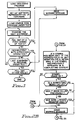
- FIG. 1 is a high level flow chart illustrating the general sequence of a debugging program of the present class.
- FIG. 1 is a high level flow chart illustrating the general sequence of a debugging program of the present class.
- certain essential aspects of the architecture of the machine for which object code is to be generated is represented in software in a manner well known to those skilled in the art. Briefly, merely as an elementary example, consider a case in which a certain address is developed (in the machine for which object code is to be generated) by combining information from two sources. The fact of that characteristic is encoded into the debugging program along with code for tracking what would happen to the information sources and to the address as the Assembly language statements are examined one at a time. Now, if one of the sources can be determined to have been destroyed by a previous operation and never reloaded with meaningful information prior to its use in developing an address, something is probably wrong notwithstanding completely correct syntax, etc. of all the relevant source code.
- Various tests can be conducted on a step by step basis as an Assembly language source code program under test is examined and analyzed, and failure of any of the tests can result in the issuance of an appropriate error message for the benefit of the programmer.
- the present invention relates to a series of related tests, directed to the above-enumerated logical inconsistencies, in a stand alone module of the debugging program and is represented in FIG. 1 by the inquiry block: "INCONSISTENT WITH A PREVIOUS OPERATION?". Following completion of the subject battery of tests, any other tests remaining in the debugging program may be run to conclude the testing of the source code program or program module.
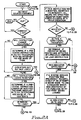
- FIG. 2 is a detailed flow chart disclosing the operation of the subject Assembly language source code test module in which inconsistency of a given statement with a prior operation called for by the source code program or program module under test is examined, notwithstanding its otherwise correct attributes.
- Assembly language source code is assumed such that a statement is very closely related to a single machine language instruction.
- next statement is called for analysis. If it is an end-of-file statement, an exit is made to the next series of tests; if not, a determination is made as to whether it is a mere comment (which need not be analyzed). If it is a comment, the next statement is called; if not, the analysis proceeds on the merits.
- the first inquiry is whether an instruction will change an indicator or flag. If so, a determination is made as to whether a preceding instruction also set indicators and, if so, whether any intervening use was made of the indicator states. If a preceding instruction set indicators, but no intervening use was made of them, and now the indicators are again being set, a logical inconsistency may be present, and a specific error message to that effect is issued to alert the programmer to the potential problem. If the statement under examination does not involve setting indicators, or if it does, but a previous indicator setting was, in fact, legitimately used, then the next test in the module may be undertaken.
- an inquiry is made to determine if the statement will cause a given register to be loaded or modified. If so, a determination is made as to whether a preceding instruction also loaded or modified the same register and, if so, whether any intervening use was made of the register contents. If a preceding instruction loaded or modified the register, but no intervening use was made of its contents, and now the register is again being loaded or modified, a logical inconsistency may be present, and a specific warning message to that effect is issued to alert the programmer to the potential problem. If the statement under examination does not involve loading or modifying a register, or if it does, but the register contents were, in fact, legitimately used, then the next test in the module may be undertaken.
- the statement under test is examined to determine if it calls for a conditional transfer. If not, the next test in the suite is performed. If so, a determination is made as to whether the indicator being tested was affected by a previous compare or load instruction. If the indicator was not affected, it is likely that an incorrect test is being performed, and an appropriate warning message is issued.
- the debugging program in each case of the issuance of a warning message, continues right on through the entire Assembly language source code program or program module under examination, the next statement can be called up for analysis as indicated in FIG. 2.
- the entire group of warning messages can be reviewed as a group, recognizing that there may be interrelationships among the bugs or possible bugs, for revision of the source code as may be appropriate.
- the debugging program could be readily revised such that its execution can be made to terminate after each warning message is issued such that the "earliest remaining" bug or potential bug of the sort detectable by the subject program can be addressed by the programmer.
- the mode of operation shown in FIG. 2 is preferable.
Landscapes
- Engineering & Computer Science (AREA)
- Theoretical Computer Science (AREA)
- Computer Hardware Design (AREA)
- Quality & Reliability (AREA)
- Physics & Mathematics (AREA)
- General Engineering & Computer Science (AREA)
- General Physics & Mathematics (AREA)
- Debugging And Monitoring (AREA)
- Stored Programmes (AREA)
Applications Claiming Priority (2)
| Application Number | Priority Date | Filing Date | Title |
|---|---|---|---|
| US443680 | 1989-11-29 | ||
| US07/443,680 US5132972A (en) | 1989-11-29 | 1989-11-29 | Assembly language programming potential error detection scheme sensing apparent inconsistency with a previous operation |
Publications (3)
| Publication Number | Publication Date |
|---|---|
| EP0430182A2 EP0430182A2 (en) | 1991-06-05 |
| EP0430182A3 EP0430182A3 (en) | 1992-03-11 |
| EP0430182B1 true EP0430182B1 (en) | 1996-03-27 |
Family
ID=23761776
Family Applications (1)
| Application Number | Title | Priority Date | Filing Date |
|---|---|---|---|
| EP90122673A Expired - Lifetime EP0430182B1 (en) | 1989-11-29 | 1990-11-27 | Method for assembly language programming potential error detection sensing apparent inconsistency with a previous operation |
Country Status (6)
| Country | Link |
|---|---|
| US (1) | US5132972A (enExample) |
| EP (1) | EP0430182B1 (enExample) |
| JP (1) | JPH0748182B2 (enExample) |
| AU (1) | AU629707B2 (enExample) |
| CA (1) | CA2030227C (enExample) |
| DE (1) | DE69026208T2 (enExample) |
Families Citing this family (17)
| Publication number | Priority date | Publication date | Assignee | Title |
|---|---|---|---|---|
| US5450575A (en) * | 1991-03-07 | 1995-09-12 | Digital Equipment Corporation | Use of stack depth to identify machine code mistakes |
| US5193180A (en) * | 1991-06-21 | 1993-03-09 | Pure Software Inc. | System for modifying relocatable object code files to monitor accesses to dynamically allocated memory |
| FR2718868B1 (fr) * | 1994-04-18 | 1996-05-31 | Bull Sa | Procédé de détection d'interblocages dans les systèmes multiprocesseurs à mémoire partagée. |
| US5613063A (en) * | 1994-07-01 | 1997-03-18 | Digital Equipment Corporation | Method and apparatus for checking validity of memory operations |
| JPH08185326A (ja) * | 1994-12-28 | 1996-07-16 | Fujitsu Ltd | インタープリタ言語処理装置 |
| US5699507A (en) * | 1995-01-17 | 1997-12-16 | Lucent Technologies Inc. | Method of identifying similarities in code segments |
| JP2850808B2 (ja) * | 1995-10-31 | 1999-01-27 | 日本電気株式会社 | データ処理装置およびデータ処理方法 |
| US5805893A (en) * | 1996-03-01 | 1998-09-08 | Electronic Data Systems Corporation | Assembly language program converter |
| US5854924A (en) * | 1996-08-08 | 1998-12-29 | Globetrotter Software, Inc. | Static debugging tool and method |
| DE19731733C1 (de) * | 1997-07-23 | 1998-10-01 | Siemens Nixdorf Inf Syst | Verfahren zum Testen eines Assemblerprogramms auf Portabilität |
| US6314557B1 (en) * | 1998-12-14 | 2001-11-06 | Infineon Technologies Development Center Tel Aviv Ltd | Hybrid computer programming environment |
| WO2000055953A1 (en) * | 1999-03-15 | 2000-09-21 | Smartsan Systems, Inc. | System and method of event management and early fault detection |
| US6675295B1 (en) * | 2000-06-19 | 2004-01-06 | Microsoft Corporation | Method and computer system for detecting and correcting a failure in a computer application program during startup |
| US7284274B1 (en) * | 2001-01-18 | 2007-10-16 | Cigital, Inc. | System and method for identifying and eliminating vulnerabilities in computer software applications |
| US7290174B1 (en) * | 2003-12-03 | 2007-10-30 | Altera Corporation | Methods and apparatus for generating test instruction sequences |
| US8959493B2 (en) | 2011-06-27 | 2015-02-17 | International Business Machines Corporation | Using range validation in assembly language programming |
| WO2021149113A1 (ja) * | 2020-01-20 | 2021-07-29 | 富士通株式会社 | プロセッサ、シミュレータプログラム、アセンブラプログラム、及び情報処理プログラム |
Family Cites Families (4)
| Publication number | Priority date | Publication date | Assignee | Title |
|---|---|---|---|---|
| JPS61110240A (ja) * | 1984-10-31 | 1986-05-28 | インタ−ナショナル ビジネス マシ−ンズ コ−ポレ−ション | 最適化コンパイラ |
| JPS63304336A (ja) * | 1987-06-04 | 1988-12-12 | Nec Corp | 計算機言語記述の矛盾摘出解消方式 |
| EP0321000A3 (en) * | 1987-12-18 | 1990-08-01 | Nec Corporation | Assembler system |
| JP2803090B2 (ja) * | 1988-06-06 | 1998-09-24 | 富士ゼロックス株式会社 | Mpuシミュレーション方法及びmpuシミュレータ |
-
1989
- 1989-11-29 US US07/443,680 patent/US5132972A/en not_active Expired - Fee Related
-
1990
- 1990-11-19 CA CA002030227A patent/CA2030227C/en not_active Expired - Fee Related
- 1990-11-20 AU AU66799/90A patent/AU629707B2/en not_active Ceased
- 1990-11-27 DE DE69026208T patent/DE69026208T2/de not_active Expired - Fee Related
- 1990-11-27 EP EP90122673A patent/EP0430182B1/en not_active Expired - Lifetime
- 1990-11-29 JP JP2333406A patent/JPH0748182B2/ja not_active Expired - Lifetime
Also Published As
| Publication number | Publication date |
|---|---|
| US5132972A (en) | 1992-07-21 |
| DE69026208D1 (de) | 1996-05-02 |
| JPH0748182B2 (ja) | 1995-05-24 |
| CA2030227C (en) | 1994-07-05 |
| AU6679990A (en) | 1991-06-06 |
| JPH03188535A (ja) | 1991-08-16 |
| CA2030227A1 (en) | 1991-05-30 |
| EP0430182A3 (en) | 1992-03-11 |
| AU629707B2 (en) | 1992-10-08 |
| EP0430182A2 (en) | 1991-06-05 |
| DE69026208T2 (de) | 1996-12-05 |
Similar Documents
| Publication | Publication Date | Title |
|---|---|---|
| US5132972A (en) | Assembly language programming potential error detection scheme sensing apparent inconsistency with a previous operation | |
| US5778230A (en) | Goal directed object-oriented debugging system | |
| US5651111A (en) | Method and apparatus for producing a software test system using complementary code to resolve external dependencies | |
| US20120317551A1 (en) | Post-compile instrumentation of object code for generating execution trace data | |
| EP1130518B1 (en) | Software analysis system having an apparatus for selectively collecting analysis data from a target system executing software instrumented with tag statements and method for use thereof | |
| US7761855B2 (en) | Computer program product and system for altering execution flow of a computer program | |
| US9274923B2 (en) | System and method for stack crawl testing and caching | |
| US6163858A (en) | Diagnostic methodology for debugging integrated software | |
| US20060190930A1 (en) | Post-compile instrumentation of object code for generating execution trace data | |
| US20060150160A1 (en) | Software analyzer | |
| EP0699320A1 (en) | Method for minimizing uncertainty in computer software processes allowing for automatic identification of faults locations and locations for modifications due to new system requirements with introduction of an alternative form of the target process object code allowing for less recompilation and re- | |
| Mohajer et al. | Skipanalyzer: A tool for static code analysis with large language models | |
| Chan et al. | AIDA–a dynamic data flow anomaly detection system for Pascal programs | |
| US5822589A (en) | Method for locating errors in a computer program | |
| Puebla et al. | A generic preprocessor for program validation and debugging | |
| Spafford | Extending mutation testing to find environmental bugs | |
| KR102951792B1 (ko) | 디컴파일러를 활용한 native JNI 프로그램의 정적 분석 시스템 및 방법 | |
| Li et al. | Ares: Inferring error specifications through static analysis | |
| US5029170A (en) | Assembly language programming potential error detection scheme which recognizes incorrect symbolic or literal address constructs | |
| Le et al. | Dynamic inference of change contracts | |
| CA2355839A1 (en) | Instrumentation of calls to routines for which source code is unavailable | |
| Walchshofer et al. | Introducing a linter in an industrial lua code base | |
| Volodymyr et al. | Access to struct members and undefined behavior of C code | |
| Leroy | Formally verifying a compiler: what does it mean, exactly? | |
| Massaurova et al. | Adding JNI Validation and Redesigning JNI Object Handles for GraalVM Native Image |
Legal Events
| Date | Code | Title | Description |
|---|---|---|---|
| PUAI | Public reference made under article 153(3) epc to a published international application that has entered the european phase |
Free format text: ORIGINAL CODE: 0009012 |
|
| AK | Designated contracting states |
Kind code of ref document: A2 Designated state(s): DE FR GB IT |
|
| PUAL | Search report despatched |
Free format text: ORIGINAL CODE: 0009013 |
|
| AK | Designated contracting states |
Kind code of ref document: A3 Designated state(s): DE FR GB IT |
|
| 17P | Request for examination filed |
Effective date: 19920907 |
|
| RAP1 | Party data changed (applicant data changed or rights of an application transferred) |
Owner name: BULL HN INFORMATION SYSTEMS INC. |
|
| 17Q | First examination report despatched |
Effective date: 19950424 |
|
| RAP1 | Party data changed (applicant data changed or rights of an application transferred) |
Owner name: BULL HN INFORMATION SYSTEMS INC. |
|
| GRAH | Despatch of communication of intention to grant a patent |
Free format text: ORIGINAL CODE: EPIDOS IGRA |
|
| GRAA | (expected) grant |
Free format text: ORIGINAL CODE: 0009210 |
|
| ITF | It: translation for a ep patent filed | ||
| AK | Designated contracting states |
Kind code of ref document: B1 Designated state(s): DE FR GB IT |
|
| REF | Corresponds to: |
Ref document number: 69026208 Country of ref document: DE Date of ref document: 19960502 |
|
| ET | Fr: translation filed | ||
| PLBE | No opposition filed within time limit |
Free format text: ORIGINAL CODE: 0009261 |
|
| STAA | Information on the status of an ep patent application or granted ep patent |
Free format text: STATUS: NO OPPOSITION FILED WITHIN TIME LIMIT |
|
| 26N | No opposition filed | ||
| PGFP | Annual fee paid to national office [announced via postgrant information from national office to epo] |
Ref country code: GB Payment date: 19991102 Year of fee payment: 10 Ref country code: FR Payment date: 19991102 Year of fee payment: 10 Ref country code: DE Payment date: 19991102 Year of fee payment: 10 |
|
| PG25 | Lapsed in a contracting state [announced via postgrant information from national office to epo] |
Ref country code: GB Free format text: LAPSE BECAUSE OF NON-PAYMENT OF DUE FEES Effective date: 20001127 |
|
| GBPC | Gb: european patent ceased through non-payment of renewal fee |
Effective date: 20001127 |
|
| PG25 | Lapsed in a contracting state [announced via postgrant information from national office to epo] |
Ref country code: FR Free format text: LAPSE BECAUSE OF NON-PAYMENT OF DUE FEES Effective date: 20010731 |
|
| PG25 | Lapsed in a contracting state [announced via postgrant information from national office to epo] |
Ref country code: DE Free format text: LAPSE BECAUSE OF NON-PAYMENT OF DUE FEES Effective date: 20010801 |
|
| REG | Reference to a national code |
Ref country code: FR Ref legal event code: ST |
|
| PG25 | Lapsed in a contracting state [announced via postgrant information from national office to epo] |
Ref country code: IT Free format text: LAPSE BECAUSE OF NON-PAYMENT OF DUE FEES;WARNING: LAPSES OF ITALIAN PATENTS WITH EFFECTIVE DATE BEFORE 2007 MAY HAVE OCCURRED AT ANY TIME BEFORE 2007. THE CORRECT EFFECTIVE DATE MAY BE DIFFERENT FROM THE ONE RECORDED. Effective date: 20051127 |