EP0416038B1 - Novel chemiluminescent fused polycyclic ring-containing 1,2-dioxetanes and assays in which they are used - Google Patents
Novel chemiluminescent fused polycyclic ring-containing 1,2-dioxetanes and assays in which they are used Download PDFInfo
- Publication number
- EP0416038B1 EP0416038B1 EP89907947A EP89907947A EP0416038B1 EP 0416038 B1 EP0416038 B1 EP 0416038B1 EP 89907947 A EP89907947 A EP 89907947A EP 89907947 A EP89907947 A EP 89907947A EP 0416038 B1 EP0416038 B1 EP 0416038B1
- Authority
- EP
- European Patent Office
- Prior art keywords
- dioxetane
- chemiluminescent
- methoxy
- process according
- ring
- Prior art date
- Legal status (The legal status is an assumption and is not a legal conclusion. Google has not performed a legal analysis and makes no representation as to the accuracy of the status listed.)
- Expired - Lifetime
Links
- VXDPJMGYZJYFGP-UHFFFAOYSA-N NC1(N)OOC1[IH]I Chemical compound NC1(N)OOC1[IH]I VXDPJMGYZJYFGP-UHFFFAOYSA-N 0.000 description 1
Images



Classifications
-
- C—CHEMISTRY; METALLURGY
- C07—ORGANIC CHEMISTRY
- C07C—ACYCLIC OR CARBOCYCLIC COMPOUNDS
- C07C43/00—Ethers; Compounds having groups, groups or groups
- C07C43/02—Ethers
- C07C43/20—Ethers having an ether-oxygen atom bound to a carbon atom of a six-membered aromatic ring
- C07C43/215—Ethers having an ether-oxygen atom bound to a carbon atom of a six-membered aromatic ring having unsaturation outside the six-membered aromatic rings
-
- C—CHEMISTRY; METALLURGY
- C07—ORGANIC CHEMISTRY
- C07C—ACYCLIC OR CARBOCYCLIC COMPOUNDS
- C07C43/00—Ethers; Compounds having groups, groups or groups
- C07C43/02—Ethers
- C07C43/20—Ethers having an ether-oxygen atom bound to a carbon atom of a six-membered aromatic ring
- C07C43/225—Ethers having an ether-oxygen atom bound to a carbon atom of a six-membered aromatic ring containing halogen
-
- C—CHEMISTRY; METALLURGY
- C07—ORGANIC CHEMISTRY
- C07C—ACYCLIC OR CARBOCYCLIC COMPOUNDS
- C07C43/00—Ethers; Compounds having groups, groups or groups
- C07C43/02—Ethers
- C07C43/20—Ethers having an ether-oxygen atom bound to a carbon atom of a six-membered aromatic ring
- C07C43/23—Ethers having an ether-oxygen atom bound to a carbon atom of a six-membered aromatic ring containing hydroxy or O-metal groups
-
- C—CHEMISTRY; METALLURGY
- C07—ORGANIC CHEMISTRY
- C07C—ACYCLIC OR CARBOCYCLIC COMPOUNDS
- C07C49/00—Ketones; Ketenes; Dimeric ketenes; Ketonic chelates
- C07C49/76—Ketones containing a keto group bound to a six-membered aromatic ring
- C07C49/84—Ketones containing a keto group bound to a six-membered aromatic ring containing ether groups, groups, groups, or groups
-
- C—CHEMISTRY; METALLURGY
- C07—ORGANIC CHEMISTRY
- C07C—ACYCLIC OR CARBOCYCLIC COMPOUNDS
- C07C69/00—Esters of carboxylic acids; Esters of carbonic or haloformic acids
-
- C—CHEMISTRY; METALLURGY
- C07—ORGANIC CHEMISTRY
- C07D—HETEROCYCLIC COMPOUNDS
- C07D321/00—Heterocyclic compounds containing rings having two oxygen atoms as the only ring hetero atoms, not provided for by groups C07D317/00 - C07D319/00
-
- C—CHEMISTRY; METALLURGY
- C07—ORGANIC CHEMISTRY
- C07F—ACYCLIC, CARBOCYCLIC OR HETEROCYCLIC COMPOUNDS CONTAINING ELEMENTS OTHER THAN CARBON, HYDROGEN, HALOGEN, OXYGEN, NITROGEN, SULFUR, SELENIUM OR TELLURIUM
- C07F9/00—Compounds containing elements of Groups 5 or 15 of the Periodic Table
- C07F9/02—Phosphorus compounds
- C07F9/547—Heterocyclic compounds, e.g. containing phosphorus as a ring hetero atom
- C07F9/655—Heterocyclic compounds, e.g. containing phosphorus as a ring hetero atom having oxygen atoms, with or without sulfur, selenium, or tellurium atoms, as the only ring hetero atoms
- C07F9/6551—Heterocyclic compounds, e.g. containing phosphorus as a ring hetero atom having oxygen atoms, with or without sulfur, selenium, or tellurium atoms, as the only ring hetero atoms the oxygen atom being part of a four-membered ring
- C07F9/65512—Heterocyclic compounds, e.g. containing phosphorus as a ring hetero atom having oxygen atoms, with or without sulfur, selenium, or tellurium atoms, as the only ring hetero atoms the oxygen atom being part of a four-membered ring condensed with carbocyclic rings or carbocyclic ring systems
-
- C—CHEMISTRY; METALLURGY
- C12—BIOCHEMISTRY; BEER; SPIRITS; WINE; VINEGAR; MICROBIOLOGY; ENZYMOLOGY; MUTATION OR GENETIC ENGINEERING
- C12Q—MEASURING OR TESTING PROCESSES INVOLVING ENZYMES, NUCLEIC ACIDS OR MICROORGANISMS; COMPOSITIONS OR TEST PAPERS THEREFOR; PROCESSES OF PREPARING SUCH COMPOSITIONS; CONDITION-RESPONSIVE CONTROL IN MICROBIOLOGICAL OR ENZYMOLOGICAL PROCESSES
- C12Q1/00—Measuring or testing processes involving enzymes, nucleic acids or microorganisms; Compositions therefor; Processes of preparing such compositions
- C12Q1/34—Measuring or testing processes involving enzymes, nucleic acids or microorganisms; Compositions therefor; Processes of preparing such compositions involving hydrolase
-
- G—PHYSICS
- G01—MEASURING; TESTING
- G01N—INVESTIGATING OR ANALYSING MATERIALS BY DETERMINING THEIR CHEMICAL OR PHYSICAL PROPERTIES
- G01N33/00—Investigating or analysing materials by specific methods not covered by groups G01N1/00 - G01N31/00
- G01N33/48—Biological material, e.g. blood, urine; Haemocytometers
- G01N33/50—Chemical analysis of biological material, e.g. blood, urine; Testing involving biospecific ligand binding methods; Immunological testing
- G01N33/58—Chemical analysis of biological material, e.g. blood, urine; Testing involving biospecific ligand binding methods; Immunological testing involving labelled substances
- G01N33/582—Chemical analysis of biological material, e.g. blood, urine; Testing involving biospecific ligand binding methods; Immunological testing involving labelled substances with fluorescent label
-
- C—CHEMISTRY; METALLURGY
- C07—ORGANIC CHEMISTRY
- C07C—ACYCLIC OR CARBOCYCLIC COMPOUNDS
- C07C2603/00—Systems containing at least three condensed rings
-
- C—CHEMISTRY; METALLURGY
- C07—ORGANIC CHEMISTRY
- C07C—ACYCLIC OR CARBOCYCLIC COMPOUNDS
- C07C2603/00—Systems containing at least three condensed rings
- C07C2603/56—Ring systems containing bridged rings
- C07C2603/58—Ring systems containing bridged rings containing three rings
- C07C2603/70—Ring systems containing bridged rings containing three rings containing only six-membered rings
- C07C2603/74—Adamantanes
-
- Y—GENERAL TAGGING OF NEW TECHNOLOGICAL DEVELOPMENTS; GENERAL TAGGING OF CROSS-SECTIONAL TECHNOLOGIES SPANNING OVER SEVERAL SECTIONS OF THE IPC; TECHNICAL SUBJECTS COVERED BY FORMER USPC CROSS-REFERENCE ART COLLECTIONS [XRACs] AND DIGESTS
- Y10—TECHNICAL SUBJECTS COVERED BY FORMER USPC
- Y10S—TECHNICAL SUBJECTS COVERED BY FORMER USPC CROSS-REFERENCE ART COLLECTIONS [XRACs] AND DIGESTS
- Y10S435/00—Chemistry: molecular biology and microbiology
- Y10S435/968—High energy substrates, e.g. fluorescent, chemiluminescent, radioactive
-
- Y—GENERAL TAGGING OF NEW TECHNOLOGICAL DEVELOPMENTS; GENERAL TAGGING OF CROSS-SECTIONAL TECHNOLOGIES SPANNING OVER SEVERAL SECTIONS OF THE IPC; TECHNICAL SUBJECTS COVERED BY FORMER USPC CROSS-REFERENCE ART COLLECTIONS [XRACs] AND DIGESTS
- Y10—TECHNICAL SUBJECTS COVERED BY FORMER USPC
- Y10S—TECHNICAL SUBJECTS COVERED BY FORMER USPC CROSS-REFERENCE ART COLLECTIONS [XRACs] AND DIGESTS
- Y10S435/00—Chemistry: molecular biology and microbiology
- Y10S435/973—Simultaneous determination of more than one analyte
Definitions
- This invention relates to improved chemiluminescent 1,2-dioxetane compounds and novel intermediates used in their preparation. More particularly, this invention relates to improved chemiluminescent 1,2-dioxetane compounds that contain labile groups removable enzymatically, chemically or electrochemically to produce fluorophores that in turn emit optically detectable energy, usually luminescence in the form of visible light, and that also contain stabilizing groups that prevent these dioxetanes from decomposing before the labile group comes in contact with the substance(s) that will remove it.
- This invention further relates to the incorporation of such light-emitting reactants in art-recognized immunoassays, chemical assays and nucleic acid probe assays, and to their use as direct chemical/physical probes, to permit an analyte, a chemical or biological substance whose presence, amount or structure is being determined, to be identified or quantified.
- chemiluminescent 1,2-dioxetanes substituted at the 4-position on the dioxetane ring with a monocyclic aromatic ring-containing fluorophore moiety can be configured to maximize their charge transfer characteristics ("emission efficiencies") in the excited state and, as a result, increase the intensity of the light emitted when such compounds decompose. This is the so-called "meta effect” discussed in Schaap et al, Tetrahedron Letters , Vol 28, No 11, p. 1155 - 1158 (1987).
- the meta effect is achieved by placing a labile substituent containing a bond cleavable to yield an electron-rich fluorophore moiety meta to the point of attachment of the monocyclic aromatic ring to the dioxetane ring.
- EP-A-254051 describes chemiluminescent 1,2-dioxetane compounds and their use. None of the compounds described is substituted as required according to the present claims.
- This invention is concerned with chemiluminescent 1,2-dioxetanes substituted with certain fused polycyclic ring-containing fluorophore moieties.
- chemiluminescent 1,2-dioxetanes stabilized at the 3-position on the dioxetane ring against decomposition prior to the molecule's coming in contact with a labile group-removing substance (e.g., an enzyme that will result in enzymatic cleavage of the dioxetane molecule) and substituted at the 4-position on the dioxetane ring with a naphthalene residue which is itself substituted in a particular fashion with a labile ring substituent containing a bond which, when cleaved, renders this naphthalene residue electron-rich and hence renders the dioxetane decomposable to emit light.
- a labile group-removing substance e.g., an enzyme that will result in en
- fused polycyclic ring-containing fluorophore moieties are substituted in a particular pattern, i.e., if they contain at a particular ring position in relation to the naphthalene residue's point(s) of attachment to the dioxetane ring a labile ring substituent having a cleavable bond they will, by virtue of this substitution pattern, decompose to emit light of unexpectedly greater intensity in certain environments, as well as light of longer duration, than that emitted by corresponding isomeric compounds, i.e., otherwise identical fused polycyclic ring-substituted 1,2-dioxetanes having the same labile ring substituents on the polycyclic ring but on different ring positions and thus in a different substitution pattern.
- the chemiluminescent 1,2-dioxetanes of this invention when decomposed, emit light as a glow rather than a flash.
- the kinetic difference between these two types of light emission is illustrated in the following excerpt from Knox Van Dyke, "Bioluminescence and Chemiluminescence: Instruments and Applications” (Boca Raton, Fla.: CRC Press, 1985), Vol. 1, p. 5:
- FIGURE 4 The production of light from chemical reaction that produces a light peak or flash is depicted in (A) while a steady-state production of light is depicted in (B). In general, the measurement of light in state (B) is more convenient and reproducible than in state (A).
- High intensity light emission permits the use of simple photodetectors (silicon photodiodes or photographic film, for example) as well as conventionally employed photomultiplier tubes to detect the emitted light.
- the stability of the emission signal produced by these enhanced intensity chemiluminescent 1,2-dioxetanes also simplifies assay procedures in which they are used as the means by which the analyte is identified or quantified because the chemiluminescent reaction can be initiated prior to transferring the assay mixture to the light detector. Hence, precisely timed operations are not required.
- This invention's substitution pattern is one in which the labile ring substituent's point of attachment to the naphthalene residue, in relation to this residue's point of attachment to the dioxetane ring, is such that the total number of ring atoms, e.g., ring carbon atoms, separating these two points of attachment, including the carbon atoms at the points of attachment, is an odd whole number.
- the total number of ring atoms separating these two points of attachment, including the ring atoms at the points of attachment will be an odd whole number of 5 or greater.
- a naphthalene residue attached by a single bond to the dioxetane ring at this residue's 2-carbon atom and bearing an enzyme-cleavable substituent, e.g., a phosphate ester group, at its 5- or 7-carbon atom, or a naphthalene residue attached at its 1-carbon atom and substituted at its 8-carbon atom, are typical examples from among this invention's contemplated odd pattern fused polycyclic aromatic hydrocarbon ring-containing fluorophore moieties.
- novel odd pattern substituted fused polycyclic ring-containing 1,2-dioxetanes of this invention also exhibit on decomposition a pronounced shift in the wavelength of the light emitted, i.e., this light is a different color from that emitted by corresponding isomeric compounds which have an even rather than an odd numbered substitution pattern.
- This invention is further concerned with the use of these improved chemiluminescent 1,2-dioxetanes in art-recognized immunoassays, chemical assays and nucleic acid probe assays to detect the presence or determine the concentration of chemical or biological substances, and as direct chemical/physical probes for studying the molecular structures or microstructures of various macromolecules: synthetic polymers, proteins, nucleic acids and the like.
- each of such compounds being structured so as to be decomposable by a different means (e.g., one of a pair of such compounds can contain a phosphate ester group cleavable by a phosphatase and the other an ⁇ -D- or ⁇ -D-glucoside group cleavable by ⁇ -glucosidase, or one compound can contain an enzyme-cleavable group and the other a chemically clea
- a further object of this invention is to provide chemiluminescent 1,2-dioxetanes stabilized at the 3-position on the dioxetane ring against decomposition prior to the molecule's being brought into contact with a labile group-removing substance to intentionally cleave a labile substituent's bond, and substituted at the 4-position on the dioxetane ring with a fused polycyclic ring-containing fluorophore moiety which is itself substituted with a labile ring substituent containing a bond which, when cleaved, renders this fluorophore moiety electronrich and hence renders the dioxetane decomposable to emit light, this labile ring substituent's point of attachment to the fused polycyclic ring, in relation to this ring's point of attachment to the dioxetane ring, being such that the total number of ring atoms separating these two points of attachment, including the ring atom
- Another object of this invention is to provide improved chemiluminescent 1,2-dioxetane compounds which, upon decomposition, emit light of greater intensity than the light emitted by isomers thereof and which also exhibit a shift in the wavelength of the light emitted as compared to the wavelengths of light emitted by the corresponding even pattern substituted compounds.
- a still further object of this invention is the use of these improved chemiluminescent 1,2-dioxetane compounds to generate light in aqueous and non-aqueous media.
- Yet another object of this invention is the use of these improved chemiluminescent 1,2-dioxetane compounds in art-recognized immunoassays, chemical assays and nucleic acid probe assays, including multi-channel assays, to detect the presence or determine the concentration of chemical or biological substances, and as direct chemical/physical probes for studying the molecular structures or microstructures of various macromolecules: synthetic polymers, proteins, nucleic acids and the like.
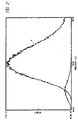
- FIG. 1 shows the hyperchromic effect and bathochromically shifted emission by 3-(2'-spiroadamantane)-4-methoxy-4-(7"-acetoxy)naphth-2'-yl-1,2-dioxetane, prepared as described in Example I infra , when decomposed with carboxylesterase as described in Example II, infra .
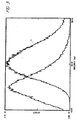
- FIG. 2 compares the intensity and wavelength of the light emitted by 3-(2'-spiroadamantane)-4-methoxy-4-(7"-acetoxy)naphth-2'-yl-1,2-dioxetane("A") with that of its 2,6-naphthalene dioxetane acetate isomer when each of these isomers is decomposed with aqueous sodium hydroxide as described in Example III, infra.
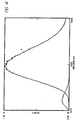
- FIG. 3 compares the intensity and wavelength of the light emitted by 3-(2'spiroadamantane)-4-methoxy-4-(7"-acetoxy)naphth-2'-yl-1,2-dioxetane ("A") with that of 3-(2'-spiroadamantane)-4-methoxy-4-(3"-acetoxy)phenyl -1,2-dioxetane when each is decomposed with aqueous sodium hydroxide solution as also described in Example III, infra.
- FIG. 4 compares the intensity and wavelength of the light emitted by the 2,7-naphthalene dioxetane acetate of Example I ("A") with that of its 2,6-isomer when each of these isomers is decomposed with sodium hydroxide in aqueous methyl cyanide as described in Example IV, infra.
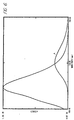
- FIG. 5 compares the intensity and wavelength of the light emitted by the 2,7-naphthalene dioxetane acetate of Example I with that of its 2,6-isomer when each of these compounds is decomposed with sodium hydroxide in aqueous acetonitrile as described in Example V infra .
- "A" is the plot for the 2,7-isomer.
- FIG. 6 compares the intensity and wavelength of the light emitted by the 2,7-naphthalene dioxetane acetate of Example I ("A") with that of 3-(2'-spiroadamantane)-4-methoxy-4-(3"-acetoxy)phenyl-1,2-dioxetane when each is decomposed in sodium methoxide as described in Example VI, infra.
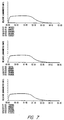
- FIGS. 7 and 8 show the duration of the light emitted when 3-(2'-spiroadamantane)-4-methoxy-4-(6"-acetoxy)naphth-2'-yl-1,2-dioxetane (FIG. 7) and its 2,7-isomer of this invention (FIG. 8) are decomposed with sodium hydroxide in aqueous CH 3 CN as described in Example VII, infra.
- the improved chemiluminescent 1,2-dioxetanes of 5 this invention can be represented by the general formula:
- R 1 represents a C 1 -C 20 alkoxy group.
- R 1 is a methoxy group.
- R 2 represents a naphthalene residue having a labile ring substituent containing a bond which, when cleaved, renders the naphthalene residue electron-rich to in turn render the dioxetane compound decomposable to emit light.
- This labile ring substituent's point of attachment to the naphthalene residue in relation to this ring's point(s) of attachment to the dioxetane ring (single bond attachment), is such that the total number of ring atoms separating these points of attachment, including the ring atoms at the points of attachment, is an odd whole number.
- naphthalene compounds whose residues can be used to form this fluorophore moiety are such as: the substituent bonds indicating a 1,6-substitution pattern as in 3-(2'-spiroadamantane)-4-methoxy-4-(6"-disodiumphosphoryloxy)-naphth-1'-yl-1,2-dioxetane, as well as derivatives thereof substituted with one or more non-labile substituents such as a branched or straight chain alkyl group having 1 to 20 carbon atoms, inclusive, e.g., methyl, n-butyl or decyl, a branched or straight chain heteroalkyl group having 1 to 7 carbon atoms, inclusive, e.g., methoxy, hydroxyethyl or hydroxypropyl; an aryl group having 1 or 2 rings, e.g., phenyl; a heteroaryl group having 1 or 2 rings, e.g.,
- substituents which, when cleaved, yield an oxygen anion, a sulfur anion, or a nitrogen anion such as a sulfonamido anion.
- substituents can be chemically cleavable: a hydroxyl group, an alkanoyl or aroyl ester group, or an alkyl or aryl silyloxy group, but preferably are enzymatically cleavable.
- Enzymatically cleavable substituents include phosphate ester groups represented by the general formula: wherein M+ represents a cation such as alkali metal, e.g., sodium or potassium, ammonium, or a C 1 -C 7 alkyl, aralkyl or aromatic quaternary ammonium cation, N(R 3 ) 4 + in which each R 3 can be alkyl, e.g., methyl or ethyl, aralkyl, e.g., benzyl, or form part of a heterocyclic ring system, e.g., pyridinium, and particularly the disodium salt.
- M+ represents a cation such as alkali metal, e.g., sodium or potassium, ammonium, or a C 1 -C 7 alkyl, aralkyl or aromatic quaternary ammonium cation, N(R 3 ) 4 + in which each R 3 can be alkyl, e
- Such quaternary ammonium cations can also be connected through one of their quaternizing groups to a polymeric backbone, viz. where n is greater than 1, or can be part of a polyquaternary ammonium salt, i.e., an ionene polymer.
- Enzymatically cleavable substituents also include enzyme-cleavable alkanoyloxy groups, e.g., an acetate ester group, or an enzyme-cleavable oxacarboxylate group, 1-phospho-2,3-diacylglyceride group, 1-thio-D-glucoside group, adenosine triphosphate analog group, adenosine diphosphate analog group, adenosine monophosphate analog group, adenosine analog group, ⁇ -D-galactoside group, ⁇ -D-galactoside group, ⁇ -D-glucoside group, ⁇ -D-glucoside group, ⁇ -D-zannoside group, ⁇ -d-mannoside group, ⁇ -D-fructofuranoside group, ⁇ -D-glucosiduronate group, p-toluenesulfonyl-L-arginine ester group or p-toluene
- R 2 An illustrative but by no means exhaustive listing of labile group-substituted naphthalene residue-containing fluorophore moieties represented by R 2 includes the following, numbered here as though they were substituents at the 4-position on the dioxetane ring: (5"-disodiumphosphoryloxy)naphth-2'-yl, (7"-disodiumphosphoryloxy)naphth-2'-yl, (6"-disodiumphosphoryloxy)naphth-1'-yl, (8"-disodiumphosphoryloxy)naphth-1'-yl, (5"-acetoxy) naphth-2'-yl, (7"-acetoxy)naphth-2'-yl, (6"-acetoxy)naphth-1'-yl, (8"-acetoxy)naphth-1'-yl, (5"- ⁇ -galactosyloxy)naphth-2'
- T represents an adamantyl group. This stabilizing group prevents the dioxetane compound from decomposing before the bond in the labile ring substituent on the naphthalene residue-containing fluorophore moiety is intentionally cleaved.
- T may be e.g., an adamant-2-ylidene group.
- substituents R 1 , R 2 and T can also include a substituent which enhances the water solubility of the 1,2-dioxetane, such as a carboxylic acid, e.g., acetic acid, sulfonic acid, e.g., methanesulfonic acid or ethanesulfonic acid, or quaternary amino salt group, e.g., ammonium bromide.
- carboxylic acid e.g., acetic acid, sulfonic acid, e.g., methanesulfonic acid or ethanesulfonic acid
- quaternary amino salt group e.g., ammonium bromide.
- a preferred class of odd pattern substituted naphthalene residue-containing 1,2-dioxetanes coming within the scope of this invention are 3-(2'-spiroadamantane)-4-methoxy-4-(phosphoryloxy)naphth-2'-yl-1,2-dioxetane salts such as those represented by the formulas: the (5"-phosphoryloxy)naphth-2'-yl isomer, and the (7"-phosphoryloxy)naphth-2'-yl isomer, wherein M+ is as described for formula II above.
- the improved chemiluminescent 1,2-dioxetanes of this invention can be synthesized in known manner, e.g., by a reaction scheme involving first the synthesis of an olefin represented by the general formula: e.g., an enol ether such as: wherein T and R are as described for formula I above, using a Wittig reaction or the methods described in the aforementioned copending Edwards application. Incorporation of a labile ring substituent on the fused polycyclic ring and photochemical or chemical conversion to the corresponding 1,2-dioxetane can then be accomplished as described in the aforementioned copending Bronstein and Edwards applications.
- an olefin represented by the general formula: e.g., an enol ether such as: wherein T and R are as described for formula I above, using a Wittig reaction or the methods described in the aforementioned copending Edwards application.
- naphthalene residue-containing fluorophoric compounds and having at least an ether substituent, which can be an -OR group as defined above, e.g., an alkoxy or silyloxy group such as a methoxy or t-butyldimethylsilyloxy group, and a halo substituent, i.e., a chlorine, bromine or iodine atom, with the total number of ring carbon atoms separating these two substituents, including the carbon atoms to which they are attached, being an odd whole number.
- ether substituent which can be an -OR group as defined above, e.g., an alkoxy or silyloxy group such as a methoxy or t-butyldimethylsilyloxy group, and a halo substituent, i.e., a chlorine, bromine or iodine atom, with the total number of ring carbon atoms separating these two substituents, including the carbon atom
- iodo-substituted ethers can be prepared from the corresponding ether triazenes in the manner described in Example I, infra , using an alkali metal halide such as potassium iodide and an acidic resin.
- the other halo-substituted ethers can be prepared from the corresponding diazonium salts using Ca 2 Cl 2 /HCl or CuBr/HBr, or by chlorination or bromination and subsequent oxidation of various methoxy 1-or 2-tetralones, as described in Example VIII, infra .
- the odd patterned halo, hydroxy fused naphthalene compounds are also useful precursors of the improved chemiluminescent 1,2-dioxetanes of this invention.
- Example IX infra can be modified by reacting a 6-halo-1-naphthol, e.g., 6-bromo-1-naphthol, directly with two equivalents of n-butyllithium to generate a dianion which can subsequently be reacted with one equivalent of adamantane-2-carboxaldehyde to generate an alcohol of general formula VIII above, where R 4 is a hydroxy rather than an ether substituted residue.
- hydroxy-and halo-substituted intermediates include, for example:
- the improved chemiluminescent 1,2-dioxetanes of this invention are particularly useful as the means of identifying or quantifying an analyte or several analytes using otherwise art-recognized immunoassays, such as those employed to detect an enzyme or a member of a specific binding pair, e.g., an antigen-antibody pair or a nucleic acid paired with a probe capable of binding to all or a portion of the nucleic acid.
- Such assays include immunoassays used to detect a hormone such as ⁇ -HCG, thyroid stimulating hormone (TSH), follicle stimulating hormone (FSH), HLH or the like, cell surface receptor assays, and nucleic acid probe assays used to detect viruses, e.g., HIV or HTLV III, Herpes simplex virus (HSV), human papiloma virus (HPV), and cytomegalovirus (CMV), or bacteria, e.g., E.Coli ., and histocompatibility assays; for typical assay protocols see working examples X and XI, infra , as well as the aforementioned copending Bronstein and Bronstein et al applications.
- viruses e.g., HIV or HTLV III, Herpes simplex virus (HSV), human papiloma virus (HPV), and cytomegalovirus (CMV)
- bacteria e.g., E.Coli ., and histocompat
- the improved chemiluminescent 1,2-dioxetanes of this invention can also be used in assays for a chemical analyte, such as potassium or sodium ions, or in assays for substances such as cholesterol or glucose in which the analyte is caused to decompose, for example using an enzyme such, as cholesterol oxidase or glucose oxidase, to form a substance, e.g., hydrogen peroxide, capable in combination with another reagent of causing the chemiluminescent compound to decompose.
- a chemical analyte such as potassium or sodium ions
- substances such as cholesterol or glucose in which the analyte is caused to decompose
- an enzyme such, as cholesterol oxidase or glucose oxidase
- a multi-channel assay can be designed in which different cleaving means, and especially two or more different enzymes, attached to or associated with two or more different analytes will, by cleaving different cleavable dioxetane substituents, induce the emission of light of a different wavelength for each analyte being assayed.
- 3-(2'-Spiroadamantane)-4-methoxy-4-(3'-disodiumphosphoryloxy)phenyl-1,2-dioxetane for example, when cleaved with an alkaline phosphatase, will emit blue light
- 3-(2'-spiroadamantane)-4-methoxy-4-(7"-acetoxy)naphth-2'-yl-1,2-dioxetane when cleaved with base or a carboxylesterase, will emit green light
- 3-(2'-spiroadamantane)-4-methoxy-4-(5"- ⁇ -galactosyloxy)naphth-2'-yl-1,2-dioxetane when cleaved with a ⁇ -galactosidase, will emit orange light.
- a simultaneous assay for HSV, CMV and HPV can hence be designed using these three chemiluminescent substances to produce light
- Light of various colors emitted when using the improved chemiluminescent 1,2-dioxetanes of this invention singly or in combinations as discussed above to identify or quantify various analytes can also be used to make a permanent record of such emissions on color photographic emulsions or specially sensitized black and white high speed films.
- these improved chemiluminescent 1,2-dioxetanes can be used to achieve a matched response by detectors: charged coupled devices (CCD's) or silicon photodiodes, for example, having maximum sensitivity for a color other than blue, e.g., green or red.
- the blue light emitted when 3-(2'-spiroadamantane)-4-methoxy-4-(6"-disodiumphosphoryloxy)naphth-2'-yl-1,2-dioxetane is cleaved by an alkaline phosphatase to detect ⁇ -HCG can be changed to green light simply by replacing this phosphoryloxy naphthyl dioxetane with its odd pattern substituted isomer, 3-(2'-spiroadamantane)-4-methoxy-4-(7"-disodiumphosphoryloxy)naphth-2'-yl-1,2-dioxetane.
- a light absorbing/light shifting auxiliary fluorophore/light enhancer substance which absorbs light of one wavelength and in turn emits light of a different wavelength
- a phycobiliprotein e.g., phycobiliproteins are naturally-occurring substances in which a fluorophore is bonded to a protein
- phycocyanine or phycoallocyanine that will absorb the green light emitted by 3-(2'-spiroadamantane)-4-methoxy-4-(7"-disodiumphosphoryloxy)naphth-2'-yl-1,2-dioxetane and reemit this light as red light
- matched responses by color photographic emulsions that exhibit a poor response to blue light, a better response to green light but the best response to red light can also be achieved.
- auxiliary fluorophores extraneous to the light-emitting fluorophores produced by the decomposition of the improved chemiluminescent 1,2-dioxetane compounds of this invention that will accept energy, especially light, from these light-emitting fluorophores and in turn emit detectable energy, again preferably light, can be used when practicing this invention.
- auxiliary fluorophores that can be used, alone or in combination, are the following substances whose residues can be present in known 1,2-dioxetanes and, in certain cases, if substituted with a labile ring substituent in the appropriate odd numbered pattern, in the improved chemiluminescent 1,2-dioxetanes of this invention as well, as fluorescent chromophore groups:
- auxiliary fluorophores When such auxiliary fluorophores are bonded to a chemiluminescent compound, they are preferably bonded to the portion of the chemiluminescent compound that, upon decomposition, forms a fragment containing the fluorophore portion of the chemiluminescent compound's molecule. In this way energy transfer is enhanced due to the two fluorophores being in close proximity to one another and by beneficial spatial arrangements provided by the rigidity of the microenvironment.
- Auxiliary fluorophores that are insoluble or partially insoluble in aqueous medium can be solubilized by first grafting them onto solubilizing molecules, e.g., water soluble oligomer or polymer molecules.
- enhancement of the intensity of the light emitted by decomposition of the improved chemiluminescent 1,2-dioxetane compounds of this invention in aqueous media can be achieved by the methods disclosed in the aforementioned Voyta et al application.
- the invention provides a method for generating light which comprises:
- the invention also provides a process for determining the presence, concentration or structure of an analyte, which process comprises detecting light released by the decomposition of a chemiluminescent compound, wherein there is used at least one chemiluminescent 1,2-dioxetane compound according to the invention.
- This process may be carried out as a step in an immunoassay, e.g. for the detection of a specific binding pair comprising an antigen and an antibody.
- An enzyme or the chemiluminescent 1,2-dioxetane compound may be used as label in the assay.
- the immunoassay may be used e.g. for the detection of an enzyme, or a hormone.
- the determination of analyte may be carried out as a step in a chemical assay, e.g. chemical assay for the detection of a chemical substance, such as glucose or cholesterol, which, during the assay, is caused to decompose to form a substance capable of causing the chemiluminescent 1,2-dioxetane compound to decompose.
- a chemical assay e.g. chemical assay for the detection of a chemical substance, such as glucose or cholesterol
- the process for the determination of analyte carried out may be a nucleic acid probe assay, e.g. for the detection of a virus, or a histocompatibility assay, or used as a technique for studying the microstructure of a macromolecule.
- the process for the determination of analyte according to the invention may be a multi-channel assay carried out in the presence of at least two of the chemiluminescent 1,2-dioxetane compounds according to the invention as substrates, each of which upon decomposition emits light of a different wavelength from the other(s) and each of which has a labile ring substituent cleavable by a different means from the other(s).
- the process for the determination of analyte according to the invention may be a multi-channel assay carried out in the presence of at least one of the chemiluminescent 1,2-dioxetane compounds according to the invention and at least one other chemiluminescent compound as substrates, each of which chemiluminescent 1,2-dioxetane compounds and other chemiluminescent compounds emit light of a different wavelength from the other(s) and each of which is cleavable by different means from the other(s) to produce a light-emitting fluorophore moiety, such as an immunoassay for the quantitation of human chorionic gonadotropin and human luteinizing hormone contained in a single sample and carried out in the presence of 3-(2'-spiroadamantane)-4-methoxy-4-(3'-phosphoryloxy)phenyl-1,2-dioxetane disodium salt and 3-(2'-spiroadamantane)-4-me
- 2-Amino-7-methoxynaphthalene 2-Amino-7-methoxynaphthalene. 2-Amino-7-hydroxynaphthalene (18.6 g, 0.117 mol) was added in portions to hexane-rinsed NaH (60%, 5.1 g, 0.127 mol) in dry DMF (dimethylformamide; 100 ml) at 0°C. The solution was stirred under argon for 10 minutes until hydrogen evolution had ceased, whereupon dimethyl sulfate (11 ml, 0.116 mol) was added dropwise via syringe at 0°C until O-methylation was complete by TLC monitoring.
- 2-Iodo-7-methoxynaphthalene Diazotization of 2-amino-7-methoxynaphthalene (17.02 g, 0.098 mol) in 20% aqueous HCl (81.4 ml, 0.197 mol HCl), proceeded smoothly by adding NaNO 2 (7.11 g, 0.103 mol) in 65 ml H 2 O dropwise at 0°C. The reaction was stirred for 1 hour, adding a small amount of EtOAc to reduce foaming as needed.
- IR, less polar alcohol CHCl 3 , cm -1 : 3601, 3005, 2905, 2846, 1632, 1607, 1515, 1465, 1391, 1265, 1175, 1125, 1034, 895, 845, 705
- Methoxy(7-acetoxynaphth-2-yl)methylene adamantane Crude methoxy(7-methoxynaphth-2-yl)methylene adamantane (247 mg, 0.739 mmol) was added to sodium ethylthiolate (62 mg, 0.743 mmol) in dry DMF (4 ml) and the solution was refluxed under argon for 4 hours deprotecting the aromatic methoxy moiety to the naphthol. Excess sodium ethanethiolate (122 mg, 1.45 mmol) was added in two portions during the reflux to push the demethylation to completion.
- the naphthol was worked up by partitioning the cooled solution between EtOAc and minimal H 2 O. Traces of naphthol in the aqueous layer were recovered with two EtOAc washes. The EtOAc layers were dried and evaporated. The crude naphthol was immediately acylated upon dissolution in acetic anhydride (1 ml) and pyridine (2 ml) with gentle warming to 50°C. After evaporation, the reaction mixture was chromatographed on a silica gel column prewashed with 10% EtOAc/hexanes containing 1% triethylamine, eluting with the same EtOAc/hexanes/TEA solvent mixture.
- THF tetrahydrofuran
- FIG. 1 A plot of this emission's intensity vs. wavelength, showing a slight blue shift in the presence of BSA as compared to hydroxide ion-induced decomposition in water (530 nm. v. 555 nm.), is attached as FIG. 1 (compare with FIG. 2, Curve A).
- the naphthalene based system again emits light at 555 nm., while the acetoxyphenyl dioxetane does so as 473 nm. with similar intensity.
- FIG. 4 shows the intensity vs. wavelength plot for the chemiluminescence produced via saponification in each isomer.
- the 2,6-isomer displays its emission maximum at 436 nm. while the more intense emission of the 2,7-isomer occurs at 543 nm. in the mixed solvent ("A" is the curve for the 2,7-naphthalene dioxetane).
- Example IV The procedure of Example IV was followed exactly, except that 2 ml of 75 mM NaOMe (Aldrich Chemical Co.) in acetonitrile containing the minimum methanol required to maintain homogeneity was used as the non-aqueous solvent.
- the emission plots obtained for the two isomeric acetoxy naphthalene dioxetanes (2,6 and 2,7) under these non-aqueous conditions are shown in FIG. 5.
- the 2,7 isomer emits light at 552 nm. while the 2,6 isomer emits at 430 nm.
- A is the curve for the 2,7-naphthalene dioxetane).
- aqueous layer was neutralized with NaOH pellets to free the desired amine, partitioned with EtOAc, washing the aqueous layer once, and the combined EtOAc layers were dried over Na 2 SO 4 , decanted and evaporated, yielding dark brown crystals of 1-amino-6-hydroxynaphthalene [16.75 g, 66.3%, m.p. 180°C, dec.; literature value is m.p. 186.8°C, JACS , 51 (1929) 1766.].
- 1-Amino-6-methoxynaphthalene 1-Amino-6-methoxynaphthalene.
- 1-Amino-6-hydroxynaphthalene (16.75 g, 0.105 mol) was added in portions to hexane-rinsed NaH (60% 5.13 g, 0.128 mol) in dry DMF (150 ml) at 0°C.
- the solution was stirred under argon for 10 minutes until hydrogen evolution had ceased, indicating complete sodium naphthoate formation.
- O-methylation proceeded via dropwise addition of dimethyl sulfate (10 ml, 0.106 mol) at 0°C until TLC showed consumption of all starting naphthol.
- the reaction was carefully quenched with concentrated HCl to pH 1 and partitioned between ether and H 2 O.
- 1-Iodo-6-methoxynaphthalene Diazotiation of 1-amino-6-methoxynaphthalene (16.53 g, 0.096 mol) in an HOAc (acetic acid) concentrated HCl/H 2 O mixture (9 ml/24 ml/90 ml) proceeded with dropwise addition of NaNO 2 (7.0 g, 0.101 mol) dissolved in 20 ml of H 2 O at 0°C.
- the reaction mixture was stirred for 1 hour at low temperature and then converted to the N,N-diethyltriazene upon addition of K 2 CO 3 (33 g, 0.239 mol, dissolved in 20 ml H 2 O and diethylamine (15 ml, 0.145 mol).
- K 2 CO 3 33 g, 0.239 mol, dissolved in 20 ml H 2 O and diethylamine (15 ml, 0.145 mol.
- ethyl ether 50 ml
- the reaction solution was partitioned with CH 3 CN/EtOAc 1:1.
- the aqueous phase was drawn off and washed well with CH 3 CN/EtOAc.
- the combined organic layers were dried and evaporated under reduced pressure with low heat to give the crude triazene as an orange oil, which was used immediately, without purification, in the next reaction.
- the CH 3 CN layers were combined, evaporated to a small volume and partitioned with hexanes as necessary to thoroughly extract the desired iodonaphthalene from the CH 3 CN layer.
- the hexanes solution was evaporated and quickly passed through coarse silica gel, eluting with hexanes, to yield 7.245 g (27%) of 1-iodo-6-methoxynaphthalene as a yellow-orange oil which slowly crystallized upon refrigeration.
- 6-Methoxynaphth-1-yladamant-1'-yl alcohol Lithiation of 1-iodo-6-methoxynaphthalene (38 mg, 0.134 mmol) in 1 ml anhydrous ether proceeded cleanly upon addition of n-BuLi (1.6M, 250 ⁇ l) at -65°C with subsequent warming to -15°C under an argon atmosphere. Dropwise addition of adamantane-2-carboxaldehyde (41 mg, 0.25 mmol) dissolved in 1 ml anhydrous ether to the naphthylithium solution immediately yielded the coupling product.
- 6-Methoxynaphthyladamant-2'-yl ketone 6-Methoxynaphthyladamant-2'-yl ketone.
- the 6-methoxynaphth-1-yladamant-2'-yl alcohols (5.5 mg, 0.017 mmol) were dissolved in 1 ml acetone and oxidized to the aromatic ketone with Jones reagent at 0°C. After partitioning the solution between EtOAc/H 2 O and washing the aqueous layer three times with EtOAc, the collected organic layers were dried and evaporated to a film.
- the crude ketone was purified on analytical TLC, eluting the plate with 10% EtOAc/hexanes, to give 4.4 mg (80%) of the desired ketone.
- the dihydronaphthalene was aromatized by refluxing with p-chloranil (12.76 g, 0.052 mol) and 0.5 ml HOAc in toluene (160 ml) for 68 hours. Upon complete oxidation, the cooled mixture was portioned between EtOAc/CH 3 CN 11:1 and 1M NaOH. The organic layer was washed with dilute NaOH twice and the combined aqueous layers were, in turn, washed with EtOAc once. The organic layers were then dried over Na 2 SO 4 , decanted and evaporated under reduced pressure to a brown oil. Chromatography on coarse silica gel (60-200 mesh), with hexanes as the eluent, gave 10.3 g (53% in 2 steps) of the desired 1-bromo-6-methoxynaphthalene.
- 6-Methoxynaphth-1-yladamant-1'-yl ketone 6-Methoxynaphth-1-yladamant-1'-yl ketone.
- the mixture of 6-methoxynaphth-1-yladamant-1'-yl alcohols was dissolved in 2 ml acetone and oxidized at 0°C with dropwise addition of Jones reagent. Workup by partitioning the solution between EtOAc/H 2 O, evaporating and chromatographing the crude product on silica gel (10% EtOAc/hexanes) afforded pure 6-methoxynaphth-1-yladamant-1'-yl ketone for spectral analysis. No yield was recorded.
- reaction mixture is diluted with 250 ml ice cold 0.05N NaOH to yield a gummy precipitate.
- the aqueous layer is decanted and the residue is triturated several times with dilute NaOH. Plug chromatography on silica gel (15% ethyl acetate-hexanes) affords a good yield of the bromo ether.
- 5-Methoxynaphth-2-yladamant-2'-yl ketone A solution of the 5-methoxynaphth-2-yl-adamant-2'-yl alcohols (700 mg., 2.17 mmol) in 20 ml acetone is cooled to 0°C and treated dropwise with Jones reagent (23 ml conc. H S O 4 and 26.9g. CrO 3 and water to 100 ml) while stirring vigorously. The rapid reaction is monitored by TLC until the lower Rf starting material is replaced by the less polar ketonic product. The greenish yellow mixture is partitioned between 60 ml ethyl acetate and water.
- the aqueous layer which contains some solid, is extracted three times with ethyl acetate (20 ml).
- the combined organic fractions are washed with saturated NaHCO 3 solution, dried over Na 2 SO 4 , and stripped to a light yellow oil which exhibits the characteristic carbonyl stretch in the infrared spectrum.
- the crude product is used directly for conversion to the enol ether.
- Methoxy (5-methoxynaphth-2-yl) methylene adamantane A solution of the crude 5-methoxynaphth-2-yladamant-2'-yl ketone (1g., 3.1 mmol) in 35 ml sieve dried (3A) DMSO at 50°C, is treated with potassium tert-butoxide (0.7g., 6.3 mmol) under a leisurely flow of argon. The colored solution of the enolate anion is stirred for 10 minutes. The solution becomes decolorized during a 15 minute dropwise addition of dimethyl sulfate (595 ⁇ l, 6.3 mmol).
- 3-(2'-Spiroadamantane)-4-methoxy-4-(5"-acetoxy)naphth-2'-yl-1,2-dioxetane By proceeding from this point on in the synthesis in the manner described in Example I above, i.e., acetylating methoxy-(5-hydroxynaphth-2'-yl)methylene adamantane with acetic anhydride/pyridine to give methoxy-(5-acetoxynaphth2'-yl)methylene adamantane, and then photooxygenating this compound's ethylenic double bond, 3-(2'-spiroadamantane)-4-methoxy-4-(5"-acetoxy)naphth-2'-yl-1,2-dioxetane is obtained.
- a dual channel assay for Human Chorionic Gonadotropins ( ⁇ -chain), ⁇ -HCG, and Human Luteinizing Hormones, HLH, is carried out as follows:
- a round nylon membrane (approximately 1 inch in diameter) containing two sets of covalently immobilized capture monoclonal antibodies is used, one set for ⁇ -HCG available from Medix Biotech, Anti HCG, Cat. No. H298-01, and the second for HLH also available from Medix Biotech, Anti LH, Cat. No. L461-09. This nylon membrane is stored in a foil pouch until used.
- Mouse monoclonal anti HLH available from Medix Biotech, Cat. No. L461-03 is conjugated to carboxylesterase also using the glutaraldehyde coupling procedure referenced above, and is used as a detection antibody for HLH.
- the substrate buffer solution used contains 0.05M carbonate, 1mM MgCl 2 , 0.1% by weight BSA (pH - 0.5), and 3-(2'-spiroadamantane)-4-methoxy-4(3'-phosphoryloxy)phenyl-1,2-dioxetane disodium salt (50 ⁇ g/ml) and 3-(2'-spiroadamantane)-4-methoxy-4-(7"-acetoxy)naphth-2'-yl-1,2-dioxetane (50 ⁇ g/ml) as the chemiluminescent substrates.
- the assay membrane is placed in a camera luminometer device equipped with pre-exposed calibration scales for ⁇ -HCG and LH.
- the chemiluminescent light emission generated as a function of the enzymes, alkaline phosphatase and carboxyl esterase, is imaged through a mask containing two narrow band pass filters (approximately 1cm in diameter).
- Kodak Wratten Gelatin Filter No. 115 is used to image the green emission from the naphth-2'-yl-1,2-dioxetane substrate, and Kodak Wratten Filter No. 47B is used to isolate the blue emission from the phenyl dioxetane.
- the relative levels of ⁇ -HCG and HLH present in the sample are determined by a comparison of the appropriate imaged spot brightness with relevant calibration scales.
- HSV Herpes Simplex Virus
- CMV Cytomegalovirus
- HPV Human Papiloma Virus
- Polyvinylpyrrolidone (2g; mol. wt. 40K; PVP-40) and 2g ficoll are dissolved at a temperature greater than 65°C but less than boiling.
- the solution is cooled to approximately 40°C, 2g BSA are added and the solution is brought up to the final volume of 100 ml with ddH 2 O, aliquoted and stored at -20°C.
- BSA is easily denatured and in combination with PVP and ficoll it will not go into solution at all if it is not cooled down to -40°C. Hence, the solution is not heated over 40°C when thawing for use.
- the volume is brought to 100 ml and the solution filtered through a 0.45 ⁇ m nitrocellulose filter and stored at room temperature.
- Samples (50 ⁇ l) containing DNA are denatured by incubation for 10 minutes at room temperature in 200 ⁇ l of Denaturation Buffer. Ice cold Neutralization Buffer (250 ⁇ l) is then added, and the samples placed on ice.
- Nylon membrane is soaked for 15 minutes in Wetting Buffer and then inserted into a vacuum manifold device producing 2 cm diameter spots. Loading Buffer, (200 ⁇ l) is then aspirated through each well. The denatured DNA samples are then added to each well and aspirated through the membrane. The manifold is then disassembled and the DNA fixed to the membrane using a UV Transilluminator for 5 minutes. The membrane is then incubated in Prehybridization Buffer at 70°C for 1 hour.
- Dots of membrane from the region in which the sample DNA is applied are punched out and inserted into tubes for the remaining steps of the assay.
- the following enzyme labeled probes are used: probe for HSV labeled with alkaline phosphatase; probe for HPV labeled with ⁇ -galactosidase; probe for CMV labeled with carboxylesterase.
- the enzyme labeled probes (50 ng of each probe in 200 ⁇ l of Hybridization Buffer per tube) are added to each tube and incubated for 2 hours at 70°C.
- the Hybridization Buffer is then removed and 400 ⁇ l of Wash Buffer I added.
- the tubes are then agitated for 10 minutes at room temperature. Washing is continued by first washing with 400 ⁇ l of Wash Buffer II at 50°C for 30 minutes; then with 400 ⁇ l of Wash Buffer III at room temperature for 10 minutes; and then with 200 ⁇ l of Wash Buffer IV at room temperature.
- the membrane is subsequently rinsed with Wash Buffer V at pH 6.0 and placed on a piece of transparent Mylar polyester film. Then, 200 ⁇ l of the Substrate Buffer is added and allowed to soak in.
- the assay membrane is placed in a camera luminometer device equipped with pre-exposed calibration scales for HSV, HPV and CMV.
- the chemiluminescent light emission generated as a function of the enzymes -- alkaline phosphatase, carboxyl esterase and ⁇ -galactosidase -- is imaged through a mask containing three narrow bandpass filters (approximately 1cm in diameter).
- Kodak Wratten Gelatin Filter No. 15 is used to image green emission from the naphthyl acetate dioxetane substrate
- Kodak Wratten Filter No. 47B is used to isolate blue emission from the phenyl phosphate dioxetane
- Kodak Wratten Gelatin Filter No. 24 is used to image the orange emission from the naphthyl galactose dioxetane.
- the relative levels of HSV, HPV and CMV present in the sample are determined by a comparison of the appropriate image brightness with relevant calibration scales.
Landscapes
- Chemical & Material Sciences (AREA)
- Organic Chemistry (AREA)
- Life Sciences & Earth Sciences (AREA)
- Health & Medical Sciences (AREA)
- Engineering & Computer Science (AREA)
- Molecular Biology (AREA)
- Immunology (AREA)
- Biochemistry (AREA)
- General Health & Medical Sciences (AREA)
- Zoology (AREA)
- Proteomics, Peptides & Aminoacids (AREA)
- Hematology (AREA)
- Biotechnology (AREA)
- Microbiology (AREA)
- Urology & Nephrology (AREA)
- Biomedical Technology (AREA)
- Wood Science & Technology (AREA)
- Physics & Mathematics (AREA)
- Analytical Chemistry (AREA)
- Medicinal Chemistry (AREA)
- General Engineering & Computer Science (AREA)
- Biophysics (AREA)
- General Physics & Mathematics (AREA)
- Cell Biology (AREA)
- Food Science & Technology (AREA)
- Bioinformatics & Cheminformatics (AREA)
- Pathology (AREA)
- Genetics & Genomics (AREA)
- Luminescent Compositions (AREA)
- Investigating Or Analysing Materials By The Use Of Chemical Reactions (AREA)
- Heterocyclic Compounds That Contain Two Or More Ring Oxygen Atoms (AREA)
- Measuring Or Testing Involving Enzymes Or Micro-Organisms (AREA)
- Heterocyclic Carbon Compounds Containing A Hetero Ring Having Oxygen Or Sulfur (AREA)
- Saccharide Compounds (AREA)
- Plural Heterocyclic Compounds (AREA)
Applications Claiming Priority (3)
| Application Number | Priority Date | Filing Date | Title |
|---|---|---|---|
| US213672 | 1988-06-30 | ||
| US07/213,672 US4952707A (en) | 1988-06-30 | 1988-06-30 | Enzymatically-cleavable chemiluminescent fused polycyclic ring-containing 1,2-dioxetanes |
| PCT/US1989/002793 WO1990000164A1 (en) | 1988-06-30 | 1989-06-28 | Novel chemiluminescent fused polycyclic ring-containing 1,2-dioxetanes and assays in which they are used |
Publications (3)
| Publication Number | Publication Date |
|---|---|
| EP0416038A1 EP0416038A1 (en) | 1991-03-13 |
| EP0416038A4 EP0416038A4 (en) | 1992-02-26 |
| EP0416038B1 true EP0416038B1 (en) | 1997-03-26 |
Family
ID=22796041
Family Applications (1)
| Application Number | Title | Priority Date | Filing Date |
|---|---|---|---|
| EP89907947A Expired - Lifetime EP0416038B1 (en) | 1988-06-30 | 1989-06-28 | Novel chemiluminescent fused polycyclic ring-containing 1,2-dioxetanes and assays in which they are used |
Country Status (6)
| Country | Link |
|---|---|
| US (1) | US4952707A (enExample) |
| EP (1) | EP0416038B1 (enExample) |
| JP (1) | JP2966856B2 (enExample) |
| CA (1) | CA1340860C (enExample) |
| DE (1) | DE68927912T2 (enExample) |
| WO (1) | WO1990000164A1 (enExample) |
Cited By (1)
| Publication number | Priority date | Publication date | Assignee | Title |
|---|---|---|---|---|
| US7329496B2 (en) | 1990-12-06 | 2008-02-12 | Affymetrix, Inc. | Sequencing of surface immobilized polymers utilizing microflourescence detection |
Families Citing this family (57)
| Publication number | Priority date | Publication date | Assignee | Title |
|---|---|---|---|---|
| US4962192A (en) * | 1986-07-17 | 1990-10-09 | Board Of Governors Of Wayne State University | Chemiluminescent 1,2-dioxetane compounds |
| US4931223A (en) * | 1986-07-24 | 1990-06-05 | Tropix, Inc. | Methods of using chemiluminescent 1,2-dioxetanes |
| US5605795A (en) * | 1986-07-24 | 1997-02-25 | Tropix, Inc. | Assays using chemiluminescent, enzymatically cleavable substituted 1,2-dioxetanes and kits therefor |
| CA1340590C (en) * | 1986-07-24 | 1999-06-08 | John C. Voyta | Chemiluminescence enhancement |
| US5202231A (en) | 1987-04-01 | 1993-04-13 | Drmanac Radoje T | Method of sequencing of genomes by hybridization of oligonucleotide probes |
| US5330900A (en) * | 1987-12-31 | 1994-07-19 | Tropix, Inc. | Chemiluminescent 3-(substituted adamant-2'-ylidene) 1,2-dioxetanes |
| US5582980A (en) * | 1989-07-17 | 1996-12-10 | Tropix, Inc. | Chemiluminescent 1,2-dioxetanes |
| US5656207A (en) * | 1989-06-24 | 1997-08-12 | Gen Probe Incorporated | Detecting or quantifying multiple analytes using labelling techniques |
| US6022964A (en) | 1989-07-17 | 2000-02-08 | Tropix, Inc. | Chemiluminescent 1,2-dioxetanes |
| CA2035029C (en) * | 1989-09-06 | 2001-12-18 | Applied Biosystems, Llc | Synthesis of stable water-soluble chemiluminescent 1,2-dioxetanes and intermediates therefor |
| US5831102A (en) * | 1990-08-30 | 1998-11-03 | Tropix, Inc. | Chemiluminescent 3-(substituted adamant-2'-ylidene) 1,2-dioxetanes |
| US5223402A (en) * | 1990-08-30 | 1993-06-29 | Difco Laboratories | Method of detecting microbes utilizing chemiluminescent compound |
| US5547836A (en) * | 1990-08-30 | 1996-08-20 | Tropix, Inc. | Enhancement of chemiluminescent assays |
| US5208221A (en) * | 1990-11-29 | 1993-05-04 | Bristol-Myers Squibb Company | Antiviral (phosphonomethoxy) methoxy purine/pyrimidine derivatives |
| US5340716A (en) * | 1991-06-20 | 1994-08-23 | Snytex (U.S.A.) Inc. | Assay method utilizing photoactivated chemiluminescent label |
| US5306468A (en) * | 1991-07-19 | 1994-04-26 | E. I. Du Pont De Nemours And Company | Apparatus for the handling of electrophoretic transfer membranes and for the chemiluminescent detection of blots contained thereon |
| IL102523A0 (en) * | 1991-07-31 | 1993-01-14 | Du Pont | Enhancing the chemiluminescence of enzyme-triggered 1,2-dioxetanes |
| IL102524A0 (en) * | 1991-07-31 | 1993-01-14 | Du Pont | Apparatus for the handling of electrophoretic transfer membranes and for the chemiluminescent detection of blots contained thereon,and processes using the apparatus |
| DE69217497T2 (de) * | 1991-09-18 | 1997-06-12 | Affymax Tech Nv | Verfahren zur synthese der verschiedenen sammlungen von oligomeren |
| US5336596A (en) * | 1991-12-23 | 1994-08-09 | Tropix, Inc. | Membrane for chemiluminescent blotting applications |
| US5393469A (en) * | 1992-03-20 | 1995-02-28 | Lumigen, Inc. | Polymeric phosphonium salts providing enhanced chemiluminescence from 1,2-dioxetanes |
| EP0653066B1 (en) * | 1992-07-31 | 1998-01-28 | BEHRINGWERKE Aktiengesellschaft | Photoactivatable chemiluminescent matrices |
| US5382516A (en) * | 1992-09-15 | 1995-01-17 | Schleicher & Schuell, Inc. | Method and devices for delivery of substrate for the detection of enzyme-linked, membrane-based binding assays |
| US5603868A (en) * | 1992-10-30 | 1997-02-18 | Abbott Laboratories | Chemiluminescent electron-rich aryl-substituted 1,2-dioxetanes |
| US5395752A (en) * | 1993-03-19 | 1995-03-07 | Ciba Corning Diagnostics Corp. | Long emission wavelength chemiluminescent compounds and their use in test assays |
| US5451347A (en) * | 1993-06-24 | 1995-09-19 | Lumigen, Inc. | Methods and compositions providing enhanced chemiluminescence from chemiluminescent compounds using dicationic surfactants |
| WO1995017672A1 (en) * | 1993-12-23 | 1995-06-29 | Tropix, Inc. | Chemiluminescent energy transfer assays |
| US5773628A (en) * | 1994-11-14 | 1998-06-30 | Tropix, Inc. | 1,2-dioxetane compounds with haloalkoxy groups, methods preparation and use |
| US5578253A (en) * | 1994-11-23 | 1996-11-26 | Lumigen, Inc. | Chemiluminescent dialkyl-substituted 1,2-dioxetane compounds, methods of synthesis and use |
| US5591591A (en) * | 1995-02-09 | 1997-01-07 | Tropix, Inc. | Dioxetane compounds for the chemiluminescent detection of proteases, methods of use and kits therefore |
| AU747422B2 (en) * | 1995-06-20 | 2002-05-16 | Lumigen, Inc. | Process for the preparation of 1,2-dioxetane compounds and novel sulfur-substituted 1,2-dioxetane compounds as intermediates |
| US5631167A (en) * | 1995-07-31 | 1997-05-20 | Bayer Corporation | Capsule chemistry analytical methods employing dioxetane chemiluminescence |
| US5721370A (en) * | 1995-07-31 | 1998-02-24 | Lumigen Inc. | Water soluble tri-substituted 1,2-dioxetane compounds and assay compositions having increased storage stability |
| US5777135A (en) * | 1995-07-31 | 1998-07-07 | Lumigen, Inc. | Di-substituted 1,2-dioxetane compounds having increased water solubility and assay compositions |
| US5679803A (en) * | 1995-10-25 | 1997-10-21 | Tropix, Inc. | 1,2 chemiluminescent dioxetanes of improved performance |
| US5783381A (en) * | 1995-10-19 | 1998-07-21 | Tropix, Inc. | Chemiluminescent 1,2-dioxetanes |
| US5795784A (en) | 1996-09-19 | 1998-08-18 | Abbott Laboratories | Method of performing a process for determining an item of interest in a sample |
| US5856194A (en) | 1996-09-19 | 1999-01-05 | Abbott Laboratories | Method for determination of item of interest in a sample |
| US5800999A (en) | 1996-12-16 | 1998-09-01 | Tropix, Inc. | Dioxetane-precursor-labeled probes and detection assays employing the same |
| JP2001514506A (ja) | 1997-03-07 | 2001-09-11 | トロピックス・インコーポレーテッド | プロテアーゼ阻害剤分析 |
| WO2000006164A1 (en) | 1998-07-28 | 2000-02-10 | Tropix, Inc. | Benzothiazole dioxetanes |
| US6660529B2 (en) | 1998-07-28 | 2003-12-09 | Pe Corporation | Heteroaryl substituted benzothiazole dioxetanes |
| US6555698B1 (en) * | 1998-11-17 | 2003-04-29 | Tropix, Inc. | Chemiluminescent substrates for neuraminidase, assays for detection of neuraminidase and kits therefor |
| AU4342100A (en) * | 1999-04-16 | 2000-11-02 | Zymetx, Inc. | Viral detection method using viral encoded enzymes and chemiluminescent substrates |
| US20030174560A1 (en) * | 2002-02-26 | 2003-09-18 | Klaus-Hermann Dahmen | Photochromic compounds for molecular switches and optical memory |
| US7390670B2 (en) | 2003-02-20 | 2008-06-24 | Lumigen, Inc. | Signalling compounds and methods for detecting hydrogen peroxide |
| US20050026151A1 (en) * | 2003-07-17 | 2005-02-03 | Voyta John C. | Simultaneous generation of multiple chemiluminescent signals on solid supports |
| US20050106577A1 (en) * | 2003-11-17 | 2005-05-19 | Hashem Akhavan-Tafti | Cleavable solid phases for isolating nucleic acids |
| US20050106576A1 (en) * | 2003-11-17 | 2005-05-19 | Hashem Akhavan-Tafti | Methods of using cleavable solid phases for isolating nucleic acids |
| US20060216768A1 (en) * | 2004-09-09 | 2006-09-28 | Alison Sparks | Dioxetane-nanoparticle assemblies for energy transfer detection systems, methods of making the assemblies, and methods of using the assemblies in bioassays |
| WO2006116683A1 (en) * | 2005-04-27 | 2006-11-02 | The Trustees Of The University Of Pennsylvania | Nanostructure enhanced luminescence |
| US20090246888A1 (en) * | 2005-04-27 | 2009-10-01 | The Trustees Of The University Of Pennsylvania | Nanoassays |
| WO2006116686A2 (en) * | 2005-04-27 | 2006-11-02 | The Trustees Of The University Of Pennsylvania | Nanostructure enhanced luminescent devices |
| US20090043109A1 (en) * | 2007-08-07 | 2009-02-12 | Spangler Brenda D | Asymmetric one- and two-photon fluorophores for simultaneous detection of multiple analytes using a common excitation source |
| WO2010101839A2 (en) | 2009-03-02 | 2010-09-10 | Life Technologies Corporation | Chemiluminescent compositions, methods, assays and kits for oxidative enzymes |
| JP2014516947A (ja) * | 2011-05-03 | 2014-07-17 | ライフ テクノロジーズ コーポレーション | フラッシュ・グロー型の1,2−ジオキセタン |
| CN114716407A (zh) * | 2022-03-16 | 2022-07-08 | 大连理工大学 | 一种检测泛酰巯基乙胺酶活性的化学发光探针、制备方法及其生物应用 |
Family Cites Families (2)
| Publication number | Priority date | Publication date | Assignee | Title |
|---|---|---|---|---|
| US5707559A (en) * | 1986-07-17 | 1998-01-13 | Tropix, Inc. | Chemiluminescent 1,2-dioxetane compounds |
| JPH0731201B2 (ja) * | 1987-12-31 | 1995-04-10 | トロピックス・インコーポレーテッド | 化学発光による測定法 |
-
1988
- 1988-06-30 US US07/213,672 patent/US4952707A/en not_active Expired - Lifetime
-
1989
- 1989-06-28 WO PCT/US1989/002793 patent/WO1990000164A1/en not_active Ceased
- 1989-06-28 DE DE68927912T patent/DE68927912T2/de not_active Expired - Lifetime
- 1989-06-28 EP EP89907947A patent/EP0416038B1/en not_active Expired - Lifetime
- 1989-06-29 CA CA000604316A patent/CA1340860C/en not_active Expired - Fee Related
- 1989-06-30 JP JP1169736A patent/JP2966856B2/ja not_active Expired - Lifetime
Cited By (2)
| Publication number | Priority date | Publication date | Assignee | Title |
|---|---|---|---|---|
| US7329496B2 (en) | 1990-12-06 | 2008-02-12 | Affymetrix, Inc. | Sequencing of surface immobilized polymers utilizing microflourescence detection |
| US7459275B2 (en) | 1990-12-06 | 2008-12-02 | Affymetrix, Inc. | Sequencing of surface immobilized polymers utilizing microfluorescence detection |
Also Published As
| Publication number | Publication date |
|---|---|
| JP2966856B2 (ja) | 1999-10-25 |
| CA1340860C (en) | 1999-12-21 |
| EP0416038A4 (en) | 1992-02-26 |
| EP0416038A1 (en) | 1991-03-13 |
| US4952707A (en) | 1990-08-28 |
| WO1990000164A1 (en) | 1990-01-11 |
| JPH02131478A (ja) | 1990-05-21 |
| DE68927912T2 (de) | 1997-11-06 |
| DE68927912D1 (de) | 1997-04-30 |
Similar Documents
| Publication | Publication Date | Title |
|---|---|---|
| CA1340860C (en) | Chemiluminescent fused polycyclic ring-containing 1,2-dioxetanes and assays in which they are used | |
| US4956477A (en) | Synthesis of 1,2-dioxetanes | |
| US6124478A (en) | Methods of using 1,2-dioxetanes and kits therefore | |
| US6417380B1 (en) | Synthesis of 1,2-dioxetanes and intermediates therefor | |
| JP2710155B2 (ja) | 1,2−ジオキセタン化合物及びそれを用いた発光方法 | |
| JP5319714B2 (ja) | 過酸化水素検出方法に用いるシグナリング化合物 | |
| US5869705A (en) | Enzyme-activated 1,2-dioxetanes | |
| JP4069987B2 (ja) | ハロアルコキシ基を有する新規な1,2−ジオキセタン化合物、その調製方法及びその用途 | |
| US5220005A (en) | Substituted adamantyl dioxetanes | |
| US5177241A (en) | Synthesis of 1,2-dioxetanes and intermediates therefor | |
| CA2069957C (en) | Chemiluminescent 3-(substituted adamant-2'-ylidene) 1,2-dioxetanes | |
| EP1119554A1 (en) | Xanthan-ester and acridan substrates for horseradish peroxidase | |
| US5777133A (en) | Synthesis of 1, 2-dioxetanes and intermediates therefor | |
| US5605795A (en) | Assays using chemiluminescent, enzymatically cleavable substituted 1,2-dioxetanes and kits therefor | |
| US5679802A (en) | 1,2-dioxetanes useful in chemiluminescent immunoassays | |
| US5639907A (en) | Synthesis of 1,2-dioxetanes and intermediates therefor |
Legal Events
| Date | Code | Title | Description |
|---|---|---|---|
| PUAI | Public reference made under article 153(3) epc to a published international application that has entered the european phase |
Free format text: ORIGINAL CODE: 0009012 |
|
| 17P | Request for examination filed |
Effective date: 19900329 |
|
| AK | Designated contracting states |
Kind code of ref document: A1 Designated state(s): DE FR GB IT |
|
| RIN1 | Information on inventor provided before grant (corrected) |
Inventor name: BRONSTEIN, IRENA, Y. Inventor name: EDWARDS, BROOKS Inventor name: LAIRD, ALISON, A. Inventor name: VOYTA, JOHN, C. |
|
| A4 | Supplementary search report drawn up and despatched |
Effective date: 19920108 |
|
| AK | Designated contracting states |
Kind code of ref document: A4 Designated state(s): DE FR GB IT |
|
| 17Q | First examination report despatched |
Effective date: 19940808 |
|
| GRAG | Despatch of communication of intention to grant |
Free format text: ORIGINAL CODE: EPIDOS AGRA |
|
| GRAH | Despatch of communication of intention to grant a patent |
Free format text: ORIGINAL CODE: EPIDOS IGRA |
|
| GRAH | Despatch of communication of intention to grant a patent |
Free format text: ORIGINAL CODE: EPIDOS IGRA |
|
| GRAA | (expected) grant |
Free format text: ORIGINAL CODE: 0009210 |
|
| AK | Designated contracting states |
Kind code of ref document: B1 Designated state(s): DE FR GB IT |
|
| REF | Corresponds to: |
Ref document number: 68927912 Country of ref document: DE Date of ref document: 19970430 |
|
| ITF | It: translation for a ep patent filed | ||
| ET | Fr: translation filed | ||
| PLBE | No opposition filed within time limit |
Free format text: ORIGINAL CODE: 0009261 |
|
| STAA | Information on the status of an ep patent application or granted ep patent |
Free format text: STATUS: NO OPPOSITION FILED WITHIN TIME LIMIT |
|
| 26N | No opposition filed | ||
| REG | Reference to a national code |
Ref country code: GB Ref legal event code: IF02 |
|
| REG | Reference to a national code |
Ref country code: GB Ref legal event code: 732E |
|
| REG | Reference to a national code |
Ref country code: FR Ref legal event code: TP |
|
| PG25 | Lapsed in a contracting state [announced via postgrant information from national office to epo] |
Ref country code: IT Free format text: LAPSE BECAUSE OF NON-PAYMENT OF DUE FEES;WARNING: LAPSES OF ITALIAN PATENTS WITH EFFECTIVE DATE BEFORE 2007 MAY HAVE OCCURRED AT ANY TIME BEFORE 2007. THE CORRECT EFFECTIVE DATE MAY BE DIFFERENT FROM THE ONE RECORDED. Effective date: 20050628 |
|
| PGFP | Annual fee paid to national office [announced via postgrant information from national office to epo] |
Ref country code: DE Payment date: 20080731 Year of fee payment: 20 |
|
| PGFP | Annual fee paid to national office [announced via postgrant information from national office to epo] |
Ref country code: FR Payment date: 20080617 Year of fee payment: 20 |
|
| PGFP | Annual fee paid to national office [announced via postgrant information from national office to epo] |
Ref country code: GB Payment date: 20080627 Year of fee payment: 20 |
|
| REG | Reference to a national code |
Ref country code: GB Ref legal event code: 732E Free format text: REGISTERED BETWEEN 20090514 AND 20090520 |
|
| REG | Reference to a national code |
Ref country code: GB Ref legal event code: PE20 Expiry date: 20090627 |
|
| PG25 | Lapsed in a contracting state [announced via postgrant information from national office to epo] |
Ref country code: GB Free format text: LAPSE BECAUSE OF EXPIRATION OF PROTECTION Effective date: 20090627 |