EP0403779A2 - Härtbare Pulverbeschichtungszusammensetzungen, die caprolactamblockierte Isocyanate enthalten - Google Patents
Härtbare Pulverbeschichtungszusammensetzungen, die caprolactamblockierte Isocyanate enthalten Download PDFInfo
- Publication number
- EP0403779A2 EP0403779A2 EP90108890A EP90108890A EP0403779A2 EP 0403779 A2 EP0403779 A2 EP 0403779A2 EP 90108890 A EP90108890 A EP 90108890A EP 90108890 A EP90108890 A EP 90108890A EP 0403779 A2 EP0403779 A2 EP 0403779A2
- Authority
- EP
- European Patent Office
- Prior art keywords
- composition
- tmxdi
- caprolactam
- powder coating
- blocked
- Prior art date
- Legal status (The legal status is an assumption and is not a legal conclusion. Google has not performed a legal analysis and makes no representation as to the accuracy of the status listed.)
- Granted
Links
- 239000000843 powder Substances 0.000 title claims abstract description 63
- 239000012948 isocyanate Substances 0.000 title claims abstract description 30
- 150000002513 isocyanates Chemical class 0.000 title claims abstract description 30
- 239000008199 coating composition Substances 0.000 title claims abstract description 28
- AZYRZNIYJDKRHO-UHFFFAOYSA-N 1,3-bis(2-isocyanatopropan-2-yl)benzene Chemical compound O=C=NC(C)(C)C1=CC=CC(C(C)(C)N=C=O)=C1 AZYRZNIYJDKRHO-UHFFFAOYSA-N 0.000 claims abstract description 59
- JBKVHLHDHHXQEQ-UHFFFAOYSA-N epsilon-caprolactam Chemical compound O=C1CCCCCN1 JBKVHLHDHHXQEQ-UHFFFAOYSA-N 0.000 claims abstract description 59
- 239000000463 material Substances 0.000 claims abstract description 23
- 229920000178 Acrylic resin Polymers 0.000 claims abstract description 19
- 239000004925 Acrylic resin Substances 0.000 claims abstract description 19
- 239000000203 mixture Substances 0.000 claims description 75
- 238000000576 coating method Methods 0.000 claims description 36
- 239000004615 ingredient Substances 0.000 claims description 24
- 238000000034 method Methods 0.000 claims description 23
- 125000002887 hydroxy group Chemical group [H]O* 0.000 claims description 21
- 239000007787 solid Substances 0.000 claims description 21
- 229920001225 polyester resin Polymers 0.000 claims description 19
- 239000004645 polyester resin Substances 0.000 claims description 19
- 239000011248 coating agent Substances 0.000 claims description 18
- 239000000758 substrate Substances 0.000 claims description 18
- 238000013007 heat curing Methods 0.000 claims description 3
- 125000003396 thiol group Chemical group [H]S* 0.000 claims description 2
- -1 hydroxy, amino Chemical group 0.000 claims 2
- 229920000728 polyester Polymers 0.000 abstract description 27
- 238000002360 preparation method Methods 0.000 abstract description 12
- 238000009472 formulation Methods 0.000 description 24
- 239000000047 product Substances 0.000 description 14
- 229920005989 resin Polymers 0.000 description 14
- 239000011347 resin Substances 0.000 description 14
- YXFVVABEGXRONW-UHFFFAOYSA-N Toluene Chemical compound CC1=CC=CC=C1 YXFVVABEGXRONW-UHFFFAOYSA-N 0.000 description 12
- 238000004132 cross linking Methods 0.000 description 11
- 230000000704 physical effect Effects 0.000 description 9
- 239000002904 solvent Substances 0.000 description 9
- 239000004971 Cross linker Substances 0.000 description 8
- 230000008859 change Effects 0.000 description 8
- 238000001723 curing Methods 0.000 description 8
- 239000004814 polyurethane Substances 0.000 description 7
- 229920002635 polyurethane Polymers 0.000 description 7
- GWEVSGVZZGPLCZ-UHFFFAOYSA-N Titan oxide Chemical compound O=[Ti]=O GWEVSGVZZGPLCZ-UHFFFAOYSA-N 0.000 description 6
- ISAOCJYIOMOJEB-UHFFFAOYSA-N benzoin Chemical compound C=1C=CC=CC=1C(O)C(=O)C1=CC=CC=C1 ISAOCJYIOMOJEB-UHFFFAOYSA-N 0.000 description 6
- 125000005442 diisocyanate group Chemical group 0.000 description 6
- 238000002844 melting Methods 0.000 description 6
- 230000008018 melting Effects 0.000 description 6
- 239000000049 pigment Substances 0.000 description 6
- 230000008569 process Effects 0.000 description 5
- 239000007921 spray Substances 0.000 description 5
- JOYRKODLDBILNP-UHFFFAOYSA-N Ethyl urethane Chemical compound CCOC(N)=O JOYRKODLDBILNP-UHFFFAOYSA-N 0.000 description 4
- 239000002253 acid Substances 0.000 description 4
- 230000015572 biosynthetic process Effects 0.000 description 4
- 239000003054 catalyst Substances 0.000 description 4
- 238000006243 chemical reaction Methods 0.000 description 4
- IQPQWNKOIGAROB-UHFFFAOYSA-N isocyanate group Chemical group [N-]=C=O IQPQWNKOIGAROB-UHFFFAOYSA-N 0.000 description 4
- 229910052751 metal Inorganic materials 0.000 description 4
- 239000002184 metal Substances 0.000 description 4
- 239000000126 substance Substances 0.000 description 4
- UHOVQNZJYSORNB-UHFFFAOYSA-N Benzene Chemical compound C1=CC=CC=C1 UHOVQNZJYSORNB-UHFFFAOYSA-N 0.000 description 3
- 244000028419 Styrax benzoin Species 0.000 description 3
- 235000000126 Styrax benzoin Nutrition 0.000 description 3
- 235000008411 Sumatra benzointree Nutrition 0.000 description 3
- 239000000654 additive Substances 0.000 description 3
- 230000000996 additive effect Effects 0.000 description 3
- 150000001412 amines Chemical class 0.000 description 3
- 229960002130 benzoin Drugs 0.000 description 3
- 239000003795 chemical substances by application Substances 0.000 description 3
- 238000001816 cooling Methods 0.000 description 3
- 239000012530 fluid Substances 0.000 description 3
- 230000009477 glass transition Effects 0.000 description 3
- 235000019382 gum benzoic Nutrition 0.000 description 3
- NIMLQBUJDJZYEJ-UHFFFAOYSA-N isophorone diisocyanate Chemical compound CC1(C)CC(N=C=O)CC(C)(CN=C=O)C1 NIMLQBUJDJZYEJ-UHFFFAOYSA-N 0.000 description 3
- 238000002156 mixing Methods 0.000 description 3
- 239000000376 reactant Substances 0.000 description 3
- 150000003839 salts Chemical class 0.000 description 3
- 239000012974 tin catalyst Substances 0.000 description 3
- 239000005058 Isophorone diisocyanate Substances 0.000 description 2
- 230000000903 blocking effect Effects 0.000 description 2
- 150000001875 compounds Chemical class 0.000 description 2
- DIOQZVSQGTUSAI-UHFFFAOYSA-N decane Chemical compound CCCCCCCCCC DIOQZVSQGTUSAI-UHFFFAOYSA-N 0.000 description 2
- 125000000524 functional group Chemical group 0.000 description 2
- 239000000155 melt Substances 0.000 description 2
- 150000002739 metals Chemical class 0.000 description 2
- 239000003607 modifier Substances 0.000 description 2
- 229920003023 plastic Polymers 0.000 description 2
- 239000004033 plastic Substances 0.000 description 2
- 229920000642 polymer Polymers 0.000 description 2
- FJEKUEUBQQWPBY-UHFFFAOYSA-N 1$l^{2}-stanninane Chemical compound C1CC[Sn]CC1 FJEKUEUBQQWPBY-UHFFFAOYSA-N 0.000 description 1
- ZWVMLYRJXORSEP-UHFFFAOYSA-N 1,2,6-Hexanetriol Chemical compound OCCCCC(O)CO ZWVMLYRJXORSEP-UHFFFAOYSA-N 0.000 description 1
- NNOZGCICXAYKLW-UHFFFAOYSA-N 1,2-bis(2-isocyanatopropan-2-yl)benzene Chemical compound O=C=NC(C)(C)C1=CC=CC=C1C(C)(C)N=C=O NNOZGCICXAYKLW-UHFFFAOYSA-N 0.000 description 1
- TXBCBTDQIULDIA-UHFFFAOYSA-N 2-[[3-hydroxy-2,2-bis(hydroxymethyl)propoxy]methyl]-2-(hydroxymethyl)propane-1,3-diol Chemical compound OCC(CO)(CO)COCC(CO)(CO)CO TXBCBTDQIULDIA-UHFFFAOYSA-N 0.000 description 1
- PTJWCLYPVFJWMP-UHFFFAOYSA-N 2-[[3-hydroxy-2-[[3-hydroxy-2,2-bis(hydroxymethyl)propoxy]methyl]-2-(hydroxymethyl)propoxy]methyl]-2-(hydroxymethyl)propane-1,3-diol Chemical compound OCC(CO)(CO)COCC(CO)(CO)COCC(CO)(CO)CO PTJWCLYPVFJWMP-UHFFFAOYSA-N 0.000 description 1
- LCOOMOSZMKFHOC-UHFFFAOYSA-N 3,3,5,5-tetrakis(hydroxymethyl)oxan-4-ol Chemical compound OCC1(CO)COCC(CO)(CO)C1O LCOOMOSZMKFHOC-UHFFFAOYSA-N 0.000 description 1
- YDEFGWWYDBOFJJ-UHFFFAOYSA-N C(C(C)C)C(=O)C.C(C)(=O)OCCCOC.C(C)C(=O)C.C(C)(=O)OCCCC Chemical compound C(C(C)C)C(=O)C.C(C)(=O)OCCCOC.C(C)C(=O)C.C(C)(=O)OCCCC YDEFGWWYDBOFJJ-UHFFFAOYSA-N 0.000 description 1
- XZMCDFZZKTWFGF-UHFFFAOYSA-N Cyanamide Chemical compound NC#N XZMCDFZZKTWFGF-UHFFFAOYSA-N 0.000 description 1
- RWSOTUBLDIXVET-UHFFFAOYSA-N Dihydrogen sulfide Chemical class S RWSOTUBLDIXVET-UHFFFAOYSA-N 0.000 description 1
- CTQNGGLPUBDAKN-UHFFFAOYSA-N O-Xylene Chemical compound CC1=CC=CC=C1C CTQNGGLPUBDAKN-UHFFFAOYSA-N 0.000 description 1
- 229920002396 Polyurea Polymers 0.000 description 1
- 229910000831 Steel Inorganic materials 0.000 description 1
- ZJCCRDAZUWHFQH-UHFFFAOYSA-N Trimethylolpropane Chemical compound CCC(CO)(CO)CO ZJCCRDAZUWHFQH-UHFFFAOYSA-N 0.000 description 1
- NIXOWILDQLNWCW-UHFFFAOYSA-N acrylic acid group Chemical group C(C=C)(=O)O NIXOWILDQLNWCW-UHFFFAOYSA-N 0.000 description 1
- 229920006397 acrylic thermoplastic Polymers 0.000 description 1
- 150000001298 alcohols Chemical class 0.000 description 1
- 229910052782 aluminium Inorganic materials 0.000 description 1
- XAGFODPZIPBFFR-UHFFFAOYSA-N aluminium Chemical compound [Al] XAGFODPZIPBFFR-UHFFFAOYSA-N 0.000 description 1
- 125000003277 amino group Chemical group 0.000 description 1
- 230000008901 benefit Effects 0.000 description 1
- 239000011230 binding agent Substances 0.000 description 1
- 239000002981 blocking agent Substances 0.000 description 1
- 125000003178 carboxy group Chemical group [H]OC(*)=O 0.000 description 1
- 230000015556 catabolic process Effects 0.000 description 1
- 239000007795 chemical reaction product Substances 0.000 description 1
- 239000013078 crystal Substances 0.000 description 1
- 238000000354 decomposition reaction Methods 0.000 description 1
- 238000006731 degradation reaction Methods 0.000 description 1
- 238000004070 electrodeposition Methods 0.000 description 1
- 238000005516 engineering process Methods 0.000 description 1
- 239000000945 filler Substances 0.000 description 1
- 239000012467 final product Substances 0.000 description 1
- 230000004927 fusion Effects 0.000 description 1
- 238000010438 heat treatment Methods 0.000 description 1
- 239000005457 ice water Substances 0.000 description 1
- 238000002329 infrared spectrum Methods 0.000 description 1
- 238000011068 loading method Methods 0.000 description 1
- 230000007774 longterm Effects 0.000 description 1
- 238000013035 low temperature curing Methods 0.000 description 1
- 238000012986 modification Methods 0.000 description 1
- 230000004048 modification Effects 0.000 description 1
- 238000012544 monitoring process Methods 0.000 description 1
- 238000000655 nuclear magnetic resonance spectrum Methods 0.000 description 1
- 230000003647 oxidation Effects 0.000 description 1
- 238000007254 oxidation reaction Methods 0.000 description 1
- 239000002245 particle Substances 0.000 description 1
- 238000005453 pelletization Methods 0.000 description 1
- WXZMFSXDPGVJKK-UHFFFAOYSA-N pentaerythritol Chemical compound OCC(CO)(CO)CO WXZMFSXDPGVJKK-UHFFFAOYSA-N 0.000 description 1
- 229920003229 poly(methyl methacrylate) Polymers 0.000 description 1
- 239000005056 polyisocyanate Substances 0.000 description 1
- 229920001228 polyisocyanate Polymers 0.000 description 1
- 229920005862 polyol Polymers 0.000 description 1
- 150000003077 polyols Chemical class 0.000 description 1
- 229920006264 polyurethane film Polymers 0.000 description 1
- 229940098458 powder spray Drugs 0.000 description 1
- 230000001737 promoting effect Effects 0.000 description 1
- 238000000746 purification Methods 0.000 description 1
- 239000011342 resin composition Substances 0.000 description 1
- 230000004044 response Effects 0.000 description 1
- 238000007086 side reaction Methods 0.000 description 1
- 238000005507 spraying Methods 0.000 description 1
- 239000010959 steel Substances 0.000 description 1
- 238000003860 storage Methods 0.000 description 1
- 150000005846 sugar alcohols Polymers 0.000 description 1
- ISXSCDLOGDJUNJ-UHFFFAOYSA-N tert-butyl prop-2-enoate Chemical compound CC(C)(C)OC(=O)C=C ISXSCDLOGDJUNJ-UHFFFAOYSA-N 0.000 description 1
- 238000010998 test method Methods 0.000 description 1
- 150000003558 thiocarbamic acid derivatives Chemical class 0.000 description 1
- 239000004408 titanium dioxide Substances 0.000 description 1
- QXJQHYBHAIHNGG-UHFFFAOYSA-N trimethylolethane Chemical compound OCC(C)(CO)CO QXJQHYBHAIHNGG-UHFFFAOYSA-N 0.000 description 1
- 150000004072 triols Chemical class 0.000 description 1
- 239000008096 xylene Substances 0.000 description 1
- 238000004383 yellowing Methods 0.000 description 1
Images

Classifications
-
- C—CHEMISTRY; METALLURGY
- C07—ORGANIC CHEMISTRY
- C07D—HETEROCYCLIC COMPOUNDS
- C07D223/00—Heterocyclic compounds containing seven-membered rings having one nitrogen atom as the only ring hetero atom
- C07D223/02—Heterocyclic compounds containing seven-membered rings having one nitrogen atom as the only ring hetero atom not condensed with other rings
- C07D223/06—Heterocyclic compounds containing seven-membered rings having one nitrogen atom as the only ring hetero atom not condensed with other rings with hetero atoms or with carbon atoms having three bonds to hetero atoms with at the most one bond to halogen, e.g. ester or nitrile radicals, directly attached to ring carbon atoms
- C07D223/08—Oxygen atoms
- C07D223/10—Oxygen atoms attached in position 2
-
- C—CHEMISTRY; METALLURGY
- C09—DYES; PAINTS; POLISHES; NATURAL RESINS; ADHESIVES; COMPOSITIONS NOT OTHERWISE PROVIDED FOR; APPLICATIONS OF MATERIALS NOT OTHERWISE PROVIDED FOR
- C09D—COATING COMPOSITIONS, e.g. PAINTS, VARNISHES OR LACQUERS; FILLING PASTES; CHEMICAL PAINT OR INK REMOVERS; INKS; CORRECTING FLUIDS; WOODSTAINS; PASTES OR SOLIDS FOR COLOURING OR PRINTING; USE OF MATERIALS THEREFOR
- C09D175/00—Coating compositions based on polyureas or polyurethanes; Coating compositions based on derivatives of such polymers
- C09D175/04—Polyurethanes
-
- C—CHEMISTRY; METALLURGY
- C08—ORGANIC MACROMOLECULAR COMPOUNDS; THEIR PREPARATION OR CHEMICAL WORKING-UP; COMPOSITIONS BASED THEREON
- C08G—MACROMOLECULAR COMPOUNDS OBTAINED OTHERWISE THAN BY REACTIONS ONLY INVOLVING UNSATURATED CARBON-TO-CARBON BONDS
- C08G18/00—Polymeric products of isocyanates or isothiocyanates
- C08G18/06—Polymeric products of isocyanates or isothiocyanates with compounds having active hydrogen
- C08G18/70—Polymeric products of isocyanates or isothiocyanates with compounds having active hydrogen characterised by the isocyanates or isothiocyanates used
- C08G18/72—Polyisocyanates or polyisothiocyanates
- C08G18/74—Polyisocyanates or polyisothiocyanates cyclic
- C08G18/76—Polyisocyanates or polyisothiocyanates cyclic aromatic
- C08G18/7614—Polyisocyanates or polyisothiocyanates cyclic aromatic containing only one aromatic ring
- C08G18/7628—Polyisocyanates or polyisothiocyanates cyclic aromatic containing only one aromatic ring containing at least one isocyanate or isothiocyanate group linked to the aromatic ring by means of an aliphatic group
- C08G18/765—Polyisocyanates or polyisothiocyanates cyclic aromatic containing only one aromatic ring containing at least one isocyanate or isothiocyanate group linked to the aromatic ring by means of an aliphatic group alpha, alpha, alpha', alpha', -tetraalkylxylylene diisocyanate or homologues substituted on the aromatic ring
-
- C—CHEMISTRY; METALLURGY
- C08—ORGANIC MACROMOLECULAR COMPOUNDS; THEIR PREPARATION OR CHEMICAL WORKING-UP; COMPOSITIONS BASED THEREON
- C08G—MACROMOLECULAR COMPOUNDS OBTAINED OTHERWISE THAN BY REACTIONS ONLY INVOLVING UNSATURATED CARBON-TO-CARBON BONDS
- C08G18/00—Polymeric products of isocyanates or isothiocyanates
- C08G18/06—Polymeric products of isocyanates or isothiocyanates with compounds having active hydrogen
- C08G18/70—Polymeric products of isocyanates or isothiocyanates with compounds having active hydrogen characterised by the isocyanates or isothiocyanates used
- C08G18/72—Polyisocyanates or polyisothiocyanates
- C08G18/80—Masked polyisocyanates
- C08G18/8061—Masked polyisocyanates masked with compounds having only one group containing active hydrogen
- C08G18/807—Masked polyisocyanates masked with compounds having only one group containing active hydrogen with nitrogen containing compounds
- C08G18/8074—Lactams
-
- C—CHEMISTRY; METALLURGY
- C09—DYES; PAINTS; POLISHES; NATURAL RESINS; ADHESIVES; COMPOSITIONS NOT OTHERWISE PROVIDED FOR; APPLICATIONS OF MATERIALS NOT OTHERWISE PROVIDED FOR
- C09D—COATING COMPOSITIONS, e.g. PAINTS, VARNISHES OR LACQUERS; FILLING PASTES; CHEMICAL PAINT OR INK REMOVERS; INKS; CORRECTING FLUIDS; WOODSTAINS; PASTES OR SOLIDS FOR COLOURING OR PRINTING; USE OF MATERIALS THEREFOR
- C09D5/00—Coating compositions, e.g. paints, varnishes or lacquers, characterised by their physical nature or the effects produced; Filling pastes
- C09D5/03—Powdery paints
-
- C—CHEMISTRY; METALLURGY
- C08—ORGANIC MACROMOLECULAR COMPOUNDS; THEIR PREPARATION OR CHEMICAL WORKING-UP; COMPOSITIONS BASED THEREON
- C08G—MACROMOLECULAR COMPOUNDS OBTAINED OTHERWISE THAN BY REACTIONS ONLY INVOLVING UNSATURATED CARBON-TO-CARBON BONDS
- C08G2150/00—Compositions for coatings
- C08G2150/20—Compositions for powder coatings
Definitions
- United States Patent No. 3,822,240 discloses the use of isophorone diisocyanate (IPDI), a commercially available diisocyanate in blocked form, as having utility for polyurethane powder coating processes.
- IPDI isophorone diisocyanate
- the caprolactam-blocked isophorone diisocyanate used in that invention is said to be a solid, melting at 53-55 o C, and having a deblocking temperature of 175 o C. The melting point of this material is too low for long-term stability and the deblocking temperature (or resistance to deblocking at a given temperature) is too high for rapid curing.
- U.S. Patent No. 4,725,661 describes the preparation of blocked tetramethylxylylene diisocyanate (also named, meta-a,a,a,a′-tetra- methylxylylene diisocyanate, and hereinafter called, TMXDI® aliphatic diisocyanate, product of American Cyanamid Company, Wayne, New Jersey) by reaction with blocking agents inclusive of e-caprolactam.
- TMXDI® aliphatic diisocyanate product of American Cyanamid Company, Wayne, New Jersey
- German patent DE 3,711,375 describes half-blocked TMXDI and derivatives, without any mention of the potential uses in powder coatings.
- This invention relates to curable compositions useful for powder coating systems.
- This invention is low temperature heat-curable urethane powder coating composition
- This invention is also an improved method of coating substrates by applying to substrates the coating composition of the invention.
- This invention is also a crosslinked article or coating formed from heat-activating and curing the urethane forming powder coating compositions of this invention.
- the novel low temperature curable powder coating composition of the invention comprises as essential ingredients; (i) TMXDI® diisocyanate blocked with e-caprolactam (hereinafter TMXDI/e-caprolactam), and (ii) a solid powdered isocyanate-reactive polyfunctional material.
- TMXDI/e-caprolactam blocked isocyanate ingredient is easily prepared by combining TMXDI diisocyanate with approximately two equivalents of e-caprolactam under conditions which permit reaction.
- Half-blocked polyisocyanates do not permit the preparation of stable powder coating compositions and are not within the scope of this invention.
- TMXDI® diisocyanate used in the preparation of the adduct ingredients for the compositions of this invention may be any one of the isomers of meta-or para-TEXDI or mixtures thereof.
- the meta- adduct of TMXDI is generally preferred because of commercial availability.
- the preparation of TMXDI itself is described in U.S. Patent Nos. 3,290,350, 4,130,577, and 4,439,616.
- the TMXDI/e-caprolactam adduct formation is effected in a non-isocyanate reactive solvent such as toluene, benzene, xylene, decane and the like or mixtures thereof.
- the blocking reaction is generally performed at above ambient tempratures, and preferably at from about 50 o C. to about 110 o C.
- Adduct formation may be enhanced by the presence of small amounts of a organotin-based catalyst such as tetrabutyl diacetoxystannoxane (TBDAS) at about 0.1% loading relative to the weight of TMXDI.
- TDAS tetrabutyl diacetoxystannoxane
- the time for adduct formation is not critical and is usually less than about 24 hours.
- TMXDI/e-caprolactam adduct separates on cooling with no requirement for further purification.
- the blocking reaction of TMXDI with e-caprolactam and the properties of the TMXDI/e-caprolactam adduct are given below.
- TMXDI/e-caprolactam adduct Appearance: White, crystalline solid melting point 115-126 o C molecular weight 470 equivalent weight (-NCO): 235 Compatible with : Acrylic resins Polyester resins Solvents: butyl acetate methyl ethyl ketone methoxypropyl acetate methyl isobutyl ketone Cure Temperature: 150-190 o C/20 min Catalyst: TBDAS
- the TMXDI/e-caprolactam adduct described in the preceding section constitutes one of the two necessary components required for the curable compositions of this invention.
- the other necessary component is a solid powdered isocyanate-reactive material such as a polyfunctional reactant containing functional groups that are capable of reacting with the isocyanate functions generated by the process of thermal deblocking the TMXDI/e-caprolactam adduct.
- the isocyanate reactive functional groups are selected from the set comprising; amino groups, carboxyl groups, mercapto groups, hydroxy groups, or combinations of any of the aforementioned groups. Isocyanate reactive materials having a plurality of hydroxy groups are particularly preferred in the practice of the invention.
- Suitable polyfunctional hydroxy reactant materials may be acrylic resins containing pendant hydroxy functionalities, or polyester resins with terminal hydroxy groups, which are described in more detail below.
- Resins used in the formulation of this invention are intended for powder coating applications and must be solid at ambient temperatures and should remain solids up to about 50 o C to preserve the powdery state of the curable composition and prevent lumping. Upon heating, however, these resins should become fluid to permit formation of low viscosity melts which allow the components of the curable composition to flow evenly over the substrate prior to the deblocking and crosslinking process. It is desirable that the isocyanate reactive resins become fluid in a temperature range from about 100 o C to about 150 o C, and most preferably in the range from 120 o C.to 140 o C.
- the isocyanate reactive materials used in the composition of the invention preferably have an average molecular weight of from about 100 about 50,000.
- the hydroxyfunctional acrylic resins used in formulating the curable compositions of this invention preferably have molecular weights in the range of from about 1,000 to 50,000 and hydroxyl group equivalent weights of from about 200 to 5,000.
- An example of a a suitable acrylic resin is SCX-800 A ⁇ tm ⁇ acrylic resin, a product of S.C. Johnson and Sons, Inc. having the following physical and chemical properties: Hydroxyl value: 43 Equivalent Weight: 1300 Glass Transition Temperature (Tg): 43 o C Softening Point: 100 o C Acid Value: 15
- acrylic resins are generally applicable for use in preparing the compositions of the invention. Selection of the optimum acrylic resin will depend of the users desire to impart to the final cured product particular physical properties such as hardness, softness, flexure, chemical/solvent resistance, and etc.
- the hydroxy functional polyester resins used in formulating the curable compositions of this invention preferably have molecular weights in the range of from about 1,000 to 50,000 and hydroxyl group equivalent weights of from about 200 to 10,000.
- An example of a suitable polyester resin is Cargill 3000 polyester, a product of Cargill Corporation, having the following physical and chemical properties: OH Number: 50 Equivalent Weight: 1120 Glass Transition Temperature (Tg): 56 o C Acid Value: ⁇ 15
- polyester resins Upon cure, polyester resins give polyurethane films of superior properties, as described in detail in Example 2.
- a wide variety of commercial polyester resins may be used for the isocyanate reactive ingredient of the invention, provided such resins have the melting range and physical properties described above.
- polyhydroxy functional compounds solid at about 50 o C or higher which are useful in the practice of the Invention are triols, tetraols, and higher polyhydroxy alcohols.
- Illustrative polyhydric alcohols are pentaerythritol (m.p. 262 o C), dipentaerythritol, tripentaerythritol, trimethylolethane, trimethylolpropane, annhydroenneahepititol (RN 4744-47-2), 1,2,4-betanetriol, and 1,2,6-hexanetriol.
- These polyols can also be used to totally or partially replace the acrylic resin or polyester resin isocyanate reactive ingredient of the composition of the invention.
- the film properties resulting from addition of such non-resinous ingredients sometimes are inferior and lack flexibility in the cured film final product.
- relatively low molecular weight polyhydroxy functional compounds may be used advantageously in combination with hydroxy functional acrylic or polyester resins.
- Polyfunctional amines are also suitable as isocyanate-reactive components, provided they are solids up to 50-60 o C to allow storage stable powders containing the block isocyanates of this invention.
- the crosslinked films and articles resulting from amine-containing curable compositions do not give polyurethanes. Instead amines form polyureas having physical properties somewhat different than polyurethanes but still useful in the same applications as polyurethanes.
- Polyfunctional mercaptans produce polymeric thiocarbamates which also have different physical properties than polyurethanes and can be used in applications where a lower refractive index product is desirable.
- the TMXDI/e-caprolactam ingredient is combined with the isocyanate reactive ingredient in proportions ranging between 0.5 to 2.0 equivalents of the blocked isocyanate group per each equivalent of isocyanate reactive functionality on the isocyanate reactive material.
- the TMXDI/e-caprolactam ingredient and the solid powdered isocyanate-reactive material together should constitute at least about 30 weight percent of the total weight of the composition.
- curable powder coating composition ingredients may include small amounts of benzoin (viz., about 0.5 weight percent) as an additive.
- the composition may also include as a flow control agent ingredients such as Modaflow® Powder III Resin Modifier, a product of Monsanto Company.
- the curable composition may also include an organotin catalyst such as tetrabutyldiacetoxystannoxane for the purpose of accelerating cure rate.
- fillers and pigments such as titanium dioxide based pigments may be conventionally added to improve the appearance and properties of the coatings and articles formed from the composition.
- curable compositions of this invention are believed to cure within about 20 minutes, a rate comparable to compositions disclosed in US 3,822,240. However, they do so at cure temperatures that are consistently 20-25 o C lower than those disclosed in prior art giving film properties that are as good or better than those disclosed previously.
- This invention is also an improved method of coating substrates by applying to substrates the coating composition of the invention.
- Powder coating is an art recognized process and is defined herein as a method of electrostatic powder spraying wherein a finely divided solid coating material is electrostatically attracted to a surface of an article.
- the article covered with the powder is heated to at least the fusion temperature of the coating composition forcing it to flow out and form a coating which is cured by further application of heat.
- the prior art powder coating process can be considerably improved by using as the coating material a low temperature heat-curable urethane coating composition comprising as essential ingredients; (i) m/p-TMXDI blocked with e-caprolactam, and (ii) a solid powdered isocyanate-reactive polymeric material.
- the unexpectedly superior properties of the powder coating compositions of the invention are their very low deblocking and crosslinking temperatures which offer a savings of energy and reduced thermal degradation of the final cured polymer product.
- a typical procedure for using the compositions of the invention is as follows: The substrates are coated with the composition of the invention and subjected to a temperature of from about 120 o C. to about 250 o C to melt and spread the composition uniformly onto the substrate surface. Thereafter, the substrate is held at a temperature of from about 150 o C to about 250 o C to crosslink the composition and form the permanently cured coating.
- the reaction product of the unblocked isocyanate and hydroxy groups is a urethane group and because of the polyfunctional nature of the reactants, the resulting product in this case is a crosslinked polyurethane taking the form of a film such as in coatings or the form of an article such as in molded products.
- the heat-cured compositions of this invention may be employed as coatings for wire, appliances, automotive parts, furniture, pipes, machinery, and the like. Suitable surfaces include metals such as steel aluminum, plastic, or plastic coated with a conductive primer.
- the heat-cured compositions may also be used to form solid articles such as cases, enclosures, and structural members.
- m-TMXDI (195.4 g, 0.800 mole) was added to a solution of e-caprolactam (199.0 g, 1.76 mole) and tetrabutyl diacetoxystannoxane (0.200 g) in toluene (1000 ml) and the resulting mixture was heated to 90 o for 24 hours. After cooling the mixture in an ice water bath, the first crop of m-TMXDI blocked e-caprolactam separated as colorless crystals (232.1 g, m.p. 125 o C). Further cooling gave two additional crops (98.0 g, m.p. 118 o C) bringing the total yield to 88%. The infrared and nuclear magnetic resonance spectra confirmed that the product was m-TMXDI blocked e-caprolactam 1:2 adduct.
- the metal substrate was then baked in an oven at 150-200 o C to allow the powder to fuse, flow out and crosslink. These processes were analyzed by means of a viscometer and a rheometer. Physical Properties of the Powder Coating Composition of this Example: Resin/Crosslinker Weight Ratio 81/19 Pigment/Binder Resin Weight Ratio 0.4 Gel Time at 200 o C (sec.) 50 Vertical Plate Flow at 190 o C.
- This Example describes the preparation of a powder coating composition using the techniques of dry blending, melt mixing, pelletizing, mill classification. Thereafter the composition was applied by electrostatic powder spray techniques and subsequently cured at 150-250 o C temperature range for about 20 minutes to form a cured composition within the scope of this invention.
- the powder formulation was prepared and cured according to the procedure described in Example 2.
- Example 2400 (Isopherone Diisocyanate blocked with e-caprolactam) , was used in the formulation of Example 2, Part A, to prepare a powder coated film. This film was compared with a powder coated film prepared according to the procedure of Example 2, part B using TMXDI/e-caprolactam adduct. Cargill 3000 hydroxy terminated polyester was used in both cases so that the observed differences in the film properties reflect the performance of TMXDI/e-caprolactam adduct and CR2400 blocked isocyanates only.
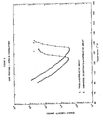
- formulation 1 containing TMXDI/e-caprolactam adduct and Cargill 3000 Polyester Resin has an onset temperature of crosslinking at -140 o C.
- formulation 2 containing CR2400 has its onset temperature of crosslinking at -160 o C, about 20 o C higher than formulation 1 which contains TMXDI/e-caprolactam adduct.
- a powder coating formulation with TMXDI/e-caprolactam adduct was prepared according to the procedure described in Example 2, Part A and cured according to the procedure described in Example 2, Part B.
- a second formulation was also prepared by the procedure described in Example 2, Part A, except for replacement of Cargill 3000 resin with Rucote 107.
- the resulting composition was cured according to the procedure described in Example 2, Part B, as before.
- the physical properties and film properties are summarized below to allow direct comparison of the two resins, Rucote 107 and Cargill 3000, in TMXDI/e-caprolactam adduct cured powder coatings.
- Two solvent based formulations were prepared using Cargill 5776 Polyester Resin (85% solids) as the resin component with both TMXDI/e-caprolactam adduct and isopherone diisocyante blocked with e-caprolactam as the blocked isocyanate components.
- the solvent was toluene and then tin catalyst was tetrabutyldiacetyloxy stannoxane (TBDAS) in both cases.
- TDAS tetrabutyldiacetyloxy stannoxane
- Test panels were prepared using these formulations and cured at three different temperatures to allow direct comparison of cure rates as measured by MEG rubs.
- the proportions of the various components in these formulations and the film properties obtained after curing at 132, 150 and 175 o C are summarized below.
- TMXDE/E-caprolactam adduct vs. CARGILL 2400 A CURE COMPARISON IN SOLVENT BORNE COATINGS SYSTEMS Formulation: A B Cargill 5776 (85%)1 15.5 8.6 Cargill 2400 (50%)2 (solution in toluene 20 BI-10 (.50%)2 20 TBDAS 0.23 0.26 Film Properties Cure Temp. o C, 20 min.
Landscapes
- Chemical & Material Sciences (AREA)
- Organic Chemistry (AREA)
- Health & Medical Sciences (AREA)
- Materials Engineering (AREA)
- Wood Science & Technology (AREA)
- Engineering & Computer Science (AREA)
- Life Sciences & Earth Sciences (AREA)
- Chemical Kinetics & Catalysis (AREA)
- Medicinal Chemistry (AREA)
- Polymers & Plastics (AREA)
- Paints Or Removers (AREA)
- Polyurethanes Or Polyureas (AREA)
- Application Of Or Painting With Fluid Materials (AREA)
- Medicinal Preparation (AREA)
Applications Claiming Priority (2)
| Application Number | Priority Date | Filing Date | Title |
|---|---|---|---|
| US36847289A | 1989-06-19 | 1989-06-19 | |
| US368472 | 1989-06-19 |
Publications (3)
| Publication Number | Publication Date |
|---|---|
| EP0403779A2 true EP0403779A2 (de) | 1990-12-27 |
| EP0403779A3 EP0403779A3 (de) | 1991-03-20 |
| EP0403779B1 EP0403779B1 (de) | 1995-04-05 |
Family
ID=23451354
Family Applications (1)
| Application Number | Title | Priority Date | Filing Date |
|---|---|---|---|
| EP90108890A Expired - Lifetime EP0403779B1 (de) | 1989-06-19 | 1990-05-11 | Härtbare Pulverbeschichtungszusammensetzungen, die caprolactamblockierte Isocyanate enthalten |
Country Status (7)
| Country | Link |
|---|---|
| EP (1) | EP0403779B1 (de) |
| JP (1) | JP2894628B2 (de) |
| KR (1) | KR0173680B1 (de) |
| AT (1) | ATE120775T1 (de) |
| CA (1) | CA2019053C (de) |
| DE (1) | DE69018320T2 (de) |
| NO (1) | NO902695L (de) |
Cited By (4)
| Publication number | Priority date | Publication date | Assignee | Title |
|---|---|---|---|---|
| WO1991015532A1 (en) * | 1990-04-09 | 1991-10-17 | Eastman Kodak Company | Powder coating compositions |
| WO1993020121A1 (en) * | 1992-03-31 | 1993-10-14 | Allied-Signal Inc. | Novel crosslinker for use in acrylic-based urethane powder coatings |
| EP0789043A2 (de) | 1996-02-08 | 1997-08-13 | Bayer Ag | Polyurethan-Pulvermattlacke |
| US20220134380A1 (en) * | 2019-01-21 | 2022-05-05 | Kansai Paint Co., Ltd. | Method for forming a multilayer coating film |
Families Citing this family (2)
| Publication number | Priority date | Publication date | Assignee | Title |
|---|---|---|---|---|
| JP4909596B2 (ja) * | 2006-01-26 | 2012-04-04 | Hoya株式会社 | ブランクス収納ケース、マスクブランクスの収納体およびマスクブランクスの搬送方法 |
| WO2013017124A1 (de) | 2011-07-29 | 2013-02-07 | Curamik Electronics Gmbh | Verpackung für substrate sowie verpackungseinheit mit einer solchen verpackung |
Family Cites Families (8)
| Publication number | Priority date | Publication date | Assignee | Title |
|---|---|---|---|---|
| US4395529A (en) * | 1981-07-20 | 1983-07-26 | Cargill, Incorporated | Coating powders for protective films based on epsilon-caprolactam blocked isocyanates |
| EP0182996A1 (de) * | 1984-10-26 | 1986-06-04 | American Cyanamid Company | Polyfunktionelle tertiäre Aralkylisocyanat-Verbindungen und Zusammensetzungen |
| DE3536017A1 (de) * | 1985-10-09 | 1987-04-09 | Huels Chemische Werke Ag | Ganz oder teilweise mit epsilon-caprolactam blockiertes trans-cyclohexan-1,4-diisocyanat, dessen herstellung und verwendung |
| US4748200A (en) * | 1986-03-18 | 1988-05-31 | Takeda Chemical Industries, Ltd. | Thermosetting resins and electrodeposition coating compositions containing the same |
| JPH0730154B2 (ja) * | 1986-04-08 | 1995-04-05 | 武田薬品工業株式会社 | 一液性熱硬化型樹脂組成物 |
| EP0263983B1 (de) * | 1986-09-16 | 1992-12-23 | Takeda Chemical Industries, Ltd. | Einkomponenten-Harzzusammensetzungen und deren Härtung |
| US4859760A (en) * | 1987-12-07 | 1989-08-22 | Eastman Kodak Company | Polyurethane powder coating compositions |
| CA1332488C (en) * | 1987-12-11 | 1994-10-11 | Ppg Industries, Inc. | Blocked isocyanates and method of making and using the same |
-
1990
- 1990-05-11 EP EP90108890A patent/EP0403779B1/de not_active Expired - Lifetime
- 1990-05-11 AT AT90108890T patent/ATE120775T1/de active
- 1990-05-11 DE DE69018320T patent/DE69018320T2/de not_active Expired - Fee Related
- 1990-06-15 JP JP2155625A patent/JP2894628B2/ja not_active Expired - Lifetime
- 1990-06-15 CA CA002019053A patent/CA2019053C/en not_active Expired - Fee Related
- 1990-06-18 KR KR1019900008932A patent/KR0173680B1/ko not_active Expired - Fee Related
- 1990-06-18 NO NO90902695A patent/NO902695L/no not_active Application Discontinuation
Cited By (5)
| Publication number | Priority date | Publication date | Assignee | Title |
|---|---|---|---|---|
| WO1991015532A1 (en) * | 1990-04-09 | 1991-10-17 | Eastman Kodak Company | Powder coating compositions |
| WO1993020121A1 (en) * | 1992-03-31 | 1993-10-14 | Allied-Signal Inc. | Novel crosslinker for use in acrylic-based urethane powder coatings |
| EP0789043A2 (de) | 1996-02-08 | 1997-08-13 | Bayer Ag | Polyurethan-Pulvermattlacke |
| US20220134380A1 (en) * | 2019-01-21 | 2022-05-05 | Kansai Paint Co., Ltd. | Method for forming a multilayer coating film |
| US11958074B2 (en) * | 2019-01-21 | 2024-04-16 | Kansai Paint Co., Ltd | Method for forming a multilayer coating film |
Also Published As
| Publication number | Publication date |
|---|---|
| JP2894628B2 (ja) | 1999-05-24 |
| NO902695D0 (no) | 1990-06-18 |
| JPH0326768A (ja) | 1991-02-05 |
| EP0403779A3 (de) | 1991-03-20 |
| CA2019053C (en) | 2000-08-08 |
| ATE120775T1 (de) | 1995-04-15 |
| KR0173680B1 (ko) | 1999-03-20 |
| DE69018320D1 (de) | 1995-05-11 |
| CA2019053A1 (en) | 1990-12-19 |
| EP0403779B1 (de) | 1995-04-05 |
| NO902695L (no) | 1990-12-20 |
| DE69018320T2 (de) | 1995-08-03 |
| KR910000966A (ko) | 1991-01-30 |
Similar Documents
| Publication | Publication Date | Title |
|---|---|---|
| CA1180333A (en) | Isocyanato-isocyanurates, process for the production thereof and use thereof as isocyanate, component in polyurethane lacquers | |
| EP2222804B1 (de) | Polyesterharz-pulverlackzusammensetzung | |
| US7300997B2 (en) | High-reactivity polyurethane powder coating compositions based on epoxy-terminated polyaddition compounds containing uretdione groups | |
| EP0408465B1 (de) | Halbkristalline Polyester, deren Mischungen mit amorphen Polyestern sowie auf solchen Mischungen basierte Pulverlackzusammensetzungen | |
| JP2003238891A (ja) | ポリウレタン粉末塗料組成物、その製造方法、その硬化のための触媒並びに木材被覆組成物、皮革被覆組成物、プラスチック被覆組成物及び金属被覆組成物 | |
| AU687970B2 (en) | Process for the preparation of blocked polyisocyanates, and their use in polyurethane coating systems | |
| US5614323A (en) | Powder coating compositions | |
| US7547739B2 (en) | Powder coating composition providing low gloss | |
| US20100179273A1 (en) | Powder coating compositions with crystalline constituents that are stable in storage | |
| EP0526523B1 (de) | Pulverlackzusammensetzung | |
| EP0409745A1 (de) | Oximblockierte Polyisocyanate und diese enthaltende Polyesterzusammensetzungen oder auf Polyestern basierende Pulverbeschichtungszusammensetzungen | |
| WO2008068073A1 (de) | Lagerstabile pur-pulverlackzusammensetzungen und ihre verwendung für trübungsarme und flexible polyurethan-beschichtungen | |
| US4355058A (en) | Powdery coating media and their use | |
| CA2066638C (en) | Powder coating compositions | |
| EP0403779B1 (de) | Härtbare Pulverbeschichtungszusammensetzungen, die caprolactamblockierte Isocyanate enthalten | |
| EP0540639B1 (de) | Pulver-beschichtungsmasse | |
| WO1992001757A1 (en) | Powder coating compositions for the production of low-gloss coatings | |
| US6849705B2 (en) | Bifunctional polyaddition compounds as crosslinkers for polyurethane powder coatings | |
| JPH1087784A (ja) | 尿素基およびウレトジオン基を含有するポリイソシアネート、該化合物の製造法および該化合物を含有するポリウレタン−ラッカー系 | |
| DE10142816A1 (de) | Verfahren zur Herstellung eines Isocyanuratgruppen enthaltenden, blockierten Polyisocyanats und dessen Verwendung | |
| US7714062B2 (en) | Thermal curable powder coating composition | |
| US20040018374A1 (en) | Use of PUR powder coating materials for coil coatings featuring a matt appearance | |
| CA2435469A1 (en) | Pu powder coatings with a matt appearance | |
| JPS62111957A (ja) | ε−カプロラクタムで完全にまたは部分的にブロツクされたトランス−シクロヘキサン−1,4−ジイソシアネ−ト、その製造方法およびその用途 | |
| US20030055168A1 (en) | Mar resistance |
Legal Events
| Date | Code | Title | Description |
|---|---|---|---|
| PUAI | Public reference made under article 153(3) epc to a published international application that has entered the european phase |
Free format text: ORIGINAL CODE: 0009012 |
|
| AK | Designated contracting states |
Kind code of ref document: A2 Designated state(s): AT BE CH DE DK ES FR GB GR IT LI LU NL SE |
|
| PUAL | Search report despatched |
Free format text: ORIGINAL CODE: 0009013 |
|
| AK | Designated contracting states |
Kind code of ref document: A3 Designated state(s): AT BE CH DE DK ES FR GB GR IT LI LU NL SE |
|
| 17P | Request for examination filed |
Effective date: 19910805 |
|
| 17Q | First examination report despatched |
Effective date: 19930222 |
|
| RAP1 | Party data changed (applicant data changed or rights of an application transferred) |
Owner name: CYTEC TECHNOLOGY CORP. |
|
| GRAA | (expected) grant |
Free format text: ORIGINAL CODE: 0009210 |
|
| AK | Designated contracting states |
Kind code of ref document: B1 Designated state(s): AT BE CH DE DK ES FR GB GR IT LI LU NL SE |
|
| PG25 | Lapsed in a contracting state [announced via postgrant information from national office to epo] |
Ref country code: NL Free format text: LAPSE BECAUSE OF NON-PAYMENT OF DUE FEES Effective date: 19950405 Ref country code: LI Effective date: 19950405 Ref country code: GR Free format text: LAPSE BECAUSE OF FAILURE TO SUBMIT A TRANSLATION OF THE DESCRIPTION OR TO PAY THE FEE WITHIN THE PRESCRIBED TIME-LIMIT Effective date: 19950405 Ref country code: ES Free format text: THE PATENT HAS BEEN ANNULLED BY A DECISION OF A NATIONAL AUTHORITY Effective date: 19950405 Ref country code: DK Effective date: 19950405 Ref country code: CH Effective date: 19950405 Ref country code: BE Effective date: 19950405 Ref country code: AT Effective date: 19950405 |
|
| REF | Corresponds to: |
Ref document number: 120775 Country of ref document: AT Date of ref document: 19950415 Kind code of ref document: T |
|
| REF | Corresponds to: |
Ref document number: 69018320 Country of ref document: DE Date of ref document: 19950511 |
|
| ET | Fr: translation filed | ||
| PG25 | Lapsed in a contracting state [announced via postgrant information from national office to epo] |
Ref country code: LU Free format text: LAPSE BECAUSE OF NON-PAYMENT OF DUE FEES Effective date: 19950531 |
|
| ITF | It: translation for a ep patent filed | ||
| PG25 | Lapsed in a contracting state [announced via postgrant information from national office to epo] |
Ref country code: SE Effective date: 19950705 |
|
| REG | Reference to a national code |
Ref country code: CH Ref legal event code: PL |
|
| NLV1 | Nl: lapsed or annulled due to failure to fulfill the requirements of art. 29p and 29m of the patents act | ||
| PLBE | No opposition filed within time limit |
Free format text: ORIGINAL CODE: 0009261 |
|
| STAA | Information on the status of an ep patent application or granted ep patent |
Free format text: STATUS: NO OPPOSITION FILED WITHIN TIME LIMIT |
|
| 26N | No opposition filed | ||
| REG | Reference to a national code |
Ref country code: GB Ref legal event code: IF02 |
|
| PGFP | Annual fee paid to national office [announced via postgrant information from national office to epo] |
Ref country code: GB Payment date: 20020404 Year of fee payment: 13 |
|
| PGFP | Annual fee paid to national office [announced via postgrant information from national office to epo] |
Ref country code: FR Payment date: 20020503 Year of fee payment: 13 |
|
| PGFP | Annual fee paid to national office [announced via postgrant information from national office to epo] |
Ref country code: DE Payment date: 20020531 Year of fee payment: 13 |
|
| PG25 | Lapsed in a contracting state [announced via postgrant information from national office to epo] |
Ref country code: GB Free format text: LAPSE BECAUSE OF NON-PAYMENT OF DUE FEES Effective date: 20030511 |
|
| PG25 | Lapsed in a contracting state [announced via postgrant information from national office to epo] |
Ref country code: DE Free format text: LAPSE BECAUSE OF NON-PAYMENT OF DUE FEES Effective date: 20031202 |
|
| GBPC | Gb: european patent ceased through non-payment of renewal fee |
Effective date: 20030511 |
|
| PG25 | Lapsed in a contracting state [announced via postgrant information from national office to epo] |
Ref country code: FR Free format text: LAPSE BECAUSE OF NON-PAYMENT OF DUE FEES Effective date: 20040130 |
|
| REG | Reference to a national code |
Ref country code: FR Ref legal event code: ST |
|
| PG25 | Lapsed in a contracting state [announced via postgrant information from national office to epo] |
Ref country code: IT Free format text: LAPSE BECAUSE OF NON-PAYMENT OF DUE FEES Effective date: 20050511 |