EP0353045B1 - Vorrichtungen und Verfahren zur Wachstumsförderung bei Bratgeflügel - Google Patents
Vorrichtungen und Verfahren zur Wachstumsförderung bei Bratgeflügel Download PDFInfo
- Publication number
- EP0353045B1 EP0353045B1 EP89307593A EP89307593A EP0353045B1 EP 0353045 B1 EP0353045 B1 EP 0353045B1 EP 89307593 A EP89307593 A EP 89307593A EP 89307593 A EP89307593 A EP 89307593A EP 0353045 B1 EP0353045 B1 EP 0353045B1
- Authority
- EP
- European Patent Office
- Prior art keywords
- somatotropin
- roasters
- implant
- day
- growth
- Prior art date
- Legal status (The legal status is an assumption and is not a legal conclusion. Google has not performed a legal analysis and makes no representation as to the accuracy of the status listed.)
- Expired - Lifetime
Links
Images
Classifications
-
- A—HUMAN NECESSITIES
- A61—MEDICAL OR VETERINARY SCIENCE; HYGIENE
- A61K—PREPARATIONS FOR MEDICAL, DENTAL OR TOILETRY PURPOSES
- A61K9/00—Medicinal preparations characterised by special physical form
- A61K9/0012—Galenical forms characterised by the site of application
- A61K9/0019—Injectable compositions; Intramuscular, intravenous, arterial, subcutaneous administration; Compositions to be administered through the skin in an invasive manner
- A61K9/0024—Solid, semi-solid or solidifying implants, which are implanted or injected in body tissue
-
- A—HUMAN NECESSITIES
- A61—MEDICAL OR VETERINARY SCIENCE; HYGIENE
- A61K—PREPARATIONS FOR MEDICAL, DENTAL OR TOILETRY PURPOSES
- A61K38/00—Medicinal preparations containing peptides
- A61K38/16—Peptides having more than 20 amino acids; Gastrins; Somatostatins; Melanotropins; Derivatives thereof
- A61K38/17—Peptides having more than 20 amino acids; Gastrins; Somatostatins; Melanotropins; Derivatives thereof from animals; from humans
- A61K38/22—Hormones
- A61K38/27—Growth hormone [GH], i.e. somatotropin
-
- A—HUMAN NECESSITIES
- A61—MEDICAL OR VETERINARY SCIENCE; HYGIENE
- A61K—PREPARATIONS FOR MEDICAL, DENTAL OR TOILETRY PURPOSES
- A61K9/00—Medicinal preparations characterised by special physical form
- A61K9/0002—Galenical forms characterised by the drug release technique; Application systems commanded by energy
- A61K9/0004—Osmotic delivery systems; Sustained release driven by osmosis, thermal energy or gas
-
- A—HUMAN NECESSITIES
- A61—MEDICAL OR VETERINARY SCIENCE; HYGIENE
- A61K—PREPARATIONS FOR MEDICAL, DENTAL OR TOILETRY PURPOSES
- A61K9/00—Medicinal preparations characterised by special physical form
- A61K9/14—Particulate form, e.g. powders, Processes for size reducing of pure drugs or the resulting products, Pure drug nanoparticles
- A61K9/16—Agglomerates; Granulates; Microbeadlets ; Microspheres; Pellets; Solid products obtained by spray drying, spray freeze drying, spray congealing,(multiple) emulsion solvent evaporation or extraction
- A61K9/1605—Excipients; Inactive ingredients
- A61K9/1617—Organic compounds, e.g. phospholipids, fats
-
- A—HUMAN NECESSITIES
- A61—MEDICAL OR VETERINARY SCIENCE; HYGIENE
- A61K—PREPARATIONS FOR MEDICAL, DENTAL OR TOILETRY PURPOSES
- A61K9/00—Medicinal preparations characterised by special physical form
- A61K9/14—Particulate form, e.g. powders, Processes for size reducing of pure drugs or the resulting products, Pure drug nanoparticles
- A61K9/16—Agglomerates; Granulates; Microbeadlets ; Microspheres; Pellets; Solid products obtained by spray drying, spray freeze drying, spray congealing,(multiple) emulsion solvent evaporation or extraction
- A61K9/1605—Excipients; Inactive ingredients
- A61K9/1629—Organic macromolecular compounds
- A61K9/1641—Organic macromolecular compounds obtained otherwise than by reactions only involving carbon-to-carbon unsaturated bonds, e.g. polyethylene glycol, poloxamers
- A61K9/1647—Polyesters, e.g. poly(lactide-co-glycolide)
Definitions
- This invention relates to a method for increasing the growth rate or feed efficiency in poultry roasters (hereinafter referred to at times as "roasters"). Also provided are devices which are adapted to provide continuous infusion of recombinant chicken somatotropin or other effective somatotropins.
- roaster producing art It is desired in the roaster producing art to provide increased rate of growth and efficiency of feed utilization. Such a process would permit increase in the productivity by the grower of roasters such as chicken roasters, by decreasing the time which is required to produce roasters of a particularly desired weight. The grower on an annual basis would be able to provide more roasters of such weight without increasing facilities and the labor required in caring for the roasters. Such a process would increase the amount of roaster meat available for human consumption.
- an effective avian somatotropin to roasters provides a substantial increase in their growth rate or feed efficiency. It has been further found that administration of an effective amount of a suitable somatotropin by continuous parenteral infusion is a desirable manner to carry out the invention.
- An effective amount of a somatotropin is suitably at least about 1 microgram/kg/day administered by continuous infusion to roasters such as chicken, turkey, duck and goose roasters.
- a suitable range of somatotropin administration is within the range of about 1 to about 250 micrograms/kg/day.
- a presently preferred amount of somatotropin administration is at least about 5 micrograms/kg/day 5 and 50 micrograms/kg/day has been found to be a suitable amount when administered continuously by infusion for an effective period to attain a desired promotion of growth, such as for at least about 2 weeks or for the last 3 or 4 weeks of the growth period being suitable.
- a somatotropin which has been found to be highly suitable for use in carrying out the process in chicken roasters is recombinant chicken somatotropin.
- a device for continuously administering an effective somatotropin which comprises an osmotic pump implant containing in solution an amount of somatotropin using a sterile and biological acceptable solution adequate for effective continuous infusion for several days during the growing period as desired, for example, for at least about 21 days.
- Other suitable implants and administrations can be used which contain an effective somatotropin and which preferably continuously release for systemic absorption somatotropin for a desired growth period.
- the implants are suitably inserted subcutaneously using good practices known to those skilled in the roaster producing art.
- the somatotropins which can be used for carrying out this invention include known polypeptide compounds. They can be compounds which occur naturally and which are secreted by the pituitary gland of animals, including chickens, turkeys, ducks and other poultry, used as a protein source for man.
- Somatotropin found suitable in carrying out this invention is made using recombinant DNA technology.
- the cGH gene is cloned using known techniques such as described and referred to by W. H. Burke et al., cited above. Effective natural somatotropin of poultry or other animals can be used but is difficult to obtain and expensive in view of the small amount present in the respective pituitary glands.
- somatotropins can be used which are obtained by known cloning DNA techniques and using GH genes of other species.
- the amino acid sequences of somatotropins derived from the different species vary to some degree. Notwithstanding the variance of the chemical structures, some of these somatotropins will show the bioactivity required in carrying out the invention.
- Derivatives of somatotropins which can be used in carrying out this invention can be selected from effective and biocompatible derivatives, such as carboxymethyl, methyl sulfide, hydroxysuccinic, carbamidomethylated and the like derivatives.
- the effective somatotropin such as recombinant somatotropin is desirably dissolved in a sterile and isotonic aqueous solution.
- the solution can be suitably buffered with a biocompatible buffer.
- the solution will be made at a somatotropin concentration appropriate for the particular form of the administration used. Ordinarily, using the skill within the art, the concentration will be within the range of about 1 to 10 percent, depending upon the somatotropin used, the particular dosage form selected, the daily dose selected and other factors pertaining in formulating the dosage forms.
- the dosage forms suitable for the administration to roasters used in carrying out the invention are bioacceptable subcutaneous forms.
- the dosage forms can be implants inserted subcutaneously at the beginning of the growth promoting process and desirably provide a continuous daily dosage amount of an effective somatotropin to the roasters in such manner as to be absorbed systemically.
- Effective somatotropins can be suitably administered by injection in the form of biologically active parenteral compositions.
- parenteral compositions useful for administration of somatotropins are gels, pastes, microspheres, microcapsules, implants and the like. As such, there is considerable interest in providing dosage forms of biologically active substances which release the substance in a controlled manner and thus, reduce the frequency of administration.
- sustained release compositions of somatotropins require attention to special problems due to their complex modes of action and intricate structures of the macromolecules.
- compositions useful for this type of administration can be prepared by dissolving a modified or derivatized somatotropin in dilute ammonium hydroxide and then adding a solution of an alkali metal benzoate, laurate, carbonate or the like thereto.
- a nonionic surfactant is thereafter admixed with the solution and the resulting mixture spray dried.
- the thus formed solids are then admixed with molten fat or wax or a mixture thereof and the resulting molten mixture sprayed through an air/liquid spray nozzle equipped with a heated jacket to maintain the incoming air and the molten phase at a temperature above the melting point.
- the microspheres are formed as the molten droplets cool.
- microspheres which are not of the desired size range are recycled.
- the homogeneous mixture is fed onto a centrifugal disc and the microspheres thus formed collected as above, or the molten mixture are cooled and milled to the desired average particle size range.
- the biologically active microspheres are then dispersed in a pharmaceutically and pharmacologically acceptable liquid vehicle for parenteral injection.
- the microsphere-liquid composition is generally administered by subcutaneous injection under the skin of the animal usually in the vicinity of the head and neck.
- Modified or derivatized somatotropins also are prepared as biocompatible implants which are injected under the skin of the animal using a conventional pellet implant gun.
- These compositions are prepared by admixing a powdered modified or derivatized somatotropin with a wax such as castor wax or with a mixture of a copoly (glycolide/lactide), magnesium hydroxide, and a condensate of ethylene oxide prepared with a hydrophobic base formed by condensation of propylene oxide with propylene glycol.
- the thus formed compositions are then introduced into a pelleting press and formed into cylindrical pellets about 25.4/8 mm (1/8 inch) in diameter.
- the thus formed pellets are administered with a conventional pellet implant gun.
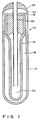
- FIG. 1 shows a cross section of such an osmotic pump implant 10.
- the osmotic pump implant has an exterior wall 12, which is made using a suitable material and acts as a semipermeable membrane.
- Positioned within the vessel formed by exterior wall 12 is an interior vessel 14 which is positioned in fixed and spaced relationship with the vessel formed by exterior wall 12.
- the upper wall of inner vessel 14 extends outwardly to make intimate contact with the exterior wall 12.
- an osmotic agent region 16 In the enclosed space 16 formed by the contact between the exterior wall 12 and the interior vessel 14 is an osmotic agent region 16, which is filled with a suitable osmotic agent.
- the tope of the interior vessel 14 is filled with a plug 18 which has a hole therethrough through which is placed a suitable conduit tube 20, which communicates between the reservoir 22 holding the somatotropin solution and the subcutaneous region of the roasters into which the osmotic pump implant is placed.
- the osmotic pump implant has a top flange 24 fitted to the conduit tube 20, which moderates the flow of the somatotropin solution continuously at a predetermined rate into the subcutaneous region of the treated roaster.
- the osmotic pump plant has a removable cap 26 to permit the continuous dosage flow of somatotropin when the osmotic pump implant is inserted into the subcutaneous region of the roasters.
- the osmotic pumps are desirably treated prior to use to reduce adsorption or binding of proteins or peptides to the inner walls or surfaces of the pump.
- This pretreatment can be done in accordance with the recommendations of the pump manufacturer: the pump is filled with 1 percent organophosphosilane for 72 hours, the organophosphosilane is removed and the pump is dried.
- the vehicle for somatotropin (chicken somatotropin) used was saline, pH 8.4, containing 1 percent bovine serum albumin (Sigma, St. Louis, MO). The bovine serum albumin was added to reduce peptide or protein binding to the internal walls and surfaces of the pump.
- the osmotic pump operates by the slow infusion of biological fluid of the subcutaneous region of the implanted roaster through the exterior wall 12.
- the incoming fluid causes gradual expansion of the osmotic agent filling the enclosure region 16.
- a slow, continuously increasing pressure is exerted upon the exterior side walls of the interior vessel 14, thereby forcing at a predetermined rate the somatotropin into the subcutaneous region of the roaster being treated.
- More than one of the osmotic pump implants can be inserted to obtain an increase in daily dosage of the contained somatotropin or the implant can be modified to deliver a higher daily dose.
- the osmotic agent is selected to obtain the desired flow rate to provide the daily continuous dosage desired.
- the concentration of the somatotropin, the osmotic agent, the respective volumes of the osmotic agent region, the internal vessel, the exterior wall and the configuration of the communication tube will be varied to provide the desired flow and length of treatment.
- the somatotropin solution is placed into the internal vessel employing sterile conditions and appropriate procedures followed by those skilled in the art of forming such sterile, implantable dosage forms.
- the osmotic pump implants after filling are sealed and appropriately packaged and stored until they are to be used for implantation to carry out this growth promotion invention.
- Suitable dosage implant forms can be used for insertion subcutaneously.
- the sterile solution of somatotropin can be compounded with a suitable biocompatible material to form an encapsulated dosage form.
- the somatotropin can be suitably intermixed with a bioacceptable material to form an implant as by tableting or the like.
- the somatotropin is administered to the roasters so as to be absorbed systemically.
- a suitable manner of administration is to insert subcutaneously a solid dosage form.
- the solid dosage form is referred to as an implant.
- the implant can be inserted in any suitable subcutaneous portion of the roaster.
- a suitable place has been found to be the convention location of the nape of the neck or above the scapula.
- the implant can be in any biocompatible geometric pellet form, such as a cylinder, tablet, sphere or the like. It is desirable that the implant be free of sharp edges or points. Implants with such sharp edges or points can fail to be bioacceptable to the roaster treated.
- An implant can be made using an insert core as a base for coating thereon a mixture of somatotropin and an extending agent such as a suitable polymer, wax, fatty substance, or the like, for example, a low melting beeswax, peanut oil-aluminum monostearate, slightly soluble or partially soluble polymers, or other suitable materials.
- the amount or concentration of the somatotropin will be adjusted to provide the desired daily dosages diffusing from the subcutaneous implants.
- the coating can alternatively be made by using a suitable polymer with a slow dissolution rate permitting a regulated release to daily dosages.
- a core can be employed which is biosoluble. In such implants, the exposed biosoluble and biocompatible core will dissolve and disappear.
- somatotropin can be made in other suitable ways known or developed by the art in order to provide effective systemic administration of somatotropin in accordance with this invention.
- chickens they are selected for carrying out the methods of this invention which are of suitable age, weight and breeding. It has been found that chickens of a heavy breed such as Hubbard x Hubbard are suitable. Other chicken breeds and varieties can also be used. Chickens used will be older chickens, 4-5 weeks old or more. It has been found desirable to use chickens which are about 6 weeks of age or older to be suitable to provide chickens roasters by this invention. Chickens used in the invention will ordinarily weigh at least 1.3 to 1.76 pounds (about 0.6 to 0.8 kg). It has been found that chickens weighing at least about 3 or 4 pounds (about 1.4 to 1.8 kg) to be suitable. Chickens of about 7 to about 12 weeks of age can be selected to carry out the invention.
- Suitable chickens selected, for example, in carrying out the invention will be treated individually by administration of an effective somatotropin.
- the administration can be by insertion of an implant containing an effective somatotropin in the subcutaneous region of the roaster.
- the implant will preferably be a type which will provide continuous infusion of the somatotropin as desired to provide the growth promotion in the roasters.
- the effective somatotropin can be administered parenterally, e.g. subcutaneously, in the form of a suitable sustained release formulation, described herein.
- the dosage forms will be inserted or administered usually at least 2 or 3 weeks before the chicken roasters are slaughtered and dressed for human consumption. The time of insertion of the subcutaneous implant will vary upon various factors such as the age of the roasters selected, the final weight desired in the roasters, and other factors.
- the amount of somatotropin administered per day/kg weight of the roasters can vary depending upon the increase in growth desired and other factors. Ordinarily, an effective amount will be administered of at least 1 microgram/kg wt/day up to about 250 micrograms/kg wt/day, desirably at least about 5 micrograms/kg wt/day, and preferably about 50 micrograms or more/kg wt/day.
- roasters will be grown using good growing practices known and followed by those skilled in the roaster growing art, including good hygiene practice, fresh water supply and a balanced diet, preferably having a high protein content, and water made available on an ad libitum basis.
- a grain feed for the roasters will preferably be supplemented by adding thereto a high protein source.
- Suitable high protein supplement can be selected from soybean meal, fish meal, cotton seed meal, commerical animal source protein products, lysine, methionine, and the like and combinations thereof.
- Commercial mixed feeds for poultry having suitable high protein content are available commercially, which are designed for high growth rates.
- the hormone was supplied by American Cyanamid.
- Alzet osmotic pump implants (model 2m12, Alza Corp., Palo Alto, California - calibrated to deliver 2.5 microliters/hr/30 days) were used to administer rcGH.
- the osmotic pumps were treated as described above.
- the control group received saline vehicle (pH 8.4) only.
- the low and high dose experimental groups received 5 micrograms/kg/day rcGH and 50 micrograms/kg/day rcGH in saline (pH 8.4) respectively.
- Each pump was filled with 2 mls of designated solution and inserted subcutaneously over the scapula. The wounds were closed with metal clips.
- Body weights were measured at 12 weeks, 13 weeks, 14 weeks, and 15 weeks of age, corresponding to day 0, 7, 14, and 21 of the experiment. The change in body weights each week was calculated. Shank-toe length was measured on the last day.
- the chickens were killed by decapitation.
- Carcasses were dissected and the following samples were removed: the right pectoral muscle, abdominal adipose tissue, guts, heart, liver, and testes glands.
- Thrice-daily injections from age 2-24 days had little effect on growth or feed consumption in either male or female broiler chicks . . .
- the reduced rcGH had no effect on carcass protein, ash content, or nitrogen retention . . .
- This study shows that administration of rcGH to chickens can lead to some significant metabolic effects. However, it is the conclusion of this report that the level of circulating GH is not the limiting factor in the growth of this highly selected species.”
- Free fatty acid levels were significantly reduced at 250 micrograms/kg/day compared to control but were not reduced compared to sham-inoculated control (Table 2).
- Preparation of the novel recombinant animal somatotropins in a size range suitable for incorporation in microspheres by spray drying is accomplished by dissolving the recombinant animal somatotropin derivative in dilute ammonium hydroxide solution and then adding desired salt solutions such as sodium benzoate.
- a nonionic surfactant such as a block copolymer of ethylene oxide and propylene oxide is added and allowed to dissolve with constant gentle mixing. The solution is then spray-dried.
- a Buchi mini spray dryer, model #190 maybe used for this purpose.
- a homogeneous mixture of the thus prepared active ingredient and additives in the molten fat, wax or mixture thereof is prepared and the resulting mixture sprayed through an air/liquid spray nozzle equipped with a heated jacket to maintain the incoming air and the molten phase at a temperature above the melting point.
- the microspheres are formed as the molten droplets cool and are collected on a series of sleves in the desired size range of about 45 to 180 microns and retained for use. Microspheres which are not of the desired size range are collected for recycling.
- the homogeneous mixture are fed onto a centrifugal disc and the microspheres thus formed are collected as above, or the molten mixtures are cooled and milled to the desired average particle size range.
- Waxes and fats which are suitable for use in the compositions of this invention in general have melting points higher than 40°C.
- These waxes are defined as a low-melting organic mixture or compound of high molecular weight, solid at room temperature and generally similar in composition to fats and oils except that it contains no glycerides. Some are hydrocarbons; others are esters of fatty acids and alcohols. They are classed among the lipids.
- Waxes are thermoplastic, but since they are not high polymers, they are not considered in the family of plastics. Common properties are water repellency, smooth texture; nontoxicity; freedom from objectionable odor and color. They are combustible, and have good dielectric properties. Soluble in most organic solvents; insoluble in water. The major types are as follows: * The Condensed Chemical Dictionary Tenth Edition Pg. 1094 Van Nostrand Reinhold Publisher
- the fat is preferably long chain C10-C24 fatty acid, alcohol, ester, salt, ether or mixture thereof, with mono-, di-, or triglycerides composed predominantly of stearates, palmitates, laurates, linoleates, linolenates, oleates, and residues or mixtures thereof, having melting points greater than 50°C being most preferred.
- Glycerol tristearate is a most preferred fat.
- lipophilic salts of fatty acids such as magnesium stearate and the like are also suitable.
- the microspheres of the invention are dispersed in a pharmaceutically and pharmacologically acceptable liquid to obtain a slow release composition for parenteral administration.
- the vehicle is aqueous buffered systems or oil systems.
- the oil is a vegetable or an animal oil.
- a preferred oil is a neutral triglyceride liquid fat.
- a neutral oil is one containing no residual acid.
- Vehicles suitable for use in the compositions of this invention include aqueous systems such as buffered salines; organic solvents such as glycols and alcohols; and water immiscible liquids such as oils, depending upon the solubility of the active ingredient being administered. Data obtained are reported in TABLE 5.
- a buffered solution of rpST derivative and bile acid is spray dried in a Buchi Model 190 spray dryer.
- This fine particle powder (10 parts) is suspended in a methylene chloride solution of coating materials (1 part). This suspension is spray dried.
- the coated microspheres are suspended in a suitable suspending vehicle prior to injection.
- Other derivatized or modified recombinant animal somatotropins of the present invention including the modified recombinant avian somatotropins, wherein the cysteines in the small loop at the 183 and 191 positions (184 and 191 for humans) of the recombinant animal somatotrophins are replaced by alanine, serine, glutamic acid, arginine, lysine or the like, are prepared as microspheres in accordance with the description in TABLE 6.
- Implants are prepared by weighing a sufficient quantity of the ground homogeneous mixture of the desired recombinant animal somatotropin derivative and the desired diluents. This mixture is then compressed on a carver press at from (1000 x 6.89) + 101 - (6000 x 6.89) + 101 kPa (1000 to 5000 psig) in a (3/16" or 1/8") 3 x 25.4/16 - 25.4/8 mm diameter cylindrical die or on a rotary tablet press using the required punch and die. The implants thus prepared are then coated with either biodegradable or nonbiodegradable coatings by procedures A and B.
- Clean grade silicon elastomer (10 parts) is mixed with curing agent (one part) on a watch glass with a spatula. This is deaerated in a dessicator for 30 minutes. The implants are grasped by the ends with tweezers, rolled into the silicon polymer, placed on end on aluminum foil and cured at 40°C for five hours. One or both of the ends are removed with a razor blade leaving the "shaft" of the cylinder coated.
- implants are dip coated with 20% to 40% of a medical adhesive, sold under the trademark SILASTIC® by Dow Corning, which has been dispersed in hexane, and dried and cured at 40°C to 50°C overnight before removing the coating from one or both of the base ends.
- SILASTIC® a medical adhesive
- the polymer or copolymer (one part) is dissolved in chloroform (three to eight parts).
- Each implant is grasped by the ends with tweezers, dipped into the polymer solution, and then the chloroform evaporated at room temperature.
- Each implant is coated twice. After the coating dried overnight at room temperature, the polymer ends are removed with a razor blade, leaving the long cylindrical "shaft" coated.
- rpST or other recombinant animal somatotropins is blended with surfactants, buffer salts, and/or preservatives in an aqueous solution.
- This solution is then spray-dried in a Buchi Model 190 spray dryer giving a small particle size powder.
- This powder is then melt-blended with a fat or wax and molded into cylindrical implants.
- the implants prepared above are then coated with either a biodegradable or a non-degradable polymer using procedure A or B.
- a second set of implants are prepared by mixing together in a Vortex-genie mixer 128 mg of powdered castorwax (-270 mesh) and 32 mg of powdered (Cam-Cys 183,191)rpST. The thus prepared mixture is then formed into (1/8") 25.4/8 mm diameter cylindrical implants in the manner described above. The pellets weigh 60 to 70 mg each and are designated I-2.
- a third set of implants are also prepared by the procedures described above using 96 mg of -270 mesh castorwax and 64 mg of powdered (Cam-Cys 183,191)rPST.
- the (1/8") 25.4/8 mm diameter cylindrical implants prepared as descried above weigh 60 to 70 mg and are designated I-3.
- each of the implants is placed in a separate plastic tube containing 10 ml of a phosphate buffer solution (ph 7.4 with 0.05% Na azide) and the tubes placed in a shaking water rack where the tubes are shaken while the temperature of the water in the unit is maintained at 39°C.
- the tubes are shaken for one day then the solutions removed from each tube and analyzed for rpST by HPLC and the solution discarded.
- New phosphate buffer solution is added to each tube and the tubes shaken for three additional days thereafter.
- the solutions from each tube is again analyzed for rpST by HPLC and the solution again discarded.
- New phosphate buffer is again added to each tube and the tube again shaken for three days then analyzed again for rpST.
- the implants used in these determinations are described below along with the results obtained.
- the phosphate buffer solution is (NaH2PO4 ⁇ H2O 3.45 g, Na2HPO4 3.55 g, Nacl 9.5 g dissolved in distilled water to 1000 ml.
- Poly(lactide-co-glycolide), 0.85 g, is dissolved in 29.8 g of chloroform and vortexed for 2 minutes.
- a recombinant porcine somatotropin derivative (Cam-Cys 183,191)rpST, 0.150 g, which has been dry sieved thru a 25-micron stainless steel sieve, is then added to the polymer/chloroform solution and vortexed for 3 minutes.
- the resulting suspension of the protein is then charged to a 50-ml round bottom vessel filled with a mechanical stirrer. The stir speed is set at 700 rpm at ambient temperature.
- An additional 3.2 g of chloroform is used to rinse the initial vessel.
Landscapes
- Health & Medical Sciences (AREA)
- Life Sciences & Earth Sciences (AREA)
- Engineering & Computer Science (AREA)
- Bioinformatics & Cheminformatics (AREA)
- Public Health (AREA)
- Veterinary Medicine (AREA)
- Medicinal Chemistry (AREA)
- Pharmacology & Pharmacy (AREA)
- Epidemiology (AREA)
- Animal Behavior & Ethology (AREA)
- General Health & Medical Sciences (AREA)
- Chemical & Material Sciences (AREA)
- Endocrinology (AREA)
- Biophysics (AREA)
- Biomedical Technology (AREA)
- Neurosurgery (AREA)
- Molecular Biology (AREA)
- Dermatology (AREA)
- Zoology (AREA)
- Gastroenterology & Hepatology (AREA)
- Immunology (AREA)
- Proteomics, Peptides & Aminoacids (AREA)
- Medicines That Contain Protein Lipid Enzymes And Other Medicines (AREA)
- Fodder In General (AREA)
- Medicines Containing Material From Animals Or Micro-Organisms (AREA)
Claims (9)
- Biokompatibles, subkutanes Implantat zur Verwendung zur Förderung des Wachstums oder der Futtereffizienz bei Ferkeln, wobei das Implantat ein Vogelsomatotropin enthält und des Somatotropin kontinuierlich über eine vorbestimmte Minimalzeit von mindestens 14 Tagen zur systemischen Absorption in einer vorbestimmten Menge von mindestens etwa 1 µg/kg des Ferkels/Tag abgeben kann.
- Implantat nach Anspruch 1, enthaltend rekombinantes Hühnersomatotropin.
- Implantat nach Anspruch 1 oder 2, welches mindestens etwa 5 µg/kg des Ferkels/Tag für mindestens 21 Tage abgeben kann.
- Implantat nach einem der vorausgehenden Ansprüche, welches mindestens etwa 50 µg/kg des Ferkels/Tag für mindestens 21 Tage abgeben kann.
- Implantat nach einem der vorausgehenden Ansprüche in Form eines Pellets.
- Verfahren zur Erhöhung der Wachstumsrate oder der Futtereffizienz bei Ferkeln, wobei man den Ferkeln durch kontinuierliche Infusion über eine Minimalzeit von mindestens 14 Tagen eine das Wachstum fördernde Menge von mindestens etwa 1 µg/kg des Ferkels/Tag eines Somatotropins parenteral verabreicht.
- Verfahren nach Anspruch 6, wobei man das Somatotropin unter Verwendung eines Implantats nach einem der Ansprüche 1 bis 5 verabreicht.
- Verfahren nach Anspruch 6, wobei man das Somatotropin als subkutanes Implantat oder als Formulierung mit verzögerter Freisetzung verabreicht.
- Pharmazeutische Zusammensetzung für die parenterale Verabreichung, umfassend ein Vogelsomatotropin oder ein pharmazeutisch verträgliches Satz davon zusammen mit einem pharmazeutisch verträglichen festen oder flüssigen Trägermedium, wobei die Zusammensetzung der kontinuierlichen Abgabe des Somatotropins über eine vorbestimmte Minimalzeit von mindestens 14 Tagen zur systemischen Absorption in einer vorbestimmten Menge von mindestens etwa 1 µg/kg des Ferkels angepaßt ist, wobei die Zusammensetzung effektiv die Wachstumsrate eines Ferkels, dem die Zusammensetzung parenteral über eine längere Zeitspanne verabreicht wird, erhöht.
Applications Claiming Priority (4)
| Application Number | Priority Date | Filing Date | Title |
|---|---|---|---|
| US22452188A | 1988-07-26 | 1988-07-26 | |
| US224521 | 1988-07-26 | ||
| US38283489A | 1989-07-25 | 1989-07-25 | |
| US382834 | 1989-07-25 |
Publications (3)
| Publication Number | Publication Date |
|---|---|
| EP0353045A2 EP0353045A2 (de) | 1990-01-31 |
| EP0353045A3 EP0353045A3 (de) | 1991-04-10 |
| EP0353045B1 true EP0353045B1 (de) | 1995-11-15 |
Family
ID=26918795
Family Applications (1)
| Application Number | Title | Priority Date | Filing Date |
|---|---|---|---|
| EP89307593A Expired - Lifetime EP0353045B1 (de) | 1988-07-26 | 1989-07-26 | Vorrichtungen und Verfahren zur Wachstumsförderung bei Bratgeflügel |
Country Status (4)
| Country | Link |
|---|---|
| EP (1) | EP0353045B1 (de) |
| AT (1) | ATE130195T1 (de) |
| CA (1) | CA1332918C (de) |
| DE (1) | DE68924808D1 (de) |
Families Citing this family (7)
| Publication number | Priority date | Publication date | Assignee | Title |
|---|---|---|---|---|
| EP0438929B1 (de) * | 1990-01-22 | 1993-09-29 | Eurogentec S.A. | Mittel auf Somatotropinbasis zur Steuerung der Meereswasseradaptation von Zuchtlachsen |
| EP0492179A3 (en) * | 1990-12-28 | 1992-12-09 | American Cyanamid Company | Avian growth hormone receptor and binding protein |
| AU3582893A (en) * | 1992-01-13 | 1993-08-03 | Pitman-Moore, Inc. | Delayed release device for transition metal/protein complexes |
| ZA949350B (en) | 1994-01-25 | 1996-05-24 | Upjohn Co | Aqueous prolonged release formulation |
| WO2000004897A1 (en) * | 1998-07-20 | 2000-02-03 | Peptech Limited | Bioimplant formulation |
| US8052982B2 (en) | 1998-07-20 | 2011-11-08 | Peptech Animal Health Pty Limited | Bioimplant formulation comprising lecithin and stearin |
| US6165512A (en) * | 1998-10-30 | 2000-12-26 | Fuisz Technologies Ltd. | Dosage forms containing taste masked active agents |
Family Cites Families (7)
| Publication number | Priority date | Publication date | Assignee | Title |
|---|---|---|---|---|
| US4452775A (en) * | 1982-12-03 | 1984-06-05 | Syntex (U.S.A.) Inc. | Cholesterol matrix delivery system for sustained release of macromolecules |
| US4818531A (en) * | 1985-02-06 | 1989-04-04 | Eli Lilly And Company | Growth hormone and thyroid hormone |
| US4786501A (en) * | 1985-07-15 | 1988-11-22 | International Minerals & Chemical Corp. | Cylindrical implants for the controlled release of growth hormones |
| EP0270575A4 (de) * | 1986-05-16 | 1988-10-20 | Victoria State | Biocompatible implantate. |
| CA1257199A (en) * | 1986-05-20 | 1989-07-11 | Paul Y. Wang | Preparation containing bioactive macromolecular substance for multi-months release in vivo |
| ATE74009T1 (de) * | 1986-08-11 | 1992-04-15 | American Cyanamid Co | Zusammensetzungen zur parenteralen verabreichung und deren verwendung. |
| US4863736A (en) * | 1987-03-16 | 1989-09-05 | Monsanto Company | Somatotropin prolonged release |
-
1989
- 1989-07-26 EP EP89307593A patent/EP0353045B1/de not_active Expired - Lifetime
- 1989-07-26 CA CA000606743A patent/CA1332918C/en not_active Expired - Fee Related
- 1989-07-26 AT AT89307593T patent/ATE130195T1/de not_active IP Right Cessation
- 1989-07-26 DE DE68924808T patent/DE68924808D1/de not_active Expired - Lifetime
Also Published As
| Publication number | Publication date |
|---|---|
| EP0353045A3 (de) | 1991-04-10 |
| EP0353045A2 (de) | 1990-01-31 |
| CA1332918C (en) | 1994-11-08 |
| DE68924808D1 (de) | 1995-12-21 |
| ATE130195T1 (de) | 1995-12-15 |
Similar Documents
| Publication | Publication Date | Title |
|---|---|---|
| US4837381A (en) | Compositions for parenteral administration and their use | |
| US5091185A (en) | Coated veterinary implants | |
| US5891840A (en) | Stabilization of somatotropins by modification of cysteine residues utilizing site directed mutagenesis | |
| CN1055618C (zh) | 缓释微胶囊的制备方法 | |
| CZ20014338A3 (cs) | Implantovatelné gelové kompozice a způsob výroby | |
| US5635216A (en) | Microparticle compositions containing peptides, and methods for the preparation thereof | |
| BG64642B1 (bg) | Фармацевтичен състав с продължително освобождаване на лекарствени средства, капсулирани в микрочастици на хиалуронова киселина | |
| EP0216485A1 (de) | Verzögerte Wirkstoffabgabe von wachstumsfördernden Hormonen | |
| JP4683319B2 (ja) | 徐放性製剤用の分散剤 | |
| EP0353045A2 (de) | Vorrichtungen und Verfahren zur Wachstumsförderung bei Bratgeflügel | |
| JPH0725688B2 (ja) | Csf徐放性製剤 | |
| NZ215730A (en) | Sustained-release peptide compositions containing proteins as carriers | |
| US6664234B1 (en) | Non-aqueous injectable formulation preparation with pH adjusted for extended release of somatotropin | |
| US5232708A (en) | Coated veterinary implants | |
| JPS60112713A (ja) | 有用な徐放性注射剤 | |
| WO1992007556A1 (en) | Polyvinyl alcohol coated pellet of growth hormone | |
| CA2374043C (en) | A somatotropin composition with improved syringeability | |
| KR100329336B1 (ko) | 히아루론산을 이용한 단백질 약물의 서방성 미세 입자 제형 | |
| KR100355517B1 (ko) | 수성의지속성방출제제 | |
| MXPA02008261A (es) | Formulaciones inyectables no acuosas para liberacion prolongada de somatotorpina. | |
| Cady et al. | Controlled delivery of somatotropins | |
| US5053391A (en) | Composition containing polypeptide hormone for stimulating skeletal growth in poultry | |
| SK132893A3 (en) | Somatotropine composition with the guided release and the method of its preparation | |
| KR0143767B1 (ko) | 소마토트로핀을 함유하는 지속성 조성물 | |
| PL164081B1 (pl) | Sposób hamowania agregacji zwierzecej somatotropiny rekombinowanej PL PL PL PL PL |
Legal Events
| Date | Code | Title | Description |
|---|---|---|---|
| PUAI | Public reference made under article 153(3) epc to a published international application that has entered the european phase |
Free format text: ORIGINAL CODE: 0009012 |
|
| AK | Designated contracting states |
Kind code of ref document: A2 Designated state(s): AT BE CH DE ES FR GB GR IT LI LU NL SE |
|
| PUAL | Search report despatched |
Free format text: ORIGINAL CODE: 0009013 |
|
| AK | Designated contracting states |
Kind code of ref document: A3 Designated state(s): AT BE CH DE ES FR GB GR IT LI LU NL SE |
|
| 17P | Request for examination filed |
Effective date: 19911009 |
|
| 17Q | First examination report despatched |
Effective date: 19920727 |
|
| RAP1 | Party data changed (applicant data changed or rights of an application transferred) |
Owner name: RUTGERS, THE STATE UNIVERSITY OF NEW JERSEY Owner name: AMERICAN CYANAMID COMPANY |
|
| GRAA | (expected) grant |
Free format text: ORIGINAL CODE: 0009210 |
|
| AK | Designated contracting states |
Kind code of ref document: B1 Designated state(s): AT BE CH DE ES FR GB GR IT LI LU NL SE |
|
| PG25 | Lapsed in a contracting state [announced via postgrant information from national office to epo] |
Ref country code: IT Free format text: LAPSE BECAUSE OF FAILURE TO SUBMIT A TRANSLATION OF THE DESCRIPTION OR TO PAY THE FEE WITHIN THE PRE;WARNING: LAPSES OF ITALIAN PATENTS WITH EFFECTIVE DATE BEFORE 2007 MAY HAVE OCCURRED AT ANY TIME BEFORE 2007. THE CORRECT EFFECTIVE DATE MAY BE DIFFERENT FROM THE ONE RECORDED.SCRIBED TIME-LIMIT Effective date: 19951115 Ref country code: FR Effective date: 19951115 Ref country code: CH Effective date: 19951115 Ref country code: AT Effective date: 19951115 Ref country code: BE Effective date: 19951115 Ref country code: GR Free format text: LAPSE BECAUSE OF FAILURE TO SUBMIT A TRANSLATION OF THE DESCRIPTION OR TO PAY THE FEE WITHIN THE PRESCRIBED TIME-LIMIT Effective date: 19951115 Ref country code: NL Free format text: LAPSE BECAUSE OF FAILURE TO SUBMIT A TRANSLATION OF THE DESCRIPTION OR TO PAY THE FEE WITHIN THE PRESCRIBED TIME-LIMIT Effective date: 19951115 Ref country code: LI Effective date: 19951115 |
|
| REF | Corresponds to: |
Ref document number: 130195 Country of ref document: AT Date of ref document: 19951215 Kind code of ref document: T |
|
| REF | Corresponds to: |
Ref document number: 68924808 Country of ref document: DE Date of ref document: 19951221 |
|
| PG25 | Lapsed in a contracting state [announced via postgrant information from national office to epo] |
Ref country code: SE Effective date: 19960215 |
|
| PG25 | Lapsed in a contracting state [announced via postgrant information from national office to epo] |
Ref country code: DE Effective date: 19960216 |
|
| PG25 | Lapsed in a contracting state [announced via postgrant information from national office to epo] |
Ref country code: ES Free format text: LAPSE BECAUSE OF FAILURE TO SUBMIT A TRANSLATION OF THE DESCRIPTION OR TO PAY THE FEE WITHIN THE PRESCRIBED TIME-LIMIT Effective date: 19960226 |
|
| EN | Fr: translation not filed | ||
| NLV1 | Nl: lapsed or annulled due to failure to fulfill the requirements of art. 29p and 29m of the patents act | ||
| REG | Reference to a national code |
Ref country code: CH Ref legal event code: PL |
|
| PGFP | Annual fee paid to national office [announced via postgrant information from national office to epo] |
Ref country code: ES Payment date: 19960731 Year of fee payment: 8 |
|
| PGFP | Annual fee paid to national office [announced via postgrant information from national office to epo] |
Ref country code: LU Payment date: 19960901 Year of fee payment: 8 |
|
| PLBE | No opposition filed within time limit |
Free format text: ORIGINAL CODE: 0009261 |
|
| STAA | Information on the status of an ep patent application or granted ep patent |
Free format text: STATUS: NO OPPOSITION FILED WITHIN TIME LIMIT |
|
| 26N | No opposition filed | ||
| PG25 | Lapsed in a contracting state [announced via postgrant information from national office to epo] |
Ref country code: LU Free format text: LAPSE BECAUSE OF NON-PAYMENT OF DUE FEES Effective date: 19970726 |
|
| PGFP | Annual fee paid to national office [announced via postgrant information from national office to epo] |
Ref country code: GB Payment date: 20010725 Year of fee payment: 13 |
|
| REG | Reference to a national code |
Ref country code: GB Ref legal event code: IF02 |
|
| PG25 | Lapsed in a contracting state [announced via postgrant information from national office to epo] |
Ref country code: GB Free format text: LAPSE BECAUSE OF NON-PAYMENT OF DUE FEES Effective date: 20020726 |
|
| GBPC | Gb: european patent ceased through non-payment of renewal fee |
Effective date: 20020726 |