EP0347976A2 - Polyol-Polycarbonate und Methode zu ihrer Herstellung - Google Patents
Polyol-Polycarbonate und Methode zu ihrer Herstellung Download PDFInfo
- Publication number
- EP0347976A2 EP0347976A2 EP89201531A EP89201531A EP0347976A2 EP 0347976 A2 EP0347976 A2 EP 0347976A2 EP 89201531 A EP89201531 A EP 89201531A EP 89201531 A EP89201531 A EP 89201531A EP 0347976 A2 EP0347976 A2 EP 0347976A2
- Authority
- EP
- European Patent Office
- Prior art keywords
- polyol
- carbonate
- range
- comprised
- polycarbonate
- Prior art date
- Legal status (The legal status is an assumption and is not a legal conclusion. Google has not performed a legal analysis and makes no representation as to the accuracy of the status listed.)
- Granted
Links
Images

Classifications
-
- C—CHEMISTRY; METALLURGY
- C09—DYES; PAINTS; POLISHES; NATURAL RESINS; ADHESIVES; COMPOSITIONS NOT OTHERWISE PROVIDED FOR; APPLICATIONS OF MATERIALS NOT OTHERWISE PROVIDED FOR
- C09D—COATING COMPOSITIONS, e.g. PAINTS, VARNISHES OR LACQUERS; FILLING PASTES; CHEMICAL PAINT OR INK REMOVERS; INKS; CORRECTING FLUIDS; WOODSTAINS; PASTES OR SOLIDS FOR COLOURING OR PRINTING; USE OF MATERIALS THEREFOR
- C09D169/00—Coating compositions based on polycarbonates; Coating compositions based on derivatives of polycarbonates
-
- C—CHEMISTRY; METALLURGY
- C08—ORGANIC MACROMOLECULAR COMPOUNDS; THEIR PREPARATION OR CHEMICAL WORKING-UP; COMPOSITIONS BASED THEREON
- C08G—MACROMOLECULAR COMPOUNDS OBTAINED OTHERWISE THAN BY REACTIONS ONLY INVOLVING UNSATURATED CARBON-TO-CARBON BONDS
- C08G18/00—Polymeric products of isocyanates or isothiocyanates
- C08G18/06—Polymeric products of isocyanates or isothiocyanates with compounds having active hydrogen
- C08G18/28—Polymeric products of isocyanates or isothiocyanates with compounds having active hydrogen characterised by the compounds used containing active hydrogen
- C08G18/40—High-molecular-weight compounds
- C08G18/42—Polycondensates having carboxylic or carbonic ester groups in the main chain
- C08G18/44—Polycarbonates
-
- C—CHEMISTRY; METALLURGY
- C08—ORGANIC MACROMOLECULAR COMPOUNDS; THEIR PREPARATION OR CHEMICAL WORKING-UP; COMPOSITIONS BASED THEREON
- C08G—MACROMOLECULAR COMPOUNDS OBTAINED OTHERWISE THAN BY REACTIONS ONLY INVOLVING UNSATURATED CARBON-TO-CARBON BONDS
- C08G64/00—Macromolecular compounds obtained by reactions forming a carbonic ester link in the main chain of the macromolecule
- C08G64/02—Aliphatic polycarbonates
- C08G64/0208—Aliphatic polycarbonates saturated
- C08G64/0225—Aliphatic polycarbonates saturated containing atoms other than carbon, hydrogen or oxygen
- C08G64/0241—Aliphatic polycarbonates saturated containing atoms other than carbon, hydrogen or oxygen containing nitrogen
-
- C—CHEMISTRY; METALLURGY
- C09—DYES; PAINTS; POLISHES; NATURAL RESINS; ADHESIVES; COMPOSITIONS NOT OTHERWISE PROVIDED FOR; APPLICATIONS OF MATERIALS NOT OTHERWISE PROVIDED FOR
- C09D—COATING COMPOSITIONS, e.g. PAINTS, VARNISHES OR LACQUERS; FILLING PASTES; CHEMICAL PAINT OR INK REMOVERS; INKS; CORRECTING FLUIDS; WOODSTAINS; PASTES OR SOLIDS FOR COLOURING OR PRINTING; USE OF MATERIALS THEREFOR
- C09D163/00—Coating compositions based on epoxy resins; Coating compositions based on derivatives of epoxy resins
Definitions
- the present invention relates to polyolpolycarbonates, to the process for preparing them and to their use in the sector of paints.
- polyol-polycarbonates which can be obtained by means of the transesterification of an alifatic glycol with an organic carbonate, by generally operating in the presence of a catalyst, as disclosed in U.S. patents US-2,843,567; US-2,789,964; US-3,000,849 and US-3,544,524.
- the diol-polycarbonates can also be obtained by means of the condensation of alifatic glycols with phosgene, by operating in the presence of an acid acceptor, as disclosed in U.S. patent No. 4,533,729.
- US-3,506,623 discloses diol-polycarbonates obtained by starting from a cycloalifatic glycol.
- the diol-polycarbonates obtained by starting from alifatic glycols are products having chain-end hydroxy functionality and a molecular weight generally comprised within the rane of from 500 to 5,000, which are used in the preparation of polyurethanic thermoelastomers, as substitutes of the traditional polyesters.
- the use of the diol-polycarbonates makes it possible in fact polyurethanes to be obtained, which are endowed with a higher resistance to ageing, to mineral oils and to abrasion, and generally displaying improved mechanical characteristics, as disclosed by Hamb and Gorman in "Polyurethane, New Paths Prog. Mark. Technolog. Proc. SPI Inte.; Tech. Mark. Conf., 6th, pages 464-8 (1983).
- the diol-polycarbonates obtained from cycloalifatic glycols in particular from cyclohexanedimethanol, produce polyurethanes endowed with improved characteristics as regard their ultimate tensile strength.
- the present invention relates to novel polyol-polycarbonates having a hydroxy functionality higher than 2, which are useful as bases for painting products with improved characteristics of adhesion to steel, and of low discoloration (yellowing).
- the present invention relates to a polyol-polycarbonate having a hydroxy functionality higher than 2, a molecular weight comprised within the range of from 750 to 2500 and a glass transition temperature (T g ) equal to, or lower than, -30°C, which are obtained by means of the reaction, under transesterification conditions, of
- the organic carbonates which are used for the transesterification reaction are advantageously selected from among dialkyl carbonates (preferably dimethyl carbonate), dialkylene carbonates (preferably diallyl carbonate), cycloalkylene carbonates and diaryl carbonates (preferably diphenyl carbonate).
- the saturated aliphatic glycol preferably used in the reaction of transesterification is 1,6-hexanediol.
- the process is carried out by operating with a ratio of the hydroxy groups contained in the (b) and (c) reactants, to the carbonate ester groups contained in the (a) reactant, which is comprised within the range of values of from 1.2:1 to 1.5:1, and with a molar ratio of the (b) reactant to the (c) reactant comprised within the range of from 2:1 to 5:1.
- the molar ratio of the (b) reactant to the (c) reactant is equal to, or is of the order of, 3:1.
- the reaction of transesterification can be carried out at a temperature comprised within thee range of from about 100°C up to about 220°C, with the alcohol or the phenol formed as a reaction byproduct being removed.
- the process should be carried out under a reduced pressure (for example, under a pressure comprised within the range of from 0.5 to 80 torr), at least during the last part of the reaction.
- the reaction of transesterification takes place in the absence of catalysts.
- a catalyst such as an alkali metal alkoxide, e.g., sodium methoxide.
- the polyol-polycarbonates according to the present invention are obtained, which are liquid under room conditions, or are low-melting solids, and which are endowed with the following general characteristics: - molecular weight comprised within the range of from 750 to 2500, and preferably of from 800 to 1500 (determination by means of "vapor phase osmometry"); - hydroxy functionality comprised within the range of from 2.2 to 4, and preferably of from 2.5 to 3.5 (for the above reported molecular weights, such values of hydroxy functionality correspond to a content of hydroxy groups comprised within the range of from about 2.5 up to about 9% and, in the preferred form of practical embodiment, of from about 3 to about 6% by weight); - glass transition temperature (T g ) comprised within the range of from -30°C up to -50°C.
- T g glass transition temperature
- polyol-polycarbonates which contain an amount of units derived from oxazolidinone, which may be comprised within the range of from about 0.1 up to 6% by weight.
- the presence of these units is thought to favour the characteristics of adhesion to steel of the paints which make use of the polyol-polycarbonates according to the present invention.
- Such polyol-polycarbonates display good rheologic characteristics, are soluble in the normal organic solvents (such as, e.g., xylene), and are useful as bases for painting products in combination with isocyanates, also useable in polymeric form, as isocianurates or derivatives of biuret.
- organic solvents such as, e.g., xylene
- Isocyanates useful for the intended purpose are aliphatic or aromatic diisocyanates, such as hexamethylene-diisocyanate, isophorone-diisocyanate, toluene-diisocyanate, diphenylmethane-diisocyanate, the trimer of hexamethylene-diisocyanate and the commercial products DESMODUR N and DESMODUR N 3300 by Bayer.
- polyol-polycarbonates according to the present invention can be reacted with bicarboxy acids or with cyclic anhydrides in order to yield the corresponding products with end carboxy groups.
- the reaction between the polyol-polycarbonates and the bicarboxy acid anhydrides takes easily place in bulk, even in the absence of catalysts, at temperatures of the order of from 120 to 180°C, such as disclosed, e.g., in DE-2,254,487.
- Useful anhydrides for the intended purpose are of aliphatic or aromatic type, such as, e.g., phthalic anhydride, pyromellitic anhydride, trimellitic anhydride, tetrahydrophthalic anhydride, succinic anhydride and itaconic anhydride.
- a ratio of 1:1 of the mols of anhydride to the number of hydroxy groups in the polyol-polycarbonate is maintanined.
- the polyol-polycarbonate is reacted with a bicarboxy acid, such as, e.g., phthalic acid, isophthalic acid, terephtalic acid, succinic acid or adipic acid, by operating at temperatures comprised within the range of from 180°C up to 250°C, in the presence of a catalyst, such as dibutyl-tin oxide. Also in this case, a ratio of 1:1 is maintained between the mols of bicarboxy acid and the number of the hydroxy groups of the polyol-polycarbonate.
- a bicarboxy acid such as, e.g., phthalic acid, isophthalic acid, terephtalic acid, succinic acid or adipic acid
- the so obtained products with chain-end carboxy groups are still endowed with good rheologic characteristics, are soluble in the normal organic solvents, such as, e.g., xylene, and are useful as bases for painting products in combination with melamine resins, in particular with partially or totally alkoxylated melamine resins and with the epoxy resins, such as, e.g., the bis-glycidyl derivatives of bisphenol-A and the epoxidated novolac resins.
- the normal organic solvents such as, e.g., xylene
- these paints display good characteristics of adhesion, in particular to steel, of hardness (abrasion resistance), of gloss and of resistance to chemical and physical agents.
- a further desirable characteristic of such paints consists in their low trend to undergo discoloration (yellowing).
- the catalyst is sodium methoxide (Na-Met).
- reaction parameters are maintained constant, except for temperature, which is maintained at three different values during the last reaction step, and precisely, respectively at the values of 100°C, 120°C and 140°C.
- the amount of the reactants charged to the reaction is the following: - hexanediol 590.9 g (5.0 mol) - TEIK 417.6 g (1.6 mol) - DAC 751.8 g (5.29 mol) - Na-Met 0.45 g (0.0083 mol)
- the transesterification is carried out inside a kettle equipped with a rectification column, a water-cooled head and a device for control sample drawing and for refluxing.
- the reaction is carried out for three hours under a reduced pressure of 80 torr, and for 90 minutes under the maximum vacuum of 0.5 torr.
- the temperature is maintained at 90-100°C and during the highest vacuum step is adjusted at the value of 100°C ⁇ 2°C (Example 1), of 120°C ⁇ 2°C (Example 2), and of 140°C ⁇ 2°C (Example 3).
- the distillation product in the three tests is constituted by allyl alcohol (assay ⁇ 99%), contaminated by a small amount of DAC (maximum 1%). Said amount of developed allyl alcohol constitutes 99.5 ⁇ 0.5% of the theoretical alcohol amount which can be developed during the transesterification (10.52 mol).
- the residue inside the kettle is constituted by hexanediol and TEIK polycarbonate, containing in its macromolecule units deriving from oxazolidinone -O-CH2-CH2-NH-.
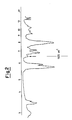
- Figure 1 reports the I.R. spectra of the polycarbonates obtained in Examples 1 and 3. These spectra show that with increasing reaction temperature, the bands of the carbonyl groups of TEIK ring at 1695 cm ⁇ 1 decrease, and the bands at 1535 cm ⁇ 1, due to the NH group contained in -O-CH2-CH2-NH- structure, increase.
- Example No. 4 5 6 Hexanediol (mol) 5 5 5 TEIK (mol) 1.6 1.6 1.6 DFC (mol) 6 5.48 5.29
- the tests are carried out at the constant temperature of 210°C for the first three hours (room pressure) and of 190°C during the following 105 minutes (pressure 5 torr). During the reaction phenol is recovered in a total amount of 98 ⁇ 0.5% of the theoretical value.
- Example 4 an amount of 1,162 g, in Example 5 an amount of 1,121 g and in Example 6 an amount of 1,117 g of hexanediol-TEIK-polycarbonate are obtained.
- the polycarbonate obtained in Example 6 (600 g; total OH meq 1,178.4), tetrahydrophthalic anhydride (179.4 g; total meq 1,178.4) and dimethylamino-pyridine (0.3%. by weight) are stirred for 5 hours at 160°C under nitrogen. At the end of this time, the number of acidity of the product was of 84 mg of KOH/g (theoretical value 84.7 mg of KOH/g).
- This product is diluted in xylene down to a content of 60% of solids, yielding a clear solution of light yellow colour having a viscosity of 380 cps at 25°C.
- Three formulations are prepared, which contain the following components, in parts by weight: - universal white paste 38 - polymeric base 40 - melamine resin M170 15 - isobutyl alcohol 1 - acetyl cellosolve 1 - Solvesso 100 2 - xylene 1 - TEGO-glide 410 solution (*) 1 - ASCININ P (*) 0.5 - BYK 065 (*) 0.5 (*) Additives for paints, suitable for favouring the spreadability of the same paints.
- the universal white paste is constituted by titanium dioxide (65 parts by weight), suspending agent (2 parts by weight) and ALFALAT 502 resin (25 parts by weight),
- This latter is a commercial alkydic soy resin at 60% of xylene, with 50% of triglyceride and 37% of phthalic anhydride; it has a number of acidity of 10 mg of KOH/g, and a hydroxy number of 10 meq/g.
- the polymeric base used in Examples 8, 9 and 10 is the following:
- the three formulations are spread in the form of a film of 60 ⁇ m of thickness on anhydrous steel.
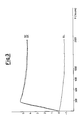
- the three formulations are dried by means of the following modalities: - 10 minutes at room temperature; - 10 minutes at 60°C - 10 minutes at 80°C - 20 minutes at 120°C - 10 minutes at 140°C.
Landscapes
- Chemical & Material Sciences (AREA)
- Organic Chemistry (AREA)
- Health & Medical Sciences (AREA)
- Materials Engineering (AREA)
- Wood Science & Technology (AREA)
- Engineering & Computer Science (AREA)
- Life Sciences & Earth Sciences (AREA)
- Chemical Kinetics & Catalysis (AREA)
- Medicinal Chemistry (AREA)
- Polymers & Plastics (AREA)
- Polyesters Or Polycarbonates (AREA)
- Organic Low-Molecular-Weight Compounds And Preparation Thereof (AREA)
- Paints Or Removers (AREA)
- Compositions Of Macromolecular Compounds (AREA)
- Polyurethanes Or Polyureas (AREA)
Applications Claiming Priority (2)
| Application Number | Priority Date | Filing Date | Title |
|---|---|---|---|
| IT2108088 | 1988-06-23 | ||
| IT21080/88A IT1217903B (it) | 1988-06-23 | 1988-06-23 | Policarbonati polioli e procedimento per la sua preparazione |
Publications (3)
| Publication Number | Publication Date |
|---|---|
| EP0347976A2 true EP0347976A2 (de) | 1989-12-27 |
| EP0347976A3 EP0347976A3 (en) | 1990-10-24 |
| EP0347976B1 EP0347976B1 (de) | 1995-01-18 |
Family
ID=11176445
Family Applications (1)
| Application Number | Title | Priority Date | Filing Date |
|---|---|---|---|
| EP89201531A Expired - Lifetime EP0347976B1 (de) | 1988-06-23 | 1989-06-14 | Polyol-Polycarbonate und Methode zu ihrer Herstellung |
Country Status (9)
| Country | Link |
|---|---|
| US (1) | US4990578A (de) |
| EP (1) | EP0347976B1 (de) |
| JP (1) | JP2694698B2 (de) |
| AT (1) | ATE117327T1 (de) |
| CA (1) | CA1334410C (de) |
| DE (1) | DE68920641T2 (de) |
| ES (1) | ES2067526T3 (de) |
| GR (1) | GR3015323T3 (de) |
| IT (1) | IT1217903B (de) |
Cited By (2)
| Publication number | Priority date | Publication date | Assignee | Title |
|---|---|---|---|---|
| EP0562577A1 (de) * | 1992-03-24 | 1993-09-29 | Nippon Paint Co., Ltd. | Polycarbonatpolyol und darauf basierende Beschichtungsmischung |
| US5952441A (en) * | 1997-12-30 | 1999-09-14 | Ppg Industries Ohio, Inc. | Partially polymerized mixture of diethylene glycol (allyl carbonate) compounds |
Families Citing this family (8)
| Publication number | Priority date | Publication date | Assignee | Title |
|---|---|---|---|---|
| JP3989028B2 (ja) * | 1993-08-10 | 2007-10-10 | 日本ペイント株式会社 | 水性塗料組成物およびそれを用いる塗装方法 |
| IT1283314B1 (it) * | 1996-03-28 | 1998-04-16 | Enichem Spa | Processo per la preparazione di policarbonati copolieteri polioli |
| IT1283315B1 (it) * | 1996-03-28 | 1998-04-16 | Enichem Spa | Processo a due stadi per la preparazione di policarbonati copolieteridioli. |
| IT1290857B1 (it) * | 1996-12-19 | 1998-12-14 | Enichem Spa | Processo per la preparazione di policarbonati copoliesteri dioli |
| JP2010504374A (ja) * | 2006-09-22 | 2010-02-12 | 関西ペイント株式会社 | 塗料組成物及び上塗り複層塗膜形成方法 |
| WO2011003898A1 (en) * | 2009-07-10 | 2011-01-13 | Basf Se | Toner resins for electronic copying purposes |
| JP6848186B2 (ja) * | 2016-02-25 | 2021-03-24 | 東ソー株式会社 | 塗料用ウレタン樹脂組成物 |
| JP6878941B2 (ja) * | 2017-02-15 | 2021-06-02 | 東ソー株式会社 | 活性エネルギー線硬化型樹脂組成物 |
Family Cites Families (4)
| Publication number | Priority date | Publication date | Assignee | Title |
|---|---|---|---|---|
| DE1694080B1 (de) * | 1966-10-13 | 1971-09-30 | Bayer Ag | Verfahren zur herstellung von vernetzten polyurethanen auf grundlage von hydroxylpolykohlensaeureestern |
| US3737432A (en) * | 1971-06-17 | 1973-06-05 | Pd George Co | Bridged isocyanurates |
| US4262119A (en) * | 1978-10-25 | 1981-04-14 | Olin Corporation | Tris-(polyalkoxylated), isocyanurates |
| US4476279A (en) * | 1983-12-01 | 1984-10-09 | Essex Group, Inc. | High solids THEIC polyester enamels |
-
1988
- 1988-06-23 IT IT21080/88A patent/IT1217903B/it active
-
1989
- 1989-06-14 DE DE68920641T patent/DE68920641T2/de not_active Expired - Fee Related
- 1989-06-14 AT AT89201531T patent/ATE117327T1/de not_active IP Right Cessation
- 1989-06-14 ES ES89201531T patent/ES2067526T3/es not_active Expired - Lifetime
- 1989-06-14 EP EP89201531A patent/EP0347976B1/de not_active Expired - Lifetime
- 1989-06-19 US US07/367,557 patent/US4990578A/en not_active Expired - Lifetime
- 1989-06-20 CA CA000603377A patent/CA1334410C/en not_active Expired - Fee Related
- 1989-06-23 JP JP1159835A patent/JP2694698B2/ja not_active Expired - Fee Related
-
1995
- 1995-03-07 GR GR950400501T patent/GR3015323T3/el unknown
Cited By (2)
| Publication number | Priority date | Publication date | Assignee | Title |
|---|---|---|---|---|
| EP0562577A1 (de) * | 1992-03-24 | 1993-09-29 | Nippon Paint Co., Ltd. | Polycarbonatpolyol und darauf basierende Beschichtungsmischung |
| US5952441A (en) * | 1997-12-30 | 1999-09-14 | Ppg Industries Ohio, Inc. | Partially polymerized mixture of diethylene glycol (allyl carbonate) compounds |
Also Published As
| Publication number | Publication date |
|---|---|
| IT1217903B (it) | 1990-03-30 |
| EP0347976A3 (en) | 1990-10-24 |
| JPH0245522A (ja) | 1990-02-15 |
| ATE117327T1 (de) | 1995-02-15 |
| ES2067526T3 (es) | 1995-04-01 |
| US4990578A (en) | 1991-02-05 |
| JP2694698B2 (ja) | 1997-12-24 |
| IT8821080A0 (it) | 1988-06-23 |
| GR3015323T3 (en) | 1995-06-30 |
| DE68920641D1 (de) | 1995-03-02 |
| DE68920641T2 (de) | 1995-06-22 |
| EP0347976B1 (de) | 1995-01-18 |
| CA1334410C (en) | 1995-02-14 |
Similar Documents
| Publication | Publication Date | Title |
|---|---|---|
| US4929667A (en) | Urethane prepolymer composition and a polyurethane coating composition system | |
| EP0419088B1 (de) | Flüssige Polymerzusammensetzungen | |
| US4419513A (en) | Isocyanato-isocyanurates, and process for the production thereof | |
| KR940008986B1 (ko) | 폴리이소시아네이트-이소시아누레이트 및 그의 제조방법, 이들의 용도 | |
| EP2150566B1 (de) | Leicht flüchtige beschichtungen, dichtungsmittel und binder aus erneuerbaren ölen | |
| US3346524A (en) | Gloss retaining urethane coating composition | |
| EP0347976B1 (de) | Polyol-Polycarbonate und Methode zu ihrer Herstellung | |
| EP2603566B1 (de) | Wärmehärtende beschichtungszusammensetzung | |
| KR20010030571A (ko) | 카르바메이트 작용성 화합물의 혼합물을 함유하는 경화성코팅 조성물 | |
| EP0364052B1 (de) | Copolyester-Diol-Polycarbonate, Verfahren zu ihrer Herstellung und deren Verwendung | |
| CA1298025C (en) | One-can thermosetting resin compositions | |
| CA1042457A (en) | Polyepoxide-caprolactone polyols and coatings based thereon | |
| US6329489B1 (en) | Process for producing reactive silane oligomers | |
| KR20020008058A (ko) | 3급 카르바메이트 결합을 갖는 히드록실 관능성 우레탄 | |
| WO1997013741A1 (en) | Low viscosity, high solids polyesterdiols and compositions containing same | |
| US6902820B2 (en) | High solid coating compositions | |
| US20020123644A1 (en) | Aliphatic triisocyanate compound, process for producing the same, and polyurethane resin made from the compound | |
| McCabe et al. | Synthesis of novel polyurethane polyesters using the enzyme Candida antarctica lipase B | |
| US3458459A (en) | Gloss retaining urethane coating compositions | |
| US3697480A (en) | Process for the manufacture of ester resins containing isocyanurate groups and imide groups | |
| EP0211625B1 (de) | Harzzusammensetzung für eine Deckschicht | |
| US4879356A (en) | Method of manufacturing single-component polyurethane baking enamels | |
| GB2080305A (en) | Carbocyclic Triisocyanates and Powder Coating Compositions Containing Polyisocyanates Derived therefrom | |
| US3547889A (en) | Coatings based on polycarbonates condensed with trifunctional isocyanates | |
| US7071286B2 (en) | Coating compositions with high solids content for vehicle coating |
Legal Events
| Date | Code | Title | Description |
|---|---|---|---|
| PUAI | Public reference made under article 153(3) epc to a published international application that has entered the european phase |
Free format text: ORIGINAL CODE: 0009012 |
|
| AK | Designated contracting states |
Kind code of ref document: A2 Designated state(s): AT BE CH DE ES FR GB GR LI LU NL SE |
|
| PUAL | Search report despatched |
Free format text: ORIGINAL CODE: 0009013 |
|
| AK | Designated contracting states |
Kind code of ref document: A3 Designated state(s): AT BE CH DE ES FR GB GR LI LU NL SE |
|
| 17P | Request for examination filed |
Effective date: 19910312 |
|
| 17Q | First examination report despatched |
Effective date: 19930730 |
|
| GRAA | (expected) grant |
Free format text: ORIGINAL CODE: 0009210 |
|
| AK | Designated contracting states |
Kind code of ref document: B1 Designated state(s): AT BE CH DE ES FR GB GR LI LU NL SE |
|
| REF | Corresponds to: |
Ref document number: 117327 Country of ref document: AT Date of ref document: 19950215 Kind code of ref document: T |
|
| REF | Corresponds to: |
Ref document number: 68920641 Country of ref document: DE Date of ref document: 19950302 |
|
| ET | Fr: translation filed | ||
| REG | Reference to a national code |
Ref country code: ES Ref legal event code: FG2A Ref document number: 2067526 Country of ref document: ES Kind code of ref document: T3 |
|
| REG | Reference to a national code |
Ref country code: GR Ref legal event code: FG4A Free format text: 3015323 |
|
| PLBE | No opposition filed within time limit |
Free format text: ORIGINAL CODE: 0009261 |
|
| STAA | Information on the status of an ep patent application or granted ep patent |
Free format text: STATUS: NO OPPOSITION FILED WITHIN TIME LIMIT |
|
| 26N | No opposition filed | ||
| PGFP | Annual fee paid to national office [announced via postgrant information from national office to epo] |
Ref country code: LU Payment date: 19960701 Year of fee payment: 8 |
|
| PG25 | Lapsed in a contracting state [announced via postgrant information from national office to epo] |
Ref country code: LU Free format text: LAPSE BECAUSE OF NON-PAYMENT OF DUE FEES Effective date: 19970614 |
|
| PGFP | Annual fee paid to national office [announced via postgrant information from national office to epo] |
Ref country code: SE Payment date: 19970618 Year of fee payment: 9 |
|
| PGFP | Annual fee paid to national office [announced via postgrant information from national office to epo] |
Ref country code: CH Payment date: 19970619 Year of fee payment: 9 |
|
| PGFP | Annual fee paid to national office [announced via postgrant information from national office to epo] |
Ref country code: ES Payment date: 19970624 Year of fee payment: 9 |
|
| PGFP | Annual fee paid to national office [announced via postgrant information from national office to epo] |
Ref country code: GR Payment date: 19970626 Year of fee payment: 9 |
|
| PG25 | Lapsed in a contracting state [announced via postgrant information from national office to epo] |
Ref country code: ES Free format text: LAPSE BECAUSE OF EXPIRATION OF PROTECTION Effective date: 19980615 Ref country code: SE Free format text: LAPSE BECAUSE OF NON-PAYMENT OF DUE FEES Effective date: 19980615 |
|
| PG25 | Lapsed in a contracting state [announced via postgrant information from national office to epo] |
Ref country code: LI Free format text: LAPSE BECAUSE OF NON-PAYMENT OF DUE FEES Effective date: 19980630 Ref country code: CH Free format text: LAPSE BECAUSE OF NON-PAYMENT OF DUE FEES Effective date: 19980630 Ref country code: GR Free format text: LAPSE BECAUSE OF NON-PAYMENT OF DUE FEES Effective date: 19980630 |
|
| REG | Reference to a national code |
Ref country code: CH Ref legal event code: PL |
|
| EUG | Se: european patent has lapsed |
Ref document number: 89201531.4 |
|
| REG | Reference to a national code |
Ref country code: ES Ref legal event code: FD2A Effective date: 20000201 |
|
| REG | Reference to a national code |
Ref country code: GB Ref legal event code: IF02 |
|
| PGFP | Annual fee paid to national office [announced via postgrant information from national office to epo] |
Ref country code: AT Payment date: 20070521 Year of fee payment: 19 |
|
| PGFP | Annual fee paid to national office [announced via postgrant information from national office to epo] |
Ref country code: NL Payment date: 20070624 Year of fee payment: 19 |
|
| PGFP | Annual fee paid to national office [announced via postgrant information from national office to epo] |
Ref country code: DE Payment date: 20070731 Year of fee payment: 19 |
|
| PGFP | Annual fee paid to national office [announced via postgrant information from national office to epo] |
Ref country code: GB Payment date: 20070628 Year of fee payment: 19 |
|
| PGFP | Annual fee paid to national office [announced via postgrant information from national office to epo] |
Ref country code: BE Payment date: 20070716 Year of fee payment: 19 |
|
| PGFP | Annual fee paid to national office [announced via postgrant information from national office to epo] |
Ref country code: FR Payment date: 20070618 Year of fee payment: 19 |
|
| BERE | Be: lapsed |
Owner name: *ENICHEM SYNTHESIS S.P.A. Effective date: 20080630 |
|
| GBPC | Gb: european patent ceased through non-payment of renewal fee |
Effective date: 20080614 |
|
| NLV4 | Nl: lapsed or anulled due to non-payment of the annual fee |
Effective date: 20090101 |
|
| PG25 | Lapsed in a contracting state [announced via postgrant information from national office to epo] |
Ref country code: BE Free format text: LAPSE BECAUSE OF NON-PAYMENT OF DUE FEES Effective date: 20080630 |
|
| REG | Reference to a national code |
Ref country code: FR Ref legal event code: ST Effective date: 20090228 |
|
| PG25 | Lapsed in a contracting state [announced via postgrant information from national office to epo] |
Ref country code: AT Free format text: LAPSE BECAUSE OF NON-PAYMENT OF DUE FEES Effective date: 20080614 Ref country code: DE Free format text: LAPSE BECAUSE OF NON-PAYMENT OF DUE FEES Effective date: 20090101 |
|
| PG25 | Lapsed in a contracting state [announced via postgrant information from national office to epo] |
Ref country code: NL Free format text: LAPSE BECAUSE OF NON-PAYMENT OF DUE FEES Effective date: 20090101 |
|
| PG25 | Lapsed in a contracting state [announced via postgrant information from national office to epo] |
Ref country code: GB Free format text: LAPSE BECAUSE OF NON-PAYMENT OF DUE FEES Effective date: 20080614 |
|
| PG25 | Lapsed in a contracting state [announced via postgrant information from national office to epo] |
Ref country code: FR Free format text: LAPSE BECAUSE OF NON-PAYMENT OF DUE FEES Effective date: 20080630 |