EP0336929B1 - Verfahren zur wasserklärung - Google Patents
Verfahren zur wasserklärung Download PDFInfo
- Publication number
- EP0336929B1 EP0336929B1 EP19870907456 EP87907456A EP0336929B1 EP 0336929 B1 EP0336929 B1 EP 0336929B1 EP 19870907456 EP19870907456 EP 19870907456 EP 87907456 A EP87907456 A EP 87907456A EP 0336929 B1 EP0336929 B1 EP 0336929B1
- Authority
- EP
- European Patent Office
- Prior art keywords
- starch
- nitrogen
- denitrification
- carried out
- acid
- Prior art date
- Legal status (The legal status is an assumption and is not a legal conclusion. Google has not performed a legal analysis and makes no representation as to the accuracy of the status listed.)
- Expired - Lifetime
Links
- 238000000746 purification Methods 0.000 title claims abstract description 19
- 238000000034 method Methods 0.000 title claims abstract description 14
- XLYOFNOQVPJJNP-UHFFFAOYSA-N water Substances O XLYOFNOQVPJJNP-UHFFFAOYSA-N 0.000 title claims abstract description 10
- 229920002472 Starch Polymers 0.000 claims abstract description 26
- 235000019698 starch Nutrition 0.000 claims abstract description 26
- 239000008107 starch Substances 0.000 claims abstract description 26
- 241000894006 Bacteria Species 0.000 claims abstract description 19
- 239000000758 substrate Substances 0.000 claims abstract description 13
- 229920000881 Modified starch Polymers 0.000 claims abstract description 8
- 239000004368 Modified starch Substances 0.000 claims abstract description 8
- 235000019426 modified starch Nutrition 0.000 claims abstract description 8
- 239000000463 material Substances 0.000 claims abstract description 6
- QJGQUHMNIGDVPM-UHFFFAOYSA-N nitrogen group Chemical group [N] QJGQUHMNIGDVPM-UHFFFAOYSA-N 0.000 claims abstract description 3
- IJGRMHOSHXDMSA-UHFFFAOYSA-N Atomic nitrogen Chemical compound N#N IJGRMHOSHXDMSA-UHFFFAOYSA-N 0.000 claims description 36
- 229910052757 nitrogen Inorganic materials 0.000 claims description 17
- 229910052799 carbon Inorganic materials 0.000 claims description 16
- OKTJSMMVPCPJKN-UHFFFAOYSA-N Carbon Chemical compound [C] OKTJSMMVPCPJKN-UHFFFAOYSA-N 0.000 claims description 14
- 238000005903 acid hydrolysis reaction Methods 0.000 claims description 6
- 230000004048 modification Effects 0.000 claims description 5
- 238000012986 modification Methods 0.000 claims description 5
- VEXZGXHMUGYJMC-UHFFFAOYSA-N Hydrochloric acid Chemical compound Cl VEXZGXHMUGYJMC-UHFFFAOYSA-N 0.000 claims description 4
- 102000013142 Amylases Human genes 0.000 claims description 2
- 108010065511 Amylases Proteins 0.000 claims description 2
- GRYLNZFGIOXLOG-UHFFFAOYSA-N Nitric acid Chemical compound O[N+]([O-])=O GRYLNZFGIOXLOG-UHFFFAOYSA-N 0.000 claims description 2
- QAOWNCQODCNURD-UHFFFAOYSA-N Sulfuric acid Chemical compound OS(O)(=O)=O QAOWNCQODCNURD-UHFFFAOYSA-N 0.000 claims description 2
- 229910017604 nitric acid Inorganic materials 0.000 claims description 2
- 239000000843 powder Substances 0.000 claims description 2
- 239000001117 sulphuric acid Substances 0.000 claims description 2
- 235000011149 sulphuric acid Nutrition 0.000 claims description 2
- 238000001704 evaporation Methods 0.000 claims 1
- 230000008020 evaporation Effects 0.000 claims 1
- 238000007790 scraping Methods 0.000 claims 1
- 239000010865 sewage Substances 0.000 description 15
- 229910002651 NO3 Inorganic materials 0.000 description 7
- NHNBFGGVMKEFGY-UHFFFAOYSA-N Nitrate Chemical compound [O-][N+]([O-])=O NHNBFGGVMKEFGY-UHFFFAOYSA-N 0.000 description 7
- OKKJLVBELUTLKV-UHFFFAOYSA-N Methanol Chemical compound OC OKKJLVBELUTLKV-UHFFFAOYSA-N 0.000 description 6
- 239000010802 sludge Substances 0.000 description 6
- 239000000126 substance Substances 0.000 description 5
- 230000009467 reduction Effects 0.000 description 4
- 238000002474 experimental method Methods 0.000 description 3
- CSCPPACGZOOCGX-UHFFFAOYSA-N Acetone Chemical compound CC(C)=O CSCPPACGZOOCGX-UHFFFAOYSA-N 0.000 description 2
- QGZKDVFQNNGYKY-UHFFFAOYSA-O Ammonium Chemical compound [NH4+] QGZKDVFQNNGYKY-UHFFFAOYSA-O 0.000 description 2
- OAICVXFJPJFONN-UHFFFAOYSA-N Phosphorus Chemical compound [P] OAICVXFJPJFONN-UHFFFAOYSA-N 0.000 description 2
- 230000001580 bacterial effect Effects 0.000 description 2
- 238000006243 chemical reaction Methods 0.000 description 2
- 229910001873 dinitrogen Inorganic materials 0.000 description 2
- 230000000694 effects Effects 0.000 description 2
- 230000007613 environmental effect Effects 0.000 description 2
- 239000012535 impurity Substances 0.000 description 2
- 229910052698 phosphorus Inorganic materials 0.000 description 2
- 239000011574 phosphorus Substances 0.000 description 2
- 238000001556 precipitation Methods 0.000 description 2
- 239000008213 purified water Substances 0.000 description 2
- 239000007787 solid Substances 0.000 description 2
- 239000004382 Amylase Substances 0.000 description 1
- LSNNMFCWUKXFEE-UHFFFAOYSA-M Bisulfite Chemical compound OS([O-])=O LSNNMFCWUKXFEE-UHFFFAOYSA-M 0.000 description 1
- 101100476962 Drosophila melanogaster Sirup gene Proteins 0.000 description 1
- 102000004190 Enzymes Human genes 0.000 description 1
- 108090000790 Enzymes Proteins 0.000 description 1
- WQZGKKKJIJFFOK-GASJEMHNSA-N Glucose Natural products OC[C@H]1OC(O)[C@H](O)[C@@H](O)[C@@H]1O WQZGKKKJIJFFOK-GASJEMHNSA-N 0.000 description 1
- IOVCWXUNBOPUCH-UHFFFAOYSA-M Nitrite anion Chemical compound [O-]N=O IOVCWXUNBOPUCH-UHFFFAOYSA-M 0.000 description 1
- 239000002253 acid Substances 0.000 description 1
- 150000007513 acids Chemical class 0.000 description 1
- 230000009471 action Effects 0.000 description 1
- GZCGUPFRVQAUEE-SLPGGIOYSA-N aldehydo-D-glucose Chemical compound OC[C@@H](O)[C@@H](O)[C@H](O)[C@@H](O)C=O GZCGUPFRVQAUEE-SLPGGIOYSA-N 0.000 description 1
- 235000019418 amylase Nutrition 0.000 description 1
- QVGXLLKOCUKJST-UHFFFAOYSA-N atomic oxygen Chemical compound [O] QVGXLLKOCUKJST-UHFFFAOYSA-N 0.000 description 1
- 230000000721 bacterilogical effect Effects 0.000 description 1
- 239000003575 carbonaceous material Substances 0.000 description 1
- 238000005660 chlorination reaction Methods 0.000 description 1
- 230000001419 dependent effect Effects 0.000 description 1
- 230000009144 enzymatic modification Effects 0.000 description 1
- 238000001914 filtration Methods 0.000 description 1
- 239000008103 glucose Substances 0.000 description 1
- 239000008187 granular material Substances 0.000 description 1
- 238000000227 grinding Methods 0.000 description 1
- 239000007788 liquid Substances 0.000 description 1
- 238000004519 manufacturing process Methods 0.000 description 1
- 244000005700 microbiome Species 0.000 description 1
- 229910052760 oxygen Inorganic materials 0.000 description 1
- 239000001301 oxygen Substances 0.000 description 1
- 229920001592 potato starch Polymers 0.000 description 1
- 229940116317 potato starch Drugs 0.000 description 1
- 238000002203 pretreatment Methods 0.000 description 1
- 230000001737 promoting effect Effects 0.000 description 1
- 238000012216 screening Methods 0.000 description 1
- 238000004062 sedimentation Methods 0.000 description 1
- 239000011343 solid material Substances 0.000 description 1
- 230000007480 spreading Effects 0.000 description 1
- 238000004659 sterilization and disinfection Methods 0.000 description 1
- 238000003756 stirring Methods 0.000 description 1
- 235000020357 syrup Nutrition 0.000 description 1
- 231100000331 toxic Toxicity 0.000 description 1
- 230000002588 toxic effect Effects 0.000 description 1
- 239000003643 water by type Substances 0.000 description 1
Images
Classifications
-
- C—CHEMISTRY; METALLURGY
- C02—TREATMENT OF WATER, WASTE WATER, SEWAGE, OR SLUDGE
- C02F—TREATMENT OF WATER, WASTE WATER, SEWAGE, OR SLUDGE
- C02F3/00—Biological treatment of water, waste water, or sewage
- C02F3/30—Aerobic and anaerobic processes
- C02F3/302—Nitrification and denitrification treatment
-
- C—CHEMISTRY; METALLURGY
- C02—TREATMENT OF WATER, WASTE WATER, SEWAGE, OR SLUDGE
- C02F—TREATMENT OF WATER, WASTE WATER, SEWAGE, OR SLUDGE
- C02F3/00—Biological treatment of water, waste water, or sewage
- C02F3/28—Anaerobic digestion processes
-
- C—CHEMISTRY; METALLURGY
- C02—TREATMENT OF WATER, WASTE WATER, SEWAGE, OR SLUDGE
- C02F—TREATMENT OF WATER, WASTE WATER, SEWAGE, OR SLUDGE
- C02F3/00—Biological treatment of water, waste water, or sewage
- C02F3/34—Biological treatment of water, waste water, or sewage characterised by the microorganisms used
Definitions
- the present invention relates to a method for water purification with removal of dissolved nitrogen by denitrification.
- Present-day sewage treatment plants are designed in different ways, depending on the required type and degree of purification. Many include a mechanical, a biological and a chemical purification step.
- the mechanical step solid impurities are removed by pre-treatment in the form of e.g. screening and filtration and subsequent sedimentation.
- the biological step the mechanically purified sewage is subjected to the action of microorganisms in an aerobic and, optionally, anaerobic environment.
- the chemical step comprises precipitation reactions for removing e.g. material containing phosphorus, and disinfection by, for example, chlorination.
- the undesirable, removed material is settled and conducted as sludge to the subsequent sludge treatment step.
- the reduction of nitrogen is carried out in the biological step of the sewage treatment plant.
- the sewage initially contains large amounts of bacteria, such as nitrification bacteria and denitrification bacteria.
- bacteria such as nitrification bacteria and denitrification bacteria.
- nitrification bacteria In the aerobic zone of the biological purification step, appropriate conditions promoting the effect of the nitrification bacteria are maintained.
- These bacteria convert nitrogen in the form of ammonium into nitrogen in the form of nitrate via an intermediate form of nitrite.
- the denitrification bacteria are allowed to act on the sewage in an anaerobic zone, the nitrogen in the form of nitrate being converted into nitrogen gas which can then readily be discharged into the atmosphere.
- the denitrification step is strongly dependent on carbon as a substrate source for the denitrification bacteria.
- a problem in this context is that the amount of carbonaceous material in the sewage is inadequate to denitrify nitrogen in the form of nitrate to a sufficient extent. This means that an external carbon source must be added as a substrate for the denitrification bacteria.
- carbon sources such as methanol, acetone etc., which, however, have turned out to be far too expensive and toxic and too slowly biodegradable to be really useful. It would therefore be valuable if one could find a cheap, innocuous and easily accessible and biologically degradable product to be used as a carbonaceous substrate, instead of the expensive synthetic substrates.
- a major problem in a completely different field is the difficulty in finding a profitable market for the starch from the present surplus production in the starch industry. It would therefore be highly convenient if the surplus starch could be used as a carbonaceous substrate for the denitrification bacteria so as to reduce the nitrogen content of the sewage in a biological purification step. Experiments with native starch have proved, however, that it is not sufficiently accessible as a carbon source for denitrification bacteria.
- modified starch i.e. starch having a structure different from that of native starch
- modified starch has proved to be eminently suitable as a carbonaceous substrate for denitrification bacteria since it has a high bacteriological accessibility and is innocuous from the environmental point of view, and also inexpensive and easily available.
- a method for water purification with removal of nitrogen-containing material by denitrification is provided, which is characterised in that native starch is modified, and the modified starch is added in an amount giving a weight ratio of carbon to nitrogen of at least 1.3: 1 as a carbonaceous substrate for denitrification bacteria, to an anaerobic zone in a biological purification step.
- the native starch is modified chemically, physically, or enzymatically, or by a combination of these techniques.
- the native starch is modified chemically by acid hydrolysis.
- Acids preferred are hydrochloric acid, sulphuric acid, nitric acid etc.
- the acid hydrolysis is carried out at a temperature of 100-170°C, at a pressure of 1-50 bars, and at pH 0-6.
- the acid hydrolysis is carried out at a temperature of 130-150°C, at a pressure of 25-35 bars, and at pH 1-2.
- the physical modification of the starch preferably consists of pre-pasting of native starch, but also other types of physical modification, such as mechanical grinding of starch so as to split the starch granules, are possible.
- Pre-pasting of starch is a well-known treatment of starch and need not be described in detail.
- One example is the treatment of native starch in the presence of water at a temperature of 50-200°C for 0-60 min. at a pressure of 1-10 bars.
- a pre-pasting technique which is preferred according to the invention, implies that pre-pasting is carried out on a hot roller cylinder, whereupon that pre-pasted starch is evaporated and subsequently scraped from the roller cylinder.
- the native starch is treated with enzyme, preferably amylase and/or amyloglycosidase, the carbon chains of the starch being cut open.
- enzyme preferably amylase and/or amyloglycosidase
- the modified starch is supplied to the anaerobic zone in the biological purification step.
- the modified starch must be added in a sufficient amount to serve as a substrate for the denitrification bacteria.
- the content of residual nitrate is measured by routine technique. An amount corresponding to a weight ratio of carbon to nitrogen of at least 1.3: 1 should be added.
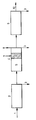
- the Figure is a schematic illustration of a sewage treatment plant which comprises a mechanical, a biological and a chemical purification step.
- untreated sewage 1 is introduced into a mechanical purification step 2.
- Solid impurities are here separated and removed as sludge 3.
- the mechanically purified water is subsequently introduced into a biological purification step 4.
- the water is first supplied to an aerobic zone 5 where nitrification bacteria convert nitrogen in the form of ammonium into nitrogen in the form of nitrate.
- the nitrate-containin sewage is supplied to an anaerobic zone 6 to which modified starch in the form of a powder, a sludge or a solution is added as a carbonaceous substrate.
- denitrification bacteria convert nitrogen in the form of nitrate into nitrogen gas 8 which is vented to atmosphere.
- Any undesirable solid material is removed as sludge 3. Then the sewage is conveyed to a chemical purification step 9 in which e.g phosphorus is removed by precipitation reactions. Any undesirable material is removed in the form of sludge 3, while purified water 10 is discharged from the chemical purification step.
- a chemical purification step 9 in which e.g phosphorus is removed by precipitation reactions. Any undesirable material is removed in the form of sludge 3, while purified water 10 is discharged from the chemical purification step.
- Lygel F 60 a modified cold-water-soluble form of starch, functions as satisfactorily as sugar with regard to the bacterial accessibility.
- Glucose, starch sirup has as high bacterial accessibility as methanol which is a common carbon source in various denitrification experiments.
- a carbon source of potato-starch (native starch) did not function.
Landscapes
- Life Sciences & Earth Sciences (AREA)
- Microbiology (AREA)
- Water Supply & Treatment (AREA)
- Hydrology & Water Resources (AREA)
- Engineering & Computer Science (AREA)
- Environmental & Geological Engineering (AREA)
- Biodiversity & Conservation Biology (AREA)
- Chemical & Material Sciences (AREA)
- Organic Chemistry (AREA)
- Purification Treatments By Anaerobic Or Anaerobic And Aerobic Bacteria Or Animals (AREA)
- Catalysts (AREA)
- Treatment Of Water By Oxidation Or Reduction (AREA)
- Treating Waste Gases (AREA)
Claims (5)
Applications Claiming Priority (2)
| Application Number | Priority Date | Filing Date | Title |
|---|---|---|---|
| SE8604710 | 1986-11-04 | ||
| SE8604710A SE457722B (sv) | 1986-11-04 | 1986-11-04 | Foerfarande vid vattenrening med avlaegsnande av kvaevehaltigt material genom denitrifikation |
Publications (2)
| Publication Number | Publication Date |
|---|---|
| EP0336929A1 EP0336929A1 (de) | 1989-10-18 |
| EP0336929B1 true EP0336929B1 (de) | 1991-08-21 |
Family
ID=20366185
Family Applications (1)
| Application Number | Title | Priority Date | Filing Date |
|---|---|---|---|
| EP19870907456 Expired - Lifetime EP0336929B1 (de) | 1986-11-04 | 1987-11-04 | Verfahren zur wasserklärung |
Country Status (6)
| Country | Link |
|---|---|
| EP (1) | EP0336929B1 (de) |
| DE (1) | DE3772395D1 (de) |
| DK (1) | DK167756B1 (de) |
| NO (1) | NO168761C (de) |
| SE (1) | SE457722B (de) |
| WO (1) | WO1988003515A1 (de) |
Families Citing this family (2)
| Publication number | Priority date | Publication date | Assignee | Title |
|---|---|---|---|---|
| US8318008B1 (en) | 2008-08-15 | 2012-11-27 | SepticNet, Inc. | Modular individual wastewater nutrient removal system |
| CN111995182A (zh) * | 2020-08-12 | 2020-11-27 | 中车环境科技有限公司 | 一种马铃薯淀粉废水作为污水厂补给碳源的资源化处理系统及方法 |
Family Cites Families (1)
| Publication number | Priority date | Publication date | Assignee | Title |
|---|---|---|---|---|
| DK129511B (da) * | 1971-01-26 | 1974-10-21 | P Harremoes | Fremgangsmåde til denitrifikation af nitratholdigt vand. |
-
1986
- 1986-11-04 SE SE8604710A patent/SE457722B/sv not_active IP Right Cessation
-
1987
- 1987-11-04 DE DE8787907456T patent/DE3772395D1/de not_active Expired - Fee Related
- 1987-11-04 WO PCT/SE1987/000516 patent/WO1988003515A1/en not_active Ceased
- 1987-11-04 EP EP19870907456 patent/EP0336929B1/de not_active Expired - Lifetime
-
1988
- 1988-06-10 DK DK320088A patent/DK167756B1/da not_active IP Right Cessation
- 1988-06-21 NO NO882727A patent/NO168761C/no unknown
Non-Patent Citations (1)
| Title |
|---|
| Chemical Abstract, Vol 94 (1981), abstract No 94:126802x "Potential for Brewery wastes as an alternative to methanol for denitrification in Hong Kong" Everest, William R; Lake, Charles W; Crafts Colleen M (USA). Argonne Natl Lab Energy Environ Syst Div, (Tech Rep), ANL/EES-TM 1980, ANL/EES-TM-96, Vol 1, Proc US Dep. Energy. Energy Optim Water Wastewater Manage Munic Ind Appl Conf 1979, 273-81 (Eng) * |
Also Published As
| Publication number | Publication date |
|---|---|
| DK320088A (da) | 1988-07-01 |
| DK167756B1 (da) | 1993-12-13 |
| NO882727D0 (no) | 1988-06-21 |
| DE3772395D1 (de) | 1991-09-26 |
| SE457722B (sv) | 1989-01-23 |
| NO168761C (no) | 1992-04-01 |
| SE8604710D0 (sv) | 1986-11-04 |
| DK320088D0 (da) | 1988-06-10 |
| NO882727L (no) | 1988-06-21 |
| EP0336929A1 (de) | 1989-10-18 |
| WO1988003515A1 (en) | 1988-05-19 |
| NO168761B (no) | 1991-12-23 |
| SE8604710L (sv) | 1988-05-05 |
Similar Documents
| Publication | Publication Date | Title |
|---|---|---|
| Koster et al. | The influence of ammonium-nitrogen on the specific activity of pelletized methanogenic sludge | |
| Hulshoff Pol et al. | Granulation in UASB-reactors | |
| US3939068A (en) | Process for treating waste water containing cellulose nitrate particles | |
| WO1993023349A1 (en) | Method for processing a liquid nitrogen rich organic waste product, thereby obtained fertilizer solution and use thereof | |
| CN1653003A (zh) | 包含氧化预处理的除去废水中有机硫的方法 | |
| Altinbas et al. | Ammonia recovery from high strength agro industry effluents | |
| US6602417B1 (en) | Process for the treatment of waste water containing specific components e.g. ammonia | |
| Siller et al. | Degradation of cyanide in agroindustrial or industrial wastewater in an acidification reactor or in a single-step methane reactor by bacteria enriched from soil and peels of cassava | |
| US5397473A (en) | Biological treatment method for water | |
| Willers et al. | Nitrification limitation in animal slurries at high temperatures | |
| JP3400292B2 (ja) | 廃棄物処理方法 | |
| EP0336929B1 (de) | Verfahren zur wasserklärung | |
| US1751459A (en) | Process for biological purification of waste water | |
| CA1117042A (en) | High nitrogen and phosphorous content biomass produced by treatment of a bod containing material | |
| CA2225485C (en) | Microbiological degradation of alkylene amine acetates | |
| US3634231A (en) | Treatment of sewage digester supernatant liquor | |
| GB2121398A (en) | Process for treating industrial wastewaters by avtivated sludge | |
| US4950407A (en) | Method for the treatment of sewage | |
| EP1535883A1 (de) | Verfahren zur Behandlung von Abwasser mittels Urease-Enzyme enthaltendes Material | |
| Bode | Anaerobic-aerobic treatment of industrial wastewater | |
| Burke | Pilot plant operation of the AGF (Anoxic Gas Flotation) stabilization process at potato processing facilities | |
| JPS5932200B2 (ja) | ペクチン質を含む廃水の処理方法 | |
| JPH08141591A (ja) | 有機性排水の処理方法 | |
| SU1198023A1 (ru) | Способ двухступенчатой биологической очистки высоконцентрированных сточных вод | |
| SU835972A1 (ru) | Способ биохимической очисткиСТОчНыХ ВОд OT СульфАТОВ |
Legal Events
| Date | Code | Title | Description |
|---|---|---|---|
| PUAI | Public reference made under article 153(3) epc to a published international application that has entered the european phase |
Free format text: ORIGINAL CODE: 0009012 |
|
| 17P | Request for examination filed |
Effective date: 19890424 |
|
| AK | Designated contracting states |
Kind code of ref document: A1 Designated state(s): DE FR GB NL |
|
| 17Q | First examination report despatched |
Effective date: 19901115 |
|
| GRAA | (expected) grant |
Free format text: ORIGINAL CODE: 0009210 |
|
| AK | Designated contracting states |
Kind code of ref document: B1 Designated state(s): DE FR GB NL |
|
| REF | Corresponds to: |
Ref document number: 3772395 Country of ref document: DE Date of ref document: 19910926 |
|
| ET | Fr: translation filed | ||
| PLBE | No opposition filed within time limit |
Free format text: ORIGINAL CODE: 0009261 |
|
| STAA | Information on the status of an ep patent application or granted ep patent |
Free format text: STATUS: NO OPPOSITION FILED WITHIN TIME LIMIT |
|
| 26N | No opposition filed | ||
| PGFP | Annual fee paid to national office [announced via postgrant information from national office to epo] |
Ref country code: GB Payment date: 19941014 Year of fee payment: 8 |
|
| PGFP | Annual fee paid to national office [announced via postgrant information from national office to epo] |
Ref country code: DE Payment date: 19941123 Year of fee payment: 8 |
|
| PGFP | Annual fee paid to national office [announced via postgrant information from national office to epo] |
Ref country code: FR Payment date: 19941124 Year of fee payment: 8 |
|
| PGFP | Annual fee paid to national office [announced via postgrant information from national office to epo] |
Ref country code: NL Payment date: 19941130 Year of fee payment: 8 |
|
| PG25 | Lapsed in a contracting state [announced via postgrant information from national office to epo] |
Ref country code: GB Effective date: 19951104 |
|
| PG25 | Lapsed in a contracting state [announced via postgrant information from national office to epo] |
Ref country code: NL Effective date: 19960601 |
|
| GBPC | Gb: european patent ceased through non-payment of renewal fee |
Effective date: 19951104 |
|
| PG25 | Lapsed in a contracting state [announced via postgrant information from national office to epo] |
Ref country code: FR Effective date: 19960731 |
|
| NLV4 | Nl: lapsed or anulled due to non-payment of the annual fee |
Effective date: 19960601 |
|
| PG25 | Lapsed in a contracting state [announced via postgrant information from national office to epo] |
Ref country code: DE Effective date: 19960801 |
|
| REG | Reference to a national code |
Ref country code: FR Ref legal event code: ST |