EP0334673B1 - Cholesterolvermindernde Wirkstoffe - Google Patents
Cholesterolvermindernde Wirkstoffe Download PDFInfo
- Publication number
- EP0334673B1 EP0334673B1 EP89302969A EP89302969A EP0334673B1 EP 0334673 B1 EP0334673 B1 EP 0334673B1 EP 89302969 A EP89302969 A EP 89302969A EP 89302969 A EP89302969 A EP 89302969A EP 0334673 B1 EP0334673 B1 EP 0334673B1
- Authority
- EP
- European Patent Office
- Prior art keywords
- cholesterol
- anion
- formula
- group
- exchange resin
- Prior art date
- Legal status (The legal status is an assumption and is not a legal conclusion. Google has not performed a legal analysis and makes no representation as to the accuracy of the status listed.)
- Expired - Lifetime
Links
Classifications
-
- A—HUMAN NECESSITIES
- A61—MEDICAL OR VETERINARY SCIENCE; HYGIENE
- A61K—PREPARATIONS FOR MEDICAL, DENTAL OR TOILETRY PURPOSES
- A61K31/00—Medicinal preparations containing organic active ingredients
- A61K31/13—Amines
- A61K31/14—Quaternary ammonium compounds, e.g. edrophonium, choline
-
- A—HUMAN NECESSITIES
- A61—MEDICAL OR VETERINARY SCIENCE; HYGIENE
- A61K—PREPARATIONS FOR MEDICAL, DENTAL OR TOILETRY PURPOSES
- A61K31/00—Medicinal preparations containing organic active ingredients
- A61K31/74—Synthetic polymeric materials
- A61K31/785—Polymers containing nitrogen
Definitions
- the present invention relates to cholesterol-lowering agents. More particularly, it is concerned with cholesterol-lowering agents containing an anion-exchange resin as an active component.
- anion-exchange resins possess a serum cholesterol-lowering activity. Mechanism of the action is believed to lie in binding the anion-exchange resin with bile acids in the intestinal tract which in turn inhibits resorption of the bile acids and consequently promotes conversion of cholesterol existing in the liver in equilibrium with bile acids to bile acids thereby reducing serum cholesterol.
- anion-exchange resins developed for removing bile acids in the intestinal tract by such binding are those disclosed in British Patent No. 929391, Japanese Patent Publication No. 54457/1986, Japanese Patent Laid-open to Public Nos. 150017/1981 and 142920/1982, etc. Typical of them is, for example, cholestyramine which is an amino resin (British Patent No. 929,391).
- these resins have a large ion-exchanging capacity, they are not necessarily capable of selectively binding bile acids when acid substances are present in addition to bile acids in the intestinal tract.
- acid substances such as acidic proteins, amino acids and organic acids which bind with anion-exchange resin as a pair ion.
- the amount of binding with bile acids is not necessarily large. It is therefore required that composition of the resin is designed so as to bind bile acids more selectively than binding other co-existing acid substances. Cholestyramine cannot necessarily be said to be satisfactory in percent inhibition of increase of serum total cholesterol.
- the invention provides cholesterol-lowering agents comprising as an effective component anion-exchange resin composed of the monomer units respectively represented by the below-given structural formulas (I), (II), (III) and (IV) in a content of 60-95 molar % of the monomer unit (I), 0-25 molar % of the monomer unit (II), 0-30 molar % of the monomer unit (III) and 1-6 molar % of the monomer unit (IV).
- R1, R2 and R3 which may be the same or different respectively are hydrogen atom, a lower alkyl group or benzyl group
- R4 is hydrogen atom, a lower alkyl group or hydroxymethyl group
- X is a halogen atom.
- the lower alkyl as used in the invention is an alkyl group containing 1-4 carbon atoms such as methyl group, ethyl group and propyl groups.
- the halogen atom is chlorine atom, bromine atom, iodine atom.
- the anion-exchange resin according to the invention is preferably an entirely porous anion-exchange resin which contains as ion-exchange group 70 equivalent % or more of dimethylbenzylammonium group, has a total ion-exchange capacity of 1 milliequivalent/g on dry basis or higher, possesses a bridged polymer matrix composed as main monomer unit of styrene and divinylbenzene and is of an expulsion critical molecular weight in the range of 800 to 20000 in terms of polyethylene oxide in swelling in aqueous solution.
- the anion-exchange resin according to the invention is disclosed in U.S. patent No. 4,055,429 as a development inhibitor scavenger in a photographic element and can be prepared by various methods.
- An example of the usually employed method is as follows: Styrene and divinylbenzene monomers in solution in the presence of an oil-soluble radical polymerization initiator is subjected to copolymerization in oil-in-water system, subsequently unreacted monomers and impurities are removed by washing, the residual mass is mixed with chloromethyl ether, and the mixture is subjected to chloromethylation using a Friedel-Crafts catalyst and then aminated by contact with dimethylbenzylamine.
- chloromethylstyrene and divinylbenzene monomers are copolymerized in the same manner as above, unreacted monomers and others are washed off and then the residual mass is contacted with dimethylbenzylamine.
- the monomers used in these methods may not necessarily be in high purity, especially so with divinylbenzene, purity of which is 55 wt% for general industrial use with approximately 45 wt% of ethylvinylbenzene contained and which is a favorable monomer provided that it is employed within a limit not exceeding 30 wt% of the entire monomers.
- vinyltoluene and the like may be used as a vinyl monomer of this nature.
- chloromethylstyrene units may remain unreacted depending upon reaction conditions and nature of the tertiary amine in the reaction of a copolymer composed of monomer units such as chloromethylstyrene and divinylbenzene and a tertiary amine to form a quaternary ammonium group in the above preparative method.
- the units produce no adverse influence upon cholesterol-lowering activity if the amount is not more than 15 molar % of the composing monomer units.
- Part of the chloromethyl group will also be hydrolyzed to form hydroxymethyl unit by-product if the amination reaction is conducted under basic conditions in the presence of water.
- the by-product however, produces no adverse influence upon cholesterol-lowering activity provided that it is not more than 10 molar % of the entire composing monomer units.
- the anion-exchange resin according to the invention may contain in the anion-exchange resin according to the invention the chloromethylstyrene monomer as an unreacted material in the amination and/or the hydroxymethylstyrene unit as a by-product.
- anion-exchange resins with different particle sizes by the method above mentioned. But, in using the anion-exchange resin as a cholesterol-lowering agent, appropriate particle size is 8-400 ⁇ m.
- the anion-exchange resin in using the anion-exchange resin as a cholesterol-lowering agent it is formulated in solid pharmaceutical preparations for oral administration dispersed in conventional carriers and diluents such as tablets, powders, granules and capsules.
- the anion-exchange resin may also be added to drinkable liquors such as fruit juice and other drinks. They are prepared by a conventional pharmaceutical technique.
- excipients such as lactose, glucose, crystalline cellulose, mannitol, corn starch and sugar
- binding agents such as hydroxypropylcellulose, hydroxypropylmethylcellulose, carboxymethylcellulose, polyvinyl alcohol, gelatin and gum arabic
- wetting agents such as glycerin and ethylene glycol
- disintegrating agents such as corn starch, potato starch, calcium carboxymethylcellulose and low-degree substituted hydroxypropylcellulose
- lubricants such as calcium stearate, magnesium stearate, talc, polyethylene glycol and hardened oil.
- additives such as surfactants, coloring agents and taste-improving agents may be employed, as required.
- the anion-exchange resin according to the invention is orally administered in adults at a daily dose of 0.6-15 g in one to several divided doses.
- the dosage may appropriately be increased or decreased depending upon age, bodyweight and conditions of patients.
- the anion-exchange resin according to the invention has a very low toxicity to mammals including man which is generally at a level lower than 10 g/kg bodyweight in rats for acute toxicity (LD50) by oral route.
- a mixture of 50 parts by weight of styrene, 3.5 parts by weight of divinylbenzene of 55% purity and 0.5 parts by weight of benzoyl peroxide was prepared in solution and was poured into 150 parts by weight of a 2% by weight aqueous solution of polyvinyl alcohol. The resulting mixture was reacted with vigorous stirring for 20 hours while heating to 80°C. There were produced globular particles of a bridged polymer with particle sizes of 150 ⁇ m or smaller. The particles were thoroughly washed on a glass filter with pure water and acetone to remove the polyvinyl alcohol, unreacted monomers and impurities and dried under reduced pressure.
- the anion-exchange resin thus obtained contained 80.7 molar % of a monomer unit of the formula (I), 0 molar % of a monomer unit of the formula (II), 2.3 molar % of a monomer unit of the formula (III), 2.8 molar % of a monomer unit of the formula (IV), and additionally 9.6 molar % of unreacted chloromethylstyrene unit and 4.6 molar % of hydroxymethylstyrene unit.
- a mixture of 148 parts by weight of chloromethylstyrene, 5.5 parts by weight of divinylbenzene of 55% purity and 5.0 parts by weight of 2,2′-azobisisobutylnitrile was prepared in solution and was poured into 370 parts by weight of 5% by weight aqueous solution of polyvinyl alcohol. The resulting mixture was reacted with vigorous stirring for 10 hours while heating to 80°C. There were obtained globular particles of a bridged polymer with particle sizes of 60 ⁇ m or smaller. The particles were thoroughly washed on a glass filter with pure water and acetone to remove the polyvinyl alcohol.
- the anion-exchange resin obtained contained 78.8 molar % of a monomer unit of the formula (I), 11.9 molar % of a monomer unit of the formula (II), 2.0 molar % of a monomer unit of the formula (III), 2.4 molar % of a monomer unit of the formula (IV), and additionally 1.6 molar % of unreacted chloromethylstyrene unit and 3.6 molar % of hydroxymethylstyrene unit.
- a mixture of 370 parts by weight of chloromethylstyrene, 16 parts by weight of divinylbenzene of 55% purity and 13 parts by weight of 2,2′-azobis-2,4-dimethylvaleronitrile was prepared in solution and poured into 1100 parts by weight of 4% by weight aqueous solution of polyvinyl alcohol. The resulting mixture was reacted with vigorous stirring for 16 hours while heating to 55°C. There were obtained globular particles of a bridged polymer with particle sizes of 70 ⁇ m or smaller.
- the particles were thoroughly washed on a glass filter with pure water to remove the polyvinyl alcohol Then, 250 parts by weight of the bridged polymer globular particles obtained (suction dry cake on the glass filter), 3200 parts by weight of pure water and 146 parts by weight of N,N-dimethylbenzylamine were mixed, and the mixture was reacted at 25°C for 16 hours followed by addition of 70 parts by weight of 30% aqueous solution of trimethylamine. The mixture was reacted at 25°C for 4 hours, and the reaction product was washed successively with 0.1N hydrochloric acid, acetone and pure water and dried. There was obtained an anion-exchange resin of the invention.
- the anion-exchange resin thus obtained contained 85.0 molar % of a monomer unit of the formula (I), 7.9 molar % of a monomer unit of the formula (II), 2.3 molar % of a monomer unit of the formula (III), 2.8 molar % of a monomer of the formula (IV) and additionally 0.4 molar % of unreacted chloromethylstyrene unit and 2.8 molar % of hydroxymethylstyrene unit.
- One thousand and two hundred grams of the resin produced in Preparative Example 2 300 g of mannitol and 450 g of corn starch were blended to a uniform powdery blend. The blend was granulated with 50 g of hydroxypropylcellulose as a binding agent by the wet granulation method.
- the anion-exchange resin according to the invention is effective in treating hypercholesteremia in mammalian animals including a man caused by various factors and can be used as an agent for treating the disease. Furthermore, it exerts much better inhibition of the increase in serum total cholesterol as compared with known agents for treating hypercholesteremia. Moreover, it specifically inhibits low-density blood lipoprotein which causes atherosclerosis.
- the anion-exchange resin according to the invention exerted a marked cholesterol-lowering action by oral administration in the disease model experimentally produced by cholesterol loading.
- Results are shown in Table 2 and Table 3.
- Table 2 Action in hypercholesteremic rabbits Group Serum total cholesterol (mg/dl) Week 0 Week 1 Week 2 Normal feed group 30.3 ⁇ 2.1 31.0 ⁇ 6.9* 35.8 ⁇ 4.5** High-cholesterol group 37.5 ⁇ 4.4 632.3 ⁇ 105.6 1020.3 ⁇ 100.3 Present invention group 4 29.0 ⁇ 5.5 407.2 ⁇ 168.6 (37.4) 705.0 ⁇ 75.6* (32.0) Present invention group 5 34.0 ⁇ 4.7 333.5 ⁇ 62.1* (49.7) 495.0 ⁇ 83.9** (53.4) Present invention group 6 42.2 ⁇ 7.6 478.3 ⁇ 69.8 (25.6) 725.9 ⁇ 70.3* (29.9) Control group 31.3 ⁇ 4.2 571.0 ⁇ 98.3 (10.2) 986.3 ⁇ 114.5 (3.5) In the parentheses is given percent inhibition of the increase. * P ⁇ 0.05 (Significantly different over high-cholesterol group) ** P ⁇ 0.01 (Significantly different over high-cholesterol group)
- Test drugs were prepared in various concentrations by suspending the anion-exchange resin produced in Preparative Example 1 in 5% aqueous solution of gum arabic. Each group of the animals was given the drug once orally at doses increasing in a geometric ratio. The animals were observed for 14 days, and the LD50 was determined.
- the LD50 was not lower than 10 g/kg.
Landscapes
- Health & Medical Sciences (AREA)
- Animal Behavior & Ethology (AREA)
- Medicinal Chemistry (AREA)
- Pharmacology & Pharmacy (AREA)
- Epidemiology (AREA)
- Life Sciences & Earth Sciences (AREA)
- Chemical & Material Sciences (AREA)
- General Health & Medical Sciences (AREA)
- Public Health (AREA)
- Veterinary Medicine (AREA)
- Pharmaceuticals Containing Other Organic And Inorganic Compounds (AREA)
- Saccharide Compounds (AREA)
- Steroid Compounds (AREA)
- Acyclic And Carbocyclic Compounds In Medicinal Compositions (AREA)
Claims (4)
- Cholesterinverminderndes Mittel umfassend ein Anionenaustauscherharz, das umfaßt:
60 bis 95 Mol-% Monomereinheiten der Formel
0 bis 25 Mol-% Monomereinheiten der Formel
0 bis 30 Mol-% Monomereinheiten der Formel
1 bis 6 Mol-% Monomereinheiten der Formel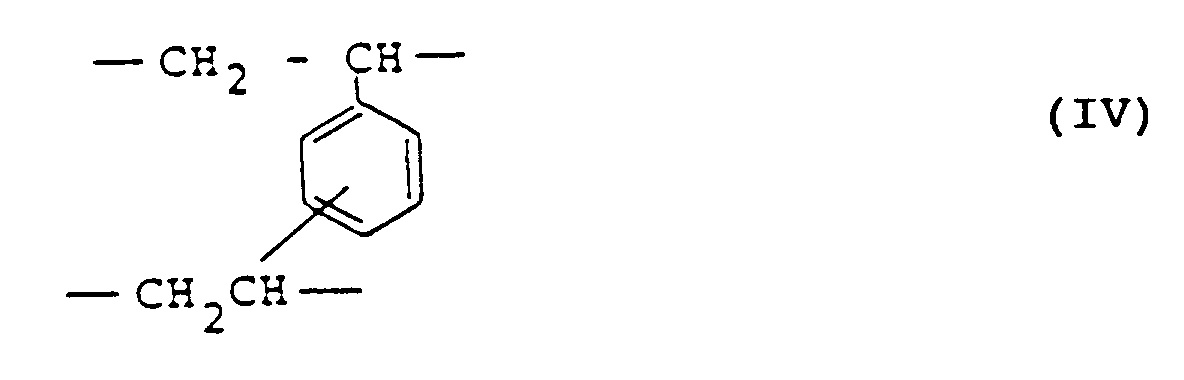
- Cholesterinverminderndes Mittel nach Anspruch 1, worin das Anionenaustauscherharz 70 Äquivalent-% oder mehr Dimethylbenzylammoniumgruppen enthält, eine Gesamtionenaustauschkapazität, auf Trockenbasis, von 1 Milliäquivalent/g oder höher aufweist, eine vernetzte Polymermatrix besitzt, die als Hauptmonomereinheiten Styrol und Divinylbenzol umfaßt, und das ein kritisches Ausschlußmolekulargewicht von 800 bis 20.000, bezogen auf Polyethylenoxid, aufweist.
- Pharmazeutische Zusammensetzung, die einen pharmazeutischen Träger und eine therapeutisch oder vorbeugend wirksame Menge eines cholesterinvermindernden Mittels nach Anspruch 1 oder 2 umfaßt.
- Verwendung eines Anionenaustauscherharzes nach Anspruch 1 oder Anspruch 2 zur Herstellung eines cholesterinvermindernden pharmazeutischen Präparats.
Priority Applications (1)
| Application Number | Priority Date | Filing Date | Title |
|---|---|---|---|
| AT89302969T ATE96030T1 (de) | 1988-03-24 | 1989-03-23 | Cholesterolvermindernde wirkstoffe. |
Applications Claiming Priority (2)
| Application Number | Priority Date | Filing Date | Title |
|---|---|---|---|
| JP7021988 | 1988-03-24 | ||
| JP70219/88 | 1988-03-24 |
Publications (3)
| Publication Number | Publication Date |
|---|---|
| EP0334673A2 EP0334673A2 (de) | 1989-09-27 |
| EP0334673A3 EP0334673A3 (de) | 1991-01-23 |
| EP0334673B1 true EP0334673B1 (de) | 1993-10-20 |
Family
ID=13425216
Family Applications (1)
| Application Number | Title | Priority Date | Filing Date |
|---|---|---|---|
| EP89302969A Expired - Lifetime EP0334673B1 (de) | 1988-03-24 | 1989-03-23 | Cholesterolvermindernde Wirkstoffe |
Country Status (4)
| Country | Link |
|---|---|
| EP (1) | EP0334673B1 (de) |
| KR (1) | KR890014100A (de) |
| AT (1) | ATE96030T1 (de) |
| DE (1) | DE68909982T2 (de) |
Families Citing this family (10)
| Publication number | Priority date | Publication date | Assignee | Title |
|---|---|---|---|---|
| GB8913823D0 (en) * | 1989-06-15 | 1989-08-02 | Smith Kline French Lab | Compounds |
| GB8928278D0 (en) * | 1989-12-14 | 1990-02-21 | Smith Kline French Lab | Compounds |
| JP2611073B2 (ja) * | 1990-07-26 | 1997-05-21 | モンサント カンパニー | 新規ポリアミンの製造方法 |
| IE914179A1 (en) * | 1990-12-07 | 1992-06-17 | Ici Plc | Nitrogen derivatives |
| DE59300925D1 (de) * | 1992-03-28 | 1995-12-21 | Hoechst Ag | Arzneimittel aus Polyhydroxymethylenderivaten, Verfahren zu deren Herstellung und Verwendung. |
| US5683709A (en) * | 1994-05-05 | 1997-11-04 | Ciba Vision Corporation | Poly(benzalkonium salt) as an anti-microbial agent for aqueous drug compositions |
| JP4010585B2 (ja) * | 1996-10-15 | 2007-11-21 | 久光製薬株式会社 | 陰イオン交換樹脂を含有する錠剤 |
| WO2003067310A1 (en) * | 2002-02-07 | 2003-08-14 | Hun-Yang Park | Eyeglasses with auxiliary eyeglasses having an excellent jointing performance |
| TW200639190A (en) * | 2005-02-04 | 2006-11-16 | Showa Denko Kk | Packing material for ion chromatography |
| WO2022219953A1 (ja) * | 2021-04-14 | 2022-10-20 | オルガノ株式会社 | イオン交換体およびイオン交換体の製造方法、白金族金属イオン担持触媒および炭素-炭素結合形成方法 |
-
1989
- 1989-03-23 DE DE89302969T patent/DE68909982T2/de not_active Expired - Fee Related
- 1989-03-23 EP EP89302969A patent/EP0334673B1/de not_active Expired - Lifetime
- 1989-03-23 KR KR1019890003651A patent/KR890014100A/ko not_active Withdrawn
- 1989-03-23 AT AT89302969T patent/ATE96030T1/de not_active IP Right Cessation
Also Published As
| Publication number | Publication date |
|---|---|
| DE68909982T2 (de) | 1994-02-10 |
| KR890014100A (ko) | 1989-10-21 |
| ATE96030T1 (de) | 1993-11-15 |
| EP0334673A2 (de) | 1989-09-27 |
| EP0334673A3 (de) | 1991-01-23 |
| DE68909982D1 (de) | 1993-11-25 |
Similar Documents
| Publication | Publication Date | Title |
|---|---|---|
| US6423754B1 (en) | Method for treating hypercholesterolemia with polyallylamine polymers | |
| JP4649039B2 (ja) | 非置換ポリジアリルアミンを用いる高コレステロール血症の治療方法 | |
| US5430110A (en) | Polyvinylamine derivatives having hydrophilic centers, processes for their preparation and the use of the compounds as a medicament, active compound carrier and foodstuff auxiliary | |
| US5178854A (en) | Cholesterol-lowering agents | |
| EP1133989B1 (de) | Polymer zur therapeutischen Anwendung | |
| EP0684958B1 (de) | 1 guanidino gruppen enthaltende polymere zur verwendung in der therapie | |
| EP0375350B1 (de) | Vinylpyridinium vernetztes Polymer | |
| IE65618B1 (en) | Alkylated polyethylenimine derivatives process for their preparation their use as pharmaceuticals and pharmaceutical preparations | |
| EP0162388A1 (de) | Galle-Komplexbildner-Harz und seine Verwendung | |
| JPS6154457B2 (de) | ||
| EP0334673A2 (de) | Cholesterolvermindernde Wirkstoffe | |
| EP0432995B1 (de) | Vernetzte Pyridinio-acrylat-polymere | |
| JPH06192129A (ja) | 胆汁酸封鎖剤 | |
| GB2036048A (en) | Polymer compounds, process for their preparation and arteriosclerosis treating agents containing them | |
| EP0400848A2 (de) | Verbindungen | |
| JPH01316324A (ja) | コレステロール低下剤 | |
| EP0322209B1 (de) | Zusammensetzungen | |
| US5110875A (en) | Polystyrene anion exchange polymers | |
| JPH07309766A (ja) | コレステロール低下剤 | |
| US5112922A (en) | Polystyrene anion exchange polymers | |
| US5800809A (en) | Non-crosslinked acrylic polymers and non-crosslinked anion exchange resins | |
| US5230885A (en) | Polystyrene anion exchange polymer pharmaceutical composition | |
| EP0403271A2 (de) | Polymerverbindungen | |
| EP1923064A2 (de) | Verwendung von Aminpolymeren zur Minderung des Serumglukosegehaltes | |
| HK1004556B (en) | Crosslinked pyridinio-acrylate-polymers |
Legal Events
| Date | Code | Title | Description |
|---|---|---|---|
| PUAI | Public reference made under article 153(3) epc to a published international application that has entered the european phase |
Free format text: ORIGINAL CODE: 0009012 |
|
| AK | Designated contracting states |
Kind code of ref document: A2 Designated state(s): AT BE CH DE FR GB IT LI LU NL SE |
|
| PUAL | Search report despatched |
Free format text: ORIGINAL CODE: 0009013 |
|
| AK | Designated contracting states |
Kind code of ref document: A3 Designated state(s): AT BE CH DE FR GB IT LI LU NL SE |
|
| 17P | Request for examination filed |
Effective date: 19910322 |
|
| 17Q | First examination report despatched |
Effective date: 19920224 |
|
| GRAA | (expected) grant |
Free format text: ORIGINAL CODE: 0009210 |
|
| AK | Designated contracting states |
Kind code of ref document: B1 Designated state(s): AT BE CH DE FR GB IT LI LU NL SE |
|
| REF | Corresponds to: |
Ref document number: 96030 Country of ref document: AT Date of ref document: 19931115 Kind code of ref document: T |
|
| ITF | It: translation for a ep patent filed | ||
| REF | Corresponds to: |
Ref document number: 68909982 Country of ref document: DE Date of ref document: 19931125 |
|
| ET | Fr: translation filed | ||
| PG25 | Lapsed in a contracting state [announced via postgrant information from national office to epo] |
Ref country code: GB Effective date: 19940323 Ref country code: AT Effective date: 19940323 |
|
| PG25 | Lapsed in a contracting state [announced via postgrant information from national office to epo] |
Ref country code: SE Free format text: LAPSE BECAUSE OF NON-PAYMENT OF DUE FEES Effective date: 19940324 |
|
| PG25 | Lapsed in a contracting state [announced via postgrant information from national office to epo] |
Ref country code: LU Free format text: LAPSE BECAUSE OF NON-PAYMENT OF DUE FEES Effective date: 19940331 Ref country code: LI Effective date: 19940331 Ref country code: CH Effective date: 19940331 Ref country code: BE Effective date: 19940331 |
|
| PLBE | No opposition filed within time limit |
Free format text: ORIGINAL CODE: 0009261 |
|
| STAA | Information on the status of an ep patent application or granted ep patent |
Free format text: STATUS: NO OPPOSITION FILED WITHIN TIME LIMIT |
|
| BERE | Be: lapsed |
Owner name: TOSOH CORP. Effective date: 19940331 Owner name: TAISHO PHARMACEUTICAL CO. LTD Effective date: 19940331 |
|
| PG25 | Lapsed in a contracting state [announced via postgrant information from national office to epo] |
Ref country code: NL Effective date: 19941001 |
|
| 26N | No opposition filed | ||
| NLV4 | Nl: lapsed or anulled due to non-payment of the annual fee | ||
| GBPC | Gb: european patent ceased through non-payment of renewal fee |
Effective date: 19940323 |
|
| PG25 | Lapsed in a contracting state [announced via postgrant information from national office to epo] |
Ref country code: FR Effective date: 19941130 |
|
| REG | Reference to a national code |
Ref country code: CH Ref legal event code: PL |
|
| PG25 | Lapsed in a contracting state [announced via postgrant information from national office to epo] |
Ref country code: DE Effective date: 19941201 |
|
| REG | Reference to a national code |
Ref country code: FR Ref legal event code: ST |
|
| EUG | Se: european patent has lapsed |
Ref document number: 89302969.4 Effective date: 19941010 |
|
| PG25 | Lapsed in a contracting state [announced via postgrant information from national office to epo] |
Ref country code: IT Free format text: LAPSE BECAUSE OF NON-PAYMENT OF DUE FEES;WARNING: LAPSES OF ITALIAN PATENTS WITH EFFECTIVE DATE BEFORE 2007 MAY HAVE OCCURRED AT ANY TIME BEFORE 2007. THE CORRECT EFFECTIVE DATE MAY BE DIFFERENT FROM THE ONE RECORDED. Effective date: 20050323 |