EP0331848A2 - Verfahren zur Herstellung von Acrylonitrilcopolymeren durch heterogene Reaktion von Polyacrylonitril-Aquagel - Google Patents
Verfahren zur Herstellung von Acrylonitrilcopolymeren durch heterogene Reaktion von Polyacrylonitril-Aquagel Download PDFInfo
- Publication number
- EP0331848A2 EP0331848A2 EP88311824A EP88311824A EP0331848A2 EP 0331848 A2 EP0331848 A2 EP 0331848A2 EP 88311824 A EP88311824 A EP 88311824A EP 88311824 A EP88311824 A EP 88311824A EP 0331848 A2 EP0331848 A2 EP 0331848A2
- Authority
- EP
- European Patent Office
- Prior art keywords
- polyacrylonitrile
- aquagel
- pan
- water
- reaction
- Prior art date
- Legal status (The legal status is an assumption and is not a legal conclusion. Google has not performed a legal analysis and makes no representation as to the accuracy of the status listed.)
- Withdrawn
Links
Images
Classifications
-
- C—CHEMISTRY; METALLURGY
- C08—ORGANIC MACROMOLECULAR COMPOUNDS; THEIR PREPARATION OR CHEMICAL WORKING-UP; COMPOSITIONS BASED THEREON
- C08F—MACROMOLECULAR COMPOUNDS OBTAINED BY REACTIONS ONLY INVOLVING CARBON-TO-CARBON UNSATURATED BONDS
- C08F8/00—Chemical modification by after-treatment
Definitions
- This invention pertains to methods for producing polyacrylonitrile derivatives by a controlled heterogeneous reaction.
- Certain products of PAN reactions are known to have sequential block compositions, so that the residual nitrile groups are organized in continuous sequences, as are the groups resulting from the respective reaction of the nitrile groups.
- the average length of such sequences or blocks is larger than the length of sequences corresponding to random group distribution at the same reaction conversion. This is due to the so-called "zipper mechanism," in which a newly formed group activates neighboring nitrile groups. While the reaction starts on randomly selected nitrile groups, once new groups are formed, any additional new groups are more likely to be formed in the vicinity of previously formed groups so that the sequence of newly formed groups grows gradually, resembling a "zipper opening".
- a "homogeneous" solution of PAN is a solution in which the PAN polymer chains are fully solvated by a "good" PAN solvent, i.e. a solvent whose Flory-Huggins ⁇ factor is less than 0.5, so that all chains are equally accessible to the solvent.
- Other solution reactions of PAN i.e. Radyszewski or Ritter reactions, as described by V. Janout, Ph.D. Thesis, Institute of Macromolecular Chemistry, Prague, C.S.S.R. (1978), only yield random copolymers.
- Homogeneous acidic hydrolysis of PAN can also be carried out in a mixture of both dissolved (i.e. reactive) and undissolved (i.e. inert) PAN.
- This reaction was described by Stoy in U.S. Patent Nos. 3,864,323 and 4,379,874 as “heterogeneous”.
- such hydrolysis is "heterogeneous” only in the sense that various fractions of PAN start hydrolysis at different times so that the product is heterogeneous with a broad or bimodal distribution of conversions per chain. From the viewpoint of the hydrolytic reaction, it is again carried out in solutions, i.e., in a state of full solvation of reacting nitrile groups.
- a heterogeneous process in the true sense of the word is where solid PAN is dispersed in the reaction medium, and the reaction is carried out in the absence of PAN solvents.
- the reaction is the base-catalyzed hydrolysis of solid PAN.
- the product of such hydrolysis can either be water-soluble acrylic-acrylamide copolymers (see e.g., U.S. Patent Nos. 2,812,317, 2,861,059 and 3,200,102 issued to Barret, Mow and Kleine, respectively), or cross-linked water swellable particles or fibers (see, e.g., U.S. Patent Nos. 4,272,422 and 4,366,206 issued to Tanaka).
- the water-soluble products dissolve as they form to expose fresh unreacted PAN surfaces.
- Alkaline hydrolysis of nitrile groups can also be carried out on the surface of densely cross-linked copolymers as described by Hradil, et al., in U.S. Patent No. 3,964,973.
- Acid-catalyzed heterogeneous reactions of PAN are much less common and are usually carried out only on the PAN surface, for instance, by reaction with sulphuric acid to introduce sulfo-and sulfate groups while simultaneously stabilizing the surface layer by cross-linking, see U.S. Patent No. 3,895,169 issued to Wichterle.
- Another surface reaction on solid dry PAN is the sulfonation by gaseous SO3 as described by Takezo, et al., U. S. Patent No. 4,265,959, or the plasma activated surface oxidation used to produce semi-permeable membranes, as described by Takezo, et al. in U.S. Patent No. 4,107,049.
- PAN in the solid state is very different from most polymers.
- One major difference is that solid-state PAN is fully crystalline: absent is an amorphous phase, which always coexists with the crystalline phase in other polymers.
- the second major difference is that in stretched or oriented PAN the crystalline phase is organized perpendicular to the stress vector, while very little or no order is detectable in the direction of stress.
- the third major difference is that PAN crystallizes to the same extent and with the same morphology regardless of tacticity. See, Bohn, C.R., et al., J. Polymer Sci. 55 , 531 (1961) for a detailed description of the structural features of PAN in the solid state.
- PAN is an excellent barrier to the diffusion of low molecular weight compounds, due to its very high crystallinity and the absence of an amorphous phase. Also, all (or nearly all) of the strongly dipolar nitrile groups of PAN are incorporated in the crystalline matrix. Accordingly, solid PAN is very reluctant to engage in a chemical reaction unless it is in the presence of a PAN solvent. This high crystallinity and the very low permeability of PAN to reagents explains why PAN reacts mostly in the presence of solvents which dissolve its crystalline phase. It is also the reason why solid state PAN only reacts with bases to form water soluable or cross-linked products. Namely, such a reaction has to proceed in a layer-by-layer fashion allowing the reacted portions to be dissolved, unless the polymer is covalently cross-linked.
- a third state has been known, but it has never been closely studied or contemplated as a special reactive state of PAN.
- This third state is hereinafter referred to as the "aquagel” state or "AQG".
- the AQG is a metastable structure in which PAN contains water or another liquid. However, AQG is not PAN swollen to equilibrium, rather, decrease in the liquid content of PAN AQG is irreversible. There are substantial differences in the properties of the AQG state of PAN from the solid state crystalline, or the dissolved or plasticized gel state of PAN.
- the present invention is based on the special properties of the PAN aquagel state.
- the PAN aquagel state has not been satisfactorily studied or described prior to this invention, we have included the following description of the properties of the PAN aquagel state and cited the references we consider pertinent.
- PAN solutions in water-miscible solvents can be coagulated by contact with water.
- the coagulation is, in fact, precipitation of PAN in the solid form by exchanging a "good" PAN solvent, i.e., a solvent having a Flory-Huggins ⁇ factor ⁇ 0.5 and capable of fully solvating the PAN chains for a "poor" PAN solvent, i.e., a solvent having a Flory-Huggins factor > 0.5 and incapable of fully solvating the PAN chains (e.g., water or mixtures of the good solvents with water).
- a "good" PAN solvent i.e., a solvent having a Flory-Huggins ⁇ factor ⁇ 0.5 and capable of fully solvating the PAN chains
- a "poor" PAN solvent i.e., a solvent having a Flory-Huggins factor > 0.5 and incapable of fully solvating the PAN chains (e.g.,
- PAN solvents include several inorganic compounds in concentrated aqueous solution, including calcium thiocyanate, sodium thiocyanate, zinc chloride, lithium bromide, magnesium perchlorate, phosphoric acid and nitric acid. Also, several organic compounds in substantially anhydrous solutions are good PAN solvents, including dimethylsulfoxide, dimethylformamide, gamma-butyrolactone, tetramethylenesulfone and dimethylacetamide. Alternatively, other water miscible fluids, such as low aliphilic alcohols containing one to four carbon atoms per molecule, and the like, which are incapable of dissolving PAN can be used to coagulate PAN.
- a “fluid” we mean either a liquid or a gas.
- the coagulation process is used in the wet spinning of acrylic fibers and in the casting PAN membranes, where coagulation is often preceded by partial evaporation of the solvent to create a surface "skin".
- Coagulation is a complicated physical process involving diffusion of water or another coagulant into the PAN solution, and diffusion of the PAN solvent out of the solution.
- PAN precipitates into a new solid phase.
- the new PAN solid phase hinders the diffusion of all permeants.
- water permeates into the precipitating polymer faster than the solvent diffuses out a number of small osmotic cells are formed having precipitated PAN polymer walls. The result is a heterogeneous, porous or microporous composition formed by the precipitated PAN polymer matrix with voids or pores filled with water.
- Patent Nos. 2,558,730 to 2,558,735 issued to Cresswell, et al. Under these conditions a gelled fiber without macroscopic pores is formed. This fiber contains a certain amount of water, and can be easily stretched in hot water prior to drying.
- Stanton, et al. in U.S. Patent No. 2,790,700 describe a process in which the fiber's heterogenicity is suppressed by coagulation in a dilute PAN solvent. In Stanton, et al's methods, the solvent gradient is lowered slowing down the rate of coagulation so that osmotic pore formation is suppressed.
- Cummings, Jr. in U.S. Patent No. 2,948,581 describes a similar fiber coagulation process using thiocyanate instead of zinc chloride as the PAN solvent. It is believed that the gelled state and easy stretching reported by Cummings, Jr. is due to residual thiocyanate solvent in the gelled fiber which plasticizes the polymer to a limited extent. After stretching, the fiber is washed removing the residual thiocyanate solvent.
- U.S. Patent No. 3,689,621 issued to Fuji, et al. describes the process of coagulation of PAN to an aquagel from a zinc chloride solution. The process is modified by combined cold and hot stretching in the aquagel and dried states.
- Fukisaki, et al. in U.S. Patent Nos. 3,073,669 and 3,080,209 describe the process of dissolving PAN in concentrated nitric acid and the coagulation of PAN fibers in dilute nitric acid solution. The process includes the steps of wet fiber spinning and fiber stretching prior to drying. Also, U.S. Patent No. 3,080,209 includes the addition of univalent cations to the coagulation bath to improve the dyeability of PAN fibers when using basic dyestuffs. The diffusion of water-soluble compounds such as dyestuffs into the PAN is much higher before drying than after the PAN aquagel has been dried. In addition, the high permeability cannot be restored once PAN has been dried.
- the aquagel state is a metastable state in which PAN crystallization gradually takes place, as the water content gradually decreases.
- the aquagel state is simply a state in which there are very small water filled voids in the PAN structure. It is believed that these voids irreversibly collapse by drying or by evaporation over an extended period of time as residual solvent is removed.
- coagulation of PAN solution can be achieved by non-aqueous fluids which are miscible with water, such as lower aliphatic alcohols or glycols, which are subsequently replaced with water, see, C.W. Saltonstall, et al.: Research and Development of New Polymer System for Reverse Osmosis Membranes ; R&D Progress Report #167, Department of Interior (February 1966) and Ibid . R&D Progress Report #220 (November 1966).
- Polyacrylonitrile includes by definition homopolymers of acrylonitrile, and polyacrylonitrile copolymers including random, block and multiblock copolymers having at least 85% mol. acrylonitrile units.
- polyacrylonitrile aquagel being "undissolved" during the reaction it is it is meant that the polyacrylonitrile aquagel is not fully solvated by the fluid reagent during the reaction, the PAN aquagel may be swollen and/or plasticized during the reaction.
- the PAN aquagels of this invention can be processed as thermoplastics.
- an article can be formed into a first shape, processed, and then re-formed into a second shape.
- the PAN aquagel can be provided initially in the form of tubing. It can then be converted into a PAN multiblock copolymer, e.g., by acid hydrolysis, while still maintaining its tubular shape.
- the tubing can then be processed further with a variety of thermoplastic processing techniques into a finished article, such as a catheter.
- the present invention allows for the preparation of articles having complex shapes or shaped parts.
- Suitable basic catalysts include water-soluble hydroxides or carbonates of alkali or alkaline-earth metals, ammonia, primary to quaternary amines, pyrridine, morpholine and other conventional basic catalysts. More specifically, these suitable base catalysts include alkali metal hydroxides, alkali metal carbonates, alkaline earth metal hydroxides, aliphatic amines, aliphatic mono-amines, aliphatic di-amines, aliphatic tri-amines, and quaternary alkylammonium hydroxide.
- the minimum amount or concentration of the catalyst is not critical per se. We have found that hydrolysis of nitrile groups can be carried out even without the addition of catalyst or copolymer if done at high temperature, such as in an autoclave at temperatures above 120°C and preferably above 150°C.
- Another set of Heterogeneous reactions are the acid-catalyzed reactions of nitrile with alcohol, olefin, ester, or ether.
- the reaction can take the route of the Ritter reaction to an N-substituted amide, or alcoholysis of nitrile to iminoether with subsequent hydrolysis to ester, or hydrolysis to amide with subsequent alcoholysis to ester. Regardless of the route, the newly formed functional groups, as well as the residual nitrile groups are then organized in continuous sequences.
- the finished article can be further washed with water or some other suitable solution, to remove residual reactants, such as the acid or base catalyst.
- the last technique for stopping the reaction (d) is particularly advantageous because the desired reaction conversion can be achieved by using a predetermined amount and composition of a particular reagent.
- the reaction slows down and gradually stops as one reagent is depleted.
- This processing method is particularly advantageous since it produces final products with better mechanical properties than products that are made by solution processing methods.
- the final products made by this method so closely resemble products produced by conventional melt processing techniques, such as injection molding, extrusion, etc., that conventional equipment can be used to make these products without any modifications.
- the semi-finished products which still contain the solvent, are stable, easily handleable and are ready for additional processing. Additional processing may include, for example, tip-forming of extruded tubing by radio-frequency heating to produce a catheter.
- the nitrile groups in PAN aquagels are probably in mostly izotrans/trans and syndio-trans/gauche conformations (i.e. the nitrile groups are in planar conformations), the nitrile groups in polyacrylonitrile solutions are probably mostly in syndio-trans/trans and izo-trans/gauche conformation (i.e. forming an imperfect helix). Therefore, the nitrile groups in aquagels are in an arrangement which is advantageous for reaction with cyclic mechanisms in which either a transition complex and/or a product involves two neighboring nitrile groups which form a six-membered cycle.
- reaction products of Heterogeneous PAN aquagel reactions contain higher concentrations of cyclic groups such as glutarimide glutarsemiimidine glutarimidine or groups that require cyclic mechanism for their formation, such as amidine
- cyclic groups such as glutarimide glutarsemiimidine glutarimidine or groups that require cyclic mechanism for their formation, such as amidine
- Homogeneous PAN solution reactions under otherwise similar reaction conditions yield products in which such cyclic groups are either present in much smaller concentrations or are completely missing.
- the Heterogeneous PAN aquagel and Homogeneous solution reactions yield products with different distribution of newly formed groups both within the chains and among each of the chains.
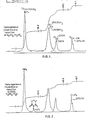
- Copolymer A was prepared by the Heterogeneous reaction of PAN aquagel according to Example 5, but with a longer reaction time, while Copolymer B was prepared by the Homogeneous solution reaction of the same PAN, using a mixture of 98% sulphuric acid and 85% phosphoric acid, as a solvent, in a 1:2 ratio. Then 13C-NMR spectra and their peak identification are shown in FIGS. 1 and 2, respectively.
- Copolymers A and B had the same water content, their chemical composition differed slightly, while their physical characteristics were profoundly different. The differences in physical characteristics indicate dramatic differences in structure.
- a comparison of the properties of Copolymers A and B, respectively, is summarized in Table 1: TABLE 1 PROPERTY COPOLYMER A COPOLYMER B Water Content, % by wt. 91.7 91.1 MW (starting PAN) 150,000 150,000 Nitrile content, mol. % 21.6 20 Amide content, mol. % 74.4 80 Carboxyl content, mol. % 0 0 Glutarimide content, mol.
- Polyacrylonitrile is soluble in 55% (by weight) aqueous solutions of NaSCN and/or Ca(SCN)2. By coagulation of PAN dissolved in these solvents, stable porous aquagels are obtained.
- the water content of the aquagel is given by the composition of the solution used for coagulation.
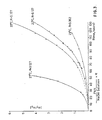
- Table 1 describes a range of water contents in completely washed PAN aquagels as a function of PAN concentration in NaSCN solution.
- Table 2 Water content in PAN aquagel, prepared by coagulation of PAN solution in deionized water.
- Polyacrylonitrile MW 150,000 b.
- Polyacrylonitrile-Methylacrylate copolymer having a 94:6 molar ratio, MW 100,000
- the above materials prepared in fiber or pellet form, are hydrolyzed in dilute NaOH solutions at room temperature.
- the products of Heterogeneous (hydrolysis) reactions are copolymers of acrylonitrile-acrylamide acrylic acid-amidine derivatives.
- the hypothesized structure of the amidine group is illustrated immediately before Example 1, above.
- the reaction temperature is raised the products become less homogeneous, due to the higher conversion rate of nitrile groups on the surface of the reactant then in its core, which in turn is due to the reaction rate exceeding the rate of diffusion.
- the reaction may be easily monitored by weighing the hydrolyzed product, since its swelling capacity in water increases with increased conversion.
- the PAN aquagel pellets were neutralized with a 5% (by weight) solution of H2SO4 and then washed with deionized water.
- the concentration of carboxyl groups in the polymer was found to be 20% ⁇ 1% by titration of the NaOH solution used for the reaction, as well as by titration of the carboxyl groups in the polymer.
- Titration of the polymer was carried out in the following manner: the acid form of the polymer was neutralized and dried at 100°C under reduced pressure for 48 hours. A known amount of polymer was mixed with a known amount of H2SO4 and after filtration the acid was titrated against NaOH.
- the acid form of the polymer was neutralized with ammonium bicarbonate and dried. It was then dissolved in a 55% aqueous solution of NaSCN to prepare a solution comprising 10% by weight of the polymer. A 1 mm thick foil was cast and coagulated in 0.9% NaCl solution until it was in equilibrium with saline. At equilibrium the foil contained 92% saline.
- a solution of polyacrylonitrile obtained by polymerization of the monomer using a redox catalyst of pursulfate and bisulfite in a 70% zinc chloride aqueous solution was cooled and poured in a thin stream into a mixture of cold water and crumbled ice, and coagulated at 0°C.
- the resulting fibrous mass was then partially washed in water and laid, still wet, onto a PVC grid which was placed in a closed vessel just above the surface of 37% hydrochloric acid solution at 24°C. After 4 days in the vessel at 24°C the washed sample of the mass became transparent and easily stretchable. After 8 days in the vessel the sample began to become elastomeric.
- a 15% by weight polyacrylonitrile solution was prepared in aqueous sodium triocyanate (60% by weight). The solution was heated to 40°C and coagulated in a 30% by weight solution of sodium thiocyanate by drawing the polyacrylonitrile solution through the coagulation bath to form long fibers. The fibers were fully washed in deionized water and found to contain 75.8% by weight of water.
- the ground copolymer was dissolved in dimethylsulfoxide (DMSO) to form a solution containing 10% polymer by weight. A film was then cast from this solution. The film was washed in deionized water to remove the DMSO. One piece of the film was soaked in a 1% sulfuric acid solution, for several hours. Both pieces were subsequently completely washed in deionized water, dried, and each was measured for uptake of water.
- the 1% sulfuric acid treated film had a water uptake of 9.6 grams of deionized water per gram of polymer (90.6% water by weight), and the 1% sodium bicarbonate treated film had a water uptake of 73.75 grams of deionized water per gram of polymer (98.66% water by weight).
- 13C-NMR analysis of the samples, as performed in Examples 1 and 2 detected the presence of continuous sequences of acrylonitrile groups in each of the samples.
- a 15% by weight polyacrylonitrile solution was prepared in aqueous sodium thiocyanate (60% by weight). The solution was heated to 80°C and coagulated in deionized water at room temperature by drawing the solution through the water to form long fibers. These fibers were subsequently washed in deionized water to remove the sodium thiocyanate. The fibers were found to have a water content of 72.6% by weight.
- the fibers were soaked to equilibrium for 18 hours in excess aqueous sulfuric acid solution, 67.56% by weight, at 4°C.
- the equilibrium concentration of sulfuric acid in the fibers was found to be approximately 64.65% by weight.
- Excess sulfuric acid was removed from the fibers, and the fibers were soaked in mineral oil at a temperature of 45°C for several hours. Samples were taken after 4.5, 5.5 and 6.67 hours. These samples were washed in deionized water, dried and pulverized to a fine powder.
- the pulverized samples were dissolved in dimethyl sulfoxide to a concentration of 10% polymer by weight and one millimeter thck films were cast from this solution.
- the films were washed in deionized water and dried for 48 hours. The dried films were then measured for their capacity to absorb water.
- the water content was recorded at 62.7% by weight for the sample soaked in mineral oil for 4.5 hours, 69.0% by weight for the sample soaked in mineral oil for 5.5 hours, and 72.2% for the sample soaked in mineral oil for 6.67 hours.
- 13C-NMR data on the samples indicated that the samples contained 72%, 67% and 59% (molar percent) of nitrile groups, respectively. In each case, the nitrile groups were organized in continuous sequences.
- the semi-finished suction catheter still containing DMSO as the melting aid, was dipped for 60 seconds into a mixture of 9 parts concentrated sulfuric acid and 1 part glycerol at 95°C, and then washed thoroughly in water.
- the tubing had a water content of about 50% and had a highly hydrated, slippery surface layer.
- the aquagel string was then hydrolyzed by dilute sulfuric acid as described in Example 6, and then processed by melt extrusion as described in Example 7.
- the tubing was radiopaque and useful for various medical purposes, such as a wound drain.
- the solution gelled into a rubbery sheet due to the absorption of water vapor, and was then washed with water. Once washed, the aquagel sheet was rigid and translucent with no apparent porosity, it contained about 70% water.
- the aquagel strips which neither dissolved nor swelled appreciably in the mixture, were then removed from the mixture and heated to 60°C for 20 hours.
- the strips were cooled and then were washed in water to form highly swellable and strong polymers. As shown in Table 2, swelling these polymer strips to equilibrium in various salts and at varying pH levels resulted in negligible differences in liquid content due to salt effects or pH-dependent swelling.
- the tubing was then removed from the liquid, dried for 2 hours at 60°C to evaporate the methanol, and heated for 12 hours at 95°C. After washing with water to remove the acid and excess polyethylene glycol, very strong, cross-linked tubing was obtained. Cross-linking was indicated by both the swellability and insolubility of the sample in a solution of 55% NaSCN in water. Additionally, the material had low sorption for proteins.
- a 15% solution of PAN in dimethylformamide was cast on glass to form a layer of about 0.5 mm in thickness.
- the solution was allowed to partially gellify by absorption of moisture from the air, and was then washed thoroughly in water to form a finely porous membrane.
- the membrane was then soaked in anhydrous glycerol allowing the glycerol to replace the water in the membrane without changing its dimensions. After several hours, the glycerol containing membrane was heated to 165°C for 30 minutes, and then washed with water.
- the PAN AQG membrane was first dried to eliminate the aquagel state, then put into glycerol and heated in the manner described above.
- the resulting polymer was an essentially non-porous, hydrophobic and brittle foil. This experiment shows that glycerol does not react with undissolved PAN unless it is in the aquagel state.
Landscapes
- Chemical & Material Sciences (AREA)
- General Chemical & Material Sciences (AREA)
- Health & Medical Sciences (AREA)
- Chemical Kinetics & Catalysis (AREA)
- Medicinal Chemistry (AREA)
- Polymers & Plastics (AREA)
- Organic Chemistry (AREA)
- Addition Polymer Or Copolymer, Post-Treatments, Or Chemical Modifications (AREA)
Applications Claiming Priority (2)
| Application Number | Priority Date | Filing Date | Title |
|---|---|---|---|
| US07/135,070 US4943618A (en) | 1987-12-18 | 1987-12-18 | Method for preparing polyacrylonitrile copolymers by heterogeneous reaction of polyacrylonitrile aquagel |
| US135070 | 1987-12-18 |
Publications (2)
| Publication Number | Publication Date |
|---|---|
| EP0331848A2 true EP0331848A2 (de) | 1989-09-13 |
| EP0331848A3 EP0331848A3 (de) | 1991-07-03 |
Family
ID=22466389
Family Applications (1)
| Application Number | Title | Priority Date | Filing Date |
|---|---|---|---|
| EP19880311824 Withdrawn EP0331848A3 (de) | 1987-12-18 | 1988-12-14 | Verfahren zur Herstellung von Acrylonitrilcopolymeren durch heterogene Reaktion von Polyacrylonitril-Aquagel |
Country Status (2)
| Country | Link |
|---|---|
| US (1) | US4943618A (de) |
| EP (1) | EP0331848A3 (de) |
Cited By (2)
| Publication number | Priority date | Publication date | Assignee | Title |
|---|---|---|---|---|
| EP0783005A3 (de) * | 1996-01-04 | 1998-03-18 | Bayer Ag | Verfahren zur kontinuierlichen Herstellung von superabsorbierenden Polymerisaten aus PAN-Emulsionen |
| EP1148069A1 (de) * | 2000-04-20 | 2001-10-24 | Bayer Ag | Verfahren zur Herstellung von superabsorbierenden Polymeren aus Polyacrylnitril-Fällungspolymerisaten |
Families Citing this family (57)
| Publication number | Priority date | Publication date | Assignee | Title |
|---|---|---|---|---|
| US5252692A (en) * | 1990-11-23 | 1993-10-12 | Kingston Technologies, Inc. | Hydrophilic acrylic copolymers and method of preparation |
| AU652022B2 (en) * | 1991-02-12 | 1994-08-11 | C.R. Bard Inc. | Injectable medical device |
| JP3196855B2 (ja) * | 1991-11-11 | 2001-08-06 | 東洋紡績株式会社 | 高吸放湿性繊維 |
| US5434205A (en) * | 1992-01-21 | 1995-07-18 | Solcas Polymer Limited Partnership | Acrylonitrile polymer compositions and articles and methods for their preparation |
| US5304590A (en) * | 1992-01-21 | 1994-04-19 | Solcas Polymer, Inc. | Acrylonitrile polymer compositions and articles and methods for their preparation |
| US5736127A (en) * | 1992-04-06 | 1998-04-07 | Hymedix International, Inc. | Polymeric nitrogen-containing drug salt forms for controlled release |
| US5217026A (en) * | 1992-04-06 | 1993-06-08 | Kingston Technologies, Inc. | Guidewires with lubricious surface and method of their production |
| US5268395A (en) * | 1992-10-13 | 1993-12-07 | Martin Marietta Energy Systems, Inc. | Microcellular carbon foam and method |
| US5208003A (en) * | 1992-10-13 | 1993-05-04 | Martin Marietta Energy Systems, Inc. | Microcellular carbon foam and method |
| US5531715A (en) | 1993-05-12 | 1996-07-02 | Target Therapeutics, Inc. | Lubricious catheters |
| DE4406951A1 (de) * | 1994-03-03 | 1995-09-07 | Bayer Ag | Superabsorbierende Polymerisate |
| US6030442A (en) * | 1994-05-13 | 2000-02-29 | University Of Cincinnati | Microporous fast response gels and methods of use |
| US5601538A (en) | 1995-03-07 | 1997-02-11 | Medtronic, Inc. | Flow directed catheter with hydrophilic distal end |
| US5817057A (en) * | 1996-09-13 | 1998-10-06 | Micro Interventional Systems, Inc. | Fluid propulsion steerable catheter and method |
| US5977428A (en) * | 1996-12-20 | 1999-11-02 | Procyte Corporation | Absorbent hydrogel particles and use thereof in wound dressings |
| US5939208A (en) * | 1997-11-07 | 1999-08-17 | Biomimetics, Inc. | Method for creation of biomimetic surfaces |
| US6010840A (en) * | 1998-01-27 | 2000-01-04 | Agfa-Gevaert, N.V. | Method for preparing tabular grains rich in silver chloride with reduced thickness growth and improved homogeneity |
| US6040493A (en) * | 1998-04-24 | 2000-03-21 | Replication Medical, Inc. | Bioreactor wound dressing |
| US6833084B2 (en) * | 1999-04-05 | 2004-12-21 | Micron Technology, Inc. | Etching compositions |
| US6338345B1 (en) | 1999-04-07 | 2002-01-15 | Endonetics, Inc. | Submucosal prosthesis delivery device |
| US7185657B1 (en) | 1999-04-07 | 2007-03-06 | Johnson George M | Method and device for treating gastroesophageal reflux disease |
| US6264695B1 (en) * | 1999-09-30 | 2001-07-24 | Replication Medical, Inc. | Spinal nucleus implant |
| US6232406B1 (en) * | 1999-09-30 | 2001-05-15 | Replication Medical Inc. | Hydrogel and method of making |
| US6464880B1 (en) * | 2000-09-19 | 2002-10-15 | University Of Chicago | Microporous ionomeric materials and methods of preparation |
| US6770721B1 (en) | 2000-11-02 | 2004-08-03 | Surface Logix, Inc. | Polymer gel contact masks and methods and molds for making same |
| US20020193813A1 (en) * | 2001-05-04 | 2002-12-19 | Concentric Medical | Hydrogel filament vaso-occlusive device |
| US20040070107A1 (en) * | 2002-10-09 | 2004-04-15 | Pragtech, Inc. | Method of making lubricious polyacrylonitrile artificial joint components and resulting product |
| US6593451B1 (en) | 2002-10-09 | 2003-07-15 | Pragtech, Inc. | Method of processing polyacrylonitrile |
| EP1479412B1 (de) * | 2003-05-19 | 2008-10-22 | UST Inc. | Geometrisch geformte Kopplungskörper aus Hydrogel für die Behandlung mit fokussiertem Ultraschall von hoher Intensität |
| US20050133949A1 (en) * | 2003-12-19 | 2005-06-23 | Pragtech, Inc. | Polymer solidification and coating process |
| US7718112B2 (en) * | 2004-08-23 | 2010-05-18 | University Of Massachusetts | Nanometer scale structures |
| US20060095077A1 (en) * | 2004-10-29 | 2006-05-04 | Tronnes Carole A | Expandable fixation structures |
| US20060093639A1 (en) * | 2004-10-29 | 2006-05-04 | Starkebaum Warren L | Method and device for destroying body tissue |
| US8489189B2 (en) | 2004-10-29 | 2013-07-16 | Medtronic, Inc. | Expandable fixation mechanism |
| EP1846567A4 (de) * | 2005-01-20 | 2009-12-09 | Univ California | Zellulare mikroarrays zum screening von differenzierungsfaktoren |
| US20060173472A1 (en) * | 2005-01-31 | 2006-08-03 | Starkebaum Warren L | Gastric banding device |
| US20060173238A1 (en) * | 2005-01-31 | 2006-08-03 | Starkebaum Warren L | Dynamically controlled gastric occlusion device |
| US20070100355A1 (en) * | 2005-10-27 | 2007-05-03 | Medtronic, Inc. | Method and device for controlling bulking agent depth in tissue |
| US11896505B2 (en) | 2005-10-31 | 2024-02-13 | Scott M. Epstein | Methods for making and using a structural hydrogel polymer device |
| US8048350B2 (en) | 2005-10-31 | 2011-11-01 | Scott Epstein | Structural hydrogel polymer device |
| US20070299201A1 (en) * | 2006-06-23 | 2007-12-27 | Replication Medical, Inc. | Process for manufacturing hydrogels |
| US20080103576A1 (en) * | 2006-10-31 | 2008-05-01 | Medtronic, Inc. | Implantable medical elongated member including expandable fixation member |
| WO2010040131A2 (en) | 2008-10-03 | 2010-04-08 | Replication Medical, Inc. | Vessel protection device |
| EP2337526A4 (de) * | 2008-10-15 | 2013-07-31 | Replication Medical Inc | Schwellbares interspinales stabilisierungsimplantat |
| US10751206B2 (en) | 2010-06-26 | 2020-08-25 | Scott M. Epstein | Catheter or stent delivery system |
| US20110319902A1 (en) | 2010-06-26 | 2011-12-29 | Scott Epstein | Catheter delivery system |
| US8676319B2 (en) | 2010-10-29 | 2014-03-18 | Medtronic, Inc. | Implantable medical device with compressible fixation member |
| US9814496B2 (en) | 2015-09-15 | 2017-11-14 | Hydra Medical, LLC | Interspinous stabilization implant |
| DK3393537T3 (da) | 2015-12-22 | 2024-08-26 | Access Vascular Inc | Biomedicinske materialer med høj styrke |
| WO2018065956A1 (en) | 2016-10-06 | 2018-04-12 | Medicem Gyneco (Cy) Limited | Combined osmotic and hydrogel cervical dilators and method of making same |
| AU2018290246A1 (en) | 2017-06-21 | 2020-01-30 | Access Vascular, Inc | High strength porous materials incorporating water soluble polymers |
| US12349865B2 (en) * | 2017-08-01 | 2025-07-08 | Seed Co., Ltd. | Endoscope hood |
| AU2019404045A1 (en) | 2018-12-19 | 2021-06-24 | Access Vascular, Inc. | High strength porous materials for controlled release |
| WO2021178785A1 (en) | 2020-03-06 | 2021-09-10 | Access Vascular, Inc. | Packaging for hydrated articles and related methods |
| US11992627B2 (en) | 2020-06-30 | 2024-05-28 | Access Vascular, Inc. | Articles comprising markings and related methods |
| WO2022183211A1 (en) | 2021-02-26 | 2022-09-01 | Epstein Scott M | Rechargeable energy-storage device including partially- hydrolyzed structural hydrogel |
| CN116253906B (zh) * | 2023-02-28 | 2024-05-31 | 苏州大学 | 一种聚丙烯腈纤维弹性水凝胶及其制备方法 |
Family Cites Families (45)
| Publication number | Priority date | Publication date | Assignee | Title |
|---|---|---|---|---|
| BE487570A (de) * | 1947-09-04 | |||
| US2558732A (en) * | 1947-09-04 | 1951-07-03 | American Cyanamid Co | Method of producing staple fiber from polymers and copolymers of acrylonitrile |
| US2558733A (en) * | 1949-06-08 | 1951-07-03 | American Cyanamid Co | Method of producing synthetic fibers from polymers and copolymers of acrylonitrile |
| US2558731A (en) * | 1947-09-04 | 1951-07-03 | American Cyanamid Co | Method of producing synthetic fibers from polymers and copolymers of acrylonitrile |
| US2579451A (en) * | 1948-12-31 | 1951-12-18 | Du Pont | Polymeric materials |
| US2558735A (en) * | 1950-08-30 | 1951-07-03 | American Cyanamid Co | Method of forming dyed shaped articles from acrylonitrile polymerization products |
| US2812317A (en) * | 1953-08-19 | 1957-11-05 | Monsanto Chemicals | Hydrolyzed polyacrylonitrile polymers and process of preparing same |
| US2861059A (en) * | 1953-11-23 | 1958-11-18 | Monsanto Chemicals | Hydrolysis of acrylonitrile-containing polymers |
| US2790700A (en) * | 1954-01-27 | 1957-04-30 | Dow Chemical Co | Controlled coagulation of salt-spun polyacrylonitrile |
| US2948581A (en) * | 1955-12-20 | 1960-08-09 | American Cyanamid Co | Method of producing a synthetic fiber |
| US3073669A (en) * | 1958-09-06 | 1963-01-15 | Asahi Chemical Ind | Method for producing shaped articles from polymers and copolymers of acrylonitrile |
| DE1207086B (de) * | 1961-09-06 | 1965-12-16 | Bayer Ag | Verfahren zur Herstellung von Abwandlungsprodukten des Polyacrylnitrils |
| US3080209A (en) * | 1961-10-12 | 1963-03-05 | Asahi Chemical Ind | Method for producing acrylonitrile polymer fibers and filaments by wet spinning process |
| NL295115A (de) * | 1962-07-23 | |||
| US3496251A (en) * | 1964-01-24 | 1970-02-17 | Showa Denko Kk | Chlorinated polyethylene graft copolymer and blends containing same |
| JPS5239099B1 (de) * | 1969-03-02 | 1977-10-03 | ||
| US3926930A (en) * | 1969-05-08 | 1975-12-16 | Asahi Chemical Ind | Hygroscopic acrylic synthetic fibers and method for preparing the same |
| CS148810B1 (de) * | 1969-06-13 | 1973-05-24 | ||
| US4172823A (en) * | 1970-03-26 | 1979-10-30 | Ceskoslovenska Akademie Ved | Method of preparing cross-linked hydrogels |
| US4123406A (en) * | 1970-03-26 | 1978-10-31 | Ceskoslovenska Akademie Ved | Method of preparing shaped articles from cross-linked hydrogels |
| CS153794B1 (de) * | 1970-07-02 | 1974-03-29 | ||
| CS154391B1 (de) * | 1970-09-10 | 1974-04-30 | ||
| CS154977B1 (de) * | 1971-10-08 | 1974-04-30 | ||
| US3897382A (en) * | 1972-07-14 | 1975-07-29 | Ceskoslovenska Akademie Ved | Method for the acid hydrolysis of acrylonitrile containing polymers, hydrogels and fibers of products prepared by said method |
| US4183884A (en) * | 1973-01-24 | 1980-01-15 | Ceskoslovenska Akademie Ved | Method for manufacturing hydrogel tubes |
| CS167593B1 (de) * | 1973-02-05 | 1976-04-29 | ||
| US3948870A (en) * | 1973-09-17 | 1976-04-06 | Ceskoslovenska Akademie Ved | Method of preparing hydrophilic copolymers of acrylonitrile |
| US3975478A (en) * | 1974-08-14 | 1976-08-17 | Monsanto Company | Method for producing highly permeable acrylic hollow fibers |
| CS179567B1 (en) * | 1974-11-25 | 1977-11-30 | Vladimir Stoy | Ionogennic hydrophilic in water insoluble gels based on partial saponificated polymers or copolymers acrylonitrile and method of preparing them |
| JPS5226380A (en) * | 1975-08-25 | 1977-02-26 | Sumitomo Chem Co Ltd | Method of making semipermeable membranes |
| JPS5254688A (en) * | 1975-10-30 | 1977-05-04 | Sumitomo Chem Co Ltd | Method of producing semipermeable memebrane |
| US4265959A (en) * | 1977-01-12 | 1981-05-05 | Sumitomo Chemical Company, Limited | Process for producing semipermeable membranes |
| US4268662A (en) * | 1978-03-17 | 1981-05-19 | Sumitomo Chemical Company, Limited | Process for improving semipermeable membranes by treating with protic acids or inorganic salts |
| JPS5810508B2 (ja) * | 1978-04-18 | 1983-02-25 | 日本エクスラン工業株式会社 | 高度の水膨潤性及び高物性を有する新規な水膨潤性繊維並びにその製造方法 |
| JPS5527346A (en) * | 1978-08-16 | 1980-02-27 | Japan Exlan Co Ltd | Aqueous dispersion of microhydrogel, its preparation, and preparation of microhydrogel |
| JPS5716021A (en) * | 1980-07-02 | 1982-01-27 | Hitachi Chem Co Ltd | Heat-resistant resin composition and insulated wire coated therewith |
| US4337327A (en) * | 1980-07-07 | 1982-06-29 | S.K.Y. Polymers, Inc. | Novel block copolymers including acrylonitrile sequences and sequences including units derived from glutarimide units and processes for preparing same |
| US4420589A (en) * | 1980-07-07 | 1983-12-13 | Stoy Vladimir A | Polymer composition including polyacrylonitrile polymers and process for preparing same |
| US4370451A (en) * | 1980-07-07 | 1983-01-25 | S.K.Y. Polymers | Novel block copolymers including acrylonitrile sequences and sequences including units derived from glutarimide units and processes for preparing same |
| US4379874A (en) * | 1980-07-07 | 1983-04-12 | Stoy Vladimir A | Polymer composition comprising polyacrylonitrile polymer and multi-block copolymer |
| US4423099A (en) * | 1980-07-28 | 1983-12-27 | Ciba-Geigy Corporation | Membrane modified hydrogels |
| US4331783A (en) * | 1980-09-17 | 1982-05-25 | S.K.Y. Polymers | Novel block copolymers including acrylonitrile sequences and glutarimide units and processes for preparing same |
| US4369294A (en) * | 1980-09-17 | 1983-01-18 | S.K.Y. Polmers | Novel block copolymers including acrylonitrile sequences and glutarimide units and processes for preparing same |
| US4468499A (en) * | 1980-10-24 | 1984-08-28 | Lehigh University | Thermoplastic interpenetrating polymer network composition and process |
| US4480642A (en) * | 1982-07-26 | 1984-11-06 | Health Products Research, Inc. | Dilation device for the cervix |
-
1987
- 1987-12-18 US US07/135,070 patent/US4943618A/en not_active Expired - Fee Related
-
1988
- 1988-12-14 EP EP19880311824 patent/EP0331848A3/de not_active Withdrawn
Cited By (3)
| Publication number | Priority date | Publication date | Assignee | Title |
|---|---|---|---|---|
| EP0783005A3 (de) * | 1996-01-04 | 1998-03-18 | Bayer Ag | Verfahren zur kontinuierlichen Herstellung von superabsorbierenden Polymerisaten aus PAN-Emulsionen |
| EP1148069A1 (de) * | 2000-04-20 | 2001-10-24 | Bayer Ag | Verfahren zur Herstellung von superabsorbierenden Polymeren aus Polyacrylnitril-Fällungspolymerisaten |
| US6573358B2 (en) | 2000-04-20 | 2003-06-03 | Bayer Aktiengesellschaft | Process for the preparation of superabsorbent polymers from polyacrylonitrile precipitation polymers |
Also Published As
| Publication number | Publication date |
|---|---|
| EP0331848A3 (de) | 1991-07-03 |
| US4943618A (en) | 1990-07-24 |
Similar Documents
| Publication | Publication Date | Title |
|---|---|---|
| US4943618A (en) | Method for preparing polyacrylonitrile copolymers by heterogeneous reaction of polyacrylonitrile aquagel | |
| US6232406B1 (en) | Hydrogel and method of making | |
| US4107121A (en) | Ionogenic hydrophilic water-insoluble gels from partially hydrolyzed acrylonitrile polymers and copolymers, and a method of manufacturing same | |
| US5677360A (en) | Hydrophilic polymer alloy, fiber and porous membrane comprising this polymer alloy, and methods for preparing them | |
| Kwolek et al. | Synthesis, anisotropic solutions, and fibers of poly (1, 4-benzamide) | |
| Hassan et al. | Water solubility characteristics of poly (vinyl alcohol) and gels prepared by freezing/thawing processes | |
| EP0094980B1 (de) | Polymermassen, die Polyacrylnitril-Polymere enthalten, und Verfahren zu ihrer Herstellung | |
| US4338417A (en) | Method of preparing a polymer mixture, formed products obtained therefrom and polymer alloy | |
| Yamaura et al. | Properties of mixtures of silk fibroin/syndiotactic‐rich poly (vinyl alcohol) | |
| CN112538162B (zh) | 改性芳纶聚合体、芳纶铸膜液、锂电池隔膜及制备方法和锂电池 | |
| US3886251A (en) | Method for forming polyoxadiazole series resin solution into shaped articles | |
| US4028132A (en) | Cellulose solutions and products prepared therefrom | |
| CN109251451B (zh) | 一种pH敏感型黄原胶/聚乙烯醇水凝胶的制备方法 | |
| JP2000080126A (ja) | ホウ素架橋ポリビニルアルコール成形物およびその製造方法 | |
| Lio et al. | Swelling characteristics of a blend hydrogel made of poly (allylbiguanido-co-allylamine) and poly (vinyl alcohol) | |
| US4123406A (en) | Method of preparing shaped articles from cross-linked hydrogels | |
| CA1091419A (en) | Method of manufacturing shaped articles from crystalline acrylonitrile polymers and copolymers | |
| CN115558132A (zh) | 一种温度响应型高强度水凝胶及其制备方法和应用 | |
| EP0525204A1 (de) | Hydrophile polymerlegierung, daraus hergestellte faser und poröser film, und herstellungsverfahren für diese | |
| JPH0196239A (ja) | 膨張−収縮性ヒドロゲル組成物およびその製造方法 | |
| CN101389803A (zh) | 制备复合纤维的方法 | |
| US2601252A (en) | Polymeric compositions | |
| CA1180858A (en) | Semipermeable membrane | |
| US3963664A (en) | Method of preparing aromatic polyamide solutions | |
| JP2732879B2 (ja) | 全芳香族共重合ポリアミド |
Legal Events
| Date | Code | Title | Description |
|---|---|---|---|
| PUAI | Public reference made under article 153(3) epc to a published international application that has entered the european phase |
Free format text: ORIGINAL CODE: 0009012 |
|
| AK | Designated contracting states |
Kind code of ref document: A2 Designated state(s): AT BE CH DE ES FR GB GR IT LI LU NL SE |
|
| PUAL | Search report despatched |
Free format text: ORIGINAL CODE: 0009013 |
|
| AK | Designated contracting states |
Kind code of ref document: A3 Designated state(s): AT BE CH DE ES FR GB GR IT LI LU NL SE |
|
| RAP1 | Party data changed (applicant data changed or rights of an application transferred) |
Owner name: KINGSTON TECHNOLOGIES, INC. |
|
| 17P | Request for examination filed |
Effective date: 19920320 |
|
| RAP1 | Party data changed (applicant data changed or rights of an application transferred) |
Owner name: HYMEDIX INTERNATIONAL, INC. |
|
| APAB | Appeal dossier modified |
Free format text: ORIGINAL CODE: EPIDOS NOAPE |
|
| APAB | Appeal dossier modified |
Free format text: ORIGINAL CODE: EPIDOS NOAPE |
|
| APAD | Appeal reference recorded |
Free format text: ORIGINAL CODE: EPIDOS REFNE |
|
| APAB | Appeal dossier modified |
Free format text: ORIGINAL CODE: EPIDOS NOAPE |
|
| APCB | Communication from the board of appeal sent |
Free format text: ORIGINAL CODE: EPIDOS OBAPE |
|
| APCB | Communication from the board of appeal sent |
Free format text: ORIGINAL CODE: EPIDOS OBAPE |
|
| APAB | Appeal dossier modified |
Free format text: ORIGINAL CODE: EPIDOS NOAPE |
|
| STAA | Information on the status of an ep patent application or granted ep patent |
Free format text: STATUS: THE APPLICATION IS DEEMED TO BE WITHDRAWN |
|
| 18D | Application deemed to be withdrawn |
Effective date: 19940701 |
|
| APAF | Appeal reference modified |
Free format text: ORIGINAL CODE: EPIDOSCREFNE |