EP0322402A2 - Procédé et agents pour mesurer le vieillissement des protéines - Google Patents
Procédé et agents pour mesurer le vieillissement des protéines Download PDFInfo
- Publication number
- EP0322402A2 EP0322402A2 EP89102406A EP89102406A EP0322402A2 EP 0322402 A2 EP0322402 A2 EP 0322402A2 EP 89102406 A EP89102406 A EP 89102406A EP 89102406 A EP89102406 A EP 89102406A EP 0322402 A2 EP0322402 A2 EP 0322402A2
- Authority
- EP
- European Patent Office
- Prior art keywords
- chromophore
- ffi
- fluorescent
- labelled
- binding
- Prior art date
- Legal status (The legal status is an assumption and is not a legal conclusion. Google has not performed a legal analysis and makes no representation as to the accuracy of the status listed.)
- Granted
Links
Images
Classifications
-
- G—PHYSICS
- G01—MEASURING; TESTING
- G01N—INVESTIGATING OR ANALYSING MATERIALS BY DETERMINING THEIR CHEMICAL OR PHYSICAL PROPERTIES
- G01N33/00—Investigating or analysing materials by specific methods not covered by groups G01N1/00 - G01N31/00
- G01N33/48—Biological material, e.g. blood, urine; Haemocytometers
- G01N33/50—Chemical analysis of biological material, e.g. blood, urine; Testing involving biospecific ligand binding methods; Immunological testing
- G01N33/68—Chemical analysis of biological material, e.g. blood, urine; Testing involving biospecific ligand binding methods; Immunological testing involving proteins, peptides or amino acids
- G01N33/6893—Chemical analysis of biological material, e.g. blood, urine; Testing involving biospecific ligand binding methods; Immunological testing involving proteins, peptides or amino acids related to diseases not provided for elsewhere
-
- A—HUMAN NECESSITIES
- A61—MEDICAL OR VETERINARY SCIENCE; HYGIENE
- A61K—PREPARATIONS FOR MEDICAL, DENTAL OR TOILETRY PURPOSES
- A61K31/00—Medicinal preparations containing organic active ingredients
- A61K31/13—Amines
- A61K31/155—Amidines (), e.g. guanidine (H2N—C(=NH)—NH2), isourea (N=C(OH)—NH2), isothiourea (—N=C(SH)—NH2)
-
- A—HUMAN NECESSITIES
- A61—MEDICAL OR VETERINARY SCIENCE; HYGIENE
- A61K—PREPARATIONS FOR MEDICAL, DENTAL OR TOILETRY PURPOSES
- A61K31/00—Medicinal preparations containing organic active ingredients
- A61K31/185—Acids; Anhydrides, halides or salts thereof, e.g. sulfur acids, imidic, hydrazonic or hydroximic acids
- A61K31/19—Carboxylic acids, e.g. valproic acid
- A61K31/195—Carboxylic acids, e.g. valproic acid having an amino group
-
- A—HUMAN NECESSITIES
- A61—MEDICAL OR VETERINARY SCIENCE; HYGIENE
- A61K—PREPARATIONS FOR MEDICAL, DENTAL OR TOILETRY PURPOSES
- A61K31/00—Medicinal preparations containing organic active ingredients
- A61K31/33—Heterocyclic compounds
- A61K31/395—Heterocyclic compounds having nitrogen as a ring hetero atom, e.g. guanethidine or rifamycins
- A61K31/41—Heterocyclic compounds having nitrogen as a ring hetero atom, e.g. guanethidine or rifamycins having five-membered rings with two or more ring hetero atoms, at least one of which being nitrogen, e.g. tetrazole
- A61K31/415—1,2-Diazoles
-
- A—HUMAN NECESSITIES
- A61—MEDICAL OR VETERINARY SCIENCE; HYGIENE
- A61K—PREPARATIONS FOR MEDICAL, DENTAL OR TOILETRY PURPOSES
- A61K31/00—Medicinal preparations containing organic active ingredients
- A61K31/33—Heterocyclic compounds
- A61K31/395—Heterocyclic compounds having nitrogen as a ring hetero atom, e.g. guanethidine or rifamycins
- A61K31/41—Heterocyclic compounds having nitrogen as a ring hetero atom, e.g. guanethidine or rifamycins having five-membered rings with two or more ring hetero atoms, at least one of which being nitrogen, e.g. tetrazole
- A61K31/4164—1,3-Diazoles
- A61K31/4178—1,3-Diazoles not condensed 1,3-diazoles and containing further heterocyclic rings, e.g. pilocarpine, nitrofurantoin
-
- A—HUMAN NECESSITIES
- A61—MEDICAL OR VETERINARY SCIENCE; HYGIENE
- A61K—PREPARATIONS FOR MEDICAL, DENTAL OR TOILETRY PURPOSES
- A61K38/00—Medicinal preparations containing peptides
- A61K38/16—Peptides having more than 20 amino acids; Gastrins; Somatostatins; Melanotropins; Derivatives thereof
- A61K38/17—Peptides having more than 20 amino acids; Gastrins; Somatostatins; Melanotropins; Derivatives thereof from animals; from humans
- A61K38/19—Cytokines; Lymphokines; Interferons
- A61K38/191—Tumor necrosis factors [TNF], e.g. lymphotoxin [LT], i.e. TNF-beta
-
- A—HUMAN NECESSITIES
- A61—MEDICAL OR VETERINARY SCIENCE; HYGIENE
- A61K—PREPARATIONS FOR MEDICAL, DENTAL OR TOILETRY PURPOSES
- A61K38/00—Medicinal preparations containing peptides
- A61K38/16—Peptides having more than 20 amino acids; Gastrins; Somatostatins; Melanotropins; Derivatives thereof
- A61K38/17—Peptides having more than 20 amino acids; Gastrins; Somatostatins; Melanotropins; Derivatives thereof from animals; from humans
- A61K38/19—Cytokines; Lymphokines; Interferons
- A61K38/20—Interleukins [IL]
- A61K38/2006—IL-1
-
- A—HUMAN NECESSITIES
- A61—MEDICAL OR VETERINARY SCIENCE; HYGIENE
- A61K—PREPARATIONS FOR MEDICAL, DENTAL OR TOILETRY PURPOSES
- A61K38/00—Medicinal preparations containing peptides
- A61K38/16—Peptides having more than 20 amino acids; Gastrins; Somatostatins; Melanotropins; Derivatives thereof
- A61K38/17—Peptides having more than 20 amino acids; Gastrins; Somatostatins; Melanotropins; Derivatives thereof from animals; from humans
- A61K38/19—Cytokines; Lymphokines; Interferons
- A61K38/21—Interferons [IFN]
- A61K38/217—IFN-gamma
-
- A—HUMAN NECESSITIES
- A61—MEDICAL OR VETERINARY SCIENCE; HYGIENE
- A61K—PREPARATIONS FOR MEDICAL, DENTAL OR TOILETRY PURPOSES
- A61K38/00—Medicinal preparations containing peptides
- A61K38/16—Peptides having more than 20 amino acids; Gastrins; Somatostatins; Melanotropins; Derivatives thereof
- A61K38/17—Peptides having more than 20 amino acids; Gastrins; Somatostatins; Melanotropins; Derivatives thereof from animals; from humans
- A61K38/38—Albumins
-
- A—HUMAN NECESSITIES
- A61—MEDICAL OR VETERINARY SCIENCE; HYGIENE
- A61K—PREPARATIONS FOR MEDICAL, DENTAL OR TOILETRY PURPOSES
- A61K39/00—Medicinal preparations containing antigens or antibodies
- A61K39/0005—Vertebrate antigens
-
- A—HUMAN NECESSITIES
- A61—MEDICAL OR VETERINARY SCIENCE; HYGIENE
- A61K—PREPARATIONS FOR MEDICAL, DENTAL OR TOILETRY PURPOSES
- A61K8/00—Cosmetics or similar toiletry preparations
- A61K8/18—Cosmetics or similar toiletry preparations characterised by the composition
- A61K8/30—Cosmetics or similar toiletry preparations characterised by the composition containing organic compounds
- A61K8/40—Cosmetics or similar toiletry preparations characterised by the composition containing organic compounds containing nitrogen
-
- A—HUMAN NECESSITIES
- A61—MEDICAL OR VETERINARY SCIENCE; HYGIENE
- A61K—PREPARATIONS FOR MEDICAL, DENTAL OR TOILETRY PURPOSES
- A61K8/00—Cosmetics or similar toiletry preparations
- A61K8/18—Cosmetics or similar toiletry preparations characterised by the composition
- A61K8/30—Cosmetics or similar toiletry preparations characterised by the composition containing organic compounds
- A61K8/40—Cosmetics or similar toiletry preparations characterised by the composition containing organic compounds containing nitrogen
- A61K8/42—Amides
-
- A—HUMAN NECESSITIES
- A61—MEDICAL OR VETERINARY SCIENCE; HYGIENE
- A61K—PREPARATIONS FOR MEDICAL, DENTAL OR TOILETRY PURPOSES
- A61K8/00—Cosmetics or similar toiletry preparations
- A61K8/18—Cosmetics or similar toiletry preparations characterised by the composition
- A61K8/30—Cosmetics or similar toiletry preparations characterised by the composition containing organic compounds
- A61K8/40—Cosmetics or similar toiletry preparations characterised by the composition containing organic compounds containing nitrogen
- A61K8/43—Guanidines
-
- A—HUMAN NECESSITIES
- A61—MEDICAL OR VETERINARY SCIENCE; HYGIENE
- A61K—PREPARATIONS FOR MEDICAL, DENTAL OR TOILETRY PURPOSES
- A61K8/00—Cosmetics or similar toiletry preparations
- A61K8/18—Cosmetics or similar toiletry preparations characterised by the composition
- A61K8/30—Cosmetics or similar toiletry preparations characterised by the composition containing organic compounds
- A61K8/40—Cosmetics or similar toiletry preparations characterised by the composition containing organic compounds containing nitrogen
- A61K8/44—Aminocarboxylic acids or derivatives thereof, e.g. aminocarboxylic acids containing sulfur; Salts; Esters or N-acylated derivatives thereof
-
- A—HUMAN NECESSITIES
- A61—MEDICAL OR VETERINARY SCIENCE; HYGIENE
- A61Q—SPECIFIC USE OF COSMETICS OR SIMILAR TOILETRY PREPARATIONS
- A61Q11/00—Preparations for care of the teeth, of the oral cavity or of dentures; Dentifrices, e.g. toothpastes; Mouth rinses
-
- A—HUMAN NECESSITIES
- A61—MEDICAL OR VETERINARY SCIENCE; HYGIENE
- A61Q—SPECIFIC USE OF COSMETICS OR SIMILAR TOILETRY PREPARATIONS
- A61Q19/00—Preparations for care of the skin
-
- A—HUMAN NECESSITIES
- A61—MEDICAL OR VETERINARY SCIENCE; HYGIENE
- A61Q—SPECIFIC USE OF COSMETICS OR SIMILAR TOILETRY PREPARATIONS
- A61Q19/00—Preparations for care of the skin
- A61Q19/08—Anti-ageing preparations
-
- C—CHEMISTRY; METALLURGY
- C07—ORGANIC CHEMISTRY
- C07D—HETEROCYCLIC COMPOUNDS
- C07D405/00—Heterocyclic compounds containing both one or more hetero rings having oxygen atoms as the only ring hetero atoms, and one or more rings having nitrogen as the only ring hetero atom
- C07D405/14—Heterocyclic compounds containing both one or more hetero rings having oxygen atoms as the only ring hetero atoms, and one or more rings having nitrogen as the only ring hetero atom containing three or more hetero rings
-
- C—CHEMISTRY; METALLURGY
- C07—ORGANIC CHEMISTRY
- C07K—PEPTIDES
- C07K16/00—Immunoglobulins [IG], e.g. monoclonal or polyclonal antibodies
- C07K16/18—Immunoglobulins [IG], e.g. monoclonal or polyclonal antibodies against material from animals or humans
- C07K16/28—Immunoglobulins [IG], e.g. monoclonal or polyclonal antibodies against material from animals or humans against receptors, cell surface antigens or cell surface determinants
-
- G—PHYSICS
- G01—MEASURING; TESTING
- G01N—INVESTIGATING OR ANALYSING MATERIALS BY DETERMINING THEIR CHEMICAL OR PHYSICAL PROPERTIES
- G01N33/00—Investigating or analysing materials by specific methods not covered by groups G01N1/00 - G01N31/00
- G01N33/48—Biological material, e.g. blood, urine; Haemocytometers
- G01N33/50—Chemical analysis of biological material, e.g. blood, urine; Testing involving biospecific ligand binding methods; Immunological testing
- G01N33/53—Immunoassay; Biospecific binding assay; Materials therefor
- G01N33/531—Production of immunochemical test materials
- G01N33/532—Production of labelled immunochemicals
- G01N33/533—Production of labelled immunochemicals with fluorescent label
-
- G—PHYSICS
- G01—MEASURING; TESTING
- G01N—INVESTIGATING OR ANALYSING MATERIALS BY DETERMINING THEIR CHEMICAL OR PHYSICAL PROPERTIES
- G01N33/00—Investigating or analysing materials by specific methods not covered by groups G01N1/00 - G01N31/00
- G01N33/48—Biological material, e.g. blood, urine; Haemocytometers
- G01N33/50—Chemical analysis of biological material, e.g. blood, urine; Testing involving biospecific ligand binding methods; Immunological testing
- G01N33/53—Immunoassay; Biospecific binding assay; Materials therefor
- G01N33/573—Immunoassay; Biospecific binding assay; Materials therefor for enzymes or isoenzymes
-
- G—PHYSICS
- G01—MEASURING; TESTING
- G01N—INVESTIGATING OR ANALYSING MATERIALS BY DETERMINING THEIR CHEMICAL OR PHYSICAL PROPERTIES
- G01N33/00—Investigating or analysing materials by specific methods not covered by groups G01N1/00 - G01N31/00
- G01N33/48—Biological material, e.g. blood, urine; Haemocytometers
- G01N33/50—Chemical analysis of biological material, e.g. blood, urine; Testing involving biospecific ligand binding methods; Immunological testing
- G01N33/58—Chemical analysis of biological material, e.g. blood, urine; Testing involving biospecific ligand binding methods; Immunological testing involving labelled substances
- G01N33/582—Chemical analysis of biological material, e.g. blood, urine; Testing involving biospecific ligand binding methods; Immunological testing involving labelled substances with fluorescent label
-
- G—PHYSICS
- G01—MEASURING; TESTING
- G01N—INVESTIGATING OR ANALYSING MATERIALS BY DETERMINING THEIR CHEMICAL OR PHYSICAL PROPERTIES
- G01N33/00—Investigating or analysing materials by specific methods not covered by groups G01N1/00 - G01N31/00
- G01N33/48—Biological material, e.g. blood, urine; Haemocytometers
- G01N33/50—Chemical analysis of biological material, e.g. blood, urine; Testing involving biospecific ligand binding methods; Immunological testing
- G01N33/68—Chemical analysis of biological material, e.g. blood, urine; Testing involving biospecific ligand binding methods; Immunological testing involving proteins, peptides or amino acids
-
- G—PHYSICS
- G01—MEASURING; TESTING
- G01N—INVESTIGATING OR ANALYSING MATERIALS BY DETERMINING THEIR CHEMICAL OR PHYSICAL PROPERTIES
- G01N33/00—Investigating or analysing materials by specific methods not covered by groups G01N1/00 - G01N31/00
- G01N33/48—Biological material, e.g. blood, urine; Haemocytometers
- G01N33/50—Chemical analysis of biological material, e.g. blood, urine; Testing involving biospecific ligand binding methods; Immunological testing
- G01N33/68—Chemical analysis of biological material, e.g. blood, urine; Testing involving biospecific ligand binding methods; Immunological testing involving proteins, peptides or amino acids
- G01N33/6803—General methods of protein analysis not limited to specific proteins or families of proteins
- G01N33/6842—Proteomic analysis of subsets of protein mixtures with reduced complexity, e.g. membrane proteins, phosphoproteins, organelle proteins
-
- A—HUMAN NECESSITIES
- A61—MEDICAL OR VETERINARY SCIENCE; HYGIENE
- A61K—PREPARATIONS FOR MEDICAL, DENTAL OR TOILETRY PURPOSES
- A61K39/00—Medicinal preparations containing antigens or antibodies
- A61K2039/60—Medicinal preparations containing antigens or antibodies characteristics by the carrier linked to the antigen
- A61K2039/6031—Proteins
- A61K2039/6081—Albumin; Keyhole limpet haemocyanin [KLH]
-
- G—PHYSICS
- G01—MEASURING; TESTING
- G01N—INVESTIGATING OR ANALYSING MATERIALS BY DETERMINING THEIR CHEMICAL OR PHYSICAL PROPERTIES
- G01N2333/00—Assays involving biological materials from specific organisms or of a specific nature
- G01N2333/90—Enzymes; Proenzymes
- G01N2333/914—Hydrolases (3)
- G01N2333/916—Hydrolases (3) acting on ester bonds (3.1), e.g. phosphatases (3.1.3), phospholipases C or phospholipases D (3.1.4)
- G01N2333/922—Ribonucleases (RNAses); Deoxyribonucleases (DNAses)
-
- Y—GENERAL TAGGING OF NEW TECHNOLOGICAL DEVELOPMENTS; GENERAL TAGGING OF CROSS-SECTIONAL TECHNOLOGIES SPANNING OVER SEVERAL SECTIONS OF THE IPC; TECHNICAL SUBJECTS COVERED BY FORMER USPC CROSS-REFERENCE ART COLLECTIONS [XRACs] AND DIGESTS
- Y10—TECHNICAL SUBJECTS COVERED BY FORMER USPC
- Y10S—TECHNICAL SUBJECTS COVERED BY FORMER USPC CROSS-REFERENCE ART COLLECTIONS [XRACs] AND DIGESTS
- Y10S435/00—Chemistry: molecular biology and microbiology
- Y10S435/968—High energy substrates, e.g. fluorescent, chemiluminescent, radioactive
Definitions
- the present invention is directed generally to the reaction that occurs between glucose and proteins, and more specifically to the study of the effects of this reaction upon the structure and activity of the glycosylated polypeptide.
- brown pigments with spectral and fluorescent properties similar to those of late-stage Maillard products have also been observed in vivo in association with several long-lived proteins, such as lens proteins and collagen from aged individuals.
- An age related linear increase in pigment was observed in human dura collagen between the ages of 20 to 90 years. See, Monnier, V.M. and Cerami, A. (1983) Biochem. Biophys. Acta, Vol. 760, pp. 97-103; and, Monnier, V.M., Kohn, R.R. and Cerami, A. "Accelerated Age-Related Browning of Human Collagen in Diabetes Mellitus", (1983) Proc. Nat. Acad. Sci. (in press).
- the subject of co-pending European Patent Application No. 0175764 from which the present invention is divided (referred to herein as "the main invention"), a fluorescent chromophore has been isolated and identified, which is found to be present in certain browned polypeptides such as bovine serum albumin and poly-L-lysine.
- the compound has been assigned the novel structure 2-furoyl-4(5)-(2-furanyl)-1 H -imidazole.
- the compound was isolated by the hydrolysis of the browned polypeptides followed by alkalinization, extraction into organic solvents and subsequent purification by silica gel chromatography.
- the main invention relates to the synthesis of this novel chromophore, by the nonenzymatic reaction of the named proteins with glucose to the late-stage formation of the brown pigment, followed by acid hydrolysis, alkalinization, extraction into organic solvents and final purification.
- the compound may be synthesized by the reaction of furylglyoxal and ammonia.
- novel compound of the main invention exists in a tautomeric state due to the incorporation in its structure of two peptide-derived amine nitrogens.
- the incorporation of these amine nitrogens and two glucose residues in the novel compound suggests that its peptide-bound precursor may be implicated in the in vivo crosslinking of proteins by glucose, which is observed in the late stage of the Maillard process.
- the main invention also relates to a method for measuring the presence of advanced glycosylation end products in browned proteins, by mesuring the activity and presence of the novel compound of the main invention. More particularly, the activity of the novel compound may be followed directly by the assay techniques discussed later on, through the use of an appropriately labelled quantity of the compound. It is disclosed in said co-pending application that alternately the compound can be used to raise binding partners or antibodies that could in turn, be labelled and introduced into a medium containing a browned protein under investigation to compete for the unlabelled chromophore present in the protein sample.
- both the fluorescent chromophore of the main invention and any antibodies that may be raised therefrom are capable of use in connection with various diagnostic techniques, including immunoassays, such as a radioimmunoassay, using for example, a chromophore labelled by either radioactive addition, reduction with sodium borohydride, or radioiodination.
- immunoassays such as a radioimmunoassay, using for example, a chromophore labelled by either radioactive addition, reduction with sodium borohydride, or radioiodination.
- a control quantity of the chromophore its antibody, or the like may be prepared and labelled with an enzyme, a specific binding partner and/or a radioactive element, and may then be introduced into a sample of protein material believed to be in the process of undergoing glycosylation. After the labelled chromophore or its binding partner(s) has had an opportunity to react with available protein material, the resulting mass may be examined by known detecting techniques, which may vary with the nature of the label attached.
- radioactive label seuch as the isotopes 14 C , 131 I , 3 H , 125 I and 35 S are used, known currently available counting procedures may be utilized.
- detection may be accomplished by any of the presently utilized colorimetric, spectrophotometric, fluorospectrophotometric or gasometric techniques known in the art.
- the present invention includes an assay system which may be prepared in the form of a test kit for the quantitative analysis of the extent of nonenzymatic protein glycosylation.
- the system or test kit may comprise a labelled component prepared by one of the radioactive and/or enzymatic techniques discussed herein, coupling a component of one of the advanced glycosylation end products, such as the present fluorescent chromophore; and one or more additional immunochemical reagents, at least one of which is a free or immobilized ligand, capable either of binding with the labelled component, its binding partner, one of the components to be determined or their binding partner(s).
- the invention may extend to potential methods of treatment to either retard or inhibit the glycosylation of proteins, by a procedure involving the examination of the protein sample for the presence of the fluorescent chromophore 2-furoyl-4(5)-(2-furanyl)-1 H -imidazole, in accordance with one of the methods specified earlier; followed by the development of a first binding partner or antibody to the chromophore, the subsequent development of a second binding partner or antibody specific to the first binding partner, and the administration of the latter binding partner either to the remainder of the protein mass in the instance of foodstuffs, or the area from which the protein sample was taken in the instance of living animal tissue or serum, in an effort to prevent the protein mass from entering the final stage of the Maillard process.
- the identification of the fluorescent chromophore of the main invention makes possible the continued investigation of the Maillard process and promotes efforts to identify other specific end products of advanced protein glycosylation.
- the chromophore and the various investigative methods associated with its isolation and identification will assist in elucidating the details of the chemical reactions that constitute late stage glycosylation, and will hopefully hold the key to identifying specific agents that can serve to retard or inhibit the Maillard process and thereby extend the useful life of the protein.
- This development is particularly important as the proteins most acutely affected by the Maillard process, such as collagen, are present in substantial quantities in many of the important body tissues, and correspondingly exert a pronounced effect on the functioning of the body with the onset of advanced age.
- An additional application of the present invention is to the science of food technology, as the fluorescent chromophore and the assay procedures in which it is useful, may be employed to test for and identify undersirable and possibly toxic deterioration of foodstuff.
- various foodstuffs could be periodically inspected by resorting to one of the assay procedures set forth above, to determine with quantitative exactitude, the onset and extent of protein aging.
- Such accuracy is particularly possible in the instance where the fluorescent chromophore of the main invention is incorporated into a radioimmunoassay system, such as one employing radioiodination or the introduction of a radioactive label by reduction of the chromophore with sodium borohydride.
- the main invention concerns the isolation and identification of a fluorescent chromophore which has been found to be present in proteins that have been incubated with glucose.
- proteins exhibit several physicochemical changes, including the formation of a brown color, fluorescence and crosslinking.
- the compound 2-furoyl-4(5)-(2-furanyl)-1 H imidazole (referred to hereinafter for brevity as FFI) is a condensation product of two glucose molecules and two lysine-derived amino groups into a conjugated system of three aromatic heterocycles.
- FFI fluorescence properties of FFI are remarkably similar to those of the non-dialyzable pigments that are bound to albumin and to poly-lysine which have undergone extensive nonenzymatic browning with glucose.
- This similarity implies that there is close analogy between the structure of FFI and that of the chromophoric centers present in the fluorescent pigments.
- This analogy forms the basis for the belief by the present inventor that the fluorescent chromophore of the main invention can serve as a useful tool in the further investigation and explanation of the chemical transformations that take place in the late-stage Maillard reaction.
- the chromophore of the main invention can be isolated and prepared by alternate techniques.
- proteins such as poly-L-lysine and bovine serum albumin, can be nonenzymatically reacted with glucose for a period of time sufficient to reach the onset of the formation of browned protein, and such browned protein may then be subjected first to acid hydrolysis, followed by organic solvent extraction, alkalinization and further extraction, the second extraction to separate the fluorescent component from the remainder of the pigment, and final chromatographic separation.
- the fluorescent chromophore may be prepared by the reaction of furylglyoxal and ammonia.
- 2-furylglyoxal hydrate may be disposed in a solution of ethanol and water and may be treated with concentrated aqueous ammonia by dropwise introduction of the latter.
- the resulting product may be separated between water and an organic solvent such as diethylether-dichloromethane. Thereafter, washing of the organic layer and drying with sodium sulfate may be conducted, and upon filtration, will yield a crude chromophore product which can be subjected to further chromatographic separation and purification in similar fashion to the chromophore recovered from the browned protein starting material.
- the fluorescent chromophore of the main invention may be used in a variety of investigative methods, in an effort to measure the presence and activity of advanced glycosylation end products in accordance with the present invention. Both quantitative and qualitative determinations may be made, including the preparation of the chromophore with various radioactive or enzymatic labels and the introduction of the thus labelled chromophore into a protein mass to determine its state of glycosylation and chemical activity.
- the fluorescent chromophore may be labelled by a variety of techniques, depending upon the nature of the investigative procedure that is to be used.
- FFI may be reacted with methoxyamine hydrochloride to form the methoxime derivative, or may be reduced with sodium borohydride.
- This preparation illustrated later on herein in the chemical derivatization of FFI for mass spectrometry, can be utilized to place a radioactive label on the reduced form of the chromophore, by the reduction with a radioactive form of sodium borohydride.
- the resulting reduced derivative can then be employed in appropriate assay procedures.
- radioactive labels such as 14 C , 131 I , 3 H , 125 I and 35 S may be appropriately introduced to the chromophore.
- fluorescent labels comprise enzymes and fluorescent materials. Fluorescent materials are preferably considered in the instance where other non-fluorescent advanced glycosylation end products are isolated and are to be labelled for use in assay systems. Similarly, fluorescent labels may be used in the instance where the chromophore of the main invention has been employed to raise antibodies to itself, which antibodies are non-fluorescent.
- a number of fluorescent materials are known and can be utilized as labels. These include, for example, fluorescein, rhodamine and auramine.
- a particular labelled conjugate that may be developed in accordance herewith is anti-rabbit antibody prepared in goats and conjugated with fluorescein through an isothiocyanate.
- Enzyme labels are likewise useful, and can be detected by any of the presently utilized colorimetric, spectrophotometric, fluorospectrophotometric or gasometric techniques.
- the enzyme is conjugated to the selected particle by reaction with bridging molecules such as carbodiimides, diisocyanates, glutaraldehyde and the like. Many enzymes which can be used in these procedures are know and can be utilized. The preferred are peroxidase, ⁇ -glucuronidase, ⁇ -D-glucosidase, ⁇ -D-galactosidase, urease, glucose oxidase plus peroxidase and acid phosphatase.
- U.S. Patent Nos. 3,654,090; 3,850,752; and 4,016,043 are referred to by way of example for their disclosure of alternate labelling material and methods.
- the fluorescent choromphore may be used to produce antibody(ies) to itself which can be produced and isolated by standard methods including the well known hybridoma techniques.
- the antibody(ies) can be used in another species as though they were antigen(s) to raise antibody(ies). Both types of antibody(ies) can be used to determine the presence and extent of advanced glycosylation in protein masses, whether in foodstuffs, or in the mammalian body.
- Ab1 and antibody(ies) raised in another species Ab2.
- the chromophore substance forms complexes with one or more antibody(ies) or binding partners and one member of the complex is labelled with a detectable label.
- the face that a complex has formed and, if desired, the amount thereof, can be determined by known methods applicable to the detection of labels.
- Ab2 a characteristic property of Ab2 is that it will react with Ab1. This is because Ab1 raised in one mammalian species has been used in another species as an antigen to raise the antibody Ab2. For example. Ab2 may be raised in goats using Ab1 as an antigen. Ab2 therefore would be anti-rabbit antibody raised in goats.
- Ab1 will be referred to as a chromophore antibody and Ab2 will be referred to as an antibody reactive with a chromophore antibody or, in the alternative, an "anti-antibody”.
- the labels most commonly employed for these studies are radioactive elements, enzymes, chemicals which fluoresce when exposed to ultraviolet light, and others.
- fluorescent materials are known and can be utilized as labels. These include, for example, fluorescein, rhodamine and auramine.
- a particular detecting material is anti-rabbit antibody prepared in goats and conjugated with fluorescein through an isothiocyanate.
- the chromophore or its binding partner(s) can also be labelled with a radioactive element or with an enzyme.
- the radioactive label can be detected by any of the currently available counting procedures.
- the preferred isotope may be selected from 14 C , 131 I , 3 H , 125 I and 35 S .
- kits suitable for use either by a medical specialist or a food technologist may be prepared to determine the presence or absence of advanced glycosylation end products in a suspected protein sample.
- one class of such kits will contain at least the labelled chromophore or its binding partner, an antibody specific thereto.
- Another which contain at least Ab1 together with labelled Ab2.
- Still another will contain at least Ab1 and directions, of course, depending upon the method selected, e.g., "competitive", “sandwich”, “DASP” and the like.
- the kits may also contain peripheral reagents such as buffers, stabilizers, etc.
- the present invention in general provides a test kit to be used for the detection and/or determination of one of the components selected from the group consisting of advanced glycosylation end products of polypeptides, and the specific binding partners thereto, according to a predetermined protocol (e.g. "competitive”, “sandwich”, “double antibody”, etc.) comprising:
- a solid phase assay system or kit may comprise the solid substrate with a quantity of a labelled binding partner for the chromophore FFI immobilized thereon.
- a supernatant containing the protein to be assayed is then placed in contact with the substrate and a competitive reaction between the labelled material and any unlabelled binding partner(s) in the sample will cause the release of a quantity of the former into the supernatant whereupon it can be precisely quantitatively identified.
- the present invention includes potential methods for treating proteins undergoing glycosylation in an effort to retard if not totally inhibit the progress of the Maillard process.
- the method comprises the development of anti-antibody to the chromophore of the main invention or to other isolated advanced glycosylation end products, that when administered to the glycosylating protein mass, serves by its structure and reactivity, to block rather than facilitate the continued glycosylation of the protein.
- an anti-antibody or second binding partner to a first binding partner to FFI might be raised as in the practice of one of the earlier described assay procedures, which does not cause the proteins to crosslink.
- the administration of this non- crosslinking binding partner would block the final insolubilization and hardening of the protein and might thereby prolong its vitality and usefulness, whether in foodstuffs or in animal tissues.
- the foregoing scenario is naturally illustrative of a course of action that suggests itself as an outgrowth of the findings as to the aging process disclosed presently herein.
- the invention is not limited to this methodology, but rather encompasses it within its scope.
- the isolation and identification of the chromophore of the main invention involved the performance of a series of procedures upon representative proteins that were converted in vitro to the browned state.
- the specific procedures and materials that were used in the preparation of the proteins, and the isolation and analysis of the chromophore that followed, are set forth below in the following illustrative examples.
- Poly-L-lysine and bovine serum albumin were chosen as model polypeptides for in vitro glycosylation studies. Accordingly, poly-L-lysine (1 gm; Sigma, St. Louis, MO; Mw 50, 000-70,000) was dissolved in 50 ml of sodium phosphate buffer, pH 7.5, 0.5 M Na. D-Glucose (50 g) was added and the solution was incubated at 37°C for 28 days. The solution was dialyzed extensively against distilled water and lyophilized to yield 1.9 g brown polylysine (BPL). Bovine serum albumin (5 g; Sigma, St. Louis, MO) was reacted under analogous conditions to yeild 5.2 g of lyophilized brown bovine serum albumin (BBSA).
- BBSA brown bovine serum albumin
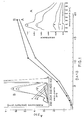
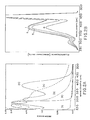
- the brown poly-L-lysine has a UV absorption maximum at 278 nm, with a prominent shoulder centered around 330-335 nm. The extension of this shoulder into the visible wavelengths is believed to be responsible for the brown color of the material From the time course shown in Figure 1, it may be seen that the rate of color formation increased during the first ten days of glucose incubation, and slowed thereafter, probably due to saturation of the available reaction sites.
- the excitation fluorescence spectrum of BPL measured at the emission maximum of 440 nm, shows a major excitation maximum at 370 nm and a minor maximum at 290 nm. These maxima do not correspond with the bands in the UV-visible absorption spectrum. This absence of correlation suggested that the fluorescence was primarily associated with a subclass of Maillard intermediates which might be sufficiently well-defined for chenmical isolation and analysis.
- BPL (1.5 g) was dissolved in 50 ml of 6 N HCl.
- the solution was deoxygenated by perfusion with nitrogen and hydrolyzed for ten hours at 110°C.
- the hydrolysate was evaporated to dryness in a stream of nitrogen gas at 40°C and then redissolved in 50 ml of 0.1 N HCl.
- This solution was extracted five times with 50 ml of isobutanol and then five times with 20 ml of chloroform.
- the organic extracts were discarded.
- the pH of the aqueous phase was adjusted to 11 with ammonium hydroxide (25%) and the solution was then extracted with 5 x 20 ml of chloroform.
- the chloroform extracts were combined and evaporated in a stream of nitrogen (yield: 35 mg).
- This material was redissolved in 2 ml of chloroform and applied to a 10 mm x 200 mm column filled with silica gel (Woelm Co., West Germany), which had been activated at 150°C overnight and pre-equilibrated with chloroform.
- the column was washed with 20 ml of chloroform and then the material was eluted with chloroform-methanol (1:1).
- the yellow fractions were pooled and evaporated to dryness with nitrogen to yeild 30 mg of fluorescent compound.
- BBSA 5 g was hydrolyzed and worked up under the same conditions described for BPL to yield 2.5 mg of fluorescent compound.
- the isolated compounds were analyzed by thin layer chromatography on silica gel G using the solvent system ether-methylene chloride (1:4). The spots were visualized by ultraviolet light.
- HPLC analyses were carried out on prepacked silica gel columns (Porasil®, 4 mm x 300 mm, Waters Assoc., Milford, MA), with heptane-acetonitrile (3:2) as the mobile phase at a rate of 1 ml/min using a Hewlett Packard 1084B liquid chromatograph equipped with a variable wavelength detector. Absorption and fluorescent spectra were taken on a Hewlett Packard 8450A diode array spectrophotometer, and on a Perkin-Elmer 204 spectrofluorimeter, respectively.
- a DuPont 21-492 double focusing magnetic deflection mass spectrometer modifed for optional chemical ionization operation equipped with a Varian 1400 gas chromatograph and coupled to a VG 2035 data system (VG Datasystems, Altringham, U.K.) was used.
- VG Datasystems Altringham, U.K.
- R 100
- Samples were introduced on ceramic probe tips; see, Bencsath, F.A. and Field, F.H.
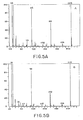
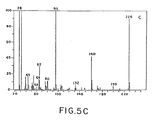
- the electron impact mass spectrum of the chromophore isolate showed a relatively simple pattern dominated by three abundant ions m/z 228 (100%), 181 (33%), and 95 (88%).
- the isobutane chemical ionization mass spectrum consisted essentially of a single ion at m/z 229, corresponding to a molecular weight of 228 for the parent species.
- the elemental composition of the major ions was determined by averaged high resolution electron impact mass spectroscopy, the results of which are presented below in Table I.
- the molecular ion was found to have the formula C12H8N2O3.
- the formula of the m/z 95 fragment is that of the furoyl cation.
- the other major fragment, m/z 160 corresponds to the loss of the elements of neutral furan from the parent ion. This fragmentation pattern is consistent with a structure in which a 2-furoyl group and a group of formula C7H5N2O are linked together through a carbonyl group.
- Drivatizations of FFI were carried out in 1 ml conical septum vials using 50 g of BPL-derived FFI as a starting material. Methoxime formation was carried out by adding 100 ⁇ l of methoxyamine hydrochloride (Sigma, St. Louis, MO) as a 10% solution in pyridine, and incubating the solution at 80°C for one hour. Blau, K. and King, G.S. (1977) Handbook of Derivatives for Chromatography , Heden; London, Bellmawr. N.J., pp. 243-244. Sodium borohydride reduction was carried out by adding 0.5 mg of solid NaBH4 (Sigma, St.
- the chromophore material was found to form a monomethoxime derivative on reaction with methoxyamine, and underwent reduction with sodium borohydride with uptake of two hydrogens to yield a colorless derivative. Both derivatives have mass spectral fragmentation patterns markedly different from the parent compound. This behavior is consistent with the presence of a conjugated non-carboxylic carbonyl group.
- Table II The results of this spectral analysis are set forth in Table II below. TABLE II MAIN IONS PRESENT IN ELECTRON IMPACT MASS SPECTRA OF FFI AND ITS CHEMICAL DERIVATIVES Compound Main Ions (m/z) Identity FFI 228 M+. (underivatized) 160 M+.
- Methylation studies demonstrated the presence of two nucleophilic sites which are differently susceptible to aklylation. Alkylation with dimethylformamide dimethyl acetal yields a neutral derivative in which one hydrogen has been replaced by methyl. Further methylation of this derivative with methl iodide afforded a dimethyl derivative with chromatographic and mass spectroscopic properties of a quarternary methiodide salt. As shown in Table II, the molecular ion of the dimethyl derivative could only be detected under fission fragment ionization conditions, and not by electron impact or chemical ionization techniques.
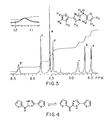
- Figure 3 shows the 1H-NMR spectrum of the chromophore material from BPL.
- Double irradiation experiments demonstrated that resonances a, c, and d comprise a group of three mutually coupled protons, and that resonances b, f, and g comprise another similar but distinct group. Although one resonance in each group was anomalously broadened, there was sufficient structure in the other resonances to allow the estimation of the three coupling constants for each group.
- the H-H coupling constants are set forth in Table III, below.
- the fact that the signal for H e on the imidazole ring is not broadened by the tautomerism may be due to fortuitous similarity of its chemical shifts in the two tautomers, or to effects on its relaxation time by the adjacent nitrogen quadrupole.
- FFI was prepared by an independent chemical method for comparison with polypeptide-derived material.
- a search of the literature failed to reveal any previous report on 2-furoyl-4(5)-(2-furanyl)-1 H -imidazole.
- diphenyl analogs such as 2-benzoyl-4(5)-phenyl-1 H -imidazole have been described. Schubert, W., Hellwig, A. and Bleichert, J.L. (1964) J. Prakt, Chem. 24, 125-131. These are most readily prepared by the reaction of phenylglyoxal derivatives with ammonia.
- the fluorescence properties of FFI are remarkably similar to those of the non-dialyzable pigments bound to albumin and to polylysine which have undergone extensive non-enzymatic browning with glucose.
- This similarity implies that there is a close analogy between the structure of FFI and that of the chromophoric centers present in the fluorescent pigments.
- ⁇ -lysyl resides could cleave from the imidazole nitrogens via internal nucleophilic attack of their released ⁇ -amino groups at the ⁇ -positions, forming FFI-like materials and pipecolic acid.
- FFI actually represents an equilibrium mixture of two interconverting tautomeric structures as illustrated in Figure 4.
- the NMR spectrum of FFI is very sensitive to traces of acid.
- the exchange of the NH proton can be sufficiently slow that the broadened peaks in Figure 3 resolve into separate broad peaks for each tautomer; conversely, addition of one equivalent of trifluoroacetic acid to the NMR solution to completely protonate both nitrogens leads to sharpening of the previously broad carbon-bound proton resonances, along with changes in chemical shifts (spectra not shown).
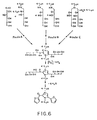
- Route A a lysine attacks the keto group of an ⁇ -fructosyllysine residue, followed by cyclization with a second glucose molecule.
- Route B two fructosyllysines interact with enolization and cyclization.
- Route C a difructosyllysine reacts with a second lysine followed by cyclization.
- the possibility of Route C is suggested by a previous observation of a product of the incubation of glucose with valine, which had two attached sugar residues. Koenig. R.J., Blobstein, S.H. and Cerami, A. (1977) J. Biol. Chem. 252, pp. 2992-2997.
- Cyclization to a tetrasubstituted dihydroimidazole (i.e., imidazoline) structure, and its subsequent autoxidation to a quaternary imidazolium species, would appear to be crucial steps in the formation of FFI.
- the dihydroimidazole intermediate would be a highly electron-rich center, and its autoxidation under conditions of physiological oxygen tension in low-turnover proteins is not difficult to envision.
Landscapes
- Health & Medical Sciences (AREA)
- Life Sciences & Earth Sciences (AREA)
- Chemical & Material Sciences (AREA)
- Engineering & Computer Science (AREA)
- General Health & Medical Sciences (AREA)
- Immunology (AREA)
- Public Health (AREA)
- Veterinary Medicine (AREA)
- Animal Behavior & Ethology (AREA)
- Medicinal Chemistry (AREA)
- Molecular Biology (AREA)
- Epidemiology (AREA)
- Urology & Nephrology (AREA)
- Hematology (AREA)
- Biomedical Technology (AREA)
- Pharmacology & Pharmacy (AREA)
- Proteomics, Peptides & Aminoacids (AREA)
- Physics & Mathematics (AREA)
- Microbiology (AREA)
- Biochemistry (AREA)
- Analytical Chemistry (AREA)
- Food Science & Technology (AREA)
- Cell Biology (AREA)
- Pathology (AREA)
- Biotechnology (AREA)
- General Physics & Mathematics (AREA)
- Bioinformatics & Cheminformatics (AREA)
- Organic Chemistry (AREA)
- Zoology (AREA)
- Gastroenterology & Hepatology (AREA)
- Birds (AREA)
- Biophysics (AREA)
- Bioinformatics & Computational Biology (AREA)
- Dermatology (AREA)
- Oral & Maxillofacial Surgery (AREA)
- Mycology (AREA)
- Gerontology & Geriatric Medicine (AREA)
- Genetics & Genomics (AREA)
- Peptides Or Proteins (AREA)
- Investigating Or Analysing Biological Materials (AREA)
Priority Applications (1)
| Application Number | Priority Date | Filing Date | Title |
|---|---|---|---|
| AT89102406T ATE97741T1 (de) | 1984-03-19 | 1985-03-19 | Verfahren und reagenzien zur bestimmung der proteinalterung. |
Applications Claiming Priority (2)
| Application Number | Priority Date | Filing Date | Title |
|---|---|---|---|
| US590820 | 1984-03-19 | ||
| US06/590,820 US4665192A (en) | 1984-03-19 | 1984-03-19 | 2-(2-furoyl)-4(5)-2(furanyl)-1H-imidazole |
Related Parent Applications (1)
| Application Number | Title | Priority Date | Filing Date |
|---|---|---|---|
| EP85901794.9 Division | 1985-03-19 |
Publications (3)
| Publication Number | Publication Date |
|---|---|
| EP0322402A2 true EP0322402A2 (fr) | 1989-06-28 |
| EP0322402A3 EP0322402A3 (en) | 1989-10-25 |
| EP0322402B1 EP0322402B1 (fr) | 1993-11-24 |
Family
ID=24363858
Family Applications (2)
| Application Number | Title | Priority Date | Filing Date |
|---|---|---|---|
| EP89102406A Expired - Lifetime EP0322402B1 (fr) | 1984-03-19 | 1985-03-19 | Procédé et agents pour mesurer le vieillissement des protéines |
| EP85901794A Expired EP0175764B1 (fr) | 1984-03-19 | 1985-03-19 | Procede et agents pour mesurer le vieillissement des proteines |
Family Applications After (1)
| Application Number | Title | Priority Date | Filing Date |
|---|---|---|---|
| EP85901794A Expired EP0175764B1 (fr) | 1984-03-19 | 1985-03-19 | Procede et agents pour mesurer le vieillissement des proteines |
Country Status (8)
| Country | Link |
|---|---|
| US (4) | US4665192A (fr) |
| EP (2) | EP0322402B1 (fr) |
| JP (2) | JPS61501706A (fr) |
| AT (2) | ATE97741T1 (fr) |
| AU (1) | AU583034B2 (fr) |
| CA (1) | CA1250587A (fr) |
| DE (2) | DE3587667T2 (fr) |
| WO (1) | WO1985004169A1 (fr) |
Cited By (1)
| Publication number | Priority date | Publication date | Assignee | Title |
|---|---|---|---|---|
| US6380165B1 (en) * | 1997-09-19 | 2002-04-30 | The Picower Institute For Medical Research | Immunological advanced glycation endproduct crosslink |
Families Citing this family (88)
| Publication number | Priority date | Publication date | Assignee | Title |
|---|---|---|---|---|
| US4665192A (en) * | 1984-03-19 | 1987-05-12 | The Rockefeller University | 2-(2-furoyl)-4(5)-2(furanyl)-1H-imidazole |
| US4983604A (en) * | 1987-11-13 | 1991-01-08 | The Rockefeller University | Inhibitors of nonenzymatic cross-linking |
| US4978684A (en) * | 1987-11-13 | 1990-12-18 | The Rockefeller University | Method and agents for preventing staining of teeth |
| US4900747A (en) * | 1984-03-19 | 1990-02-13 | The Rockefeller University | Method and agents for removing advanced glycosylation endproducts |
| US5399560A (en) * | 1984-03-19 | 1995-03-21 | The Rockefeller University | 1,2,4-triazine products resulting from the inhibition of advanced glycosylation |
| US4758583A (en) * | 1984-03-19 | 1988-07-19 | The Rockefeller University | Method and agents for inhibiting protein aging |
| US4761368A (en) * | 1986-07-15 | 1988-08-02 | The Rockefeller University | Method and agents for measuring protein aging |
| US5733524A (en) * | 1984-03-19 | 1998-03-31 | The Picower Institute For Medical Research | Methods and materials for the diagnosis and treatment of conditions such as stroke |
| US5128122A (en) * | 1984-03-19 | 1992-07-07 | The Rockefeller University | Method and agents for preventing staining of teeth |
| US5356895A (en) * | 1984-03-19 | 1994-10-18 | The Rockefeller University | 1,4 piperizino inhibitors of non-enzymatic cross-linking of proteins |
| US5801200A (en) * | 1984-03-19 | 1998-09-01 | The Picower Institute For Medical Research | Methods and materials for the diagnosis and treatment of conditions such as stroke |
| US5733933A (en) * | 1984-03-19 | 1998-03-31 | The Picower Institute For Medical Research | Methods and materials for the diagnosis and treatment of conditions such as stroke |
| US5700447A (en) * | 1992-05-21 | 1997-12-23 | The Picowder Institute For Medical Research | Methods and materials for the diagnosis and treatment of conditions such as stroke |
| US5852009A (en) * | 1984-03-19 | 1998-12-22 | The Rockefeller University | Compositions, including pharmaceutical compositions, for inhibiting the advanced glycosylation of proteins, and therapeutic methods based thereon |
| US5869534A (en) * | 1992-05-21 | 1999-02-09 | The Picower Institute For Medical Research | Glycosylation of lipids and lipid-containing particles, and diagnostic and therapeutic methods and materials derived therefrom |
| US5612332A (en) * | 1984-03-19 | 1997-03-18 | Alteon Inc. | Di- and triaminoguanidines, and methods of use |
| US5140048A (en) * | 1984-03-19 | 1992-08-18 | The Rockefeller University | Inhibitors of nonenzymatic cross-linking |
| US5262152A (en) * | 1984-03-19 | 1993-11-16 | The Rockefeller University | Amidrazones and derivatives thereof |
| US5468777A (en) * | 1984-03-19 | 1995-11-21 | The Rockefeller University | Method and agents for preventing and reversing the staining of teeth |
| USRE35465E (en) * | 1984-03-19 | 1997-02-25 | The Rockefeller University | Method and agents for removing advanced glycosylation endproducts |
| US5811075A (en) * | 1984-03-19 | 1998-09-22 | The Rockefeller University | Method and agents for removing advanced glycosylation endproducts |
| JP2644767B2 (ja) * | 1986-09-12 | 1997-08-25 | ザ ロックフェラー ユニバーシティ | 後生的なグリコシル化最終産物を除去する為の方法及び薬剤 |
| US5017696A (en) * | 1987-09-17 | 1991-05-21 | The Rockefeller University | Advanced glycosylation end products and associated methods |
| US5126442A (en) * | 1987-09-17 | 1992-06-30 | The Rockefeller University | Advanced glycosylation endproducts and associated methods |
| DE3822749A1 (de) * | 1988-07-05 | 1990-01-11 | Boehringer Mannheim Gmbh | Fructosamin-calibrator |
| US5132230A (en) * | 1989-03-28 | 1992-07-21 | Isolab, Inc. | Primary standard and method of making secondary standards for calibration of glycated protein assays |
| US5374712A (en) * | 1989-12-20 | 1994-12-20 | Case Western Reserve University | Imidazopyridinium compound and processes for isolating, identifying, and chemically synthesizing same |
| US5246970A (en) * | 1991-12-16 | 1993-09-21 | Washington University | Method of inhibiting nitric oxide formation |
| US5837738A (en) * | 1991-12-16 | 1998-11-17 | Washington University | Method of inhibiting nitric oxide formation |
| US5358969A (en) * | 1991-12-16 | 1994-10-25 | Washington University | Method of inhibiting nitric oxide formation |
| US5710181A (en) * | 1991-12-16 | 1998-01-20 | Washington University | Inhibition of nitric oxide formation in inflammatory bowel disease |
| DE4222980A1 (de) * | 1992-07-13 | 1994-01-20 | Cassella Ag | Verwendung von 2-(N-(2-Aminoethyl)amino)-essigsäure-derivaten |
| US6486181B1 (en) * | 1992-08-28 | 2002-11-26 | City Of Hope | Human leukocutye 12-lipoxygenase and its role in the pathogenesis of disease states |
| US6191169B1 (en) * | 1992-08-28 | 2001-02-20 | City Of Hope | Human leukocyte 12-lipoxygenase and its role in the pathogenesis of disease states |
| US6132976A (en) * | 1992-12-04 | 2000-10-17 | Shriners Hospitals For Children | Immunoassays for the measurement of collagen denaturation and cleavage in cartilage |
| US5453514A (en) * | 1992-12-25 | 1995-09-26 | Yamanouchi Pharmaceutical Co., Ltd. | Pyrazole derivatives and compositions and methods of use as maillard reaction inhibitors |
| US5317040A (en) * | 1993-01-26 | 1994-05-31 | Washington University | Method for the treatment of pertussis with aminoguanidine |
| AU712004B2 (en) * | 1993-03-11 | 1999-10-28 | Picower Institute For Medical Research, The | Glycosylation of lipids and lipid-containing particles, and diagnostic and therapeutic methods and materials derived therefrom |
| WO1994028418A1 (fr) * | 1993-05-28 | 1994-12-08 | Baylor College Of Medicine | Procedes et dispositif de desorption et d'ionisation d'analytes |
| US20020037517A1 (en) * | 1993-05-28 | 2002-03-28 | Hutchens T. William | Methods for sequencing biopolymers |
| US6410598B1 (en) | 1994-02-03 | 2002-06-25 | Michael P. Vitek | Compositions and methods for advanced glycosylation endproduct-mediated modulation of amyloidosis |
| CA2182731A1 (fr) * | 1994-02-03 | 1995-08-10 | Michael P. Vitek | Compositions et procedes de modulation de l'amyloidose induite par des produits terminaux de glycosylation avancee |
| US6242417B1 (en) * | 1994-03-08 | 2001-06-05 | Somatogen, Inc. | Stabilized compositions containing hemoglobin |
| CA2157219C (fr) * | 1994-08-31 | 2010-10-05 | Munehiro Noda | Procede pour la purification d'albumine de serum humain recombinante |
| US5855882A (en) * | 1995-04-05 | 1999-01-05 | The Picower Institute For Medical Research | Methods for inhibiting the cross-linking of advanced glycosylation endproducts |
| US6228858B1 (en) * | 1995-09-12 | 2001-05-08 | University Of Kansas Medical Center | Advanced glycation end-product intermediaries and post-amadori inhibition |
| US5744451A (en) * | 1995-09-12 | 1998-04-28 | Warner-Lambert Company | N-substituted glutamic acid derivatives with interleukin-1 β converting enzyme inhibitory activity |
| US6436969B1 (en) * | 1995-09-12 | 2002-08-20 | Kansas University Medical Center Research Institute Inc. | Dialysis solutions and methods |
| US6750209B1 (en) * | 1995-09-12 | 2004-06-15 | Kansas University Medical Center | Advanced glycation end-product intermediaries and post-amadori inhibition |
| US5854000A (en) * | 1995-11-15 | 1998-12-29 | Alteon Inc. | Methods for measurement predicated on the presence of advanced glycosylation endproducts in tobacco and its combustion byproducts |
| US5850840A (en) * | 1995-11-15 | 1998-12-22 | Alteon Inc. | Methods for measurement and treatment predicated on the presence of advanced glycosylation endproducts in tobacco and its combustion byproducts |
| ZA969617B (en) * | 1995-11-15 | 1998-02-19 | Picower Inst Med Res | Method and agents for inhibiting protein aging. |
| US5811401A (en) * | 1995-11-30 | 1998-09-22 | The Picower Institute For Medical Research | Advanced glycosylation endproducts and methods of use therefor |
| ATE369847T1 (de) * | 1995-12-22 | 2007-09-15 | Smithkline Beecham Plc | Aminoguanidine zur behandlung von diabetes typ ii |
| AU723649B2 (en) * | 1995-12-26 | 2000-08-31 | Alteon Inc. | Methods for measurement and treatment predicated on the presence of advanced glycosylation endproducts in tobacco and its combustion byproducts |
| US5877217A (en) * | 1995-12-26 | 1999-03-02 | Alteon Inc. | N-acylaminoalkyl-hydrazinecarboximidamides |
| US6110968A (en) * | 1995-12-26 | 2000-08-29 | The Picower Institute For Medical Research | Methods for treatment predicated on the presence of advanced glycosylation endproducts in tobacco and its combustion byproducts |
| US20040198795A1 (en) * | 1996-05-08 | 2004-10-07 | Wagle Dilip R | Substituted imidazoliums and methods of use therefor |
| AU4053597A (en) * | 1996-08-07 | 1998-02-25 | Alteon Inc. | Synthesis of 2-(2-furoyl)-4(5)-(2-furanyl)-1h-imidazole and analogs thereof |
| US5856511A (en) * | 1996-08-07 | 1999-01-05 | Alteon Inc. | Synthesis of 2-(2-furoyl)-4(5)-(2-furanyl)-1H-imidazole and analogs thereof |
| US20030013746A1 (en) * | 1996-09-10 | 2003-01-16 | University Of Kansas Medical Center. | Advanced glycation end-product intermediaries and post-amadori inhibition |
| US6025401A (en) * | 1996-11-15 | 2000-02-15 | The Picower Institute For Medical Research | Method and agents for inhibiting protein aging |
| US7071298B2 (en) * | 1997-02-05 | 2006-07-04 | Fox Chase Cancer Center | Compounds and methods for treating glycogen storage disease and other pathological conditions resulting from formation of age-proteins |
| US6004958A (en) * | 1997-02-05 | 1999-12-21 | Fox Chase Cancer Center | Compounds and methods for therapeutic intervention in preventing diabetic complications and procedures for assessing a diabetic's risk of developing complications and determining the efficacy of therapeutic intervention |
| US5921248A (en) | 1997-03-28 | 1999-07-13 | The Picower Institute For Medical Research | Tobacco combination product filter |
| CA2339879C (fr) * | 1998-08-24 | 2011-11-15 | Toshio Miyata | Substance ameliorant l'agression du carbonyle et du dialysate peritoneale |
| JP2002525106A (ja) * | 1998-09-25 | 2002-08-13 | グリコックス コーポレイション リミティド | フルクトサミンオキシダーゼアッセイ:方法及び材料 |
| CN1324234A (zh) | 1998-09-25 | 2001-11-28 | 格利科克斯有限公司 | 果糖胺氧化酶,拮抗剂和抑制剂 |
| HK1041436B (en) | 1998-12-01 | 2005-03-11 | University Of Kentucky Research Foundation | Use of nicotinic acid derivatives for the treatment of dna damage in skin cells |
| WO2000051987A2 (fr) | 1999-03-05 | 2000-09-08 | Kansas University Medical Center | Nouveaux inhibiteurs post-amadori de reactions de glycation avancee |
| CA2369755A1 (fr) * | 1999-04-15 | 2000-10-26 | Fox Chase Cancer Center | Procede destine a reduire la predisposition a la formation de tumeurs provoquees par la 3-desoxyglucosone et les precurseurs de cette substance |
| EP1219302A4 (fr) * | 1999-05-12 | 2005-04-27 | Kurokawa Kiyoshi | Agent de piegeage de composes carbonyles sanguins |
| NZ523461A (en) * | 2000-05-31 | 2004-11-26 | Encelle Inc | Method of treating chronic ulcers |
| WO2001093854A1 (fr) * | 2000-06-07 | 2001-12-13 | Alteon, Inc. | Procede de traitement de l'hyperglycemie |
| US6946527B2 (en) * | 2000-07-25 | 2005-09-20 | Membrana Gmbh | Modified polymeric shaped body, method for producing the same and use thereof |
| AU2002237667A1 (en) | 2000-11-20 | 2002-05-27 | University Of Kansas Medical Center | Methods for the treatment and prevention of urinary stone disease |
| US20030082647A1 (en) * | 2000-12-12 | 2003-05-01 | Reenan Robert A. | Transporter protein |
| WO2002059310A2 (fr) | 2000-12-12 | 2002-08-01 | University Of Connecticut | Polynucleotides encoding cellular transporters and methods of use thereof |
| US7333104B2 (en) | 2001-12-04 | 2008-02-19 | Riken | Method and program of converting three-dimensional shape data into cell internal data |
| ES2386782T3 (es) | 2002-03-08 | 2012-08-30 | Philera New Zealand Limited | Prevención y/o tratamiento de la enfermedad cardiovascular y/o la insuficiencia cardíaca asociada |
| US7622117B2 (en) * | 2002-04-17 | 2009-11-24 | Dynamis Therapeutics, Inc. | 3-deoxyglucosone and skin |
| DE10219644A1 (de) * | 2002-05-02 | 2003-11-20 | Johannes Wohlrab | Verwendung vom Agmatin zur topischen Applikation |
| CA2875522A1 (fr) | 2002-08-20 | 2004-03-04 | Philera New Zealand Limited | Formes posologiques et traitements s'y rapportant |
| US20050159364A1 (en) * | 2003-12-19 | 2005-07-21 | Cooper Garth J. | Copper antagonist compounds |
| EP1778618B1 (fr) | 2004-07-19 | 2013-12-25 | PhilERA New Zealand Limited | Synthese de triethylenetetramines |
| US20060089316A1 (en) * | 2004-10-25 | 2006-04-27 | Brown Truman R | Method for reducing a susceptibility to tumor formation induced by 3-deoxyglucosone and precursors thereof |
| WO2009123753A1 (fr) | 2008-04-04 | 2009-10-08 | North Carolina State University | Inhibition de biofilms bactériens par des dérivés d'imidazole-phényle |
| WO2010144686A1 (fr) | 2009-06-10 | 2010-12-16 | North Carolina State University | Inhibition et dispersion de bio-films bactériens avec dérivés de benzimidazole |
Family Cites Families (11)
| Publication number | Priority date | Publication date | Assignee | Title |
|---|---|---|---|---|
| US3637850A (en) * | 1969-04-04 | 1972-01-25 | Sandoz Ag | Substituted benzylideneamino guanidines |
| FR2068337A5 (fr) * | 1970-10-14 | 1971-08-20 | Sopromi Soc Proc Modern Inject | |
| US4371374A (en) * | 1980-11-17 | 1983-02-01 | The Rockefeller University | Monitoring metabolic control in diabetic patients by measuring glycosylated amino acids and peptides in urine |
| DE3127042A1 (de) * | 1981-07-09 | 1983-01-20 | Bayer Ag, 5090 Leverkusen | "verfahren zur herstellung von hydrazidinen" |
| US4629692A (en) * | 1982-12-06 | 1986-12-16 | Miles Laboratories, Inc. | Immunoassay for nonenzymatically glucosylated proteins and protein fragments an index of glycemia |
| US4571059A (en) * | 1983-10-17 | 1986-02-18 | Minnesota Mining And Manufacturing Company | Apparatus for transferring images of conductive toner powder |
| US4978684A (en) * | 1987-11-13 | 1990-12-18 | The Rockefeller University | Method and agents for preventing staining of teeth |
| US4908446A (en) * | 1985-11-14 | 1990-03-13 | The Rockefeller University | Inhibitors of nonenzymatic cross-linking |
| US4758583A (en) * | 1984-03-19 | 1988-07-19 | The Rockefeller University | Method and agents for inhibiting protein aging |
| US4665192A (en) * | 1984-03-19 | 1987-05-12 | The Rockefeller University | 2-(2-furoyl)-4(5)-2(furanyl)-1H-imidazole |
| US4983604A (en) * | 1987-11-13 | 1991-01-08 | The Rockefeller University | Inhibitors of nonenzymatic cross-linking |
-
1984
- 1984-03-19 US US06/590,820 patent/US4665192A/en not_active Expired - Lifetime
-
1985
- 1985-03-18 CA CA000476824A patent/CA1250587A/fr not_active Expired
- 1985-03-19 AU AU41531/85A patent/AU583034B2/en not_active Ceased
- 1985-03-19 DE DE89102406T patent/DE3587667T2/de not_active Expired - Fee Related
- 1985-03-19 AT AT89102406T patent/ATE97741T1/de not_active IP Right Cessation
- 1985-03-19 JP JP60501427A patent/JPS61501706A/ja active Pending
- 1985-03-19 EP EP89102406A patent/EP0322402B1/fr not_active Expired - Lifetime
- 1985-03-19 EP EP85901794A patent/EP0175764B1/fr not_active Expired
- 1985-03-19 DE DE8585901794T patent/DE3574973D1/de not_active Expired - Lifetime
- 1985-03-19 WO PCT/US1985/000467 patent/WO1985004169A1/fr not_active Ceased
- 1985-03-19 AT AT85901794T patent/ATE48998T1/de active
-
1990
- 1990-02-20 US US07/481,869 patent/US5128360A/en not_active Expired - Fee Related
-
1991
- 1991-05-07 US US07/697,213 patent/US5130337A/en not_active Expired - Fee Related
- 1991-12-10 US US07/805,200 patent/US5238963A/en not_active Expired - Lifetime
-
1992
- 1992-03-10 JP JP4051657A patent/JPH05172813A/ja active Pending
Cited By (1)
| Publication number | Priority date | Publication date | Assignee | Title |
|---|---|---|---|---|
| US6380165B1 (en) * | 1997-09-19 | 2002-04-30 | The Picower Institute For Medical Research | Immunological advanced glycation endproduct crosslink |
Also Published As
| Publication number | Publication date |
|---|---|
| AU4153185A (en) | 1985-10-11 |
| DE3587667D1 (de) | 1994-01-05 |
| ATE48998T1 (de) | 1990-01-15 |
| JPS61501706A (ja) | 1986-08-14 |
| AU583034B2 (en) | 1989-04-20 |
| DE3587667T2 (de) | 1994-03-17 |
| EP0175764A1 (fr) | 1986-04-02 |
| WO1985004169A1 (fr) | 1985-09-26 |
| US5128360A (en) | 1992-07-07 |
| EP0175764B1 (fr) | 1989-12-27 |
| CA1250587A (fr) | 1989-02-28 |
| JPH05172813A (ja) | 1993-07-13 |
| EP0322402A3 (en) | 1989-10-25 |
| US5238963A (en) | 1993-08-24 |
| DE3574973D1 (de) | 1990-02-01 |
| EP0322402B1 (fr) | 1993-11-24 |
| US5130337A (en) | 1992-07-14 |
| US4665192A (en) | 1987-05-12 |
| ATE97741T1 (de) | 1993-12-15 |
Similar Documents
| Publication | Publication Date | Title |
|---|---|---|
| EP0322402B1 (fr) | Procédé et agents pour mesurer le vieillissement des protéines | |
| Pongor et al. | Aging of proteins: isolation and identification of a fluorescent chromophore from the reaction of polypeptides with glucose. | |
| Chang et al. | Detection of an advanced glycosylation product bound to protein in situ. | |
| US4761368A (en) | Method and agents for measuring protein aging | |
| Ahmed et al. | Assay of advanced glycation endproducts (AGEs): surveying AGEs by chromatographic assay with derivatization by 6-aminoquinolyl-N-hydroxysuccinimidyl-carbamate and application to N∊-carboxymethyl-lysine-and N∊-(1-carboxyethyl) lysine-modified albumin | |
| US6380165B1 (en) | Immunological advanced glycation endproduct crosslink | |
| KR100257733B1 (ko) | 생체내 개량된 글리코실화 종말 산물의 면역 화학적 검출용 시험키트 | |
| JP4117320B2 (ja) | 複合した混合物中のタンパク質またはタンパク質機能の迅速定量分析 | |
| US5017696A (en) | Advanced glycosylation end products and associated methods | |
| Lapolla et al. | The role of mass spectrometry in the study of non‐enzymatic protein glycation in diabetes | |
| Niwa | Mass spectrometry for the study of protein glycation in disease | |
| Niwa et al. | Imidazolone, a novel advanced glycation end product, is present at high levels in kidneys of rats with streptozotocin-induced diabetes | |
| US5688653A (en) | 3-alkylamino-2-hydroxy-4-hydroxymethyl-2-cyclopenten-1-one advanced glycosylation endproducts and methods of use therefor | |
| US5399560A (en) | 1,2,4-triazine products resulting from the inhibition of advanced glycosylation | |
| Lapolla et al. | Diabetes and mass spectrometry | |
| Rydberg et al. | LC/MS/MS analysis of N‐terminal protein adducts with improved sensitivity: A comparison of selected Edman Isothiocyanate reagents | |
| US5770571A (en) | Method and agents for inhibiting protein aging | |
| US5126442A (en) | Advanced glycosylation endproducts and associated methods | |
| EP0307939B1 (fr) | Produits finaux avancés de glycosylation et méthodes correspondantes | |
| Lapolla et al. | Absence of brown product FFI in nondiabetic and diabetic rat collagen | |
| Gerke et al. | Direct glucosone-based synthesis and HILIC-ESI-MS/MS characterization of N-terminal fructosylated valine and valylhistidine for validation of enzymatic HbA1c assays in the diagnosis of diabetes mellitus | |
| CN101149375A (zh) | 对隐色孔雀绿和孔雀石绿进行免疫测定的方法和试剂盒 | |
| US6025401A (en) | Method and agents for inhibiting protein aging | |
| Lapolla et al. | Studies on advanced glycation end products by recent mass spectrometric techniques | |
| Schmid et al. | Determination of glucitollysine for the quantitation of non-enzymatic glucosylation by ion exchange chromatography and reverse phase liquid chromatography |
Legal Events
| Date | Code | Title | Description |
|---|---|---|---|
| PUAI | Public reference made under article 153(3) epc to a published international application that has entered the european phase |
Free format text: ORIGINAL CODE: 0009012 |
|
| AC | Divisional application: reference to earlier application |
Ref document number: 175764 Country of ref document: EP |
|
| AK | Designated contracting states |
Kind code of ref document: A2 Designated state(s): AT BE CH DE FR GB IT LI LU NL SE |
|
| RBV | Designated contracting states (corrected) |
Designated state(s): AT BE CH DE FR GB LI LU NL SE |
|
| PUAL | Search report despatched |
Free format text: ORIGINAL CODE: 0009013 |
|
| AK | Designated contracting states |
Kind code of ref document: A3 Designated state(s): AT BE CH DE FR GB LI LU NL SE |
|
| 17P | Request for examination filed |
Effective date: 19900226 |
|
| 17Q | First examination report despatched |
Effective date: 19911115 |
|
| GRAA | (expected) grant |
Free format text: ORIGINAL CODE: 0009210 |
|
| AC | Divisional application: reference to earlier application |
Ref document number: 175764 Country of ref document: EP |
|
| AK | Designated contracting states |
Kind code of ref document: B1 Designated state(s): AT BE CH DE FR GB LI LU NL SE |
|
| PG25 | Lapsed in a contracting state [announced via postgrant information from national office to epo] |
Ref country code: SE Effective date: 19931124 Ref country code: NL Effective date: 19931124 Ref country code: LI Effective date: 19931124 Ref country code: CH Effective date: 19931124 Ref country code: BE Effective date: 19931124 Ref country code: AT Effective date: 19931124 |
|
| REF | Corresponds to: |
Ref document number: 97741 Country of ref document: AT Date of ref document: 19931215 Kind code of ref document: T |
|
| ET | Fr: translation filed | ||
| REF | Corresponds to: |
Ref document number: 3587667 Country of ref document: DE Date of ref document: 19940105 |
|
| REG | Reference to a national code |
Ref country code: CH Ref legal event code: PL |
|
| PG25 | Lapsed in a contracting state [announced via postgrant information from national office to epo] |
Ref country code: GB Effective date: 19940319 |
|
| PG25 | Lapsed in a contracting state [announced via postgrant information from national office to epo] |
Ref country code: LU Free format text: LAPSE BECAUSE OF NON-PAYMENT OF DUE FEES Effective date: 19940331 |
|
| NLV1 | Nl: lapsed or annulled due to failure to fulfill the requirements of art. 29p and 29m of the patents act | ||
| PLBE | No opposition filed within time limit |
Free format text: ORIGINAL CODE: 0009261 |
|
| STAA | Information on the status of an ep patent application or granted ep patent |
Free format text: STATUS: NO OPPOSITION FILED WITHIN TIME LIMIT |
|
| GBPC | Gb: european patent ceased through non-payment of renewal fee |
Effective date: 19940319 |
|
| 26N | No opposition filed | ||
| PG25 | Lapsed in a contracting state [announced via postgrant information from national office to epo] |
Ref country code: FR Effective date: 19941130 |
|
| PG25 | Lapsed in a contracting state [announced via postgrant information from national office to epo] |
Ref country code: DE Effective date: 19941201 |
|
| REG | Reference to a national code |
Ref country code: FR Ref legal event code: ST |