EP0321389A1 - Implantierbare Prothese - Google Patents
Implantierbare Prothese Download PDFInfo
- Publication number
- EP0321389A1 EP0321389A1 EP88730279A EP88730279A EP0321389A1 EP 0321389 A1 EP0321389 A1 EP 0321389A1 EP 88730279 A EP88730279 A EP 88730279A EP 88730279 A EP88730279 A EP 88730279A EP 0321389 A1 EP0321389 A1 EP 0321389A1
- Authority
- EP
- European Patent Office
- Prior art keywords
- prosthesis
- anchorage
- implantable
- head
- socket
- Prior art date
- Legal status (The legal status is an assumption and is not a legal conclusion. Google has not performed a legal analysis and makes no representation as to the accuracy of the status listed.)
- Withdrawn
Links
- 239000000463 material Substances 0.000 claims abstract description 20
- 239000000919 ceramic Substances 0.000 claims abstract description 9
- 230000000975 bioactive effect Effects 0.000 claims abstract description 8
- 238000004873 anchoring Methods 0.000 claims description 7
- 229910001069 Ti alloy Inorganic materials 0.000 claims description 2
- 230000003247 decreasing effect Effects 0.000 claims 1
- 239000000470 constituent Substances 0.000 abstract 1
- 239000007943 implant Substances 0.000 description 21
- 210000000988 bone and bone Anatomy 0.000 description 17
- 229910010293 ceramic material Inorganic materials 0.000 description 7
- 239000011248 coating agent Substances 0.000 description 3
- 238000000576 coating method Methods 0.000 description 3
- 210000004394 hip joint Anatomy 0.000 description 3
- 238000002513 implantation Methods 0.000 description 3
- 239000004033 plastic Substances 0.000 description 3
- 229920003023 plastic Polymers 0.000 description 3
- 229920000642 polymer Polymers 0.000 description 3
- 239000011148 porous material Substances 0.000 description 3
- 230000015572 biosynthetic process Effects 0.000 description 2
- 238000011161 development Methods 0.000 description 2
- 230000018109 developmental process Effects 0.000 description 2
- 210000001519 tissue Anatomy 0.000 description 2
- RTAQQCXQSZGOHL-UHFFFAOYSA-N Titanium Chemical compound [Ti] RTAQQCXQSZGOHL-UHFFFAOYSA-N 0.000 description 1
- 239000002639 bone cement Substances 0.000 description 1
- 239000001506 calcium phosphate Substances 0.000 description 1
- 235000011010 calcium phosphates Nutrition 0.000 description 1
- 239000004568 cement Substances 0.000 description 1
- 210000002808 connective tissue Anatomy 0.000 description 1
- 238000005336 cracking Methods 0.000 description 1
- 230000006378 damage Effects 0.000 description 1
- 239000004053 dental implant Substances 0.000 description 1
- 230000007794 irritation Effects 0.000 description 1
- 229910052751 metal Inorganic materials 0.000 description 1
- 239000002184 metal Substances 0.000 description 1
- 229910052574 oxide ceramic Inorganic materials 0.000 description 1
- 239000011224 oxide ceramic Substances 0.000 description 1
- 230000035515 penetration Effects 0.000 description 1
- 230000000379 polymerizing effect Effects 0.000 description 1
- 230000001737 promoting effect Effects 0.000 description 1
- 238000007493 shaping process Methods 0.000 description 1
- 238000007086 side reaction Methods 0.000 description 1
- 230000008719 thickening Effects 0.000 description 1
- 239000010936 titanium Substances 0.000 description 1
- 229910052719 titanium Inorganic materials 0.000 description 1
- QORWJWZARLRLPR-UHFFFAOYSA-H tricalcium bis(phosphate) Chemical class [Ca+2].[Ca+2].[Ca+2].[O-]P([O-])([O-])=O.[O-]P([O-])([O-])=O QORWJWZARLRLPR-UHFFFAOYSA-H 0.000 description 1
Images
Classifications
-
- A—HUMAN NECESSITIES
- A61—MEDICAL OR VETERINARY SCIENCE; HYGIENE
- A61F—FILTERS IMPLANTABLE INTO BLOOD VESSELS; PROSTHESES; DEVICES PROVIDING PATENCY TO, OR PREVENTING COLLAPSING OF, TUBULAR STRUCTURES OF THE BODY, e.g. STENTS; ORTHOPAEDIC, NURSING OR CONTRACEPTIVE DEVICES; FOMENTATION; TREATMENT OR PROTECTION OF EYES OR EARS; BANDAGES, DRESSINGS OR ABSORBENT PADS; FIRST-AID KITS
- A61F2/00—Filters implantable into blood vessels; Prostheses, i.e. artificial substitutes or replacements for parts of the body; Appliances for connecting them with the body; Devices providing patency to, or preventing collapsing of, tubular structures of the body, e.g. stents
- A61F2/02—Prostheses implantable into the body
- A61F2/30—Joints
- A61F2/30767—Special external or bone-contacting surface, e.g. coating for improving bone ingrowth
-
- A—HUMAN NECESSITIES
- A61—MEDICAL OR VETERINARY SCIENCE; HYGIENE
- A61F—FILTERS IMPLANTABLE INTO BLOOD VESSELS; PROSTHESES; DEVICES PROVIDING PATENCY TO, OR PREVENTING COLLAPSING OF, TUBULAR STRUCTURES OF THE BODY, e.g. STENTS; ORTHOPAEDIC, NURSING OR CONTRACEPTIVE DEVICES; FOMENTATION; TREATMENT OR PROTECTION OF EYES OR EARS; BANDAGES, DRESSINGS OR ABSORBENT PADS; FIRST-AID KITS
- A61F2/00—Filters implantable into blood vessels; Prostheses, i.e. artificial substitutes or replacements for parts of the body; Appliances for connecting them with the body; Devices providing patency to, or preventing collapsing of, tubular structures of the body, e.g. stents
- A61F2/02—Prostheses implantable into the body
- A61F2/30—Joints
- A61F2/32—Joints for the hip
- A61F2/36—Femoral heads ; Femoral endoprostheses
- A61F2/3662—Femoral shafts
-
- A—HUMAN NECESSITIES
- A61—MEDICAL OR VETERINARY SCIENCE; HYGIENE
- A61F—FILTERS IMPLANTABLE INTO BLOOD VESSELS; PROSTHESES; DEVICES PROVIDING PATENCY TO, OR PREVENTING COLLAPSING OF, TUBULAR STRUCTURES OF THE BODY, e.g. STENTS; ORTHOPAEDIC, NURSING OR CONTRACEPTIVE DEVICES; FOMENTATION; TREATMENT OR PROTECTION OF EYES OR EARS; BANDAGES, DRESSINGS OR ABSORBENT PADS; FIRST-AID KITS
- A61F2/00—Filters implantable into blood vessels; Prostheses, i.e. artificial substitutes or replacements for parts of the body; Appliances for connecting them with the body; Devices providing patency to, or preventing collapsing of, tubular structures of the body, e.g. stents
- A61F2/02—Prostheses implantable into the body
- A61F2/30—Joints
- A61F2/30721—Accessories
- A61F2/30749—Fixation appliances for connecting prostheses to the body
-
- A—HUMAN NECESSITIES
- A61—MEDICAL OR VETERINARY SCIENCE; HYGIENE
- A61F—FILTERS IMPLANTABLE INTO BLOOD VESSELS; PROSTHESES; DEVICES PROVIDING PATENCY TO, OR PREVENTING COLLAPSING OF, TUBULAR STRUCTURES OF THE BODY, e.g. STENTS; ORTHOPAEDIC, NURSING OR CONTRACEPTIVE DEVICES; FOMENTATION; TREATMENT OR PROTECTION OF EYES OR EARS; BANDAGES, DRESSINGS OR ABSORBENT PADS; FIRST-AID KITS
- A61F2/00—Filters implantable into blood vessels; Prostheses, i.e. artificial substitutes or replacements for parts of the body; Appliances for connecting them with the body; Devices providing patency to, or preventing collapsing of, tubular structures of the body, e.g. stents
- A61F2/02—Prostheses implantable into the body
- A61F2/30—Joints
- A61F2002/30001—Additional features of subject-matter classified in A61F2/28, A61F2/30 and subgroups thereof
- A61F2002/30003—Material related properties of the prosthesis or of a coating on the prosthesis
- A61F2002/30004—Material related properties of the prosthesis or of a coating on the prosthesis the prosthesis being made from materials having different values of a given property at different locations within the same prosthesis
- A61F2002/30032—Material related properties of the prosthesis or of a coating on the prosthesis the prosthesis being made from materials having different values of a given property at different locations within the same prosthesis differing in absorbability or resorbability, i.e. in absorption or resorption time
-
- A—HUMAN NECESSITIES
- A61—MEDICAL OR VETERINARY SCIENCE; HYGIENE
- A61F—FILTERS IMPLANTABLE INTO BLOOD VESSELS; PROSTHESES; DEVICES PROVIDING PATENCY TO, OR PREVENTING COLLAPSING OF, TUBULAR STRUCTURES OF THE BODY, e.g. STENTS; ORTHOPAEDIC, NURSING OR CONTRACEPTIVE DEVICES; FOMENTATION; TREATMENT OR PROTECTION OF EYES OR EARS; BANDAGES, DRESSINGS OR ABSORBENT PADS; FIRST-AID KITS
- A61F2/00—Filters implantable into blood vessels; Prostheses, i.e. artificial substitutes or replacements for parts of the body; Appliances for connecting them with the body; Devices providing patency to, or preventing collapsing of, tubular structures of the body, e.g. stents
- A61F2/02—Prostheses implantable into the body
- A61F2/30—Joints
- A61F2002/30001—Additional features of subject-matter classified in A61F2/28, A61F2/30 and subgroups thereof
- A61F2002/30003—Material related properties of the prosthesis or of a coating on the prosthesis
- A61F2002/3006—Properties of materials and coating materials
- A61F2002/30062—(bio)absorbable, biodegradable, bioerodable, (bio)resorbable, resorptive
-
- A—HUMAN NECESSITIES
- A61—MEDICAL OR VETERINARY SCIENCE; HYGIENE
- A61F—FILTERS IMPLANTABLE INTO BLOOD VESSELS; PROSTHESES; DEVICES PROVIDING PATENCY TO, OR PREVENTING COLLAPSING OF, TUBULAR STRUCTURES OF THE BODY, e.g. STENTS; ORTHOPAEDIC, NURSING OR CONTRACEPTIVE DEVICES; FOMENTATION; TREATMENT OR PROTECTION OF EYES OR EARS; BANDAGES, DRESSINGS OR ABSORBENT PADS; FIRST-AID KITS
- A61F2/00—Filters implantable into blood vessels; Prostheses, i.e. artificial substitutes or replacements for parts of the body; Appliances for connecting them with the body; Devices providing patency to, or preventing collapsing of, tubular structures of the body, e.g. stents
- A61F2/02—Prostheses implantable into the body
- A61F2/30—Joints
- A61F2002/30001—Additional features of subject-matter classified in A61F2/28, A61F2/30 and subgroups thereof
- A61F2002/30003—Material related properties of the prosthesis or of a coating on the prosthesis
- A61F2002/3006—Properties of materials and coating materials
- A61F2002/30062—(bio)absorbable, biodegradable, bioerodable, (bio)resorbable, resorptive
- A61F2002/30064—Coating or prosthesis-covering structure made of biodegradable material
-
- A—HUMAN NECESSITIES
- A61—MEDICAL OR VETERINARY SCIENCE; HYGIENE
- A61F—FILTERS IMPLANTABLE INTO BLOOD VESSELS; PROSTHESES; DEVICES PROVIDING PATENCY TO, OR PREVENTING COLLAPSING OF, TUBULAR STRUCTURES OF THE BODY, e.g. STENTS; ORTHOPAEDIC, NURSING OR CONTRACEPTIVE DEVICES; FOMENTATION; TREATMENT OR PROTECTION OF EYES OR EARS; BANDAGES, DRESSINGS OR ABSORBENT PADS; FIRST-AID KITS
- A61F2/00—Filters implantable into blood vessels; Prostheses, i.e. artificial substitutes or replacements for parts of the body; Appliances for connecting them with the body; Devices providing patency to, or preventing collapsing of, tubular structures of the body, e.g. stents
- A61F2/02—Prostheses implantable into the body
- A61F2/30—Joints
- A61F2002/30001—Additional features of subject-matter classified in A61F2/28, A61F2/30 and subgroups thereof
- A61F2002/30108—Shapes
- A61F2002/3011—Cross-sections or two-dimensional shapes
- A61F2002/30112—Rounded shapes, e.g. with rounded corners
- A61F2002/30136—Rounded shapes, e.g. with rounded corners undulated or wavy, e.g. serpentine-shaped or zigzag-shaped
-
- A—HUMAN NECESSITIES
- A61—MEDICAL OR VETERINARY SCIENCE; HYGIENE
- A61F—FILTERS IMPLANTABLE INTO BLOOD VESSELS; PROSTHESES; DEVICES PROVIDING PATENCY TO, OR PREVENTING COLLAPSING OF, TUBULAR STRUCTURES OF THE BODY, e.g. STENTS; ORTHOPAEDIC, NURSING OR CONTRACEPTIVE DEVICES; FOMENTATION; TREATMENT OR PROTECTION OF EYES OR EARS; BANDAGES, DRESSINGS OR ABSORBENT PADS; FIRST-AID KITS
- A61F2/00—Filters implantable into blood vessels; Prostheses, i.e. artificial substitutes or replacements for parts of the body; Appliances for connecting them with the body; Devices providing patency to, or preventing collapsing of, tubular structures of the body, e.g. stents
- A61F2/02—Prostheses implantable into the body
- A61F2/30—Joints
- A61F2/30767—Special external or bone-contacting surface, e.g. coating for improving bone ingrowth
- A61F2/30771—Special external or bone-contacting surface, e.g. coating for improving bone ingrowth applied in original prostheses, e.g. holes or grooves
- A61F2002/3085—Special external or bone-contacting surface, e.g. coating for improving bone ingrowth applied in original prostheses, e.g. holes or grooves with a threaded, e.g. self-tapping, bone-engaging surface, e.g. external surface
-
- A—HUMAN NECESSITIES
- A61—MEDICAL OR VETERINARY SCIENCE; HYGIENE
- A61F—FILTERS IMPLANTABLE INTO BLOOD VESSELS; PROSTHESES; DEVICES PROVIDING PATENCY TO, OR PREVENTING COLLAPSING OF, TUBULAR STRUCTURES OF THE BODY, e.g. STENTS; ORTHOPAEDIC, NURSING OR CONTRACEPTIVE DEVICES; FOMENTATION; TREATMENT OR PROTECTION OF EYES OR EARS; BANDAGES, DRESSINGS OR ABSORBENT PADS; FIRST-AID KITS
- A61F2/00—Filters implantable into blood vessels; Prostheses, i.e. artificial substitutes or replacements for parts of the body; Appliances for connecting them with the body; Devices providing patency to, or preventing collapsing of, tubular structures of the body, e.g. stents
- A61F2/02—Prostheses implantable into the body
- A61F2/30—Joints
- A61F2/30767—Special external or bone-contacting surface, e.g. coating for improving bone ingrowth
- A61F2/30771—Special external or bone-contacting surface, e.g. coating for improving bone ingrowth applied in original prostheses, e.g. holes or grooves
- A61F2002/3085—Special external or bone-contacting surface, e.g. coating for improving bone ingrowth applied in original prostheses, e.g. holes or grooves with a threaded, e.g. self-tapping, bone-engaging surface, e.g. external surface
- A61F2002/30866—Rounded threads
-
- A—HUMAN NECESSITIES
- A61—MEDICAL OR VETERINARY SCIENCE; HYGIENE
- A61F—FILTERS IMPLANTABLE INTO BLOOD VESSELS; PROSTHESES; DEVICES PROVIDING PATENCY TO, OR PREVENTING COLLAPSING OF, TUBULAR STRUCTURES OF THE BODY, e.g. STENTS; ORTHOPAEDIC, NURSING OR CONTRACEPTIVE DEVICES; FOMENTATION; TREATMENT OR PROTECTION OF EYES OR EARS; BANDAGES, DRESSINGS OR ABSORBENT PADS; FIRST-AID KITS
- A61F2/00—Filters implantable into blood vessels; Prostheses, i.e. artificial substitutes or replacements for parts of the body; Appliances for connecting them with the body; Devices providing patency to, or preventing collapsing of, tubular structures of the body, e.g. stents
- A61F2/02—Prostheses implantable into the body
- A61F2/30—Joints
- A61F2/30767—Special external or bone-contacting surface, e.g. coating for improving bone ingrowth
- A61F2/30907—Nets or sleeves applied to surface of prostheses or in cement
- A61F2002/30919—Sleeves
-
- A—HUMAN NECESSITIES
- A61—MEDICAL OR VETERINARY SCIENCE; HYGIENE
- A61F—FILTERS IMPLANTABLE INTO BLOOD VESSELS; PROSTHESES; DEVICES PROVIDING PATENCY TO, OR PREVENTING COLLAPSING OF, TUBULAR STRUCTURES OF THE BODY, e.g. STENTS; ORTHOPAEDIC, NURSING OR CONTRACEPTIVE DEVICES; FOMENTATION; TREATMENT OR PROTECTION OF EYES OR EARS; BANDAGES, DRESSINGS OR ABSORBENT PADS; FIRST-AID KITS
- A61F2/00—Filters implantable into blood vessels; Prostheses, i.e. artificial substitutes or replacements for parts of the body; Appliances for connecting them with the body; Devices providing patency to, or preventing collapsing of, tubular structures of the body, e.g. stents
- A61F2/02—Prostheses implantable into the body
- A61F2/30—Joints
- A61F2/3094—Designing or manufacturing processes
- A61F2002/30968—Sintering
-
- A—HUMAN NECESSITIES
- A61—MEDICAL OR VETERINARY SCIENCE; HYGIENE
- A61F—FILTERS IMPLANTABLE INTO BLOOD VESSELS; PROSTHESES; DEVICES PROVIDING PATENCY TO, OR PREVENTING COLLAPSING OF, TUBULAR STRUCTURES OF THE BODY, e.g. STENTS; ORTHOPAEDIC, NURSING OR CONTRACEPTIVE DEVICES; FOMENTATION; TREATMENT OR PROTECTION OF EYES OR EARS; BANDAGES, DRESSINGS OR ABSORBENT PADS; FIRST-AID KITS
- A61F2/00—Filters implantable into blood vessels; Prostheses, i.e. artificial substitutes or replacements for parts of the body; Appliances for connecting them with the body; Devices providing patency to, or preventing collapsing of, tubular structures of the body, e.g. stents
- A61F2/02—Prostheses implantable into the body
- A61F2/30—Joints
- A61F2/3094—Designing or manufacturing processes
- A61F2002/30971—Laminates, i.e. layered products
- A61F2002/30973—Two joined adjacent layers having complementary interlocking protrusions and recesses
-
- A—HUMAN NECESSITIES
- A61—MEDICAL OR VETERINARY SCIENCE; HYGIENE
- A61F—FILTERS IMPLANTABLE INTO BLOOD VESSELS; PROSTHESES; DEVICES PROVIDING PATENCY TO, OR PREVENTING COLLAPSING OF, TUBULAR STRUCTURES OF THE BODY, e.g. STENTS; ORTHOPAEDIC, NURSING OR CONTRACEPTIVE DEVICES; FOMENTATION; TREATMENT OR PROTECTION OF EYES OR EARS; BANDAGES, DRESSINGS OR ABSORBENT PADS; FIRST-AID KITS
- A61F2/00—Filters implantable into blood vessels; Prostheses, i.e. artificial substitutes or replacements for parts of the body; Appliances for connecting them with the body; Devices providing patency to, or preventing collapsing of, tubular structures of the body, e.g. stents
- A61F2/02—Prostheses implantable into the body
- A61F2/30—Joints
- A61F2/32—Joints for the hip
- A61F2/36—Femoral heads ; Femoral endoprostheses
- A61F2/3609—Femoral heads or necks; Connections of endoprosthetic heads or necks to endoprosthetic femoral shafts
- A61F2002/3625—Necks
- A61F2002/3631—Necks with an integral complete or partial peripheral collar or bearing shoulder at its base
-
- A—HUMAN NECESSITIES
- A61—MEDICAL OR VETERINARY SCIENCE; HYGIENE
- A61F—FILTERS IMPLANTABLE INTO BLOOD VESSELS; PROSTHESES; DEVICES PROVIDING PATENCY TO, OR PREVENTING COLLAPSING OF, TUBULAR STRUCTURES OF THE BODY, e.g. STENTS; ORTHOPAEDIC, NURSING OR CONTRACEPTIVE DEVICES; FOMENTATION; TREATMENT OR PROTECTION OF EYES OR EARS; BANDAGES, DRESSINGS OR ABSORBENT PADS; FIRST-AID KITS
- A61F2/00—Filters implantable into blood vessels; Prostheses, i.e. artificial substitutes or replacements for parts of the body; Appliances for connecting them with the body; Devices providing patency to, or preventing collapsing of, tubular structures of the body, e.g. stents
- A61F2/02—Prostheses implantable into the body
- A61F2/30—Joints
- A61F2/32—Joints for the hip
- A61F2/36—Femoral heads ; Femoral endoprostheses
- A61F2/3609—Femoral heads or necks; Connections of endoprosthetic heads or necks to endoprosthetic femoral shafts
- A61F2002/365—Connections of heads to necks
-
- A—HUMAN NECESSITIES
- A61—MEDICAL OR VETERINARY SCIENCE; HYGIENE
- A61F—FILTERS IMPLANTABLE INTO BLOOD VESSELS; PROSTHESES; DEVICES PROVIDING PATENCY TO, OR PREVENTING COLLAPSING OF, TUBULAR STRUCTURES OF THE BODY, e.g. STENTS; ORTHOPAEDIC, NURSING OR CONTRACEPTIVE DEVICES; FOMENTATION; TREATMENT OR PROTECTION OF EYES OR EARS; BANDAGES, DRESSINGS OR ABSORBENT PADS; FIRST-AID KITS
- A61F2210/00—Particular material properties of prostheses classified in groups A61F2/00 - A61F2/26 or A61F2/82 or A61F9/00 or A61F11/00 or subgroups thereof
- A61F2210/0004—Particular material properties of prostheses classified in groups A61F2/00 - A61F2/26 or A61F2/82 or A61F9/00 or A61F11/00 or subgroups thereof bioabsorbable
-
- A—HUMAN NECESSITIES
- A61—MEDICAL OR VETERINARY SCIENCE; HYGIENE
- A61F—FILTERS IMPLANTABLE INTO BLOOD VESSELS; PROSTHESES; DEVICES PROVIDING PATENCY TO, OR PREVENTING COLLAPSING OF, TUBULAR STRUCTURES OF THE BODY, e.g. STENTS; ORTHOPAEDIC, NURSING OR CONTRACEPTIVE DEVICES; FOMENTATION; TREATMENT OR PROTECTION OF EYES OR EARS; BANDAGES, DRESSINGS OR ABSORBENT PADS; FIRST-AID KITS
- A61F2220/00—Fixations or connections for prostheses classified in groups A61F2/00 - A61F2/26 or A61F2/82 or A61F9/00 or A61F11/00 or subgroups thereof
- A61F2220/0008—Fixation appliances for connecting prostheses to the body
-
- A—HUMAN NECESSITIES
- A61—MEDICAL OR VETERINARY SCIENCE; HYGIENE
- A61F—FILTERS IMPLANTABLE INTO BLOOD VESSELS; PROSTHESES; DEVICES PROVIDING PATENCY TO, OR PREVENTING COLLAPSING OF, TUBULAR STRUCTURES OF THE BODY, e.g. STENTS; ORTHOPAEDIC, NURSING OR CONTRACEPTIVE DEVICES; FOMENTATION; TREATMENT OR PROTECTION OF EYES OR EARS; BANDAGES, DRESSINGS OR ABSORBENT PADS; FIRST-AID KITS
- A61F2230/00—Geometry of prostheses classified in groups A61F2/00 - A61F2/26 or A61F2/82 or A61F9/00 or A61F11/00 or subgroups thereof
- A61F2230/0002—Two-dimensional shapes, e.g. cross-sections
- A61F2230/0004—Rounded shapes, e.g. with rounded corners
-
- A—HUMAN NECESSITIES
- A61—MEDICAL OR VETERINARY SCIENCE; HYGIENE
- A61F—FILTERS IMPLANTABLE INTO BLOOD VESSELS; PROSTHESES; DEVICES PROVIDING PATENCY TO, OR PREVENTING COLLAPSING OF, TUBULAR STRUCTURES OF THE BODY, e.g. STENTS; ORTHOPAEDIC, NURSING OR CONTRACEPTIVE DEVICES; FOMENTATION; TREATMENT OR PROTECTION OF EYES OR EARS; BANDAGES, DRESSINGS OR ABSORBENT PADS; FIRST-AID KITS
- A61F2250/00—Special features of prostheses classified in groups A61F2/00 - A61F2/26 or A61F2/82 or A61F9/00 or A61F11/00 or subgroups thereof
- A61F2250/0014—Special features of prostheses classified in groups A61F2/00 - A61F2/26 or A61F2/82 or A61F9/00 or A61F11/00 or subgroups thereof having different values of a given property or geometrical feature, e.g. mechanical property or material property, at different locations within the same prosthesis
- A61F2250/003—Special features of prostheses classified in groups A61F2/00 - A61F2/26 or A61F2/82 or A61F9/00 or A61F11/00 or subgroups thereof having different values of a given property or geometrical feature, e.g. mechanical property or material property, at different locations within the same prosthesis differing in adsorbability or resorbability, i.e. in adsorption or resorption time
- A61F2250/0031—Special features of prostheses classified in groups A61F2/00 - A61F2/26 or A61F2/82 or A61F9/00 or A61F11/00 or subgroups thereof having different values of a given property or geometrical feature, e.g. mechanical property or material property, at different locations within the same prosthesis differing in adsorbability or resorbability, i.e. in adsorption or resorption time made from both resorbable and non-resorbable prosthetic parts, e.g. adjacent parts
-
- A—HUMAN NECESSITIES
- A61—MEDICAL OR VETERINARY SCIENCE; HYGIENE
- A61F—FILTERS IMPLANTABLE INTO BLOOD VESSELS; PROSTHESES; DEVICES PROVIDING PATENCY TO, OR PREVENTING COLLAPSING OF, TUBULAR STRUCTURES OF THE BODY, e.g. STENTS; ORTHOPAEDIC, NURSING OR CONTRACEPTIVE DEVICES; FOMENTATION; TREATMENT OR PROTECTION OF EYES OR EARS; BANDAGES, DRESSINGS OR ABSORBENT PADS; FIRST-AID KITS
- A61F2310/00—Prostheses classified in A61F2/28 or A61F2/30 - A61F2/44 being constructed from or coated with a particular material
- A61F2310/00005—The prosthesis being constructed from a particular material
- A61F2310/00011—Metals or alloys
- A61F2310/00023—Titanium or titanium-based alloys, e.g. Ti-Ni alloys
-
- A—HUMAN NECESSITIES
- A61—MEDICAL OR VETERINARY SCIENCE; HYGIENE
- A61F—FILTERS IMPLANTABLE INTO BLOOD VESSELS; PROSTHESES; DEVICES PROVIDING PATENCY TO, OR PREVENTING COLLAPSING OF, TUBULAR STRUCTURES OF THE BODY, e.g. STENTS; ORTHOPAEDIC, NURSING OR CONTRACEPTIVE DEVICES; FOMENTATION; TREATMENT OR PROTECTION OF EYES OR EARS; BANDAGES, DRESSINGS OR ABSORBENT PADS; FIRST-AID KITS
- A61F2310/00—Prostheses classified in A61F2/28 or A61F2/30 - A61F2/44 being constructed from or coated with a particular material
- A61F2310/00005—The prosthesis being constructed from a particular material
- A61F2310/00179—Ceramics or ceramic-like structures
-
- A—HUMAN NECESSITIES
- A61—MEDICAL OR VETERINARY SCIENCE; HYGIENE
- A61F—FILTERS IMPLANTABLE INTO BLOOD VESSELS; PROSTHESES; DEVICES PROVIDING PATENCY TO, OR PREVENTING COLLAPSING OF, TUBULAR STRUCTURES OF THE BODY, e.g. STENTS; ORTHOPAEDIC, NURSING OR CONTRACEPTIVE DEVICES; FOMENTATION; TREATMENT OR PROTECTION OF EYES OR EARS; BANDAGES, DRESSINGS OR ABSORBENT PADS; FIRST-AID KITS
- A61F2310/00—Prostheses classified in A61F2/28 or A61F2/30 - A61F2/44 being constructed from or coated with a particular material
- A61F2310/00389—The prosthesis being coated or covered with a particular material
- A61F2310/00592—Coating or prosthesis-covering structure made of ceramics or of ceramic-like compounds
Definitions
- the invention relates to an implantable prosthesis of the type specified in the preamble of claim 1.
- an implantable prosthesis anchorage which consists of bioactive resorbable ke ramische materials on the basis of calcium phosphates and polymer plastics, which are mechanically and chemically stable in the body environment.
- Anchoring such a prosthesis eliminates essential disadvantages of a metallic prosthesis fastened with the aid of a hardening bone cement, the prosthesis shaft of which is mechanically anchored in a correspondingly machined cavity in the bone.
- this type of secondary fixation triggers harmful side reactions in the organism due to the polymerizing cement components, which lead to tissue destruction and thus loosening of the prosthesis.
- the prosthesis anchorage known from DE-C-26 20 907 is designed as a prosthesis socket coating and has ceramic materials in particulate form, which are embedded in a polymer polymer, so that when the ceramic portion of the prosthesis anchorage is resorbed, a completely porous structure made of plastic arises, on the inner pore surfaces of which bioactivating residues of the ceramic remain.
- a connective tissue-free adhesion of the bone to the surface of the material is to be achieved, so that an implant which is also suitable for highly stressed endoprostheses is created, which ensures a permanent bond with the bone tissue on the one hand and with the endoprosthesis or the prosthesis socket on the other.
- the firm connection of the prosthesis anchoring to the bone tissue is achieved in that after the implantation, newly formed bone tissue can penetrate into the porous plastic structure simultaneously with the pore formation or with the resorption of the ceramic.
- the known prosthesis anchoring is designed as a prosthesis socket coating and is essentially non-positively anchored in the implant bearing of the bone, on the one hand there is only a thin layer of bioactive, resorbable, porous ceramic material for the ingrowth of bone tissue and on the other hand a very precise working out of the cavity in the bone to create the Implant bearing required.
- the small layer of bioactive, ceramic material in connection with a small surface corresponding to the outer surface of the prosthesis socket and due to the purely non-positive connection requires a considerable amount of time for bone tissue to grow into the anchoring of the prosthesis and there is also the risk that the prosthesis will stick despite it Use of a porous ceramic material loosens.
- EP-B1-0 083 028 discloses a connecting element for an implant body provided with a bore, which consists of a biocompatible or bioactive material. It has an internal bore or an internal thread for receiving the connecting element, which consists of a material of high flexural strength, the diameter of which is smaller than that of the bore and which is connected to the latter in the cavity between the pin and the wall of the implant body.
- the pin is provided with a spherical, barrel-shaped or cylindrical thickening which lies against the bore of the implant and brings about a corresponding fixation of the pin in the implant.
- the known implant body is, however, analogous to the prosthesis described above k réelle only used or anchored in a correspondingly worked-out cavity, so that there is still a risk of loosening the prosthesis, particularly in the case of highly loaded endoprostheses.
- a ceramic bone implant which consists of a core body and a coating which is provided with a resorbable microporous structure.
- the outer element has a pointed thread.
- the disadvantage here is that relaxation occurs over time.
- the invention has for its object to provide an implantable prosthesis of the type mentioned, which is also suitable for highly loaded endoprostheses and ensures a permanent connection between the bone tissue and the prosthesis anchorage on the one hand and the prosthesis anchorage and the prosthesis socket on the other hand.
- the advantages of a bioactive, absorbable, porous ceramic material in terms of tissue compatibility and a direct, tissue-free adhesion of the bone to the material in connection with a corresponding shaping of the outer surface of the Anchoring the prosthesis leads to optimal attachment of the prosthesis in the implant site.
- the optimal fastening is achieved by a non-positive and positive connection of the prosthesis anchorage to the implant bearing, for which a round thread creates the best conditions.
- a corresponding thread is cut into the implant bearing and the prosthesis, the anchorage of which has a corresponding thread, is screwed into the internal thread of the implant bearing.
- the invention is based on the knowledge that, in the case of a round thread, the local stress peaks in the adjoining materials are a minimum, so that a maximum strength of the connection is ensured even under shear stresses.
- the external thread consists of a round thread which is slightly conical from the prosthesis head to the end of the prosthesis socket.
- the round thread is designed in the manner of an incandescent lamp thread, so that there are no sharp edges which could lead to irritation or overstressing of the bone tissue.
- the prosthesis socket is frustoconical and has notches for receiving the anchoring material.
- two notches are arranged parallel to each other and orthogonal to the central longitudinal axis of the prosthesis socket. This ensures a firm connection between the prosthesis socket and the prosthesis anchorage, which is not released even when the prosthesis is screwed into the implant site.
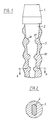
- FIG. 1 shows a longitudinal section through the implantable prosthesis according to the invention, which is used as a dental implant and consists of a prosthesis head 1, a prosthesis socket 2 and a prosthesis anchor 3.
- the prosthesis head 1 and the prosthesis socket 2 optionally consist of metal or oxide ceramic, preferably of titanium or a titanium alloy.
- a prosthesis head modeled on a joint ball can also be provided, for example for a hip joint prosthesis.
- the prosthesis anchor 3 consists of a bioactive, absorbable, ceramic, porous material, namely a ceramic material sintered on ceramic, which is available under the name "Hot-Isostatic-Pressurized” (HIP) material. This is described in more detail, for example, in DE-A-36 15 732.
- HIP Hot-Isostatic-Pressurized
- the porosity of the material is preferably produced by removing material.
- the ceramic material is such that newly formed bone tissue penetrates into the porous structure after implantation, the bio-activating ceramic promoting penetration of the bone tissue into the surface. As a result of the bioactivating material, the formation of a connective tissue intermediate layer, which is regarded as the main cause of the loosening of implants, is prevented.
- An external thread 30 in the form of a round thread is provided on the outer surface of the prosthesis anchor 3 in order to enlarge the surface of the prosthesis anchor and for the positive and non-positive connection of the prosthesis anchor with the implant bearing.
- the prosthesis anchor 3 preferably runs slightly conical from the prosthesis head 1 to the end of the prosthesis shaft 2. This design of the thread prevents stress peaks in the material and thus local overloading of the boundary layer between prosthesis and bone material, so that a permanent fit of the prosthesis is ensured in this way. Stress peaks would otherwise lead to cracks, which - since they form material weaknesses - in turn lead to overstressing of adjacent material areas and thus to Continued cracking would lead to total loosening of the prosthesis.
- a corresponding round thread is cut into the implant bearing as an internal thread and then the prosthesis with the prosthesis anchor is screwed into the implant bearing. Then, for example in the case of a hip joint prosthesis, a ball corresponding to the ball joint of the hip joint is aligned on the prosthesis head 1 and fastened in a suitable manner.
- the prosthesis socket 2 is frustoconical and has notches 20, 21 distributed over its length, two notches 20, 21 each running parallel to one another and orthogonally to the central longitudinal axis of the prosthesis socket 2 (see FIG. 2).
- the number and the spacing of the notches 20, 21 is determined by the type of the respective prosthesis, 3 to 4 pairs of notches 20, 21 being sufficient for endoprostheses, for example.
- the prosthesis shaft 2 can be provided with an external thread instead of notches, which thread has the same thread direction as the thread direction of the external thread of the prosthesis anchorage 3. This prevents loosening between the prosthesis shaft 2 and when the prosthesis is screwed into the implant bearing Prosthetic anchorage 3 occurs because the load-bearing areas of the intermediate layer have maximum dimensions.
- the notches 20, 21 or the threaded connection between the prosthesis socket 2 and the prosthesis anchor 3 are used to produce a positive connection between the prosthesis socket 2 and the prosthesis anchor 3 for absorbing high tensile, compressive and torsional loads.
- the embodiment of the invention is not limited to the preferred exemplary embodiment specified above. Rather, a number of variants are conceivable which make use of the solution shown, even in the case of fundamentally different types.
Landscapes
- Health & Medical Sciences (AREA)
- Orthopedic Medicine & Surgery (AREA)
- Cardiology (AREA)
- Oral & Maxillofacial Surgery (AREA)
- Transplantation (AREA)
- Engineering & Computer Science (AREA)
- Biomedical Technology (AREA)
- Heart & Thoracic Surgery (AREA)
- Vascular Medicine (AREA)
- Life Sciences & Earth Sciences (AREA)
- Animal Behavior & Ethology (AREA)
- General Health & Medical Sciences (AREA)
- Public Health (AREA)
- Veterinary Medicine (AREA)
- Prostheses (AREA)
Abstract
Implantierbare Prothese bestehend aus einem Prothesenkopf und einem damit verbundenen Prothesenschaft und einer den Prothesenschaft umgebenden Prothesenverankerung aus einem bioaktiven, resorbierbaren, poröse keramische Bestandteile enthaltenden Werkstoff, wobei die Prothesenverankerung (3) mit einem Außengewinde (30) versehen ist, wobei das Außengewinde (30) aus einem verrundeten oder Rundgewinde besteht.
Description
- Die Erfindung betrifft eine implantierbare Prothese der im Oberbegriff des Anspruchs 1 angegebenen Art.
- Aus der DE-C-26 20 907 ist eine implantierbare Prothesenverankerung bekannt, die aus bioaktiven resorbierbaren ke ramischen Werkstoffen auf der Basis von Kalziumphosphaten sowie aus polymeren Kunststoffen besteht, die im Körpermilieu mechanisch und chemisch stabil sind. Mit einer derartigen Prothesen Verankerung werden wesentliche Nachteile einer mit Hilfe eines erhärtenden Knochenzements befestigten metallischen Prothese beseitigt, deren Prothesenschaft in eine entsprechend herausgearbeitete Höhlung im Knochen mechanisch verankert wird. Diese Art der Sekundärfixation löst jedoch aufgrund der polymerisierenden Zementbestandteile schädliche Nebenreaktionen im Organismus aus, die zur Gewebezerstörung und damit zu einer Lockerung der Prothese führen.
- Die aus der DE-C-26 20 907 bekannte Prothesenverankerung ist als Prothesenschaftbeschichtung ausgebildet und weist keramische Werkstoffe in partikulärer Form auf, die in ei nem polymeren Kunststoff eingelagert sind, so daß bei der Resorption des keramischen Anteils der Prothesenverankerung ein durchgängig poröses Gefüge aus Kunststoff entsteht, auf dessen inneren Porenoberflächen bioaktivierende Reste der Keramik zurückbleiben. Auf diese Weise soll eine bindegewebsfreie Verwachsung des Knochens mit der Werkstoffoberfläche bewirkt werden, so daß ein auch für hochbelastete Endoprothesen geeignetes Implantat geschaffen wird, das eine dauerhafte Verbndung mit dem Knochengewebe einerseits und mit der Endoprothese bzw. dem prothesenschaft andererseits sicherstellt. Die feste Verbindung der Prothesenverankerung mit dem Knochengewebe wird dadurch erzielt, daß nach der Implantation neu gebildetes Knochengewebe simultan zu der Porenbildung bzw. zu der Resorption der Keramik in das poröse Kunststoffgefüge penetrieren kann.
- Da die bekannte Prothesenverankerung als Prothesenschaftbeschichtung ausgebildet ist und im wesentlichen kraftschlüssig im Implantatlager des Knochens verankert wird, ist einerseits eine nur dünne Schicht bioaktiven, resorbierbaren, porösen keramischen Werkstoffes zum Einwachsen von Knochengewebe gegeben und andererseits ein sehr präzises Herausarbeiten der Höhlung im Knochen zur Schaffung des Implantatlagers erforderlich. Die geringe Schicht bioaktiven, keramischen Werkstoffes in Verbindung mit einer kleinen, der Außenfläche des Prothesenschaftes entsprechenden Oberfläche sowie aufgrund der rein kraftschlüssigen Verbindung ist eine erhebliche Zeit zum Einwachsen von Knochengewebe in die Prothesenverankerung erforderlich und es besteht darüber hinaus die Gefahr, daß sich die Prothese trotz Verwendung eines porösen keramischen Materials lockert.
- Aus der EP-Bl-0 083 028 ist ein Verbindungselement für einen mit einer Bohrung versehenden Implantatkörper bekannt, der aus einem biokompatiblen oder bioaktiven Material besteht. Es weist eine Innenbohrung oder ein Innengewinde zur Aufnahme des Verbindungselementes auf, das aus einem Material hoher Biegefestigkeit besteht, dessen Durchmesser kleiner als derjenige der Bohrung ist und der in dem Hohlraum zwischen dem Stift und der Wand des Implantatkörpers mit diesem in Verbindung steht. Zusätzlich ist der Stift mit einer kugel-, tonnen- oder zylinderförmig ausgebildeten Verdickung versehen, die an der Bohrung des Implantats anliegt und eine entsprechende Fixierung des Stiftes im Implantat bewirkt. Der bekannte Implantatkörper wird jedoch analog zur vorstehend beschriebenen Prothesenveran kerung lediglich in einer entsprechend herausgearbeiteten Höhlung eingesetzt bzw. verankert, so daß insbesondere bei hochbelasteten Endoprothesen die Gefahr einer Lockerung der Prothese nach wie vor besteht.
- Weiterhin ist aus der DE-A-27 17 506 ein keramisches Knochenimplantat bekannt, das aus einem Kernkörper und einer Beschichtung besteht, das mit einer resorbierbaren mikroporösen Struktur versehen ist. Das äußere Element weist ein Spitzgewinde auf.
- Hierbei besteht der Nachteil, daß mit der Zeit eine Lockerung eintritt.
- Der Erfindung liegt die Aufgabe zugrunde, eine implantierbare Prothese der eingangs genannten Gattung zu schaffen, die auch für hochbelastete Endoprothesen geeignet ist und eine dauerhafte Verbindung zwischen dem Knochengewebe und der Prothesenverankerung einerseits sowie der Prothesenverankerung und dem Prothesenschaft andererseits gewährleistet.
- Diese Aufgabe wird mit dem kennzeichnenden Merkmal des Anspruchs 1 gelöst
- Bei der erfindungsgemäßen Lösung wurde von der Erkenntnis ausgegangen, daß die Vorteile eines bioaktiven, resorbierbaren, porösen keramischen Werkstoffes in Bezug auf die Gewebeverträglichkeit und eine direkte, bindegewebsfreie Verwachsung des Knochens mit dem Werkstoff in Verbindung mit einer entsprechenden Formgebung der Außenfläche der Prothesenverankerung zu einer optimalen Befestigung der Prothese im Implantatlager führt. Die optimale Befestigung wird durch eine kraft- und formschlüssige Verbindung der Prothesenverankerung mit dem Implantatlager erzielt, wofür ein Rundgewinde die besten Voraussetzungen schafft. Zur Befestigung der Prothesenverankerung im Implantatlager wird ein entsprechendes Gewinde in das Implantatlager geschnitten und die Prothese, deren Verankerung ein entsprechendes Gewinde aufweist, in das Innengewinde des Implantatlagers eingeschraubt.
- Die Erfindung beruht dabei auf der Erkenntnis, daß bei einem Rundgewinde die örtlichen Spannungsspitzen in den aneinander angrenzenden Materialien ein Minimum sind, so daß eine maximale Festigkeit der Verbindung auch bei Schubbeanspruchungen gewährleistet ist.
- Auf diese Weise wird bereits unmittelbar nach der Implantation ein fester Sitz erzielt und darüber hinaus aufgrund der vergrößerten Oberfläche eine große Fläche zum Einwachsen von Knochengewebe bereitgestellt.
- In einer vorteilhaften Weiterbildung der Erfindung besteht das Außengewinde aus einem Rundgewinde, das vom Prothesenkopf zum Ende des Prothesenschaftes hin leicht konisch verlaufend ausgebildet ist. Das Rundgewinde ist nach Art eines Glühlampengewindes ausgebildet, so daß keine scharfen Kanten vorhanden sind, die zu Reizungen oder Überbeanspruchungen auch des Knochengewebes führen könnten.
- In einer weiteren vorteilhaften Ausgestaltung der Erfindung ist der Prothesenschaft kegelstumpfförmig ausgebildet und weist Einkerbungen zur Aufnahme des Verankerungswerkstoffes auf. Dabei sind vorteilhafter Weise jeweils zwei Einkerbungen parallel zueinander und orthogonal zur Mittellängsachse des Prothesenschaftes verlaufend angeordnet. Auf diese Weise wird eine feste Verbindung zwischen Prothesenschaft und Prothesenverankerung gewährleistet, die auch beim Eindrehen der Prothese in das Implantatlager nicht gelöst wird.
- Vorteilhafte Weiterbildungen der Erfindung sind in den Unteransprüchen gekennzeichnet bzw. werden nachstehend zusammen mit der Beschreibung der bevorzugten Ausführung der Erfindung anhand der Figuren näher dargestellt. Es zeigen:
- Figur 1 einen Querschnitt durch die erfindungsgemäße implantierbare Prothese und
- Figur 2 einen Schnitt durch die in Figur 1 dargestellte Prothese entlang der Linie A-A.
- In Figur 1 ist ein Längsschnitt durch die erfindungsgemäße implantierbare Prothese dargestellt, die als Zahnimplantat Verwendung findet und aus einem Prothesenkopf 1, einem Prothesenschaft 2 und einer Prothesenverankerung 3 besteht. Der Prothesenkopf 1 und der Prothesenschaft 2 bestehen wahlweise aus Metall- oder Oxidkeramik, vorzugsweise aus Titan oder einer Titanlegierung. Anstelle des in Figur 1 dargestellten Prothesenkopfes kann auch ein einer Gelenkkugel nachgebildeter Prothesenkopf für beispielsweise eine Hüftgelenkprothese vorgesehen sein.
- Die Prothesenverankerung 3 besteht aus einem bioaktiven, resorbierbaren, keramischen, porösen Werkstoff, nämlich einem auf Keramik gesinterten Keramikmaterial, das unter der Bezeichnung "Hot-Isostatic-Pressurized"(HIP)-Material erhältlich ist. Dieses ist beispielsweise in der DE-A-36 15 732 näher beschrieben.
- Die Porosität des Materials wird vorzugsweise durch Abtragen von Material hergestellt. Der keramische Werkstoff ist dabei so beschaffen, daß nach der Implantation neu gebildetes Knochengewebe in das poröse Gefüge eindringt, wobei die bioaktivierende Keramik ein Eindringen des Knochengewebes in die Oberfläche fördert. Infolge des bioaktivierenden Materials wird die Ausbildung einer bindegewebigen Zwischenschicht, die als Hauptursache für die Lockerung von Implantaten angesehen wird, verhindert.
- Zur Vergrößerung der Oberfläche der Prothesenverankerung sowie zur form- und kraftschlüssigen Verbindung der Prothesenverankerung mit dem Implantatlager ist auf der Außenfläche der Prothesenverankerung 3 ein Außengewinde 30 in Form eines Rundgewindes vorgesehen. Die Prothesenverankerung 3 verläuft vorzugsweise vom Prothesenkopf 1 zum Ende des Prothesenschaftes 2 hin leicht konisch. Diese Ausgestaltung des Gewindes verhindert Spannungsspitzen im Material und damit eine örtliche Überbeanspruchung der Grenzschicht Prothese/Knochenmaterial, so daß auf diese Weise ein dauerhafter Sitz der Prothese gewährleistet ist. Spannungsspitzen würden sonst zu Rissen führen, welche - da sie Materialschwächungen bilden - wiederum zur Überbeanspruchung benachbarter Materialbereiche und damit zur Fortsetzung der Rißbildung bis zur totalen Lockerung der Prothese führen würden.
- Zur Befestigung der implantierbaren Prothese im Implantatlager wird ein entsprechendes Rundgewinde als Innengewinde in das Implantatlager geschnitten und daran anschließend die Prothese mit der Prothesenverankerung in das Implantatlager eingeschraubt. Daran anschließend wird beispielsweise bei einer Hüftgelenkprothese eine dem Kugelgelenk des Hüftgelenks entsprechende Kugel auf dem Prothesenkopf 1 ausgerichtet und in geeigneter Weise befestigt.
- Der Prothesenschaft 2 ist kegelstumpfförmig ausgebildet und weist über seine Länge verteilt angeordnete Einkerbungen 20, 21 auf, wobei jeweils zwei Einkerbungen 20, 21 pa rallel zueinander und orthogonal zur Mittellängsachse des Prothesenschaftes 2 verlaufen (vgl. Figur 2).
- Die Anzahl und der Abstand der Einkerbungen 20, 21 wird durch die Art der jeweiligen Prothese bestimmt, wobei beispielsweise bei Endoprothesen 3 bis 4 Einkerbungs-Paare 20, 21 ausreichend sind.
- In einer alternativen Ausführungsform kann der Prothesenschaft 2 anstelle von Einkerbungen mit einem Außengewinde versehen werden, das dieselbe Gangrichtung aufweist wie die Gangrichtung des Außengewindes der Prothesenverankerung 3. Auf diese Weise wird verhindert, daß beim Eindrehen der Prothese in das Implantatlager eine Lockerung zwischen Prothesenschaft 2 und Prothesenverankerung 3 auftritt, da die tragenden Bereiche der Zwischenschicht maximale Abmessungen aufweisen.
- Die Einkerbungen 20, 21 bzw. die Gewindeverbindung zwischen Prothesenschaft 2 und Prothesenverankerung 3 dienen zur Herstellung einer formschlüssigen Verbindung zwischen Prothesenschaft 2 und Prothesenverankerung 3 zur Aufnahme hoher Zug- und Druck- sowie Drehbelastungen.
- Die Erfindung beschränkt sich in ihrer Ausführung nicht auf das vorstehend angegebene bevorzugte Ausführungsbeispiel. Vielmehr ist eine Anzahl von Varianten denkbar, welche von der dargestellten Lösung auch bei grundsätzlich anders gearteten Ausführungen Gebrauch machen.
Claims (8)
1. Implantierbare Prothese bestehend aus einem Prothesenkopf und einem damit verbundenen Prothesenschaft und einer den Prothesenschaft umgebenden Prothesenverankerung aus einem bioaktiven, resorbierbaren, poröse keramische Bestandteile enthaltenden Werkstoff, wobei die Prothesenverankerung (3) mit einem Außengewinde (30) versehen ist, dadurch gekennzeichnet, daß das Außengewinde (30) aus einem verrundeten oder Rundgewinde besteht.
2. Implantierbare Prothese nach Anspruch 1, dadurch gekennzeichnet, daß es sich bei dem Werkstoff der Prothesenverankerung um HIP-Material handelt und der Prothesenschaft bzw. -kopf aus einer Titanlegierung besteht.
3. Implantierbare Prothese nach Anspruch 1 oder 2, dadurch gekennzeichnet, daß die Prothesenverankerung (3) vom Prothesenkopf (1) zum Ende des Prothesenschaftes (2) konisch verlaufend ausgebildet ist.
4. Implantierbare Prothese nach einem der vorangehenden Ansprüche, dadurch gekennzeichnet, daß die Prothesenverankerung (3) an ihrem dem Prothesenkopf entgegengesetzten Ende abgerundet ist.
5. Implantierbare Prothese nach einem der vorangehenden Ansprüche, dadurch gekennzeichnet, daß der Prothesenschaft (2) kegelstumpfförmig ausgebildet ist und über sein Länge verteilt mehrere Einkerbungen (20, 21) zur Aufnahme des Verankerungswerkstoffes aufweist.
6. Implantierbare Prothese nach Anspruch 5, dadurch gekennzeichnet, daß jeweils zwei Einkerbungen (20, 21) parallel zueinander und orthogonal zur Mittelängsachse des Prothesenschaftes (2) verlaufen.
7. Implantierbare Prothese nach Anspruch 5 oder 6, dadurch gekennzeichnet, daß die Einkerbungen (20, 21) über die Länge des Prothesenschaftes (2) vom Prothesenkopf (1) zum Ende des Prothesenschaftes (2) einen abnehmenden Durchmesser aufweisen.
8. Implantierbare Prothese nach einem der vorangehenden Ansprüche, dadurch gekennzeichnet, daß der Prothesenschaft (2) mit einem Außengewinde versehen ist, das dieselbe Gangrichtung wie das Außengewinde (30) der Prothesenverankerung (3) aufweist.
Applications Claiming Priority (2)
| Application Number | Priority Date | Filing Date | Title |
|---|---|---|---|
| DE8716607U DE8716607U1 (de) | 1987-12-14 | 1987-12-14 | Implantierbare Prothese |
| DE8716607U | 1987-12-14 |
Publications (1)
| Publication Number | Publication Date |
|---|---|
| EP0321389A1 true EP0321389A1 (de) | 1989-06-21 |
Family
ID=6815191
Family Applications (1)
| Application Number | Title | Priority Date | Filing Date |
|---|---|---|---|
| EP88730279A Withdrawn EP0321389A1 (de) | 1987-12-14 | 1988-12-14 | Implantierbare Prothese |
Country Status (2)
| Country | Link |
|---|---|
| EP (1) | EP0321389A1 (de) |
| DE (1) | DE8716607U1 (de) |
Cited By (15)
| Publication number | Priority date | Publication date | Assignee | Title |
|---|---|---|---|---|
| EP0603976A3 (de) * | 1992-12-21 | 1995-01-25 | Bristol Myers Squibb Co | Zum Teil resorbierbares Implantat. |
| EP0640326A1 (de) * | 1993-08-30 | 1995-03-01 | SULZER Medizinaltechnik AG | Element zur vorübergehenden Erhöhung der Steifigkeit einer orthopädischen Prothese |
| EP0630218A4 (de) * | 1992-03-12 | 1995-04-19 | Stanley L Kampner | Implantat mit verstärktem, resorbierbarem schaft. |
| WO1995011640A1 (en) * | 1993-10-26 | 1995-05-04 | Howmedica Inc. | Prosthesis with integral proximal spacer |
| NL9500256A (nl) * | 1995-02-10 | 1996-09-02 | Leuven K U Res & Dev | Prothese. |
| WO1998047449A1 (en) * | 1997-04-18 | 1998-10-29 | W.L. Gore & Associates, Inc. | Resorbable interposition arthroplasty implant |
| WO2004071356A3 (en) * | 2003-02-10 | 2004-12-23 | Smith & Nephew Inc | Resorbable devices |
| US7455674B2 (en) | 2002-01-31 | 2008-11-25 | Smith & Nephew Plc | High strength bioresorbables containing poly-glycolic acid |
| US7524891B2 (en) | 2001-07-04 | 2009-04-28 | Smith & Nephew Plc | Biodegradable polymer systems |
| US8722783B2 (en) | 2006-11-30 | 2014-05-13 | Smith & Nephew, Inc. | Fiber reinforced composite material |
| US9000066B2 (en) | 2007-04-19 | 2015-04-07 | Smith & Nephew, Inc. | Multi-modal shape memory polymers |
| US9120919B2 (en) | 2003-12-23 | 2015-09-01 | Smith & Nephew, Inc. | Tunable segmented polyacetal |
| US9770534B2 (en) | 2007-04-19 | 2017-09-26 | Smith & Nephew, Inc. | Graft fixation |
| US9815240B2 (en) | 2007-04-18 | 2017-11-14 | Smith & Nephew, Inc. | Expansion moulding of shape memory polymers |
| WO2022261508A1 (en) * | 2021-06-11 | 2022-12-15 | Encore Medical, L.P. (D/B/A/ Djo Surgical) | Orthopedic components |
Families Citing this family (1)
| Publication number | Priority date | Publication date | Assignee | Title |
|---|---|---|---|---|
| DE9005372U1 (de) * | 1990-05-11 | 1991-09-26 | Thera Patent GmbH & Co. KG Gesellschaft für industrielle Schutzrechte, 8031 Seefeld | Gelenkprothese, insbesondere für ein Fingergelenk |
Citations (4)
| Publication number | Priority date | Publication date | Assignee | Title |
|---|---|---|---|---|
| DE2717506A1 (de) * | 1976-11-13 | 1978-05-18 | Kyoto Ceramic | Keramisches knochenimplantat |
| GB2162753A (en) * | 1984-06-22 | 1986-02-12 | Thackray C F Ltd | Sleeve for metal implant into bone |
| WO1987006842A1 (fr) * | 1986-05-09 | 1987-11-19 | Ernst Leitz Wetzlar Gmbh | Materiau composite pour protheses, procede pour sa fabrication et utilisation du materiau composite ou application du procede de fabrication pour le revetement de protheses |
| FR2610512A1 (fr) * | 1987-02-06 | 1988-08-12 | Cuilleron J | Procede et moyens d'ancrage d'elements d'implants visses dans les tissus osseux et les elements d'implants obtenus |
-
1987
- 1987-12-14 DE DE8716607U patent/DE8716607U1/de not_active Expired
-
1988
- 1988-12-14 EP EP88730279A patent/EP0321389A1/de not_active Withdrawn
Patent Citations (4)
| Publication number | Priority date | Publication date | Assignee | Title |
|---|---|---|---|---|
| DE2717506A1 (de) * | 1976-11-13 | 1978-05-18 | Kyoto Ceramic | Keramisches knochenimplantat |
| GB2162753A (en) * | 1984-06-22 | 1986-02-12 | Thackray C F Ltd | Sleeve for metal implant into bone |
| WO1987006842A1 (fr) * | 1986-05-09 | 1987-11-19 | Ernst Leitz Wetzlar Gmbh | Materiau composite pour protheses, procede pour sa fabrication et utilisation du materiau composite ou application du procede de fabrication pour le revetement de protheses |
| FR2610512A1 (fr) * | 1987-02-06 | 1988-08-12 | Cuilleron J | Procede et moyens d'ancrage d'elements d'implants visses dans les tissus osseux et les elements d'implants obtenus |
Cited By (20)
| Publication number | Priority date | Publication date | Assignee | Title |
|---|---|---|---|---|
| EP0630218A4 (de) * | 1992-03-12 | 1995-04-19 | Stanley L Kampner | Implantat mit verstärktem, resorbierbarem schaft. |
| EP0603976A3 (de) * | 1992-12-21 | 1995-01-25 | Bristol Myers Squibb Co | Zum Teil resorbierbares Implantat. |
| EP0640326A1 (de) * | 1993-08-30 | 1995-03-01 | SULZER Medizinaltechnik AG | Element zur vorübergehenden Erhöhung der Steifigkeit einer orthopädischen Prothese |
| US5725590A (en) * | 1993-08-30 | 1998-03-10 | Sulzer Medizinaltechnik Ag | Element for temporarily increasing the rigidity of an orthopaedic prosthesis |
| US5735901A (en) * | 1993-08-30 | 1998-04-07 | Sulzer Medizinaltechnik Ag | Element for temporarily increasing the rigidity of an orthopaedic prosthesis |
| WO1995011640A1 (en) * | 1993-10-26 | 1995-05-04 | Howmedica Inc. | Prosthesis with integral proximal spacer |
| NL9500256A (nl) * | 1995-02-10 | 1996-09-02 | Leuven K U Res & Dev | Prothese. |
| WO1998047449A1 (en) * | 1997-04-18 | 1998-10-29 | W.L. Gore & Associates, Inc. | Resorbable interposition arthroplasty implant |
| US6017366A (en) * | 1997-04-18 | 2000-01-25 | W. L. Gore & Associates, Inc. | Resorbable interposition arthroplasty implant |
| US7524891B2 (en) | 2001-07-04 | 2009-04-28 | Smith & Nephew Plc | Biodegradable polymer systems |
| US7455674B2 (en) | 2002-01-31 | 2008-11-25 | Smith & Nephew Plc | High strength bioresorbables containing poly-glycolic acid |
| WO2004071356A3 (en) * | 2003-02-10 | 2004-12-23 | Smith & Nephew Inc | Resorbable devices |
| US9120919B2 (en) | 2003-12-23 | 2015-09-01 | Smith & Nephew, Inc. | Tunable segmented polyacetal |
| US8722783B2 (en) | 2006-11-30 | 2014-05-13 | Smith & Nephew, Inc. | Fiber reinforced composite material |
| US9815240B2 (en) | 2007-04-18 | 2017-11-14 | Smith & Nephew, Inc. | Expansion moulding of shape memory polymers |
| US9000066B2 (en) | 2007-04-19 | 2015-04-07 | Smith & Nephew, Inc. | Multi-modal shape memory polymers |
| US9308293B2 (en) | 2007-04-19 | 2016-04-12 | Smith & Nephew, Inc. | Multi-modal shape memory polymers |
| US9770534B2 (en) | 2007-04-19 | 2017-09-26 | Smith & Nephew, Inc. | Graft fixation |
| WO2022261508A1 (en) * | 2021-06-11 | 2022-12-15 | Encore Medical, L.P. (D/B/A/ Djo Surgical) | Orthopedic components |
| US12544232B2 (en) | 2021-06-11 | 2026-02-10 | Encore Medical, L.P. | Orthopedic components |
Also Published As
| Publication number | Publication date |
|---|---|
| DE8716607U1 (de) | 1989-01-12 |
Similar Documents
| Publication | Publication Date | Title |
|---|---|---|
| DE2933141C3 (de) | Verankerungszapfen für ein nagelartiges Gleitflächen-Implantat | |
| DE69002159T2 (de) | Biegegliedprothese. | |
| EP0373733B1 (de) | Implantierbares Befestigungsmittel für extra-orale Applikationen | |
| EP0551794B1 (de) | Zweiteilige Hüftgelenkpfanne | |
| DE4435497C1 (de) | Modulares Knochenimplantat mit Pfanne und Stiften | |
| EP0920289B1 (de) | Endoprothese | |
| EP1973498B1 (de) | Implantat | |
| DE2454181C3 (de) | Keramisches Implantat | |
| WO1985005027A1 (fr) | Systeme d'articulation artificiel et son procede d'implantation | |
| DE8903850U1 (de) | Oberschenkelteil für eine Hüftendoprothese | |
| DE2340546A1 (de) | Metallisches implantat und verfahren zu seiner herstellung | |
| EP0289922A1 (de) | Gelenkprothese und Verfahren zu ihrer Herstellung | |
| EP0144574A2 (de) | Hüftendoprothese in Verbundbauweise | |
| EP1260200A1 (de) | Zementfreie Hüftgelenksendoprothese als Oberflächenersatz des proximalen Femurs | |
| DE8716607U1 (de) | Implantierbare Prothese | |
| DE2854334A1 (de) | Endoprothese | |
| EP1276440B1 (de) | Schenkelhalsprothese | |
| EP0181360A1 (de) | Implantat. | |
| EP0377068B1 (de) | Schraubenimplantat zum Verankern von prothetischen Endkonstruktionen im Mund | |
| EP0339320B1 (de) | Prothesenschaft | |
| WO2007124607A1 (de) | Schaft für gelenkprothese | |
| DE3205527A1 (de) | Verankerungsmittel fuer eine kuenstliche hueftpfanne | |
| DE2805868A1 (de) | Endoprothese | |
| DE69514110T2 (de) | Endoprothese | |
| DE2305329C3 (de) | Implantat mittels Schraubverbindungen |
Legal Events
| Date | Code | Title | Description |
|---|---|---|---|
| PUAI | Public reference made under article 153(3) epc to a published international application that has entered the european phase |
Free format text: ORIGINAL CODE: 0009012 |
|
| AK | Designated contracting states |
Kind code of ref document: A1 Designated state(s): AT BE CH DE ES FR GB GR IT LI NL SE |
|
| 17P | Request for examination filed |
Effective date: 19890920 |
|
| 17Q | First examination report despatched |
Effective date: 19910117 |
|
| STAA | Information on the status of an ep patent application or granted ep patent |
Free format text: STATUS: THE APPLICATION IS DEEMED TO BE WITHDRAWN |
|
| 18D | Application deemed to be withdrawn |
Effective date: 19910528 |