EP0302284A2 - Stabilized enzymes - Google Patents
Stabilized enzymes Download PDFInfo
- Publication number
- EP0302284A2 EP0302284A2 EP88111443A EP88111443A EP0302284A2 EP 0302284 A2 EP0302284 A2 EP 0302284A2 EP 88111443 A EP88111443 A EP 88111443A EP 88111443 A EP88111443 A EP 88111443A EP 0302284 A2 EP0302284 A2 EP 0302284A2
- Authority
- EP
- European Patent Office
- Prior art keywords
- enzyme
- enzyme product
- product according
- coat
- stabilized
- Prior art date
- Legal status (The legal status is an assumption and is not a legal conclusion. Google has not performed a legal analysis and makes no representation as to the accuracy of the status listed.)
- Granted
Links
Images
Classifications
-
- C—CHEMISTRY; METALLURGY
- C12—BIOCHEMISTRY; BEER; SPIRITS; WINE; VINEGAR; MICROBIOLOGY; ENZYMOLOGY; MUTATION OR GENETIC ENGINEERING
- C12N—MICROORGANISMS OR ENZYMES; COMPOSITIONS THEREOF; PROPAGATING, PRESERVING, OR MAINTAINING MICROORGANISMS; MUTATION OR GENETIC ENGINEERING; CULTURE MEDIA
- C12N9/00—Enzymes; Proenzymes; Compositions thereof; Processes for preparing, activating, inhibiting, separating or purifying enzymes
- C12N9/96—Stabilising an enzyme by forming an adduct or a composition; Forming enzyme conjugates
-
- C—CHEMISTRY; METALLURGY
- C12—BIOCHEMISTRY; BEER; SPIRITS; WINE; VINEGAR; MICROBIOLOGY; ENZYMOLOGY; MUTATION OR GENETIC ENGINEERING
- C12N—MICROORGANISMS OR ENZYMES; COMPOSITIONS THEREOF; PROPAGATING, PRESERVING, OR MAINTAINING MICROORGANISMS; MUTATION OR GENETIC ENGINEERING; CULTURE MEDIA
- C12N11/00—Carrier-bound or immobilised enzymes; Carrier-bound or immobilised microbial cells; Preparation thereof
- C12N11/02—Enzymes or microbial cells immobilised on or in an organic carrier
- C12N11/08—Enzymes or microbial cells immobilised on or in an organic carrier the carrier being a synthetic polymer
- C12N11/082—Enzymes or microbial cells immobilised on or in an organic carrier the carrier being a synthetic polymer obtained by reactions only involving carbon-to-carbon unsaturated bonds
- C12N11/087—Acrylic polymers
-
- C—CHEMISTRY; METALLURGY
- C12—BIOCHEMISTRY; BEER; SPIRITS; WINE; VINEGAR; MICROBIOLOGY; ENZYMOLOGY; MUTATION OR GENETIC ENGINEERING
- C12N—MICROORGANISMS OR ENZYMES; COMPOSITIONS THEREOF; PROPAGATING, PRESERVING, OR MAINTAINING MICROORGANISMS; MUTATION OR GENETIC ENGINEERING; CULTURE MEDIA
- C12N11/00—Carrier-bound or immobilised enzymes; Carrier-bound or immobilised microbial cells; Preparation thereof
- C12N11/02—Enzymes or microbial cells immobilised on or in an organic carrier
- C12N11/08—Enzymes or microbial cells immobilised on or in an organic carrier the carrier being a synthetic polymer
- C12N11/089—Enzymes or microbial cells immobilised on or in an organic carrier the carrier being a synthetic polymer obtained otherwise than by reactions only involving carbon-to-carbon unsaturated bonds
- C12N11/091—Phenol resins; Amino resins
Definitions
- the invention concerns a stabilized enzyme product and a method for its preparation.
- the stabilized enzyme product may be in form of an aqueous solution or a lyophilized dry product.
- a stabilized enzyme produce according to the invention may optionally be further stabilized by immobilization.
- Loss of enzymic activities may result from several factors imposing their effect via different mechanisms, of which the structural unfolding of the enzyme is the most abundant (refs. 2,4).
- water soluble enzyme-polymer conjugates prepared by enzyme coupling to polysaccarides (refs. 1, 10, 11, 12), polyvinylalchohol (ref. 13), polyvinylpyrrolidone (ref. 14) and polymethacrylic acid (ref. 4) were described.
- Effective stabilization of soluble enzymes via this approach strongly depends on obtaining an intensive multipoint polymer - enzyme interaction, in a complementary way (ref. 1,4).
- the effectiveness of such enzyme - polymer conjugates will also depend on the chemical nature of the polymeric moiety, creating a hydrophylic or charged microenvironment in the immediate surrounding of the enzyme.
- the most effective conjugate of this kind seems to be the chymotrypsin-polymethacrylic acid conjugate, prepared by the copolymerization of methacrylic acid and acryloyl chloride treated enzyme (ref. 4).
- the resulting poly - anionic enzyme derivative exhibited stability comparable to that of the gel entrapped enzyme analogue, prepared by copolymerization of methacrylamide or acrylamide, with bisacrylamide and acryloyl chloride treated enzyme.
- a stabilized, biologically active water soluble enzyme product characterized by enzyme molecules having a bi-layer protective structure comprising a polyaldehyde base coat linked to free amino groups of the enzyme, and cross-linked therewith an outer polymer coat, the polymers constituting said outer coat being of a kind which in the unlinked state comprises free amino and/or acyl hydrazide groups.
- the invention further provides a method of making a stabilized, biologically active enzyme product of the kind specified, characterized in that in a first step a native enzyme product is reacted in aqueous solution with an excess of a water soluble polyaldehyde to produce an intermediary enzyme product in which the enzyme molecules are coated with said polyaldehyde base coat, and in a second step said intermediary enzyme product is reacted in aqueous solution with a polymeric reagent bearing free amino and/or free acyl hydrazide groups.
- the bi-layer protective structure provided in accordance with the invention will occasionally be referred to hereinaftaer as “cage” and its production as “encagement”. It provides several advantages over the prior act, such as: -
- the "cage” concept is of a general nature and enables also the stabilization of enzymes bearing low numbers of lysil residues. This is so because the polyaldehyde used in the first step amplifies the total number of crosslinking bridges formed and consequently, as distinct from the prior art (ref. 4) the stabilization degree will not depend solely on the lysil content of the enzyme (ref. 4).
- the encagement method is based on the use of water soluble polymeric reagents, and is thus virtually free of toxic and inhibitory effects which occur when low molecular weight reagents have to be used such as, for example, acryloyl chloride, and acrylamide.
- the "cage" concept allows for control of the microenvironment of the "encaged” enzyme by suitably modifying or selecting the chemical nature of the polymeric reagent used in the formation of the outer coat. For example, hydrophylicity or hydrophobicity may be introduced into the said polymeric reagent as may be required by the nature of the enzyme or its intended use.
- the stabilization of the enzyme is more effective as compared to single coat enzyme-polymer conjugates.
- any water soluble polyaldehyde may be used that is capable of reacting with free amino groups forming part of lysil residues of the enzyme, a typical example being polyglutaraldehyde.
- the water soluble polymeric reagent used in the second step there is no criticality in the selection of the water soluble polymeric reagent used in the second step, provided it bears free amino and/or acyl hydrazide groups, since it is these groups that cross-link with carbonyl groups of the polyaldehyde base coat.
- Typical examples of polymeric reactants used in the second stage are polyacrylamides, N-alkylated polyacrylamides, acylhydrazide derivatives of polyacrylamides, polyvinyl hydrazides, polyvinylamides, polylysine, various proteins and the like.
- a stabilized enzyme product with "encaged” enzyme molecules according to the invention may be further stabilized by immobilization.
- the outer coat of the stabilized enzyme according to the invention is coated with polyacrylamide-amine or acyl hydrazide derivatives, its immobilization, either by chemical binding or crosslinking, is readily available.
- the latter method is particularly suitable seeing that the stabilized enzyme solution obtained at the end of the second step containes a large excess of unbound polymer which may be employed to form a matrix by appropriate crosslinking.
- Immobilization of enzymes by means of gel matrices is known per se and was successfully employed for the immobilization of enzymes in gels made of polyacrylamide-hydrazide crosslinked by glyoxal (refs. 21, 25).
- a stabilyzed enzyme product according to the invention may be stored in aqueous solution or be lyophilized into dry powder and stored as such. It has surprisingly been found in accordance with the invention that lyophilization of the "encaged" enzyme product according to the invention further increases its stability. Furthermore, immobilization of lyophilized "encaged" enzyme in glyoxal crosslinked polyacrylamide-hydrazide gel results in maximal amplification of this stabilization approach.
- the stabilized and optionally immobilized enzyme products according to this invention may be used in a variety of enzyme catalyzed chemical processes, whether carried out batchwise or continuously.
- ehylene glycol, DMSO (ref. 21)), as well as cosolvents exhibiting strong denaturating effect e.g. ethanol
- cosolvents exhibiting strong denaturating effect e.g. ethanol
- the stabilization according to the invention was found to be effective with solvents of both groups.
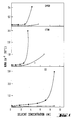
- Fig. 1 the empty circles stand for a stabilized encaged carboxylesterase according to the invention and the blackened circles stand for the native enzyme, and it is clearly seen that the rate of inactivation of the former is much lower than of the latter.
- Stabilized enzyme products according to the invention can thus be used to advantage as catalysts in the performance of reactions in which co-solvents are required from the outset or form in the course of the reaction.
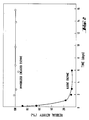
- Fig. 2 shows that a lyophilized "encaged” and immobilized enzyme product according to this invention (empty circles) retained its activity over sixteen days virtually without any change, while that of a native enzyme (blackened circles) dropped sharply during day 1 and from then on approached asymptotically zero activity.
- the enzymes were incubated at 55°C in 0.05M Tris buffer (pH 8) and the activities were periodically tested.
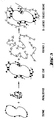
- Fig. 3 illustrates schematically the formation of a bi-layer "encagement" in accordance with the invention.
- an enzyme molecule is reacted with a polyaldehyde to yield an enzyme with a base coat.
- This product is then reacted with a "Polymer 2" being an amino and/or acyl hydrazide groups bearing water soluble polymer, to yield an enzyme within a bi-layered cage in accordance with the invention.
- the water soluble polymeric glutaraldehyde thus obtained contained 0.35 mmole aldehyde groups per g (dry weight) determined according to J.S. Thompson and G.D. Shockman (1968) Analytical Biochemistry 22, 260-268) and its MW estimated from gel filtration ("Biogel" p-6) against protein standards to be 1000.
- the polymer solution was then added dropwide into 3.5 1 ice cold methanol, the precipitate separated by filtration, stored overnight at 4°C under methanol, separated and dried on a rotavapour for 30 min at 40°C.
- the polymer was finally dried by dessication in vacuo over P2O5.
- the dry polymer was stored in a tightly closed vessel at room temperature (yield 3.2 g (80%)).
- the stabilized enzyme was stored either as solution at 4°C or as a lyophilized powder.
- the stabilization of glucose oxidase to thermal denaturation was demonstrated by measuring the rate of inactivation of the native or stabilized enzyme at a fixed elevated temperature (55°C).
- the rate constant defined as: (for description of this method see ref. 24).
- Table 1 Effect of bi-layer encagement on the thermal stability of glucose oxidase Enzyme Kina (h ⁇ 1,55°C) Relative Kina (%) Residual activity after 5 h at 55°C (%) native (contol) 0.19 100 43 polyglutaraldehyde-treated 0.066 35 60 bi-layer ("encaged") 0.032 17 80
- Co-solvent (all at 3.5M) Kina(h -1, 55°C) Relative (b/a,%) Native enzyme (a) Encaged enzyme (b) none 0.19 0.055 29 ethyleneglycol 0.16 0.074 46 DMSO 0.19 0.075 40 DMF 0.40 0.22 55 ethanol 1.020 0.40 39 formamide 1.74 0.50 29
- Polymeric polyglutaraldehyde and polyacrylamide were prepared as described in Example number 1.
- acylhydrazide-derivative of polyacrylamide was prepared as follows: Into a 100 ml round bottomed flask equipped with a magnetic stirrer and maintained at 50°C, 38 ml of water and 1.5g of polyacrylamide were added. Following complete dissolution 12 ml (0.23 mole) hydrazine hydrate were added and the hydrazinolysis reaction allowed to proceed for 4 hrs.
- the acylhydrazide derivative thus obtained was separated by precipitation induced by the dropwise addition of the aqueous reaction solution into 250 ml of methanol, recovered by centrifugation, redissolved and reprecipitated as above, stored overnight at 4°C under methanol, separated and dried on a rotavapour (30 min at 40°C) and finally dessicated in vacuo over P2O5.
- the dry polymer (acyl-hydrazide content: 1.5 mmole/gm, determined according to ref. 19, yield: essentially quantitative) was stored at -20°C.
- Lyophilization of "caged" enzymes resulted in significant further improvement of enzyme stability. This effect is in contrast to the common effect of lyophilization on native enzymes; in many cases their stability declines, in others it remains unchanged.
- the gel was then incubated at 4°C for 20h and further fragmented into particles of about 0.25 mm by means of a blade homogenizer ("Sorval Omnimixer", 7000 rpm, 1 min).
- the gel particles were washed with 11 of ice cold 0.05M Tris buffer (pH 8), resuspended in 50 ml of the same buffer and stored at 4°C until used.
Landscapes
- Health & Medical Sciences (AREA)
- Life Sciences & Earth Sciences (AREA)
- Chemical & Material Sciences (AREA)
- Zoology (AREA)
- Genetics & Genomics (AREA)
- Engineering & Computer Science (AREA)
- Bioinformatics & Cheminformatics (AREA)
- Organic Chemistry (AREA)
- Wood Science & Technology (AREA)
- General Engineering & Computer Science (AREA)
- Biotechnology (AREA)
- Biochemistry (AREA)
- General Health & Medical Sciences (AREA)
- Biomedical Technology (AREA)
- Microbiology (AREA)
- Medicinal Chemistry (AREA)
- Molecular Biology (AREA)
- Immobilizing And Processing Of Enzymes And Microorganisms (AREA)
- Saccharide Compounds (AREA)
- Non-Silver Salt Photosensitive Materials And Non-Silver Salt Photography (AREA)
- Developing Agents For Electrophotography (AREA)
- Materials For Medical Uses (AREA)
- Preparation Of Compounds By Using Micro-Organisms (AREA)
- Enzymes And Modification Thereof (AREA)
- Measuring Or Testing Involving Enzymes Or Micro-Organisms (AREA)
- Medicinal Preparation (AREA)
- Medicines That Contain Protein Lipid Enzymes And Other Medicines (AREA)
Abstract
Description
- The invention concerns a stabilized enzyme product and a method for its preparation. The stabilized enzyme product may be in form of an aqueous solution or a lyophilized dry product. A stabilized enzyme produce according to the invention may optionally be further stabilized by immobilization.
-
- 1. Klibanov, A.M., Adv. Appl. Microb. 1983, 29, 1-28.
- 2. Martinek, K. and Berezin, I. V., J. Solid Phase Biochem. 1978, 2, 343-385.
- 3. Butler, L. G., Enzyme Microb. Technol., 1979, 1, 253 - 259.
- 4. Martinek, K., Klibanov, A.M., Goldmacher, V.S. and Berezin, I.V., Biochim, Biophys. Acta 1977, 485, 1-12.
- 5. Klibanov, A.M., Anal. Biochem. 1979, 93, 1-25.
- 6. Schmid, R.D. Adv. Biochem. Eng. 1979, 12, 41-118.
- 7. Back, J.R., Oakenfull, D. and Smith, M.B., Biochemistry 1979, 18, 5191-5196.
- 8. Tonchilin, V.P. and Martinek, K., Enzyme Microb. Technol. 1979, 1, 74-82.
- 9. Greco, G. and Gianfreda, L., Biotechnol. Bioeng. 1981, 23, 2199-2210.
- 10. Wykes, J.R., Dunill, P. and Lilly, M.D., Biochim. Biophys. Acta 1971, 250, 522-529.
- 11. Marshall, J.J., Trends in Biochem. Sci. 1978, 3, 79-83.
- 12. Lenders, J.P. and Crichton, R.R., Biotech. Bioeng. 1984, 26, 1343-1351.
- 13. Hixon, H.F., Biotech. Bioeng. 1973, 15, 1011-1016.
- 14. von Specht, B.U., Seinfeld, H. and Brendel, W., Hoppe-Seyler's Z. Physiol. Chem. 1973, 354(s), 1659-1660.
- 15. Paz, M.A., Blumenfeld, O.O., Rojkind, M., Henson, E., Furfine, C., and Gallop, P.M., Arch. Biochem Biophys., 1965, 109, 548-559.
- 16. Gary, W.L., Johnson, R.N. and Kho, B.T., J. Chromatog. 1978, 156, 285-291.
- 17. Freeman, A., Methods. Enzymol. 1987, 135, 216-222.
- 18. Collinson, E., Dainton, F.S. and McNaughton, G.S., Trans. Faraday Soc. 1957, 53, 489-498.
- 19. Freeman, A. and Aharonowitz, Y., Biotech. Bioeng., 1981, 23, 2747-2759,
- 20. Reuveny, S., Mizrahi, A., Kotler, M. and Freeman, A., Biotech. Bioeng. 1983, 25, 469-480.
- 21. Blank-Koblenc, T., Tor, R and Freeman, A., Biotechnol. Appl. Biochem., 1988, 10, 32-41.
- 22. Nichols, C.S., and Cromartie, T.H., J. Chem. Educ., 1979, 56, 832-834.
- 23. Samuni, A., Anal. Biochem., 1975, 63, 17-26.
- 24. Malikkides, C.O. and Weiland, R.H., Biotech. Bioeng. 1982, 24, 1911-1914.
- 25. Freeman, A., Blank, T. and Haimovich, B., Annal. N.Y. Acad. Sci., 1983, 413, 557-559.
- 26. Goldstein, L. and Manecke, G., Appl. Biochem. Bioeng., 1976, 1, 23-126.
- 27. Dror, Y., Cohen, O. and Freeman, A., Enz. Microb. Technol., 1988, 10, 273-279.
- One of the intrinsic problems often hindering further development of analytical and synthetic applications of enzymes is the inherent instability of many enzymes. This limitation is crucial in particular in the case of applications involving prolonged exposure of the enzyme to elevated temperatures or to the presence of organic solvents (refs. 1, 2, 3).
- Loss of enzymic activities may result from several factors imposing their effect via different mechanisms, of which the structural unfolding of the enzyme is the most abundant (refs. 2,4).
- Enzyme stabilization by means of restrictions imposed on the enzyme, limiting its large conformational changes, was in the past attempted by either of two main approaches: rigidification of protein structure by multi-point attachment to water insoluble polymeric supports (refs. 1, 2, 4, 5), or by the addition of various solutes (refs. 6, 7, 8,9).
- Several reports in literature describe coupling of water soluble polymers to enzymes, aiming towards the stabilization of enzymes in soluble form (for review see ref. 1). Thus, water soluble enzyme-polymer conjugates, prepared by enzyme coupling to polysaccarides (refs. 1, 10, 11, 12), polyvinylalchohol (ref. 13), polyvinylpyrrolidone (ref. 14) and polymethacrylic acid (ref. 4) were described.
- Effective stabilization of soluble enzymes via this approach strongly depends on obtaining an intensive multipoint polymer - enzyme interaction, in a complementary way (ref. 1,4). The effectiveness of such enzyme - polymer conjugates will also depend on the chemical nature of the polymeric moiety, creating a hydrophylic or charged microenvironment in the immediate surrounding of the enzyme. The most effective conjugate of this kind seems to be the chymotrypsin-polymethacrylic acid conjugate, prepared by the copolymerization of methacrylic acid and acryloyl chloride treated enzyme (ref. 4). The resulting poly - anionic enzyme derivative exhibited stability comparable to that of the gel entrapped enzyme analogue, prepared by copolymerization of methacrylamide or acrylamide, with bisacrylamide and acryloyl chloride treated enzyme.
- In accordance with the invention there is provided a stabilized, biologically active water soluble enzyme product, characterized by enzyme molecules having a bi-layer protective structure comprising a polyaldehyde base coat linked to free amino groups of the enzyme, and cross-linked therewith an outer polymer coat, the polymers constituting said outer coat being of a kind which in the unlinked state comprises free amino and/or acyl hydrazide groups.
- The invention further provides a method of making a stabilized, biologically active enzyme product of the kind specified, characterized in that in a first step a native enzyme product is reacted in aqueous solution with an excess of a water soluble polyaldehyde to produce an intermediary enzyme product in which the enzyme molecules are coated with said polyaldehyde base coat, and in a second step said intermediary enzyme product is reacted in aqueous solution with a polymeric reagent bearing free amino and/or free acyl hydrazide groups.
- The bi-layer protective structure provided in accordance with the invention will occasionally be referred to hereinaftaer as "cage" and its production as "encagement". It provides several advantages over the prior act, such as:
- The "cage" concept is of a general nature and enables also the stabilization of enzymes bearing low numbers of lysil residues. This is so because the polyaldehyde used in the first step amplifies the total number of crosslinking bridges formed and consequently, as distinct from the prior art (ref. 4) the stabilization degree will not depend solely on the lysil content of the enzyme (ref. 4).
- The encagement method is based on the use of water soluble polymeric reagents, and is thus virtually free of toxic and inhibitory effects which occur when low molecular weight reagents have to be used such as, for example, acryloyl chloride, and acrylamide.
- The "cage" concept allows for control of the microenvironment of the "encaged" enzyme by suitably modifying or selecting the chemical nature of the polymeric reagent used in the formation of the outer coat. For example, hydrophylicity or hydrophobicity may be introduced into the said polymeric reagent as may be required by the nature of the enzyme or its intended use.
- Due to the combined effect of the two constituent "cage" coats, the stabilization of the enzyme is more effective as compared to single coat enzyme-polymer conjugates. - The nature of the reactants in said first and second steps is not critical. Thus, in the first step any water soluble polyaldehyde may be used that is capable of reacting with free amino groups forming part of lysil residues of the enzyme, a typical example being polyglutaraldehyde. Likewise there is no criticality in the selection of the water soluble polymeric reagent used in the second step, provided it bears free amino and/or acyl hydrazide groups, since it is these groups that cross-link with carbonyl groups of the polyaldehyde base coat. Typical examples of polymeric reactants used in the second stage are polyacrylamides, N-alkylated polyacrylamides, acylhydrazide derivatives of polyacrylamides, polyvinyl hydrazides, polyvinylamides, polylysine, various proteins and the like.
- If desired, a stabilized enzyme product with "encaged" enzyme molecules according to the invention may be further stabilized by immobilization. As the outer coat of the stabilized enzyme according to the invention is coated with polyacrylamide-amine or acyl hydrazide derivatives, its immobilization, either by chemical binding or crosslinking, is readily available. The latter method is particularly suitable seeing that the stabilized enzyme solution obtained at the end of the second step containes a large excess of unbound polymer which may be employed to form a matrix by appropriate crosslinking. Immobilization of enzymes by means of gel matrices is known per se and was successfully employed for the immobilization of enzymes in gels made of polyacrylamide-hydrazide crosslinked by glyoxal (refs. 21, 25).
- It is believed that the stabilization of "encaged" enzymes according to the invention results from a combination of two effects. For one there occurs physical suppression of the unfolding process by the crosslinked polymeric "cage" built around the enzyme. Secondly there occurs a chemical suppression of conformational changes due to the microenvironmental effect of the bound hydrophylic polymeric moiety.
- A stabilyzed enzyme product according to the invention may be stored in aqueous solution or be lyophilized into dry powder and stored as such. It has surprisingly been found in accordance with the invention that lyophilization of the "encaged" enzyme product according to the invention further increases its stability. Furthermore, immobilization of lyophilized "encaged" enzyme in glyoxal crosslinked polyacrylamide-hydrazide gel results in maximal amplification of this stabilization approach.
- The stabilized and optionally immobilized enzyme products according to this invention may be used in a variety of enzyme catalyzed chemical processes, whether carried out batchwise or continuously.
- For better understanding the invention will now be described with reference to the annexed drawings, in which:
- Fig. 1 is a diagram showing the stabilization of pig liver esterase by "encagement" in accordance with the invention expressed by resistance to combined temperature - cosolvent denaturation effects by three different solvents, in comparison to the behaviour of native carboxylesterase under similar conditions;
- Fig. 2 is a diagram showing the thermal stability of a lyophilized "encaged" pig liver esterase entrapped in a polyacrylamide-hydrazide gel in accordance with the invention, in comparison to the behaviour of native pig liver esterase under similar conditions; and
- Fig. 3 is a schematic illustration of the formation a bi-layer protective cage in accordance with the invention.
- The stabilization of "encaged" enzymes according to the invention in aqueous solution and in the presence of water miscible organic solvents was investigated. Stabilization against denaturation by organic co-solvents is of great practical value as such cosolvents may be employed for the enhancement of substrate and product sollubilities and the reversal of "natural" reaction routes (refs. 3,21). The stabilization effect was estimated by measuring inactivation-rate constant (Kina) values for native and "encaged" enzymes (lyophilized) incubated at 55°C in the presence of 3.5M cosolvent (about 20% v/v; (ref. 21)). Cosolvents, representing the group exhibiting only mild interference with the retention of enzyme stability in their presence (e.g. ehylene glycol, DMSO (ref. 21)), as well as cosolvents exhibiting strong denaturating effect (e.g. ethanol) were employed and the stabilization according to the invention was found to be effective with solvents of both groups. In Fig. 1 the empty circles stand for a stabilized encaged carboxylesterase according to the invention and the blackened circles stand for the native enzyme, and it is clearly seen that the rate of inactivation of the former is much lower than of the latter. This enhanced stability against denaturation by ethylene glycol, DMSO and ethanol allows for a significant increase in the content of the cosolvent present, without impairing the enzymic activity. Stabilized enzyme products according to the invention can thus be used to advantage as catalysts in the performance of reactions in which co-solvents are required from the outset or form in the course of the reaction.
- Fig. 2 shows that a lyophilized "encaged" and immobilized enzyme product according to this invention (empty circles) retained its activity over sixteen days virtually without any change, while that of a native enzyme (blackened circles) dropped sharply during day 1 and from then on approached asymptotically zero activity. In these tests the enzymes were incubated at 55°C in 0.05M Tris buffer (pH 8) and the activities were periodically tested.
- Fig. 3 illustrates schematically the formation of a bi-layer "encagement" in accordance with the invention. As shown, in a first step an enzyme molecule is reacted with a polyaldehyde to yield an enzyme with a base coat. This product is then reacted with a "
Polymer 2" being an amino and/or acyl hydrazide groups bearing water soluble polymer, to yield an enzyme within a bi-layered cage in accordance with the invention. - The invention will now be further described in the following examples to which it is not limited. All temperature indications are in centigrades.
- Into a 100 ml round bottomed flask, thermostated at 50°C, 20 ml of 1M K₂CO₃ (pH = 10) were added, followed by 20 ml of 25° (w/v) glutardialdehyde (Merck, Cat. No. 4239). The polymerization reaction was allowed to proceed at 50°C for 2 h. The reaction mixture was then cooled to room temperature, the pH brought to 7 by the addition of concentrated HCl and precipitates removed by centrifugation (7000 rpm for 10 min.). The remaining solution was then added into a ten fold volume of acetone to remove K₂CO₃ and salts by precipitation. The solution was then separated, the acetone evaporated and the remaining solution lyophilized and stored at -20°C (yield: 3.3 g; 66%).
- The water soluble polymeric glutaraldehyde thus obtained contained 0.35 mmole aldehyde groups per g (dry weight) determined according to J.S. Thompson and G.D. Shockman (1968) Analytical Biochemistry 22, 260-268) and its MW estimated from gel filtration ("Biogel" p-6) against protein standards to be 1000.
- Into a one liter round bottomed flask, equipped with a magnetic stirrer, 680 ml of water were added. The temperature was brought to 4°C by means of an ice bath and, under nigrogen flushing, 4 g (0.056 mole) of acrylamide monomer were added. Following complete monomer dissolution, 4.6 ml (0.034 mole) of N,N,N,N-tetramethylethylenediamine were added, followed immediately by 20 ml of 0.8777 M (4g in 20 ml) ammoniumpersulfate. The polymerization reaction (over ice, under nitrogen atmosphere) was allowed to proceed for one hour.
- The polymer solution was then added dropwide into 3.5 1 ice cold methanol, the precipitate separated by filtration, stored overnight at 4°C under methanol, separated and dried on a rotavapour for 30 min at 40°C. The polymer was finally dried by dessication in vacuo over P₂O₅. The dry polymer was stored in a tightly closed vessel at room temperature (yield 3.2 g (80%)).
- Into a 0.25 1 round bottomed flask equiped with a
magnetic stirrer 100 ml ethyleneglycol were added and the temperature adjusted to 50°C (oil bath). One g of polyacrylamide was added and dissolution was allowed to proceed at 50° overnight. The temperature was then adjusted to 100°C and 13 ml (0.13 mole) 1,4 diaminobutane were added. The aminolysis reaction was allowed to proceed at 100°C for 3 hrs. The solution was then cooled over ice and mixed with 100 ml of ice cold 2N HCl. The pH of this solution was adjusted to 6.3 and the solution dialyzed (four times: against 5 litres of 0.02M phosphate, pH 6.3; 0.02M phosphate, pH 6.3; 0.02M phosphate, pH 6.3; and finally water). The polymer was finally recovered by lyophilization (yield: essentially quantitative,amine content 2 meq/g dry polymer (12.5% conversion, determined titrimetrically according to J.F. Inman and H.M. Dintzis, (1969)Biochemistry 8, 4074-4082) and stored at -20°C. - 2-a) Into a 20 ml beaker equipped with a magnetic stirrer and thermostated at 4°C, 9.8 ml of 10 mg/ml solution of polymeric glutaraldehyde in 0.2 M phosphate pH 8.2 were added, followed by 0.2 ml of 50 mg/ml glucose oxidase solution in 0.2 M phosphate pH 6.0. The coupling reaction was allowed to proceed for 3 hrs at 4°C. The non-bound polymer was removed by dialysis (3 times against 0.2M phosphate buffer pH 8).
- 2-b) Into a 20 ml beaker equipped with a magnetic stirer and thermostated at 4°C, 16 ml of aminobutyl derivative of polyacrylamide solution (0.25 mg/ml in 0.2M phosphate, pH 8.0) were added, followed by 4 ml of polyglutaraldehyde coated glucose oxidase solution (obtained as described above). The reaction was allowed to proceed for 3 hrs at 4°C and the pH adjusted to 6.0 by dialysis against 0.2M phosphate pH 6.0.
- The stabilized enzyme was stored either as solution at 4°C or as a lyophilized powder.
- The stabilization of glucose oxidase to thermal denaturation was demonstrated by measuring the rate of inactivation of the native or stabilized enzyme at a fixed elevated temperature (55°C). The rate constant defined as:

- The data are presented in Table 1.
Table 1 Effect of bi-layer encagement on the thermal stability of glucose oxidase Enzyme Kina (h⁻¹,55°C) Relative Kina (%) Residual activity after 5 h at 55°C (%) native (contol) 0.19 100 43 polyglutaraldehyde-treated 0.066 35 60 bi-layer ("encaged") 0.032 17 80 - The stabilization of glucose oxidase towards the denaturing effect of water miscible organic solvents was demonstrated by measuring the rate of inactivation (Kina) for native and stabilized enzyme at a fixed elevated temperature (55°C) in presence of 3.5 M (20%) of cosolvent. The data are presented in table 2.
Table 2 Effect of bi-layer encagement on the tolerance of glucose oxidase to organic sovents. Co-solvent (all at 3.5M) Kina(h-1,55°C) Relative (b/a,%) Native enzyme (a) Encaged enzyme (b) none 0.19 0.055 29 ethyleneglycol 0.16 0.074 46 DMSO 0.19 0.075 40 DMF 0.40 0.22 55 ethanol 1.020 0.40 39 formamide 1.74 0.50 29 - Polymeric polyglutaraldehyde and polyacrylamide were prepared as described in Example number 1.
- An acylhydrazide-derivative of polyacrylamide was prepared as follows: Into a 100 ml round bottomed flask equipped with a magnetic stirrer and maintained at 50°C, 38 ml of water and 1.5g of polyacrylamide were added. Following
complete dissolution 12 ml (0.23 mole) hydrazine hydrate were added and the hydrazinolysis reaction allowed to proceed for 4 hrs. The acylhydrazide derivative thus obtained was separated by precipitation induced by the dropwise addition of the aqueous reaction solution into 250 ml of methanol, recovered by centrifugation, redissolved and reprecipitated as above, stored overnight at 4°C under methanol, separated and dried on a rotavapour (30 min at 40°C) and finally dessicated in vacuo over P₂O₅. The dry polymer (acyl-hydrazide content: 1.5 mmole/gm, determined according to ref. 19, yield: essentially quantitative) was stored at -20°C. - 2-a) Into a 50 ml beaker equipped with a magnetic stirrer and thermostated at 4°C, 19.7 ml of 4 mg/ml polyglutaraldehyde solution in 0.05 M phosphate pH 8.0 were added followed by 0.3 ml of 11 mg/ml enzyme stock solution (Sigma, Cat. No. E-3128). The coupling reaction was allowed to proceed at 4°C for 3 hrs and excess of polyglutaraldehyde was removed by dialysis (three times against 0.05 m phosphate, pH 8.0).
- 2-b) Into a 100 ml beaker, equipped with a magnetic stirrer and thermostated at 4°C, 41 ml of 5 mg/ml acylhydrazide derivataive of polyacrylamide in 0.05M phosphate,
pH 8, were added, followed by 19 ml of polyglutaraldehyde enzyme solution (obtained as described above). The reaction was allowed to proceed at 4°C for 3 hrs and finally dialysed against 0.05 mTris buffer pH 8. The stabilized enzyme was stored as solution at 4°C or as lyophilized powder. - The stabilization of pig liver esterase to thermal denaturation was demonstrated by measuring Kina (h⁻¹,55°C) as described in Example 1. The data are presented in Table 3.
Table 3 Effect of bilayer encagement on the thermal stability of pig liver esterase. Enzyme Kina (h⁻¹,55°C) Relative Kina (%) Residual activity after 5 h at 55°C (%) native (control) 0.140 100 47 polyglutaraldehyde-treated 0.047 34 50 bi-layer ("encaged") 0.032 23 82 - Stabilization to the denaturing effect of water miscible cosolvents present in 3.5 M (≈20%) concentration was demonstrated as described in Example 1. The data are presented in Table 4 and they relate to lyophilized encaged enzyme preparations.
Table 4 Effect of bilayer encagement on the tolerance of pig liver esterase to organic solvents. Co-solvent (all at 3.5M) Kina(h⁻¹,55°C) Native enzyme Encage enzyme (lyophilized) none 0.14 0.00 ethyleneglycol 0.24 0.00 DMSO 0.24 0.01 propyleneglycol 0.50 0.00 ethanol 2.95 0.093 -
- 1. Preparation of polymeric reagents: polyglutaraldeyde was prepared as described in Example 1. Polyacrylamide, partially substituted with acylhydrazide groups was prepared as described in Example 2.
- 2. The two stage procedure was carried out essentially as described in Example 2 for pig liver esterase.
- 3. Stabilization of β-lactamase to thermal denaturation by bilayer encagement according to the invention was demonstrated by measuring Kina (h⁻¹, 55°C) as described in Example 1. The data are shown in Table 5.
-
Table 5 Effect of bi-layer encagement on the thermal stability of β-lactamase Enzyme Kina (h⁻¹,55°C) Relative Kina (%) Residual activity after 5 h at 55°C (%) native (control) 0.52 100 10 polyglutaraldehyde treated 0.10 19 28 bi-layer ("encaged") 0.03 6 70 - Lyophilization of "caged" enzymes resulted in significant further improvement of enzyme stability. This effect is in contrast to the common effect of lyophilization on native enzymes; in many cases their stability declines, in others it remains unchanged.
- The effect of lyophilization on "caged" enzyme stability is demonstrated in Table 6 for pig liver esterase and β-lactamase.

- Into a 1.5 g solution of polyacrylhydrazide (MW 100,000) in 8.5 ml of distilled water, 0.5 ml of 1M phosphate buffer (pH 8) was added and thoroughly mixed. A buffered solution of a lyophilized "encaged" pig liver esterase prepared as in Example 2 (150 mg in 1 ml of 0.05M phosphate,
pH 8, 30 EU) was then added, thoroughly mixed by magnetic stirring and the solution thus obtained injected (injector outlet 2 mm) into an ice-cold 1% glyoxal solution. The gel "noodles" thus obtained were allowed to harden for one hour and then fragmented into fragments of about 2 mm by pressing through a syringe (outlet diameter 2mm). The gel was then incubated at 4°C for 20h and further fragmented into particles of about 0.25 mm by means of a blade homogenizer ("Sorval Omnimixer", 7000 rpm, 1 min). The gel particles were washed with 11 of ice cold 0.05M Tris buffer (pH 8), resuspended in 50 ml of the same buffer and stored at 4°C until used. - The thermal stability - at 55°C - of this preparate is shown in Fig. 2.
- The features disclosed in the foregoing description, in the claims and/or in the accompanying drawings may, both separately and in any combination thereof, be material for realising the invention in diverse forms thereof.
Claims (12)
Priority Applications (1)
| Application Number | Priority Date | Filing Date | Title |
|---|---|---|---|
| AT88111443T ATE81152T1 (en) | 1987-08-06 | 1988-07-15 | STABILIZED ENZYMES. |
Applications Claiming Priority (2)
| Application Number | Priority Date | Filing Date | Title |
|---|---|---|---|
| IL83451 | 1987-08-06 | ||
| IL83451A IL83451A (en) | 1987-08-06 | 1987-08-06 | Stabilized water soluble enzymes and a method for their preparation |
Publications (3)
| Publication Number | Publication Date |
|---|---|
| EP0302284A2 true EP0302284A2 (en) | 1989-02-08 |
| EP0302284A3 EP0302284A3 (en) | 1989-07-26 |
| EP0302284B1 EP0302284B1 (en) | 1992-09-30 |
Family
ID=11058044
Family Applications (1)
| Application Number | Title | Priority Date | Filing Date |
|---|---|---|---|
| EP88111443A Expired - Lifetime EP0302284B1 (en) | 1987-08-06 | 1988-07-15 | Stabilized enzymes |
Country Status (12)
| Country | Link |
|---|---|
| US (1) | US4904592A (en) |
| EP (1) | EP0302284B1 (en) |
| JP (1) | JPS6467188A (en) |
| AT (1) | ATE81152T1 (en) |
| AU (1) | AU614295B2 (en) |
| CA (1) | CA1306965C (en) |
| DE (1) | DE3875017T2 (en) |
| DK (1) | DK170730B1 (en) |
| ES (1) | ES2034046T3 (en) |
| IL (1) | IL83451A (en) |
| PT (1) | PT88208B (en) |
| ZA (1) | ZA885190B (en) |
Cited By (3)
| Publication number | Priority date | Publication date | Assignee | Title |
|---|---|---|---|---|
| WO1998026055A1 (en) * | 1996-12-11 | 1998-06-18 | Schering Aktiengesellschaft | Immobilized esterases from crude extract and their use |
| US6673582B2 (en) | 2000-01-25 | 2004-01-06 | Regents Of The University Of Minnesota | Microbes and methods for remediation |
| US6825001B2 (en) | 1997-01-17 | 2004-11-30 | Regents Of The University Of Minnesota | DNA molecules and protein displaying improved triazine compound degrading ability |
Families Citing this family (10)
| Publication number | Priority date | Publication date | Assignee | Title |
|---|---|---|---|---|
| ES2113094T3 (en) * | 1993-03-09 | 1998-04-16 | Epic Therapeutics Inc | THE MACROMOLECULAR MICROPARTICLES AND METHODS OF OBTAINING. |
| US6090925A (en) | 1993-03-09 | 2000-07-18 | Epic Therapeutics, Inc. | Macromolecular microparticles and methods of production and use |
| DE69523163T2 (en) * | 1994-07-20 | 2002-03-07 | Kyowa Hakko Kogyo Co., Ltd. | METHOD FOR PRODUCING STABILIZED DRIED CARBOXYESTERASE |
| JP3873316B2 (en) * | 1996-02-20 | 2007-01-24 | Jsr株式会社 | Enzyme modifier |
| US6171802B1 (en) * | 1998-06-10 | 2001-01-09 | Kent State University | Detection and amplification of ligands |
| WO2001029247A1 (en) * | 1999-10-15 | 2001-04-26 | Avatar Medical, Llc | Stabilized proteins |
| JP4729408B2 (en) * | 2006-02-01 | 2011-07-20 | 株式会社日本触媒 | Method for producing immobilized enzyme |
| CN108949737A (en) * | 2018-08-24 | 2018-12-07 | 广州穗珩生物技术有限公司 | A kind of beta-lactam enzymatic protective reagent and preparation method |
| USD1016198S1 (en) * | 2021-12-07 | 2024-02-27 | Sumitomo Rubber Industries, Ltd. | Head for a golf club |
| CN119999941A (en) * | 2025-02-08 | 2025-05-16 | 齐齐哈尔大学 | Edible or feed glucose oxidase double-layer gel microsphere and preparation method thereof |
Family Cites Families (7)
| Publication number | Priority date | Publication date | Assignee | Title |
|---|---|---|---|---|
| US4464468A (en) * | 1968-03-29 | 1984-08-07 | Agence Nationale De Valorisation De La Recherche (Anvar) | Immobilization of active protein by cross-linking to inactive protein |
| CH579533A5 (en) * | 1972-07-12 | 1976-09-15 | Givaudan & Cie Sa | |
| US4390632A (en) * | 1980-07-14 | 1983-06-28 | Coulter Electronics, Inc. | Stabilization process for biological cells and stabilized compositions thereof |
| US4652524A (en) * | 1980-10-02 | 1987-03-24 | Ivan E. Modrovich | Soluble stabilized enzymes |
| US4436813A (en) * | 1982-03-16 | 1984-03-13 | Purification Engineering, Inc. | Immobilized microbial cell composition for making L-aspartic acid |
| US4434228A (en) * | 1982-04-20 | 1984-02-28 | Genex Corporation | Immobilization of biological materials in condensed polyalkyleneimine polymers |
| IL69644A (en) * | 1983-09-02 | 1986-11-30 | Univ Ramot | Enzyme electrodes and their preparation |
-
1987
- 1987-08-06 IL IL83451A patent/IL83451A/en not_active IP Right Cessation
-
1988
- 1988-07-15 US US07/219,927 patent/US4904592A/en not_active Expired - Fee Related
- 1988-07-15 AT AT88111443T patent/ATE81152T1/en not_active IP Right Cessation
- 1988-07-15 ES ES198888111443T patent/ES2034046T3/en not_active Expired - Lifetime
- 1988-07-15 EP EP88111443A patent/EP0302284B1/en not_active Expired - Lifetime
- 1988-07-15 DE DE8888111443T patent/DE3875017T2/en not_active Expired - Fee Related
- 1988-07-18 ZA ZA885190A patent/ZA885190B/en unknown
- 1988-07-19 AU AU19165/88A patent/AU614295B2/en not_active Ceased
- 1988-08-04 CA CA000573867A patent/CA1306965C/en not_active Expired - Lifetime
- 1988-08-05 DK DK438088A patent/DK170730B1/en not_active IP Right Cessation
- 1988-08-05 PT PT88208A patent/PT88208B/en not_active IP Right Cessation
- 1988-08-05 JP JP63197004A patent/JPS6467188A/en active Pending
Cited By (3)
| Publication number | Priority date | Publication date | Assignee | Title |
|---|---|---|---|---|
| WO1998026055A1 (en) * | 1996-12-11 | 1998-06-18 | Schering Aktiengesellschaft | Immobilized esterases from crude extract and their use |
| US6825001B2 (en) | 1997-01-17 | 2004-11-30 | Regents Of The University Of Minnesota | DNA molecules and protein displaying improved triazine compound degrading ability |
| US6673582B2 (en) | 2000-01-25 | 2004-01-06 | Regents Of The University Of Minnesota | Microbes and methods for remediation |
Also Published As
| Publication number | Publication date |
|---|---|
| ES2034046T3 (en) | 1993-04-01 |
| EP0302284B1 (en) | 1992-09-30 |
| DK438088A (en) | 1989-02-07 |
| DK438088D0 (en) | 1988-08-05 |
| ATE81152T1 (en) | 1992-10-15 |
| AU1916588A (en) | 1989-02-09 |
| IL83451A (en) | 1991-06-10 |
| DE3875017T2 (en) | 1993-02-18 |
| EP0302284A3 (en) | 1989-07-26 |
| PT88208B (en) | 1995-03-01 |
| US4904592A (en) | 1990-02-27 |
| ZA885190B (en) | 1989-03-29 |
| IL83451A0 (en) | 1988-01-31 |
| AU614295B2 (en) | 1991-08-29 |
| CA1306965C (en) | 1992-09-01 |
| DK170730B1 (en) | 1995-12-27 |
| PT88208A (en) | 1989-06-30 |
| DE3875017D1 (en) | 1992-11-05 |
| JPS6467188A (en) | 1989-03-13 |
Similar Documents
| Publication | Publication Date | Title |
|---|---|---|
| EP0302284B1 (en) | Stabilized enzymes | |
| MARGOLIN et al. | Enzymes in polyelectrolyte complexes: The effect of phase transition on thermal stability | |
| US4647536A (en) | Method of encapsulating biomaterial in bead polymers | |
| Gombotz et al. | Immobilization of biomolecules and cells on and within synthetic polymeric hydrogels | |
| EP0075815A2 (en) | Water-insoluble protein material, process for preparing it and its use | |
| Tor et al. | Enzyme stabilization by bilayer “encagement” | |
| Zezin et al. | Interpolyelectrolyte complexes as a new family of enzyme carriers | |
| Mosbach et al. | [5] Immobilization of enzymes to various acrylic copolymer | |
| US4066505A (en) | Process for extracting a polypeptide from an aqueous solution | |
| US4218363A (en) | Preparation of support matrices for immobilized enzymes | |
| Zaborsky | Stabilization and immobilization of enzymes with imidoesters | |
| DE2417265A1 (en) | Carrier-bound enzymes | |
| Freeman et al. | Isonitrile derivatives of polysaccharides as supports for the covalent fixation of proteins and other ligands | |
| Epton et al. | Soluble polymer-protein conjugates: 1. Reactive N-(sym-trinitroaryl) polyacrylamide/acrylhydrazide copolymers and derived carbonic anhydrase conjugates | |
| CA2064685C (en) | Method of preparing polypeptides in a cell-free translation system | |
| US4250080A (en) | Preparation of support matrices for immobilized enzymes | |
| Epton et al. | [7] Enzymes covalently bound to polyacrylic and polymethacrylic copolymers | |
| Goldstein | [6] Polymers bearing isonitrile functional groups as supports for enzyme immobilization | |
| Chen | Immobilization of α‐chymotrypsin to a temperature‐responsive reversibly soluble–insoluble oligomer based on N‐isopropylacrylamide | |
| Torchilin et al. | Enzyme immobilization on heparin | |
| DD294729A5 (en) | PROCESS FOR THE PRODUCTION OF IMMOBILISATES WITH BIOLOGICALLY ACTIVE, MACROMOLECULAR COMPOUNDS | |
| CA2146192C (en) | Polyionic insoluble hydrogels comprising xanthan | |
| Vyas et al. | Enteric spherules diastase in enzyme preparations | |
| Zaborsky | Covalent linkage: III. Immobilization of enzymes by intermolecular cross-linking | |
| EP0345789A2 (en) | Method and device for attachement of biologically useful materials to a solid phase |
Legal Events
| Date | Code | Title | Description |
|---|---|---|---|
| PUAI | Public reference made under article 153(3) epc to a published international application that has entered the european phase |
Free format text: ORIGINAL CODE: 0009012 |
|
| AK | Designated contracting states |
Kind code of ref document: A2 Designated state(s): AT BE CH DE ES FR GB GR IT LI LU NL SE |
|
| PUAL | Search report despatched |
Free format text: ORIGINAL CODE: 0009013 |
|
| AK | Designated contracting states |
Kind code of ref document: A3 Designated state(s): AT BE CH DE ES FR GB GR IT LI LU NL SE |
|
| 17P | Request for examination filed |
Effective date: 19891011 |
|
| 17Q | First examination report despatched |
Effective date: 19910902 |
|
| GRAA | (expected) grant |
Free format text: ORIGINAL CODE: 0009210 |
|
| AK | Designated contracting states |
Kind code of ref document: B1 Designated state(s): AT BE CH DE ES FR GB GR IT LI LU NL SE |
|
| PG25 | Lapsed in a contracting state [announced via postgrant information from national office to epo] |
Ref country code: GR Free format text: LAPSE BECAUSE OF FAILURE TO SUBMIT A TRANSLATION OF THE DESCRIPTION OR TO PAY THE FEE WITHIN THE PRESCRIBED TIME-LIMIT Effective date: 19920930 Ref country code: BE Effective date: 19920930 Ref country code: AT Effective date: 19920930 |
|
| REF | Corresponds to: |
Ref document number: 81152 Country of ref document: AT Date of ref document: 19921015 Kind code of ref document: T |
|
| REF | Corresponds to: |
Ref document number: 3875017 Country of ref document: DE Date of ref document: 19921105 |
|
| ITF | It: translation for a ep patent filed | ||
| ET | Fr: translation filed | ||
| REG | Reference to a national code |
Ref country code: ES Ref legal event code: FG2A Ref document number: 2034046 Country of ref document: ES Kind code of ref document: T3 |
|
| PG25 | Lapsed in a contracting state [announced via postgrant information from national office to epo] |
Ref country code: LU Free format text: LAPSE BECAUSE OF NON-PAYMENT OF DUE FEES Effective date: 19930731 |
|
| PLBE | No opposition filed within time limit |
Free format text: ORIGINAL CODE: 0009261 |
|
| STAA | Information on the status of an ep patent application or granted ep patent |
Free format text: STATUS: NO OPPOSITION FILED WITHIN TIME LIMIT |
|
| 26N | No opposition filed | ||
| EAL | Se: european patent in force in sweden |
Ref document number: 88111443.3 |
|
| PGFP | Annual fee paid to national office [announced via postgrant information from national office to epo] |
Ref country code: GB Payment date: 19950802 Year of fee payment: 8 |
|
| PGFP | Annual fee paid to national office [announced via postgrant information from national office to epo] |
Ref country code: FR Payment date: 19950809 Year of fee payment: 8 Ref country code: DE Payment date: 19950809 Year of fee payment: 8 |
|
| PGFP | Annual fee paid to national office [announced via postgrant information from national office to epo] |
Ref country code: CH Payment date: 19950814 Year of fee payment: 8 |
|
| PGFP | Annual fee paid to national office [announced via postgrant information from national office to epo] |
Ref country code: SE Payment date: 19950816 Year of fee payment: 8 |
|
| PGFP | Annual fee paid to national office [announced via postgrant information from national office to epo] |
Ref country code: NL Payment date: 19950825 Year of fee payment: 8 |
|
| PGFP | Annual fee paid to national office [announced via postgrant information from national office to epo] |
Ref country code: ES Payment date: 19950830 Year of fee payment: 8 |
|
| PG25 | Lapsed in a contracting state [announced via postgrant information from national office to epo] |
Ref country code: GB Effective date: 19960715 |
|
| PG25 | Lapsed in a contracting state [announced via postgrant information from national office to epo] |
Ref country code: SE Effective date: 19960716 Ref country code: ES Free format text: LAPSE BECAUSE OF EXPIRATION OF PROTECTION Effective date: 19960716 |
|
| PG25 | Lapsed in a contracting state [announced via postgrant information from national office to epo] |
Ref country code: LI Effective date: 19960731 Ref country code: CH Effective date: 19960731 |
|
| PG25 | Lapsed in a contracting state [announced via postgrant information from national office to epo] |
Ref country code: NL Effective date: 19970201 |
|
| GBPC | Gb: european patent ceased through non-payment of renewal fee |
Effective date: 19960715 |
|
| REG | Reference to a national code |
Ref country code: CH Ref legal event code: PL |
|
| PG25 | Lapsed in a contracting state [announced via postgrant information from national office to epo] |
Ref country code: FR Effective date: 19970328 |
|
| NLV4 | Nl: lapsed or anulled due to non-payment of the annual fee |
Effective date: 19970201 |
|
| PG25 | Lapsed in a contracting state [announced via postgrant information from national office to epo] |
Ref country code: DE Effective date: 19970402 |
|
| EUG | Se: european patent has lapsed |
Ref document number: 88111443.3 |
|
| REG | Reference to a national code |
Ref country code: FR Ref legal event code: ST |
|
| REG | Reference to a national code |
Ref country code: ES Ref legal event code: FD2A Effective date: 19990601 |
|
| PG25 | Lapsed in a contracting state [announced via postgrant information from national office to epo] |
Ref country code: IT Free format text: LAPSE BECAUSE OF NON-PAYMENT OF DUE FEES;WARNING: LAPSES OF ITALIAN PATENTS WITH EFFECTIVE DATE BEFORE 2007 MAY HAVE OCCURRED AT ANY TIME BEFORE 2007. THE CORRECT EFFECTIVE DATE MAY BE DIFFERENT FROM THE ONE RECORDED. Effective date: 20050715 |