EP0285376B1 - Vliesstoff und Verfahren zur Herstellung desselben - Google Patents
Vliesstoff und Verfahren zur Herstellung desselben Download PDFInfo
- Publication number
- EP0285376B1 EP0285376B1 EP88302794A EP88302794A EP0285376B1 EP 0285376 B1 EP0285376 B1 EP 0285376B1 EP 88302794 A EP88302794 A EP 88302794A EP 88302794 A EP88302794 A EP 88302794A EP 0285376 B1 EP0285376 B1 EP 0285376B1
- Authority
- EP
- European Patent Office
- Prior art keywords
- yarns
- matrix material
- nonwoven fabric
- fabric
- polymeric
- Prior art date
- Legal status (The legal status is an assumption and is not a legal conclusion. Google has not performed a legal analysis and makes no representation as to the accuracy of the status listed.)
- Expired - Lifetime
Links
- 239000004745 nonwoven fabric Substances 0.000 title claims abstract description 32
- 238000000034 method Methods 0.000 title claims abstract description 18
- 238000004519 manufacturing process Methods 0.000 title description 9
- 239000004744 fabric Substances 0.000 claims abstract description 83
- 239000000463 material Substances 0.000 claims abstract description 44
- 239000011159 matrix material Substances 0.000 claims description 73
- 238000002844 melting Methods 0.000 claims description 11
- 230000008018 melting Effects 0.000 claims description 11
- 239000004033 plastic Substances 0.000 claims description 11
- 229920003023 plastic Polymers 0.000 claims description 11
- 238000005304 joining Methods 0.000 claims description 3
- 239000007788 liquid Substances 0.000 claims description 3
- 239000004753 textile Substances 0.000 claims description 3
- 230000002093 peripheral effect Effects 0.000 claims description 2
- 229920002635 polyurethane Polymers 0.000 claims description 2
- 239000004814 polyurethane Substances 0.000 claims description 2
- 239000011162 core material Substances 0.000 claims 3
- 238000001816 cooling Methods 0.000 claims 1
- 229920002313 fluoropolymer Polymers 0.000 claims 1
- 238000010438 heat treatment Methods 0.000 claims 1
- 239000010410 layer Substances 0.000 description 13
- XLYOFNOQVPJJNP-UHFFFAOYSA-N water Substances O XLYOFNOQVPJJNP-UHFFFAOYSA-N 0.000 description 7
- 239000000835 fiber Substances 0.000 description 6
- 239000006260 foam Substances 0.000 description 6
- 229920000728 polyester Polymers 0.000 description 6
- 239000002759 woven fabric Substances 0.000 description 5
- JHWNWJKBPDFINM-UHFFFAOYSA-N Laurolactam Chemical compound O=C1CCCCCCCCCCCN1 JHWNWJKBPDFINM-UHFFFAOYSA-N 0.000 description 4
- 229920000299 Nylon 12 Polymers 0.000 description 4
- 239000012530 fluid Substances 0.000 description 4
- 239000011800 void material Substances 0.000 description 4
- 230000015572 biosynthetic process Effects 0.000 description 3
- 238000010276 construction Methods 0.000 description 3
- 238000001914 filtration Methods 0.000 description 3
- 230000004927 fusion Effects 0.000 description 3
- 238000011068 loading method Methods 0.000 description 3
- 239000002985 plastic film Substances 0.000 description 3
- 230000003014 reinforcing effect Effects 0.000 description 3
- 239000000758 substrate Substances 0.000 description 3
- 239000002344 surface layer Substances 0.000 description 3
- 238000009941 weaving Methods 0.000 description 3
- 239000004677 Nylon Substances 0.000 description 2
- 229920002302 Nylon 6,6 Polymers 0.000 description 2
- 230000002411 adverse Effects 0.000 description 2
- 230000015556 catabolic process Effects 0.000 description 2
- 238000006731 degradation reaction Methods 0.000 description 2
- 230000000694 effects Effects 0.000 description 2
- 238000001125 extrusion Methods 0.000 description 2
- 239000004746 geotextile Substances 0.000 description 2
- 229920001778 nylon Polymers 0.000 description 2
- -1 polyethylene terephthalate Polymers 0.000 description 2
- 238000003825 pressing Methods 0.000 description 2
- 229920000271 Kevlar® Polymers 0.000 description 1
- 229920000784 Nomex Polymers 0.000 description 1
- 229920002292 Nylon 6 Polymers 0.000 description 1
- 239000004952 Polyamide Substances 0.000 description 1
- 239000004698 Polyethylene Substances 0.000 description 1
- 230000004308 accommodation Effects 0.000 description 1
- 238000003491 array Methods 0.000 description 1
- 230000004888 barrier function Effects 0.000 description 1
- 230000005540 biological transmission Effects 0.000 description 1
- CUZMQPZYCDIHQL-VCTVXEGHSA-L calcium;(2s)-1-[(2s)-3-[(2r)-2-(cyclohexanecarbonylamino)propanoyl]sulfanyl-2-methylpropanoyl]pyrrolidine-2-carboxylate Chemical compound [Ca+2].N([C@H](C)C(=O)SC[C@@H](C)C(=O)N1[C@@H](CCC1)C([O-])=O)C(=O)C1CCCCC1.N([C@H](C)C(=O)SC[C@@H](C)C(=O)N1[C@@H](CCC1)C([O-])=O)C(=O)C1CCCCC1 CUZMQPZYCDIHQL-VCTVXEGHSA-L 0.000 description 1
- 238000006243 chemical reaction Methods 0.000 description 1
- 238000005352 clarification Methods 0.000 description 1
- 230000002860 competitive effect Effects 0.000 description 1
- 239000002131 composite material Substances 0.000 description 1
- 150000001875 compounds Chemical class 0.000 description 1
- 230000001419 dependent effect Effects 0.000 description 1
- 238000005553 drilling Methods 0.000 description 1
- 238000005538 encapsulation Methods 0.000 description 1
- 229920005570 flexible polymer Polymers 0.000 description 1
- 239000006261 foam material Substances 0.000 description 1
- 230000007062 hydrolysis Effects 0.000 description 1
- 238000006460 hydrolysis reaction Methods 0.000 description 1
- 230000003301 hydrolyzing effect Effects 0.000 description 1
- 238000007373 indentation Methods 0.000 description 1
- 239000004761 kevlar Substances 0.000 description 1
- 230000005923 long-lasting effect Effects 0.000 description 1
- 230000013011 mating Effects 0.000 description 1
- 230000007246 mechanism Effects 0.000 description 1
- 239000012528 membrane Substances 0.000 description 1
- 230000004048 modification Effects 0.000 description 1
- 238000012986 modification Methods 0.000 description 1
- 238000000465 moulding Methods 0.000 description 1
- 239000004763 nomex Substances 0.000 description 1
- 230000036961 partial effect Effects 0.000 description 1
- 229920002647 polyamide Polymers 0.000 description 1
- 229920000573 polyethylene Polymers 0.000 description 1
- 229920000139 polyethylene terephthalate Polymers 0.000 description 1
- 239000005020 polyethylene terephthalate Substances 0.000 description 1
- 239000002861 polymer material Substances 0.000 description 1
- 238000002360 preparation method Methods 0.000 description 1
- 239000002990 reinforced plastic Substances 0.000 description 1
- 230000002787 reinforcement Effects 0.000 description 1
- 239000011347 resin Substances 0.000 description 1
- 229920005989 resin Polymers 0.000 description 1
- 239000012260 resinous material Substances 0.000 description 1
- 229920002379 silicone rubber Polymers 0.000 description 1
- 239000004945 silicone rubber Substances 0.000 description 1
- 239000002356 single layer Substances 0.000 description 1
- 239000010802 sludge Substances 0.000 description 1
- 238000007711 solidification Methods 0.000 description 1
- 230000008023 solidification Effects 0.000 description 1
- 238000001228 spectrum Methods 0.000 description 1
- 239000000126 substance Substances 0.000 description 1
- 229920001187 thermosetting polymer Polymers 0.000 description 1
- 238000011282 treatment Methods 0.000 description 1
- 238000004804 winding Methods 0.000 description 1
Images


Classifications
-
- B—PERFORMING OPERATIONS; TRANSPORTING
- B32—LAYERED PRODUCTS
- B32B—LAYERED PRODUCTS, i.e. PRODUCTS BUILT-UP OF STRATA OF FLAT OR NON-FLAT, e.g. CELLULAR OR HONEYCOMB, FORM
- B32B5/00—Layered products characterised by the non- homogeneity or physical structure, i.e. comprising a fibrous, filamentary, particulate or foam layer; Layered products characterised by having a layer differing constitutionally or physically in different parts
- B32B5/22—Layered products characterised by the non- homogeneity or physical structure, i.e. comprising a fibrous, filamentary, particulate or foam layer; Layered products characterised by having a layer differing constitutionally or physically in different parts characterised by the presence of two or more layers which are next to each other and are fibrous, filamentary, formed of particles or foamed
- B32B5/24—Layered products characterised by the non- homogeneity or physical structure, i.e. comprising a fibrous, filamentary, particulate or foam layer; Layered products characterised by having a layer differing constitutionally or physically in different parts characterised by the presence of two or more layers which are next to each other and are fibrous, filamentary, formed of particles or foamed one layer being a fibrous or filamentary layer
- B32B5/26—Layered products characterised by the non- homogeneity or physical structure, i.e. comprising a fibrous, filamentary, particulate or foam layer; Layered products characterised by having a layer differing constitutionally or physically in different parts characterised by the presence of two or more layers which are next to each other and are fibrous, filamentary, formed of particles or foamed one layer being a fibrous or filamentary layer another layer next to it also being fibrous or filamentary
-
- B—PERFORMING OPERATIONS; TRANSPORTING
- B32—LAYERED PRODUCTS
- B32B—LAYERED PRODUCTS, i.e. PRODUCTS BUILT-UP OF STRATA OF FLAT OR NON-FLAT, e.g. CELLULAR OR HONEYCOMB, FORM
- B32B7/00—Layered products characterised by the relation between layers; Layered products characterised by the relative orientation of features between layers, or by the relative values of a measurable parameter between layers, i.e. products comprising layers having different physical, chemical or physicochemical properties; Layered products characterised by the interconnection of layers
- B32B7/02—Physical, chemical or physicochemical properties
- B32B7/027—Thermal properties
-
- B—PERFORMING OPERATIONS; TRANSPORTING
- B01—PHYSICAL OR CHEMICAL PROCESSES OR APPARATUS IN GENERAL
- B01D—SEPARATION
- B01D39/00—Filtering material for liquid or gaseous fluids
- B01D39/10—Filter screens essentially made of metal
-
- B—PERFORMING OPERATIONS; TRANSPORTING
- B01—PHYSICAL OR CHEMICAL PROCESSES OR APPARATUS IN GENERAL
- B01D—SEPARATION
- B01D39/00—Filtering material for liquid or gaseous fluids
- B01D39/14—Other self-supporting filtering material ; Other filtering material
- B01D39/16—Other self-supporting filtering material ; Other filtering material of organic material, e.g. synthetic fibres
- B01D39/1607—Other self-supporting filtering material ; Other filtering material of organic material, e.g. synthetic fibres the material being fibrous
- B01D39/1623—Other self-supporting filtering material ; Other filtering material of organic material, e.g. synthetic fibres the material being fibrous of synthetic origin
- B01D39/163—Other self-supporting filtering material ; Other filtering material of organic material, e.g. synthetic fibres the material being fibrous of synthetic origin sintered or bonded
-
- B—PERFORMING OPERATIONS; TRANSPORTING
- B29—WORKING OF PLASTICS; WORKING OF SUBSTANCES IN A PLASTIC STATE IN GENERAL
- B29C—SHAPING OR JOINING OF PLASTICS; SHAPING OF MATERIAL IN A PLASTIC STATE, NOT OTHERWISE PROVIDED FOR; AFTER-TREATMENT OF THE SHAPED PRODUCTS, e.g. REPAIRING
- B29C43/00—Compression moulding, i.e. applying external pressure to flow the moulding material; Apparatus therefor
- B29C43/22—Compression moulding, i.e. applying external pressure to flow the moulding material; Apparatus therefor of articles of indefinite length
- B29C43/222—Compression moulding, i.e. applying external pressure to flow the moulding material; Apparatus therefor of articles of indefinite length characterised by the shape of the surface
-
- B—PERFORMING OPERATIONS; TRANSPORTING
- B29—WORKING OF PLASTICS; WORKING OF SUBSTANCES IN A PLASTIC STATE IN GENERAL
- B29C—SHAPING OR JOINING OF PLASTICS; SHAPING OF MATERIAL IN A PLASTIC STATE, NOT OTHERWISE PROVIDED FOR; AFTER-TREATMENT OF THE SHAPED PRODUCTS, e.g. REPAIRING
- B29C43/00—Compression moulding, i.e. applying external pressure to flow the moulding material; Apparatus therefor
- B29C43/22—Compression moulding, i.e. applying external pressure to flow the moulding material; Apparatus therefor of articles of indefinite length
- B29C43/224—Compression moulding, i.e. applying external pressure to flow the moulding material; Apparatus therefor of articles of indefinite length having a profiled section, e.g. tubes, rods
-
- B—PERFORMING OPERATIONS; TRANSPORTING
- B29—WORKING OF PLASTICS; WORKING OF SUBSTANCES IN A PLASTIC STATE IN GENERAL
- B29C—SHAPING OR JOINING OF PLASTICS; SHAPING OF MATERIAL IN A PLASTIC STATE, NOT OTHERWISE PROVIDED FOR; AFTER-TREATMENT OF THE SHAPED PRODUCTS, e.g. REPAIRING
- B29C48/00—Extrusion moulding, i.e. expressing the moulding material through a die or nozzle which imparts the desired form; Apparatus therefor
- B29C48/03—Extrusion moulding, i.e. expressing the moulding material through a die or nozzle which imparts the desired form; Apparatus therefor characterised by the shape of the extruded material at extrusion
- B29C48/07—Flat, e.g. panels
- B29C48/08—Flat, e.g. panels flexible, e.g. films
-
- B—PERFORMING OPERATIONS; TRANSPORTING
- B29—WORKING OF PLASTICS; WORKING OF SUBSTANCES IN A PLASTIC STATE IN GENERAL
- B29C—SHAPING OR JOINING OF PLASTICS; SHAPING OF MATERIAL IN A PLASTIC STATE, NOT OTHERWISE PROVIDED FOR; AFTER-TREATMENT OF THE SHAPED PRODUCTS, e.g. REPAIRING
- B29C48/00—Extrusion moulding, i.e. expressing the moulding material through a die or nozzle which imparts the desired form; Apparatus therefor
- B29C48/15—Extrusion moulding, i.e. expressing the moulding material through a die or nozzle which imparts the desired form; Apparatus therefor incorporating preformed parts or layers, e.g. extrusion moulding around inserts
- B29C48/156—Coating two or more articles simultaneously
-
- B—PERFORMING OPERATIONS; TRANSPORTING
- B29—WORKING OF PLASTICS; WORKING OF SUBSTANCES IN A PLASTIC STATE IN GENERAL
- B29C—SHAPING OR JOINING OF PLASTICS; SHAPING OF MATERIAL IN A PLASTIC STATE, NOT OTHERWISE PROVIDED FOR; AFTER-TREATMENT OF THE SHAPED PRODUCTS, e.g. REPAIRING
- B29C70/00—Shaping composites, i.e. plastics material comprising reinforcements, fillers or preformed parts, e.g. inserts
- B29C70/04—Shaping composites, i.e. plastics material comprising reinforcements, fillers or preformed parts, e.g. inserts comprising reinforcements only, e.g. self-reinforcing plastics
- B29C70/06—Fibrous reinforcements only
- B29C70/10—Fibrous reinforcements only characterised by the structure of fibrous reinforcements, e.g. hollow fibres
- B29C70/16—Fibrous reinforcements only characterised by the structure of fibrous reinforcements, e.g. hollow fibres using fibres of substantial or continuous length
- B29C70/20—Fibrous reinforcements only characterised by the structure of fibrous reinforcements, e.g. hollow fibres using fibres of substantial or continuous length oriented in a single direction, e.g. roofing or other parallel fibres
-
- B—PERFORMING OPERATIONS; TRANSPORTING
- B29—WORKING OF PLASTICS; WORKING OF SUBSTANCES IN A PLASTIC STATE IN GENERAL
- B29D—PRODUCING PARTICULAR ARTICLES FROM PLASTICS OR FROM SUBSTANCES IN A PLASTIC STATE
- B29D28/00—Producing nets or the like, e.g. meshes, lattices
- B29D28/005—Reticulated structure comprising reinforcements of substantial or continuous length
-
- B—PERFORMING OPERATIONS; TRANSPORTING
- B29—WORKING OF PLASTICS; WORKING OF SUBSTANCES IN A PLASTIC STATE IN GENERAL
- B29D—PRODUCING PARTICULAR ARTICLES FROM PLASTICS OR FROM SUBSTANCES IN A PLASTIC STATE
- B29D29/00—Producing belts or bands
-
- B—PERFORMING OPERATIONS; TRANSPORTING
- B32—LAYERED PRODUCTS
- B32B—LAYERED PRODUCTS, i.e. PRODUCTS BUILT-UP OF STRATA OF FLAT OR NON-FLAT, e.g. CELLULAR OR HONEYCOMB, FORM
- B32B5/00—Layered products characterised by the non- homogeneity or physical structure, i.e. comprising a fibrous, filamentary, particulate or foam layer; Layered products characterised by having a layer differing constitutionally or physically in different parts
- B32B5/02—Layered products characterised by the non- homogeneity or physical structure, i.e. comprising a fibrous, filamentary, particulate or foam layer; Layered products characterised by having a layer differing constitutionally or physically in different parts characterised by structural features of a fibrous or filamentary layer
- B32B5/022—Non-woven fabric
-
- D—TEXTILES; PAPER
- D04—BRAIDING; LACE-MAKING; KNITTING; TRIMMINGS; NON-WOVEN FABRICS
- D04H—MAKING TEXTILE FABRICS, e.g. FROM FIBRES OR FILAMENTARY MATERIAL; FABRICS MADE BY SUCH PROCESSES OR APPARATUS, e.g. FELTS, NON-WOVEN FABRICS; COTTON-WOOL; WADDING ; NON-WOVEN FABRICS FROM STAPLE FIBRES, FILAMENTS OR YARNS, BONDED WITH AT LEAST ONE WEB-LIKE MATERIAL DURING THEIR CONSOLIDATION
- D04H3/00—Non-woven fabrics formed wholly or mainly of yarns or like filamentary material of substantial length
-
- D—TEXTILES; PAPER
- D04—BRAIDING; LACE-MAKING; KNITTING; TRIMMINGS; NON-WOVEN FABRICS
- D04H—MAKING TEXTILE FABRICS, e.g. FROM FIBRES OR FILAMENTARY MATERIAL; FABRICS MADE BY SUCH PROCESSES OR APPARATUS, e.g. FELTS, NON-WOVEN FABRICS; COTTON-WOOL; WADDING ; NON-WOVEN FABRICS FROM STAPLE FIBRES, FILAMENTS OR YARNS, BONDED WITH AT LEAST ONE WEB-LIKE MATERIAL DURING THEIR CONSOLIDATION
- D04H3/00—Non-woven fabrics formed wholly or mainly of yarns or like filamentary material of substantial length
- D04H3/02—Non-woven fabrics formed wholly or mainly of yarns or like filamentary material of substantial length characterised by the method of forming fleeces or layers, e.g. reorientation of yarns or filaments
-
- D—TEXTILES; PAPER
- D21—PAPER-MAKING; PRODUCTION OF CELLULOSE
- D21F—PAPER-MAKING MACHINES; METHODS OF PRODUCING PAPER THEREON
- D21F1/00—Wet end of machines for making continuous webs of paper
- D21F1/0027—Screen-cloths
-
- D—TEXTILES; PAPER
- D21—PAPER-MAKING; PRODUCTION OF CELLULOSE
- D21F—PAPER-MAKING MACHINES; METHODS OF PRODUCING PAPER THEREON
- D21F1/00—Wet end of machines for making continuous webs of paper
- D21F1/0027—Screen-cloths
- D21F1/0063—Perforated sheets
-
- D—TEXTILES; PAPER
- D21—PAPER-MAKING; PRODUCTION OF CELLULOSE
- D21F—PAPER-MAKING MACHINES; METHODS OF PRODUCING PAPER THEREON
- D21F1/00—Wet end of machines for making continuous webs of paper
- D21F1/0027—Screen-cloths
- D21F1/0081—Screen-cloths with single endless strands travelling in generally parallel convolutions
-
- D—TEXTILES; PAPER
- D21—PAPER-MAKING; PRODUCTION OF CELLULOSE
- D21F—PAPER-MAKING MACHINES; METHODS OF PRODUCING PAPER THEREON
- D21F7/00—Other details of machines for making continuous webs of paper
- D21F7/08—Felts
- D21F7/083—Multi-layer felts
-
- B—PERFORMING OPERATIONS; TRANSPORTING
- B01—PHYSICAL OR CHEMICAL PROCESSES OR APPARATUS IN GENERAL
- B01D—SEPARATION
- B01D2239/00—Aspects relating to filtering material for liquid or gaseous fluids
- B01D2239/02—Types of fibres, filaments or particles, self-supporting or supported materials
- B01D2239/0216—Bicomponent or multicomponent fibres
- B01D2239/0233—Island-in-sea
-
- B—PERFORMING OPERATIONS; TRANSPORTING
- B01—PHYSICAL OR CHEMICAL PROCESSES OR APPARATUS IN GENERAL
- B01D—SEPARATION
- B01D2239/00—Aspects relating to filtering material for liquid or gaseous fluids
- B01D2239/06—Filter cloth, e.g. knitted, woven non-woven; self-supported material
- B01D2239/065—More than one layer present in the filtering material
-
- B—PERFORMING OPERATIONS; TRANSPORTING
- B01—PHYSICAL OR CHEMICAL PROCESSES OR APPARATUS IN GENERAL
- B01D—SEPARATION
- B01D2239/00—Aspects relating to filtering material for liquid or gaseous fluids
- B01D2239/06—Filter cloth, e.g. knitted, woven non-woven; self-supported material
- B01D2239/065—More than one layer present in the filtering material
- B01D2239/0659—The layers being joined by needling
-
- B—PERFORMING OPERATIONS; TRANSPORTING
- B01—PHYSICAL OR CHEMICAL PROCESSES OR APPARATUS IN GENERAL
- B01D—SEPARATION
- B01D2239/00—Aspects relating to filtering material for liquid or gaseous fluids
- B01D2239/10—Filtering material manufacturing
-
- B—PERFORMING OPERATIONS; TRANSPORTING
- B29—WORKING OF PLASTICS; WORKING OF SUBSTANCES IN A PLASTIC STATE IN GENERAL
- B29C—SHAPING OR JOINING OF PLASTICS; SHAPING OF MATERIAL IN A PLASTIC STATE, NOT OTHERWISE PROVIDED FOR; AFTER-TREATMENT OF THE SHAPED PRODUCTS, e.g. REPAIRING
- B29C2793/00—Shaping techniques involving a cutting or machining operation
- B29C2793/0045—Perforating
-
- B—PERFORMING OPERATIONS; TRANSPORTING
- B29—WORKING OF PLASTICS; WORKING OF SUBSTANCES IN A PLASTIC STATE IN GENERAL
- B29C—SHAPING OR JOINING OF PLASTICS; SHAPING OF MATERIAL IN A PLASTIC STATE, NOT OTHERWISE PROVIDED FOR; AFTER-TREATMENT OF THE SHAPED PRODUCTS, e.g. REPAIRING
- B29C48/00—Extrusion moulding, i.e. expressing the moulding material through a die or nozzle which imparts the desired form; Apparatus therefor
- B29C48/03—Extrusion moulding, i.e. expressing the moulding material through a die or nozzle which imparts the desired form; Apparatus therefor characterised by the shape of the extruded material at extrusion
- B29C48/13—Articles with a cross-section varying in the longitudinal direction, e.g. corrugated pipes
-
- B—PERFORMING OPERATIONS; TRANSPORTING
- B29—WORKING OF PLASTICS; WORKING OF SUBSTANCES IN A PLASTIC STATE IN GENERAL
- B29L—INDEXING SCHEME ASSOCIATED WITH SUBCLASS B29C, RELATING TO PARTICULAR ARTICLES
- B29L2031/00—Other particular articles
- B29L2031/733—Fourdrinier belts
-
- B—PERFORMING OPERATIONS; TRANSPORTING
- B29—WORKING OF PLASTICS; WORKING OF SUBSTANCES IN A PLASTIC STATE IN GENERAL
- B29L—INDEXING SCHEME ASSOCIATED WITH SUBCLASS B29C, RELATING TO PARTICULAR ARTICLES
- B29L2031/00—Other particular articles
- B29L2031/737—Articles provided with holes, e.g. grids, sieves
-
- B—PERFORMING OPERATIONS; TRANSPORTING
- B32—LAYERED PRODUCTS
- B32B—LAYERED PRODUCTS, i.e. PRODUCTS BUILT-UP OF STRATA OF FLAT OR NON-FLAT, e.g. CELLULAR OR HONEYCOMB, FORM
- B32B2262/00—Composition or structural features of fibres which form a fibrous or filamentary layer or are present as additives
- B32B2262/02—Synthetic macromolecular fibres
- B32B2262/0292—Polyurethane fibres
-
- B—PERFORMING OPERATIONS; TRANSPORTING
- B32—LAYERED PRODUCTS
- B32B—LAYERED PRODUCTS, i.e. PRODUCTS BUILT-UP OF STRATA OF FLAT OR NON-FLAT, e.g. CELLULAR OR HONEYCOMB, FORM
- B32B2305/00—Condition, form or state of the layers or laminate
- B32B2305/02—Cellular or porous
- B32B2305/026—Porous
-
- Y—GENERAL TAGGING OF NEW TECHNOLOGICAL DEVELOPMENTS; GENERAL TAGGING OF CROSS-SECTIONAL TECHNOLOGIES SPANNING OVER SEVERAL SECTIONS OF THE IPC; TECHNICAL SUBJECTS COVERED BY FORMER USPC CROSS-REFERENCE ART COLLECTIONS [XRACs] AND DIGESTS
- Y10—TECHNICAL SUBJECTS COVERED BY FORMER USPC
- Y10T—TECHNICAL SUBJECTS COVERED BY FORMER US CLASSIFICATION
- Y10T428/00—Stock material or miscellaneous articles
- Y10T428/24—Structurally defined web or sheet [e.g., overall dimension, etc.]
- Y10T428/24273—Structurally defined web or sheet [e.g., overall dimension, etc.] including aperture
-
- Y—GENERAL TAGGING OF NEW TECHNOLOGICAL DEVELOPMENTS; GENERAL TAGGING OF CROSS-SECTIONAL TECHNOLOGIES SPANNING OVER SEVERAL SECTIONS OF THE IPC; TECHNICAL SUBJECTS COVERED BY FORMER USPC CROSS-REFERENCE ART COLLECTIONS [XRACs] AND DIGESTS
- Y10—TECHNICAL SUBJECTS COVERED BY FORMER USPC
- Y10T—TECHNICAL SUBJECTS COVERED BY FORMER US CLASSIFICATION
- Y10T428/00—Stock material or miscellaneous articles
- Y10T428/24—Structurally defined web or sheet [e.g., overall dimension, etc.]
- Y10T428/24273—Structurally defined web or sheet [e.g., overall dimension, etc.] including aperture
- Y10T428/24322—Composite web or sheet
Definitions
- This invention relates to a nonwoven fabric and has particular, though not exclusive, reference to nonwoven paper machine forming fabrics, felts and dryer fabrics and a method for the manufacture thereof.
- fillingless felts operate satisfactorily; however, under high press loadings fillingless felts are not satisfactory because the machine direction yarns leave undesirable indentations in the paper sheet. Furthermore, such fillingless felts are prone to widening during operation on the paper machine. Thus, such felts are seldom used on highly loaded presses.
- nonwoven felts are known, it has not been hitherto possible to make paper machine forming fabrics without weaving.
- a satisfactory forming fabric made by needling batt fibres into a parallel array of yarns in the same manner as fillingless felts is not practical, because such a product would lack sufficient surface uniformity and drainage, would tend to fill up with fines, and would interfere with release of the sheet after formation.
- the concept of producing a forming fabric without weaving has been the subject of continuing interest due to the high cost of manufacturing woven forming fabrics by present methods.
- Nonwoven fabrics and the manufacture thereof are well known.
- fabrics proposed therein are not suitable for the applications contemplated here.
- Such base fabrics invariably contain interconnected water flow passageways between yarns. Such passageways allow water to flow forward in the machine direction through the felt base fabric while the felt and paper sheet are subjected to hydraulic and mechanical pressure in the press nip. Such transverse water flow forward in the nip may contribute to increased sheet moisture and reduced pressing efficiency.
- Transverse passageways in the woven base fabric also provide channels for the entry of air into the expanding sheet and felt as they leave the press nip. It is suspected that such air entry into the incompressible woven felt substrate may facilitate water transfer from within the sheet-felt interface back into the expanding paper sheet as it emerges from the press nip, thereby reducing press efficiency.
- a nonwoven paper machine dryer fabric comprised of plastic monofilament spirals is also known. Each spiral is joined to its neighbour by means of a pin inserted through the intermeshed loops of the adjoining spiral to form an endless porous dryer fabric belt. As a result of this joining method, such belts are susceptible to failure should any one of the thousands of spiral connecting pins fail during operation on the paper machine.
- Porous plastic sheets are known wherein holes are created in the plastic sheet during formation, such as by extrusion of two sets of filaments at right angles to each other which are fused together at crossover points.
- Such sheets are comprised of unoriented polymer material, and if produced in the fineness needed for papermaking applications, they would lack sufficient dimensional stability to operate as endless belts on paper machines. This type of material may be subjected to stretching to orient the filaments to achieve increased stability, but at the price of causing the spaces between members to increase beyond the fineness needed for certain applications.
- Dimensionally stable plastic sheet material may be rendered porous by means of perforating, drilling or the like; however, such fabrication methods preclude the use of combinations of materials that are particularly suited for specific tasks. For example, machine direction stretch resistance may best be satisfied with high modulus materials, whereas, cross-machine direction needs may call for materials that are resilient and of lower stiffness.
- U.S. Patent No. 3617442 proposes a non-woven papermakers fabric comprising an open cell flexible foam material having machine direction reinforcing yarn therein.
- cross-machine direction polymeric matrix material may be selected from a wide range of materials, including at least some materials which are not formable into textile yarns.
- nonwoven fabric comprising spaced apart linear yarns extending substantially in a common direction and polymeric matrix material interconnecting and at least partially encapsulating each of said yarns throughout the full longitudinal extent thereof, characterised in that the polymeric matrix has apertures therein in laterally offset disposition relative to the yarns and extending through the fabric.
- the machine direction yarns lie perfectly straight within the surrounding and substantially encapsulating polymeric matrix material.
- Demand for cross-machine direction stability may readily be met by the matrix material, even though it is not oriented, as are the high modulus machine direction yarns.
- Cross-machine direction loads are only a small fraction of machine direction loads. More important is the ability of the matrix material to provide the necessary long lasting wear surfaces needed for competitive performance in this application.
- the matrix material may be selected from a wide variety of polymeric materials without regard for their ability to be formed into fibres or yarns.
- One of the best materials in terms of wear resistance is polyurethane. Even though this material is not available in usable yarn form, it could be used for the matrix material of fabrics of this invention intended for the forming fabric application.
- Other useful materials include polyesters, such as polyethylene terephthalate, polyamides, such as nylon, specifically nylon 6, nylon 6,6, or nylon 12, and polyethylene.
- the matrix material preferably has a melting temperature lower than that of the yarn employed.
- the porous matrix layer is comprised of non-deformable polymeric material.
- non-deformable it is meant that any deformation that may take place during passage of the felt through the paper machine press nip would be minimal such that fluid passageways contained within the non-deformable matrix layer would remain open, thereby continuing to provide void space for the accommodation of fluid even under high pressure loading conditions.
- the preferred papermaking felt of this invention would have a sheet contacting surface layer comprised of porous resilient fibres or foam attached to the base layer by fusion bonding or the like.
- the fibrous surface layer would be mechanically interlaced as, for example, by needling prior to attachment to the base. This would give batt fibres some vertical alignment and would impart physical integrity to the batt prior to attachment. It would also ensure that fibres from the top of the batt as well as those from the bottom of the batt would become adhered to or embedded within the non-deformable matrix material of the base layer.
- porous fibres or foam may optionally be added to one or both sides of the yarn containing matrix material. In the alternative, they may be positioned throughout the matrix material itself, according to the application requirements.
- machine direction tension bearing members may preferably be selected from among those materials noted for their hydrolytic stability and resistance to heat degradation.
- Materials such as Nomex or Kevlar (polymeric materials available from DuPont) may be considered, even though such materials are available only in spun or filament yarn form and would ordinarily wear out rapidly in woven dryer fabric structures.
- Kevlar polymeric materials available from DuPont
- polyester monofilaments despite their susceptibility to damage by hydrolysis.
- polyester yarns By encapsulation of polyester yarns within the matrix material according to the invention, such yarns would be protected from steam exposure, thereby preserving yarn strength better than in woven or spiral mesh nonwoven dryer fabrics.
- the matrix material itself may be selected from among the entire spectrum of flexible polymeric compounds without regard to yarn forming ability of the material.
- the dryer fabric of this invention may utilize a non-fibre forming matrix material if this would provide better service life or afford manufacturing or material economies.
- silicone rubber may prove to be an ideal matrix material even though it is not presently available in yarn form for use in woven dryer fabrics.
- Fabrics of this invention may be produced in either endless belt form or in flat form. Also, fabrics may be readily produced by use of a machine direction yarn of a material which possesses a melting temperature higher than that of the polymeric matrix material.
- the matrix material may be a thermosetting plastic material, or it may be a resinous material which is water-reactive. In still other cases, the matrix material may be a reaction molding compound which polymerizes almost immediately after being mixed together.
- the invention also includes the method of producing a nonwoven fabric comprising the steps of moving an array of spaced side-by-side yarns in the longitudinal direction thereof and into at least partially embedded relationship with a polymeric matrix material existing in liquid or plastic form, passing said yarns and matrix material through a roller nip, and setting the yarn/matrix structure, the rollers defining the said roller nip contacting one with the other at spaced intervals in the axial and peripheral directions thereof thus to form apertures in the matrix material on passage therethrough.
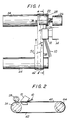
- an array of monofilament, multifilament, or spun yarns 10 is fed into extruder die 12 attached to extruder 14, which is filled with matrix material 18. Yarns 10 are pre-tensioned to provide better control.
- the extruder die outlet 16 is shaped to produce a ribbon-like tape having a side-by-side array of parallel yarns 10 encapsulated within molten plastic matrix material 18. This can be seen more clearly in Fig. 5.
- the newly formed tape is subjected to conditions of heat and pressure by heat press roll 28, thereby forcing the still soft extrudate into the grooves 30 between pins 32 of pinned section 22. Yarns within the tape are guided into engagement with machine direction grooves 34, where they are surrounded and encapsulated by solidifying plastic matrix material. Plastic matrix material is likewise forced into cross-direction grooves 38, to form cross-direction interconnecting strutural members 40.
- Top-most pin extremities 41 contact the outer surface 43 of heated roller 28. This forces plastic material from between these mating surfaces and causes holes 45 to be formed at each such contact point.
- pinned section 22 extends fully across the drive roll 24, so that the desired fabric width can be produced in a single pass. In such a case the material continues around the pinned roll until it cools sufficiently for complete solidification to occur whereupon it is pulled off the pinned roll by a fabric windup device. Flat formed fabric thus produced may subsequently be formed into endless belts by conventional joining methods.
- return-run tape-edge 48 adjacent to newly forming tape 20 is brought into intimate contact with the slotted outer surface 46 of extruder die 12 so that it is softened and fuses, in butting relationship, into adjacent melted edge 47 of newly forming tape 20.
- Both the return-run tape 42 and the newly formed tape 20 are then fed side-by-side adjacent to each other onto pinned section 22, where they are subjected to heat and pressure by press roll 28, thereby improving the bonding between the two tapes.
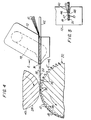
- newly formed tape 20 is continuously joined to previously formed and hardened tape 42 into an endless porous belt 50 comprised of side-by-side tapes whose boundaries are barely discernible.
- the edge regions of the newly formed tape, or indeed the tape as a whole are of multi-stepped configuration, such that the newly formed tape 20 and return-run tape 42 form an overlapping, rather than a butt, joint, the extruder die 12, pinned section 22 and press roll 28 being profiled, and the guiding of tapes 20 and 42 in the region of the extrusion die being modified, accordingly.
- the thickness of the machine and cross-machine direction members created by this method need not be the same. It is desirable in most cases that the yarn be fully encapsulated. It should be understood, however, that many variations in pin shape and spacing may be utilized to achieve particular construction objectives, dependent upon the end use application of the flat fabric or endless belt being produced.
- fabrics of this invention may be further enhanced by the addition of a layer of porous membrane, open cell foam, fibrous matt, fibres, or the like to one or both sides of the yarn-containing matrix material.
- foam or fibres may be positioned throughout the matrix material itself.
- a fine pore-size open-cell foam may be added to the sheet-contacting surface of the fabric, to render the fabric suitable for use as a wet press felt.
- the surface 43 of heated top roll 28 may be embossed to impart a particular surface pattern to the fabric as it is formed.
- the fabric of this invention differs from conventional woven fabrics in several respects.
- the requirement of woven fabrics that machine direction yarns pass over or under cross-machine direction yarns does not apply to the fabrics of this invention.
- the matrix material encapsulating machine direction yarns lies in the same plane and interconnects with cross-machine direction matrix material.
- the homogeneous combination of matrix materials in machine and cross-machine directions can provide independent non-interconnected void spaces between yarn elements. This factor may have special significance when the fabric is employed as a wet press felt for papermaking.
- Fig. 6 shows a plan view of an embodiment of the invention.
- the fabric is in actuality a porous, reinforced plastic composite wherein machine direction yarns are the reinforcement elements and the surrounding matrix material contains fluid passageways, fully encapsulates the yarns, and joins yarn to yarn to make the nonwoven fabric of the invention.
- a fibrous surface layer 51 is shown integrally bound to matrix material 52.
- such bonding is accomplished by pressing the heated fibrous layer 51 down into the lower melting temperature matrix material while partially melting this material, thereby allowing the batt fibres to become firmly embedded within the matrix material.
- fabric of the invention is made entirely from sheath-core yarns having a core comprised of non-melting or high temperature melting monofilament or multifilament yarn and a sheath comprised of lower melting temperature fusable material.
- the yarn core may be a high modulus nylon 6,6 multifilament and the yarn sheath may be nylon 12 material.
- An array of side by side sheath-core yarns is fed into the machine direction grooves 34 of pinned roll section 22, thereat to be forced down into the grooves by heat and pressure by press roll 28.
- the sheath core monofilament cross section area is greater than the area of machine direction groove 34, so that excess melted sheath material is forced into cross direction grooves 38 to form the cross directional interconnecting strutural members 40.
- An endless porous belt was formed utilizing an experimental apparatus of the type described above.
- a matrix material comprised of nylon 12 (melting temperature 171° C) was used to encapsulate an array of seven 0.36mm diameter high modulus polyester monofilament yarns (melting temperature 246°C).
- the yarns were fed into the extruder die to emerge completely encapsulated by the matrix material.
- the extruder and die were operated at 196° C, sufficiently hot to melt the matrix nylon material but not hot enough to melt or adversely effect the polyester monofilament yarns.
- An 86mm diameter ⁇ 12.7mm wide pinned section of the drive roll having 15 pins per cm in the machine direction and 12.6 pins per cm in the cross-machine direction was utilized.
- the pins each had a rectangular, flat tip with a surface of 0.18mm in the cross-machine direction and 0.25mm in the machine direction.
- the pins were 0.81mm high in both directions, i.e., the grooves between pins were of equal depth in both directions.
- the pinned section had machine direcion grooves that were large enough fully to accommodate the monofilament yarns to be encapsulated in the plastic matrix, i.e., these monofilaments could fit into machine direction grooves and be recessed midway down into the space between pins.
- Example 1 A belt similar to that described in Example 1 was formed using .305mm diameter polyester monofilaments and nylon 12 as the matrix material. The procedure of Example 1 was followed, except that excess plastic material was utilized to fill one outside machine direction groove on each edge of the newly formed tape completely. Plastic matrix material also filled in all of the cross-machine direction grooves within nine machine direction groove widths.
- the matrix material may be provided in the form of low melt polymeric sheet material which is brought into alignment with the array of yarns in advance of the roller nip and which meets and flows in the region of the nip, thereat at least partially to encapsulate the yarns.
- a formed matrix/yarn tape is looped round a tail roll for re-presentation to the roller nip in adjacent overlapping disposition relative to the incoming portion of polymeric sheet material and overlying yarn arrays, and passes through said roller nip with said incoming portion and associated yarns.
- the array of yarns is disposed centrally of a continuous length of polymeric sheet material of a width three times that of the said array and that the extent of overlap is equal to the width of the yarn array
- successive passes of a 'formed' matrix/yarn tape through the roller nip will result in a nonwoven fabric wherein the body comprises a matrix formed by the fusion of three layers of polymeric material and a single layer of yarn.
- the edge regions of such fabric will, of course, be incomplete, but such edge regions may be trimmed as necessary.
- the substantial overlap between successive lengths of polymeric sheet material approaching the roller nip does ensure intimate fusion between such successive lengths, thus to enhance the integrity of the fabirc in the transverse direction thereof.
- the surface configuration of the pinned roller will require modification to accommodate the different thicknesses of polymeric material/yarn at the roller nip on start up of the process.
Landscapes
- Engineering & Computer Science (AREA)
- Mechanical Engineering (AREA)
- Textile Engineering (AREA)
- Chemical & Material Sciences (AREA)
- Chemical Kinetics & Catalysis (AREA)
- Composite Materials (AREA)
- Physics & Mathematics (AREA)
- Thermal Sciences (AREA)
- Paper (AREA)
- Woven Fabrics (AREA)
- Treatments For Attaching Organic Compounds To Fibrous Goods (AREA)
- Treatment Of Fiber Materials (AREA)
- Materials For Medical Uses (AREA)
- Spinning Methods And Devices For Manufacturing Artificial Fibers (AREA)
- Nonwoven Fabrics (AREA)
- External Artificial Organs (AREA)
- Laminated Bodies (AREA)
Claims (20)
- Textilverbundstoff mit auf Abstand liegenden linearen Fäden, die sich im wesentlichen in gleicher Richtung erstrecken, sowie mit polymerem Verbundfüllstoff, der die Fäden verbindet und jeden Faden über seine gesamte Längserstreckung zumindest teilweise umhüllt, dadurch gekennzeichnet, daß der polymere Verbundfüllstoff (52) Ausnehmungen (45) aufweist, die seitlich versetzt zu den Fäden (10) angeordnet sind und sich durch den ganzen Verbundstoff hindurch erstrecken.
- Textilverbundstoff nach Anspruch 1, bei dem sich die Fäden (10) insgesamt in Parallellage befinden, und sich der diese Fäden verbindende Verbundfüllstoff (40) senkrecht zu den Fäden und zu demjenigen Verbundfüllstoff erstreckt, welcher zum mindestens teilweisen Umhüllen der Fäden dient.
- Textilverbundstoff nach Anspruch 1 oder 2, bei dem der umhüllende Verbundfüllstoff (52) an mindestens einer Seite des Verbundstoffes eine ebene Oberfläche bildet.
- Textilverbundstoff nach einem der vorhergehenden Ansprüche, bei dem der polymere Verbundfüllstoff (40), der die mindestens teilweise umhüllten Fäden verbindet, auf einer Seite des Verbundstoffes eine Oberfläche außerhalb jeder Ebene der umhüllten Fäden (10) bildet.
- Textilverbundstoff nach einem der vorhergehenden Ansprüche, bei dem die Ausnehmungen (45) im Verbundfüllstoff (52) jeweils einzelne Strömungswege enthalten, die senkrecht zur Hauptebene des Verbundstoffes verlaufen.
- Textilverbundstoff nach einem der vorhergehenden Ansprüche, bei dem die Ausnehmungen (45) in gleichen Abständen voneinander angeordnet sind.
- Textilverbundstoff nach einem der vorhergehenden Ansprüche, bei dem der Verbundfüllstoff (52) eine niedrigere Schmelztemperatur hat als die Fäden.
- Textilverbundstoff nach einem der vorhergehenden Ansprüche, bei dem der Verbundfüllstoff Polyurethan oder fluoriertes Polymer enthält.
- Textilverbundstoff nach einem der Ansprüche 1 bis 7, bei dem der Verbundfüllstoff einen nicht verformbaren polymeren Stoff enthält.
- Textilverbundstoff nach einem der vorhergehenden Ansprüche, bei dem die Fäden (10) einen hohen Modul aufweisen.
- Textilverbundstoff nach einem der vorhergehenden Ansprüche, bei dem die Fäden (10) von dem Verbundfüllstoff (52) völlig umhüllt sind.
- Textilverbundstoff nach einem der vorhergehenden Ansprüche, bei dem als Fäden (10) kernummantelte Monofilamente verwendet sind, deren Kern aus polymerem Werkstoff mit hohem Modul und deren Ummantelung aus polymerem Werkstoff besteht, der eine niedrigere Schmelztemperatur hat als der Kernwerkstoff.
- Textilverbundstoff nach Anspruch 12, bei dem die Ummantelung den genannten Verbundfüllstoff (52) aufweist.
- Textilverbundstoff nach einem der vorhergehenden Ansprüche, bei dem zumindest eine Oberfläche des Verbundstoffes mit einer porösen Schicht (51) abgedeckt ist.
- Textilverbundstoff nach Anspruch 14, bei dem die poröse Schicht (51) textile kardierte Faserbündel enthält.
- Textilverbundstoff nach einem der vorhergehenden Ansprüche, der als Papiermacher-Tuch ausgeführt ist.
- Verfahren zur Herstellung eines Textilverbundstoffes mit den Verfahrensschritten: Vorschub einer Anordnung von mit Abstand nebeneinander geordneten Fäden (10) in deren Längsrichtung und in eine mindestens teilweise eingebettete Zuordnung zu einem polymeren Verbundfüllstoff (18), der als flüssige oder plastische Masse vorliegt, Hindurchführen der Fäden und des Verbundfüllstoffes durch einen Walzenspalt und Verfestigen der Faden-Füllstoff-Masse, wobei die den Walzenspalt bildenden Walzen (24, 28) einander intervallmäßig in axial und über den Umfang verteilten Abständen berühren, um so in dem Verbundfüllstoff bei dessen Durchlauf Ausnehmungen zu bilden.
- Verfahren nach Anspruch 17, bei dem der Verbundfüllstoff (18) beim Verbinden mit den Fäden (10) in flüssiger Form vorliegt.
- Verfahren nach Anspruch 17 oder 18, mit den weiteren Schritten: Anordnen der verfestigten Faden-Füllstoff-Masse (42) als umlaufendes Band und in einer Position vor dem Walzenspalt in seitlicher Stoßverbindung mit einer weiteren Anordnung von Fäden (10) und vorlaufendem polymeren Verbundfüllstoff (18) und Vorschieben der genannten Masse (42) und der angrenzenden Fäden (10) mit Verbundfüllstoff (18) durch den Walzenspalt, so daß eine weitere perforierte Faden-Füllstoff-Masse (20) gebildet wird, die mit der verfestigten Masse innig verschmolzen ist.
- Verfahren zur Herstellung eines Textilverbundstoffes mit den Verfahrensschritten: Herrichten einer Anordnung von parallel zueinander auf Abstand liegenden Fäden, von denen jeder eine polymere Ummantelung aufweist, Erhitzen der Anordnung, um den polymeren Werkstoff zum Schmelzen zu bringen, Erzwingen einer anschließenden Fließbewegung des Werkstoffes in festgelegte Bahnen zwischen den Fäden unter Verbinden benachbarter Fäden und anschließendes Abkühlen des polymeren Werkstoffes.
Priority Applications (1)
| Application Number | Priority Date | Filing Date | Title |
|---|---|---|---|
| AT88302794T ATE85096T1 (de) | 1987-03-31 | 1988-03-29 | Vliesstoff und verfahren zur herstellung desselben. |
Applications Claiming Priority (2)
| Application Number | Priority Date | Filing Date | Title |
|---|---|---|---|
| US07/033,023 US4740409A (en) | 1987-03-31 | 1987-03-31 | Nonwoven fabric and method of manufacture |
| US33023 | 1998-03-02 |
Publications (3)
| Publication Number | Publication Date |
|---|---|
| EP0285376A2 EP0285376A2 (de) | 1988-10-05 |
| EP0285376A3 EP0285376A3 (en) | 1990-01-24 |
| EP0285376B1 true EP0285376B1 (de) | 1993-01-27 |
Family
ID=21868143
Family Applications (1)
| Application Number | Title | Priority Date | Filing Date |
|---|---|---|---|
| EP88302794A Expired - Lifetime EP0285376B1 (de) | 1987-03-31 | 1988-03-29 | Vliesstoff und Verfahren zur Herstellung desselben |
Country Status (15)
| Country | Link |
|---|---|
| US (1) | US4740409A (de) |
| EP (1) | EP0285376B1 (de) |
| JP (1) | JPS6420371A (de) |
| AT (1) | ATE85096T1 (de) |
| AU (1) | AU607197B2 (de) |
| BR (1) | BR8801421A (de) |
| CA (1) | CA1309853C (de) |
| DE (1) | DE3877794T2 (de) |
| ES (1) | ES2037216T3 (de) |
| FI (1) | FI93558C (de) |
| GB (1) | GB2202873B (de) |
| MX (1) | MX166231B (de) |
| NO (1) | NO173621C (de) |
| NZ (1) | NZ224050A (de) |
| ZA (1) | ZA882210B (de) |
Cited By (8)
| Publication number | Priority date | Publication date | Assignee | Title |
|---|---|---|---|---|
| DE102007024509A1 (de) | 2007-05-25 | 2008-12-04 | Voith Patent Gmbh | Pressfilz mit profilierten Fäden |
| DE102007000578A1 (de) | 2007-10-26 | 2009-04-30 | Voith Patent Gmbh | Papiermaschinenbespannungen, insbesondere für Pressfilze, und Verfahren zu deren Herstellung |
| DE102007047867A1 (de) | 2007-11-27 | 2009-05-28 | Voith Patent Gmbh | Papiermaschinenbespannungen, insbesondere für Pressfilze und Verfahren zu deren Herstellung |
| EP2065515A1 (de) | 2007-11-27 | 2009-06-03 | Voith Patent GmbH | Papiermaschinenbespannung |
| DE102007055687A1 (de) | 2007-12-03 | 2009-06-04 | Voith Patent Gmbh | Industriestoff zur Verwendung in einer Papiermaschinenbespannung, insbesondere als Pressfilz |
| DE102007055690A1 (de) | 2007-12-03 | 2009-06-04 | Voith Patent Gmbh | Papiermaschinenbespannung |
| EP2067896A1 (de) | 2007-12-04 | 2009-06-10 | Helmbach GmbH & Co.KG | Verfahren zur Herstellung eines Machinenfilzes sowie Maschinenfilz |
| DE102008001820A1 (de) | 2008-05-16 | 2009-11-19 | Voith Patent Gmbh | Industriestoff zur Verwendung in einer Papiermaschinenbespannung, insbesondere als Pressfilz |
Families Citing this family (73)
| Publication number | Priority date | Publication date | Assignee | Title |
|---|---|---|---|---|
| GB8818992D0 (en) * | 1988-08-10 | 1988-09-14 | Scapa Group Plc | Improvements relating to extended nip dewatering presses |
| US5118557A (en) * | 1988-10-31 | 1992-06-02 | Albany International Corp. | Foam coating of press fabrics to achieve a controlled void volume |
| AU5735390A (en) * | 1989-08-25 | 1991-04-03 | Huyck Corporation | Molded paper clothing |
| GB9004428D0 (en) * | 1990-02-28 | 1990-04-25 | Middleton Nigel John | Fabric |
| GB9016619D0 (en) * | 1990-07-28 | 1990-09-12 | Scapa Group Plc | Endless belts for extended nip dewatering presses |
| MX9101640A (es) * | 1990-10-26 | 1992-06-05 | Milliken Res Corp | Tela no tejida cosida |
| US5736220A (en) * | 1993-03-24 | 1998-04-07 | Tingley; Daniel A. | Surface treated synthetic reinforcement for structural wood members |
| US6071419A (en) * | 1993-10-20 | 2000-06-06 | Products Unlimited, Inc. | Fluid filter, method of making and using thereof |
| US5861082A (en) * | 1993-12-20 | 1999-01-19 | The Procter & Gamble Company | Wet pressed paper web and method of making the same |
| US5904811A (en) * | 1993-12-20 | 1999-05-18 | The Procter & Gamble Company | Wet pressed paper web and method of making the same |
| ES2128705T3 (es) * | 1993-12-20 | 1999-05-16 | Procter & Gamble | Banda de papel prensada en humedo y metodo para fabricar la misma. |
| GB2289648B (en) * | 1994-05-26 | 1997-10-15 | Scapa Group Plc | Corrugator fabric |
| US5549790A (en) * | 1994-06-29 | 1996-08-27 | The Procter & Gamble Company | Multi-region paper structures having a transition region interconnecting relatively thinner regions disposed at different elevations, and apparatus and process for making the same |
| US5871887A (en) * | 1994-06-29 | 1999-02-16 | The Procter & Gamble Company | Web patterning apparatus comprising a felt layer and a photosensitive resin layer |
| US5556509A (en) * | 1994-06-29 | 1996-09-17 | The Procter & Gamble Company | Paper structures having at least three regions including a transition region interconnecting relatively thinner regions disposed at different elevations, and apparatus and process for making the same |
| ATE179473T1 (de) * | 1994-06-29 | 1999-05-15 | Procter & Gamble | Vorrichtung zum herstellen eines musters auf einem band mit einer filzschicht und einer lichtempfindlichen harzschicht und verfahren zum herstellen der vorrichtung |
| GB9518802D0 (en) * | 1995-09-14 | 1995-11-15 | Scapa Group Plc | Tobacco conveyor belt |
| US5700356A (en) * | 1996-01-19 | 1997-12-23 | Lefkowitz; Leonard R. | Air permeable belt for dewatering web in press nip |
| GB9601517D0 (en) * | 1996-01-25 | 1996-03-27 | Scapa Group Plc | Masonry tape |
| US5747151A (en) * | 1996-03-12 | 1998-05-05 | Tingley; Daniel A. | Glue-laminated wood structural member with sacrificial edges |
| US6037049A (en) * | 1996-05-09 | 2000-03-14 | Tingley; Daniel A. | Reinforcement panel sheet to be adhered to a wood structural member |
| TW338078B (en) * | 1996-07-08 | 1998-08-11 | Scapa Group Plc | Membrane felt for use in yankee machine |
| US5888915A (en) * | 1996-09-17 | 1999-03-30 | Albany International Corp. | Paper machine clothings constructed of interconnected bicomponent fibers |
| GB9713309D0 (en) * | 1996-11-08 | 1997-08-27 | Scapa Group Plc | Papermachine clothing |
| GB9703037D0 (en) * | 1997-02-14 | 1997-04-02 | Scapa Group Plc | Filter press belt |
| JPH1150386A (ja) * | 1997-06-30 | 1999-02-23 | Christian Schiel | 改善された両面構造を有する抄紙用フェルト及びその製造方法 |
| GB9717614D0 (en) * | 1997-08-21 | 1997-10-22 | Scapa Group Plc | Improved mineral screen |
| GB9807703D0 (en) * | 1998-04-09 | 1998-06-10 | Scapa Group Plc | Dewaterig membrane structure |
| US6554963B1 (en) | 1998-11-02 | 2003-04-29 | Albany International Corp. | Embossed fabrics and method of making the same |
| US6183601B1 (en) | 1999-02-03 | 2001-02-06 | Kimberly-Clark Worldwide, Inc. | Method of calendering a sheet material web carried by a fabric |
| US6240608B1 (en) | 1999-04-12 | 2001-06-05 | Albany International Corp. | Method for joining nonwoven mesh products |
| US6465074B1 (en) * | 1999-08-25 | 2002-10-15 | Albany International Corp. | Base substrates for coated belts |
| US20030036741A1 (en) * | 1999-10-14 | 2003-02-20 | Kimberly-Clark Worldwide, Inc. | Textured airlaid materials |
| US6617490B1 (en) | 1999-10-14 | 2003-09-09 | Kimberly-Clark Worldwide, Inc. | Absorbent articles with molded cellulosic webs |
| US6692603B1 (en) | 1999-10-14 | 2004-02-17 | Kimberly-Clark Worldwide, Inc. | Method of making molded cellulosic webs for use in absorbent articles |
| US6576091B1 (en) | 2000-10-24 | 2003-06-10 | The Procter & Gamble Company | Multi-layer deflection member and process for making same |
| US6743571B1 (en) * | 2000-10-24 | 2004-06-01 | The Procter & Gamble Company | Mask for differential curing and process for making same |
| US6420100B1 (en) | 2000-10-24 | 2002-07-16 | The Procter & Gamble Company | Process for making deflection member using three-dimensional mask |
| US6660129B1 (en) | 2000-10-24 | 2003-12-09 | The Procter & Gamble Company | Fibrous structure having increased surface area |
| US6576090B1 (en) | 2000-10-24 | 2003-06-10 | The Procter & Gamble Company | Deflection member having suspended portions and process for making same |
| DE50004811D1 (de) | 2000-11-23 | 2004-01-29 | Heimbach Gmbh Thomas Josef | Textilbahn, insbesondere Papiermaschinenbespannung |
| US6491794B2 (en) * | 2001-03-29 | 2002-12-10 | Albany International Corp. | Base structure for seamed papermaker's fabrics |
| US6726809B2 (en) * | 2001-09-26 | 2004-04-27 | Albany International Corp. | Industrial process fabric |
| US6913673B2 (en) | 2001-12-19 | 2005-07-05 | Kimberly-Clark Worldwide, Inc. | Heated embossing and ply attachment |
| GB0204308D0 (en) | 2002-02-23 | 2002-04-10 | Voith Fabrics Heidenheim Gmbh | Papermachine clothing |
| US6875315B2 (en) * | 2002-12-19 | 2005-04-05 | Kimberly-Clark Worldwide, Inc. | Non-woven through air dryer and transfer fabrics for tissue making |
| US6878238B2 (en) * | 2002-12-19 | 2005-04-12 | Kimberly-Clark Worldwide, Inc. | Non-woven through air dryer and transfer fabrics for tissue making |
| US6893524B2 (en) | 2003-01-24 | 2005-05-17 | Glastic Corporation | Method and apparatus for manufacturing a reinforcement |
| US7875337B2 (en) | 2003-01-24 | 2011-01-25 | Glastic Corporation | Fiber and resin composite reinforcement |
| US7141142B2 (en) * | 2003-09-26 | 2006-11-28 | Kimberly-Clark Worldwide, Inc. | Method of making paper using reformable fabrics |
| US8840683B2 (en) * | 2003-11-19 | 2014-09-23 | Albany International Corp. | Industrial textile fabric |
| US7720461B2 (en) * | 2004-02-26 | 2010-05-18 | Research In Motion Limited | Mobile communications device with security features |
| DE102004044569A1 (de) * | 2004-09-15 | 2006-03-30 | Voith Fabrics Patent Gmbh | Papiermaschinenbespannungen |
| DE102004044568B4 (de) | 2004-09-15 | 2021-08-05 | Voith Patent Gmbh | Pressstoffe |
| DE102004054804A1 (de) * | 2004-11-12 | 2006-05-18 | Voith Fabrics Patent Gmbh | Papiermaschinenbespannung |
| DE102005006737A1 (de) * | 2005-02-15 | 2006-08-24 | Voith Fabrics Patent Gmbh | 3-D Polymer Extrusion |
| DE102006024343A1 (de) * | 2006-05-24 | 2007-11-29 | Voith Patent Gmbh | Transportband für eine Maschine zur Herstellung von Bahnmaterial und Verfahren zur Herstellung eines derartigen Transportbandes |
| US7914649B2 (en) * | 2006-10-31 | 2011-03-29 | The Procter & Gamble Company | Papermaking belt for making multi-elevation paper structures |
| US7799411B2 (en) * | 2006-10-31 | 2010-09-21 | The Procter & Gamble Company | Absorbent paper product having non-embossed surface features |
| DE102007055801A1 (de) | 2007-12-21 | 2009-06-25 | Voith Patent Gmbh | Band für eine Maschine zur Herstellung von Bahnmaterial und Verfahren zur Herstellung eines derartigen Bands |
| EP2072670A1 (de) | 2007-12-21 | 2009-06-24 | Voith Patent GmbH | Band für eine Maschine zur Herstellung von Bahnmaterial und Verfahren zur Herstellung eines derartigen Bands |
| DE102007055902A1 (de) | 2007-12-21 | 2009-06-25 | Voith Patent Gmbh | Band für eine Maschine zur Herstellung von Bahnmaterial |
| DE102008001150A1 (de) | 2008-04-14 | 2009-10-15 | Voith Patent Gmbh | Papiermaschinenbespannung |
| DE102008001854A1 (de) * | 2008-05-19 | 2009-11-26 | Voith Patent Gmbh | Pressfilz |
| DE102009001887A1 (de) | 2009-03-26 | 2010-09-30 | Voith Patent Gmbh | Verfahren zum Betreiben einer Papier-, Karton- oder Tissuemaschine sowie Papier-, Karton- oder Tissuemaschine |
| DE102009028215B3 (de) | 2009-08-04 | 2010-09-09 | Voith Patent Gmbh | Kombination eines Pressfilzes mit einem Presswalzenbezug und/oder einem Saugwalzenbezug für eine Papiermaschine |
| USD636608S1 (en) | 2009-11-09 | 2011-04-26 | The Procter & Gamble Company | Paper product |
| CA2688470A1 (en) | 2009-12-11 | 2011-06-11 | Allan Manninen | Industrial fabric comprised of selectively slit and embossed film |
| HUE029131T2 (en) * | 2010-04-12 | 2017-02-28 | Nicolon Corp Doing Business As Tencate Geosynthetics North America | Woven geosynthetic fabric |
| AU2014287008B2 (en) | 2013-07-12 | 2018-06-14 | Amcol International Corporation | Clay/polymer blend as high pH or ionic liquid barrier |
| DE202014011338U1 (de) * | 2014-07-10 | 2019-07-29 | Voith Patent Gmbh | Extrudierte Papiermaschinenbespannung |
| DE202018101104U1 (de) * | 2018-02-28 | 2019-06-03 | lnalfa Roof Systems Group B.V. | Windabweiser für Offendachkonstruktion |
| WO2024006564A1 (en) * | 2022-07-01 | 2024-01-04 | Albany International Corp. | Extruded reinforced industrial belt |
Family Cites Families (15)
| Publication number | Priority date | Publication date | Assignee | Title |
|---|---|---|---|---|
| GB426988A (en) * | 1934-06-05 | 1935-04-12 | Int Latex Processes Ltd | Improvements in or relating to unwoven, fibrous, sheet material, and to a method for the manufacture thereof |
| DE1277658B (de) * | 1962-01-12 | 1968-09-12 | Plate & Suter | Sieb fuer Papiermaschinen |
| FR1324418A (fr) * | 1962-03-09 | 1963-04-19 | Ferodo Sa | Bandelettes à base d'amiante et leurs applications |
| US3323226A (en) * | 1963-05-28 | 1967-06-06 | Huyck Corp | Synthetic dryer belt |
| AT245755B (de) * | 1963-05-31 | 1966-03-10 | Christian Heinrich Turcksin | In Längs- und Querrichtung elastisch dehnbares Band und Verfahren zu seiner Herstellung |
| GB1148068A (en) * | 1965-11-18 | 1969-04-10 | Stephenson Mills Ltd | Steel wool products |
| US3617442A (en) * | 1968-09-30 | 1971-11-02 | Alfred A Hurschman | Paper-making means and method |
| SE349946B (de) * | 1971-02-09 | 1972-10-16 | Billingsfors Langed Ab | |
| JPS4841786A (de) * | 1971-09-28 | 1973-06-18 | ||
| GB1595331A (en) * | 1977-07-02 | 1981-08-12 | Gilbert M | Mesh structures incorporating orientated plastics components |
| GB2041028A (en) * | 1978-09-23 | 1980-09-03 | Dalemar Ltd | Web Formation |
| WO1983004217A1 (en) * | 1982-05-27 | 1983-12-08 | Lockheed Corporation | Automated fiber lay-up machine |
| US4382987A (en) * | 1982-07-30 | 1983-05-10 | Huyck Corporation | Papermaker's grooved back felt |
| US4469221A (en) * | 1982-09-24 | 1984-09-04 | Scapa Inc. | Papermakers fabric of link and pintle construction |
| FI75893C (fi) * | 1985-03-01 | 1988-08-08 | Nokia Oy Ab | Skivformad vaetskegenomslaeppande struktur, och foerfarande foer tillverkning av densamma. |
-
1987
- 1987-03-31 US US07/033,023 patent/US4740409A/en not_active Expired - Lifetime
-
1988
- 1988-03-25 AU AU13723/88A patent/AU607197B2/en not_active Ceased
- 1988-03-25 NO NO881343A patent/NO173621C/no not_active IP Right Cessation
- 1988-03-28 NZ NZ224050A patent/NZ224050A/xx unknown
- 1988-03-28 ZA ZA882210A patent/ZA882210B/xx unknown
- 1988-03-29 BR BR8801421A patent/BR8801421A/pt not_active IP Right Cessation
- 1988-03-29 GB GB8807416A patent/GB2202873B/en not_active Expired - Lifetime
- 1988-03-29 DE DE8888302794T patent/DE3877794T2/de not_active Expired - Lifetime
- 1988-03-29 ES ES198888302794T patent/ES2037216T3/es not_active Expired - Lifetime
- 1988-03-29 AT AT88302794T patent/ATE85096T1/de not_active IP Right Cessation
- 1988-03-29 EP EP88302794A patent/EP0285376B1/de not_active Expired - Lifetime
- 1988-03-29 MX MX010931A patent/MX166231B/es unknown
- 1988-03-30 FI FI881493A patent/FI93558C/fi not_active IP Right Cessation
- 1988-03-31 JP JP63076661A patent/JPS6420371A/ja active Pending
- 1988-03-31 CA CA000563156A patent/CA1309853C/en not_active Expired - Lifetime
Cited By (8)
| Publication number | Priority date | Publication date | Assignee | Title |
|---|---|---|---|---|
| DE102007024509A1 (de) | 2007-05-25 | 2008-12-04 | Voith Patent Gmbh | Pressfilz mit profilierten Fäden |
| DE102007000578A1 (de) | 2007-10-26 | 2009-04-30 | Voith Patent Gmbh | Papiermaschinenbespannungen, insbesondere für Pressfilze, und Verfahren zu deren Herstellung |
| DE102007047867A1 (de) | 2007-11-27 | 2009-05-28 | Voith Patent Gmbh | Papiermaschinenbespannungen, insbesondere für Pressfilze und Verfahren zu deren Herstellung |
| EP2065515A1 (de) | 2007-11-27 | 2009-06-03 | Voith Patent GmbH | Papiermaschinenbespannung |
| DE102007055687A1 (de) | 2007-12-03 | 2009-06-04 | Voith Patent Gmbh | Industriestoff zur Verwendung in einer Papiermaschinenbespannung, insbesondere als Pressfilz |
| DE102007055690A1 (de) | 2007-12-03 | 2009-06-04 | Voith Patent Gmbh | Papiermaschinenbespannung |
| EP2067896A1 (de) | 2007-12-04 | 2009-06-10 | Helmbach GmbH & Co.KG | Verfahren zur Herstellung eines Machinenfilzes sowie Maschinenfilz |
| DE102008001820A1 (de) | 2008-05-16 | 2009-11-19 | Voith Patent Gmbh | Industriestoff zur Verwendung in einer Papiermaschinenbespannung, insbesondere als Pressfilz |
Also Published As
| Publication number | Publication date |
|---|---|
| NZ224050A (en) | 1990-02-26 |
| GB2202873B (en) | 1991-06-12 |
| NO173621B (no) | 1993-09-27 |
| ATE85096T1 (de) | 1993-02-15 |
| AU1372388A (en) | 1988-09-29 |
| CA1309853C (en) | 1992-11-10 |
| GB2202873A (en) | 1988-10-05 |
| FI881493L (fi) | 1988-10-01 |
| JPS6420371A (en) | 1989-01-24 |
| EP0285376A2 (de) | 1988-10-05 |
| ZA882210B (en) | 1988-12-28 |
| NO881343D0 (no) | 1988-03-25 |
| NO881343L (no) | 1988-10-03 |
| NO173621C (no) | 1994-01-05 |
| AU607197B2 (en) | 1991-02-28 |
| US4740409A (en) | 1988-04-26 |
| DE3877794T2 (de) | 1993-06-24 |
| GB8807416D0 (en) | 1988-05-05 |
| FI881493A0 (fi) | 1988-03-30 |
| EP0285376A3 (en) | 1990-01-24 |
| MX166231B (es) | 1992-12-24 |
| BR8801421A (pt) | 1988-11-01 |
| DE3877794D1 (de) | 1993-03-11 |
| FI93558B (fi) | 1995-01-13 |
| FI93558C (fi) | 1995-04-25 |
| ES2037216T3 (es) | 1993-06-16 |
Similar Documents
| Publication | Publication Date | Title |
|---|---|---|
| EP0285376B1 (de) | Vliesstoff und Verfahren zur Herstellung desselben | |
| KR100405084B1 (ko) | 제지기의 프레스부용 프레스 패브릭 및 그 제조방법 | |
| CA2434965C (en) | Spirally wound shaped yarns for paper machine clothing and industrial belts | |
| US4537816A (en) | Papermakers superimposed felt with voids formed by removing yarns | |
| CA2406859C (en) | Base structure for seamed papermaker's fabrics | |
| US20120097353A1 (en) | Substrate for endless belt for use in papermaking applications | |
| CA2574141C (en) | Semi-permeable fabrics for transfer belt and press fabric applications | |
| GB2235705A (en) | Nonwoven fabric | |
| JP2001089991A (ja) | 抄紙機およびそれに類似の産業アプリケーション用樹脂含浸エンドレスベルト構造体の製造方法 | |
| KR101514199B1 (ko) | 다층 직물 및 이의 제조방법 | |
| EP1015688B1 (de) | Verbesserungen beim pressband für breit-nip-pressen | |
| JP7604540B2 (ja) | コンベヤベルト、特に抄紙機用の移送ベルト | |
| CA1323478C (en) | Method of manufacturing nonwoven fabric | |
| CA1251124A (en) | Procedure to bond a layer of permeable material to a base fabric made of interlaced yarns; and felts for paper machines and filter fabrics manufactured accordingly | |
| US20240001602A1 (en) | Extruded Reinforced Industrial Belt | |
| CA1216766A (en) | Papermakers superimposed felt | |
| US20060010932A1 (en) | Jointing of composite fabrics |
Legal Events
| Date | Code | Title | Description |
|---|---|---|---|
| PUAI | Public reference made under article 153(3) epc to a published international application that has entered the european phase |
Free format text: ORIGINAL CODE: 0009012 |
|
| AK | Designated contracting states |
Kind code of ref document: A2 Designated state(s): AT BE CH DE ES FR GB IT LI NL SE |
|
| PUAL | Search report despatched |
Free format text: ORIGINAL CODE: 0009013 |
|
| RHK1 | Main classification (correction) |
Ipc: D21F 1/00 |
|
| AK | Designated contracting states |
Kind code of ref document: A3 Designated state(s): AT BE CH DE ES FR GB IT LI NL SE |
|
| 17P | Request for examination filed |
Effective date: 19900711 |
|
| 17Q | First examination report despatched |
Effective date: 19920214 |
|
| RBV | Designated contracting states (corrected) |
Designated state(s): AT BE CH DE ES FR IT LI NL SE |
|
| ITF | It: translation for a ep patent filed | ||
| GRAA | (expected) grant |
Free format text: ORIGINAL CODE: 0009210 |
|
| AK | Designated contracting states |
Kind code of ref document: B1 Designated state(s): AT BE CH DE ES FR IT LI NL SE |
|
| REF | Corresponds to: |
Ref document number: 85096 Country of ref document: AT Date of ref document: 19930215 Kind code of ref document: T |
|
| REF | Corresponds to: |
Ref document number: 3877794 Country of ref document: DE Date of ref document: 19930311 |
|
| ET | Fr: translation filed | ||
| REG | Reference to a national code |
Ref country code: ES Ref legal event code: FG2A Ref document number: 2037216 Country of ref document: ES Kind code of ref document: T3 |
|
| PLBE | No opposition filed within time limit |
Free format text: ORIGINAL CODE: 0009261 |
|
| STAA | Information on the status of an ep patent application or granted ep patent |
Free format text: STATUS: NO OPPOSITION FILED WITHIN TIME LIMIT |
|
| 26N | No opposition filed | ||
| EAL | Se: european patent in force in sweden |
Ref document number: 88302794.8 |
|
| PGFP | Annual fee paid to national office [announced via postgrant information from national office to epo] |
Ref country code: ES Payment date: 20040309 Year of fee payment: 17 |
|
| PGFP | Annual fee paid to national office [announced via postgrant information from national office to epo] |
Ref country code: NL Payment date: 20040323 Year of fee payment: 17 |
|
| PGFP | Annual fee paid to national office [announced via postgrant information from national office to epo] |
Ref country code: CH Payment date: 20040326 Year of fee payment: 17 |
|
| PG25 | Lapsed in a contracting state [announced via postgrant information from national office to epo] |
Ref country code: IT Free format text: LAPSE BECAUSE OF NON-PAYMENT OF DUE FEES;WARNING: LAPSES OF ITALIAN PATENTS WITH EFFECTIVE DATE BEFORE 2007 MAY HAVE OCCURRED AT ANY TIME BEFORE 2007. THE CORRECT EFFECTIVE DATE MAY BE DIFFERENT FROM THE ONE RECORDED. Effective date: 20050329 |
|
| PG25 | Lapsed in a contracting state [announced via postgrant information from national office to epo] |
Ref country code: ES Free format text: LAPSE BECAUSE OF NON-PAYMENT OF DUE FEES Effective date: 20050330 |
|
| PG25 | Lapsed in a contracting state [announced via postgrant information from national office to epo] |
Ref country code: CH Free format text: LAPSE BECAUSE OF NON-PAYMENT OF DUE FEES Effective date: 20050331 Ref country code: LI Free format text: LAPSE BECAUSE OF NON-PAYMENT OF DUE FEES Effective date: 20050331 |
|
| PG25 | Lapsed in a contracting state [announced via postgrant information from national office to epo] |
Ref country code: NL Free format text: LAPSE BECAUSE OF NON-PAYMENT OF DUE FEES Effective date: 20051001 |
|
| REG | Reference to a national code |
Ref country code: CH Ref legal event code: PL |
|
| NLV4 | Nl: lapsed or anulled due to non-payment of the annual fee |
Effective date: 20051001 |
|
| REG | Reference to a national code |
Ref country code: ES Ref legal event code: FD2A Effective date: 20050330 |
|
| PGFP | Annual fee paid to national office [announced via postgrant information from national office to epo] |
Ref country code: AT Payment date: 20070313 Year of fee payment: 20 Ref country code: SE Payment date: 20070313 Year of fee payment: 20 |
|
| PGFP | Annual fee paid to national office [announced via postgrant information from national office to epo] |
Ref country code: DE Payment date: 20070316 Year of fee payment: 20 |
|
| PGFP | Annual fee paid to national office [announced via postgrant information from national office to epo] |
Ref country code: BE Payment date: 20070419 Year of fee payment: 20 |
|
| BE20 | Be: patent expired |
Owner name: *LEFKOWITZ LEONARD ROBERT Effective date: 20080329 |
|
| PGFP | Annual fee paid to national office [announced via postgrant information from national office to epo] |
Ref country code: FR Payment date: 20070319 Year of fee payment: 20 |
|
| EUG | Se: european patent has lapsed |