EP0272552A2 - Verfahren und Vorrichtung zur Ketonmessung - Google Patents
Verfahren und Vorrichtung zur Ketonmessung Download PDFInfo
- Publication number
- EP0272552A2 EP0272552A2 EP87118294A EP87118294A EP0272552A2 EP 0272552 A2 EP0272552 A2 EP 0272552A2 EP 87118294 A EP87118294 A EP 87118294A EP 87118294 A EP87118294 A EP 87118294A EP 0272552 A2 EP0272552 A2 EP 0272552A2
- Authority
- EP
- European Patent Office
- Prior art keywords
- acetone
- breath
- ion exchange
- fat
- exchange resin
- Prior art date
- Legal status (The legal status is an assumption and is not a legal conclusion. Google has not performed a legal analysis and makes no representation as to the accuracy of the status listed.)
- Granted
Links
Images


Classifications
-
- G—PHYSICS
- G01—MEASURING; TESTING
- G01N—INVESTIGATING OR ANALYSING MATERIALS BY DETERMINING THEIR CHEMICAL OR PHYSICAL PROPERTIES
- G01N33/00—Investigating or analysing materials by specific methods not covered by groups G01N1/00 - G01N31/00
- G01N33/48—Biological material, e.g. blood, urine; Haemocytometers
- G01N33/50—Chemical analysis of biological material, e.g. blood, urine; Testing involving biospecific ligand binding methods; Immunological testing
- G01N33/64—Chemical analysis of biological material, e.g. blood, urine; Testing involving biospecific ligand binding methods; Immunological testing involving ketones
-
- Y—GENERAL TAGGING OF NEW TECHNOLOGICAL DEVELOPMENTS; GENERAL TAGGING OF CROSS-SECTIONAL TECHNOLOGIES SPANNING OVER SEVERAL SECTIONS OF THE IPC; TECHNICAL SUBJECTS COVERED BY FORMER USPC CROSS-REFERENCE ART COLLECTIONS [XRACs] AND DIGESTS
- Y10—TECHNICAL SUBJECTS COVERED BY FORMER USPC
- Y10T—TECHNICAL SUBJECTS COVERED BY FORMER US CLASSIFICATION
- Y10T436/00—Chemistry: analytical and immunological testing
- Y10T436/20—Oxygen containing
- Y10T436/200833—Carbonyl, ether, aldehyde or ketone containing
-
- Y—GENERAL TAGGING OF NEW TECHNOLOGICAL DEVELOPMENTS; GENERAL TAGGING OF CROSS-SECTIONAL TECHNOLOGIES SPANNING OVER SEVERAL SECTIONS OF THE IPC; TECHNICAL SUBJECTS COVERED BY FORMER USPC CROSS-REFERENCE ART COLLECTIONS [XRACs] AND DIGESTS
- Y10—TECHNICAL SUBJECTS COVERED BY FORMER USPC
- Y10T—TECHNICAL SUBJECTS COVERED BY FORMER US CLASSIFICATION
- Y10T436/00—Chemistry: analytical and immunological testing
- Y10T436/20—Oxygen containing
- Y10T436/200833—Carbonyl, ether, aldehyde or ketone containing
- Y10T436/202499—Formaldehyde or acetone
Definitions
- the present invention relates generally to methods and materials for the detection of ketones and aldehydes in fluid (liquid or vapor) samples.
- the invention is particularly directed to the quantitative determination of ketone and aldehyde concentrations in physiological fluids including blood, urine and breath samples.
- the invention further relates to methods and materials for monitoring the effects of diet, exercise and diabetic conditions through the quantitative measurement of breath acetone levels.
- ketone bodies by which term is generally meant acetone, acetoacetic acid and ⁇ -hydroxybutyric acid, tend to accumulate in the blood stream during periods of relative or absolute carbohydrate deprivation due to the breakdown of storage triglycerides.
- the process through which overproduction of ketone bodies occurs is not well defined but is related to increased oxidation of long chain fatty acids by the liver.
- acetoacetic acid and ⁇ -hydroxybutyric acid are formed by the liver as intermediates during the oxidation of fatty acid molecules by acetoacetyl coenzyme A.
- Acetone is formed from the spontaneous decarboxylation of acetoacetic acid. Under normal conditions the intermediate products are further degraded to carbon dioxide and water and the ketone products do not appear at significant concentrations in the bloodstream. Nevertheless, certain metabolic and disease states interfere with the normal degradation of these intermediates which then accumulate in the bloodstream as a result.
- the quantitative measurement of serum ketone levels is important because of the relationship between elevated serum ketone body levels and clinical conditions such as diabetes, disorders of the digestive organs, renal insufficiency, uremia and malignant carcinoma. In the course of these disorders, ketone bodies pass into the blood stream and a state of metabolic acidosis (ketosis) occurs. Monitoring for the onset of ketosis is of particular importance in the maintenance of diabetics because the occurrence of ketosis may indicate the need for modification of insulin dosage or other disease management.
- the concentration and identity of various ketone and aldehyde components present in the serum may be determined by direct chemical or chromatographic analysis. While such direct analysis provides the most accurate determination of serum ketone and aldehyde concentrations it suffers from numerous deficiencies including the requirement that blood be drawn to provide serum for analysis. Moreover, the analysis must be carried out promptly due to decomposition of acetoacetic acid to acetone during storage. In addition, the analysis of blood serum for ketones and aldehydes by chemical means requires the use of various reagents and procedures which can be complex and inconvenient for consumer use. Further, the use of certain chromatographic techniques such as gas chromatography is often impractical for consumer and many types of professional use.
- test devices and methods for the determination of urine ketone concentrations are known to the art.
- Some assays utilize the reaction of acetone with salicylaldehyde in alkaline solution to give the deeply colored orange to red compound salicylalacetone. Any acetoacetic acid in such solutions is converted by the alkali to acetone which further contributes to the color reaction.
- Kamlet, U.S. Patent No. 2,283,262 discloses compositions for the detection of acetone and acetoacetic acid in solutions such as urine.
- the materials comprise a dry mixture of a member of the group consisting of the alkali metal and alkali-earth metal bisulfite addition products of salicylaldehyde and a member of the group consisting of the alkali metal and alkali-earth metal oxides and hydroxides.
- the color reaction is believed to occur as a result of a coupling reaction through the nitroso group of the nitroprusside with the ketone or aldehyde to form an intermediate which then complexes with the amine to produce a color characteristic of the specific amine.
- the trivalent iron of the nitroprusside is reduced to its divalent state.
- the color complex is unstable because nitroprusside decomposes rapidly in alkaline solutions.
- nitroprusside salts are subject to decomposition in the presence of moisture and high pH. Frequently during storage, a brown decomposition product is formed which can interfere with sensitive detection during assays.
- Greenburg, et al. J. Biol. Chem., Vol. 154-155, 177 (1944) which discloses methods for the detection of small amounts of acetone in air and in bodily fluids such as blood and urine.
- the methods comprise the steps of (1) reacting acetone with 2,4 dinitrophenylhydrazone in a strong acid solution to form the corresponding hydrazone; (2) separating the resulting hydrazone by extraction with carbon tetrachloride and (3) colorimetrically detecting the hydrazone reaction product. Also disclosed by Greenburg, et al.
- hydrazones owing to their differential solubilities, may be fractionated with alcohol and that hydrazones give intense colors in solutions of NaOH.
- Carbon tetrachloride is said to readily extract the yellow colored acetone hydrazone from acid solution while it gives up little upon reextraction upon with alkali.
- solubility characteristics it is said to be possible to eliminate interference from keto acids and to estimate the quantity of acetone hydrazone directly in the carbon tetrachloride.
- Acetaldehyde 2,4-dinitrophenyl hydrazone is said to be "largely” extracted from carbon tetrachloride by alkali while the concentration of acetaldehyde occurring in the blood causes no interference.
- Formaldehyde is disclosed to cause no interference because its hydrazone is "completely” extracted by the alkali.
- ⁇ -hydroxybutyric acid present in a fluid sample may be converted to acetone by oxidation with acid dichromate.
- acetoacetic acid may be converted to acetone by acid hydrolysis.
- the invention is said to be particularly suited to the purification of mono-hydroxy alcohols having from 1 to 15 carbon atoms.
- Aldehydes and ketones which can be removed by the process are said to include formaldehyde, acetaldehyde, propionaldehyde, isobutyraldehyde, butanone-2, acetone and others.
- Acetone is a relatively volatile compound having a partition coefficient of approximately 330. It readily diffuses from the blood into the alveolar air of the lungs according to an equilibrium relationship. As a consequence of this equilibrium state, concentrations of acetone in alveolar air are directly proportional to those in the blood and measurements of acetone in alveolar air can be used to determine the concentration of acetone in the serum. Crofford, et al. , Trans. Amer. Clin. Climatol. Assoc. 88 , 128 (1977).
- Rooth, et al. The Lancet, 1102 (1966) discloses the use of a gas chromatograph capable of detecting acetone at concentrations of 2 to 4 nanomole per liter (nm/1) of air with 18 nm/1 being the concentration for breath of normal individuals. Subjects breathe directly into the device and the acetone peak is read after 40 seconds.
- Reichard, et al. J. Clin. Invest. 63 , 619 (1979) discloses gas chromatographic techniques for the determination of breath acetone concentrations wherein breath samples are collected through the use of a calibrated suction flask into which the test subject breathes through a glass inlet tube.
- TW total body water
- a number of methods are available for determining TBW. These include isotopic dilution procedures using deuturiated water, tritiated water and 18O-labelled water.
- Urine, blood serum or saliva samples are collected after a 2 to 4 hour equilibration.
- the fluid samples are then vacuum sublimed and the concentration of tracer in the sublimate is determined by mass spectrometer, gas chromatography, or infrared or nuclear magnetic resonance spectroscopy.
- Body composition can also be measured by a bioelectrical impedence method using a body composition analyzer.
- Hydrostatic weighing method is a well known method wherein the subject is completely submerged in a tank of water and the body fat is calculated by taking into account the average density of fat and the amount of water displaced. This method is inconvenient and is still not completely accurate because assumptions must be made relating to non-fat density, lung capacity and other factors.
- Another method for calculating the percentage of body fat utilizes skin calipers to measure the thickness of fat deposited directly beneath the skin. Pincers are used to measure the thickness of folds of skin and fat at various locations on the body. The results of these measurements are compared with standardized tables to arrive at a figure for percentage of body fat. This method, while more convenient than the use of hydrostatic weighing is less accurate.
- Rooth, et al. , The Lancet, 1102-1105 (1966) discloses studies relating to the breath acetone concentrations of a number of obese and diabetic subjects.
- breath acetone concentrations as measured by a gas chromatograph increased approximately three-fold.
- the subjects' breath acetone concentrations increased to one hundred times normal.
- Within 16 hours after a heavy meal the subjects' breath acetone concentrations dropped almost to normal.
- the authors disclosed evidence that those obese patients who had lost weight in the last three months had higher breath acetone concentrations than those patients who had gained weight.
- Rooth, et al. Acta Med. Scand. 187 , 455-463 (1970); Goschke, et al. , Res. Exp. Med. 165 , 233-244 (1975); and Reichard et al. , J. Clin. Invest. 63 , 619-626 (1979) all show the development of ketosis in both overweight and normal individuals during fasting.
- Rooth, et al. (1970) suggests the use of breath ketone measurements as a motivational tool to enforce against dietary cheating.
- the studies disclose that development of ketosis is slower in overweight than in normal weight individuals. Reichard, et al.
- Rooth, et al. , (1970) discloses that certain urine ketone tests which detect the presence of acetoacetic acid are not entirely reliable because some individuals do not excrete acetoacetic acid in the urine despite increased blood serum concentrations.
- Crofford, et al. , (1977) discloses the use of breath acetone monitoring for monitoring of diabetic conditions and as a motivational tool in following patients on long-term weight reduction programs. Such monitoring is said to be particularly effective as normalization of the breath acetone is disclosed to occur upon significant dietary indiscretion. Patients' breath samples were monitored using a gas chromatograph and it is suggested that patients be instructed to restrict their caloric input to that which will maintain breath acetone concentrations of approximately 500nM per liter. It is further suggested, though without support, that if breath acetone is controlled at this level and the proper balance of carbohydrate, protein and fat are maintained in the diet that weight loss will occur at a rate of approximately one-half pound per week.
- the present invention relates to improved methods and materials for the detection of ketone and aldehyde analytes in fluid (liquid or vapor) samples.
- the invention is particularly directed to the quantitative determination of acetone concentrations in physiological fluids including serum, urine and breath samples.
- the invention is particularly suited for the determination of acetone concentrations.
- methods are disclosed for the quantitative determination of serum acetone concentrations through the measurement of breath acetone concentrations.
- the method of breath acetone measurement utilizing the methods and materials of this invention is also adoptable for monitoring the insulin dose requirement for Type 1 insulin-dependent diabetic patients and to distinguish between Type 1 (ketotic) and Type 2 (non-ketotic) diabetic patients.
- concentrations of acetone or other ketones or aldehydes in serum, urine or other liquids may be determined by head space analysis of vapors in equilibrium with a liquid sample.
- liquid samples may be analyzed quantitatively in a liquid phase reaction for the presence of aldehydes or ketones such as acetoacetic acid.
- methods are disclosed for ascertaining the fat catabolism effects of a weight loss dietary regimen comprising diet, fasting or exercise through the quantitative determination of serum acetone concentrations.
- Preferred methods for determination of the rate of fat catabolism comprise measurement of breath acetone concentrations and may be readily determined by utilizing the devices of the invention.
- the present invention also provides kits for the determination of fluid ketone and aldehyde concentrations and for the determination of the rate of fat catabolism.
- the invention comprises methods and materials for the determination of fluid ketone and aldehyde analyte concentrations through the reaction of such analytes with a hydrazine compound immobilized on an H+ ion exchange resin to produce a hydrazone reaction product with a characteristic color.
- the ketone/aldehyde-hydrazone reaction product may then be eluted by means of a solvent from the H+ ion exchange resin and its presence quantitatively determined by detection of a color signal.
- the devices for carrying out those methods are known according to the identity of the analyte of interest and the nature of the sample material to be assayed.
- the sample material is a vapor
- a fixed quantity of the vapor may be collected by suitable means and the ketone or aldehyde preconcentrated on an absorbant.
- the absorbant for the preconcentration of ketones may be a material such as Tenax TA (a trademark of Enka N.V., Arnham, Netherlands), a 2, 6-diphenyl-p-phenylene oxide polymer or activated silica.
- a solvent is then added to desorb aldehydes and ketones such as acetone from the adsorbant and transport the analytes onto a matrix comprising 2,4-dinitrophenyl hydrazine immobilized on an H+ ion exchange resin.
- the analytes react with the 2,4-dinitrophenyl hydrazine to produce hydrazone reaction products which form color complexes.
- the hydrazone reaction products may then be eluted from the ion exchange resin by means of a solvent.
- a known amount of water at an acidic pH is added to the solution to develop the color complexes and their presence is measured quantitatively by means of a spectrophotometer. Because different ketone/aldehydehydrazone complexes exhibit differing solubility characteristics, it is possible to selectively extract differing complexes and determine their concentrations individually.
- the invention also provides devices for the determination of ketone and aldehyde concentrations in liquid samples.
- Such devices may utilize head space analysis of vapors in equilibrium with the liquid sample where the samples are volatile aldehydes or ketones such as acetone.
- liquid samples may be directly assayed by reaction with the hydrazine/H+ ion exchange resins of the invention.
- the methods and materials of the present invention may be utilized to monitor diabetic patients, to analyze for various metabolic abnormalities or may be utilized according to one aspect of the present invention for the monitoring of the rate of fat catabolism (fat-loss). It has been found that serum acetone concentrations, and hence alveolar air (breath) acetone concentrations which can be measured by the methods and devices of the present invention, may be correlated directly with the rate of fat catabolism experienced by a subject undergoing a weight loss dietary regimen comprising fasting, dieting, exercise or a combination of the three. Serum and breath acetone concentrations may be determined by a variety of means and the rate of fat-loss calculated therefrom according to the invention.
- the methods and devices of the invention are extremely convenient, are accurate within about 10% in determining serum acetone levels and are therefore particularly suitable for measuring the rate of actual fat-loss as opposed to determining weight loss which is variable and often reflects variations in fluid losses.
- breath acetone levels By measurement of breath acetone levels, a subject will be able to estimate with a high degree of accuracy his rate of fat-loss, the water-loss/fat-loss ratio and be able to adjust his diet and amount of exercise according to his desired weight loss goals.
- the present invention comprises methods and materials for the determination of fluid ketone and aldehyde analyte concentrations in both liquid and vapor sample fluids through the reaction of such analytes with a hydrazine such as 2,4-dinitrophenyl hydrazine immobilized on an H+ ion exchange resin to form colored hydrazone reaction products.
- a hydrazine such as 2,4-dinitrophenyl hydrazine immobilized on an H+ ion exchange resin to form colored hydrazone reaction products.
- a fixed quantity of the vapor may be collected by suitable means and introduced to vapor assay devices for analysis according to the invention.
- Figure 1 depicts a vapor test device (10) comprising an inert analyzer column (11) which may be cylindrical, funnel-like or of an alternative configuration having a first end (12) and a second end (13).
- an adsorbant zone (14) which is filled with an adsorbant material capable of selectively adsorbing ketone and aldehyde materials.
- a reaction zone (15) which is filled with an H+ ion exchange resin to which a suitable hydrazine compound has been immobilized.
- an inert porous barrier material (16) which may be a material such as a porous polyethylene frit, glass wool, nylon fabric, sponge or styrofoam.
- head-space vapor assays may be carried out by analysis of vapor in equilibrium with the liquid for the presence of acetone and other volatile ketone components. After collection of a known volume of vapor in equilibrium with the liquid sample, the vapor is analyzed in the same way as breath and other vapor samples.
- head-space analysis is particularly suitable for analysis of the more volatile ketone and aldehyde fractions of samples as such "lighter" fractions such as acetone will be present in the head space vapor in higher proportions than other less volatile "heavy" components.
- Quantitative liquid phase assays may also be conducted on liquid samples such as serum or urine according to the present invention.
- ketone and aldehyde analytes present in liquid samples may be reacted with the hydrazine/H+ ion exchange matrix in means such as a glass test tube, microtitre well or preferably a disposable glass pipette to produce a colored hydrazone reaction product.
- the colored reaction product may then be extracted with carbon tetrachloride and rinsed with water before being measured at 420 nm on a spectrophotometer.
- Hydrazine compounds suitable for use with the present invention include those materials which may be coupled with acidic type ion exchange resins and are capable of reaction with ketones or aldehydes to produce a colored hydrazone reaction product.
- Suitable hydrazine materials include hydrazines such as phenylhydrazine, methylhydrazine, unsymmetrical diphenylhydrazine, unsymmetrical dimethylhydrazine and 2,4-dinitrophenyl hydrazine.
- a preferred hydrazine reaction matrix of the invention comprises an H+ type ion exchange resin to which 2,4-dinitrophenyl hydrazine has been associated.
- the H+ type ion exchange resin provides an environment with pH suitable for reaction of ketones and aldehydes with the hydrazine to form a hydrazone complex.
- Suitable H+ type ion exchange resins according to the invention include strongly acidic polymeric particle macroporous ion exchange resins such as those sold under the Amberlite (Rohm and Haas, Philadelphia, PA) and Dowex (Dow Chemical Co., Midland, MI) tradenames. Particularly preferred is the use of H+ type ion exchange resins type AGMP50 and type AG50WX-8 (Bio-Rad, Richmond, CA).
- the reaction matrix of the invention may be formed by impregnation of a suitable H+ ion exchange resin with a solution of 2,4-dinitrophenyl hydrazine or other hydrazine in solvents such as methanol and water.
- Dowex H+ ion exchange resin was impregnated with a solution comprising 0.1% 2,4-dinitrophenyl hydrazine (by weight) in a 1:1 (v/v) solution of methanol and water.
- the resin and 2,4-dinitrophenyl hydrazine were mixed at room temperature for 15 minutes, filtered, washed thoroughly with water and methanol and dried.
- the resulting 2,4-dinitrophenyl hydrazine H+ resin was then stored in a cool, dark and dry place until use.
- Analyzer columns suitable for the present invention comprise inert cylinders or funnels fabricated from a material which will neither react with nor absorb the analytes and reagents of the present invention.
- Preferred materials include transparent plastics such as polystyrene and polyethylene terephthalate. Glass tubes are also acceptable but columns fabricated from polyethylene terephthalate are particularly preferred.
- Preadsorbant materials suitable for use with the present invention include those materials which are capable of selectively adsorbing ketones and aldehydes from vapor samples. Such materials should also readily and completely desorb ketone analytes in the presence of preferred solvents of the invention such as methanol. Suitable materials include activated silica gel. A particularly preferred material is Tenax TA, a 2,6-diphenyl-p-phenylene oxide polymer (35-60 mesh, Chrompack, Inc. Bridgewater, NJ).
- Porous barrier materials suitable for use with the present invention include those materials which are inert to ketones and aldehydes, non-reactive with reagents utilized in the invention and are porous with respect to the passage of vapor samples and solvents utilized in devices of the invention.
- Suitable materials include various porous ceramic and plastic materials with a preferred material being porous polyethylene frits with a pore size of 100 microns (Porex Technologies, Fairburn, GA).
- Other suitable porous barrier materials include materials such as nylon fabric, glass wool, sponge and styrofoam.
- the devices of the present invention for the quantitative detection of ketones and aldehydes in vapor samples require means for the introduction of a fixed quantity of vapor sample to the detection column.
- Suitable means are those which comprise materials which are inert with respect to the samples and are capable of reproducibly delivering a fixed volume of sample vapor to the device.
- Balloons and bags are particularly suitable for such applications although it is necessary that the material from which the bag or balloon is constructed be inert to the ketone or aldehyde materials of the sample. It was found that rubberized films and polyvinyl films adsorbed greater than 25% of acetone present in a breath sample in ten minutes.
- Bolton, et al. U.S. Patent No. 4,579,826 herein incorporated by reference, describes methods and devices for sampling of predominantly alveolar breath. Bolton, et al. specifically discloses one device comprising a non-self-supporting polymeric tube and a spring means effective to roll the tube upon itself in spiral fashion toward the mouthpiece unit.
- a nylon bag with a capacity of 450 cubic centimeters is attached to a valve device comprising a column, a mouthpiece, and a plunger. With the plunger set in one position the test subject takes a deep breath, holds it for five seconds and blows a breath sample into the device at a steady rate until the sample bag is completely inflated.
- the plunger is then pushed down to an alternate position and the sample bag is steadily deflated by a spring means blowing the sample vapor through the device and contacting ketone or aldehyde analytes with either the preadsorbant bed or the nitroprusside and amine treated first and second matrix materials.
- a sample port may be substituted for the mouthpiece. Vapor samples may be collected by a bellows or other suitable means and appropriate volumes of material introduced to the device.
- Suitable solvents must provide an environment in which ketone analytes may react with the nitroprusside and amine reagents of the invention and where ketones are adsorbed onto preadsorbant materials must be capable of desorbing the ketones and aldehydes and transporting them to the reaction zone.
- Suitable solvents include lower alcohols with methanol being particularly preferred.
- a fixed volume of sample vapor is introduced to the first end (12) by suitable sample means and is allowed to flow through the length of the device before it is exhausted from the second end (13).
- ketone and aldehyde analytes are adsorbed by the adsorbant material in the adsorbant zone (14).
- a quantity of solvent which is preferably methanol is introduced to the first end of the device (12) which then desorbs ketone and aldehyde analytes adsorbed in the adsorbant zone (14) and transports them to the reaction zone (15).
- ketone and aldehyde analytes react with the immobilized hydrazine to form a characteristic hydrazone product.
- a sufficient volume of additional solvent is added to the device to elute the hydrazone product.
- a known amount of slightly acidic water is added in order to develop the color of the hydrazone complex.
- the hydrazine is 2,4-dinitrophenyl hydrazine and the analyte is acetone, a yellow color will appear, the intensity of which may be measured at 420 nm on a spectrophotometer.
- mixtures of ketone-hydrazone complexes may be subjected to selective extraction utilizing solvents such as carbon tetrachloride.
- solvents such as carbon tetrachloride.
- an acetone-dinitrophenyl hydrazone mixture may be extracted with a known volume of carbon tetrachloride by brief mixing.
- the methanol and carbon tetrachloride separate into two layers and the methanol solution is discarded.
- the carbon tetrachloride solution is rinsed twice with water and may be centrifuged.
- the carbon tetrachloride solution is then mixed with a known volume of 0.5 M sodium hydroxide solution which removes any acetaldehyde-hydrazone which might have formed.
- the carbon tetrachloride solution containing the acetone-hydrazone complex is then again read at 420 nm on the spectrophotometer to determine the amount of acetone present. This last methodology is capable of detecting acetone to a sensitivity limit of 7 nanomolar acetone per liter in solution.
- a quantitative liquid phase assay for the detection of acetone in a test solution was performed according to the methods of the present invention.
- a 0.05 ml aliquot of a 35 nanomolar solution of acetone in water was added to a pipette containing 1.7 ml of a reaction matrix comprising 2,4-dinitrophenyl hydrazine and an H+ ion exchange resin formed according to the procedure of Example 1.
- a 1.5 ml aliquot of methanol was then added to the solution and the acetone in solution instantly reacted with the reaction matrix to form a hydrazone reaction product.
- the reaction product was then eluted off the pipette with methanol, and water (pH 2) was then added.
- the yellow acetone-hydrazone solution was then read at 420 nm on a spectrophotometer.
- the yellow acetone-hydrazone solution was then extracted by addition of carbon tetrachloride and brief mixing therewith.
- the carbon tetrachloride layer was rinsed twice with water and was read at 420 nm on a spectrophotometer with the intensity dependent on the quality of acetone present in the solution. This test methodology detected the presence of acetone to a sensitivity of 3.5 nanomolar acetone per liter in solution.
- the invention comprises methods for ascertaining the fat catabolism effects of a weight loss dietary regimen comprising (a) periodically assaying breath for acetone content and (b) correlating breath acetone to a standard reflecting the effect on breath acetone of fixed rates of fat catabolism.
- breath acetone concentrations are directly proportional to serum acetone concentrations, the correlation between acetone and the rate of fat-loss also holds for serum acetone. References to breath acetone concentrations will therefore, unless otherwise stated, also refer to the serum acetone concentrations which are specifically associated therewith.
- Methods for determining the fat catabolism effects of a weight loss dietary program involve the collection of alveolar air (breath) samples and assaying for acetone content.
- Various methods may be utilized for determination of sample acetone concentrations including mass spectrometry and gas chromatography with preferred methods utilizing the ketone assay devices of the invention.
- Such assay devices may be provided in which tabular color charts are calibrated to indicate a rate of fat catabolism expressed in suitable units such as pounds of fat catabolized per week.
- Assay devices comprising a linear reading system may comprise a graphic adjunct such that a color bar scale may be calibrated to indicate a rate of fat catabolism expressed in units such as pounds of fat catabolized per week.
- Breath may be sampled on a periodic basis such as once daily with samples preferably collected before breakfast in the morning. Breath samples may be taken more frequently than once daily, although samples taken soon after consumption of a meal or after the completion of exercise may indicate lower or higher rates of fat catabolism, respectively, than would be expected to be maintained over a 24 hour period.
- breath acetone concentrations were measured for a group of dieting individuals and controls utilizing a Shimadzu gas chromatograph (Model GC-8A, Columbia, MD) equipped with a heated gas sampler HGS-2 and a flame ionization detector.
- the chromatographic column consisted of a 2 meter stainless steel coil, 1/8 inch OD packed with chromosorb 102 3% 80-100 mesh (Supelco, Inc.). The column temperature was maintained at 120°C with ultrapure helium as a carrier gas (5 kg/cm2 pressure). Hydrogen and air pressures were 0.5 kg/cm2 and 0.2 kg/cm2, respectively.
- expired breath specimens were tested for acetone concentration.
- types of expired breath samples are suitable for chemical analysis including (1) expired alveolar air; (2) end-tidal air; (3) end-expiratory air and (4) re-breathed air.
- Mixed expired air is not suitable for breath analysis because it contains variable proportions of alveolar air and dead-space air.
- breath samples were collected from a number of volunteers by methods including (a) end-tidal air by collection of the last part of a big breath; (b) end-expiratory breath specimen by means of a device (Intoximeter, Inc., St. Louis, MO) according to the method of Dubowski, Clin. Chem. 20 , 966 (1974) and (c) equilibrated vital capacity air by holding a deep breath for 5 seconds and expelling various fractions of the breath according to the method of Erikson, New Scientist, 381 , 608 (1964), the disclosure of which is hereby incorporated by reference.
- the acetone content of all collected specimens showed differences of less than 2% between the various methods.
- a diet study was conducted with 170 normal volunteers who were between 0 and 100 pounds above desirable body weight for height according to the Metropolitan Life Height/Weight table.
- the criteria for selection of volunteers were that they were normal in other respects, had completed a physical examination within the previous 12 months and did not fall into one or more of the following categories: (1) pregnant women; (2) individuals taking lithium salts for depression; (3) individuals with renal or hepatic disease requiring protein restriction; (4) individuals with arteriosclerotic heart disease; (5) diabetics receiving insulin or oral hypoglycimic agents; and (6) individuals with cardiac arrythmias.
- the diet program continued for two weeks and the diet included fish, poultry, lean beef, eggs, vegetables, salad, cottage cheese, coffee, tea, sugar free gelatin, and not more than 2 cans of diet soda.
- Each volunteer was allowed to plan his own daily diet plan, none of which exceeded the limits of 1200 calorie, 40 grams of fat and 40 grams of carbohydrate on any day.
- Each volunteer also took one multivitamin plus mineral tablet and at least 1500 ml fluid per day.
- the rate of fat-loss and increase in breath acetone also depends on individual's physical activity, e.g., a person on a diet and additionally performing physical activity such as aerobics, bicycling or jogging, has a higher breath acetone concentration and rate of fat-loss than one who is on a diet only and not doing any physical exercise.
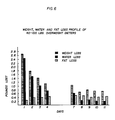
- the weight, water and fat-loss profiles of dieters are shown in Figures 3 through 6.
- the values for fat-loss were calculated from the breath acetone measurement and the standard obtained by determination of the slope of the straight line in Figure 2.
- the values for water-loss were calculated by subtracting from the actual body weight. It should also be noted that in the first week of dieting, the fat-loss figure accounts for the loss of glycogen carbohydrate stores in addition to loss of body fat.
- a diet program was conducted for one month with 30 otherwise normal 40-100 pound overweight volunteers. This established that the direct linear relationship between breath acetone and fat-loss exists beyond two weeks using the same low-fat/low carbohydrate diet.
- the selection of the subjects was the same as in the two-week program except all the subjects had to undergo complete physical examination, laboratory tests including complete blood count, serum chemistries (SMCC 12 or 20) and urinalysis before participation. Breath acetone, urine ketone and body weight of each individual were measured daily and blood sugar level determined weekly. It was noted that volunteers in this group tend to lose water for a longer period of time than less obese people.
- a group of subjects enhanced the extent of their ketosis by participating in physical exercise without decreasing their daily calorie intake.
- An increase of 20-40% in breath acetone was observed after burning 400-500 calories by physical exercise (bicycle or jogging). Immediately after physical exercise, there was a drop in breath acetone level which then slowly rose after 1 hour and plateaued after 4 to 5 hours.
- ketosis (breath acetone) drops considerably for volunteers when they don't perform exercise on any given day.
- his breath acetone increased to 600 nanomolar on the next day (day 12).
- his breath acetone dropped again to 300 nanomolar when he stopped his physical exercise. This increase in breath acetone in conjunction with exercise suggests that it may be possible to correlate the number of calories burned by exercise with increased breath acetone levels. It has been found that excessive coffee or tea intake also enhances breath acetone production during dieting.
- the antiketotic effect of dietary "cheating” was measured. It was observed that dieters consuming a high carbohydrate meal by mistake lowered their breath acetone levels appreciably within a few hours. Subjects participating on the diet of Example 7 for 2 weeks or fasting for 12 hours consumed an 8 ounce can of ENSURE (Ross Laboratories, Columbus, OH) containing 250 calories and 36 grams of carbohydrate. The breath acetone of those consuming the product dropped by about 20% after one hour and by about 30% after 3 hours. Similarly, when the test subjects discontinued the diet program and ate a high calorie diet (800 calorie, 100 grams of carbohydrate and 20 to 40 grams fat), a drop of approximately 40% in breath acetone was observed in 5 hours. Within 24 hours, the breath acetone concentration dropped to the pre-diet level.
- ENSURE Ross Laboratories, Columbus, OH
Landscapes
- Life Sciences & Earth Sciences (AREA)
- Health & Medical Sciences (AREA)
- Engineering & Computer Science (AREA)
- Molecular Biology (AREA)
- Biomedical Technology (AREA)
- Chemical & Material Sciences (AREA)
- Hematology (AREA)
- Immunology (AREA)
- Urology & Nephrology (AREA)
- Cell Biology (AREA)
- Microbiology (AREA)
- Biotechnology (AREA)
- Food Science & Technology (AREA)
- Medicinal Chemistry (AREA)
- Physics & Mathematics (AREA)
- Analytical Chemistry (AREA)
- Biochemistry (AREA)
- General Health & Medical Sciences (AREA)
- General Physics & Mathematics (AREA)
- Pathology (AREA)
- Investigating Or Analysing Biological Materials (AREA)
Applications Claiming Priority (2)
| Application Number | Priority Date | Filing Date | Title |
|---|---|---|---|
| US944793 | 1986-12-22 | ||
| US06/944,793 US4931404A (en) | 1986-12-22 | 1986-12-22 | Method and device for ketone measurement |
Publications (3)
| Publication Number | Publication Date |
|---|---|
| EP0272552A2 true EP0272552A2 (de) | 1988-06-29 |
| EP0272552A3 EP0272552A3 (en) | 1989-05-31 |
| EP0272552B1 EP0272552B1 (de) | 1992-09-09 |
Family
ID=25482088
Family Applications (1)
| Application Number | Title | Priority Date | Filing Date |
|---|---|---|---|
| EP87118294A Expired - Lifetime EP0272552B1 (de) | 1986-12-22 | 1987-12-10 | Verfahren und Vorrichtung zur Ketonmessung |
Country Status (5)
| Country | Link |
|---|---|
| US (1) | US4931404A (de) |
| EP (1) | EP0272552B1 (de) |
| JP (1) | JPS63168565A (de) |
| CA (1) | CA1307447C (de) |
| DE (1) | DE3781654T2 (de) |
Cited By (4)
| Publication number | Priority date | Publication date | Assignee | Title |
|---|---|---|---|---|
| EP0279069B1 (de) * | 1986-12-22 | 1994-07-13 | Abbott Laboratories | Verfahren und Einrichtung zum Messen von Ketonen |
| EP0967473A1 (de) * | 1998-06-25 | 1999-12-29 | Institut Francais Du Petrole | Verfahren und Vorrichtung zur Entnahme von Aldehyden und Ketonen in Abgasen |
| DE10217033A1 (de) * | 2002-04-11 | 2003-11-06 | Shanta Banerjee | Verfahren und Diagnose von Prädiabetes und Diabetes mellitus anhand von Atemluftuntersuchungen |
| EP3042701A4 (de) * | 2013-09-05 | 2016-10-19 | Ntt Docomo Inc | Körperübungslastbestimmungsverfahren und körperübungslastbestimmungsvorrichtung |
Families Citing this family (33)
| Publication number | Priority date | Publication date | Assignee | Title |
|---|---|---|---|---|
| JPH0776768B2 (ja) * | 1986-12-09 | 1995-08-16 | 雪印乳業株式会社 | 高速液体クロマトグラフによるカルボニル基含有有機成分の定量法 |
| US20010037070A1 (en) * | 2000-02-22 | 2001-11-01 | Cranley Paul E. | Personal computer breath analyzer for health-related behavior modification and method |
| WO2001093743A2 (en) * | 2000-06-07 | 2001-12-13 | Healthetech, Inc. | Breath ketone analyzer |
| JP4712249B2 (ja) * | 2001-09-06 | 2011-06-29 | 財団法人日本化学繊維検査協会 | 消臭材の消臭効果測定方法 |
| CN1620502A (zh) * | 2001-11-09 | 2005-05-25 | 陶氏环球技术公司 | 用于测量丙酮的基于酶的系统和传感器 |
| US7794994B2 (en) * | 2001-11-09 | 2010-09-14 | Kemeta, Llc | Enzyme-based system and sensor for measuring acetone |
| TW200422793A (en) * | 2002-11-15 | 2004-11-01 | Mitsui Chemicals Inc | Pellicle with small gas production amount |
| WO2004097373A2 (en) * | 2003-04-28 | 2004-11-11 | Univ Arizona | Thermoelectric biosensor for analytes in a gas |
| US8088333B2 (en) * | 2003-04-28 | 2012-01-03 | Invoy Technology, LLC | Thermoelectric sensor for analytes in a gas |
| US8722417B2 (en) * | 2003-04-28 | 2014-05-13 | Invoy Technologies, L.L.C. | Thermoelectric sensor for analytes in a fluid and related method |
| US7922883B2 (en) | 2005-06-08 | 2011-04-12 | Abbott Laboratories | Biosensors and methods of using the same |
| US7811430B2 (en) | 2006-02-28 | 2010-10-12 | Abbott Diabetes Care Inc. | Biosensors and methods of making |
| US8848189B2 (en) * | 2008-05-23 | 2014-09-30 | Positiveid Corporation | Method and device for express analysis of acetone traces in gases |
| US9643186B1 (en) | 2010-03-19 | 2017-05-09 | Invoy Technologies, Llc | Breath analysis system, device and method employing nanoparticle-based sensor |
| US9689864B2 (en) | 2012-02-01 | 2017-06-27 | Invoy Technologies, Llc | Method and apparatus for rapid quantification of an analyte in breath |
| WO2013172873A2 (en) | 2012-05-15 | 2013-11-21 | Invoy Technologies, Llc | Method and apparatus for analyzing acetone in breath |
| US10278617B1 (en) | 2013-03-15 | 2019-05-07 | Invoy Holdings, Llc | Method and apparatus for sensing ammonia in breath |
| US9486169B1 (en) | 2014-04-18 | 2016-11-08 | Invoy Technologies, Llc | Ketone measurement system and related method with accuracy and reporting enhancement features |
| US9341632B1 (en) | 2014-07-23 | 2016-05-17 | Invoy Technologies, Inc. | Ketone measurement system capable of detecting correlations between measurements and user behaviors |
| EP3273222A1 (de) * | 2015-03-18 | 2018-01-24 | Kabushiki Kaisha Toshiba | Respiratorische analysevorrichtung |
| US10694978B2 (en) | 2015-05-14 | 2020-06-30 | Invoy Holdings, Llc | Breath analysis system, device and method employing nanoparticle-based sensor |
| US9848075B1 (en) | 2015-05-14 | 2017-12-19 | Invoy Technologies, Llc | Communication system for pairing user devices with medical devices |
| US10226201B2 (en) | 2015-10-29 | 2019-03-12 | Invoy Holdings, Llc | Flow regulation device for breath analysis and related method |
| US10285642B2 (en) | 2016-02-03 | 2019-05-14 | Invoy Holdings, Llc | Breath analysis device with watch band that holds breath analysis cartridges |
| US10736548B2 (en) | 2016-05-18 | 2020-08-11 | Invoy Holdings, Inc. | Ketone measurement system for monitoring medical conditions |
| US10068494B2 (en) | 2016-10-14 | 2018-09-04 | Invoy Holdings, Llc | Artificial intelligence based health coaching based on ketone levels of participants |
| US11249087B2 (en) * | 2017-04-06 | 2022-02-15 | Meiji Co., Ltd. | Device for monitoring effective state of ketogenic diet |
| WO2020047606A1 (en) * | 2018-09-06 | 2020-03-12 | The University Of Sydney | Systems, sensors and methods for determining a concentration of an analyte |
| CN112255354B (zh) * | 2020-09-11 | 2021-09-10 | 广州医科大学附属第一医院 | 马尔尼菲篮状菌病诊断的特征物及其筛选方法和应用 |
| CN112881548A (zh) * | 2021-01-12 | 2021-06-01 | 济南趵突泉酿酒有限责任公司 | 一种高粱中氰化物的快速检测方法 |
| CN117120840A (zh) * | 2021-02-12 | 2023-11-24 | 澳科环球有限公司 | 确定流体中分析物的浓度的系统和方法 |
| WO2022240376A2 (en) * | 2021-05-11 | 2022-11-17 | Bahcesehir Universitesi | Portable breath analysis device system and a method thereof |
| CN114460052B (zh) * | 2022-01-11 | 2023-06-20 | 武汉理工大学 | 一种基于荧光碳量子点直接检测丙酮酸钠浓度的方法 |
Family Cites Families (8)
| Publication number | Priority date | Publication date | Assignee | Title |
|---|---|---|---|---|
| CA850155A (en) * | 1970-08-25 | S. Leach Harry | Purification process | |
| US2186902A (en) * | 1939-04-07 | 1940-01-09 | Lilly Co Eli | Urine acetone test |
| US2283262A (en) * | 1940-10-02 | 1942-05-19 | Miles Lab | Diagnostic composition and method |
| DE2323073A1 (de) * | 1973-05-08 | 1974-11-28 | Ver Deutsche Metallwerke Ag | Abdeckmittel fuer metallschmelzen |
| JPS5143796B2 (de) * | 1973-11-08 | 1976-11-24 | ||
| US4114422A (en) * | 1975-01-02 | 1978-09-19 | Hutson Donald G | Method of monitoring diet |
| US4397956A (en) * | 1981-12-10 | 1983-08-09 | Maggio Edward T | Means for monitoring the status of control of ketoacidosis-prone diabetics |
| US4579826A (en) * | 1983-09-30 | 1986-04-01 | Bolton Craig E | Method and device for analyzing human breath |
-
1986
- 1986-12-22 US US06/944,793 patent/US4931404A/en not_active Expired - Fee Related
-
1987
- 1987-12-10 EP EP87118294A patent/EP0272552B1/de not_active Expired - Lifetime
- 1987-12-10 DE DE8787118294T patent/DE3781654T2/de not_active Expired - Fee Related
- 1987-12-17 CA CA000554665A patent/CA1307447C/en not_active Expired - Fee Related
- 1987-12-22 JP JP62325144A patent/JPS63168565A/ja active Pending
Cited By (7)
| Publication number | Priority date | Publication date | Assignee | Title |
|---|---|---|---|---|
| EP0279069B1 (de) * | 1986-12-22 | 1994-07-13 | Abbott Laboratories | Verfahren und Einrichtung zum Messen von Ketonen |
| EP0967473A1 (de) * | 1998-06-25 | 1999-12-29 | Institut Francais Du Petrole | Verfahren und Vorrichtung zur Entnahme von Aldehyden und Ketonen in Abgasen |
| FR2780506A1 (fr) * | 1998-06-25 | 1999-12-31 | Inst Francais Du Petrole | Procede et unite de prelevement d'aldehydes et cetones contenus dans des gaz d'echappement |
| US6339965B1 (en) | 1998-06-25 | 2002-01-22 | Institut Francais Du Petrole | Process and unit for sampling aldehydes and ketones contained in exhaust gases |
| US6513397B2 (en) | 1998-06-25 | 2003-02-04 | Institut Francais Du Petrole | Process and unit for sampling aldehydes and ketones contained in exhaust gases |
| DE10217033A1 (de) * | 2002-04-11 | 2003-11-06 | Shanta Banerjee | Verfahren und Diagnose von Prädiabetes und Diabetes mellitus anhand von Atemluftuntersuchungen |
| EP3042701A4 (de) * | 2013-09-05 | 2016-10-19 | Ntt Docomo Inc | Körperübungslastbestimmungsverfahren und körperübungslastbestimmungsvorrichtung |
Also Published As
| Publication number | Publication date |
|---|---|
| DE3781654D1 (de) | 1992-10-15 |
| CA1307447C (en) | 1992-09-15 |
| EP0272552A3 (en) | 1989-05-31 |
| US4931404A (en) | 1990-06-05 |
| DE3781654T2 (de) | 1993-04-15 |
| JPS63168565A (ja) | 1988-07-12 |
| EP0272552B1 (de) | 1992-09-09 |
Similar Documents
| Publication | Publication Date | Title |
|---|---|---|
| US4931404A (en) | Method and device for ketone measurement | |
| EP0279069B1 (de) | Verfahren und Einrichtung zum Messen von Ketonen | |
| US4970172A (en) | Method and device for ketone measurements | |
| US5174959A (en) | Breath component monitoring device | |
| Kundu et al. | Breath acetone analyzer: diagnostic tool to monitor dietary fat loss | |
| US6468802B1 (en) | 13C glucose breath test for the diagnosis of diabetic indications and monitoring glycemic control | |
| Glauser et al. | Metabolic changes associated with the cessation of cigarette smoking | |
| US6599750B2 (en) | 13C glucose breath test for the diagnosis of diabetic indications and monitoring glycemic control | |
| Dubowski | Studies in breath-alcohol analysis: biological factors | |
| Dubowski | Breath analysis as a technique in clinical chemistry | |
| Cheng et al. | Technology development in breath microanalysis for clinical diagnosis | |
| JPH0113062B2 (de) | ||
| Kundu et al. | Novel solid-phase assay of ketone bodies in urine | |
| US6264913B1 (en) | Non-invasive test for assessing bacterial overgrowth of the small intestine | |
| Levey et al. | Studies of metabolic products in expired air. II. Acetone | |
| Dubowski | Biological aspects of breath-alcohol analysis | |
| Peart et al. | Debrisoquine oxidation in an Australian population. | |
| Kafeenah et al. | Trends in volatile organic compound-based metabolomics for biomarker discovery | |
| JP2004501366A (ja) | 患者の全血、血漿および(または)血清中のアルファ・オキソアルデヒドを検出する方法 | |
| Eben et al. | Metabolism, excretion and toxicology of methylchloroform in acute and subacute exposed rats | |
| Turner | Voc analysis by sift-ms, gc-ms, and electronic nose for diagnosing and monitoring disease | |
| Harger | Recently published analytical methods for determining alcohol in body materials-Alcohol Countermeasures Literature Review | |
| Commins | Measurement of carbon monoxide in the blood: review of available methods | |
| RU2229714C2 (ru) | Способ неинвазивной диагностики хеликобактерной инфекции | |
| Sannolo et al. | Gas chromatographic quantitation of breath hydrogen and carbon monoxide for clinical investigation in adults and in children |
Legal Events
| Date | Code | Title | Description |
|---|---|---|---|
| PUAI | Public reference made under article 153(3) epc to a published international application that has entered the european phase |
Free format text: ORIGINAL CODE: 0009012 |
|
| AK | Designated contracting states |
Kind code of ref document: A2 Designated state(s): BE DE FR IT |
|
| PUAL | Search report despatched |
Free format text: ORIGINAL CODE: 0009013 |
|
| AK | Designated contracting states |
Kind code of ref document: A3 Designated state(s): BE DE FR IT |
|
| 17P | Request for examination filed |
Effective date: 19891120 |
|
| 17Q | First examination report despatched |
Effective date: 19910328 |
|
| GRAA | (expected) grant |
Free format text: ORIGINAL CODE: 0009210 |
|
| AK | Designated contracting states |
Kind code of ref document: B1 Designated state(s): BE DE FR IT |
|
| ET | Fr: translation filed | ||
| REF | Corresponds to: |
Ref document number: 3781654 Country of ref document: DE Date of ref document: 19921015 |
|
| ITF | It: translation for a ep patent filed | ||
| PLBE | No opposition filed within time limit |
Free format text: ORIGINAL CODE: 0009261 |
|
| STAA | Information on the status of an ep patent application or granted ep patent |
Free format text: STATUS: NO OPPOSITION FILED WITHIN TIME LIMIT |
|
| 26N | No opposition filed | ||
| PGFP | Annual fee paid to national office [announced via postgrant information from national office to epo] |
Ref country code: FR Payment date: 19931207 Year of fee payment: 7 |
|
| PGFP | Annual fee paid to national office [announced via postgrant information from national office to epo] |
Ref country code: DE Payment date: 19931227 Year of fee payment: 7 |
|
| PGFP | Annual fee paid to national office [announced via postgrant information from national office to epo] |
Ref country code: BE Payment date: 19940106 Year of fee payment: 7 |
|
| PG25 | Lapsed in a contracting state [announced via postgrant information from national office to epo] |
Ref country code: BE Effective date: 19941231 |
|
| BERE | Be: lapsed |
Owner name: ABBOTT LABORATORIES Effective date: 19941231 |
|
| PG25 | Lapsed in a contracting state [announced via postgrant information from national office to epo] |
Ref country code: FR Effective date: 19950831 |
|
| PG25 | Lapsed in a contracting state [announced via postgrant information from national office to epo] |
Ref country code: DE Effective date: 19950901 |
|
| REG | Reference to a national code |
Ref country code: FR Ref legal event code: ST |
|
| PG25 | Lapsed in a contracting state [announced via postgrant information from national office to epo] |
Ref country code: IT Free format text: LAPSE BECAUSE OF NON-PAYMENT OF DUE FEES;WARNING: LAPSES OF ITALIAN PATENTS WITH EFFECTIVE DATE BEFORE 2007 MAY HAVE OCCURRED AT ANY TIME BEFORE 2007. THE CORRECT EFFECTIVE DATE MAY BE DIFFERENT FROM THE ONE RECORDED. Effective date: 20051210 |