EP0272013A2 - Process for inhibiting scale formation - Google Patents
Process for inhibiting scale formation Download PDFInfo
- Publication number
- EP0272013A2 EP0272013A2 EP87310506A EP87310506A EP0272013A2 EP 0272013 A2 EP0272013 A2 EP 0272013A2 EP 87310506 A EP87310506 A EP 87310506A EP 87310506 A EP87310506 A EP 87310506A EP 0272013 A2 EP0272013 A2 EP 0272013A2
- Authority
- EP
- European Patent Office
- Prior art keywords
- waste
- scale
- stream
- influent
- ions
- Prior art date
- Legal status (The legal status is an assumption and is not a legal conclusion. Google has not performed a legal analysis and makes no representation as to the accuracy of the status listed.)
- Granted
Links
- 238000000034 method Methods 0.000 title claims abstract description 48
- 230000008569 process Effects 0.000 title claims abstract description 42
- 230000015572 biosynthetic process Effects 0.000 title claims abstract description 18
- 230000002401 inhibitory effect Effects 0.000 title claims abstract description 14
- 239000002699 waste material Substances 0.000 claims abstract description 167
- 239000012530 fluid Substances 0.000 claims abstract description 80
- 239000003153 chemical reaction reagent Substances 0.000 claims abstract description 73
- 230000001376 precipitating effect Effects 0.000 claims abstract description 60
- 238000006243 chemical reaction Methods 0.000 claims abstract description 58
- 239000011575 calcium Substances 0.000 claims abstract description 49
- OYPRJOBELJOOCE-UHFFFAOYSA-N Calcium Chemical compound [Ca] OYPRJOBELJOOCE-UHFFFAOYSA-N 0.000 claims abstract description 43
- 229910052791 calcium Inorganic materials 0.000 claims abstract description 42
- FYYHWMGAXLPEAU-UHFFFAOYSA-N Magnesium Chemical compound [Mg] FYYHWMGAXLPEAU-UHFFFAOYSA-N 0.000 claims abstract description 32
- 239000011777 magnesium Substances 0.000 claims abstract description 32
- 229910052749 magnesium Inorganic materials 0.000 claims abstract description 31
- 239000002244 precipitate Substances 0.000 claims abstract description 26
- 238000011282 treatment Methods 0.000 claims abstract description 23
- 150000001875 compounds Chemical class 0.000 claims abstract description 10
- 239000000725 suspension Substances 0.000 claims abstract description 10
- 150000002500 ions Chemical class 0.000 claims description 50
- 239000004411 aluminium Substances 0.000 claims description 33
- 229910052782 aluminium Inorganic materials 0.000 claims description 33
- 239000010808 liquid waste Substances 0.000 claims description 33
- HEMHJVSKTPXQMS-UHFFFAOYSA-M Sodium hydroxide Chemical compound [OH-].[Na+] HEMHJVSKTPXQMS-UHFFFAOYSA-M 0.000 claims description 30
- XAGFODPZIPBFFR-UHFFFAOYSA-N aluminium Chemical compound [Al] XAGFODPZIPBFFR-UHFFFAOYSA-N 0.000 claims description 26
- 229910019142 PO4 Inorganic materials 0.000 claims description 23
- 238000009279 wet oxidation reaction Methods 0.000 claims description 23
- 239000007789 gas Substances 0.000 claims description 18
- MUBZPKHOEPUJKR-UHFFFAOYSA-N Oxalic acid Chemical compound OC(=O)C(O)=O MUBZPKHOEPUJKR-UHFFFAOYSA-N 0.000 claims description 17
- 239000010452 phosphate Substances 0.000 claims description 17
- 239000000203 mixture Substances 0.000 claims description 15
- 230000001590 oxidative effect Effects 0.000 claims description 15
- RYFMWSXOAZQYPI-UHFFFAOYSA-K trisodium phosphate Chemical group [Na+].[Na+].[Na+].[O-]P([O-])([O-])=O RYFMWSXOAZQYPI-UHFFFAOYSA-K 0.000 claims description 12
- NBIIXXVUZAFLBC-UHFFFAOYSA-N Phosphoric acid Chemical compound OP(O)(O)=O NBIIXXVUZAFLBC-UHFFFAOYSA-N 0.000 claims description 11
- 239000001488 sodium phosphate Substances 0.000 claims description 10
- 229910000406 trisodium phosphate Inorganic materials 0.000 claims description 10
- 235000019801 trisodium phosphate Nutrition 0.000 claims description 10
- BHPQYMZQTOCNFJ-UHFFFAOYSA-N Calcium cation Chemical compound [Ca+2] BHPQYMZQTOCNFJ-UHFFFAOYSA-N 0.000 claims description 8
- 229910001424 calcium ion Inorganic materials 0.000 claims description 8
- ZNCPFRVNHGOPAG-UHFFFAOYSA-L sodium oxalate Chemical compound [Na+].[Na+].[O-]C(=O)C([O-])=O ZNCPFRVNHGOPAG-UHFFFAOYSA-L 0.000 claims description 7
- 229910000147 aluminium phosphate Inorganic materials 0.000 claims description 6
- QVGXLLKOCUKJST-UHFFFAOYSA-N atomic oxygen Chemical compound [O] QVGXLLKOCUKJST-UHFFFAOYSA-N 0.000 claims description 6
- 239000003795 chemical substances by application Substances 0.000 claims description 6
- 239000001301 oxygen Substances 0.000 claims description 6
- 229910052760 oxygen Inorganic materials 0.000 claims description 6
- 150000003839 salts Chemical class 0.000 claims description 6
- 229940039790 sodium oxalate Drugs 0.000 claims description 6
- JLVVSXFLKOJNIY-UHFFFAOYSA-N Magnesium ion Chemical compound [Mg+2] JLVVSXFLKOJNIY-UHFFFAOYSA-N 0.000 claims description 5
- 229910001425 magnesium ion Inorganic materials 0.000 claims description 5
- 235000006408 oxalic acid Nutrition 0.000 claims description 5
- 239000007788 liquid Substances 0.000 claims description 4
- 239000000126 substance Substances 0.000 claims description 4
- MUBZPKHOEPUJKR-UHFFFAOYSA-L Oxalate Chemical compound [O-]C(=O)C([O-])=O MUBZPKHOEPUJKR-UHFFFAOYSA-L 0.000 claims description 3
- 230000005587 bubbling Effects 0.000 claims description 2
- 125000002467 phosphate group Chemical group [H]OP(=O)(O[H])O[*] 0.000 claims 1
- 239000000463 material Substances 0.000 abstract description 4
- 238000002347 injection Methods 0.000 abstract description 2
- 239000007924 injection Substances 0.000 abstract description 2
- 159000000013 aluminium salts Chemical class 0.000 abstract 1
- 229910000329 aluminium sulfate Inorganic materials 0.000 abstract 1
- OSGAYBCDTDRGGQ-UHFFFAOYSA-L calcium sulfate Chemical compound [Ca+2].[O-]S([O-])(=O)=O OSGAYBCDTDRGGQ-UHFFFAOYSA-L 0.000 description 24
- NBIIXXVUZAFLBC-UHFFFAOYSA-K phosphate Chemical compound [O-]P([O-])([O-])=O NBIIXXVUZAFLBC-UHFFFAOYSA-K 0.000 description 24
- -1 sulphate ions Chemical class 0.000 description 19
- 235000021317 phosphate Nutrition 0.000 description 17
- 229910021653 sulphate ion Inorganic materials 0.000 description 14
- 229910052925 anhydrite Inorganic materials 0.000 description 10
- 239000010802 sludge Substances 0.000 description 10
- QAOWNCQODCNURD-UHFFFAOYSA-L Sulfate Chemical compound [O-]S([O-])(=O)=O QAOWNCQODCNURD-UHFFFAOYSA-L 0.000 description 9
- 238000012545 processing Methods 0.000 description 8
- 239000000047 product Substances 0.000 description 8
- 239000001175 calcium sulphate Substances 0.000 description 7
- 235000011132 calcium sulphate Nutrition 0.000 description 7
- 238000001556 precipitation Methods 0.000 description 6
- 229940039748 oxalate Drugs 0.000 description 5
- 239000000243 solution Substances 0.000 description 4
- QTBSBXVTEAMEQO-UHFFFAOYSA-N Acetic acid Chemical compound CC(O)=O QTBSBXVTEAMEQO-UHFFFAOYSA-N 0.000 description 3
- 230000003466 anti-cipated effect Effects 0.000 description 3
- 229910000389 calcium phosphate Inorganic materials 0.000 description 3
- 230000007423 decrease Effects 0.000 description 3
- 229940085991 phosphate ion Drugs 0.000 description 3
- 239000002455 scale inhibitor Substances 0.000 description 3
- 150000003467 sulfuric acid derivatives Chemical class 0.000 description 3
- 238000012546 transfer Methods 0.000 description 3
- QORWJWZARLRLPR-UHFFFAOYSA-H tricalcium bis(phosphate) Chemical compound [Ca+2].[Ca+2].[Ca+2].[O-]P([O-])([O-])=O.[O-]P([O-])([O-])=O QORWJWZARLRLPR-UHFFFAOYSA-H 0.000 description 3
- QGZKDVFQNNGYKY-UHFFFAOYSA-N Ammonia Chemical compound N QGZKDVFQNNGYKY-UHFFFAOYSA-N 0.000 description 2
- XEEYBQQBJWHFJM-UHFFFAOYSA-N Iron Chemical compound [Fe] XEEYBQQBJWHFJM-UHFFFAOYSA-N 0.000 description 2
- NINIDFKCEFEMDL-UHFFFAOYSA-N Sulfur Chemical compound [S] NINIDFKCEFEMDL-UHFFFAOYSA-N 0.000 description 2
- 239000005864 Sulphur Substances 0.000 description 2
- 238000009825 accumulation Methods 0.000 description 2
- QXDMQSPYEZFLGF-UHFFFAOYSA-L calcium oxalate Chemical compound [Ca+2].[O-]C(=O)C([O-])=O QXDMQSPYEZFLGF-UHFFFAOYSA-L 0.000 description 2
- 239000001506 calcium phosphate Substances 0.000 description 2
- 235000011010 calcium phosphates Nutrition 0.000 description 2
- 229910052751 metal Inorganic materials 0.000 description 2
- 239000002184 metal Substances 0.000 description 2
- 150000002894 organic compounds Chemical class 0.000 description 2
- 239000011368 organic material Substances 0.000 description 2
- 230000003647 oxidation Effects 0.000 description 2
- 238000007254 oxidation reaction Methods 0.000 description 2
- LWIHDJKSTIGBAC-UHFFFAOYSA-K tripotassium phosphate Chemical compound [K+].[K+].[K+].[O-]P([O-])([O-])=O LWIHDJKSTIGBAC-UHFFFAOYSA-K 0.000 description 2
- XLYOFNOQVPJJNP-UHFFFAOYSA-N water Substances O XLYOFNOQVPJJNP-UHFFFAOYSA-N 0.000 description 2
- DGAQECJNVWCQMB-PUAWFVPOSA-M Ilexoside XXIX Chemical compound C[C@@H]1CC[C@@]2(CC[C@@]3(C(=CC[C@H]4[C@]3(CC[C@@H]5[C@@]4(CC[C@@H](C5(C)C)OS(=O)(=O)[O-])C)C)[C@@H]2[C@]1(C)O)C)C(=O)O[C@H]6[C@@H]([C@H]([C@@H]([C@H](O6)CO)O)O)O.[Na+] DGAQECJNVWCQMB-PUAWFVPOSA-M 0.000 description 1
- GRYLNZFGIOXLOG-UHFFFAOYSA-N Nitric acid Chemical compound O[N+]([O-])=O GRYLNZFGIOXLOG-UHFFFAOYSA-N 0.000 description 1
- PMZURENOXWZQFD-UHFFFAOYSA-L Sodium Sulfate Chemical compound [Na+].[Na+].[O-]S([O-])(=O)=O PMZURENOXWZQFD-UHFFFAOYSA-L 0.000 description 1
- 230000009471 action Effects 0.000 description 1
- 230000001464 adherent effect Effects 0.000 description 1
- ILRRQNADMUWWFW-UHFFFAOYSA-K aluminium phosphate Chemical compound O1[Al]2OP1(=O)O2 ILRRQNADMUWWFW-UHFFFAOYSA-K 0.000 description 1
- 229940001007 aluminium phosphate Drugs 0.000 description 1
- 229910021529 ammonia Inorganic materials 0.000 description 1
- 230000008901 benefit Effects 0.000 description 1
- 239000006227 byproduct Substances 0.000 description 1
- 229960005069 calcium Drugs 0.000 description 1
- VSGNNIFQASZAOI-UHFFFAOYSA-L calcium acetate Chemical compound [Ca+2].CC([O-])=O.CC([O-])=O VSGNNIFQASZAOI-UHFFFAOYSA-L 0.000 description 1
- 239000001639 calcium acetate Substances 0.000 description 1
- 235000011092 calcium acetate Nutrition 0.000 description 1
- 229960005147 calcium acetate Drugs 0.000 description 1
- 238000004364 calculation method Methods 0.000 description 1
- 239000007795 chemical reaction product Substances 0.000 description 1
- 238000004140 cleaning Methods 0.000 description 1
- 230000008021 deposition Effects 0.000 description 1
- IRXRGVFLQOSHOH-UHFFFAOYSA-L dipotassium;oxalate Chemical class [K+].[K+].[O-]C(=O)C([O-])=O IRXRGVFLQOSHOH-UHFFFAOYSA-L 0.000 description 1
- 230000000694 effects Effects 0.000 description 1
- 230000002706 hydrostatic effect Effects 0.000 description 1
- 229910052588 hydroxylapatite Inorganic materials 0.000 description 1
- 229910052742 iron Inorganic materials 0.000 description 1
- 229910000157 magnesium phosphate Inorganic materials 0.000 description 1
- 229960002261 magnesium phosphate Drugs 0.000 description 1
- 230000000116 mitigating effect Effects 0.000 description 1
- 238000012986 modification Methods 0.000 description 1
- 230000004048 modification Effects 0.000 description 1
- 238000012544 monitoring process Methods 0.000 description 1
- 229910017604 nitric acid Inorganic materials 0.000 description 1
- 239000010815 organic waste Substances 0.000 description 1
- 150000003891 oxalate salts Chemical class 0.000 description 1
- 230000000737 periodic effect Effects 0.000 description 1
- 150000003013 phosphoric acid derivatives Chemical class 0.000 description 1
- 229910000160 potassium phosphate Inorganic materials 0.000 description 1
- 235000011009 potassium phosphates Nutrition 0.000 description 1
- 230000009467 reduction Effects 0.000 description 1
- 230000000717 retained effect Effects 0.000 description 1
- 238000005070 sampling Methods 0.000 description 1
- 150000004760 silicates Chemical class 0.000 description 1
- 238000004088 simulation Methods 0.000 description 1
- 239000011734 sodium Substances 0.000 description 1
- 229910052708 sodium Inorganic materials 0.000 description 1
- 229910000162 sodium phosphate Inorganic materials 0.000 description 1
- 235000011008 sodium phosphates Nutrition 0.000 description 1
- 229910052938 sodium sulfate Inorganic materials 0.000 description 1
- 235000011152 sodium sulphate Nutrition 0.000 description 1
- 238000012360 testing method Methods 0.000 description 1
- 238000005979 thermal decomposition reaction Methods 0.000 description 1
- 229910000391 tricalcium phosphate Inorganic materials 0.000 description 1
- 235000019731 tricalcium phosphate Nutrition 0.000 description 1
Images
Classifications
-
- C—CHEMISTRY; METALLURGY
- C02—TREATMENT OF WATER, WASTE WATER, SEWAGE, OR SLUDGE
- C02F—TREATMENT OF WATER, WASTE WATER, SEWAGE, OR SLUDGE
- C02F1/00—Treatment of water, waste water, or sewage
- C02F1/52—Treatment of water, waste water, or sewage by flocculation or precipitation of suspended impurities
- C02F1/5236—Treatment of water, waste water, or sewage by flocculation or precipitation of suspended impurities using inorganic agents
-
- C—CHEMISTRY; METALLURGY
- C02—TREATMENT OF WATER, WASTE WATER, SEWAGE, OR SLUDGE
- C02F—TREATMENT OF WATER, WASTE WATER, SEWAGE, OR SLUDGE
- C02F1/00—Treatment of water, waste water, or sewage
- C02F1/52—Treatment of water, waste water, or sewage by flocculation or precipitation of suspended impurities
- C02F1/54—Treatment of water, waste water, or sewage by flocculation or precipitation of suspended impurities using organic material
-
- C—CHEMISTRY; METALLURGY
- C02—TREATMENT OF WATER, WASTE WATER, SEWAGE, OR SLUDGE
- C02F—TREATMENT OF WATER, WASTE WATER, SEWAGE, OR SLUDGE
- C02F5/00—Softening water; Preventing scale; Adding scale preventatives or scale removers to water, e.g. adding sequestering agents
- C02F5/02—Softening water by precipitation of the hardness
Definitions
- the present invention relates generally to processes for inhibiting the accumulation of surface scale and, more particularly, to processes for inhibiting the formation of various salt scales on the surfaces of waste reactors and to the treatment of waste.
- Continuous fluid treatment apparatus include tube reactors in which wet oxidation or other chemical reactions occur in a fluid waste stream.
- a vertical tube reaction apparatus is disclosed that is the basis for the first successful vertical-tube subterranean, wet oxidation reaction system for municipal waste sludge, operated at Longmont, Colorado, United States of America.
- the aforementioned US-A- 4 272 383 discloses an assembly of concentric pipes or tubes which extend into the earth to a depth of about 1524 metres (about 5,000 feet).
- the present Applicant is also experimenting with above-ground plug flow tube reactors wherein the fluid waste is circulated in a generally circular path under pressure as disclosed in a co-pending application, wherein scaling problems are anticipated.
- One of the primary chemical reactions in processing municipal waste sludge for example is the wet oxidation of organic materials to produce simpler compounds that are more environmentally desirable.
- Municipal waste sludge commonly includes sulphur-containing organic compounds which are oxidized in a wet oxidation reaction to form sulphate ions.
- these sulfate ions tend to combine with ions of calcium, magnesium and aluminium, present as salts in the sludge, to form a scale which builds up on the wall surfaces of the reactor tubes.
- anhydrous calcium sulphate forms when calcium and sulphate ions combine in the waste reactor as waste sludge moves through the reaction zone. It is known that the solubility of anhydrite decreases as temperature increases. Temperatures in the reactor generally exceed 149°C (300°F) and preferably are in excess of 260°C (500°F) during operation. Hence, anhydrite scale rapidly forms on the hot metal reactor surfaces. In addition to anhydrite scale, other types of scale form on the reactor tube walls as a result of other ions such as magnesium and aluminiun which may also be present in municipal waste sludge.
- the process of the present invention is particularly, although not exclusively, adapted for use in a continuous fluid treatment apparatus for wet oxidation of a fluid waste stream such as municipal waste sludge.
- Continuous fluid treatment of waste sludge in a tube reactor requires elevated temperatures and pressures in the influent stream, reaction zone and effluent stream. Temperatures in excess of 149°C (300°F) and typically between 260°C and 302°C (between 500°F and 575°F), are encountered in waste reactors, such as in vertical tube reactors where these high temperatures develop at depths of from 914 metres to 1829 metres (from 3,000 feet to 6,000 feet). Considerable pressure is also developed as a result of the fluid head.
- a process for reducing scale formation in a tube reactor includes adding a precipitating reagent to fluid waste which is injected into the influent stream of a tube reactor.
- the precipitating reagent selectively precipitates calcium and other scale forming ions out of solution which would otherwise combine to form unwanted scale on the reactor walls.
- the precipitates flow through the reactor in suspension in the liquid waste.
- the precipitating agent is a composition which forms precipitates with calcium, aluminium and magnesium ions and wherein the precipitates remain in suspension in the liquid waste.
- the quantity of precipitating agent is preferably at least equal to the quantity stoichiometrically required to bind all of the scale-forming ions in the liquid waste.
- the precipitating agent may be selected from phosphate ion producing compounds and oxalate ion producing compounds and combinations thereof.
- the precipitating agent is selected from trisodium phosphate, a mixture of phosphoric acid and sodium hydroxide, and a mixture of oxalic acid and sodium hydroxide, and combinations thereof.
- the liquid waste After the liquid waste is combined with the precipitating agent, it may be mixed to intimately contact the precipitating reagent with the scale-forming ions in the liquid waste.
- the mixing may be achieved by adding the precipitating reagent to the liquid waste and bubbling a gaseous stream through the liquid waste to cause the precipitating reagent to be substantially uniformly distributed throughout the liquid waste.
- the gaseous stream includes a gas selected from air and oxygen.
- the precipitating reagent forms the precipitates with the ions when the temperature of the influent waste stream is less than that temperature at which the scale forms on the reactor walls.
- the present invention further provides a process for continouusly inhibiting the growth of chemical scale on the walls of a continuous flow tube reactor of the type in which liquid waste is introduced as an influent waste stream to form a plug flow of liquid waste at elevated temperature and pressure to cause the liquid waste to react in a reaction zone to form more environmentally desirable components which are then carried out of the reactor as an effluent waste stream and the liquid waste of the influent stream contains ions of calcium, aluminium and magnesium in solution, which comprises the steps of:
- a particular application of the present invention is a process for the wet oxidation of liquid municipal waste in a vertical tube waste reactor of the type having a series of concentric reactor tubes partially buried vertically in the ground in which the formation of salt scale on the reactor walls is inhibited comprising adding a composition to the liquid municipal waste which binds scale-forming ions present in the waste before the waste undergoes wet oxidation in the vertical tube waste reactor.
- the present invention also provides a process for inhibiting the formation of scale on the surfaces of a fluid waste treatment apparatus of the type in which fluid waste containing scale-forming ions enters a reaction zone where it is reacted with an oxidizing gas at an elevated temperature to produce a wet oxidation reaction to form a treated fluid waste, which comprises the steps of:
- the oxidizing gas added in step (c) may be bubbled as a gaseous stream into the fluid waste to intermix the oxidizing gas and the fluid waste.
- the reacting step (e) may take place when the temperature of the fluid waste is less than that temperature at which scale forms on the surfaces of the fluid waste treatment apparatus.
- the present invention provides a process by which a reagent which provides phosphate ions is injected into the influent stream of a continuous fluid waste reactor to inhibit scale growth on the reactor walls.
- the phosphate ion source may be added in the form of trisodium phosphate or, for greater economy, a mixture of phosphoric acid and sodium hydroxide can be added to the fluid waste.
- the precipitating reagent may contain sodium oxalate or a mixture of oxalic acid and sodium hydroxide to produce sodium oxalate.
- sodium oxalate One important advantage in using sodium oxalate is that it resists oxidation during the wet oxidation reaction which occurs in the tube reactor reaction zone.
- the quantity of precipitating reagent required to inhibit scale formation is determined by comparing the concentration of calcium in the influent stream to the concentration of calcium in the effluent stream. From this comparison, the rate of scale formation in the reactor can be determined inferentially allowing the quantity of phosphate or oxalate ion source material which is added to the influent stream to be adjusted accordingly.
- the quantity of precipitating reagent which is added to the influent waste stream is preferably generally about 10% more than the stoichiometrically calculated quantity required to combine with the calcium contained in the influent waste stream.
- the present invention provides a process for inhibiting the formation of scale on tube reactors, such as, for example, plug flow vertical tube reactors, caused by the precipitation of ions, such as, for example, calcium, as sulphate salts, and the precipitation of other ions, such as for example, magnesium and aluminium, as other scale-forming salts on the hot reactor walls at the reaction zone.
- ions such as, for example, calcium, as sulphate salts
- other ions such as for example, magnesium and aluminium
- precipitating reagents for use herein are sodium phosphate or sodium oxalate compounds to form calcium, magnesium and aluminium phosphate or oxalate salts, it is anticipated that in some applications potassium phosphate and potassium oxalate compounds may be more suitable, particularly where the fluid waste stream is to be further processed by sodium-sensitive biological treatments for oxidation of ammonia.
- a continuous fluid treatment apparatus for which the present invention is particularly suited is a vertical plug flow tube reaction apparatus of the general type disclosed in US-A- 4 272 383 (referred to hereinabove).
- the continuous fluid treatment apparatus disclosed in US-A- 4 272 383 is used to carry out chemical reactions in a fluid waste stream in a series of generally concentric telescopically nested pipes or tubes vertically disposed beneath ground level. Fluid waste is introduced into the reactor as an influent stream which flows downwardly through an inner pipe to a reaction zone adjacent the bottom of the reactor at a depth of 914 to 1829 metres (3,000 to 6,000 feet). The processed waste is then circulated upwardly as an effluent stream through a second pipe which surrounds the inner pipe.
- a wet oxdation reaction air or oxygen is also injected into the downwardly flowing fluid waste stream. As heat and pressure build within the reactor the wet oxidation reaction begins as the fluid waste stream flows downwardly toward the reaction zone.
- the method or process of the invention may be used for any continuous flow reaction apparatus, particularly plug flow tube reactors.
- Sulphur-containing organic materials processed in a wet oxidation reaction form sulphate ions as a by-product of the reaction.
- many municipal waste sludges contain dissolved sulphate ions.
- a chemical reagent having a solubility product substantially less than that of calcium sulphate under influent waste stream conditions is introduced into the influent waste stream to preferentially precipitate the calcium ions from solution along with magnesium and aluminium ions which may be present in the influent waste stream. It is important to note that this precipitation reaction is carried out before the fluid waste reaches the reaction zone.
- the precipitating reagent form the desired precipitates at temperatures below that temperature at which scaling occurs in the reactor so that potential scale-forming ions are bound before they can form scale on the reactor walls. That is, it is preferred that the precipitating reagent form the desired precipitates with scale-forming ions at an influent stream temperature below that at which the scale-forming ions combine with other waste components to form unwanted scale on reactor walls.
- the substantially insoluble precipitates remain in suspension in the fluid waste stream throughout further processing in the reactor. These compounds are insoluble in the waste fluid under process conditions and thus the ions cannot participate in scale-forming reactions at the reactor walls with, for example, sulphates produced during thermal waste processing.
- the solubility product of calcium sulphate at 18° to 25°C is given as 9.1 x 10 ⁇ 6 in the 12th edition of Lange's Handbook of Chemistry. It is known that the solubility product of calcium sulphate decreases as temperature increases, a property sometimes referred to as retrograde or inverse solubility. It is the inverse solubility of calcium sulphate in particular which contributes to the deposition of a hard anhydrite scale on the hot metal surfaces of the reactor in the reaction zone where temperatures may exceed 260°C (500°F). As stated, scale build-up reduces the efficiency of plug flow waste processing apparatus by reducing the efficiency of heat transfer in the reaction zone and by restricting the flow of fluid through the reactor tubes. The unwanted scale so formed may also include aluminium, magnesium, iron, various silicates and other salts in addition to anhydrite.
- the present invention provides a method which may be characterized as a self-cleaning process or the like which encompasses introducing a precipitating reagent into the influent waste stream of a tube reactor apparatus in a quantity sufficient to bind solubilized ions, most notably calcium ions. More specifically, a source of phosphate or oxalate ions is added to the influent waste at any convenient stage of the process in an amount effective to precipitate calcium, magnesium, aluminium and other ions before they can form insoluble sulphate salts and the like on the tube reactor walls. By precipitating these ions early in the waste processing sequence, they are carried through the reactor in suspension by the waste fluid.
- One preferred chemical reagent suitable for use in the present invention is trisodium phosphate.
- trisodium phosphate When supplied to the influent waste stream trisodium phosphate forms calcium phosphate.
- the solubility product of Ca3(PO4)2 at 18° to 25°C is 2.0 x 10 ⁇ 29 which is many orders or magnitude less than the solubility product of calcium sulphate at similar temperatures.
- the low solubility product of calcium phosphate is extremely effective in preferentially precipitating calcium ions in the influent waste in the present invention.
- Another preferred chemical reagent useful in the present method is sodium oxalate.
- a composition containing oxalic acid and sodium hydroxide is also suitable for use in the process of this invention.
- phosphate ions are supplied to the waste influent by adding phosphoric acid and sodium hydroxide to the influent waste stream so that phosphate ions are generated at minimal cost.
- an oxidizing gas such as, for example, oxygen or air
- the effectiveness of the process is enhanced by the turbulence, or mixing, which occurs when the gas is bubbled into the fluid waste stream. This mixing action facilitates bonding of the calcium, magnesium, aluminium and other scale-forming ions with the oxalate or phosphate ions as the fluid waste stream moves downwardly toward the reaction zone.
- precipitating reagents having low solubility products may be suitable for use herein in accordance with the principles of this invention to bind other potential scale-forming ions which may be present in the fluid waste stream.
- These other reagents may be used alone or in combination with a phosphate or oxalate to accomplish the objects of the invention and their use is intended to be within the broader scope of this disclosure.
- Another aspect of the present invention comprehends a process for determining the quantity of precipitating reagent needed to bring about the desired reaction.
- a simple but efficient method of monitoring the waste stream of a tube waste reactor is provied to determine the quantity of precipitating reagent required to react substantially all of the scale producing ions in accordance with this invention.
- the quantity of reagent which must be added to the influent is determined by first analyzing a sample of the influent fluid waste stream quantitatively to ascertin the concentration of scale-forming ions.
- the quantity of precipitating reagent necessary to bring about substantially complete reaction can be calculated stoichiometrically. It is preferred that an excess of reagent, over and above the stoichiometrically required quantity, be supplied to ensure substantially complete precipitation.
- the quantity of reagent should not be so large, however, that it interferes with the primary waste processing reaction in the apparatus or such that reagent is wasted. It is most preferred that the quantity of reagent supplied be approximately 10 percent greater than the stoichiometrically determined quantity of reagent necessary to preferentially precipitate all of the ions.
- the following stoichiometric equation can be used to calculate the proper quantity of precipitating reagent to be added to the influent to bind calcium ions where the reagent is trisodium phosphate: 5Ca++ + 3(Na3PO4) + OH ⁇ ⁇ Ca5(PO4)3OH + 9Na+
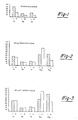
- Figures 1 to 3 are included to graphically illustrate the superior results achieved by the present invention and to demonstrate that the extent of scale reduction is substantially proportional to the amount of excess phosphate ion present in the influent waste.
- concentrations in the influent waste stream (I) are represented by crosshatching and the concentrations of the same elements or compounds in the effluent waste stream (E) are compared.
- FIG. 1 depicts the data graphically.
- the above Example shows that when about 94 percent of the stoichiometric concentration of phosphate is added to the influent waste stream 92 percent of the calcium is maintained in the waste stream as indicated by the effluent concentration data. Only 8 percent of the calcium remained in the reactor for the possible formation of scale. Similarly, 96 percent of the magnesium and 87 percent of the aluminium remained in the waste stream as shown by the effluent concentration data.
- the sulphate and phosphate components are soluble sulphate and phosphate. It is important to note that the soluble sulphate in the effluent is 153 percent of the soluble sulphate in the influent, thereby demonstrating that the soluble sulphate leaves the system as sulphate and does not form anhydrite scale. The decrease in the amount of soluble phosphate to 48 percent of the soluble phosphate in the influent indicates that the phosphate ions have combined with the scale forming calcium, magnesium and aluminium ions to form insoluble phosphates which are retained in suspension in the fluid water.
- This Example was conducted in a laboratory scaling simulator apparatus comprising a 20 litre autoclave having flow through operation at pressures of 1724 kPa (250 psi) and interior temperatures of up to 288°C, plus or minus 15°C.
- the laboratory scale simulation was performed on a standard feed mixture of calcium acetate (Ca 200 to 250 mg/l), sodium sulfate (stoichiometric) and water, adjusted to a pH of 5 with acetic acid. The tests were run at 232 to 260°C (450 to 500°F) without the addition of air. The feed mixture remained in the simulator for thirty minutes.
Landscapes
- Chemical & Material Sciences (AREA)
- Life Sciences & Earth Sciences (AREA)
- Hydrology & Water Resources (AREA)
- Engineering & Computer Science (AREA)
- Environmental & Geological Engineering (AREA)
- Water Supply & Treatment (AREA)
- Organic Chemistry (AREA)
- Inorganic Chemistry (AREA)
- Removal Of Specific Substances (AREA)
- Treatment Of Water By Oxidation Or Reduction (AREA)
Abstract
Description
- The present invention relates generally to processes for inhibiting the accumulation of surface scale and, more particularly, to processes for inhibiting the formation of various salt scales on the surfaces of waste reactors and to the treatment of waste.
- Continuous fluid treatment apparatus include tube reactors in which wet oxidation or other chemical reactions occur in a fluid waste stream. For example, in US-A- 4 272 383 to Dr. Jay L. McGrew, entitled "Method and Apparatus for Effecting Subsurface, Controlled, Accelerated Chemical Reactions" (assigned to the present Applicant), a vertical tube reaction apparatus is disclosed that is the basis for the first successful vertical-tube subterranean, wet oxidation reaction system for municipal waste sludge, operated at Longmont, Colorado, United States of America. The aforementioned US-A- 4 272 383 discloses an assembly of concentric pipes or tubes which extend into the earth to a depth of about 1524 metres (about 5,000 feet). These generally concentric tubes form separate vertical passages for an influent stream and an effluent stream in annuluses defined by the tube walls. Municipal waste sludge, or other fluid waste, is circulated through the apparatus by injection into the influent stream passage through which the waste flows downwardly in plug flow to a reaction zone at a depth of preferably from 914 to 1829 metres (from 3,000 to 6,000 feet), forming a hydrostatic column of considerable fluid pressure. In the reaction zone, a controlled, exothermic chemical reaction occurs which generates substantial heat. Reactor heat can be controlled with a heat-transfer jacket adjacent the reaction zone. The reaction products and any unreacted materials are then caused to flow up through the effluent stream passage and out of the reactor. The present Applicant is also experimenting with above-ground plug flow tube reactors wherein the fluid waste is circulated in a generally circular path under pressure as disclosed in a co-pending application, wherein scaling problems are anticipated. One of the primary chemical reactions in processing municipal waste sludge for example is the wet oxidation of organic materials to produce simpler compounds that are more environmentally desirable. Municipal waste sludge commonly includes sulphur-containing organic compounds which are oxidized in a wet oxidation reaction to form sulphate ions. However, these sulfate ions tend to combine with ions of calcium, magnesium and aluminium, present as salts in the sludge, to form a scale which builds up on the wall surfaces of the reactor tubes.
- In particular, anhydrous calcium sulphate, also referred to herein as anhydrite, forms when calcium and sulphate ions combine in the waste reactor as waste sludge moves through the reaction zone. It is known that the solubility of anhydrite decreases as temperature increases. Temperatures in the reactor generally exceed 149°C (300°F) and preferably are in excess of 260°C (500°F) during operation. Hence, anhydrite scale rapidly forms on the hot metal reactor surfaces. In addition to anhydrite scale, other types of scale form on the reactor tube walls as a result of other ions such as magnesium and aluminiun which may also be present in municipal waste sludge. In the unique environment of the tube reactor, the accumulation of anhydrite and other scales on the walls of the reactor is a serious problem which reduces the efficiency of heat transfer and inhibits the flow of waste materials through the reactor tubes. In order to remove this unwanted build-up of scale, the reactor must be shut down for as long as twenty-four hours to permit the laborious removal of scale by nitric acid washes and the like. It would therefore be desirable to prevent to the extent possible the build-up of scale on the walls of the reactor.
- Known scale inhibitors are not effective for use in inhibiting scale formation in high temperature environments such as a vertical tube waste reactor. These conventional compositions are generally organic compounds which for the most part are ineffective at temperatures above 149°C (300°F). As is known, organic scale inhibitors undergo thermal decomposition at high temperatures. Therefore, conventional organic scale inhibitors are unsuitable for use in preventing build-up of unwanted scale on the walls of tube reactors.
- Thus, there is a need for a simple and effective process for inhibiting or mitigating scale formation on the walls of tube reactors so that the waste reaction process can continue uninterrupted by frequent de-scaling operations.
- The process of the present invention is particularly, although not exclusively, adapted for use in a continuous fluid treatment apparatus for wet oxidation of a fluid waste stream such as municipal waste sludge. Continuous fluid treatment of waste sludge in a tube reactor requires elevated temperatures and pressures in the influent stream, reaction zone and effluent stream. Temperatures in excess of 149°C (300°F) and typically between 260°C and 302°C (between 500°F and 575°F), are encountered in waste reactors, such as in vertical tube reactors where these high temperatures develop at depths of from 914 metres to 1829 metres (from 3,000 feet to 6,000 feet). Considerable pressure is also developed as a result of the fluid head. In accordance with the present invention a process for reducing scale formation in a tube reactor is provided which includes adding a precipitating reagent to fluid waste which is injected into the influent stream of a tube reactor. The precipitating reagent selectively precipitates calcium and other scale forming ions out of solution which would otherwise combine to form unwanted scale on the reactor walls. The precipitates flow through the reactor in suspension in the liquid waste.
- According to the present invention there is provided a process for inhibiting scale formation in a continuous plug flow vertical tube waste reactor of the type in which liquid waste that contains scale-forming dissolved ions is injected into the reactor as an influent waste stream under heat and pressure to bring about a wet oxidation reaction within the liquid waste in a reaction z one in the reactor to break down the liquid waste into simpler components which are discharged from the reactor as an effluent waste stream, which comprises adding a quantity of precipitating reagent to the liquid waste before the liquid waste enters the reaction zone and at a temperature significantly below the temperature of the reaction zone to form precipitates containing the ions which would otherwise accumulate as scale on the walls of the reactor.
- Preferably the precipitating agent is a composition which forms precipitates with calcium, aluminium and magnesium ions and wherein the precipitates remain in suspension in the liquid waste. The quantity of precipitating agent is preferably at least equal to the quantity stoichiometrically required to bind all of the scale-forming ions in the liquid waste.
- The precipitating agent may be selected from phosphate ion producing compounds and oxalate ion producing compounds and combinations thereof. Preferably the precipitating agent is selected from trisodium phosphate, a mixture of phosphoric acid and sodium hydroxide, and a mixture of oxalic acid and sodium hydroxide, and combinations thereof.
- After the liquid waste is combined with the precipitating agent, it may be mixed to intimately contact the precipitating reagent with the scale-forming ions in the liquid waste. The mixing may be achieved by adding the precipitating reagent to the liquid waste and bubbling a gaseous stream through the liquid waste to cause the precipitating reagent to be substantially uniformly distributed throughout the liquid waste. Preferably the gaseous stream includes a gas selected from air and oxygen.
- Usually the precipitating reagent forms the precipitates with the ions when the temperature of the influent waste stream is less than that temperature at which the scale forms on the reactor walls.
- The present invention further provides a process for continouusly inhibiting the growth of chemical scale on the walls of a continuous flow tube reactor of the type in which liquid waste is introduced as an influent waste stream to form a plug flow of liquid waste at elevated temperature and pressure to cause the liquid waste to react in a reaction zone to form more environmentally desirable components which are then carried out of the reactor as an effluent waste stream and the liquid waste of the influent stream contains ions of calcium, aluminium and magnesium in solution, which comprises the steps of:
- (a) analyzing the influent stream to determine the concentration of calcium, aluminium and magnesium present;
- (b) substantially continuously adding to the influent stream a precipitating reagent which forms precipitates with the calcium, aluminium and magnesium ions at a temperature below about 149°C (about 300°F) in a quantity substantially equal to the stoichiometric quantity required to bond all of the calcium, aluminium and magnesium determined in step (a) to be present in the influent waste stream;
- (c) analyzing the effluent stream to determine the concentration of calcium, aluminium and magnesium present;
- (d) comparing the concentration data obtained in step (a) with the concentration data obtained in step (c)
- (e) adjusting the quantity of precipitating reagent that is substantially continuously added to the influent waste stream and repeating steps (c), (d) and (e) until the concentration of calcium, aluminium, and magnesium in the effluent stream is substantially equal to the concentration of calcium, aluminium and magnesium in the influent stream. Preferably the quantity of precipitating reagent which is added to the influent waste stream is from about 100% to about 125% of the stoichiometric concentration required to bind all of the calcium present in the influent waste stream. Additionally, the influent waste stream may be mixed between steps (b) and (c) to promote the reaction of the precipitating reagent with the calcium ions.
- A particular application of the present invention is a process for the wet oxidation of liquid municipal waste in a vertical tube waste reactor of the type having a series of concentric reactor tubes partially buried vertically in the ground in which the formation of salt scale on the reactor walls is inhibited comprising adding a composition to the liquid municipal waste which binds scale-forming ions present in the waste before the waste undergoes wet oxidation in the vertical tube waste reactor.
- The present invention also provides a process for inhibiting the formation of scale on the surfaces of a fluid waste treatment apparatus of the type in which fluid waste containing scale-forming ions enters a reaction zone where it is reacted with an oxidizing gas at an elevated temperature to produce a wet oxidation reaction to form a treated fluid waste, which comprises the steps of:
- (a) introducing the fluid waste into the fluid waste treatment apparatus as an influent fluid waste stream;
- (b) adding to the fluid waste a quantity of precipitating reagent sufficient to form substantially insoluble suspended precipitates with the scale-forming ions in the fluid waste before the fluid waste enters the reaction zone;
- (c) adding the oxidizing gas to the fluid waste to participate in the wet oxidation reaction;
- (d) flowing the influent fluid waste stream containing the precipitants and the oxidizing gas through the fluid waste treatment apparatus to the reaction zone;
- (e) reacting the fluid waste with the oxidizing gas in the reaction zone by increasing the temperature of the influent fluid waste stream in the reaction zone to produce the wet oxidation reaction;
- (f) removing the treated fluid waste containing the suspended precipitates from the fluid waste treatment apparatus as an effluent waste stream;
whereby the scale-forming ions are bound as the insoluble precipitates by the precipitating reagent and are carried in suspension through the waste treatment apparatus so that the scale-forming ions cannot combine to form scale on the surfaces of the waste treatment apparatus. Preferably the precipitating reagent added to the fluid waste in step (b) is selected from trisodium phosphate and sodium oxalate. Preferably the oxidizing gas is selected from oxygen and air. Additionally there may be an additional step of mixing the fluid waste containing the precipitating reagent following step (b) to intimately contact the precipitating reagent and the scale-forming ions to precipitate substantially all of the scale-forming ions. - The oxidizing gas added in step (c) may be bubbled as a gaseous stream into the fluid waste to intermix the oxidizing gas and the fluid waste.
- The reacting step (e) may take place when the temperature of the fluid waste is less than that temperature at which scale forms on the surfaces of the fluid waste treatment apparatus.
- It has been found that reagents which provide a source of phosphate or oxalate ions have unexpectedly superior scale inhibiting properties when used in tube waste reactors of the general type described herein. Therefore, in one embodiment the present invention provides a process by which a reagent which provides phosphate ions is injected into the influent stream of a continuous fluid waste reactor to inhibit scale growth on the reactor walls. The phosphate ion source may be added in the form of trisodium phosphate or, for greater economy, a mixture of phosphoric acid and sodium hydroxide can be added to the fluid waste. Alternatively, the precipitating reagent may contain sodium oxalate or a mixture of oxalic acid and sodium hydroxide to produce sodium oxalate. One important advantage in using sodium oxalate is that it resists oxidation during the wet oxidation reaction which occurs in the tube reactor reaction zone.
- According to one aspect of the present invention, the quantity of precipitating reagent required to inhibit scale formation is determined by comparing the concentration of calcium in the influent stream to the concentration of calcium in the effluent stream. From this comparison, the rate of scale formation in the reactor can be determined inferentially allowing the quantity of phosphate or oxalate ion source material which is added to the influent stream to be adjusted accordingly. The quantity of precipitating reagent which is added to the influent waste stream is preferably generally about 10% more than the stoichiometrically calculated quantity required to combine with the calcium contained in the influent waste stream. By providing a slight surplus of the precipitating reagent, rapid and substantially complete reaction of the reagent ions with the scale-forming ions is ensured while the reagent is conserved. The quantity of reagent added to the effluent waste stream may be adjusted to maintain the desired excess in accordance with periodic sampling and analysis of influent and effluent to determine calcium concentrations.
- Hence, the present invention provides a process for inhibiting the formation of scale on tube reactors, such as, for example, plug flow vertical tube reactors, caused by the precipitation of ions, such as, for example, calcium, as sulphate salts, and the precipitation of other ions, such as for example, magnesium and aluminium, as other scale-forming salts on the hot reactor walls at the reaction zone. This unwanted scale formation is inhibited by introducing a precipitating reagent into the influent waste stream to bind these ions before they can precipitate on the reactor walls. By in effect "pre-precipitating" scale-forming ions to form relatively insoluble compounds, the bound ions are harmlessly carried in suspension through the reactor waste stream.
- While the preferred precipitating reagents for use herein are sodium phosphate or sodium oxalate compounds to form calcium, magnesium and aluminium phosphate or oxalate salts, it is anticipated that in some applications potassium phosphate and potassium oxalate compounds may be more suitable, particularly where the fluid waste stream is to be further processed by sodium-sensitive biological treatments for oxidation of ammonia.
- A continuous fluid treatment apparatus for which the present invention is particularly suited is a vertical plug flow tube reaction apparatus of the general type disclosed in US-A- 4 272 383 (referred to hereinabove). In substance, the continuous fluid treatment apparatus disclosed in US-A- 4 272 383 is used to carry out chemical reactions in a fluid waste stream in a series of generally concentric telescopically nested pipes or tubes vertically disposed beneath ground level. Fluid waste is introduced into the reactor as an influent stream which flows downwardly through an inner pipe to a reaction zone adjacent the bottom of the reactor at a depth of 914 to 1829 metres (3,000 to 6,000 feet). The processed waste is then circulated upwardly as an effluent stream through a second pipe which surrounds the inner pipe. In a wet oxdation reaction, air or oxygen is also injected into the downwardly flowing fluid waste stream. As heat and pressure build within the reactor the wet oxidation reaction begins as the fluid waste stream flows downwardly toward the reaction zone. As described above, however, the method or process of the invention may be used for any continuous flow reaction apparatus, particularly plug flow tube reactors.
- Sulphur-containing organic materials processed in a wet oxidation reaction form sulphate ions as a by-product of the reaction. Moreover, many municipal waste sludges contain dissolved sulphate ions. In accordance with the present invention, a chemical reagent having a solubility product substantially less than that of calcium sulphate under influent waste stream conditions is introduced into the influent waste stream to preferentially precipitate the calcium ions from solution along with magnesium and aluminium ions which may be present in the influent waste stream. It is important to note that this precipitation reaction is carried out before the fluid waste reaches the reaction zone. That is, calcium, magnesium and aluminium ions are precipitated by the reagent in the somewhat cooler environment of the influent waste stream and the precipitates so formed by the precipitating reagent are carried through the waste reactor without forming scale on the reactor walls. It is preferred that the precipitating reagent form the desired precipitates at temperatures below that temperature at which scaling occurs in the reactor so that potential scale-forming ions are bound before they can form scale on the reactor walls. That is, it is preferred that the precipitating reagent form the desired precipitates with scale-forming ions at an influent stream temperature below that at which the scale-forming ions combine with other waste components to form unwanted scale on reactor walls. As stated, the substantially insoluble precipitates remain in suspension in the fluid waste stream throughout further processing in the reactor. These compounds are insoluble in the waste fluid under process conditions and thus the ions cannot participate in scale-forming reactions at the reactor walls with, for example, sulphates produced during thermal waste processing.
- The solubility product of calcium sulphate at 18° to 25°C is given as 9.1 x 10⁻⁶ in the 12th edition of Lange's Handbook of Chemistry. It is known that the solubility product of calcium sulphate decreases as temperature increases, a property sometimes referred to as retrograde or inverse solubility. It is the inverse solubility of calcium sulphate in particular which contributes to the deposition of a hard anhydrite scale on the hot metal surfaces of the reactor in the reaction zone where temperatures may exceed 260°C (500°F). As stated, scale build-up reduces the efficiency of plug flow waste processing apparatus by reducing the efficiency of heat transfer in the reaction zone and by restricting the flow of fluid through the reactor tubes. The unwanted scale so formed may also include aluminium, magnesium, iron, various silicates and other salts in addition to anhydrite.
- Thus the present invention provides a method which may be characterized as a self-cleaning process or the like which encompasses introducing a precipitating reagent into the influent waste stream of a tube reactor apparatus in a quantity sufficient to bind solubilized ions, most notably calcium ions. More specifically, a source of phosphate or oxalate ions is added to the influent waste at any convenient stage of the process in an amount effective to precipitate calcium, magnesium, aluminium and other ions before they can form insoluble sulphate salts and the like on the tube reactor walls. By precipitating these ions early in the waste processing sequence, they are carried through the reactor in suspension by the waste fluid.
- One preferred chemical reagent suitable for use in the present invention is trisodium phosphate. When supplied to the influent waste stream trisodium phosphate forms calcium phosphate. The solubility product of Ca₃(PO₄)₂ at 18° to 25°C is 2.0 x 10⁻²⁹ which is many orders or magnitude less than the solubility product of calcium sulphate at similar temperatures. As will be readily appreciated, the low solubility product of calcium phosphate is extremely effective in preferentially precipitating calcium ions in the influent waste in the present invention. Another preferred chemical reagent useful in the present method is sodium oxalate. A composition containing oxalic acid and sodium hydroxide is also suitable for use in the process of this invention. By adding a source of oxalate ions to the influent waste stream, calcium ions are preferentially precipitated out of solution because the solubility product of calcium oxalate (4 x 10⁻⁹) is lower than that of calcium sulphate. Formation of anhydrite scale is thereby efficiently and effectively inhibited by binding calcium ions in the influent stream particulalry prior to the release of sulphate ions from the organic waste compounds during the wet oxidation reaction in the reaction zone.
- In the most preferred embodiment phosphate ions are supplied to the waste influent by adding phosphoric acid and sodium hydroxide to the influent waste stream so that phosphate ions are generated at minimal cost. When the present invention is utilized in a wet oxidation reaction system in which an oxidizing gas such as, for example, oxygen or air is also added to the influent waste stream, the effectiveness of the process is enhanced by the turbulence, or mixing, which occurs when the gas is bubbled into the fluid waste stream. This mixing action facilitates bonding of the calcium, magnesium, aluminium and other scale-forming ions with the oxalate or phosphate ions as the fluid waste stream moves downwardly toward the reaction zone.
- Other precipitating reagents having low solubility products may be suitable for use herein in accordance with the principles of this invention to bind other potential scale-forming ions which may be present in the fluid waste stream. These other reagents may be used alone or in combination with a phosphate or oxalate to accomplish the objects of the invention and their use is intended to be within the broader scope of this disclosure.
- It is preferable to provide surplus or excess precipitating reagent in the influent waste stream to assure that all of the unwanted ions to be preferentially precipitated are precipitated prior to exposure to sulphate ions produced in the hot reaction zone of the apparatus. Hence, another aspect of the present invention comprehends a process for determining the quantity of precipitating reagent needed to bring about the desired reaction. A simple but efficient method of monitoring the waste stream of a tube waste reactor is provied to determine the quantity of precipitating reagent required to react substantially all of the scale producing ions in accordance with this invention. The quantity of reagent which must be added to the influent is determined by first analyzing a sample of the influent fluid waste stream quantitatively to ascertin the concentration of scale-forming ions. Once the influent concentration of scale-forming ions has been determined, the quantity of precipitating reagent necessary to bring about substantially complete reaction can be calculated stoichiometrically. It is preferred that an excess of reagent, over and above the stoichiometrically required quantity, be supplied to ensure substantially complete precipitation. The quantity of reagent should not be so large, however, that it interferes with the primary waste processing reaction in the apparatus or such that reagent is wasted. It is most preferred that the quantity of reagent supplied be approximately 10 percent greater than the stoichiometrically determined quantity of reagent necessary to preferentially precipitate all of the ions.
- The following stoichiometric equation can be used to calculate the proper quantity of precipitating reagent to be added to the influent to bind calcium ions where the reagent is trisodium phosphate:
5Ca⁺⁺ + 3(Na₃PO₄) + OH⁻ → Ca₅(PO₄)₃OH + 9Na⁺ - For example, in an influent waste stream having 240 mg of a calcium per liter of influent waste the stoichiometric calculations are as follows:
240 mg/1 Ca ÷ 40 (mw of Ca) = 6 millimoles of Ca
6 millimoles Ca ÷ 5 moles Ca x 3 moles PO₄ = 3.6 millimoles PO₄
3.6 millimoles PO₄ x 95 (mw of PO₄) = 342 mg/l PO₄ - Similar equations will be apparent for the determination of the schoichiometrically required quantity of reagent necessary to bind aluminium and magnesium ions. Therefore, the stoichiometrically determined theoretical quantity of trisodium phosphate needed to bring about the desired reaction would be approximately 342 gm/l. To provide a ten percent surplus of reagent about 376 gm/l would be necessary. Therefore, an acceptable range for trisodium phosphate would be from about 345 to 380 grams per litre of fluid waste.
- The method of the present invention is further explained below with reference to the following Examples, and as illustrated in the accompanying drawings, in which:
- Figure 1 is a graph showing the quantity of calcium, magnesium and aluminium ions in the influent and effluent when no reagent is added to the influent;
- Figure 2 is a graph showing the quantity of calcium, magnesium and aluminium ions in the influent and effluent when about 94% of the stoichiometric concentration of phosphate is added to the influent; and
- Figure 3 is a graph showing the quantity of calcium, magnesium and aluminium ions in the influent and effluent when about 116% of the stoichiometric concentration of phosphate is added to the influent.
- Figures 1 to 3 are included to graphically illustrate the superior results achieved by the present invention and to demonstrate that the extent of scale reduction is substantially proportional to the amount of excess phosphate ion present in the influent waste. The concentrations in the influent waste stream (I) are represented by crosshatching and the concentrations of the same elements or compounds in the effluent waste stream (E) are compared.
- The quantity of calcium, magnesium and aluminium present per liter of influent waste and effluent waste, respectively, in the processing of a municipal waste fluid in a vertical tube reaction apparatus which extends into the earth to a depth of about 1524 metres (about 5,000 feet) is shown below.

- A reagent mixture of phosphoric acid and sodium hydroxide was added to a municipal waste fluid waste stream having the following influent components. The amount of reagent added provided 94% of the stoichiometrically required quantity of phosphate ions to precipitate all of the calcium, magnesium and aluminium ions in the influent. Note the superior results achieved as demonstrated by the concentration of effluent components:

- The sulphate and phosphate components are soluble sulphate and phosphate. It is important to note that the soluble sulphate in the effluent is 153 percent of the soluble sulphate in the influent, thereby demonstrating that the soluble sulphate leaves the system as sulphate and does not form anhydrite scale. The decrease in the amount of soluble phosphate to 48 percent of the soluble phosphate in the influent indicates that the phosphate ions have combined with the scale forming calcium, magnesium and aluminium ions to form insoluble phosphates which are retained in suspension in the fluid water.
- When the amount of phosphate added to the influent waste is increased to about 116 percent of the stoichiometrically required quantity, preferential precipitation of the calcium, magnesium and aluminium is achieved as follows:

- This Example was conducted in a laboratory scaling simulator apparatus comprising a 20 litre autoclave having flow through operation at pressures of 1724 kPa (250 psi) and interior temperatures of up to 288°C, plus or minus 15°C. The laboratory scale simulation was performed on a standard feed mixture of calcium acetate (
Ca 200 to 250 mg/l), sodium sulfate (stoichiometric) and water, adjusted to a pH of 5 with acetic acid. The tests were run at 232 to 260°C (450 to 500°F) without the addition of air. The feed mixture remained in the simulator for thirty minutes. With the addition of oxalic acid and sodium hydroxide to the simulator, no adherent anhydrite scale was formed and only minimal calcium oxalate, scaling which was easily removed, was observed on the heated surfaces of the simulator. It is anticipated that this scale would be swept through the vertical tube reaction apparatus for discharge with the effluent. - Preferred embodiments of the processes of the present invention have been described hereinabove. However, it will be understood that various modifications may be made. Whilst, as hereinabove described, the processes of the present invention may be used in various applications, the invention is particularly adapted for use in vertical tube reactors, such as, for example, may be used for wet oxidation of municipal sludge. In general, the processes of the present invention may be used in any continuous fluid treatment apparatus which converts various materials in a fluid reaction utilizing elevated temperatures and pressures.
Claims (19)
(a) introducing the fluid waste into the fluid waste treatment apparatus as an influent fluid waste stream;
(b) adding to the fluid waste a quantity of precipitating reagent sufficient to form substantially insoluble suspended precipitates with the scale-forming ions in the fluid waste before the fluid waste enters the reaction zone;
(c) adding the oxidizing gas to the fluid waste to participate in the wet oxidation reaction;
(d) flowing the influent fluid waste stream containing the precipitants and the oxidizing gas through the fluid waste treatment apparatus to the reaction zone;
(e) reacting the fluid waste with the oxidizing gas in the reaction zone by increasing the temperature of the influent fluid waste stream in the reaction zone to produce the wet oxidation reaction;
(f) removing the treated fluid waste containing the suspended precipitates from the fluid waste treatment apparatus as an effluent waste stream;
whereby the scale-forming ions are bound as the insoluble precipitates by the precipitating reagent and are carried in suspension through the waste treatment apparatus so that the scale-forming ions cannot combine to form scale on the surfaces of the waste treatment apparatus.
Applications Claiming Priority (2)
| Application Number | Priority Date | Filing Date | Title |
|---|---|---|---|
| US943409 | 1986-12-19 | ||
| US06/943,409 US4713177A (en) | 1986-12-19 | 1986-12-19 | Process for mitigating scale formation in tube reaction apparatus |
Publications (3)
| Publication Number | Publication Date |
|---|---|
| EP0272013A2 true EP0272013A2 (en) | 1988-06-22 |
| EP0272013A3 EP0272013A3 (en) | 1989-11-29 |
| EP0272013B1 EP0272013B1 (en) | 1992-07-22 |
Family
ID=25479610
Family Applications (1)
| Application Number | Title | Priority Date | Filing Date |
|---|---|---|---|
| EP87310506A Expired EP0272013B1 (en) | 1986-12-19 | 1987-11-27 | Process for inhibiting scale formation |
Country Status (3)
| Country | Link |
|---|---|
| US (1) | US4713177A (en) |
| EP (1) | EP0272013B1 (en) |
| DE (1) | DE3780593T2 (en) |
Cited By (1)
| Publication number | Priority date | Publication date | Assignee | Title |
|---|---|---|---|---|
| US9169125B2 (en) | 2010-06-28 | 2015-10-27 | Korea Resources Corporation | Method for producing high-purity lithium carbonate |
Families Citing this family (17)
| Publication number | Priority date | Publication date | Assignee | Title |
|---|---|---|---|---|
| US4774006A (en) * | 1987-06-22 | 1988-09-27 | Vertech Treatment Systems, Inc. | Fluid treatment method |
| US4812243A (en) * | 1988-10-06 | 1989-03-14 | Zimpro/Passavant Inc. | Process for treating caustic cyanide metal wastes |
| US5252224A (en) | 1991-06-28 | 1993-10-12 | Modell Development Corporation | Supercritical water oxidation process of organics with inorganics |
| US5470481A (en) * | 1993-10-13 | 1995-11-28 | Modell Environmental Corporation | Method and apparatus for recovering wash water from pulp and paper mill effluent |
| US5551472A (en) | 1994-08-01 | 1996-09-03 | Rpc Waste Management Services, Inc. | Pressure reduction system and method |
| US5755974A (en) | 1994-08-01 | 1998-05-26 | Rpc Waste Management Services, Inc. | Method and apparatus for reacting oxidizable matter with a salt |
| US5620606A (en) | 1994-08-01 | 1997-04-15 | Rpc Waste Management Services, Inc. | Method and apparatus for reacting oxidizable matter with particles |
| US6017460A (en) | 1996-06-07 | 2000-01-25 | Chematur Engineering Ab | Heating and reaction system and method using recycle reactor |
| US5888389A (en) * | 1997-04-24 | 1999-03-30 | Hydroprocessing, L.L.C. | Apparatus for oxidizing undigested wastewater sludges |
| US6238568B1 (en) * | 1999-05-06 | 2001-05-29 | General Atomics | Hydrothermal processing with phosphate additive |
| SE518803C2 (en) | 1999-09-03 | 2002-11-26 | Chematur Eng Ab | Method and reaction system with high pressure and high temperature suitable for supercritical water oxidation |
| SE529006C2 (en) * | 2004-11-15 | 2007-04-03 | Chematur Eng Ab | Process and system for supercritical water oxidation of a stream containing oxidizable material |
| SE528840C2 (en) * | 2004-11-15 | 2007-02-27 | Chematur Eng Ab | Reactor and process for supercritical water oxidation |
| EP2294156A4 (en) * | 2008-06-02 | 2016-03-23 | Imerys Filtration Minerals Inc | Methods for prevention and reduction of scale formation |
| US9476108B2 (en) | 2013-07-26 | 2016-10-25 | Ecolab Usa Inc. | Utilization of temperature heat adsorption skin temperature as scale control reagent driver |
| WO2015107391A1 (en) * | 2014-01-16 | 2015-07-23 | Statoil Petroleum As | Method |
| KR20210036364A (en) | 2018-07-06 | 2021-04-02 | 비욘드 더 돔, 인코포레이티드 | Supercritical oxidation of waste |
Family Cites Families (10)
| Publication number | Priority date | Publication date | Assignee | Title |
|---|---|---|---|---|
| US3606999A (en) * | 1967-08-04 | 1971-09-21 | Harold L Lawless | Method of and apparatus for carrying out a chemical or physical process |
| DD127541A1 (en) * | 1976-08-11 | 1977-09-28 | ||
| US4272383A (en) * | 1978-03-17 | 1981-06-09 | Mcgrew Jay Lininger | Method and apparatus for effecting subsurface, controlled, accelerated chemical reactions |
| US4543190A (en) * | 1980-05-08 | 1985-09-24 | Modar, Inc. | Processing methods for the oxidation of organics in supercritical water |
| US4350599A (en) * | 1980-12-29 | 1982-09-21 | Sterling Drug Inc. | Process for treatment of caustic waste liquors |
| US4357254A (en) * | 1981-01-12 | 1982-11-02 | Chemical Sciences, Inc. | Cleaning composition |
| US4444675A (en) * | 1981-07-16 | 1984-04-24 | Mechanical Equipment Company, Inc. | Alkaline scale abatement |
| US4547294A (en) * | 1982-02-18 | 1985-10-15 | Mechanical Equipment Company, Inc. | Alkaline scale abatement in cooling towers |
| US4442009A (en) * | 1982-06-07 | 1984-04-10 | Betz Entec, Inc. | Boiler water treatment |
| US4564458A (en) * | 1983-11-10 | 1986-01-14 | Burleson James C | Method and apparatus for disposal of a broad spectrum of waste featuring oxidation of waste |
-
1986
- 1986-12-19 US US06/943,409 patent/US4713177A/en not_active Expired - Lifetime
-
1987
- 1987-11-27 EP EP87310506A patent/EP0272013B1/en not_active Expired
- 1987-11-27 DE DE8787310506T patent/DE3780593T2/en not_active Expired - Lifetime
Cited By (1)
| Publication number | Priority date | Publication date | Assignee | Title |
|---|---|---|---|---|
| US9169125B2 (en) | 2010-06-28 | 2015-10-27 | Korea Resources Corporation | Method for producing high-purity lithium carbonate |
Also Published As
| Publication number | Publication date |
|---|---|
| DE3780593T2 (en) | 1993-02-18 |
| EP0272013A3 (en) | 1989-11-29 |
| DE3780593D1 (en) | 1992-08-27 |
| US4713177A (en) | 1987-12-15 |
| EP0272013B1 (en) | 1992-07-22 |
Similar Documents
| Publication | Publication Date | Title |
|---|---|---|
| EP0272013B1 (en) | Process for inhibiting scale formation | |
| Stratful et al. | Conditions influencing the precipitation of magnesium ammonium phosphate | |
| US3705098A (en) | Sewage treatment with hydrogen peroxide | |
| Ferguson et al. | Calcium phosphate precipitation at slightly alkaline pH values | |
| Miles et al. | Struvite precipitation potential for nutrient recovery from anaerobically treated wastes | |
| EP2989176B1 (en) | Method for controlling scale formation, using an allylsulfonate-styrene sulfonate polymer | |
| CA2382813C (en) | Process for recovery of nutrients from wastewater effluent | |
| US4943377A (en) | Method for removing dissolved heavy metals from waste oils, industrial wastewaters, or any polar solvent | |
| CA1202188A (en) | Process for storing liquid waste in salt deposits | |
| HU227724B1 (en) | Method for treating waters, soils, sediments and/or sludges | |
| JP3504248B2 (en) | Advanced treatment method for liquids containing fluorine compounds | |
| Maree et al. | Neutralizing coal mine effluent with limestone to decrease metals and sulphate concentrations | |
| Yigit et al. | Phosphate recovery potential from wastewater by chemical precipitation at batch conditions | |
| JPS6097091A (en) | Treatment method for water containing fluoride ions | |
| RU2274915C1 (en) | Method for decontaminating ground from cesium radionuclides | |
| US4035293A (en) | Process for treating an acidic waste water stream | |
| Maree et al. | Biological iron (II) oxidation as pre-treatment to limestone neutralisation of acid water | |
| JP2005040739A (en) | Phosphate-containing wastewater treatment method | |
| RU2108408C1 (en) | Method for production of metal corrosion inhibitor | |
| Hiroyuki et al. | Phosphorus recovery by crystallization | |
| Johnson et al. | Mathematical model for the disinfection of waste stabilization lagoon | |
| SU1114628A1 (en) | Method for preventing deposition of mineral salts | |
| JPS5833309B2 (en) | Corrosion prevention method for wastewater treatment equipment | |
| RU2688631C1 (en) | Method of removing phosphorus from waste waters by jet alongs | |
| SU1058890A1 (en) | Method for preventing deposition of calcium sulfate and carbonate |
Legal Events
| Date | Code | Title | Description |
|---|---|---|---|
| PUAI | Public reference made under article 153(3) epc to a published international application that has entered the european phase |
Free format text: ORIGINAL CODE: 0009012 |
|
| AK | Designated contracting states |
Kind code of ref document: A2 Designated state(s): BE DE GB NL SE |
|
| PUAL | Search report despatched |
Free format text: ORIGINAL CODE: 0009013 |
|
| AK | Designated contracting states |
Kind code of ref document: A3 Designated state(s): BE DE GB NL SE |
|
| 17P | Request for examination filed |
Effective date: 19900305 |
|
| 17Q | First examination report despatched |
Effective date: 19901221 |
|
| RAP1 | Party data changed (applicant data changed or rights of an application transferred) |
Owner name: WASTE TREATMENT PATENTS & RESEARCH N.V. |
|
| GRAA | (expected) grant |
Free format text: ORIGINAL CODE: 0009210 |
|
| AK | Designated contracting states |
Kind code of ref document: B1 Designated state(s): BE DE GB NL SE |
|
| REF | Corresponds to: |
Ref document number: 3780593 Country of ref document: DE Date of ref document: 19920827 |
|
| PLBE | No opposition filed within time limit |
Free format text: ORIGINAL CODE: 0009261 |
|
| STAA | Information on the status of an ep patent application or granted ep patent |
Free format text: STATUS: NO OPPOSITION FILED WITHIN TIME LIMIT |
|
| 26N | No opposition filed | ||
| EAL | Se: european patent in force in sweden |
Ref document number: 87310506.8 |
|
| PGFP | Annual fee paid to national office [announced via postgrant information from national office to epo] |
Ref country code: SE Payment date: 19961118 Year of fee payment: 10 Ref country code: GB Payment date: 19961118 Year of fee payment: 10 |
|
| PGFP | Annual fee paid to national office [announced via postgrant information from national office to epo] |
Ref country code: BE Payment date: 19970116 Year of fee payment: 10 |
|
| PG25 | Lapsed in a contracting state [announced via postgrant information from national office to epo] |
Ref country code: GB Free format text: LAPSE BECAUSE OF NON-PAYMENT OF DUE FEES Effective date: 19971127 |
|
| PG25 | Lapsed in a contracting state [announced via postgrant information from national office to epo] |
Ref country code: SE Free format text: LAPSE BECAUSE OF NON-PAYMENT OF DUE FEES Effective date: 19971128 |
|
| PG25 | Lapsed in a contracting state [announced via postgrant information from national office to epo] |
Ref country code: BE Free format text: LAPSE BECAUSE OF NON-PAYMENT OF DUE FEES Effective date: 19971130 |
|
| PGFP | Annual fee paid to national office [announced via postgrant information from national office to epo] |
Ref country code: NL Payment date: 19971130 Year of fee payment: 11 |
|
| BERE | Be: lapsed |
Owner name: WASTE TREATMENT PATENTS & RESEARCH N.V. Effective date: 19971130 |
|
| GBPC | Gb: european patent ceased through non-payment of renewal fee |
Effective date: 19971127 |
|
| EUG | Se: european patent has lapsed |
Ref document number: 87310506.8 |
|
| PG25 | Lapsed in a contracting state [announced via postgrant information from national office to epo] |
Ref country code: NL Free format text: LAPSE BECAUSE OF NON-PAYMENT OF DUE FEES Effective date: 19990601 |
|
| NLV4 | Nl: lapsed or anulled due to non-payment of the annual fee |
Effective date: 19990601 |
|
| PGFP | Annual fee paid to national office [announced via postgrant information from national office to epo] |
Ref country code: DE Payment date: 20061123 Year of fee payment: 20 |