EP0255579A2 - Reibungsmaterial - Google Patents
Reibungsmaterial Download PDFInfo
- Publication number
- EP0255579A2 EP0255579A2 EP87107046A EP87107046A EP0255579A2 EP 0255579 A2 EP0255579 A2 EP 0255579A2 EP 87107046 A EP87107046 A EP 87107046A EP 87107046 A EP87107046 A EP 87107046A EP 0255579 A2 EP0255579 A2 EP 0255579A2
- Authority
- EP
- European Patent Office
- Prior art keywords
- weight
- friction
- friction material
- composition
- rubber
- Prior art date
- Legal status (The legal status is an assumption and is not a legal conclusion. Google has not performed a legal analysis and makes no representation as to the accuracy of the status listed.)
- Granted
Links
- 239000002783 friction material Substances 0.000 title claims abstract description 24
- 239000000203 mixture Substances 0.000 claims abstract description 106
- 239000000835 fiber Substances 0.000 claims abstract description 23
- 229910000831 Steel Inorganic materials 0.000 claims abstract description 20
- AXCZMVOFGPJBDE-UHFFFAOYSA-L calcium dihydroxide Chemical compound [OH-].[OH-].[Ca+2] AXCZMVOFGPJBDE-UHFFFAOYSA-L 0.000 claims abstract description 20
- 239000000920 calcium hydroxide Substances 0.000 claims abstract description 20
- 229910001861 calcium hydroxide Inorganic materials 0.000 claims abstract description 20
- 239000010959 steel Substances 0.000 claims abstract description 20
- 239000004615 ingredient Substances 0.000 claims abstract description 19
- 229920001971 elastomer Polymers 0.000 claims abstract description 17
- 239000000463 material Substances 0.000 claims abstract description 15
- 229920005989 resin Polymers 0.000 claims abstract description 15
- 239000011347 resin Substances 0.000 claims abstract description 15
- KXGFMDJXCMQABM-UHFFFAOYSA-N 2-methoxy-6-methylphenol Chemical compound [CH]OC1=CC=CC([CH])=C1O KXGFMDJXCMQABM-UHFFFAOYSA-N 0.000 claims abstract description 11
- 229920001568 phenolic resin Polymers 0.000 claims abstract description 11
- 239000005011 phenolic resin Substances 0.000 claims abstract description 11
- 239000011159 matrix material Substances 0.000 claims abstract description 6
- VYPSYNLAJGMNEJ-UHFFFAOYSA-N Silicium dioxide Chemical compound O=[Si]=O VYPSYNLAJGMNEJ-UHFFFAOYSA-N 0.000 claims description 30
- 239000011230 binding agent Substances 0.000 claims description 15
- 239000000377 silicon dioxide Substances 0.000 claims description 15
- 239000000395 magnesium oxide Substances 0.000 claims description 10
- CPLXHLVBOLITMK-UHFFFAOYSA-N magnesium oxide Inorganic materials [Mg]=O CPLXHLVBOLITMK-UHFFFAOYSA-N 0.000 claims description 10
- AXZKOIWUVFPNLO-UHFFFAOYSA-N magnesium;oxygen(2-) Chemical compound [O-2].[Mg+2] AXZKOIWUVFPNLO-UHFFFAOYSA-N 0.000 claims description 10
- 239000003607 modifier Substances 0.000 claims description 8
- 241000276489 Merlangius merlangus Species 0.000 claims description 6
- TZCXTZWJZNENPQ-UHFFFAOYSA-L barium sulfate Chemical compound [Ba+2].[O-]S([O-])(=O)=O TZCXTZWJZNENPQ-UHFFFAOYSA-L 0.000 claims description 5
- NINIDFKCEFEMDL-UHFFFAOYSA-N Sulfur Chemical compound [S] NINIDFKCEFEMDL-UHFFFAOYSA-N 0.000 claims description 4
- 239000007788 liquid Substances 0.000 claims description 4
- 239000011593 sulfur Substances 0.000 claims description 4
- 229910052717 sulfur Inorganic materials 0.000 claims description 4
- 239000003575 carbonaceous material Substances 0.000 claims description 3
- 239000012783 reinforcing fiber Substances 0.000 claims 3
- ISWSIDIOOBJBQZ-UHFFFAOYSA-N phenol group Chemical group C1(=CC=CC=C1)O ISWSIDIOOBJBQZ-UHFFFAOYSA-N 0.000 claims 1
- 238000006243 chemical reaction Methods 0.000 abstract description 4
- 239000002245 particle Substances 0.000 abstract 2
- 238000012360 testing method Methods 0.000 description 19
- 239000000945 filler Substances 0.000 description 9
- OKTJSMMVPCPJKN-UHFFFAOYSA-N Carbon Chemical compound [C] OKTJSMMVPCPJKN-UHFFFAOYSA-N 0.000 description 8
- 239000010425 asbestos Substances 0.000 description 7
- 229910052895 riebeckite Inorganic materials 0.000 description 7
- XLYOFNOQVPJJNP-UHFFFAOYSA-N water Substances O XLYOFNOQVPJJNP-UHFFFAOYSA-N 0.000 description 6
- 229910002804 graphite Inorganic materials 0.000 description 5
- 239000010439 graphite Substances 0.000 description 5
- 239000000314 lubricant Substances 0.000 description 5
- 238000011084 recovery Methods 0.000 description 5
- 230000003068 static effect Effects 0.000 description 4
- 229910052799 carbon Inorganic materials 0.000 description 3
- 230000003247 decreasing effect Effects 0.000 description 3
- 230000002787 reinforcement Effects 0.000 description 3
- 239000000571 coke Substances 0.000 description 2
- 238000005336 cracking Methods 0.000 description 2
- 230000007423 decrease Effects 0.000 description 2
- 238000011156 evaluation Methods 0.000 description 2
- 238000011179 visual inspection Methods 0.000 description 2
- WKBPZYKAUNRMKP-UHFFFAOYSA-N 1-[2-(2,4-dichlorophenyl)pentyl]1,2,4-triazole Chemical compound C=1C=C(Cl)C=C(Cl)C=1C(CCC)CN1C=NC=N1 WKBPZYKAUNRMKP-UHFFFAOYSA-N 0.000 description 1
- 229920002748 Basalt fiber Polymers 0.000 description 1
- 229920000049 Carbon (fiber) Polymers 0.000 description 1
- 238000004364 calculation method Methods 0.000 description 1
- 239000004917 carbon fiber Substances 0.000 description 1
- 239000001913 cellulose Substances 0.000 description 1
- 229920002678 cellulose Polymers 0.000 description 1
- 230000003292 diminished effect Effects 0.000 description 1
- 239000000428 dust Substances 0.000 description 1
- 230000000694 effects Effects 0.000 description 1
- 239000003365 glass fiber Substances 0.000 description 1
- 238000005461 lubrication Methods 0.000 description 1
- 238000004519 manufacturing process Methods 0.000 description 1
- 230000013011 mating Effects 0.000 description 1
- VNWKTOKETHGBQD-UHFFFAOYSA-N methane Chemical compound C VNWKTOKETHGBQD-UHFFFAOYSA-N 0.000 description 1
- 238000012986 modification Methods 0.000 description 1
- 230000004048 modification Effects 0.000 description 1
- 238000011056 performance test Methods 0.000 description 1
- 239000002006 petroleum coke Substances 0.000 description 1
- 230000003014 reinforcing effect Effects 0.000 description 1
- 239000012779 reinforcing material Substances 0.000 description 1
- 238000012552 review Methods 0.000 description 1
- 230000035945 sensitivity Effects 0.000 description 1
- 238000007619 statistical method Methods 0.000 description 1
- 239000000126 substance Substances 0.000 description 1
- 238000006467 substitution reaction Methods 0.000 description 1
- 239000000454 talc Substances 0.000 description 1
- 229910052623 talc Inorganic materials 0.000 description 1
- 239000011031 topaz Substances 0.000 description 1
- 229910052853 topaz Inorganic materials 0.000 description 1
Images

Classifications
-
- C—CHEMISTRY; METALLURGY
- C09—DYES; PAINTS; POLISHES; NATURAL RESINS; ADHESIVES; COMPOSITIONS NOT OTHERWISE PROVIDED FOR; APPLICATIONS OF MATERIALS NOT OTHERWISE PROVIDED FOR
- C09K—MATERIALS FOR MISCELLANEOUS APPLICATIONS, NOT PROVIDED FOR ELSEWHERE
- C09K3/00—Materials not provided for elsewhere
- C09K3/14—Anti-slip materials; Abrasives
-
- F—MECHANICAL ENGINEERING; LIGHTING; HEATING; WEAPONS; BLASTING
- F16—ENGINEERING ELEMENTS AND UNITS; GENERAL MEASURES FOR PRODUCING AND MAINTAINING EFFECTIVE FUNCTIONING OF MACHINES OR INSTALLATIONS; THERMAL INSULATION IN GENERAL
- F16D—COUPLINGS FOR TRANSMITTING ROTATION; CLUTCHES; BRAKES
- F16D69/00—Friction linings; Attachment thereof; Selection of coacting friction substances or surfaces
- F16D69/02—Composition of linings ; Methods of manufacturing
- F16D69/025—Compositions based on an organic binder
- F16D69/026—Compositions based on an organic binder containing fibres
Definitions
- This invention relates to a composition of material for use as a friction material in a brake.
- This composition uses steel fiber as the reinforcing material.
- the steel fiber is combined with fillers, a lubricant, and friction modifiers which are held in a binder made up of rubber and phenolic resin.
- the resulting friction material has a substantially uniform and predictable coefficient of friction after repeated brake applications.
- the composition of matter for the friction material of this invention is reinforced by steel fibers having a length of 3-15 mm.
- the steel fibers make up from 25-48% by weight of the total composition.
- the steel fibers, lubricant, fillers and friction modifiers are held together by a binder made up of approximately equal amounts of rubber and phenolic resin.
- the binder comprises from 17-25% by weight of the total composition.
- the phenolic resin is modified by a reaction with calcium hydroxide during curing to stiffen the binder and with the steel fiber develops sufficient strength in a resulting friction material to withstand dynamic loading experienced during a brake application.
- the friction material In performance test, the friction material exhibited a move stable coefficient of friction during repeated brake applications than a reference friction material that included asbestos fibers.
- This composition of material when used as a friction lining provides an advantage over friction linings that have asbestos therein since the coefficient of friction is substantially stable over the operating range of a brake.
- the strength of the binder is enhanced by curing rubber in the composition by sulfur such that the total strength is sufficient to withstand dynamic loads experienced during a brake application.
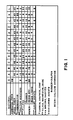
- composition X a typical composition of matter having asbestos reinforcement which meets the current stopping requirements of customers was selected as a base line composition, this base line is disclosed in Figure 1 as composition X.
- the ingredients in composition X were placed in a mixer and after uniformly dispursing the ingredients throughout, a portion of the mixture was placed in a mold to produce a brake lining. Thereafter, the brake lining was placed in an oven and resin therein cured to establish a matrix for holding the ingredients in a fixed relationship.
- composition A also includes carbonaceous materials, friction modifiers, fillers and a binder system.
- the binder system includes both rubber and phenolic resin.
- the rubber was cured by the addition of sulfur at about 20% by weight of rubber and the resin was modified by the addition of calcium hydroxide. After the mixture was uniformly mixed, a portion was removed and placed in a mold to produce a brake lining. The curing of the resin as modified by the calcium hydroxide makes the resin matrix stiffer and as a result the physical strength of the brake pad is increased.
- silica and magnesium oxide enhances the coefficient of friction while whiting adds to the friction stability.
- graphite carbon coke or a combination thereof provides for some lubrication.
- compositions X & A were molded into a shape corresponding to the rear brake used on the Topaz vehicle manufactured by Ford Motor Company. This brake has a drum diameter of 8" and a weight of 576# of the vehicle assigned thereto.
- torque is defined as a ratio of the average torque to line pressure times the area of the wheel cylinder.
- a higher value of torque indicates a more effective lining material.
- Differences in torque from stop to stop reveal changes in friction lining, such that, as a lining fades, the torque decreases.
- a total of 108 stops were made to simulate pre-burnish, post burnish and final effectiveness of the lining at an initial brake temperature of 0°, 100° and 200° F for a vehicular speed of 30 and 60 mph.
- Figure 2 illustrates the torque factor calculated to stop a vehicle under pre-burnished conditions
- Figure 3 illustrates the torque factor calculated to stop a vehicle under post-burnish conditions
- Figure 4 illustrates the torque factor calculated to stop a vehicle under final effectiveness conditions for composition X. From the total 108 stops, it was determined that composition X had an average torque factor of 9.103, a minimum torque factor of 5.422 and a maximum torque factor of 13.262. The minimum and maximum torque factors can be used in calculating the best and worst case condition for a brake. On any given day, on any given test, with any given brake lining there is a chance that the effectiveness will fall outside a range defined by a standard deviation.
- composition X Since the test for composition X was separated into pre-burnish, post-burnish and final effectiveness, a statistical analysis for each segment was performed.
- the overage torque factor was calculated to be 10.485 with a minimum of 5.422 and a maximum of 13.262.
- the standard deviation was found to be 1.818 which results in a range indicated by lines 20 and 22 in Figure 2.
- the average torque factor was calculated to be 9.381 with a minimum of 6.752 and a maximum of 11.919.
- the standard deviation was found to be 1.613 which results in a range indicated by lines 24 and 26 in Figure 3.
- the average torque factor was calculated to be 7.444 with a minimum of 5.816 and a maximum of 8.844.
- the standard deviation was found to be 0.976 which resulted in a range indicated by lines 28 and 30 in Figure 4.
- composition A The friction lining made from composition A was tested in the same manner as composition X to produce the 108 stops: 36 stops for pre-burnish illustrated in Figure 5; 36 stops for post-burnish illustrated in Figure 6; 36 stops and for final effectiveness illustrated in Figure 7.
- the average torque factor for the 108 stop was calculated to be 6.819 with a minimum of 4.695 and a maximum of 8.457. The standard deviation was found to be 0.857.
- the average torque for pre-burnish was calculated to be 6.712 with a minimum of 4.797 and a maximum of 7.956.
- the standard deviation was found to be 0.868 which resulted in a range illustrated by lines 32 and 34 in Figure 5.
- the average torque was claculated to be 6.984 with a minimum of 4.695 and a maximum of 8.244.
- the standard deviation was found to be 0.888 which resulted in a range shown by lines 36 and 38 in Figure 6.
- the average torque factor was calculated to be 6.761 with a minimum of 4.821 and a maximum of 8.457.
- the standard deviation was found to be 0.877 which resulted in a range shown by lines 40 and and 42 in Figure 7.
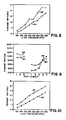
- compositions X and A were performed. In this analysis the minimum holding torque for a vehicle on a grade is measured.
- curves 44 and 48 illustrate the holding torque for composition X. Curve 44 represents forward motion and curve 46 represents reverse motion on a slope. Curves 50 and 50 in Figure 8 represent the static friction produced by composition A. From a review of Figure 8, composition A produced more static friction and thus would be capable of holding a vehicle on a steeper incline under the same condition.
- compositions X & A Since vehicles often operate under conditions where the brake linings are wet, as for example after a vehicle has passed through a puddle of water. For this reason a water recovery analysis was performed on compositions X & A. In performing this analysis, several stops are made to establish a base line and then the brake lining submerged in water. Thereafter, the test is resumed. When the torque factor is equal to the baseline, a water recovery is considered completed. Curves 54 and 56 in Figure 9 illustrate the baseline and recovery for composition X and curves 58 and 60 represent the baseline and recovery for composition A. Composition X recovered to the baseline torque factor at the fourth stop while it is projected that composition A would recover after about 7 stops.
- wear of a brake lining is one of the most important factors in selecting one lining over another lining.
- the thickness of the brake lining of composition X was measured at 7 different points on the brake lining for both the primary and secondary shoe.
- the average wear for composition X on the primary shoe was 0.002371 inches and on the secondary shoe was 0.000858 inches.
- the average wear for composition A on the primary shoe was 0.001479 inches and on the secondary shoe was 0.000729 inches.
- composition X After the 108 stops revealed a smooth surface glaze with some cracking adjacent one rivet hole while the corresponding drum was dull and showed some scoring.
- composition A After 108 stops revealed a polished surface, which was dusty and faintly scored while the corresponding drum was polished with water spots, some scoring and light dust.
- composition A a series of compositions B-L shown in Figure 1 were compounded and placed on a vehicle.
- the material compositions B-L were evaluated for noise generated during braking since this is a primary consideration of an acceptable production lining after friction stability and wear.
- Compositions B-L were based on composition A with materials added and substracted in an effort to attenuate noise.
- Composition B differs from composition A in that the liquid resin was eliminated and the dry resin increased, the filler (Whiting) was reduced, the friction modifier (silica) increased and the calcium hydroxide increased.
- the calcium hydroxide reacts with the phenolic resin to provide physical strength for the resulting brake lining. During this test no unacceptable noise was produced.
- the low noise level of composition B is attributed to the high level of calcium hydroxide in this formula.
- Composition C differs from composition A in that the silica was removed and the other ingredients proportionally increased. This material when tested did not produce unacceptable noise all through the friction level or efficiency seemed to be decreased as a result of the total removal of the silica.
- Composition D is similar to composition C in that rather than remove the silica, the magnesium oxide was removed from composition A and the remaining ingredients proportionally increased. Composition D when tested did produce noise and as a conclusion, it is presumed that the silica in composition D may be responsible for noise.
- composition E the silica and magnesium oxide were removed from composition A and the remaining ingredients porportionally increased.
- the silica and magnesium oxide were removed from composition A and the remaining ingredients porportionally increased.
- composition F the silica and magnesium oxide of composition A was reduced by one half and the other ingredients proportionally increased.
- Composition F was installed on a vehicle and was acceptable since no objectional noise was observed during the major portion of the noise test.
- composition G In compostion G, the silica and calcium hydroxide were removed, graphite was doubled and the other ingredients proportionally increased. When placed on a vehicle, the noise level of composition G was unacceptable.
- composition H the silica and magnesium oxide were reduced, the graphite increased and the calcium hydroxide eliminated.
- composition H was placed on a vehicle, hill noise was observed throughout the test.
- composition I the silica, magnesium oxide and calcium hydroxide were removed, and the remaining ingredients proportionally increased.
- compostion I was placed on a vehicle, this test was terminated due to high temperature inbalance between the primary and secondary shoes.
- composition J In composition J the filler whiting was reduced, while the graphite and calcium hydroxide and steel fiber content were increased. When composition J was tested on a vehicle, very little noise was observed. It is believed that the high calcium hydroxide content in composition J which reacts with the resin therein to provide a stiffer structure is a primary factor in reducing noise.
- composition K In order to evaluate the effect of fillers on the composition A, the carbonaceous ingredients were increased by the addition of coke and carbon, the calcium hydroxide removed, and the remaining ingredients proportionally increased to produce composition K.
- a brake lining of composition K was placed on a vehicle, the brake lining exhibited good friction stability and very little noise with the exception of one brake application on a hill.
- composition L was placed on a vehicle and possessed sufficient strength to complete the noise test. Noise was within an acceptable level, however, corresponding drum was polished but not scored. Undoubtedly, it was felt that wear for composition L may be unacceptable.
- the binder can be a mixture of liquid resin, dry resin and a chemical resistant rubber wherein the rubber makes up at least 50% of the total binder.
- the rubber being cured by the addition of sulfur at about 20% by weight of the rubber in the mixture and the resin being modified by a reaction with calcium hydroxide to improve the physical strength of a resulting brake pad.
- the primary reinforcement strength of the brake pad being provided by steel fibers, having a length of 3-15 mm.
- the steel fiber which makes up from 7-10% by volume comprises from 40-48% by weight of the total mixture.
- a lubricant such as petroleum coke, graphite, carbon or a combination thereof be added to the basic mixture. While the precentage of lubricant can vary from 7-30% by volume, it is preferred that the lubricant be limited to from 6-8% by weight of the total mixture.
- the remaining ingredients in composition A which are fillers and friction modifiers, whiting, barytes, talc, etc., can be adjusted to change the friction level, however, the friction stability and overall effectiveness appears to be optomized when the fillers are at about 20% by volume or weight of the total composition and the friction modifiers, silica and magnesium oxide, are held to about 5% by volume or 10% by weight of the total composition.
- composition A with the asbestos based composition X should provide a customer with evidence that composition A would perform in an acceptable manner as a substitute for asbestos based friction lining.
Landscapes
- Engineering & Computer Science (AREA)
- General Engineering & Computer Science (AREA)
- Mechanical Engineering (AREA)
- Chemical & Material Sciences (AREA)
- Materials Engineering (AREA)
- Organic Chemistry (AREA)
- Braking Arrangements (AREA)
Applications Claiming Priority (2)
| Application Number | Priority Date | Filing Date | Title |
|---|---|---|---|
| US882645 | 1986-07-07 | ||
| US06/882,645 US4722950A (en) | 1986-07-07 | 1986-07-07 | Friction material |
Publications (3)
| Publication Number | Publication Date |
|---|---|
| EP0255579A2 true EP0255579A2 (de) | 1988-02-10 |
| EP0255579A3 EP0255579A3 (en) | 1988-12-21 |
| EP0255579B1 EP0255579B1 (de) | 1991-01-02 |
Family
ID=25381035
Family Applications (1)
| Application Number | Title | Priority Date | Filing Date |
|---|---|---|---|
| EP87107046A Expired - Lifetime EP0255579B1 (de) | 1986-07-07 | 1987-05-15 | Reibungsmaterial |
Country Status (9)
| Country | Link |
|---|---|
| US (1) | US4722950A (de) |
| EP (1) | EP0255579B1 (de) |
| JP (1) | JPS6326438A (de) |
| KR (1) | KR950003704B1 (de) |
| AU (1) | AU589343B2 (de) |
| BR (1) | BR8703314A (de) |
| CA (1) | CA1291298C (de) |
| DE (1) | DE3766908D1 (de) |
| ES (1) | ES2019600B3 (de) |
Cited By (1)
| Publication number | Priority date | Publication date | Assignee | Title |
|---|---|---|---|---|
| WO1995007418A1 (en) * | 1993-09-10 | 1995-03-16 | Sab Wabco (Bromborough) Limited | Friction pads for use in disc brakes |
Families Citing this family (6)
| Publication number | Priority date | Publication date | Assignee | Title |
|---|---|---|---|---|
| GB9123009D0 (en) * | 1991-10-30 | 1991-12-18 | Ferodo Ltd | Improvements in or relating to brake pads |
| KR100612733B1 (ko) * | 1998-08-26 | 2006-08-18 | 닛신보세키 가부시키 가이샤 | 비석면계 마찰재 |
| US20060272909A1 (en) * | 2005-06-02 | 2006-12-07 | Fuller Brian K | Brake assembly and coating |
| JP5221177B2 (ja) | 2008-03-21 | 2013-06-26 | 日清紡ホールディングス株式会社 | 摩擦材 |
| EP2641956B1 (de) * | 2010-11-19 | 2015-03-18 | Hitachi Chemical Company, Ltd. | Asbestfreie reibungsmaterialzusammensetzung sowie reibungsmaterial und reibungselement damit |
| CN115612243A (zh) * | 2022-10-27 | 2023-01-17 | 江苏铁科新材料股份有限公司 | 一种摩擦板用高耐磨性高分子材料及其制备方法 |
Citations (4)
| Publication number | Priority date | Publication date | Assignee | Title |
|---|---|---|---|---|
| US3896075A (en) | 1971-11-04 | 1975-07-22 | Bba Group Ltd | Friction materials |
| US3967037A (en) | 1974-04-12 | 1976-06-29 | Owens-Corning Fiberglas Corporation | Friction material for brake linings and the like |
| US4019912A (en) | 1971-09-04 | 1977-04-26 | Jurid Werke Gmbh | Frictional material reinforced with carbonaceous fibers |
| US4119591A (en) | 1977-07-05 | 1978-10-10 | The Bendix Corporation | Friction material reinforced with steel and cellulose fibers |
Family Cites Families (11)
| Publication number | Priority date | Publication date | Assignee | Title |
|---|---|---|---|---|
| GB1604828A (en) * | 1977-08-10 | 1981-12-16 | Ferodo Ltd | Friction materials |
| GB1604839A (en) * | 1977-08-10 | 1981-12-16 | Ferodo Ltd | Friction materials |
| US4178278A (en) * | 1978-03-01 | 1979-12-11 | Johns-Manville Corporation | Friction material for railroad service |
| JPS55157672A (en) * | 1979-04-26 | 1980-12-08 | Kureha Chem Ind Co Ltd | Organic friction material |
| JPS56131847A (en) * | 1980-03-17 | 1981-10-15 | Sumitomo Electric Ind Ltd | Anticorrosive abrasive material |
| US4316827A (en) * | 1980-04-17 | 1982-02-23 | Union Carbide Corporation | Rubber modified phenolic friction particles |
| JPS5918429B2 (ja) * | 1981-06-10 | 1984-04-27 | 呉羽化学工業株式会社 | 有機摩擦材料 |
| JPS59133841A (ja) * | 1983-01-19 | 1984-08-01 | Nisshinbo Ind Inc | 摩擦材 |
| JPH072895B2 (ja) * | 1984-03-01 | 1995-01-18 | 日本ゼオン株式会社 | 耐衝撃性フェノール系樹脂組成物 |
| JPS61115987A (ja) * | 1984-11-12 | 1986-06-03 | Sumitomo Electric Ind Ltd | スチ−ルフアイバ−を用いた摩擦材 |
| US4617165A (en) * | 1985-05-13 | 1986-10-14 | Tsang Peter H S | Molded brake pad |
-
1986
- 1986-07-07 US US06/882,645 patent/US4722950A/en not_active Expired - Fee Related
-
1987
- 1987-05-15 ES ES87107046T patent/ES2019600B3/es not_active Expired - Lifetime
- 1987-05-15 DE DE8787107046T patent/DE3766908D1/de not_active Expired - Lifetime
- 1987-05-15 EP EP87107046A patent/EP0255579B1/de not_active Expired - Lifetime
- 1987-06-01 CA CA000538526A patent/CA1291298C/en not_active Expired - Lifetime
- 1987-06-15 AU AU74236/87A patent/AU589343B2/en not_active Ceased
- 1987-06-30 BR BR8703314A patent/BR8703314A/pt unknown
- 1987-07-07 JP JP62167952A patent/JPS6326438A/ja active Pending
- 1987-07-07 KR KR1019870007248A patent/KR950003704B1/ko not_active Expired - Lifetime
Patent Citations (4)
| Publication number | Priority date | Publication date | Assignee | Title |
|---|---|---|---|---|
| US4019912A (en) | 1971-09-04 | 1977-04-26 | Jurid Werke Gmbh | Frictional material reinforced with carbonaceous fibers |
| US3896075A (en) | 1971-11-04 | 1975-07-22 | Bba Group Ltd | Friction materials |
| US3967037A (en) | 1974-04-12 | 1976-06-29 | Owens-Corning Fiberglas Corporation | Friction material for brake linings and the like |
| US4119591A (en) | 1977-07-05 | 1978-10-10 | The Bendix Corporation | Friction material reinforced with steel and cellulose fibers |
Cited By (2)
| Publication number | Priority date | Publication date | Assignee | Title |
|---|---|---|---|---|
| WO1995007418A1 (en) * | 1993-09-10 | 1995-03-16 | Sab Wabco (Bromborough) Limited | Friction pads for use in disc brakes |
| AU673952B2 (en) * | 1993-09-10 | 1996-11-28 | Ferodo Limited | Friction pads for use in disc brakes |
Also Published As
| Publication number | Publication date |
|---|---|
| ES2019600B3 (es) | 1991-07-01 |
| KR880001790A (ko) | 1988-04-26 |
| DE3766908D1 (de) | 1991-02-07 |
| JPS6326438A (ja) | 1988-02-04 |
| CA1291298C (en) | 1991-10-29 |
| KR950003704B1 (ko) | 1995-04-17 |
| AU7423687A (en) | 1988-01-14 |
| BR8703314A (pt) | 1988-03-15 |
| US4722950A (en) | 1988-02-02 |
| AU589343B2 (en) | 1989-10-05 |
| EP0255579A3 (en) | 1988-12-21 |
| EP0255579B1 (de) | 1991-01-02 |
Similar Documents
| Publication | Publication Date | Title |
|---|---|---|
| US3959194A (en) | Less abrasive composition railroad brake shoe material | |
| EP0000841B1 (de) | Verbesserungen an Reibungsmaterial | |
| US3684062A (en) | Friction lining composition | |
| US4373038A (en) | Asbestos-free friction material | |
| JPS5918429B2 (ja) | 有機摩擦材料 | |
| US4218361A (en) | Friction material | |
| EP3085985B1 (de) | Zusammensetzung für reibungsmaterial | |
| US6413622B1 (en) | Non-asbestos friction materials | |
| US3766130A (en) | Friction lining composition containing fluorocarbon particles | |
| CA1102033A (en) | Friction material for railroad disc brakes | |
| US4722950A (en) | Friction material | |
| GB2085019A (en) | Friction material | |
| EP1357311A2 (de) | Asbestfreies Reibmaterial | |
| US5576369A (en) | Friction material | |
| US3832325A (en) | Wear resistant composition brake block | |
| KR101035240B1 (ko) | 로스틸계 마찰재 및 이를 포함하는 차량용 브레이크 | |
| US5217528A (en) | Non-asbestos friction material | |
| CA2168408C (en) | Self lubricating brake shoe material | |
| JP3632716B2 (ja) | 摩擦材組成物 | |
| JP2000219872A (ja) | パ―キングブレ―キ用摩擦材 | |
| JPH05279656A (ja) | 摩擦材 | |
| JP2000319635A (ja) | 摩擦材組成物及び摩擦材組成物を用いた摩擦材 | |
| JP3553629B2 (ja) | 摩擦材 | |
| JPH08326805A (ja) | 非石綿系摩擦材 | |
| JPH09286973A (ja) | 非石綿系摩擦材 |
Legal Events
| Date | Code | Title | Description |
|---|---|---|---|
| PUAI | Public reference made under article 153(3) epc to a published international application that has entered the european phase |
Free format text: ORIGINAL CODE: 0009012 |
|
| AK | Designated contracting states |
Kind code of ref document: A2 Designated state(s): DE ES FR GB IT SE |
|
| PUAL | Search report despatched |
Free format text: ORIGINAL CODE: 0009013 |
|
| AK | Designated contracting states |
Kind code of ref document: A3 Designated state(s): DE ES FR GB IT SE |
|
| RAP1 | Party data changed (applicant data changed or rights of an application transferred) |
Owner name: ALLIED SIGNAL INCORPORATED |
|
| 17P | Request for examination filed |
Effective date: 19881223 |
|
| 17Q | First examination report despatched |
Effective date: 19891010 |
|
| GRAA | (expected) grant |
Free format text: ORIGINAL CODE: 0009210 |
|
| AK | Designated contracting states |
Kind code of ref document: B1 Designated state(s): DE ES FR GB IT SE |
|
| ET | Fr: translation filed | ||
| REF | Corresponds to: |
Ref document number: 3766908 Country of ref document: DE Date of ref document: 19910207 |
|
| ITF | It: translation for a ep patent filed | ||
| PLBI | Opposition filed |
Free format text: ORIGINAL CODE: 0009260 |
|
| 26 | Opposition filed |
Opponent name: RAYBESTOS INDUSTRIE-PRODUKTE GMBH Effective date: 19911002 |
|
| PGFP | Annual fee paid to national office [announced via postgrant information from national office to epo] |
Ref country code: GB Payment date: 19920429 Year of fee payment: 6 |
|
| PGFP | Annual fee paid to national office [announced via postgrant information from national office to epo] |
Ref country code: FR Payment date: 19920511 Year of fee payment: 6 |
|
| PGFP | Annual fee paid to national office [announced via postgrant information from national office to epo] |
Ref country code: SE Payment date: 19920521 Year of fee payment: 6 |
|
| PGFP | Annual fee paid to national office [announced via postgrant information from national office to epo] |
Ref country code: ES Payment date: 19920526 Year of fee payment: 6 |
|
| PGFP | Annual fee paid to national office [announced via postgrant information from national office to epo] |
Ref country code: DE Payment date: 19920529 Year of fee payment: 6 |
|
| RDAG | Patent revoked |
Free format text: ORIGINAL CODE: 0009271 |
|
| STAA | Information on the status of an ep patent application or granted ep patent |
Free format text: STATUS: PATENT REVOKED |
|
| 27W | Patent revoked |
Effective date: 19930622 |
|
| GBPR | Gb: patent revoked under art. 102 of the ep convention designating the uk as contracting state |
Free format text: 930622 |
|
| EUG | Se: european patent has lapsed |
Ref document number: 87107046.2 Effective date: 19931110 |