EP0255487A2 - Elektronisches physiotherapeutisches Gerät zur Wiederherstellung der Glieder und der Skelett- und Muskelfunktionen - Google Patents
Elektronisches physiotherapeutisches Gerät zur Wiederherstellung der Glieder und der Skelett- und Muskelfunktionen Download PDFInfo
- Publication number
- EP0255487A2 EP0255487A2 EP87810432A EP87810432A EP0255487A2 EP 0255487 A2 EP0255487 A2 EP 0255487A2 EP 87810432 A EP87810432 A EP 87810432A EP 87810432 A EP87810432 A EP 87810432A EP 0255487 A2 EP0255487 A2 EP 0255487A2
- Authority
- EP
- European Patent Office
- Prior art keywords
- function
- physiotherapeutic
- patient
- motors
- constituted
- Prior art date
- Legal status (The legal status is an assumption and is not a legal conclusion. Google has not performed a legal analysis and makes no representation as to the accuracy of the status listed.)
- Withdrawn
Links
- 230000006870 function Effects 0.000 title claims description 34
- 230000003387 muscular Effects 0.000 title claims description 13
- 238000011084 recovery Methods 0.000 claims abstract description 11
- 238000002560 therapeutic procedure Methods 0.000 claims abstract description 10
- 238000012545 processing Methods 0.000 claims abstract description 6
- 210000003205 muscle Anatomy 0.000 claims abstract description 4
- 206010025482 malaise Diseases 0.000 claims description 6
- 238000005259 measurement Methods 0.000 claims description 6
- 230000010354 integration Effects 0.000 claims description 4
- 230000003189 isokinetic effect Effects 0.000 claims 1
- 230000000474 nursing effect Effects 0.000 claims 1
- 230000003236 psychic effect Effects 0.000 abstract 1
- 210000003414 extremity Anatomy 0.000 description 11
- 210000002414 leg Anatomy 0.000 description 8
- 210000004247 hand Anatomy 0.000 description 7
- 238000010586 diagram Methods 0.000 description 5
- 210000000245 forearm Anatomy 0.000 description 5
- 238000000034 method Methods 0.000 description 5
- 210000003813 thumb Anatomy 0.000 description 4
- 210000003811 finger Anatomy 0.000 description 3
- 238000007726 management method Methods 0.000 description 3
- 210000000689 upper leg Anatomy 0.000 description 3
- 230000018109 developmental process Effects 0.000 description 2
- 238000000554 physical therapy Methods 0.000 description 2
- 230000036642 wellbeing Effects 0.000 description 2
- 206010003830 Automatism Diseases 0.000 description 1
- 229910052782 aluminium Inorganic materials 0.000 description 1
- XAGFODPZIPBFFR-UHFFFAOYSA-N aluminium Chemical compound [Al] XAGFODPZIPBFFR-UHFFFAOYSA-N 0.000 description 1
- 238000004458 analytical method Methods 0.000 description 1
- 210000000617 arm Anatomy 0.000 description 1
- 230000005540 biological transmission Effects 0.000 description 1
- 230000036772 blood pressure Effects 0.000 description 1
- 238000004364 calculation method Methods 0.000 description 1
- 230000000747 cardiac effect Effects 0.000 description 1
- 230000006835 compression Effects 0.000 description 1
- 238000007906 compression Methods 0.000 description 1
- 230000008602 contraction Effects 0.000 description 1
- 238000013523 data management Methods 0.000 description 1
- 238000011161 development Methods 0.000 description 1
- 238000003745 diagnosis Methods 0.000 description 1
- 238000006073 displacement reaction Methods 0.000 description 1
- 238000011156 evaluation Methods 0.000 description 1
- 210000002683 foot Anatomy 0.000 description 1
- 210000004932 little finger Anatomy 0.000 description 1
- 230000007774 longterm Effects 0.000 description 1
- 229910052751 metal Inorganic materials 0.000 description 1
- 239000002184 metal Substances 0.000 description 1
- 210000000056 organ Anatomy 0.000 description 1
- 210000004197 pelvis Anatomy 0.000 description 1
- 230000000750 progressive effect Effects 0.000 description 1
- 230000010349 pulsation Effects 0.000 description 1
- 238000004064 recycling Methods 0.000 description 1
- 230000033764 rhythmic process Effects 0.000 description 1
- 238000005096 rolling process Methods 0.000 description 1
- 238000000926 separation method Methods 0.000 description 1
- 239000007787 solid Substances 0.000 description 1
- 230000001360 synchronised effect Effects 0.000 description 1
- 230000001225 therapeutic effect Effects 0.000 description 1
Images








Classifications
-
- A—HUMAN NECESSITIES
- A63—SPORTS; GAMES; AMUSEMENTS
- A63B—APPARATUS FOR PHYSICAL TRAINING, GYMNASTICS, SWIMMING, CLIMBING, OR FENCING; BALL GAMES; TRAINING EQUIPMENT
- A63B21/00—Exercising apparatus for developing or strengthening the muscles or joints of the body by working against a counterforce, with or without measuring devices
- A63B21/00178—Exercising apparatus for developing or strengthening the muscles or joints of the body by working against a counterforce, with or without measuring devices for active exercising, the apparatus being also usable for passive exercising
-
- A—HUMAN NECESSITIES
- A63—SPORTS; GAMES; AMUSEMENTS
- A63B—APPARATUS FOR PHYSICAL TRAINING, GYMNASTICS, SWIMMING, CLIMBING, OR FENCING; BALL GAMES; TRAINING EQUIPMENT
- A63B21/00—Exercising apparatus for developing or strengthening the muscles or joints of the body by working against a counterforce, with or without measuring devices
- A63B21/00181—Exercising apparatus for developing or strengthening the muscles or joints of the body by working against a counterforce, with or without measuring devices comprising additional means assisting the user to overcome part of the resisting force, i.e. assisted-active exercising
-
- A—HUMAN NECESSITIES
- A63—SPORTS; GAMES; AMUSEMENTS
- A63B—APPARATUS FOR PHYSICAL TRAINING, GYMNASTICS, SWIMMING, CLIMBING, OR FENCING; BALL GAMES; TRAINING EQUIPMENT
- A63B24/00—Electric or electronic controls for exercising apparatus of preceding groups; Controlling or monitoring of exercises, sportive games, training or athletic performances
-
- G—PHYSICS
- G16—INFORMATION AND COMMUNICATION TECHNOLOGY [ICT] SPECIALLY ADAPTED FOR SPECIFIC APPLICATION FIELDS
- G16H—HEALTHCARE INFORMATICS, i.e. INFORMATION AND COMMUNICATION TECHNOLOGY [ICT] SPECIALLY ADAPTED FOR THE HANDLING OR PROCESSING OF MEDICAL OR HEALTHCARE DATA
- G16H20/00—ICT specially adapted for therapies or health-improving plans, e.g. for handling prescriptions, for steering therapy or for monitoring patient compliance
- G16H20/30—ICT specially adapted for therapies or health-improving plans, e.g. for handling prescriptions, for steering therapy or for monitoring patient compliance relating to physical therapies or activities, e.g. physiotherapy, acupressure or exercising
-
- A—HUMAN NECESSITIES
- A63—SPORTS; GAMES; AMUSEMENTS
- A63B—APPARATUS FOR PHYSICAL TRAINING, GYMNASTICS, SWIMMING, CLIMBING, OR FENCING; BALL GAMES; TRAINING EQUIPMENT
- A63B24/00—Electric or electronic controls for exercising apparatus of preceding groups; Controlling or monitoring of exercises, sportive games, training or athletic performances
- A63B24/0075—Means for generating exercise programs or schemes, e.g. computerized virtual trainer, e.g. using expert databases
- A63B2024/0078—Exercise efforts programmed as a function of time
-
- A—HUMAN NECESSITIES
- A63—SPORTS; GAMES; AMUSEMENTS
- A63B—APPARATUS FOR PHYSICAL TRAINING, GYMNASTICS, SWIMMING, CLIMBING, OR FENCING; BALL GAMES; TRAINING EQUIPMENT
- A63B21/00—Exercising apparatus for developing or strengthening the muscles or joints of the body by working against a counterforce, with or without measuring devices
- A63B21/005—Exercising apparatus for developing or strengthening the muscles or joints of the body by working against a counterforce, with or without measuring devices using electromagnetic or electric force-resisters
- A63B21/0058—Exercising apparatus for developing or strengthening the muscles or joints of the body by working against a counterforce, with or without measuring devices using electromagnetic or electric force-resisters using motors
-
- A—HUMAN NECESSITIES
- A63—SPORTS; GAMES; AMUSEMENTS
- A63B—APPARATUS FOR PHYSICAL TRAINING, GYMNASTICS, SWIMMING, CLIMBING, OR FENCING; BALL GAMES; TRAINING EQUIPMENT
- A63B21/00—Exercising apparatus for developing or strengthening the muscles or joints of the body by working against a counterforce, with or without measuring devices
- A63B21/008—Exercising apparatus for developing or strengthening the muscles or joints of the body by working against a counterforce, with or without measuring devices using hydraulic or pneumatic force-resisters
-
- A—HUMAN NECESSITIES
- A63—SPORTS; GAMES; AMUSEMENTS
- A63B—APPARATUS FOR PHYSICAL TRAINING, GYMNASTICS, SWIMMING, CLIMBING, OR FENCING; BALL GAMES; TRAINING EQUIPMENT
- A63B2220/00—Measuring of physical parameters relating to sporting activity
- A63B2220/10—Positions
- A63B2220/13—Relative positions
-
- A—HUMAN NECESSITIES
- A63—SPORTS; GAMES; AMUSEMENTS
- A63B—APPARATUS FOR PHYSICAL TRAINING, GYMNASTICS, SWIMMING, CLIMBING, OR FENCING; BALL GAMES; TRAINING EQUIPMENT
- A63B2220/00—Measuring of physical parameters relating to sporting activity
- A63B2220/50—Force related parameters
- A63B2220/56—Pressure
Definitions
- the present invention refers to a modular physiotherapeutic device to functionally recover the limbs and to restore the skeleton and muscular functions injured by sickness or by accident, including in a single structure all the anatomical dynamometric tools and accessories and controlling and measuring devices, each related to a predetermined function.
- the tools are drived by permanent electric micromotors or oleopneumatic cylinders controlled in extension and intensity by a system software interfacing with a programme collecting the data of the patient, compiling his electronic card and preparing the session to be executed, after the collection by the same tools, by means of the sensors connected to them, of the general status of the patient, establishing the therapy card.
- the device subject of the invention is based on the integration with devices and tools, partially new, being also part of the present invention, partially already known, of servoassisted electric or hydraulic micromotors, capable to drive the tool itself in extension and with the desidered intensity under the control of a system software interfacing to a programme with the card of the patient as input, collected and compiled by the device itself.
- the present invention refers, on the contrary, to a physiotherapeutic device for the functional recovery of the limbs and the restoration of the original mobility of the skeleton and muscular functions, injured by sickness or by accident, including a number of dynamometric anatomical tools, each for the restoration and recovery of a definite motory and muscular function, characterized by the fact that these tools are connected to a system of control of the effort intensity drived by motors, servoassisted, programmed and controlled by a system software, in order to allow the various muscles and/or limbs to achieve those isometric, isostatic, ergodynamic and ergonomic movements, necessary to their original functional recovery, after the collection and measurement, by means of the tools themselves, of the conditions of the functions of the patient, then establishing the card of the physiotherapeutic session(s).
- the dynamic electronic device subject of the invention uses a rational system, drived by servoassisted permanent motors under the control of a microprocessor. At present the device can carry out 100 implemented functions. Further options are possible in the ambit of this invention.
- the device subject of the invention is structured as a modular system called "Bau-Kasten"; lower basement by welded solid metal, surmounted by three special columns with incorporated magnetic motors, assuring the working positioning in elevation; upper table with special framework by oxidized aluminum, carrying all the working units, with special handles.
- a pneumatic-electronic system has been integrated, assuring with the aid of the compressor the air under pressure necessary for the opearation of the pneumatics.
- the device subject of the invention has been studied and structured with twelve main working stations and more precisely:
- initial check-up, passive diagnosis, measurement of the limb movement and muscle force are recorded according to predetermined card and programme, according to the data taken from the active or passive patient; among them just those relevant to the system of working programme are updated and selected, in order to establish proportionally the effort to be applied and the number of cycles; or by means of the microprocessor with acoustic signals and video displaying of the whole subroutine which signals, conducts and controls the whole therapeutic session, with the indication of the start and the end of the exercise, number of times, applid effort, service unit and so on.
- the integrated multifunctional physiotherapeutic device is particularly suitable for: Active - Passive M1 Abduction - adduction - flexion M1a/M4 Supinating - pronating - abduction - adduction - extension - flexion - eccentric - concentric M1/P9 Extension - flexion - adduction - traction - pressure - rotation M2/M5 Flexion - compression - extension - flexion - adduction - ratation - abduction M5 Sartorius - extension - flexion M7 Flexion - rotation M3 Flexion - extension - ergometric - traction - pressure - rotation - eccentric - concentric M6 Ergometric P4/P8/P10 Traction Neck flexion Neck extension Trunk flexion Trunk extension Trunk rotation Pelvis elevation Thigh flexion Thigh extension Thigh abduction Arm extension Arm flexion Arm abduction in the horizontal plane Arm adduction in the horizontal plane Arm external
- the physiotherapeutic device subject of the invention is a valid help in the rehabilitation of the people suffering a casualty or a sickness, due to its proportional characteristics, namely stress progressive control according to the programme. It provides the assistance with precise and automatic rhythm, in terms of number of revolutions, angles and linear displacements, leading to an improved well-being of the concerned limb, following a treatment logic; on the other end the patient can at any time exercise himself in opposition to the work phase and doing in this way he engages a physical muscular resistance of contraction of the limb, feeling a real improvement.
- the device can also be programmed to work under conditions of total resistance and in opposition to the movements of the limbs; allowing in such a way an intensive physical exercise, producing well-being and prompt recovery.
- the subject device can guarantee the assistance to at least four people simultaneously with diversification of therapy or of programmed exercise.
- the motor driving and the therapy control occur by means of an effective computer (even a Personal Computer).
- the link man-device occurs by means of the keyboard, possibly of a Personal Computer.
- a software package fit for the physiotherapy allows the physiotherapist to understand as widely as possible, together with a simplified control of the device.
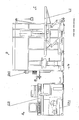
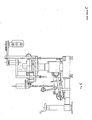
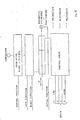
- the device subject of the invention includes a number of tools and groups M1, M1a, M2, M3, M4, M5, M6, M7, P8, P9, P10, P11, EO1, SM1, BO1, CP1 (fig. 1), each for a function, or linkable together for a defined function.
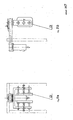
- the group CP1 (figures 5a and 5b) includes the power source of the device formed by the feeding of the electric micromotors, by the hydraulic or pneumatic feeding and by the feeding circuit of servoassistance 1, 2. It is mounted on the lower base of the carrying structure or frame of the device 3.
- the group BO1 (figures 5a and 5b) includes, in addition to the frame 3, the group M6 for the positioning of the patient on the tools according to his size.
- the group EO1 and the group SM1 linked together form the surveying, processing, input information and data management centre 4.
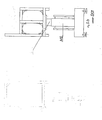
- a video screen or display allows the operator and the patient to visualize the data and the card and to follow the treatement during the therapy (figures 6a and 6b).
- a printing unit can be connected to the central computer. Moreover it is also foreseen a link with the central elaboration units of large data processing centres, like sickness funds, hospitals, polyclinics and so on.
- the group L1 (figures 7a and 7b) is formed by a lying table or bed 6 on rolling frame.
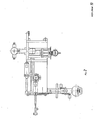
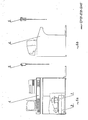
- the group M1 (figures 8a and 8b) forms the bi-directional rotary unit for limb and hand 7, allowing the hand and at the same time the forearm to reach with gradual effort left-hand and right-hand angular rotations.
- the group M2 is formed by a bi-directional rotary unit for shoulder and arms 8, whereas the group M5 is formed by a linear unit for arms and legs (figures 9a and 9b).
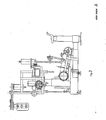
- the group M3 forms the bi-directional rotary unit for legs and feet (figures 10a and 10b) including pedals 19 on disk 11 machanically connected to a disk linked to the permanent micromotor which drives and calibrates the effort.
- a chair adjustable in height and on the two flat frames (3 positions) completes the group.
- the group M7 (figures 11a and 11b) allows the therapy of head, neck, hands and feet by means of the bi-directional rotary unit connected to the dedicated tool.
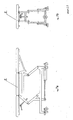
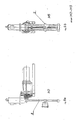
- the groups P8 - P10 form two-positions linear units, traction and extension, for hands, arms, feet and legs by means of handles 14 connected and drived by pulleis 14 ⁇ with power take-off from a micromotor 15 (figures 12a and 12b). Replacing the two handles with a collar tool, this unit can be used for the function head, neck, nape.
- the motors M1, M2, M3, M4 and M7 are permanent magnet and direct current motors. This kind of motor allows to control with the highest accuracy both the torque and the speed.
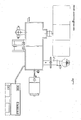
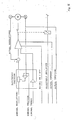
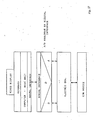
- the block diagram shows the mode of operation of the control of the motors:
- the two measuring signals "actual current value” and "actual position” are directly introduced in the computer to allow the performance of the power and positioning calculation.
- a motor can be started or stopped by means of two digital control signals.
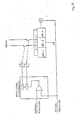
- the motors M6.1, M6.2 and M6.3 provide the auxiliary electric functions. These three alternate current motors are equivalent one to the other. They serve to adapt the tool to the size of the patient.
- This simplified control is only related to the position in elevation of the device with a three-positions regulator.
- the motors turn at the maximum sped forward or backward and develop automatically the torque necessary to the minimum lifting of the device.
- the position is supplied by the computer.
- the pneumatic functions P8 and P9 are executed by means of pneumatic cylinders.
- the pneumatic cylinders control occurs by means of electro-pneumatic components.
- Cylinder stroke this analogue value is read by the computer and processed by the aid of the software.
- the orders are given to the device by means of a keyboard.
- the computer processes, adapts and transmits them.
- the interface puts the data in analogue form or generates the digital control orders.
- the analogue or digital signals arrive in the distribution box and control the motors and the pneumatic cylinders.
- the measuring signals arrive through the distribution box to the A/D interface, where they become digital and are transferred to the computer.
- the management of the device, the data transmission, their evaluation and their management occur by means of a programme.
- the software controls all the transport units of the device and manages the data in a mass memory (flexible disk).
- the programme is written in BASIC language and stored on a disk under the name "ETM-100".
- the programme includes a main programme and a certain number of sub-routines.
- the main programme calls the sub-routines and let them work.
- the programme is structured with the "menu" technique.
- the user can follow the work progress even without any knowledge of the programme language.
- the measures are shown on the screen (MacIntosh-type).
- the following electric parameters can be inserted by the user: - output position - left starting position - right starting position - rotation speed - return speed - torque - number of repetitions
- pneumatic parameters can be inserted by the user: - pneumatic pressure - pneumatic speed (4 stages)
- the sofware will be continually updated according to the requirements of the physiotherapists.
- the necessary principles have been elaborated in cooperation with physiotherapists.
Landscapes
- Health & Medical Sciences (AREA)
- General Health & Medical Sciences (AREA)
- Physical Education & Sports Medicine (AREA)
- Life Sciences & Earth Sciences (AREA)
- Biophysics (AREA)
- Orthopedic Medicine & Surgery (AREA)
- Engineering & Computer Science (AREA)
- Epidemiology (AREA)
- Medical Informatics (AREA)
- Primary Health Care (AREA)
- Public Health (AREA)
- Rehabilitation Tools (AREA)
Applications Claiming Priority (2)
| Application Number | Priority Date | Filing Date | Title |
|---|---|---|---|
| CH3095/86A CH669725A5 (de) | 1986-08-01 | 1986-08-01 | |
| CH3095/86 | 1986-08-01 |
Publications (2)
| Publication Number | Publication Date |
|---|---|
| EP0255487A2 true EP0255487A2 (de) | 1988-02-03 |
| EP0255487A3 EP0255487A3 (en) | 1988-09-07 |
Family
ID=4248510
Family Applications (1)
| Application Number | Title | Priority Date | Filing Date |
|---|---|---|---|
| EP87810432A Withdrawn EP0255487A3 (en) | 1986-08-01 | 1987-07-29 | Physiotherapeutic electronic device to recover the limbs and to restore the skeleton and muscular functions |
Country Status (3)
| Country | Link |
|---|---|
| EP (1) | EP0255487A3 (de) |
| JP (1) | JPS63260560A (de) |
| CH (1) | CH669725A5 (de) |
Cited By (6)
| Publication number | Priority date | Publication date | Assignee | Title |
|---|---|---|---|---|
| WO1989007964A1 (fr) * | 1988-02-26 | 1989-09-08 | Wintersteiger Gesellschaft M.B.H. & Co. | Dispositif d'entrainement et/ou de saisie des facultes motrices |
| EP0700694A1 (de) * | 1994-09-06 | 1996-03-13 | Rudolf Presl GmbH & Co. Klinik Bavaria Rehabilitations KG | Trainings- und Diagnoseverfahren |
| AU711530B3 (en) * | 1999-01-11 | 1999-10-14 | Ali Jadidi | Apparatus for providing resistive forces |
| AU727510B1 (en) * | 1999-01-11 | 2000-12-14 | Ali Jadidi | Apparatus for simulating a natural environment during an exercise |
| WO2001064297A3 (en) * | 2000-02-29 | 2002-01-17 | Univ Arizona | Method and apparatus for torque-controlled eccentric exercise training |
| FR2870134A1 (fr) * | 2004-05-14 | 2005-11-18 | Univ Reims Champagne Ardenne | Methode et systeme de personnalisation d'un appareil d'exercices physiques |
Family Cites Families (5)
| Publication number | Priority date | Publication date | Assignee | Title |
|---|---|---|---|---|
| US4235437A (en) * | 1978-07-03 | 1980-11-25 | Book Wayne J | Robotic exercise machine and method |
| US4354676A (en) * | 1978-10-13 | 1982-10-19 | Pepsico, Inc. | Exerciser |
| EP0021970B1 (de) * | 1979-07-02 | 1983-11-23 | Bendiberica S.A. | Steuerventil für ein durch Druckmittel betätigtes System |
| IT1224082B (it) * | 1981-06-04 | 1990-09-26 | Angelo Ventura | Macchina elettromeccanica per la ginnastica passiva programmata |
| IT1174500B (it) * | 1984-02-28 | 1987-07-01 | Ofmec Off Mecc Mantovane Spa | Lettino per rieducazione motoria passiva, autopassiva o contro resistenza del paziente, dotato di dispositivi comandabili meccanicamente ed azionabili da componenti eletronici, programmabili e contollabili |
-
1986
- 1986-08-01 CH CH3095/86A patent/CH669725A5/it not_active IP Right Cessation
-
1987
- 1987-07-29 EP EP87810432A patent/EP0255487A3/en not_active Withdrawn
- 1987-07-31 JP JP62192526A patent/JPS63260560A/ja active Pending
Cited By (7)
| Publication number | Priority date | Publication date | Assignee | Title |
|---|---|---|---|---|
| WO1989007964A1 (fr) * | 1988-02-26 | 1989-09-08 | Wintersteiger Gesellschaft M.B.H. & Co. | Dispositif d'entrainement et/ou de saisie des facultes motrices |
| EP0700694A1 (de) * | 1994-09-06 | 1996-03-13 | Rudolf Presl GmbH & Co. Klinik Bavaria Rehabilitations KG | Trainings- und Diagnoseverfahren |
| AU711530B3 (en) * | 1999-01-11 | 1999-10-14 | Ali Jadidi | Apparatus for providing resistive forces |
| AU727510B1 (en) * | 1999-01-11 | 2000-12-14 | Ali Jadidi | Apparatus for simulating a natural environment during an exercise |
| WO2001064297A3 (en) * | 2000-02-29 | 2002-01-17 | Univ Arizona | Method and apparatus for torque-controlled eccentric exercise training |
| US7588518B2 (en) | 2000-02-29 | 2009-09-15 | Arizona Board Of Regents | Method and apparatus for torque-controlled eccentric exercise training |
| FR2870134A1 (fr) * | 2004-05-14 | 2005-11-18 | Univ Reims Champagne Ardenne | Methode et systeme de personnalisation d'un appareil d'exercices physiques |
Also Published As
| Publication number | Publication date |
|---|---|
| JPS63260560A (ja) | 1988-10-27 |
| EP0255487A3 (en) | 1988-09-07 |
| CH669725A5 (de) | 1989-04-14 |
Similar Documents
| Publication | Publication Date | Title |
|---|---|---|
| Williams et al. | A robot for wrist rehabilitation | |
| US6270445B1 (en) | In-bed exercise machine and method of use | |
| Veneman et al. | Design and evaluation of the LOPES exoskeleton robot for interactive gait rehabilitation | |
| Nef et al. | ARMin-robot for rehabilitation of the upper extremities | |
| Nef et al. | ARMin-design of a novel arm rehabilitation robot | |
| US6666831B1 (en) | Method, apparatus and system for automation of body weight support training (bwst) of biped locomotion over a treadmill using a programmable stepper device (psd) operating like an exoskeleton drive system from a fixed base | |
| JP5117726B2 (ja) | リハビリテーション並びにトレーニングのための方法及び器械 | |
| US9005145B2 (en) | Muscle and/or joint exercise apparatus | |
| Unluhisarcikli et al. | Design and control of a robotic lower extremity exoskeleton for gait rehabilitation | |
| US20160151176A1 (en) | Lower extremity exoskeleton for gait retraining | |
| WO2000078263A9 (en) | Rehabilitative orthoses | |
| JP4742278B2 (ja) | 駆動力算出装置、駆動力算出方法、筋力補助装置、プログラム、及びコンピュータ読み取り可能な記録媒体 | |
| US20080108918A1 (en) | Exercise apparatus and technique | |
| TW200946095A (en) | Rehabilitating and training device and controlling method thereof | |
| US8827880B2 (en) | Core muscle strengthening | |
| WO2021117063A1 (en) | A multi-joint rehabilitation system | |
| Yano et al. | Development of a gait rehabilitation system using a locomotion interface | |
| Jiang et al. | Recent advances on lower limb exoskeleton rehabilitation robot | |
| EP0255487A2 (de) | Elektronisches physiotherapeutisches Gerät zur Wiederherstellung der Glieder und der Skelett- und Muskelfunktionen | |
| KR20190037662A (ko) | 재활운동용 에르고미터 | |
| US11654323B2 (en) | Multifunctional computerized isokinetic strength training and rehabilitation system | |
| AU2020101146B4 (en) | Multifunctional computerized isokinetic strength training and rehabilitation system | |
| JP2873592B2 (ja) | 運動能力測定評価訓練装置 | |
| Marquez-Chin et al. | Robotic-assisted rehabilitation | |
| Chou et al. | An App-Assisted Frontend of Robot Gait Training System for Lower Limb Rehabilitation |
Legal Events
| Date | Code | Title | Description |
|---|---|---|---|
| PUAI | Public reference made under article 153(3) epc to a published international application that has entered the european phase |
Free format text: ORIGINAL CODE: 0009012 |
|
| AK | Designated contracting states |
Kind code of ref document: A2 Designated state(s): AT BE DE ES FR GB GR IT LU NL SE |
|
| PUAL | Search report despatched |
Free format text: ORIGINAL CODE: 0009013 |
|
| AK | Designated contracting states |
Kind code of ref document: A3 Designated state(s): AT BE DE ES FR GB GR IT LU NL SE |
|
| 17P | Request for examination filed |
Effective date: 19881230 |
|
| 17Q | First examination report despatched |
Effective date: 19900108 |
|
| STAA | Information on the status of an ep patent application or granted ep patent |
Free format text: STATUS: THE APPLICATION IS DEEMED TO BE WITHDRAWN |
|
| 18D | Application deemed to be withdrawn |
Effective date: 19911008 |
|
| RIN1 | Information on inventor provided before grant (corrected) |
Inventor name: PETRALLI, CARLO |