EP0244234B1 - Transformation of trichoderma - Google Patents
Transformation of trichoderma Download PDFInfo
- Publication number
- EP0244234B1 EP0244234B1 EP87303834A EP87303834A EP0244234B1 EP 0244234 B1 EP0244234 B1 EP 0244234B1 EP 87303834 A EP87303834 A EP 87303834A EP 87303834 A EP87303834 A EP 87303834A EP 0244234 B1 EP0244234 B1 EP 0244234B1
- Authority
- EP
- European Patent Office
- Prior art keywords
- gene
- trichoderma
- vector system
- strain
- strain according
- Prior art date
- Legal status (The legal status is an assumption and is not a legal conclusion. Google has not performed a legal analysis and makes no representation as to the accuracy of the status listed.)
- Expired - Lifetime
Links
Images





Classifications
-
- C—CHEMISTRY; METALLURGY
- C12—BIOCHEMISTRY; BEER; SPIRITS; WINE; VINEGAR; MICROBIOLOGY; ENZYMOLOGY; MUTATION OR GENETIC ENGINEERING
- C12N—MICROORGANISMS OR ENZYMES; COMPOSITIONS THEREOF; PROPAGATING, PRESERVING, OR MAINTAINING MICROORGANISMS; MUTATION OR GENETIC ENGINEERING; CULTURE MEDIA
- C12N9/00—Enzymes; Proenzymes; Compositions thereof; Processes for preparing, activating, inhibiting, separating or purifying enzymes
- C12N9/14—Hydrolases (3)
- C12N9/24—Hydrolases (3) acting on glycosyl compounds (3.2)
- C12N9/2402—Hydrolases (3) acting on glycosyl compounds (3.2) hydrolysing O- and S- glycosyl compounds (3.2.1)
- C12N9/2405—Glucanases
- C12N9/2408—Glucanases acting on alpha -1,4-glucosidic bonds
- C12N9/2411—Amylases
- C12N9/2428—Glucan 1,4-alpha-glucosidase (3.2.1.3), i.e. glucoamylase
-
- C—CHEMISTRY; METALLURGY
- C07—ORGANIC CHEMISTRY
- C07K—PEPTIDES
- C07K14/00—Peptides having more than 20 amino acids; Gastrins; Somatostatins; Melanotropins; Derivatives thereof
- C07K14/37—Peptides having more than 20 amino acids; Gastrins; Somatostatins; Melanotropins; Derivatives thereof from fungi
-
- C—CHEMISTRY; METALLURGY
- C12—BIOCHEMISTRY; BEER; SPIRITS; WINE; VINEGAR; MICROBIOLOGY; ENZYMOLOGY; MUTATION OR GENETIC ENGINEERING
- C12N—MICROORGANISMS OR ENZYMES; COMPOSITIONS THEREOF; PROPAGATING, PRESERVING, OR MAINTAINING MICROORGANISMS; MUTATION OR GENETIC ENGINEERING; CULTURE MEDIA
- C12N15/00—Mutation or genetic engineering; DNA or RNA concerning genetic engineering, vectors, e.g. plasmids, or their isolation, preparation or purification; Use of hosts therefor
- C12N15/09—Recombinant DNA-technology
- C12N15/63—Introduction of foreign genetic material using vectors; Vectors; Use of hosts therefor; Regulation of expression
- C12N15/79—Vectors or expression systems specially adapted for eukaryotic hosts
- C12N15/80—Vectors or expression systems specially adapted for eukaryotic hosts for fungi
-
- C—CHEMISTRY; METALLURGY
- C12—BIOCHEMISTRY; BEER; SPIRITS; WINE; VINEGAR; MICROBIOLOGY; ENZYMOLOGY; MUTATION OR GENETIC ENGINEERING
- C12N—MICROORGANISMS OR ENZYMES; COMPOSITIONS THEREOF; PROPAGATING, PRESERVING, OR MAINTAINING MICROORGANISMS; MUTATION OR GENETIC ENGINEERING; CULTURE MEDIA
- C12N15/00—Mutation or genetic engineering; DNA or RNA concerning genetic engineering, vectors, e.g. plasmids, or their isolation, preparation or purification; Use of hosts therefor
- C12N15/09—Recombinant DNA-technology
- C12N15/87—Introduction of foreign genetic material using processes not otherwise provided for, e.g. co-transformation
- C12N15/90—Stable introduction of foreign DNA into chromosome
-
- C—CHEMISTRY; METALLURGY
- C12—BIOCHEMISTRY; BEER; SPIRITS; WINE; VINEGAR; MICROBIOLOGY; ENZYMOLOGY; MUTATION OR GENETIC ENGINEERING
- C12N—MICROORGANISMS OR ENZYMES; COMPOSITIONS THEREOF; PROPAGATING, PRESERVING, OR MAINTAINING MICROORGANISMS; MUTATION OR GENETIC ENGINEERING; CULTURE MEDIA
- C12N9/00—Enzymes; Proenzymes; Compositions thereof; Processes for preparing, activating, inhibiting, separating or purifying enzymes
- C12N9/14—Hydrolases (3)
- C12N9/24—Hydrolases (3) acting on glycosyl compounds (3.2)
- C12N9/2402—Hydrolases (3) acting on glycosyl compounds (3.2) hydrolysing O- and S- glycosyl compounds (3.2.1)
- C12N9/2405—Glucanases
- C12N9/2408—Glucanases acting on alpha -1,4-glucosidic bonds
-
- C—CHEMISTRY; METALLURGY
- C12—BIOCHEMISTRY; BEER; SPIRITS; WINE; VINEGAR; MICROBIOLOGY; ENZYMOLOGY; MUTATION OR GENETIC ENGINEERING
- C12N—MICROORGANISMS OR ENZYMES; COMPOSITIONS THEREOF; PROPAGATING, PRESERVING, OR MAINTAINING MICROORGANISMS; MUTATION OR GENETIC ENGINEERING; CULTURE MEDIA
- C12N9/00—Enzymes; Proenzymes; Compositions thereof; Processes for preparing, activating, inhibiting, separating or purifying enzymes
- C12N9/14—Hydrolases (3)
- C12N9/24—Hydrolases (3) acting on glycosyl compounds (3.2)
- C12N9/2402—Hydrolases (3) acting on glycosyl compounds (3.2) hydrolysing O- and S- glycosyl compounds (3.2.1)
- C12N9/2405—Glucanases
- C12N9/2434—Glucanases acting on beta-1,4-glucosidic bonds
- C12N9/2437—Cellulases (3.2.1.4; 3.2.1.74; 3.2.1.91; 3.2.1.150)
-
- C—CHEMISTRY; METALLURGY
- C12—BIOCHEMISTRY; BEER; SPIRITS; WINE; VINEGAR; MICROBIOLOGY; ENZYMOLOGY; MUTATION OR GENETIC ENGINEERING
- C12N—MICROORGANISMS OR ENZYMES; COMPOSITIONS THEREOF; PROPAGATING, PRESERVING, OR MAINTAINING MICROORGANISMS; MUTATION OR GENETIC ENGINEERING; CULTURE MEDIA
- C12N9/00—Enzymes; Proenzymes; Compositions thereof; Processes for preparing, activating, inhibiting, separating or purifying enzymes
- C12N9/14—Hydrolases (3)
- C12N9/48—Hydrolases (3) acting on peptide bonds (3.4)
- C12N9/50—Proteinases, e.g. Endopeptidases (3.4.21-3.4.25)
- C12N9/64—Proteinases, e.g. Endopeptidases (3.4.21-3.4.25) derived from animal tissue
- C12N9/6421—Proteinases, e.g. Endopeptidases (3.4.21-3.4.25) derived from animal tissue from mammals
- C12N9/6478—Aspartic endopeptidases (3.4.23)
- C12N9/6483—Chymosin (3.4.23.4), i.e. rennin
-
- C—CHEMISTRY; METALLURGY
- C12—BIOCHEMISTRY; BEER; SPIRITS; WINE; VINEGAR; MICROBIOLOGY; ENZYMOLOGY; MUTATION OR GENETIC ENGINEERING
- C12N—MICROORGANISMS OR ENZYMES; COMPOSITIONS THEREOF; PROPAGATING, PRESERVING, OR MAINTAINING MICROORGANISMS; MUTATION OR GENETIC ENGINEERING; CULTURE MEDIA
- C12N9/00—Enzymes; Proenzymes; Compositions thereof; Processes for preparing, activating, inhibiting, separating or purifying enzymes
- C12N9/14—Hydrolases (3)
- C12N9/78—Hydrolases (3) acting on carbon to nitrogen bonds other than peptide bonds (3.5)
- C12N9/80—Hydrolases (3) acting on carbon to nitrogen bonds other than peptide bonds (3.5) acting on amide bonds in linear amides (3.5.1)
-
- C—CHEMISTRY; METALLURGY
- C12—BIOCHEMISTRY; BEER; SPIRITS; WINE; VINEGAR; MICROBIOLOGY; ENZYMOLOGY; MUTATION OR GENETIC ENGINEERING
- C12Y—ENZYMES
- C12Y302/00—Hydrolases acting on glycosyl compounds, i.e. glycosylases (3.2)
- C12Y302/01—Glycosidases, i.e. enzymes hydrolysing O- and S-glycosyl compounds (3.2.1)
- C12Y302/01003—Glucan 1,4-alpha-glucosidase (3.2.1.3), i.e. glucoamylase
-
- C—CHEMISTRY; METALLURGY
- C12—BIOCHEMISTRY; BEER; SPIRITS; WINE; VINEGAR; MICROBIOLOGY; ENZYMOLOGY; MUTATION OR GENETIC ENGINEERING
- C12Y—ENZYMES
- C12Y302/00—Hydrolases acting on glycosyl compounds, i.e. glycosylases (3.2)
- C12Y302/01—Glycosidases, i.e. enzymes hydrolysing O- and S-glycosyl compounds (3.2.1)
- C12Y302/01004—Cellulase (3.2.1.4), i.e. endo-1,4-beta-glucanase
-
- C—CHEMISTRY; METALLURGY
- C12—BIOCHEMISTRY; BEER; SPIRITS; WINE; VINEGAR; MICROBIOLOGY; ENZYMOLOGY; MUTATION OR GENETIC ENGINEERING
- C12Y—ENZYMES
- C12Y302/00—Hydrolases acting on glycosyl compounds, i.e. glycosylases (3.2)
- C12Y302/01—Glycosidases, i.e. enzymes hydrolysing O- and S-glycosyl compounds (3.2.1)
- C12Y302/01091—Cellulose 1,4-beta-cellobiosidase (3.2.1.91)
-
- C—CHEMISTRY; METALLURGY
- C12—BIOCHEMISTRY; BEER; SPIRITS; WINE; VINEGAR; MICROBIOLOGY; ENZYMOLOGY; MUTATION OR GENETIC ENGINEERING
- C12Y—ENZYMES
- C12Y304/00—Hydrolases acting on peptide bonds, i.e. peptidases (3.4)
- C12Y304/23—Aspartic endopeptidases (3.4.23)
- C12Y304/23004—Chymosin (3.4.23.4), i.e. rennin
-
- C—CHEMISTRY; METALLURGY
- C07—ORGANIC CHEMISTRY
- C07K—PEPTIDES
- C07K2319/00—Fusion polypeptide
-
- C—CHEMISTRY; METALLURGY
- C07—ORGANIC CHEMISTRY
- C07K—PEPTIDES
- C07K2319/00—Fusion polypeptide
- C07K2319/01—Fusion polypeptide containing a localisation/targetting motif
- C07K2319/02—Fusion polypeptide containing a localisation/targetting motif containing a signal sequence
Definitions
- the present invention relates to a vector system for use in the transformation of Trichoderma, a process for high level expression and secretion of proteins in Trichoderma, DNA recombinant vectors and transformed Trichoderma strains.
- Filamentous fungi are lower eukaryotes widely used in biotechnology to make various fermentation products. Fungi secrete many industrially important enzymes such as glucoamylase, proteases, lactase, pectinases and glucose oxidase.
- Filamentous fungi have a number of biotechnical advantages. They generally produce high amounts of proteins, cultivation in large scale is not complicated and separation of the mycelium from the culture liquid after the fermentation is easy.
- Trichoderma reesei (formerly T. viride) (ref. 1) produces enzymes needed in conversion of cellulosic biomass and is probably the most widely investigated of all cellulase-producing organisms.
- Fungal cellulases have been purified and characterized and all three main types of enzymes have been shown to occur in multiple forms (ref. 5).
- Two immunologically distinctive cellobiohydrolases, CBH I and CBH II have been detected from the culture medium of T. reesei (refs. 4, 6).
- Five to eight electrophoretically distinct endoglucanases have been reported, many of them showing varying substrate specificities (refs. 7, 8, 9, 10). Characterization of two extracellular ,8-glucosidases has been reported (ref. 11).
- T. reesei mutant strains Intensive strain development using the direct approach of mutation and screening has successfully produced several high-yielding T. reesei mutant strains (refs. 12-22).
- the amount of extracellular protein produced by the best T. reesei mutants is as much as 20-30 g/litre of culture fluid which is more than 50 % of the total cell protein.
- a major part of the secreted protein comprises cellulases among which the CBH I component is most abundant, representing up to 60 % of the secreted cellulase proteins.
- the genus Aspergillus is included in the class Ascomycetes, sub-class Euascomycetes. Euascomycetes are divided into three groups, Plectomycetes, Pyrenomycetes and Dis- comycetes on the basis of the fruiting bodies. The most important genera are Aspergillus and Penicillium - (ref. 49). Trichoderma, instead, is classified as a member of Fungi imperfecti. Fungi imperfecti is a catch-all cathegory of fungi which have no sexual reproduction or obvious affinities with sexually reproducing genera, such as the highly characteristic Aspergillus.
- Trichoderma has been reported to possess a poorly defined sexual stage being an imperfect state of the perfect ascomycete species Hypocrea (ref. 50), the genera Aspergillus and Trichoderma are clearly to be considered taxonomically very different. It has also been shown that the argB gene from Aspergillus nidulans and the pyr4 gene from Neurospora crassa do not hybridize, under non-stringent conditions, to the respective Trichoderma genes thus supporting the idea that Trichoderma is evolutionary quite distinct from other Ascomycetes (Vanhanen, S., in preparation).
- Trichoderma reesei Due to its exceptional ability to secrete proteins into the growth-medium Trichoderma reesei is a good candidate as a possible host for the production of proteins.
- genetic studies of T. reesei have so far been directed almost exclusively to improve the cellulase-producing properties of the fungus and the only technique used for the development of hypercellulotic Trichoderma strains has been traditional mutagenesis and screening. No transformation systems giving stable transformants in for Trichoderma have so far been developed.
- proteins heterologous to Trichoderma menus proteins not naturally produced by Trichoderma whereas "proteins homologous to Trichoderma” means proteins produced by Trichoderma itself.
- transformation is carried out using protoplasts.
- the transforming DNA is usually integrated into the host genome.
- the vector system must carry a functional gene (a selection marker) which either complements a corresponding mutation of the host genome or supplies an activity, usually an enzyme, required for the growth of the prototrophic strain on a particular growth medium.
- the present invention describes Trichoderma strains stably transformed with a recombinant DNA cloning vector system.
- the DNA cloning vector system comprises a DNA-sequence encoding a desired protein product transformation of Trichoderma with the present vector system will provide a high level expression and secretion of the desired protein when the transformed microorganism is grown in a suitable culture medium.
- the present invention provides a Trichoderma strain stably transformed with a vector system comprising:
- the present invention provides a method for transformation of Trichoderma, wherein a suitable Trichoderma strain is transformed with the present vector system.
- the present invention provides a method for the production of a protein in Trichoderma which comprises transforming Trichoderma with the present vector system, culturing the transformed strain in a suitable medium and recovering the expressed and secreted product from the medium.
- the present invention also provides a method for the production of a protein in Trichoderma by which method a Trichoderma strain transformed with the vector system is cultivated in a suitable culture medium and the expressed and secreted protein is recovered from the culture medium.
- vector system includes a single vector or plasmid or two or more vectors or plasmids which together contain the DNA-information to be integrated into the host genome.
- the vectors or plasmids may be linear or closed circular molecules.
- self-replicating plasmids in Trichoderma are not known at present the invention also covers such self-replicating plasmids if they should be found at a later time.
- the vector system comprises DNA-sequences encoding functions facilitating gene expression including promoters, enhancers and transcription initiation sites as well as terminators, a marker for selection of transformants and a DNA-sequence encoding the desired protein.
- the gene for the desired product is preferably provided with a preregion ensuring effective direction of the expressed product into the secretory pathway of the cell.
- This preregion which might be a naturally occuring signal or leader peptide or parts thereof is generally cleaved off from the desired product during secretion whereupon the mature product can be isolated from the culture medium.
- the gene for the desired product may be obtained from genomic clones or cDNA clones. DNA-sequences may also be synthesized.
- the signal/leader sequence may be derived from the signal/leader sequence of the gene encoding the desired protein or may be derived from genes for other secreted proteins either from Trichoderma or from any other source of organism.
- Examples of signal/leader sequences derived from genes encoding a protein secreted by Trichoderma are the cbh1 signal sequence or the egll signal sequence or parts thereof.
- Signal/leaders sequences derived from genes encoding secreted proteins heterologous to Trichoderma may be derived from genes for Aspergillus amylases or glucoamylase. Also synthetic signal/leader sequences may be used.
- the promoter may be any DNA-sequence that shows transcriptional activity in Trichoderma and may be derived from genes either homologous or heterologous to Trichoderma.
- promoters derived from genes encoding proteins homologous to Trichoderma are the cbh1 promoter or the egll promoter or parts thereof.
- An example of a promoter derived from a gene for a protein heterologous to Trichoderma Is the Aspergillus glucoamylase promoter.
- Transcription terminators may be derived from the same sources as the promoters. Also synthetic promoter or terminator sequences may be used.
- DNA-sequences may be-modified by amendment or deletion of a couple of bases non-essential to the function of the product encoded for.
- DNA sequences substantially similar to cbh1 or egll signal or promoter sequences may be used as long as they exhibit the intended function in Trichoderma.
- genes for the desired proteins may be altered as long as this has no deleterious, effect on the activity of the protein.
- argB A. nidulans or T. reesei
- amdS A. nidulans
- trp1 from N.crassa
- trpC from A.Nidulans and pyr4 or T. reesei
- the host strain may either he a prototrophic or an auxotrophic Trichoderma strain depending on the selection marker used in the transformation procedure.
- the amdS gene from A. nidulans may as demonstrated in the experimental part of the specification be used for the transformation of prototrophic T. reesei strains.
- T. reesei grows poorly on acetamide as the sole nitrogen source and the growth can be further inhibited by adding CsCI to the medium.
- the growth on acetamide as the sole nitrogen source in the presence of CsCI can accordingly be used as a selection medium to identify AmdS + transformants.
- auxotrophic Trichoderma mutants may be constructed by known methods for producing mutant strains.
- Auxotrophic Trichoderma mutants requiring uracil, tryptophan or arginine for growth are isolated by a filtration enrichment technique as described by Nevalainen (ref. 36). From arginine requiring auxotrophs, mutant: deficient in the argB gene were identified by using a series of minimal plates supplied by different intermediates in the arginine biosynthesis. From uracil-requiring mutants, strains deficient in the pyr4 gene can be sought for by measuring the orotidine-5'-phosphatedecarboxylase (OMP decase) activity in mycelium preparations (ref. 37).
- OMP decase orotidine-5'-phosphatedecarboxylase
- Mutants having a trpl gene defect can be characterized by the lack of the PRA isomerase - InGP synthetase activity in their mycelia (ref. 39).
- the trpl -character of the mutants showing no enzyme activity may be confirmed by e.g. transformation and complementation with the N. crassa trpl plasmid (ref. 40) or the trpC -plasmid of A. nidulans (ref. 34).
- the transformation technique used is the method adapted from the methods for transformation of A. nidulans (refs. 32, 33).
- Protoplasts are prepared by known methods by growing mycelium on agar plates and suspending mycelium in a buffered solution of Novozym R 234. Instead of the conventional sucrose solution of Novozym R 234 a sorbitol solution may advantageously be used.
- Transforming DNA is then added to the protoplast solution as described in further detail in the experimental part of the specification.
- the transformation is usually carried out as a cotransformation by which a nonselectable plasmid is cotransformed into T. reesei with high frequency using a selectable marker inserted in another plasmid (e.g.
- transformants contain the nonselectable plasmid integrated into the genome if equimolar amounts of DNA are used for transformation.
- transformants can be obtained on double selection medium (minimal medium, acetamide, CsCI).
- double selection medium minimal medium, acetamide, CsCI.
- a single plasmid may be used for transformation in which also the selectable marker is inserted.
- Transformants are then cultured in a suitable medium.
- a glucose inducible promoter may be used.
- Trichoderma is grown on a medium containing 1 % glucose, secretion of all extracellular proteins, including proteases is strongly suppressed.
- the gene coding for the desired enzyme is connected to a promoter strongly expressed in glucose containing medium, the desired enzyme is secreted to the growth medium. Since other proteins are not produced under these conditions, the desired enzyme is the major protein secreted into the medium.
- the desired proteins is present in the resulting solution in a very pure form. If required, it can be very easily further purified, since it is almost the only protein present.
- the present invention may also be used to modify or inactivate a gene producing a certain enzyme activity of host organism.
- cellulase-negative T. reesei strains can he constructed. This mutagenesis is based on transformation of Trichoderma reesei with a plasmid carrying a defected cellulase gene. Homologous recombination of the plasmid at the chromosomal cellulase locus causes insertional inactivation of the endogenous T. reesei cellulase gene.
- the plasmid used for transformation contains only part of the cellulase coding region and produces inactive protein. No 5' flanking sequences are included.
- a frameshift mutation can also be introduced to the truncated coding region.
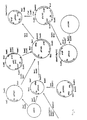
- a selection marker argB or a marker for screening (lacZ) can he coupled to the plasmid used for transformation. After recombination the marker will be placed between the two resulting defective cellulase genes. Principle of the method is shown in fig. 1.
- the present invention is illustrated by means of the production of chymosin and Trichoderma reesei endoglucanase I (EGI).
- Promoter, signal and leader and terminator sequences were derived from either the glucoamylase gene from Aspergillus niger or the Trichoderma reesei cbh1 gene.
- selection marker the amdS gene from A. nidulans was used, as was the argB gene from A. nidulans .
- Materials E. coli strains JM101, JM103, JM109 and and DHI (ref. 51) arc used as hosts in E. coli cloning.
- Trichoderma reesei strains QM9414 (ATCC 26921) and RUT-C-30 (ATCC 56765) are used in fungal transformation and expression studies.
- Auxotrophic mutants requiring uracil, tryptophan or arginine for growth were isolated using filtration enrichment as described by Nevalainen (ref. 36).
- the mutagenic agent used was UV-light.
- mutants deficient in the argB gene were identified by using a series of minimal plates supplied by different intermediates in the arginine biosynthesis (ref. 36).
- Mutants requiring citrulline for growth were considered as possible argB- mutants.
- the argB- character of isolated mutants was confirmed by transforming them into prototrophy using the plasmid pSal43 containing the A. nidulans argB gene (example 4).
- Mycelium was grown on cellophane disks on Potato Dextrose Agar plates (Difco). Mycelium from 5 cellophane cultures was suspended in 15 ml of a 5 mg/ml solution of Novozym R 234 in 1.2 M sorbitol buffered at pH 5.6 with 0.1 M potassium-phosphate. The mixture was incubated 1.5 - 2 h at 30°C. Protoplasts were separated from mycelial debris by filtration through sintered glass (porosity 1) pelleted for 5 min at 4000 g and washed twice with 1.2 M sorbitol - 10 mM Tris, HCI pH 7.5.
- the protoplasts were suspended in 1 vol of 1.2 M sorbitol - 10 mM Tris, HCI, pH 7.5, spun down and washed twice in 1.2 M sorbitol - 10 mM Tris, HCI, pH 7.5.
- the protoplasts were suspended in 1.2 M sorbitol - 10 mM CaC1 2 - 10 mM Tris, HCI, pH 7.5 at a concentration of 5 x 10 6 - 5 x 10 7 protoplasts/ml.
- the viability of the protoplasts was estimated on Trichoderma animal medium with 1 M sorbitol as osmotic stabilizer.
- the protoplasts were plated in 3 % agar overlay.
- the regeneration frequency was 40 - 80 % for the strain QM 9414 (ATCC 26921).
- Plasmid p3SR2 was used in transformation. It contained A. nidulans DNA carrying the whole acetamidase structural gene amdS and its regulatory region amdl (ref. 41 and 33).
- the selective medium was Trichoderma minimal medium with 10 mM acetamide as the sole nitrogen source instead of (NH 4 ) 2 S0 4 , and supplemented with 1 M sorbitol as osmotic stabilizer and 12.5 mM CsCI to repress the background growth.
- Transformation frequencies from 40 to 600 transformants per ⁇ g DNA were obtained for the strain QM 9414 (ATCC 26921). The highest frequencies were obtained when the DNA was purified with two cycles of CsCI/ethidiumbromide centrifugation.
- the mitotic stability of the transformants was investigated. Ten large transformants of varying size were subcultured on acetamide-CsCl plates, sporulated on potato dextrose (PD) and replated on PD. To exclude heterogeneity caused by heterokaryosis, individual colonies arising from one spore were tested for AmdS + phenotype. One positive clone from each original transformant was subjected to successive platings (5 growth cycles) on non-selective medium and phenotype was tested after each generation on the selective medium.
- PD potato dextrose
- the presence of the plasmid DNA in the transformants was analyzed by Southern blots of total DNA, isolated from transformants (according to Raeder and Broda, ref. 43), cut with Xho I or Sal I and Eco RI.
- the vector pUC 18 and the Sal I - Eco RI fragment containing the amdS gene of plasmid p3SR2 were used as probes.
- the transformation was shown to have occurred by recombination at a number of different sites in the Trichoderma genome DNA, one to several copies per genome.
- T. reesei Complementation of auxotrophic mutations in T. reesei by heterologous DNA was demonstrated.
- the plasmid pSal43 containing the argB gene from A. nidulans was used to transform T. reesei argB- mutant strains.
- the transformants were selected on minimal medium without arginine or 30 ⁇ g/ml uracil, respectively.
- the frequency of transformation was around 300 (150 - 400) transformants/ ⁇ g DNA.
- Chromosomal DNA was isolated from the transformants and used for Southern hybridization experiments to verify the proper integration of plasmid DNA into the chromosomal DNA of T. reesei. Multiple tandem copies of pSal43 were integrated in the genome. Southern and dot blot hybridizations showed that in transformants analyzed the copy number of argB varies from appr. 2 to over 100: The ArgB + transformants were shown to be phenotypically 100 % stable through at least 3 generations. This was tested by successive platings of conidia from five transformants onto complete medium and thereafter testing the Arg + phenotype on minimal medium (50-80 colonies/transformant).
- the argB- T. reesei strain was transformed with equal molar amounts of A. nidulans plasmids pSal43 (argB) and p3SR2 (amdS), transformant were selected for Arg + phenotype and tested for acquisition of amdS by streaking on acetamide-CsCl-plates. Of the ArgB transformants , 86 % were also AmdS +. Southern analysis of cotransformants indicated that both plasmids were integrated as variable amounts of copies in several different locations in the genome (data not shown).
- the plasmid pAN5-41B which contains the E. coli lacZ gene coupled in phase to the promoter and N-terminal protein coding region of the A. nidulans glyceraldehydephosphate dehydrogenase gene (gpd) (ref. 55) was also used for cotransformation.
- this plasmid contains the A nidulans argB gene and pBR322 sequencies. Prototrophic T.
- Trichoderma reesei strain QM 9414 ATCC 26921 was shown to contain only one chromosomal copy of cbh1 gene by Southern hybridization using cbh1 specific probes and so one recombination event should inactivate the gene.
- An inactive gene was constructed as follows. The plasmid pTT01 (ref.
- Trichoderma was cotransformed with the plasmid pMS4 and the A. nidulans amdS containing plasmid p3SR2 with 3-4 times molar excess of plasmid pMS4.
- Transformants were selected on the basis of the amdS + phenotype as described (example 3) and purified on selective medium containing asetamide as a sole carbon source. Purified transformants were grown-on-microtiter plates in 200 ⁇ l of Trichoderma minimal medium with 1 % Soika floc cellulose as carbon source and 0.2 % proteose peptone as nitrogen source. The cellulase phenotype was tested by the Ouchterlony immunodiffusion by using undiluted growth media against the CBH I specific antiserum (sheep) as described (ref. 56). A number of transformants were identified which produced normal amount of CBH II but no detectable CBH I.
- a heterologous protein in T. reesei we chose to express the prochymosin cDNA (fig. 3).
- the preprochymosine gene was isolated from a calf stomach cDNA library and inserted into the Pst I site of pBR322 by G-C tailing (refs. 46 and 47) to obtain pR26.
- pUC9 was cut with Sall and filled out with Klenow polymerase and ligated with T4 ligase.
- the obtained plasmid was cut with BamHI-EcoRl and the 2.7 kb large fragment was ligated with a 0.47 kb BamHI-EcoRl fragment from pR26 to create pUC9' containing a Hindlll site N-terminally of the prochymosin gene.
- pUC13 was cut with BamHI-Narl and Narl-Xmal and the large respective small fragment was ligated with a 0.64 kb Xmal-Bcll fragment of pR26 to obtain plasmid pUC13' containing an Xbal-site C-terminally of the prochymosin gene.
- a 0.65 kb Xmal-Xbal fragment of pUC13' was ligated with a 0.46 kb Hindlll-Xmal fragment of pUC9' and a 11 kb Xbal-Hindlll fragment of p285 to create plasmid p285' proC containing the prochymosin gene as illustrated in fig. 3.
- pCAMG91 was digested with Sall and Pstl restriction endonucleases. From such a digests a 698 bp fragment was isolated on an agarose gel. This Sall-Pstl fragment contains the region encoding the 140 bp 3' untranslated part of the glucoamylase mRNA plus 540 bp 3' to the poly(A)-addition site. This 3' fragment was treated with T4-DNA polymerase to "blunt end" the restriction sites before the addition of Xbal linkers and digestion with Xbal restriction enzyme. This 3' end of the glucoamylase gene was ligated to pUC13 linearized with Xbal to create plasmid mAMG/Term containing the glucoamylase gene poly(A) addition region.
- a 0.5 kb Small-BssHll fragment of pCAMG91 containing the promoter and the sequences coding for the glucoamylase (AMG) signal and leader peptide was ligated to Smal-BamHl digested pUC13 and a synthetic BssHll-BamHl adaptor encoding the first 6 amino acids of prochymosin.
- pMT626 From the resulting plasmid, pMT626, a 0.8 kb Ndel-BamHl fragment was isolated and ligated to a 0.5 kb BamHI-EcoRl fragment from p285'proC containing the sequence for the N-terminal half of proC and to a 3.0 kb EcoRl-Ndel fragment of pMT622 containing the C-terminal part of the sequence for proC. (pMT622 is simply a EcoRl-Xbal subclone of p285' proC in pUC13).
- the resulting plasmid pMT648 (see fig. 4) contains the entire prochymosin gene proceeded by AMG promoter end signal/leader encoding sequences.
- pMT648 was further modified to contain the argB gene of A. nidulans (ref. 48).
- a 1.8 kb Narl-filled in Xbal fragment of pMT648 was ligated to a 6.8 kb Clal filled-in EcoRl fragment of pSal43, to give pMT651.
- Sequences further upstream of the AMG promoter (upstream activating sequences; UAS's) were furthermore inserted.
- pMT830 The resulting plasmid, pMT830, has got an expression unit containing the UAS's, promoter, signal and leader sequences from AMG and the entire gene for proC. Finally the terminator sequence of AMG is taken as a 0.6 kb Xbal-Xbal fragment from plasmid pAMG/Term and inserted into the Xbal cut and dephosphorylated pMT830 to give pMT837.
- the construction of pMT837 is illustrated in fig. 5.
- Plasmid pMT837 contains the prochymosin gene proceeded by the AMG promoter and signal/leader sequence.
- the construction of plasmid pMT837 was described in Example 7 (see also figs. 3-5). Cotransformation and selection was carried out as in Example 5.
- chymosin production transformants were cultured on minimal medium containing 1 % Solka floc cellulose and 0.2 % proteose peptone.
- the mycelia were collected and the supernatant was concentrated, when necessary, by TCA precipitation and diluted into 2 M NaOH 10 mM Tris (pH 8.5).
- the samples were fractioned on SDS-page (7.5 % - 15 % polyacrylamide gradient) and electroblotted to a nitrocellulose filter.
- the filters were incubated with rabbit prochymosin antiserum and stained with 4-chloro-1-naftol using a-rabbit-IgG-peroxidase conjugate purchased from Sigma.
- Chymosin was shown to be secreted into the medium approximately at the level of 1 ⁇ g/I. Since the AMG promoter clearly functions inefficiently in T. reesei homologous T. reesei promoter-terminator vectors were constructed to improve the production level of chymosin.
- heterologous expression vectors for production of calf prochymosin in T. reesei using cbh1 promoter The construction of heterologous expression vectors for production of calf prochymosin in T. reesei using cbh1 promoter.
- the calf prochymosin gene was obtained from plasmid pR27 (fig. 6).
- the Pstl - Pstl fragment ( - 1110 bp) containing almost the whole gene was isolated from agarose gel by conventional techniques and ligated to the Pst1 site of pUC 19.
- This plasmid was partially digested with Pstl, ends made blunt with S1 nuclease and an Avail terminator fragment ( - 750 bp) of cbh1 gene (blunt ends with Klenow fragment) was ligated into this plasmid.
- the terminator region of cbh1 gene was obtained from the terminal 1.8 kb BamHl fragment of cbh1 cDNA subcloned in pBR322 (ref. 24).
- pAMH100 This plasmid containing the 'pro C fragment coupled with the terminator region of cbh1 gene in pUC19 was called pAMH100 (fig. 7).
- the Sacll - Pstl fragment ( 80 bp) coding for the N-terminal region of prochymosin was isolated from plasmid pR27 (see fig. 6).
- the cbh1 promoter region was first subcloned from the genomic clone ⁇ 44A as a 2.8 kb long EcoRl - EcoRl fragment into pUC18 (plasmid pUA01, fig. 8), and then a - 2.2 kb long EcoRl - Bgll fragment was isolated from this subclone.
- the Bgl I site is located in the middle of the signal sequence of cbh1 gene.
- amdS gene of A. nidulans (refs. 33, 41) or the argB gene of A. nidulans can be used (ref. 42)).
- amdS gene was isolated as a Pvu I - Sal I fragment from p3SR2 and ligated to the 6 kb long Pvul - Sall fragment of pAMH102.
- This selectable vector was named pAMH104 (Fig. 11).
- the aminoterminal Pst1 fragment ( - 150 bp) of preprochymosin was isolated from pR26 (fig. 3) which includes a complete preprochymosin cDNA clone, starting 12 bp upstream from ATG, inserted into Pstl site in pBR 322. This fragment was subcloned into the polylinker of pTZ19R together with the cbh1 Eco RI - Sac I ( - 2.6 kb) promoter fragment which also includes the signal sequence coding region of cbh1 (fig. 8).
- the cbh1 Eco RI - Sac I fragment is obtained from a 2.8 kb Eco RI - Eco RI subclone in pUC 18 (pUA01, fig. 8) of the original X44A clone (ref. 24).
- pTZ19R (Pharmacia) i a pUC19 based plasmid including the F1 origin of replication and the T7 promoter enabling the use of ss-template (single stranded) for oligonucleotide mutagenesis.
- the construction of the resulting plasmid (pAMH 105) is illustrated in Figure 8.
- oligonucleotide directed mutagenesis was illustrated in figure 9.
- the oligonucleotide in question was phosphorylated, annealed to ss pAMH 105 DNA (ref. 57, ss-DNA was isolated from JM103/pAMH105 as described by Pharmacia) in molar ratio 20:1, respectively.
- the oligonucleotide primer was elongated using Klenow polymerase and T4 ligase as described in ref.57.
- the elongated mixture was digested with Sma I (resides in the polylinker of pTZ19R, see fig. 9) prior to transformation into the mutL mismatch repair deficient strain of E. coli, BMH71.18 (ref.58).
- the pool of transformants was grown overnight In 5 ml liquid culture (Luria broth as described In ref. 59, with 100 ⁇ g/ml ampicillin). Plasmid DNA was isolated from pool of transformants and it was redigested with Smal and retransformed Into E. coli JM109 strain.
- the screening of potential deletion clones was performed by digestion using different restriction enzymes and the specificity of deletion was further confirmed by sequencing.
- the resulting plasmid was called pAM1101 (fig. 14).
- This plasmid was further digested with EcoRl and Pstl and the resulting pcbh 1-preproC fragment was isolated (fig. 14) and ligated at its Pstl-end to pAMH100 plasmid digested with Pstl and Sall. The ends of the resulting ligated fragment were made blunt by Klenow and ligated.
- the resulting plasmid was called pAMH101 and it contains the cbh1 promoter area fused to the signal sequence of prochymosin and the whole prochymosin coding region fused to the terminator area of cbh1 gene (fig. 14).
- plasmid pAMH1103 (fig. 12) was performed essentially as pAMH1101 described in details in the preceding chapter IV with the exception that the specific oligonucleotide used for this construction was OAMH1 (fig. 10 and 9).
- the resulting plasmid pAMH1103 contains a signal sequence fusion including amino acids (aa) 1-12 from cbh1 signal sequence fused to aa 12-16 from preproC signal sequence preceding the aminoterminal part ( - 140 bp) of the coding region of proC gene (fig. 12).
- Thee resulting plasmid pAMH 103 includes the promoter area of cbh1 and signal sequence fusion of cbh1 and preproC preceding the proC coding region fused to the cbh1 terminator area.
- plasmid pAMH1106 (fig. 13) was performed essentially as pAMH1101 described in details in the preceding chapter IV with the exception that the specific oligonucleotide used for this construction was OAMH2 (fig. 10 and 9). From the resulting plasmid pAMH 1106 including the promoter area of cbh1, signal sequence of cbh1 and the coding region of 1-20 first aa of mature CBH I fused to the coding region of proC the fragment containing pcbhl-mature o-proC' was subcloned into pAMH100 essentially as described in the preceding chapter IV (Fig. 12). The resulting plasmid pAMH106 includes the promoter area of cbh1, signal sequence of cbh1. coding region of aa 1-20 of mature CBHI fused to the coding region of proC.
- T. reesei strains QM 9414 and RUT-C-30 were cotransformed with plasmids pAMH102 and p3SR2 in molar ratio 5:1, respectively.
- the construction of plasmid pAMH102 was described in Example 9 chapter II. Cotransformation and selection was carried out as in Example 5. The transformants were purified on selective asetamide plates as described in Example 3.
- chymosin production transformants were cultured on minimal medium (10 to 50 ml) containing 1 % Solka floc cellulose and 0.2 % proteose peptone.
- the mycelia were collected and the supernatant was concentrated by TCA precipitation and diluted into 2M NaOH 10 mM Tris (pH 8.5).
- the mycelia were broken in the presence of liquid nitrogen, broken cells were pelleted and the supernatant treated in the same way as the culture media.
- the samples were fractioned on SDS-page (7.5 % - 15 % polyacrylamide gradient) and electroblotted to a nitrocellulose filter.
- the filters were incubated with rabbit prochylisin antiserum and a-rabbit-IgG-AP (alkaline phosphatase) conjugate and stained with nitro blue tetrazolium and 5-brome-4-chloro-3-indolyl phosphate purchased from Promega Biotec.
- the amount of chymosin inside and outside the mycelium was compared (fig. 17). It was shown by Southern hybridization that the clones containing higher number of copies of plasmid pAMH102 integrated into the fungal chromosomal DNA also produced more chymosin. When using a one copy transformant the amount of secreted chymosin was 100 ⁇ g/I of culture medium when approximated from Western gels (fig. 17).
- the secreted prochymosin was shown to be processed to an active chymosin by Western gels and by the milk clotting activity (chymosin clots milk by cleavage of ,8-kasein determination (ref. 60).
- the amount of various forms of chymosin (preproC, proC, C and chymosin derived degradation products inside the cell) inside the mycelium was determined to be 0.04 % of mycelial total protein (fig. 17) and the amount of secreted chymosin was 60 % of the total chymosin produced. This shows the efficiency of T. reesei to secrete even heterologous gene products outside the mycelia.
- Transformants with several copies of plasmid pAMH104 (fig. 11), able to secrete larger amounts of prochymosin were screened for by determining the milk clotting activity of the growth media.
- the best transformant out of the 40 studied was found to secrete 500 ⁇ g/l of culture medium as determined on Western gels and by milk clotting activity.
- a general expression vector including the promoter and terminator areas of cbh1 gene was constructed.
- the cbh1 terminator was subcloned together with an adaptor including the STOP codon TAA in three reading frames into Pst I site of pUC19 resulting in plasmid pAMH110' (fig. 15).
- the Pst I terminator fragment was isolated from pAMH110', the cbh1 promoter area was isolated from pAMH102 as an Eco RI - Pst I fragment including the aminoterminus of proC gene and these fragments were subcloned into an Eco RI - Pst I digested pUC19 * from which the single Nde I site had been made blunt with Klenow prior to this subcloning step.
- the resulting plasmid pAMH110 includes the promoter and terminator of cbh1 gene and between these sequences a stuffer fragment which can be removed by digestion with Sac II and Nde I. After the ends are made blunt any cDNAs or chromosomal copies of genes can be inserted between the promoter and terminator (fig. 15).
- T. reesei endoglucanase I under cbh1 promoter.
- the egll gene was linked to the more powerfull cbh1 promoter.
- the cDNA for T. reesei endoglucanase I was subcloned as an Eco RI - Bam HI fragment into general expression vector pAMH110 (described in example 11) which was first digested with Sac II - Nde I to delete the stuffer fragment (fig. 16).
- the resulting plasmid pAMH111 including egll gene between the promoter and terminator of cbh1 gene was cotransformed with p3SR2 to T. reesei QM 9414 (ATCC 26921) in molar ratio 5:1, respectively.
- the transformants were selected for AmdS + phenotype and further purified on selective medium.
- Six individual transforments were grown for 4 days in cellulase inducing medium (Solke floc as a carbon source, 1 %) in 50 ml liquid cultures.
- the culture supernatants were then tested for endoglucanase activity by measuring the release of reducing sugars from hydroxyethylcellulose (0.1 %, ref. 12).
- the EG I activities of transformants were compared to a control (QM 9414) end the best transformant was shown to secrete 4 times the endoglucanase activity of the control strain.
- This example shows that it is possible to modify the amounts of different cellulolytic enzymes in T. reesei by changing the respective promoter.
Landscapes
- Health & Medical Sciences (AREA)
- Chemical & Material Sciences (AREA)
- Life Sciences & Earth Sciences (AREA)
- Genetics & Genomics (AREA)
- Organic Chemistry (AREA)
- Engineering & Computer Science (AREA)
- Bioinformatics & Cheminformatics (AREA)
- Wood Science & Technology (AREA)
- Zoology (AREA)
- General Engineering & Computer Science (AREA)
- General Health & Medical Sciences (AREA)
- Biochemistry (AREA)
- Biomedical Technology (AREA)
- Biotechnology (AREA)
- Molecular Biology (AREA)
- Microbiology (AREA)
- Medicinal Chemistry (AREA)
- Mycology (AREA)
- Biophysics (AREA)
- Physics & Mathematics (AREA)
- Plant Pathology (AREA)
- Gastroenterology & Hepatology (AREA)
- Proteomics, Peptides & Aminoacids (AREA)
- Micro-Organisms Or Cultivation Processes Thereof (AREA)
- Preparation Of Compounds By Using Micro-Organisms (AREA)
- Enzymes And Modification Thereof (AREA)
- Steroid Compounds (AREA)
- Saccharide Compounds (AREA)
- Peptides Or Proteins (AREA)
- Information Retrieval, Db Structures And Fs Structures Therefor (AREA)
- Superconductors And Manufacturing Methods Therefor (AREA)
- Stabilization Of Oscillater, Synchronisation, Frequency Synthesizers (AREA)
- Polyesters Or Polycarbonates (AREA)
Abstract
Description
- The present invention relates to a vector system for use in the transformation of Trichoderma, a process for high level expression and secretion of proteins in Trichoderma, DNA recombinant vectors and transformed Trichoderma strains.
- Filamentous fungi are lower eukaryotes widely used in biotechnology to make various fermentation products. Fungi secrete many industrially important enzymes such as glucoamylase, proteases, lactase, pectinases and glucose oxidase.
- Filamentous fungi have a number of biotechnical advantages. They generally produce high amounts of proteins, cultivation in large scale is not complicated and separation of the mycelium from the culture liquid after the fermentation is easy.
- The mesophilic imperfect fungus Trichoderma reesei (formerly T. viride) (ref. 1) produces enzymes needed in conversion of cellulosic biomass and is probably the most widely investigated of all cellulase-producing organisms.
- For hydrolysis of cellulose to glucose, three types of enzyme activity are needed: randomly cleaving endoglucanases (1,4-,8-D-glucan glucanohydrolase, EC 3.2.1.4) which usually attack substituted soluble substrates and show no activity to crystalline cellulose; cellobiohydrolase (1,4-,8-D-glucan cellobiohydrolase, EC 3.2.1.91) capable of degrading crystalline cellulose but having no activity towards derivatized cellulose and ,8-glucosidase (,8-D-glucoside glucohydrolase, EC 3.2.1.21) attacking cellobiose and cello-oligosaccharides to yield glucose. Synergistic action between some of these enzymes has been demonstrated (refs. 2-4).
- Fungal cellulases have been purified and characterized and all three main types of enzymes have been shown to occur in multiple forms (ref. 5). Two immunologically distinctive cellobiohydrolases, CBH I and CBH II have been detected from the culture medium of T. reesei (refs. 4, 6). Five to eight electrophoretically distinct endoglucanases have been reported, many of them showing varying substrate specificities (refs. 7, 8, 9, 10). Characterization of two extracellular ,8-glucosidases has been reported (ref. 11).
- Intensive strain development using the direct approach of mutation and screening has successfully produced several high-yielding T. reesei mutant strains (refs. 12-22). The amount of extracellular protein produced by the best T. reesei mutants is as much as 20-30 g/litre of culture fluid which is more than 50 % of the total cell protein. A major part of the secreted protein comprises cellulases among which the CBH I component is most abundant, representing up to 60 % of the secreted cellulase proteins.
- The gene for CBH I has been cloned by Shoemaker et al, (ref. 23) and Teeri et al. (ref. 24) and the whole nucleotide sequence of the gene has been published (ref. 23). From T. reesei, also the gene for the major endoglucanase EG I has been cloned and characterized (ref. 25, 26, 27). Other isolated cellulase genes are cbh2 (ref. 28, 29) and eg13 (ref. 30).
- The molecular biology of industrially important filamentous fungi is in general not well known. This is partly due to the lack of the sexual reproduction cycle and/or genetical-transformation system. Recently, transformation systems have been developed for Neurospora crassa (ref. 31), A. nidulans (refs. 32, 33, 34) and A. niger (ref. 35) or Trichoderma (ref. 61) generally having their basis in complementation of the mutant host by respective functional gene carried by the vector molecule. However, of these fungi only A. niger is of industrial interest at the moment.
- In the classification of fungi, the genus Aspergillus is included in the class Ascomycetes, sub-class Euascomycetes. Euascomycetes are divided into three groups, Plectomycetes, Pyrenomycetes and Dis- comycetes on the basis of the fruiting bodies. The most important genera are Aspergillus and Penicillium - (ref. 49). Trichoderma, instead, is classified as a member of Fungi imperfecti. Fungi imperfecti is a catch-all cathegory of fungi which have no sexual reproduction or obvious affinities with sexually reproducing genera, such as the highly characteristic Aspergillus. Although Trichoderma has been reported to possess a poorly defined sexual stage being an imperfect state of the perfect ascomycete species Hypocrea (ref. 50), the genera Aspergillus and Trichoderma are clearly to be considered taxonomically very different. It has also been shown that the argB gene from Aspergillus nidulans and the pyr4 gene from Neurospora crassa do not hybridize, under non-stringent conditions, to the respective Trichoderma genes thus supporting the idea that Trichoderma is evolutionary quite distinct from other Ascomycetes (Vanhanen, S., in preparation).
- Due to its exceptional ability to secrete proteins into the growth-medium Trichoderma reesei is a good candidate as a possible host for the production of proteins. However, genetic studies of T. reesei have so far been directed almost exclusively to improve the cellulase-producing properties of the fungus and the only technique used for the development of hypercellulotic Trichoderma strains has been traditional mutagenesis and screening. No transformation systems giving stable transformants in for Trichoderma have so far been developed.
- It is the main object of the present invention to provide Trichoderma stably transformed with an effective host-vector system to obtain a high level expression and secretion of hetecrologous proteins in Trichoderma or to enhance the production of homologouse proteins.
- In the present specification with claims, the expression "proteins heterologous to Trichoderma" menus proteins not naturally produced by Trichoderma whereas "proteins homologous to Trichoderma" means proteins produced by Trichoderma itself.
- In the fungal transformation systems first developed, namely for Aspergillus and Neurospora, transformation is carried out using protoplasts. The transforming DNA is usually integrated into the host genome. To provide a selection system for identifying stable transformants the vector system must carry a functional gene (a selection marker) which either complements a corresponding mutation of the host genome or supplies an activity, usually an enzyme, required for the growth of the prototrophic strain on a particular growth medium.
- The present invention describes Trichoderma strains stably transformed with a recombinant DNA cloning vector system. When the DNA cloning vector system comprises a DNA-sequence encoding a desired protein product transformation of Trichoderma with the present vector system will provide a high level expression and secretion of the desired protein when the transformed microorganism is grown in a suitable culture medium.
- According to its first aspect the present invention provides a Trichoderma strain stably transformed with a vector system comprising:
- a) a gene encoding a desired protein product,
- b) functions facilitating gene expression including DNA sequences comprising promoters/enhancers operably linked to said gene to control expression of the desired product, and
- c) a selection marker capable of selecting stable Trichoderma transformants, the selection marker not
- According to its second aspect the present invention provides a method for transformation of Trichoderma, wherein a suitable Trichoderma strain is transformed with the present vector system.
- According to its third aspect the present invention provides a method for the production of a protein in Trichoderma which comprises transforming Trichoderma with the present vector system, culturing the transformed strain in a suitable medium and recovering the expressed and secreted product from the medium.
- The present invention also provides a method for the production of a protein in Trichoderma by which method a Trichoderma strain transformed with the vector system is cultivated in a suitable culture medium and the expressed and secreted protein is recovered from the culture medium.
- As used herein the expression "vector system" includes a single vector or plasmid or two or more vectors or plasmids which together contain the DNA-information to be integrated into the host genome. The vectors or plasmids may be linear or closed circular molecules. Although self-replicating plasmids in Trichoderma are not known at present the invention also covers such self-replicating plasmids if they should be found at a later time.
- The vector system comprises DNA-sequences encoding functions facilitating gene expression including promoters, enhancers and transcription initiation sites as well as terminators, a marker for selection of transformants and a DNA-sequence encoding the desired protein.
- To ensure secretion of the expressed product the gene for the desired product is preferably provided with a preregion ensuring effective direction of the expressed product into the secretory pathway of the cell. This preregion which might be a naturally occuring signal or leader peptide or parts thereof is generally cleaved off from the desired product during secretion whereupon the mature product can be isolated from the culture medium.
- The gene for the desired product may be obtained from genomic clones or cDNA clones. DNA-sequences may also be synthesized.
- The signal/leader sequence may be derived from the signal/leader sequence of the gene encoding the desired protein or may be derived from genes for other secreted proteins either from Trichoderma or from any other source of organism. Examples of signal/leader sequences derived from genes encoding a protein secreted by Trichoderma are the cbh1 signal sequence or the egll signal sequence or parts thereof. Signal/leaders sequences derived from genes encoding secreted proteins heterologous to Trichoderma may be derived from genes for Aspergillus amylases or glucoamylase. Also synthetic signal/leader sequences may be used.
- The promoter may be any DNA-sequence that shows transcriptional activity in Trichoderma and may be derived from genes either homologous or heterologous to Trichoderma. Examples of promoters derived from genes encoding proteins homologous to Trichoderma are the cbh1 promoter or the egll promoter or parts thereof. An example of a promoter derived from a gene for a protein heterologous to Trichoderma Is the Aspergillus glucoamylase promoter. Transcription terminators may be derived from the same sources as the promoters. Also synthetic promoter or terminator sequences may be used.
- It is understood and obvious to the expert in the art that all specifically mentioned DNA-sequences may be-modified by amendment or deletion of a couple of bases non-essential to the function of the product encoded for. For example DNA sequences substantially similar to cbh1 or egll signal or promoter sequences may be used as long as they exhibit the intended function in Trichoderma. Also the genes for the desired proteins may be altered as long as this has no deleterious, effect on the activity of the protein.
- Different selection markers may be used, e.g. argB (A. nidulans or T. reesei), amdS (A. nidulans) trp1 from N.crassa or trpC from A.Nidulans and pyr4 or T. reesei).
- The host strain may either he a prototrophic or an auxotrophic Trichoderma strain depending on the selection marker used in the transformation procedure. The amdS gene from A. nidulans may as demonstrated in the experimental part of the specification be used for the transformation of prototrophic T. reesei strains. T. reesei grows poorly on acetamide as the sole nitrogen source and the growth can be further inhibited by adding CsCI to the medium. The growth on acetamide as the sole nitrogen source in the presence of CsCI can accordingly be used as a selection medium to identify AmdS+ transformants.
- If a selection marker is used which complements a corresponding mutation of the host genome auxotrophic Trichoderma mutants must be constructed. Auxotrophic Trichoderma mutants may be produced by known methods for producing mutant strains.
- Auxotrophic Trichoderma mutants requiring uracil, tryptophan or arginine for growth are isolated by a filtration enrichment technique as described by Nevalainen (ref. 36). From arginine requiring auxotrophs, mutant: deficient in the argB gene were identified by using a series of minimal plates supplied by different intermediates in the arginine biosynthesis. From uracil-requiring mutants, strains deficient in the pyr4 gene can be sought for by measuring the orotidine-5'-phosphatedecarboxylase (OMP decase) activity in mycelium preparations (ref. 37).
- Mutants having a trpl gene defect can be characterized by the lack of the PRA isomerase - InGP synthetase activity in their mycelia (ref. 39). The trpl -character of the mutants showing no enzyme activity may be confirmed by e.g. transformation and complementation with the N. crassa trpl plasmid (ref. 40) or the trpC -plasmid of A. nidulans (ref. 34).
- The transformation technique used is the method adapted from the methods for transformation of A. nidulans (refs. 32, 33). Protoplasts are prepared by known methods by growing mycelium on agar plates and suspending mycelium in a buffered solution of NovozymR 234. Instead of the conventional sucrose solution of NovozymR 234 a sorbitol solution may advantageously be used. Transforming DNA is then added to the protoplast solution as described in further detail in the experimental part of the specification. The transformation is usually carried out as a cotransformation by which a nonselectable plasmid is cotransformed into T. reesei with high frequency using a selectable marker inserted in another plasmid (e.g. amdS in p3SR2 or argB in pSal43). A great proportion of the transformants contain the nonselectable plasmid integrated into the genome if equimolar amounts of DNA are used for transformation. When an argB- T. reesei strain is used in transformation with equimolar amounts of plasmids p3SR2 and pSal43, transformants can be obtained on double selection medium (minimal medium, acetamide, CsCI). Alternatively a single plasmid may be used for transformation in which also the selectable marker is inserted.
- Transformants are then cultured in a suitable medium. To be able to produce the desired product in a simple defined medium a glucose inducible promoter may be used. When Trichoderma is grown on a medium containing 1 % glucose, secretion of all extracellular proteins, including proteases is strongly suppressed. When the gene coding for the desired enzyme is connected to a promoter strongly expressed in glucose containing medium, the desired enzyme is secreted to the growth medium. Since other proteins are not produced under these conditions, the desired enzyme is the major protein secreted into the medium.
- When the fungal mycelium is removed the desired proteins is present in the resulting solution in a very pure form. If required, it can be very easily further purified, since it is almost the only protein present.
- The present invention may also be used to modify or inactivate a gene producing a certain enzyme activity of host organism. As an example cellulase-negative T. reesei strains can he constructed. This mutagenesis is based on transformation of Trichoderma reesei with a plasmid carrying a defected cellulase gene. Homologous recombination of the plasmid at the chromosomal cellulase locus causes insertional inactivation of the endogenous T. reesei cellulase gene. The plasmid used for transformation contains only part of the cellulase coding region and produces inactive protein. No 5' flanking sequences are included. A frameshift mutation can also be introduced to the truncated coding region. A selection marker (argB) or a marker for screening (lacZ) can he coupled to the plasmid used for transformation. After recombination the marker will be placed between the two resulting defective cellulase genes. Principle of the method is shown in fig. 1.
- The present invention is illustrated by means of the production of chymosin and Trichoderma reesei endoglucanase I (EGI). Promoter, signal and leader and terminator sequences were derived from either the glucoamylase gene from Aspergillus niger or the Trichoderma reesei cbh1 gene. As selection marker the amdS gene from A. nidulans was used, as was the argB gene from A. nidulans . Materials


- The figures of the constructions are not in scale.
- Fig. 1 shows the principle of the inactivation of a chromosomal cellulase gene.
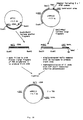
- Fig. 2 shows the construction of plasmids pMS4 used for insertion mutagenesis of the T. reesei chromosomal Cbh1 locus. Position of a frameshift mutation generated by inactivation of EcoRl site is marked with *.
- Fig. 3 shows the construction of plasmid p285' proC.
- Fig. 4 shows the construction of plasmid PMT648 and 15 pMT813.
- Fig. 5 shows the construction of plasmid pMT837.
- Fig. 6 shows the restriction map of plasmid pR27.
- Fig. 7 shows the restriction map of plasmid pAMH100.
- Fig. 8 shows the construction of plasmid pAMH105.
- Fig. 9 shows the construction of plasmids pAMH1103, pAMH1106 and pAMH11 01 by loop-mutagenesis using synthesized oligonucleotides OAMH1, OAMH2 and OAMH3.
- Fig. 10 shows the linkers NOR 202, NOR 203, OAMH1, OAMH2 and OAMH3.
- Fig. 11 shows the restriction maps of plasmids pAMH102 and pAMH104.
- Fig. 12 shows the restriction map of plasmid pAMH1103 and the construction of pAMH103.
- Fig. 13 shows the restriction map of plasmid pAMH1106 and the construction of pAMH106.
- Fig. 14 shows the restriction map of plasmid pAMH1101 and the construction of pAMH101.
- Fig. 15 shows the construction of plasmid pAMH11 O.
- Fig. 16 shows the construction of plasmid pAMH111 used for expressionof EGI under Cbh1 promoter function.
- Fig. 17 shows the expression of chymosin ink T. reesei, Western blot.
Lanes 1; purified prochymosin control, includes traces of pseudochymosin and chymosin.Lane 2; culture supernatant from growth of strain including pAMH102.Lane 3; control supernatant from strain without plasmids.Lane 4; mycelia from strain including pAMH102. - Auxotrophic mutants requiring uracil, tryptophan or arginine for growth were isolated using filtration enrichment as described by Nevalainen (ref. 36). The mutagenic agent used was UV-light. From arginine requiring auxotrophs, mutants deficient in the argB gene were identified by using a series of minimal plates supplied by different intermediates in the arginine biosynthesis (ref. 36). Mutants requiring citrulline for growth were considered as possible argB- mutants. The argB- character of isolated mutants was confirmed by transforming them into prototrophy using the plasmid pSal43 containing the A. nidulans argB gene (example 4).
- From uracil-requiring mutants, strains deficient in the pyr4 gene were sought for. The pyr4- character of these mutants was confirmed by transformation with a plasmid containing the N. crassa pyr4 gene (ref. 38) (example 4).
- Mycelium was grown on cellophane disks on Potato Dextrose Agar plates (Difco). Mycelium from 5 cellophane cultures was suspended in 15 ml of a 5 mg/ml solution of NovozymR 234 in 1.2 M sorbitol buffered at pH 5.6 with 0.1 M potassium-phosphate. The mixture was incubated 1.5 - 2 h at 30°C. Protoplasts were separated from mycelial debris by filtration through sintered glass (porosity 1) pelleted for 5 min at 4000 g and washed twice with 1.2 M sorbitol - 10 mM Tris, HCI pH 7.5.
- Better purification of protoplasts can be achieved by using a method described by Tilburn et al. (ref. 33). 5 mg/ml solution of NovozymR 234 in 1.2 M MgS04 buffered at pH 5.8 was used for proto-plasting. After incubation and filtration the protoplast suspension was centrifugated at 4000 g for 15 min with an overlay of an equal volume of 0.6 M sorbitol - 100 mM Tris, HCI, pH 7.0. Protoplasts formed a sharp band halfway the tube. The protoplasts were suspended in 1 vol of 1.2 M sorbitol - 10 mM Tris, HCI, pH 7.5, spun down and washed twice in 1.2 M sorbitol - 10 mM Tris, HCI, pH 7.5. The protoplasts were suspended in 1.2 M sorbitol - 10 mM CaC12 - 10 mM Tris, HCI, pH 7.5 at a concentration of 5 x 10⁶ - 5 x 10⁷ protoplasts/ml.
- The viability of the protoplasts was estimated on Trichoderma animal medium with 1 M sorbitol as osmotic stabilizer. The protoplasts were plated in 3 % agar overlay. The regeneration frequency was 40 - 80 % for the strain QM 9414 (ATCC 26921).
- Plasmid p3SR2 was used in transformation. It contained A. nidulans DNA carrying the whole acetamidase structural gene amdS and its regulatory region amdl (ref. 41 and 33).
- 20 µl (4 - 10 µg) of transforming DNA was added to 200 µl of protoplast solution: 50 µl of 25 % PEG 6000 - 50 mM CaC12 - 10 mM Tris, HCI, pH 7.5 was added and the mixture was incubated for 20 min on ice. 2 ml of the PEG-solution was added and the mixture was further incubated 5 min at room temperature. 4 ml of 1.2 M sorbitol - 10 mM CaCl2 - 10 mM Tris, HCI, pH 7.5 was added and the protoplasts were plated in 3 % agar overlay. The selective medium was Trichoderma minimal medium with 10 mM acetamide as the sole nitrogen source instead of (NH4)2S04, and supplemented with 1 M sorbitol as osmotic stabilizer and 12.5 mM CsCI to repress the background growth.
- Transformation frequencies from 40 to 600 transformants per µg DNA were obtained for the strain QM 9414 (ATCC 26921). The highest frequencies were obtained when the DNA was purified with two cycles of CsCI/ethidiumbromide centrifugation.
- Sporulation was rarely observed on the selective medium but the transformants sporulate normally when transferred to Potato Dextrose Agar. Their ability to grow on acetamide varied. The diameter of the colonies on the selective medium ranged 1 mm to 10 - 20 mm.
- The mitotic stability of the transformants was investigated. Ten large transformants of varying size were subcultured on acetamide-CsCl plates, sporulated on potato dextrose (PD) and replated on PD. To exclude heterogeneity caused by heterokaryosis, individual colonies arising from one spore were tested for AmdS+ phenotype. One positive clone from each original transformant was subjected to successive platings (5 growth cycles) on non-selective medium and phenotype was tested after each generation on the selective medium. Of 10 large transformants tested, after one cycle on non-selective medium six of the ten transformants gave 100 % AmdS+ conidia, three 47-87 % and one transformant gave no AmdS+ conidia. This result remained the some through five non-selective growth cycles, suggesting that the initially unstable AmdS+ phenotype can be stabilized later on.
- From ten original small colonies, three gave spores width variable frequencies of AmdS+ phenotype (94 %, 44 % and 5 % of the spores). The other seven clones gave only spores unable to grow on acetamide. Interestingly, all AmdS+ spores obtained showed vigorous growth on acetamide plates, characteristic of large colony transformants.
- The presence of the plasmid DNA in the transformants was analyzed by Southern blots of total DNA, isolated from transformants (according to Raeder and Broda, ref. 43), cut with Xho I or Sal I and Eco RI. The vector pUC 18 and the Sal I - Eco RI fragment containing the amdS gene of plasmid p3SR2 were used as probes. The transformation was shown to have occurred by recombination at a number of different sites in the Trichoderma genome DNA, one to several copies per genome.
- Complementation of auxotrophic mutations in T. reesei by heterologous DNA was demonstrated. The plasmid pSal43 containing the argB gene from A. nidulans was used to transform T. reesei argB- mutant strains. The transformants were selected on minimal medium without arginine or 30 µg/ml uracil, respectively. The frequency of transformation was around 300 (150 - 400) transformants/µg DNA.
- Chromosomal DNA was isolated from the transformants and used for Southern hybridization experiments to verify the proper integration of plasmid DNA into the chromosomal DNA of T. reesei. Multiple tandem copies of pSal43 were integrated in the genome. Southern and dot blot hybridizations showed that in transformants analyzed the copy number of argB varies from appr. 2 to over 100: The ArgB+ transformants were shown to be phenotypically 100 % stable through at least 3 generations. This was tested by successive platings of conidia from five transformants onto complete medium and thereafter testing the Arg+ phenotype on minimal medium (50-80 colonies/transformant).
- The possibility to cotransform Trichoderma with a non-selectable plasmid was first shown with the arginine auxotrophic mutant.
- The argB- T. reesei strain was transformed with equal molar amounts of A. nidulans plasmids pSal43 (argB) and p3SR2 (amdS), transformant were selected for Arg+ phenotype and tested for acquisition of amdS by streaking on acetamide-CsCl-plates. Of the ArgB transformants , 86 % were also AmdS+. Southern analysis of cotransformants indicated that both plasmids were integrated as variable amounts of copies in several different locations in the genome (data not shown).
- Double selection a minimal acetamide-CsCl-medium resulted in -100 big Amd+Arg+ transformants per µg of DNA, and a number of small colonies, characteristic, of amdS transformation.
- When the stability of the ArgB+ phenotype of the argB amdS cotransformants was tested, three out of five proved 100 % stable, whereas the other had lost the ArgB+ character in 7 % or,80 % of the progeny analysed. The same individual colonies had also lost the AmdS+ phenotype. Weather this instability was caused by e.g. the cointegration of argB with the amdS to, the same chromosomal location is not known.
- The plasmid pAN5-41B which contains the E. coli lacZ gene coupled in phase to the promoter and N-terminal protein coding region of the A. nidulans glyceraldehydephosphate dehydrogenase gene (gpd) (ref. 55) was also used for cotransformation. In addition, this plasmid contains the A nidulans argB gene and pBR322 sequencies. Prototrophic T. reesei (QM 9414) was cotransformed with the plasmid p3SR2 (amdS) and pAN5-41B, transformants were selected for Amd+ phenotype and screened for β-gal expression on acetamide-CsCI-plates containing Xgal. No endogenous T. reesei ,8-galactosidase activity could be detected when glucose was presend in the medium and pH of the Xgal plates was neutral.
- After 1-4 days of growth blue colour was visible. When 1.0/0.7 molar ratio of the plasmids (p3SR2/pAN5-41B) was used in transformation 13 % of the big and 6 % of the small Amd+ clones showed β-galactosidase activity, with molar ratio of 1.0/2.6, 39 % and 7 % of Xgal+ clones, respectively, were obtained. The presence of both plasmids in Amd+ transformants showing blue colour was verified by Southern hybridization (data not shown).
- Construction of a cbh1- Trichoderma reesei -strain. The inactivation of different cellulase genes in the manner described allows the construction of a series of T. reesei strains producing a particular combination of cellulases. cbh1- strains are also important for the efficient production of heterologous proteins when using the cbh1 promoter. Trichoderma reesei strain QM 9414 (ATCC 26921) was shown to contain only one chromosomal copy of cbh1 gene by Southern hybridization using cbh1 specific probes and so one recombination event should inactivate the gene. An inactive gene was constructed as follows. The plasmid pTT01 (ref. 28) containing the full length cDNA clone of the cbh1 gene in the vector pUC8 was cut with restriction enzymes Bgl I and Bgl II. The 0.8 kb fragment from the 5' terminal region of the cbh1 gene was isolated from agarose gel by conventional techniques. The fragment was made blunt-ended using S1 nuclease and it was ligated to an Eco RI cut, blunt-ended pUC 18 vector and transformed to E. coil JM 109. DNA from the clone containing the cbh1 gene fragment was isolated and digested with restriction enzyme Eco RI which cuts in the middle of the Bgl I - Bgl II fragment of cbh1. The Eco RI -generated termini were filled in and back- ligated. A plasmid pMS4 containing a frameshift mutation in the middle of the truncated cbh1 gene fragment was generated (fig. 2).
- Trichoderma was cotransformed with the plasmid pMS4 and the A. nidulans amdS containing plasmid p3SR2 with 3-4 times molar excess of plasmid pMS4.
- Transformants were selected on the basis of the amdS+ phenotype as described (example 3) and purified on selective medium containing asetamide as a sole carbon source. Purified transformants were grown-on-microtiter plates in 200 µl of Trichoderma minimal medium with 1 % Soika floc cellulose as carbon source and 0.2 % proteose peptone as nitrogen source. The cellulase phenotype was tested by the Ouchterlony immunodiffusion by using undiluted growth media against the CBH I specific antiserum (sheep) as described (ref. 56). A number of transformants were identified which produced normal amount of CBH II but no detectable CBH I.
- As an example of a heterologous protein in T. reesei we chose to express the prochymosin cDNA (fig. 3). The preprochymosine gene was isolated from a calf stomach cDNA library and inserted into the Pst I site of pBR322 by G-C tailing (refs. 46 and 47) to obtain pR26. pUC9 was cut with Sall and filled out with Klenow polymerase and ligated with T4 ligase. The obtained plasmid was cut with BamHI-EcoRl and the 2.7 kb large fragment was ligated with a 0.47 kb BamHI-EcoRl fragment from pR26 to create pUC9' containing a Hindlll site N-terminally of the prochymosin gene. pUC13 was cut with BamHI-Narl and Narl-Xmal and the large respective small fragment was ligated with a 0.64 kb Xmal-Bcll fragment of pR26 to obtain plasmid pUC13' containing an Xbal-site C-terminally of the prochymosin gene. A 0.65 kb Xmal-Xbal fragment of pUC13' was ligated with a 0.46 kb Hindlll-Xmal fragment of pUC9' and a 11 kb Xbal-Hindlll fragment of p285 to create plasmid p285' proC containing the prochymosin gene as illustrated in fig. 3.
- pCAMG91 was digested with Sall and Pstl restriction endonucleases. From such a digests a 698 bp fragment was isolated on an agarose gel. This Sall-Pstl fragment contains the region encoding the 140 bp 3' untranslated part of the glucoamylase mRNA plus 540 bp 3' to the poly(A)-addition site. This 3' fragment was treated with T4-DNA polymerase to "blunt end" the restriction sites before the addition of Xbal linkers and digestion with Xbal restriction enzyme. This 3' end of the glucoamylase gene was ligated to pUC13 linearized with Xbal to create plasmid mAMG/Term containing the glucoamylase gene poly(A) addition region.
- A 0.5 kb Small-BssHll fragment of pCAMG91 containing the promoter and the sequences coding for the glucoamylase (AMG) signal and leader peptide was ligated to Smal-BamHl digested pUC13 and a synthetic BssHll-BamHl adaptor encoding the first 6 amino acids of prochymosin. From the resulting plasmid, pMT626, a 0.8 kb Ndel-BamHl fragment was isolated and ligated to a 0.5 kb BamHI-EcoRl fragment from p285'proC containing the sequence for the N-terminal half of proC and to a 3.0 kb EcoRl-Ndel fragment of pMT622 containing the C-terminal part of the sequence for proC. (pMT622 is simply a EcoRl-Xbal subclone of p285' proC in pUC13). The resulting plasmid pMT648 (see fig. 4) contains the entire prochymosin gene proceeded by AMG promoter end signal/leader encoding sequences. pMT648 was further modified to contain the argB gene of A. nidulans (ref. 48). A 1.8 kb Narl-filled in Xbal fragment of pMT648 was ligated to a 6.8 kb Clal filled-in EcoRl fragment of pSal43, to give pMT651. Sequences further upstream of the AMG promoter (upstream activating sequences; UAS's) were furthermore inserted. This was achieved by ligating a 3.7 kb Clal-BssHll fragment from the original clone pCAMG91 to the 1.1 kb BssHll filled in Xbal fragment of pMT648 containing the proC sequences, and the argB gene as a 3.1 kb Clal-filled In EcoRl fragment from pMT813 (pMT813 is the argB gene cloned as a 3.1 kb BamHl-Nrul fragment cloned into EcoRV-Bglll cut piC19R). The resulting plasmid, pMT830, has got an expression unit containing the UAS's, promoter, signal and leader sequences from AMG and the entire gene for proC. Finally the terminator sequence of AMG is taken as a 0.6 kb Xbal-Xbal fragment from plasmid pAMG/Term and inserted into the Xbal cut and dephosphorylated pMT830 to give pMT837. The construction of pMT837 is illustrated in fig. 5.
- T. reesei strains QM 9414 and RUT-C-30 were cotransformed with plasmids pMT837 and p3SR2. Plasmid pMT837 contains the prochymosin gene proceeded by the AMG promoter and signal/leader sequence. The construction of plasmid pMT837 was described in Example 7 (see also figs. 3-5). Cotransformation and selection was carried out as in Example 5.
- For chymosin production transformants were cultured on minimal medium containing 1 % Solka floc cellulose and 0.2 % proteose peptone.
- The mycelia were collected and the supernatant was concentrated, when necessary, by TCA precipitation and diluted into 2
M NaOH 10 mM Tris (pH 8.5). The samples were fractioned on SDS-page (7.5 % - 15 % polyacrylamide gradient) and electroblotted to a nitrocellulose filter. The filters were incubated with rabbit prochymosin antiserum and stained with 4-chloro-1-naftol using a-rabbit-IgG-peroxidase conjugate purchased from Sigma. - Chymosin was shown to be secreted into the medium approximately at the level of 1 µg/I. Since the AMG promoter clearly functions inefficiently in T. reesei homologous T. reesei promoter-terminator vectors were constructed to improve the production level of chymosin.
- The construction of heterologous expression vectors for production of calf prochymosin in T. reesei using cbh1 promoter.
- The calf prochymosin gene was obtained from plasmid pR27 (fig. 6). The Pstl - Pstl fragment ( - 1110 bp) containing almost the whole gene was isolated from agarose gel by conventional techniques and ligated to the Pst1 site of pUC 19.
- This plasmid was partially digested with Pstl, ends made blunt with S1 nuclease and an Avail terminator fragment ( - 750 bp) of cbh1 gene (blunt ends with Klenow fragment) was ligated into this plasmid. The terminator region of cbh1 gene was obtained from the terminal 1.8 kb BamHl fragment of cbh1 cDNA subcloned in pBR322 (ref. 24).
- This plasmid containing the 'pro C fragment coupled with the terminator region of cbh1 gene in pUC19 was called pAMH100 (fig. 7).
- The Sacll - Pstl fragment ( 80 bp) coding for the N-terminal region of prochymosin was isolated from plasmid pR27 (see fig. 6). The cbh1 promoter region was first subcloned from the genomic clone λ 44A as a 2.8 kb long EcoRl - EcoRl fragment into pUC18 (plasmid pUA01, fig. 8), and then a - 2.2 kb long EcoRl - Bgll fragment was isolated from this subclone. The Bgl I site is located in the middle of the signal sequence of cbh1 gene. The precise joining of the - 2.2 kb long EcoRl - Bgll fragment, containing the promoter and about half of the signal peptide coding region of cbh1 gene, to the - 80 bp Sacll - Pstl prochymosin fragment is mediated by the Bgll - Sacll adaptor (NOR 202 + NOR 203, fig. 10). These fragments together with the adaptor were ligated into pUC19 digested with EcoRl - Pstl. This plasmid codes for a complete signal sequence of CBH I fused to the first amino acid of prochymosin followed by some of its N-terminal sequences. Finally, from this construction the Eco RI pcbh1 ss - proC - Pstl fragment was isolated, ligated from its 3' end into pAMH100 digested with Sal I and Pst I. The 5' end of the fragment end 3' end of plasmid pAMH100 was filled in with Klenow and ligated. Thus the promoter of cbh1 gene and proC' fragment was transferred in front of 'proC followed by the cbh1 terminator area. The construction was named pAMH102 (Fig. 11).
- As a selectable marker in the expression plasmids either the amdS gene of A. nidulans (refs. 33, 41) or the argB gene of A. nidulans can be used (ref. 42)).
- The amdS gene was isolated as a Pvu I - Sal I fragment from p3SR2 and ligated to the 6 kb long Pvul - Sall fragment of pAMH102. This selectable vector was named pAMH104 (Fig. 11).
- The aminoterminal Pst1 fragment ( - 150 bp) of preprochymosin was isolated from pR26 (fig. 3) which includes a complete preprochymosin cDNA clone, starting 12 bp upstream from ATG, inserted into Pstl site in pBR 322. This fragment was subcloned into the polylinker of pTZ19R together with the cbh1 Eco RI - Sac I ( - 2.6 kb) promoter fragment which also includes the signal sequence coding region of cbh1 (fig. 8). The cbh1 Eco RI - Sac I fragment is obtained from a 2.8 kb Eco RI - Eco RI subclone in pUC 18 (pUA01, fig. 8) of the original X44A clone (ref. 24). pTZ19R (Pharmacia) i a pUC19 based plasmid including the F1 origin of replication and the T7 promoter enabling the use of ss-template (single stranded) for oligonucleotide mutagenesis. The construction of the resulting plasmid (pAMH 105) is illustrated in Figure 8. From this plasmid the sequences between cbh1 promoter area and proC ATG were deleted by loop-mutagenesis using a specific oligonucleotide,-OAMH 3 (fig. 10). The performance of oligonucleotide directed mutagenesis is illustrated in figure 9. The oligonucleotide in question was phosphorylated, annealed to ss pAMH 105 DNA (ref. 57, ss-DNA was isolated from JM103/pAMH105 as described by Pharmacia) in molar ratio 20:1, respectively. The oligonucleotide primer was elongated using Klenow polymerase and T4 ligase as described in ref.57. The elongated mixture was digested with Sma I (resides in the polylinker of pTZ19R, see fig. 9) prior to transformation into the mutL mismatch repair deficient strain of E. coli, BMH71.18 (ref.58). The pool of transformants was grown overnight In 5 ml liquid culture (Luria broth as described In ref. 59, with 100 µg/ml ampicillin). Plasmid DNA was isolated from pool of transformants and it was redigested with Smal and retransformed Into E. coli JM109 strain. The screening of potential deletion clones was performed by digestion using different restriction enzymes and the specificity of deletion was further confirmed by sequencing. The resulting plasmid was called pAM1101 (fig. 14). This plasmid was further digested with EcoRl and Pstl and the resulting pcbh 1-preproC fragment was isolated (fig. 14) and ligated at its Pstl-end to pAMH100 plasmid digested with Pstl and Sall. The ends of the resulting ligated fragment were made blunt by Klenow and ligated. The resulting plasmid was called pAMH101 and it contains the cbh1 promoter area fused to the signal sequence of prochymosin and the whole prochymosin coding region fused to the terminator area of cbh1 gene (fig. 14).
- The construction of plasmid pAMH1103 (fig. 12) was performed essentially as pAMH1101 described in details in the preceding chapter IV with the exception that the specific oligonucleotide used for this construction was OAMH1 (fig. 10 and 9). The resulting plasmid pAMH1103 contains a signal sequence fusion including amino acids (aa) 1-12 from cbh1 signal sequence fused to aa 12-16 from preproC signal sequence preceding the aminoterminal part ( - 140 bp) of the coding region of proC gene (fig. 12). From plasmid pAMH1103 the pcbhl-sso-proC' (o = fusion) fragment was subcloned into pAMH1 00 essentially as described in the preceding chapter IV (see Fig. 12). Thee resulting plasmid pAMH 103 includes the promoter area of cbh1 and signal sequence fusion of cbh1 and preproC preceding the proC coding region fused to the cbh1 terminator area.
- The construction of plasmid pAMH1106 (fig. 13) was performed essentially as pAMH1101 described in details in the preceding chapter IV with the exception that the specific oligonucleotide used for this construction was OAMH2 (fig. 10 and 9). From the resulting plasmid pAMH 1106 including the promoter area of cbh1, signal sequence of cbh1 and the coding region of 1-20 first aa of mature CBH I fused to the coding region of proC the fragment containing pcbhl-mature o-proC' was subcloned into pAMH100 essentially as described in the preceding chapter IV (Fig. 12). The resulting plasmid pAMH106 includes the promoter area of cbh1, signal sequence of cbh1. coding region of aa 1-20 of mature CBHI fused to the coding region of proC.
- T. reesei strains QM 9414 and RUT-C-30 were cotransformed with plasmids pAMH102 and p3SR2 in molar ratio 5:1, respectively. The construction of plasmid pAMH102 was described in Example 9 chapter II. Cotransformation and selection was carried out as in Example 5. The transformants were purified on selective asetamide plates as described in Example 3.
- For chymosin production transformants were cultured on minimal medium (10 to 50 ml) containing 1 % Solka floc cellulose and 0.2 % proteose peptone. The mycelia were collected and the supernatant was concentrated by TCA precipitation and diluted into
2M NaOH 10 mM Tris (pH 8.5). The mycelia were broken in the presence of liquid nitrogen, broken cells were pelleted and the supernatant treated in the same way as the culture media. The samples were fractioned on SDS-page (7.5 % - 15 % polyacrylamide gradient) and electroblotted to a nitrocellulose filter. The filters were incubated with rabbit prochylisin antiserum and a-rabbit-IgG-AP (alkaline phosphatase) conjugate and stained with nitro blue tetrazolium and 5-brome-4-chloro-3-indolyl phosphate purchased from Promega Biotec. The amount of chymosin inside and outside the mycelium was compared (fig. 17). It was shown by Southern hybridization that the clones containing higher number of copies of plasmid pAMH102 integrated into the fungal chromosomal DNA also produced more chymosin. When using a one copy transformant the amount of secreted chymosin was 100 µg/I of culture medium when approximated from Western gels (fig. 17). The secreted prochymosin was shown to be processed to an active chymosin by Western gels and by the milk clotting activity (chymosin clots milk by cleavage of ,8-kasein determination (ref. 60). The amount of various forms of chymosin (preproC, proC, C and chymosin derived degradation products inside the cell) inside the mycelium was determined to be 0.04 % of mycelial total protein (fig. 17) and the amount of secreted chymosin was 60 % of the total chymosin produced. This shows the efficiency of T. reesei to secrete even heterologous gene products outside the mycelia. - Transformants with several copies of plasmid pAMH104 (fig. 11), able to secrete larger amounts of prochymosin were screened for by determining the milk clotting activity of the growth media. The best transformant out of the 40 studied was found to secrete 500 µg/l of culture medium as determined on Western gels and by milk clotting activity.
- Since the amount of secreted, active chymosin was increased 200-fold when cultures were grown in a 5 I laboratory fermenter compared to the small-scale cultures (10-50 ml), the amount of chymosin produced by this type of strain is around 100 mg/I.
- In order to be able to construct vectors for production of various proteins in T. reesei a general expression vector including the promoter and terminator areas of cbh1 gene was constructed. The cbh1 terminator was subcloned together with an adaptor including the STOP codon TAA in three reading frames into Pst I site of pUC19 resulting in plasmid pAMH110' (fig. 15). The Pst I terminator fragment was isolated from pAMH110', the cbh1 promoter area was isolated from pAMH102 as an Eco RI - Pst I fragment including the aminoterminus of proC gene and these fragments were subcloned into an Eco RI - Pst I digested pUC19* from which the single Nde I site had been made blunt with Klenow prior to this subcloning step. The resulting plasmid pAMH110 includes the promoter and terminator of cbh1 gene and between these sequences a stuffer fragment which can be removed by digestion with Sac II and Nde I. After the ends are made blunt any cDNAs or chromosomal copies of genes can be inserted between the promoter and terminator (fig. 15).
- In order to increase the amount of endoglucanase produced, the egll gene was linked to the more powerfull cbh1 promoter. The cDNA for T. reesei endoglucanase I was subcloned as an Eco RI - Bam HI fragment into general expression vector pAMH110 (described in example 11) which was first digested with Sac II - Nde I to delete the stuffer fragment (fig. 16). The resulting plasmid pAMH111 including egll gene between the promoter and terminator of cbh1 gene was cotransformed with p3SR2 to T. reesei QM 9414 (ATCC 26921) in molar ratio 5:1, respectively. The transformants were selected for AmdS+ phenotype and further purified on selective medium. Six individual transforments were grown for 4 days in cellulase inducing medium (Solke floc as a carbon source, 1 %) in 50 ml liquid cultures. The culture supernatants were then tested for endoglucanase activity by measuring the release of reducing sugars from hydroxyethylcellulose (0.1 %, ref. 12). The EG I activities of transformants were compared to a control (QM 9414) end the best transformant was shown to secrete 4 times the endoglucanase activity of the control strain. This example shows that it is possible to modify the amounts of different cellulolytic enzymes in T. reesei by changing the respective promoter.
-
- 1. Simmons, E.G., Classification of some cellulase producing Trichoderma species. In: Abstracts of Second International Mycological Congress. Tampa, Florida, USA. H.E. Aigelow & E.G. Simmons (Eds.) 1977, p. 618.
- 2. Berghem, L.E.R. & Pettersson, L.G., The mechanism of enzymatic cellulose degradation. Purification of cellulolytic enzyme from Trichoderma viride active on highly ordered cellulose. Eur.J.Biochem. 97 - (1973), 21-30.
- 3. Gong, C.S., Ladisch, M.R. & Tsao, G.T., Biosynthesis, purification and mode of action of cellulases of Trichoderma reesei. Adv.Chem.Ser. 181 (1979), 261-287.
- 4. Fagerstam, L.G. & Pettersson. L.G., The 1,4-,8-glucan celloblohydrolases of Trichoderma reesei QM 9414. A new type of synergism FEBS Letters 119 (1980), 97-100.
- 5. Enari, T.-M., Microbial Cellulases. In: Microbial Enzymes and Biotechnology. W.M. Fogarty (Ed.). Applied Science Publishers, London and New York, 1983, pp. 183-223.
- 6. Gilbert, I.G. & Tsao, G.T., Physical properties of T. viride cellulase. Ann. Reports on Fermentation Process 6 (1983), 323-358.
- 7. Shoemaker, S.P. & Brown, Jr., R.D., Enzymic activities of endo-1,4-β-glucanases purified from Trichoderma viride. Biochim.Biophys. Acta 523 (1978), 133-146.
- 8. Shoemaker S.P. & Brown, Jr., R.D., Characterization of endol,4-β-glucanases purified from Trichoderma viride. Biochim.Biophys.Acts 523 (1978), 147-161.
- 9. Bissett, F.H., Analysis of cellulase proteins by high performance liquid chromatography. J.Chromatog. 178 (1979), 517-523.
- 10. Farkas, V.A., Jalanko, A. & Kolarova, N., Characterization of cellulase complexes from Trichoderma reesei QM 9414 and its mutants by means of analytical isoelectrofocusing in polyacrylamide gels. Biochem.Biophys.Acta 706 (1982), 105-110.
- 11. Enari, T.-M., Niku-Paavola, M.-L. & Nummi, M., Comparison of cellulolytic enzymes from Trichoderma reesei and Aspergillus niger. In: Proceedings of 2nd International Symposium on Bioconver- sion and Biochemical Engineering. T.K. Ghose (Ed.). Indian Institute of Technology, New Delhi 1 (1980), 87-95.
- 12. Bailey, M.J. & Nevalainen, K.M.H., Induction, isolation and testing of stable Trichoderma reesei mutants with improved production of solubilizing cellulase. Enzyme Microb.Technol. 3 (1981), 153-157.
- 13. Andreotti, R., Medeiros, J., Roche, C. & Mandels, M., Effects of strain and substrate on production of cellulases by Trichoderma reesei mutants. In: Proceedings of 2nd International Symposium on Biocon- version and Biochemical Engineering. T.K. Ghose (Ed.) Indian Institute of Technology, New Delhi 1 - (1980), 353-388.
- 14. Farkas, V., Labudova, I., Bauer, S. & Ferenczy, L., Preparation of mutants of Trichoderma viride with increased production of cellulase. Folia Microbiol. 26 (1981), 129-132.
- 15. Montenecourt, B.S. & Eveleigh, D.E., Selective screening for the isolation of high yielding cellulase mutants of T. reesei. Adv.Chem.Ser. 181 (1979), 289-301.
- 16. Mandels, M., Weber, J. & Parizek, R., Enhanced cellulase production by a mutant of Trichoderma viride, Appl.Microbiol. 21 (1971), 152-154.
- 17. Gallo, B.J., Andreotti, R., Roche, C., Ruy, D. & Mandels, M., Cellulase production by a new mutant strain of Trichoderma reesei MCG 77. BiotechnohBioengineer. Symp. 8 (1979), 89-102.
- 18. Warzywoda, M., Vandecasteele, J.P. & Pourquie, J., A comparison of genetically improved strains of the cellulolytic fungus Trichoderma reesei. BiotechnoLLett. 5 (1983), 243-246.
- 19. Montenecourt, B.S. & Eveleigh, D.E., Preparation of mutants of Trichoderma reesei with enhanced cellulose production. Appl.Environ. Microbiol. 34 (1977), 777-782.
- 20. Sheir-Neiss, G. & Montenecourt, B.S., Characterization of the secreted celluloses of Trichoderma reesei wild type and mutants during controlled fermentations. App.Microbiol.Biotechnol. 20 (1984), 46-53.
- 21. Shoemaker, S.P., Raymond, J.C. & Bruner, R., Celluloses: Diversity amongst improved Trichoderma strains. In: Trends in the Biology of Fermantotions for Fuels and Chemicals A.E. Hollaender (Ed.). Plenum Press. (1981), 89-109.
- 22. Nevalainen, K.M.H., Palva, E.T. & Bailey, M.J.B., A high cellulose-producing mutant strain of Trichoderma reesei. Enzyme Microb.Technol. 3 (1980), 59-60.
- 23. Shoemaker, S., Schweickart, V., Ladner, M., Gelfand, D., Kwok, S., Myambo, K. & Innis, M., Molecular cloning of exocellobiohydrolase I derived from Trichoderma reesei strain L27. BIO/TECHNOLOGY 1 (1983), 691-696.
- 24. Teeri, T., Salovuori, I. & Knowles, J., The molecular cloning of the major cellulose gene from Trichoderma reesei BIO/TECHNOLOGY 1 (1983), 696-699.
- 25. Penttilä, M., Lehtovaara, P., Nevalainen, H., Bhikhabhai, R. & Knowles, J. 1986. Homology between cellulose genes of Trichoderma reesei: complete sequence of the endoglucanase I gene.Gene (1986) 45: 253-263.
- 26. EP-A-0 137. 280 (Cetus Corporation).
- 27. Van Arsdel, J.N.V., Kwok, S., Schweickart, V.L., Ladner, M.B., Gelfand, T.H. & Innis, M.A., Cloning, characterization and expression in Saccharomyces cerevisiae of endoglucanase I from Trichoderma reesei. BIO/TECHNOLOGY 5: 60-64.
- 28. WO-A-85/04672 (Alko Ltd)
- 29. Chen, C.M., Gritzali, M. & Stafford, T.W., Nucleotide sequence and deduced primary structure of cellobiohydrolase II from Trichoderma reesei. BIO/TECHNOLOGY (1987) 5: 274-278.
- 30. Saloheimo, M., Lehtovaara, P., Penttilä, M., Teeri, T.T., Stählberg, J., Johansson, G., Pettersson, G., Claeyssena, M., Tomme, P. & Knowles, J., A new endoglucanase from Trichoderme reesei: Characterization of both gene end enzyme. Submitted for publication in BIO/TECHNOLOGY.
- 31. Case, M., Schweizer, M., Kushner, S.R. & Giles, N.H., Efficient transformation of Neurospora crassa by utilizing hybrid plasmid DNA. Proc.Natl.Aced.Sci. USA 76 (1979), 5259-5263.
- 32. Ballance, J., Buxton, F.P. & Turner, G., Transformation of Aspergillus nidulans by the orotidine-5'-phosphate decarboxylase gene of Neurospora crassa. Biochem.Biophys.Res.Commun. 112 (1983), 284-289.
- 33. Tilburn, J., Schazzocchio, C., Taylor, G.T., Zabickyzissman, J.H. Lockington, R.A. & Davies, R.W., Transformation by integration in Aspergillus nidulans. Gene 26 (1983), 205-221.
- 34. Yelton, M., Hamer, J.E. & Timberlake, W.E., Transformation of Aspergillus nidulans by using a trpC plasmid. Proc.Natl.Acad.Sci. USA 81 (1984), 1470-1474.
- 35. Kelly, J.M. & Hynes, M.J., Transformation of Aspergillus niger by the amdS gene of Aspergillus nidulans EMBO Journal 4 (1985), 475-479.
- 36. Nevalainen, H., Genetic improvement of enzyme production in industrially important fungal strains. Technical Research Center of Finland, Publications 26 (1985).
- 37. Beckwith, J.R., Pardee, A.B., Austrian, R. & Jacob, F., Coordination of the synthesis of the enzymes in the pyridimide pathway of E. coli. J.Mol.Biol. 5 (1962), 618-634.
- 38. Ballance, D.J. & Turner, G., Development of a high-frequency transforming vector for Aspergillus nidulans. Gene 36 (1985), 321-331.
- 39. Creighton, T.E., N-(5'-Phosphoribosyl) anthranilate isomerase-indol-3-ylglycerol phosphate synthetase of tryptophan biosynthesis. Biochem.J. 120 (1970), 699-707.
- 40. Keesey, J.K.J.R. & DerMoss, J.A., Cloning of the trpl gene from Neurospora crassa by complementation of a trpC mutation in Escherichia coli. J.Bacteriol. 152 (1982), 954-958.
- 41. Hynes M.J., Corrick, C.M. & King, J.A. Isolation of genomic clones containing the amdS gene of Aspergillus nidulans and their use in the analysis of structural and regulatory mutations. Mol.Cell.Biol. 3 - (1983), 1430-1439.
- 42. Casadaban, M.J., Martinez-Arias, A., Shapira, S.K. & Chon, J., ,8-galactosidase gene fusions for analyzing gene expression in Escherichia coli and yeast. Methods Enzymol. 100B (1983), 293-308.
- 43. Raeder, U. & Broda, P., Rapid preparation of DNA from filamentous fungi. Lett. in Appl.Microbiol. 1 - (1983) 17-20.
- 44. Sollazzo, M., Frank, R. & Cesareni, G., High-level expression of RNAs and proteins: the use of oligonucleotides for the precise fusion of coding-to-regulatory sequencs. Gene 37 (1985), 199-206.
- 45. John, M.A. & Peberdy, J.F. Transformation of Aspergillus nidulans using the argB gene. Ensyme Microb.Technol. 6 (1984), 386-389.
- 46. Chirgwin, J.M., Przybyla, A.E., MacDonald, R.J. & Rutter, W.J., Isolation of biologically active ribonucleic acid from sources enriched in ribonuclease. Biochemistry 18 (1978), 5294-5299.
- 47. Truelsen, E:, Gausing, K., Jochimsen, B., Jørgensen, P. & Marcker, K.A., Cloning of soybean leghemoglobin structural gene sequences synthesized in vitro. Nucleic Acids Res. 6 (1979), 3061-3072.
- 48. Berse, B., Dmochowska, A., Skrzypek, M. Wegleriski, P., Bates, M.A. & Weiss, R.L. Cloning and characterization of the ornithine carbamoyltransferase gene from Aspergillus nidulans. Gene 25 (1983), 109-117.
- 49. Fincham, J.R.S. et al., Fungal genetics, Botanical Monographs vol. 4, Blackwell Scientific Publications Edinburgh, p. 639, Fourth edition, 1979.
- 50. Doi, Y., Revision of the Hypocreales with cultural observations. II. Hypocrea dichromospora sp. nov. and its Trichoderma state. Bull. Nat.Sci. Mus. Tokyo 11 (1968), 185-189.
- 51. Yanish-Perron, C., Vieira, J. & Messing, J., Improved MJ13 phage cloning vectors and host strains: nucleotide sequences of the M13 mp 18 and pUC 19 vectors. Gene 33 (1985), 103-119.
- 52. Boel, E., Hansen, M.T., Hjort, I., Høegh, I. & Fiil, N.P., Two different types of intervening sequences
-
- 53. Marsh, J.L., Erfle, M. & Wykes, E.J. The piC plasmid and phage vectors with verstile cloning sites for recombinant selection by insertional inactivation. Gene 32 (1984), 481-485.
- 54. Vieira, J. & Messing, J., The pUC plasmids, an M13mp7 - derived system for insertion mutagenesis and sequencing with synthetic universal primers. Gene 19 (1982), 259-268.
- 55. Van Gorcom, R.F.M., Punt, P.J., Pouwels, P.H., & Van den Hondel, C.A.M.J.J. A system for the analysis of expression signals in Aspergillus. Gene 48 (1986), 211-217.
- 56. Nummi, M., Niku-Paavola, M.-L., Lappalainen, A., Enari, T.-M. & Raunio, V., Cellobiohydrolase from Trichoderma reesei. Biochem.J. 215 (1983), 677-683.
- 57. Eghtedarzadch, M.K. & Henikoff, S., Use of oligonucleotides to generate large deletions. Nucl. Acids Res. 14 (1986), 5115.
- 58. Obtained from Paul Thomas, Imperial College, Dept. of Chemistry, London.
- 59. Miller, J.H., Experiments in molecular genetics (1972), Cold Spring Harbor Laboratory, Cold Spring Harbor, New York.
- 60. The method for determining the activity of chymosin in cleavage of milk ,8-kasein has been described by Siika-aho, M. (1983) Mikrobirenniinin tuottaminen, MSc Thesis. Biotechnical Laboratory, VTT,
Tietotie 2, 02150 Espoo, Finland. - 61. EP-A- 0215594 (Genencor, Inc)
- The features disclosed in the foregoing description, in the following claims and/or in the accompanying drawings may, both separately and in any combination thereof, be material for realising the invention in diverse forms thereof.
Claims (26)
Priority Applications (1)
| Application Number | Priority Date | Filing Date | Title |
|---|---|---|---|
| AT87303834T ATE91714T1 (en) | 1986-04-30 | 1987-04-29 | TRANSFORMATION OF TRICHODERMA. |
Applications Claiming Priority (2)
| Application Number | Priority Date | Filing Date | Title |
|---|---|---|---|
| GB868610600A GB8610600D0 (en) | 1986-04-30 | 1986-04-30 | Transformation of trichoderma |
| GB8610600 | 1986-04-30 |
Publications (4)
| Publication Number | Publication Date |
|---|---|
| EP0244234A2 EP0244234A2 (en) | 1987-11-04 |
| EP0244234A3 EP0244234A3 (en) | 1988-10-12 |
| EP0244234B1 true EP0244234B1 (en) | 1993-07-21 |
| EP0244234B2 EP0244234B2 (en) | 2001-11-07 |
Family
ID=10597131
Family Applications (1)
| Application Number | Title | Priority Date | Filing Date |
|---|---|---|---|
| EP87303834A Expired - Lifetime EP0244234B2 (en) | 1986-04-30 | 1987-04-29 | Transformation of trichoderma |
Country Status (10)
| Country | Link |
|---|---|
| EP (1) | EP0244234B2 (en) |
| JP (2) | JP2702924B2 (en) |
| AT (1) | ATE91714T1 (en) |
| DE (1) | DE3786592T3 (en) |
| DK (1) | DK175814B1 (en) |
| ES (1) | ES2056817T5 (en) |
| FI (1) | FI108358B (en) |
| GB (1) | GB8610600D0 (en) |
| IE (1) | IE60428B1 (en) |
| NO (1) | NO871785L (en) |
Cited By (31)
| Publication number | Priority date | Publication date | Assignee | Title |
|---|---|---|---|---|
| EP1360196A2 (en) | 2001-02-13 | 2003-11-12 | Valtion Teknillinen Tutkimuskeskus | Improved method for production of secreted proteins in fungi |
| US8173410B2 (en) | 2008-04-23 | 2012-05-08 | Danisco Us Inc. | Isoprene synthase variants for improved microbial production of isoprene |
| US8236315B2 (en) | 2008-01-23 | 2012-08-07 | Glenmark Pharmaceuticals, S.A. | Humanized antibodies specific for von Willebrand factor |
| US8323932B2 (en) | 2003-11-21 | 2012-12-04 | Danisco Us Inc. | Expression of granular starch hydrolyzing enzymes in Trichoderma and process for producing glucose from granular starch substrates |
| US8361762B2 (en) | 2008-09-15 | 2013-01-29 | Danisco Us Inc. | Increased isoprene production using the archaeal lower mevalonate pathway |
| US8450549B2 (en) | 2009-06-17 | 2013-05-28 | Danisco Us Inc. | Fuel compositions comprising isoprene derivatives |
| US8470581B2 (en) | 2008-09-15 | 2013-06-25 | Danisco Us Inc. | Reduction of carbon dioxide emission during isoprene production by fermentation |
| US8476049B2 (en) | 2008-09-15 | 2013-07-02 | Danisco Us Inc. | Conversion of prenyl derivatives to isoprene |
| US8507235B2 (en) | 2009-06-17 | 2013-08-13 | Danisco Us Inc. | Isoprene production using the DXP and MVA pathway |
| US8518686B2 (en) | 2009-04-23 | 2013-08-27 | Danisco Us Inc. | Three-dimensional structure of isoprene synthase and its use thereof for generating variants |
| US8569026B2 (en) | 2008-09-15 | 2013-10-29 | Danisco Us Inc. | Systems using cell culture for production of isoprene |
| US8685702B2 (en) | 2010-12-22 | 2014-04-01 | Danisco Us Inc. | Compositions and methods for improved isoprene production using two types of ISPG enzymes |
| US8691541B2 (en) | 2010-12-22 | 2014-04-08 | Danisco Us Inc. | Biological production of pentose sugars using recombinant cells |
| US8709785B2 (en) | 2007-12-13 | 2014-04-29 | Danisco Us Inc. | Compositions and methods for producing isoprene |
| US8895288B2 (en) | 2008-12-30 | 2014-11-25 | Danisco Us Inc. | Methods of producing isoprene and a co-product |
| US8933282B2 (en) | 2010-06-17 | 2015-01-13 | Danisco Us Inc. | Fuel compositions comprising isoprene derivatives |
| US9163091B2 (en) | 2007-05-30 | 2015-10-20 | Lpath, Inc. | Compositions and methods for binding lysophosphatidic acid |
| US9163263B2 (en) | 2012-05-02 | 2015-10-20 | The Goodyear Tire & Rubber Company | Identification of isoprene synthase variants with improved properties for the production of isoprene |
| US9273298B2 (en) | 2010-10-27 | 2016-03-01 | Danisco Us Inc. | Isoprene synthase variants for improved production of isoprene |
| US9428548B2 (en) | 2009-09-01 | 2016-08-30 | Genentech, Inc. | Enhanced protein purification through a modified protein A elution |
| US9441035B2 (en) | 2013-03-15 | 2016-09-13 | Genentech, Inc. | Cell culture media and methods of antibody production |
| US9487809B2 (en) | 2010-05-28 | 2016-11-08 | Genentech, Inc. | Decreasing lactate level and increasing polypeptide production by downregulating the expression of lactate dehydrogenase and pyruvate dehydrogenase kinase |
| US9562097B2 (en) | 2011-07-01 | 2017-02-07 | Genentech, Inc. | Use of anti-CD83 agonist antibodies for treating autoimmune diseases |
| US10017732B2 (en) | 2013-03-15 | 2018-07-10 | Genentech, Inc. | Cell culture compositions with antioxidants and methods for polypeptide production |
| US10525137B2 (en) | 2015-12-30 | 2020-01-07 | Genentech, Inc. | Formulations with reduced degradation of polysorbate |
| US10925966B2 (en) | 2013-03-13 | 2021-02-23 | Genentech, Inc. | Antibody formulations |
| US11034793B2 (en) | 2014-03-25 | 2021-06-15 | Genentech, Inc. | Methods of preparing a poloxamer for use in cell culture medium |
| US11254987B2 (en) | 2015-05-29 | 2022-02-22 | Genentech, Inc. | PD-L1 promoter methylation in cancer |
| US11370833B2 (en) | 2014-09-15 | 2022-06-28 | Genentech, Inc. | Antibody formulations |
| US11578316B2 (en) | 2016-09-16 | 2023-02-14 | Dupont Nutrition Biosciences Aps | Acetolactate decarboxylase variants having improved specific activity |
| US12312412B2 (en) | 2020-05-19 | 2025-05-27 | Amgen Inc. | MAGEB2 binding constructs |
Families Citing this family (541)
| Publication number | Priority date | Publication date | Assignee | Title |
|---|---|---|---|---|
| US5320960A (en) * | 1992-04-03 | 1994-06-14 | Genencor International, Inc. | Method of preparing solution enriched in xylanase using low molecular weight alcohol, organic salt and inorganic salt |
| US5298405A (en) * | 1986-04-30 | 1994-03-29 | Alko Limited | Enzyme preparations with recombinantly-altered cellulose profiles and methods for their production |
| US5780292A (en) * | 1987-04-29 | 1998-07-14 | Alko Group Ltd. | Production of phytate degrading enzymes in trichoderma |
| US5610034A (en) * | 1987-04-29 | 1997-03-11 | Alko Group Ltd. | Immunoglobulin production by trichoderma |
| US5258287A (en) * | 1988-03-22 | 1993-11-02 | Genentech, Inc. | DNA encoding and methods of production of insulin-like growth factor binding protein BP53 |
| JP2728531B2 (en) * | 1988-03-24 | 1998-03-18 | ノボ ノルディスク アクティーゼルスカブ | Cellulase preparation |
| CA1333777C (en) * | 1988-07-01 | 1995-01-03 | Randy M. Berka | Aspartic proteinase deficient filamentous fungi |
| CA1341226C (en) * | 1988-08-16 | 2001-05-01 | Wim Van Hartingsveldt | Gene replacement as a tool for the construction of aspergillus strains |
| FR2649120B1 (en) * | 1989-06-30 | 1994-01-28 | Cayla | NOVEL STRAIN AND ITS MUTANTS OF FILAMENTOUS MUSHROOMS, PROCESS FOR PRODUCING RECOMBINANT PROTEINS USING SAID STRAIN, AND STRAINS AND PROTEINS OBTAINED BY SAID METHOD |
| US5120463A (en) * | 1989-10-19 | 1992-06-09 | Genencor International, Inc. | Degradation resistant detergent compositions based on cellulase enzymes |
| US5688290A (en) * | 1989-10-19 | 1997-11-18 | Genencor International, Inc. | Degradation resistant detergent compositions based on cellulase enzymes |
| US5837515A (en) * | 1990-05-16 | 1998-11-17 | Alko-Yhtiot Oy | Enzyme preparations and methods for their production |
| FI903443A7 (en) * | 1990-07-06 | 1992-01-07 | Valtion Teknillinen | FRAMSTAELLNING AV LACKAS GENOM RECOMBINANTORGANISMER. |
| FI925724A0 (en) * | 1990-07-16 | 1992-12-16 | Alko Ab Oy | PRODUCERING AV IMMUNOGLOBULINER I TRICHODERMA |
| US5290474A (en) * | 1990-10-05 | 1994-03-01 | Genencor International, Inc. | Detergent composition for treating cotton-containing fabrics containing a surfactant and a cellulase composition containing endolucanase III from trichoderma ssp |
| US5246853A (en) * | 1990-10-05 | 1993-09-21 | Genencor International, Inc. | Method for treating cotton-containing fabric with a cellulase composition containing endoglucanase components and which composition is free of exo-cellobiohydrolase I |
| US5328841A (en) * | 1990-10-05 | 1994-07-12 | Genencor International, Inc. | Methods for isolating EG III cellulase component and EG III cellulase in polyethylene glycol using inorganic salt and polyethylene glycol |
| US5654193A (en) * | 1990-10-05 | 1997-08-05 | Genencor International, Inc. | Methods for treating cotton containing fabrics with cellulase |
| US5525507A (en) * | 1990-10-05 | 1996-06-11 | Genencor International, Inc. | Methods for treating cotton-containing fabric with cellulase composition containing endoglucanase component and which is free of all CBH I component |
| US5650322A (en) * | 1990-10-05 | 1997-07-22 | Genencor International, Inc. | Methods for stonewashing fabrics using endoglucanases |
| CA2093422C (en) * | 1990-10-05 | 2001-04-03 | Genencor International, Inc. | Detergent compositions containing cellulase compositions deficient in cbh i type components |
| DK0562003T4 (en) * | 1990-12-10 | 2015-07-13 | Danisco Us Inc | Improved saccharification of cellulose by cloning and amplification of.-Glucosidase gene from Tricodermareesei |
| DE69202858T2 (en) * | 1991-03-22 | 1996-02-22 | Novonordisk As | MANUFACTURING PROCESS FOR CHYMOSINE. |
| FI945122L (en) * | 1992-05-01 | 1994-10-31 | Genencor Int | Methods for treating cotton fabrics with cellulase enriched for CBH I |
| EP0655890B1 (en) * | 1992-07-31 | 2005-01-26 | AB Enzymes GmbH | Recombinant cells, dna constructs, vectors and methods for expression phytate degrading enzymes in desired ratios |
| US5665585A (en) * | 1992-09-03 | 1997-09-09 | Alko-Yhiot Oy | Recombinant production of glucoamylase P in trichoderma |
| GB9400623D0 (en) * | 1994-01-14 | 1994-03-09 | Univ Leeds | Exploitation of the cellulase enzyme complex of neurospora |
| US5877016A (en) | 1994-03-18 | 1999-03-02 | Genentech, Inc. | Human trk receptors and neurotrophic factor inhibitors |
| US5708142A (en) | 1994-05-27 | 1998-01-13 | Genentech, Inc. | Tumor necrosis factor receptor-associated factors |
| US7816129B2 (en) | 1994-07-29 | 2010-10-19 | Ab Enzymes Gmbh | Production and secretion of proteins of bacterial origin in filamentous fungi |
| US5834251A (en) * | 1994-12-30 | 1998-11-10 | Alko Group Ltd. | Methods of modifying carbohydrate moieties |
| US5700686A (en) * | 1995-06-06 | 1997-12-23 | Iogen Corporation | Protease-treated and purified cellulase compositions and methods for reducing backstaining during enzymatic stonewashing |
| ES2202469T5 (en) | 1995-09-08 | 2011-06-06 | Genentech, Inc. | PROTEIN RELATED TO VEGF. |
| EP0885299B1 (en) | 1996-01-08 | 2005-10-26 | Genentech, Inc. | Ob receptor and ligands |
| US6159462A (en) * | 1996-08-16 | 2000-12-12 | Genentech, Inc. | Uses of Wnt polypeptides |
| US5851984A (en) * | 1996-08-16 | 1998-12-22 | Genentech, Inc. | Method of enhancing proliferation or differentiation of hematopoietic stem cells using Wnt polypeptides |
| US6544523B1 (en) | 1996-11-13 | 2003-04-08 | Chiron Corporation | Mutant forms of Fas ligand and uses thereof |
| US6100076A (en) | 1997-01-31 | 2000-08-08 | Genentech, Inc. | O-fucosyltransferase |
| JP3394540B2 (en) | 1997-01-31 | 2003-04-07 | ジェネンテク・インコーポレイテッド | O-fucosyltransferase |
| DE69832970T2 (en) | 1997-04-07 | 2006-08-10 | Genentech, Inc., South San Francisco | HUMANIZED ANTIBODIES AND METHOD FOR THEIR MANUFACTURE |
| IL132240A0 (en) | 1997-04-07 | 2001-03-19 | Genentech Inc | Anti-vegf antibodies |
| US6342220B1 (en) | 1997-08-25 | 2002-01-29 | Genentech, Inc. | Agonist antibodies |
| DK1007546T3 (en) | 1997-08-27 | 2009-03-16 | Novartis Vaccines & Diagnostic | Molecular mimetics of meningococcal B epitopes |
| US6387657B1 (en) | 1997-10-29 | 2002-05-14 | Genentech, Inc. | WISP polypeptides and nucleic acids encoding same |
| DE69840051D1 (en) | 1997-10-29 | 2008-11-06 | Genentech Inc | BY WNT-1 INDUCIBLE GENE |
| NZ525914A (en) | 1998-03-10 | 2004-03-26 | Genentech Inc | Novel polypeptides and nucleic acids encoding the same |
| AU740405B2 (en) | 1998-05-15 | 2001-11-01 | Genentech Inc. | IL-17 homologous polypeptides and therapeutic uses thereof |
| EP1865061A3 (en) | 1998-05-15 | 2007-12-19 | Genentech, Inc. | IL-17 homologous polypeptides and therapeutic uses thereof |
| EP3112468A1 (en) | 1998-05-15 | 2017-01-04 | Genentech, Inc. | Il-17 homologous polypeptides and therapeutic uses thereof |
| US20020172678A1 (en) | 2000-06-23 | 2002-11-21 | Napoleone Ferrara | EG-VEGF nucleic acids and polypeptides and methods of use |
| JP2002527066A (en) | 1998-10-15 | 2002-08-27 | カイロン コーポレイション | Metastatic breast and colon cancer regulatory genes |
| EP1950300A3 (en) | 1998-11-18 | 2011-03-23 | Genentech, Inc. | Antibody variants with higher binding affinity compared to parent antibodies |
| EP1961813B1 (en) | 1998-12-16 | 2011-08-10 | Novartis Vaccines and Diagnostics, Inc. | Human cyclin-dependent kinase (hPNQALRE) |
| CA2450402A1 (en) | 1998-12-22 | 2000-06-29 | Genentech, Inc. | Methods and compositions for inhibiting cancer cell growth comprising pro224 |
| KR100940380B1 (en) | 1999-01-15 | 2010-02-02 | 제넨테크, 인크. | Polypeptide Variants with Altered Effector Function |
| AU5152700A (en) | 1999-06-15 | 2001-01-02 | Genentech Inc. | Secreted and transmembrane polypeptides and nucleic acids encoding the same |
| AT500848B1 (en) | 1999-06-25 | 2008-01-15 | Genentech Inc | HUMANIZED ANTI-ERBB2 ANTIBODIES |
| CA2383642C (en) | 1999-10-14 | 2014-03-25 | Clontech Laboratories, Inc. | Anthozoa derived chromophores/fluorophores and methods for using the same |
| EP1666494A1 (en) | 1999-12-01 | 2006-06-07 | Genentech, Inc. | Secreted and transmembrane polypeptides and nucleic acids encoding the same |
| EP1897944B1 (en) | 1999-12-23 | 2011-08-10 | Genentech, Inc. | IL-17 homologous polypeptides and therapeutic uses thereof |
| JP5250168B2 (en) | 2000-01-10 | 2013-07-31 | ノバルティス バクシンズ アンド ダイアグノスティックス,インコーポレーテッド | Differentially expressed genes in breast cancer |
| AU2001247616B2 (en) | 2000-04-11 | 2007-06-14 | Genentech, Inc. | Multivalent antibodies and uses therefor |
| CA2709771A1 (en) | 2000-06-23 | 2002-01-03 | Genentech, Inc. | Compositions and methods for the diagnosis and treatment of disorders involving angiogenesis |
| EP2042597B1 (en) | 2000-06-23 | 2014-05-07 | Genentech, Inc. | Compositions and methods for the diagnosis and treatment of disorders involving angiogenesis |
| EP2119773A1 (en) | 2000-06-26 | 2009-11-18 | Novozymes A/S | Lipolytic enzymes from strains of fusarium and acremonium |
| ATE415978T1 (en) | 2000-07-27 | 2008-12-15 | Genentech Inc | SEQUENTIAL ADMINISTRATION OF CPT-11 AND APO-2L POLYPEPTIDE |
| DE60136281D1 (en) | 2000-08-24 | 2008-12-04 | Genentech Inc | METHOD FOR INHIBITING IL-22-INDUCED PAP1 |
| EP1944317A3 (en) | 2000-09-01 | 2008-09-17 | Genentech, Inc. | Secreted and transmembrane polypeptides and nucleic acids encoding the same |
| BR0113681A (en) | 2000-09-05 | 2003-07-08 | Novozymes As | Polypeptide having lipoxygenase enzyme activity, polynucleotide, nucleic acid construct, recombinant expression vector, recombinant host cell, method for producing a lipoxygenase, oligonucleotide probe, method for obtaining a polypeptide with lipoxygenase activity, mass composition, methods for preparing a pasta or baked product produced from the pasta, and to oxygenate a substrate and detergent composition |
| US6673580B2 (en) | 2000-10-27 | 2004-01-06 | Genentech, Inc. | Identification and modification of immunodominant epitopes in polypeptides |
| IL157842A0 (en) | 2001-03-22 | 2004-03-28 | Novo Nordisk Healthcare Ag | Coagulation factor vii derivatives |
| AU2002303261A1 (en) | 2001-04-06 | 2002-10-21 | Georgetown University | Gene brcc2 and diagnostic and therapeutic uses thereof |
| WO2002081642A2 (en) | 2001-04-06 | 2002-10-17 | Georgetown University | Gene brcc-3 and diagnostic and therapeutic uses thereof |
| AU2002305151A1 (en) | 2001-04-06 | 2002-10-21 | Georgetown University | Gene scc-112 and diagnostic and therapeutic uses thereof |
| CA2444735C (en) | 2001-04-20 | 2012-10-23 | Novozymes A/S | Lipoxygenase |
| US20070160576A1 (en) | 2001-06-05 | 2007-07-12 | Genentech, Inc. | IL-17A/F heterologous polypeptides and therapeutic uses thereof |
| WO2005010044A2 (en) | 2003-07-08 | 2005-02-03 | Genentech, Inc. | Il-17 a/f heterologous polypeptides and therapeutic uses thereof |
| KR100576674B1 (en) | 2001-06-20 | 2006-05-10 | 제넨테크, 인크. | Compositions and Methods for the Diagnosis and Treatment of Tumor |
| BR0212070A (en) | 2001-08-29 | 2004-09-28 | Genentech Inc | bv8 nucleic acids and polypeptides with mitogenic activity |
| ES2431929T3 (en) | 2001-09-18 | 2013-11-28 | Genentech, Inc. | Compositions and procedures for the diagnosis and treatment of tumors |
| ATE532858T1 (en) | 2001-09-27 | 2011-11-15 | Novo Nordisk Healthcare Ag | HUMAN CLOTTING FACTOR VII POLYPEPTIDES |
| EP2042196B1 (en) | 2001-10-10 | 2016-07-13 | ratiopharm GmbH | Remodelling and glycoconjugation of Granulocyte Colony Stimulating Factor (G-CSF) |
| EP1456223B1 (en) | 2001-12-19 | 2009-08-12 | The University Of Chicago | Rapidly maturing fluorescent proteins and methods for using the same |
| EP2067472A1 (en) | 2002-01-02 | 2009-06-10 | Genentech, Inc. | Compositions and methods for the diagnosis and treatment of tumor |
| US20040258678A1 (en) | 2002-02-22 | 2004-12-23 | Genentech, Inc. | Compositions and methods for the treatment of immune related diseases |
| US7138512B2 (en) | 2002-04-10 | 2006-11-21 | Georgetown University | Gene SHINC-2 and diagnostic and therapeutic uses thereof |
| US7244565B2 (en) | 2002-04-10 | 2007-07-17 | Georgetown University | Gene shinc-3 and diagnostic and therapeutic uses thereof |
| CA2481507A1 (en) | 2002-04-16 | 2003-10-30 | Genentech, Inc. | Compositions and methods for the diagnosis and treatment of tumor |
| EP2305710A3 (en) | 2002-06-03 | 2013-05-29 | Genentech, Inc. | Synthetic antibody phage libraries |
| MXPA04012243A (en) | 2002-06-07 | 2005-02-25 | Genentech Inc | COMPOSITIONS AND METHODS FOR DIAGNOSIS AND TUMOR TREATMENT. |
| HUP0600340A3 (en) | 2002-07-15 | 2011-06-28 | Genentech Inc | Methods for identifying tumors that are responsive to treatment with anti-erbb2 antibodies |
| LT1543038T (en) | 2002-09-11 | 2017-07-10 | Genentech, Inc. | Protein purification |
| EP2277532A1 (en) | 2002-09-11 | 2011-01-26 | Genentech, Inc. | Novel composition and methods for the treatment of immune related diseases |
| WO2004024072A2 (en) | 2002-09-11 | 2004-03-25 | Genentech, Inc. | Novel compositions and methods for the treatment of immune related diseases |
| EP1578364A4 (en) | 2002-09-16 | 2011-06-08 | Genentech Inc | COMPOSITIONS AND METHODS FOR TREATING IMMUNE DISEASES |
| EP2500438A3 (en) | 2002-09-25 | 2012-11-28 | Genentech, Inc. | Novel compositions and methods for the treatment of psoriasis |
| EP1576137A4 (en) | 2002-10-29 | 2010-06-30 | Genentech Inc | COMPOSITIONS AND METHODS FOR TREATING DISEASES RELATED TO THE IMMUNE SYSTEM |
| AU2003295401B2 (en) | 2002-11-08 | 2010-04-29 | Genentech, Inc. | Compositions and methods for the treatment of natural killer cell related diseases |
| JP2011516026A (en) | 2002-11-26 | 2011-05-26 | ジェネンテック・インコーポレーテッド | Compositions and methods for the treatment of immune related diseases |
| EP1944320A1 (en) | 2002-12-16 | 2008-07-16 | Genentech, Inc. | Immunoglobulin variants and uses thereof |
| CA2513113A1 (en) | 2003-01-23 | 2004-08-05 | Genentech, Inc. | Methods for producing humanized antibodies and improving yield of antibodies or antigen binding fragments in cell culture |
| AU2004219592C1 (en) | 2003-03-12 | 2011-02-24 | Genentech, Inc. | Use of Bv8 and/or EG-VEGF to promote hematopoiesis |
| AU2004229335C1 (en) | 2003-04-04 | 2010-06-17 | Genentech, Inc. | High concentration antibody and protein formulations |
| NZ542586A (en) | 2003-04-09 | 2009-11-27 | Biogenerix Ag | Method of forming a covalent conjugate between a G-CSF peptide and PEG |
| AU2004234472B2 (en) | 2003-04-28 | 2009-01-08 | Novozymes A/S | Phospholipase and method of producing it |
| NZ621449A (en) | 2003-05-30 | 2015-07-31 | Genentech Inc | Treatment with anti-vegf antibodies |
| JP4629047B2 (en) | 2003-06-12 | 2011-02-09 | イーライ リリー アンド カンパニー | GLP-1 analog complex protein |
| US20050106667A1 (en) | 2003-08-01 | 2005-05-19 | Genentech, Inc | Binding polypeptides with restricted diversity sequences |
| WO2005019258A2 (en) | 2003-08-11 | 2005-03-03 | Genentech, Inc. | Compositions and methods for the treatment of immune related diseases |
| EP2392655A3 (en) | 2003-09-09 | 2012-02-29 | Novo Nordisk Health Care AG | Coagulation factor VII polypeptides |
| PL2295073T3 (en) | 2003-11-17 | 2014-09-30 | Genentech Inc | Antibody against CD22 for the treatment of tumour of hematopoietic origin |
| AU2005205533B2 (en) | 2004-01-07 | 2012-03-22 | Novartis Vaccines And Diagnostics, Inc. | M-CSF-specific monoclonal antibody and uses thereof |
| AU2005319099B2 (en) | 2004-02-02 | 2010-09-16 | Ambrx, Inc. | Modified human growth hormone |
| CN103755800B (en) | 2004-02-02 | 2016-02-24 | Ambrx公司 | Modified human interferon polypeptides and its purposes |
| BRPI0509212A (en) | 2004-03-25 | 2007-08-28 | Genencor Int | cellulase fusion protein and heterologous cellulase fusion construct encoding the same |
| US8097445B2 (en) | 2004-03-25 | 2012-01-17 | Danisco Us Inc. | Exo-endo cellulase fusion protein |
| US8268324B2 (en) | 2004-03-29 | 2012-09-18 | Galpharma Co., Ltd. | Modified galectin 9 proteins and use thereof |
| SI1730191T1 (en) | 2004-03-30 | 2011-11-30 | Glaxo Group Ltd | Immunoglobulin binding hosm |
| US7794713B2 (en) | 2004-04-07 | 2010-09-14 | Lpath, Inc. | Compositions and methods for the treatment and prevention of hyperproliferative diseases |
| EP1732944B1 (en) | 2004-04-07 | 2012-09-05 | The University of Chicago | Monomeric red fluorescent proteins |
| US20150017671A1 (en) | 2004-04-16 | 2015-01-15 | Yaping Shou | Methods for detecting lp-pla2 activity and inhibition of lp-pla2 activity |
| US7413887B2 (en) | 2004-05-27 | 2008-08-19 | Genecor International, Inc. | Trichoderma reesei glucoamylase and homologs thereof |
| AU2004320371B2 (en) | 2004-05-27 | 2011-09-22 | Genencor International, Inc. | Heterologous expression of an aspergillus kawachi acid-stable alpha amylase and applications in granular starch hydrolysis |
| US7332319B2 (en) | 2004-05-27 | 2008-02-19 | Genencor International, Inc. | Heterologous alpha amylase expression in Aspergillus |
| US20080199927A1 (en) | 2004-05-27 | 2008-08-21 | Nigel Dunn-Coleman | Aspergillus Kawachi Acid-Stable Alpha Amylase and Applications in Granular Starch Hydrolysis |
| CN102532321B (en) | 2004-06-18 | 2018-10-12 | Ambrx公司 | Novel antigen-binding polypeptides and its purposes |
| TWI307630B (en) | 2004-07-01 | 2009-03-21 | Glaxo Group Ltd | Immunoglobulins |
| EP1771474B1 (en) | 2004-07-20 | 2010-01-27 | Genentech, Inc. | Inhibitors of angiopoietin-like 4 protein, combinations, and their use |
| US7638299B2 (en) | 2004-07-21 | 2009-12-29 | Ambrx, Inc. | Biosynthetic polypeptides utilizing non-naturally encoded amino acids |
| FI118339B (en) | 2004-09-21 | 2007-10-15 | Ab Enzymes Oy | New laccase enzyme and its use |
| DK1817055T3 (en) | 2004-11-10 | 2013-04-08 | Diadexus Inc | OVR110 ANTIBODY COMPOSITIONS AND PROCEDURES FOR USE THEREOF |
| US7385028B2 (en) | 2004-12-22 | 2008-06-10 | Ambrx, Inc | Derivatization of non-natural amino acids and polypeptides |
| ES2343746T3 (en) | 2005-01-07 | 2010-08-09 | Diadexus, Inc. | OVR110 ANTIBODY COMPOSITIONS AND METHODS OF USE. |
| WO2006089107A1 (en) | 2005-02-18 | 2006-08-24 | Genencor International, Inc. | Polypeptides having alpha-amylase and granular starch hydrolyzing activity |
| WO2006102243A2 (en) | 2005-03-21 | 2006-09-28 | Applera Corporation | Alpha ketoamide compounds as cysteine protease inhibitors |
| DK2333045T3 (en) | 2005-04-12 | 2017-02-20 | Danisco Us Inc | GEN-INACTIVATED MUTANTS WITH CHANGED PROTEIN PRODUCTION |
| US7741093B2 (en) | 2005-04-29 | 2010-06-22 | Ab Enzymes Oy | Cellulases and their uses |
| JP2008544746A (en) | 2005-05-12 | 2008-12-11 | ザイモジェネティクス, インコーポレイテッド | Compositions and methods for modulating immune responses |
| CA2610709A1 (en) | 2005-06-06 | 2006-12-14 | Genentech, Inc. | Transgenic models for different genes and their use for gene characterization |
| AU2006280321A1 (en) | 2005-08-15 | 2007-02-22 | Genentech, Inc. | Gene disruptions, compositions and methods relating thereto |
| WO2007031559A2 (en) | 2005-09-14 | 2007-03-22 | Novo Nordisk Health Care Ag | Human coagulation factor vii polypeptides |
| US7855279B2 (en) | 2005-09-27 | 2010-12-21 | Amunix Operating, Inc. | Unstructured recombinant polymers and uses thereof |
| WO2007053732A2 (en) | 2005-11-01 | 2007-05-10 | Mayo Foundation For Medical Education And Research | Promoter polymorphisms of the blys gene and use in diagnostic methods |
| UA96139C2 (en) | 2005-11-08 | 2011-10-10 | Дженентек, Інк. | Anti-neuropilin-1 (nrp1) antibody |
| EP1951890A4 (en) | 2005-11-16 | 2009-06-24 | Ambrx Inc | Methods and compositions comprising non-natural amino acids |
| EP3023497A1 (en) | 2005-11-18 | 2016-05-25 | Glenmark Pharmaceuticals S.A. | Anti-alpha2 integrin antibodies and their uses |
| EP1962584A2 (en) | 2005-11-21 | 2008-09-03 | Genentech, Inc. | Novel gene disruptions, compositions and methods relating thereto |
| GB0525662D0 (en) | 2005-12-16 | 2006-01-25 | Glaxo Group Ltd | Immunoglobulins |
| WO2007071820A1 (en) | 2005-12-22 | 2007-06-28 | Ab Enzymes Oy | Novel enzymes |
| US7256032B2 (en) | 2005-12-22 | 2007-08-14 | Ab Enzymes Oy | Enzymes |
| AU2007233263A1 (en) | 2006-02-17 | 2007-10-11 | Genentech, Inc. | Gene disruptons, compositions and methods relating thereto |
| CN101437536A (en) | 2006-03-23 | 2009-05-20 | 诺华有限公司 | Anti-tumor cell antigen antibody therapy |
| EP2738179A1 (en) | 2006-04-05 | 2014-06-04 | AbbVie Biotechnology Ltd | Antibody purification |
| AU2007243946B2 (en) | 2006-04-05 | 2012-11-29 | Curis, Inc. | Method for using BOC/CDO to modulate hedgehog signaling |
| US7361487B2 (en) | 2006-04-13 | 2008-04-22 | Ab Enzymes Oy | Enzyme fusion proteins and their use |
| EP2082645A1 (en) | 2006-04-19 | 2009-07-29 | Genentech, Inc. | Novel gene disruptions, compositions and methods relating thereto |
| WO2007127936A2 (en) | 2006-04-27 | 2007-11-08 | Pikamab, Inc. | Methods and compositions for antibody therapy |
| JP2009537147A (en) | 2006-05-15 | 2009-10-29 | シー レーン バイオテクノロジーズ, エルエルシー | Neutralizing antibody against influenza virus |
| US7862812B2 (en) | 2006-05-31 | 2011-01-04 | Lpath, Inc. | Methods for decreasing immune response and treating immune conditions |
| PT2044111E (en) | 2006-06-21 | 2014-11-12 | Univ Colorado Regents | Targeting complement factor h for treatment of diseases |
| ES2656359T3 (en) | 2006-06-30 | 2018-02-26 | Novo Nordisk A/S | Anti-NKG2A antibodies and uses thereof |
| US20080026376A1 (en) | 2006-07-11 | 2008-01-31 | Huaming Wang | KEX2 cleavage regions of recombinant fusion proteins |
| EP3018144A1 (en) | 2006-08-18 | 2016-05-11 | XOMA Technology Ltd. | Prlr-specific antibody and uses thereof |
| WO2008030558A2 (en) | 2006-09-08 | 2008-03-13 | Ambrx, Inc. | Modified human plasma polypeptide or fc scaffolds and their uses |
| US7985783B2 (en) | 2006-09-21 | 2011-07-26 | The Regents Of The University Of California | Aldehyde tags, uses thereof in site-specific protein modification |
| MX2009003472A (en) | 2006-10-10 | 2009-06-02 | Danisco Us Inc Genencor Div | Glucoamylase variants with altered properties. |
| CA2667706A1 (en) | 2006-10-27 | 2008-05-08 | Lpath, Inc. | Compositions and methods for treating ocular diseases and conditions |
| DK2087002T3 (en) | 2006-10-27 | 2014-10-27 | Lpath Inc | Compositions and Methods for Binding Sphingosine-1-Phosphate |
| BRPI0716680A2 (en) | 2006-11-02 | 2013-09-24 | Daniel J Capon | "compound, multimer, composition, method of affecting the activity of a target, complex, process of production of compound, method of production of a consecutive amino acid extension, process of production of a consecutive amino acid extension, process for production of a compound, method of producing a protein and polypeptide " |
| RU2447449C2 (en) | 2006-11-14 | 2012-04-10 | Дженентек, Инк. | Neuronal regeneration modulators |
| JP5537946B2 (en) | 2006-11-22 | 2014-07-02 | ブリストル−マイヤーズ スクイブ カンパニー | Targeted therapeutic agents based on modified proteins for tyrosine kinase receptors including IGF-IR |
| JP5391073B2 (en) | 2006-11-27 | 2014-01-15 | ディアデクサス インコーポレーテッド | Ovr110 antibody compositions and methods of use |
| KR20140119831A (en) | 2006-12-07 | 2014-10-10 | 노파르티스 아게 | Antagonist antibodies against ephb3 |
| JP5361738B2 (en) | 2007-01-22 | 2013-12-04 | ジェネンテック, インコーポレイテッド | Purification of polyelectrolyte precipitates and proteins |
| US20100144599A1 (en) | 2007-02-02 | 2010-06-10 | Bristol-Myers Squibb Company | Vegf pathway blockade |
| US8143046B2 (en) | 2007-02-07 | 2012-03-27 | Danisco Us Inc., Genencor Division | Variant Buttiauxella sp. phytases having altered properties |
| US20080220498A1 (en) | 2007-03-06 | 2008-09-11 | Cervin Marguerite A | Variant Buttiauxella sp. phytases having altered properties |
| US7875431B2 (en) | 2007-02-22 | 2011-01-25 | Genentech, Inc. | Methods for detecting inflammatory bowel disease |
| BRPI0808749A2 (en) | 2007-03-14 | 2014-08-12 | Danisco Us Inc Genencor Div | TRICHODERMA A-AMYLASE REESEI INCREASES THE CORN STARCH SACARIFICATION |
| KR101476472B1 (en) | 2007-03-30 | 2015-01-05 | 암브룩스, 인코포레이티드 | Modified FGF-21 polypeptides and uses thereof |
| DK2147104T3 (en) | 2007-05-21 | 2015-12-14 | Danisco Us Inc | USING A ASPARAGINPROTEASE- (NSP24) SIGNAL SEQUENCE FOR heterologous protein EXPRESSION |
| CA2724432A1 (en) | 2007-05-30 | 2008-12-11 | Lpath, Inc. | Compositions and methods for binding lysophosphatidic acid |
| KR101572700B1 (en) | 2007-06-07 | 2015-11-30 | 제넨테크, 인크. | C3b antibodies and methods for the prevention and treatment of complement-associated disorders |
| HUE037162T2 (en) | 2007-07-09 | 2018-08-28 | Genentech Inc | Prevention of reduction of disulfide bond during recombinant production of polypeptides |
| ES2528922T3 (en) | 2007-07-16 | 2015-02-13 | Genentech, Inc. | Humanized and immunoconjugate anti-CD79b antibodies and methods of use |
| ATE543835T1 (en) | 2007-07-16 | 2012-02-15 | Genentech Inc | ANTI-CD79B ANTIBODIES AND IMMUNE CONJUGATES AND METHODS OF APPLICATION |
| CN101361968B (en) | 2007-08-06 | 2011-08-03 | 健能隆医药技术(上海)有限公司 | Use of interleukin-22 in treating fatty liver |
| WO2009031992A1 (en) | 2007-09-04 | 2009-03-12 | Elizabeth Varriano-Marston | Method for controlling banana quality by packaging |
| DK2195435T3 (en) | 2007-09-12 | 2012-12-10 | Danisco Us Inc | Trichoderma promoter |
| WO2009046407A2 (en) | 2007-10-04 | 2009-04-09 | Zymogenetics, Inc. | B7 FAMILY MEMBER zB7H6 AND RELATED COMPOSITIONS AND METHODS |
| US8592194B2 (en) | 2007-10-09 | 2013-11-26 | Danisco Us Inc. | Glucoamylase variants with altered properties |
| PL2481796T3 (en) | 2007-10-09 | 2014-11-28 | Danisco Us Inc | Glucoamylase variants |
| US8361465B2 (en) | 2007-10-26 | 2013-01-29 | Lpath, Inc. | Use of anti-sphingosine-1-phosphate antibodies in combination with chemotherapeutic agents |
| CN105315323A (en) | 2007-10-30 | 2016-02-10 | 健泰科生物技术公司 | Antibody purification by cation exchange chromatography |
| WO2009059305A2 (en) | 2007-11-01 | 2009-05-07 | The University Of Chicago | Red fluorescent proteins with enhanced bacterial expression, increased brightness and reduced aggregation |
| CA2704973A1 (en) | 2007-11-08 | 2009-05-14 | Genentech, Inc. | Anti-factor b antibodies and their uses |
| EP2220116B1 (en) | 2007-11-12 | 2012-09-05 | Theraclone Sciences, Inc. | Compositions and methods for the therapy and diagnosis of influenza |
| WO2010135521A2 (en) | 2009-05-20 | 2010-11-25 | Theraclone Sciences, Inc. | Compositions and methods for the therapy and diagnosis of influenza |
| ES2632504T3 (en) | 2007-11-20 | 2017-09-13 | Ambrx, Inc. | Modified insulin polypeptides and their uses |
| DK3323889T3 (en) | 2007-11-20 | 2020-06-29 | Danisco Us Inc | GLUCOAMYLASE VARIABLES WITH CHANGED PROPERTIES |
| TWI580694B (en) | 2007-11-30 | 2017-05-01 | 建南德克公司 | Anti-vegf antibodies |
| US8003325B2 (en) | 2007-11-30 | 2011-08-23 | Mayo Foundation For Medical Education And Research | Polymorphisms of the BLyS gene and use in diagnostic methods |
| CN101918545A (en) | 2008-01-02 | 2010-12-15 | 丹尼斯科美国公司 | Glucoamylase-free process for obtaining ethanol using Pseudomonas saccharophila G4-amylase and variants thereof |
| CN101952317B (en) | 2008-01-24 | 2015-07-22 | 诺沃-诺迪斯克有限公司 | Humanized anti-human NKG2A monoclonal antibody |
| PT2247620T (en) | 2008-01-31 | 2016-08-23 | Genentech Inc | ANTIBODIES AND IMMUNOCONJUGATES ANTI-CD79B AND METHODS OF USE |
| NZ602170A (en) | 2008-02-08 | 2014-03-28 | Ambrx Inc | Modified leptin polypeptides and their uses |
| CN101945996A (en) | 2008-02-11 | 2011-01-12 | 丹尼斯科美国公司 | Has an active enzyme of microbial lytic from Trichodermareesei |
| ES2542308T3 (en) | 2008-03-10 | 2015-08-04 | Theraclone Sciences, Inc. | Compositions and methods for the therapy and diagnosis of cytomegalovirus infections |
| EP2274334A2 (en) | 2008-03-28 | 2011-01-19 | Sea Lane Biotechnologies,llc. | Neutralizing molecules to viral antigens |
| EP3208612B1 (en) | 2008-04-09 | 2019-09-18 | Genentech, Inc. | Compositions and methods for the treatment of immune related diseases |
| WO2009129489A2 (en) | 2008-04-18 | 2009-10-22 | Danisco Us Inc., Genencor Division | Buttiauxella sp. phytase variants |
| WO2009137605A2 (en) | 2008-05-06 | 2009-11-12 | Genentech, Inc. | AFFINITY MATURED CRIg VARIANTS |
| SG167566A1 (en) | 2008-07-02 | 2011-01-28 | Danisco Us Inc | Compositions and methods for producing isoprene free of C5 hydrocarbons under decoupling conditions and/or safe operating ranges |
| MX2011000859A (en) | 2008-07-23 | 2011-02-24 | Ambrx Inc | Modified bovine g-csf polypeptides and their uses. |
| ES2978373T3 (en) | 2008-08-14 | 2024-09-11 | Genentech Inc | Methods for removing a contaminant using indigenous protein displacement ion exchange membrane chromatography |
| AR073279A1 (en) | 2008-09-05 | 2010-10-28 | TransAlgae Ltd | HERBICIDE RESISTANCE TO KEEP AXENIC CROPS OF ALGAE BY GENETIC HANDLING |
| US8937046B2 (en) | 2008-09-22 | 2015-01-20 | The Regents Of The University Of Colorado, A Body Corporate | Modulating the alternative complement pathway |
| PL2342223T3 (en) | 2008-09-26 | 2017-09-29 | Ambrx, Inc. | Modified animal erythropoietin polypeptides and their uses |
| NO2337846T3 (en) | 2008-09-26 | 2018-06-16 | ||
| TW201024318A (en) | 2008-10-20 | 2010-07-01 | Abbott Lab | Isolation and purification of antibodies using protein A affinity chromatography |
| BRPI0919564A2 (en) | 2008-10-22 | 2019-09-24 | Genentech, Inc | modulation of axon degeneration |
| US8871202B2 (en) | 2008-10-24 | 2014-10-28 | Lpath, Inc. | Prevention and treatment of pain using antibodies to sphingosine-1-phosphate |
| NZ592436A (en) | 2008-11-06 | 2012-10-26 | Glenmark Pharmaceuticals Sa | Treatment with anti-alpha2 integrin antibodies |
| DK2358873T4 (en) | 2008-12-15 | 2018-05-28 | Danisco Us Inc | HYBRID ALPHA AMYLASER |
| AR074777A1 (en) | 2008-12-19 | 2011-02-09 | Glaxo Group Ltd | PROTEINS OF UNION TO ANTIGEN |
| FI20086236A0 (en) | 2008-12-23 | 2008-12-23 | Valtion Teknillinen | Conversion of hexuronic acid to hexaric acid |
| FI122029B (en) | 2008-12-30 | 2011-07-29 | Ab Enzymes Oy | Endoglucanases derived from fungi, their preparation and use |
| WO2010078376A2 (en) | 2008-12-30 | 2010-07-08 | Ventana Medical Systems, Inc. | Fc-specific polymer-conjugated antibodies and their diagnostic use |
| CN108530543B (en) | 2009-02-03 | 2023-06-23 | 阿穆尼克斯制药公司 | Extended recombinant polypeptides and compositions comprising the extended recombinant polypeptides |
| SI3260136T1 (en) | 2009-03-17 | 2021-05-31 | Theraclone Sciences, Inc. | Human immunodeficiency virus (hiv) -neutralizing antibodies |
| CA2757382A1 (en) | 2009-04-01 | 2010-10-21 | Kristi Elkins | Anti-fcrh5 antibodies and immunoconjugates |
| US20100297127A1 (en) | 2009-04-08 | 2010-11-25 | Ghilardi Nico P | Use of il-27 antagonists to treat lupus |
| SG175305A1 (en) | 2009-04-23 | 2011-11-28 | Theraclone Sciences Inc | Granulocyte-macrophage colony-stimulating factor (gm-csf) neutralizing antibodies |
| FI121712B (en) | 2009-04-30 | 2011-03-15 | Ab Enzymes Oy | A new fungal-derived protease and its use |
| FI121711B (en) | 2009-04-30 | 2011-03-15 | Ab Enzymes Oy | A fungal-derived serine protease and its use |
| EP2432875B1 (en) | 2009-05-19 | 2016-09-07 | DuPont Nutrition Biosciences ApS | Amylase polypeptides |
| JP5839597B2 (en) | 2009-06-08 | 2016-01-06 | アムニクス オペレーティング インコーポレイテッド | Glucose-regulating polypeptide and methods for making and using the same |
| DK2440241T3 (en) | 2009-06-08 | 2017-10-02 | Amunix Operating Inc | GROWTH HORMON POLYPEPTIDES AND PROCEDURES FOR PREPARING AND USING THEREOF |
| FI121851B (en) | 2009-07-08 | 2011-05-13 | Ab Enzymes Oy | A fungal-derived protease and its use |
| CA2766842A1 (en) | 2009-07-15 | 2011-01-20 | Abbott Laboratories | Enhancement of cellular production through mechanotransduction |
| WO2011006982A2 (en) | 2009-07-17 | 2011-01-20 | Rigshospitalet | Inhibitors of complement activation |
| US8765431B2 (en) | 2009-07-23 | 2014-07-01 | The Regents Of The University Of Michigan | Method for enzymatic production of decarboxylated polyketides and fatty acids |
| KR20120089253A (en) | 2009-07-31 | 2012-08-09 | 제넨테크, 인크. | Inhibition of tumor metastasis using bv8- or g-csf-antagonists |
| WO2011022465A1 (en) | 2009-08-19 | 2011-02-24 | Danisco Us Inc. | Combinatorial variants of glucoamylase with improved specific activity and/or thermostability |
| JP5827227B2 (en) | 2009-08-19 | 2015-12-02 | デュポン ニュートリション バイオサイエンシーズ エーピーエスDuPont Nutrition Biosciences ApS | Variant of glucoamylase |
| CN102741275B (en) | 2009-08-24 | 2016-08-03 | 阿穆尼克斯运营公司 | Plasma thromboplastin component compositions and preparation and application thereof |
| DK2473522T3 (en) | 2009-09-02 | 2016-11-28 | Genentech Inc | Smoothened MUTANT AND METHODS OF USING THE SAME |
| US8926976B2 (en) | 2009-09-25 | 2015-01-06 | Xoma Technology Ltd. | Modulators |
| WO2011038301A2 (en) | 2009-09-25 | 2011-03-31 | Xoma Technology Ltd. | Screening methods |
| CN102656266B (en) | 2009-10-15 | 2016-08-03 | 霍夫曼-拉罗奇有限公司 | There is the chimeric fibroblast growth factor of the receptor-specific of change |
| ES2813398T3 (en) | 2009-10-20 | 2021-03-23 | Abbvie Inc | Isolation and Purification of Anti-IL-13 Antibodies Using Protein A Affinity Chromatography |
| CN104043126A (en) | 2009-10-22 | 2014-09-17 | 霍夫曼-拉罗奇有限公司 | Modulation of axon degeneration |
| BR112012009409A2 (en) | 2009-10-22 | 2017-02-21 | Genentech Inc | method of identifying an inhibitory substance, antagonist molecule, isolated nucleic acid, vector, host cell, method of making the molecule, composition, article of manufacture, method of inhibiting a biological activity, method of treating a pathological condition, method for detect msp in a sample and method to detect hepsin in a sample |
| WO2011056494A1 (en) | 2009-10-26 | 2011-05-12 | Genentech, Inc. | Activin receptor-like kinase-1 antagonist and vegfr3 antagonist combinations |
| WO2011056502A1 (en) | 2009-10-26 | 2011-05-12 | Genentech, Inc. | Bone morphogenetic protein receptor type ii compositions and methods of use |
| WO2011056497A1 (en) | 2009-10-26 | 2011-05-12 | Genentech, Inc. | Activin receptor type iib compositions and methods of use |
| US20110098862A1 (en) | 2009-10-27 | 2011-04-28 | ExxonMobil Research Engineering Company Law Department | Multi-stage processes and control thereof |
| AR078986A1 (en) | 2009-11-12 | 2011-12-14 | Genentech Inc | A METHOD TO PROMOTE THE DENSITY OF DENDRITIC THORNS |
| PE20121584A1 (en) | 2009-11-30 | 2012-11-29 | Genentech Inc | COMPOSITIONS AND METHODS FOR THE DIAGNOSIS AND TREATMENT OF TUMORS |
| US9096843B2 (en) | 2009-12-01 | 2015-08-04 | Novo Nordisk A/S | Peptidyl α-hydroxyglycine α-amidating lyases |
| TWI505836B (en) | 2009-12-11 | 2015-11-01 | Genentech Inc | Anti-vegf-c antibodies and methods using same |
| WO2011080050A2 (en) | 2009-12-11 | 2011-07-07 | Novartis Ag | Binding molecules |
| EP3715356B1 (en) | 2009-12-18 | 2023-10-11 | CSL Limited | Method of purifying polypeptides |
| NZ600361A (en) | 2009-12-21 | 2014-06-27 | Ambrx Inc | Modified bovine somatotropin polypeptides and their uses |
| BR112012013093A2 (en) | 2009-12-21 | 2017-12-12 | Genentech Inc | Stable aqueous pharmaceutical formulation, article, methods for stabilizing an antibody, for treating a disease or disorder in an individual, for reducing aggregation of a therapeutic monoclonal antibody and for manufacturing a pharmaceutical formulation, vial and stainless steel tank |
| EP2516455A4 (en) | 2009-12-21 | 2013-05-22 | Ambrx Inc | MODIFIED PORCINE GROWTH HORMONE POLYPEPTIDES AND USES THEREOF |
| FI122937B (en) | 2009-12-30 | 2012-09-14 | Roal Oy | Method for treating cellulosic material and CBH II / Cel6A enzymes useful herein |
| KR20130028055A (en) | 2010-01-28 | 2013-03-18 | 글락소 그룹 리미티드 | Cd127 binding proteins |
| MX2012009809A (en) | 2010-02-23 | 2012-11-23 | Sanofi Sa | Anti-alpha2 integrin antibodies and their uses. |
| NZ601293A (en) | 2010-02-23 | 2014-10-31 | Genentech Inc | Compositions and methods for the diagnosis and treatment of tumor |
| UA108227C2 (en) | 2010-03-03 | 2015-04-10 | ANTIGENCY PROTEIN | |
| US9815876B2 (en) | 2010-03-05 | 2017-11-14 | Omeros Corporation | Chimeric inhibitor molecules of complement activation |
| DK2552945T3 (en) | 2010-03-29 | 2018-07-16 | Dupont Nutrition Biosci Aps | POLYPEPTIDES WITH TRANSGALACTOSYLATION ACTIVITY |
| NZ602020A (en) | 2010-03-31 | 2014-05-30 | Boehringer Ingelheim Int | Anti-cd40 antibodies |
| EP4450523A3 (en) | 2010-04-02 | 2025-03-12 | Amunix Pharmaceuticals, Inc. | Binding fusion proteins, binding fusion protein-drug conjugates, xten-drug conjugates and methods of making and using same |
| WO2011133931A1 (en) | 2010-04-22 | 2011-10-27 | Genentech, Inc. | Use of il-27 antagonists for treating inflammatory bowel disease |
| CN102958941A (en) | 2010-05-03 | 2013-03-06 | 霍夫曼-拉罗奇有限公司 | Compositions and methods for tumor diagnosis and treatment |
| AU2011261161A1 (en) | 2010-06-01 | 2013-01-10 | Ludwig Institute For Cancer Research Limited | Antibodies directed to the unprocessed receptor tyrosine kinase c-Met |
| AR081556A1 (en) | 2010-06-03 | 2012-10-03 | Glaxo Group Ltd | HUMANIZED ANTIGEN UNION PROTEINS |
| KR101768118B1 (en) | 2010-06-25 | 2017-08-14 | 인쎄름 (엥스띠뛰 나씨오날 드 라 쌍떼 에 드 라 흐쉐르슈 메디깔) | Methods and pharmaceutical compositions for the treatment of respiratory tract infections |
| JP5883443B2 (en) | 2010-07-22 | 2016-03-15 | グラクソスミスクライン バイオロジカルズ ソシエテ アノニム | Novel antigen binding protein |
| BR112013001179A2 (en) | 2010-08-06 | 2016-05-31 | Danisco Us Inc | sacrifice and fermentation in neutral ph. |
| WO2012019169A1 (en) | 2010-08-06 | 2012-02-09 | Danisco Us Inc. | Production of isoprene under neutral ph conditions |
| EP2420250A1 (en) | 2010-08-13 | 2012-02-22 | Universitätsklinikum Münster | Anti-Syndecan-4 antibodies |
| WO2012021786A2 (en) | 2010-08-12 | 2012-02-16 | Theraclone Sciences, Inc. | Anti-hemagglutinin antibody compositions and methods of use thereof |
| CN104474546A (en) | 2010-08-13 | 2015-04-01 | 弗·哈夫曼-拉罗切有限公司 | Antibodies to il-1beta and il-18, for treatment of disease |
| US9567386B2 (en) | 2010-08-17 | 2017-02-14 | Ambrx, Inc. | Therapeutic uses of modified relaxin polypeptides |
| SMT201900495T1 (en) | 2010-08-17 | 2019-11-13 | Ambrx Inc | Modified relaxin polypeptides and their uses |
| CN103068264A (en) | 2010-08-24 | 2013-04-24 | 丹尼斯科美国公司 | Food products containing low temperature rice protein concentrate |
| EP3556396B1 (en) | 2010-08-31 | 2022-04-20 | Theraclone Sciences, Inc. | Human immunodeficiency virus (hiv)-neutralizing antibodies |
| CN102380091A (en) | 2010-08-31 | 2012-03-21 | 健能隆医药技术(上海)有限公司 | Application of interleukin-22 in curing virus hepatitis |
| WO2012036884A2 (en) | 2010-09-15 | 2012-03-22 | Aligna Technologies, Inc. | Bioproduction of aromatic chemicals from lignin-derived compounds |
| CA2810909A1 (en) | 2010-09-20 | 2012-03-29 | Abbvie Inc. | Purification of antibodies using simulated moving bed chromatography |
| TWI480288B (en) | 2010-09-23 | 2015-04-11 | Lilly Co Eli | Formulations for bovine granulocyte colony stimulating factor and variants thereof |
| AU2011312205B2 (en) | 2010-10-05 | 2015-08-13 | Curis, Inc. | Mutant smoothened and methods of using the same |
| EP2624852B1 (en) | 2010-10-08 | 2016-12-14 | Shanghai Kexin Biotech Co., Ltd | Diagnostic and therapeutic uses of moesin fragments |
| CA2814023C (en) | 2010-10-08 | 2018-01-16 | Shanghai Kexin Biotech Co., Ltd. | Moesin fragments and uses thereof |
| EP2624856B1 (en) | 2010-10-08 | 2016-12-14 | Shanghai Kexin Biotech Co., Ltd | Moesin fragments for use in the diagnosis of immune thrombocytopenia |
| WO2012045274A1 (en) | 2010-10-08 | 2012-04-12 | Shanghai Kexin Biotech Co., Ltd. | Moesin modulators and uses thereof |
| JP5868410B2 (en) | 2010-10-08 | 2016-02-24 | シャンハイ クーシン バイオテック カンパニー,リミテッド | Moesin fragment associated with aplastic anemia |
| FI123942B (en) | 2010-10-29 | 2013-12-31 | Ab Enzymes Oy | Variants of fungal-derived serine protease |
| SG190006A1 (en) | 2010-11-04 | 2013-06-28 | Boehringer Ingelheim Int | Anti-il-23 antibodies |
| EP2635905A2 (en) | 2010-11-05 | 2013-09-11 | AbbVie Inc. | Efficient and effective supplement screening for the development of chemically defined media in cell culture |
| EP2640831A1 (en) | 2010-11-17 | 2013-09-25 | Sea Lane Biotechnologies,llc. | Influenza virus neutralizing agents that mimic the binding site of an influenza neutralizing antibody |
| CA2824279A1 (en) | 2010-12-22 | 2012-06-28 | Cephalon Australia Pty Ltd | Modified antibody with improved half-life |
| EP2675478A4 (en) | 2011-02-14 | 2015-06-10 | Theraclone Sciences Inc | COMPOSITIONS AND METHODS FOR THERAPY AND DIAGNOSIS OF FLU |
| US20140056897A1 (en) | 2011-03-10 | 2014-02-27 | Hco Antibody, Inc. | Bispecific three-chain antibody-like molecules |
| WO2012122512A1 (en) | 2011-03-10 | 2012-09-13 | Hco Antibody, Inc. | Recombinant production of mixtures of single chain antibodies |
| US20120238730A1 (en) | 2011-03-15 | 2012-09-20 | Abbott Laboratories | Integrated approach to the isolation and purification of antibodies |
| AU2012229188A1 (en) | 2011-03-15 | 2013-09-26 | Theraclone Sciences, Inc. | Compositions and methods for the therapy and diagnosis of influenza |
| WO2012128810A1 (en) | 2011-03-23 | 2012-09-27 | Abbott Laboratories | Methods and systems for the analysis of protein samples |
| KR20130137688A (en) | 2011-03-31 | 2013-12-17 | 제넨테크, 인크. | Methods of administering beta7 integrin antagonists |
| FI123425B (en) | 2011-03-31 | 2013-04-30 | Ab Enzymes Oy | PROTEAS ENTYMES AND USES OF THIS |
| US9062106B2 (en) | 2011-04-27 | 2015-06-23 | Abbvie Inc. | Methods for controlling the galactosylation profile of recombinantly-expressed proteins |
| CA2834393A1 (en) | 2011-04-29 | 2012-11-01 | Danisco Us Inc. | Single ph process for starch liquefaction and saccharification for high-density glucose syrups |
| WO2012158818A2 (en) | 2011-05-16 | 2012-11-22 | Fabion Pharmaceuticals, Inc. | Multi-specific fab fusion proteins and methods of use |
| PH12013502489B1 (en) | 2011-06-03 | 2019-04-24 | Xoma Technology Ltd | Antibodies specific for tgf-beta |
| HRP20180858T1 (en) | 2011-07-11 | 2018-09-21 | Glenmark Pharmaceuticals S.A. | ANTIBODIES CONCERNING OX40 AND THEIR USES |
| EP2739742A1 (en) | 2011-08-05 | 2014-06-11 | Danisco US Inc. | PRODUCTION OF ISOPRENOIDS UNDER NEUTRAL pH CONDITIONS |
| MX2014001736A (en) | 2011-08-17 | 2014-03-31 | Genentech Inc | Inhibition of angiogenesis in refractory tumors. |
| WO2013033069A1 (en) | 2011-08-30 | 2013-03-07 | Theraclone Sciences, Inc. | Human rhinovirus (hrv) antibodies |
| EP3431098A1 (en) | 2011-09-12 | 2019-01-23 | Amunix Operating Inc. | Glucagon-like peptide-2 compositions and methods of making and using same |
| WO2013041687A1 (en) | 2011-09-23 | 2013-03-28 | Amgen Research (Munich) Gmbh | Bispecific binding molecules for 5t4 and cd3 |
| US9249418B2 (en) | 2011-10-31 | 2016-02-02 | Bp Corporation North America Inc. | Use of plant promoters in filamentous fungi |
| US20130109055A1 (en) | 2011-10-31 | 2013-05-02 | Bp Corporation North America Inc. | Use of mammalian promoters in filamentous fungi |
| TWI679212B (en) | 2011-11-15 | 2019-12-11 | 美商安進股份有限公司 | Binding molecules for e3 of bcma and cd3 |
| RS67639B1 (en) | 2011-11-16 | 2026-02-27 | Boehringer Ingelheim Int | ANTI IL-36R ANTIBODIES |
| JP6138815B2 (en) | 2011-12-01 | 2017-05-31 | エーピー バイオサイエンシーズ, インコーポレイテッド | Protein inhibitors for the complement and VEGF pathways and methods for their use |
| EP2791342B1 (en) | 2011-12-16 | 2020-04-29 | Braskem S.A. | Modified microorganisms and methods of making butadiene using same |
| US10364268B2 (en) | 2011-12-22 | 2019-07-30 | Genentech, Inc. | Ion exchange membrane chromatography |
| WO2013091903A1 (en) | 2011-12-22 | 2013-06-27 | Novo Nordisk A/S | Anti-crac channel antibodies |
| HK1203823A1 (en) | 2012-01-19 | 2015-11-06 | University Of Cincinnati | Method of treating diabetes using non-glycosylated apolipoprotein a-iv |
| US20130243750A1 (en) | 2012-01-31 | 2013-09-19 | Genentech, Inc. | Anti-ige antibodies and methods using same |
| JP6517018B2 (en) | 2012-02-09 | 2019-05-22 | ヴァー2・ファーマシューティカルズ・アンパルトセルスカブVAR2 Pharmaceuticals ApS | Targeting chondroitin sulfate glycans |
| LT3564260T (en) | 2012-02-15 | 2023-01-10 | Bioverativ Therapeutics Inc. | Factor viii compositions and methods of making and using same |
| EP2822577B1 (en) | 2012-02-15 | 2019-02-06 | Bioverativ Therapeutics Inc. | Recombinant factor viii proteins |
| ES2680151T3 (en) | 2012-03-01 | 2018-09-04 | Amgen Research (Munich) Gmbh | Long-term polypeptide binding molecules |
| WO2013158275A1 (en) | 2012-04-20 | 2013-10-24 | Abbvie Inc. | Cell culture methods to reduce acidic species |
| WO2013158273A1 (en) | 2012-04-20 | 2013-10-24 | Abbvie Inc. | Methods to modulate c-terminal lysine variant distribution |
| WO2013158279A1 (en) | 2012-04-20 | 2013-10-24 | Abbvie Inc. | Protein purification methods to reduce acidic species |
| EP2841087B1 (en) | 2012-04-27 | 2017-08-23 | The United States of America, as represented by The Secretary, Department of Health and Human Services | Vascular endothelial growth factor antagonists and methods for their use |
| CN104507497B (en) | 2012-05-03 | 2018-10-19 | 勃林格殷格翰国际有限公司 | Anti-IL-23p19 antibody |
| TW201348246A (en) | 2012-05-21 | 2013-12-01 | Abbvie Inc | Novel purification of human, humanized, or chimeric antibodies using protein a affinity chromatography |
| US9249182B2 (en) | 2012-05-24 | 2016-02-02 | Abbvie, Inc. | Purification of antibodies using hydrophobic interaction chromatography |
| BR112014030009B1 (en) | 2012-06-08 | 2022-11-08 | Dupont Nutrition Biosciences Aps. | METHOD FOR THE PRODUCTION OF A FOOD PRODUCT COMPRISING GALACTO-OLIGOSACCHARIDES |
| WO2014018763A2 (en) | 2012-07-25 | 2014-01-30 | University Of Cincinnati | Method of treating type i diabetes using apolipoprotein aiv |
| WO2014018079A1 (en) | 2012-07-25 | 2014-01-30 | University Of Cincinnati | Method of treating hyperglycemic disorders using apoliprotein aiv |
| MX2015002099A (en) | 2012-08-22 | 2015-05-11 | Dupont Nutrition Biosci Aps | Wave energy conversion. |
| US9376489B2 (en) | 2012-09-07 | 2016-06-28 | Novartis Ag | IL-18 binding molecules |
| JP2015532307A (en) | 2012-10-15 | 2015-11-09 | ノヴォ・ノルディスク・ヘルス・ケア・アーゲー | Coagulation factor VII polypeptide |
| EA201591153A1 (en) | 2013-01-02 | 2016-01-29 | Гленмарк Фармасьютикалс С.А. | ANTIBODIES CONNECTING TL1A AND THEIR APPLICATION |
| JO3519B1 (en) | 2013-01-25 | 2020-07-05 | Amgen Inc | Antibody combinations for CDH19 and CD3 |
| EP2948478B1 (en) | 2013-01-25 | 2019-04-03 | Amgen Inc. | Antibodies targeting cdh19 for melanoma |
| SI2968467T1 (en) | 2013-03-13 | 2020-11-30 | F. Hoffmann-La Roche Ag | Formulations with reduced oxidation |
| AR095398A1 (en) | 2013-03-13 | 2015-10-14 | Genentech Inc | FORMULATIONS WITH REDUCED OXIDATION |
| AR095399A1 (en) | 2013-03-13 | 2015-10-14 | Genentech Inc | FORMULATIONS WITH REDUCED OXIDATION, METHOD |
| AU2014243700B2 (en) | 2013-03-13 | 2019-01-24 | Genentech, Inc. | Formulations with reduced oxidation |
| KR20150129033A (en) | 2013-03-14 | 2015-11-18 | 애브비 인코포레이티드 | Low acidic species compositions and methods for producing and using the same |
| US20140271633A1 (en) | 2013-03-14 | 2014-09-18 | Abbvie Inc. | Mammalian cell culture performance through surfactant supplementation of feed media |
| CA2899449A1 (en) | 2013-03-14 | 2014-10-02 | Abbvie Inc. | Low acidic species compositions and methods for producing the same using displacement chromatography |
| WO2014142882A1 (en) | 2013-03-14 | 2014-09-18 | Abbvie Inc. | Protein purification using displacement chromatography |
| DK2968495T3 (en) | 2013-03-15 | 2019-10-14 | Daniel J Capon | HYBRID IMMUNOGLOBULIN CONTAINING A NON-PEPTID-BRO |
| WO2014145768A2 (en) | 2013-03-15 | 2014-09-18 | Bp Corporation North America Inc. | Use of non-fungal 5' utrs in filamentous fungi |
| EP2970449B1 (en) | 2013-03-15 | 2019-09-25 | Amgen Research (Munich) GmbH | Single chain binding molecules comprising n-terminal abp |
| AR095374A1 (en) | 2013-03-15 | 2015-10-14 | Amgen Res Munich Gmbh | UNION MOLECULES FOR BCMA AND CD3 |
| US20140283157A1 (en) | 2013-03-15 | 2014-09-18 | Diadexus, Inc. | Lipoprotein-associated phospholipase a2 antibody compositions and methods of use |
| WO2014140368A1 (en) | 2013-03-15 | 2014-09-18 | Amgen Research (Munich) Gmbh | Antibody constructs for influenza m2 and cd3 |
| US10233249B2 (en) | 2013-03-19 | 2019-03-19 | Beijing Shenogen Pharma Group Ltd. | Antibodies and methods for treating estrogen receptor-associated diseases |
| AU2014241552B2 (en) | 2013-03-27 | 2018-08-16 | Genentech, Inc. | Use of biomarkers for assessing treatment of gastrointestinal inflammatory disorders with beta7 integrin antagonists |
| MA38686A1 (en) | 2013-05-31 | 2017-10-31 | Genentech Inc | Teichoic acid antibodies to the cell wall and associated conjugates |
| TWI667255B (en) | 2013-08-14 | 2019-08-01 | 美商生物化學醫療公司 | Factor viii-xten fusions and uses thereof |
| TWI688401B (en) | 2013-09-13 | 2020-03-21 | 美商安進公司 | Combination of epigenetic factors and bispecific compounds targeting cd33 and cd3 in the treatment of myeloid leukemia |
| DK3049441T3 (en) | 2013-09-27 | 2020-02-03 | Hoffmann La Roche | Anti-PDL1 antibody formulations |
| EP3069137A1 (en) | 2013-11-05 | 2016-09-21 | Novartis Ag | Organic compounds |
| CN104623637A (en) | 2013-11-07 | 2015-05-20 | 健能隆医药技术(上海)有限公司 | Application of IL-22 dimer in preparation of intravenous injection drugs |
| AR098708A1 (en) | 2013-12-11 | 2016-06-08 | Dupont Nutrition Biosci Aps | METHOD FOR PREPARING A DAIRY PRODUCT WITH A STABLE CONTENT OF GALACTO-OLIGOSACÁRIDO / S |
| BR112016013741A2 (en) | 2013-12-17 | 2017-10-03 | Genentech Inc | USES OF PD-1 AXIS LEADING ANTAGONISTS AND AN ANTI-CD20 ANTIBODY, AND KITS COMPRISING THEM |
| WO2015095423A2 (en) | 2013-12-17 | 2015-06-25 | Genentech, Inc. | Combination therapy comprising ox40 binding agonists and pd-1 axis binding antagonists |
| SG10202002334PA (en) | 2013-12-17 | 2020-05-28 | Genentech Inc | Methods of treating cancers using pd-1 axis binding antagonists and taxanes |
| JP2017502672A (en) | 2013-12-30 | 2017-01-26 | メディシナル バイオコンバージェンス リサーチ センター | Anti-KRS monoclonal antibody and use thereof |
| SG11201605242YA (en) | 2014-01-10 | 2016-07-28 | Biogen Ma Inc | Factor viii chimeric proteins and uses thereof |
| WO2016039801A1 (en) | 2014-01-31 | 2016-03-17 | Boehringer Ingelheim International Gmbh | Novel anti-baff antibodies |
| WO2015116902A1 (en) | 2014-01-31 | 2015-08-06 | Genentech, Inc. | G-protein coupled receptors in hedgehog signaling |
| ES2694857T3 (en) | 2014-02-04 | 2018-12-27 | Genentech, Inc. | Smoothened mutant and methods of using it |
| SI3116486T1 (en) | 2014-03-14 | 2020-07-31 | Biomolecular Holdings Llc | Hybrid immunoglobulin containing non-peptidyl linkage |
| MA39804A (en) | 2014-03-27 | 2017-02-01 | Hoffmann La Roche | Methods for diagnosing and treating inflammatory bowel disease |
| WO2015153514A1 (en) | 2014-03-31 | 2015-10-08 | Genentech, Inc. | Combination therapy comprising anti-angiogenesis agents and ox40 binding agonists |
| EP3149187B1 (en) | 2014-05-30 | 2020-04-29 | Braskem S.A. | Modified microorganisms comprising an optimized system for oligosaccharide utilization and methods of using same |
| EP3145951A1 (en) | 2014-06-24 | 2017-03-29 | InSight Biopharmaceuticals Ltd. | Methods of purifying antibodies |
| US20170226552A1 (en) | 2014-07-03 | 2017-08-10 | Abbvie Inc. | Methods for modulating protein glycosylation profiles of recombinant protein therapeutics using cobalt |
| WO2016007764A1 (en) | 2014-07-09 | 2016-01-14 | Abbvie Inc. | Methods for modulating the glycosylation profile of recombinant proteins using non-commonly used sugars |
| WO2016014775A1 (en) | 2014-07-24 | 2016-01-28 | Boehringer Ingelheim International Gmbh | Biomarkers useful in the treatment of il-23a related diseases |
| WO2016016415A1 (en) | 2014-07-31 | 2016-02-04 | Amgen Research (Munich) Gmbh | Bispecific single chain antibody construct with enhanced tissue distribution |
| UY36245A (en) | 2014-07-31 | 2016-01-29 | Amgen Res Munich Gmbh | ANTIBODY CONSTRUCTS FOR CDH19 AND CD3 |
| JP6749312B2 (en) | 2014-07-31 | 2020-09-02 | アムゲン リサーチ (ミュンヘン) ゲーエムベーハーAMGEN Research(Munich)GmbH | Optimized interspecific bispecific single chain antibody constructs |
| WO2016059602A2 (en) | 2014-10-16 | 2016-04-21 | Glaxo Group Limited | Methods of treating cancer and related compositions |
| BR112017008157A2 (en) | 2014-10-24 | 2017-12-19 | Bristol Myers Squibb Co | modified fgf-21 polypeptides and uses thereof |
| WO2016071504A1 (en) | 2014-11-07 | 2016-05-12 | Dupont Nutrition Biosciences Aps | Recombinant host cell expressing beta-galactosidase and/or transgalactosylating activity deficient in mannanase, cellulase and pectinase |
| EP3221360A1 (en) | 2014-11-17 | 2017-09-27 | F. Hoffmann-La Roche AG | Combination therapy comprising ox40 binding agonists and pd-1 axis binding antagonists |
| KR20170086536A (en) | 2014-12-03 | 2017-07-26 | 제넨테크, 인크. | Anti-staphylococcus aureus antibody rifamycin conjugates and uses thereof |
| SG10202103879YA (en) | 2015-02-04 | 2021-05-28 | Boehringer Ingelheim Int | Methods of treating inflammatory diseases |
| WO2016126972A1 (en) | 2015-02-04 | 2016-08-11 | Genentech, Inc. | Mutant smoothened and methods of using the same |
| DK3256598T3 (en) | 2015-02-09 | 2021-01-11 | Danisco Us Inc | FUNGI STEMES AND USE PROCEDURES |
| EP3978530A1 (en) | 2015-02-26 | 2022-04-06 | F. Hoffmann-La Roche AG | Integrin beta7 antagonists and methods of treating crohn's disease |
| WO2016141111A1 (en) | 2015-03-03 | 2016-09-09 | Xoma (Us) Llc | Treatment of post-prandial hyperinsulinemia and hypoglycemia after bariatric surgery |
| WO2016144773A1 (en) | 2015-03-06 | 2016-09-15 | Abbvie Inc. | Arabinosylated glycoproteins |
| CN116327915A (en) | 2015-04-03 | 2023-06-27 | 佐马技术有限公司 | Treatment of cancer using TGF-beta inhibitors and PD-1 inhibitors |
| MX2017013156A (en) | 2015-04-14 | 2018-02-21 | Boehringer Ingelheim Int | Methods of treating diseases. |
| DK3283524T3 (en) | 2015-04-17 | 2023-05-30 | Amgen Res Munich Gmbh | BISPECIFIC ANTIBODY CONSTRUCTIONS AGAINST CDH3 and CD3 |
| EP3298138B1 (en) | 2015-05-22 | 2022-08-10 | DuPont Nutrition Biosciences ApS | Acetolactate decarboxylase |
| CA2986263A1 (en) | 2015-06-17 | 2016-12-22 | Genentech, Inc. | Methods of treating locally advanced or metastatic breast cancers using pd-1 axis binding antagonists and taxanes |
| TWI744242B (en) | 2015-07-31 | 2021-11-01 | 德商安美基研究(慕尼黑)公司 | Antibody constructs for egfrviii and cd3 |
| TWI829617B (en) | 2015-07-31 | 2024-01-21 | 德商安美基研究(慕尼黑)公司 | Antibody constructs for flt3 and cd3 |
| TWI793062B (en) | 2015-07-31 | 2023-02-21 | 德商安美基研究(慕尼黑)公司 | Antibody constructs for dll3 and cd3 |
| TWI796283B (en) | 2015-07-31 | 2023-03-21 | 德商安美基研究(慕尼黑)公司 | Antibody constructs for msln and cd3 |
| EA039859B1 (en) | 2015-07-31 | 2022-03-21 | Эмджен Рисерч (Мюник) Гмбх | Bispecific antibody constructs binding egfrviii and cd3 |
| TWI717375B (en) | 2015-07-31 | 2021-02-01 | 德商安美基研究(慕尼黑)公司 | Antibody constructs for cd70 and cd3 |
| IL257231B (en) | 2015-08-03 | 2022-09-01 | Bioverativ Therapeutics Inc | Factor ix fusion proteins and methods for their preparation and use |
| TWI870789B (en) | 2015-08-04 | 2025-01-21 | 美商再生元醫藥公司 | Taurine supplemented cell culture medium and methods of use |
| MX392711B (en) | 2015-08-11 | 2025-03-24 | Wuxi Biologics Ireland Ltd | Novel anti-pd-1 antibodies |
| JP6914250B2 (en) | 2015-09-02 | 2021-08-04 | デュポン ニュートリション バイオサイエンシス エーピーエス | Glycoside hydrases and their use in preventing and / or treating pathogenic infections in animals |
| DK3347376T3 (en) | 2015-09-07 | 2021-03-29 | Helmholtz Zentrum Muenchen Deutsches Forschungszentrum Gesundheit & Umwelt Gmbh | Hitherto UNKNOWN IGFR-LIKE RECEPTOR AND ITS APPLICATIONS |
| TWI733695B (en) | 2015-09-18 | 2021-07-21 | 德商百靈佳殷格翰國際股份有限公司 | Methods of treating inflammatory diseases |
| CA3007491A1 (en) | 2015-12-30 | 2017-07-06 | Genentech, Inc. | Use of tryptophan derivatives for protein formulations |
| CA3011942A1 (en) | 2016-02-03 | 2017-08-10 | Amgen Research (Munich) Gmbh | Psma and cd3 bispecific t cell engaging antibody constructs |
| SG11201805770UA (en) | 2016-02-03 | 2018-08-30 | Amgen Res Munich Gmbh | BCMA and CD3 Bispecific T Cell Engaging Antibody Constructs |
| AU2017213826A1 (en) | 2016-02-04 | 2018-08-23 | Curis, Inc. | Mutant smoothened and methods of using the same |
| JP7034489B2 (en) | 2016-03-15 | 2022-03-14 | アイタブメッド (エイチケイ) リミテッド | Multispecific Fab fusion protein and its use |
| US11767362B1 (en) | 2016-03-15 | 2023-09-26 | Chugai Seiyaku Kabushiki Kaisha | Methods of treating cancers using PD-1 axis binding antagonists and anti-GPC3 antibodies |
| CA3007135A1 (en) | 2016-03-23 | 2017-09-28 | Mabspace Biosciences (Suzhou) Co., Ltd | Novel anti-pd-l1 antibodies |
| EP3974451A3 (en) | 2016-04-15 | 2022-07-06 | Boehringer Ingelheim International GmbH | Methods of treating inflammatory diseases |
| ES2930351T3 (en) | 2016-04-15 | 2022-12-09 | Evive Biotechnology Shanghai Ltd | An IL-22 dimer for use in the treatment of necrotizing enterocolitis |
| US10851159B2 (en) | 2016-06-02 | 2020-12-01 | Bloom Diagnostics Ag | Antibodies that bind to human anti-Müllerian hormone (AMH) and their uses |
| EP3825399A1 (en) | 2016-06-30 | 2021-05-26 | Danisco US Inc. | Aspartic proteases |
| EP3490600A1 (en) | 2016-08-01 | 2019-06-05 | Xoma (Us) Llc | Parathyroid hormone receptor 1 (pth1r) antibodies and uses thereof |
| JP7250674B2 (en) | 2016-08-08 | 2023-04-03 | エフ・ホフマン-ラ・ロシュ・アクチェンゲゼルシャフト | CANCER TREATMENT AND DIAGNOSTIC METHOD |
| KR20190049866A (en) | 2016-09-20 | 2019-05-09 | 우시 바이올로직스 아일랜드 리미티드 | A novel anti-PCSK9 antibody |
| MX2019003250A (en) | 2016-09-23 | 2019-08-29 | Dupont Nutrition Biosci Aps | Use of low ph active alpha-1,4/1,6-glycoside hydrolases as a feed additive for ruminants to enhance starch digestion. |
| CN110087681A (en) | 2016-09-28 | 2019-08-02 | 佐马美国有限公司 | The antibody of bind interleukin -2 and its purposes |
| KR102593668B1 (en) | 2016-10-04 | 2023-10-24 | 다니스코 유에스 인크. | Protein production in filamentous fungal cells in the absence of inducing substrates |
| US20180105588A1 (en) | 2016-10-14 | 2018-04-19 | Boehringer Ingelheim International Gmbh | Methods of treating diseases |
| EP3526248A4 (en) | 2016-10-17 | 2020-07-08 | Musc Foundation for Research Development | COMPOSITIONS AND METHODS FOR TREATING LESIONS OF THE CENTRAL VENEER SYSTEM |
| WO2018093752A1 (en) | 2016-11-15 | 2018-05-24 | Danisco Us Inc. | Filamentous fungi with improved protein production |
| MX2019006444A (en) | 2016-12-02 | 2019-10-30 | Bioverativ Therapeutics Inc | HEMOPHILIC ARTHROPATHY TREATMENT METHODS USING CHEMERIC COAGULATION FACTORS. |
| EP3574007A1 (en) | 2017-01-30 | 2019-12-04 | Helmholtz Zentrum München - Deutsches Forschungszentrum für Gesundheit und Umwelt (GmbH) | Novel igfr-like 2 receptor and uses thereof |
| AU2018214223B2 (en) | 2017-02-02 | 2025-08-14 | Amgen Inc. | Low pH pharmaceutical composition comprising T cell engaging antibody constructs |
| US10266578B2 (en) | 2017-02-08 | 2019-04-23 | Bristol-Myers Squibb Company | Modified relaxin polypeptides comprising a pharmacokinetic enhancer and uses thereof |
| WO2018152496A1 (en) | 2017-02-17 | 2018-08-23 | The Usa, As Represented By The Secretary, Dept. Of Health And Human Services | Compositions and methods for the diagnosis and treatment of zika virus infection |
| EP3592429A1 (en) | 2017-03-06 | 2020-01-15 | DuPont Nutrition Biosciences ApS | Novel fungal fucosidases and their use in preventing and/or treating a pathogenic infection in an animal |
| CN110753702B (en) | 2017-03-15 | 2022-09-20 | 清华大学 | anti-TRKB antibodies |
| US20180273627A1 (en) | 2017-03-27 | 2018-09-27 | Boehringer Ingelheim International Gmbh | Anti il-36r antibodies combination therapy |
| WO2018182284A1 (en) | 2017-03-27 | 2018-10-04 | 재단법인 의약바이오컨버젼스연구단 | Antibody binding specifically to n-terminal region of lysyl-trna synthetase exposed on cell membrane |
| EP4230649A3 (en) | 2017-04-25 | 2023-10-25 | The U.S.A. As Represented By The Secretary, Department Of Health And Human Services | Antibodies and methods for the diagnosis and treatment of epstein barr virus infection |
| KR102700015B1 (en) | 2017-05-05 | 2024-08-29 | 암젠 인크 | Pharmaceutical composition comprising a bispecific antibody construct for improved storage and administration |
| US10793634B2 (en) | 2017-06-09 | 2020-10-06 | Boehringer Ingelheim International Gmbh | Anti-TrkB antibodies |
| WO2019018629A1 (en) | 2017-07-19 | 2019-01-24 | The Usa, As Represented By The Secretary, Dept. Of Health And Human Services | Antibodies and methods for the diagnosis and treatment of hepatitis b virus infection |
| WO2019057124A1 (en) | 2017-09-22 | 2019-03-28 | Wuxi Biologics (Shanghai) Co., Ltd. | Novel bispecific cd3/cd19 polypeptide complexes |
| WO2019089544A1 (en) | 2017-11-01 | 2019-05-09 | Tufts Medical Center, Inc. | Bispecific antibody constructs and methods of use |
| TWI827570B (en) | 2017-12-11 | 2024-01-01 | 美商安進公司 | Continuous manufacturing process for bispecific antibody products |
| UY38041A (en) | 2017-12-29 | 2019-06-28 | Amgen Inc | CONSTRUCTION OF BIESPECFIC ANTIBODY DIRECTED TO MUC17 AND CD3 |
| WO2019164891A1 (en) | 2018-02-21 | 2019-08-29 | Celgene Corporation | Bcma-binding antibodies and uses thereof |
| EP3768725A4 (en) | 2018-03-20 | 2021-06-02 | Wuxi Biologics Ireland Limited | NEW ANTI-TIM-3 ANTIBODIES |
| KR102340989B1 (en) | 2018-03-28 | 2021-12-20 | 에이비온 주식회사 | Antibody specifically binding to extracellular second loop of claudin 3, its fragment, and uses thereof |
| CN112334485B (en) | 2018-04-06 | 2024-09-27 | 百进生物科技公司 | Anti-quadrupene 33 agent and composition thereof as well as preparation and use methods |
| US12084489B2 (en) | 2018-05-02 | 2024-09-10 | The United States Of America, As Represented By The Secretary, Department Of Health And Human Services | Antibodies and methods for the diagnosis, prevention, and treatment of Epstein Barr virus infection |
| SI3793588T1 (en) | 2018-05-18 | 2025-07-31 | Bioverativ Therapeutics Inc. | Methods of treating hemophilia a |
| US20200030443A1 (en) | 2018-06-23 | 2020-01-30 | Genentech, Inc. | Methods of treating lung cancer with a pd-1 axis binding antagonist, a platinum agent, and a topoisomerase ii inhibitor |
| AU2019291890A1 (en) | 2018-06-29 | 2020-12-17 | Boehringer Ingelheim International Gmbh | Anti-CD40 antibodies for use in treating autoimmune disease |
| US20210278406A1 (en) | 2018-07-13 | 2021-09-09 | Varct Diagnostic Aps | Isolation of circulating cells of fetal origin using recombinant malaria protein var2csa |
| SG11202100601TA (en) | 2018-08-08 | 2021-02-25 | Genentech Inc | Use of tryptophan derivatives and l-methionine for protein formulation |
| US12460000B2 (en) | 2018-09-07 | 2025-11-04 | Itabmed (Hk) Limited | Anti-CD19 and anti-CD3 bispecific antigen binding proteins and uses thereof |
| EP3857230B1 (en) | 2018-09-21 | 2023-06-07 | F. Hoffmann-La Roche AG | Diagnostic methods for triple-negative breast cancer |
| CN113365697B (en) | 2018-09-25 | 2024-07-19 | 百进生物科技公司 | Anti-TLR9 agents and compositions and preparation and use methods thereof |
| AR116548A1 (en) | 2018-09-28 | 2021-05-19 | Amgen Inc | ANTIBODIES AGAINST SOLUBLE BCMA |
| AR117650A1 (en) | 2018-10-11 | 2021-08-18 | Amgen Inc | POST-PROCESSING OF BISPECIFIC ANTIBODIES CONSTRUCTS |
| EP3636735B1 (en) | 2018-10-12 | 2024-03-27 | AB Enzymes Oy | Protease enzyme variants and uses thereof |
| MA53980A (en) | 2018-10-23 | 2022-01-26 | Consejo Superior Investigacion | ANTIBODIES SPECIFIC TO GLYCOSYL APOJ AND THEIR USES |
| WO2020132810A1 (en) | 2018-12-24 | 2020-07-02 | Generon (Shanghai) Corporation Ltd. | Multispecific antigen binding proteins capable of binding cd19 and cd3, and use thereof |
| CN114096559B (en) | 2019-03-27 | 2026-03-20 | 蒂嘉特克斯公司 | Engineered IGA antibodies and their usage |
| AU2020267874A1 (en) | 2019-05-09 | 2021-10-28 | Boehringer Ingelheim International Gmbh | Anti-Sema3A antibodies and their uses for treating eye or ocular diseases |
| CA3141504A1 (en) | 2019-05-24 | 2020-12-03 | Sanyou Biopharmaceuticals Co., Ltd. | Novel cldn18.2 binding molecule |
| AU2020290573B2 (en) | 2019-06-13 | 2026-01-29 | Amgen Inc. | Automated biomass-based perfusion control in the manufacturing of biologics |
| TWI877179B (en) | 2019-06-27 | 2025-03-21 | 德商百靈佳殷格翰國際股份有限公司 | Anti-angpt2 antibodies |
| KR102478445B1 (en) | 2019-07-18 | 2022-12-20 | 주식회사 큐어바이오테라퓨틱스 | Antibodies specifically binding to WRS protein and uses thereof |
| EP4021479A2 (en) | 2019-08-27 | 2022-07-06 | Tonix Pharma Limited | Modified tff2 polypeptides |
| TW202123965A (en) | 2019-09-09 | 2021-07-01 | 德商百靈佳殷格翰國際股份有限公司 | Anti-il-23p19 antibody formulations |
| US20220306741A1 (en) | 2019-09-10 | 2022-09-29 | Amgen Inc. | Purification Method for Bispecific antigen-binding Polypeptides with Enhanced Protein L Capture Dynamic Binding Capacity |
| KR102442204B1 (en) | 2019-09-20 | 2022-09-08 | 경북대학교 산학협력단 | Antibody for detecting acetylation of cyclooxygenase 2 and uses thereof |
| TWI859339B (en) | 2019-09-24 | 2024-10-21 | 德商百靈佳殷格翰國際股份有限公司 | Anti-nrp1a antibodies and their uses for treating eye or ocular diseases |
| US12297451B1 (en) | 2019-10-25 | 2025-05-13 | Regeneron Pharmaceuticals, Inc. | Cell culture medium |
| CA3156683A1 (en) | 2019-11-13 | 2021-05-20 | Amgen Inc. | METHOD FOR REDUCING AGGREGATE FORMATION IN DOWNSTREAM PROCESSING OF BI-SPECIFIC ANTIGEN-BINDING MOLECULES |
| WO2021122687A1 (en) | 2019-12-19 | 2021-06-24 | Basf Se | Increasing space-time-yield, carbon-conversion-efficiency and carbon substrate flexibility in the production of fine chemicals |
| CN115135762A (en) | 2019-12-20 | 2022-09-30 | 巴斯夫欧洲公司 | Reduce toxicity of terpenes and increase production potential of microorganisms |
| WO2021150824A1 (en) | 2020-01-22 | 2021-07-29 | Amgen Research (Munich) Gmbh | Combinations of antibody constructs and inhibitors of cytokine release syndrome and uses thereof |
| WO2021164744A1 (en) | 2020-02-19 | 2021-08-26 | Evive Biotechnology (Shanghai) Ltd | Methods for treating graft versus host disease |
| BR112022018088A2 (en) | 2020-03-12 | 2023-01-17 | Immune Onc Therapeutics Inc | NEW ANTI-LILRB4 ANTIBODIES AND DERIVATIVE PRODUCTS |
| MX2022011632A (en) | 2020-03-19 | 2022-10-13 | Amgen Inc | Antibodies against mucin 17 and uses thereof. |
| CN113461817B (en) | 2020-03-31 | 2025-04-18 | 苏州泽璟生物制药股份有限公司 | Anti-human CD47 antibody and antigen-binding fragment thereof, preparation method and application |
| WO2021211493A1 (en) | 2020-04-15 | 2021-10-21 | Genentech, Inc. | Copper loss mitigation |
| MA59827B1 (en) | 2020-05-26 | 2024-10-31 | Boehringer Ingelheim International Gmbh | ANTI-PD-1 ANTIBODIES |
| US11820824B2 (en) | 2020-06-02 | 2023-11-21 | Arcus Biosciences, Inc. | Antibodies to TIGIT |
| WO2021257497A1 (en) | 2020-06-15 | 2021-12-23 | Sarepta Therapeutis, Inc. | Adeno-associated virus antibodies and fragments thereof |
| MX2022015877A (en) | 2020-06-16 | 2023-01-24 | Genentech Inc | Methods and compositions for treating triple-negative breast cancer. |
| EP3939999A1 (en) | 2020-07-14 | 2022-01-19 | Fundación del Sector Público Estatal Centro Nacional de Investigaciones Oncológicas Carlos III (F.S.P. CNIO) | Interleukin 11 receptor alpha subunit (il11ra) neutralizing antibodies and uses thereof |
| WO2022093641A1 (en) | 2020-10-30 | 2022-05-05 | BioLegend, Inc. | Anti-nkg2a agents and compositions and methods for making and using the same |
| WO2022093640A1 (en) | 2020-10-30 | 2022-05-05 | BioLegend, Inc. | Anti-nkg2c agents and compositions and methods for making and using the same |
| MX2023005323A (en) | 2020-11-06 | 2023-05-19 | Amgen Inc | Polypeptide constructs binding to cd3. |
| KR20230098335A (en) | 2020-11-06 | 2023-07-03 | 암젠 인크 | Antigen binding domains with reduced clipping ratio |
| AU2021374036A1 (en) | 2020-11-06 | 2023-06-08 | Amgen Inc. | Polypeptide constructs selectively binding to cldn6 and cd3 |
| CN112480248B (en) | 2020-11-24 | 2023-05-05 | 三优生物医药(上海)有限公司 | Molecules that specifically bind to CLD18A2 |
| JP2024500747A (en) | 2020-12-18 | 2024-01-10 | キニクサ ファーマシューティカルズ, リミテッド | Protein compositions and methods for producing and using the same |
| AR125290A1 (en) | 2021-04-02 | 2023-07-05 | Amgen Inc | MAGEB2 JOINING CONSTRUCTIONS |
| CA3226102A1 (en) | 2021-07-23 | 2023-01-26 | Helmholtz Zentrum Muenchen - Deutsches Forschungszentrum Fur Gesundheit Und Umwelt (Gmbh) | Igfr-l1 antibodies and uses thereof |
| US20250049939A1 (en) | 2021-12-10 | 2025-02-13 | Tubulis Gmbh | Novel flt3 antibodies and antibody-drug-conjugates based thereon, therapeutic methods and uses thereof in combination with tyrosine kinase inhibitors |
| PE20250390A1 (en) | 2021-12-22 | 2025-02-11 | Boehringer Ingelheim Int | Anti-C3 antibodies and antigen-binding fragments thereof and their uses for treating ophthalmic or ocular diseases |
| KR20230098953A (en) | 2021-12-27 | 2023-07-04 | 경북대학교 산학협력단 | Antibody specifically binding to acid sphingomyelinase and uses thereof |
| JP2025505131A (en) | 2022-01-29 | 2025-02-21 | ペキン ユニバーシティ ファースト ホスピタル | IgA protease truncates, fusion proteins containing IgA protease truncates and uses thereof |
| EP4238988A1 (en) | 2022-03-01 | 2023-09-06 | Consejo Superior De Investigaciones Científicas | Antibodies against sars-cov-2 and uses thereof |
| KR20240156411A (en) | 2022-03-09 | 2024-10-29 | 브리스톨-마이어스 스큅 컴퍼니 | Transient expression of therapeutic proteins |
| CN121293357A (en) | 2022-08-22 | 2026-01-09 | 雅博得乐医疗公司 | DLL3-binding molecules and their applications |
| JP2025533434A (en) | 2022-09-14 | 2025-10-07 | アムジエン・インコーポレーテツド | Bispecific molecular stabilization composition |
| PE20251880A1 (en) | 2022-10-18 | 2025-07-22 | Tubulis Gmbh | Novel anti-NAPI2B antibodies and antibody-drug conjugates based on them, therapeutic methods and uses thereof |
| CN120112312A (en) | 2022-10-18 | 2025-06-06 | Tubulis 股份有限公司 | Novel anti-TPBG antibody and antibody-drug conjugate based thereon, treatment methods and uses thereof |
| CN120322461A (en) | 2022-12-23 | 2025-07-15 | 成都恩沐生物科技有限公司 | Novel anti-GPRC5D antibodies |
| CN120476149A (en) | 2022-12-23 | 2025-08-12 | 成都恩沐生物科技有限公司 | Multispecific peptide complex targeting GPRC5D |
| EP4720123A1 (en) | 2023-05-25 | 2026-04-08 | Biolegend, Inc. | Ceacam6 binding antibodies and antigen-binding fragments thereof |
| MX2025014635A (en) | 2023-06-14 | 2026-02-03 | Amgen Inc | T CELL MASKING HOST MOLECULES |
| WO2025036848A1 (en) | 2023-08-11 | 2025-02-20 | Wuxi Biologics (Shanghai) Co., Ltd. | Anti-muc16 antibodies and uses thereof |
| IL326704A (en) | 2023-08-24 | 2026-04-01 | Rezolute Inc | High concentration formulations for anti-insulin receptor antibody and uses thereof |
| CN121816366A (en) | 2023-09-27 | 2026-04-07 | 百进公司 | Anti-GPC 4 antibodies |
| AU2024380169A1 (en) | 2023-11-17 | 2026-05-07 | WuXi Biologics Ireland Limited | Anti-muc16 antibodies and uses thereof |
| WO2025144974A1 (en) | 2023-12-29 | 2025-07-03 | Absci Corporation | Half-life extending fc domain variants and uses thereof |
| TW202545992A (en) | 2024-01-23 | 2025-12-01 | 中國大陸商上海藥明生物技術有限公司 | Multispecific antibodies targeting cd3, cd19 and cd20 and uses thereof |
| WO2025171378A1 (en) | 2024-02-09 | 2025-08-14 | Rezolute, Inc. | Insulin receptor modulation for tumor associated hyperinsulinism |
| US12600770B2 (en) | 2024-03-01 | 2026-04-14 | Boehringer Ingelheim International Gmbh | Antibodies to connective tissue growth factor (CTGF) and uses thereof |
| US20250313650A1 (en) | 2024-04-04 | 2025-10-09 | BioLegend, Inc. | Chi3l1 binding antibodies and antigen binding fragments thereof |
| WO2025230843A2 (en) | 2024-05-01 | 2025-11-06 | BioLegend, Inc. | Kir binding antibodies and antigen binding fragments thereof |
| US20260092096A1 (en) | 2024-05-14 | 2026-04-02 | 35Pharma Inc. | Activin receptor type iib variants and uses thereof |
| US20260022180A1 (en) | 2024-06-25 | 2026-01-22 | Kiniksa Pharmaceuticals, Gmbh | Compositions of il-1r1 antibodies and methods of producing and using the same |
| US20260048137A1 (en) | 2024-08-16 | 2026-02-19 | Ardeagen Corporation | Anti-mesothelin antibody conjugates and methods of use thereof |
| WO2026075999A2 (en) | 2024-10-01 | 2026-04-09 | Sarepta Therapeutics, Inc. | Dystrophin and micro-dystrophin antibodies and fragments thereof |
Family Cites Families (3)
| Publication number | Priority date | Publication date | Assignee | Title |
|---|---|---|---|---|
| CA1338400C (en) * | 1983-08-31 | 1996-06-18 | David H. Gelfand | Recombinant fungal cellulases |
| EP0625577A1 (en) * | 1985-08-29 | 1994-11-23 | Genencor International, Inc. | Heterologous polypeptides expressed in filamentous fungi, processes for their preparation, and vectors for their preparation |
| JPS62175183A (en) * | 1985-08-29 | 1987-07-31 | ジエネンコ− インコ−ポレ−テツド | Heteropolypeptide developing fibrous bacteria, its production and vector producing the same |
-
1986
- 1986-04-30 GB GB868610600A patent/GB8610600D0/en active Pending
-
1987
- 1987-04-29 FI FI871908A patent/FI108358B/en not_active IP Right Cessation
- 1987-04-29 ES ES87303834T patent/ES2056817T5/en not_active Expired - Lifetime
- 1987-04-29 NO NO871785A patent/NO871785L/en unknown
- 1987-04-29 AT AT87303834T patent/ATE91714T1/en not_active IP Right Cessation
- 1987-04-29 DK DK198702190A patent/DK175814B1/en not_active IP Right Cessation
- 1987-04-29 DE DE3786592T patent/DE3786592T3/en not_active Expired - Lifetime
- 1987-04-29 EP EP87303834A patent/EP0244234B2/en not_active Expired - Lifetime
- 1987-04-30 JP JP62104838A patent/JP2702924B2/en not_active Expired - Lifetime
- 1987-05-11 IE IE114987A patent/IE60428B1/en not_active IP Right Cessation
-
1995
- 1995-10-11 JP JP7263229A patent/JP2769305B2/en not_active Expired - Fee Related
Cited By (50)
| Publication number | Priority date | Publication date | Assignee | Title |
|---|---|---|---|---|
| EP1360196A2 (en) | 2001-02-13 | 2003-11-12 | Valtion Teknillinen Tutkimuskeskus | Improved method for production of secreted proteins in fungi |
| US8679815B2 (en) | 2003-11-21 | 2014-03-25 | Danisco Us Inc. | Expression of granular starch hydrolyzing enzyme in Trichoderma |
| US9428780B2 (en) | 2003-11-21 | 2016-08-30 | Danisco Us Inc. | Expression of granular starch hydrolyzing enzymes in trichoderma and process for producing glucose from granular starch sustrates |
| US8323932B2 (en) | 2003-11-21 | 2012-12-04 | Danisco Us Inc. | Expression of granular starch hydrolyzing enzymes in Trichoderma and process for producing glucose from granular starch substrates |
| US9382563B2 (en) | 2003-11-21 | 2016-07-05 | Danisco Us Inc. | Expression of granular starch hydrolyzing enzyme in trichoderma |
| US9163091B2 (en) | 2007-05-30 | 2015-10-20 | Lpath, Inc. | Compositions and methods for binding lysophosphatidic acid |
| US10626420B2 (en) | 2007-12-13 | 2020-04-21 | Danisco Us Inc. | Compositions and methods for producing isoprene |
| US8709785B2 (en) | 2007-12-13 | 2014-04-29 | Danisco Us Inc. | Compositions and methods for producing isoprene |
| US9909144B2 (en) | 2007-12-13 | 2018-03-06 | Danisco Us Inc. | Compositions and methods for producing isoprene |
| US9260727B2 (en) | 2007-12-13 | 2016-02-16 | Danisco Us Inc. | Compositions and methods for producing isoprene |
| US8236315B2 (en) | 2008-01-23 | 2012-08-07 | Glenmark Pharmaceuticals, S.A. | Humanized antibodies specific for von Willebrand factor |
| US8173410B2 (en) | 2008-04-23 | 2012-05-08 | Danisco Us Inc. | Isoprene synthase variants for improved microbial production of isoprene |
| US8916370B2 (en) | 2008-04-23 | 2014-12-23 | Danisco Us Inc. | Isoprene synthase variants for improved microbial production of isoprene |
| US8815548B2 (en) | 2008-09-15 | 2014-08-26 | Danisco Us Inc. | Increased isoprene production using the archaeal lower mevalonate pathway |
| US9464301B2 (en) | 2008-09-15 | 2016-10-11 | Danisco Us Inc. | Increased isoprene production using the archaeal lower mevalonate pathway |
| US8476049B2 (en) | 2008-09-15 | 2013-07-02 | Danisco Us Inc. | Conversion of prenyl derivatives to isoprene |
| US8361762B2 (en) | 2008-09-15 | 2013-01-29 | Danisco Us Inc. | Increased isoprene production using the archaeal lower mevalonate pathway |
| US9121039B2 (en) | 2008-09-15 | 2015-09-01 | Danisco Us Inc. | Systems using cell culture for production of isoprene |
| US8470581B2 (en) | 2008-09-15 | 2013-06-25 | Danisco Us Inc. | Reduction of carbon dioxide emission during isoprene production by fermentation |
| US8569026B2 (en) | 2008-09-15 | 2013-10-29 | Danisco Us Inc. | Systems using cell culture for production of isoprene |
| US8895288B2 (en) | 2008-12-30 | 2014-11-25 | Danisco Us Inc. | Methods of producing isoprene and a co-product |
| US9752161B2 (en) | 2008-12-30 | 2017-09-05 | Danisco Us Inc. | Methods of producing isoprene and a co-product |
| US9175313B2 (en) | 2009-04-23 | 2015-11-03 | Danisco Us Inc. | Three-dimensional structure of isoprene synthase and its use thereof for generating variants |
| US8518686B2 (en) | 2009-04-23 | 2013-08-27 | Danisco Us Inc. | Three-dimensional structure of isoprene synthase and its use thereof for generating variants |
| US8507235B2 (en) | 2009-06-17 | 2013-08-13 | Danisco Us Inc. | Isoprene production using the DXP and MVA pathway |
| US8450549B2 (en) | 2009-06-17 | 2013-05-28 | Danisco Us Inc. | Fuel compositions comprising isoprene derivatives |
| US9428548B2 (en) | 2009-09-01 | 2016-08-30 | Genentech, Inc. | Enhanced protein purification through a modified protein A elution |
| US10704071B2 (en) | 2010-05-28 | 2020-07-07 | Genentech, Inc. | Decreasing lactate level and increasing polypeptide production by down regulating the expression of lactate dehydrogenase and pyruvate dehydrogenase kinase |
| US11046987B2 (en) | 2010-05-28 | 2021-06-29 | Genentech, Inc. | Decreasing lactate level and increasing polypeptide production by downregulating the expression of lactate dehydrogenase and pyruvate dehydrogenase kinase |
| US9487809B2 (en) | 2010-05-28 | 2016-11-08 | Genentech, Inc. | Decreasing lactate level and increasing polypeptide production by downregulating the expression of lactate dehydrogenase and pyruvate dehydrogenase kinase |
| US10011856B2 (en) | 2010-05-28 | 2018-07-03 | Genentech, Inc. | Decreasing lactate level and increasing polypeptide production by downregulating the expression of lactate dehydrogenase and pyruvate dehydrogenase kinase |
| US8933282B2 (en) | 2010-06-17 | 2015-01-13 | Danisco Us Inc. | Fuel compositions comprising isoprene derivatives |
| US9273298B2 (en) | 2010-10-27 | 2016-03-01 | Danisco Us Inc. | Isoprene synthase variants for improved production of isoprene |
| US8685702B2 (en) | 2010-12-22 | 2014-04-01 | Danisco Us Inc. | Compositions and methods for improved isoprene production using two types of ISPG enzymes |
| US8691541B2 (en) | 2010-12-22 | 2014-04-08 | Danisco Us Inc. | Biological production of pentose sugars using recombinant cells |
| US9562097B2 (en) | 2011-07-01 | 2017-02-07 | Genentech, Inc. | Use of anti-CD83 agonist antibodies for treating autoimmune diseases |
| US9163263B2 (en) | 2012-05-02 | 2015-10-20 | The Goodyear Tire & Rubber Company | Identification of isoprene synthase variants with improved properties for the production of isoprene |
| US10925966B2 (en) | 2013-03-13 | 2021-02-23 | Genentech, Inc. | Antibody formulations |
| US9441035B2 (en) | 2013-03-15 | 2016-09-13 | Genentech, Inc. | Cell culture media and methods of antibody production |
| US10676710B2 (en) | 2013-03-15 | 2020-06-09 | Genentech, Inc. | Cell culture compositions with antioxidants and methods for polypeptide production |
| US10829732B2 (en) | 2013-03-15 | 2020-11-10 | Genentech, Inc. | Cell culture compositions with antioxidants and methods for polypeptide production |
| US10131873B2 (en) | 2013-03-15 | 2018-11-20 | Genentech, Inc. | Cell culture compositions with antioxidants and methods for polypeptide production |
| US10017732B2 (en) | 2013-03-15 | 2018-07-10 | Genentech, Inc. | Cell culture compositions with antioxidants and methods for polypeptide production |
| US11034793B2 (en) | 2014-03-25 | 2021-06-15 | Genentech, Inc. | Methods of preparing a poloxamer for use in cell culture medium |
| US11912823B2 (en) | 2014-03-25 | 2024-02-27 | Genentech, Inc. | Methods of preparing a poloxamer for use in cell culture medium |
| US11370833B2 (en) | 2014-09-15 | 2022-06-28 | Genentech, Inc. | Antibody formulations |
| US11254987B2 (en) | 2015-05-29 | 2022-02-22 | Genentech, Inc. | PD-L1 promoter methylation in cancer |
| US10525137B2 (en) | 2015-12-30 | 2020-01-07 | Genentech, Inc. | Formulations with reduced degradation of polysorbate |
| US11578316B2 (en) | 2016-09-16 | 2023-02-14 | Dupont Nutrition Biosciences Aps | Acetolactate decarboxylase variants having improved specific activity |
| US12312412B2 (en) | 2020-05-19 | 2025-05-27 | Amgen Inc. | MAGEB2 binding constructs |
Also Published As
| Publication number | Publication date |
|---|---|
| JPH08173156A (en) | 1996-07-09 |
| GB8610600D0 (en) | 1986-06-04 |
| DE3786592T2 (en) | 1993-11-04 |
| DK219087D0 (en) | 1987-04-29 |
| FI871908L (en) | 1987-10-31 |
| JPS6394981A (en) | 1988-04-26 |
| IE60428B1 (en) | 1994-07-13 |
| ATE91714T1 (en) | 1993-08-15 |
| FI108358B (en) | 2002-01-15 |
| JP2702924B2 (en) | 1998-01-26 |
| DK175814B1 (en) | 2005-03-07 |
| ES2056817T3 (en) | 1994-10-16 |
| NO871785L (en) | 1987-11-02 |
| FI871908A0 (en) | 1987-04-29 |
| EP0244234B2 (en) | 2001-11-07 |
| IE871149L (en) | 1987-10-30 |
| EP0244234A3 (en) | 1988-10-12 |
| DE3786592D1 (en) | 1993-08-26 |
| EP0244234A2 (en) | 1987-11-04 |
| DK219087A (en) | 1987-10-31 |
| JP2769305B2 (en) | 1998-06-25 |
| DE3786592T3 (en) | 2002-05-29 |
| ES2056817T5 (en) | 2002-05-01 |
| NO871785D0 (en) | 1987-04-29 |
Similar Documents
| Publication | Publication Date | Title |
|---|---|---|
| EP0244234B2 (en) | Transformation of trichoderma | |
| Harkki et al. | A novel fungal expression system: secretion of active calf chymosin from the filamentous fungus Trichoderma reesei | |
| EP0215594B1 (en) | Heterologous polypeptide expressed in filamentous fungi, processes for their preparation, and vectors for their preparation | |
| US7517668B1 (en) | Process for the production of protein products in aspergillus | |
| Nakari-Set� l� et al. | Production of Trichoderma reesei cellulases on glucose-containing media | |
| US5364770A (en) | Heterologous polypeptides expressed in aspergillus | |
| US5536661A (en) | Process for the production of protein products in aspergillus | |
| Uusitalo et al. | Enzyme production by recombinant Trichoderma reesei strains | |
| EP0238023B2 (en) | Process for the production of protein products in Aspergillus oryzae and a promoter for use in Aspergillus | |
| EP0305216B1 (en) | Recombinant Humicola lipase and process for the production of recombinant humicola lipases | |
| EP0214971B1 (en) | Yeast strains producing cellulolytic enzymes and methods and means for constructing them | |
| US5874558A (en) | Nucleic acid encoding a recombinant humicola sp. lipase | |
| HK1003579B (en) | Heterologous polypeptide expressed in filamentous fungi, processes for their preparation, and vectors for their preparation | |
| Berka et al. | The development of gene expression systems for filamentous fungi | |
| US5610034A (en) | Immunoglobulin production by trichoderma | |
| US6004785A (en) | Heterologous polypeptides expressed in filamentous fungi, processes for making same, and vectors for making same | |
| AU657911B2 (en) | Immunoglobulin production by (Trichoderma) | |
| JP3522272B2 (en) | Method for producing substantially pure EG III cellulase using polyethylene glycol | |
| CA2277776A1 (en) | Expression element | |
| Podkaminer et al. | Heterologous protein expression in Hypocrea jecorina: A historical perspective and new developments |
Legal Events
| Date | Code | Title | Description |
|---|---|---|---|
| PUAI | Public reference made under article 153(3) epc to a published international application that has entered the european phase |
Free format text: ORIGINAL CODE: 0009012 |
|
| AK | Designated contracting states |
Kind code of ref document: A2 Designated state(s): AT BE CH DE ES FR GB IT LI NL SE |
|
| PUAL | Search report despatched |
Free format text: ORIGINAL CODE: 0009013 |
|
| AK | Designated contracting states |
Kind code of ref document: A3 Designated state(s): AT BE CH DE ES FR GB IT LI NL SE |
|
| 17P | Request for examination filed |
Effective date: 19890123 |
|
| 17Q | First examination report despatched |
Effective date: 19910115 |
|
| RIN1 | Information on inventor provided before grant (corrected) |
Inventor name: HANSEN, MOGENS TRIER Inventor name: PENTTILA, MERJA Inventor name: NEVALAINEN, HELENA Inventor name: HARKKI, ANU MARJUKKA Inventor name: KNOWLES, JONATHAN |
|
| GRAA | (expected) grant |
Free format text: ORIGINAL CODE: 0009210 |
|
| RIN1 | Information on inventor provided before grant (corrected) |
Inventor name: HANSEN, MOGENS TRIER Inventor name: PENTTILAE, MERJA Inventor name: NEVALAINEN, HELENA Inventor name: HARKKI, ANU MARJUKKA Inventor name: KNOWLES, JONATHAN |
|
| AK | Designated contracting states |
Kind code of ref document: B1 Designated state(s): AT BE CH DE ES FR GB IT LI NL SE |
|
| REF | Corresponds to: |
Ref document number: 91714 Country of ref document: AT Date of ref document: 19930815 Kind code of ref document: T |
|
| REF | Corresponds to: |
Ref document number: 3786592 Country of ref document: DE Date of ref document: 19930826 |
|
| ITF | It: translation for a ep patent filed | ||
| ET | Fr: translation filed | ||
| PLBI | Opposition filed |
Free format text: ORIGINAL CODE: 0009260 |
|
| 26 | Opposition filed |
Opponent name: GENENCOR INTERNATIONAL INC., Effective date: 19940420 |
|
| NLR1 | Nl: opposition has been filed with the epo |
Opponent name: GENECOR INTERNATIONAL INC. |
|
| REG | Reference to a national code |
Ref country code: ES Ref legal event code: FG2A Ref document number: 2056817 Country of ref document: ES Kind code of ref document: T3 |
|
| EAL | Se: european patent in force in sweden |
Ref document number: 87303834.3 |
|
| RAP2 | Party data changed (patent owner data changed or rights of a patent transferred) |
Owner name: ALKO GROUP LTD. |
|
| NLT2 | Nl: modifications (of names), taken from the european patent patent bulletin |
Owner name: ALKO GROUP LTD. |
|
| REG | Reference to a national code |
Ref country code: GB Ref legal event code: 732E |
|
| NLT1 | Nl: modifications of names registered in virtue of documents presented to the patent office pursuant to art. 16 a, paragraph 1 |
Owner name: ALKO GROUP LTD. |
|
| PLAW | Interlocutory decision in opposition |
Free format text: ORIGINAL CODE: EPIDOS IDOP |
|
| APAC | Appeal dossier modified |
Free format text: ORIGINAL CODE: EPIDOS NOAPO |
|
| APAE | Appeal reference modified |
Free format text: ORIGINAL CODE: EPIDOS REFNO |
|
| APAC | Appeal dossier modified |
Free format text: ORIGINAL CODE: EPIDOS NOAPO |
|
| PLBQ | Unpublished change to opponent data |
Free format text: ORIGINAL CODE: EPIDOS OPPO |
|
| PLAB | Opposition data, opponent's data or that of the opponent's representative modified |
Free format text: ORIGINAL CODE: 0009299OPPO |
|
| R26 | Opposition filed (corrected) |
Opponent name: GENENCOR INTERNATIONAL INC., Effective date: 19940420 |
|
| NLR1 | Nl: opposition has been filed with the epo |
Opponent name: GENENCOR INTERNATIONAL INC., |
|
| APAC | Appeal dossier modified |
Free format text: ORIGINAL CODE: EPIDOS NOAPO |
|
| PLAW | Interlocutory decision in opposition |
Free format text: ORIGINAL CODE: EPIDOS IDOP |
|
| RAP2 | Party data changed (patent owner data changed or rights of a patent transferred) |
Owner name: ALTIA GROUP LTD |
|
| PUAH | Patent maintained in amended form |
Free format text: ORIGINAL CODE: 0009272 |
|
| STAA | Information on the status of an ep patent application or granted ep patent |
Free format text: STATUS: PATENT MAINTAINED AS AMENDED |
|
| REG | Reference to a national code |
Ref country code: GB Ref legal event code: 732E |
|
| NLT2 | Nl: modifications (of names), taken from the european patent patent bulletin |
Owner name: ALTIA GROUP LTD |
|
| 27A | Patent maintained in amended form |
Effective date: 20011107 |
|
| AK | Designated contracting states |
Kind code of ref document: B2 Designated state(s): AT BE CH DE ES FR GB IT LI NL SE |
|
| REG | Reference to a national code |
Ref country code: CH Ref legal event code: PUE Owner name: ALKO LTD TRANSFER- ALTIA GROUP LTD. |
|
| REG | Reference to a national code |
Ref country code: CH Ref legal event code: AEN Free format text: AUFRECHTERHALTUNG DES PATENTES IN GEAENDERTER FORM |
|
| NLS | Nl: assignments of ep-patents |
Owner name: ALTIA GROUP LTD. |
|
| REG | Reference to a national code |
Ref country code: GB Ref legal event code: IF02 |
|
| NLR2 | Nl: decision of opposition | ||
| REG | Reference to a national code |
Ref country code: FR Ref legal event code: TP |
|
| NLR3 | Nl: receipt of modified translations in the netherlands language after an opposition procedure | ||
| REG | Reference to a national code |
Ref country code: ES Ref legal event code: DC2A Kind code of ref document: T5 Effective date: 20020131 |
|
| ET3 | Fr: translation filed ** decision concerning opposition | ||
| APAH | Appeal reference modified |
Free format text: ORIGINAL CODE: EPIDOSCREFNO |
|
| PGFP | Annual fee paid to national office [announced via postgrant information from national office to epo] |
Ref country code: NL Payment date: 20060403 Year of fee payment: 20 |
|
| PGFP | Annual fee paid to national office [announced via postgrant information from national office to epo] |
Ref country code: SE Payment date: 20060406 Year of fee payment: 20 |
|
| PGFP | Annual fee paid to national office [announced via postgrant information from national office to epo] |
Ref country code: FR Payment date: 20060410 Year of fee payment: 20 |
|
| PGFP | Annual fee paid to national office [announced via postgrant information from national office to epo] |
Ref country code: AT Payment date: 20060412 Year of fee payment: 20 |
|
| PGFP | Annual fee paid to national office [announced via postgrant information from national office to epo] |
Ref country code: GB Payment date: 20060426 Year of fee payment: 20 |
|
| PGFP | Annual fee paid to national office [announced via postgrant information from national office to epo] |
Ref country code: DE Payment date: 20060427 Year of fee payment: 20 Ref country code: CH Payment date: 20060427 Year of fee payment: 20 |
|
| PGFP | Annual fee paid to national office [announced via postgrant information from national office to epo] |
Ref country code: IT Payment date: 20060430 Year of fee payment: 20 |
|
| PGFP | Annual fee paid to national office [announced via postgrant information from national office to epo] |
Ref country code: ES Payment date: 20060523 Year of fee payment: 20 |
|
| PGFP | Annual fee paid to national office [announced via postgrant information from national office to epo] |
Ref country code: BE Payment date: 20060616 Year of fee payment: 20 |
|
| PG25 | Lapsed in a contracting state [announced via postgrant information from national office to epo] |
Ref country code: NL Free format text: LAPSE BECAUSE OF EXPIRATION OF PROTECTION Effective date: 20070429 |
|
| PG25 | Lapsed in a contracting state [announced via postgrant information from national office to epo] |
Ref country code: ES Free format text: LAPSE BECAUSE OF EXPIRATION OF PROTECTION Effective date: 20070430 |
|
| REG | Reference to a national code |
Ref country code: GB Ref legal event code: PE20 |
|
| REG | Reference to a national code |
Ref country code: CH Ref legal event code: PL |
|
| EUG | Se: european patent has lapsed | ||
| NLV7 | Nl: ceased due to reaching the maximum lifetime of a patent |
Effective date: 20070429 |
|
| REG | Reference to a national code |
Ref country code: ES Ref legal event code: FD2A Effective date: 20070430 |
|
| PG25 | Lapsed in a contracting state [announced via postgrant information from national office to epo] |
Ref country code: GB Free format text: LAPSE BECAUSE OF EXPIRATION OF PROTECTION Effective date: 20070428 |
|
| BE20 | Be: patent expired |
Owner name: *ALTIA GROUP LTD Effective date: 20070429 |