EP0241759B1 - Organosilizium-Verbindungen - Google Patents
Organosilizium-Verbindungen Download PDFInfo
- Publication number
- EP0241759B1 EP0241759B1 EP87104189A EP87104189A EP0241759B1 EP 0241759 B1 EP0241759 B1 EP 0241759B1 EP 87104189 A EP87104189 A EP 87104189A EP 87104189 A EP87104189 A EP 87104189A EP 0241759 B1 EP0241759 B1 EP 0241759B1
- Authority
- EP
- European Patent Office
- Prior art keywords
- carbon atoms
- radical
- phenylene
- hydroxyl
- substituted
- Prior art date
- Legal status (The legal status is an assumption and is not a legal conclusion. Google has not performed a legal analysis and makes no representation as to the accuracy of the status listed.)
- Expired - Lifetime
Links
- 150000003961 organosilicon compounds Chemical class 0.000 title claims description 21
- 150000001875 compounds Chemical class 0.000 claims description 77
- 125000000325 methylidene group Chemical group [H]C([H])=* 0.000 claims description 56
- 125000004432 carbon atom Chemical group C* 0.000 claims description 50
- 125000002887 hydroxy group Chemical group [H]O* 0.000 claims description 50
- -1 3,3,3-trifluoropropyl Chemical group 0.000 claims description 46
- 239000000203 mixture Substances 0.000 claims description 41
- 125000002947 alkylene group Chemical group 0.000 claims description 35
- 125000000843 phenylene group Chemical group C1(=C(C=CC=C1)*)* 0.000 claims description 32
- 125000003545 alkoxy group Chemical group 0.000 claims description 21
- 229920001971 elastomer Polymers 0.000 claims description 19
- 239000000806 elastomer Substances 0.000 claims description 19
- 239000000758 substrate Substances 0.000 claims description 17
- 125000001424 substituent group Chemical group 0.000 claims description 15
- 229920001577 copolymer Polymers 0.000 claims description 12
- 229930195733 hydrocarbon Natural products 0.000 claims description 12
- 239000004215 Carbon black (E152) Substances 0.000 claims description 11
- 125000002496 methyl group Chemical group [H]C([H])([H])* 0.000 claims description 10
- 125000000956 methoxy group Chemical group [H]C([H])([H])O* 0.000 claims description 9
- 101100495911 Arabidopsis thaliana CHR10 gene Proteins 0.000 claims description 7
- 125000004450 alkenylene group Chemical group 0.000 claims description 6
- 238000006116 polymerization reaction Methods 0.000 claims description 6
- VGGSQFUCUMXWEO-UHFFFAOYSA-N Ethene Chemical group C=C VGGSQFUCUMXWEO-UHFFFAOYSA-N 0.000 claims description 5
- 239000005977 Ethylene Substances 0.000 claims description 5
- VVQNEPGJFQJSBK-UHFFFAOYSA-N Methyl methacrylate Chemical compound COC(=O)C(C)=C VVQNEPGJFQJSBK-UHFFFAOYSA-N 0.000 claims description 5
- 125000000743 hydrocarbylene group Chemical group 0.000 claims description 5
- 125000001997 phenyl group Chemical group [H]C1=C([H])C([H])=C(*)C([H])=C1[H] 0.000 claims description 5
- 229920002121 Hydroxyl-terminated polybutadiene Polymers 0.000 claims description 4
- FLTDLGPEJAJANE-UHFFFAOYSA-N but-3-enyl triethyl silicate Chemical compound CCO[Si](OCC)(OCC)OCCC=C FLTDLGPEJAJANE-UHFFFAOYSA-N 0.000 claims description 4
- 125000000217 alkyl group Chemical group 0.000 claims description 3
- 150000002430 hydrocarbons Chemical class 0.000 claims description 3
- CIUQDSCDWFSTQR-UHFFFAOYSA-N [C]1=CC=CC=C1 Chemical compound [C]1=CC=CC=C1 CIUQDSCDWFSTQR-UHFFFAOYSA-N 0.000 claims description 2
- 125000002993 cycloalkylene group Chemical group 0.000 claims description 2
- 125000001495 ethyl group Chemical group [H]C([H])([H])C([H])([H])* 0.000 claims description 2
- 125000001188 haloalkyl group Chemical group 0.000 claims description 2
- PZJJKWKADRNWSW-UHFFFAOYSA-N trimethoxysilicon Chemical compound CO[Si](OC)OC PZJJKWKADRNWSW-UHFFFAOYSA-N 0.000 claims 1
- 238000006243 chemical reaction Methods 0.000 description 19
- LFQSCWFLJHTTHZ-UHFFFAOYSA-N Ethanol Chemical compound CCO LFQSCWFLJHTTHZ-UHFFFAOYSA-N 0.000 description 18
- 239000011541 reaction mixture Substances 0.000 description 18
- 150000003254 radicals Chemical group 0.000 description 15
- 239000000376 reactant Substances 0.000 description 15
- 150000002894 organic compounds Chemical class 0.000 description 14
- ISWSIDIOOBJBQZ-UHFFFAOYSA-N Phenol Chemical compound OC1=CC=CC=C1 ISWSIDIOOBJBQZ-UHFFFAOYSA-N 0.000 description 12
- BASFCYQUMIYNBI-UHFFFAOYSA-N platinum Chemical group [Pt] BASFCYQUMIYNBI-UHFFFAOYSA-N 0.000 description 11
- 239000002318 adhesion promoter Substances 0.000 description 10
- 239000003054 catalyst Substances 0.000 description 10
- 150000002148 esters Chemical class 0.000 description 10
- UHOVQNZJYSORNB-UHFFFAOYSA-N Benzene Chemical compound C1=CC=CC=C1 UHOVQNZJYSORNB-UHFFFAOYSA-N 0.000 description 9
- OKKJLVBELUTLKV-UHFFFAOYSA-N Methanol Chemical compound OC OKKJLVBELUTLKV-UHFFFAOYSA-N 0.000 description 9
- 150000001298 alcohols Chemical class 0.000 description 9
- 239000007788 liquid Substances 0.000 description 9
- 229920006395 saturated elastomer Polymers 0.000 description 9
- 150000005846 sugar alcohols Polymers 0.000 description 9
- QIGBRXMKCJKVMJ-UHFFFAOYSA-N Hydroquinone Chemical compound OC1=CC=C(O)C=C1 QIGBRXMKCJKVMJ-UHFFFAOYSA-N 0.000 description 8
- ACIAHEMYLLBZOI-ZZXKWVIFSA-N Unsaturated alcohol Chemical compound CC\C(CO)=C/C ACIAHEMYLLBZOI-ZZXKWVIFSA-N 0.000 description 8
- 238000000576 coating method Methods 0.000 description 8
- DNIAPMSPPWPWGF-UHFFFAOYSA-N Propylene glycol Chemical class CC(O)CO DNIAPMSPPWPWGF-UHFFFAOYSA-N 0.000 description 7
- BLRPTPMANUNPDV-UHFFFAOYSA-N Silane Chemical compound [SiH4] BLRPTPMANUNPDV-UHFFFAOYSA-N 0.000 description 7
- XUIMIQQOPSSXEZ-UHFFFAOYSA-N Silicon Chemical group [Si] XUIMIQQOPSSXEZ-UHFFFAOYSA-N 0.000 description 7
- 239000011248 coating agent Substances 0.000 description 7
- 125000004435 hydrogen atom Chemical group [H]* 0.000 description 7
- 229910000077 silane Inorganic materials 0.000 description 7
- XEKOWRVHYACXOJ-UHFFFAOYSA-N Ethyl acetate Chemical compound CCOC(C)=O XEKOWRVHYACXOJ-UHFFFAOYSA-N 0.000 description 6
- LYCAIKOWRPUZTN-UHFFFAOYSA-N Ethylene glycol Chemical compound OCCO LYCAIKOWRPUZTN-UHFFFAOYSA-N 0.000 description 6
- YXFVVABEGXRONW-UHFFFAOYSA-N Toluene Chemical compound CC1=CC=CC=C1 YXFVVABEGXRONW-UHFFFAOYSA-N 0.000 description 6
- XXROGKLTLUQVRX-UHFFFAOYSA-N allyl alcohol Chemical compound OCC=C XXROGKLTLUQVRX-UHFFFAOYSA-N 0.000 description 6
- 239000003431 cross linking reagent Substances 0.000 description 6
- VLKZOEOYAKHREP-UHFFFAOYSA-N n-Hexane Chemical compound CCCCCC VLKZOEOYAKHREP-UHFFFAOYSA-N 0.000 description 6
- 229910052710 silicon Inorganic materials 0.000 description 6
- RTZKZFJDLAIYFH-UHFFFAOYSA-N Diethyl ether Chemical compound CCOCC RTZKZFJDLAIYFH-UHFFFAOYSA-N 0.000 description 5
- BVKZGUZCCUSVTD-UHFFFAOYSA-N carbonic acid Chemical compound OC(O)=O BVKZGUZCCUSVTD-UHFFFAOYSA-N 0.000 description 5
- 239000007795 chemical reaction product Substances 0.000 description 5
- 239000011521 glass Substances 0.000 description 5
- 125000004430 oxygen atom Chemical group O* 0.000 description 5
- 150000002989 phenols Chemical class 0.000 description 5
- 229910052697 platinum Inorganic materials 0.000 description 5
- 229920000515 polycarbonate Polymers 0.000 description 5
- 239000004417 polycarbonate Substances 0.000 description 5
- 239000000047 product Substances 0.000 description 5
- 150000004756 silanes Chemical class 0.000 description 5
- 239000010703 silicon Substances 0.000 description 5
- IMNFDUFMRHMDMM-UHFFFAOYSA-N N-Heptane Chemical compound CCCCCCC IMNFDUFMRHMDMM-UHFFFAOYSA-N 0.000 description 4
- JUJWROOIHBZHMG-UHFFFAOYSA-N Pyridine Chemical compound C1=CC=NC=C1 JUJWROOIHBZHMG-UHFFFAOYSA-N 0.000 description 4
- VYPSYNLAJGMNEJ-UHFFFAOYSA-N Silicium dioxide Chemical group O=[Si]=O VYPSYNLAJGMNEJ-UHFFFAOYSA-N 0.000 description 4
- ZJCCRDAZUWHFQH-UHFFFAOYSA-N Trimethylolpropane Chemical compound CCC(CO)(CO)CO ZJCCRDAZUWHFQH-UHFFFAOYSA-N 0.000 description 4
- 229910052782 aluminium Inorganic materials 0.000 description 4
- XAGFODPZIPBFFR-UHFFFAOYSA-N aluminium Chemical compound [Al] XAGFODPZIPBFFR-UHFFFAOYSA-N 0.000 description 4
- 239000006227 byproduct Substances 0.000 description 4
- 238000004821 distillation Methods 0.000 description 4
- RRAFCDWBNXTKKO-UHFFFAOYSA-N eugenol Chemical compound COC1=CC(CC=C)=CC=C1O RRAFCDWBNXTKKO-UHFFFAOYSA-N 0.000 description 4
- 238000006459 hydrosilylation reaction Methods 0.000 description 4
- 229920000620 organic polymer Polymers 0.000 description 4
- 229920003229 poly(methyl methacrylate) Polymers 0.000 description 4
- 239000004926 polymethyl methacrylate Substances 0.000 description 4
- 239000011347 resin Substances 0.000 description 4
- 229920005989 resin Polymers 0.000 description 4
- JCGDCINCKDQXDX-UHFFFAOYSA-N trimethoxy(2-trimethoxysilylethyl)silane Chemical compound CO[Si](OC)(OC)CC[Si](OC)(OC)OC JCGDCINCKDQXDX-UHFFFAOYSA-N 0.000 description 4
- 229930195735 unsaturated hydrocarbon Natural products 0.000 description 4
- 229920002554 vinyl polymer Polymers 0.000 description 4
- NIXOWILDQLNWCW-UHFFFAOYSA-N 2-Propenoic acid Natural products OC(=O)C=C NIXOWILDQLNWCW-UHFFFAOYSA-N 0.000 description 3
- 229910001369 Brass Inorganic materials 0.000 description 3
- PEDCQBHIVMGVHV-UHFFFAOYSA-N Glycerine Chemical compound OCC(O)CO PEDCQBHIVMGVHV-UHFFFAOYSA-N 0.000 description 3
- 239000002253 acid Substances 0.000 description 3
- QVGXLLKOCUKJST-UHFFFAOYSA-N atomic oxygen Chemical compound [O] QVGXLLKOCUKJST-UHFFFAOYSA-N 0.000 description 3
- 238000009835 boiling Methods 0.000 description 3
- 239000010951 brass Substances 0.000 description 3
- YHWCPXVTRSHPNY-UHFFFAOYSA-N butan-1-olate;titanium(4+) Chemical compound [Ti+4].CCCC[O-].CCCC[O-].CCCC[O-].CCCC[O-] YHWCPXVTRSHPNY-UHFFFAOYSA-N 0.000 description 3
- 229910052799 carbon Inorganic materials 0.000 description 3
- 150000001732 carboxylic acid derivatives Chemical class 0.000 description 3
- 239000010960 cold rolled steel Substances 0.000 description 3
- 239000003085 diluting agent Substances 0.000 description 3
- 239000004205 dimethyl polysiloxane Substances 0.000 description 3
- 150000002170 ethers Chemical class 0.000 description 3
- 238000010438 heat treatment Methods 0.000 description 3
- 239000001257 hydrogen Substances 0.000 description 3
- 229910052739 hydrogen Inorganic materials 0.000 description 3
- 239000000178 monomer Substances 0.000 description 3
- 239000001301 oxygen Substances 0.000 description 3
- 229910052760 oxygen Inorganic materials 0.000 description 3
- 229920000435 poly(dimethylsiloxane) Polymers 0.000 description 3
- 235000013772 propylene glycol Nutrition 0.000 description 3
- 239000002904 solvent Substances 0.000 description 3
- 239000000126 substance Substances 0.000 description 3
- SMZOUWXMTYCWNB-UHFFFAOYSA-N 2-(2-methoxy-5-methylphenyl)ethanamine Chemical compound COC1=CC=C(C)C=C1CCN SMZOUWXMTYCWNB-UHFFFAOYSA-N 0.000 description 2
- LTPSRQRIPCVMKQ-UHFFFAOYSA-N 2-amino-5-methylbenzenesulfonic acid Chemical compound CC1=CC=C(N)C(S(O)(=O)=O)=C1 LTPSRQRIPCVMKQ-UHFFFAOYSA-N 0.000 description 2
- CEBKHWWANWSNTI-UHFFFAOYSA-N 2-methylbut-3-yn-2-ol Chemical compound CC(C)(O)C#C CEBKHWWANWSNTI-UHFFFAOYSA-N 0.000 description 2
- 125000003903 2-propenyl group Chemical group [H]C([*])([H])C([H])=C([H])[H] 0.000 description 2
- ATVJXMYDOSMEPO-UHFFFAOYSA-N 3-prop-2-enoxyprop-1-ene Chemical compound C=CCOCC=C ATVJXMYDOSMEPO-UHFFFAOYSA-N 0.000 description 2
- IJGRMHOSHXDMSA-UHFFFAOYSA-N Atomic nitrogen Chemical compound N#N IJGRMHOSHXDMSA-UHFFFAOYSA-N 0.000 description 2
- UGFAIRIUMAVXCW-UHFFFAOYSA-N Carbon monoxide Chemical compound [O+]#[C-] UGFAIRIUMAVXCW-UHFFFAOYSA-N 0.000 description 2
- NPBVQXIMTZKSBA-UHFFFAOYSA-N Chavibetol Natural products COC1=CC=C(CC=C)C=C1O NPBVQXIMTZKSBA-UHFFFAOYSA-N 0.000 description 2
- 239000005046 Chlorosilane Substances 0.000 description 2
- 239000005770 Eugenol Substances 0.000 description 2
- AEMRFAOFKBGASW-UHFFFAOYSA-N Glycolic acid Chemical compound OCC(O)=O AEMRFAOFKBGASW-UHFFFAOYSA-N 0.000 description 2
- UFHFLCQGNIYNRP-UHFFFAOYSA-N Hydrogen Chemical compound [H][H] UFHFLCQGNIYNRP-UHFFFAOYSA-N 0.000 description 2
- CTQNGGLPUBDAKN-UHFFFAOYSA-N O-Xylene Chemical compound CC1=CC=CC=C1C CTQNGGLPUBDAKN-UHFFFAOYSA-N 0.000 description 2
- 102100027370 Parathymosin Human genes 0.000 description 2
- UVMRYBDEERADNV-UHFFFAOYSA-N Pseudoeugenol Natural products COC1=CC(C(C)=C)=CC=C1O UVMRYBDEERADNV-UHFFFAOYSA-N 0.000 description 2
- PPBRXRYQALVLMV-UHFFFAOYSA-N Styrene Chemical compound C=CC1=CC=CC=C1 PPBRXRYQALVLMV-UHFFFAOYSA-N 0.000 description 2
- BOTDANWDWHJENH-UHFFFAOYSA-N Tetraethyl orthosilicate Chemical compound CCO[Si](OCC)(OCC)OCC BOTDANWDWHJENH-UHFFFAOYSA-N 0.000 description 2
- 125000001931 aliphatic group Chemical group 0.000 description 2
- 150000001412 amines Chemical class 0.000 description 2
- 150000004945 aromatic hydrocarbons Chemical class 0.000 description 2
- 125000003118 aryl group Chemical group 0.000 description 2
- MKUWVMRNQOOSAT-UHFFFAOYSA-N but-3-en-2-ol Chemical compound CC(O)C=C MKUWVMRNQOOSAT-UHFFFAOYSA-N 0.000 description 2
- PVEOYINWKBTPIZ-UHFFFAOYSA-N but-3-enoic acid Chemical compound OC(=O)CC=C PVEOYINWKBTPIZ-UHFFFAOYSA-N 0.000 description 2
- 229910002091 carbon monoxide Inorganic materials 0.000 description 2
- 239000003060 catalysis inhibitor Substances 0.000 description 2
- KOPOQZFJUQMUML-UHFFFAOYSA-N chlorosilane Chemical class Cl[SiH3] KOPOQZFJUQMUML-UHFFFAOYSA-N 0.000 description 2
- KHAVLLBUVKBTBG-UHFFFAOYSA-N dec-9-enoic acid Chemical compound OC(=O)CCCCCCCC=C KHAVLLBUVKBTBG-UHFFFAOYSA-N 0.000 description 2
- 125000001301 ethoxy group Chemical group [H]C([H])([H])C([H])([H])O* 0.000 description 2
- 229960002217 eugenol Drugs 0.000 description 2
- 229910052736 halogen Inorganic materials 0.000 description 2
- 150000002367 halogens Chemical class 0.000 description 2
- UIZVMOZAXAMASY-UHFFFAOYSA-N hex-5-en-1-ol Chemical compound OCCCCC=C UIZVMOZAXAMASY-UHFFFAOYSA-N 0.000 description 2
- FFUAGWLWBBFQJT-UHFFFAOYSA-N hexamethyldisilazane Chemical compound C[Si](C)(C)N[Si](C)(C)C FFUAGWLWBBFQJT-UHFFFAOYSA-N 0.000 description 2
- 239000004615 ingredient Substances 0.000 description 2
- 239000003112 inhibitor Substances 0.000 description 2
- JVTAAEKCZFNVCJ-UHFFFAOYSA-N lactic acid Chemical compound CC(O)C(O)=O JVTAAEKCZFNVCJ-UHFFFAOYSA-N 0.000 description 2
- 239000000463 material Substances 0.000 description 2
- 229910052751 metal Inorganic materials 0.000 description 2
- 239000002184 metal Substances 0.000 description 2
- BFXIKLCIZHOAAZ-UHFFFAOYSA-N methyltrimethoxysilane Chemical compound CO[Si](C)(OC)OC BFXIKLCIZHOAAZ-UHFFFAOYSA-N 0.000 description 2
- 238000002156 mixing Methods 0.000 description 2
- 238000002360 preparation method Methods 0.000 description 2
- UMJSCPRVCHMLSP-UHFFFAOYSA-N pyridine Natural products COC1=CC=CN=C1 UMJSCPRVCHMLSP-UHFFFAOYSA-N 0.000 description 2
- GHMLBKRAJCXXBS-UHFFFAOYSA-N resorcinol Chemical compound OC1=CC=CC(O)=C1 GHMLBKRAJCXXBS-UHFFFAOYSA-N 0.000 description 2
- 239000007787 solid Substances 0.000 description 2
- 238000010998 test method Methods 0.000 description 2
- LFQCEHFDDXELDD-UHFFFAOYSA-N tetramethyl orthosilicate Chemical compound CO[Si](OC)(OC)OC LFQCEHFDDXELDD-UHFFFAOYSA-N 0.000 description 2
- 239000010409 thin film Substances 0.000 description 2
- 239000010936 titanium Substances 0.000 description 2
- 150000003609 titanium compounds Chemical class 0.000 description 2
- ZNOCGWVLWPVKAO-UHFFFAOYSA-N trimethoxy(phenyl)silane Chemical compound CO[Si](OC)(OC)C1=CC=CC=C1 ZNOCGWVLWPVKAO-UHFFFAOYSA-N 0.000 description 2
- 125000000391 vinyl group Chemical group [H]C([*])=C([H])[H] 0.000 description 2
- 239000008096 xylene Substances 0.000 description 2
- GIEMHYCMBGELGY-UHFFFAOYSA-N 10-undecen-1-ol Chemical compound OCCCCCCCCCC=C GIEMHYCMBGELGY-UHFFFAOYSA-N 0.000 description 1
- DRBARRGCABOUIE-UHFFFAOYSA-N 2,3-dihydroxy-3-phenylprop-2-enoic acid Chemical class OC(=O)C(O)=C(O)C1=CC=CC=C1 DRBARRGCABOUIE-UHFFFAOYSA-N 0.000 description 1
- XKZQKPRCPNGNFR-UHFFFAOYSA-N 2-(3-hydroxyphenyl)phenol Chemical compound OC1=CC=CC(C=2C(=CC=CC=2)O)=C1 XKZQKPRCPNGNFR-UHFFFAOYSA-N 0.000 description 1
- QIRNGVVZBINFMX-UHFFFAOYSA-N 2-allylphenol Chemical compound OC1=CC=CC=C1CC=C QIRNGVVZBINFMX-UHFFFAOYSA-N 0.000 description 1
- OMIGHNLMNHATMP-UHFFFAOYSA-N 2-hydroxyethyl prop-2-enoate Chemical compound OCCOC(=O)C=C OMIGHNLMNHATMP-UHFFFAOYSA-N 0.000 description 1
- ZSPTYLOMNJNZNG-UHFFFAOYSA-N 3-Buten-1-ol Chemical compound OCCC=C ZSPTYLOMNJNZNG-UHFFFAOYSA-N 0.000 description 1
- HNVRRHSXBLFLIG-UHFFFAOYSA-N 3-hydroxy-3-methylbut-1-ene Chemical compound CC(C)(O)C=C HNVRRHSXBLFLIG-UHFFFAOYSA-N 0.000 description 1
- QZPSOSOOLFHYRR-UHFFFAOYSA-N 3-hydroxypropyl prop-2-enoate Chemical compound OCCCOC(=O)C=C QZPSOSOOLFHYRR-UHFFFAOYSA-N 0.000 description 1
- UUEWCQRISZBELL-UHFFFAOYSA-N 3-trimethoxysilylpropane-1-thiol Chemical compound CO[Si](OC)(OC)CCCS UUEWCQRISZBELL-UHFFFAOYSA-N 0.000 description 1
- XDLMVUHYZWKMMD-UHFFFAOYSA-N 3-trimethoxysilylpropyl 2-methylprop-2-enoate Chemical compound CO[Si](OC)(OC)CCCOC(=O)C(C)=C XDLMVUHYZWKMMD-UHFFFAOYSA-N 0.000 description 1
- YBCFIVNTXHMQGZ-UHFFFAOYSA-N 4-prop-2-enylbenzoic acid Chemical compound OC(=O)C1=CC=C(CC=C)C=C1 YBCFIVNTXHMQGZ-UHFFFAOYSA-N 0.000 description 1
- QGFSQVPRCWJZQK-UHFFFAOYSA-N 9-Decen-1-ol Chemical compound OCCCCCCCCC=C QGFSQVPRCWJZQK-UHFFFAOYSA-N 0.000 description 1
- 239000004342 Benzoyl peroxide Substances 0.000 description 1
- OMPJBNCRMGITSC-UHFFFAOYSA-N Benzoylperoxide Chemical compound C=1C=CC=CC=1C(=O)OOC(=O)C1=CC=CC=C1 OMPJBNCRMGITSC-UHFFFAOYSA-N 0.000 description 1
- OJRUSAPKCPIVBY-KQYNXXCUSA-N C1=NC2=C(N=C(N=C2N1[C@H]3[C@@H]([C@@H]([C@H](O3)COP(=O)(CP(=O)(O)O)O)O)O)I)N Chemical compound C1=NC2=C(N=C(N=C2N1[C@H]3[C@@H]([C@@H]([C@H](O3)COP(=O)(CP(=O)(O)O)O)O)O)I)N OJRUSAPKCPIVBY-KQYNXXCUSA-N 0.000 description 1
- OKTJSMMVPCPJKN-UHFFFAOYSA-N Carbon Chemical compound [C] OKTJSMMVPCPJKN-UHFFFAOYSA-N 0.000 description 1
- YZCKVEUIGOORGS-OUBTZVSYSA-N Deuterium Chemical compound [2H] YZCKVEUIGOORGS-OUBTZVSYSA-N 0.000 description 1
- LCGLNKUTAGEVQW-UHFFFAOYSA-N Dimethyl ether Chemical compound COC LCGLNKUTAGEVQW-UHFFFAOYSA-N 0.000 description 1
- 229940123457 Free radical scavenger Drugs 0.000 description 1
- CERQOIWHTDAKMF-UHFFFAOYSA-N Methacrylic acid Chemical compound CC(=C)C(O)=O CERQOIWHTDAKMF-UHFFFAOYSA-N 0.000 description 1
- 101100063504 Mus musculus Dlx2 gene Proteins 0.000 description 1
- 229920002302 Nylon 6,6 Polymers 0.000 description 1
- 239000004952 Polyamide Substances 0.000 description 1
- 239000005062 Polybutadiene Substances 0.000 description 1
- 239000004642 Polyimide Substances 0.000 description 1
- 239000004793 Polystyrene Substances 0.000 description 1
- 229910000831 Steel Inorganic materials 0.000 description 1
- ATJFFYVFTNAWJD-UHFFFAOYSA-N Tin Chemical compound [Sn] ATJFFYVFTNAWJD-UHFFFAOYSA-N 0.000 description 1
- RTAQQCXQSZGOHL-UHFFFAOYSA-N Titanium Chemical compound [Ti] RTAQQCXQSZGOHL-UHFFFAOYSA-N 0.000 description 1
- UKLDJPRMSDWDSL-UHFFFAOYSA-L [dibutyl(dodecanoyloxy)stannyl] dodecanoate Chemical compound CCCCCCCCCCCC(=O)O[Sn](CCCC)(CCCC)OC(=O)CCCCCCCCCCC UKLDJPRMSDWDSL-UHFFFAOYSA-L 0.000 description 1
- 230000002378 acidificating effect Effects 0.000 description 1
- 150000007513 acids Chemical class 0.000 description 1
- 239000000853 adhesive Substances 0.000 description 1
- 230000001070 adhesive effect Effects 0.000 description 1
- 150000001299 aldehydes Chemical class 0.000 description 1
- 150000001338 aliphatic hydrocarbons Chemical class 0.000 description 1
- 150000004703 alkoxides Chemical group 0.000 description 1
- 125000000732 arylene group Chemical group 0.000 description 1
- 239000012298 atmosphere Substances 0.000 description 1
- 235000019400 benzoyl peroxide Nutrition 0.000 description 1
- FSIJKGMIQTVTNP-UHFFFAOYSA-N bis(ethenyl)-methyl-trimethylsilyloxysilane Chemical compound C[Si](C)(C)O[Si](C)(C=C)C=C FSIJKGMIQTVTNP-UHFFFAOYSA-N 0.000 description 1
- 150000001721 carbon Chemical group 0.000 description 1
- 150000001735 carboxylic acids Chemical class 0.000 description 1
- 230000003197 catalytic effect Effects 0.000 description 1
- 239000003795 chemical substances by application Substances 0.000 description 1
- 229910052801 chlorine Inorganic materials 0.000 description 1
- 125000001309 chloro group Chemical group Cl* 0.000 description 1
- CBVJWBYNOWIOFJ-UHFFFAOYSA-N chloro(trimethoxy)silane Chemical compound CO[Si](Cl)(OC)OC CBVJWBYNOWIOFJ-UHFFFAOYSA-N 0.000 description 1
- 238000004587 chromatography analysis Methods 0.000 description 1
- PMMYEEVYMWASQN-IMJSIDKUSA-N cis-4-Hydroxy-L-proline Chemical compound O[C@@H]1CN[C@H](C(O)=O)C1 PMMYEEVYMWASQN-IMJSIDKUSA-N 0.000 description 1
- 229940125758 compound 15 Drugs 0.000 description 1
- 238000006482 condensation reaction Methods 0.000 description 1
- 150000001896 cresols Chemical class 0.000 description 1
- 238000004132 cross linking Methods 0.000 description 1
- HPXRVTGHNJAIIH-UHFFFAOYSA-N cyclohexanol Chemical class OC1CCCCC1 HPXRVTGHNJAIIH-UHFFFAOYSA-N 0.000 description 1
- 125000004956 cyclohexylene group Chemical group 0.000 description 1
- 239000012975 dibutyltin dilaurate Substances 0.000 description 1
- 238000001035 drying Methods 0.000 description 1
- 229920003247 engineering thermoplastic Polymers 0.000 description 1
- 150000002085 enols Chemical group 0.000 description 1
- CPBHJGWJMLDUNB-UHFFFAOYSA-N ethenoxysilane Chemical class [SiH3]OC=C CPBHJGWJMLDUNB-UHFFFAOYSA-N 0.000 description 1
- 239000004744 fabric Substances 0.000 description 1
- 239000011152 fibreglass Substances 0.000 description 1
- 239000000945 filler Substances 0.000 description 1
- 239000010408 film Substances 0.000 description 1
- 239000003063 flame retardant Substances 0.000 description 1
- 239000003517 fume Substances 0.000 description 1
- 239000007789 gas Substances 0.000 description 1
- 238000007429 general method Methods 0.000 description 1
- 239000003365 glass fiber Substances 0.000 description 1
- 229960004275 glycolic acid Drugs 0.000 description 1
- 238000002955 isolation Methods 0.000 description 1
- 150000002576 ketones Chemical class 0.000 description 1
- 235000014655 lactic acid Nutrition 0.000 description 1
- 239000004310 lactic acid Substances 0.000 description 1
- 125000005395 methacrylic acid group Chemical class 0.000 description 1
- 238000000034 method Methods 0.000 description 1
- 238000012986 modification Methods 0.000 description 1
- 230000004048 modification Effects 0.000 description 1
- 230000007935 neutral effect Effects 0.000 description 1
- 229910052757 nitrogen Inorganic materials 0.000 description 1
- KJCIMIKIPFJKAT-UHFFFAOYSA-N octadec-17-en-1-ol Chemical compound OCCCCCCCCCCCCCCCCC=C KJCIMIKIPFJKAT-UHFFFAOYSA-N 0.000 description 1
- 150000001451 organic peroxides Chemical class 0.000 description 1
- 239000000049 pigment Substances 0.000 description 1
- 150000003058 platinum compounds Chemical class 0.000 description 1
- 229920002492 poly(sulfone) Polymers 0.000 description 1
- 229920002647 polyamide Polymers 0.000 description 1
- 229920002857 polybutadiene Polymers 0.000 description 1
- 229920000728 polyester Polymers 0.000 description 1
- 229920000139 polyethylene terephthalate Polymers 0.000 description 1
- 239000005020 polyethylene terephthalate Substances 0.000 description 1
- 229920001721 polyimide Polymers 0.000 description 1
- 229920000642 polymer Polymers 0.000 description 1
- 229920001843 polymethylhydrosiloxane Polymers 0.000 description 1
- 229920002223 polystyrene Polymers 0.000 description 1
- 239000002243 precursor Substances 0.000 description 1
- 238000000746 purification Methods 0.000 description 1
- 239000002516 radical scavenger Substances 0.000 description 1
- 239000012744 reinforcing agent Substances 0.000 description 1
- 239000012260 resinous material Substances 0.000 description 1
- 239000011369 resultant mixture Substances 0.000 description 1
- 230000002441 reversible effect Effects 0.000 description 1
- 238000000926 separation method Methods 0.000 description 1
- 239000000377 silicon dioxide Substances 0.000 description 1
- 239000010959 steel Substances 0.000 description 1
- 238000003756 stirring Methods 0.000 description 1
- 238000012360 testing method Methods 0.000 description 1
- 150000003606 tin compounds Chemical class 0.000 description 1
- KSBAEPSJVUENNK-UHFFFAOYSA-L tin(ii) 2-ethylhexanoate Chemical compound [Sn+2].CCCCC(CC)C([O-])=O.CCCCC(CC)C([O-])=O KSBAEPSJVUENNK-UHFFFAOYSA-L 0.000 description 1
- 229910052719 titanium Inorganic materials 0.000 description 1
- FQNOJZPNRQOYQR-UHFFFAOYSA-N trimethyl prop-2-enyl silicate Chemical compound CO[Si](OC)(OC)OCC=C FQNOJZPNRQOYQR-UHFFFAOYSA-N 0.000 description 1
- XLYOFNOQVPJJNP-UHFFFAOYSA-N water Substances O XLYOFNOQVPJJNP-UHFFFAOYSA-N 0.000 description 1
Classifications
-
- C—CHEMISTRY; METALLURGY
- C07—ORGANIC CHEMISTRY
- C07F—ACYCLIC, CARBOCYCLIC OR HETEROCYCLIC COMPOUNDS CONTAINING ELEMENTS OTHER THAN CARBON, HYDROGEN, HALOGEN, OXYGEN, NITROGEN, SULFUR, SELENIUM OR TELLURIUM
- C07F7/00—Compounds containing elements of Groups 4 or 14 of the Periodic Table
- C07F7/02—Silicon compounds
- C07F7/08—Compounds having one or more C—Si linkages
- C07F7/18—Compounds having one or more C—Si linkages as well as one or more C—O—Si linkages
-
- C—CHEMISTRY; METALLURGY
- C09—DYES; PAINTS; POLISHES; NATURAL RESINS; ADHESIVES; COMPOSITIONS NOT OTHERWISE PROVIDED FOR; APPLICATIONS OF MATERIALS NOT OTHERWISE PROVIDED FOR
- C09D—COATING COMPOSITIONS, e.g. PAINTS, VARNISHES OR LACQUERS; FILLING PASTES; CHEMICAL PAINT OR INK REMOVERS; INKS; CORRECTING FLUIDS; WOODSTAINS; PASTES OR SOLIDS FOR COLOURING OR PRINTING; USE OF MATERIALS THEREFOR
- C09D4/00—Coating compositions, e.g. paints, varnishes or lacquers, based on organic non-macromolecular compounds having at least one polymerisable carbon-to-carbon unsaturated bond ; Coating compositions, based on monomers of macromolecular compounds of groups C09D183/00 - C09D183/16
-
- C—CHEMISTRY; METALLURGY
- C03—GLASS; MINERAL OR SLAG WOOL
- C03C—CHEMICAL COMPOSITION OF GLASSES, GLAZES OR VITREOUS ENAMELS; SURFACE TREATMENT OF GLASS; SURFACE TREATMENT OF FIBRES OR FILAMENTS MADE FROM GLASS, MINERALS OR SLAGS; JOINING GLASS TO GLASS OR OTHER MATERIALS
- C03C17/00—Surface treatment of glass, not in the form of fibres or filaments, by coating
- C03C17/28—Surface treatment of glass, not in the form of fibres or filaments, by coating with organic material
- C03C17/30—Surface treatment of glass, not in the form of fibres or filaments, by coating with organic material with silicon-containing compounds
-
- C—CHEMISTRY; METALLURGY
- C07—ORGANIC CHEMISTRY
- C07F—ACYCLIC, CARBOCYCLIC OR HETEROCYCLIC COMPOUNDS CONTAINING ELEMENTS OTHER THAN CARBON, HYDROGEN, HALOGEN, OXYGEN, NITROGEN, SULFUR, SELENIUM OR TELLURIUM
- C07F7/00—Compounds containing elements of Groups 4 or 14 of the Periodic Table
- C07F7/02—Silicon compounds
- C07F7/04—Esters of silicic acids
-
- C—CHEMISTRY; METALLURGY
- C07—ORGANIC CHEMISTRY
- C07F—ACYCLIC, CARBOCYCLIC OR HETEROCYCLIC COMPOUNDS CONTAINING ELEMENTS OTHER THAN CARBON, HYDROGEN, HALOGEN, OXYGEN, NITROGEN, SULFUR, SELENIUM OR TELLURIUM
- C07F7/00—Compounds containing elements of Groups 4 or 14 of the Periodic Table
- C07F7/02—Silicon compounds
- C07F7/08—Compounds having one or more C—Si linkages
- C07F7/18—Compounds having one or more C—Si linkages as well as one or more C—O—Si linkages
- C07F7/1804—Compounds having Si-O-C linkages
-
- C—CHEMISTRY; METALLURGY
- C08—ORGANIC MACROMOLECULAR COMPOUNDS; THEIR PREPARATION OR CHEMICAL WORKING-UP; COMPOSITIONS BASED THEREON
- C08L—COMPOSITIONS OF MACROMOLECULAR COMPOUNDS
- C08L83/00—Compositions of macromolecular compounds obtained by reactions forming in the main chain of the macromolecule a linkage containing silicon with or without sulfur, nitrogen, oxygen or carbon only; Compositions of derivatives of such polymers
- C08L83/04—Polysiloxanes
-
- C—CHEMISTRY; METALLURGY
- C09—DYES; PAINTS; POLISHES; NATURAL RESINS; ADHESIVES; COMPOSITIONS NOT OTHERWISE PROVIDED FOR; APPLICATIONS OF MATERIALS NOT OTHERWISE PROVIDED FOR
- C09D—COATING COMPOSITIONS, e.g. PAINTS, VARNISHES OR LACQUERS; FILLING PASTES; CHEMICAL PAINT OR INK REMOVERS; INKS; CORRECTING FLUIDS; WOODSTAINS; PASTES OR SOLIDS FOR COLOURING OR PRINTING; USE OF MATERIALS THEREFOR
- C09D143/00—Coating compositions based on homopolymers or copolymers of compounds having one or more unsaturated aliphatic radicals, each having only one carbon-to-carbon double bond, and containing boron, silicon, phosphorus, selenium, tellurium, or a metal; Coating compositions based on derivatives of such polymers
- C09D143/04—Homopolymers or copolymers of monomers containing silicon
-
- C—CHEMISTRY; METALLURGY
- C07—ORGANIC CHEMISTRY
- C07F—ACYCLIC, CARBOCYCLIC OR HETEROCYCLIC COMPOUNDS CONTAINING ELEMENTS OTHER THAN CARBON, HYDROGEN, HALOGEN, OXYGEN, NITROGEN, SULFUR, SELENIUM OR TELLURIUM
- C07F7/00—Compounds containing elements of Groups 4 or 14 of the Periodic Table
- C07F7/02—Silicon compounds
- C07F7/04—Esters of silicic acids
- C07F7/06—Esters of silicic acids with hydroxyaryl compounds
-
- C—CHEMISTRY; METALLURGY
- C08—ORGANIC MACROMOLECULAR COMPOUNDS; THEIR PREPARATION OR CHEMICAL WORKING-UP; COMPOSITIONS BASED THEREON
- C08G—MACROMOLECULAR COMPOUNDS OBTAINED OTHERWISE THAN BY REACTIONS ONLY INVOLVING UNSATURATED CARBON-TO-CARBON BONDS
- C08G77/00—Macromolecular compounds obtained by reactions forming a linkage containing silicon with or without sulfur, nitrogen, oxygen or carbon in the main chain of the macromolecule
- C08G77/04—Polysiloxanes
- C08G77/14—Polysiloxanes containing silicon bound to oxygen-containing groups
-
- C—CHEMISTRY; METALLURGY
- C08—ORGANIC MACROMOLECULAR COMPOUNDS; THEIR PREPARATION OR CHEMICAL WORKING-UP; COMPOSITIONS BASED THEREON
- C08G—MACROMOLECULAR COMPOUNDS OBTAINED OTHERWISE THAN BY REACTIONS ONLY INVOLVING UNSATURATED CARBON-TO-CARBON BONDS
- C08G77/00—Macromolecular compounds obtained by reactions forming a linkage containing silicon with or without sulfur, nitrogen, oxygen or carbon in the main chain of the macromolecule
- C08G77/04—Polysiloxanes
- C08G77/14—Polysiloxanes containing silicon bound to oxygen-containing groups
- C08G77/18—Polysiloxanes containing silicon bound to oxygen-containing groups to alkoxy or aryloxy groups
-
- C—CHEMISTRY; METALLURGY
- C08—ORGANIC MACROMOLECULAR COMPOUNDS; THEIR PREPARATION OR CHEMICAL WORKING-UP; COMPOSITIONS BASED THEREON
- C08G—MACROMOLECULAR COMPOUNDS OBTAINED OTHERWISE THAN BY REACTIONS ONLY INVOLVING UNSATURATED CARBON-TO-CARBON BONDS
- C08G77/00—Macromolecular compounds obtained by reactions forming a linkage containing silicon with or without sulfur, nitrogen, oxygen or carbon in the main chain of the macromolecule
- C08G77/04—Polysiloxanes
- C08G77/20—Polysiloxanes containing silicon bound to unsaturated aliphatic groups
-
- C—CHEMISTRY; METALLURGY
- C08—ORGANIC MACROMOLECULAR COMPOUNDS; THEIR PREPARATION OR CHEMICAL WORKING-UP; COMPOSITIONS BASED THEREON
- C08G—MACROMOLECULAR COMPOUNDS OBTAINED OTHERWISE THAN BY REACTIONS ONLY INVOLVING UNSATURATED CARBON-TO-CARBON BONDS
- C08G77/00—Macromolecular compounds obtained by reactions forming a linkage containing silicon with or without sulfur, nitrogen, oxygen or carbon in the main chain of the macromolecule
- C08G77/04—Polysiloxanes
- C08G77/22—Polysiloxanes containing silicon bound to organic groups containing atoms other than carbon, hydrogen and oxygen
- C08G77/24—Polysiloxanes containing silicon bound to organic groups containing atoms other than carbon, hydrogen and oxygen halogen-containing groups
-
- C—CHEMISTRY; METALLURGY
- C08—ORGANIC MACROMOLECULAR COMPOUNDS; THEIR PREPARATION OR CHEMICAL WORKING-UP; COMPOSITIONS BASED THEREON
- C08G—MACROMOLECULAR COMPOUNDS OBTAINED OTHERWISE THAN BY REACTIONS ONLY INVOLVING UNSATURATED CARBON-TO-CARBON BONDS
- C08G77/00—Macromolecular compounds obtained by reactions forming a linkage containing silicon with or without sulfur, nitrogen, oxygen or carbon in the main chain of the macromolecule
- C08G77/70—Siloxanes defined by use of the MDTQ nomenclature
Definitions
- This invention relates to novel organosilicon compounds. More particularly, this invention relates to organosilicon compounds containing one or two silicon atoms, at least two silicon-bonded alkoxy groups and at least one group that is bonded to silicon through oxygen and contains ethylenic unsaturation at a terminal position.
- silanes and other organosilicon compounds containing ethylenically unsaturated radicals bonded to silicon by means of an oxygen atom have been disclosed in the prior art.
- Reaction products of ethylenically unsaturated epoxide compounds with chlorosilanes or bis-trichlorosilylhydrocarbon compounds of the general formula Cl3SiQSiCl3 where Q represents alkylene, alkenylene, arylene or alkarylene are disclosed in US-A-3,369,006, which issued to Brown on February 13, 1968. All of these reaction products contain a silicon-bonded chlorinated alkenyloxy radical of the general formula YCHClCH2OSi, where Y represents an ethylenically unsaturated organic radical containing carbon, hydrogen and, optionally, oxygen and halogen.
- 1-alkenyloxysilanes wherein an ethylenically unsaturated carbon atom is bonded to an oxygen atom that is in turn bonded to silicon are disclosed in US-A-3,472,888, which issued to Bazouin et al on October 14, 1969, and in GB-A-1,058,866 which issued on February 15, 1967.
- R represents a monovalent organic radical
- R', R'' and R''' each represent a hydrogen atom or a monovalent organic radical that is free of reactive substituents.
- the compounds described in the British patent can be represented by the same general formula used for Bazouin's compounds, with the proviso that the radicals represented by R', R'' and R''' optionally contain ethylenic unsaturation which is reactive with carbon monoxide.
- the compounds of the British patent are prepared by reacting a terminally unsaturated hydrocarbon with 1) a silane containing a silicon-bonded hydrogen atom and 2) carbon monoxide.
- allyloxytrimethoxysilane The preparation of allyloxytrimethoxysilane is described by D.F. Peppard in articles that begin on pages 70 and 73 of volume 68 of the Journal of the American Chemical Society. The articles were published in 1946.
- the silane was prepared by reacting allyl alcohol with trimethoxychlorosilane in the presence of pyridine.
- a second objective of this invention is to provide novel organosilicon compounds that will cohesively bond polyorganosiloxane elastomers and resins to inorganic and organic substrates.
- R2 is methyl or ethyl
- R3 represents an alkyl, haloalkyl or phenyl
- R5 and R7 each contain from 2 to 10 carbon atoms
- R8 contains from 1 to 10 carbon atoms
- R9 represents a single bond, alkylene containing from 1 to 10 carbon atoms, cycloalkylene or phenylene
- R10 contains from 3 to 10 carbon atoms.
- R3 represents an alkyl radical containing from 1 to 4 carbon atoms, a fluoro substituted alkyl radical containing from 1 to 4 carbon atoms or a phenyl radical
- R5 is ethylene or phenylene
- R6 represents alkylene, hydroxyl substituted alkylene, hydroxyl substituted alkenylene, phenylene or hydroxyl or alkoxy substituted phenylene
- R7 is selected from the same group as R6, with the proviso that R7 contains at least 2 carbon atoms
- R8 is selected from the same group as R6
- R9 represents a radical selected from the same group as R6
- R10 represents an aliphatic hydrocarbon radical, a hydroxyl substituted aliphatic hydrocarbon radical or an ethylenically unsaturated aliphatic hydrocarbon radical.
- R3 is methyl, phenyl of 3,3,3-trifluoropropyl and n is 1.
- R2 and R3 of the foregoing formulae 1-4 are methyl, R5 is ethylene, n is 1 or 2, p is 0 or 1 and r is 0 constitute a preferred class that is particularly useful as either primers or adhesion promoters for cohesively bonding polyorganosiloxane elastomers to a variety of substrates.
- the silicon-bonded hydrocarbon radicals of the polyorganosiloxane are preferably methyl.
- organosilicon compounds of this invention can be defined as silanes, alpha,omega-disilylalkanes, -disilylcycloalkanes and -disilylarenes that contain at least two silicon-bonded alkoxy groups per molecule and at least one substituent corresponding to R1 in the foregoing formulae 1 and 3 or one substituent corresponding to R4 in formulae 2 and 4.
- the remainder of R1 is composed of hydrogen and, optionally, oxygen atoms.
- R1 contains two unsaturated terminal groups.
- R4 in the preceding formulae 2 and 4 is identical to R1, except for the fact that it is trivalent and bonded to two silicon-bonded oxygen atoms.
- R1 is the residue remaining following removal of a hydroxyl group from one of five classes of organic compounds.
- R4 is the residue remaining following removal of two hydroxyl groups from the same classes of compounds.
- the five classes of organic compounds included within the definitions of the R1 and R4 substituents are (1) terminally unsaturated alcohols, (2) phenols containing a terminally unsaturated aliphatic hydrocarbon radical as a substituent, 3) ethers derived from the reaction of either (1) or (2) with either a saturated polyhydric alcohol or a polyhydric phenol, (4) esters derived from the reaction of a terminally unsaturated carboxylic acid with either a saturated polyhydric alcohol or a polyhydric phenol and (5) esters derived from the reaction of either (1) or (2) with a saturated aliphatic, a saturated cycloaliphatic or an aromatic hydroxycarboxylic acid.
- the compounds of this invention can be prepared by reacting one of these five classes of organic compounds with an alkoxysilane or a bis-silylhydrocarbon containing silicon-bonded alkoxy groups.
- the reaction products contain at least two alkoxy groups per silicon atom.
- the resultant compound of this invention will be represented by the foregoing formula 1 or 3, depending upon whether the organosilicon reactant is a silane or a bis-trialkoxysilylhydrocarbon.
- the reaction product will conform to the foregoing formula 2 or 4.
- R6 is a hydrocarbylene radical that is either unsubstituted or contains at least one hydroxyl and/or alkoxy group and R10 is a trivalent hydrocarbon radical.
- R6 preferably represents unsubstituted alkylene containing from 1 to 10 or more carbon atoms, hydroxyl substituted alkylene, hydroxyl substituted alkenylene, unsubstituted cyclohexylene, unsubstituted phenylene, hydroxyl- or alkoxy substituted phenylene or the residue remaining following removal of one of the two terminal hydroxyl groups from a hydroxyl terminated polybutadiene molecule of the formula Formula 16 where q represents an integer from 10 to about 100, inclusive, the value of u is greater than 0 and the sum of s , t and u is 1. Preferably q is between 50 and 60 and u is between 0.5 and 1.0.
- R1 and R4 represent the residue remaining following removal of one and two hydroxyl groups, respectively, from either 1) a terminally unsaturated alcohol or 2) a phenol containing a terminally unsaturated hydrocarbon radical as a substituent.
- Terminally unsaturated monohydric alcohols useful for preparing the present compounds contain at least 4 carbon atoms, and include but are not limited to 3-buten-1-ol, 3-butene-2-ol, 2-methyl-3-butene-2-ol, 5-hexen-1-ol, 9-decene-1-ol, 17-octadecen-1-ol and the isomeric allyl substituted cyclohexanols.
- Terminally unsaturated polyhydric alcohols or partial ethers thereof can be substituted for a monofunctional alcohol. It will be understood that a terminally unsaturated alcohol containing at least two hydroxyl groups or a phenol containing at least two hydroxyl groups and a terminally unsaturated hydrocarbon radical as substituents must be used to prepare compounds of this invention corresponding to the foregoing formula 2 or 4.
- Monohydric, terminally unsaturated phenols include the isomeric allyl phenols and cresols.
- the definition of R1 for embodiment A encompasses residues of diphenols, such as hydroquinone, having as a substituent on the phenyl ring a terminally unsaturated hydrocarbon radical containing at least 3 carbon atoms.
- diphenols such as hydroquinone
- One of the hydroxyl groups of the diphenol can be reacted to form an ether or ester as, for example, in eugenol.
- R7 is selected from the same group of hydrocarbylene radicals as defined hereinabove for R6, with the proviso that R7 contains at least two carbon atoms.
- R9 is also selected from the same group of radicals as R6 and R10 represents a trivalent hydrocarbon radical.
- R1 and R4 represent the residues remaining following removal of one and two hydroxyl groups, respectively, from the alcohol portion of an ester derived from the reaction of a terminally unsaturated carboxylic acid with either 1) a saturated aliphatic or saturated cycloaliphatic alcohol containing at least two hydroxyl groups or, 2) a phenol containing at least two hydroxyl groups.
- Suitable alcohols and phenols can be represented by the formula HOR7OH.
- R9 represents a single bond and R7 represents unsubstituted alkylene containing from 2 to 10 carbon atoms, hydroxyl substituted alkylene containing from 3 to 10 carbon atoms or phenylene, this preference being based on the availability of the corresponding alcohols and phenols.
- Representative polyhydric alcohols include but are not limited to ethylene glycol, the isomeric propylene glycols, glycerol, 1,1,1-trimethylolpropane, 1,4-cyclohexanediol and other alcohols containing at least two hydroxyl groups per molecule and up to 20 or more carbon atoms.
- Partially etherified polyhydric alcohols containing three or more hydroxyl groups, at least two of which are unreacted, are also suitable precursors for the alcohol portion of compounds corresponding to embodiment B.
- Representative polyhydroxylated phenols include the aforementioned hydroquinone and resorcinol.
- the aforementioned class of terminally unsaturated carboxylic acids contains from 3 up to 20 or more carbon atoms.
- Representative members of this class include acrylic acid, 3-butenoic acid, 9-decenoic acid and 4-allylbenzoic acid.
- R6 is an alkylene containing from 1 to 10 carbon atoms and R7 is alkylene or hydroxyl substituted alkylene.
- R1 and R4 represent the residues remaining following removal of one and two hydroxyl groups, respectively, from the saturated polyhydric alcohol or polyhydric phenol portion of an ether derived from that alcohol or phenol and a terminally unsaturated alcohol or phenol containing one or more hydroxyl groups.
- the unsaturated alcohol or phenol is monohydric.
- the saturated polyhydric alcohol or phenol can be any of those discussed hereinabove in connection with embodiments A and B, and the terminally unsaturated alcohol or phenol can likewise be any of those discussed hereinabove in addition to allyl alcohol.
- R8 represents a hydrocarbylene radical selected from the same group as previously defined for R6.
- R7 represents alkylene containing from 1 to 10 carbon atoms and R8 represents alkylene containing from 1 to 10 carbon atoms, phenylene, hydroxyl-substituted phenylene or methoxy substituted phenylene.
- the R1 and R4 substituents of the embodiment D represent the residues remaining following removal of one and two hydroxyl groups, respectively, from the saturated or aromatic hydroxycarboxylic acid portion of an ester derived from that hydroxycarboxylic acid and any of the terminally unsaturated alcohols discussed in connection with the preceding embodiments of the present compounds. It will be understood that the hydroxycarboxylic acid must contain two or more hydroxyl groups per molecule to prepare a compound of this invention corresponding to general formula 2 or 4.
- Hydroxcarboxylic acids useful for preparing compounds of embodiment D include but are not limited to hydroxyacetic acid, lactic acid and the isomeric hydroxybenzoic, dihydroxybenzoic and dihydroxycinnamic acids.
- Organosilicon compounds corresponding to any of the four embodiments (A-D) of this invention can be prepared by reacting an alkoxysilane of the general formula Formula 14 (R2O) 4-p R3 p Si or an alpha,omega-bis-trialkoxysilylhydrocarbon of the general formula Formula 15 (R2O)3SiR5Si(R2O)3 with one of the terminally unsaturated, hydroxylated organic compounds described in the preceding paragraphs.
- organic compounds include terminally unsaturated alcohols, ethers derived from a terminally unsaturated alcohol and a saturated polyhydric alcohol, esters derived from a terminally unsaturated carboxylic acid and a saturated polyhydric alcohol, and esters derived from a terminally unsaturated alcohol and a hydroxycarboxylic acid.
- the reaction between the organic and organosilicon compounds described hereinbefore in connection with the various embodiments of the present compounds is conducted under conditions that are typical for condensation reactions involving alkoxysilanes and hydroxlated organic compounds. These reactions are usually conducted under an anhydrous atmosphere such as nitrogen at temperatures from ambient to 200°C. and may employ a catalyst.
- Useful catalysts include organic amines, tin compounds and titanium compounds. Specific catalysts include but are not limited to stannous octoate, dibutyltin dilaurate and titanium compounds such as tetrabutyl titanate, Ti(OC4H9)4.
- the weight of catalyst typically constitutes from about 0.1 to about 5 percent of the combined weight of all reactants.
- Reactions involving replacement of silicon-bonded alkoxy groups generate the alcohol corresponding to the alkoxide group as a by-product under neutral or acidic conditions. Because these reactions are often reversible, it is usually desirable to remove this by-product alcohol by distillation as the reaction progresses. The course of the reaction can then be readily followed by measuring the amount of alcohol collected. Because methanol and ethanol are the lowest boiling alcohols, it is preferable that the alkoxy groups of the present organosilicon reactants, represented by OR2 in the foregoing formulae 1-4, be methoxy or ethoxy.
- the reactants and catalyst are preferably heated at a temperature of from 50 to 200°C. for a period of time sufficient to achieve a substantially complete reaction, as indicated by the amount of by-product alcohol collected. This time period is typically from 1 to 5 hours.
- Some of the ethylenically unsaturated organic reactants used to prepare the compounds of this invention will polymerize at the temperatures used to react them with the organosilicon compound. It may, therefore, be desirable to include in the reaction mixture an effective amount of a free radical scavenger such as hydroquinone to completely suppress or at least inhibit polymerization of the organic compound during preparation of the present compounds.
- a free radical scavenger such as hydroquinone
- Those products of this invention having boiling points below about 200°C. under ambient or reduced pressure can be isolated by distilling the product from the reaction mixture. Higher boiling products can be isolated using known chromatographic techniques with gases or liquids as the carrier.
- reaction mixture in which the compound is prepared can be used directly without isolation or purification of the compound.
- a liquid diluent that may also function as a solvent for the reactants.
- Suitable diluents include aliphatic and aromatic hydrocarbons that are liquid at ambient temperature and boil within the range of from 50 to 250°C.
- Representative diluents include hexane, heptane and liquid aromatic hydrocarbons such as benzene, toluene and xylene.
- An alternate method for preparing the compounds of this invention involves reacting one of the terminally unsaturated organic compounds described hereinbefore with an organosilicon compound corresponding to the foregoing general formula 13 or 14, with the exception that one of the alkoxy groups is replaced with a chlorine atom.
- the reaction is typically conducted in the presence of a suitable acid acceptor.
- the acceptor can be an organic amine such as pyridine.
- the compounds of this invention contain two different classes of reactive groups, namely a terminal carbon-to-carbon double bond and at least two silicon-bonded alkoxy groups.
- Compounds of this type are suitable for a variety of known end uses, including moisture activated crosslinking and chain extending agents for hydroxyl containing polyorganosiloxanes.
- the present compounds will react in the presence of moisture and a suitable catalyst to yield elastomeric or resinous materials, depending upon the nature of the particular compound and other reactive materials present in the composition.
- R2 and R3 of the foregoing formulae 1-4 are methyl, R5 is ethylene, n is 1 or 2, p is 0 or 1 and r is 0 constitute a preferred class of compounds that are particularly useful as either primers or adhesion promoters for achieving cohesive bonding of polyorganosiloxane resins and elastomers to many inorganic substrates, including glass, steel and aluminum, and to some organic polymers, particularly the class often referred to as engineering thermoplastics.
- This class includes polyamides such as poly(hexamethylene adipamide), polyesters such as poly(ethylene terephthalate), polyimides and polysulfones.
- Room temperature curable compositions can be of two main types, namely one part compositions curable in the presence of atmospheric moisture and two part compositions curable by a hydrosilation reaction in the presence of a platinum group metal or a compound thereof.
- One part room temperature curable polyorganosiloxane compositions typically contain a hydroxyl terminated polydiorganosiloxane with an average of 50 or more repeating units per molecule and a crosslinking agent that is typically a silane containing at least three silicon-bonded alkoxy or other hydrolyzable groups per molecule.
- a catalyst such as a compound of tin or titanium is usually present to accelerate the curing reaction.
- Two part polyorganosiloxane compositions that are curable at room temperature can contain a liquid or solid polydiorganosiloxane having at least two ethylenically unsaturated radical such as vinyl per molecule in combination with a crosslinking agent that is typically an organosilicon compound containing at least three silicon-bonded hydrogen atoms per molecule.
- a crosslinking agent typically an organosilicon compound containing at least three silicon-bonded hydrogen atoms per molecule.
- platinum or a platinum compound is usually also present in these compositions as a hydrosilation catalyst.
- Polyorganosiloxane compositions that cure at elevated temperatures can contain a polydiorganosiloxane in liquid or solid form in addition to an organic peroxide.
- the aforementioned two part platinum catalyzed polyorganosiloxane compositions that ordinarily cure at room temperature can be modified to cure only when heated by including in the composition one of the known platinum catalyst inhibitors.
- One such class of inhibitors are the acetylenic alcohols such as 2-methyl-3-butyn-2-ol.
- curable polyorganosiloxane compositions suitable for use in combination with the compounds of this invention as primers or adhesion promoters can contain any of the ingredients conventionally present in these compositions, including fillers, pigments and flame retardants.
- Curable polyorganosiloxane compositions are sufficiently described in the literature that a detailed discussion of these compositions in this specification is not required.
- the present adhesion promoters are typically added to a curable polyorganosiloxane composition in amounts of from 0.1 to 10 percent by weight, based on the weight of the total composition.
- the adhesion promoters are particularly effective in combination with polyoganosiloxane compositions that are cured by a hydrosilation reaction at room temperature.
- At least one member from the aforementioned class of preferred compounds of this invention is applied as a thin film to at least one of the surfaces to be bonded.
- the compounds can be diluted in a suitable solvent to facilitate their application to a substrate.
- Solvents for the present preferred class of compounds include liquid hydrocarbons such as heptane, benzene, toluene and xylene, and the methyl and ethyl ethers of either ethylene glycol or propylene glycol.
- These copolymers are disclosed in US-A-3,306,800 that issued to E. Plueddemann on February 26, 1967 and is
- a particularly preferred class of copolymers is derived from methyl methacrylate and 3-methacroloxypropyltrimethoxysilane.
- the methyl methacrylate constitutes from 5 to about 95 weight percent of the monomer mixture, preferably from 80 to 95 weight percent.
- the primer composition also contains a crosslinking agent for the copolymers.
- Suitable crosslinking agents include organohydrogensiloxanes containing an average of at least three silicon-bonded hydrogen atoms per molecule.
- a mixture containing one or more of the copolymers described in the immediately preceding paragraphs, one or more of the preferred compounds of this invention and a crosslinking agent is applied as a primer to at least one of the surfaces to be bonded.
- one of the preferred compounds of this invention is blended together with a curable polyorganosiloxane composition, and the copolymer and crosslinking agent are applied as a thin film to at least one of the surfaces to be bonded.
- the general method used to prepare the exemplified compounds was to heat a mixture containing a terminally unsaturated organic reactant, an organosilicon compound and 1 percent of tetrabutyl titanate, based on the total weight of the reaction mixture, in a reactor equipped to condense and isolate liquid that vaporized from the reaction mixture. Heating of the reaction mixture was continued until the temperature of the reaction mixture reached between 100 and 110°C for the silane reactants or from 110 to 166°C for 1,2-bis(trimethoxysilyl)ethane. The amount of by-product alcohol, either methanol or ethanol, recovered during this heating period was substantially equal to the calculated value based on the amounts of organosilicon and organic compounds present.
- the organosilicon compounds used were tetramethoxysilane, tetraethoxysilane, methyltrimethoxysilane, phenyltrimethoxysilane, and 1,2-bis(trimethoxysilyl)ethane.
- Reaction mixtures containing the four silanes were heated until the temperature of the reaction mixture reached a value within the range from 100 to 110°C to prevent excessive distillation of silane from the reaction mixture.
- Reaction mixtures containing bis(trimethoxysilyl)ethane could be heated to 160°C. without substantial loss of this reactant by distillation.
- Compounds of this invention were prepared by combining a terminally unsaturated organic compound, an organosilicon compound containing at least three silicon-bonded methoxy or ethoxy groups per molecule and 1%, based on the total weight of the reaction mixture, of tetrabutyl titanate. The resultant mixture was heated with stirring while removing volatile materials by distillation. Heating was continued until an amount of alcohol equivalent to a substantially complete reaction was isolated from the reaction mixture.
- the types and molar ratios of reactants and the final temperature of the reaction mixture are listed in Table 1.
- the reactants used are represented by the following abbreviations. Unless otherwise indicated, the final temperature of the reaction mixture was within the range from 100 to 110°C.
- This polymer is available as Poly BD R-45M from Arco Chemicals.
- a curable, pumpable polyorganosiloxane composition was prepared by blending the following ingredients to homogeniety: 101.3 parts of a dimethylvinylsiloxy endblocked polydimethylsiloxane having a viscosity of about 3 Pa.s at 25°C; 34.7 parts of a benzene soluble resinous copolymer containing triorganosiloxy units and SiO2 units in the mol ratio of about 0.7 mol of triorganosiloxy unit per mol of SiO2 unit where the triorganosiloxy units are trimethylsiloxy units and dimethylvinylsiloxy units and the copolymer contains from 1.4 to 2.2 weight percent of silicon-bonded vinyl radicals; 48.9 parts of fume silica; 0.7 part of water; 0.31 part of a hydroxyl terminate
- Samples of this composition were blended with 1 percent by weight of compounds 1-5 and 7-12 listed in Table 1.
- a 3.2 mm-thick layer of the resultant composition was applied as a 2.5 centimeter-wide strip to a glass microscope slide, to sheets of cold-rolled steel and aluminum, and to brass shim stock.
- the coated substrate was cured for from 5 to 7 minutes at a temperature of 150°C.
- the adhesion of the elastomer to the substrate was evaluated by loosening one of the 2.5 cm.- wide edges of the cured coating with a razor blade. A weight of about 0.1 kilogram was attached to this loosened edge strip and allowed to hang free in an attempt to peel the remainder of the coating from the substrate. The coated surface was maintained in a substantially horizontal plane and the amount of weight was gradually increased to 10 kilograms. If the coating separated from the substrate, the weight (i.e. the force) being applied at the time of failure was recorded, and the failure was rated an adhesive one. Coatings which could not be peeled from the substrate under a force of 10 kg. were rated as being cohesively bonded to the substrate.
- a substrate coated with a cured elastomer prepared as described in the preceding paragraph but which did not contain an adhesion promoter was used as a control.
- the amount of force, i.e. the amount of weight attached to the coating, being applied at the time separation of the coating from the substrate occurred was 0.9 kg. for glass, 0.1 kg. for cold rolled steel, 0.2 kg. for aluminum and 0.5 kg. for brass.
- This example demonstrates the performance of a primer composition containing one of the preferred compounds of this invention in combination with a known primer for adhering inorganic reinforcing agents to organic polymers.
- the primer was prepared by homogeneously blending 2 parts of compound 15 from Table 1 of Example 1, 10 parts of a 20 percent solution in ethyl acetate of a methyl methacrylate/3-methacryloxypropyltrimethoxysilane copolymer, 87 parts of the monomethyl ether of propylene glycol, and 1 part of a trimethylsiloxy endblocked polymethylhydrogensiloxane having a viscosity of about 0.13 Pa.s at 25°C and a silicon-bonded hydrogen atom content of about 1.6 percent by weight.
- the copolymer was prepared by reacting methyl methacrylate and 3-methacryloxypropyltrimethoxysilane in a molar ratio of 10:1, respectively, in the presence of 1 percent by weight, based on total monomers, of 3-mercaptopropyltrimethoxysilane and a catalytic amount of benzoyl peroxide.
- the polymerization was conducted in ethyl acetate.
- Samples of polymethyl methacrylate (A) and a polycarbonate (B) in sheet form were cleaned by wiping them with hexane followed by a wiping with methanol. The samples measured 2.5 cm in width and 7.6 cm in length. After the samples had dried, a film of the primer composition was applied by wiping with a clean cloth. The samples were then allowed to air dry for 20 minutes before a second coating of primer was wiped on in the same manner as the first coat. After drying in air for 90 minutes, a 2.7 cm.-wide strip of curable polymethylsiloxane elastomer was applied to one end of the primed surface either sample A or B.
- One end of the primed surface of the other sample was placed in contact with opposite surfaces of the elastomer layer to achieve an overlap of 2.5 cm. between the polycarbonate and polymethylmethacrylate samples.
- the elastomer was curable by a platinum catalyzed hydrosilation reaction and exhibited a durometer of 50 on the Shore A scale following curing.
- the laminate of polycarbonate and polymethyl methacrylate samples separated by the layer of cured elastomer was placed in a jig that maintained the thickness of the elastomer layer at 1.3 mm during curing.
- the resultant assembly was then placed between the platens of a press that was heated to a temperature of 100°C.
- the platens of the press were adjusted to maintain a pressure of 345 kPa on the sample for two hours.
- the assembly was then removed from the press and allowed to equilibrate under ambient conditions for at least 16 hours prior to being tested.
Landscapes
- Chemical & Material Sciences (AREA)
- Organic Chemistry (AREA)
- Engineering & Computer Science (AREA)
- Materials Engineering (AREA)
- Life Sciences & Earth Sciences (AREA)
- Chemical Kinetics & Catalysis (AREA)
- Wood Science & Technology (AREA)
- Health & Medical Sciences (AREA)
- Medicinal Chemistry (AREA)
- Polymers & Plastics (AREA)
- General Chemical & Material Sciences (AREA)
- Geochemistry & Mineralogy (AREA)
- Paints Or Removers (AREA)
- Addition Polymer Or Copolymer, Post-Treatments, Or Chemical Modifications (AREA)
Claims (23)
- Organosiliziumverbindung der allgemeinen Formel
(R¹O)n(R²O)4-n-pR³pSi,
R⁴[OSi(OR²)3-pR³p]₂ ,
(R¹O)n(R²O)3-nSiR⁵Si(OR¹)r(OR²)3-r oder
R⁴[Osi(OR²)₂R⁵Si(OR²)₃]₂
in der R¹ ein Rest aus der Gruppe ist, bestehend aus

R³ ist ein einwertiger Kohlenwasserstoff- oder fluorierter Kohlenwasserstoffrest,
R⁴ ist ein Rest, ausgewählt aus der Gruppe, bestehend aus
CH₂=CHR¹⁰〈 ,
CH₂=CHR⁶OR¹⁰〈 ,
CH₂=CHR⁶OC(O)R¹⁰〈 und
CH₂=CHR⁹C(O)OR¹⁰〈 ;
R⁵ ist Hydrocarbylen, enthaltend mindestens 2 Kohlenstoffatome,
R⁶ ist ein Hydrocarbylen- oder substituierter Hydrocarbylenrest, wobei der Substituent Hydroxyl oder Alkoxy ist,
R⁷ ist aus der gleichen Gruppe ausgewählt wie R⁶, mit der Bedingung, daß R⁷ mindestens 2 Kohlenstoffatome aufweist,
R⁸ ist aus der gleichen Gruppe wie R⁶ ausgewählt,
R⁹ ist ein Rest aus der gleichen Gruppe wie R⁶,
R¹⁰ ist ein dreiwertiger Kohlenwasserstoffrest,
n ist 1 oder 2,
p ist 0 oder 1,
r ist 0 oder 1 und
4-n-p ist mindestens 2, mit Ausnahme der Verbindung (Vinylethoxy)triethoxysilan. - Verbindung nach Anspruch 1,
dadurch gekennzeichnet,
daß R² Methyl oder Ethyl ist, R³ ein Alkyl, Haloalkyl oder Phenyl ist, R⁵ und R⁷ jeweils 2-10 Kohlenstoffatome aufweisen, R⁸ 1-10 Kohlenstoffatome aufweist, R⁹ Alkylen mit 1-10 Kohlenstoffatomen, Cycloalkylen oder Phenylen ist und R¹⁰ 3-10 Kohlenstoffatome aufweist. - Verbindung nach Anspruch 2,
dadurch gekennzeichnet,
daß R³ ein Alkylrest mit 1-4 Kohlenstoffatomen, ein mit Fluor substituierter Alkylrest mit 1-4 Kohlenstoffatomen oder ein Phenylrest ist, R⁵ Ethylen oder Phenylen ist, R⁶ Alkylen, Hydroxyl substituiertes Alkylen, Hydroxyl substituiertes Alkenylen, Phenylen oder Hydroxyl oder Alkoxy substituiertes Phenylen ist, R⁷ aus der gleichen Gruppe wie R⁶ ausgewählt ist, mit der Bedinung, daß R⁷ mindestens 2 Kohlenstoffatome aufweist, R⁸ ist aus der gleichen Gruppe ausgewählt wie R⁶, R⁹ ist ein Rest, ausgewählt aus der gleichen Gruppe wie R⁶ ,und R¹⁰ ist ein aliphatischer Kohlenwasserstoffrest, ein Hydroxyl substituierter aliphatischer Kohlenwasserstoffrest oder ein ethylenisch ungesättigter aliphatischer Kohlenwasserstoffrest. - Verbindung nach Anspruch 3,
dadurch gekennzeichnet,
daß R³ Methyl, Phenyl oder 3,3,3-Trifluorpropyl und n 1 ist. - Verbindung nach Anspruch 4,
dadurch gekennzeichnet,
daß R¹ CH₂ =CHCH₂R⁶ ist, wobei R⁶ Alkylen mit 1-10 Kohlenstoffatomen, Hydroxyl substituiertes Alkenylen, Phenylen oder Alkoxy substituiertes Phenylen ist. - Verbindung nach Anspruch 5,
dadurch gekennzeichnet,
daß R⁶ n-Octylen, Phenylen, Methoxy substituiertes Phenylen oder der Rest ist, der verbleibt nach Entfernen einer endständigen Hydroxylgruppe aus einem endständige Hydroxylgruppen aufweisendem Polybutadien mit einem mittleren Polymerisationsgrad zwischen 50 und 60. - Verbindung nach Anspruch 4,
dadurch gekennzeichnet,
daß R¹ CH₂=CHR⁶OR⁷ - ist, wobei R⁶ Alkylen mit 1-10 Kohlenstoffatomen ist und R⁷ ein Alkylenrest oder ein Hydroxyl substituierter Alkylenrest ist. - Verbindung nach Anspruch 7,
dadurch gekennzeichnet,
daß R⁶ Methylen ist und R⁷ ist

- Verbindung nach Anspruch 4,
dadurch gekennzeichnet,
daß R¹ CH₂=CHR⁶OC(O)R⁸ - ist wobei R⁶ Alkylen mit 1-10 Kohlenstoffatomen ist und R⁸ Alkylen mit 1-10 Kohlenstoffatomen, Phenylen, Hydroxyl substituiertes Phenylen oder Methoxy substituiertes Phenylen ist. - Verbindung nach Anspruch 4,
dadurch gekennzeichnet,
daß R¹ (CH₂=CHR⁶O)₂R¹⁰ ist, wobei R¹⁰ ein dreiwertiger aliphatischer Kohlenwasserstoffrest ist und R⁶ Alkylen mit 1-10 Kohlenstoffatomen ist. - Verbindung nach Anspruch 10,
dadurch gekennzeichnet,
daß R⁶ Methylen ist und R¹⁰ ist
- Verbindung nach Anspruch 4,
dadurch gekennzeichnet,
daß R⁴ CH₂=CHR¹⁰ ist, in der R⁶ Alkylen mit 1-10 Kohlenstoffatomen ist und R¹⁰ ein dreiwertiger aliphatischer Kohlenwasserstoffrest ist. - Verbindung nach Anspruch 12,
dadurch gekennzeichnet,
daß R⁶ Methylen ist und R¹⁰ ist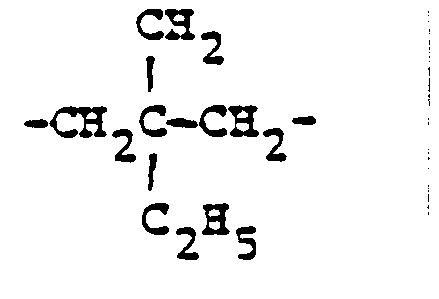
- Grundierzusammensetzung zum Haften einer härtbaren Polyorganosiloxanelastomerzusammensetzung an einem anorganischen Träger, wobei die Grundierzusammensetzung eine Organosiliziumverbindung enthält mit einer allgemeinen Formel, ausgewählt aus der Gruppe bestehend aus
(R¹O)n(R²O)4-n-pR³pSi ,
R⁴[OSi(OR²)3-pR³p]₂ ,
(R¹O)n(R²O)3-nSiR⁵Si(OR¹)₂(OR²)3-r , und
R⁴[Osi(OR²)₂R⁵Si(OR²)₃]₂ ,
wobei R¹ ein Rest ist, ausgewählt aus der Gruppe bestehend aus
CH₂=CHCH₂R⁶- ,
CH₂=CHR⁶OR⁷- ,
CH₂CHR⁶OC(O)R⁸- ,
CH₂=CHR⁹C(O)OR⁷- , und
(CH₂=CHR⁶O)₂R¹⁰- ;
in denen R² und R³ Methyl sind,
R⁴ ein Rest ist, ausgewählt aus der Gruppe
bestehend aus
CH₂=CHR¹⁰〈 ,
CH₂=CHR⁶OR¹⁰〈 ,
CH₂=CHR⁶OC(O)R¹⁰〈 und
CH₂=CHR⁹C(O)OR¹⁰〈;
R⁵ Ethylen ist,
R⁶ ist ein Hydrocarbylen- oder substituierter Hydrocarbylenrest, wobei der Substituent Hydroxyl oder Alkoxy ist,
R⁷ ist aus der gleichen Gruppe ausgewählt wie R⁶, mit der Bedingung, daß R⁷ mindestens 2 Kohlenstoffatome aufweist,
R⁸ ist aus der gleichen Gruppe wie R⁶ ausgewählt,
R⁹ ist ein Rest, der aus der gleichen Gruppe wie R⁶ ausgewählt ist,
R¹⁰ ist ein dreiwertiger Kohlenwasserstoffrest,
n ist 1 oder 2,
p ist 0 oder 1,
r ist 0 oder 1 und
4-n-p ist mindestens 2, mit Ausnahme der Verbindung (Vinylethoxy)triethoxysilan. - Grundierzusammensetzung nach Anspruch 14,
dadurch gekennzeichnet,
daß R⁶ Alkylen, Phenylen, Alkoxy substituiertes Phenylen oder der Rest ist, der verbleibt nach Entfernen einer endständigen Hydroxylgruppe aus einem endständige Hydroxylgruppen aufweisendem Polybutadien mit einem mittleren Polymerisationsgrad von zwischen 50 und 60. - Grundierzusammensetzung nach Anspruch 14,
dadurch gekennzeichnet,
daß R¹ CH₂=CHR⁶OR⁷ - ist, R⁶ ist Methylen und R⁷ ist

- Grundierzusammensetzung nach Anspruch 14,
dadurch gekennzeichnet,
daß R¹ CH₂CHR⁶OC(O)R⁸ ist, wobei R⁶ Alkylen mit 1-10 Kohlenstoffatomen ist und R⁸ Alkylen mit 1-10 Kohlenstoffatomen, Phenylen, Hydroxyl substituiertes Phenylen oder Methoxy substituiertes Phenylen ist. - Grundierzusammensetzung nach Anspruch 14,
dadurch gekennzeichnet,
daß R¹ CH₂=CHR⁹C(O)OR⁷⁻ ist, und wobei R⁹ ein Rest ist, ausgewählt aus der gleichen Gruppe wie R⁶, und ⁷ Alkylen mit 2-10 Kohlenstoffatomen, Hydroxyl substituiertes Alkylen mit 3-10 Kohlenstoffatomen oder Phenylen ist. - Grundierzusammensetzung nach Anspruch 14,
dadurch gekennzeichnet,
daß R¹ (CH₂=CHR⁶O)₂R¹⁰ ist, R⁶ ist Methylen und R¹⁰ ist
- Grundierzusammensetzung nach Anspruch 14,
dadurch gekennzeichnet,
daß R⁴ CH₂=CHR¹⁰ ist, wobei R⁶ Methylen ist und R¹⁰ ist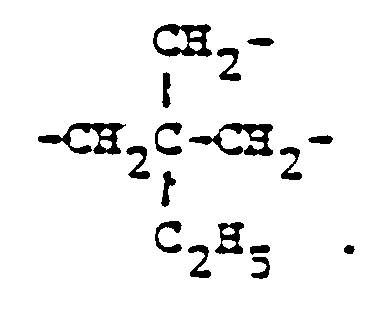
- Grundierzusammensetzung nach Anspruch 14,
dadurch gekennzeichnet,
daß die Grundierung ein Copolymer einschließt, das im wesentlichen 10-95 Gew.-% wiederkehrende Einheiten, abgeleitet von 3-(Methacryloxypropyl)trimethoxysilan, und 5-90 Gew.-% wiederkehrende Einheiten, abgeleitet von Methylmethacrylat, aufweist. - Grundierzusammensetzung nach Anspruch 21,
dadurch gekennzeichnet,
daß die Organosiliziumverbindung 40-60 Gew.-% der Kombination der Verbindung und des Copolymeren ausmacht. - Grundierzusammensetzung nach Anspruch 22,
dadurch gekennzeichnet,
daß R¹ der allgemeinen Formel genügt CH₂=CHR⁶OR⁷- oder (CH₂ =CHR⁶O)₂R¹⁰, wobei R⁶ Methylen ist, R⁷ ist


Applications Claiming Priority (2)
| Application Number | Priority Date | Filing Date | Title |
|---|---|---|---|
| US06/844,057 US4659851A (en) | 1986-03-26 | 1986-03-26 | Novel organosilicon compounds |
| US844057 | 1986-03-26 |
Publications (3)
| Publication Number | Publication Date |
|---|---|
| EP0241759A2 EP0241759A2 (de) | 1987-10-21 |
| EP0241759A3 EP0241759A3 (en) | 1989-10-18 |
| EP0241759B1 true EP0241759B1 (de) | 1992-10-07 |
Family
ID=25291691
Family Applications (1)
| Application Number | Title | Priority Date | Filing Date |
|---|---|---|---|
| EP87104189A Expired - Lifetime EP0241759B1 (de) | 1986-03-26 | 1987-03-21 | Organosilizium-Verbindungen |
Country Status (7)
| Country | Link |
|---|---|
| US (1) | US4659851A (de) |
| EP (1) | EP0241759B1 (de) |
| JP (1) | JPS62234088A (de) |
| KR (1) | KR900001611B1 (de) |
| CA (1) | CA1320736C (de) |
| DE (1) | DE3782079T2 (de) |
| ES (1) | ES2008720A6 (de) |
Families Citing this family (26)
| Publication number | Priority date | Publication date | Assignee | Title |
|---|---|---|---|---|
| US5188864A (en) * | 1988-08-15 | 1993-02-23 | Dow Corning Corporation | Adhesion promoter for UV curable siloxane compositions and compositions containing same |
| US4921880A (en) * | 1988-08-15 | 1990-05-01 | Dow Corning Corporation | Adhesion promoter for UV curable siloxane compositions and compositions containing same |
| US4996342A (en) * | 1989-02-08 | 1991-02-26 | Henkel Research Corporation | Vicinal disubstituted carboxylic acids and silylated derivatives |
| US5189190A (en) * | 1989-02-08 | 1993-02-23 | Henkel Research Corporation | Vicinal disubstituted carboxylic acids and silylated derivatives |
| US4985525A (en) * | 1989-03-13 | 1991-01-15 | Dow Corning Corporation | Clear organosiloxane compositions |
| US4992522A (en) * | 1989-09-25 | 1991-02-12 | General Electric Co. | Polymer compatibilizers |
| US4992512A (en) * | 1989-09-25 | 1991-02-12 | General Electric Company | Polymer alloys |
| CA2081447C (en) * | 1990-04-26 | 1997-08-19 | Gerhard Staiger | Organo(poly)siloxanes containing terminal siloxane units having organyloxy and hydrogen groups |
| US5126208A (en) * | 1990-10-12 | 1992-06-30 | Dow Corning Corporation | Optical laminates |
| US5364921A (en) * | 1993-08-17 | 1994-11-15 | Dow Corning Corporation | Silicone rubber with self-adhesion to glass and metal |
| US5424384A (en) * | 1994-05-10 | 1995-06-13 | Dow Corning Corporation | Curable organosiloxane compositions containing low temperature reactive adhesion additives |
| US5399651A (en) * | 1994-05-10 | 1995-03-21 | Dow Corning Corporation | Adhesion promoting additives and low temperature curing organosiloxane compositions containing same |
| US5516823A (en) * | 1994-05-10 | 1996-05-14 | Dow Corning Corporation | Adhesion promoting compositions and curable organosiloxane compositions containing same |
| US5468826A (en) * | 1994-05-10 | 1995-11-21 | Dow Corning Corporation | Adhesion promoting additives and curable organosiloxane compositions containing same |
| US5486565A (en) * | 1994-12-02 | 1996-01-23 | Dow Corning Corporation | Organosilicon compounds and low temperature curing organosiloxane compositions containing same |
| US5595826A (en) * | 1995-10-11 | 1997-01-21 | Dow Corning Corporation | Curable organopolysiloxane compositions with improved adhesion |
| US5683527A (en) * | 1996-12-30 | 1997-11-04 | Dow Corning Corporation | Foamable organosiloxane compositions curable to silicone foams having improved adhesion |
| US6017587A (en) * | 1998-07-09 | 2000-01-25 | Dow Corning Corporation | Electrically conductive silicone compositions |
| US5973044A (en) * | 1998-08-28 | 1999-10-26 | Dow Corning Corporation | Adhesion promoting organosilicon compositions |
| US6034179A (en) * | 1998-08-28 | 2000-03-07 | Dow Corning Corporations | Polyolefin compositions containing organosilicon compounds as adhesion additives |
| US6060559A (en) * | 1998-09-04 | 2000-05-09 | Dow Corning Corporation | Curable polyolefin compositions containing organosilicon compounds as adhesion additives |
| DE19846135A1 (de) * | 1998-10-07 | 2000-04-13 | Plastobras Holding S A | Plattenartiges Bauteil |
| USD524603S1 (en) | 2005-01-26 | 2006-07-11 | Wki Holding Company, Inc. | Preparation bowl |
| US7784638B2 (en) * | 2005-02-03 | 2010-08-31 | Wki Holding Company, Inc. | Glassware with silicone support |
| US7575127B2 (en) * | 2005-02-03 | 2009-08-18 | Wki Holding Company, Inc. | Glassware with silicone gripping surfaces |
| USD620817S1 (en) | 2009-03-21 | 2010-08-03 | Wki Holding Company, Inc. | Measuring container |
Family Cites Families (13)
| Publication number | Priority date | Publication date | Assignee | Title |
|---|---|---|---|---|
| US3398210A (en) * | 1963-06-17 | 1968-08-20 | Dow Corning | Compositions comprising acryloxyalkylsilanes and unsaturated polyester resins |
| US3369006A (en) * | 1964-01-31 | 1968-02-13 | Navy Usa | Novel monomers and polymers thereof containing siloxane linkages and process of making |
| US3377371A (en) * | 1964-09-03 | 1968-04-09 | Dow Corning | Tris-siloxy acrylic silanes |
| NL128386C (de) * | 1964-10-12 | |||
| FR1439013A (fr) * | 1964-10-28 | 1966-05-20 | Rhone Poulenc Sa | Procédé de préparation d'alcène-1 yloxysilanes et de composés analogues |
| US3427337A (en) * | 1965-01-06 | 1969-02-11 | Monsanto Co | Substituted silylalkyl acrylates |
| US3555051A (en) * | 1968-01-30 | 1971-01-12 | Union Carbide Corp | Gamma-methacryloxy-alpha,beta-epoxy-propyltrimethoxysilane |
| BE755943A (fr) * | 1969-09-10 | 1971-03-09 | Rhone Poulenc Sa | Procede de preparation de composes organosiliciques insatures |
| BE794485A (fr) * | 1972-02-04 | 1973-05-16 | Gen Electric | Acryloxy et methacryloxy silanes et procede de fabrication |
| JPS57469A (en) * | 1980-06-04 | 1982-01-05 | Hitachi Ltd | Control circuit for refrigerator |
| US4500725A (en) * | 1981-07-30 | 1985-02-19 | Chisso Corporation | Silane derivative and fragrant article |
| GB8414705D0 (en) * | 1984-06-08 | 1984-07-11 | Wiggins Teape Group Ltd | Coating substrates |
| US4698403A (en) * | 1985-10-15 | 1987-10-06 | E. I. Du Pont De Nemours And Company | Nickel-catalyzed copolymerization of ethylene |
-
1986
- 1986-03-26 US US06/844,057 patent/US4659851A/en not_active Expired - Fee Related
-
1987
- 1987-01-29 CA CA000528475A patent/CA1320736C/en not_active Expired - Fee Related
- 1987-03-21 DE DE8787104189T patent/DE3782079T2/de not_active Expired - Fee Related
- 1987-03-21 EP EP87104189A patent/EP0241759B1/de not_active Expired - Lifetime
- 1987-03-24 ES ES8700817A patent/ES2008720A6/es not_active Expired
- 1987-03-25 JP JP62069290A patent/JPS62234088A/ja active Pending
- 1987-03-25 KR KR1019870002724A patent/KR900001611B1/ko not_active Expired
Non-Patent Citations (2)
| Title |
|---|
| CHEMICAL ABSTRACTS, vol. 73, no. 4, 27th July 1970, abstract no. 1588t and CHEMICAL ABSTRACTS, vol. 73, Formula Index, page 452f, column 1- lines 46, Columbus, Ohio, US; S.M. PESOCHINSKII et al.: "Acid-resistant glass-fiber reinforced plastic"; & Sb. Rab. Khim, Isotochnikam Toka 1968, no. 3, paes 381-388 * |
| CHEMICAL ABSTRACTS, vol. 91, no. 19, 5th November 1979, abstract no. 15780e, Columbus, Ohio, US; J.M. RANCE et al.: "Animal and molecular pharmacology of mixed agonist-antagonist analgesic drugs"; & Dr. Pharmacol. 1979, vol. 7, no. 3, pages 291-296 * |
Also Published As
| Publication number | Publication date |
|---|---|
| EP0241759A2 (de) | 1987-10-21 |
| US4659851A (en) | 1987-04-21 |
| KR900001611B1 (ko) | 1990-03-17 |
| EP0241759A3 (en) | 1989-10-18 |
| DE3782079T2 (de) | 1993-05-06 |
| DE3782079D1 (de) | 1992-11-12 |
| KR870008898A (ko) | 1987-10-21 |
| CA1320736C (en) | 1993-07-27 |
| ES2008720A6 (es) | 1989-08-01 |
| JPS62234088A (ja) | 1987-10-14 |
Similar Documents
| Publication | Publication Date | Title |
|---|---|---|
| US4719262A (en) | Organosilicon primer compositions | |
| US4659851A (en) | Novel organosilicon compounds | |
| CA1096528A (en) | Organopolysiloxane resin compounds as adhesion promoters | |
| US4650889A (en) | Silane coupling agents | |
| US5447987A (en) | Organopolysiloxane compositions | |
| EP0268365B1 (de) | Selbstklebender Polysiloxanelastomer und Verfahren zur Herstellung | |
| EP0164879B1 (de) | Organopolysiloxanzusammensetzungen für Grundschichten | |
| EP0330234B1 (de) | Grundiermittelzusammensetzung | |
| US5416144A (en) | Addition-curable silicone adhesive compositions and bis (trialkoxysilyalkylene) urea adhesion promoters | |
| JP3607328B2 (ja) | オルガノシロキサンエラストマーと有機ポリマーとの接着促進組成物 | |
| JPH08269331A (ja) | シリコーンゲル組成物及びポッティング材 | |
| KR100344475B1 (ko) | 오가노실록산화합물 | |
| EP0388092B1 (de) | Durchsichtige Polysiloxanzusammensetzungen | |
| US5567752A (en) | Silicon- and nitrogen- containing adhesion promotors and compositions containing them | |
| JP2002309089A (ja) | 硬化性シリコーン接着剤組成物 | |
| US5059484A (en) | Optically clear composites comprising two layer of organic polymers and an organosiloxane adhesive | |
| US5550271A (en) | Bis(bis-silylalkyl) dicarboxylates as adhesion promoters and compositions containing them | |
| EP0982349A2 (de) | Adhäsionsfördernde Organosilikon-Zusammensetzungen | |
| US6034179A (en) | Polyolefin compositions containing organosilicon compounds as adhesion additives | |
| CA1187239A (en) | Coating composition and primer | |
| JP2000302978A (ja) | 室温硬化性オルガノポリシロキサン組成物 | |
| EP0446830A2 (de) | Grundierungsmittel für hitzebeständige Bindung | |
| TW202502967A (zh) | 導熱組成物 | |
| JPH01230668A (ja) | 放射線硬化性オルガノポリシロキサン組成物 |
Legal Events
| Date | Code | Title | Description |
|---|---|---|---|
| PUAI | Public reference made under article 153(3) epc to a published international application that has entered the european phase |
Free format text: ORIGINAL CODE: 0009012 |
|
| AK | Designated contracting states |
Kind code of ref document: A2 Designated state(s): DE FR GB IT NL |
|
| PUAL | Search report despatched |
Free format text: ORIGINAL CODE: 0009013 |
|
| AK | Designated contracting states |
Kind code of ref document: A3 Designated state(s): DE FR GB IT NL |
|
| 17P | Request for examination filed |
Effective date: 19891208 |
|
| 17Q | First examination report despatched |
Effective date: 19910508 |
|
| ITTA | It: last paid annual fee | ||
| GRAA | (expected) grant |
Free format text: ORIGINAL CODE: 0009210 |
|
| AK | Designated contracting states |
Kind code of ref document: B1 Designated state(s): DE FR GB IT NL |
|
| REF | Corresponds to: |
Ref document number: 3782079 Country of ref document: DE Date of ref document: 19921112 |
|
| ET | Fr: translation filed | ||
| ITF | It: translation for a ep patent filed | ||
| PLBE | No opposition filed within time limit |
Free format text: ORIGINAL CODE: 0009261 |
|
| STAA | Information on the status of an ep patent application or granted ep patent |
Free format text: STATUS: NO OPPOSITION FILED WITHIN TIME LIMIT |
|
| 26N | No opposition filed | ||
| PG25 | Lapsed in a contracting state [announced via postgrant information from national office to epo] |
Ref country code: NL Effective date: 19931001 |
|
| NLV4 | Nl: lapsed or anulled due to non-payment of the annual fee | ||
| PGFP | Annual fee paid to national office [announced via postgrant information from national office to epo] |
Ref country code: FR Payment date: 19941130 Year of fee payment: 9 |
|
| PGFP | Annual fee paid to national office [announced via postgrant information from national office to epo] |
Ref country code: DE Payment date: 19941206 Year of fee payment: 9 |
|
| PGFP | Annual fee paid to national office [announced via postgrant information from national office to epo] |
Ref country code: GB Payment date: 19941221 Year of fee payment: 9 |
|
| PG25 | Lapsed in a contracting state [announced via postgrant information from national office to epo] |
Ref country code: GB Effective date: 19960321 |
|
| GBPC | Gb: european patent ceased through non-payment of renewal fee |
Effective date: 19960321 |
|
| PG25 | Lapsed in a contracting state [announced via postgrant information from national office to epo] |
Ref country code: FR Effective date: 19961129 |
|
| PG25 | Lapsed in a contracting state [announced via postgrant information from national office to epo] |
Ref country code: DE Effective date: 19961203 |
|
| REG | Reference to a national code |
Ref country code: FR Ref legal event code: ST |
|
| PG25 | Lapsed in a contracting state [announced via postgrant information from national office to epo] |
Ref country code: IT Free format text: LAPSE BECAUSE OF NON-PAYMENT OF DUE FEES;WARNING: LAPSES OF ITALIAN PATENTS WITH EFFECTIVE DATE BEFORE 2007 MAY HAVE OCCURRED AT ANY TIME BEFORE 2007. THE CORRECT EFFECTIVE DATE MAY BE DIFFERENT FROM THE ONE RECORDED. Effective date: 20050321 |