EP0224823A2 - Chinolinderivate und ihre Verwendung zur Bekämpfung von unerwümschtem Pflanzenwachstum - Google Patents
Chinolinderivate und ihre Verwendung zur Bekämpfung von unerwümschtem Pflanzenwachstum Download PDFInfo
- Publication number
- EP0224823A2 EP0224823A2 EP86116185A EP86116185A EP0224823A2 EP 0224823 A2 EP0224823 A2 EP 0224823A2 EP 86116185 A EP86116185 A EP 86116185A EP 86116185 A EP86116185 A EP 86116185A EP 0224823 A2 EP0224823 A2 EP 0224823A2
- Authority
- EP
- European Patent Office
- Prior art keywords
- substituted
- radical
- alkoxycarbonyl
- halogen
- oxygen
- Prior art date
- Legal status (The legal status is an assumption and is not a legal conclusion. Google has not performed a legal analysis and makes no representation as to the accuracy of the status listed.)
- Withdrawn
Links
Classifications
-
- C—CHEMISTRY; METALLURGY
- C07—ORGANIC CHEMISTRY
- C07D—HETEROCYCLIC COMPOUNDS
- C07D401/00—Heterocyclic compounds containing two or more hetero rings, having nitrogen atoms as the only ring hetero atoms, at least one ring being a six-membered ring with only one nitrogen atom
- C07D401/02—Heterocyclic compounds containing two or more hetero rings, having nitrogen atoms as the only ring hetero atoms, at least one ring being a six-membered ring with only one nitrogen atom containing two hetero rings
- C07D401/04—Heterocyclic compounds containing two or more hetero rings, having nitrogen atoms as the only ring hetero atoms, at least one ring being a six-membered ring with only one nitrogen atom containing two hetero rings directly linked by a ring-member-to-ring-member bond
-
- A—HUMAN NECESSITIES
- A01—AGRICULTURE; FORESTRY; ANIMAL HUSBANDRY; HUNTING; TRAPPING; FISHING
- A01N—PRESERVATION OF BODIES OF HUMANS OR ANIMALS OR PLANTS OR PARTS THEREOF; BIOCIDES, e.g. AS DISINFECTANTS, AS PESTICIDES OR AS HERBICIDES; PEST REPELLANTS OR ATTRACTANTS; PLANT GROWTH REGULATORS
- A01N43/00—Biocides, pest repellants or attractants, or plant growth regulators containing heterocyclic compounds
- A01N43/34—Biocides, pest repellants or attractants, or plant growth regulators containing heterocyclic compounds having rings with one nitrogen atom as the only ring hetero atom
- A01N43/40—Biocides, pest repellants or attractants, or plant growth regulators containing heterocyclic compounds having rings with one nitrogen atom as the only ring hetero atom six-membered rings
- A01N43/42—Biocides, pest repellants or attractants, or plant growth regulators containing heterocyclic compounds having rings with one nitrogen atom as the only ring hetero atom six-membered rings condensed with carbocyclic rings
-
- A—HUMAN NECESSITIES
- A01—AGRICULTURE; FORESTRY; ANIMAL HUSBANDRY; HUNTING; TRAPPING; FISHING
- A01N—PRESERVATION OF BODIES OF HUMANS OR ANIMALS OR PLANTS OR PARTS THEREOF; BIOCIDES, e.g. AS DISINFECTANTS, AS PESTICIDES OR AS HERBICIDES; PEST REPELLANTS OR ATTRACTANTS; PLANT GROWTH REGULATORS
- A01N43/00—Biocides, pest repellants or attractants, or plant growth regulators containing heterocyclic compounds
- A01N43/64—Biocides, pest repellants or attractants, or plant growth regulators containing heterocyclic compounds having rings with three nitrogen atoms as the only ring hetero atoms
- A01N43/647—Triazoles; Hydrogenated triazoles
- A01N43/653—1,2,4-Triazoles; Hydrogenated 1,2,4-triazoles
-
- A—HUMAN NECESSITIES
- A01—AGRICULTURE; FORESTRY; ANIMAL HUSBANDRY; HUNTING; TRAPPING; FISHING
- A01N—PRESERVATION OF BODIES OF HUMANS OR ANIMALS OR PLANTS OR PARTS THEREOF; BIOCIDES, e.g. AS DISINFECTANTS, AS PESTICIDES OR AS HERBICIDES; PEST REPELLANTS OR ATTRACTANTS; PLANT GROWTH REGULATORS
- A01N43/00—Biocides, pest repellants or attractants, or plant growth regulators containing heterocyclic compounds
- A01N43/72—Biocides, pest repellants or attractants, or plant growth regulators containing heterocyclic compounds having rings with nitrogen atoms and oxygen or sulfur atoms as ring hetero atoms
- A01N43/74—Biocides, pest repellants or attractants, or plant growth regulators containing heterocyclic compounds having rings with nitrogen atoms and oxygen or sulfur atoms as ring hetero atoms five-membered rings with one nitrogen atom and either one oxygen atom or one sulfur atom in positions 1,3
-
- A—HUMAN NECESSITIES
- A01—AGRICULTURE; FORESTRY; ANIMAL HUSBANDRY; HUNTING; TRAPPING; FISHING
- A01N—PRESERVATION OF BODIES OF HUMANS OR ANIMALS OR PLANTS OR PARTS THEREOF; BIOCIDES, e.g. AS DISINFECTANTS, AS PESTICIDES OR AS HERBICIDES; PEST REPELLANTS OR ATTRACTANTS; PLANT GROWTH REGULATORS
- A01N43/00—Biocides, pest repellants or attractants, or plant growth regulators containing heterocyclic compounds
- A01N43/72—Biocides, pest repellants or attractants, or plant growth regulators containing heterocyclic compounds having rings with nitrogen atoms and oxygen or sulfur atoms as ring hetero atoms
- A01N43/80—Biocides, pest repellants or attractants, or plant growth regulators containing heterocyclic compounds having rings with nitrogen atoms and oxygen or sulfur atoms as ring hetero atoms five-membered rings with one nitrogen atom and either one oxygen atom or one sulfur atom in positions 1,2
-
- A—HUMAN NECESSITIES
- A01—AGRICULTURE; FORESTRY; ANIMAL HUSBANDRY; HUNTING; TRAPPING; FISHING
- A01N—PRESERVATION OF BODIES OF HUMANS OR ANIMALS OR PLANTS OR PARTS THEREOF; BIOCIDES, e.g. AS DISINFECTANTS, AS PESTICIDES OR AS HERBICIDES; PEST REPELLANTS OR ATTRACTANTS; PLANT GROWTH REGULATORS
- A01N43/00—Biocides, pest repellants or attractants, or plant growth regulators containing heterocyclic compounds
- A01N43/72—Biocides, pest repellants or attractants, or plant growth regulators containing heterocyclic compounds having rings with nitrogen atoms and oxygen or sulfur atoms as ring hetero atoms
- A01N43/82—Biocides, pest repellants or attractants, or plant growth regulators containing heterocyclic compounds having rings with nitrogen atoms and oxygen or sulfur atoms as ring hetero atoms five-membered rings with three ring hetero atoms
-
- A—HUMAN NECESSITIES
- A01—AGRICULTURE; FORESTRY; ANIMAL HUSBANDRY; HUNTING; TRAPPING; FISHING
- A01N—PRESERVATION OF BODIES OF HUMANS OR ANIMALS OR PLANTS OR PARTS THEREOF; BIOCIDES, e.g. AS DISINFECTANTS, AS PESTICIDES OR AS HERBICIDES; PEST REPELLANTS OR ATTRACTANTS; PLANT GROWTH REGULATORS
- A01N43/00—Biocides, pest repellants or attractants, or plant growth regulators containing heterocyclic compounds
- A01N43/90—Biocides, pest repellants or attractants, or plant growth regulators containing heterocyclic compounds having two or more relevant hetero rings, condensed among themselves or with a common carbocyclic ring system
-
- A—HUMAN NECESSITIES
- A01—AGRICULTURE; FORESTRY; ANIMAL HUSBANDRY; HUNTING; TRAPPING; FISHING
- A01N—PRESERVATION OF BODIES OF HUMANS OR ANIMALS OR PLANTS OR PARTS THEREOF; BIOCIDES, e.g. AS DISINFECTANTS, AS PESTICIDES OR AS HERBICIDES; PEST REPELLANTS OR ATTRACTANTS; PLANT GROWTH REGULATORS
- A01N47/00—Biocides, pest repellants or attractants, or plant growth regulators containing organic compounds containing a carbon atom not being member of a ring and having no bond to a carbon or hydrogen atom, e.g. derivatives of carbonic acid
- A01N47/08—Biocides, pest repellants or attractants, or plant growth regulators containing organic compounds containing a carbon atom not being member of a ring and having no bond to a carbon or hydrogen atom, e.g. derivatives of carbonic acid the carbon atom having one or more single bonds to nitrogen atoms
- A01N47/10—Carbamic acid derivatives, i.e. containing the group —O—CO—N<; Thio analogues thereof
- A01N47/24—Carbamic acid derivatives, i.e. containing the group —O—CO—N<; Thio analogues thereof containing the groups, or; Thio analogues thereof
-
- A—HUMAN NECESSITIES
- A01—AGRICULTURE; FORESTRY; ANIMAL HUSBANDRY; HUNTING; TRAPPING; FISHING
- A01N—PRESERVATION OF BODIES OF HUMANS OR ANIMALS OR PLANTS OR PARTS THEREOF; BIOCIDES, e.g. AS DISINFECTANTS, AS PESTICIDES OR AS HERBICIDES; PEST REPELLANTS OR ATTRACTANTS; PLANT GROWTH REGULATORS
- A01N47/00—Biocides, pest repellants or attractants, or plant growth regulators containing organic compounds containing a carbon atom not being member of a ring and having no bond to a carbon or hydrogen atom, e.g. derivatives of carbonic acid
- A01N47/08—Biocides, pest repellants or attractants, or plant growth regulators containing organic compounds containing a carbon atom not being member of a ring and having no bond to a carbon or hydrogen atom, e.g. derivatives of carbonic acid the carbon atom having one or more single bonds to nitrogen atoms
- A01N47/28—Ureas or thioureas containing the groups >N—CO—N< or >N—CS—N<
- A01N47/34—Ureas or thioureas containing the groups >N—CO—N< or >N—CS—N< containing the groups, e.g. biuret; Thio analogues thereof; Urea-aldehyde condensation products
-
- C—CHEMISTRY; METALLURGY
- C07—ORGANIC CHEMISTRY
- C07D—HETEROCYCLIC COMPOUNDS
- C07D215/00—Heterocyclic compounds containing quinoline or hydrogenated quinoline ring systems
- C07D215/02—Heterocyclic compounds containing quinoline or hydrogenated quinoline ring systems having no bond between the ring nitrogen atom and a non-ring member or having only hydrogen atoms or carbon atoms directly attached to the ring nitrogen atom
- C07D215/16—Heterocyclic compounds containing quinoline or hydrogenated quinoline ring systems having no bond between the ring nitrogen atom and a non-ring member or having only hydrogen atoms or carbon atoms directly attached to the ring nitrogen atom with hetero atoms or with carbon atoms having three bonds to hetero atoms with at the most one bond to halogen, e.g. ester or nitrile radicals, directly attached to ring carbon atoms
- C07D215/18—Halogen atoms or nitro radicals
-
- C—CHEMISTRY; METALLURGY
- C07—ORGANIC CHEMISTRY
- C07D—HETEROCYCLIC COMPOUNDS
- C07D215/00—Heterocyclic compounds containing quinoline or hydrogenated quinoline ring systems
- C07D215/02—Heterocyclic compounds containing quinoline or hydrogenated quinoline ring systems having no bond between the ring nitrogen atom and a non-ring member or having only hydrogen atoms or carbon atoms directly attached to the ring nitrogen atom
- C07D215/16—Heterocyclic compounds containing quinoline or hydrogenated quinoline ring systems having no bond between the ring nitrogen atom and a non-ring member or having only hydrogen atoms or carbon atoms directly attached to the ring nitrogen atom with hetero atoms or with carbon atoms having three bonds to hetero atoms with at the most one bond to halogen, e.g. ester or nitrile radicals, directly attached to ring carbon atoms
- C07D215/48—Carbon atoms having three bonds to hetero atoms with at the most one bond to halogen
-
- C—CHEMISTRY; METALLURGY
- C07—ORGANIC CHEMISTRY
- C07D—HETEROCYCLIC COMPOUNDS
- C07D413/00—Heterocyclic compounds containing two or more hetero rings, at least one ring having nitrogen and oxygen atoms as the only ring hetero atoms
- C07D413/02—Heterocyclic compounds containing two or more hetero rings, at least one ring having nitrogen and oxygen atoms as the only ring hetero atoms containing two hetero rings
- C07D413/04—Heterocyclic compounds containing two or more hetero rings, at least one ring having nitrogen and oxygen atoms as the only ring hetero atoms containing two hetero rings directly linked by a ring-member-to-ring-member bond
-
- C—CHEMISTRY; METALLURGY
- C07—ORGANIC CHEMISTRY
- C07D—HETEROCYCLIC COMPOUNDS
- C07D417/00—Heterocyclic compounds containing two or more hetero rings, at least one ring having nitrogen and sulfur atoms as the only ring hetero atoms, not provided for by group C07D415/00
- C07D417/02—Heterocyclic compounds containing two or more hetero rings, at least one ring having nitrogen and sulfur atoms as the only ring hetero atoms, not provided for by group C07D415/00 containing two hetero rings
- C07D417/12—Heterocyclic compounds containing two or more hetero rings, at least one ring having nitrogen and sulfur atoms as the only ring hetero atoms, not provided for by group C07D415/00 containing two hetero rings linked by a chain containing hetero atoms as chain links
Definitions
- the present invention relates to new quinoline derivatives, herbicides which contain these compounds as active ingredients, and to a process for controlling unwanted plant growth by means of the new compounds.
- quinoline derivatives of the formula I in the R1 is halogen or C1-C4 alkyl
- X halogen Z is oxygen, hydroxyimino, C1-C4-alkoxyimino or a hydrazone radical which is substituted by C1-C4-alkyl, C2-C5-alkoxycarbonyl, arylsulfonyl, 1,3-oxazol-2-yl or 1,3-thiazol-2-yl is, the latter heterocyclic radicals are in turn substituted by C1-C4-alkyl, C2-C4-hydroxyalkyl or hydroxyl, and Y in the event that Z has the meaning of oxygen, the radical -NR2R3, in which R2 for hydrogen and R3 for C1-C4-hydroxyalkyl, C1 - C4-alkoxy, C2-C4-alkenyl by -C Maschinen N or C2-C5-alkoxycarbonyl is substituted, optionally substitute
- R1 in formula I means e.g. Fluorine, chlorine, bromine, methyl, ethyl, propyl, isopropyl, butyl, isobutyl, but-2-yl or tert-butyl, preferably chlorine; and methyl.
- X in formula I means e.g. Fluorine, chlorine or bromine, preferably chlorine.
- Z in formula I means e.g. Oxygen; Hydroxyimino; Methoxyimino, ethoxyimino, propoxyimino or butoxyimino; Methylhydrazono, isopropylhydrazono, butylhydrazono, methoxycarbonylhydrazono, propoxycarbonylhydrazono, tert-butoxycarbonylhydrazono, phenylsulfonyl-4-methylphenylsulfonyl, 4-methylphenylsulfono Ethyl-1,3-oxazol-2-yl-hydrazono, 4-tert-butyl-1,3-thiazol-2-yl-hydrazono, 4-hydroxy-1,3-oxazol-2-yl-hydrazono, 4- Hydroxyl-1,3-thiazol-2-yl-hydrazono, 4- (2-hydroxyethyl) -1,3-thiazol-2-yl-hydrazon
- Y means e.g. 2-hydroxyethylamino, (1-methyl-2-hydroxy) ethylamino, 3-hydroxypropylamino, (1,1-dimethyl-2-hydroxy) ethylamino; Methoxyamino, ethoxyamino, propoxyamino, isopropoxyamino, butoxyamino, isobutoxyamino; 2-cyano-2-methylethenylamino, 2- (methoxycarbonyl) ethenylamino, 2- (ethoxycarbonyl) -2-methylethenylamino, 3- (ethoxycarbonyl) prop-2-en-2-ylamino; Phenylsulfonylamino; 2-methylphenylsulfonylamino, 4-methylphenylsulfonylamino, 4-chlorophenylsulfonylamino, 1,3-oxazol-2-ylamin
- Y means e.g. Hydrogen, chlorine or bromine.
- Y means e.g. Chlorine, bromine, amino; Methoxy, ethoxy, propoxy, isopropoxy, butoxy, isobutoxy; Carboxymethylthio or ethoxycarbonylmethylthio.
- the group can also represent the radical -C ⁇ N ⁇ -O ⁇ or represent a five-membered heterocycle.
- the heterocycle by C1-C4-alkyl, which is optionally substituted by hydroxyl or C1-C4-alkoxy, C1-C4-alkoxy, hydroxyl, amino, di-C1-C4-alkyl-amino, C4-C6-alkyleneimino, C2-C5 alkoxycarbonyl, carbamoyl or cyan substituted and / or fused by carbocycles, such as cyclopentane or cyclohexane, or by heterocycles, such as tetrahydrofuran or tetrahydropyran.
- heterocyclic radicals for the group are examples called: triazolyls such as 1,3,4-triazolyl-2-yl, 1,2,4-triazol-3-yl, oxazolyls such as 1,3-oxazol-2-yl, 1,2-oxazol-3-yl , Thiazolyls such as 1,3-thiazol-2-yl, oxdiazolyls such as 1,3,4-oxdiazol-2-yl, partially hydrogenated oxazolyls such as 4,5-dihydro-1,3-oxazol-1-yl, 4,5 Dihydro-1,2-oxazol-3-yl, partially hydrogenated thiazolyls such as 4,5-dihydro-1,3-thiazol-2-yl, substituted triazolyls such as 5-methyl-1,3,4-triazol-2- yl, substituted oxazolyls such as 4,5-dihydro-4-methyl-1,3-oxa
- R1 and X are halogen, in particular chlorine, Z oxygen and Y are the radical -NHR3, where R3 is C1-C4alkoxy, in particular ethoxy, are preferred.
- Chlorinated hydrocarbons such as methylene chloride or chlorobenzene come as inert solvents; Ethers such as tetrahydrofuran, dioxane, 1,2-dimethoxyethane or diethylene glycol dimethyl ether; aromatic hydrocarbons, such as toluene or xylene in question. 1,2-Dimethoxyethane and methylene chloride are preferred.
- Suitable acid-binding agents are tertiary amines, such as triethylamine, pyridine or N, N-dimethylaminopyridine. It is useful to use 1 to 2 moles of acid-binding agent per mole of acid chloride.
- a corresponding excess of the amine or hydrazine component can advantageously be used as an acid binder.
- Triethylamine is preferably used.
- the reaction temperature can be varied within a wide range. Generally one works at a temperature of -30 to + 80 ° C, preferably -10 to + 25 ° C.
- amido acetals e.g. N, N-dimethylformamide dimethylacetal or N, N-dimethylacetamide dimethylacetal
- orthocarboxylic acid esters e.g. trimethyl orthoformate or triethyl orthoacetate
- Aliphatic amides such as N, N-dimethylformamide, N, N-dimethylacetamide and aromatic hydrocarbons such as toluene, xylene or chlorobenzene are suitable as solvents.
- aromatic hydrocarbons such as toluene, xylene or chlorobenzene
- the alcohol formed in the reaction can be left in the reaction mixture or is preferably removed by distillation.
- the reflux temperature of the reaction mixture which is generally from 100 to 150 ° C., is expediently chosen as the reaction temperature.
- keto compounds according to the invention can be obtained in a manner known per se from the carboxylic acid ester by means of a Grignard reaction, it being surprising that in this case the Grignard reaction remains at the keto stage and no tertiary alcohol is formed.
- the nitrile oxide is prepared starting from the oxime via the hydroxamic acid chloride as an intermediate and then splitting off hydrogen chloride.
- the further compounds according to the invention e.g. oximes, hydrazones or oxime esters
- oximes, hydrazones or oxime esters can also be obtained by methods known per se, as described, for example, in Houben-Weyl, "Methods of Organic Chemistry", Vol. 10/2 and 10/4.
- the quinoline derivatives I have a herbicidal action and are selective towards crop plants.
- the quinoline derivatives of the formula I or the herbicidal compositions comprising them can be sprayed, for example in the form of directly sprayable solutions, powders, suspensions, including high-strength aqueous, oily or other suspensions or dispersions, emulsions, oil dispersions, pastes, dusts, sprays or granules. Nebulization, dusting, scattering or pouring can be used.
- the application forms depend entirely on the purposes; in any case, they should ensure the finest possible distribution of the active compounds according to the invention.
- Mineral oil fractions of medium to high boiling point such as kerosene or diesel oil, also coal tar oils and oils of vegetable or animal origin, aliphatic, cyclic and aromatic hydrocarbons, for example toluene, xylene, paraffin, tetrahydronaphthalene, are used to produce directly sprayable solutions, emulsions, pastes or oil dispersions.
- alkylated naphthalenes or their derivatives methanol, ethanol, propanol, butanol, cyclohexanol, cyclohexanone, chlorobenzene, isophorone or strongly polar solvents, such as N, N-dimethylformamide, dimethyl sulfoxide, N-methylpyrrolidone or water.
- Aqueous use forms can be prepared from emulsion concentrates, dispersions, pastes, wettable powders or water-dispersible granules by adding water.
- the substrates as such or dissolved in an oil or solvent can be homogenized in water by means of wetting agents, adhesives, dispersants or emulsifiers.
- concentrates composed of an active substance, wetting agents, adhesives, dispersants or emulsifiers and possibly solvents or oil, which are suitable for dilution with water.
- alkali, alkaline earth, ammonium salts of aromatic sulfonic acids e.g. Lignin, phenol, naphthalene and dibutylnaphthalenesulfonic acid, as well as of fatty acids, alkyl and alkylarylsulfonates, alkyl, lauryl ether and fatty alcohol sulfates, as well as salts of sulfated hexa-, hepta- and octadecanols, as well as fatty alcohol glycol ethers, condensation products of sulfonated naphthalene and its derivatives with formaldehyde, condensation products of naphthalene or naphthalenesulfonic acids with phenol and formaldehyde, polyoxyethylene octylphenol ether, ethoxylated isooctyl, octyl or nonylphenol, alkylphenol, tributylphenyl poly
- Powders, materials for broadcasting and dusts can be prepared by mixing or grinding the active substances together with a solid carrier.
- Granules e.g. Coated, impregnated and homogeneous granules can be produced by binding the active ingredients to solid carriers.
- Solid carriers are mineral soils such as silica gel, silicas, silica gels, silicates, talc, kaolin, limestone, lime, chalk, bolus, loess, clay, dolomite, diatomaceous earth, calcium and magnesium sulfate, magnesium oxide, ground plastics, fertilizers such as ammonium sulfate, ammonium phosphate, Ammonium nitrate, ureas and vegetable products, such as cereal flour, tree bark, wood and nutshell flour, cellulose powder or other solid carriers.
- the formulations contain between 0.1 and 95% by weight, preferably between 0.5 and 90% by weight, of active ingredient.
- the application can be done pre-emergence or post-emergence, preferably post-emergence. If the active ingredients are less compatible with certain crop plants, application techniques can be used in which the herbicidal compositions are sprayed with the aid of sprayers in such a way that the leaves of the sensitive crop plants are not struck wherever possible, while the active ingredients are applied to the leaves of undesirable plants growing below them or the uncovered floor area (post-directed, lay-by).
- the application rates of active ingredient are 0.1 to 5.0, preferably 0.25 to 3.0 kg / ha.
- the compounds according to the invention can be used in a large number of crop plants, depending on the substitution pattern.
- the new quinolinecarboxylic acid derivatives can be mixed with numerous representatives of other herbicidal or growth-regulating active ingredient groups and applied together.
- diazines, 4H-3,1-benzoxazine derivatives, benzothiadiazinones, N-phenylcarbamates, thiolcarbamates, halocarboxylic acids, triazines, amides, ureas, diphenyl ethers, triazinones, uraciles, benzofuran derivatives, cyclohexane-1,3-dione derivatives and others are suitable as mixing partners.
- the compound Ic in Table 5 was prepared in an analogous manner.
- Chlorine was passed into a suspension of 48.2 g (0.2 mol) of 3,7-dichloroquinoline-8-aldoxime in chloroform for 3 hours at 40 ° C., filtered off with suction, washed with ether and dried: 59.3 g ( 95%), mp:> 300 ° C (compound no.45).
- the nitrile oxide can also be obtained from compound no. 46 in an analogous manner.
- Plastic flower pots with a content of 300 cm3 and loamy sand with about 3% humus as a substrate served as culture vessels.
- the seeds of the test plants were sown separately according to species.
- the active ingredients were applied to the earth's surface immediately afterwards. They were suspended or emulsified in water as a distribution agent and sprayed using finely distributing nozzles. The application rates were 0.5 and 2.0 kg of active ingredient / ha. After the application of the agents, the vessels were lightly sprinkled to start germination and growth. Then the containers were covered with transparent plastic covers until the plants had grown. This cover caused the test plants to germinate evenly, unless this was adversely affected by the active ingredients.
- test plants were first grown to a height of 3 to 15 cm, depending on the growth habit, and then treated. Plants were sown directly and grown in the same containers, or they were first grown separately as seedlings.
- the application rates for post-emergence treatment varied depending on the active ingredient, they were 2.0 and 3.0 kg of active ingredient / ha. There was no coverage during post-emergence treatment.
- test vessels were set up in the greenhouse, warmer areas (20 to 36 ° C.) being preferred for heat-loving species and 10 to 20 ° C. being preferred for such temperate climates.
- the trial period extended over 2 to 4 weeks. During this time, the plants were cared for and their reaction to the individual treatments evaluated.
- the compounds 4 and 10 were suitable for controlling Galium aparine in a post-emergence process with 3.0 kg of active ingredient / ha without causing damage to the crop plant.
- Compound 7 was used in the post-emergence process to control selected dicotyledonous and monocotyledonous plants. At 2.0 kg of active ingredient / ha, no soybean or rice crops were significantly affected, and Echinochloa crus-galli and Cassia tora were combated excellently.
- compound 1 showed strong herbicidal properties against dicotyledonous, undesirable plants at 0.5 kg of active ingredient / ha and compound 7 at 2.0 kg of active ingredient / ha.
- the maize crop was not damaged.
- Compound 7 was also suitable for combating harmful plants, such as Echinochloa crus-galli and Ipomoea, with pre-emergence application, the soybean plants remaining unaffected.
- Compound 32 was suitable for both pre-emergence and post-emergence applications at 1.0 kg of active ingredient / ha compared to Echinochloa crus-galli and Veronica spp. with at most insignificant impairment of the wheat crop.
Landscapes
- Life Sciences & Earth Sciences (AREA)
- Organic Chemistry (AREA)
- Chemical & Material Sciences (AREA)
- Dentistry (AREA)
- Health & Medical Sciences (AREA)
- Engineering & Computer Science (AREA)
- Plant Pathology (AREA)
- General Health & Medical Sciences (AREA)
- Wood Science & Technology (AREA)
- Zoology (AREA)
- Environmental Sciences (AREA)
- Pest Control & Pesticides (AREA)
- Agronomy & Crop Science (AREA)
- Plural Heterocyclic Compounds (AREA)
- Agricultural Chemicals And Associated Chemicals (AREA)
Abstract
Description
- Die vorliegende Erfindung betrifft neue Chinolinderivate, Herbizide, die diese Verbindungen als Wirkstoffe enthalten, sowie ein Verfahren zur Bekämpfung von unerwünschtem Pflanzenwachstum mittels der neuen Verbindungen.
- Es ist bekannt, daß substituierte Chinoline herbizid wirksam sind (DE-A-3 108 873, DE-A-3 210 979, DE-A-3 229 175, DE-A-3 233 089).
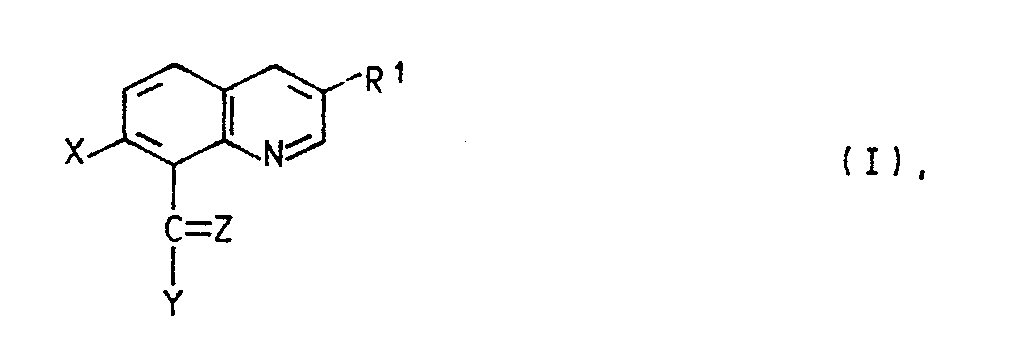
- Es wurde nun gefunden, daß Chinolinderivate der Formel I

R¹ Halogen oder C₁-C₄-Alkyl,
X Halogen,
Z Sauerstoff, Hydroxyimino, C₁-C₄-Alkoxyimino oder einen Hydrazonorest, der durch C₁-C₄-Alkyl, C₂-C₅-Alkoxycarbonyl, Arylsulfonyl, 1,3-Oxazol-2-yl oder 1,3-Thiazol-2-yl substituiert ist, wobei die letztgenannten heterocyclischen Reste wiederum durch C₁-C₄-Alkyl, C₂-C₄-Hydroxyalkyl oder Hydroxyl substituiert sind, und
Y für den Fall, daß Z die Bedeutung von Sauerstoff besitzt, den Rest -NR²R³, in dem R² für Wasserstoff und R³ für C₁-C₄-Hydroxyalkyl, C₁--C₄-Alkoxy, C₂-C₄-Alkenyl, das durch -C≡N oder C₂-C₅-Alkoxycarbonyl substituiert ist, gegebenenfalls substituiertes Arylsulfonyl, 1,3-Oxazol-2-yl oder 1,3-Thiazol-2-yl steht, oder in dem R² und R³ zusammen für C₁-C₄-Alkyliden stehen, das durch C₁-C₄-Dialkylamino, Hydroxyamino oder C₁-C₄-Alkoxyamino substituiert ist; einen Hydrazinorest, der gegebenenfalls durch C₂-C₅-Alkylcarbonyl, C₂-C₅-Alkoxycarbonyl, C₁-C₄-Acyl, C₂-C₆-Alkyliden, Thiocarbamoyl, C₁-C₄-Alkoxy-oxalyl, Amino-oxalyl oder durch gegebenenfalls Methyl-, Chlor-, Brom- oder Nitro-substituiertes Arylsulfonyl substituiert ist; C₁-C₄-Alkyl, das gegebenenfalls durch C₂-C₅-Alkoxycarbonyl substituiert ist; oder C₃-C₈-Cycloalkenyl, das durch C₁-C₄-Dialkylamino oder C₄-C₆-Alkylenimino substituiert ist,
für den Fall, daß Z die Bedeutung von C₁-C₄-Alkoxyimino oder des oben genannten substituierten Hydrazonorests besitzt, Wasserstoff oder Halogen, und
für den Fall, daß Z die Bedeutung von Hydroxyimino besitzt, Halogen, Amino, C₁-C₄-Alkoxy oder C₁-C₄-Alkylthio, das durch Carboxyl oder C₂-C₅-Alkoxycarbonyl substituiert ist, bedeuten,
oder in der die Gruppe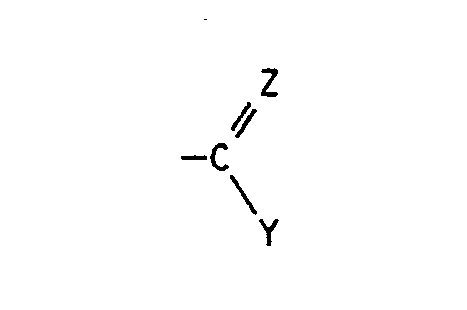
- R¹ in Formel I bedeutet z.B. Fluor, Chlor, Brom, Methyl, Ethyl, Propyl, Isopropyl, Butyl, Isobutyl, But-2-yl oder tert-Butyl, vorzugsweise Chlor; und Methyl.
- X in Formel I bedeutet z.B. Fluor, Chlor oder Brom, vorzugsweise Chlor.
- Z in Formel I bedeutet z.B. Sauerstoff; Hydroxyimino; Methoxyimino, Ethoxyimino, Propoxyimino oder Butoxyimino; Methylhydrazono, Ethylhydrazono, Isopropylhydrazono, Butylhydrazono, Methoxycarbonylhydrazono, Ethoxycarbonylhydrazono, Propoxycarbonylhydrazono, tert-Butoxycarbonylhydrazono, Phenylsulfonylhydrazono, 2-Methylphenylsulfonylhydrazono, 4-Methylphenylsulfonylhydrazono, 4-Chlorphenylsulfonylhydrazono, 4-Methyl-1,3-thiazol-2-yl-hydrazono, 4-Ethyl-1,3-oxazol-2-yl-hydrazono, 4-tert-Butyl-1,3-thiazol-2-yl-hydrazono, 4-Hydroxy-1,3-oxazol-2-yl-hydrazono, 4-Hydroxyl-1,3-thiazol-2-yl-hydrazono, 4-(2-Hydroxyethyl)-1,3-thiazol-2-yl-hydrazono oder 3-(2-Hydroxyethyl)-4-hydroxy-1,3-thiazol-2-yl-hydrazono.
- Die Bedeutung von Y in Formel I richtet sich nach der Bedeutung des Restes Z.
- Für den Fall, daß Z die Bedeutung von Sauerstoff besitzt, bedeutet Y z.B. 2-Hydroxyethylamino, (1-Methyl-2-hydroxy)ethylamino, 3-Hydroxypropylamino, (1,1-Dimethyl-2-hydroxy)ethylamino; Methoxyamino, Ethoxyamino, Propoxyamino, Isopropoxyamino, Butoxyamino, Isobutoxyamino; 2-Cyano-2-methylethenylamino, 2-(Methoxycarbonyl)ethenylamino, 2-(Ethoxycarbonyl)-2-methylethenylamino, 3-(Ethoxycarbonyl)prop-2-en-2-ylamino; Phenylsulfonylamino; 2-Methylphenylsulfonylamino, 4-Methylphenylsulfonylamino, 4-Chlorphenylsulfonylamino, 1,3-Oxazol-2-ylamino; 1,3-Thiazol-2-ylamino; Dimethylaminomethylidenamino, 1-(Dimethylamino)ethylidenamino; Hydroxyaminomethylidenamino; 1-(Hydroxyamino)ethylidenamino; Methoxyaminomethylidenamino, 1-(Ethoxyamino)ethylidenamino; Hydrazino; Methoxycarbonylhydrazino, Ethoxycarbonylhydrazino, Isopropoxycarbonylhydrazino, tert-Butoxycarbonylhydrazino; Ethylidenhydrazino, Prop-2-ylidenhydrazino, 2-Methylbut-3-ylidenhydrazino; Thiocarbamoylhydrazino; Methoxyoxalylhydrazino, Ethoxyoxalylhydrazino; Aminooxalylhydrazino; Phenylsulfonylhydrazino, 2-Methylphenylsulfonylhydrazino, 4-Methylphenylsulfonylhydrazino, 4-Chlorphenylsulfonylhydrazino, 4-Bromphenylsulfonylhydrazino, 4-Nitrophenylsulfonylhydrazino; Methyl, Ethyl, Propyl, Butyl; Ethoxycarbonylmethyl; 2-Dimethylaminocyclopent-1-en-1-yl, 2-Diethylaminocyclopent-1-en-1-yl, 2-Pyrrolidinocyclopent-1-en-1-yl, 2-Pyrrolidinocyclohex-1-en-1-yl oder 2-Piperidinocyclohex-1-en-1-yl.
- Für den Fall, daß Z die Bedeutung von C₁-C₄-Alkoxyimino oder des oben genannten Hydrazonorests besitzt, bedeutet Y z.B. Wasserstoff, Chlor oder Brom.
- Für den Fall, daß Z die Bedeutung von Hydroxyimino besitzt, bedeutet Y z.B. Chlor, Brom, Amino; Methoxy, Ethoxy, Propoxy, Isopropoxy, Butoxy, Isobutoxy; Carboxymethylthio oder Ethoxycarbonylmethylthio.
- Die Gruppe

- Beispielhaft seien folgende heterocyclische Reste für die Gruppe
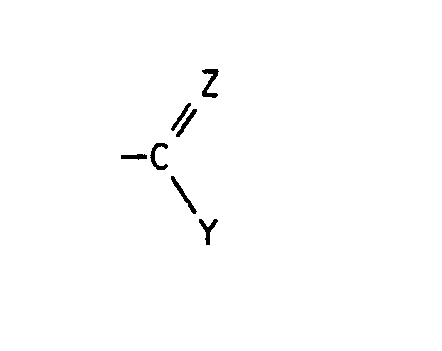
- Bevorzugt sind Verbindungen in denen R¹ und X Halogen, insbesondere Chlor, Z Sauerstoff und Y den Rest -NHR³, wobei R³ für C₁-C₄-Alkoxy, insbesondere Ethoxy steht, bedeuten.
- Die erfindungsgemäßen Carbonsäureamide und Carbonsäurehydrazide (Z = O, Y = NR²R³ bzw. Hydrazinorest) werden durch Umsetzung des Säurechlorids (Z = O, Y = Cl) mit den betreffenden Aminen bzw. Hydrazinen in einem inerten Lösungsmittel unter Zusatz eines säurebindenden Mittels erhalten.
- Als inerte Lösungsmittel kommen chlorierte Kohlenwasserstoffe, wie Methylenchlorid oder Chlorbenzol; Ether, wie Tetrahydrofuran, Dioxan, 1,2-Dimethoxyethan oder Diethylenglykoldimethylether; aromatische Kohlenwasserstoffe, wie Toluol oder Xylol in Frage. Bevorzugt sind 1,2-Dimethoxyethan und Methylenchlorid.
- Als säurebindendes Mittel kommen tertiäre Amine, wie Triethylamin, Pyridin oder N,N-Dimethylaminopyridin in Betracht. Zweckmäßig verwendet man 1 bis 2 Mol säurebindendes Mittel pro Mol Säurechlorid.
- In manchen Fällen kann auch ein entsprechender Überschuß der Amin- bzw. Hydrazinkomponente vorteilhaft als Säurebinder eingesetzt werden. Bevorzugt verwendet man Triethylamin.
- Die Reaktionstemperatur kann innerhalb eines größeren Bereichs variiert werden. Im allgemeinen arbeitet man bei einer Temperatur von -30 bis +80°C, vorzugsweise -10 bis +25°C.
- Eine Möglichkeit zur Herstellung von Säureamiden, die das Strukturelement

- Als Lösungsmittel kommen aliphatische Amide wie N,N-Dimethylformamid, N,N-Dimethylacetamid sowie aromatische Kohlenwasserstoffe, wie Toluol, Xylol oder Chlorbenzol in Frage. In manchen Fällen ist es auch zweckmäßig, die Umsetzung in überschüssigem Amidacetal oder Orthocarbonsäureester durchzuführen. Der bei der Reaktion entstehende Alkohol kann im Reaktionsgemisch belassen werden oder wird vorzugsweise mittels Destillation entfernt.
- Als Reaktionstemperatur wählt man zweckmäßig die Rückflußtemperatur des Reaktionsgemisches, die im allgemeinen bei 100 bis 150°C liegt.
- Die erfindungsgemäßen Keto-Verbindungen können in an sich bekannter Weise aus dem Carbonsäureester mittels einer Grignard-Reaktion erhalten werden, wobei es überraschend ist, daß in diesem Fall die Grignard-Reaktion auf der Keto-Stufe stehen bleibt und kein tertiärer Alkohol gebildet wird.
- Diejenigen erfindungsgemäßen Verbindungen, die heterocyclische Substituenten tragen, können nach an sich bekannten Methoden der Heterocyclensynthese, wie sie z.B. in R.A. Katritzky, C.W. Rees "Comprehensive Heterocyclic Chemistry", Band 4 und 5, Pergamon Press 1984 und A. Weissberger "Chemistry of Heterocyclic Compounds", Interscience Publishers beschrieben sind, erhalten werden.
- Für den Fall, daß die Gruppe

- Die weiteren erfindungsgemäßen Verbindungen (z.B. Oxime, Hydrazone oder Oximester) können ebenfalls nach an sich bekannten Methoden, wie sie beispielsweise in Houben-Weyl, "Methoden der organischen Chemie", Band 10/2 und 10/4 beschrieben sind, erhalten werden.
- Die Chinolinderivate I weisen eine herbizide Wirkung auf und sind gegenüber Kulturpflanzen selektiv.
- Die Chinolinderivate der Formel I bzw. die sie enthaltenden herbiziden Mittel können beispielsweise in Form von direkt versprühbaren Lösungen, Pulvern, Suspensionen, auch hochprozentigen wäßrigen, öligen oder sonstigen Suspensionen oder Dispersionen, Emulsionen, Öldispersionen, Pasten, Stäubemitteln, Streumitteln oder Granulaten durch Versprühen, Vernebeln, Verstäuben, Verstreuen oder Gießen angewendet werden. Die Anwendungformen richten sich ganz nach den Verwendungszwecken; sie sollten in jedem Fall möglichst die feinste Verteilung der erfindungsgemäßen Wirkstoffe gewährleisten.
- Zur Herstellung von direkt versprühbaren Lösungen, Emulsionen, Pasten oder Öldispersionen kommen Mineralölfraktionen von mittlerem bis hohem Siedepunkt, wie Kerosin oder Dieselöl, ferner Kohlenteeröle sowie Öle pflanzlichen oder tierischen Ursprungs, aliphatische, cyclische und aromatische Kohlenwasserstoffe, z.B. Toluol, Xylol, Paraffin, Tetrahydronaphthalin, alkylierte Naphthaline oder deren Derivate, Methanol, Ethanol, Propanol, Butanol, Cyclohexanol, Cyclohexanon, Chlorbenzol, Isophoron oder stark polare Lösungsmittel, wie N,N-Dimethylformamid, Dimethylsulfoxid, N-Methylpyrrolidon oder Wasser in Betracht.
- Wäßrige Anwendungsformen können aus Emulsionskonzentraten, Dispersionen, Pasten, netzbaren Pulvern oder wasserdispergierbaren Granulaten durch Zusatz von Wasser bereitet werden. Zur Herstellung von Emulsionen, Pasten oder Öldispersionen können die Substrate als solche oder in einem Öl oder Lösungsmittel gelöst, mittels Netz-, Haft-, Dispergier- oder Emulgiermittel in Wasser homogenisiert werden. Es können aber auch aus wirksamer Substanz Netz-, Haft-, Dispergier- oder Emulgiermittel und eventuell Lösungsmittel oder Öl bestehende Konzentrate hergestellt werden, die zur Verdünnung mit Wasser geeignet sind.
- Als oberflächenaktive Stoffe kommen die Alkali-, Erdalkali-, Ammoniumsalze von aromatischen Sulfonsäuren, z.B. Lignin-, Phenol-, Naphthalin- und Dibutylnaphthalinsulfonsäure, sowie von Fettsäuren, Alkyl- und Alkylarylsulfonaten, Alkyl-, Laurylether- und Fettalkoholsulfaten, sowie Salze sulfatierter Hexa-, Hepta- und Octadecanolen, sowie von Fettalkoholglykolether, Kondensationsprodukte von sulfoniertem Naphthalin und seiner Derivate mit Formaldehyd, Kondensationsprodukte des Naphthalins bzw. der Naphthalinsulfonsäuren mit Phenol und Formaldehyd, Polyoxyethylenoctylphenolether, ethoxyliertes Isooctyl-, Octyl- oder Nonylphenol, Alkylphenol-, Tributylphenylpolyglykolether, Alkylarylpolyetheralkohole, Isotridecylalkohol, Fettalkoholethylenoxid-Kondensate, ethoxyliertes Rizinusöl, Polyoxyethylenalkylether, ethoxyliertes Polyoxypropylen, Laurylalkoholpolyglykoletheracetat, Sorbitester, Lignin, Sulfitablaugen oder Methylcellulose in Betracht.
- Pulver-, Streu- und Stäubemittel können durch Mischen oder gemeinsames Vermahlen der wirksamen Substanzen mit einem festen Trägerstoff hergestellt werden.
- Granulate, z.B. Umhüllungs-, Imprägnierungs- und Homogengranulate können durch Bindung der Wirkstoffe an feste Trägerstoffe hergestellt werden. Feste Trägerstoffe sind Mineralerden wie Silicagel, Kieselsäuren, Kieselgele, Silikate, Talkum, Kaolin, Kalkstein, Kalk, Kreide, Bolus, Löß, Ton, Dolomit, Diatomeenerde, Calcium- und Magnesiumsulfat, Magnesiumoxid, gemahlene Kunststoffe, Düngemittel, wie Ammoniumsulfat, Ammoniumphosphat, Ammoniumnitrat, Harnstoffe und pflanzliche Produkte, wie Getreidemehl, Baumrinden-, Holz- und Nußschalenmehl, Cellulosepulver oder andere feste Trägerstoffe.
- Die Formulierungen enthalten zwischen 0,1 und 95 Gew.%, vorzugsweise zwischen 0,5 und 90 Gew.%, Wirkstoff.
- Die Applikation kann im Vorauflauf- oder im Nachauflaufverfahren erfolgen, vorzugsweise im Nachauflaufverfahren. Sind die Wirkstoffe für gewisse Kulturpflanzen weniger verträglich, so können Ausbringungstechniken angewandt werden, bei welchen die herbiziden Mittel mit Hilfe der Spritzgeräte so gespritzt werden, daß die Blätter der empfindlichen Kulturpflanzen nach Möglichkeit nicht getroffen werden, während die Wirkstoffe auf die Blätter darunter wachsender unerwünschter Pflanzen oder die unbedeckte Bodenfläche gelangen (post-directed, lay-by).
- Die Aufwandmengen an Wirkstoff betragen je nach Jahreszeit, Zielpflanzen und Wachstumsstadium 0,1 bis 5,0, vorzugsweise 0,25 bis 3,0 kg/ha.
- In Anbetracht des erfaßbaren Wirkungsspektrums zur Unkrautbekämpfung, der Verträglichkeit der Kulturpflanzen oder der erwünschten Beeinflussung des Wachstums derselben sowie angesichts der Vielfalt der Applikationsmethoden können die erfindungsgemäßen Verbindungen je nach Substitutionsmuster in einer großen Zahl von Kulturpflanzen eingesetzt werden.
- In Betracht kommen beispielsweise folgende Kulturen:


- Zur Verbreiterung des Wirkungsspektrums und zur Erzielung synergistischer Effekte können die neuen Chinolincarbonsäurederivate mit zahlreichen Vertretern anderer herbizider oder wachstumsregulierender Wirkstoffgruppen gemischt und gemeinsam ausgebracht werden. Beispielsweise kommen als Mischungspartner Diazine, 4H-3,1-Benzoxazinderivate, Benzothiadiazinone, N-Phenylcarbamate, Thiolcarbamate, Halogencarbonsäuren, Triazine, Amide, Harnstoffe, Diphenylether, Triazinone, Uracile, Benzofuranderivate, Cyclohexan-1,3-dionderivate und andere in Betracht.
- Außerdem kann es von Nutzen sein, die Verbindungen der Formel I allein oder in Kombination mit anderen Herbiziden auch noch mit weiteren Pflanzenschutzmitteln gemischt gemeinsam auszubringen, beispielsweise mit Mitteln zur Bekämpfung von Schädlingen oder phytopathogenen Pilzen bzw. Bakterien. Von Interesse ist ferner die Mischbarkeit mit Mineralsalzlösungen, welche zur Behebung von Ernährungs- und Spurenelementmängeln eingesetzt werden. Es können auch nichtphytotoxische Öle und Ölkonzentrate zugesetzt werden.
- Die nachfolgenden Beispiele sollen die Erfindung näher erläutern.
- 25 g (0,5 mol) Hydrazinhydrat und 50 g (0,5 mol) Triethylamin wurden in 500 ml Dimethoxyethan gelöst. In die Lösung wurden unter Eiskühlung 130 g (0,5 mol) 3,7-Dichlorchinolin-8-carbonsäurechlorid langsam eingetragen, so daß die Temperatur 20°C nicht überstieg. Nach 3-stündigem Rühren bei Raumtemperatur wurde das Lösungsmittel am Rotationsverdampfer entfernt, der Rückstand in Wasser aufgenommen und abgesaugt. Man erhielt 101,5 g (79 %) 3,7-Dichlorchinolin-8-carbonsäurehydrazid vom Schmp. 136°C (Verbindung Nr. 1).
- Die nachfolgenden Beispiele in Tabelle 1 wurden in analoger Weise erhalten.

- 13,0 g (50 mmol) 3,7-Dichlorchinolin-8-carbonsäurechlorid wurden in 50 ml Dimethoxyethan suspendiert und 5,8 g (60 mmol) O-Ethylhydroxylamin-hydrochlorid sowie 15 g (150 mmol) Triethylamin zugegeben. Nach 5-stündigem Rühren bei Raumtemperatur wurde das Lösungsmittel am Rotationsverdampfer entfernt, der Rückstand mit Wasser verrieben und abgesaugt. Man erhielt 11,0 g (77 %), Schmp.: 140°C (Verbindung Nr. 21).
- Man löste 55,1 g (0,25 mol) 7-Chlor-3-methylchinolin-8-carboxamid in 50 ml N,N-Dimethylformamid, gab 39,3 g (0,32 mol) N,N-Dimethylformamiddimethylacetal zu und erhitzte 4 Stunden unter Rückfluß. Nach Fällen auf Ether isolierte man 44,0 g (64 %) farblose Kristalle, Schmp. 183 bis 185°C (Zers.) (Verbindung Nr. 22)
- Die nachfolgenden Beispiele in Tabelle 2 wurden in analoger Weise erhalten.

- 13,8 g (50 mmol) Amidin aus Beispiel 22 suspendierte man in 50 ml Eisessig, gab 4,2 g (60 mmol) Hydroxylammoniumhydrochlorid und 5,0 g (60 mmol) Natriumacetat zu, erhitzte 5 Stunden unter Rückfluß, fällte auf Wasser und saugte ab. 6,0 g (45 %), Schmp. 235-238°C (Verbindung Nr. 26).
- Die entsprechende 3-Chlorchinolinverbindung wurde analog erhalten, Schmp. 220 bis 230°C (Verbindung Nr. 27).
- 12,0 g (50 mmol) 7-Chlor-3-methylchinolin-8-carbonsäurehydrazid (Verbindung Nr. 8) wurden in Triethylorthoformiat 3 Stunden auf 120°C erhitzt und der entstehende Alkohol abdestilliert. Abziehen des überschüssigen Orthoesters und Anreiben mit Ether lieferte 9,4 g (77 %), Schmp. 165°C (Verbindung Nr. 28).
- Die Verbindungen Ic der Tabelle 3 wurden analog erhalten.

- 26,0 g (80 mmol) von Verbindung Nr. 4 rührte man 6 Stunden bei 130°C in 100 g Polyphosphorsäure. Danach rührte man in Wasser ein und ließ über Nacht auskristallisieren. 16,3 g (66 %), Schmp. 220°C (Zers.) (Verbindung Nr. 31).
- 12,8 g (50 mmol) 3,7-Dichlorchinolin-8-carbonsäurehydrazid (Verbindung Nr. 1) wurden in 100 ml Dimethoxyethan suspendiert, 7,9 g (100 mmol) Pyridin zugegeben und danach Phosgen über einen Zeitraum von 4 Stunden bei 25°C eingeleitet. Nach Entfernen von überschüssigem Phosgen und Lösungsmittel rührte man in Wasser ein, und saugte ab: 8,7 g (62 %), Schmp.: 87°C (Verbindung Nr. 33).
- Analog gewann man das 3-Methylderivat. Schmp.: 232°C (Verbindung Nr. 34).
- 20,9 g (80 mmol) Verbindung Nr. 14 wurden in 50 ml Thionylchlorid 4 Stunden unter Rückfluß erhitzt. Man fällte auf Eis und gewann 18,3 g (86 %), Schmp.: 145°C (Verbindung Nr. 35).
- Analog wurden die in Tabelle 4 aufgeführten Verbindungen Ic hergestellt.

- 13,8 g (50 mmol) Verbindung Nr. 21 wurden mit 3,0 (60 mmol) Hydrazinhydrat in 50 ml Eisessig 4 Stunden bei 70°C gerührt. Nach Fällen auf Wasser und Absaugen isolierte man 9,5 g (78 %), Schmp. 274-276°C (Verbindung Nr. 39).
- In analoger Weise stellte man die Verbindung Ic der Tabelle 5 dar.

- In eine Suspension von 48,2 g (0,2 mol) 3,7-Dichlorchinolin-8-aldoxim in Chloroform leitete man 3 Stunden bei 40°C Chlor ein, saugte ab, wusch mit Ether und trocknete: 59,3 g (95 %), Schmp.: > 300°C (Verbindung Nr. 45).
- Analog wurde erhalten:
3,7-Dichlorchinolin-8-hydroxamsäure-bromid-hydrobromid (Verbindung Nr. 46). - 15,6 g (50 mmol) der Verbindung Nr. 45 wurden in 100 ml 10 %ige Natriumcarbonat-Lösung eingerührt, 2 Stunden bei Raumtemperatur gerührt und abgesaugt: 108 g (90 %), Schmp.: 185°C (Verbindung Nr. 47).
- Das Nitriloxid ist in analoger Weise auch aus Verbindung Nr. 46 zugänglich.
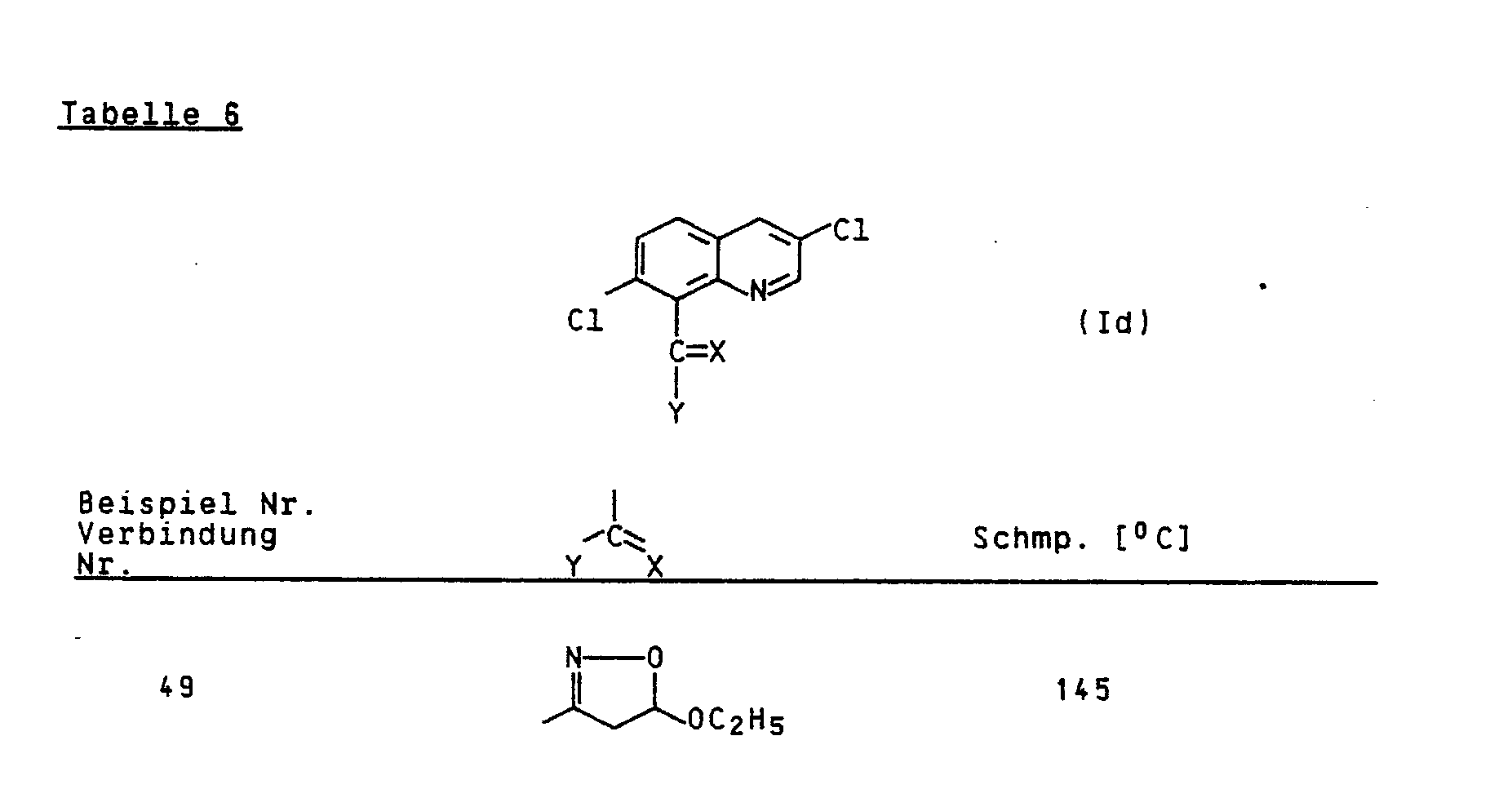
- 12,0 g (50 mmol) 3,7-Dichlorchinolin-8-nitriloxid (Verbindung Nr. 47) wurden in 100 ml Dimethoxyethan suspendiert, 8,50 g (60 ml) Acetylendicarbonsäuredimethylester zugegeben und 4 Stunden unter Rückfluß erhitzt. Nach Fällen auf Wasser, Absaugen und Trocknen erhielt man 17,8 g (93 %), Schmp.: 135°C (Verbindung Nr. 48).
- In analoger Weise erhielt man die in der Tabelle 6 aufgeführten Verbindungen Id.

- 12,0 g (50 mmol) 3,7-Dichlorchinolin-8-nitriloxid (Verbindung Nr. 47) wurden in 100 ml Dimethoxyethan suspendiert und 5,6 g (60 mmol) Mercaptoessigsäure zugefügt. Nach 6stündigem Rühren bei Raumtemperatur wurde vom Lösungsmittel befreit, mit Wasser versetzt und abgesaugt. 13,5 g (81 %), Schmp.: 174°C (Verbindung Nr. 59).
- Analog wurden die in der Tabelle 7 aufgeführten Verbindungen Ie erhalten.

- Die Lösung eines Grignard-Reagenzes, hergestellt aus 7,2 g (60 mmol) Ethylbromid und 1,6 g (60 mmol) Magnesium-Spänen in 30 ml abs. Tetrahydrofuran, wurde bei -70°C zu einer Suspension von 6,4 g (25 mmol) 3,7-Dichlorchinolin-8-carbonsäuremethylester in 25 ml abs. Tetrahydrofuran getropft, und das Gemisch langsam auf Raumtemperatur gebracht. Danach goß man auf Eis, säuerte mit 10 % Salzsäure an, saugte ab und trocknete: 4,5 g (71 %), Schmp.: 108-110°C (Verbindung Nr. 62).
- Analog wurde 7-Chlor-3-methyl-8-propionylchinolin (Verbindung Nr. 63) erhalten.
- 70,8 g (0,3 mol) 7-Chlor-3-methylchinolin-8-carbonsäuremethylester wurden in 150 ml Essigester suspendiert, 16 g 80 % Natriumhydrid zugegeben und das Gemisch 5 Stunden unter Rückfluß erhitzt. Nach Fällen auf Eis und Ansäuern mit verd. Salzsäure wurde abgesaugt und getrocknet, 51 g (58 %), Schmp.: 143-145°C (Verbindung Nr. 64).
- Die herbizide Wirkung der substituierten Chinolin-8-carbonsäureamide der Formel I auf das Wachstum der Testpflanzen wurde durch folgende Gewächshausversuche gezeigt.
- Als Kulturgefäße dienten Plastikblumentöpfe mit 300 cm³ Inhalt und lehmigem Sand mit etwa 3 % Humus als Substrat. Bei Soja wurde etwas Torfmull zugesetzt, um einen besseren Stand zu erzielen. Die Samen der Testpflanzen wurden nach Arten getrennt eingesät.
- Bei Vorauflaufbehandlung wurden die Wirkstoffe unmittelbar danach auf die Erdoberfläche aufgebracht. Sie wurden hierbei in Wasser als Verteilungsmittel suspendiert oder emulgiert und mittels fein verteilender Düsen gespritzt. Die Aufwandmengen betrugen 0,5 und 2,0 kg Wirkstoff/ha. Nach dem Aufbringen der Mittel wurden die Gefäße leicht beregnet, um Keimung und Wachstum in Gang zu bringen. Danach deckte man die Gefäße mit durchsichtigen Plastikhauben ab, bis die Pflanzen angewachsen waren. Diese Abdeckung bewirkte ein gleichmäßiges Keimen der Testpflanzen, sofern dies nicht durch die Wirkstoffe beeinträchtigt wurde.
- Zum Zweck der Nachauflaufbehandlung zog man die Testpflanzen je nach Wuchsform erst bis zu einer Wuchshöhe von 3 bis 15 cm an und behandelte sie danach. Es wurden direkt gesäte und in den gleichen Gefäßen aufgewachsene Pflanzen ausgewählt, oder sie wurden erst als Keimpflanzen getrennt angezogen. Die Aufwandmengen für die Nachauflaufbehandlung variierten je nach Wirkstoff, sie betrugen 2,0 und 3,0 kg Wirkstoff/ha. Eine Abdeckung unterblieb bei der Nachauflaufbehandlung.
- Die Versuchsgefäße wurden im Gewächshaus aufgestellt, wobei für wärmeliebende Arten wärmere Bereiche (20 bis 36°C) und für solche gemäßigter Klimate 10 bis 20°C bevorzugt wurden. Die Versuchsperiode erstreckte sich über 2 bis 4 Wochen. Während dieser Zeit wurden die Pflanzen gepflegt und ihre Reaktion auf die einzelnen Behandlungen ausgewertet.
- In den Versuchen verwendete man folgende Pflanzenarten:

- Bei Nachauflaufapplikation von 3,0 kg Wirkstoff/ha übertrafen beispielsweise die Verbindungen 1 und 7 in ihrer herbiziden Wirkung gegen dikotyle unerwünschte Pflanzen den bekannten Wirkstoff A (Beispiel 34 aus EP-PS-60 429) deutlich.
- Die Verbindungen 4 und 10 eigneten sich zur Bekämpfung von Galium aparine im Nachauflaufverfahren mit 3,0 kg Wirkstoff/ha ohne der Kulturpflanze Hafer Schäden zuzufügen.
- Verbindung 7 wurde im Nachauflaufverfahren zur Bekämpfung von ausgewählten dikotylen und monokotylen Pflanzen eingesetzt. Bei 2,0 kg Wirkstoff/ha wurden weder Soja- noch Reiskulturen nennenswert beeinträchtigt und Echinochloa crus-galli und Cassia tora hervorragend bekämpft.
- Im Vorauflaufverfahren zeigte die Verbindung 1 bei 0,5 kg Wirkstoff/ha und die Verbindung 7 bei 2,0 kg Wirkstoff/ha starke herbizide Eigenschaften gegenüber dikotylen, unerwünschten Pflanzen. Die Kulturpflanze Mais wurde nicht geschädigt.
- Auch bei Vorauflaufapplikation eignete sich Verbindung 7 zur Bekämpfung von Schadpflanzen, wie Echinochloa crus-galli und Ipomoea, wobei die Sojapflanzen unbeeinflußt blieben.
- Die Verbindung 32 eignete sich sowohl bei Vorauflauf- als auch bei Nachauflaufapplikation bei 1,0 kg Wirkstoff/ha gegenüber Echinochloa crus-galli und Veronica spp. unter allenfalls unwesentlicher Beeinträchtigung der Kulturpflanze Weizen.
Claims (7)
R¹ Halogen oder C₁-C₄-Alkyl,
X Halogen,
Z Sauerstoff, Hydroxyimino, C₁-C₄-Alkoxyimino oder einen Hydrazonorest, der durch C₂-C₅-Alkyl, C₁-C₄-Alkoxycarbonyl, Arylsulfonyl, 1,3-Oxazol-2-yl oder 1,3-Thiazol-2-yl substituiert ist, wobei die letztgenannten heterocyclischen Reste wiederum durch C₁-C₄-Alkyl, C₂-C₄-Hydroxyalkyl oder Hydroxyl substituiert sind, und
Y für den Fall, daß Z die Bedeutung von Sauerstoff besitzt, den Rest -NR²R³, in dem R² für Wasserstoff und R³ für C₁-C₄-Hydroxyalkyl, C₁-C₄-Alkoxy, C₂-C₄-Alkenyl, das durch -C≡N oder C₂-C₅-Alkoxycarbonyl substituiert ist, gegebenenfalls substituiertes Arylsulfonyl, 1,3-Oxazol-2-yl oder 1,3-Thiazol-2-yl steht, oder in dem R² und R³ zusammen für C₁-C₄-Alkyliden stehen, das durch C₁-C₄-Dialkylamino, Hydroxyamino oder C₁-C₄-Alkoxyamino substituiert ist; einen Hydrazinorest, der gegebenenfalls durch C₂-C₅-Alkylcarbonyl, C₂-C₅-Alkoxycarbonyl, C₁-C₄-Acyl, C₂-C₆-Alkyliden, Thiocarbamoyl, C₁-C₄-Alkoxy-oxalyl, Amino-oxalyl oder gegebenenfalls Methyl-, Chlor-, Brom- oder Nitro-substituiertes Arylsulfonyl substituiert ist; C₁-C₄-Alkyl, das gegebenenfalls durch C₂-C₅-Alkoxycarbonyl substituiert ist; oder C₃-C₈-Cycloalkenyl, das durch C₁-C₄-Dialkylamino oder C₄-C₆-Alkylenimino substituiert ist,
für den Fall, daß Z die Bedeutung von C₁-C₄-Alkoxyimino oder des oben genannten substituierten Hydrazonorests besitzt, Wasserstoff oder Halogen, und
für den Fall, daß Z die Bedeutung von Hydroxyimino besitzt, Halogen, Amino, C₁-C₄-Alkoxy oder C₁-C₄-Alkylthio, das durch Carboxyl oder C₂-C₅-Alkoxycarbony substituiert ist, bedeuten,
oder in der die Gruppe

R¹ Chlor oder Methyl,
X Chlor,
Z Sauerstoff, Hydroxyimino, C₁-C₄-Alkoxyimino oder einen Hydrazonorest, der durch C₂-C₅-Alkyl, C₁-C₄-Alkoxycarbonyl, Arylsulfonyl, 1,3-Oxazol-2-yl oder 1,3-Thiazol-2-yl substituiert ist, wobei die letztgenannten heterocyclischen Reste wiederum durch C₁-C₄-Alkyl, C₂-C₄-Hydroxyalkyl oder Hydroxyl substituiert sind, und
Y für den Fall, daß Z die Bedeutung von Sauerstoff besitzt, den Rest -NR²R³, in dem R² für Wasserstoff und R³ für C₁-C₄-Hydroxyalkyl, C₁-C₄-Alkoxy, C₂-C₄-Alkenyl, das durch -C≡N oder C₂-C₅-Alkoxycarbonyl substituiert ist, gegebenenfalls substituiertes Arylsulfonyl, 1,3-Oxazol-2-yl oder 1,3-Thiazol-2-yl steht, oder in dem R² und R³ zusammen für C₁-C₄-Alkyliden stehen, das durch C₁-C₄-Dialkylamino, Hydroxyamino oder C₁-C₄-Alkoxyamino substituiert ist; einen Hydrazinorest, der gegebenenfalls durch C₂-C₅-Alkylcarbonyl, C₂-C₅-Alkoxycarbonyl, C₁-C₄-Acyl, C₂-C₆-Alkyliden, Thiocarbamoyl, C₁-C₄-Alkoxy-oxalyl, Amino-oxalyl oder gegebenenfalls Methyl-, Chlor-, Brom- oder Nitro-substituiertes Arylsulfonyl substituiert ist; C₁-C₄-Alkyl, das gegebenenfalls durch C₂-C₅-Alkoxycarbonyl substituiert ist; oder C₃-C₈-Cycloalkenyl, das durch C₁-C₄-Dialkylamino oder C₄-C₆-Alkylenimino substituiert ist,
für den Fall, daß Z die Bedeutung von C₁-C₄-Alkoxyimino oder des oben genannten substituierten Hydrazonorests besitzt, Wasserstoff oder Halogen, und
für den Fall, daß Z die Bedeutung von Hydroxyimino besitzt, Halogen, Amino, C₁-C₄-Alkoxy oder C₁-C₄-Alkylthio, das durch Carboxyl oder C₂-C₅-Alkoxycarbonyl substituiert ist, bedeuten,
oder in der die Gruppe

R¹ Halogen
X Halogen
Z Sauerstoff
Y den Rest -NHR³ und
R³ C₁-C₄-Alkoxy bedeutet.
R¹ Chlor
X Chlor
Z Sauerstoff
Y den Rest -NHR³ und
R³ Ethoxy bedeutet.
Applications Claiming Priority (4)
| Application Number | Priority Date | Filing Date | Title |
|---|---|---|---|
| DE19853541722 DE3541722A1 (de) | 1985-11-26 | 1985-11-26 | Chinolinderivate und ihre verwendung zur bekaempfung von unerwuenschtem pflanzenwachstum |
| DE3541722 | 1985-11-26 | ||
| DE19863606949 DE3606949A1 (de) | 1986-03-04 | 1986-03-04 | Chinolinderivate und ihre verwendung zur bekaempfung von unerwuenschtem pflanzenwachstum |
| DE3606949 | 1986-03-04 |
Publications (2)
| Publication Number | Publication Date |
|---|---|
| EP0224823A2 true EP0224823A2 (de) | 1987-06-10 |
| EP0224823A3 EP0224823A3 (de) | 1988-02-10 |
Family
ID=25838181
Family Applications (1)
| Application Number | Title | Priority Date | Filing Date |
|---|---|---|---|
| EP86116185A Withdrawn EP0224823A3 (de) | 1985-11-26 | 1986-11-22 | Chinolinderivate und ihre Verwendung zur Bekämpfung von unerwümschtem Pflanzenwachstum |
Country Status (2)
| Country | Link |
|---|---|
| US (1) | US4797148A (de) |
| EP (1) | EP0224823A3 (de) |
Cited By (3)
| Publication number | Priority date | Publication date | Assignee | Title |
|---|---|---|---|---|
| EP0525516A3 (en) * | 1991-07-27 | 1993-05-19 | Basf Aktiengesellschaft | Derivatives of beta substituted cinnomic acid |
| WO1994004530A1 (en) * | 1992-08-14 | 1994-03-03 | Korea Research Institute Of Chemical Technology | Herbicidal quinolinyloxadiazoles |
| WO2018013772A1 (en) * | 2016-07-14 | 2018-01-18 | Bristol-Myers Squibb Company | Monocyclic heteroaryl substituted compounds |
Families Citing this family (8)
| Publication number | Priority date | Publication date | Assignee | Title |
|---|---|---|---|---|
| US4933447A (en) * | 1987-09-24 | 1990-06-12 | Ss Pharmaceutical Co., Ltd. | Quinoline derivatives |
| US5591695A (en) * | 1995-02-08 | 1997-01-07 | American Cyanamid Co. | Herbicidal [1,3,4]oxadiazoles and thiadiazoles |
| DE69633196D1 (de) * | 1995-10-16 | 2004-09-23 | Fujisawa Pharmaceutical Co | Heterocyclische verbindungen als h+-atpasen |
| CA2416136A1 (en) * | 2000-09-19 | 2002-03-28 | Warner-Lambert Company | Branched chain amino acid-dependent aminotransferase inhibitors and their use in the treatment of neurodegenerative diseases |
| CN106489944A (zh) * | 2016-09-08 | 2017-03-15 | 四川利尔作物科学有限公司 | 除草组合物及其应用 |
| CN106538578A (zh) * | 2016-09-23 | 2017-03-29 | 四川利尔作物科学有限公司 | 含喹草酸、苯磺隆的小麦田复合除草剂 |
| WO2018135649A1 (ja) | 2017-01-20 | 2018-07-26 | 北興化学工業株式会社 | イソキサゾリン-5-オン誘導体およびそれらを有効成分として含有する除草剤 |
| CN115232115B (zh) * | 2022-08-10 | 2024-04-16 | 贵州大学 | 一种二氯喹啉-噁唑啉类手性配体及其制备方法和应用 |
Family Cites Families (5)
| Publication number | Priority date | Publication date | Assignee | Title |
|---|---|---|---|---|
| DE3108873A1 (de) * | 1981-03-09 | 1982-09-16 | Basf Ag, 6700 Ludwigshafen | Dichlorchinolinderivate, ihre herstellung, ihre verwendung als herbizide und mittel dafuer |
| US4497651A (en) * | 1982-02-17 | 1985-02-05 | Basf Aktiengesellschaft | Dichloroquinoline derivatives for use as herbicides |
| DE3210979A1 (de) * | 1982-03-25 | 1983-09-29 | Basf Ag, 6700 Ludwigshafen | 3-chlor-8-cyano-chinoline, verfahren zu ihrer herstellung und ihre verwendung zur bekaempfung unerwuenschten pflanzenwuchses |
| DE3223884A1 (de) * | 1982-06-26 | 1983-12-29 | Basf Ag, 6700 Ludwigshafen | 3,7-dichlor-chinolinderivate, verfahren zu ihrer herstellung und ihre verwendung zur bekaempfung unerwuenschten pflanzenwuchses |
| DE3229175A1 (de) * | 1982-08-05 | 1984-02-09 | Basf Ag, 6700 Ludwigshafen | 3,7-dichlor-8-chinolinderivate |
-
1986
- 1986-11-22 EP EP86116185A patent/EP0224823A3/de not_active Withdrawn
- 1986-11-24 US US06/933,795 patent/US4797148A/en not_active Expired - Fee Related
Cited By (8)
| Publication number | Priority date | Publication date | Assignee | Title |
|---|---|---|---|---|
| EP0525516A3 (en) * | 1991-07-27 | 1993-05-19 | Basf Aktiengesellschaft | Derivatives of beta substituted cinnomic acid |
| US5573999A (en) * | 1991-07-27 | 1996-11-12 | Basf Aktiengesellschaft | β-substituted cinnamic acid derivative |
| WO1994004530A1 (en) * | 1992-08-14 | 1994-03-03 | Korea Research Institute Of Chemical Technology | Herbicidal quinolinyloxadiazoles |
| CN1040437C (zh) * | 1992-08-14 | 1998-10-28 | 韩国化学研究所 | 除草的喹啉基噁二唑衍生物,它们的制备方法和含有它们的除草组合物 |
| WO2018013772A1 (en) * | 2016-07-14 | 2018-01-18 | Bristol-Myers Squibb Company | Monocyclic heteroaryl substituted compounds |
| CN109689642A (zh) * | 2016-07-14 | 2019-04-26 | 百时美施贵宝公司 | 经单环杂芳基取代的化合物 |
| US10815224B2 (en) | 2016-07-14 | 2020-10-27 | Bristol-Myers Squibb Company | Monocyclic heteroaryl substituted compounds |
| CN109689642B (zh) * | 2016-07-14 | 2022-04-12 | 百时美施贵宝公司 | 经单环杂芳基取代的化合物 |
Also Published As
| Publication number | Publication date |
|---|---|
| US4797148A (en) | 1989-01-10 |
| EP0224823A3 (de) | 1988-02-10 |
Similar Documents
| Publication | Publication Date | Title |
|---|---|---|
| EP0360163A2 (de) | Aromatische Carbonsäurederivate und ihre Verwendung zur Bekämpfung unerwünschten Pflanzenwuchses | |
| DE3602016A1 (de) | Pyri(mi)dyl-oxy- und thio-benzoesaeure-derivate | |
| EP0207894B1 (de) | Herbizid wirkende Derivate des N-Phenyl-3,4,5,6-tetrahydrophthalsäureimides | |
| EP0332009B1 (de) | N-Aryltetrahydrophthalimidverbindungen | |
| EP0527378B1 (de) | Salicyl(thio)etherderivate, Verfahren und Zwischenprodukte zu ihrer Herstellung | |
| EP0071794A1 (de) | 5-Amino-1-phenyl-pyrazol-4-carbonsäurederivate, Verfahren zu ihrer Herstellung und ihre Verwendung zur Bekämpfung unerwünschten Pflanzenwuchses | |
| EP0224823A2 (de) | Chinolinderivate und ihre Verwendung zur Bekämpfung von unerwümschtem Pflanzenwachstum | |
| EP0523533A1 (de) | Substituierte Pyrimidinderivate und ihre Verwendung zur Bekämpfung unerwünschten Pflanzenwuchses | |
| EP0081141B1 (de) | Harnstoffderivate, Verfahren zu ihrer Herstellung und ihre Verwendung zur Bekämpfung unerwünschten Pflanzenwuchses | |
| EP0135838B1 (de) | 3-Phenyl-4-methoxycarbonylpyrazole, Verfahren zu ihrer Herstellung und ihre Verwendung zur Bekämpfung unerwünschten Pflanzenwuchses | |
| EP0085785B1 (de) | Substituierte 4,5-Dimethoxy-pyridazone, Verfahren zu ihrer Herstellung und ihre Verwendung zur Bekämpfung unerwünschten Pflanzenwuchses | |
| EP0379003B1 (de) | Thiophen-2-carbonsäurederivate, Verfahren zu ihrer Herstellung und ihre Verwendung zur Bekämpfung unerwünschten Pflanzenwuchses | |
| DE4426346A1 (de) | Herbizide Pyrazinderivate | |
| EP0151744B1 (de) | 1-Acylimidazolinone, Verfahren zu ihrer Herstellung und ihre Verwendung in der Landwirtschaft | |
| EP0236916B1 (de) | N-Aryltetrahydrophthalimidderivate und deren Vorprodukte | |
| DE3541722A1 (de) | Chinolinderivate und ihre verwendung zur bekaempfung von unerwuenschtem pflanzenwachstum | |
| EP0084673B1 (de) | Aminothiadiazole, Verfahren zu ihrer Herstellung und ihre Verwendung zur Bekämpfung unerwünschten Pflanzenwuchses | |
| EP0090258B1 (de) | 3-Chlor-8-cyano-chinoline, Verfahren zu ihrer Herstellung und ihre Verwendung zur Bekämpfung unerwünschten Pflanzenwuchses | |
| EP0401582B1 (de) | Fünfring-heterocyclisch anellierte Chinolinderivate | |
| EP0078003B1 (de) | Thiazolo(2,3-b)-chinazolone und Verfahren zu ihrer Herstellung | |
| EP0407888B1 (de) | Pyrimido(5,4-e)-as-triazin-5,7(6H,8H)-dione zur Bekämpfung unerwünschten Pflanzenwuchses | |
| EP0192998B1 (de) | Thiazolylamide, Verfahren zu ihrer Herstellung und ihre Verwendung zur Bekämpfung unerwünschten Pflanzenwuchses | |
| EP0098440B1 (de) | 3,7-Dichlor-chinolinderivate, Verfahren zu ihrer Herstellung und ihre Verwendung zur Bekämpfung unerwünschten Pflanzenwuchses | |
| EP0249858B1 (de) | Fluoralkylsubstituierte Chinolinderivate. ihre Herstellung sowie Verwendung zur Bekämpfung unerwünschten Pflanzenwachstums | |
| EP0067381B1 (de) | Anilide, Verfahren zu ihrer Herstellung und diese enthaltende Herbizide |
Legal Events
| Date | Code | Title | Description |
|---|---|---|---|
| PUAI | Public reference made under article 153(3) epc to a published international application that has entered the european phase |
Free format text: ORIGINAL CODE: 0009012 |
|
| AK | Designated contracting states |
Kind code of ref document: A2 Designated state(s): CH DE FR GB IT LI |
|
| PUAL | Search report despatched |
Free format text: ORIGINAL CODE: 0009013 |
|
| AK | Designated contracting states |
Kind code of ref document: A3 Designated state(s): CH DE FR GB IT LI |
|
| 17P | Request for examination filed |
Effective date: 19871223 |
|
| 17Q | First examination report despatched |
Effective date: 19890530 |
|
| STAA | Information on the status of an ep patent application or granted ep patent |
Free format text: STATUS: THE APPLICATION HAS BEEN WITHDRAWN |
|
| 18W | Application withdrawn |
Withdrawal date: 19920219 |
|
| RIN1 | Information on inventor provided before grant (corrected) |
Inventor name: HAGEN, HELMUT, DR. Inventor name: EICHENAUER, ULRICH, DR. Inventor name: PLATH, PETER, DR. Inventor name: MEYER, NORBERT, DR. Inventor name: WUERZER, BRUNO, DR. |