EP0214437B1 - Verfahren zur Herstellung von 1,4-Dihydropyridinderivaten über neue Zwischenprodukte - Google Patents
Verfahren zur Herstellung von 1,4-Dihydropyridinderivaten über neue Zwischenprodukte Download PDFInfo
- Publication number
- EP0214437B1 EP0214437B1 EP86110446A EP86110446A EP0214437B1 EP 0214437 B1 EP0214437 B1 EP 0214437B1 EP 86110446 A EP86110446 A EP 86110446A EP 86110446 A EP86110446 A EP 86110446A EP 0214437 B1 EP0214437 B1 EP 0214437B1
- Authority
- EP
- European Patent Office
- Prior art keywords
- alkyl
- chain
- group
- branched
- cyano
- Prior art date
- Legal status (The legal status is an assumption and is not a legal conclusion. Google has not performed a legal analysis and makes no representation as to the accuracy of the status listed.)
- Expired - Lifetime
Links
- 0 CCCOCC*C1(C2CCCC1)OC(*)=C(C)C2C1C=CCC(*)C1 Chemical compound CCCOCC*C1(C2CCCC1)OC(*)=C(C)C2C1C=CCC(*)C1 0.000 description 3
Classifications
-
- C—CHEMISTRY; METALLURGY
- C07—ORGANIC CHEMISTRY
- C07D—HETEROCYCLIC COMPOUNDS
- C07D221/00—Heterocyclic compounds containing six-membered rings having one nitrogen atom as the only ring hetero atom, not provided for by groups C07D211/00 - C07D219/00
- C07D221/02—Heterocyclic compounds containing six-membered rings having one nitrogen atom as the only ring hetero atom, not provided for by groups C07D211/00 - C07D219/00 condensed with carbocyclic rings or ring systems
- C07D221/04—Ortho- or peri-condensed ring systems
-
- A—HUMAN NECESSITIES
- A61—MEDICAL OR VETERINARY SCIENCE; HYGIENE
- A61P—SPECIFIC THERAPEUTIC ACTIVITY OF CHEMICAL COMPOUNDS OR MEDICINAL PREPARATIONS
- A61P3/00—Drugs for disorders of the metabolism
- A61P3/08—Drugs for disorders of the metabolism for glucose homeostasis
-
- A—HUMAN NECESSITIES
- A61—MEDICAL OR VETERINARY SCIENCE; HYGIENE
- A61P—SPECIFIC THERAPEUTIC ACTIVITY OF CHEMICAL COMPOUNDS OR MEDICINAL PREPARATIONS
- A61P9/00—Drugs for disorders of the cardiovascular system
-
- A—HUMAN NECESSITIES
- A61—MEDICAL OR VETERINARY SCIENCE; HYGIENE
- A61P—SPECIFIC THERAPEUTIC ACTIVITY OF CHEMICAL COMPOUNDS OR MEDICINAL PREPARATIONS
- A61P9/00—Drugs for disorders of the cardiovascular system
- A61P9/08—Vasodilators for multiple indications
-
- A—HUMAN NECESSITIES
- A61—MEDICAL OR VETERINARY SCIENCE; HYGIENE
- A61P—SPECIFIC THERAPEUTIC ACTIVITY OF CHEMICAL COMPOUNDS OR MEDICINAL PREPARATIONS
- A61P9/00—Drugs for disorders of the cardiovascular system
- A61P9/10—Drugs for disorders of the cardiovascular system for treating ischaemic or atherosclerotic diseases, e.g. antianginal drugs, coronary vasodilators, drugs for myocardial infarction, retinopathy, cerebrovascula insufficiency, renal arteriosclerosis
-
- C—CHEMISTRY; METALLURGY
- C07—ORGANIC CHEMISTRY
- C07D—HETEROCYCLIC COMPOUNDS
- C07D215/00—Heterocyclic compounds containing quinoline or hydrogenated quinoline ring systems
- C07D215/02—Heterocyclic compounds containing quinoline or hydrogenated quinoline ring systems having no bond between the ring nitrogen atom and a non-ring member or having only hydrogen atoms or carbon atoms directly attached to the ring nitrogen atom
- C07D215/12—Heterocyclic compounds containing quinoline or hydrogenated quinoline ring systems having no bond between the ring nitrogen atom and a non-ring member or having only hydrogen atoms or carbon atoms directly attached to the ring nitrogen atom with substituted hydrocarbon radicals attached to ring carbon atoms
- C07D215/14—Radicals substituted by oxygen atoms
-
- C—CHEMISTRY; METALLURGY
- C07—ORGANIC CHEMISTRY
- C07D—HETEROCYCLIC COMPOUNDS
- C07D215/00—Heterocyclic compounds containing quinoline or hydrogenated quinoline ring systems
- C07D215/02—Heterocyclic compounds containing quinoline or hydrogenated quinoline ring systems having no bond between the ring nitrogen atom and a non-ring member or having only hydrogen atoms or carbon atoms directly attached to the ring nitrogen atom
- C07D215/16—Heterocyclic compounds containing quinoline or hydrogenated quinoline ring systems having no bond between the ring nitrogen atom and a non-ring member or having only hydrogen atoms or carbon atoms directly attached to the ring nitrogen atom with hetero atoms or with carbon atoms having three bonds to hetero atoms with at the most one bond to halogen, e.g. ester or nitrile radicals, directly attached to ring carbon atoms
- C07D215/18—Halogen atoms or nitro radicals
-
- C—CHEMISTRY; METALLURGY
- C07—ORGANIC CHEMISTRY
- C07D—HETEROCYCLIC COMPOUNDS
- C07D215/00—Heterocyclic compounds containing quinoline or hydrogenated quinoline ring systems
- C07D215/02—Heterocyclic compounds containing quinoline or hydrogenated quinoline ring systems having no bond between the ring nitrogen atom and a non-ring member or having only hydrogen atoms or carbon atoms directly attached to the ring nitrogen atom
- C07D215/16—Heterocyclic compounds containing quinoline or hydrogenated quinoline ring systems having no bond between the ring nitrogen atom and a non-ring member or having only hydrogen atoms or carbon atoms directly attached to the ring nitrogen atom with hetero atoms or with carbon atoms having three bonds to hetero atoms with at the most one bond to halogen, e.g. ester or nitrile radicals, directly attached to ring carbon atoms
- C07D215/20—Oxygen atoms
- C07D215/24—Oxygen atoms attached in position 8
-
- C—CHEMISTRY; METALLURGY
- C07—ORGANIC CHEMISTRY
- C07D—HETEROCYCLIC COMPOUNDS
- C07D215/00—Heterocyclic compounds containing quinoline or hydrogenated quinoline ring systems
- C07D215/02—Heterocyclic compounds containing quinoline or hydrogenated quinoline ring systems having no bond between the ring nitrogen atom and a non-ring member or having only hydrogen atoms or carbon atoms directly attached to the ring nitrogen atom
- C07D215/16—Heterocyclic compounds containing quinoline or hydrogenated quinoline ring systems having no bond between the ring nitrogen atom and a non-ring member or having only hydrogen atoms or carbon atoms directly attached to the ring nitrogen atom with hetero atoms or with carbon atoms having three bonds to hetero atoms with at the most one bond to halogen, e.g. ester or nitrile radicals, directly attached to ring carbon atoms
- C07D215/36—Sulfur atoms
-
- C—CHEMISTRY; METALLURGY
- C07—ORGANIC CHEMISTRY
- C07D—HETEROCYCLIC COMPOUNDS
- C07D215/00—Heterocyclic compounds containing quinoline or hydrogenated quinoline ring systems
- C07D215/02—Heterocyclic compounds containing quinoline or hydrogenated quinoline ring systems having no bond between the ring nitrogen atom and a non-ring member or having only hydrogen atoms or carbon atoms directly attached to the ring nitrogen atom
- C07D215/16—Heterocyclic compounds containing quinoline or hydrogenated quinoline ring systems having no bond between the ring nitrogen atom and a non-ring member or having only hydrogen atoms or carbon atoms directly attached to the ring nitrogen atom with hetero atoms or with carbon atoms having three bonds to hetero atoms with at the most one bond to halogen, e.g. ester or nitrile radicals, directly attached to ring carbon atoms
- C07D215/48—Carbon atoms having three bonds to hetero atoms with at the most one bond to halogen
- C07D215/54—Carbon atoms having three bonds to hetero atoms with at the most one bond to halogen attached in position 3
-
- C—CHEMISTRY; METALLURGY
- C07—ORGANIC CHEMISTRY
- C07D—HETEROCYCLIC COMPOUNDS
- C07D311/00—Heterocyclic compounds containing six-membered rings having one oxygen atom as the only hetero atom, condensed with other rings
- C07D311/02—Heterocyclic compounds containing six-membered rings having one oxygen atom as the only hetero atom, condensed with other rings ortho- or peri-condensed with carbocyclic rings or ring systems
- C07D311/74—Benzo[b]pyrans, hydrogenated in the carbocyclic ring
-
- C—CHEMISTRY; METALLURGY
- C07—ORGANIC CHEMISTRY
- C07D—HETEROCYCLIC COMPOUNDS
- C07D311/00—Heterocyclic compounds containing six-membered rings having one oxygen atom as the only hetero atom, condensed with other rings
- C07D311/02—Heterocyclic compounds containing six-membered rings having one oxygen atom as the only hetero atom, condensed with other rings ortho- or peri-condensed with carbocyclic rings or ring systems
- C07D311/94—Heterocyclic compounds containing six-membered rings having one oxygen atom as the only hetero atom, condensed with other rings ortho- or peri-condensed with carbocyclic rings or ring systems condensed with rings other than six-membered or with ring systems containing such rings
-
- C—CHEMISTRY; METALLURGY
- C07—ORGANIC CHEMISTRY
- C07D—HETEROCYCLIC COMPOUNDS
- C07D401/00—Heterocyclic compounds containing two or more hetero rings, having nitrogen atoms as the only ring hetero atoms, at least one ring being a six-membered ring with only one nitrogen atom
- C07D401/02—Heterocyclic compounds containing two or more hetero rings, having nitrogen atoms as the only ring hetero atoms, at least one ring being a six-membered ring with only one nitrogen atom containing two hetero rings
- C07D401/04—Heterocyclic compounds containing two or more hetero rings, having nitrogen atoms as the only ring hetero atoms, at least one ring being a six-membered ring with only one nitrogen atom containing two hetero rings directly linked by a ring-member-to-ring-member bond
-
- C—CHEMISTRY; METALLURGY
- C07—ORGANIC CHEMISTRY
- C07D—HETEROCYCLIC COMPOUNDS
- C07D405/00—Heterocyclic compounds containing both one or more hetero rings having oxygen atoms as the only ring hetero atoms, and one or more rings having nitrogen as the only ring hetero atom
- C07D405/02—Heterocyclic compounds containing both one or more hetero rings having oxygen atoms as the only ring hetero atoms, and one or more rings having nitrogen as the only ring hetero atom containing two hetero rings
- C07D405/04—Heterocyclic compounds containing both one or more hetero rings having oxygen atoms as the only ring hetero atoms, and one or more rings having nitrogen as the only ring hetero atom containing two hetero rings directly linked by a ring-member-to-ring-member bond
-
- C—CHEMISTRY; METALLURGY
- C07—ORGANIC CHEMISTRY
- C07D—HETEROCYCLIC COMPOUNDS
- C07D409/00—Heterocyclic compounds containing two or more hetero rings, at least one ring having sulfur atoms as the only ring hetero atoms
- C07D409/02—Heterocyclic compounds containing two or more hetero rings, at least one ring having sulfur atoms as the only ring hetero atoms containing two hetero rings
- C07D409/04—Heterocyclic compounds containing two or more hetero rings, at least one ring having sulfur atoms as the only ring hetero atoms containing two hetero rings directly linked by a ring-member-to-ring-member bond
Definitions
- the invention relates to a process for the preparation of 1,4-dihydropyridine derivatives using new intermediates and their preparation.
- 1,4-dihydropyridine derivatives which are stable under the experimental conditions and are not oxidized to the corresponding pyridines are obtained in the reaction of cyclic tertiary enamines with benzylidene acetoacetic esters or benzylidene nitroacetones.
- Physiologically acceptable salts of the substances according to the invention can be salts with inorganic or organic acids.
- examples include: halides such as bromides, chlorides, hydrogen sulfates, sulfates, hydrogen phosphates, acetates, maleates, fumarates, citrates, tartrates, lactates or benzoates.
- the compounds according to the invention exist in stereoisomeric forms which either behave like image and mirror image (enantiomers) or do not behave like image and mirror image (diastereomers).
- the invention relates to the production of antipodes as well as racemic forms and diastereomer mixtures. Like the diastereomers, the racemic forms can be separated into the stereoisomerically uniform constituents in a known manner (cf. E.L. Eliel, Stereochemistry of Carbon Compounds, McGraw Hill, 1962).
- the benzylidene compounds of the general formula (II) used as starting materials are known or can be prepared by methods known from the literature [cf. G. Jones “The Knoevenagel Condensation” in Organic Reactions XV, 204 (1967), A. Dornow, W. Sassenberg, Liebigs Ann. Chem. 602, 14 (1957)].
- the enamines of the general formula (III) used as starting materials are known or can be prepared by methods known from the literature [cf. J. Szmuszkovicz "Enamines", Adv. Org. Chem. 4,1 (1963), AG Cook “Enamines - Synthesis, Structure and Reactions", M. Dekker, New York 1969, HO House “Modern Synthetic Reactions", 2. Edition, p. 570, WA Benjamin Inc. Menlo Park, 1972].
- Suitable acid addition products can be salts of the amines (V) with inorganic or organic acids, such as, for example, bromides, chlorides, hydrogen sulfates, sulfates, hydrogen phosphates, acetates, carbonates or hydrogen carbonates.
- Water or all inert organic solvents are suitable as solvents both for the production of the intermediate products and of the end products.
- These preferably include alcohols such as methanol, ethanol, propanol or isopropanol, ethers such as diethyl ether, dioxane, tetrahydrofuran, glycol mono- or dimethyl ether, dimethylformamide, dimethyl sulfoxide, acetonitrile, ethyl acetate, hexamethylphosphoric acid triamide, pyridine, halogenated hydrocarbons such as di-, tri-, tetrachloromethane Dichloroethane or trichlorethylene and aromatic hydrocarbons such as benzene, toluene or xylene.
- alcohols such as methanol, ethanol, propanol or isopropanol
- ethers such as diethyl ether, dioxane, tetrahydrofuran, glycol mono-
- the usual inorganic or organic acids can be used as acids. These preferably include hydrogen halides such as hydrogen chloride or hydrogen bromide, sulfuric acid or phosphoric acid, or organic acids such as acetic acid, propionic acid or tartaric acid, or sulfonic acids such as e.g. Methane, ethane, benzene or toluenesulfonic acid.
- reaction temperatures can be varied within a wide range. In general, a temperature range from 0 ° C to 200 ° C, preferably from 10 ° C to 150 ° C.
- the process according to the invention is generally carried out at normal pressure. However, it is also possible to carry out the process under negative pressure or under positive pressure.
- enamine III 0.5 ⁇ 5, preferably 1-2 mol, of enamine III are used per 1 mol of benzylidene compound II.
- 0.1-10 mol, preferably 0.5--5 mol, of acid are generally used.
- the amine V is generally used in an amount of 0.1-10, preferably 0.5-5 moles based on one mole of intermediate.
- variants are possible in the reaction of the intermediates to the dihydropyridines according to the invention.
- acid then amine is added to the intermediate
- variant B only amine then acid and in variant C amine and acid in the form of the addition product of the acid to the amine.
- the substances of formula (I) produced according to the invention show a valuable pharmacological spectrum of action. They influence the circulatory system, the contraction force of the heart, the vascular tone and the tone of smooth muscles. You can therefore use them in medicines e.g. for the treatment of circulatory diseases, coronary heart diseases and heart failure. In addition, they can influence blood sugar and thus serve as therapeutic agents for metabolic diseases.
- the cardiac and vascular effects were found on isolated perfused hearts of the guinea pig.
- the hearts of 250 to 350 g albino guinea pigs are used for this.
- the animals are killed with one blow to the head, the thorax is opened, a metal cannula is inserted into the free aorta and the left atrium is opened.
- the heart is separated from the chest with the lungs and connected to the perfusion apparatus via the aortic cannula while the perfusion is ongoing.
- the lungs are separated at the roots of the lungs.
- Krebs-Henseleit solution (1) (118.5 mmol / 1 NaCl, 4.75 mmol / 1 KCI, 1.19 mmol / 1 KH 2 P0 4 , 119 mmol / 1 MgS0 4 , 25 mmol / 1 serves as the perfusion medium NaHC0 3 , 0.013 mmol / I NaEDTA), the CaC1 2 of which is varied as required, but is usually 1.2 mmol / 1. 10 mmol / l glucose are added as the energy-supplying substrate.
- the solution is filtered particle-free before perfusion.
- the solution is gassed with carbogen (95% 0 2 , 5% CO 2 to maintain the pH of 7.4).
- the hearts are perfused with constant flow (10 ml / min) at 32 ° C using a roller squeeze pump.
- a liquid-filled latex balloon which is connected to a pressure sensor via a liquid column, is inserted through the left atrium into the left ventricle and the isovolumetric contractions are recorded on a high-speed recorder (Opie, L., J. Physiol. 180 (1965) 529-541).
- the perfusion pressure is registered by means of a pressure sensor which is connected to the perfusion system in front of the heart. Under these conditions, a decrease in perfusion pressure indicates coronary dilation, an increase in left ventricular pressure amplitude an increase in cardiac contractility.
- the compounds according to the invention are infused in suitable dilutions into the perfusion system shortly before the isolated heart.
- the following table shows the effects of some examples on contractility and coronary resistance on isolated perfused guinea pig hearts.
- the active compounds can be converted into the customary formulations in a known manner, such as tablets, capsules, dragees, pills, granules, aerosols, syrups, emulsions, suspensions and solutions, using inert, non-toxic, pharmaceutically suitable excipients or solvents.
- the therapeutically active compound should be present in a concentration of about 0.5 to 90% by weight of the total mixture, i.e. in amounts sufficient to achieve the dosage range indicated.
- the formulations are prepared, for example, by stretching the active ingredients with solvents and / or carriers, optionally using emulsifiers and / or dispersants, e.g. if water is used as the diluent, organic solvents can optionally be used as auxiliary solvents.
- tablets can of course also contain additives such as sodium citrate, calcium carbonate and dicalcium phosphate together with various additives such as starch, preferably potato starch, gelatin and the like, in addition to the carrier substances mentioned.
- Lubricants such as magnesium stearate, sodium lauryl sulfate and talc can also be used for tableting.
- the active ingredients can be mixed with various flavor enhancers or colorants.
- solutions of the active ingredients can be used using suitable liquid carrier materials.
Landscapes
- Chemical & Material Sciences (AREA)
- Organic Chemistry (AREA)
- Health & Medical Sciences (AREA)
- Engineering & Computer Science (AREA)
- Bioinformatics & Cheminformatics (AREA)
- General Health & Medical Sciences (AREA)
- Chemical Kinetics & Catalysis (AREA)
- General Chemical & Material Sciences (AREA)
- Medicinal Chemistry (AREA)
- Nuclear Medicine, Radiotherapy & Molecular Imaging (AREA)
- Pharmacology & Pharmacy (AREA)
- Life Sciences & Earth Sciences (AREA)
- Animal Behavior & Ethology (AREA)
- Public Health (AREA)
- Veterinary Medicine (AREA)
- Heart & Thoracic Surgery (AREA)
- Cardiology (AREA)
- Diabetes (AREA)
- Vascular Medicine (AREA)
- Urology & Nephrology (AREA)
- Emergency Medicine (AREA)
- Endocrinology (AREA)
- Hematology (AREA)
- Obesity (AREA)
- Pharmaceuticals Containing Other Organic And Inorganic Compounds (AREA)
- Plural Heterocyclic Compounds (AREA)
- Hydrogenated Pyridines (AREA)
- Quinoline Compounds (AREA)
- Other In-Based Heterocyclic Compounds (AREA)
- Pyrane Compounds (AREA)
Description
- Die Erfindung betrifft ein Verfahren zur Herstellung von 1,4-Dihydropyridinderivaten unter Verwendung von neuen Zwischenprodukten sowie deren Herstellung.
- Aus J. Org. Chem. Vol. 46, (1981), S. 3823-3830 und aus J. Chem. Soc. (C) (1970), S. 2377-2382 sind bereits Phenyl-substituierte 8-Morpholino-4H-chromene bekannt, die sich jedoch strukturell eindeutig von den erfindungsgemäßen Alkyl-substituierten Verbindungen unterscheiden. Weiterhin geben diese Publikationen keinen Hinweis auf die Verwendung zur Herstellung von 1,4-Dihydropyridinen.
- Es ist bekannt, daß man durch Umsetzung von Benzylidencyclohexanon und Morpholinocyclohexen ein Cycloaddukt erhält, das durch Hydrolyse und anschließende Behandlung mit Ammoniak nicht das Dihydropyridin, sondern lediglich dessen Oxidationsprodukt ergibt [I. W. Lewis, P. L. Meyers, M. I. Readhead, J. Chem. Soc. (1970), 771]. Bei Kenntnis dieses Standes der Technik war davon auszugehen (s. Seite 772), daß in Nebenreaktionen Pyrane entstehen.

- Es konnte daher nicht erwartet werden, daß man bei der Umsetzung von cyclischen tertiären Enaminen mit Benzylidenacetessigestern oder Benzylidennitroacetonen 1,4-Dihydropyridinderivate erhält, die unter den Versuchsbeindungen stabil sind und nicht zu den entsprechenden Pyridinen oxidiert werden.
- Die Erfindung betrifft ein Verfahren zur Herstellung von 1,4-Dihydropyridinen der allgemeinen Formel (I)

- R, für Phenyl, Thienyl, Furyl, Pyridyl, Pyrimidyl, Benzoxadiazolyl oder Thiochromenyl steht, wobei die genannten Reste gegebenenfalls 1 bis 2 gleiche oder verschiedene Substituenten aus der Gruppe C1-C4-Alkyl, C1―C4-Alkoxy, C1―C4-Atkylthio, Fluor, Chlor, Nitro, Cyano, Hydroxy, Trifluormethyl, Trifluormethoxy, Difluormethoxy, Fluormethoxy, Phenyl, Benzyl, Benzyloxy oder Benzylthio enthalten,
- R2 für Wasserstoff, Nitro, Cyano, Cl-C4-Alkylsulfonyl oder für die Gruppe

- Rs für geradkettiges oder verzweigtes C1―C4-Alkyl steht, oder für eine Gruppe der Formel -0-R6 steht, wobei
- R6 geradkettiges, verzweigtes oder cyclisches C1-C6-Alkyl darstellt, das gegebenenfalls durch ein Sauerstoffatom in der Kette unterbrochen ist und das gegebenenfalls substituiert ist durch ein oder mehrere Fluor, Hydroxy, Cyano, Phenyl oder Benzylmethylamino,
- R3 für geradkettiges oder verzweigtes C1-C4-Alkyl steht, das gegebenenfalls substituiert ist durch Hydroxy, Chlor, Brom oder Acetyloxy,
- R4 für Wasserstoff oder geradkettiges oder verzweigtes C1-C4-Alkyl steht,
- X für die Gruppe =C=O oder für eine direkte Bindung steht und
- n für eine Zahl von 1 bis 12 steht, in Form ihrer Isomeren, Isomerengemische, Racematen und optischen Antipoden sowie ihrer physiologisch unbedenklichen Salze, dadurch gekennzeichnet, daß man Verbindungen der allgemeinen Formel (IV)

- R1, R2, R3, X und n die oben angegebenen Bedeutung haben, und
- Y für eine direkte Bindung, für Sauerstoff, NH, Methylen oder Ethylen steht mit Aminen der allgemeinen Formel (V)

- R4 die oben angegebene Bedeutung hat oder mit deren Additionsprodukten in Anwesenheit von Säuren und gegebenenfalls in Anwesenheit von Wasser oder inerten organischen Lösungsmitteln umsetzt.
- Physiologisch unbedenkliche Salze der erfindungsgemäßen Stoffe können Salze mit anorganischen oder organischen Säuren sein. Als Beispiele seien genannte: Halogenide wie Bromide, Chloride, Hydrogensulfate, Sulfate, Hydrogenphosphate, Acetate, Maleate, Fumarate, Citrate, Tartrate, Lactate oder Benzoate.
- Die erfindungsgemäßen Verbindungen existieren in stereoisomeren Formen, die sich entweder wie Bild und Spiegelbild (Enantiomere) oder die sich nicht wie Bild und Spiegelbild (Diastereomere) verhalten. Die Erfindung betrifft sowohl die Herstellung von Antipoden als auch von Racemformen sowie Diastereomerengemischen. Die Racemformen lassen sich ebenso wie die Diastereomeren in bekannter Weise in die stereoisomer einheitlichen Bestandteile trennen (vgl. E. L. Eliel, Stereochemistry of Carbon Compounds, McGraw Hill, 1962).
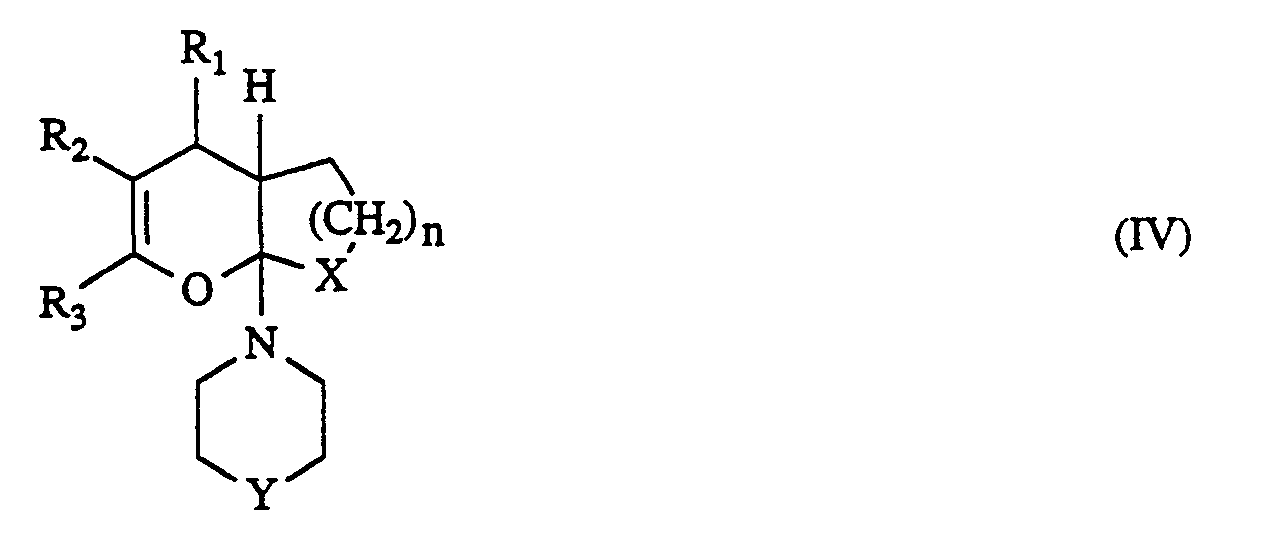
- Die Erfindung betrifft ebenfalls Verbindungen der allgemeinen Formel (IV)

- R1 für Phenyl, Thienyl, Furyl, Pyridyl, Pyrimidyl, Benzoxadiazolyl oder Thiochromenyl steht, wobei die genannten Reste gegebenenfalls 1 bis 2 gleiche oder verschiedene Substituenten aus der Gruppe Cl-C4-Alkyl, Cl-C4-Alkoxy, C1―C4-Alkylthio, Fluor, Chlor, Nitro, Cyano, Hydroxy, Trifluormethyl, Trifluormethoxy, Difluormethoxy, Fluormethoxy, Phenyl, Benzyl, Benzyloxy oder Benzylthio enthalten,
- R2 für Wasserstoff, Nitro, Cyano, C1―C4-Alkylsulfonyl oder für die Gruppe

- R5 für geradkettiges oder verzweigtes C1-C4-Alkyl steht, oder für eine Gruppe der Formel ―O―R6 steht, wobei
- R6 geradkettiges, verzweigtes oder cyclisches C1―C6-Alkyl darstellt, das gegebenenfalls durch ein Sauerstoffatom in der Kette unterbrochen ist und das gegebenenfalls substituiert ist durch ein oder mehrere Fluor, Hydroxy, Cyano, Phenyl oder Benzylmethylamino,
- R3 für geradkettiges oder verzweigtes C1―C4-Alkyl steht, das gegebenenfalls substituiert ist durch Hydroxy, Chlor, Brom oder Acetyloxy,
- X für die Gruppe

- n für eine Zahl von 1 bis 12 steht, und
- Y für eine direkte Bindung, für Sauerstoff, NH, Methylen oder Ethylen steht, sowie deren Verwendung bei der Herstellung von 1,4-Dihydropyridinen der allgemeinen Formel (1).
- Die erfindungsgemäßen Verbindungen der Formel (IV) können dadurch hergestellt werden, daß man Benzylidenverbindungen der allgemeinen Formel II

- R1―R3 die oben angegebene Bedeutung haben, und Enamine der allgemeinen Formel (lll)
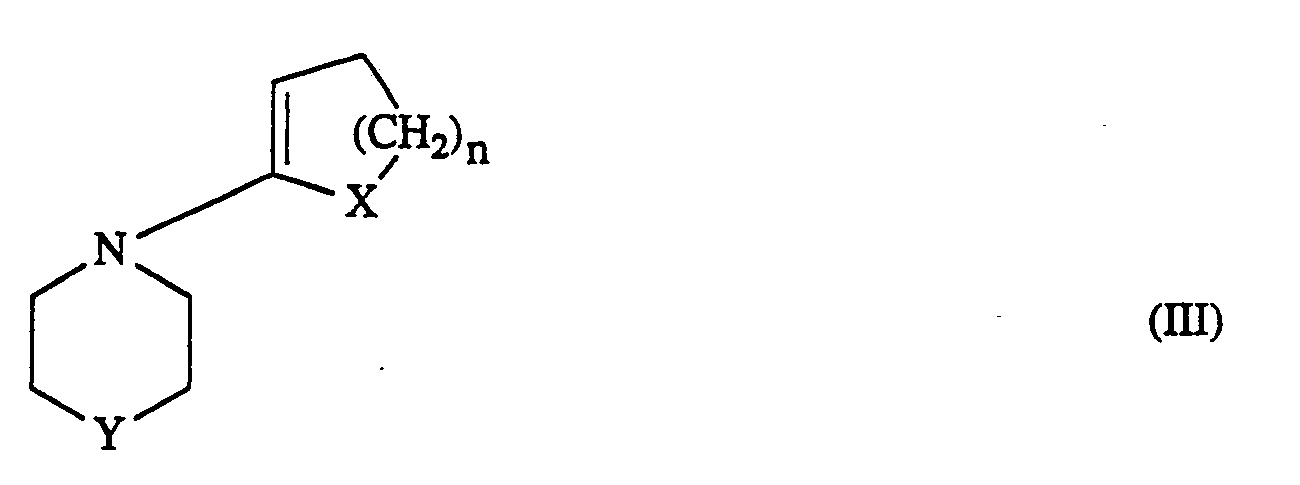
- X und n die oben angegebene Bedeutung haben und
- Y für eine direkte Bindung,
- für Sauerstoff, Schwefel, Amino, C1―C4-Alkyl-amino, oder
- für eine Methylenkette mit 1 bis 2 Kohlenstoffatomen steht, gegebenenfalls in Gegenwart von Wasser und/oder inerten organischen Lösungsmitteln zu den Zwischenprodukten der allgemeinen Formel (IV)

- R,-R3, X, Y und n die oben angegebene Bedeutung haben, umsetzt.
- Diese neuen Zwischenprodukte der allgemeinen Formel (IV) treffen sich dann ihrerseits mit Aminen der allgemeinen Formel (V)

- R4 die oben angegebene Bedeutung hat, oder mit deren Additionsprodukten, in Gegenwart von Säuren und gegebenenfalls in Anwesenheit von Wasser und/oder inerten organischen Lösungsmitteln zu 1,4-Dihydropyridinen der allgemeinen Formel (1) umsetzen.
- Verwendet man als Ausgangsstoffe Benzylidenacetessigsäuremethylester, Morpholinocyclohexen und Ammoniak, so kann der Reaktionsablauf durch folgendes Formelschema verdeutlicht werden:

- Die als Ausgangsstoffe verwendeten Benzylidenverbindungen der allgemeinen Formel (II) sind bekannt oder können nach literaturbekannten Methoden hergestellt werden [vgl. G. Jones "The Knoevenagel Kondensation" in Organic Reactions XV, 204 (1967), A. Dornow, W. Sassenberg, Liebigs Ann. Chem. 602, 14 (1957)].
- Die als Ausgangsstoffe verwendeten Enamine der allgemeinen Formel (lll) sind bekannt oder können nach literaturbekannten Methoden hergestellt werden [vgl. J. Szmuszkovicz "Enamines", Adv. Org. Chem. 4,1 (1963), A. G. Cook "Enamines - Synthesis, Structure and Reactions", M. Dekker, New York 1969, H. O. House "Modern Synthetic Reactions", 2. Auflage, S. 570, W. A. Benjamin Inc. Menlo Park, 1972].
- Die Amine der allgemeinen Formel (V) sind bekannt. Geeignete Säureadditionsprodukte können Salze der Amine (V) mit anorganischen oder organischen Säuren sein, wie beispielsweise Bromide, Chloride, Hydrogensulfate, Sulfate, Hydrogenphosphate, Acetate, Carbonate oder Hydrogencarbonate.
- Die bei der Durchführung des erfindungsgemäßen Verfahrens entstehenden Zwischenprodukte IV sind neu. Es ist jedoch nicht erforderlich sie zu isolieren.
- Als Lösungsmittel sowohl für die Herstellung der Zwischenprodukte als auch der Endprodukte kommen Wasser oder alle inerten organischen Lösungsmittel in Frage. Hierzu gehören vorzugsweise Alkohole wie Methanol, Ethanol, Propanol oder Isopropanol, Ether wie Diethylether, Dioxan, Tetrahydrofuran, Glykolmono- oder -dimethylether, Dimethylformamid, Dimethylsulfoxid, Acetonitril, Essigester, Hexamethylphosphorsäuretriamid, Pyridin, Halogenkohlenwasserstoffe wie Di-, Tri-, Tetrachlormethan, Dichlorethan oder Trichlorethylen und aromatische Kohlenwasserstoffe wie Benzol, Toluol oder Xylol. Es ist jedoch auch möglich, Gemische der genannten Lösungsmittel einzusetzen.
- Als Säuren können die üblichen anorganischen oder organischen Säuren verwendet werden. Hierzu gehören vorzugsweise Halogenwasserstoffe wie Chlorwasserstoff oder Bromwasserstoff, Schwefelsäure oder Phosphorsäure, oder organische Säuren wie Essigsäure, Propionsäure oder Weinsäure, oder Sulfonsäuren wie z.B. Methan-, Ethan-, Benzol- oder Toluolsulfonsäure.
- Die Reaktionstemperaturen können in einem weiteren Bereich variiert werden. Im allgemeinen arbeitet man in einem Temperaturbereich von 0°C bis 200°C, bevorzugt von 10°C bis 150°C.
- Das erfindungsgemäße Verfahren wird im allgemeinen bei Normaldruck durchgeführt. Es ist aber auch möglich, das Verfahren bei Unterdruck oder bei Überdruck durchzuführen.
- Im allgemeinen setzt man auf 1 Mol Benzylidenverbindung ll 0,5―5, bevorzugt 1-2 Mol Enamin lll ein. Bezogen auf 1 Mol der Zwischenverbindung setzt man im allgemeinen 0,1-10 Mol, bevorzugt 0,5--5 Mol Säure ein. Das Amin V wird im allgemeinen in einer Menge von 0,1-10, bevorzugt 0,5-5 Mol bezogen auf ein Mol Zwischenverbindung verwendet.
- Bei der erfindungsgemäßen Umsetzung der Zwischenprodukte zu den Dihydropyridinen sind verschiedene Verfahrensvarianten möglich. Bei Variante A wird zum Zwischenprodukt erst Säure dann Amin, bei Variante B erst Amin dann Säure und bei Variante C Amin und Säure in Form des Additionsproduktes der Säure an das Amin zugegeben.
- Die erfindungsgemäßen hergestellten Stoffe der Formel (I) zeigen ein wertvolles, pharmakologisches Wirkspektrum. Sie beeinflussen den Kreislauf, die Kontraktionskraft des Herzens, den Gefäßtonus sowie den Tonus glatter Muskeln. Sie können daher in Arzneimitteln z.B. zur Behandlung von Kreislauferkranungen, coronaren Herzkrankheiten und Herzinsuffizienz eingesetzt werden. Darüber hinaus können sie den Blutzucker beeinflussen und so als Therapeutika für Stoffwechselerkrankungen dienen.
- Die Herz- und Gefäßwirkungen wurden an isoliert perfundierten Herzen des Meerschweinchens gefunden. Dazu werden die Herzen von 250 bis 350 g schweren Albino Meerschweinchen verwendet. Die Tiere werden mit einem Schlag auf den Kopf getötet, der Thorax geöffnet, in die freipräparierte Aorta eine Metallkanüle eingebunden und der linke Vorhof eröffnet. Das Herz wird mit den Lungen aus dem Thorax herausgetrennt und über die Aortenkanüle an die Perfusionsapparatur bei laufender Perfusion angeschlossen. Die Lungen werden an den Lungenwurzeln abgetrennt. Als Perfusionsmedium dient Krebs-Henseleit-Lösung (1) (118,5 mmol/1 NaCl, 4,75 mmol/1 KCI, 1,19 mmol/1 KH2P04, 119 mmol/1 MgS04, 25 mmol/1 NaHC03, 0,013 mmol/I NaEDTA), deren CaC12 je nach Bedarf variiert wird, in der Regel jedoch 1,2 mmol/1 beträgt. Als energielieferndes Substrat werden 10 mmol/I Glucose zugesetzt. Vor der Perfusion wird die Lösung partikelfrei filtriert. Die Lösung wird mit Carbogen (95% 02, 5% C02 zur Aufrechterhaltung des pH-Wertes von 7,4) begast. Die Herzen werden mit konstantem Fluß (10 ml/min) bei 32°C mittels einer Rollenquetschpumpe perfundiert.
- Zur Messung der Herzfunktion wird ein flüssigkeitsgefüllter Latexballon, der über eine Flüssigkeitssäule mit einem Druckaufnehmer verbunden ist, durch den linken Vorhof in den linken Ventrikel eingeführt und die isovolumetrischen Kontraktionen auf einem Schnellschreiber registriert (Opie, L., J. Physiol. 180 (1965) 529-541). Der Perfusionsdruck wird mittels eines Druckaufnehmers, der vor dem Herzen mit dem Perfusionssystem in Verbindung steht, registriert. Unter diesen Bedingungen zeigt eine Senkung des Perfusionsdruckes eine Koronardilatation, eine Steigerung der linksventrikulären Druckamplitude einen Anstieg der Herzkontraktilität an. Die erfindungsgemäßen Verbindungen werden in geeigneten Verdünnungen in das Perfusionssystem kurz vor dem isolierten Herzen infundiert.
- In der folgenden Tabelle sind die Wirkungen von einigen Beispielen auf Kontraktilität und Koronarwiderstand am isoliert perfundierten Meerschweinchenherzen aufgezeigt.

- Die Wirkstoffe können in bekannter Weise in die üblichen Formulierungen übergeführt werden, wie Tabletten, Kapseln, Dragees, Pillen, Granulate, Aerosole, Sirupe, Emulsionen, Suspensionen und Lösungen, unter Verwendung inerter, nicht toxischer, pharmazeutisch geeigneter Trägerstoffe oder Lösungsmittel. Hierbei soll die therapeutisch wirksame Verbindung jeweils in einer Konzentration von etwa 0,5 bis 90 Gew.-% der Gesamtmischung vorhanden sein, d.h. in Mengen, die ausreichend sind, um den angegebenen Dosierungsspielraum zu erreichen.
- Die Formulierungen werden beispielsweise hergestellt durch Verstrecken der Wirkstoffe mit Lösungsmitteln und/oder Trägerstoffen, gegebenenfalls unter Verwendung von Emulgiermitteln und/oder Dispergiermitteln, wobei z.B. im Fall der Benutzung von Wasser als Verdünnungsmittel gegebenenfalls organische Lösungsmittel als Hilfslösungsmittel verwendet werden können.
- Als Hilfsstoffe seien beispielsweise aufgeführt:
- Wasser, nicht-toxische organische Lösungsmittel, wie Paraffine (z.B. Erdölfraktionen), pflanzliche Öle (z.B. Erdnuß/Sesamöl), Alkohole (z.B. Ethylalkohol, Glycerin), Glykole (z.B. Propylenglykol, Polyethylenglykol), feste Trägerstoffe, wie z.B. natürliche Gesteinsmehle (z.B. Kaoline, Tonerden, Talkum, Kreide), synthetische Gesteinsmehle (z.B. hochdisperse Kieselsäure, Silikate), Zucker (z.B. Rohr-, Milch- und Traubenzucker), Emulgiermittel (z.B. Polyoxyethylen-Fettsäure-Ester, Polyoxyethylen-Fettalkohol-Ether z.B. Lignin, Sulfitablaugen, Methylcellulose, Stärke und Polyvinylpyrrolidon) und Gleitmittel (z.B. Magnesiumstearat, Talkum, Stearinsäure und Natriumsulfat).
- Die Applikation erfolgt in üblicher Weise, vorzugsweise oral oder parenteral, insbesondere perlingual oder intravenös. Im Falle der oralen Anwendung können Tabletten selbstverständlich außer den genannten Trägerstoffen auch Zusätze wie Natriumcitrat, Calciumcarbonat und Dicalciumphosphat zusammen mit verschiedenen Zuschlagstoffen, wie Stärke, vorzugsweise Kartoffelstärke, Gelatine und dergleichen enthalten. Weiterhin können Gleitmittel, wie Magnesiumstearat, Natriumlaurylsulfat und Talkum zum Tablettieren mitverwendet werden. Im Fall wäßriger Suspensionen und/oder Elixieren, die für orale Anwendung gedacht sind, können die Wirkstoffe außer den obengenannten Hilfsstoffen mit verschiedenen Geschmackaufbesserern oder Farbstoffen versetzt werden.
- Für den Fall der parenteralen Anwendung können Lösungen der Wirkstoffe unter Verwendung geeigneter flüssiger Trägermaterialien eingesetzt werden.
- Im allgemeinen hat es sich als vorteilhaft erwiesen, bei intravenöser Applikation Mengen von etwa 0,001 bis 1 mg/kg, vorzugsweise etwa 0,01 bis 0,5 mg/kg Körpergewicht zur Erzielung wirksamer Ergebnisse zu verabreichen, und bei oraler Applikation beträgt die Dosierung etwa 0,01 bis 20 mg/kg, vorzugsweise 0,1 bis 10 mg/kg, Körpergewicht.
- Trotzdem kann es gegebenenfalls erforderlich sein, von den genannten Mengen abzuweichen, und zwar in Abhängigkeit vom Körpergewicht des Versuchstieres bzw. der Art der Applikation, aber auch aufgrund der Tierart und deren individuellem Verhalten gegenüber dem Medikament bzw. deren Art, von dessen Formulierung und dem Zeitpunkt bzw. Intervall, zu welchem die Verabreichung erfolgt. So kann es in einigen Fällen ausreichend sein, mit weniger als der vorgenannten Mindestmenge auszukommen, während in anderen Fällen die genannte obere Grenze überschritten werden muß. Im Falle der Applikation größerer Mengen kann es empfehlenswert sein, diese in mehrere Einzelgaben über den Tag zu verteilen. Für die Applikation in der Humanmedizin ist der gleiche Dosierungsspielraum vorgesehen. Sinngemäß gelten hierbei auch die obigen Ausführungen.
-

- Eine Lösung von 0,033 mol 3-Nitrobenzylidenmethylessigsäureethylester und 0,033 mol Morpholinocyclohexen in 80 ml Ethanol wird 4 Stunden unter Rückfluß gekocht. Man engt ein, reibt mit Ether an, saugt ab und kristallisiert aus Ethanol um.
- Schmelzpunkt: 133°C.
- 2-Methyl-4-(3-nitrophenyl)-1,4,5,6,7,8-hexahydrochinolin-3-carbonsäureethylester (Variante A)
-

- Mit konz. Ammoniak stellt man dann alkalisch, läßt auf Raumtemperatur abkühlen (evtl. etwas Wasser zusetzen), saugt den Niederschlag ab und kristallisiert aus Ethanol um.
- Schmelzpunkt: 131°C.
- Analog Beispiel 1 wurden hergestellt:
- 3-Acetyl-2-methyl-8a-morpholino-4-(3-nitrophenyl)-4a,5,6,7,8,8a-hexahydro-4H-chromen

- Schmelzpunkt: 164°C.
- 3-Acetyl-2-methyl-4-(3-nitrophenyl)-1,4,5,6,7,8-hexahydrochinolin (Variante A aus 5)

- Schmelzpunkt: 161°C.
- 2-Methyl-8a-morpholino-3-nitro-4-(2-trifluormethylphenyl)-4a,5,6,7,8,8a-hexahydro-4H-chromen
-

- Ausbeute: 13,4 g (77% der Theorie).
- Schmelzpunkt: 133°C.
- 2-Methyl-3-nitro-4-(2-trifluormethylphenyl)-1,4,5,6,7,8-hexahydrochinolin (Variante B)
-

- Ausbeute: 580 mg (36% der Theorie).
- Schmelzpunkt: 222°C (Zers.).
- 1,2-Dimethyl-3-nitro-4-(2-trifluormethylphenyl)-1 A,5,6,7,8-hexahydrochinolin (Variante C)
-

- Ausbeute: 880 mg (52% der Theorie).
- Schmelzpunkt: 149°C.
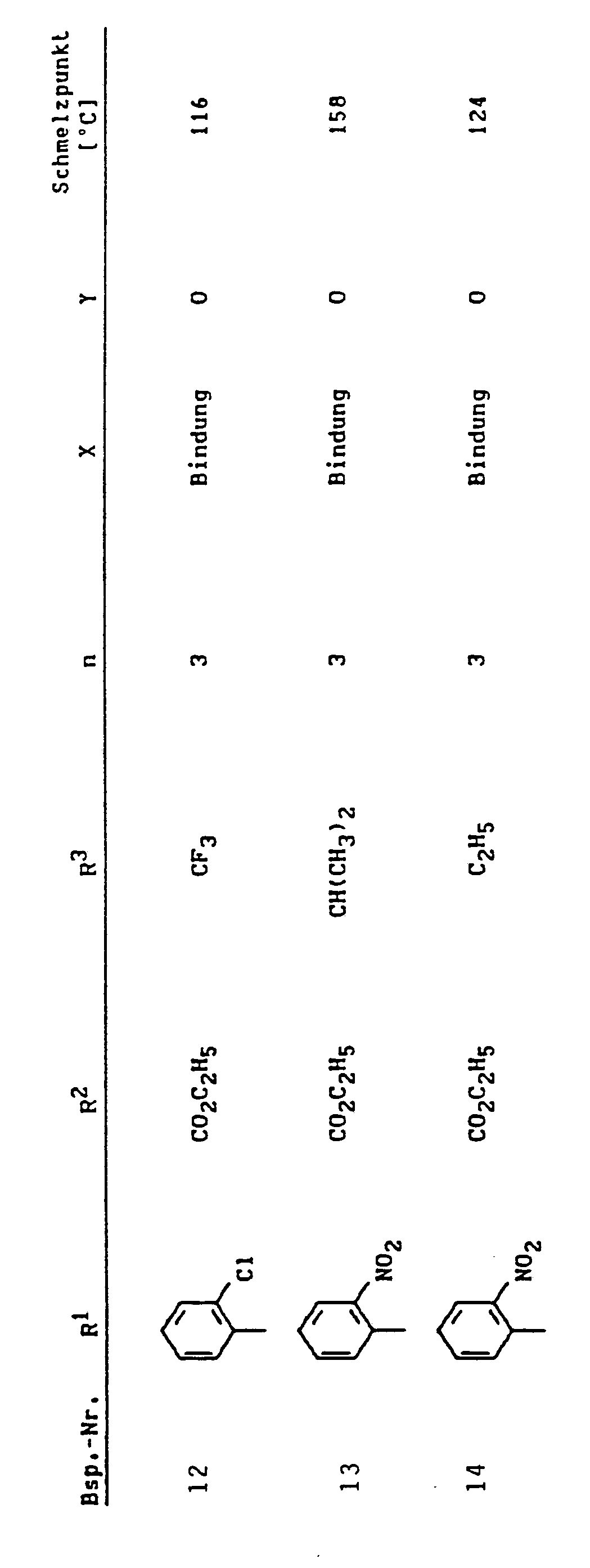
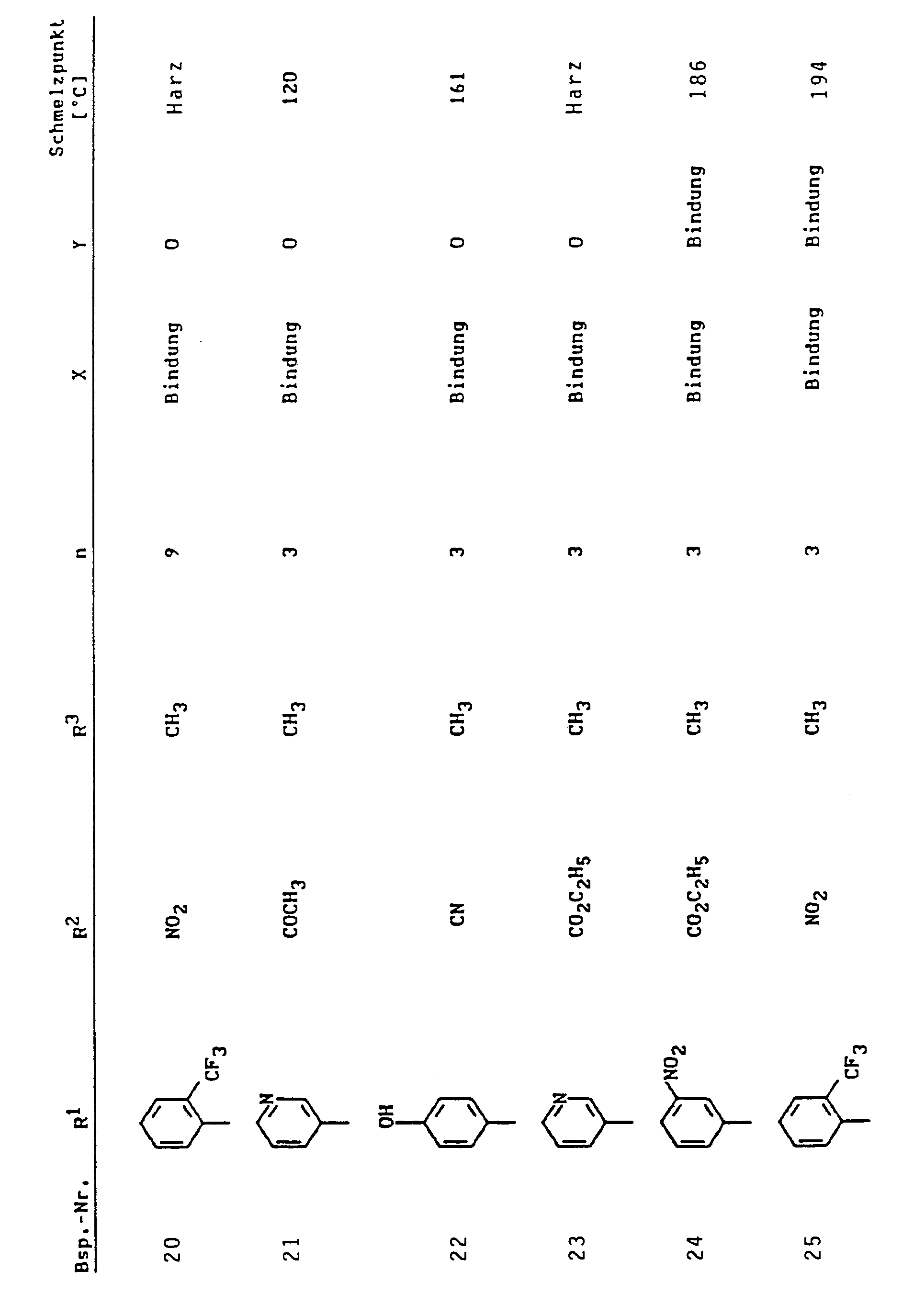
- Analog den beschriebenen Verfahren wurden die in Tabelle 1 und 2 aufgeführten Beispiele hergestellt:




Claims (4)







Priority Applications (1)
| Application Number | Priority Date | Filing Date | Title |
|---|---|---|---|
| AT86110446T ATE56437T1 (de) | 1985-08-09 | 1986-07-29 | Verfahren zur herstellung von 1,4dihydropyridinderivaten ueber neue zwischenprodukte. |
Applications Claiming Priority (2)
| Application Number | Priority Date | Filing Date | Title |
|---|---|---|---|
| DE3528602 | 1985-08-09 | ||
| DE19853528602 DE3528602A1 (de) | 1985-08-09 | 1985-08-09 | 1,4-dihydropyridinderivate, ihre herstellung und ihre verwendung in arzneimitteln |
Publications (3)
| Publication Number | Publication Date |
|---|---|
| EP0214437A2 EP0214437A2 (de) | 1987-03-18 |
| EP0214437A3 EP0214437A3 (en) | 1987-10-14 |
| EP0214437B1 true EP0214437B1 (de) | 1990-09-12 |
Family
ID=6278113
Family Applications (1)
| Application Number | Title | Priority Date | Filing Date |
|---|---|---|---|
| EP86110446A Expired - Lifetime EP0214437B1 (de) | 1985-08-09 | 1986-07-29 | Verfahren zur Herstellung von 1,4-Dihydropyridinderivaten über neue Zwischenprodukte |
Country Status (6)
| Country | Link |
|---|---|
| US (1) | US4769375A (de) |
| EP (1) | EP0214437B1 (de) |
| JP (1) | JPS6239571A (de) |
| AT (1) | ATE56437T1 (de) |
| CA (1) | CA1282411C (de) |
| DE (2) | DE3528602A1 (de) |
Families Citing this family (5)
| Publication number | Priority date | Publication date | Assignee | Title |
|---|---|---|---|---|
| GB8907401D0 (en) * | 1989-04-01 | 1989-05-17 | Pfizer Ltd | Therapeutic agents |
| WO1993009774A1 (en) * | 1991-11-18 | 1993-05-27 | G.D. Searle & Co. | 2-(4-substituted)phenylmethylene derivatives and methods of use |
| DE4233601A1 (de) * | 1992-10-06 | 1994-04-07 | Bayer Ag | 3-substituierte Chinolin-5-carbonsäuren |
| US5455253A (en) * | 1992-10-20 | 1995-10-03 | Zeneca Limited | Heterocyclic derivatives |
| EP2398790B1 (de) | 2009-02-18 | 2013-07-03 | Bayer Intellectual Property GmbH | Bi- und tricyclische indazolsubstituierte 1,4-dihydropyridinderivate und anwendungen davon |
Family Cites Families (2)
| Publication number | Priority date | Publication date | Assignee | Title |
|---|---|---|---|---|
| DE2018738A1 (en) * | 1970-04-18 | 1971-10-28 | Farbenfabriken Bayer Ag, 5090 Leverkusen | Hydrogenated pyridines, quinolines andacridi |
| NZ201395A (en) * | 1981-07-30 | 1987-02-20 | Bayer Ag | Pharmaceutical compositions containing 1,4-dihydropyridines and certain of these dihydropyridines |
-
1985
- 1985-08-09 DE DE19853528602 patent/DE3528602A1/de not_active Withdrawn
-
1986
- 1986-07-25 US US06/890,998 patent/US4769375A/en not_active Expired - Fee Related
- 1986-07-29 AT AT86110446T patent/ATE56437T1/de not_active IP Right Cessation
- 1986-07-29 EP EP86110446A patent/EP0214437B1/de not_active Expired - Lifetime
- 1986-07-29 DE DE8686110446T patent/DE3674117D1/de not_active Expired - Lifetime
- 1986-08-07 CA CA000515474A patent/CA1282411C/en not_active Expired - Lifetime
- 1986-08-08 JP JP61185418A patent/JPS6239571A/ja active Pending
Non-Patent Citations (3)
| Title |
|---|
| J.CHEM.SOC (C), Seiten 2377-82, (1970) * |
| J.CHEM.SOC (C), Seiten 771-774, (1970) * |
| J.ORG.CHEM. Vol. 46, Seiten 3823-30, (1981) * |
Also Published As
| Publication number | Publication date |
|---|---|
| DE3674117D1 (de) | 1990-10-18 |
| US4769375A (en) | 1988-09-06 |
| DE3528602A1 (de) | 1987-02-12 |
| EP0214437A2 (de) | 1987-03-18 |
| CA1282411C (en) | 1991-04-02 |
| JPS6239571A (ja) | 1987-02-20 |
| EP0214437A3 (en) | 1987-10-14 |
| ATE56437T1 (de) | 1990-09-15 |
Similar Documents
| Publication | Publication Date | Title |
|---|---|---|
| EP0291799B1 (de) | Dioxyalkylenaryl-Dihydropyridine Zwischenprodukte zu ihrer Herstellung, Verfahren zu ihrer Herstellung und ihre Verwendung | |
| EP0185964B1 (de) | Dihydropyridin-carbonsäureamide, Verfahren zu ihrer Herstellung und ihre Verwendung in Arzneimitteln | |
| EP0209701B1 (de) | Neue 1,4-Dihydropyridine, Verfahren zur Herstellung und ihre Verwendung in Arzneimitteln | |
| EP0452712B1 (de) | Neue 4-Chinolyl-dihydropyridine, Verfahren zu ihrer Herstellung und ihre Verwendung in Arzneimitteln | |
| EP0622366B1 (de) | Kondensierte Chinolyl-dihydropyridine, Verfahren zu ihrer Herstellung und ihre Verwendung in Arzneimitteln zur Behandlung von Herz-Kreislauferkrangen | |
| EP0179386B1 (de) | 1,4-Dihydropyridin-hydroxyamine, Verfahren zu ihrer Herstellung sowie ihre Verwendung in Arzneimitteln | |
| DE4313693A1 (de) | 2-Amino-4-chinolin-dihydropyridine, Verfahren zu ihrer Herstellung und ihre Verwendung | |
| EP0627427A1 (de) | 3-Chinolyl substituierte Dihydropyridine, Verfahren zu ihrer Herstellung und ihre Verwendung in Arzneimitteln | |
| EP0214437B1 (de) | Verfahren zur Herstellung von 1,4-Dihydropyridinderivaten über neue Zwischenprodukte | |
| EP0234196A1 (de) | Substituierte 1,4-Dihydropyridin-3-carbonsäurepiperazide, Verfahren zu ihrer Herstellung und ihre Verwendung in Arzneimitteln | |
| EP0315018A2 (de) | Fluormethoxyphenyl-dihydropyridine, Verfahren zur Herstellung und ihre Verwendung in Arzneimitteln | |
| EP0186028B1 (de) | Optisch aktive Nitrodihydropyridine, Verfahren zur Herstellung und ihre Verwendung in Arzneimitteln | |
| EP0218068A1 (de) | Dihydropyridin-2-hydroxyamine, Verfahren zur Herstellung und ihre Verwendung in Arzneimitteln | |
| EP0236838A2 (de) | Aminoester-Dihydropyridine, Verfahren zu ihrer Herstellung und ihre Verwendung | |
| EP0158956A2 (de) | 4-(Nitrophenyl)-tetrahydropyridine, Verfahren zu ihrer Herstellung und ihre Verwendung als Arzneimittel | |
| EP0229381B1 (de) | Methioninsubstituierte 1,4-Dihydropyridine, Verfahren zur Herstellung und ihre Verwendung | |
| EP0189057B1 (de) | 5-Aryl-dihydropyridine, Verfahren zu ihrer Herstellung sowie ihre Verwendung in Arzneimitteln | |
| DE4313691A1 (de) | 2,6-Disubstituierte 4-Chinolyl-dihydropyridine | |
| EP0287867A1 (de) | Substituierte 5-Nitro-1,4-dihydropyridine, Verfahren zu ihrer Herstellung und ihre Verwendung | |
| EP0244713B1 (de) | 3-Amino-dihydropyridine, ein Verfahren zu ihrer Herstellung und ihre Verwendung in Arzneimitteln | |
| DE3600596A1 (de) | 4-aminoaryldihydropyridinlactone, verfahren zu ihrer herstellung und ihre verwendung in arzneimitteln | |
| EP0315019A2 (de) | Neue Fluormethoxyphenyl-dihydropyridine, Verfahren zur Herstellung und ihre Verwendung in Arzneimitteln | |
| DE3528601A1 (de) | Hydropyrane, verfahren zur herstellung und ihre verwendung | |
| AT368494B (de) | Verfahren zur herstellung von neuen nitrosubstituierten 1,4-dihydropyridinen | |
| EP0202527B1 (de) | Pyrimidinyl-dihydropyridine, Verfahren zur Herstellung und ihre Verwendung in Arzneimitteln |
Legal Events
| Date | Code | Title | Description |
|---|---|---|---|
| PUAI | Public reference made under article 153(3) epc to a published international application that has entered the european phase |
Free format text: ORIGINAL CODE: 0009012 |
|
| 17P | Request for examination filed |
Effective date: 19860801 |
|
| AK | Designated contracting states |
Kind code of ref document: A2 Designated state(s): AT BE CH DE FR GB IT LI NL SE |
|
| PUAL | Search report despatched |
Free format text: ORIGINAL CODE: 0009013 |
|
| AK | Designated contracting states |
Kind code of ref document: A3 Designated state(s): AT BE CH DE FR GB IT LI NL SE |
|
| 17Q | First examination report despatched |
Effective date: 19890301 |
|
| GRAA | (expected) grant |
Free format text: ORIGINAL CODE: 0009210 |
|
| AK | Designated contracting states |
Kind code of ref document: B1 Designated state(s): AT BE CH DE FR GB IT LI NL SE |
|
| REF | Corresponds to: |
Ref document number: 56437 Country of ref document: AT Date of ref document: 19900915 Kind code of ref document: T |
|
| ITF | It: translation for a ep patent filed | ||
| REF | Corresponds to: |
Ref document number: 3674117 Country of ref document: DE Date of ref document: 19901018 |
|
| GBT | Gb: translation of ep patent filed (gb section 77(6)(a)/1977) | ||
| ET | Fr: translation filed | ||
| PGFP | Annual fee paid to national office [announced via postgrant information from national office to epo] |
Ref country code: DE Payment date: 19910619 Year of fee payment: 6 |
|
| PGFP | Annual fee paid to national office [announced via postgrant information from national office to epo] |
Ref country code: FR Payment date: 19910627 Year of fee payment: 6 |
|
| PGFP | Annual fee paid to national office [announced via postgrant information from national office to epo] |
Ref country code: AT Payment date: 19910703 Year of fee payment: 6 |
|
| PGFP | Annual fee paid to national office [announced via postgrant information from national office to epo] |
Ref country code: SE Payment date: 19910708 Year of fee payment: 6 |
|
| PLBE | No opposition filed within time limit |
Free format text: ORIGINAL CODE: 0009261 |
|
| STAA | Information on the status of an ep patent application or granted ep patent |
Free format text: STATUS: NO OPPOSITION FILED WITHIN TIME LIMIT |
|
| PGFP | Annual fee paid to national office [announced via postgrant information from national office to epo] |
Ref country code: CH Payment date: 19910715 Year of fee payment: 6 |
|
| PGFP | Annual fee paid to national office [announced via postgrant information from national office to epo] |
Ref country code: GB Payment date: 19910719 Year of fee payment: 6 |
|
| PGFP | Annual fee paid to national office [announced via postgrant information from national office to epo] |
Ref country code: BE Payment date: 19910724 Year of fee payment: 6 |
|
| ITTA | It: last paid annual fee | ||
| PGFP | Annual fee paid to national office [announced via postgrant information from national office to epo] |
Ref country code: NL Payment date: 19910731 Year of fee payment: 6 |
|
| 26N | No opposition filed | ||
| PG25 | Lapsed in a contracting state [announced via postgrant information from national office to epo] |
Ref country code: GB Effective date: 19920729 Ref country code: AT Effective date: 19920729 |
|
| PG25 | Lapsed in a contracting state [announced via postgrant information from national office to epo] |
Ref country code: SE Effective date: 19920730 |
|
| PG25 | Lapsed in a contracting state [announced via postgrant information from national office to epo] |
Ref country code: LI Effective date: 19920731 Ref country code: CH Effective date: 19920731 Ref country code: BE Effective date: 19920731 |
|
| BERE | Be: lapsed |
Owner name: BAYER A.G. Effective date: 19920731 |
|
| PG25 | Lapsed in a contracting state [announced via postgrant information from national office to epo] |
Ref country code: NL Effective date: 19930201 |
|
| NLV4 | Nl: lapsed or anulled due to non-payment of the annual fee | ||
| GBPC | Gb: european patent ceased through non-payment of renewal fee |
Effective date: 19920729 |
|
| PG25 | Lapsed in a contracting state [announced via postgrant information from national office to epo] |
Ref country code: FR Effective date: 19930331 |
|
| REG | Reference to a national code |
Ref country code: CH Ref legal event code: PL |
|
| PG25 | Lapsed in a contracting state [announced via postgrant information from national office to epo] |
Ref country code: DE Effective date: 19930401 |
|
| REG | Reference to a national code |
Ref country code: FR Ref legal event code: ST |
|
| EUG | Se: european patent has lapsed |
Ref document number: 86110446.1 Effective date: 19930204 |
|
| PG25 | Lapsed in a contracting state [announced via postgrant information from national office to epo] |
Ref country code: IT Free format text: LAPSE BECAUSE OF NON-PAYMENT OF DUE FEES;WARNING: LAPSES OF ITALIAN PATENTS WITH EFFECTIVE DATE BEFORE 2007 MAY HAVE OCCURRED AT ANY TIME BEFORE 2007. THE CORRECT EFFECTIVE DATE MAY BE DIFFERENT FROM THE ONE RECORDED. Effective date: 20050729 |