EP0207899B1 - Vorrichtung und Verfahren zum Auftauen von Blöcken aus Nahrungsmitteln - Google Patents
Vorrichtung und Verfahren zum Auftauen von Blöcken aus Nahrungsmitteln Download PDFInfo
- Publication number
- EP0207899B1 EP0207899B1 EP86830142A EP86830142A EP0207899B1 EP 0207899 B1 EP0207899 B1 EP 0207899B1 EP 86830142 A EP86830142 A EP 86830142A EP 86830142 A EP86830142 A EP 86830142A EP 0207899 B1 EP0207899 B1 EP 0207899B1
- Authority
- EP
- European Patent Office
- Prior art keywords
- product
- flakes
- tank
- exchanger
- tube
- Prior art date
- Legal status (The legal status is an assumption and is not a legal conclusion. Google has not performed a legal analysis and makes no representation as to the accuracy of the status listed.)
- Expired
Links
- 238000010257 thawing Methods 0.000 title claims abstract description 27
- 235000013305 food Nutrition 0.000 title claims abstract description 8
- 238000000034 method Methods 0.000 title claims description 9
- 230000003134 recirculating effect Effects 0.000 claims abstract description 7
- 239000007788 liquid Substances 0.000 claims description 8
- 239000007787 solid Substances 0.000 claims description 8
- 238000005086 pumping Methods 0.000 claims description 4
- 239000000725 suspension Substances 0.000 claims description 4
- 235000013601 eggs Nutrition 0.000 claims description 3
- 238000005406 washing Methods 0.000 claims description 2
- 239000000047 product Substances 0.000 description 39
- 238000010438 heat treatment Methods 0.000 description 9
- 239000012530 fluid Substances 0.000 description 5
- 230000015572 biosynthetic process Effects 0.000 description 3
- 230000033228 biological regulation Effects 0.000 description 2
- 238000011109 contamination Methods 0.000 description 2
- 230000002427 irreversible effect Effects 0.000 description 2
- XLYOFNOQVPJJNP-UHFFFAOYSA-N water Substances O XLYOFNOQVPJJNP-UHFFFAOYSA-N 0.000 description 2
- 238000013019 agitation Methods 0.000 description 1
- 230000004075 alteration Effects 0.000 description 1
- 239000003599 detergent Substances 0.000 description 1
- 235000013345 egg yolk Nutrition 0.000 description 1
- 210000002969 egg yolk Anatomy 0.000 description 1
- 230000008014 freezing Effects 0.000 description 1
- 238000007710 freezing Methods 0.000 description 1
- 230000005484 gravity Effects 0.000 description 1
- 239000012263 liquid product Substances 0.000 description 1
- 230000000284 resting effect Effects 0.000 description 1
- 239000000523 sample Substances 0.000 description 1
- 230000003068 static effect Effects 0.000 description 1
Images
Classifications
-
- A—HUMAN NECESSITIES
- A23—FOODS OR FOODSTUFFS; TREATMENT THEREOF, NOT COVERED BY OTHER CLASSES
- A23B—PRESERVATION OF FOODS, FOODSTUFFS OR NON-ALCOHOLIC BEVERAGES; CHEMICAL RIPENING OF FRUIT OR VEGETABLES
- A23B2/00—Preservation of foods or foodstuffs, in general
- A23B2/80—Freezing; Subsequent thawing; Cooling
- A23B2/82—Thawing subsequent to freezing
-
- A—HUMAN NECESSITIES
- A23—FOODS OR FOODSTUFFS; TREATMENT THEREOF, NOT COVERED BY OTHER CLASSES
- A23B—PRESERVATION OF FOODS, FOODSTUFFS OR NON-ALCOHOLIC BEVERAGES; CHEMICAL RIPENING OF FRUIT OR VEGETABLES
- A23B5/00—Preservation of eggs or egg products
- A23B5/04—Freezing; Subsequent thawing; Cooling
- A23B5/045—Thawing subsequent to freezing
-
- A—HUMAN NECESSITIES
- A23—FOODS OR FOODSTUFFS; TREATMENT THEREOF, NOT COVERED BY OTHER CLASSES
- A23G—COCOA; COCOA PRODUCTS, e.g. CHOCOLATE; SUBSTITUTES FOR COCOA OR COCOA PRODUCTS; CONFECTIONERY; CHEWING GUM; ICE-CREAM; PREPARATION THEREOF
- A23G9/00—Frozen sweets, e.g. ice confectionery, ice-cream; Mixtures therefor
- A23G9/04—Production of frozen sweets, e.g. ice-cream
- A23G9/045—Production of frozen sweets, e.g. ice-cream of slush-ice, e.g. semi-frozen beverage
Definitions
- the present invention relates to a plant for defrosting blocks of food products, particularly deep-frozen eggs, of the type including a flaking roller and means for thawing the flakes, as well as to a process carried out by this plant.
- Deep-frozen blocks of food products must be defrosted in short times so as to avoid alteration of the products and render the process economically advantageous.
- Defrosting at ambient temperatures or in heated chambers has the disadvantages of considerably long operating times, the possibility of contamination due to the manual handling, and of regulation by operators.
- defrosting systems which use thawing grids and heated Archimedean screws.
- Such systems have sizeable hot surfaces with which the deep-frozen product is in contact. This essentially static contact may cause irreversible changes when the product has a high protein content, for example as in egg yolks. These changes may, moreover, cause clogging of the thawing grids or of the heated screws.
- the object of the present invention is to provide a highly automated plant for defrosting blocks of food products which does not have these disadvantages and which at the same time is cheap to make.
- a further object of the present invention is to provide a process for defrosting blocks of food products which, as well as not having the aforesaid problems, is quick and safe from the point of view of lack of changes in the defrosted product.
- the means for thawing the flakes include a tank for collecting the flakes, a heat exchanger of the concentric-tube type, a series of mesh filter elements within the tube of the exchanger in which the product flows, the filter elements having meshes which decrease progressively in size in the direction of advance of the product, and means for transferring the flakes and the thawed product to the heat exchanger and for recirculating them to the collecting tanks so as to achieve rapid thawing of the product with a uniform temperature in the liquid mass slightly above freezing.
- the thawing of the product occurs at temperatures such as not to cause irreversible changes in the product itself in that the high coefficient of heat exchange achieved in the heat exchanger allows the use of heating fluids at lower temperatures than in known heating systems with hot walls. Furthermore, the high turbulence achieved in the heat exchanger enables any localised temperature increases in the product to be avoided, ensuring that the heat exchanged substantially balances the latent heat of thawing of the treated product.
- the plant according to the invention has the advantage that the flakes are partly broken up, even though solid, by the mesh filter elements under the pressure exerted by the pump means.
- the breaking of the flakes considerably reduces their thermal capacity and thus also reduces the time and degree of recirculation necessary to achieve complete thawing of the product.
- the collecting tank has agitators and is provided at its upper end with a sprinkler-diffuser through which the product is recirculated.
- the defrosting process is characterised in that the thawing of the flakes is achieved by the pumping of the flakes and the thawed product from the collecting tank to a heat exchanger of the concentric-tube type including a series of mesh filter elements within the tube of the exchanger in which the product flows, such filter elements having meshes which decrease progressively in size in the direction of advance of the product, the recirculation of the product from the exchanger to the tank until the product has thawed to the desired extent, and the removal of the product itself.
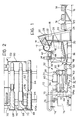
- the tipper-elevator 18 has a loading plane 20 articulated at 22 to the elevator 18 and provided with idle wheels 24 resting on suitable guides of the elevator 18.
- the elevator 18 has cam surfaces 26 close to the inclined plane 20 and in correspondence with the guides.
- the flaking roller 10 is located above a closed tank 28 having an inclined bottom 30 and an upper wall 32.
- a motor 34 is fixed to the outside of the wall 32 and, during operation of the plant, drives a bladed agitator 36 through a vertical shaft 38.
- the wall 32 has an aperture 40 in correspondence with a duct 42 enclosing the flaking roller 10.
- the tank 28 has a sprinkler-diffuser 44 supported by the wall 32.
- the tank 28 also has a level sensor 46 located on a side wall at a height slightly above the agitator 36.
- the tank 28 has a discharge pipe 48 which connects the tank itself to a hollow-bodied volumetric pump 50.
- the delivery of the pump 50 is connected to a concentric-tube heat exchanger 52 supported by a structure 54.
- the exchanger 52 includes a thermostatically-controlled vessel 54 for the heating fluid, normally water, heated by an electrical resistance 56.
- the heating fluid is circulated in jackets 62 surrounding the central tube 64 by means of a recirculating pump 58 and tubing 60.
- the central tube 64 of the exchanger 52 has larger-diameter portions 64a around which there is no heating jacket 62.
- the portions 64a are connected to the preceding tube 64 (in the direction of flow of the product) by frusto-conical connectors 64b and house tubular mesh filter elements 66 of the same diameter as the internal tube 64 of the exchanger 52.
- the portions 64a At their ends opposite the frusto-conical connectors 64b, the portions 64a have blind closure flanges 68 and connectors 70 perpendicular to the side walls of the portions 64a.
- Each filter element 66 is in contact at one end with the tube 64 of the exchanger and at its other end with the blind flange 68.
- the plant illustrated in the drawing has three identical portions 64a, the only difference relating to the tubular filter elements 66 which have mesh sizes that decrease from the first to the third element.
- a recirculating tube 72 which connects the exchanger itself to the diffuser 44 of the collecting tank 28.
- the tube 72 includes an on-off valve 74 and a valve 76 for delivery of the product into a storage tank 78 for the thawed product.
- the deep-frozen blocks 14 are advanced stepwise on the conveyor belt 16 and are loaded onto the plane 20 of the elevator 18 which raises the blocks themselves to the level of the flaking roller 10.
- the wheels 24 of the plane 20 engage the cams so as to rotate the plane 20 about the articulation axis 22 whereby the blocks 14 slide by gravity onto the inclined plane 20 and bear against the roller 10 driven by a motor (not illustrated).
- the roller 10 reduces the blocks 14 to flakes 14a by means of the blades 12 and the flakes fall onto the inclined bottom of the tank 28.
- a sufficient head of liquid (water or thawed product) will be provided in the tank 28 to enable the volumetric pump 50 to be started.
- the agitator 36 maintains a uniform suspension of flakes in the liquid without danger of the formation of solid masses because of the low temperature of the flakes. Indeed, the temperature of the blocks 14 and hence of the flakes 14a is of the order of -20°C, whereby, in the absence of agitation, the flakes could cause part of the liquid in contact with them in the tank 28 to freeze and render the operation of the plant problematical.
- the suspension of solid flakes and liquid product is pumped to the exchanger 52 in which the heating fluid is kept at a temperature of between 20 and 40°C.
- the pumped product is filtered through the first tubular mesh filter element 66 in which the flakes of product undergo a first crushing, being forced through the filter mesh by the pressure exerted by the pump 50.
- the filter portion 64a On leaving the filter portion 64a through the connector 70, the product undergoes further heating as it passes through a second section of the exchanger 52 and reaches the second portion 64a in which the product is filtered through a finer-mesh element 66.
- the suspension On leaving the exchanger 52, the suspension will thus contain a smaller percentage of solids due to thawing as a result of the heat exchange and smaller flakes due both to the thawing and particularly to the crushing as a result of the forcing through the filter element 66 by the pressure of the pump 50.
- the product thus transformed is recirculated to the tank 28 through the sprinkler-diffuser 44 which, together with the agitator 36, avoids the formation of solid masses.
- valve 74 When the product has thawed to the desired extent, the valve 74 is closed and the valve 76 is opened to transfer the product to the storage tank 78.
- the transfer will be effected as long as the level control 46 does not indicate a minimum level within the tank 28 to enable the starting of the defrosting of a further batch of blocks 14.
- the probe 46 may intervene automatically to stop the operation of the pump 50.
- the plant is suitable for continuous operation subject to accurate regulation and control of all the variables in play. Equally, the product delivered may be sent directly for use instead of to the storage tank.
- the product leaving the plant has a temperature of about 1 to 2°C, thus ensuring the absence of any thermal changes in the product. Moreover, the automatic operation of the plant minimises the possibility of accidental contamination of the product.
- the plant also has an automatic washing unit (not illustrated) which automatically directs a liquid containing detergent into the tank 28 and along all the tubes of the plant when the plant itself has finished operating.
- an automatic washing unit (not illustrated) which automatically directs a liquid containing detergent into the tank 28 and along all the tubes of the plant when the plant itself has finished operating.
Landscapes
- Life Sciences & Earth Sciences (AREA)
- Engineering & Computer Science (AREA)
- Chemical & Material Sciences (AREA)
- Food Science & Technology (AREA)
- Polymers & Plastics (AREA)
- Wood Science & Technology (AREA)
- Zoology (AREA)
- Defrosting Systems (AREA)
- Freezing, Cooling And Drying Of Foods (AREA)
- General Preparation And Processing Of Foods (AREA)
- Bakery Products And Manufacturing Methods Therefor (AREA)
- Agricultural Chemicals And Associated Chemicals (AREA)
Claims (7)
- Anlage, um Blöcke (14) von Nahrungsmittelprodukten aufzutauen, insbesonders tiefgefrorene Eier, mit einer Flockenabschälrolle (10) sowie einer Vorrichtung, um die Flocken (14a) aufzutauen, dadurch gekennzeichnet, daß diese Vorrichtung enthält:
einen Behälter (28) zum Sammeln der Flocken,
einen Wärmetauscher (52) mit konzentrischen Rohren,
eine Reihe von Maschenfilterelementen (66) innerhalb des Rohres (64, 64a) des Tauschers (52), in dem das Produkt fließt, wobei die Filterelemente (66) Maschen besitzen, deren Größe in der Vorschubrichtung des Produkts allmählich abnimmt,
eine Vorrichtung (48, 50, 72, 44), um die Flocken (14a) sowie das aufgetaute Produkt zum Wärmetauscher zu übertragen und sie zum Sammelbehälter wieder in Umlauf zu bringen, um das Produkt ohne örtlich begrenzte Temperaturanstiege in der flüssigen Masse rasch aufzutauen. - Anlage nach Anspruch 1, dadurch gekennzeichnet, daß der Sammelbehälter (28) ein Rührwerk (36) besitzt und an seinem oberen Ende mit einem Berieselungsverteiler (44) versehen ist, über den das Produkt wieder in Umlauf gebracht wird.
- Anlage nach Anspruch 1, dadurch gekennzeichnet, daß die Vorrichtung zur Übertragung der Flocken und des aufgetauten Produkts eine volumetrische Pumpe (50), um Flüssigkeiten umzupumpen, in denen Festkörper aufgeschlämmt sind, eine Förderleitung vom Behälter (28) zum Tauscher (52) sowie eine Wiederumlaufleitung (72) vom Tauscher (52) zum Behälter (28) aufweist.
- Anlage nach allen bisherigen Ansprüchen, dadurch gekennzeichnet, daß sie einen Bandförderer (16) sowie einen Kippförderer (18) aufweist, um der Flockenabschälrolle (10) die Blöcke (14) automatisch zuzuführen.
- Anlage nach allen bisherigen Ansprüchen, dadurch gekennzeichnet, daß der Sammelbehälter (28) einen Niveaufühler (46) aufweist, mit dem die Pumpenvorrichtung (50) gesteuert wird.
- Anlage nach allen bisherigen Ansprüchen, dadurch gekennzeichnet, daß sie weiters eine automatische Wascheinheit aufweist, die am Ende des Arbeitsintervalls in Betrieb steht.
- Verfahren, um unter Verwendung einer Vorrichtung nach einem der vorangegangenen Ansprüche Blöcke (14) von Nahrungsmittelprodukten aufzutauen, insbesonders tiefgefrorene Eier, wobei das Verfahren Schritte enthält, in denen die Blöcke in Flocken (14a) zerkleinert und die Flocken selbst aufgetaut werden, dadurch gekennzeichnet, daß das Auftauen dadurch erfolgt, daß die Flocken und das aufgetaute Produkt von einem Sammelbehälter (28) zu einem Wärmetauscher (52) mit konzentrischen Rohren gepumpt werden, der eine Reihe von Maschenfilterelementen (66) innerhalb des Rohres (64, 64a) des Wärmetauscher (52), in dem das Produkt fließt, wobei die Filterelemente (66) Maschen besitzen, deren Größe in der Vorschubrichtung des Produktes allmählich abnimmt, das Produkt vom Wärmetauscher zum Behälter wieder in Umlauf gebracht wird, bis das Produkt bis zum gewünschten Grad aufgetaut ist und das Produkt selbst entfernt wird.
Priority Applications (1)
| Application Number | Priority Date | Filing Date | Title |
|---|---|---|---|
| AT86830142T ATE80009T1 (de) | 1985-05-28 | 1986-05-27 | Vorrichtung und verfahren zum auftauen von bloecken aus nahrungsmitteln. |
Applications Claiming Priority (2)
| Application Number | Priority Date | Filing Date | Title |
|---|---|---|---|
| IT67488/85A IT1183857B (it) | 1985-05-28 | 1985-05-28 | Impianto e procedimento per lo scongelamento di pani di prodotti alimentari |
| IT6748885 | 1985-05-28 |
Publications (3)
| Publication Number | Publication Date |
|---|---|
| EP0207899A2 EP0207899A2 (de) | 1987-01-07 |
| EP0207899A3 EP0207899A3 (en) | 1989-11-29 |
| EP0207899B1 true EP0207899B1 (de) | 1992-09-02 |
Family
ID=11302834
Family Applications (1)
| Application Number | Title | Priority Date | Filing Date |
|---|---|---|---|
| EP86830142A Expired EP0207899B1 (de) | 1985-05-28 | 1986-05-27 | Vorrichtung und Verfahren zum Auftauen von Blöcken aus Nahrungsmitteln |
Country Status (4)
| Country | Link |
|---|---|
| EP (1) | EP0207899B1 (de) |
| AT (1) | ATE80009T1 (de) |
| DE (2) | DE3686608T2 (de) |
| IT (1) | IT1183857B (de) |
Families Citing this family (4)
| Publication number | Priority date | Publication date | Assignee | Title |
|---|---|---|---|---|
| JPS6455167A (en) * | 1987-08-26 | 1989-03-02 | Nankai Kako Kk | Thawing tank apparatus for frozen particle |
| US5086086A (en) * | 1987-08-28 | 1992-02-04 | Minnesota Mining And Manufacturing Company | Energy-induced curable compositions |
| NL9101890A (nl) * | 1991-11-13 | 1993-06-01 | Typhoon Martens B V | Werkwijze en inrichting voor het behandelingsgereedmaken van een bevroren massa drinkbaar produkt. |
| DE10354109A1 (de) * | 2003-11-19 | 2005-06-23 | Bayer Technology Services Gmbh | Verfahren zum Aufschmelzen von gefrorenen, wasserhaltigen Produkten |
Family Cites Families (8)
| Publication number | Priority date | Publication date | Assignee | Title |
|---|---|---|---|---|
| US1940353A (en) * | 1929-09-10 | 1933-12-19 | Joe C Jenkins | Method of reducing frozen liquid |
| US2429909A (en) * | 1942-11-25 | 1947-10-28 | Us Cold Storage Corp | Defrosting method |
| US2373682A (en) * | 1943-02-04 | 1945-04-17 | Wilson & Company Inc | Egg thawing |
| US2478893A (en) * | 1945-11-26 | 1949-08-16 | David O Brant | Apparatus for liquefying frozen food products |
| US3182699A (en) * | 1962-07-31 | 1965-05-11 | Georges M Binon | Frozen food shaving and thawing machine |
| FR1527724A (fr) * | 1966-07-20 | 1968-06-07 | Machine à décongeler ou à réchauffer les produits en grains tels que le beurre et matières analogues | |
| FR1537809A (fr) * | 1967-07-13 | 1968-08-30 | Procédé et dispositif pour la fabrication de produits alimentaires à base de matières premières congelées, ainsi que produits conformes à ceux obtenus | |
| US3636308A (en) * | 1970-04-09 | 1972-01-18 | Hatco Corp | Apparatus for reconstituting frozen food |
-
1985
- 1985-05-28 IT IT67488/85A patent/IT1183857B/it active
-
1986
- 1986-05-27 AT AT86830142T patent/ATE80009T1/de not_active IP Right Cessation
- 1986-05-27 DE DE8686830142T patent/DE3686608T2/de not_active Expired - Fee Related
- 1986-05-27 DE DE198686830142T patent/DE207899T1/de active Pending
- 1986-05-27 EP EP86830142A patent/EP0207899B1/de not_active Expired
Also Published As
| Publication number | Publication date |
|---|---|
| DE207899T1 (de) | 1987-07-02 |
| EP0207899A2 (de) | 1987-01-07 |
| DE3686608T2 (de) | 1993-03-25 |
| EP0207899A3 (en) | 1989-11-29 |
| IT8567488A1 (it) | 1986-11-28 |
| IT8567488A0 (it) | 1985-05-28 |
| DE3686608D1 (de) | 1992-10-08 |
| IT1183857B (it) | 1987-10-22 |
| ATE80009T1 (de) | 1992-09-15 |
Similar Documents
| Publication | Publication Date | Title |
|---|---|---|
| US6455085B1 (en) | Method of controlling the operation of cooking apparatus | |
| US5086693A (en) | Apparatus for heating and cooling food articles | |
| EP0568679B1 (de) | Verfahren und vorrichtung zur herstellung einer verarbeitungsfertigen, gefrorenen masse aus einem trinkbarem produkt | |
| US5462210A (en) | Liquified food product pump system for supplying of liquified sauces and other products in predetermined quantities | |
| EP3847898B1 (de) | Maschine zur herstellung flüssiger, halbflüssiger oder pastöser fester lebensmittelprodukte mit automatischer waschanlage und verfahren zur reinigung einer solchen maschine | |
| AU592054B2 (en) | Food processing method and apparatus | |
| GB1473611A (en) | Processing of containers | |
| EP0207899A2 (de) | Vorrichtung und Verfahren zum Auftauen von Blöcken aus Nahrungsmitteln | |
| US4189504A (en) | Method of cooking foods | |
| KR0175063B1 (ko) | 음식물을 가열 및 냉각시키는 장치 | |
| EP0545578A2 (de) | Wärmetauscher zwischen Flüssigkeit und körnigem Gut | |
| JP2007533948A (ja) | 容器内で当初少なくとも部分的に凝固された状態にある物質の温度を上昇させるための方法、装置、システム、及び熱交換器 | |
| US3516398A (en) | Apparatus for melting a frozen food product | |
| US1325094A (en) | Process for treating fruit-juices | |
| CN211800809U (zh) | 一种加热反应釜 | |
| US7475629B2 (en) | Apparatus for cooking foods | |
| GB1564743A (en) | Dehydrators | |
| CN214842040U (zh) | 一种奶油生产用真空干燥器 | |
| CN219722499U (zh) | 一种水性漆乳化机 | |
| SU1111721A1 (ru) | Установка дл приготовлени м сного фарша из мороженых блоков | |
| US20070082097A1 (en) | Method and apparatus for cooking particulate food material | |
| CN120418601A (zh) | 物料冷却/冷冻系统 | |
| AU760057B2 (en) | A method of controlling the operation of cooking apparatus | |
| AU729809B3 (en) | A method of controlling the operation of cooking apparatus | |
| PL148412B1 (en) | Apparatus for sterilization of canned goods in particular on a seagoing fishing boat |
Legal Events
| Date | Code | Title | Description |
|---|---|---|---|
| PUAI | Public reference made under article 153(3) epc to a published international application that has entered the european phase |
Free format text: ORIGINAL CODE: 0009012 |
|
| AK | Designated contracting states |
Kind code of ref document: A2 Designated state(s): AT BE CH DE FR GB IT LI LU NL SE |
|
| EL | Fr: translation of claims filed | ||
| TCAT | At: translation of patent claims filed | ||
| TCNL | Nl: translation of patent claims filed | ||
| DET | De: translation of patent claims | ||
| PUAL | Search report despatched |
Free format text: ORIGINAL CODE: 0009013 |
|
| AK | Designated contracting states |
Kind code of ref document: A3 Designated state(s): AT BE CH DE FR GB IT LI LU NL SE |
|
| 17P | Request for examination filed |
Effective date: 19900511 |
|
| 17Q | First examination report despatched |
Effective date: 19910412 |
|
| GRAA | (expected) grant |
Free format text: ORIGINAL CODE: 0009210 |
|
| AK | Designated contracting states |
Kind code of ref document: B1 Designated state(s): AT BE CH DE FR GB IT LI LU NL SE |
|
| PG25 | Lapsed in a contracting state [announced via postgrant information from national office to epo] |
Ref country code: IT Free format text: LAPSE BECAUSE OF FAILURE TO SUBMIT A TRANSLATION OF THE DESCRIPTION OR TO PAY THE FEE WITHIN THE PRE;WARNING: LAPSES OF ITALIAN PATENTS WITH EFFECTIVE DATE BEFORE 2007 MAY HAVE OCCURRED AT ANY TIME BEFORE 2007. THE CORRECT EFFECTIVE DATE MAY BE DIFFERENT FROM THE ONE RECORDED.SCRIBED TIME-LIMIT Effective date: 19920902 Ref country code: SE Effective date: 19920902 Ref country code: NL Effective date: 19920902 |
|
| REF | Corresponds to: |
Ref document number: 80009 Country of ref document: AT Date of ref document: 19920915 Kind code of ref document: T |
|
| REF | Corresponds to: |
Ref document number: 3686608 Country of ref document: DE Date of ref document: 19921008 |
|
| ET | Fr: translation filed | ||
| NLV1 | Nl: lapsed or annulled due to failure to fulfill the requirements of art. 29p and 29m of the patents act | ||
| PG25 | Lapsed in a contracting state [announced via postgrant information from national office to epo] |
Ref country code: GB Effective date: 19930527 |
|
| PLBE | No opposition filed within time limit |
Free format text: ORIGINAL CODE: 0009261 |
|
| STAA | Information on the status of an ep patent application or granted ep patent |
Free format text: STATUS: NO OPPOSITION FILED WITHIN TIME LIMIT |
|
| 26N | No opposition filed | ||
| GBPC | Gb: european patent ceased through non-payment of renewal fee |
Effective date: 19930527 |
|
| EPTA | Lu: last paid annual fee | ||
| PGFP | Annual fee paid to national office [announced via postgrant information from national office to epo] |
Ref country code: AT Payment date: 19960416 Year of fee payment: 11 |
|
| PGFP | Annual fee paid to national office [announced via postgrant information from national office to epo] |
Ref country code: DE Payment date: 19960424 Year of fee payment: 11 |
|
| PGFP | Annual fee paid to national office [announced via postgrant information from national office to epo] |
Ref country code: BE Payment date: 19960425 Year of fee payment: 11 |
|
| PGFP | Annual fee paid to national office [announced via postgrant information from national office to epo] |
Ref country code: LU Payment date: 19960501 Year of fee payment: 11 |
|
| PGFP | Annual fee paid to national office [announced via postgrant information from national office to epo] |
Ref country code: CH Payment date: 19960502 Year of fee payment: 11 |
|
| PGFP | Annual fee paid to national office [announced via postgrant information from national office to epo] |
Ref country code: FR Payment date: 19960530 Year of fee payment: 11 |
|
| PG25 | Lapsed in a contracting state [announced via postgrant information from national office to epo] |
Ref country code: LU Free format text: LAPSE BECAUSE OF NON-PAYMENT OF DUE FEES Effective date: 19970527 Ref country code: AT Effective date: 19970527 |
|
| PG25 | Lapsed in a contracting state [announced via postgrant information from national office to epo] |
Ref country code: CH Free format text: LAPSE BECAUSE OF NON-PAYMENT OF DUE FEES Effective date: 19970531 Ref country code: BE Effective date: 19970531 Ref country code: LI Free format text: LAPSE BECAUSE OF NON-PAYMENT OF DUE FEES Effective date: 19970531 |
|
| BERE | Be: lapsed |
Owner name: TERMIL DI RINALDI SCARLATA & C. S.N.C. Effective date: 19970531 |
|
| REG | Reference to a national code |
Ref country code: CH Ref legal event code: PL |
|
| PG25 | Lapsed in a contracting state [announced via postgrant information from national office to epo] |
Ref country code: FR Free format text: LAPSE BECAUSE OF NON-PAYMENT OF DUE FEES Effective date: 19980130 |
|
| PG25 | Lapsed in a contracting state [announced via postgrant information from national office to epo] |
Ref country code: DE Free format text: LAPSE BECAUSE OF NON-PAYMENT OF DUE FEES Effective date: 19980203 |
|
| REG | Reference to a national code |
Ref country code: FR Ref legal event code: ST |