EP0200677A2 - 3-Fluorpyridyl-2-oxy-phenoxy-Derivate mit herbizider Wirkung - Google Patents
3-Fluorpyridyl-2-oxy-phenoxy-Derivate mit herbizider Wirkung Download PDFInfo
- Publication number
- EP0200677A2 EP0200677A2 EP86810137A EP86810137A EP0200677A2 EP 0200677 A2 EP0200677 A2 EP 0200677A2 EP 86810137 A EP86810137 A EP 86810137A EP 86810137 A EP86810137 A EP 86810137A EP 0200677 A2 EP0200677 A2 EP 0200677A2
- Authority
- EP
- European Patent Office
- Prior art keywords
- oxy
- fluoropyridyl
- formula
- phenoxy
- alkyl
- Prior art date
- Legal status (The legal status is an assumption and is not a legal conclusion. Google has not performed a legal analysis and makes no representation as to the accuracy of the status listed.)
- Granted
Links
- 0 CO*(*)OONO Chemical compound CO*(*)OONO 0.000 description 1
Classifications
-
- C—CHEMISTRY; METALLURGY
- C07—ORGANIC CHEMISTRY
- C07D—HETEROCYCLIC COMPOUNDS
- C07D213/00—Heterocyclic compounds containing six-membered rings, not condensed with other rings, with one nitrogen atom as the only ring hetero atom and three or more double bonds between ring members or between ring members and non-ring members
- C07D213/02—Heterocyclic compounds containing six-membered rings, not condensed with other rings, with one nitrogen atom as the only ring hetero atom and three or more double bonds between ring members or between ring members and non-ring members having three double bonds between ring members or between ring members and non-ring members
- C07D213/04—Heterocyclic compounds containing six-membered rings, not condensed with other rings, with one nitrogen atom as the only ring hetero atom and three or more double bonds between ring members or between ring members and non-ring members having three double bonds between ring members or between ring members and non-ring members having no bond between the ring nitrogen atom and a non-ring member or having only hydrogen or carbon atoms directly attached to the ring nitrogen atom
- C07D213/60—Heterocyclic compounds containing six-membered rings, not condensed with other rings, with one nitrogen atom as the only ring hetero atom and three or more double bonds between ring members or between ring members and non-ring members having three double bonds between ring members or between ring members and non-ring members having no bond between the ring nitrogen atom and a non-ring member or having only hydrogen or carbon atoms directly attached to the ring nitrogen atom with hetero atoms or with carbon atoms having three bonds to hetero atoms with at the most one bond to halogen, e.g. ester or nitrile radicals, directly attached to ring carbon atoms
- C07D213/62—Oxygen or sulfur atoms
- C07D213/63—One oxygen atom
- C07D213/64—One oxygen atom attached in position 2 or 6
- C07D213/643—2-Phenoxypyridines; Derivatives thereof
-
- A—HUMAN NECESSITIES
- A01—AGRICULTURE; FORESTRY; ANIMAL HUSBANDRY; HUNTING; TRAPPING; FISHING
- A01N—PRESERVATION OF BODIES OF HUMANS OR ANIMALS OR PLANTS OR PARTS THEREOF; BIOCIDES, e.g. AS DISINFECTANTS, AS PESTICIDES OR AS HERBICIDES; PEST REPELLANTS OR ATTRACTANTS; PLANT GROWTH REGULATORS
- A01N43/00—Biocides, pest repellants or attractants, or plant growth regulators containing heterocyclic compounds
- A01N43/34—Biocides, pest repellants or attractants, or plant growth regulators containing heterocyclic compounds having rings with one nitrogen atom as the only ring hetero atom
- A01N43/40—Biocides, pest repellants or attractants, or plant growth regulators containing heterocyclic compounds having rings with one nitrogen atom as the only ring hetero atom six-membered rings
-
- A—HUMAN NECESSITIES
- A01—AGRICULTURE; FORESTRY; ANIMAL HUSBANDRY; HUNTING; TRAPPING; FISHING
- A01N—PRESERVATION OF BODIES OF HUMANS OR ANIMALS OR PLANTS OR PARTS THEREOF; BIOCIDES, e.g. AS DISINFECTANTS, AS PESTICIDES OR AS HERBICIDES; PEST REPELLANTS OR ATTRACTANTS; PLANT GROWTH REGULATORS
- A01N55/00—Biocides, pest repellants or attractants, or plant growth regulators, containing organic compounds containing elements other than carbon, hydrogen, halogen, oxygen, nitrogen and sulfur
-
- A—HUMAN NECESSITIES
- A01—AGRICULTURE; FORESTRY; ANIMAL HUSBANDRY; HUNTING; TRAPPING; FISHING
- A01N—PRESERVATION OF BODIES OF HUMANS OR ANIMALS OR PLANTS OR PARTS THEREOF; BIOCIDES, e.g. AS DISINFECTANTS, AS PESTICIDES OR AS HERBICIDES; PEST REPELLANTS OR ATTRACTANTS; PLANT GROWTH REGULATORS
- A01N57/00—Biocides, pest repellants or attractants, or plant growth regulators containing organic phosphorus compounds
- A01N57/18—Biocides, pest repellants or attractants, or plant growth regulators containing organic phosphorus compounds having phosphorus-to-carbon bonds
- A01N57/24—Biocides, pest repellants or attractants, or plant growth regulators containing organic phosphorus compounds having phosphorus-to-carbon bonds containing heterocyclic radicals
-
- C—CHEMISTRY; METALLURGY
- C07—ORGANIC CHEMISTRY
- C07F—ACYCLIC, CARBOCYCLIC OR HETEROCYCLIC COMPOUNDS CONTAINING ELEMENTS OTHER THAN CARBON, HYDROGEN, HALOGEN, OXYGEN, NITROGEN, SULFUR, SELENIUM OR TELLURIUM
- C07F7/00—Compounds containing elements of Groups 4 or 14 of the Periodic Table
- C07F7/02—Silicon compounds
- C07F7/08—Compounds having one or more C—Si linkages
- C07F7/0803—Compounds with Si-C or Si-Si linkages
- C07F7/081—Compounds with Si-C or Si-Si linkages comprising at least one atom selected from the elements N, O, halogen, S, Se or Te
- C07F7/0812—Compounds with Si-C or Si-Si linkages comprising at least one atom selected from the elements N, O, halogen, S, Se or Te comprising a heterocyclic ring
-
- C—CHEMISTRY; METALLURGY
- C07—ORGANIC CHEMISTRY
- C07F—ACYCLIC, CARBOCYCLIC OR HETEROCYCLIC COMPOUNDS CONTAINING ELEMENTS OTHER THAN CARBON, HYDROGEN, HALOGEN, OXYGEN, NITROGEN, SULFUR, SELENIUM OR TELLURIUM
- C07F9/00—Compounds containing elements of Groups 5 or 15 of the Periodic Table
- C07F9/02—Phosphorus compounds
- C07F9/547—Heterocyclic compounds, e.g. containing phosphorus as a ring hetero atom
- C07F9/553—Heterocyclic compounds, e.g. containing phosphorus as a ring hetero atom having one nitrogen atom as the only ring hetero atom
- C07F9/576—Six-membered rings
- C07F9/58—Pyridine rings
Definitions
- G includes methylene, 1,2-ethylene and 1,3-propylene and the groups derived therefrom by substitution of 1 to 2 hydrogen atoms with methyl or phenyl, e.g. Ethylidene, isopropylidene (2,2-propylidene), benzylidene, 1-phenylethylidene, diphenylmethylene, 1,2-propylene, 2,3-butylene, 1,1-dimethyl-1,2-ethylene, 1,1-diphenyi-1 , 2-ethylene, 1,2-diphenyl-1,2-ethylene, 1-methyl-1-phenyl-1,2-ethylene, 1,2-butylene, 1,3-butylene, 2,2-dimethyl-1 , 3-propylene, 1-methyl-1-phenyl-1,3-propylene, 1,2-diphenyl-1,3-propylene and 1,3-diphenyl-1; 3-propylene.
- Ethylidene isopropylidene (2,2-propylidene)
- alkane carboxylic acid residue Z contains an asymmetrically substituted carbon atom (such as -CH (CH 3 ) Z '), two enantiomeric forms can exist.
- the invention relates to both the racemates and the R and S enantiomers.
- the 3-fluoropyridyl-2-oxyphenoxy derivatives according to the invention are notable for a good action against mono- and some dicotyledon weeds, and above all they act in a post-emergence process against harmful weeds and weeds occurring in crops such as cereals, maize, rice, soybeans and sugar beets . It is particularly valuable to be able to use them to control weeds that are otherwise difficult to control, such as Avena fatua, Avena sterilis, Alopecurus myosuroides, Lolium perenne, Phalaris sp., Bromus tectorum, various Setaria and Panicum species. The effect already occurs under field conditions at low application rates of less than 1 kg per hectare, at which the crops are not or only insignificantly damaged.
- Halopyridyloxy- ⁇ -phenoxypropionic acid derivatives have been described in numerous publications, see for example DE-OS 2 546 251, 2 649 706, 2 714 622, 2 715 284 and European Offenlegungsschriften 483 and 1473. This describes the 3-fluoropyridyl-2 according to the invention -oxy-phenoxy derivatives also partly considered and included in the scope. However, such connections have never been made or tested. They differ from the known halopyridyloxy-a-phenoxypropionic acids in that they have a stronger action and therefore the possibility of using them in smaller amounts.
- the application can be carried out both pre-emergence and post-emergence.
- the application rates can vary within wide limits, e.g. between 0.05 and 5 kg of active ingredient per hectare.
- the compounds of the formula I have favorable growth-regulating effects - (growth inhibition). In particular, they inhibit the growth of grasses.
- X, A ', A 2 and R 17 have the meanings given above, and especially those compounds in which.
- X is chlorine or trifluoromethyl
- a ' is hydrogen, C 1 -C 3 alkyl, C 3 -C 4 alkylene or C 3 -C 4 haloalkylene
- a 2 is hydrogen or methyl
- R 17 is methyl, very particularly 4- ( 5-chloro-3-fluoropyridyl-2-oxy) phenoxy-acetic acid methoxyamide and the a- [4- (5-chloro-3-fluoropyridyl-2-oxy) phenoxy] propionic acid methoxyamide.
- X, A 3 , A 4 and R 17 have the meanings given above, especially those compounds in which X is chlorine or trifluoromethyl, A 7 and A 4 together are a C 2 -C 3 alkylene bridge and R 17 is methyl, particularly ⁇ - [4- (5-chloro-3-fluoropyridyl-2-oxy) phenoxy] propionic acid (2-oxotetrahydrofurfuryl-3-yl) ester and those of the formula le wherein X, A 7 A 8 , A 9 and R 17 have the meanings given above, in particular those compounds in which X is chlorine or trifluoromethyl, A 7 and A 8 together form a C 3 -C 5 alkylene bridge, A 9 is hydrogen and R "is methyl, especially ⁇ - [4- (5-chloro-3-fluoropyridyl-2-oxy) phenoxy] propionic acid- (5,5-dimethyl-3-oxocycl
- the compounds of the formula Ig were also found to be active in which X and X 'are chlorine or trifluoromethyl and R ", A 9 and G have the meanings given above, but especially those compounds in which GC 2 -C 4 alkylene and R 17 and A 9 are methyl, in particular the bis- ⁇ - [4- (5-chloro-3-fluoropyridyl-2-oxy) phenoxy] propionic acid - glycol ester and the bis-a- [4- (3-fluoro-5-trifluoromethyl-pyridyl-2-oxy) phenoxy] propionic acid glycol ester.
- the new compounds of the formula I are prepared by methods known per se.
- a 2,3-difluoropyridine of the formula 11 is used wherein X has the meaning given under formula I, in an inert solvent or diluent, in the presence of the equimolar amount of a base with a 4-hydroxyphenoxy-a-alkanoic acid derivative of the formula III, where Z has the meaning given under Formula 1.
- Another method is to use a 4- (3-fluoropyridyl-2-oxy) phenol of the formula IV wherein X has the meaning given under formula I, in an inert solvent or diluent in the presence of the equimolar amount of a base with a halide of the formula V. wherein Hal is chlorine or bromine and Z has the meaning given under formula I.
- Another method is that a 3-aminopyridyl-2-oxyphenoxy derivative of the formula VI wherein X and Z have the meaning given under formula 1, by known methods in a diazonium salt and this further converted into the fluorine compound.
- a process for the preparation of the compounds of formula I consists in that an acid halide of formula VII wherein Hal 'is fluorine, chlorine or bromine and X and R 17 have the meaning given above, in an inert solvent or diluent in the presence of an equimolar amount of a base with an alcohol, thiol or amine.
- alcohol to include the compound classes HQR and HQ-G-PO (OR 14 ) (O) P (R 15 ), and amine to include compound classes such as HNA 1 A 2 or HNA 1 (OA 2 ).
- Part of these reactions are advantageously carried out in an organic solvent or diluent which is inert to the reactants, such as e.g. an alcohol, ester, ether, ketone, dimethylformamide, dimethyl sulfoxide, acetonitrile, an aromatic such as benzyl, toluene etc.
- an organic solvent or diluent which is inert to the reactants, such as e.g. an alcohol, ester, ether, ketone, dimethylformamide, dimethyl sulfoxide, acetonitrile, an aromatic such as benzyl, toluene etc.
- reaction temperatures are between - 10 ° and + 150 ° C, but practically between room temperature and the boiling point of the solvent.
- the reaction time is 1 hour to approx. One day.
- the equimolar amount of an acid-binding agent should be used.
- any inorganic or organic base such as NaOH, KOH, NaHC03, K 2 CO 3 , K-tert-butylate, and amines, such as trimethylamine, triethylamine, pyridine, 4-dimethylaminopyridine, etc., are suitable as such.
- the new active ingredients of the formula are stable compounds which are soluble in common organic solvents such as alcohols, ethers, ketones, dimethyiformamide, dimethyl sulfoxide etc. They are not explosive or corrosive and their handling does not require any special precautionary measures.
- the compounds of formula 1 are used in unchanged form or preferably together with the auxiliaries customary in formulation technology and are therefore used, for example, to emulsion concentrates, directly sprayable or dilutable solutions, diluted emulsions, wettable powders, soluble powders, dusts, granules, also encapsulations in e.g. polymeric materials processed in a known manner.
- the application methods such as spraying, atomizing, dusting, scattering or pouring, are selected in the same way as the type of agent, in accordance with the desired objectives and the given conditions.
- the formulations i.e. the agents, preparations or compositions containing the active ingredient of formula I and optionally a solid or liquid additive are prepared in a known manner, e.g. by intimately mixing and / or grinding the active ingredients with extenders, e.g. with solvents, solid carriers, and optionally surface-active compounds (surfactants).
- extenders e.g. with solvents, solid carriers, and optionally surface-active compounds (surfactants).
- Possible solvents are: aromatic hydrocarbons, preferably fractions C. to C, 2 , such as xylene mixtures or substituted naphthalenes, phthalic acid esters such as dibutyl or dioctyl phthalate, aliphatic hydrocarbons such as cyclohexane or paraffins, alcohols and glycols and their ethers and esters, such as ethanol, ethylene glycol, ethylene glycol monomethyl or ethyl ether, ketones such as cyclohexanone, strongly polar solvents such as N-methyl-2-pyrrolidone, dimethyl sulfoxide or dimethylformamide, and optionally epoxidized vegetable oils such as epoxidized coconut oil or soybean oil; or water.
- aromatic hydrocarbons preferably fractions C. to C, 2
- phthalic acid esters such as dibutyl or dioctyl phthalate
- aliphatic hydrocarbons such as cyclohexane or par
- solid carriers e.g. natural dust, such as calcite, talc, kaolin, montmorillonite or attapulgite
- solid carriers e.g. natural dust, such as calcite, talc, kaolin, montmorillonite or attapulgite
- highly disperse silica or highly disperse absorbent polymers can also be added.
- adsorptive granulate carriers come porous types such as Pumice stone, broken brick, sepiolite or bentonite, as non-sorptive carrier materials e.g. Calcite or sand in question.
- a large number of pregranulated materials of inorganic or organic nature such as, in particular, dolomite or comminuted plant residues can be used.
- suitable surface-active compounds are nonionic, cationic and / or anionic surfactants with good emulsifying, dispersing and wetting properties.
- surfactants are also to be understood as a mixture of surfactants.
- Suitable anionic surfactants can be both so-called water-soluble soaps and water-soluble synthetic surface-active compounds.
- soaps are the alkali metal, alkaline earth metal or optionally substituted ammonium salts of higher fatty acids (C 10 -C 20 ), such as the Na or K salts of oleic or stearic acid, or of natural fatty acid mixtures, for example from coconut -or tallow oil can be extracted.
- the fatty acid methyl taurine salts should also be mentioned.
- the fatty sulfonates or sulfates are generally in the form of alkali metal, alkaline earth metal or optionally substituted ammonium salts and have an alkyl radical having 8 to 22 carbon atoms, alkyl also including the alkyl part of acyl radicals, for example the Na or Ca salt Lignin sulfonic acid, the dodecylsulfuric acid ester or a fatty alcohol sulfate mixture made from natural fatty acids.
- This subheading also includes the salts of sulfuric acid esters and sulfonic acids from fatty alcohol-ethylene oxide adducts.
- the sulfonated benzimidazole derivatives preferably contain 2 sulfonic acid groups and a fatty acid residue with 8-22 carbon atoms.
- Alyklaryl sulfonates are, for example, the sodium, calcium or triethanolamine salts of dodecylbenzenesulfonic acid, dibutylnaphthalenesulfonic acid or a naphthalenesulfonic acid-formaldehyde condensation product.
- Corresponding phosphates such as e.g. Salts of the phosphoric acid ester of a p-nonylphenol (4-14) ethylene oxide adduct in question.
- Suitable nonionic surfactants are primarily polyglycol ether derivatives of aliphatic or cycloaliphatic alcohols, saturated or unsaturated fatty acids and alkylphenols, which can contain 3 to 30 glycol ether groups and 8 to 20 carbon atoms in the (aliphatic) hydrocarbon radical and 6 to 18 carbon atoms in the alkyl radical of the alkylphenols.
- nonionic surfactants are the water-soluble polyethylene oxide adducts containing 20 to 250 ethylene glycol ether groups and 10 to 100 propylene glycol ether groups on polypropylene glycol, ethylene diaminopolypropylene glycol and alkyl polypropylene glycol with 1 to 10 carbon atoms in the alkyl chain.
- the compounds mentioned usually contain 1 to 5 ethylene glycol units per propylene glycol unit.
- nonionic surfactants are nonylphenol polyethoxyethanol, castor oil polyglycol ether, polypropylene-polyethylene oxide adducts, tributylphenoxypolyethoxyethanol, polyethylene glycol and octylphenoxypolyethoxyethanol.
- Fatty acid esters of polyoxyethylene sorbitan such as polyoxyethylene sorbitan trioleate, are also suitable.
- the cationic surfactants are primarily quaternary ammonium salts which contain at least one alkyl radical having 8 to 22 carbon atoms as N substituents and have low, optionally halogenated alkyl, benzyl or low hydroxyalkyl radicals as further substituents.
- the salts are preferably in the form of halides, methyl sulfates or ethyl sulfates, e.g. the stearyltrimethylammonium chloride or the benzyldi (2-chloroethyl) ethylammonium bromide.
- These preparations generally contain 0.1 to 99%, in particular 0.1 to 95%, active ingredient of the formula I, 1 to 99% of a solid or liquid additive and 0 to 25%, in particular 0.1 to 25% of a surfactant .
- the agents can also contain other additives such as stabilizers, defoamers, viscosity regulators, binders, adhesives and fertilizers or other active ingredients to achieve special effects.
- reaction mixture is then stirred for a further 3 hours at room temperature, then poured onto ice / water and extracted three times with ethyl acetate. The extracts are washed with brine, dried with magnesium sulfate, filtered and evaporated. This gives 3.9 g of oil, which crystallizes on stirring in ether; M.p. 103-105 ° C.
- Emulsions of any desired concentration can be prepared from such concentrates by dilution with water.
- the solutions are suitable for use in the form of tiny drops.
- the active ingredient is dissolved in methylene chloride, sprayed onto the carrier and the solvent is then evaporated off in vacuo.
- Ready-to-use dusts are obtained by intimately mixing the carrier substances with the active ingredient.
- the active ingredient is mixed well with the additives and ground well in a suitable mill.
- Spray powder is obtained which can be diluted with water to form suspensions of any desired concentration.
- Emulsions of any desired concentration can be prepared from this concentrate by dilution with water.
- Ready-to-use dusts are obtained by mixing the active ingredient with the carrier substances and grinding them in a suitable mill.
- the active ingredient is mixed with the additives, ground and moistened with water. This mixture is extruded and then dried in an air stream.
- the finely ground active ingredient is applied evenly in a mixer to the kaolin moistened with polyethylene glycol. In this way, dust-free coating granules are obtained.
- the finely ground active ingredient is intimately mixed with the additives. This gives a suspension concentrate from which suspensions of any desired concentration can be prepared by dilution with water.
- Example 5 Testing the herbicidal activity.
- the surface of the earth is sprayed in the greenhouse with an aqueous dispersion of the active ingredient obtained from a 25% emulsion concentrate or from a 25% wettable powder with active ingredients which, because of insufficient solubility, cannot be prepared as an emulsion concentrate .
- Different concentrations are used and the amount of active ingredient is calculated in kg per hectare.
- the pots are then kept in the greenhouse at 22-25 ° C and 50-70% relative humidity and watered regularly. The experiment is evaluated after 3 weeks.
- the tested compounds in Tables 1- show good to very good phytotoxicity towards the tested monocolyledons.
Landscapes
- Life Sciences & Earth Sciences (AREA)
- Chemical & Material Sciences (AREA)
- Organic Chemistry (AREA)
- Health & Medical Sciences (AREA)
- General Health & Medical Sciences (AREA)
- Dentistry (AREA)
- Plant Pathology (AREA)
- Engineering & Computer Science (AREA)
- Pest Control & Pesticides (AREA)
- Agronomy & Crop Science (AREA)
- Wood Science & Technology (AREA)
- Zoology (AREA)
- Environmental Sciences (AREA)
- Biochemistry (AREA)
- Molecular Biology (AREA)
- Pyridine Compounds (AREA)
- Agricultural Chemicals And Associated Chemicals (AREA)
Abstract
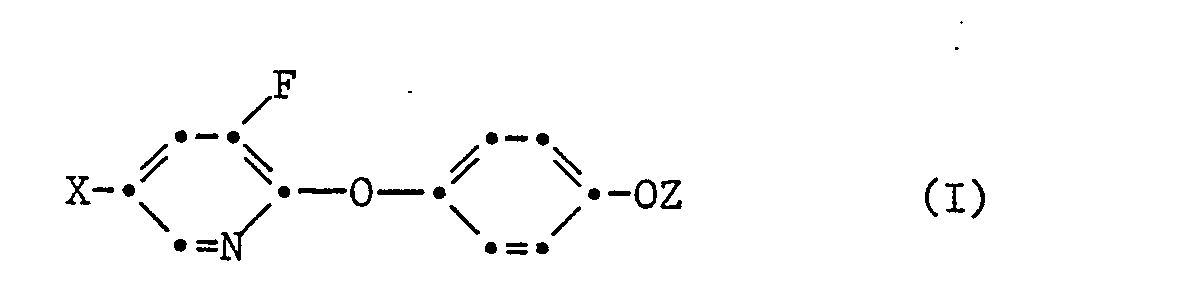
- X Halogen oder die Trifluormethylgruppe und
- Z ein in der Beschreibung näher definiertes AIkansäurederivat bedeutet.
Description
- In der offengelegten Europäischen Patentanmeldung EP-A-83 556 sind bereits 3-Fluoropyridyl-2-oxy-phenoxy-Derivate mit herbizider Wirkung beschrieben,welche der Formel

- Diese Verbindungen zeigten gute selektiv-herbizide Wirkung, vor allem gegen grasartige Unkräuter in Kulturen von Nutzpflanzen, wie Getreide, Mais, Reis, Baumwolle, Soja und Zuckerrüben.
- Es hat sich gezeigt, dass eine weitere Gruppe neuer 3-Fluoro-pyridyl-2-oxy-phenoxy-Derivate ausgezeichnete selektiv-herbizide Wirkung im Vor-und Nachauflaufverfahren gegenüber vornehmlich grasartige Unkräutern in Kulturen von Nutzpflanzen besitzen.
- Die neuen 3-Fluorpyridyl-2-oxy-phenoxy-Derivate entsprechen der Formel 1

- X ein Halogenatom oder die Trifluormethylgruppe und
- Z einen Alkancarbonsäurerest -CH(CH3)Z1, CH2Z2, - CH(C2H5)Z2, -CH(CH2OCH3)Z2 oder -CH2-CZ3=CH2
- bedeutet, wobei
- Z' einen Rest -COQ-(CR'R2) n-(CR3R4)m-Y1
- -CONA1A2
- -CONA1(OA2)
- -COQCHA3-COOA4
- -C(OAS) = NA6
- -COC(COA7) = CA8(OA9)
- -COOCA8= CA9-COA7
- -CSQR
- -COQ-G-Y2
- -CO-PO(OR14)OPR15
- -COQ-G-A10
- -COQ-G-A"
- -COQ-G-A12
- Z2 einen Rest -COQR oder dasselbe wie Z'
- m Null, 1 oder 2,
- n 1 oder 2,
- Z3 einen Rest -COOA9 oder -CN.
- Y' einen Rest -CH(OR16)2, einen Benzoyl-, Benzylsulfonyl-, Benzylsulfinyl-, Naphthoyl-oder Phenyl-C1-C4-alkylcarbonylrest der im Phenylring durch R' und R8 substituiert ist, oder einen Rest
- -NR10R11 oder
- -NR12COQ1R13,
- Y2 einen Rest -OPQ2(OR14)2,
- -PO(OR14)(O)PR15 oder
- -Si A' (OPR12)R13,
- Q,Q1,Q2 unabhängig voneinander Sauerstoff oder Schwefel
- R Wasserstoff oder das Aequivalent eines Alkalimetall-, Erdalkalimetall-, Kupfer-oder Eisenlons, oder einen quaternären C1-C4-Alkylammonium-oder C1-C4-Hydroxyalkylammo- niumrest,
- C1-C9-Alkyl, geradkettig oder verzweigt, unsubstituiert oder substituiert durch Halogen, Hydroxy, Cyan, Nitro, Phenyl, C1-C4-Alkoxy-(C1-C4-alkoxy)q oder einen Rest -COOR5, -COSR5, -CON(R5)2, - NR5R6 oder -NR5R9R6⊕M⊖; C3-C9-Cycloalkyl,
- einen gegebenenfalls N enthaltenden ungesättigten aliphatischen oder alicyclischen Rest, der 2-9 C-Atome und mindestens eine Doppel-oder Dreifachbindung enthält, Phenyl, unsubstituiert oder substituiert durch Halogen, C1-C4-Alkyl, C1-C4-Alkoxy, CN, COCH3 oder einen Rest -COOR5, -COSR5 oder - CONR5R6,
- R', R2, R3, R4 unabhängig voneinander je Wasserstoff, C1-C6-Alkyl oder Phenyl,
- R5 Wasserstoff, C1-C6-Alkyl, C1-C6-Halogenalkyl, C2-C8-Alkoxyalkyl, C3-C6-Alkenyl, C3-C6-Haloalkenyl, C3-C6-Alkinyl,
- R6 dasselbe wie R5 oder einen Phenyl-oder Benzylrest, der unsubstituiert oder substituiert ist durch Halogen, C1-C4-Alkyl,C1-C4-Alkoxy, CN, NO2, COCH3, -COOR5, -COSR5 oder -CON(R5)2
- R', R8 unabhängig voneinander je Wasserstoff, C,-C4-Alkyl, C,-C4-Alkoxy, Halogen, CF3, NO2, CN, - CO-(C1-C4Alkyl), -COO(C1-C4Alkyl),
- R9 dasselbe wie R5, jedoch unabhängig davon,
- R'°, R" zusammen C2-C5-Alkylenreste, die mit dem Stickstoffatom an das sie gebunden sind, einen gesättigten 5-oder 6-gliedrigen Heterocyclus bilden, der zusätzlich ein Sauerstoff oder Schwefelatom oder eine Gruppe -NR'2 enthalten kann,
- R12, R" je C1-C6-Alkyl,
- R14, R15 unabhängig voneinander je Wasserstoff, C,-C4-Alkyl, C3-C4-Alkenyl, C3-C4-Alkinyl, C2-C4-Halogenalkyl, C1-C4-Alkoxy-(C2-C4)-alkyl, C1-C4-Cyanoalkyl oder einen unsubstituierten oder durch Halogen, C,-C4-Alkyl, C,-C4-Alkoxy, C1-C4-Halogenalkyl, C,-C 4-Halogenalkoxy, Nitro oder Cyano ein-bis zweifach substituierten Phenyl-, Phenyl-(C,-C4)-alkyl oder Naphthylrest;
- wobei p 0 oder 1 und q 0 oder eine Zahl von 1-4 ist und R15 nicht H bedeutet, wenn P = O ist,
- R16 C,-C4-Alkyl oder die beiden Reste R16 bilden gemeinsam eine verzweigte oder unverzweigte C2-C8-Alkylenkette,
- M das Anion einer organischen oder anorganischen Säure,
- A', A2 dasselbe wie R5 oder R" aber unabhängig davon, oder C2-C6 Alkylengruppen die zusammen mit dem- Stickstoffatom einen gesättigten 5-oder 6- gliedrigen heterocyclischen Ring bilden,
- A3, A4, C1-C4-Alkylenreste, die zusammen mit der CHCOO-Gruppe ein 5-oder 6-gliedriges Lacton bilden.
- A5, A6 C1-C4-Alkylengruppen, die zusammen mit der Gruppierung, an die sie gebunden sind, einen ungesättigten heterocyclischen Ring bilden,
- A7 C1-C6-Alkyl, C1-C6-Alkoxy,
- A8 Wasserstoff oder C,-C6-Alkyl,
- A' und A" eine C1-C6-Alkylen-oder Alkenylenbrücke,
- A9 Wasserstoff oder C1-C4-Alkyl,
- A10 den Rest

- A 11 den Rest

- A 12 den Rest

- A13 C1-C4-Alkyl, C1-C4-Alkoxy, Halogen, CF3, -CO(C,-C4-Alkyl) oder -COO(C1-C4-Alkyl) und
- G eine C1-C3-Alkylenkette, die 1-bis 2-fach durch einen Substituenten aus der Gruppe Methyl und Phenyl substituiert sein kann
- Die obige Definition von G umfasst Methylen, 1,2-Aethylen und 1,3-Propylen und die durch Substitution von 1 bis 2 Wasserstoffatomen durch Methyl oder Phenyl davon abgeleiteten Gruppen, wie z.B. Aethyliden, lsopropyliden (2,2-Propyliden), Benzyliden, 1-Phenyläthyliden, Diphenylmethylen, 1,2-Propylen, 2,3-Butylen, 1,1-Dimethyl-1,2-äthylen, 1,1-Diphenyi-1,2-äthylen, 1,2-Diphenyl-1,2-äthylen, 1-Methyl-1-phenyl-1,2-äthylen, 1,2-Butylen, 1,3-Butylen, 2,2-Dimethyl-1,3-propylen, 1-Methyl-1-phenyl-1,3-propylen, 1,2-Diphenyl-1,3-propylen und 1,3-Diphenyl-1;3-propylen.
- Falls der Alkancarbonsäurerest Z ein asymmetrisch substituiertes Kohlenstoffatom enthält, (wie z.B. -CH(CH3)Z') können zwei enantiomere Formen vorliegen. Die Erfindung betrifft sowohl die Racemate wie auch die R-und S-Enantiomeren.
- Die erfindungsgemässen 3-Fluorpyridyl-2-oxy- phenoxyderivate zeichnen sich durch eine gute Wirkung gegen mono-und einige dikotyle Unkräuter aus, vor allem wirken sie im Nachauflaufverfahren gegen widrige in Kulturen wie Getreide, Mais, Reis, Soja und Zuckerrüben vorkommende Unkräuter und Ungräser. Besonders wertvoll ist die Möglichkeit mit ihnen Ungräser zu bekämpfen, denen sonst nur schwer beizukommen ist, wie z.B. Avena fatua, Avena sterilis, Alopecurus myosuroides, Lolium perenne, Phalaris sp., Bromus tectorum, verschiedene Setaria-und Panicum Arten. Die Wirkung tritt unter Feldbedingungen bereits bei niederen Aufwandmengen von weniger als 1 kg pro Hektar auf, bei denen die Kulturen nicht oder nur ganz unbedeutend geschädigt werden.
- Halogenpyridyloxy-α-phenoxyprppionsäurederivate sind in zahlreichen Publikationen beschrieben worden, siehe beispielsweise die DE-OS 2 546 251, 2 649 706, 2 714 622, 2 715 284 und die Europäischen Offenlegungsschriften 483 und 1473. Darin werden die erfindungsgemässen 3 -Fluorpyridyl-2-oxy-phenoxyderivate zum Teil auch in Erwägung gezogen und vom Umfang miterfasst. Solche Verbindungen sind jedoch nie hergestellt oder geprüft worden. Sie unterscheiden sich von den bekannten Halogenpyridyloxy-a-phenoxypropionsäuren durch stärkere Wirkung und damit der Möglichkeit sie in geringeren Aufwandmengen einzusetzen.
- Bei genügend grosser Aufwandmenge ist auch totalherbizide Wirkung vorhanden. Die Anwendung kann sowohl im Vorauflauf-wie im Nachauflaufverfahren vorgenommen werden. Dabei können die Aufwandmengen in weiten Grenzen schwanken, z.B. zwischen 0,05 bis 5 kg Wirkstoff pro Hektare.
- Ferner besitzen die Verbindungen der Formel I günstige wachstumsregulierende Effekte - (Wuchshemmung). Insbesondere hemmen sie das Wachstum von Gräsern.
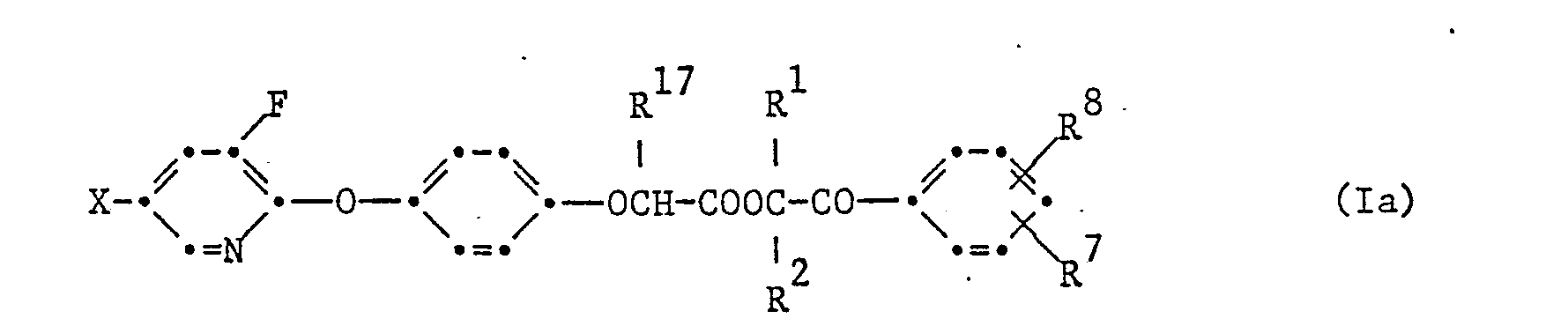
- Als sehr aktiv haben sich diejenigen 3-Fluorpyridyl-2-oxy-phenoxy-derivate der Formel I erwiesen, welche der Formel la entsprechen

- Ferner die 3-Fluorpyridyl-2-oxy-phenoxy Derivate der Formel Ib

- Beispiele dafür sind der
- (2-[4-(5-Chlor-3-fluor-pyridinyl-2-oxy)phenoxy]-propionyl-oxy)-methylphosphonsäure-diäthylester und der
- (2-[4-(5-Chlor-3-fluor-pyridinyl-2-oxy)phenoxy]-propionyl-oxy)-methylphosphonsäure- dimethylester.
- Ebenfalls als aktiv zeigten sich die Verbindungen der Formel Ic

- Weiter haben sich die Verbindungen der Formel Id als interessant erwiesen


- Besonders interessant sind auch die Verbindungen der Formel If

- Beispiel dafür sind der
- α-[4-(5-Chlor-3-fluorpyridyl-2-oxy]-phenoxy]-propionsäure-trimethyl-silyl-metylester, der
- α[4-(5-Chlor-3-fluorpyridyl-2-oxy)-phenoxy]-propionsäure-2'-trimethyl-silyl-eth-1'-yl-ester, der
- a-[4-(3-Fluor-5-trifluormethyl-pyridyl-2-oxy)-phenoxy]-propionsäure-2'-trimethylsilyl-eth-1'-yl-ester und der
- α-[4-(3-Fluor-5-trifluormethyl-pyridyl-2-oxy)-phenoxy]-propionsäure-trimethylsilyl-methylester.
- Ebenfalls als aktiv zeigten sich die Verbindungen der Formel Ig

- Ferner die 3-Fluorpyridyl-2-oxy-phenoxy-Derivate der Formel Ih

- X Chlor oder Trifluormethyl, G C1-C3-Alkylen,
- R' Wasserstoff, Halogen oder Methyl,
- A" Halogen und R17 Methyl bedeuten, insbesondere der α-[4-(5-Chlor-3-fluor-pyridyl-2-oxy)-phenoxy]-propionsäure-4'-chlorbenzylester.
- Ausserdem die 3-Fluorpyridyl-2-oxy-phenoxy-Derivate der Formel li

- X Chlor oder Trifluormethyl, G C1-C4-Alkylen, R7 und R8 Wasserstoff, Halogen, Methyl oder CF3, A9 Wasserstoff oder Methyl und R17asserstoff, Methyl bedeuten, insbesondere der
- 1-(2'-[4-(5-Chlor-3-fluor-pyridyl-2-oxy)-phenoxy]-propionsäure)-2-(4-Chlor-phenoxyessigsäure)-glykol-ester.
- Die Herstellung der neuen Verbindungen der Formel I erfolgt nach an sich bekannten Methoden.
- Nach einem ersten dieser Verfahren setzt man ein 2,3-Difluorpyridin der Formel 11


- Ein anderes Verfahren besteht darin, dass man ein 4-(3-Fluor-pyridyl-2-oxy)-phenol der Formel IV


- Ein weiteres Verfahren besteht darin, dass man ein 3-Aminopyridyl-2-oxyphenoxy-Derivat der Formel Vl

- Schliesslich besteht ein Verfahren zur Herstellung der Verbindungen der Formel I darin, dass man ein Säurehalogenid der Formel VII

- Unter Alkohol verstehen wir u.a. die Verbindungsklassen HQR und HQ-G-PO(OR14)(O)P(R15), unter Amin u.a. Verbindungsklassen wie HNA1A2 oder HNA1(OA2).
- Ein Teil dieser Umsetzungen werden vorteilhafterweise in einem den Reaktionspartnem gegenüber inerten, organischen Lösungs-oder Verdünnungsmittel durchgeführt, wie z.B. einem Alkohol, Ester, Aether, Keton, Dimethylformamid, Dimethylsulfoxyd, Acetonitril, einem Aromaten wie Benzyl, Toluol etc..
- Die Reaktionstemperaturen. liegen zwischen - 10° und +150°C, praktisch aber zwischen der Raumtemperatur und dem Siedepunkt des Lösungsmittels. Die Reaktionsdauer beträgt je nach dem gewählten Ausgangsstoff, dem Lösungsmittel und der Temperatur 1 Stunde bis ca. einen Tag.
- Wo ein Halogenatom bei der Reaktion abgespalten wird, sollte die äquimolare Menge eines säurebindenden Mittels eingesetzt werden. Als solches eignet sich im Prinzip jede anorganische oder organische Base, wie z.B. NaOH, KOH, NaHC03, K2CO3, K-tert.Butylat, und Amine, wie Trimethylamin, Triäthylamin, Pyridin, 4-Dimethylaminopyridin etc..
- Die neuen Wirkstoffe der Formel sind stabile Verbindungen, welche in üblichen organischen Lösungsmitteln, wie Alkoholen, Aethern, Ketonen, Dimethyiformamid, Dimethylsulfoxid etc. löslich sind. Sie sind nicht explosiv oder ätzend und ihre Handhabung bedarf keiner besonderer Vorsichtsmassnahmen.
- Die Verbindungen der Formel 1 werden in unveränderter Form oder vorzugsweise zusammen mit den in der Formulierungstechnik üblichen Hilfsmitteln eingesetzt und werden daher z.B. zu Emulsionskonzentraten, direkt versprühbaren oder verdünnbaren Lösungen, verdünnten Emulsionen, Spritzpulvern, löslichen Pulvern, Stäubemitteln, Granulaten, auch Verkapselungen in z.B. polymeren Stoffen in bekannter Weise verarbeitet. Die Anwendungsverfahren wie Versprühen, Vernebeln, Verstäuben, Verstreuen oder Giessen werden gleich wie die Art der Mittel den angestrebten Zielen und den gegebenen Verhältnissen entsprechend gewählt.
- Die Formulierungen, d.h. die den Wirkstoff der Formel I und gegebenenfalls einen festen oder flüssigen Zusatzstoff enthaltenden Mittel, Zubereitungen oder Zusammensetzungen werden in bekannter Weise hergestellt, z.B. durch inniges Vermischen und/oder Vermahlen der Wirkstoffe mit Streckmitteln, wie z.B. mit Lösungsmitteln, festen Trägerstoffen, und gegebenenfalls oberflächenaktiven Verbindungen (Tensiden).
- Als Lösungsmittel können in Frage kommen: Aromatische Kohlenwasserstoffe, bevorzugt die Fraktionen C. bis C,2, wie z.B. Xylolgemische oder substituierte Naphthaline, Phthalsäureester wie Dibutyl-oder Dioctylphthalat, aliphatische Kohlenwasserstoffe wie Cyclohexan oder Paraffine, Alkohole und Glykole sowie deren Aether und Ester, wie Aethanol, Aethylenglykol, Aethylenglykolmonomethyl-oder -äthyl äther, Ketone wie Cyclohexanon, stark polare Lösungsmittel wie N-Methyl-2-pyrrolidon, Dimethylsulfoxid oder Dimethylformamid, sowie gegebenenfalls epoxydierte Pflanzenöle wie epoxidertes Kokosnussöl oder Sojaöl; oder Wasser.
- Als feste Trägerstoffe, z.B. für Stäubemittel und dispergierbare Pulver, werden in der Regel natürliche Gesteinsmehle verwendet, wie Calcit, Talkum, Kaolin, Montmorillonit oder Attapulgit. Zur Verbesserung der physikalischen Eigenschaften können auch hochdisperse Kieselsäure oder hochdisperse saugfähige Polymerisate zugesetzt werden. Als gekörnte, adsorptive Granulatträger kommen poröse Typen wie z.B. Bimsstein, Ziegelbruch, Sepiolit oder Bentonit, als nicht sorptive Trägermaterialien z.B. Calcit oder Sand in Frage. Darüberhinaus kann eine Vielzahl von vorgranulierten Materialien anorganischer oder organischer Natur wie insbesondere Dolomit oder zerkleinerte Pflanzenrückstände verwendet werden.
- Als oberflächenaktive Verbindungen kommen je nach der Art des zu formulierenden Wirkstoffes der Formel I nichtionogene, kation-und/oder anionaktive Tenside mit guten Emulgier-, Dispergier-und Netzeigen-schaften in Betracht. Unter Tensiden sind auch Tensidgemisch zu verstehen.
- - Geeignete anionische Tenside können sowohl sog. wasserlösliche Seifen wie wasserlösliche synthetische oberflächenaktive Verbindungen sein. Als Seifen sind z.B. die Alkali-, Erdalkali-oder gegebenenfalls substituierten Ammoniumsalze von höheren Fettsäuren (C10-C20), wie z.B. die Na-oder K-Salze der Oel-oder Stearinsäure, oder von natürlichen .Fettsäuregemischen, die z.B. aus Kokosnuss-oder Talgöl gewonnen werden können. Ferner sind auch die Fettsäure-methyl-taurin-salze zu erwähnen.
- Häufiger werden jedoch sog. synthetische Tenside verwendet, insbesondere Fettsulfonate, Fettsulfate, sulfonierte Benzimidazolderivate oder Alkylarylsulfonate.
- Die Fettsulfonate oder -sulfate liegen in der Regel als Alkali-, Erdalkali oder gegebenenfalls substituierte Ammoniumsalze vor und weisen einen Alkylrest mit 8 bis 22 C-Atomen auf, wobei Alkyl auch den Alkylteil von Acylresten einschliesst, z.B. das Na-oder Ca-Salz der Ligninsulfonsäure, des Dodecylschwefelsäureesters oder eines aus natürlichen Fettsäuren hergestellten Fettalkoholsulfatgemisches. Hierher gehören auch die Salze der Schwefelsäureester und Sulfonsäuren von Fettalkohol-Aethylenoxyd-Addukten. Die sulfonierten Benzimidazolderivate enthalten vorzugsweise 2 Sulfonsäuregruppen und einen Fettsäurerest mit 8-22 C-Atomen. Alyklarylsulfonate sind z.B. die Na-, Ca-oder Triäthanolaminsalze der Dodecylbenzolsulfonsäure, der Dibutylnaphthalinsulfonsäure, oder eines Naphthalinsulfonsäure-Formaldehyd-kondensationsproduktes..
- Ferner kommen auch entsprechende Phosphate wie z.B. Salze des Phosphorsäureesters eines p-Nonylphenol-(4-14)-Aethylenoxyd-Adduktes in Frage.
- Als nichtionische Tenside kommen in erster Linie Polyglykolätherderivate von aliphatischen oder cycloaliphatischen Alkoholen, gesättigten oder ungesättigten Fettsäuren und Alkylphenolen in Frage, die 3 bis 30 Glykoläthergruppen und 8 bis 20 Kohlenstoffatome im (aliphatischen) Kohlenwasserstoffrest und 6 bis 18 Kohlenstoffatome im Alkylrest der Alkylphenole enthalten können.
- Weitere geeignete nichtionische Tenside sind die wasserlöslichen, 20 bis 250 Aethylenglykoläthergruppen und 10 bis 100 Propylenglykoläthergruppen enthaltenden Polyäthylenoxidaddukte an Polypropylenglykol, Aethylendiaminopolypropylengiykol und Alkylpolypropylenglykol mit 1 bis 10 Kohlenstoffatomen in der Alkylkette. Die genannten Verbindungen enthalten üblicherweise pro Propylenglykol-Einheit 1 bis 5 Aethylenglykoleinheiten.
- Als Beispiele nichtionischer Tenside seien Nonylphenolpolyäthoxyäthanole, Ricinusölpolyglycoläther, Polypropylen-Polyäthylenoxydaddukte, Tributylphenoxypolyäthoxyäthanol, Polyäthylenglykol und Octylphenoxypolyäthoxyäthanol erwähnt.
- Ferner kommen auch Fettsäureester von Polyoxyäthylensorbitan wie das Polyoxyäthylensorbitan-trioleat in Betracht.
- Bei den kationischen Tensiden handelt es sich vor allem um quartäre Ammoniumsalze, welche als N-Substituenten mindestens einen Alkylrest mit 8 bis 22 C-Atomen enthalten und als weitere Substituenten niedrige, gegebenenfalls halogenierte Alkyl-, Benzyl-oder niedrige Hydroxyalkylreste aufweisen. Die Salze liegen vorzugsweise als Halogenide, Methylsulfate oder Aethylsulfate vor, z.B. das Stearyltrimethylammoniumchlorid oder das Benzyldi(2-chloräthyl)äthylammoniumbromid.
- Die in der Forrnulierungstechnik gebräuchlichen Tenside sind u.a. in folgenden Publikationen beschrieben:
- "Mc Cutcheon's Detergents and Emulsifiers Annual"
- MC Publishing Corp., Ridgewood, New Jersey, 1979.
- H. Stache "Tensid Taschenbuch" 2. Aufl., C. Hanser Verlag, München Wien 1981.
- M. and J. Ash, "Encyclopedia of Surfactants" Voll-III Chemical Publishing Co. New York, 1980-81.
- Diese Zubereitungen enthalten in der Regel 0,1 bis 99%, insbesondere 0,1 bis 95%, Wirkstoff der Formel I, 1 bis 99% eines festen oder flüssigen Zusatzstoffes und 0 bis 25%, insbesondere 0,1 bis 25% eines Tensides.
- Während als Handelsware eher konzentrierte Mittel bevorzugt werden, verwendet der Endverbraucher in der Regel verdünnte Mittel.
- Die Mittel können auch weitere Zusätze wie Stabilisatoren, Entschäumer, Viskositätsregulatoren, Bindemittel, Haftmittel sowie Dünger oder andere Wirkstoffe zur Erzielung spezieller Effekte enthalten.
- Die folgenden Beispiele beschreiben im Detail die Herstellung der erfindungsgemässen 3-Fluorpyridyl-2-oxy-phenoxyderivate der Formel I und solche Verbindungen als Wirkstoffe enthaltende Mittel. Weitere in analoger Weise erhaltene erfindungsgemässe Ester sind in der sich den Beispielen anschliessenden Tabellen aufgeführt. Die Temperaturen sind in Grad Celsius angegeben, während sich Prozentangaben auf das Gewicht beziehen.
-

- Eine Mischung von 10.68 g (0.032 Mol) Natrium-2-[4-(5-Chtor-3-fluor-pyridin-2-yloxy)-phenoxy]-propionat und 6.1 g (0.032 Mol) Phenacyl-bromid (98 %) in 30 ml Dimethylformamid wird während 1 Stunde auf 80°C erwärmt. Dann wird das Reaktionsgemisch auf Eis/Wasser gegeben und dreimal mit Essigsäureäthylester extrahiert. Die Extrakte werden mit Sole gewaschen, mit Magnesiumsulfat getrocknet, filtriert und eingeengt. Das erhaltene Produkt wird in Petroläther/-Aether 2:1 durch eine kurze Kieselgelsäule gereinigt.
- Nach dem Eindampfen des Lösungsmittels erhält man 12 g Produkt; n35 D 1,5679.
-

- In einem Sulfierkolben werden 4,95 g (0.015 Mol) (±)-2-[4-(5-Chlor-3-fluorpyridinyl-2-oxy)-phenoxy]-propionsäurechlorid und 1,5 g (0,0155 Mol) 2,2-Dicyanovinylamin in 20 ml Acetonitril gelöst und unter Rühren auf 5°C gekühlt. Dann werden 2,2 ml (0,015 Mol) 1,8-Diazabicyclo[5.4.0]-undec-7-en (97 %), gelöst in 5 ml Acetonitril, zugetropft. Man rührt 1 Stunde bei gleicher Temperatur weiter und lässt sie dann auf 20°C ansteigen. Nach 16 Stunden wird das Reaktionsgemisch auf Eis gegossen und mit 1 ml (0,015 Mol) Methansulfonsäure versetzt. Dann wird das Gemisch zweimal mit Essigsäureäthylester extrahiert. Die Extrakte werden mit Sole gewaschen, mit Magnesiumsulfat getrocknet, filtriert und eingeengt. Das Rohprodukt wird in Essigsäureäthylester/Hexan 1:1 durch eine kurze Kieselgelsäure gereinigt. Nach dem Eindampfen des Lösungsmittels erhält man 5,0 g (86 %) Titel-produkt; Smp. 129-131 °C.
- Herstellung von (±)-2-[4-(5-Chlor-3-fluorpyridinyl-2- oxy)-phenoxy]-propionsäure-methoxyamid.

- In einem Sulfierkolben werden unter Rühren 1,7 g (0,02 Mol) 0-Methyl-hydroxylamin-hydrochlorid, 5,6 ml (0,04 Mol) Triäthylamin und 30 ml Toluol auf 5°C gekühlt und dazu 4,95 g (0,015 Mol) (±)-2-[4-(5-Chlor-3-fluorpyridinyl-2-oxy)-phenoxy]-propionsäure chlorid in 15 ml Toluol getropft.
- Dann wird das Reaktionsgemisch 3 Stunden bei Raumtemperatur weiter gerührt, anschliessend auf Eis/Wasser gegossen und dreimal mit Essigsäureäthylester extrahiert. Die Extrakte werden mit Sole gewaschen, mit Magnesiumsulfat getrocknet, filtriert und eingedampft. Man erhält so 3,9 g Oel, das beim Verrühren in Aether kristallisiert; Smp. 103-105°C.
-

- 7,7 g (0,05 mol) 2-Hydroxyäthyl-0,0-dimethyl- phosphonat werden zusammen mit 6,9 ml (0,05 mol) Triäthylamin und einer Spatelspitze 4-Piperidinopyridin in 130 ml Aethylacetat vorgelegt. Unter Rühren tropft man bei Raumtemperatur 17,9 g - (0,05 mol) 2-[4-(3-Fluor-5-trifluormethylpyridyl-2- oxy)-phenoxy]-propionsäurechlorid in 20 ml Aethylacetat zu. Es wird 1 Stunde bei 30-35°C und 1 Stunde bei Rückfluss gerührt, dann lässt man abkalten, filtriert, behandelt das Filtrat mit Aktivkohle, trocknet über Natriumsulfat und dampft ein. Man erhält 22,1 g braunes Oel, das nun mit CH2Cl2/CH3OH 95:5 über Kieselgel chromatographiert wird.
- In analoger Weise zu diesen Beispielen werden folgende Verbindungen hergestellt:


- Herstellung einer Formulierung mit flüssigen Wirkstoffen der Formel I (% = Gewichtsprozent)

- Aus solchen Konzentraten können durch Verdünnen mit Wasser Emulsionen jeder gewünschten Konzentration hergestellt werden.

- Die Lösungen sind zur Anwendung in Form kleinster Tropfen geeignet.

- Der Wirkstoff wird in Methylenchlorid gelöst, auf den Träger aufgesprüht und das Lösungsmittel anschliessend im Vakuum abgedampft.

- Durch inniges Vermischen der Trägerstoffe mit dem Wirkstoff erhält man gebrauchsfertige Stäubemittel.
-

- Der Wirkstoff wird mit den Zusatzstoffen gut vermischt und in einer geeigneten Mühle gut vermahlen. Man erhält Spritzpulver, die sich mit Wasser zu Suspensionen jeder gewünschten Konzentration verdünnen lassen.

- Aus diesem Konzentrat können durch Verdünnen mit Wasser Emulsionen jeder gewünschten Konzentration hergestellt werden.
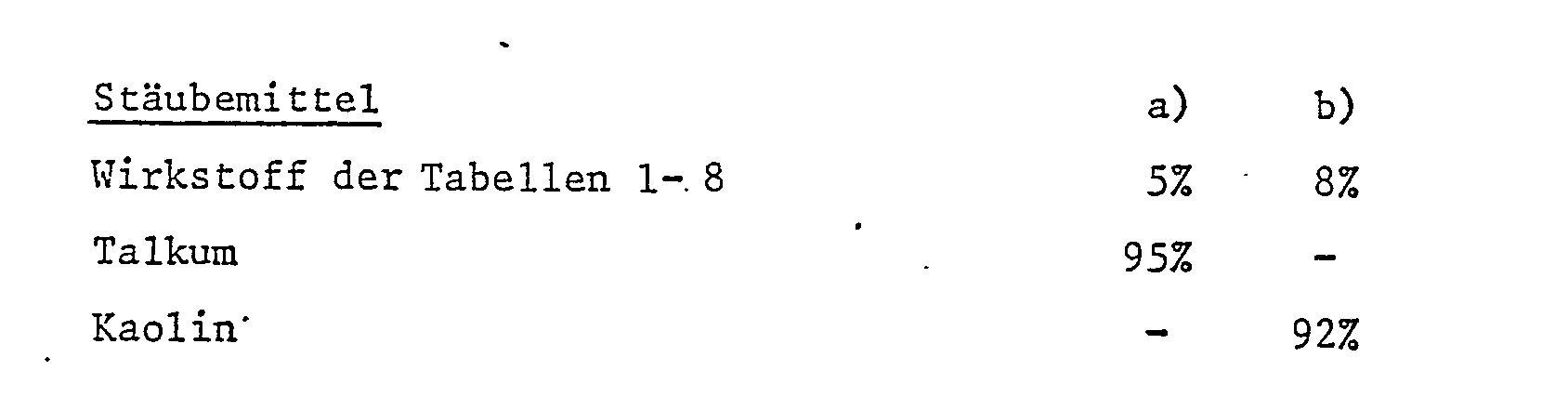
- Man erhält anwendungsfertige Stäubemittel, indem der Wirkstoff mit den Trägerstoffen vermischt und auf einer geeigneten Mühle vermahlen wird.
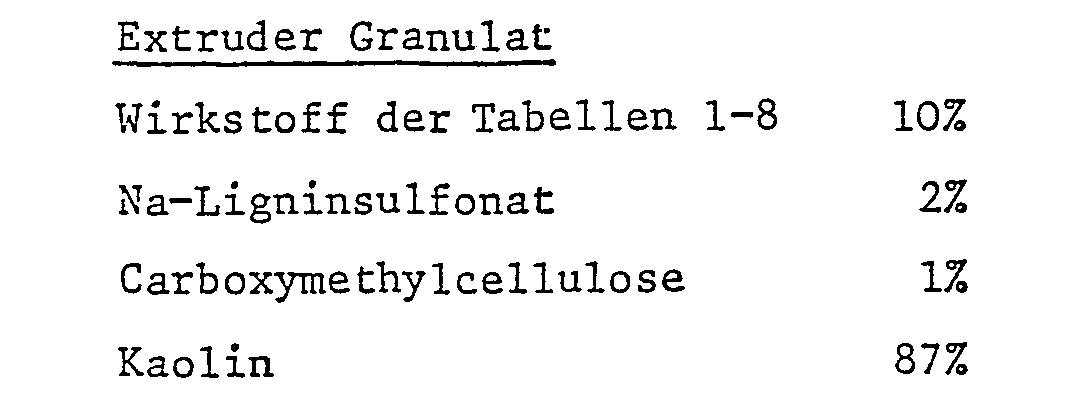
- Der Wirkstoff wird mit den Zusatzstoffen vermischt, vermahlen und mit Wasser angefeuchtet. Dieses Gemisch wird extrudiert und anschliessend im Luftstrom getrocknet.

- Der fein gemahlene Wirkstoff wird in einem Mischer auf das mit Polyäthylenglykol angefeuchtete Kaolin gleichmässig aufgetragen. Auf diese Weise erhält man staubfreie Umhüllungs-Granulate.

- Der fein gemahlene Wirkstoff wird mit den Zusatzstoffen innig vermischt. Man erhält so ein Suspensions-Konzentrat, aus welchem durch Verdünnen mit Wasser Suspensionen jeder gewünschten Konzentration hegestellt werden können.
- Im Gewächshaus wird unmittelbar nach der Einsaat der Versuchspflanzen in Töpfe die Erdoberfläche mit einer wässrigen Dispersion des Wirkstoffes erhalten aus einem 25%-igen Emulsionskonzentrat oder aus einem 25%-igen Spritzpulver mit Wirkstoffen, die wegen ungenügender Löslichkeit nicht als Emulsionskonzentrat hergestellt werden können, gespritzt. Es werden verschiedene Konzentrationen angewendet und die Menge Wirkstoff wird in kg pro Hektar ausgerechnet. Die Töpfe werden dann im Gewächshaus bei 22-25°C und 50-70% relativer Luftfeuchtigkeit gehalten und regelmässig bewässert. Der Versuch wird nach 3 Wochen ausgewertet. Die geprüften Verbindungen der Tabellen 1-zeigen gute bis sehr gute Phytotoxizität gegenüber den geprüften Monokolyledonen.
- Eine grössere Anzahl Unkräuter und Kulturpflanzen, sowohl monokotyle wie dicotyle, wurden im Gewächshaus in Töpfen gezogen und nach dem Auflaufen (im 4-bis 6-Blattstadium) mit einer wässerigen Wirkstoffdispersion in verschiedenen Dosierungen, ausgedrückt in kg Wirksubstanz pro Hektare, auf die Pflanzen gespritzt und diese bei 24-26°C und 45-60% relativer Luftfeuchtigkeit gehalten. Der Versuch wird 2 Wochen nach der Behandlung ausgewertet. Auch hier wirken die geprüften Verbindungen-der Tabellen 1-8 ausgezeichnet gegen die monokotylen Ungräser.
- In Kunststoffschalen mit Erde-Torf-Sand-Gemisch (6:3:1) wurden Samen der Gräser Lolium perenne, Poa pratensis, Festuca ovina und Dactylis glomerata ausgesät und normal bewässert. Die aufgelaufenen Gräser wurden wöchentlich bis auf 4 cm Höhe zurückgeschnitten und 40 Tage nach der Aussaat und 1 Tag nach dem letzten Schnitt mit einer wässerigen Spritzbrühe der Verbindungen der Formel 1 bespritzt. Die Wirkstoffmenge betrug umgerechnet 0,05 -2 kg Aktivsubstanz pro Hektar. 10 und 21 Tage nach der Applikation wurde das Wachstum der Gräser mit derjenigen einer unbehandelten Kontrolle verglichen. Die geprüften Verbindungen der Tabellen 1-8 vermindern bei der Aufwandmenge von 0,05 kg pro Hektare das Wachstum der Gräser um 18 -32%.
Claims (51)


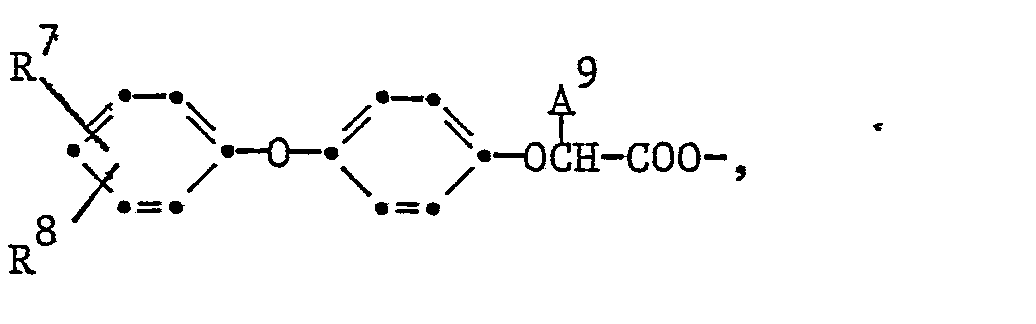

bedeuten.








Applications Claiming Priority (2)
| Application Number | Priority Date | Filing Date | Title |
|---|---|---|---|
| CH1401/85 | 1985-04-01 | ||
| CH140185 | 1985-04-01 |
Publications (3)
| Publication Number | Publication Date |
|---|---|
| EP0200677A2 true EP0200677A2 (de) | 1986-11-05 |
| EP0200677A3 EP0200677A3 (en) | 1989-04-26 |
| EP0200677B1 EP0200677B1 (de) | 1991-04-03 |
Family
ID=4209563
Family Applications (1)
| Application Number | Title | Priority Date | Filing Date |
|---|---|---|---|
| EP86810137A Expired - Lifetime EP0200677B1 (de) | 1985-04-01 | 1986-03-24 | 3-Fluorpyridyl-2-oxy-phenoxy-Derivate mit herbizider Wirkung |
Country Status (5)
| Country | Link |
|---|---|
| US (5) | US4740235A (de) |
| EP (1) | EP0200677B1 (de) |
| JP (1) | JPS61246166A (de) |
| CA (1) | CA1257591A (de) |
| DE (1) | DE3678485D1 (de) |
Cited By (3)
| Publication number | Priority date | Publication date | Assignee | Title |
|---|---|---|---|---|
| EP0427549A1 (de) * | 1989-11-09 | 1991-05-15 | Shionogi Seiyaku Kabushiki Kaisha | Heterocyclische Oxy-phenoxy-Essigsäurederivate und ihre Verwendung als Herbizide |
| EP0434132A3 (en) * | 1989-12-18 | 1991-08-21 | Shell Internationale Research Maatschappij B.V. | Herbicidal acrylonitrile derivatives |
| CN101153047B (zh) * | 2005-04-26 | 2010-05-12 | 华中师范大学 | 具有杀菌除草活性的取代苯氧乙酰氧基芳杂环基烃基次膦酸酯盐及其制备 |
Families Citing this family (4)
| Publication number | Priority date | Publication date | Assignee | Title |
|---|---|---|---|---|
| AU2005277594A1 (en) * | 2004-08-16 | 2006-03-02 | Hill-Rom Services, Inc. | Chair |
| CN101495454A (zh) * | 2006-05-31 | 2009-07-29 | 查珀尔希尔北卡罗来纳大学 | 新型pde4抑制剂 |
| CN101885703B (zh) * | 2010-07-08 | 2012-06-20 | 湖南化工研究院 | 具有生物活性的n-氧基芳氧苯氧羧酸酰胺类化合物及其制备方法 |
| CN109867624B (zh) * | 2017-12-02 | 2021-09-10 | 沈阳中化农药化工研发有限公司 | 一种3-氟-5-氯吡啶氧基苯氧丙酰胺类化合物及其应用 |
Family Cites Families (33)
| Publication number | Priority date | Publication date | Assignee | Title |
|---|---|---|---|---|
| US4092151A (en) * | 1974-10-17 | 1978-05-30 | Ishihara Sangyo Kaisha, Ltd. | Herbicidal compound, herbicidal composition containing the same and method of use thereof |
| DK154074C (da) * | 1974-10-17 | 1989-02-27 | Ishihara Sangyo Kaisha | Alfa-(4-(5 eller 3,5 substitueret pyridyl-2-oxy)-phenoxy)-alkan-carboxylsyrer eller derivater deraf til anvendelse som herbicider, herbicidt middel samt fremgangsmaader til bekaempelse af ukrudt |
| US4083714A (en) * | 1974-10-17 | 1978-04-11 | Ishihara Sangyo Kaisha, Ltd. | Alkoxyalkyl esters of substituted pyridyloxyphenoxy-2-propanoic acids, herbicidal composition containing the same and method of use thereof |
| US4105435A (en) * | 1975-10-29 | 1978-08-08 | Ishihara Sangyo Kaisha Ltd. | Herbicidal compound, herbicidal composition containing the same, and method of use thereof |
| JPS52131544A (en) * | 1976-04-08 | 1977-11-04 | Ishihara Sangyo Kaisha Ltd | Phenoxymalonic acid derivatives and herbicides containing them |
| JPS52131540A (en) * | 1976-04-14 | 1977-11-04 | Ishihara Sangyo Kaisha Ltd | Phenoxyvaleric acid derivatives and herbicides therefrom |
| US4133675A (en) * | 1976-07-23 | 1979-01-09 | Ciba-Geigy Corporation | Pyridyloxy-phenoxy-alkanecarboxylic acid derivatives which are effective as herbicides and as agents regulating plant growth |
| JPS54119476A (en) * | 1978-03-10 | 1979-09-17 | Ishihara Sangyo Kaisha Ltd | 4-(5-fluoromethyl-2-pyridyloxy)phenoxyalkanecarbocyic acid derivatives and their preparation |
| CA1247625A (en) * | 1977-07-22 | 1988-12-28 | Howard Johnston | Trifluoromethyl pyridinyloxyphenoxy propanoic acids and propanols and derivatives thereof and methods of herbicidal use |
| US4491468A (en) * | 1977-07-22 | 1985-01-01 | The Dow Chemical Company | Herbicidal trifluoromethyl pyridinyloxyphenoxy and pyridinylthiophenoxy propanenitriles and derivatives thereof |
| EP0001473B1 (de) * | 1977-08-12 | 1988-07-27 | Imperial Chemical Industries Plc | Herbizide Halogenomethyl-pyridyloxy-phenoxy-alkancarbonsäuren und Derivate; Verfahren zur Regulierung unerwünschten Pflanzenwachstums |
| US4325729A (en) * | 1977-12-13 | 1982-04-20 | Ciba-Geigy Corporation | Herbicidal and plant growth regulating pyridyloxy-phenoxy-propionic acid derivatives |
| DE2961917D1 (en) * | 1978-01-18 | 1982-03-11 | Ciba Geigy Ag | Herbicidal active unsaturated esters of 4- (3',5'-dihalogenpyridyl-(2')-oxy)-alpha-phenoxy propionic acids, process for their preparation, herbicidal compositions containing them and their use |
| EP0003313B1 (de) * | 1978-01-27 | 1981-01-07 | Ciba-Geigy Ag | Neue Pyridyloxy-phenoxy-alpha-propionsäure-aminoalkyl-ester mit herbizider Wirkung,ihre Herstellung, sie enthaltende Mittel und deren Verwendung |
| DE2909816A1 (de) * | 1978-03-16 | 1979-09-27 | Ciba Geigy Ag | Bis-pyridyloxy-phenoxy-propionsaeureester |
| ATE1284T1 (de) * | 1978-06-29 | 1982-07-15 | Ciba-Geigy Ag | Herbizid wirksame, optisch aktive r(+)-dichlorpyridyloxy-al pha-phenoxy-propionsaeure-propargylester, verfahren zu ihrer herstellung und deren verwendung in mitteln zur unkrautbekaempfung. |
| ATE721T1 (de) * | 1978-07-03 | 1982-03-15 | Ciba-Geigy Ag | Ester von o-(pyridyloxy-phenyl)-milchsaeuren, verfahren zu ihrer herstellung und ihre verwendung als herbizide und pflanzenwachstumsregulatoren. |
| EP0040478A1 (de) * | 1980-05-15 | 1981-11-25 | Imperial Chemical Industries Plc | Verfahren zur Herstellung von Pyridin-Derivaten sowie in dem Verfahren verwendete Zwischenprodukte |
| CH645375A5 (de) * | 1980-08-11 | 1984-09-28 | Ciba Geigy Ag | Alpha-(4-(5'-trifluormethylpyridyl-2'-oxy)-phenoxy)-propionsaeure-gamma-butyrolacton-ester und -thioester mit herbizider wirkung, ihre herstellung und verwendung. |
| PH18417A (en) * | 1981-06-25 | 1985-06-24 | Nihon Tokushu Noyaku Seizo Kk | Substituted phenoxypropionates and herbicidal compositions |
| US4505743A (en) * | 1981-12-31 | 1985-03-19 | Ciba-Geigy Corporation | α-[4-(3-Fluoro-5'-halopyridyl-2'-oxy)-phenoxy]-propionic acid derivatives having herbicidal activity |
| US4518416A (en) * | 1982-06-04 | 1985-05-21 | Bayer Aktiengesellschaft | Certain trimethyl silyl-lower-alkyl esters of pyridyloxy-phenoxy-lower alkanoic acids, compositions containing same and herbicidal method of use |
| US4565568A (en) * | 1982-06-18 | 1986-01-21 | The Dow Chemical Company | Pyridyl(oxy/thio)phenoxy compounds, herbicidal compositions and methods |
| IL68822A (en) * | 1982-06-18 | 1990-07-12 | Dow Chemical Co | Pyridyl(oxy/thio)phenoxy compounds,herbicidal compositions and methods of using them |
| US4526608A (en) * | 1982-07-14 | 1985-07-02 | Zoecon Corporation | Certain 2-pyridyloxyphenyl-oximino-ether-carboxylates, herbicidal compositions containing same and their herbicidal method of use |
| US4480102A (en) * | 1982-07-23 | 1984-10-30 | The Dow Chemical Company | 2,3-Difluoro-5-(trifluoromethyl)pyridine and methods of making and using the same |
| EP0113831A3 (de) * | 1982-12-17 | 1984-11-07 | F. HOFFMANN-LA ROCHE & CO. Aktiengesellschaft | Carbaminsäureester, Verfahren zu deren Herstellung und deren Verwendung |
| DE3247930A1 (de) * | 1982-12-24 | 1984-06-28 | Bayer Ag, 5090 Leverkusen | Optisch aktive phenoxypropionsaeure-derivate |
| DE3304204A1 (de) * | 1983-02-08 | 1984-08-09 | Bayer Ag, 5090 Leverkusen | Substituierte alkanthiocarbonsaeure-derivate |
| US4681941A (en) * | 1983-05-13 | 1987-07-21 | The Dow Chemical Company | Method of preparing esters of aryloxyphenoxy propanoic acid |
| IL71668A (en) * | 1983-05-13 | 1988-07-31 | Dow Chemical Co | Method of preparing esters of aryloxyphenoxy propanoic acid |
| DE3402982A1 (de) * | 1984-01-28 | 1985-08-01 | Bayer Ag, 5090 Leverkusen | Phenoxypropionyloxyalkanphosphonsaeureester |
| EP0191736B1 (de) * | 1985-02-14 | 1991-07-17 | Ciba-Geigy Ag | Verwendung von Chinolinderivaten zum Schützen von Kulturpflanzen |
-
1986
- 1986-03-24 DE DE8686810137T patent/DE3678485D1/de not_active Expired - Lifetime
- 1986-03-24 EP EP86810137A patent/EP0200677B1/de not_active Expired - Lifetime
- 1986-03-26 US US06/844,407 patent/US4740235A/en not_active Expired - Fee Related
- 1986-03-27 CA CA000505341A patent/CA1257591A/en not_active Expired
- 1986-04-01 JP JP61075405A patent/JPS61246166A/ja active Pending
-
1987
- 1987-12-09 US US07/130,487 patent/US4832736A/en not_active Expired - Fee Related
-
1988
- 1988-02-01 US US07/150,793 patent/US4838930A/en not_active Expired - Fee Related
- 1988-02-01 US US07/150,680 patent/US4875926A/en not_active Expired - Fee Related
- 1988-12-12 US US07/284,766 patent/US4948414A/en not_active Expired - Fee Related
Cited By (4)
| Publication number | Priority date | Publication date | Assignee | Title |
|---|---|---|---|---|
| EP0427549A1 (de) * | 1989-11-09 | 1991-05-15 | Shionogi Seiyaku Kabushiki Kaisha | Heterocyclische Oxy-phenoxy-Essigsäurederivate und ihre Verwendung als Herbizide |
| US5089043A (en) * | 1989-11-09 | 1992-02-18 | Shionogi & Co., Ltd. | Heterocyclic oxy-phenoxyacetic acid derivatives and their use as herbicides |
| EP0434132A3 (en) * | 1989-12-18 | 1991-08-21 | Shell Internationale Research Maatschappij B.V. | Herbicidal acrylonitrile derivatives |
| CN101153047B (zh) * | 2005-04-26 | 2010-05-12 | 华中师范大学 | 具有杀菌除草活性的取代苯氧乙酰氧基芳杂环基烃基次膦酸酯盐及其制备 |
Also Published As
| Publication number | Publication date |
|---|---|
| US4740235A (en) | 1988-04-26 |
| US4875926A (en) | 1989-10-24 |
| EP0200677B1 (de) | 1991-04-03 |
| US4838930A (en) | 1989-06-13 |
| US4832736A (en) | 1989-05-23 |
| US4948414A (en) | 1990-08-14 |
| CA1257591A (en) | 1989-07-18 |
| DE3678485D1 (de) | 1991-05-08 |
| JPS61246166A (ja) | 1986-11-01 |
| EP0200677A3 (en) | 1989-04-26 |
Similar Documents
| Publication | Publication Date | Title |
|---|---|---|
| EP0083556B1 (de) | Alpha-(4-(3'-Fluor-5'-halogen-pyridyl-2'-oxy)-phenoxy)-propionsäure derivate mit herbizider Wirkung | |
| EP0191736B1 (de) | Verwendung von Chinolinderivaten zum Schützen von Kulturpflanzen | |
| DE2433067A1 (de) | Herbizide mittel | |
| EP0093081A2 (de) | Herbizide und pflanzenwuchsregulierende Mittel | |
| EP0248968A1 (de) | (R)-2-[4-(5-Chlor-3-fluorpyridin-2-yloxy)-phenoxy]-propionsäure-propinylester mit herbizider Wirkung | |
| CH648294A5 (de) | Cyclohexan-1,3-dion-derivate, verfahren zu ihrer herstellung und sie enthaltende herbizide. | |
| DE2101938C2 (de) | 3-[2-Chlor-4-(3,3-dimethylureido)-phenyl]-5-tert.-butyl-1,3,4-oxadiazolon-(2), seine Herstellung und herbicide Zusammensetzungen, die es enthalten | |
| EP0159287A1 (de) | Verwendung von Chinolinderivaten zum Schützen von Kulturpflanzen | |
| EP0200677B1 (de) | 3-Fluorpyridyl-2-oxy-phenoxy-Derivate mit herbizider Wirkung | |
| EP0058639B1 (de) | 2-(4-(6-Halogen-chinoxalinyl-2-oxy)-phenoxy)-propionsäureester, Verfahren zu ihrer Herstellung sowie ihre Verwendung als Herbizide und Pflanzenwuchsregulatoren | |
| EP0196026B1 (de) | Phosphorhaltige funktionelle Essigsäurederivate, Verfahren zu ihrer Herstellung und sie enthaltende herbizide, wachstumsregulierende Mittel | |
| DE3533440A1 (de) | N-substituierte 3,4,5,6-tetrahydrophthalimide, verfahren zu ihrer herstellung sowie ihre verwendung im pflanzenschutz | |
| EP0151744B1 (de) | 1-Acylimidazolinone, Verfahren zu ihrer Herstellung und ihre Verwendung in der Landwirtschaft | |
| EP0068260A2 (de) | Substituierte Phenoxypropionate, Verfahren zu ihrer Herstellung und ihre Verwendung als Herbizide | |
| EP0233151B1 (de) | Ester als Herbizide | |
| EP0106114B1 (de) | Phosphorhaltige funktionelle Essigsäurederivate, Verfahren zu ihrer Herstellung und sie enthaltende herbizide und wachstumsregulierende Mittel | |
| EP0165203B1 (de) | Neue Phosphon- und Phosphinsäurederivate mit herbizider Wirkung | |
| EP0092112B1 (de) | Substituierte Phenoxypropionate | |
| EP0071572B1 (de) | Derivate der 2-Nitro-4- oder 5-Pyridyloxy-phenylphosphonsäure, Verfahren zu ihrer Herstellung, ihre Verwendung als Herbizide und/oder Pflanzenwachstumsregulatoren und/oder Mikrobizide, sowie zur Herstellung der Derivate verwendete Zwischenprodukte, Verfahren zu deren Herstellung und deren Verwendung als Herbizide | |
| EP0159290A1 (de) | Verwendung von Chinolinderivaten zum Schützen von Kulturpflanzen | |
| EP0227045B1 (de) | Heterocyclische Phenyläther, Verfahren zu deren Herstellung und diese enthaltende herbizide Mittel | |
| EP0072348A2 (de) | Neue Phenoxyphenyl-aminosäure-Derivate, ihre Herstellung, sie enthaltende Mittel sowie ihre Verwendung | |
| EP0347382A2 (de) | 5-(Pyrazol-1-yl)-benzoesäure-thiolester mit herbizider Wirkung | |
| EP0390740A1 (de) | Schädlingsbekämpfung | |
| EP0258184A2 (de) | Chinolinderivate als Herbizid- antagonisten für Kulturpflanzen |
Legal Events
| Date | Code | Title | Description |
|---|---|---|---|
| PUAI | Public reference made under article 153(3) epc to a published international application that has entered the european phase |
Free format text: ORIGINAL CODE: 0009012 |
|
| 17P | Request for examination filed |
Effective date: 19860326 |
|
| AK | Designated contracting states |
Kind code of ref document: A2 Designated state(s): BE CH DE FR GB IT LI NL |
|
| PUAB | Information related to the publication of an a document modified or deleted |
Free format text: ORIGINAL CODE: 0009199EPPU |
|
| RA1 | Application published (corrected) |
Date of ref document: 19861210 Kind code of ref document: A2 |
|
| PUAL | Search report despatched |
Free format text: ORIGINAL CODE: 0009013 |
|
| AK | Designated contracting states |
Kind code of ref document: A3 Designated state(s): BE CH DE FR GB IT LI NL |
|
| 17Q | First examination report despatched |
Effective date: 19891201 |
|
| GRAA | (expected) grant |
Free format text: ORIGINAL CODE: 0009210 |
|
| AK | Designated contracting states |
Kind code of ref document: B1 Designated state(s): BE CH DE FR GB IT LI NL |
|
| ITF | It: translation for a ep patent filed | ||
| REF | Corresponds to: |
Ref document number: 3678485 Country of ref document: DE Date of ref document: 19910508 |
|
| ET | Fr: translation filed | ||
| GBT | Gb: translation of ep patent filed (gb section 77(6)(a)/1977) | ||
| PLBE | No opposition filed within time limit |
Free format text: ORIGINAL CODE: 0009261 |
|
| STAA | Information on the status of an ep patent application or granted ep patent |
Free format text: STATUS: NO OPPOSITION FILED WITHIN TIME LIMIT |
|
| PG25 | Lapsed in a contracting state [announced via postgrant information from national office to epo] |
Ref country code: GB Effective date: 19920324 |
|
| 26N | No opposition filed | ||
| PG25 | Lapsed in a contracting state [announced via postgrant information from national office to epo] |
Ref country code: LI Effective date: 19920331 Ref country code: CH Effective date: 19920331 Ref country code: BE Effective date: 19920331 |
|
| PGFP | Annual fee paid to national office [announced via postgrant information from national office to epo] |
Ref country code: NL Payment date: 19920331 Year of fee payment: 7 |
|
| BERE | Be: lapsed |
Owner name: CIBA-GEIGY A.G. Effective date: 19920331 |
|
| GBPC | Gb: european patent ceased through non-payment of renewal fee | ||
| PG25 | Lapsed in a contracting state [announced via postgrant information from national office to epo] |
Ref country code: FR Effective date: 19921130 |
|
| REG | Reference to a national code |
Ref country code: CH Ref legal event code: PL |
|
| PG25 | Lapsed in a contracting state [announced via postgrant information from national office to epo] |
Ref country code: DE Effective date: 19921201 |
|
| REG | Reference to a national code |
Ref country code: FR Ref legal event code: ST |
|
| PG25 | Lapsed in a contracting state [announced via postgrant information from national office to epo] |
Ref country code: NL Effective date: 19931001 |
|
| NLV4 | Nl: lapsed or anulled due to non-payment of the annual fee | ||
| PG25 | Lapsed in a contracting state [announced via postgrant information from national office to epo] |
Ref country code: IT Free format text: LAPSE BECAUSE OF NON-PAYMENT OF DUE FEES;WARNING: LAPSES OF ITALIAN PATENTS WITH EFFECTIVE DATE BEFORE 2007 MAY HAVE OCCURRED AT ANY TIME BEFORE 2007. THE CORRECT EFFECTIVE DATE MAY BE DIFFERENT FROM THE ONE RECORDED. Effective date: 20050324 |