EP0197797B1 - Rekombinante Wirte, deren Herstellung und Verwendung - Google Patents
Rekombinante Wirte, deren Herstellung und Verwendung Download PDFInfo
- Publication number
- EP0197797B1 EP0197797B1 EP86302617A EP86302617A EP0197797B1 EP 0197797 B1 EP0197797 B1 EP 0197797B1 EP 86302617 A EP86302617 A EP 86302617A EP 86302617 A EP86302617 A EP 86302617A EP 0197797 B1 EP0197797 B1 EP 0197797B1
- Authority
- EP
- European Patent Office
- Prior art keywords
- host
- promoter
- aporepressor
- expression
- activator
- Prior art date
- Legal status (The legal status is an assumption and is not a legal conclusion. Google has not performed a legal analysis and makes no representation as to the accuracy of the status listed.)
- Expired - Lifetime
Links
- 238000004519 manufacturing process Methods 0.000 title claims abstract description 22
- 108090000623 proteins and genes Proteins 0.000 claims abstract description 46
- 102000004169 proteins and genes Human genes 0.000 claims abstract description 40
- 239000012190 activator Substances 0.000 claims abstract description 17
- 102000007056 Recombinant Fusion Proteins Human genes 0.000 claims abstract description 6
- 108010008281 Recombinant Fusion Proteins Proteins 0.000 claims abstract description 6
- 238000003259 recombinant expression Methods 0.000 claims abstract description 4
- 230000014616 translation Effects 0.000 claims abstract description 4
- 239000013604 expression vector Substances 0.000 claims abstract description 3
- QIVBCDIJIAJPQS-VIFPVBQESA-N L-tryptophane Chemical compound C1=CC=C2C(C[C@H](N)C(O)=O)=CNC2=C1 QIVBCDIJIAJPQS-VIFPVBQESA-N 0.000 claims description 30
- QIVBCDIJIAJPQS-UHFFFAOYSA-N Tryptophan Natural products C1=CC=C2C(CC(N)C(O)=O)=CNC2=C1 QIVBCDIJIAJPQS-UHFFFAOYSA-N 0.000 claims description 27
- 230000035772 mutation Effects 0.000 claims description 13
- 241000588724 Escherichia coli Species 0.000 claims description 12
- 108091026890 Coding region Proteins 0.000 claims description 10
- 230000015572 biosynthetic process Effects 0.000 claims description 10
- 238000000034 method Methods 0.000 claims description 10
- 108090000790 Enzymes Proteins 0.000 claims description 9
- 102000004190 Enzymes Human genes 0.000 claims description 9
- 230000004075 alteration Effects 0.000 claims description 7
- 108091028043 Nucleic acid sequence Proteins 0.000 claims description 6
- 238000003786 synthesis reaction Methods 0.000 claims description 6
- 101150019416 trpA gene Proteins 0.000 claims description 4
- 230000003292 diminished effect Effects 0.000 claims description 3
- 230000008569 process Effects 0.000 claims description 3
- 241001646716 Escherichia coli K-12 Species 0.000 claims description 2
- 230000001419 dependent effect Effects 0.000 claims description 2
- 230000001131 transforming effect Effects 0.000 claims description 2
- 235000018102 proteins Nutrition 0.000 description 34
- 229960004799 tryptophan Drugs 0.000 description 26
- 108010002350 Interleukin-2 Proteins 0.000 description 9
- 102000000588 Interleukin-2 Human genes 0.000 description 9
- 229930027917 kanamycin Natural products 0.000 description 7
- 229960000318 kanamycin Drugs 0.000 description 7
- SBUJHOSQTJFQJX-NOAMYHISSA-N kanamycin Chemical compound O[C@@H]1[C@@H](O)[C@H](O)[C@@H](CN)O[C@@H]1O[C@H]1[C@H](O)[C@@H](O[C@@H]2[C@@H]([C@@H](N)[C@H](O)[C@@H](CO)O2)O)[C@H](N)C[C@@H]1N SBUJHOSQTJFQJX-NOAMYHISSA-N 0.000 description 7
- 229930182823 kanamycin A Natural products 0.000 description 7
- 230000012010 growth Effects 0.000 description 6
- 230000006698 induction Effects 0.000 description 6
- 239000002609 medium Substances 0.000 description 6
- 239000000126 substance Substances 0.000 description 6
- OUYCCCASQSFEME-QMMMGPOBSA-N L-tyrosine Chemical compound OC(=O)[C@@H](N)CC1=CC=C(O)C=C1 OUYCCCASQSFEME-QMMMGPOBSA-N 0.000 description 5
- OUYCCCASQSFEME-UHFFFAOYSA-N tyrosine Natural products OC(=O)C(N)CC1=CC=C(O)C=C1 OUYCCCASQSFEME-UHFFFAOYSA-N 0.000 description 5
- 239000013598 vector Substances 0.000 description 5
- 108020004414 DNA Proteins 0.000 description 4
- 239000003550 marker Substances 0.000 description 4
- 239000013612 plasmid Substances 0.000 description 4
- 238000013518 transcription Methods 0.000 description 4
- 230000035897 transcription Effects 0.000 description 4
- 238000010361 transduction Methods 0.000 description 4
- 230000026683 transduction Effects 0.000 description 4
- WQZGKKKJIJFFOK-GASJEMHNSA-N Glucose Natural products OC[C@H]1OC(O)[C@H](O)[C@@H](O)[C@@H]1O WQZGKKKJIJFFOK-GASJEMHNSA-N 0.000 description 3
- COLNVLDHVKWLRT-QMMMGPOBSA-N L-phenylalanine Chemical compound OC(=O)[C@@H](N)CC1=CC=CC=C1 COLNVLDHVKWLRT-QMMMGPOBSA-N 0.000 description 3
- 108010034634 Repressor Proteins Proteins 0.000 description 3
- 102000009661 Repressor Proteins Human genes 0.000 description 3
- HEMHJVSKTPXQMS-UHFFFAOYSA-M Sodium hydroxide Chemical compound [OH-].[Na+] HEMHJVSKTPXQMS-UHFFFAOYSA-M 0.000 description 3
- 230000001276 controlling effect Effects 0.000 description 3
- 239000012634 fragment Substances 0.000 description 3
- 239000000499 gel Substances 0.000 description 3
- 230000002068 genetic effect Effects 0.000 description 3
- 239000008103 glucose Substances 0.000 description 3
- 239000006166 lysate Substances 0.000 description 3
- 230000004048 modification Effects 0.000 description 3
- 238000012986 modification Methods 0.000 description 3
- COLNVLDHVKWLRT-UHFFFAOYSA-N phenylalanine Natural products OC(=O)C(N)CC1=CC=CC=C1 COLNVLDHVKWLRT-UHFFFAOYSA-N 0.000 description 3
- 229920001184 polypeptide Polymers 0.000 description 3
- 102000004196 processed proteins & peptides Human genes 0.000 description 3
- 108090000765 processed proteins & peptides Proteins 0.000 description 3
- 239000000047 product Substances 0.000 description 3
- 230000001105 regulatory effect Effects 0.000 description 3
- 230000002463 transducing effect Effects 0.000 description 3
- PLVPPLCLBIEYEA-WAYWQWQTSA-N (z)-3-(1h-indol-3-yl)prop-2-enoic acid Chemical compound C1=CC=C2C(\C=C/C(=O)O)=CNC2=C1 PLVPPLCLBIEYEA-WAYWQWQTSA-N 0.000 description 2
- 241000894006 Bacteria Species 0.000 description 2
- 101100435903 Corynebacterium glutamicum (strain ATCC 13032 / DSM 20300 / BCRC 11384 / JCM 1318 / LMG 3730 / NCIMB 10025) aroG gene Proteins 0.000 description 2
- 241001302584 Escherichia coli str. K-12 substr. W3110 Species 0.000 description 2
- LYCAIKOWRPUZTN-UHFFFAOYSA-N Ethylene glycol Chemical compound OCCO LYCAIKOWRPUZTN-UHFFFAOYSA-N 0.000 description 2
- CSNNHWWHGAXBCP-UHFFFAOYSA-L Magnesium sulfate Chemical compound [Mg+2].[O-][S+2]([O-])([O-])[O-] CSNNHWWHGAXBCP-UHFFFAOYSA-L 0.000 description 2
- 108020004511 Recombinant DNA Proteins 0.000 description 2
- 239000004098 Tetracycline Substances 0.000 description 2
- 238000007792 addition Methods 0.000 description 2
- 239000003242 anti bacterial agent Substances 0.000 description 2
- 229940088710 antibiotic agent Drugs 0.000 description 2
- 101150042732 aroC gene Proteins 0.000 description 2
- 101150019536 aroF gene Proteins 0.000 description 2
- 102000005936 beta-Galactosidase Human genes 0.000 description 2
- 108010005774 beta-Galactosidase Proteins 0.000 description 2
- 230000033228 biological regulation Effects 0.000 description 2
- 238000004113 cell culture Methods 0.000 description 2
- 239000007795 chemical reaction product Substances 0.000 description 2
- 238000010276 construction Methods 0.000 description 2
- 101150058227 cysB gene Proteins 0.000 description 2
- 235000018417 cysteine Nutrition 0.000 description 2
- XUJNEKJLAYXESH-UHFFFAOYSA-N cysteine Natural products SCC(N)C(O)=O XUJNEKJLAYXESH-UHFFFAOYSA-N 0.000 description 2
- 230000009089 cytolysis Effects 0.000 description 2
- 230000003111 delayed effect Effects 0.000 description 2
- 230000000694 effects Effects 0.000 description 2
- 239000000284 extract Substances 0.000 description 2
- 238000000855 fermentation Methods 0.000 description 2
- 230000004151 fermentation Effects 0.000 description 2
- 238000010362 genome editing Methods 0.000 description 2
- 235000003642 hunger Nutrition 0.000 description 2
- PLVPPLCLBIEYEA-UHFFFAOYSA-N indoleacrylic acid Natural products C1=CC=C2C(C=CC(=O)O)=CNC2=C1 PLVPPLCLBIEYEA-UHFFFAOYSA-N 0.000 description 2
- 239000000411 inducer Substances 0.000 description 2
- NOESYZHRGYRDHS-UHFFFAOYSA-N insulin Chemical compound N1C(=O)C(NC(=O)C(CCC(N)=O)NC(=O)C(CCC(O)=O)NC(=O)C(C(C)C)NC(=O)C(NC(=O)CN)C(C)CC)CSSCC(C(NC(CO)C(=O)NC(CC(C)C)C(=O)NC(CC=2C=CC(O)=CC=2)C(=O)NC(CCC(N)=O)C(=O)NC(CC(C)C)C(=O)NC(CCC(O)=O)C(=O)NC(CC(N)=O)C(=O)NC(CC=2C=CC(O)=CC=2)C(=O)NC(CSSCC(NC(=O)C(C(C)C)NC(=O)C(CC(C)C)NC(=O)C(CC=2C=CC(O)=CC=2)NC(=O)C(CC(C)C)NC(=O)C(C)NC(=O)C(CCC(O)=O)NC(=O)C(C(C)C)NC(=O)C(CC(C)C)NC(=O)C(CC=2NC=NC=2)NC(=O)C(CO)NC(=O)CNC2=O)C(=O)NCC(=O)NC(CCC(O)=O)C(=O)NC(CCCNC(N)=N)C(=O)NCC(=O)NC(CC=3C=CC=CC=3)C(=O)NC(CC=3C=CC=CC=3)C(=O)NC(CC=3C=CC(O)=CC=3)C(=O)NC(C(C)O)C(=O)N3C(CCC3)C(=O)NC(CCCCN)C(=O)NC(C)C(O)=O)C(=O)NC(CC(N)=O)C(O)=O)=O)NC(=O)C(C(C)CC)NC(=O)C(CO)NC(=O)C(C(C)O)NC(=O)C1CSSCC2NC(=O)C(CC(C)C)NC(=O)C(NC(=O)C(CCC(N)=O)NC(=O)C(CC(N)=O)NC(=O)C(NC(=O)C(N)CC=1C=CC=CC=1)C(C)C)CC1=CN=CN1 NOESYZHRGYRDHS-UHFFFAOYSA-N 0.000 description 2
- 230000007246 mechanism Effects 0.000 description 2
- 230000037351 starvation Effects 0.000 description 2
- 239000000758 substrate Substances 0.000 description 2
- 229960002180 tetracycline Drugs 0.000 description 2
- 229930101283 tetracycline Natural products 0.000 description 2
- 235000019364 tetracycline Nutrition 0.000 description 2
- 150000003522 tetracyclines Chemical class 0.000 description 2
- 230000009466 transformation Effects 0.000 description 2
- 101150006320 trpR gene Proteins 0.000 description 2
- NQEQTYPJSIEPHW-MNOVXSKESA-N (1S,2R)-1-C-(indol-3-yl)glycerol 3-phosphate Chemical compound C1=CC=C2C([C@H](O)[C@@H](COP(O)(O)=O)O)=CNC2=C1 NQEQTYPJSIEPHW-MNOVXSKESA-N 0.000 description 1
- QFVHZQCOUORWEI-UHFFFAOYSA-N 4-[(4-anilino-5-sulfonaphthalen-1-yl)diazenyl]-5-hydroxynaphthalene-2,7-disulfonic acid Chemical compound C=12C(O)=CC(S(O)(=O)=O)=CC2=CC(S(O)(=O)=O)=CC=1N=NC(C1=CC=CC(=C11)S(O)(=O)=O)=CC=C1NC1=CC=CC=C1 QFVHZQCOUORWEI-UHFFFAOYSA-N 0.000 description 1
- GUBGYTABKSRVRQ-XLOQQCSPSA-N Alpha-Lactose Chemical compound O[C@@H]1[C@@H](O)[C@@H](O)[C@@H](CO)O[C@H]1O[C@@H]1[C@@H](CO)O[C@H](O)[C@H](O)[C@H]1O GUBGYTABKSRVRQ-XLOQQCSPSA-N 0.000 description 1
- 108010037870 Anthranilate Synthase Proteins 0.000 description 1
- 241000193830 Bacillus <bacterium> Species 0.000 description 1
- 244000063299 Bacillus subtilis Species 0.000 description 1
- 235000014469 Bacillus subtilis Nutrition 0.000 description 1
- KRKNYBCHXYNGOX-UHFFFAOYSA-K Citrate Chemical compound [O-]C(=O)CC(O)(CC([O-])=O)C([O-])=O KRKNYBCHXYNGOX-UHFFFAOYSA-K 0.000 description 1
- 108020004705 Codon Proteins 0.000 description 1
- 102000007644 Colony-Stimulating Factors Human genes 0.000 description 1
- 108010071942 Colony-Stimulating Factors Proteins 0.000 description 1
- 241000702191 Escherichia virus P1 Species 0.000 description 1
- 102000004877 Insulin Human genes 0.000 description 1
- 108090001061 Insulin Proteins 0.000 description 1
- 102000014150 Interferons Human genes 0.000 description 1
- 108010050904 Interferons Proteins 0.000 description 1
- 102000015696 Interleukins Human genes 0.000 description 1
- 108010063738 Interleukins Proteins 0.000 description 1
- 239000007836 KH2PO4 Substances 0.000 description 1
- QNAYBMKLOCPYGJ-REOHCLBHSA-N L-alanine Chemical compound C[C@H](N)C(O)=O QNAYBMKLOCPYGJ-REOHCLBHSA-N 0.000 description 1
- GUBGYTABKSRVRQ-QKKXKWKRSA-N Lactose Natural products OC[C@H]1O[C@@H](O[C@H]2[C@H](O)[C@@H](O)C(O)O[C@@H]2CO)[C@H](O)[C@@H](O)[C@H]1O GUBGYTABKSRVRQ-QKKXKWKRSA-N 0.000 description 1
- 102000008072 Lymphokines Human genes 0.000 description 1
- 108010074338 Lymphokines Proteins 0.000 description 1
- 229930193140 Neomycin Natural products 0.000 description 1
- 241000589516 Pseudomonas Species 0.000 description 1
- MTCFGRXMJLQNBG-UHFFFAOYSA-N Serine Natural products OCC(N)C(O)=O MTCFGRXMJLQNBG-UHFFFAOYSA-N 0.000 description 1
- 108010075344 Tryptophan synthase Proteins 0.000 description 1
- 108060008682 Tumor Necrosis Factor Proteins 0.000 description 1
- 239000002253 acid Substances 0.000 description 1
- 150000007513 acids Chemical class 0.000 description 1
- 235000004279 alanine Nutrition 0.000 description 1
- BFNBIHQBYMNNAN-UHFFFAOYSA-N ammonium sulfate Chemical compound N.N.OS(O)(=O)=O BFNBIHQBYMNNAN-UHFFFAOYSA-N 0.000 description 1
- 229910052921 ammonium sulfate Inorganic materials 0.000 description 1
- 235000011130 ammonium sulphate Nutrition 0.000 description 1
- 230000003698 anagen phase Effects 0.000 description 1
- 239000005557 antagonist Substances 0.000 description 1
- 239000002518 antifoaming agent Substances 0.000 description 1
- QVGXLLKOCUKJST-UHFFFAOYSA-N atomic oxygen Chemical compound [O] QVGXLLKOCUKJST-UHFFFAOYSA-N 0.000 description 1
- 230000008901 benefit Effects 0.000 description 1
- 238000009835 boiling Methods 0.000 description 1
- 238000006555 catalytic reaction Methods 0.000 description 1
- 230000008859 change Effects 0.000 description 1
- 238000006243 chemical reaction Methods 0.000 description 1
- 229940047120 colony stimulating factors Drugs 0.000 description 1
- 230000021615 conjugation Effects 0.000 description 1
- ARUVKPQLZAKDPS-UHFFFAOYSA-L copper(II) sulfate Chemical compound [Cu+2].[O-][S+2]([O-])([O-])[O-] ARUVKPQLZAKDPS-UHFFFAOYSA-L 0.000 description 1
- 229910000366 copper(II) sulfate Inorganic materials 0.000 description 1
- 239000000287 crude extract Substances 0.000 description 1
- 125000000151 cysteine group Chemical group N[C@@H](CS)C(=O)* 0.000 description 1
- 230000000779 depleting effect Effects 0.000 description 1
- 238000010586 diagram Methods 0.000 description 1
- 230000008034 disappearance Effects 0.000 description 1
- 230000007613 environmental effect Effects 0.000 description 1
- 239000013613 expression plasmid Substances 0.000 description 1
- 230000004927 fusion Effects 0.000 description 1
- 125000003630 glycyl group Chemical group [H]N([H])C([H])([H])C(*)=O 0.000 description 1
- 239000003102 growth factor Substances 0.000 description 1
- 238000003306 harvesting Methods 0.000 description 1
- 229940088597 hormone Drugs 0.000 description 1
- 239000005556 hormone Substances 0.000 description 1
- WGCNASOHLSPBMP-UHFFFAOYSA-N hydroxyacetaldehyde Natural products OCC=O WGCNASOHLSPBMP-UHFFFAOYSA-N 0.000 description 1
- 230000006872 improvement Effects 0.000 description 1
- 238000000338 in vitro Methods 0.000 description 1
- 230000002401 inhibitory effect Effects 0.000 description 1
- 230000000266 injurious effect Effects 0.000 description 1
- 229940125396 insulin Drugs 0.000 description 1
- 230000010354 integration Effects 0.000 description 1
- 229940047124 interferons Drugs 0.000 description 1
- 229940047122 interleukins Drugs 0.000 description 1
- BAUYGSIQEAFULO-UHFFFAOYSA-L iron(2+) sulfate (anhydrous) Chemical compound [Fe+2].[O-]S([O-])(=O)=O BAUYGSIQEAFULO-UHFFFAOYSA-L 0.000 description 1
- 229910000359 iron(II) sulfate Inorganic materials 0.000 description 1
- BPHPUYQFMNQIOC-NXRLNHOXSA-N isopropyl beta-D-thiogalactopyranoside Chemical compound CC(C)S[C@@H]1O[C@H](CO)[C@H](O)[C@H](O)[C@H]1O BPHPUYQFMNQIOC-NXRLNHOXSA-N 0.000 description 1
- 239000008101 lactose Substances 0.000 description 1
- 108010002060 leukoregulin Proteins 0.000 description 1
- 229910052943 magnesium sulfate Inorganic materials 0.000 description 1
- 235000019341 magnesium sulphate Nutrition 0.000 description 1
- SQQMAOCOWKFBNP-UHFFFAOYSA-L manganese(II) sulfate Chemical compound [Mn+2].[O-]S([O-])(=O)=O SQQMAOCOWKFBNP-UHFFFAOYSA-L 0.000 description 1
- 229910000357 manganese(II) sulfate Inorganic materials 0.000 description 1
- 230000037353 metabolic pathway Effects 0.000 description 1
- 239000006151 minimal media Substances 0.000 description 1
- 229910000402 monopotassium phosphate Inorganic materials 0.000 description 1
- 235000019796 monopotassium phosphate Nutrition 0.000 description 1
- 229960004927 neomycin Drugs 0.000 description 1
- 229940041024 other aminoglycosides in atc Drugs 0.000 description 1
- 229910052760 oxygen Inorganic materials 0.000 description 1
- 239000001301 oxygen Substances 0.000 description 1
- 230000037361 pathway Effects 0.000 description 1
- 101150023849 pheA gene Proteins 0.000 description 1
- GNSKLFRGEWLPPA-UHFFFAOYSA-M potassium dihydrogen phosphate Chemical compound [K+].OP(O)([O-])=O GNSKLFRGEWLPPA-UHFFFAOYSA-M 0.000 description 1
- 230000001737 promoting effect Effects 0.000 description 1
- 238000001243 protein synthesis Methods 0.000 description 1
- 238000010188 recombinant method Methods 0.000 description 1
- 230000022532 regulation of transcription, DNA-dependent Effects 0.000 description 1
- 230000004044 response Effects 0.000 description 1
- 150000003839 salts Chemical class 0.000 description 1
- 230000035945 sensitivity Effects 0.000 description 1
- 238000002415 sodium dodecyl sulfate polyacrylamide gel electrophoresis Methods 0.000 description 1
- 238000006467 substitution reaction Methods 0.000 description 1
- 229960003495 thiamine Drugs 0.000 description 1
- DPJRMOMPQZCRJU-UHFFFAOYSA-M thiamine hydrochloride Chemical compound Cl.[Cl-].CC1=C(CCO)SC=[N+]1CC1=CN=C(C)N=C1N DPJRMOMPQZCRJU-UHFFFAOYSA-M 0.000 description 1
- 235000019190 thiamine hydrochloride Nutrition 0.000 description 1
- 239000011747 thiamine hydrochloride Substances 0.000 description 1
- 101150044170 trpE gene Proteins 0.000 description 1
- 102000003390 tumor necrosis factor Human genes 0.000 description 1
- 229960005486 vaccine Drugs 0.000 description 1
- -1 vaccines Proteins 0.000 description 1
- 125000002987 valine group Chemical group [H]N([H])C([H])(C(*)=O)C([H])(C([H])([H])[H])C([H])([H])[H] 0.000 description 1
- NWONKYPBYAMBJT-UHFFFAOYSA-L zinc sulfate Chemical compound [Zn+2].[O-]S([O-])(=O)=O NWONKYPBYAMBJT-UHFFFAOYSA-L 0.000 description 1
- 229910000368 zinc sulfate Inorganic materials 0.000 description 1
- 239000011686 zinc sulphate Substances 0.000 description 1
- 235000009529 zinc sulphate Nutrition 0.000 description 1
Images
Classifications
-
- C—CHEMISTRY; METALLURGY
- C07—ORGANIC CHEMISTRY
- C07K—PEPTIDES
- C07K14/00—Peptides having more than 20 amino acids; Gastrins; Somatostatins; Melanotropins; Derivatives thereof
- C07K14/435—Peptides having more than 20 amino acids; Gastrins; Somatostatins; Melanotropins; Derivatives thereof from animals; from humans
- C07K14/52—Cytokines; Lymphokines; Interferons
-
- C—CHEMISTRY; METALLURGY
- C12—BIOCHEMISTRY; BEER; SPIRITS; WINE; VINEGAR; MICROBIOLOGY; ENZYMOLOGY; MUTATION OR GENETIC ENGINEERING
- C12N—MICROORGANISMS OR ENZYMES; COMPOSITIONS THEREOF; PROPAGATING, PRESERVING, OR MAINTAINING MICROORGANISMS; MUTATION OR GENETIC ENGINEERING; CULTURE MEDIA
- C12N15/00—Mutation or genetic engineering; DNA or RNA concerning genetic engineering, vectors, e.g. plasmids, or their isolation, preparation or purification; Use of hosts therefor
- C12N15/09—Recombinant DNA-technology
- C12N15/63—Introduction of foreign genetic material using vectors; Vectors; Use of hosts therefor; Regulation of expression
- C12N15/70—Vectors or expression systems specially adapted for E. coli
- C12N15/71—Expression systems using regulatory sequences derived from the trp-operon
Definitions
- the invention relates to the recombinant production of heterologous proteins under regulatable promoter control. More specifically, the invention relates to providing hosts with at least one modification in the genome associated with aporepressor-activator production. The presence of the modification permits more effective production of the desired protein.
- the trp operator conversely, responds only to an "activated" repressor protein: i.e., in the absence of tryptophan, the repressor does not bind to operator.
- an "activated" repressor protein i.e., in the absence of tryptophan, the repressor does not bind to operator.
- the coding sequence for a desired heterologous protein is ligated in operable configuration with the regulatable promoter/operator in suitable vectors to transform the host. Since immediate production of the heterologous protein during the growth phase of the transformed organism would be injurious to the healthy multiplication of the bacteria, this production is delayed by causing production of sufficient repressor to keep the promoter/operator system turned off.
- the mediator of the on/off switch is the combination of tryptophan with a repressor protein (aporepressor) produced normally by the host, but at a level dependent on the concentration of tryptophan in the medium. Combination with tryptophan permits the aporepressor to function, and expression of coding sequences under control of the trp promoter is delayed by the presence of tryptophan until further repression is no longer needed.
- aporepressor repressor protein
- derepression is effected either by depleting the supply of tryptophan in the medium or by supplying an antagonist to tryptophan such as indole acrylic acid (IAA), which interferes with the ability of tryptophan to bond to the aporepressor.
- IAA indole acrylic acid
- the trp promoter system offers a convenient means to delay expression of heterologous gene sequences until a desired point in the growth curve is reached and then permit operation of the promoter, this control is not absolute.
- One difficulty is that complete depletion of the tryptophan is impractical because tryptophan is a component of many proteins, and is required at some level to enable protein synthesis. The result is that the trp promoter is always partially repressed due to this minimal tryptophan level.
- Nichols, B.P. et al, in Methods in Enz ., Vol. 101, pp. 155-164, describe the use of the E.coli and S.marcescens trp promoters in expression plasmids to achieve the over production of trp operon polypeptides.
- the induction of expression in this system may be accomplished by various means. Constitutive expression is achieved in strains lacking the trp aporepressor gene (trpR).
- Strains having a temperature-sensitive trp aporepressor are induced by temperature shift while strains containing functional trp aporepressor may be induced by creating mild tryptophan starvation conditions.
- One way to do this is by the addition of a tryptophan analogue to the medium and another is to use a strain having a mutation in one of the trp structural genes such that tryptophan biosynthesis is inefficient and starvation occurs in minimal medium.
- the choice of the induction method should be influenced by the tryptophan content of the protein to be overproduced. It is noted that trp expression plasmids lacking the trp leader-attenuator control region are notoriously unstable when induced.
- the level of production of heterologous proteins under trp control in recombinant hosts depends on the ability of the trp promoter to exhibit a high level of efficiency in promoting transcription, it would be desirable to introduce, in recombinant hosts, alterations which would result in more dramatic derepression. From results with A46PR9 it would appear that the coding sequence for the modified trpA protein results in enhanced expression levels effected by the trp promoter operably linked to its own coding sequence. The effect could be applicable with regard to any trp promoter in the cell, including a trp promoter in operable linkage with the recombinant heterologous coding sequences. Therefore, hosts having this alteration in the genome may be high producers when transformed with vectors using trp control.
- Analogous host cell modifications affecting promoters susceptible to similar feedback control mechanisms are also desirable in instances where these promoters can be used to control expression of heterologous proteins.
- the phenylalanine A (pheA) promoter/operator and tyrosine (aroF) promoter/operator are less frequently used for recombinant expression.
- pheA phenylalanine A
- aroF tyrosine
- the invention provides a recombinant expression system for heterologous protein which comprises: a procaryotic host having an operon controlled by an indigenous regulatable promoter, which host is transformed with a DNA sequence containing a desired heterologous coding sequence in operable linkage to the same regulatable promoter, wherein said host incorporates a genomic alternation which permits increased expression (as compared to wild type) of said heterologous protein and wherein the heterologous protein is a protein not involved in the biosynthesis of tryptophan.
- Hosts in the present invention may be prepared by altering the genome of the host organism to obtain mutant sequences under control of the same promoter as that used for the expression of the recombinant DNA sequence, which mutant sequences result in increased levels of their own expression.
- the mutant sequences encode enzymes responsible for the synthesis of an aporepressor-activator. The result is that derepression of expression is enhanced.
- the invention is directed to a recombinant host cell with diminished ability to synthesize an aporepressor-activator.
- This host cell has an alteration in its genome resulting in enhanced expression under the control of a promoter which can also be used to control recombinant protein production in the same host.
- Another aspect of the invention is a protein expression system comprising the foregoing host transformed with a vector containing the coding sequence for a desired protein under the control of a promoter/operator which is responsive to the same aporepressor-aporepressor-activator as is the operon which is modified so as to be more effectively derepressed.
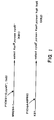
- Figure 1 shows a diagram of the process for KB2 production using P1 phage containing cysB ⁇ , Tn5 and P1 phage containing trpA46PR9.
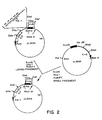
- Figure 2 shows the construction of the expression vector for IL-2, pLW45.
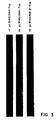
- Figure 3 shows stained SDS-gels run on extracts from pLW45 transformed hosts.
- aporepressor-activator refers to a substance which combines with an aporepressor protein. The combination is effective in inhibiting expression under the control of a target promoter.
- the promoter is provided with an operator sequence, which, when bound with a suitable repressor, shuts off the transcription under the subject promoter's control.
- the repressor may be a protein which is produced under the control of an entirely different promoter elsewhere in the cell's DNA which is, by itself, capable of combining with the operator sequence to shut off the subject gene.
- lac ⁇ -galactosidase
- this substance is the end product of the synthetic sequence whose production is controlled by the subject gene.
- Familiar examples are the trp promoter, where the aporepressor (trpR) must be combined with tryptophan in order to repress; tyrosine (aroF) promoter, which controls the synthesis of enzymes in the pathway to tyrosine, which is regulated by an aporepressor (tyrR) in combination with tyrosine; and the analogous operon controlling the production of enzymes required in the synthesis of phenylalanine where the aporepressor also requires combination with the end product to be effective.
- aporepressor-activator refers to those substances which must be available to combine with the aporepressor protein in order to control the subject regulatable promoter.
- Repressor refers to a substance effective in this regard; it may be an aporepressor (protein) alone or sold protein in combination with the aporepressor-activator.
- Regular promoter refers to a promoter whose operation is controlled by the presence or absence of a substance in a cell or cell culture such as a repressor, or by other environmental conditions such as temperature, salt concentration, and so forth.
- operably linked refers to juxtaposition wherein the functionality of the operably linked subjects are preserved.
- promoter operably linked to a coding sequence may result in expression of the coding sequence under control of the promoter under proper conditions.
- Cells refer to subject cells for recombinant DNA manipulations. As would be apparent from the context, these cells may be candidates for, or resultants of, transfer of new DNA sequences according to recombinant techniques. Techniques which are suitable for DNA uptake by cells include, most prominently, i n vitro transformation; however, other techniques such as transduction or conjugation may also be used. The definition further includes the progeny of the cells directly referred to.
- progeny may not be precisely identical in DNA content to their parents, but such progeny are included in the definition so long as alterations due, for example, to accidental or deliberate mutation do not destroy the ability of the cells to exhibit the properties conferred by the DNA introduced in a manner similar to that exhibited by their parents.
- E. coli trp A46PR9 could, itself, be used as a host. If the organism has, however, other characteristics which make it less desirable as a recombinant host, it may nevertheless be used as a donor system for the genomic modification as is the case for E. coli trp A46PR9 in the illustration below.
- the coil can be modified to contain mutations in its genome which increase the level of expression for an aporepressor activator operon by first selecting these suitable mutants of a donor strain, and then using a standard phage transduction technique to introduce the desired mutation.
- the production strain may be subjected to mutation pressure through irradiation or chemical treatment, and desirable mutants selected.
- the host whose genomic sequences have been altered in the aporepressor activator operon, may then be used to produce recombinant proteins by introducing a vector which contains an expression system for the desired recombinant protein under the control of the same regulatable promoter as that controlling the aporepressor-activator operon.
- E. coli hosts are exemplified below, and are clearly the most convenient for routine production, other forms of procaryotic hosts are clearly not excluded from the invention. Therefore, strains of bacillus, for example, Bacillus subtilis or of Pseudomonas , might also be used as subjects for constructing the host organisms useful in the invention.
- trp promoter/operator and trp operon are exemplified, any operon system which is controlled analogously could be used.
- the operons controlling production of tyrosine or phenylalanine may also be used.
- the desired substrate host is first infected with general transducing phage stock obtained from lysis of an infected corresponding bacterium containing a marker mutation which maps on the genome proximal to the locus of the desired change.
- the successfully transduced hosts, now containing the marker are than transduced with a general transducing phage stock which has been obtained by lysis of cells which contain the desired mutation.
- the disappearance of the marker can then be used to select for transductants with a high probability of integration of genomic sequences containing the desired mutation.
- the resulting desired transductants are then suitable as hosts for the recombinant sequences containing the corresponding regulatable promoters.
- the following example is intended to illustrate, but not to limit, the invention.
- the example uses an alteration of the trp operon which is transduced into a convenient E. coli recombinant host strain by the aforementioned phage transduction techniques.
- the construction of the host KB2 is shown in Figure 1.
- E. coli strain W3110 cysB ⁇ Tn5 is used as a donor strain for the marker sequences.
- the cysB ⁇ locus is at approximately 28.0' on the E. coli genome, which is proximally adjacent to the trp operon locus at 27.7'.
- the Tn5 transposon in the donor strain is proximal to the cysB ⁇ also, and the presence of Tn5 results in resistance to the antibiotics kanamycin, neomycin, and other aminoglycosides. The presence of the closely linked Tn5 permits selection of transductants using resistance to these antibiotics.
- E. coli W3110 (cysB ⁇ , Tn5) is infected with the standard transducing phage P1 and the resulting lysates used to transduce the recombinant production strain E . coli K12 MM294-1.
- the transduction is performed essentially as described by Lennox, E. S., Virology (1955) 1 :190, as modified by Yanofsky, et al., Virology (1959) 8 :425, and Maling, R. D., et al., Proc Natl Acad Sci (Wash) (1964) 47 :551.
- the transduced cells were then plated on media containing 30 ⁇ g/ml kanamycin to select for Kan R .
- Successful colonies were screened for cysB ⁇ , i.e., a growth requirement for cysteine, and approximately 20% of the kanamycin-resistant (Kan R ) colonies showed this characteristic.
- One such colony, designated KB1 was selected as the substrate host.
- E. coli KB1 was then transduced using lysates of P1-infected E. coli trpA46PR9, obtained from Professor Yanofsky at Stanford University, a strain generally available upon request. This donor strain is wild type with respect to cysB. The transductant cultures obtained from KB1 using these lysates were then selected for cysB+ by growth in medium lacking cysteine. The selected cultures were screened for kanamycin sensitivity, and approximately 50% of the transductants were kanamycin sensitive.
- kanamycin-sensitive colonies were screened for the presence of the desired mutation by assessing the level of anthranilate synthase (trpE gene product) another enzyme besides tryptophan synthetase (trpA gene product) produced by the trp operon--in colonies grown on glucose-minimal media. Eleven percent of the kanamycin-sensitive colonies showed high levels of this enzyme, and accordingly were apparently more efficient than wild type in producing the protein products of the trp operon.
- trpE gene product anthranilate synthase
- trpA gene product tryptophan synthetase
- E. coli MM294/A46PR9 KB2 The resulting successful strain, designated E. coli MM294/A46PR9 KB2, was deposited with ATCC on March 29, 1985 under the provisions of the Budapest Treaty and given accession number 53,075.
- E. coli KB2 was transformed using the standard transformation technique for procaryotes of Cohen, S.N. et al., Proc Natl Acad Sci (1972) 69 :2110 with pLW45.
- pLW45 shown in Figure 2, encodes an Interleukin 2 (IL-2) mutein having the cysteine residue at position 125 replaced by a serine.
- the IL2-coding sequences in pLW45 are under the control of the trp promoter, and the vector confers tetracycline resistance.
- the pLW45 plasmid may be prepared from two analogous plasmids described in U.S. Patent No.
- pLW45 is identical to pLW55, except that the N-terminal sequence of the (pLW45) IL-2 lacks an alanine codon of the native sequence.
- pLW46 contains the desired N-terminal sequence in the same operable linkage with the trp promoter as is found in pLW55. Accordingly, pLW45 is constructed by excising an EcoRI/XbaI fragment from pLW46 (the fragment containing the trp promoter and the N-terminal portion of IL-2) and inserting this fragment into EcoRI/XbaI-digested pLW55.
- the transformed hosts were grown in a fermenter containing the following medium: (NH4)2SO4 150 mM KH2PO4 21.6 mM Na3 Citrate 1.5 mM ZnSO4 ⁇ 7H2O 60 ⁇ M MnSO4 ⁇ H2O 60 ⁇ M CuSO4 ⁇ 5H2O 2 ⁇ M pH adjusted to 6.50 with 2.5 N NaOH autoclaved.
- Samples of the fermenter culture were removed periodically during the fermentation. Samples were prepared for SDS-PAGE by boiling in SDS, and then applied to gels. The developed gels from the resulting crude extracts were stained with Coomassie blue and scanned with a densitometer. Estimation was thereby made of the quantity of IL-2 mutein produced both in control cultures using MM294-1 as host and pLW45 as transforming plasmid and in the extracts from pLW45 transformed hosts of the invention. While the induced control organisms produced 3%-5% of total cell protein as IL-2 mutein, the induced transformed cells of the invention produced IL-2 mutein at a level of 18%-20% of total cell protein.
- Lane 1 shows proteins from MM294-1 transformed with pLW45 extracted prior to induction; lane 2 shows proteins from these cells after induction; lane 3 shows proteins extracted from induced pLW45-transformed E. coli MM294/A46PR9 (KB2).
- the recombinant host system of the present invention may be used in the expression of a wide variety of heterologous proteins or polypeptides.
- the recombinant host system may be used to express proteins or polypeptides such as interferons (alpha, beta, or gamma), lymphokines (interleukins 1, 2 or 3, colony stimulating factors G, GM or 1, tumor necrosis factor) lymphotoxins, leukoregulin, hormones (e.g., insulin), vaccines, enzymes, growth factors, and muteins of these proteins and polypeptides.
- proteins or polypeptides such as interferons (alpha, beta, or gamma), lymphokines (interleukins 1, 2 or 3, colony stimulating factors G, GM or 1, tumor necrosis factor) lymphotoxins, leukoregulin, hormones (e.g., insulin), vaccines, enzymes, growth factors, and muteins of these proteins and polypeptides.
Landscapes
- Health & Medical Sciences (AREA)
- Genetics & Genomics (AREA)
- Life Sciences & Earth Sciences (AREA)
- Chemical & Material Sciences (AREA)
- Organic Chemistry (AREA)
- Zoology (AREA)
- Engineering & Computer Science (AREA)
- Biophysics (AREA)
- Biochemistry (AREA)
- Molecular Biology (AREA)
- General Health & Medical Sciences (AREA)
- Bioinformatics & Cheminformatics (AREA)
- General Engineering & Computer Science (AREA)
- Wood Science & Technology (AREA)
- Biotechnology (AREA)
- Biomedical Technology (AREA)
- Microbiology (AREA)
- Plant Pathology (AREA)
- Physics & Mathematics (AREA)
- Toxicology (AREA)
- Gastroenterology & Hepatology (AREA)
- Medicinal Chemistry (AREA)
- Proteomics, Peptides & Aminoacids (AREA)
- Preparation Of Compounds By Using Micro-Organisms (AREA)
- Micro-Organisms Or Cultivation Processes Thereof (AREA)
- Peptides Or Proteins (AREA)
Claims (9)
- Rekombinantes Expressionssystem für heterologe Proteine, die nicht an der Biosynthese von Tryptophan beteiligt sind, umfassend:
einen prokaryontischen Wirt mit einem Operon, das durch einen angeborenen regulierbaren Promotor kontrolliert wird, wobei der Wirt mit einer DNA-Sequenz transformiert ist, die eine gewünschte heterologe codierende Sequenz funktionell verknüpft mit dem regulierbaren Promotor umfaßt,
wobei das Operon eine Mutation in einer Sequenz eingebaut hat, die ein Enzym codiert, welches für die Synthese von Aporepressor-Aktivator verantwortlich ist, was zur verminderten Fähigkeit zur Synthese des Aporepressor-Aktivators führt, was die verstärkte Expression (verglichen mit dem Wildtyp) des heterologen Proteins erlaubt. - System nach Anspruch 1, wobei der Wirt genomisch verändert ist, indem die Fähigkeit des Wirts zur Produktion eines Aporepressor-Aktivators für den regulierbaren Promotor vermindert ist.
- System nach Anspruch 1 oder 2, wobei der regulierbare Promotor der trp-Promotor ist.
- System nach Anspruch 1 oder nach Anspruch 3, der abhängig ist von Anspruch 1, wobei die Änderung zu einer weniger aktiven Form des nativen codierten Produkts führt, dessen Expression normalerweise unter Kontrolle des angeborenen Promotors ist.
- System nach Anspruch 4, wobei die Änderung im trpA-Gen liegt und der Wirt ein Derivat des E. coli K12-Stammes MM294 ist.
- System nach Anspruch 5, nämlich E. coli MM294/A46PR9, erhältlich aus ATCC 53075, transformiert mit einem den trp-Promotor enthaltenden Expressionsvektor.
- Verwendung eines Expressionssystems nach einem der Ansprüche 1 bis 6 für die Produktion eines rekombinanten Proteins.
- E. coli MM2954/A46PR9, erhältlich von ATCC 53075.
- Verfahren zur Herstellung eines Wirts für die mit erhöhter Wirksamkeit erfolgende Produktion des rekombinanten heterologen Proteins, das nicht an der Biosynthese von Tryptophan beteiligt ist, umfassend:
Modifikation einer Wirts-DNA-Sequenz, die unter der Kontrolle eines angeborenen regulierbaren Promotors ist und ein Enzym codiert, welches für die Synthese von Aporepressor-Aktivator verantwortlich ist, so daß die Wirts-DNA-Sequenz eine verminderte Fähigkeit zur Synthese des Aporepressor-Aktivators aufweist,
und Transformation des Wirts mit einer anderen DNA-Sequenz, die eine das gewünschte heterologe Protein codierende Sequenz in funktioneller Verknüpfung mit dem regulierbaren Promotor aufweist.
Priority Applications (1)
| Application Number | Priority Date | Filing Date | Title |
|---|---|---|---|
| AT86302617T ATE96169T1 (de) | 1985-04-10 | 1986-04-09 | Rekombinante wirte, deren herstellung und verwendung. |
Applications Claiming Priority (2)
| Application Number | Priority Date | Filing Date | Title |
|---|---|---|---|
| US72179485A | 1985-04-10 | 1985-04-10 | |
| US721794 | 1985-04-10 |
Publications (3)
| Publication Number | Publication Date |
|---|---|
| EP0197797A2 EP0197797A2 (de) | 1986-10-15 |
| EP0197797A3 EP0197797A3 (en) | 1988-07-27 |
| EP0197797B1 true EP0197797B1 (de) | 1993-10-20 |
Family
ID=24899328
Family Applications (1)
| Application Number | Title | Priority Date | Filing Date |
|---|---|---|---|
| EP86302617A Expired - Lifetime EP0197797B1 (de) | 1985-04-10 | 1986-04-09 | Rekombinante Wirte, deren Herstellung und Verwendung |
Country Status (5)
| Country | Link |
|---|---|
| EP (1) | EP0197797B1 (de) |
| JP (1) | JPS61242581A (de) |
| AT (1) | ATE96169T1 (de) |
| CA (1) | CA1338664C (de) |
| DE (1) | DE3689175T2 (de) |
Families Citing this family (3)
| Publication number | Priority date | Publication date | Assignee | Title |
|---|---|---|---|---|
| JPH0775536B2 (ja) * | 1986-03-26 | 1995-08-16 | 猛 小林 | 遺伝子組み換え菌を用いた酵素生産装置 |
| DE69106498T2 (de) * | 1990-01-31 | 1995-05-24 | Upjohn Co | Stamm ral-4, nützlich zur herstellung kleiner proteine und peptide. |
| DK0578754T3 (da) * | 1991-04-05 | 1995-11-06 | Upjohn Co | TrpR-mutationer, der er virksomme ved ekspressionen af små proteiner og peptider |
Family Cites Families (2)
| Publication number | Priority date | Publication date | Assignee | Title |
|---|---|---|---|---|
| US4371614A (en) * | 1980-08-22 | 1983-02-01 | Ajinomoto Co., Inc. | E.Coli bacteria carrying recombinant plasmids and their use in the fermentative production of L-tryptophan |
| DK489481A (da) * | 1980-11-10 | 1982-05-11 | Searle & Co | Plasmidvektor og frmgangsmaade til fremstilling deraf |
-
1986
- 1986-03-20 CA CA000504577A patent/CA1338664C/en not_active Expired - Fee Related
- 1986-04-09 AT AT86302617T patent/ATE96169T1/de not_active IP Right Cessation
- 1986-04-09 EP EP86302617A patent/EP0197797B1/de not_active Expired - Lifetime
- 1986-04-09 DE DE86302617T patent/DE3689175T2/de not_active Expired - Fee Related
- 1986-04-10 JP JP61081226A patent/JPS61242581A/ja active Pending
Non-Patent Citations (1)
| Title |
|---|
| C. Yanofsky "De la Physique théorique à la Biologie" comptes rendus de la seconde Conférence internationale de Physique Théorique et Biologie (M. Marois, ed. p. 191-205, CNRS, Paris 1971 * |
Also Published As
| Publication number | Publication date |
|---|---|
| JPS61242581A (ja) | 1986-10-28 |
| DE3689175T2 (de) | 1994-03-17 |
| CA1338664C (en) | 1996-10-22 |
| ATE96169T1 (de) | 1993-11-15 |
| EP0197797A2 (de) | 1986-10-15 |
| EP0197797A3 (en) | 1988-07-27 |
| DE3689175D1 (de) | 1993-11-25 |
Similar Documents
| Publication | Publication Date | Title |
|---|---|---|
| EP0136359B1 (de) | Herstellungsverfahren für l-histidin | |
| EP0197335B1 (de) | Verfahren zur Herstellung von L-Lysin | |
| EP0174367B1 (de) | Menge und verfahren zur herstellung rekombinierter erzeugnisse in grosser ausbeute | |
| EP0229161B1 (de) | Kompositplasmide zur synthese von aminosäuren | |
| EP0530765B1 (de) | Regulator-DNA zur Gen-Expression | |
| CN1256440C (zh) | 来自芳族新陈代谢/i的物质的微生物制备 | |
| EP0281418B1 (de) | Verfahren zur Herstellung eines physiologisch aktiven Peptids mit einem Cysteinrest | |
| US5559016A (en) | Process for producing alanine | |
| US20040058348A1 (en) | High level expression of heterologous proteins | |
| EP0261627B1 (de) | Verfahren zur Herstellung von L-Arginin | |
| US4908312A (en) | Process for producing phenylananine | |
| EP0197797B1 (de) | Rekombinante Wirte, deren Herstellung und Verwendung | |
| EP0204326A2 (de) | Verfahren zur Herstellung von L-Threonin und L-Isoleucin | |
| US5599690A (en) | Control of norleucine incorporation into recombinant proteins | |
| US4874703A (en) | Expression vectors for use in E. coli | |
| EP0397097B1 (de) | Züchtung von transformierten Mikroorganismen | |
| KR960011523B1 (ko) | 인간 소마토메딘 c의 고역가 생산방법 | |
| EP0126338A1 (de) | Verfahren zur Expression eines fremden Gens | |
| WO1994019474A1 (fr) | Procede de production d'une hormone de croissance humaine | |
| KR960016704B1 (ko) | 소마토트로핀 암호화 cDNA, 발현 벡터 및 숙주 | |
| EP0264914A2 (de) | Verfahren zur Herstellung von L-Phenylalanin | |
| EP0284185A1 (de) | Verfahren zur Herstellung von L-Phenylalanin durch rekombinantes E.coli | |
| EP0352763A1 (de) | DNA-Fragment, enthaltend ein Gen, das die stabilisierende Funktion eines Plasmids in einem Wirtsmikroorganismus codiert | |
| Chao et al. | Development of a fed‐batch fermentation process to overproduce phosphoenolpyruvate carboxykinase using an expression vector with promoter and plasmid copy number controllable by heat | |
| WO2024225802A1 (ko) | L-글루탐산을 생산하는 코리네박테리움 속 미생물 및 이를 이용한 l-글루탐산 생산 방법 |
Legal Events
| Date | Code | Title | Description |
|---|---|---|---|
| PUAI | Public reference made under article 153(3) epc to a published international application that has entered the european phase |
Free format text: ORIGINAL CODE: 0009012 |
|
| AK | Designated contracting states |
Kind code of ref document: A2 Designated state(s): AT BE CH DE FR GB IT LI NL SE |
|
| 17P | Request for examination filed |
Effective date: 19860929 |
|
| PUAL | Search report despatched |
Free format text: ORIGINAL CODE: 0009013 |
|
| AK | Designated contracting states |
Kind code of ref document: A3 Designated state(s): AT BE CH DE FR GB IT LI NL SE |
|
| 17Q | First examination report despatched |
Effective date: 19890904 |
|
| RAP1 | Party data changed (applicant data changed or rights of an application transferred) |
Owner name: CETUS ONCOLOGY CORPORATION |
|
| GRAA | (expected) grant |
Free format text: ORIGINAL CODE: 0009210 |
|
| ITF | It: translation for a ep patent filed | ||
| AK | Designated contracting states |
Kind code of ref document: B1 Designated state(s): AT BE CH DE FR GB IT LI NL SE |
|
| REF | Corresponds to: |
Ref document number: 96169 Country of ref document: AT Date of ref document: 19931115 Kind code of ref document: T |
|
| REF | Corresponds to: |
Ref document number: 3689175 Country of ref document: DE Date of ref document: 19931125 |
|
| ET | Fr: translation filed | ||
| PLBE | No opposition filed within time limit |
Free format text: ORIGINAL CODE: 0009261 |
|
| STAA | Information on the status of an ep patent application or granted ep patent |
Free format text: STATUS: NO OPPOSITION FILED WITHIN TIME LIMIT |
|
| 26N | No opposition filed | ||
| EAL | Se: european patent in force in sweden |
Ref document number: 86302617.5 |
|
| REG | Reference to a national code |
Ref country code: GB Ref legal event code: 732E |
|
| NLS | Nl: assignments of ep-patents |
Owner name: CHIRON CORPORATION |
|
| REG | Reference to a national code |
Ref country code: FR Ref legal event code: TP |
|
| REG | Reference to a national code |
Ref country code: CH Ref legal event code: PFA Free format text: CETUS ONCOLOGY CORPORATION TRANSFER- CHIRON CORPORATION Ref country code: CH Ref legal event code: NV Representative=s name: PATENTANWAELTE SCHAAD, BALASS, MENZL & PARTNER AG |
|
| PGFP | Annual fee paid to national office [announced via postgrant information from national office to epo] |
Ref country code: FR Payment date: 19990317 Year of fee payment: 14 |
|
| PGFP | Annual fee paid to national office [announced via postgrant information from national office to epo] |
Ref country code: SE Payment date: 19990318 Year of fee payment: 14 Ref country code: GB Payment date: 19990318 Year of fee payment: 14 Ref country code: DE Payment date: 19990318 Year of fee payment: 14 Ref country code: AT Payment date: 19990318 Year of fee payment: 14 |
|
| PGFP | Annual fee paid to national office [announced via postgrant information from national office to epo] |
Ref country code: CH Payment date: 19990323 Year of fee payment: 14 |
|
| PGFP | Annual fee paid to national office [announced via postgrant information from national office to epo] |
Ref country code: BE Payment date: 19990329 Year of fee payment: 14 |
|
| PGFP | Annual fee paid to national office [announced via postgrant information from national office to epo] |
Ref country code: NL Payment date: 19990331 Year of fee payment: 14 |
|
| PG25 | Lapsed in a contracting state [announced via postgrant information from national office to epo] |
Ref country code: GB Free format text: LAPSE BECAUSE OF NON-PAYMENT OF DUE FEES Effective date: 20000409 Ref country code: AT Free format text: LAPSE BECAUSE OF NON-PAYMENT OF DUE FEES Effective date: 20000409 |
|
| PG25 | Lapsed in a contracting state [announced via postgrant information from national office to epo] |
Ref country code: SE Free format text: LAPSE BECAUSE OF NON-PAYMENT OF DUE FEES Effective date: 20000410 |
|
| PG25 | Lapsed in a contracting state [announced via postgrant information from national office to epo] |
Ref country code: LI Free format text: LAPSE BECAUSE OF NON-PAYMENT OF DUE FEES Effective date: 20000430 Ref country code: CH Free format text: LAPSE BECAUSE OF NON-PAYMENT OF DUE FEES Effective date: 20000430 Ref country code: BE Free format text: LAPSE BECAUSE OF NON-PAYMENT OF DUE FEES Effective date: 20000430 |
|
| BERE | Be: lapsed |
Owner name: CHIRON CORP. Effective date: 20000430 |
|
| PG25 | Lapsed in a contracting state [announced via postgrant information from national office to epo] |
Ref country code: NL Free format text: LAPSE BECAUSE OF NON-PAYMENT OF DUE FEES Effective date: 20001101 |
|
| GBPC | Gb: european patent ceased through non-payment of renewal fee |
Effective date: 20000409 |
|
| EUG | Se: european patent has lapsed |
Ref document number: 86302617.5 |
|
| REG | Reference to a national code |
Ref country code: CH Ref legal event code: PL |
|
| PG25 | Lapsed in a contracting state [announced via postgrant information from national office to epo] |
Ref country code: FR Free format text: LAPSE BECAUSE OF NON-PAYMENT OF DUE FEES Effective date: 20001229 |
|
| NLV4 | Nl: lapsed or anulled due to non-payment of the annual fee |
Effective date: 20001101 |
|
| PG25 | Lapsed in a contracting state [announced via postgrant information from national office to epo] |
Ref country code: DE Free format text: LAPSE BECAUSE OF NON-PAYMENT OF DUE FEES Effective date: 20010201 |
|
| REG | Reference to a national code |
Ref country code: FR Ref legal event code: ST |
|
| PG25 | Lapsed in a contracting state [announced via postgrant information from national office to epo] |
Ref country code: IT Free format text: LAPSE BECAUSE OF NON-PAYMENT OF DUE FEES;WARNING: LAPSES OF ITALIAN PATENTS WITH EFFECTIVE DATE BEFORE 2007 MAY HAVE OCCURRED AT ANY TIME BEFORE 2007. THE CORRECT EFFECTIVE DATE MAY BE DIFFERENT FROM THE ONE RECORDED. Effective date: 20050409 |