EP0197797A2 - Rekombinante Wirte, deren Herstellung und Verwendung - Google Patents
Rekombinante Wirte, deren Herstellung und Verwendung Download PDFInfo
- Publication number
- EP0197797A2 EP0197797A2 EP86302617A EP86302617A EP0197797A2 EP 0197797 A2 EP0197797 A2 EP 0197797A2 EP 86302617 A EP86302617 A EP 86302617A EP 86302617 A EP86302617 A EP 86302617A EP 0197797 A2 EP0197797 A2 EP 0197797A2
- Authority
- EP
- European Patent Office
- Prior art keywords
- host
- promotor
- regulatable
- promoter
- aporepressor
- Prior art date
- Legal status (The legal status is an assumption and is not a legal conclusion. Google has not performed a legal analysis and makes no representation as to the accuracy of the status listed.)
- Granted
Links
Images
Classifications
-
- C—CHEMISTRY; METALLURGY
- C07—ORGANIC CHEMISTRY
- C07K—PEPTIDES
- C07K14/00—Peptides having more than 20 amino acids; Gastrins; Somatostatins; Melanotropins; Derivatives thereof
- C07K14/435—Peptides having more than 20 amino acids; Gastrins; Somatostatins; Melanotropins; Derivatives thereof from animals; from humans
- C07K14/52—Cytokines; Lymphokines; Interferons
-
- C—CHEMISTRY; METALLURGY
- C12—BIOCHEMISTRY; BEER; SPIRITS; WINE; VINEGAR; MICROBIOLOGY; ENZYMOLOGY; MUTATION OR GENETIC ENGINEERING
- C12N—MICROORGANISMS OR ENZYMES; COMPOSITIONS THEREOF; PROPAGATING, PRESERVING, OR MAINTAINING MICROORGANISMS; MUTATION OR GENETIC ENGINEERING; CULTURE MEDIA
- C12N15/00—Mutation or genetic engineering; DNA or RNA concerning genetic engineering, vectors, e.g. plasmids, or their isolation, preparation or purification; Use of hosts therefor
- C12N15/09—Recombinant DNA-technology
- C12N15/63—Introduction of foreign genetic material using vectors; Vectors; Use of hosts therefor; Regulation of expression
- C12N15/70—Vectors or expression systems specially adapted for E. coli
- C12N15/71—Expression systems using regulatory sequences derived from the trp-operon
Definitions
- the invention relates to the recombinant production of heterologous proteins under regulatable promoter control. More specifically, the invention relates to providing hosts with at least one modification in the genome associated with aporepressor-activator production. The presence of the modification permits more effective production of the desired protein.
- the trp operator conversely, responds only to an "activated" repressor protein; i.e., in the absence of tryptophan, the repressor does not bind to operator.
- an "activated" repressor protein i.e., in the absence of tryptophan, the repressor does not bind to operator.
- the coding sequence for a desired heterologous protein is ligated in operable configuration with the regulatable promoter/operator in suitable vectors to transform the host. Since immediate production of the heterologous protein during the growth phase of the transformed organism would be injurious to the healthy multiplication of the bacteria, this production is delayed by causing production of sufficient repressor to keep the promoter/operator system turned off.
- the mediator of the on/off switch is the combination of tryptophan with a repressor protein (aporepressor) produced normally by the host, but at a level dependent on the concentration of tryptophan in the medium. Combination with tryptophan permits the aporepressor to function, and expression of coding sequences under control of the trp promoter is delayed by the presence of tryptophan until further repression is no longer needed.
- aporepressor repressor protein
- derepression is effected either by depleting the supply of tryptophan in the medium or by supplying an antagonist to tryptophan such as indole acrylic acid (IAA), which interferes with the ability of tryptophan to bond to the aporepressor.
- IAA indole acrylic acid
- the trp promoter system offers a convenient means to delay expression of heterologous gene sequences until a desired point in the growth curve is reached and then permit operation of the promoter, this control is not absolute.
- One difficulty is that complete depletion of the tryptophan is impractical because tryptophan is a component of many proteins, and is required at some level to enable protein synthesis. The result is that the trp promoter is always partially repressed due to this minimal tryptophan level.
- the level of production of heterologous proteins under trp control in recombinant hosts depends on the ability of the trp promoter to exhibit a high level of efficiency in promoting transcription, it. would be desirable to introduce, in recombinant hosts, alterations which would result in more dramatic derepression. From results with A46PR9 it would appear that the coding sequence for the modified trpA protein results in enhanced expression levels effected by the trp promoter operably linked to its own coding sequence. The effect could be applicable with regard to any trp promoter in the cell, including a trp promoter in operable linkage with the recombinant heterologous coding sequences. Therefore, hosts having this alteration in the genome may be high producers when transformed with vectors using trp control.
- Analogous host cell modifications affecting promoters susceptible to similar feedback control mechanisms are also desirable in instances where these promoters can be used to control expression of heterologous proteins.
- the phenylalanine A (pheA) promoter/operator and tyrosine (aroF) promoter/operator are less frequently used for recombinant expression.
- pheA phenylalanine A
- aroF tyrosine
- the present invention provides recombinant procaryotic hosts with the ability to permit more efficient expression of heterologous- coding sequences under the control of regulatable promoters.
- These hosts may be prepared by altering the genome of the host organism to obtain mutant sequences under control of the same promoter as that used for the expression of the recombinant DNA sequence, which mutant sequences result in increased levels of their own expression.
- the mutant sequences encode enzymes responsible for the synthesis of an aporepressor-activator. The result is that derepression of expression is enhanced.
- the invention is directed to a recombinant host -cell with diminished ability to synthesize an a p orepressor-activator.
- This host cell has an alteration in its genome resulting in enhanced expression under the control of a promoter which can also be used to control recombinant protein production in the same host.
- Another aspect of the invention is a protein expression system comprising the foregoing host transformed with a vector containing the coding sequence for a desired protein under the control of a promoter/operator which is responsive to the same aporepressor-aporepressor-activator as is the operon which is modified so as to be more effectively derepressed.
- aporepressor-activator refers to a substance which combines with an aporepressor protein. The combination is effective in Inhibiting expression under the control of a target promoter.
- the promoter is provided with an operator sequence, which, when bound with a suitable repressor, shuts off the transcription under the subject promoter's control.
- the repressor may be a protein which is produced under the control of an entirely different promoter elsewhere in the cell's DNA which is, by itself, capable of combining with the operator sequence to shut off the subject gene.
- lac p-galactosidase
- this substance is the end product of the synthetic sequence whose production is controlled by the subject gene.
- Familiar examples are the trp promoter, where the aporepressor (trpR) must be combined with tryptophan in order to repress; tyrosine (aroF) promoter, which controls the synthesis of enzymes in the pathway to tyrosine, which is regulated by an aporepressor (tyrR) in combination with tyrosine; and the analogous operon controlling the production of enzymes required in the synthesis of phenylalanine where the aporepressor also requires combination with the end product to be effective.
- aporepressor-activator refers to those substances which must be available to combine with the aporepressor protein in order to control the subject regulatable promoter.
- Any mutant host, produced by whatever means, having a genomic modification which results in increased expression (as compared to wild type) of sequences under control of a regulatable promoter when the promoter is derepressed is a candidate host for the expression systems of the invention.
- E. coli trp A46PR9 could, itself, be used as a host. If the organism has, however, other characteristics which make it less desirable as a recombinant host, it may nevertheless be used as a donor system for the genomic modification as is the case for E. eoti trp A46PR9 in the illustration below.
- a standard recombinant production strain of E for example, a standard recombinant production strain of E .
- coli can be modified to contain mutations in its genome which increase the level of expression for an aporepressor activator operon by first selecting these suitable mutants of a donor strain, and then using a standard phage transduction technique to introduce the desired mutation.
- the production strain may be subjected to mutation pressure through irradiation or chemical treatment, and desirable mutants selected.
- the host whose genomic sequences have been altered in the aporepressor activator operon, may then be used to produce recombinant proteins by introducing a vector which contains an expression system for the desired recombinant protein under the control of the same regulatable promoter as that controlling the aporepressor-activator operon.
- E. coli hosts are exemplified below, and are clearly the most convenient for routine production, other forms of procaryotic hosts are clearly not excluded from the invention. Therefore, strains of bacillus, for example, Bacillus subtilis or of Pseudomonas, might also be used as subjects for constructing the host organisms useful in the invention.
- trp promoter/operator and trp operon are exemplified, any operon system which is controlled analogously could be used.
- the operons controlling production of tyrosine or phenylalanine may also be used.
- the desired substrate host is first infected with general transducing phage stock obtained from lysis of an infected corresponding bacterium containing a marker mutation which maps on the genome proximal to the locus of the desired change.
- the successfully transduced hosts, now containing the marker are than transduced with a general transducing phage stock which has been obtained by lysis of cells which contain the desired mutation.
- the disappearance of the marker can then be used to select for transductants with a high probability of integration of genomic sequences containing the desired mutation.
- the resulting desired transductants are then suitable as hosts for the recombinant sequences containing the corresponding regulatable promoters.
- the following example is intended to illustrate, but not to limit, the invention.
- the example uses an alteration of the trp operon which is transduced into a convenient E. coli recombinant host strain by the aforementioned phage transduction techniques.
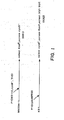
- the construction of the host KB2 is shown in Figure 1.
- E. coli strain W3110 cysB - , Tn5 is used as a donor strain for the marker sequences.
- the cysB - locus is at approximately 28.0' on the E. coli genome, which is proximally adjacent to the trp operon locus at 27.7'.
- the Tn5 transposon in the donor strain is proximal to the cysB - also, and the presence of Tn5 results in resistance to the antibiotics kanamycin, neomycin, and other aminoglycosides. The presence of the closely linked Tn5 permits selection of transductants using resistance to these antibiotics.
- E. coli W3110 (cysB-, Tn5) is infected with the standard transducing phage PI and the resulting lysates used to transduce the recombinant production strain E. coli K12 MM294-1.
- the transduction is performed essentially as described by Lennox, E. S., Virology (1955) 1:190, as modified by Yanofsky, et a1., Virology (1959) 8:425, and Maling, R. D., et al., Proc Natl Acad Sci (Wash) (1964) 47:551.
- the transduced cells were then plated on media containing 30 ⁇ g/ml kanamycin to select for Kan R .
- Successful colonies were screened for cysB - , i.e., a growth requirement for cysteine, and approximately 20% of the kanamycin-resistant (Kan R ) colonies showed this characteristic.
- One such colony, designated KB1 was selected as the substrate host.
- E. coli KB1 was then transduced using lysates of Pl-infected E. coli trpA46PR9, obtained from Professor Yanofsky at Stanford University, a strain generally available upon request. This donor strain is wild type with respect to cysB. The transductant cultures obtained from KB1 using these lysates were then selected for cysB + by... growth in medium lacking cysteine. The selected cultures were screened for kanamycin sensitivity, and approximately 50% of the transductants were kanamycin sensitive.
- kanamycin-sensitive colonies were screened for the presence of the desired mutation by assessing the level of anthranilate synthase (trpE gene product) another enzyme besides tryptophan synthetase (trpA gene product) produced by the trp operon--in colonies grown on glucose- minimal media. Eleven percent of the kanamycin-sensitive colonies showed high levels of this enzyme, and accordingly were apparently more efficient than wild type in producing the protein products of the trp operon.
- trpE gene product anthranilate synthase
- trpA gene product tryptophan synthetase
- E. coli MM294/A46PR9 KB2 The resulting successful strain, designated E. coli MM294/A46PR9 KB2, was deposited with ATCC on March 29, 1985 under the provisions of the Budapest Treaty and given accession number 53,075.
- E. coli KB2 was transformed using the standard transformation technique for procaryotes of Cohen, S.N. et al., Proc Natl Acad Sci (1972) 69:2110 with pLW45.
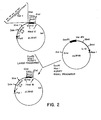
- pLW45 shown in Figure 2, mutein having the cysteine residue at position 125 replaced by a serine.
- the IL2-coding sequences in pLW45 are under the control of the trp promoter, and the vector confers tetracycline resistance.
- the pLW45 plasmid may be prepared from two analogous plasmids described in U.S. Patent No. 4,518,584, granted May 21, 1984, assigned to the same assignee and incorporated herein by reference. These plasmids, pLW55 and pLW46, have been deposited with the ATCC and have accession nos. 39,516 and 39,452, respectively, and are now available to the public under the provisions of the Budapest Treaty.
- pLW45 is identical to pLW55, except that the N-terminal sequence of the (pLW45) IL-2 lacks an alanine codon of the native sequence.
- pLW45 contains the desired N-terminal sequence in the same operable linkage with the trp promoter as is found in pLW55. Accordingly, pLW45 is constructed by excising an EcoRI/XbaI fragment from pLW46 (the fragment containing the trp promoter and the N-terminal portion of IL-2) and inserting this fragment into EcoRI/XbaI- digested pLW55.
- the transformed hosts were grown in a fermenter containing the following medium: pH adjusted to 6.50 with 2.5 N NaOH autoclaved.
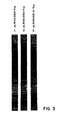
- Samples of the fermenter culture were removed periodically during the fermentation. Samples were prepared for SDS-PAGE by boiling in SDS, and then applied to gels. The developed gets from the resulting crude extracts were stained with Coomassie blue and scanned with a densitometer. Estimation was thereby nade of the quantity of IL-2 mutein produced both in control cultures using MM294-1 as host and pLW45 as transforming plasmid and in the extracts from pLW45 transformed hosts of the invention. While the induced control organisms produced 3%-5% of total cell protein as IL-2 mutein, the induced transformed cells of the invention produced IL-2 mutein at a level of 18%-20% of total cell protein.
- Lane 1 shows proteins from MM294-1 transformed with pLW45 extracted prior to induction; lane 2 shows proteins from these cells after induction; lane 3 shows proteins extracted from induced pLW45-transformed E. coli MM294/A46PR9 (KB2).
- the recombinant host system of the present invention may be used in the expression of a wide variety of heterologous proteins or polypeptides.
- the recombinant host system may be used to express proteins or polypeptides such as interferons (alpha, beta, or gamma), lymphokines (interleukins 1, 2 or 3, colony stimulating factors G, GM or 1, tumor necrosis factor) lymphotoxins, leukoregulin, hormones (e.g., insulin), vaccines, enzymes, growth factors, and muteins of these proteins and polypeptides.
- proteins or polypeptides such as interferons (alpha, beta, or gamma), lymphokines (interleukins 1, 2 or 3, colony stimulating factors G, GM or 1, tumor necrosis factor) lymphotoxins, leukoregulin, hormones (e.g., insulin), vaccines, enzymes, growth factors, and muteins of these proteins and polypeptides.
Landscapes
- Health & Medical Sciences (AREA)
- Genetics & Genomics (AREA)
- Life Sciences & Earth Sciences (AREA)
- Chemical & Material Sciences (AREA)
- Organic Chemistry (AREA)
- Zoology (AREA)
- Engineering & Computer Science (AREA)
- General Engineering & Computer Science (AREA)
- Bioinformatics & Cheminformatics (AREA)
- Biophysics (AREA)
- Wood Science & Technology (AREA)
- Molecular Biology (AREA)
- General Health & Medical Sciences (AREA)
- Biochemistry (AREA)
- Biotechnology (AREA)
- Biomedical Technology (AREA)
- Gastroenterology & Hepatology (AREA)
- Physics & Mathematics (AREA)
- Toxicology (AREA)
- Plant Pathology (AREA)
- Proteomics, Peptides & Aminoacids (AREA)
- Microbiology (AREA)
- Medicinal Chemistry (AREA)
- Preparation Of Compounds By Using Micro-Organisms (AREA)
- Micro-Organisms Or Cultivation Processes Thereof (AREA)
- Peptides Or Proteins (AREA)
Priority Applications (1)
| Application Number | Priority Date | Filing Date | Title |
|---|---|---|---|
| AT86302617T ATE96169T1 (de) | 1985-04-10 | 1986-04-09 | Rekombinante wirte, deren herstellung und verwendung. |
Applications Claiming Priority (2)
| Application Number | Priority Date | Filing Date | Title |
|---|---|---|---|
| US72179485A | 1985-04-10 | 1985-04-10 | |
| US721794 | 1985-04-10 |
Publications (3)
| Publication Number | Publication Date |
|---|---|
| EP0197797A2 true EP0197797A2 (de) | 1986-10-15 |
| EP0197797A3 EP0197797A3 (en) | 1988-07-27 |
| EP0197797B1 EP0197797B1 (de) | 1993-10-20 |
Family
ID=24899328
Family Applications (1)
| Application Number | Title | Priority Date | Filing Date |
|---|---|---|---|
| EP86302617A Expired - Lifetime EP0197797B1 (de) | 1985-04-10 | 1986-04-09 | Rekombinante Wirte, deren Herstellung und Verwendung |
Country Status (5)
| Country | Link |
|---|---|
| EP (1) | EP0197797B1 (de) |
| JP (1) | JPS61242581A (de) |
| AT (1) | ATE96169T1 (de) |
| CA (1) | CA1338664C (de) |
| DE (1) | DE3689175T2 (de) |
Cited By (3)
| Publication number | Priority date | Publication date | Assignee | Title |
|---|---|---|---|---|
| GB2188324A (en) * | 1986-03-26 | 1987-09-30 | Takeshi Kobayashi | Process and apparatus for enzyme production using bacterium harboring recombinant plasmids |
| WO1991011523A1 (en) * | 1990-01-31 | 1991-08-08 | The Upjohn Company | Strain ral-4, useful for production of small proteins and peptides |
| WO1992017594A1 (en) * | 1991-04-05 | 1992-10-15 | The Upjohn Company | TrpR MUTATIONS EFFECTIVE IN THE EXPRESSION OF SMALL PROTEINS AND PEPTIDES |
Family Cites Families (2)
| Publication number | Priority date | Publication date | Assignee | Title |
|---|---|---|---|---|
| US4371614A (en) * | 1980-08-22 | 1983-02-01 | Ajinomoto Co., Inc. | E.Coli bacteria carrying recombinant plasmids and their use in the fermentative production of L-tryptophan |
| DK489481A (da) * | 1980-11-10 | 1982-05-11 | Searle & Co | Plasmidvektor og frmgangsmaade til fremstilling deraf |
-
1986
- 1986-03-20 CA CA000504577A patent/CA1338664C/en not_active Expired - Fee Related
- 1986-04-09 DE DE86302617T patent/DE3689175T2/de not_active Expired - Fee Related
- 1986-04-09 AT AT86302617T patent/ATE96169T1/de not_active IP Right Cessation
- 1986-04-09 EP EP86302617A patent/EP0197797B1/de not_active Expired - Lifetime
- 1986-04-10 JP JP61081226A patent/JPS61242581A/ja active Pending
Cited By (4)
| Publication number | Priority date | Publication date | Assignee | Title |
|---|---|---|---|---|
| GB2188324A (en) * | 1986-03-26 | 1987-09-30 | Takeshi Kobayashi | Process and apparatus for enzyme production using bacterium harboring recombinant plasmids |
| GB2188324B (en) * | 1986-03-26 | 1990-12-05 | Takeshi Kobayashi | Process for enzyme production with bacterium harboring recombinant plasmids. |
| WO1991011523A1 (en) * | 1990-01-31 | 1991-08-08 | The Upjohn Company | Strain ral-4, useful for production of small proteins and peptides |
| WO1992017594A1 (en) * | 1991-04-05 | 1992-10-15 | The Upjohn Company | TrpR MUTATIONS EFFECTIVE IN THE EXPRESSION OF SMALL PROTEINS AND PEPTIDES |
Also Published As
| Publication number | Publication date |
|---|---|
| DE3689175D1 (de) | 1993-11-25 |
| CA1338664C (en) | 1996-10-22 |
| EP0197797B1 (de) | 1993-10-20 |
| DE3689175T2 (de) | 1994-03-17 |
| JPS61242581A (ja) | 1986-10-28 |
| ATE96169T1 (de) | 1993-11-15 |
| EP0197797A3 (en) | 1988-07-27 |
Similar Documents
| Publication | Publication Date | Title |
|---|---|---|
| EP0136359B1 (de) | Herstellungsverfahren für l-histidin | |
| EP0174367B1 (de) | Menge und verfahren zur herstellung rekombinierter erzeugnisse in grosser ausbeute | |
| KR860001557B1 (ko) | 폴리펩티드의 제조방법 | |
| US4710473A (en) | DNA plasmids | |
| US5922583A (en) | Methods for production of recombinant plasmids | |
| CN101410523B (zh) | 表达系统 | |
| EP0333033A1 (de) | Glutamin-Synthesegen und Glutamin-Synthetase | |
| US5795776A (en) | Expression plasmids regulated by an OSMB promoter | |
| US4375514A (en) | Preparation and use of recombinant plasmids containing genes for alkaline phosphatases | |
| EP0229161B1 (de) | Kompositplasmide zur synthese von aminosäuren | |
| EP0530765B1 (de) | Regulator-DNA zur Gen-Expression | |
| EP0281418B1 (de) | Verfahren zur Herstellung eines physiologisch aktiven Peptids mit einem Cysteinrest | |
| WO1999016858A1 (en) | Expression control sequences | |
| US5559016A (en) | Process for producing alanine | |
| US20040058348A1 (en) | High level expression of heterologous proteins | |
| Robbens et al. | Production of soluble and active recombinant murine interleukin-2 in Escherichia coli: high level expression, Kil-induced release, and purification | |
| EP1347057B1 (de) | Verfahren zur Produktion von L-Threonin | |
| EP0197797B1 (de) | Rekombinante Wirte, deren Herstellung und Verwendung | |
| US4874703A (en) | Expression vectors for use in E. coli | |
| US5599690A (en) | Control of norleucine incorporation into recombinant proteins | |
| KR960011523B1 (ko) | 인간 소마토메딘 c의 고역가 생산방법 | |
| WO2000060103A2 (en) | Dna construct comprising a cyanophage of cyanobacteria promoter and its use | |
| EP0397097B1 (de) | Züchtung von transformierten Mikroorganismen | |
| KR960016704B1 (ko) | 소마토트로핀 암호화 cDNA, 발현 벡터 및 숙주 | |
| US7829687B2 (en) | Artificial disulfide isomerases and uses thereof |
Legal Events
| Date | Code | Title | Description |
|---|---|---|---|
| PUAI | Public reference made under article 153(3) epc to a published international application that has entered the european phase |
Free format text: ORIGINAL CODE: 0009012 |
|
| AK | Designated contracting states |
Kind code of ref document: A2 Designated state(s): AT BE CH DE FR GB IT LI NL SE |
|
| 17P | Request for examination filed |
Effective date: 19860929 |
|
| PUAL | Search report despatched |
Free format text: ORIGINAL CODE: 0009013 |
|
| AK | Designated contracting states |
Kind code of ref document: A3 Designated state(s): AT BE CH DE FR GB IT LI NL SE |
|
| 17Q | First examination report despatched |
Effective date: 19890904 |
|
| RAP1 | Party data changed (applicant data changed or rights of an application transferred) |
Owner name: CETUS ONCOLOGY CORPORATION |
|
| GRAA | (expected) grant |
Free format text: ORIGINAL CODE: 0009210 |
|
| ITF | It: translation for a ep patent filed | ||
| AK | Designated contracting states |
Kind code of ref document: B1 Designated state(s): AT BE CH DE FR GB IT LI NL SE |
|
| REF | Corresponds to: |
Ref document number: 96169 Country of ref document: AT Date of ref document: 19931115 Kind code of ref document: T |
|
| REF | Corresponds to: |
Ref document number: 3689175 Country of ref document: DE Date of ref document: 19931125 |
|
| ET | Fr: translation filed | ||
| PLBE | No opposition filed within time limit |
Free format text: ORIGINAL CODE: 0009261 |
|
| STAA | Information on the status of an ep patent application or granted ep patent |
Free format text: STATUS: NO OPPOSITION FILED WITHIN TIME LIMIT |
|
| 26N | No opposition filed | ||
| EAL | Se: european patent in force in sweden |
Ref document number: 86302617.5 |
|
| REG | Reference to a national code |
Ref country code: GB Ref legal event code: 732E |
|
| NLS | Nl: assignments of ep-patents |
Owner name: CHIRON CORPORATION |
|
| REG | Reference to a national code |
Ref country code: FR Ref legal event code: TP |
|
| REG | Reference to a national code |
Ref country code: CH Ref legal event code: PFA Free format text: CETUS ONCOLOGY CORPORATION TRANSFER- CHIRON CORPORATION Ref country code: CH Ref legal event code: NV Representative=s name: PATENTANWAELTE SCHAAD, BALASS, MENZL & PARTNER AG |
|
| PGFP | Annual fee paid to national office [announced via postgrant information from national office to epo] |
Ref country code: FR Payment date: 19990317 Year of fee payment: 14 |
|
| PGFP | Annual fee paid to national office [announced via postgrant information from national office to epo] |
Ref country code: SE Payment date: 19990318 Year of fee payment: 14 Ref country code: GB Payment date: 19990318 Year of fee payment: 14 Ref country code: DE Payment date: 19990318 Year of fee payment: 14 Ref country code: AT Payment date: 19990318 Year of fee payment: 14 |
|
| PGFP | Annual fee paid to national office [announced via postgrant information from national office to epo] |
Ref country code: CH Payment date: 19990323 Year of fee payment: 14 |
|
| PGFP | Annual fee paid to national office [announced via postgrant information from national office to epo] |
Ref country code: BE Payment date: 19990329 Year of fee payment: 14 |
|
| PGFP | Annual fee paid to national office [announced via postgrant information from national office to epo] |
Ref country code: NL Payment date: 19990331 Year of fee payment: 14 |
|
| PG25 | Lapsed in a contracting state [announced via postgrant information from national office to epo] |
Ref country code: GB Free format text: LAPSE BECAUSE OF NON-PAYMENT OF DUE FEES Effective date: 20000409 Ref country code: AT Free format text: LAPSE BECAUSE OF NON-PAYMENT OF DUE FEES Effective date: 20000409 |
|
| PG25 | Lapsed in a contracting state [announced via postgrant information from national office to epo] |
Ref country code: SE Free format text: LAPSE BECAUSE OF NON-PAYMENT OF DUE FEES Effective date: 20000410 |
|
| PG25 | Lapsed in a contracting state [announced via postgrant information from national office to epo] |
Ref country code: LI Free format text: LAPSE BECAUSE OF NON-PAYMENT OF DUE FEES Effective date: 20000430 Ref country code: CH Free format text: LAPSE BECAUSE OF NON-PAYMENT OF DUE FEES Effective date: 20000430 Ref country code: BE Free format text: LAPSE BECAUSE OF NON-PAYMENT OF DUE FEES Effective date: 20000430 |
|
| BERE | Be: lapsed |
Owner name: CHIRON CORP. Effective date: 20000430 |
|
| PG25 | Lapsed in a contracting state [announced via postgrant information from national office to epo] |
Ref country code: NL Free format text: LAPSE BECAUSE OF NON-PAYMENT OF DUE FEES Effective date: 20001101 |
|
| GBPC | Gb: european patent ceased through non-payment of renewal fee |
Effective date: 20000409 |
|
| EUG | Se: european patent has lapsed |
Ref document number: 86302617.5 |
|
| REG | Reference to a national code |
Ref country code: CH Ref legal event code: PL |
|
| PG25 | Lapsed in a contracting state [announced via postgrant information from national office to epo] |
Ref country code: FR Free format text: LAPSE BECAUSE OF NON-PAYMENT OF DUE FEES Effective date: 20001229 |
|
| NLV4 | Nl: lapsed or anulled due to non-payment of the annual fee |
Effective date: 20001101 |
|
| PG25 | Lapsed in a contracting state [announced via postgrant information from national office to epo] |
Ref country code: DE Free format text: LAPSE BECAUSE OF NON-PAYMENT OF DUE FEES Effective date: 20010201 |
|
| REG | Reference to a national code |
Ref country code: FR Ref legal event code: ST |
|
| PG25 | Lapsed in a contracting state [announced via postgrant information from national office to epo] |
Ref country code: IT Free format text: LAPSE BECAUSE OF NON-PAYMENT OF DUE FEES;WARNING: LAPSES OF ITALIAN PATENTS WITH EFFECTIVE DATE BEFORE 2007 MAY HAVE OCCURRED AT ANY TIME BEFORE 2007. THE CORRECT EFFECTIVE DATE MAY BE DIFFERENT FROM THE ONE RECORDED. Effective date: 20050409 |