EP0190946B1 - Zyklische Hexapeptid-LHRH-Antagonisten - Google Patents
Zyklische Hexapeptid-LHRH-Antagonisten Download PDFInfo
- Publication number
- EP0190946B1 EP0190946B1 EP86300859A EP86300859A EP0190946B1 EP 0190946 B1 EP0190946 B1 EP 0190946B1 EP 86300859 A EP86300859 A EP 86300859A EP 86300859 A EP86300859 A EP 86300859A EP 0190946 B1 EP0190946 B1 EP 0190946B1
- Authority
- EP
- European Patent Office
- Prior art keywords
- ylmethyl
- trp
- methyl
- arg
- tyr
- Prior art date
- Legal status (The legal status is an assumption and is not a legal conclusion. Google has not performed a legal analysis and makes no representation as to the accuracy of the status listed.)
- Expired - Lifetime
Links
- 0 C*C(C)C(*1)C1C(C(C)C(C)C(C)C)N(C)C Chemical compound C*C(C)C(*1)C1C(C(C)C(C)C(C)C)N(C)C 0.000 description 2
Images

Classifications
-
- C—CHEMISTRY; METALLURGY
- C07—ORGANIC CHEMISTRY
- C07K—PEPTIDES
- C07K7/00—Peptides having 5 to 20 amino acids in a fully defined sequence; Derivatives thereof
- C07K7/04—Linear peptides containing only normal peptide links
- C07K7/23—Luteinising hormone-releasing hormone [LHRH]; Related peptides
-
- A—HUMAN NECESSITIES
- A61—MEDICAL OR VETERINARY SCIENCE; HYGIENE
- A61P—SPECIFIC THERAPEUTIC ACTIVITY OF CHEMICAL COMPOUNDS OR MEDICINAL PREPARATIONS
- A61P5/00—Drugs for disorders of the endocrine system
-
- A—HUMAN NECESSITIES
- A61—MEDICAL OR VETERINARY SCIENCE; HYGIENE
- A61K—PREPARATIONS FOR MEDICAL, DENTAL OR TOILETRY PURPOSES
- A61K38/00—Medicinal preparations containing peptides
-
- Y—GENERAL TAGGING OF NEW TECHNOLOGICAL DEVELOPMENTS; GENERAL TAGGING OF CROSS-SECTIONAL TECHNOLOGIES SPANNING OVER SEVERAL SECTIONS OF THE IPC; TECHNICAL SUBJECTS COVERED BY FORMER USPC CROSS-REFERENCE ART COLLECTIONS [XRACs] AND DIGESTS
- Y10—TECHNICAL SUBJECTS COVERED BY FORMER USPC
- Y10S—TECHNICAL SUBJECTS COVERED BY FORMER USPC CROSS-REFERENCE ART COLLECTIONS [XRACs] AND DIGESTS
- Y10S930/00—Peptide or protein sequence
- Y10S930/01—Peptide or protein sequence
- Y10S930/13—Luteinizing hormone-releasing hormone; related peptides
-
- Y—GENERAL TAGGING OF NEW TECHNOLOGICAL DEVELOPMENTS; GENERAL TAGGING OF CROSS-SECTIONAL TECHNOLOGIES SPANNING OVER SEVERAL SECTIONS OF THE IPC; TECHNICAL SUBJECTS COVERED BY FORMER USPC CROSS-REFERENCE ART COLLECTIONS [XRACs] AND DIGESTS
- Y10—TECHNICAL SUBJECTS COVERED BY FORMER USPC
- Y10S—TECHNICAL SUBJECTS COVERED BY FORMER USPC CROSS-REFERENCE ART COLLECTIONS [XRACs] AND DIGESTS
- Y10S930/00—Peptide or protein sequence
- Y10S930/01—Peptide or protein sequence
- Y10S930/27—Cyclic peptide or cyclic protein
Definitions
- the present invention is concerned with peptide compounds having LHRH antagonist activity, pharmaceutical compositions containing them, and their use in methods of reducing fertility.
- Luteinizing hormone-releasing hormone is a neurohumoral hormone produced in the hypothalamus which stimulates the secretion of the pituitary hormones luteinizing hormone (LH) and follicle-stimulating hormone (FSH), which in turn produce changes resulting in the induction of ovulation.
- LHRH has the following formula:
- a decapeptide analog of LH-RH containing a gamma-lactam as a conformational constraint is disclosed by R.M. Freidinger et al . of Merck & Co., Inc. in Science Vol. 210, pp. 656-8 (1980) and U.S.P. 4,377,515, hereby incorporated by reference.
- the analog was shown to be more active as an LH-RH agonist than the parent hormone and provides evidence for a bioactive conformation containing a Tyr5-Gly6-Leu7-Arg6 beta-turn.
- Decapeptide LHRH antagonists have been disclosed; for example, see Science , Vol. 218, pp. 160-2 (1982). Also, Khim. Prir. Soedin 1983 (3), pp. 398-9 (Russ.) by Burov S.V. et al . discloses cyclo [Pro-Ser-Tyr-D-Ala-Leu-Arg] as a contraceptive agent but no data is given.
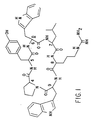
- novel LH-RH antagonist cyclopeptides incorporate a beta turn conformation, a hydrophobic or basic D-amino acid in the corresponding LH-RH 6-position (as indicated in Structure I), a hydrophobic residue in corresponding position 9, and a secondary amino acid in position 4, which may also bear a hydrophobic side chain, for stabilizing the required and necessary beta turn.
- the resulting conformation also contains a cis-amide configuration between amino acid residues 4 and 9, as indicated in Structure I by the dotted lines, which is particularly favoured by the secondary amino acid in position 4.
- the compounds of the present invention can be used to reduce fertility by administering them to a patient in need of such treatment in therapeutically effective amounts, preferably orally.
- the present invention also provides a pharmaceutical composition for use in reducing human fertility comprising a therapeutically effective amount of a compound of Formula I above, or a compound that is a pharmaceutically acceptable salt or ester thereof, in a pharmaceutically acceptable liquid or solid carrier.
- a pharmaceutical composition for use in reducing human fertility comprising a therapeutically effective amount of a compound of Formula I above, or a compound that is a pharmaceutically acceptable salt or ester thereof, in a pharmaceutically acceptable liquid or solid carrier.
- the pharmaceutical composition is orally effective.
- benzyl, p-hydroxybenzyl, 4-imidazolylmethyl and 3-indolylmethyl are derived from the L-amino acids phenylalanine, tyrosine, histidine and tryptophan, respectively.
- amino acids of the formula RCH(NH2)COOH useful in producing the claimed cyclic hexapeptides of the present invention include those in which R is: m- and p-chlorobenzyl; m- and p-bromobenzyl; m- and p-fluorobenzyl; m- and p-methylbenzyl; 2,4-dimethylbenzyl; o- and p-methoxybenzyl; 2,4,6-trimethylbenzyl; p-CF3benzyl; cyclopropylmethyl; cyclopentylmethyl; cyclohexylmethyl; p-aminomethylbenzyl; and the amino acids 2,4-diaminobutyric acid; 2-amino-4-guanidinobutyric acid; 2-amino-6-guanidinohexanoic acid; N-methyl glycine, N-methyl leucine and the like.
- R1-R8 are specifically conditioned on the choice of specific amino acids for each respective position from those specifically enumerated above. Such choice leads to the specific configuration of Structure I in which the amino acid residues 4 and 9 vis-a-vis their alpha carbon atoms assume a cis configuration to each other in relation to the interconnecting amide bridge.
- This cis-amide bridging structure in Structure I is physically evidenced from proton nuclear magnetic resonance (NMR) data in which the attendant amino acid residue 4 and 9 alpha carbon hydrogen atoms exhibit nuclear Overhauser enhancement indicating their proximity in space.
- NMR proton nuclear magnetic resonance
- the ⁇ -turn encompassing positions 5-8 combined with the ⁇ -turn encompassing positions 8-9-4-5 with the cis-amide between positions 9 and 4 in the cyclic hexapeptides of the present invention allows proximity of the side chains R2 and R3 and sidechains R5 and R7. This proximity is shown by the proton NMR data in which a ⁇ -proton(s) of R3 (when R3 is C2-C5 alkyl) is shifted upfield relative to its normal position by the ring current of R2 when R2 is the hydrophobic aromatic group.
- beta turn is meant a reversal of the direction of the peptide backbone by 180° through four consecutive amino acid residues in the cyclic peptide.
- the "beta-turn” is especially favored by a D-amino acid at the second position of the tetrapeptide. Its significance in relation to the novel cyclohexapeptide compounds of the present invention and their use as LH-RH antagonists is that these compounds have been specifically designed for the tetrapeptide positions 5-8 to adopt a beta turn. Considerable mal evidence favors this turn in the receptor bound ("active") conformation of LHRH.
- a shorthand linear format for expressing the preferred structure is cyclo [Tyr-AA6 Leu-Arg-AA9-AA4], or the cyclic structure: where Tyr is tyrosine, Leu is leucine, Arg is arginine, AA4, AA6, AA9 are generic symbols for the amino acid residues described above giving rise to the R2, R5, R6, and R7 radicals.
- R1 is p-hydroxybenzyl
- R3 is isobutyl
- R6 and R7 are joined to form -(CH2)3-.
- Preferred species include: cyclo [Tyr-D-Trp-Leu-Arg-Trp-Pro] cyclo [Tyr-D-Trp-Leu-Arg-Trp-N-MeAla] cyclo [Tyr-D-Trp-Leu-Arg-Ala-N-Me-Trp] cyclo [Tyr-D-Trp-Leu-Arg-Trp-N-Me-Trp]
- C1-C4 alkyl or C1-C5 alkyl when used in the instant application is intended to represent those alkyl groups either straight or branched chain, which have from 1-4 or 1-5 carbon atoms respectively.
- alkyl groups are methyl, ethyl, propyl, iso -propyl, butyl, sec -butyl, pentyl, isopentyl and the like.
- cyclic peptides of the instant invention as set forth by Structure I can exist as the neutral compound and also in the form of a pharmaceutically acceptable salt.
- the pharmaceutically acceptable salts of the compounds of Structure I include the conventional non-toxic salts or the quaternary ammonium salts of the compounds of Formula I formed, e.g., from non-toxic inorganic or organic acids.
- such conventional non-toxic salts include those derived from inorganic acids such as hydrochloric, hydrobromic, sulfuric, sulfamic, phosphoric, nitric and the like; and the salts prepared from organic acids such as acetic, propionic, succinic, glycolic, stearic, lactic, malic, tartaric, citric, ascorbic, pamoic, maleic, hydroxymaleic, phenylacetic, glutamic, benzoic, salicylic, sulfanilic, 2-acetoxybenzoic, fumaric, toluenesulfonic, p-aminobenzoic, p-acetamidobenzoic, methanesulfonic, ethane disulfonic, o
- the novel cyclic LH-RH antagonists are prepared by cyclizing the corresponding linear peptides which are prepared by using the conventional Merrifield solid phase sequential synthesis technique.
- the process comprises a) preparing a corresponding blocked linear peptide attached to a solid phase resin; b) selectively deblocking the N-terminal amine group; c) removing the linear peptide from the resin; d) treating the linear peptide with a cyclizing agent to obtain the cyclic hexapeptide through the formation of an amide bond; e) removing any side chain deblocking groups.
- linear peptide When the linear peptide is prepared on the resin, it is generally not critical which amino acid is selected to be at the C-terminal position provided only that the sequence of amino acids in the linear peptide corresponds to that in the desired LH-RH cyclohexapeptide of the instant invention. Once a linear peptide has been cyclized one can no longer determine which amino acid was at the C-terminus of the linear peptide.
- the selection of the first amino acid to start the chain is not critical, since the linear peptide will be cyclized, there may be other factors which may prefer one starting amino acid over another.
- D-Trp can react with t-butyl carbonium ions which are formed when BOC groups are removed.
- selection of a reaction sequence which places D-Trp at the N-terminal end of the linear peptide will cause D-Trp to be added last, and thus it will have the least exposure to t-butyl carbonium ions.
- This type of selection may not always be possible, such as where there are two indole containing moieties in the peptide.
- reaction sensitivities should be considered when planning a peptide reaction sequence.
- the synthesis of the linear peptides by the solid phase technique is conducted in a stepwise manner on chloromethylated resin.
- the resin is composed of fine beads (20-70 microns in diameter) of a synthetic resin prepared by copolymerization of styrene with 1-2 percent divnylbenzene.
- the benzene rings in the resin are chloromethylated in a Friedel-Crafts reaction with chloromethyl methyl ether and stannic chloride. The Friedel-Craft reaction is continued until the resin contains 0.5 to 5 mmoles of chlorine per gram of resin.
- the amino acid selected to be the C-terminal amino acid of the linear peptide is converted to its amino protected derivative.
- the carboxyl group of the selected C-terminal amino acid is bound covalently to the insoluble polymeric resin support, as for example, as the carboxylic ester of the resin-bonded benzyl chloride present in chloromethyl-substituted polystyrene-divinylbenzene resin.
- the amino protected derivative of the next amino acid in the sequence is added along with a coupling agent, such as dicyclohexylcarbodiimide.
- the amino acid reactant may be employed in the form of a carboxyl-activated amino acid such as the ONp ester, an amino acid azide, and the like. Deprotection and addition of successive amino acids is performed until the desired linear peptide is formed.
- protecting groups are, in part, dictated by particular coupling conditions, in part by the amino acid and peptide components involved in the reaction.
- Amino-protecting groups ordinarily employed include those which are well known in the art, for example, urethane protecting substituents such as benzyloxycarbonyl (carbobenzoxy), p-methoxycarbobenzoxy, p-nitrocarbobenzoxy, t-butyloxycarbonyl, and the like. It is preferred to utilize t-butyloxycarbonyl (BOC) for protecting the ⁇ -amino group in the amino acids under-going reaction at the carboxyl end of said amino acid.
- BOC t-butyloxycarbonyl
- the BOC protecting group is readily removed following such coupling reaction and prior to the subsequent step by the relatively mild action of acids (i.e. trifluoro acetic acid, or hydrogen chloride in ethyl acetate).
- the OH group of Tyr can be protected by the Bzl group and the end amino group of Lys or Orn can be protected by the INOC group or the 2-chlorobenzyloxycarbonyl (2-Cl-CBZ) group.
- Lys it is preferred to protect the alpha-amino group with 2-Cl-CBZ group as this group is removed simultaneously with the Bzl groups by treatment with HF after the linear peptide has been cyclized.
- the INOC group is not removed by HF and requires an additional treatment with Zn. Neither group is affected by TFA, used for removing BOC protecting groups.
- the protective groups such as 2-Cl-CBZ and Bzl, are removed by treatment with HF.
- the linear peptide may be removed from the resin by a variety of methods which are well known in the art.
- the peptide may be cleaved from the resin with hydrazine and thus directly form the peptide hydrazide which may be subsequently cyclized via the azide to the desired cyclic peptide.
- the hydrazide is converted to the corresponding azide by reaction with a reagent which furnishes nitrous acid in situ .
- Suitable reagents for this purpose include a lower alkyl nitrite (e.g.
- t-butyl nitrite, isoamyl nitrite) or an alkali metal nitrite salt e.g., sodium nitrite, potassium nitrite
- a strong acid such as hydrochloric, phosphoric, etc.
- This reaction is carried out in the presence of either water and/or a non-aqueous solvent such as dimethylformamide, tetrahydrofuran, dioxane, chloroform, methylene chloride, etc., at a temperature between about -40°C and +20°C.
- the peptide may be removed from the resin by treatment with a lower alcohol such as methanol in the presence of an organic base such as triethylamine, thus resulting in the formation of the corresponding lower alcohol ester of the linear peptide.
- the resulting ester may be converted to the hydrazide which may then be cyclized, via the azide, to the desired cyclic peptide.
- the preferred method for cleaving the peptide from the resin in the present invention is the use of methanol and triethylamine.
- one preferred overall procedure for preparing the desired cyclic peptides of the present invention involves the stepwise synthesis of the linear peptide on a solid phase resin. More specifically, in the process for preparing: the carboxyl end of the N-blocked amino acid proline is bound covalently to an insoluble polymeric resin support as the carboxylic acid ester of the resin-bonded benzyl chloride. The amino group of Pro is protected by the BOC group. After the attachment of the Pro is completed on the resin, the protecting group BOC is removed with TFA in CH2Cl2.
- the subsequent amino acids are attached, in the form of BOC-amino acid, using DCCI (dicyclohexylcarbodiimide) as the condensing agent or an active ester such as ONp.
- DCCI dicyclohexylcarbodiimide
- the N-terminal amino group is selectively deblocked and the peptide is removed from the resin by treatment with methanol and triethylamine.
- the resulting linear peptide ester with the N-terminal amino group deblocked having the amino acid sequence: H-Tyr(O-Bzl)-D-Trp-Leu-Arg-Trp-Pro-OCH3 is treated with sodium hydroxide in dioxane-water to form the corresponding acid.
- the acid is treated with diphenylphosphorylazide in DMF solvent and diisopropylethylamine.
- the linear peptide cyclizes to form: cyclo [Tyr(OBzl)-D-Trp-Leu-Arg-Trp-Pro].
- the pH is checked and maintained at neutral by the addition of organic base.
- the "pH" in organic solvent is determined by the application of an aliquot of the solution to moistened narrow range pH paper.
- the protective group, OBzl is removed by treatment with HF in the presence of anisole.
- the crude cyclic peptide obtained is purified chromatographically, preferably with column chromatography on silica gel.
- the elution solvent is generally an organic solvent or mixtures thereof which is selected by analyzing aliquots of the material using thin layer chromatography.
- the compounds are used to reduce fertility by administering, to a patient in need of such treatment, a therapeutically effective amount of a novel cyclic peptide of the formula described hereinabove.
- Dosage levels of the order of 0.5 mg to 500 mg. per day are useful in the treatment of the above indicated conditions.
- fertility is reduced by the administration of from about 10 microgram to about 7.5 mg. of the peptide per kilogram of body weight per day.
- from about 0.02 mg. to about 2 mg. per kilogram of body weight and especially from about 0.03 mg. to about 1 mg./kg. per daily dosage produce highly effective results.
- the amount of active ingredient that may be combined with the carrier materials to produce a single dosage form will vary depending upon the host treated and the particular mode of administration.
- a formulation intended for the oral administration of humans may contain from 5 mg. to 1 gram of active agent compounded with an appropriate and convenient amount of carrier material which may vary from about 5 to about 95 percent of the total composition.
- Dosage unit forms will generally contain between from about 25 mg. to about 500 mg. of active ingredient.
- compositions for use in reducing fertility possess a significant degree of LHRH antagonist activity.
- novel peptides of the present invention may be administered orally, topically, parenterally, by inhalation spray, intravaginally, or rectally in dosage unit formulations containing conventional non-toxic pharmaceutically acceptable carriers, adjuvants and vehicles.
- parenteral as used herein includes subcutaneous injections, intravenous, intramuscular, intrasternal injection or infusion techniques.
- the peptides of the present invention are effective in the treatment of humans.
- compositions containing the active ingredient may be in a form suitable for oral use, for example, as tablets, troches, lozenges, aqueous or oily suspensions, dispersible powders or granules, emulsions, hard or soft capsules, syrups or elixirs.
- Compositions intended for oral use may be prepared according to any method known to the art for the manufacture of pharmaceutical compositions and such compositions may contain one or more agents selected from the group consisting of sweetening agents, flavoring agents, coloring agents and preserving agents in order to provide a pharmaceutically elegant and palatable preparation. Tablets contain the active ingredient in admixture with non-toxic pharmaceutically acceptable excipients which are suitable for manufacture of tablets.
- excipients may be, for example, inert diluents, such as calcium carbonate, sodium carbonate, lactose, calcium phosphate or sodium phosphate; granulating and disintegrating agents, for example maize starch, or alginic acid; binding agents, for example, starch, gelatine or acacia, and lubricating agents, for example magnesium stearate, stearic acid or talc.
- the tablets may be uncoated or they may be coated by known techniques to delay disintegration and absorption in the gastrointestinal tract and thereby provide a sustained action over a longer period.
- a time delay material such as glyceryl monostearate or glyceryl distearate alone or with a wax may be employed.
- Formulations for oral use may also be presented as hard gelatine capsules wherein the active ingredient is mixed with an inert solid diluent, for example, calcium carbonate, calcium phosphate or kaolin, or as soft gelatine capsules wherein the active ingredient is mixed with water or an oil medium, for example arachis oil, peanut oil, liquid paraffin or olive oil.
- an inert solid diluent for example, calcium carbonate, calcium phosphate or kaolin
- water or an oil medium for example arachis oil, peanut oil, liquid paraffin or olive oil.
- Aqueous suspensions contain the active materials in admixture with excipients suitable for the manufacture of aqueous suspensions.
- excipients are suspending agents, for example sodium carboxymethyl-cellulose, methylcellulose, hydroxypropylmethylcellulose, sodium alginate, polyvinylpyrrolidone, gum tragacanth and gum acacia; dispersing or wetting agents may be a natural-occurring phosphatide, for example, lecithin, or condensation products of an alkylene oxide with fatty acids, for example polyoxyethylene stearate, or condensation products of ethylene oxide with long chain aliphatic alcohols, for example heptadecaethyleneoxycetanol, or condensation products of ethylene oxide with partial esters derived from fatty acids and a hexitol such as polyoxyethylene sorbitol mono-oleate, or condensation products of ethylene oxide with partial esters derived from fatty acid anhydrides and hexitol, for example polyoxyethylene sorbitan
- the said aqueous suspensions may also contain one or more preservatives, for example, ethyl or n-propyl p-hydroxy benzoate, one or more colouring agents, one or more flavoring agents and one or more sweetening agents, such as sucrose or saccharin.
- preservatives for example, ethyl or n-propyl p-hydroxy benzoate, one or more colouring agents, one or more flavoring agents and one or more sweetening agents, such as sucrose or saccharin.
- Oily suspensions may be formulated by suspending the active ingredient in a vegetable oil, for example arachis oil, olive oil, sesame oil or coconut oil, or in a mineral oil such as liquid paraffin.
- the oil suspension may contain a thickening agent, for example beeswax, hard paraffin or cetyl alcohol.
- Sweetening agents, such as those set forth above, and flavouring agents may be added to provide a palatable oral preparation.
- These compositions may be preserved by the addition of an anti-oxidant such as ascorbic acid.
- Dispersible powders and granules suitable for preparation of an aqueous suspension by the addition of water provide the active ingredient in admixture with a dispersing or wetting agent, suspending agent and one or more preservatives.
- a dispersing or wetting agent e.g., kaolin, kaolin, kaolin, kaolin, kaolin, kaolin, kaolin, kaolin, kaolin, kaolin, kaolin, kaolin, kaolin, kaolin, kaolin, kaolin, sorbitol, sorbitol, sorbitol, sorbitol, sorbitol, sorbitol, sorbitol, sorbitol, sorbitol, mannitol, mannitol, mannitol, mannitol, mannitol, mannitol, mannitol, mannitol, mannitol, mannitol,
- the pharmaceutical compositions of the invention may also be in the form of oil-in-water emulsions.
- the oily phase may be a vegetable oil, for example olive oil or arachis oils, or a mineral oil, for example liquid paraffin or mixtures of these.
- Suitable emulsifying agents may be naturally-occurring gums, for example gum acacia or gum tragacanth, naturally-occurring phosphatides, for example soya bean lecithin, and esters or partial esters derived from fatty acid anhydrides and hexitol, for example sorbitan mono-oleate, and condensation products of the said partial esters with ethylene oxide, for example polyoxyethylene sorbitan mono-oleate.
- the emulsions may also contain sweetening and flavouring agents.
- Syrups and elixirs may be formulated with sweetening agents, for example glycerol, sorbitol or sucrose.
- Such formulations may also contain a demulcent, a preservative and flavouring and coloring agents.
- the pharmaceutical compositions may be in the form of a sterile injectable preparation, for example as a sterile injectable aqueous or oleagenous suspension. This suspension may be formulated according to the known art using those suitable dispersing or wetting agents and suspending agents which have been mentioned above.
- the sterile injectable preparation may also be a sterile injectable solution or suspension in a non-toxid parenterally-acceptable diluent or solvent, for example as a solution in 1,3-butanediol.
- a non-toxid parenterally-acceptable diluent or solvent for example as a solution in 1,3-butanediol.
- acceptable vehicles and solvents that may be employed are water, Ringer's solution and isotonic sodium chloride solution.
- sterile, fixed oils are conventionally employed as a solvent or suspending medium.
- any bland fixed oil may be employed including synthetic mono-or diglycerides.
- fatty acids such as oleic acid find use in the preparation of injectibles.
- the peptides of the present invention may also be administered in the form of suppositories for rectal administration of the drug.
- These compositions can be prepared by mixing the drug with a suitable non-irritating excipient which is solid at ordinary temperatures but liquid at the rectal temperature and will therefore melt in the rectum to release the drug.
- suitable non-irritating excipient which is solid at ordinary temperatures but liquid at the rectal temperature and will therefore melt in the rectum to release the drug.
- Such materials are coca butter and polyethylene glycols.
- novel peptides of the present invention with respect to the various amino acid substituents of the peptide, are prepared in accordance with well-known methods in the art for the synthesis of peptides.
- Step 1 Preparation of H-Tyr(Bzl)-D-Trp-Leu-Arg-Trp-Pro-OCH3 (2)
- the novel peptide was prepared by standard Merrifield solid-phase methodology as described in J. Med. Chem., 1979, Vol. 22 (5), pp. 586-588, hereby incorporated by reference for this particular purpose, using a Beckman Model 990 peptide synthesizer to carry out all of the operations.
- the starting polymer was Boc-Pro esterified to 2% cross-linked polystyrenedivinylbenzene (2 mmol).
- the N ⁇ -Boc derivatives of Trp, Arg (HCl), Leu, D-Trp and Tyr (Bzl) were coupled using dicyclohexycarbodiimide. Two couplings of 30 min. each (2.5 equiv. of Boc amino acid) were used for each amino acid.
- Trifluoroacetic acid (25% in CH2Cl2) was used for removal of the Boc protecting group.
- the detailed schedule for the solid-phase procedure is given in Table III, with program 1 used for the first coupling and program 2 for the second coupling.
- Solvents and volumes for the protected amino acids are given in Table IV.
- the finished peptide resin was dried in vacuo (3.4 g).
- the peptidoresin (3.2 g) was suspended in 126 ml of MeOH, and 14 ml of triethylamine was added. The mixture was stirred for 23 hours.
- the spent resin was removed by filtration and washed with a small volume of MeOH, and the combined filtrates were taken to dryness in vacuo . This treatment of the resin was repeated.
- Step 2 Preparation of H-Tyr(Bzl)-D-Trp-Leu-Arg-Trp-Pro-OH (3)
- the ester 2 (1 g) was dissolved in a mixture of 50 ml dioxane (filtered through Alumina) and 50 ml water. 0.75N NaOH was added gradually such that the pH of the reaction mixture remained below 12.6. Complete saponification required 7 hours. The pH was adjusted to 6 with 1N HCl and water and dioxane were removed by lyophilization. The crude product 3 (TLC R f 0.27, Analtech Silica Gel G, 80:25:5 CHCl3-MeOH-H2O) was taken directly to the cyclization Step 3 without purification.
- Step 3 Preparation of cyclo-[Tyr-(Bzl)-D-Trp-Leu-Arg-Trp-Pro] (4)
- Hexapeptide amino acid 3 (0.81 g, 0.77 mmol) was dissolved in 500 ml of degassed DMF and the pH was adjusted to 7.4 (as measured by moistened pH sticks) with diisopropylethyl amine (0.135 ml, 0.77 mmol).
- Diphenylphosphoryl azide (0.47 g, 1.71 mmol) was added after the mixture had been cooled to -25°. The pH was maintained with additional small aliquots of i-Pr2NEt. After two days, the mixture was warmed to 5° and after three days, to room temperature. The mixture was concentrated in vacuo after four days. The residue was triturated with water then dissolved in methylene chloride.
- Step 4 Preparation of cyclo-(Tyr-D-Trp-Leu-Arg-Trp-Pro) (5)
- the product cyclic hexapeptide 4 (1 g) was dissolved in 45 ml of ethanol, 3 ml of acetic acid, and 2 ml of water and 840 mg of 10% Pd/C catalyst was added. After the reaction had been opened twice and was not complete, an additional 0.8 g of catalyst with 5 ml ethanol, 2 ml acetic acid, and 0.5 ml water was added. After two days, the mixture was filtered, and the filtrate was evaporated to a small volume. The residue was dissolved in 50% aqueous acetic acid and chromatographed on Sephadex G25SF. The three most pure column fractions were combined and concentrated in vacuo .
- Cyclic hexapeptides of the present invention are evaluated as antagonists of LH-RH in an in vitro pituitary cell culture system. This assay system is described in Vale and Brant, Methods Enzymol , 37, 82 (1975), hereby incorporated by reference for this purpose.
- compound 5 was tested in combination with a single dose of LHRH (luteinizing hormone release hormone) on rat pituitary cells in vitro for 60 minutes.
- the doses of LHRH used ranged from 10 ⁇ 6 to 10 ⁇ 10M.
- compound 5 was significantly antagonistic at a dose of 10 ⁇ 5M to LHRH at a concentration of 10 ⁇ 6, 5 x 10 ⁇ 7, 5 x 10 ⁇ 8, 10 ⁇ 8, 5 x 10 ⁇ 9, 10 ⁇ 9, and 5 x 10 ⁇ 10M.
- Molar concentrations of 10 ⁇ 7, 10 ⁇ 8 and 10 ⁇ 9 significantly reduced LH release in the presence of 10 ⁇ 6M LHRH. All lower doses of compound 5 were essentially ineffective in reducing LH release in the presence of 5 x 10 ⁇ 7, 10 ⁇ 7, 5 x 10 ⁇ 8 and 10 ⁇ 8M LHRH.
- compound 5 is antagonistic to LHRH, and exhibits the greatest antagonistic effect at lower doses of LHRH.
Landscapes
- Health & Medical Sciences (AREA)
- Chemical & Material Sciences (AREA)
- Organic Chemistry (AREA)
- Endocrinology (AREA)
- Life Sciences & Earth Sciences (AREA)
- General Health & Medical Sciences (AREA)
- Medicinal Chemistry (AREA)
- Biochemistry (AREA)
- Biophysics (AREA)
- Genetics & Genomics (AREA)
- Molecular Biology (AREA)
- Proteomics, Peptides & Aminoacids (AREA)
- Engineering & Computer Science (AREA)
- Bioinformatics & Cheminformatics (AREA)
- Diabetes (AREA)
- Chemical Kinetics & Catalysis (AREA)
- General Chemical & Material Sciences (AREA)
- Nuclear Medicine, Radiotherapy & Molecular Imaging (AREA)
- Pharmacology & Pharmacy (AREA)
- Animal Behavior & Ethology (AREA)
- Public Health (AREA)
- Veterinary Medicine (AREA)
- Medicines That Contain Protein Lipid Enzymes And Other Medicines (AREA)
- Peptides Or Proteins (AREA)
Claims (10)
- Cyclische Hexapeptid-Verbindung der Formel
 R¹ Benzyl, p-Hydroxybenzyl, Imidazol-4-ylmethyl, oder Indol-3-ylmethyl ist;R² ein Rest ist, der abgeleitet ist von Glycin oder einer D-Aminosäure, wobei der Rest ausgewählt ist aus H, linearem oder verzweigten C₁-C₄-Alkyl, Benzyl, Halogenbenzyl, Aminomethylbenzyl, C₁-C₄-Alkylbenzyl, C₁-C₄-Alkoxybenzyl, Trifluormethylbenzyl, Chinol-3-ylmethyl, Naphth-(1 oder 2)-ylmethyl, Imidazol-4-ylmethyl, C₃-C₇-Cycloalkylmethyl, (9,10-Dihydroanthr-9-yl)methyl, (p-Biphenylyl)methyl, (Fluoren-2-yl)methyl, (Anthr-9-yl)methyl, (Benzhydryl)methyl, (CH₂)₂₋₄-NH₂ oder (CH₂)₂₋₄-NHC(=NH)NH₂,R³ H oder lineares oder verzweigtes C₁-C₅-Alkyl ist;R⁴ (CH₂)₂₋₄-NH₂ oder (CH₂)₂₋₄-NH-C(=NH)-NH₂ ist;R⁵ H, lineares oder verzweigtes C₁-C₄-Alkyl, Benzyl, Halogenbenzyl, C₁-C₄-Alkylbenzyl, C₁-C₄-Alkoxybenzyl, Trifluormethylbenzyl, Chinol-3-ylmethyl, Naphth-(1 oder 2)-ylmethyl, Imidazol-4-ylmethyl, C₃-C₇-Cycloalkylmethyl, (9,10-Dihydroanthr-9-yl)methyl, (p-Biphenylyl)methyl, (Fluoren-2-yl)methyl, (Anthr-9-yl)methyl, oder (Benzhydryl)methyl ist;R⁶ lineares oder verzweigtes C₁-C₄-Alkyl ist undR⁷ H, lineares oder verzweigtes C₁-C₄-Alkyl, Benzyl, Halogenbenzyl, C₁-C₄-Alkylbenzyl, C₁-C₄-Alkoxybenzyl, Trifluormethylbenzyl, Chinol-3-ylmethyl, Naphth-(1 oder 2)-ylmethyl, Imidazol-4-ylmethyl, C₃-C₇-Cycloalkylmethyl, (9,10-Dihydroanthr-9-yl)methyl, (p-Biphenylyl)methyl, (Fluoren-2-yl)methyl, (Anthr-9-yl)methyl oder (Benzhydryl)methyl ist oderR⁶ und R⁷ miteinander verbunden sind unter Bildung eines Trimethylen- oder Tetramethylen-Restes;R⁸ Wasserstoff oder Methyl ist und die Aminosäurereste 4 und 9 gegebenenfalls über eine cis-Amid-Struktur miteinander verbunden sind, wobei die punktierten Linien die cis-Amid-Konfiguration zwischen solchen Resten anzeigenoder eine Verbindung, die ein pharmazeutisch annehmbares Salz oder ein Ester davon ist.
 - Verbindung der in Anspruch 1 angegebenen Formel, in derR¹ Benzyl, p-Hydroxybenzyl, Imidazol-4-ylmethyl, oder Indol-3-ylmethyl ist;R² ein Rest ist, der abgeleitet ist von Glycin oder einer D-Aminosäure, wobei der Rest ausgewählt ist aus H, Methyl, Benzyl, p-Chlorbenzyl, Pyrid-3-ylmethyl, Indol-3-ylmethyl, Chinol-3-ylmethyl, Naphth-2-ylmethyl, (CH₂)₄-NH₂ oder (CH₂)₃NHC(=NH)NH₂ ist;R³ H oder lineares oder verzweigtes C₁-C₅ -Alkyl ist;R⁴ (CH₂)₄-NH₂, (CH₂)₃-NH₂ oder (CH₂)₃-NHC(=NH)-NH₂ ist;R⁵ H, Methyl, Benzyl, m- oder p-Chlorbenzyl, m- oder p-Brombenzyl, Naphth-1-ylmethyl, Naphth-2-ylmethyl, Indol-3-ylmethyl, Chinol-3-ylmethyl, Pyridyl-3-methyl oder Imidazol-4-ylmethyl ist;R⁶ Methyl ist undR⁷ H, Methyl, Benzyl, m- oder p-Chlorbenzyl, m- oder p-Brombenzyl, Naphth-1-ylmethyl, Naphth-2-ylmethyl, Indol-3-ylmethyl, Chinol-3-ylmethyl, Pyrid-3-ylmethyl oder Imidazol-4-ylmethyl ist oderR⁶ und R⁷ zusammen einen Trimethylen- oder Tetramethylen-Rest bilden undR⁸ H istoder eine Verbindung, die ein pharmazeutisch annehmbares Salz oder ein Ester davon ist.
und die Aminosäurereste 4 und 9 gegebenenfalls über eine cis-Amid-Struktur miteinander verbunden sind, wobei die punktierten Linien die cis-Amid-Konfiguration zwischen solchen Resten anzeigen - Verbindung nach Anspruch 2, wobei R¹ p-Hydroxybenzyl ist, R³ Isobutyl ist, R⁴ (CH₂)₃-NHC(=NH)-NH₂ ist und R⁶ und R⁷ unter Bildung eines Trimethylenrestes miteinander verbunden sind.
- Verbindung nach Anspruch 3, wobei R⁵ Indo-3-ylmethyl ist.
- Verbindung nach Anspruch 3, wobei R² Indo-3-ylmethyl ist.
- Cyclo[Tyr-D-Trp-Leu-Arg-Trp-Pro]
- Cyclo[Tyr-D-Trp-Leu-Arg-Trp-N-Me-Ala], Cyclo[Tyr-D-Trp-Leu-Arg-Ala-N-Me-Trp] oder Cyclo[Tyr-D-Trp-Leu-Arg-Trp-N-Me-Trp]
- Verbindung nach einem der Ansprüche 1 bis 7, zur Anwendung zur Verringerung der Fruchtbarkeit, indem sie einem Patienten verabreicht wird, der einer solchen Behandlung bedarf.
- Pharmazeutisches Mittel zur Anwendung zur Verringerung der menschlichen Fruchtbarkeit, umfassend eine therapeutisch wirksame Menge einer Verbindung nach einem der Ansprüche 1 bis 7 in einem pharmzeutisch annehmbaren flüssigen oder festen Träger.
- Mittel nach Anspruch 9 in oral verabreichbarer Form.
Applications Claiming Priority (2)
| Application Number | Priority Date | Filing Date | Title |
|---|---|---|---|
| US06/699,778 US4659691A (en) | 1985-02-08 | 1985-02-08 | Novel cyclic Hexapeptide LHRH antagonists |
| US699778 | 1985-02-08 |
Publications (3)
| Publication Number | Publication Date |
|---|---|
| EP0190946A2 EP0190946A2 (de) | 1986-08-13 |
| EP0190946A3 EP0190946A3 (en) | 1988-09-14 |
| EP0190946B1 true EP0190946B1 (de) | 1993-01-20 |
Family
ID=24810879
Family Applications (1)
| Application Number | Title | Priority Date | Filing Date |
|---|---|---|---|
| EP86300859A Expired - Lifetime EP0190946B1 (de) | 1985-02-08 | 1986-02-07 | Zyklische Hexapeptid-LHRH-Antagonisten |
Country Status (4)
| Country | Link |
|---|---|
| US (1) | US4659691A (de) |
| EP (1) | EP0190946B1 (de) |
| JP (1) | JPS61191698A (de) |
| DE (1) | DE3687532T2 (de) |
Families Citing this family (15)
| Publication number | Priority date | Publication date | Assignee | Title |
|---|---|---|---|---|
| US5064939A (en) * | 1990-02-06 | 1991-11-12 | The Salk Institute For Biological Studies | Cyclic gnrh antagonists |
| US5811512A (en) * | 1991-08-22 | 1998-09-22 | The Trustees Of The University Of Pennsylvania | Non-peptide peptidomimetics and related cyclic hexapeptides |
| US6008058A (en) * | 1993-06-18 | 1999-12-28 | University Of Louisville | Cyclic peptide mixtures via side chain or backbone attachment and solid phase synthesis |
| US5521156A (en) * | 1994-02-03 | 1996-05-28 | Merrell Pharmaceuticals Inc. | Cyclic neurokinin A antagonists |
| US6048863A (en) * | 1994-04-19 | 2000-04-11 | Takeda Chemical Industries, Ltd. | Condensed-ring thiophene derivatives and thienopyrimidine derivatives, their production and use |
| DE4444260A1 (de) * | 1994-12-13 | 1996-06-20 | Hoechst Ag | Cyclohexapeptide und deren Mischungen, Verfahren zur Herstellung sowie deren Verwendung |
| AU5514396A (en) * | 1995-04-28 | 1996-11-18 | Takeda Chemical Industries Ltd. | Cyclic pentapeptide lh-rh receptor antagonists |
| US5843901A (en) * | 1995-06-07 | 1998-12-01 | Advanced Research & Technology Institute | LHRH antagonist peptides |
| EP0862573A1 (de) * | 1995-10-19 | 1998-09-09 | Takeda Chemical Industries, Ltd. | Thienopyridinderivate als gonadotropin-releasing hormonantagoniste |
| AU7333496A (en) * | 1995-10-19 | 1997-05-07 | Takeda Chemical Industries Ltd. | Quinoline derivatives as gnrh antagonists |
| US6080719A (en) * | 1996-02-23 | 2000-06-27 | Hoechst Aktiengesellschaft | Cyclohexapeptides and their mixtures, a process for preparing them, and their use |
| US5828149A (en) * | 1996-07-18 | 1998-10-27 | Baker Hughes Incorported | Lubricant inducer pump for electrical motor |
| US6583153B2 (en) | 2000-12-12 | 2003-06-24 | Ortho-Mcneil Pharmaceutical, Inc. | 7-heterocyclyl quinoline and thieno[2,3-b]yridine derivatives useful as antagonists of gonadotropin releasing hormone |
| WO2003064429A1 (en) | 2002-01-30 | 2003-08-07 | Takeda Chemical Industries, Ltd. | Thienopyrimidines, process for preparing the same and use thereof |
| WO2016046397A1 (en) * | 2014-09-25 | 2016-03-31 | Servicio Andaluz De Salud | Cyclic peptides against the outer membrane protein a (ompa) for the treatment of infections caused by gram negative pathogens |
Family Cites Families (6)
| Publication number | Priority date | Publication date | Assignee | Title |
|---|---|---|---|---|
| US4162248A (en) * | 1976-10-14 | 1979-07-24 | Merck & Co., Inc. | Somatostatin analogs |
| US4140767A (en) * | 1977-12-01 | 1979-02-20 | Merck & Co., Inc. | Somatostatin analogs |
| US4377515A (en) * | 1979-10-01 | 1983-03-22 | Merck & Co., Inc. | Long lasting agonists and antagonists of LH-RH |
| US4235886A (en) * | 1979-10-31 | 1980-11-25 | Merck & Co., Inc. | Cyclic hexapeptide somatostatin analogs |
| US4310518A (en) * | 1979-10-31 | 1982-01-12 | Merck & Co., Inc. | Cyclic hexapeptide somatostatin analogs |
| US4522813A (en) * | 1983-10-27 | 1985-06-11 | Merck & Co., Inc. | Cyclic hexapeptide somatostatin analogs |
-
1985
- 1985-02-08 US US06/699,778 patent/US4659691A/en not_active Expired - Fee Related
-
1986
- 1986-02-07 EP EP86300859A patent/EP0190946B1/de not_active Expired - Lifetime
- 1986-02-07 DE DE8686300859T patent/DE3687532T2/de not_active Expired - Fee Related
- 1986-02-08 JP JP61024985A patent/JPS61191698A/ja active Pending
Also Published As
| Publication number | Publication date |
|---|---|
| DE3687532D1 (de) | 1993-03-04 |
| US4659691A (en) | 1987-04-21 |
| JPS61191698A (ja) | 1986-08-26 |
| DE3687532T2 (de) | 1993-05-27 |
| EP0190946A2 (de) | 1986-08-13 |
| EP0190946A3 (en) | 1988-09-14 |
Similar Documents
| Publication | Publication Date | Title |
|---|---|---|
| AU675274B2 (en) | Reduced size LHRH analogs | |
| DK173375B1 (da) | LHRH-Antagonister, deres fremstilling og lægemidler der indeholder dem | |
| US5110904A (en) | Lhrh analogs | |
| FI92326C (fi) | LHRH:n nonapeptidi- ja dekapeptidianalogeja, jotka ovat käyttökelpoisia LHRH:n antagonisteina | |
| JP4249806B2 (ja) | 5位および6位で修飾されているGnRH拮抗物質 | |
| AU613878B2 (en) | Nonapeptide and decapeptide analogs of LHRH useful as LHRH antagonists | |
| US4146612A (en) | Somatostatin analogs | |
| AU594652B2 (en) | Nona and decapeptide analogs of LHRH useful as LHRH antagonists | |
| US4659691A (en) | Novel cyclic Hexapeptide LHRH antagonists | |
| EP0017746B1 (de) | Peptide mit Somatostatin-Wirkung, sie enthaltende Zusammensetzungen und Verfahren zur Herstellung der Peptide | |
| KR0173976B1 (ko) | 브라디키닌에 대하여 길항작용을 하는 펩타이드 | |
| US7732412B2 (en) | Methods of treatment using novel LHRH antagonists having improved solubility properties | |
| EP0201260B1 (de) | GnRH-Antagonisten | |
| EP0514475A1 (de) | Zyklische gnrh-antagonisten | |
| EP0000919B1 (de) | Somatostatin ähnliche Verbindungen, Verfahren zu ihrer Herstellung und ihre Verwendung als Arzneimittel. | |
| EP0055113B1 (de) | Deka-, Undeka-, Dodeka- und Tridekapeptide mit thymischer Tätigkeit, Verfahren zu deren Herstellung und diese enthaltende Zusammensetzungen | |
| EP0400065A1 (de) | Lhrh-analoge. | |
| US4581169A (en) | Nona-peptide and deca-peptide analogs of LHRH, useful as LHRH antagonists | |
| US5648333A (en) | Peptides having bradykinin antagonist action | |
| US3892723A (en) | P-Glu-Trp-Ser-Tyr-D-Pgl-Leu-Arg-Pro-Gly-NH{HD 2 {B and intermediates | |
| EP0002262B1 (de) | Mit Somatostatin verwandte Verbindungen und Verfahren zu deren Herstellung | |
| HU185427B (en) | Process for preparing antagonists of hormone releasing luteinizing hormone | |
| US3937695A (en) | P-Glu-Trp-Ser-Tyr-D-Lys-Leu-Arg-Pro-Gly-NH2 and intermediates | |
| NO166486B (no) | Analogifremgangsmaate for fremstilling av et terapeutisk aktivt peptid. | |
| US3842065A (en) | Homo-(tyr5')-lrf and thr4-lrf and intermediates |
Legal Events
| Date | Code | Title | Description |
|---|---|---|---|
| PUAI | Public reference made under article 153(3) epc to a published international application that has entered the european phase |
Free format text: ORIGINAL CODE: 0009012 |
|
| AK | Designated contracting states |
Kind code of ref document: A2 Designated state(s): CH DE FR GB IT LI NL |
|
| ITCL | It: translation for ep claims filed |
Representative=s name: SOCIETA' ITALIANA BREVETTI S.P.A. |
|
| PUAL | Search report despatched |
Free format text: ORIGINAL CODE: 0009013 |
|
| AK | Designated contracting states |
Kind code of ref document: A3 Designated state(s): CH DE FR GB IT LI NL |
|
| 17P | Request for examination filed |
Effective date: 19890127 |
|
| 17Q | First examination report despatched |
Effective date: 19910206 |
|
| GRAA | (expected) grant |
Free format text: ORIGINAL CODE: 0009210 |
|
| AK | Designated contracting states |
Kind code of ref document: B1 Designated state(s): CH DE FR GB IT LI NL |
|
| PG25 | Lapsed in a contracting state [announced via postgrant information from national office to epo] |
Ref country code: IT Free format text: LAPSE BECAUSE OF FAILURE TO SUBMIT A TRANSLATION OF THE DESCRIPTION OR TO PAY THE FEE WITHIN THE PRE;WARNING: LAPSES OF ITALIAN PATENTS WITH EFFECTIVE DATE BEFORE 2007 MAY HAVE OCCURRED AT ANY TIME BEFORE 2007. THE CORRECT EFFECTIVE DATE MAY BE DIFFERENT FROM THE ONE RECORDED.SCRIBED TIME-LIMIT Effective date: 19930120 |
|
| PGFP | Annual fee paid to national office [announced via postgrant information from national office to epo] |
Ref country code: DE Payment date: 19930205 Year of fee payment: 8 |
|
| PGFP | Annual fee paid to national office [announced via postgrant information from national office to epo] |
Ref country code: FR Payment date: 19930225 Year of fee payment: 8 |
|
| ITTA | It: last paid annual fee | ||
| PG25 | Lapsed in a contracting state [announced via postgrant information from national office to epo] |
Ref country code: LI Effective date: 19930228 Ref country code: CH Effective date: 19930228 |
|
| PGFP | Annual fee paid to national office [announced via postgrant information from national office to epo] |
Ref country code: NL Payment date: 19930228 Year of fee payment: 8 |
|
| REF | Corresponds to: |
Ref document number: 3687532 Country of ref document: DE Date of ref document: 19930304 |
|
| ET | Fr: translation filed | ||
| PG25 | Lapsed in a contracting state [announced via postgrant information from national office to epo] |
Ref country code: GB Effective date: 19930420 |
|
| REG | Reference to a national code |
Ref country code: CH Ref legal event code: PL |
|
| PLBE | No opposition filed within time limit |
Free format text: ORIGINAL CODE: 0009261 |
|
| STAA | Information on the status of an ep patent application or granted ep patent |
Free format text: STATUS: NO OPPOSITION FILED WITHIN TIME LIMIT |
|
| GBPC | Gb: european patent ceased through non-payment of renewal fee |
Effective date: 19930420 |
|
| 26N | No opposition filed | ||
| PG25 | Lapsed in a contracting state [announced via postgrant information from national office to epo] |
Ref country code: NL Effective date: 19940901 |
|
| NLV4 | Nl: lapsed or anulled due to non-payment of the annual fee | ||
| PG25 | Lapsed in a contracting state [announced via postgrant information from national office to epo] |
Ref country code: FR Effective date: 19941031 |
|
| PG25 | Lapsed in a contracting state [announced via postgrant information from national office to epo] |
Ref country code: DE Effective date: 19941101 |
|
| REG | Reference to a national code |
Ref country code: FR Ref legal event code: ST |