EP0190147B1 - Zusammensetzungen, durchlässiges Bewässerungsrohr und Verfahren - Google Patents
Zusammensetzungen, durchlässiges Bewässerungsrohr und Verfahren Download PDFInfo
- Publication number
- EP0190147B1 EP0190147B1 EP19850902214 EP85902214A EP0190147B1 EP 0190147 B1 EP0190147 B1 EP 0190147B1 EP 19850902214 EP19850902214 EP 19850902214 EP 85902214 A EP85902214 A EP 85902214A EP 0190147 B1 EP0190147 B1 EP 0190147B1
- Authority
- EP
- European Patent Office
- Prior art keywords
- composition
- percent
- pipe
- phr
- weight
- Prior art date
- Legal status (The legal status is an assumption and is not a legal conclusion. Google has not performed a legal analysis and makes no representation as to the accuracy of the status listed.)
- Expired - Lifetime
Links
- 239000000203 mixture Substances 0.000 title claims abstract description 39
- 238000000034 method Methods 0.000 title claims description 10
- 238000003973 irrigation Methods 0.000 title description 17
- 230000002262 irrigation Effects 0.000 title description 17
- 239000008188 pellet Substances 0.000 claims abstract description 35
- 239000011230 binding agent Substances 0.000 claims abstract description 21
- 239000000314 lubricant Substances 0.000 claims abstract description 10
- -1 polyethylene Polymers 0.000 claims abstract description 9
- 239000004698 Polyethylene Substances 0.000 claims abstract description 8
- 229920000573 polyethylene Polymers 0.000 claims abstract description 8
- XLYOFNOQVPJJNP-UHFFFAOYSA-N water Substances O XLYOFNOQVPJJNP-UHFFFAOYSA-N 0.000 claims description 36
- 229920001971 elastomer Polymers 0.000 claims description 19
- 239000000806 elastomer Substances 0.000 claims description 12
- 239000012748 slip agent Substances 0.000 claims description 10
- 229920001684 low density polyethylene Polymers 0.000 claims description 7
- 229910052751 metal Inorganic materials 0.000 claims description 7
- 239000002184 metal Substances 0.000 claims description 7
- 229920005989 resin Polymers 0.000 claims description 7
- 239000011347 resin Substances 0.000 claims description 7
- 229920001903 high density polyethylene Polymers 0.000 claims description 6
- 239000004700 high-density polyethylene Substances 0.000 claims description 6
- 239000004702 low-density polyethylene Substances 0.000 claims description 6
- 229920005992 thermoplastic resin Polymers 0.000 claims description 6
- 239000000454 talc Substances 0.000 claims description 5
- 229910052623 talc Inorganic materials 0.000 claims description 5
- QIQXTHQIDYTFRH-UHFFFAOYSA-N octadecanoic acid Chemical compound CCCCCCCCCCCCCCCCCC(O)=O QIQXTHQIDYTFRH-UHFFFAOYSA-N 0.000 claims description 4
- 238000005453 pelletization Methods 0.000 claims description 4
- 229910052500 inorganic mineral Inorganic materials 0.000 claims description 3
- 238000002844 melting Methods 0.000 claims description 3
- 230000008018 melting Effects 0.000 claims description 3
- 239000011707 mineral Substances 0.000 claims description 3
- XOOUIPVCVHRTMJ-UHFFFAOYSA-L zinc stearate Chemical class [Zn+2].CCCCCCCCCCCCCCCCCC([O-])=O.CCCCCCCCCCCCCCCCCC([O-])=O XOOUIPVCVHRTMJ-UHFFFAOYSA-L 0.000 claims description 3
- OYPRJOBELJOOCE-UHFFFAOYSA-N Calcium Chemical group [Ca] OYPRJOBELJOOCE-UHFFFAOYSA-N 0.000 claims description 2
- FYYHWMGAXLPEAU-UHFFFAOYSA-N Magnesium Chemical compound [Mg] FYYHWMGAXLPEAU-UHFFFAOYSA-N 0.000 claims description 2
- 229910052791 calcium Inorganic materials 0.000 claims description 2
- 239000011575 calcium Substances 0.000 claims description 2
- 238000001816 cooling Methods 0.000 claims description 2
- 229910052749 magnesium Inorganic materials 0.000 claims description 2
- 239000011777 magnesium Substances 0.000 claims description 2
- 239000004636 vulcanized rubber Substances 0.000 claims 1
- 239000011148 porous material Substances 0.000 abstract description 7
- 229920002209 Crumb rubber Polymers 0.000 abstract description 6
- 238000001125 extrusion Methods 0.000 abstract description 6
- 239000012530 fluid Substances 0.000 abstract description 4
- 238000010438 heat treatment Methods 0.000 abstract description 4
- 230000007704 transition Effects 0.000 abstract description 3
- 239000008116 calcium stearate Substances 0.000 abstract description 2
- CJZGTCYPCWQAJB-UHFFFAOYSA-L calcium stearate Chemical compound [Ca+2].CCCCCCCCCCCCCCCCCC([O-])=O.CCCCCCCCCCCCCCCCCC([O-])=O CJZGTCYPCWQAJB-UHFFFAOYSA-L 0.000 abstract 1
- 235000013539 calcium stearate Nutrition 0.000 abstract 1
- 239000006229 carbon black Substances 0.000 abstract 1
- 150000001860 citric acid derivatives Chemical class 0.000 abstract 1
- 239000011248 coating agent Substances 0.000 abstract 1
- 238000000576 coating method Methods 0.000 abstract 1
- 229920001169 thermoplastic Polymers 0.000 abstract 1
- 239000004416 thermosoftening plastic Substances 0.000 abstract 1
- 239000003039 volatile agent Substances 0.000 abstract 1
- 239000000463 material Substances 0.000 description 15
- 239000000843 powder Substances 0.000 description 8
- 241000196324 Embryophyta Species 0.000 description 6
- 239000002994 raw material Substances 0.000 description 6
- 239000002689 soil Substances 0.000 description 6
- 238000004519 manufacturing process Methods 0.000 description 5
- 229920000642 polymer Polymers 0.000 description 5
- PPBRXRYQALVLMV-UHFFFAOYSA-N Styrene Chemical compound C=CC1=CC=CC=C1 PPBRXRYQALVLMV-UHFFFAOYSA-N 0.000 description 4
- 240000000111 Saccharum officinarum Species 0.000 description 3
- 238000007906 compression Methods 0.000 description 3
- 230000006835 compression Effects 0.000 description 3
- 238000003860 storage Methods 0.000 description 3
- 241000239290 Araneae Species 0.000 description 2
- KAKZBPTYRLMSJV-UHFFFAOYSA-N Butadiene Chemical compound C=CC=C KAKZBPTYRLMSJV-UHFFFAOYSA-N 0.000 description 2
- RRHGJUQNOFWUDK-UHFFFAOYSA-N Isoprene Chemical compound CC(=C)C=C RRHGJUQNOFWUDK-UHFFFAOYSA-N 0.000 description 2
- 235000007201 Saccharum officinarum Nutrition 0.000 description 2
- 239000000654 additive Substances 0.000 description 2
- 238000001035 drying Methods 0.000 description 2
- 239000003337 fertilizer Substances 0.000 description 2
- 238000009472 formulation Methods 0.000 description 2
- 239000004009 herbicide Substances 0.000 description 2
- 238000002156 mixing Methods 0.000 description 2
- 239000000575 pesticide Substances 0.000 description 2
- 229920000915 polyvinyl chloride Polymers 0.000 description 2
- 239000004800 polyvinyl chloride Substances 0.000 description 2
- 244000043261 Hevea brasiliensis Species 0.000 description 1
- VQTUBCCKSQIDNK-UHFFFAOYSA-N Isobutene Chemical group CC(C)=C VQTUBCCKSQIDNK-UHFFFAOYSA-N 0.000 description 1
- 239000004952 Polyamide Substances 0.000 description 1
- 239000004743 Polypropylene Substances 0.000 description 1
- 239000004793 Polystyrene Substances 0.000 description 1
- UCKMPCXJQFINFW-UHFFFAOYSA-N Sulphide Chemical compound [S-2] UCKMPCXJQFINFW-UHFFFAOYSA-N 0.000 description 1
- 238000010521 absorption reaction Methods 0.000 description 1
- 150000001336 alkenes Chemical class 0.000 description 1
- 230000004075 alteration Effects 0.000 description 1
- 230000000386 athletic effect Effects 0.000 description 1
- 230000004888 barrier function Effects 0.000 description 1
- 238000007664 blowing Methods 0.000 description 1
- 125000004432 carbon atom Chemical group C* 0.000 description 1
- 150000004649 carbonic acid derivatives Chemical class 0.000 description 1
- 239000003795 chemical substances by application Substances 0.000 description 1
- 229920003211 cis-1,4-polyisoprene Polymers 0.000 description 1
- 238000010924 continuous production Methods 0.000 description 1
- 238000004320 controlled atmosphere Methods 0.000 description 1
- 229920001577 copolymer Polymers 0.000 description 1
- 238000013461 design Methods 0.000 description 1
- UREBDLICKHMUKA-CXSFZGCWSA-N dexamethasone Chemical compound C1CC2=CC(=O)C=C[C@]2(C)[C@]2(F)[C@@H]1[C@@H]1C[C@@H](C)[C@@](C(=O)CO)(O)[C@@]1(C)C[C@@H]2O UREBDLICKHMUKA-CXSFZGCWSA-N 0.000 description 1
- 239000006185 dispersion Substances 0.000 description 1
- 230000000694 effects Effects 0.000 description 1
- 239000003630 growth substance Substances 0.000 description 1
- 238000003306 harvesting Methods 0.000 description 1
- 229920001519 homopolymer Polymers 0.000 description 1
- 230000002706 hydrostatic effect Effects 0.000 description 1
- 238000009434 installation Methods 0.000 description 1
- 239000003621 irrigation water Substances 0.000 description 1
- 230000007774 longterm Effects 0.000 description 1
- 238000012423 maintenance Methods 0.000 description 1
- 239000000155 melt Substances 0.000 description 1
- 229910052618 mica group Inorganic materials 0.000 description 1
- 238000012986 modification Methods 0.000 description 1
- 230000004048 modification Effects 0.000 description 1
- 239000000178 monomer Substances 0.000 description 1
- 229920003052 natural elastomer Polymers 0.000 description 1
- 229920001194 natural rubber Polymers 0.000 description 1
- 229920001778 nylon Polymers 0.000 description 1
- 239000003921 oil Substances 0.000 description 1
- 239000002245 particle Substances 0.000 description 1
- 229920002647 polyamide Polymers 0.000 description 1
- 229920001083 polybutene Polymers 0.000 description 1
- 229920001155 polypropylene Polymers 0.000 description 1
- 229920002223 polystyrene Polymers 0.000 description 1
- 229920002689 polyvinyl acetate Polymers 0.000 description 1
- 239000011118 polyvinyl acetate Substances 0.000 description 1
- 238000007781 pre-processing Methods 0.000 description 1
- 239000002243 precursor Substances 0.000 description 1
- 230000008569 process Effects 0.000 description 1
- 230000001681 protective effect Effects 0.000 description 1
- 230000002787 reinforcement Effects 0.000 description 1
- 239000011435 rock Substances 0.000 description 1
- 238000006467 substitution reaction Methods 0.000 description 1
- 239000008400 supply water Substances 0.000 description 1
- 239000002352 surface water Substances 0.000 description 1
- 239000012815 thermoplastic material Substances 0.000 description 1
- 238000013022 venting Methods 0.000 description 1
- 125000000391 vinyl group Chemical group [H]C([*])=C([H])[H] 0.000 description 1
- 229920002554 vinyl polymer Polymers 0.000 description 1
Images
Classifications
-
- B—PERFORMING OPERATIONS; TRANSPORTING
- B29—WORKING OF PLASTICS; WORKING OF SUBSTANCES IN A PLASTIC STATE IN GENERAL
- B29B—PREPARATION OR PRETREATMENT OF THE MATERIAL TO BE SHAPED; MAKING GRANULES OR PREFORMS; RECOVERY OF PLASTICS OR OTHER CONSTITUENTS OF WASTE MATERIAL CONTAINING PLASTICS
- B29B17/00—Recovery of plastics or other constituents of waste material containing plastics
- B29B17/04—Disintegrating plastics, e.g. by milling
-
- A—HUMAN NECESSITIES
- A01—AGRICULTURE; FORESTRY; ANIMAL HUSBANDRY; HUNTING; TRAPPING; FISHING
- A01G—HORTICULTURE; CULTIVATION OF VEGETABLES, FLOWERS, RICE, FRUIT, VINES, HOPS OR SEAWEED; FORESTRY; WATERING
- A01G25/00—Watering gardens, fields, sports grounds or the like
- A01G25/06—Watering arrangements making use of perforated pipe-lines located in the soil
-
- B—PERFORMING OPERATIONS; TRANSPORTING
- B29—WORKING OF PLASTICS; WORKING OF SUBSTANCES IN A PLASTIC STATE IN GENERAL
- B29B—PREPARATION OR PRETREATMENT OF THE MATERIAL TO BE SHAPED; MAKING GRANULES OR PREFORMS; RECOVERY OF PLASTICS OR OTHER CONSTITUENTS OF WASTE MATERIAL CONTAINING PLASTICS
- B29B17/00—Recovery of plastics or other constituents of waste material containing plastics
- B29B17/0026—Recovery of plastics or other constituents of waste material containing plastics by agglomeration or compacting
- B29B17/0042—Recovery of plastics or other constituents of waste material containing plastics by agglomeration or compacting for shaping parts, e.g. multilayered parts with at least one layer containing regenerated plastic
-
- B—PERFORMING OPERATIONS; TRANSPORTING
- B29—WORKING OF PLASTICS; WORKING OF SUBSTANCES IN A PLASTIC STATE IN GENERAL
- B29B—PREPARATION OR PRETREATMENT OF THE MATERIAL TO BE SHAPED; MAKING GRANULES OR PREFORMS; RECOVERY OF PLASTICS OR OTHER CONSTITUENTS OF WASTE MATERIAL CONTAINING PLASTICS
- B29B9/00—Making granules
- B29B9/02—Making granules by dividing preformed material
- B29B9/06—Making granules by dividing preformed material in the form of filamentary material, e.g. combined with extrusion
-
- B—PERFORMING OPERATIONS; TRANSPORTING
- B29—WORKING OF PLASTICS; WORKING OF SUBSTANCES IN A PLASTIC STATE IN GENERAL
- B29B—PREPARATION OR PRETREATMENT OF THE MATERIAL TO BE SHAPED; MAKING GRANULES OR PREFORMS; RECOVERY OF PLASTICS OR OTHER CONSTITUENTS OF WASTE MATERIAL CONTAINING PLASTICS
- B29B9/00—Making granules
- B29B9/02—Making granules by dividing preformed material
- B29B9/06—Making granules by dividing preformed material in the form of filamentary material, e.g. combined with extrusion
- B29B9/065—Making granules by dividing preformed material in the form of filamentary material, e.g. combined with extrusion under-water, e.g. underwater pelletizers
-
- B—PERFORMING OPERATIONS; TRANSPORTING
- B29—WORKING OF PLASTICS; WORKING OF SUBSTANCES IN A PLASTIC STATE IN GENERAL
- B29B—PREPARATION OR PRETREATMENT OF THE MATERIAL TO BE SHAPED; MAKING GRANULES OR PREFORMS; RECOVERY OF PLASTICS OR OTHER CONSTITUENTS OF WASTE MATERIAL CONTAINING PLASTICS
- B29B9/00—Making granules
- B29B9/12—Making granules characterised by structure or composition
-
- B—PERFORMING OPERATIONS; TRANSPORTING
- B29—WORKING OF PLASTICS; WORKING OF SUBSTANCES IN A PLASTIC STATE IN GENERAL
- B29B—PREPARATION OR PRETREATMENT OF THE MATERIAL TO BE SHAPED; MAKING GRANULES OR PREFORMS; RECOVERY OF PLASTICS OR OTHER CONSTITUENTS OF WASTE MATERIAL CONTAINING PLASTICS
- B29B9/00—Making granules
- B29B9/16—Auxiliary treatment of granules
-
- B—PERFORMING OPERATIONS; TRANSPORTING
- B29—WORKING OF PLASTICS; WORKING OF SUBSTANCES IN A PLASTIC STATE IN GENERAL
- B29D—PRODUCING PARTICULAR ARTICLES FROM PLASTICS OR FROM SUBSTANCES IN A PLASTIC STATE
- B29D23/00—Producing tubular articles
- B29D23/001—Pipes; Pipe joints
-
- B—PERFORMING OPERATIONS; TRANSPORTING
- B29—WORKING OF PLASTICS; WORKING OF SUBSTANCES IN A PLASTIC STATE IN GENERAL
- B29C—SHAPING OR JOINING OF PLASTICS; SHAPING OF MATERIAL IN A PLASTIC STATE, NOT OTHERWISE PROVIDED FOR; AFTER-TREATMENT OF THE SHAPED PRODUCTS, e.g. REPAIRING
- B29C2793/00—Shaping techniques involving a cutting or machining operation
- B29C2793/009—Shaping techniques involving a cutting or machining operation after shaping
-
- B—PERFORMING OPERATIONS; TRANSPORTING
- B29—WORKING OF PLASTICS; WORKING OF SUBSTANCES IN A PLASTIC STATE IN GENERAL
- B29C—SHAPING OR JOINING OF PLASTICS; SHAPING OF MATERIAL IN A PLASTIC STATE, NOT OTHERWISE PROVIDED FOR; AFTER-TREATMENT OF THE SHAPED PRODUCTS, e.g. REPAIRING
- B29C48/00—Extrusion moulding, i.e. expressing the moulding material through a die or nozzle which imparts the desired form; Apparatus therefor
- B29C48/001—Combinations of extrusion moulding with other shaping operations
- B29C48/0012—Combinations of extrusion moulding with other shaping operations combined with shaping by internal pressure generated in the material, e.g. foaming
-
- B—PERFORMING OPERATIONS; TRANSPORTING
- B29—WORKING OF PLASTICS; WORKING OF SUBSTANCES IN A PLASTIC STATE IN GENERAL
- B29C—SHAPING OR JOINING OF PLASTICS; SHAPING OF MATERIAL IN A PLASTIC STATE, NOT OTHERWISE PROVIDED FOR; AFTER-TREATMENT OF THE SHAPED PRODUCTS, e.g. REPAIRING
- B29C48/00—Extrusion moulding, i.e. expressing the moulding material through a die or nozzle which imparts the desired form; Apparatus therefor
- B29C48/03—Extrusion moulding, i.e. expressing the moulding material through a die or nozzle which imparts the desired form; Apparatus therefor characterised by the shape of the extruded material at extrusion
- B29C48/09—Articles with cross-sections having partially or fully enclosed cavities, e.g. pipes or channels
-
- B—PERFORMING OPERATIONS; TRANSPORTING
- B29—WORKING OF PLASTICS; WORKING OF SUBSTANCES IN A PLASTIC STATE IN GENERAL
- B29C—SHAPING OR JOINING OF PLASTICS; SHAPING OF MATERIAL IN A PLASTIC STATE, NOT OTHERWISE PROVIDED FOR; AFTER-TREATMENT OF THE SHAPED PRODUCTS, e.g. REPAIRING
- B29C48/00—Extrusion moulding, i.e. expressing the moulding material through a die or nozzle which imparts the desired form; Apparatus therefor
- B29C48/03—Extrusion moulding, i.e. expressing the moulding material through a die or nozzle which imparts the desired form; Apparatus therefor characterised by the shape of the extruded material at extrusion
- B29C48/09—Articles with cross-sections having partially or fully enclosed cavities, e.g. pipes or channels
- B29C48/10—Articles with cross-sections having partially or fully enclosed cavities, e.g. pipes or channels flexible, e.g. blown foils
-
- B—PERFORMING OPERATIONS; TRANSPORTING
- B29—WORKING OF PLASTICS; WORKING OF SUBSTANCES IN A PLASTIC STATE IN GENERAL
- B29K—INDEXING SCHEME ASSOCIATED WITH SUBCLASSES B29B, B29C OR B29D, RELATING TO MOULDING MATERIALS OR TO MATERIALS FOR MOULDS, REINFORCEMENTS, FILLERS OR PREFORMED PARTS, e.g. INSERTS
- B29K2021/00—Use of unspecified rubbers as moulding material
-
- B—PERFORMING OPERATIONS; TRANSPORTING
- B29—WORKING OF PLASTICS; WORKING OF SUBSTANCES IN A PLASTIC STATE IN GENERAL
- B29K—INDEXING SCHEME ASSOCIATED WITH SUBCLASSES B29B, B29C OR B29D, RELATING TO MOULDING MATERIALS OR TO MATERIALS FOR MOULDS, REINFORCEMENTS, FILLERS OR PREFORMED PARTS, e.g. INSERTS
- B29K2105/00—Condition, form or state of moulded material or of the material to be shaped
- B29K2105/04—Condition, form or state of moulded material or of the material to be shaped cellular or porous
-
- B—PERFORMING OPERATIONS; TRANSPORTING
- B29—WORKING OF PLASTICS; WORKING OF SUBSTANCES IN A PLASTIC STATE IN GENERAL
- B29K—INDEXING SCHEME ASSOCIATED WITH SUBCLASSES B29B, B29C OR B29D, RELATING TO MOULDING MATERIALS OR TO MATERIALS FOR MOULDS, REINFORCEMENTS, FILLERS OR PREFORMED PARTS, e.g. INSERTS
- B29K2105/00—Condition, form or state of moulded material or of the material to be shaped
- B29K2105/26—Scrap or recycled material
-
- B—PERFORMING OPERATIONS; TRANSPORTING
- B29—WORKING OF PLASTICS; WORKING OF SUBSTANCES IN A PLASTIC STATE IN GENERAL
- B29L—INDEXING SCHEME ASSOCIATED WITH SUBCLASS B29C, RELATING TO PARTICULAR ARTICLES
- B29L2023/00—Tubular articles
- B29L2023/22—Tubes or pipes, i.e. rigid
-
- Y—GENERAL TAGGING OF NEW TECHNOLOGICAL DEVELOPMENTS; GENERAL TAGGING OF CROSS-SECTIONAL TECHNOLOGIES SPANNING OVER SEVERAL SECTIONS OF THE IPC; TECHNICAL SUBJECTS COVERED BY FORMER USPC CROSS-REFERENCE ART COLLECTIONS [XRACs] AND DIGESTS
- Y02—TECHNOLOGIES OR APPLICATIONS FOR MITIGATION OR ADAPTATION AGAINST CLIMATE CHANGE
- Y02W—CLIMATE CHANGE MITIGATION TECHNOLOGIES RELATED TO WASTEWATER TREATMENT OR WASTE MANAGEMENT
- Y02W30/00—Technologies for solid waste management
- Y02W30/50—Reuse, recycling or recovery technologies
- Y02W30/62—Plastics recycling; Rubber recycling
-
- Y—GENERAL TAGGING OF NEW TECHNOLOGICAL DEVELOPMENTS; GENERAL TAGGING OF CROSS-SECTIONAL TECHNOLOGIES SPANNING OVER SEVERAL SECTIONS OF THE IPC; TECHNICAL SUBJECTS COVERED BY FORMER USPC CROSS-REFERENCE ART COLLECTIONS [XRACs] AND DIGESTS
- Y10—TECHNICAL SUBJECTS COVERED BY FORMER USPC
- Y10S—TECHNICAL SUBJECTS COVERED BY FORMER USPC CROSS-REFERENCE ART COLLECTIONS [XRACs] AND DIGESTS
- Y10S138/00—Pipes and tubular conduits
- Y10S138/07—Resins
Definitions
- This invention relates to the production of porous irrigation pipes and, more particularly, to an irrigation pipe fabricated by an improved method utilizing a novel precursor material.
- subsurface irrigation systems have been developed in which water is directly fed at an optimum subsurface depth to the roots of the crop being cultivated.
- the pipe must be inert to the soil environment, must be capable of withstanding hydrostatic pressure in the presence of hard objects such as rocks without collapse and preferably is flexible, so that it does not suffer brittle failure and can be bent to follow crop-line contours.
- a porous irrigation pipe has been produced from reclaimed, tire rubber mixed with a binder such as polyethylene. This mixture is extruded to form the pipe, and the water present within the hot extrudate vaporizes, producing the small pores through which water seeps under pressures of a few psi. While this pipe is useful for some applications, it has several drawbacks for many large-scale agricultural uses. The most important problem with the present product is its highly variable porosity. Some sections had no pores and other sections very large pores. The rate at which water emerges from this product varies by 50 to 75 percent or more within a few feet along its length. If it were used with closely spaced plantings, such as densely packed sugar cane plants, some areas would be over-watered, while others would be essentially dry.
- the raw material is a mixture of fine powders and small amounts of oils. Such materials do not feed well in single-screw extruders. Moreover, uneven feeding of the powders will produce variations in the density and thickness in the wall of the pipe. Since these factors are important to the porosity of the wall, uneven feeding in the extruder will result in further inconsistent leak rates.
- an extrudable composition having a controlled moisture content from 0.5 to 3 percent by weight and formed from a mixture comprising: 100 parts by weight of particulate elastomer; 10 to 60 phr of a thermoplastic resin binder; 1.0 to 6.0 phr of a slip agent; and 0.1 to 1.0 phr of a lubricant.
- a method of forming lengths of porous pipe comprising the steps of: adjusting the moisture content to a value of from 0.5 to 3.0 percent of a pelletized mixture comprising: 100 parts by weight of a particulate elastomer; 10 to 60 phr of a thermoplastic resin binder; 1.0 to 6.0 phr of a slip agent; and 0.1 to 1.0 phr of a lubricant; extruding the pellets in a pipe extruder at a temperature of from 160 to 205 o C (320 o F. to 400 o F), to form a pipe; and cooling the pipe.
- a method of forming an extrudable composition comprising the steps of: forming a mixture of: 100 parts by weight of particulate elastomer; 10 to 60 phr of a thermoplastic resin binder; 1.0 to 6.0 phr of a slip agent; and 0.1 to 1.0 phr of a lubricant; pelletizing the mixture; and adjusting the moisture content of the pellets to a value of from 0.5 to 3.0 percent by weight.
- a porous irrigation pipe has been developed in accordance with this invention having extremely consistent porosities along the length of the pipes. Irrigation systems containing fewer pressure regulators can be deployed. Crop yields will increase since a higher percentage of plants will receive a uniform amount of water.
- the porous pipe of the invention will have particular application to underground drip or continuous irrigation of densely packed crops such as sugar cane.
- the improved, porous irrigation pipe is made possible by accurate control of the water content of the raw material and by providing the raw material in a form in which it feeds consistently and reliably to the extruder.
- the high surface area crumb and powder mixture had water contents varying from about 0.2 percent by weight up to several percent water by weight and varied throughout the batch.
- the moisture content of the material of the invention has a moisture content not varying by more than ⁇ 10 percent throughout the batch and is at a value between 0.5 to 3 percent by weight, preferably from 0.75 percent by weight to 1.5 percent by weight of water.
- the improved pipe is preferably produced in accordance with the invention by preprocessing the raw material into a shaped pellet form.
- This material feeds very consistently and reliably into a variety of types of single screw extruders. This makes it possible to produce the porous pipe in virtually any location where standard extrusion equipment is available. This reduces cost of shipping, production and installation of the porous pipe. Additionally, the moisture content of the pellets can be adjusted to predetermined, specific values depending on the desired porosity and leak rate.
- the pellets are stored under water-excluding conditions such as in vapor barrier containers. The pellets are much less hygroscopic than the high surface area powder materials of the prior art.
- Another novel feature of the invention is the provision of pelletizable formulations.
- the powder materials previously utilized are not capable of being pelletized.
- the pellet form of feed containing controlled moisture content and pelletizing additives makes possible continuous production in high volume of porous irrigation pipe with very consistent leak rates on a variety of extruders anywhere in the world where the pipe is needed.
- the porous pipe can be optimized for porosity, size and strength for the intended application.
- the porous pipe of the invention produces irrigation systems which in many cases will yield substantial increases in crop yields due to more accurate watering cycles.
- the pelletizable mixture of the invention includes a major portion, viz 150 parts by weight, of elastomer in crumb form, a minor amount, from 1.0 to 6.0 phr of a slip agent, preferably a mineral such as talc and 0.1 to 1.0 phr of a lubricant, such as a metal stearate.
- a slip agent preferably a mineral such as talc and 0.1 to 1.0 phr of a lubricant, such as a metal stearate.
- the elastomer can be natural rubber which is cis-1,4-polyisoprene or synthetic homopolymers of butadiene or isoprene or their copolymers with minor amounts of 0.1 to 20 percent by weight of vinyl monomers such as styrene, isobutylene or acrylonitrite. It is preferred that the elastomer be vulcanized.
- a ready and inexpensive source of prevulcanized crumb rubber is available as rubber reclaimed from automobile tires after removal of the metal tire cords and metal reinforcement in the head. The rubber is ground into crumb particles no larger than those passing through a 10 mesh screen, preferably from 20 mesh to 60 mesh (U.S. Standard Sieve Series).
- the binder resin is a thermoplastic material capable of softening at a temperature below 150 o C (300 o F) so that pores will form during extrusion.
- the resin must be stable to longterm exposure to soil environment and to fertilizers, herbicides or pesticides seeping into the adjacent soil or to fertilizers, growth regulators herbicides or pesticides dispensed by dissolving in the irrigation water.
- the resin must be inert to the other components of the pipe such as the crumb rubber under extrusion conditions.
- Polyvinyl acetate is excluded from use since it will react with the crumb rubber.
- Styrene polymers including impact polystyrene copolymers are useful as are linear polyamides such as various Nylons, polyvinyl-chloride, polypheneylene oxide and polypheneylene sulfide polymers.
- the most preferred group of polymers are the linear polymers of alkenes of 2 to 4 carbon atoms such as polyethylene, polypropylene or polybutene. These polymers are unreactive in soil and in the extrusion barrel and have long segments of linearity providing crystalline behavior. Polyethylenes have lower melting temperatures, are tougher and hold shape better. High density polyethylene have densities from about 0.94 to about 0.97 gm/ml, and porous pipe prepared with all high density polyethylene binder are somewhat stiff, brittle and difficult to extrude. Low density polyethylenes have densities from about 0.90 to 0.93 gm/ml, and porous pipe prepared with all low density polyethylene binder are very flexible and can readily be bent to follow a desired path and are readily extruded.
- the pipe develops kinks in the bends and does not hold its shape.
- the optimum binder which provides a porous pipe which holds its shape without brittleness yet his adequate flexibility is composed of 50 percent to 80 percent by weight of high density polyethylene, preferably 60 percent to 70 percent to 20 percent to 50 percent by weight of low density polyethylene, preferably 30 percent to 40 percent.
- the polyethylene can be used in any commercial form such as powder, flake or pellets. Reclaimed polyethylene materials can also be used. The form and color of such materials have little effect upon the product.
- the slip agent aids in extruding the rubber binder mixture.
- Finely divided minerals other than talc can be utilized such as clays, silicas, carbonates, or micas.
- the metal stearate lubricant can be selected from calcium, magnesium or zinc stearates.
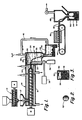
- the crumb rubber, additives and binder are thoroughly dry blended in blender 10 such as a ribbon blender or other suitable mixing device to form material which is fed to the hopper 12 of the extruder 14.
- blender 10 such as a ribbon blender or other suitable mixing device to form material which is fed to the hopper 12 of the extruder 14.
- the mixture is pelletized by being extruded into a die-face pelletizing system.
- An extruder feeding directly into an underwater or water-ring pelletizer 16 is illustrated.
- a turn-screw extruder is preferred though a single-screw extruder equipped with a good crammer can be utilized.
- Strand pelletizers do not work well with the rubber-binder composition of the invention.
- the extruder is maintained at a temperature of from 160 to 205 o C (320 o F to 400 o F) and the die at a temperature from 120 to 163 o C (250 o F to 325 o F) by means of separate heating systems such as a set of heating jackets 18, 20 receiving separate flows of heated exchange fluids.
- the extruded strand material should have a bulk density after drying of at least 0.25 gm/ml and has a diameter from 3 to 20 mm, preferably 4 to 10 mm.
- the strand is broken into lengths of 3 to 20 mm by means of a mechanical knife 22 immersed in the water bath 24.
- the water in the bath is cool, usually from -6 to 26 o C (20 o F to 80 o F) and as the extruded strand 26 enters the water 28, it congeals and sets so that a thin blast of air from nozzle 30 breaks the strand 26 into pellets 32 which fall into the collector portion 34 of the water bath 24.
- the nozzle 30 is connected to an air supply 36 which is pulsed by a controller 38.
- the dispersion of pellets in water is fed from water bath 24 into a separator such as a cyclone separator 40.
- the water is recycled to the bath 24 through line 42 while the pellets 32 are delivered by conveyor belt 44 to a dehumidifying drier 46 to dry the pellets to a preselected moisture content between 0.5 to 2.5% by weight depending on the porosity desired.
- the conveyor belt 44 carries the dried pellets 32 into a closed hopper 48 having a humidity controlled atmosphere which feeds the pellets into a storage container such as a polyethylene bag 50.
- the bag is closed with a secure closure such as a band 52 of metal and can be placed in an outer protective container such as a box or a barrel 54.
- the dried pellets contain a uniform moisture content which can be accurately controlled and the moisture content is stable for extended periods.
- the pellets have a much smaller suface area than the prior powder materials and are humidity stable without storage for short periods of time.
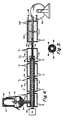
- the pellets 32 are fed to hopper 60 of a pipe extruder 62.
- the hopper has a lid 61 to isolate the feed from the environment.
- the extruder preferably contains a single low pressure screw 64 and has a length to diameter ratio of at least 24/1, preferably at least 35/1.
- the compression ratio of the feeding section to the metering section can be from 1.5/1 to 2.2/1.
- the diameter of the barrel 66 is suitable to produce pipes having outside diameters from 5 to 255 cm (2 to 10 inches) usually from 7.5 to 15 cm (3 to 6 inches). Mixing pins are to be avoided since the crumb rubber can foul these elements.
- the process is operated at a temperature high enough to melt the binder resin but below the melting temperature of the elastomer.
- Good temperature control of the barrel and especially of the die 68 is required usually to within ⁇ 2.5 o C ( ⁇ 5 o F).
- a more uniform porous pipe is prepared by providing an increasing temperature profile over the length of extruder 62.
- Separate heating jackets 70, 72, 74 can surround the feeding, transition and metering sections, respectively, of the extruder barrel 66. Each jacket receives a separate flow of heat exchange fluid.
- the feeding section can be heated to 171-182 o C (340 o F - 360 o F) (T1), the transition section from 182-188 o C (360 o F - 370 o F) (T2), and the metering section from 185-191 o C (365 o F to 375 o F) (T3).
- the die 68 is also provided with a separate temperature control.
- a suitable die is shown in Figure 5 of U.S. Patent No. 4,168,799.
- the die contains an outlet orifice 72 in front of which is mounted a mandrel 84 for forming the bore 86 of the porous pipe 88.
- the mandrel may be removable to vary the wall thickness of the pipe. The thickness is selected depending on desired flow rate, leak rate and wall strength to avoid collapse. Wall thickness is usually from 0.25 to 5.1 cm (0.1 to 2.0 inches).
- the die is chilled to a temperature of from 5 to 27 o C (40 o F to 80 o F) in order to avoid forming an impermeable skin on the surface of the pipe, and the barrel is vented to remove excess pressure.
- the barrel need not be vented and the die is heated to a preselected temperature from 115 to 200 o C (240 o F to 380 o F) to control porosity of the porous pipe.
- An annular jacket 90 receives a flow of preheated heat exchange fluid (T4).
- the pipe 88 can be extruded through the die 68 into the ambient and enters a chilling bath 100 containing water at a temperature of about -4 to 10 o C (25 o F to 50 o F) before being pulled onto rewind stand 102.
- the chiller bath usually has a length of at least 40 feet.
- the dry materials were mixed in a ribbon blender and fed into the hopper of a twin-screw extruder heated to 182-200 o C (360 o F - 390 o F) with a 5 mm die heated to 150 o C (300 o F).
- the water bath was maintained at 2 to 5 o C (35 o F - 40 o F) and the 5 mm strand was chopped into approximately ground pellets about 8-9 mm in diameter by an air knife. After drying the pellets had a density of 0.275 g/ml.
- GPM represents gallons per minute and LPM represents litres per minute.
- pellets were extruded in an unvented single screw extruder into porous pipe with an ID of 1.3 cm (0.55 inch) and a wall thickness of 0.5 cm (0.2 inch).
- the extruder temperatures were: Extruder (all zones) 177 o C (350 o F) Gate 171 o C (340 o F) Spider 168 o C (335 o F) Die 168 o C (335 o F)
- This porous pipe had the following porosities at 7030Kg/m2 (10 psi): 1.02 ⁇ 0.07 LPM/30m (0.27 ⁇ 0.02 GPM/100 Linear Feet) 0.42 ⁇ 0.012LPM/9.2m2(0.11 ⁇ 0.003 GPM/100 Square Feet)
- This same pelletized raw material of Example 1 was extruded under the same conditions, except that the die temperature was 143 o C (290 o F).
- This pipe had the following porosities at 7030Kg/m2 (10 psi). 0.72 ⁇ 0.65LPM/30m(0.19 ⁇ 0.17 GPM/100 Linear Feet) 0.289 ⁇ 0.027LPM/9.2m2(0.076 ⁇ 0.007GPM/100 Square Feet)
- Example 1 was repeated except that 15.75Kg (35lb) of high density polyethylene was substituted for the low density polyethylene binder.
- the pellets were more difficult to extrude and the pipe was more brittle and less flexible.
- the formulation was processed into pellets and dried to contain 1.0 percent moisture.
- the pellets were extruded in a 6.35 cm (2.5 inch) diameter, 24/1 L/D, Prodex single-screw extruder.
- the extruder was equipped with a PVC type screw, which had a compression ratio of 1.9/1, and a circular pipe die with a land-length of 16/1.
- Temperatures in the extruder were maintained at 171-182 o C (340 o F - 360 o F).
- the gate, spider and die temperatures were adjusted to yield an extrudate having the temperatures shown below.
- Porous pipes having a wall thickness of 0.4 cm (0.165 inch) were produced having the following properties:
- the consistency of leak rate is measured by determining the amount of flow of 0.3m (one foot) increments over 15m (50 feet) of pipe to determine the consistency factor, Cv, --the standard deviation/flow rate.
- the Cv achievable is from 0.25 to 0.5.
- a Cv of 0.2 is preferred and for densely packed plants such as sugar cane, a Cv of 0.1 is necessary to reduce no-growth in overwet or dry areas of irrigation.
- a 1.27 cm (one-half inch) I.D. porous pipe produced in accordance with the invention having a flow rate of 3.8 LPM/30m (1GMP/100 linear feet) at 7030Kg/m2 (10 psi) pressure has a Cv of 0.1 to 0.15 and a porous pipe having a flow rate of 0.96 LPM/30m (0.25 GPM/100 linear feet) has a measured Cv of 0.05 to 0.1.
Landscapes
- Engineering & Computer Science (AREA)
- Mechanical Engineering (AREA)
- Life Sciences & Earth Sciences (AREA)
- Environmental & Geological Engineering (AREA)
- Soil Sciences (AREA)
- Water Supply & Treatment (AREA)
- Environmental Sciences (AREA)
- Extrusion Moulding Of Plastics Or The Like (AREA)
- Manufacture Of Porous Articles, And Recovery And Treatment Of Waste Products (AREA)
- Materials For Medical Uses (AREA)
- Dry Formation Of Fiberboard And The Like (AREA)
- Compositions Of Macromolecular Compounds (AREA)
- Lubricants (AREA)
- External Artificial Organs (AREA)
- Pipe Accessories (AREA)
- Application Of Or Painting With Fluid Materials (AREA)
- Infusion, Injection, And Reservoir Apparatuses (AREA)
- Rigid Pipes And Flexible Pipes (AREA)
- Medicinal Preparation (AREA)
Claims (20)
- Strangpressbare Zusammensetzung mit gesteuertem zwischen 0,5 und 3 % liegendem Feuchtigkeitsgehalt, die aus folgendem Gemisch:
100 Gew.-Teilen Elastomerteilchen.
10 bis 60 Teile je hundert Kunststoffbindermittel
1,0 bis 6,0 Teile je hundert Schlickmittel, sowie
0,1 bis 1,0 Teile je hundert Schmiermittel,
hergestellt worden ist. - Zusammensetzung nach Anspruch 1, worin der Elastomer vulkanisiertes Gummi ist.
- Zusammensetzung nach Anspruch 1 oder Anspruch 2, worin der Elastomer regeneriertes Gummi in Krümelform ist, das eine Siebweite von 10 bis 60 (US-Normsiebserie) hat.
- Zusammensetzung nach einem der Ansprüche 1, 2 und 3, worin das Bindemittle eine unter 150° C (300° F) liegende Schmelztemperatur hat.
- Zusammensetzung nach Anspruch 4, worin das Kunststoffbindemittel lineares Polyäthylen ist.
- Zusammensetzung nach Anspruch 5, worin das Kunststoffbindemittel in Form eines aus 50 bis 80 % Polyäthylen hoher Dichte und 20 bis 50 % Polyäthylen niedriger Dichte bestehenden Gemisches vorliegt.
- Zusammensetzung nach einem der vorhergehenden Ansprüche, worin das Schlickmittel aus einem fein verteilten Mineralstoff besteht und als Schmiermittel ein Metallstearat verwendet wird.
- Zusammensetzung nach Anspruch 7, worin das Schlickmittel Talkum und das Metallstearat Kalzium-, Magnesium- oder Zinkstearat ist.
- Zusammensetzung nach einem der vorhergehenden Ansprüche, worin der Feuchtigkeitsgehalt zwischen 0,75 und 1,5 Gew-% liegt.
- Zusammensetzung nach einem der vorhergehenden Ansprüche, worin der der Feuchtigkeitsgehalt einer Charge um nicht mehr als ± 10 % variiert.
- Zusammensetzung nach einem der vorhergehenden Ansprüche, die in Form eines Pellets mit einer Fülldichte von mindestens 0,25 g/ml vorliegt.
- Zusammensetzung nach Anspruch 11, worin das Pellet einen Durchmesser zwischen 3 und 20 mm aufweist.
- Poröses Rohr, das durch Strangpressen einer Zusammensetzung nach einem der vorhergehenden Ansprüche hergestellt worden ist.
- Poröses Rohr nach Anspruch 13, dessen Durchmesser zwischen 5,1 und 25,4 cm (2 und 10 Zoll) liegt.
- Poröses Rohr nach Anspruch 13 oder Anspruch 14, dessen Wandstärke zwischen 0,25 und 5,1 cm (0,1 und 2,0 Zoll) liegt.
- Verfahren zur Herstellung eines porösen Rohres in folgenden Schritten:
Einstellen der Feuchtigkeitsgehaltes eines pelletisierten Gemisches auf einen zwischen 0,5 und 3,0 % liegenden Wert, wobei das Gemisch aus:
100 Gew.Teilen Elastomerteilchen;
10 bis 60 Teile je hundert thermoplastisches Bindemittel;
1,0 bis 6,0 Teile je hundert Schlickmittel, sowie
0,1 bis 1,0 Teile je hundert Schmiermittel besteht:
Strangpressen der Pellets auf einer Rohrstrangpresse bei einer zwischen 160 und 205° C (320° F und 400° F) liegenden Temperatur, sowie
Abkühlen des Rohrs. - Verfahren nach Anspruch 16, worin das Mundstück der Strangpresse getrennt auf eine vorbestimmte zwischen 115 und 200 ° C liegende Temperatur (240° F und 380° F) erhitzt wird.
- Verfahren nach Anspruch 16 oder Anspruch 17, worin der Zylinder der Strangpresse abgeschlossen ist.
- Verfahren zur Herstellung einer strangpressbaren Zusammensetzung in folgenden Schritten:
Bildung eines aus:
100 Gew.-Teilen Elastomerteilchen
10 bis 60 Teilen je hundert thermoplastisches Kunststoffbindemittel
1,0 bis 6,0 Teilen je hundert Schlickmittel sowie 0,1 bis 1,0 Teilen je hundert Schmiermittel,
bestehenden Gemisches, Pelletisieren des Gemisches sowie Einstellen des Feuchtigkeitsgehaltes der Pellets auf einen zwischen 0,5 % und 3,0 % liegenden Wert. - Verfahren nach Anspruch 19, bei dem die Pellets durch Strangpressen des Gemisches in abgekühltes Wasser hinein und Brechen des Stranges, gebildet werden.
Priority Applications (1)
| Application Number | Priority Date | Filing Date | Title |
|---|---|---|---|
| AT85902214T ATE70551T1 (de) | 1984-01-24 | 1985-01-22 | Zusammensetzungen, durchlaessiges bewaesserungsrohr und verfahren. |
Applications Claiming Priority (2)
| Application Number | Priority Date | Filing Date | Title |
|---|---|---|---|
| US06/573,497 US4517316A (en) | 1984-01-24 | 1984-01-24 | Porous irrigation pipe prepared from particulate elastomer and thermoplastic binder containing controlled moisture content |
| US573497 | 1984-01-24 |
Publications (3)
| Publication Number | Publication Date |
|---|---|
| EP0190147A1 EP0190147A1 (de) | 1986-08-13 |
| EP0190147A4 EP0190147A4 (de) | 1987-10-19 |
| EP0190147B1 true EP0190147B1 (de) | 1991-12-18 |
Family
ID=24292227
Family Applications (1)
| Application Number | Title | Priority Date | Filing Date |
|---|---|---|---|
| EP19850902214 Expired - Lifetime EP0190147B1 (de) | 1984-01-24 | 1985-01-22 | Zusammensetzungen, durchlässiges Bewässerungsrohr und Verfahren |
Country Status (11)
| Country | Link |
|---|---|
| US (2) | US4517316A (de) |
| EP (1) | EP0190147B1 (de) |
| AT (1) | ATE70551T1 (de) |
| AU (1) | AU556967B2 (de) |
| BE (1) | BE900213A (de) |
| DE (1) | DE3584965D1 (de) |
| GB (1) | GB2152939B (de) |
| IS (1) | IS1225B6 (de) |
| NZ (1) | NZ210782A (de) |
| WO (1) | WO1985003194A1 (de) |
| ZA (1) | ZA841398B (de) |
Families Citing this family (69)
| Publication number | Priority date | Publication date | Assignee | Title |
|---|---|---|---|---|
| US4517316A (en) * | 1984-01-24 | 1985-05-14 | Dasurat Enterprises Pte Ltd. | Porous irrigation pipe prepared from particulate elastomer and thermoplastic binder containing controlled moisture content |
| US4615642A (en) * | 1984-10-01 | 1986-10-07 | Dasurat Enterprises Pte Ltd. | Variable porosity irrigation pipe |
| GB2177706B (en) * | 1985-07-16 | 1989-04-19 | Du Pont Canada | Compositions of rubber and polyethylene |
| US4859699A (en) * | 1987-07-20 | 1989-08-22 | Sandoz Ltd. | Substituted N-benzoyl-N'-thienylureas |
| US4894948A (en) * | 1988-11-28 | 1990-01-23 | Sefco, Inc. | Hand held apparatus for selective application of liquid herbicide |
| US4917535A (en) * | 1989-04-19 | 1990-04-17 | Aquapore Moisture Systems | Pressure compensating flow rate control device with dual operating modes |
| WO1990012680A1 (en) * | 1989-04-25 | 1990-11-01 | Subrain, Ltd. | Method and apparatus for the manufacture of porous pipe |
| US4958770A (en) * | 1989-05-03 | 1990-09-25 | Prescision Porous Pipe, Inc. | Process for making uniform porosity flexible irrigation pipe |
| MX173573B (es) * | 1989-06-19 | 1994-03-16 | Subsurface Technology Corp | Mejoras en tubo poroso y proceso para producirlo |
| US5728406A (en) * | 1989-07-11 | 1998-03-17 | Amesbury Group, Inc. | Apparatus for extruding a low density thermoplastic foam |
| US5051034A (en) * | 1989-12-18 | 1991-09-24 | Gas Research Institute | Magnetically detectable plastic pipe |
| US5116550A (en) * | 1990-03-27 | 1992-05-26 | Perkins Newton B | Method of making biodegradable free fill foam packing material |
| ES2032239B1 (es) * | 1990-06-11 | 1993-08-16 | Creaciones Tecnicas Agricolas | Tubo de riego exudante |
| US5368235A (en) * | 1990-08-09 | 1994-11-29 | Plastic Specialties And Technologies, Inc. | Soaker hose assembly |
| ATE183685T1 (de) * | 1991-04-23 | 1999-09-15 | Amesbury Group Inc | Verfahren zum extrudieren von schaumstoff niedriger dichte unter verwendung von wasser als treibmittel |
| US5271829A (en) * | 1991-10-10 | 1993-12-21 | Heppenstall Richard J | Treatment system for waste water |
| IT1254069B (it) * | 1991-12-02 | 1995-09-07 | Bondenese Fab Macch Fbm | Apparecchiatura per granulare materiale plastico, in particolare poliammidi e poliesteri lineari |
| FR2693401B1 (fr) * | 1992-04-29 | 1995-02-03 | Aet Sa | Procédé pour la fabrication de tuyaux poreux et produits obtenus par ce procédé. |
| US5366365A (en) * | 1992-06-04 | 1994-11-22 | Sullivan Henry W | Means for controlling feedstock compaction in forming flexible porous pipes of controlled pore size |
| WO1996005955A1 (en) * | 1992-06-04 | 1996-02-29 | Sullivan Henry W | Apparatus for manufacturing flexible porous pipe |
| US5299885A (en) * | 1992-08-14 | 1994-04-05 | Aquapore Moisture Systems, Inc. | Stabilized porous pipe |
| US5417997A (en) * | 1993-07-26 | 1995-05-23 | Creed; Donald J. | Process of making reinforced porous pipe |
| FR2713044B1 (fr) * | 1993-12-01 | 1996-03-01 | B2 Test | Canalisation d'arrosage comprenant une couche externe poreuse et procédé de fabrication correspondant. |
| US5986000A (en) * | 1995-05-22 | 1999-11-16 | Playtex Products, Inc. | Soft, flexible composition and method for making same |
| US5886078A (en) * | 1996-08-13 | 1999-03-23 | Tietek, Inc. | Polymeric compositions and methods for making construction materials from them |
| US5811164A (en) * | 1996-09-27 | 1998-09-22 | Plastic Specialties And Technologies Investments, Inc. | Aeration pipe and method of making same |
| US5811038A (en) * | 1996-09-27 | 1998-09-22 | Plastic Specialties And Technologies Investments, Inc. | Method of blending components for porous plastic pipe processing |
| US5816742A (en) * | 1996-09-30 | 1998-10-06 | Cordewener; Charles H. | Permeable conduits for disbursing fluids |
| BE1011282A3 (fr) * | 1997-07-14 | 1999-07-06 | Solvay | Composition a base de polyethylene et procede de fabrication d'objets faconnes a partir de la composition. |
| US5889119A (en) * | 1997-07-17 | 1999-03-30 | The University Of Akron | Thermoplastic rubbery compositions |
| KR100227305B1 (ko) * | 1997-08-28 | 1999-11-01 | 이재호 | 폐합성수지 성형물의 제조방법 |
| US6793824B2 (en) * | 1998-02-05 | 2004-09-21 | E. I. Du Pont De Nemours And Company | Water purification apparatus |
| US6446383B1 (en) | 1998-07-02 | 2002-09-10 | Tom Hoshall | Subsurface pesticide injection and fluid extraction system |
| US6110404A (en) | 1998-08-14 | 2000-08-29 | Ligon Brothers Manufacturing Company | Method of extruding thermoplastic elastomer foam using water as a blowing agent |
| US6294768B1 (en) | 1998-08-20 | 2001-09-25 | Advanced Recycling Sciences, Inc. | Flexible electrically heated tiles made from crumb rubber |
| GB9827432D0 (en) * | 1998-12-11 | 1999-02-03 | Borealis As | Method |
| US6894109B1 (en) * | 1998-12-11 | 2005-05-17 | Borealis Technology Oy | Method of producing pelletized polyolefin |
| US6142703A (en) * | 1999-03-01 | 2000-11-07 | Wilmot; Charles | Encapsulated turf maintenance system |
| US6558764B2 (en) * | 1999-03-05 | 2003-05-06 | General Electric Company | Single layered polypropylene containers and their use |
| DE19914116C2 (de) * | 1999-03-23 | 2001-09-20 | Mannesmann Ag | Unterwasser-Granulator und Verfahren zur Granulierung thermoplastischer Kunststoffe |
| GB2354966B (en) * | 1999-08-06 | 2003-12-31 | Xylo Ltd | Recycling plastic waste |
| US6828372B2 (en) * | 2001-03-05 | 2004-12-07 | Tie Tek, Inc. | Railroad tie and method for making same |
| MXPA04003786A (es) * | 2001-10-24 | 2005-04-08 | Infiltrator Systems Inc | Un metodo para reciclar alfombras y articulos hechos de las mismas. |
| US20050206029A1 (en) * | 2001-10-24 | 2005-09-22 | Moore Roy E Jr | Method for recycling carpet and articles made therefrom |
| US6755999B2 (en) * | 2001-10-29 | 2004-06-29 | Su Shun-Fua | Method of manufacturing a release-controlled pipe |
| US6659362B1 (en) | 2002-03-12 | 2003-12-09 | Gerald Hallissy | Composite railroad ties with optional integral conduit |
| US20040075187A1 (en) * | 2002-10-17 | 2004-04-22 | Christie James Louis | Method and system for fabricating elastomeric compounds |
| US6917201B2 (en) * | 2002-12-09 | 2005-07-12 | Varian, Inc. | Squashed liquid NMR sample tubes and RF coils |
| US20060024453A1 (en) * | 2003-02-05 | 2006-02-02 | Crosstie Technologies, Inc. | Elastomeric structural elements |
| EP1603724A1 (de) * | 2003-03-20 | 2005-12-14 | Polymera SA | Extrusionseinrichtung zur herstellung von kunststoffgranulat |
| US6877272B2 (en) | 2003-04-10 | 2005-04-12 | Tom Hoshall | Method of applying pesticide |
| WO2007106390A2 (en) | 2006-03-10 | 2007-09-20 | Amesbury Group, Inc | Apparatus and method for manufacturing reinforced weatherstrip, and such a weatherstrip |
| US7390404B2 (en) * | 2006-09-19 | 2008-06-24 | Abcusa Environmental Holdings, Inc. | Apparatus and method for remediation of a drain system |
| US7300583B1 (en) * | 2006-09-19 | 2007-11-27 | Abcusa Environmental Holdings, Inc. | Apparatus and method for remediation of a waste stream |
| DE102007057189A1 (de) * | 2007-11-28 | 2009-06-04 | Automatik Plastics Machinery Gmbh | Verfahren und Vorrichtung zur Herstellung von Polyamid |
| US7883583B2 (en) * | 2008-01-08 | 2011-02-08 | Global Oled Technology Llc | Vaporization apparatus with precise powder metering |
| US8062427B2 (en) * | 2008-11-14 | 2011-11-22 | Global Oled Technology Llc | Particulate material metering and vaporization |
| US7972443B2 (en) * | 2008-11-14 | 2011-07-05 | Global Oled Technology Llc | Metering of particulate material and vaporization thereof |
| US8048230B2 (en) * | 2008-11-14 | 2011-11-01 | Global Oled Technology Llc | Metering and vaporizing particulate material |
| US8409321B2 (en) * | 2010-12-06 | 2013-04-02 | Tekni-Plex, Inc. | Method and apparatus for leaching metal from mining ore |
| US9068314B2 (en) | 2012-05-02 | 2015-06-30 | Bubbleology Research International LLC | Area bubble plume oil barriers |
| JP5819797B2 (ja) * | 2012-10-05 | 2015-11-24 | 不二パウダル株式会社 | 連続混練造粒乾燥システム |
| ES2613070T3 (es) * | 2012-11-09 | 2017-05-22 | Abu Dhabi Polymers Company Limited (Borouge) | Tubería de riego por goteo que comprende una composición polimérica que comprende una resina base de polietileno multimodal |
| US10329834B2 (en) | 2015-02-13 | 2019-06-25 | Amesbury Group, Inc. | Low compression-force TPE weatherseals |
| CN104786385A (zh) * | 2015-04-21 | 2015-07-22 | 南京东亚橡塑制品有限公司 | 一种橡胶造粒工艺 |
| US11083168B2 (en) * | 2015-12-29 | 2021-08-10 | Pioneer Pet Products, Llc | System and ultrahigh pressure extrusion method for making extruded granular sorbent with post-extrusion cold-processing of extruded granular absorbent for size control |
| US10000931B1 (en) | 2016-12-13 | 2018-06-19 | Daniel T. Daugherty | Apparatus and method for moss remediation |
| JP6777553B2 (ja) * | 2017-01-11 | 2020-10-28 | マクセル株式会社 | 発泡成形体の製造方法及び製造装置 |
| CN110682468A (zh) * | 2019-10-31 | 2020-01-14 | 唐承细 | 一种利于塑料挤出且成品率高的可控温造粒设备 |
Family Cites Families (11)
| Publication number | Priority date | Publication date | Assignee | Title |
|---|---|---|---|---|
| US4391767A (en) * | 1969-07-15 | 1983-07-05 | Imperial Chemical Industries Plc | Coated polyester films |
| US4003408A (en) * | 1974-02-26 | 1977-01-18 | George C. Ballas, trustee | Underground irrigation porous pipe |
| US4013102A (en) * | 1975-01-30 | 1977-03-22 | John Z. Delorean Corporation | Composite tubing |
| US4094466A (en) * | 1976-01-15 | 1978-06-13 | Deromano Oscar | Irrigation apparatus |
| FR2395700A2 (fr) * | 1976-10-28 | 1979-01-26 | Rhone Poulenc Textile | Moyen d'irrigation des sols et son procede de mise en oeuvre |
| US4168799A (en) * | 1977-09-16 | 1979-09-25 | Entek Corporation | Soaker hose |
| US4238260A (en) * | 1978-11-13 | 1980-12-09 | Parker-Hannifin Corporation | Method of making an elastomeric hose |
| US4397916A (en) * | 1980-02-29 | 1983-08-09 | Mitsui Petrochemical Industries, Ltd. | Laminated multilayer structure |
| DE3049557A1 (de) * | 1980-12-31 | 1982-07-29 | Akzo Gmbh, 5600 Wuppertal | Poroese schlaeuche |
| FR2501217B1 (fr) * | 1981-03-05 | 1985-12-27 | Charbonnages Ste Chimique | Compositions antibloquantes a base de polyethylene et films obtenus |
| US4517316A (en) * | 1984-01-24 | 1985-05-14 | Dasurat Enterprises Pte Ltd. | Porous irrigation pipe prepared from particulate elastomer and thermoplastic binder containing controlled moisture content |
-
1984
- 1984-01-24 US US06/573,497 patent/US4517316A/en not_active Expired - Lifetime
- 1984-02-20 AU AU24740/84A patent/AU556967B2/en not_active Expired
- 1984-02-24 ZA ZA841398A patent/ZA841398B/xx unknown
- 1984-07-18 IS IS2932A patent/IS1225B6/is unknown
- 1984-07-19 GB GB08418437A patent/GB2152939B/en not_active Expired
- 1984-07-24 BE BE0/213373A patent/BE900213A/fr not_active IP Right Cessation
-
1985
- 1985-01-08 NZ NZ210782A patent/NZ210782A/en unknown
- 1985-01-22 AT AT85902214T patent/ATE70551T1/de not_active IP Right Cessation
- 1985-01-22 EP EP19850902214 patent/EP0190147B1/de not_active Expired - Lifetime
- 1985-01-22 WO PCT/US1985/000118 patent/WO1985003194A1/en not_active Ceased
- 1985-01-22 DE DE8585902214T patent/DE3584965D1/de not_active Expired - Lifetime
- 1985-05-13 US US06/733,711 patent/US4616055A/en not_active Expired - Lifetime
Also Published As
| Publication number | Publication date |
|---|---|
| BE900213A (fr) | 1984-11-16 |
| IS1225B6 (is) | 1986-06-30 |
| GB2152939B (en) | 1987-06-24 |
| US4517316A (en) | 1985-05-14 |
| US4616055A (en) | 1986-10-07 |
| AU2474084A (en) | 1985-08-01 |
| ZA841398B (en) | 1984-10-31 |
| WO1985003194A1 (en) | 1985-08-01 |
| EP0190147A4 (de) | 1987-10-19 |
| DE3584965D1 (de) | 1992-01-30 |
| AU556967B2 (en) | 1986-11-27 |
| GB8418437D0 (en) | 1984-08-22 |
| IS2932A7 (is) | 1985-07-25 |
| EP0190147A1 (de) | 1986-08-13 |
| ATE70551T1 (de) | 1992-01-15 |
| NZ210782A (en) | 1987-06-30 |
| GB2152939A (en) | 1985-08-14 |
Similar Documents
| Publication | Publication Date | Title |
|---|---|---|
| EP0190147B1 (de) | Zusammensetzungen, durchlässiges Bewässerungsrohr und Verfahren | |
| US4615642A (en) | Variable porosity irrigation pipe | |
| US4958770A (en) | Process for making uniform porosity flexible irrigation pipe | |
| US4168799A (en) | Soaker hose | |
| US4110420A (en) | Method for extruding porous irrigation pipe | |
| US5811038A (en) | Method of blending components for porous plastic pipe processing | |
| US3669722A (en) | Free flowing pellets of uncured elastomeric material | |
| US6253486B1 (en) | Composite lawn edging | |
| US5660209A (en) | Porous pipe and process for producing same | |
| FI76584C (fi) | Granulaer eldfoerhindrande organohalogenidtillsatskomposition. | |
| US4622193A (en) | Method for making free flowing coated rubber pellets | |
| US5366365A (en) | Means for controlling feedstock compaction in forming flexible porous pipes of controlled pore size | |
| CA1237212A (en) | Porous irrigation pipe and method | |
| US4143105A (en) | Rod for supporting plants and process for its manufacture | |
| US4931236A (en) | Method for forming irrigation pipe having a porous side wall | |
| JPH0377224B2 (de) | ||
| CA1303316C (en) | System for forming hollow, porous pipe | |
| US4822545A (en) | Method for making free-flowing coated rubber pellets | |
| US4623502A (en) | Method and apparatus for the extrusion of synthetic resinous thermoplastics | |
| KR101552401B1 (ko) | 농업용 덮개 고무시트의 제조장치 및 제조방법 | |
| CA1301813C (en) | Irrigation system and method | |
| US4970118A (en) | Method for making free-flowing coated rubber pellets | |
| US5417997A (en) | Process of making reinforced porous pipe | |
| JP7463316B2 (ja) | 再生原料の製造方法、該製造方法により得られる再生原料を用いたことを特徴とするフィルムの製造方法 | |
| US6755999B2 (en) | Method of manufacturing a release-controlled pipe |
Legal Events
| Date | Code | Title | Description |
|---|---|---|---|
| PUAI | Public reference made under article 153(3) epc to a published international application that has entered the european phase |
Free format text: ORIGINAL CODE: 0009012 |
|
| 17P | Request for examination filed |
Effective date: 19860130 |
|
| AK | Designated contracting states |
Kind code of ref document: A1 Designated state(s): AT CH DE FR LI LU NL SE |
|
| A4 | Supplementary search report drawn up and despatched |
Effective date: 19871019 |
|
| 17Q | First examination report despatched |
Effective date: 19890705 |
|
| GRAA | (expected) grant |
Free format text: ORIGINAL CODE: 0009210 |
|
| AK | Designated contracting states |
Kind code of ref document: B1 Designated state(s): AT CH DE FR LI LU NL SE |
|
| PG25 | Lapsed in a contracting state [announced via postgrant information from national office to epo] |
Ref country code: SE Effective date: 19911218 Ref country code: NL Effective date: 19911218 Ref country code: LI Effective date: 19911218 Ref country code: CH Effective date: 19911218 |
|
| REF | Corresponds to: |
Ref document number: 70551 Country of ref document: AT Date of ref document: 19920115 Kind code of ref document: T |
|
| ET | Fr: translation filed | ||
| REF | Corresponds to: |
Ref document number: 3584965 Country of ref document: DE Date of ref document: 19920130 |
|
| PG25 | Lapsed in a contracting state [announced via postgrant information from national office to epo] |
Ref country code: LU Free format text: LAPSE BECAUSE OF NON-PAYMENT OF DUE FEES Effective date: 19920131 |
|
| REG | Reference to a national code |
Ref country code: CH Ref legal event code: PL |
|
| NLV1 | Nl: lapsed or annulled due to failure to fulfill the requirements of art. 29p and 29m of the patents act | ||
| PLBE | No opposition filed within time limit |
Free format text: ORIGINAL CODE: 0009261 |
|
| STAA | Information on the status of an ep patent application or granted ep patent |
Free format text: STATUS: NO OPPOSITION FILED WITHIN TIME LIMIT |
|
| 26N | No opposition filed | ||
| PGFP | Annual fee paid to national office [announced via postgrant information from national office to epo] |
Ref country code: AT Payment date: 19961220 Year of fee payment: 13 |
|
| PG25 | Lapsed in a contracting state [announced via postgrant information from national office to epo] |
Ref country code: AT Free format text: LAPSE BECAUSE OF NON-PAYMENT OF DUE FEES Effective date: 19980122 |
|
| PGFP | Annual fee paid to national office [announced via postgrant information from national office to epo] |
Ref country code: FR Payment date: 20040116 Year of fee payment: 20 Ref country code: DE Payment date: 20040116 Year of fee payment: 20 |