EP0183975B1 - 5,6,7,8-tetrafluoroanthraquinone derivatives - Google Patents
5,6,7,8-tetrafluoroanthraquinone derivatives Download PDFInfo
- Publication number
- EP0183975B1 EP0183975B1 EP85113663A EP85113663A EP0183975B1 EP 0183975 B1 EP0183975 B1 EP 0183975B1 EP 85113663 A EP85113663 A EP 85113663A EP 85113663 A EP85113663 A EP 85113663A EP 0183975 B1 EP0183975 B1 EP 0183975B1
- Authority
- EP
- European Patent Office
- Prior art keywords
- compound according
- general formula
- independently
- hydrogen atom
- tetrafluoroquinizarin
- Prior art date
- Legal status (The legal status is an assumption and is not a legal conclusion. Google has not performed a legal analysis and makes no representation as to the accuracy of the status listed.)
- Expired - Lifetime
Links
- NVQSKJVBFNKSDT-UHFFFAOYSA-N 1,2,3,4-tetrafluoroanthracene-9,10-dione Chemical class C1=CC=C2C(=O)C3=C(F)C(F)=C(F)C(F)=C3C(=O)C2=C1 NVQSKJVBFNKSDT-UHFFFAOYSA-N 0.000 title claims description 7
- 150000001875 compounds Chemical class 0.000 claims description 23
- 238000006243 chemical reaction Methods 0.000 claims description 19
- 125000004435 hydrogen atom Chemical class [H]* 0.000 claims description 19
- BJDDKZDZTHIIJB-UHFFFAOYSA-N 4,5,6,7-tetrafluoro-2-benzofuran-1,3-dione Chemical compound FC1=C(F)C(F)=C2C(=O)OC(=O)C2=C1F BJDDKZDZTHIIJB-UHFFFAOYSA-N 0.000 claims description 11
- 238000000034 method Methods 0.000 claims description 11
- QIGBRXMKCJKVMJ-UHFFFAOYSA-N 1,4-Benzenediol Natural products OC1=CC=C(O)C=C1 QIGBRXMKCJKVMJ-UHFFFAOYSA-N 0.000 claims description 10
- 238000005727 Friedel-Crafts reaction Methods 0.000 claims description 7
- 125000000217 alkyl group Chemical group 0.000 claims description 7
- 125000004432 carbon atom Chemical group C* 0.000 claims description 7
- 125000005843 halogen group Chemical group 0.000 claims description 7
- 238000004519 manufacturing process Methods 0.000 claims description 7
- WZEJLDIDUFPMTM-UHFFFAOYSA-N 5-amino-1,2,3,4-tetrafluoroanthracene-9,10-dione Chemical compound O=C1C2=C(F)C(F)=C(F)C(F)=C2C(=O)C2=C1C=CC=C2N WZEJLDIDUFPMTM-UHFFFAOYSA-N 0.000 claims description 6
- 239000003054 catalyst Substances 0.000 claims description 6
- -1 hydroquinone compound Chemical class 0.000 claims description 6
- WRVUATUHSQGIKS-UHFFFAOYSA-N 1,2,3,4-tetrafluoro-5,8-bis(methylamino)anthracene-9,10-dione Chemical compound O=C1C2=C(F)C(F)=C(F)C(F)=C2C(=O)C2=C1C(NC)=CC=C2NC WRVUATUHSQGIKS-UHFFFAOYSA-N 0.000 claims description 5
- 150000001412 amines Chemical class 0.000 claims description 5
- 239000003638 chemical reducing agent Substances 0.000 claims description 5
- 125000002887 hydroxy group Chemical group [H]O* 0.000 claims description 5
- WKBOTKDWSSQWDR-UHFFFAOYSA-N Bromine atom Chemical group [Br] WKBOTKDWSSQWDR-UHFFFAOYSA-N 0.000 claims description 4
- ATJFFYVFTNAWJD-UHFFFAOYSA-N Tin Chemical compound [Sn] ATJFFYVFTNAWJD-UHFFFAOYSA-N 0.000 claims description 4
- 125000001997 phenyl group Chemical group [H]C1=C([H])C([H])=C(*)C([H])=C1[H] 0.000 claims description 4
- HCHKCACWOHOZIP-UHFFFAOYSA-N Zinc Chemical compound [Zn] HCHKCACWOHOZIP-UHFFFAOYSA-N 0.000 claims description 3
- 229910052783 alkali metal Inorganic materials 0.000 claims description 3
- 239000007864 aqueous solution Substances 0.000 claims description 3
- 239000001257 hydrogen Substances 0.000 claims description 3
- 229910052739 hydrogen Inorganic materials 0.000 claims description 3
- 229910052725 zinc Inorganic materials 0.000 claims description 3
- 239000011701 zinc Substances 0.000 claims description 3
- YWBYRRPYNMTGSD-UHFFFAOYSA-N 5-amino-1,2,3,4-tetrafluoro-8-hydroxyanthracene-9,10-dione Chemical compound O=C1C2=C(F)C(F)=C(F)C(F)=C2C(=O)C2=C1C(O)=CC=C2N YWBYRRPYNMTGSD-UHFFFAOYSA-N 0.000 claims description 2
- MYMOFIZGZYHOMD-UHFFFAOYSA-N Dioxygen Chemical compound O=O MYMOFIZGZYHOMD-UHFFFAOYSA-N 0.000 claims description 2
- 238000005576 amination reaction Methods 0.000 claims description 2
- 229910001882 dioxygen Inorganic materials 0.000 claims description 2
- 238000010438 heat treatment Methods 0.000 claims description 2
- 125000002496 methyl group Chemical group [H]C([H])([H])* 0.000 claims description 2
- 125000002924 primary amino group Chemical group [H]N([H])* 0.000 claims 3
- 125000000250 methylamino group Chemical group [H]N(*)C([H])([H])[H] 0.000 claims 2
- 125000003282 alkyl amino group Chemical group 0.000 claims 1
- UHOVQNZJYSORNB-UHFFFAOYSA-N Benzene Chemical compound C1=CC=CC=C1 UHOVQNZJYSORNB-UHFFFAOYSA-N 0.000 description 18
- 239000000243 solution Substances 0.000 description 14
- VEXZGXHMUGYJMC-UHFFFAOYSA-N Hydrochloric acid Chemical compound Cl VEXZGXHMUGYJMC-UHFFFAOYSA-N 0.000 description 12
- 238000004458 analytical method Methods 0.000 description 10
- JFDZBHWFFUWGJE-UHFFFAOYSA-N benzonitrile Chemical compound N#CC1=CC=CC=C1 JFDZBHWFFUWGJE-UHFFFAOYSA-N 0.000 description 9
- XLYOFNOQVPJJNP-UHFFFAOYSA-N water Substances O XLYOFNOQVPJJNP-UHFFFAOYSA-N 0.000 description 9
- 239000002994 raw material Substances 0.000 description 7
- 230000015572 biosynthetic process Effects 0.000 description 6
- 238000001914 filtration Methods 0.000 description 6
- 238000003786 synthesis reaction Methods 0.000 description 6
- QTBSBXVTEAMEQO-UHFFFAOYSA-N Acetic acid Chemical compound CC(O)=O QTBSBXVTEAMEQO-UHFFFAOYSA-N 0.000 description 5
- PXGOKWXKJXAPGV-UHFFFAOYSA-N Fluorine Chemical compound FF PXGOKWXKJXAPGV-UHFFFAOYSA-N 0.000 description 5
- QAOWNCQODCNURD-UHFFFAOYSA-N Sulfuric acid Chemical compound OS(O)(=O)=O QAOWNCQODCNURD-UHFFFAOYSA-N 0.000 description 5
- 238000004040 coloring Methods 0.000 description 5
- 239000000986 disperse dye Substances 0.000 description 5
- 229910052731 fluorine Inorganic materials 0.000 description 5
- 239000011737 fluorine Substances 0.000 description 5
- 239000000049 pigment Substances 0.000 description 5
- KHUFHLFHOQVFGB-UHFFFAOYSA-N 1-aminoanthracene-9,10-dione Chemical class O=C1C2=CC=CC=C2C(=O)C2=C1C=CC=C2N KHUFHLFHOQVFGB-UHFFFAOYSA-N 0.000 description 4
- YJLVXRPNNDKMMO-UHFFFAOYSA-N 3,4,5,6-tetrafluorophthalic acid Chemical compound OC(=O)C1=C(F)C(F)=C(F)C(F)=C1C(O)=O YJLVXRPNNDKMMO-UHFFFAOYSA-N 0.000 description 4
- RTZKZFJDLAIYFH-UHFFFAOYSA-N Diethyl ether Chemical compound CCOCC RTZKZFJDLAIYFH-UHFFFAOYSA-N 0.000 description 4
- 238000000862 absorption spectrum Methods 0.000 description 4
- VSCWAEJMTAWNJL-UHFFFAOYSA-K aluminium trichloride Chemical compound Cl[Al](Cl)Cl VSCWAEJMTAWNJL-UHFFFAOYSA-K 0.000 description 4
- 238000001816 cooling Methods 0.000 description 4
- NROKBHXJSPEDAR-UHFFFAOYSA-M potassium fluoride Chemical compound [F-].[K+] NROKBHXJSPEDAR-UHFFFAOYSA-M 0.000 description 4
- GUEIZVNYDFNHJU-UHFFFAOYSA-N quinizarin Chemical compound O=C1C2=CC=CC=C2C(=O)C2=C1C(O)=CC=C2O GUEIZVNYDFNHJU-UHFFFAOYSA-N 0.000 description 4
- 239000011541 reaction mixture Substances 0.000 description 4
- 238000001228 spectrum Methods 0.000 description 4
- 150000004350 1,4-dihydroxyanthraquinones Chemical class 0.000 description 3
- OFLRJMBSWDXSPG-UHFFFAOYSA-N 3,4,5,6-tetrafluorobenzene-1,2-dicarbonitrile Chemical compound FC1=C(F)C(F)=C(C#N)C(C#N)=C1F OFLRJMBSWDXSPG-UHFFFAOYSA-N 0.000 description 3
- GDTBXPJZTBHREO-UHFFFAOYSA-N bromine Substances BrBr GDTBXPJZTBHREO-UHFFFAOYSA-N 0.000 description 3
- 229910052794 bromium Inorganic materials 0.000 description 3
- 239000013078 crystal Substances 0.000 description 3
- 239000002244 precipitate Substances 0.000 description 3
- 239000000126 substance Substances 0.000 description 3
- OHBQPCCCRFSCAX-UHFFFAOYSA-N 1,4-Dimethoxybenzene Chemical compound COC1=CC=C(OC)C=C1 OHBQPCCCRFSCAX-UHFFFAOYSA-N 0.000 description 2
- ZCYVEMRRCGMTRW-UHFFFAOYSA-N 7553-56-2 Chemical compound [I] ZCYVEMRRCGMTRW-UHFFFAOYSA-N 0.000 description 2
- 0 CCC(C(C*)=C(C(*(C(C1)C(C2)C(CF)=C(CF)C(CC)=C2F)=O)=CC1OC)O)=C(N)O Chemical compound CCC(C(C*)=C(C(*(C(C1)C(C2)C(CF)=C(CF)C(CC)=C2F)=O)=CC1OC)O)=C(N)O 0.000 description 2
- CSNNHWWHGAXBCP-UHFFFAOYSA-L Magnesium sulfate Chemical compound [Mg+2].[O-][S+2]([O-])([O-])[O-] CSNNHWWHGAXBCP-UHFFFAOYSA-L 0.000 description 2
- BAVYZALUXZFZLV-UHFFFAOYSA-N Methylamine Chemical compound NC BAVYZALUXZFZLV-UHFFFAOYSA-N 0.000 description 2
- WCUXLLCKKVVCTQ-UHFFFAOYSA-M Potassium chloride Chemical compound [Cl-].[K+] WCUXLLCKKVVCTQ-UHFFFAOYSA-M 0.000 description 2
- 238000010521 absorption reaction Methods 0.000 description 2
- 229960000583 acetic acid Drugs 0.000 description 2
- BKNBVEKCHVXGPH-UHFFFAOYSA-N anthracene-1,4,9,10-tetrol Chemical compound C1=CC=C2C(O)=C3C(O)=CC=C(O)C3=C(O)C2=C1 BKNBVEKCHVXGPH-UHFFFAOYSA-N 0.000 description 2
- XBDQKXXYIPTUBI-UHFFFAOYSA-N dimethylselenoniopropionate Natural products CCC(O)=O XBDQKXXYIPTUBI-UHFFFAOYSA-N 0.000 description 2
- 239000000975 dye Substances 0.000 description 2
- 239000005457 ice water Substances 0.000 description 2
- 239000011630 iodine Substances 0.000 description 2
- 229910052740 iodine Inorganic materials 0.000 description 2
- 239000007788 liquid Substances 0.000 description 2
- 239000004973 liquid crystal related substance Substances 0.000 description 2
- 238000002844 melting Methods 0.000 description 2
- 230000008018 melting Effects 0.000 description 2
- 235000003270 potassium fluoride Nutrition 0.000 description 2
- 239000011698 potassium fluoride Substances 0.000 description 2
- 238000006722 reduction reaction Methods 0.000 description 2
- 239000011369 resultant mixture Substances 0.000 description 2
- 239000002904 solvent Substances 0.000 description 2
- TXUICONDJPYNPY-UHFFFAOYSA-N (1,10,13-trimethyl-3-oxo-4,5,6,7,8,9,11,12,14,15,16,17-dodecahydrocyclopenta[a]phenanthren-17-yl) heptanoate Chemical compound C1CC2CC(=O)C=C(C)C2(C)C2C1C1CCC(OC(=O)CCCCCC)C1(C)CC2 TXUICONDJPYNPY-UHFFFAOYSA-N 0.000 description 1
- NSUFTDFQWAKJKZ-UHFFFAOYSA-N 1,2,3,4-tetrafluoro-5,8-bis(propan-2-ylamino)anthracene-9,10-dione Chemical compound O=C1C2=C(F)C(F)=C(F)C(F)=C2C(=O)C2=C1C(NC(C)C)=CC=C2NC(C)C NSUFTDFQWAKJKZ-UHFFFAOYSA-N 0.000 description 1
- BFYSODDRKZBYRD-UHFFFAOYSA-N 1,2,3,4-tetrafluoro-5-hydroxy-8-(methylamino)anthracene-9,10-dione Chemical compound O=C1C2=C(F)C(F)=C(F)C(F)=C2C(=O)C2=C1C(O)=CC=C2NC BFYSODDRKZBYRD-UHFFFAOYSA-N 0.000 description 1
- 238000005160 1H NMR spectroscopy Methods 0.000 description 1
- QNYQLDQNNAKMAY-UHFFFAOYSA-N 5,8-bis(butylamino)-1,2,3,4-tetrafluoroanthracene-9,10-dione Chemical compound O=C1C2=C(F)C(F)=C(F)C(F)=C2C(=O)C2=C1C(NCCCC)=CC=C2NCCCC QNYQLDQNNAKMAY-UHFFFAOYSA-N 0.000 description 1
- ANZZOPPZXCWGEW-UHFFFAOYSA-N 5,8-bis(dimethylamino)-1,2,3,4-tetrafluoroanthracene-9,10-dione Chemical compound O=C1C2=C(F)C(F)=C(F)C(F)=C2C(=O)C2=C1C(N(C)C)=CC=C2N(C)C ANZZOPPZXCWGEW-UHFFFAOYSA-N 0.000 description 1
- LPSQGRAOSIKIPI-UHFFFAOYSA-N 5,8-diamino-1,2,3,4-tetrafluoroanthracene-9,10-dione Chemical compound O=C1C2=C(F)C(F)=C(F)C(F)=C2C(=O)C2=C1C(N)=CC=C2N LPSQGRAOSIKIPI-UHFFFAOYSA-N 0.000 description 1
- TWZLNWUCMBZASP-UHFFFAOYSA-N 5,8-dianilino-1,2,3,4-tetrafluoroanthracene-9,10-dione Chemical compound C1=CC(NC=2C=CC=CC=2)=C2C(=O)C3=C(F)C(F)=C(F)C(F)=C3C(=O)C2=C1NC1=CC=CC=C1 TWZLNWUCMBZASP-UHFFFAOYSA-N 0.000 description 1
- NLXLAEXVIDQMFP-UHFFFAOYSA-N Ammonium chloride Substances [NH4+].[Cl-] NLXLAEXVIDQMFP-UHFFFAOYSA-N 0.000 description 1
- VHUUQVKOLVNVRT-UHFFFAOYSA-N Ammonium hydroxide Chemical compound [NH4+].[OH-] VHUUQVKOLVNVRT-UHFFFAOYSA-N 0.000 description 1
- IJGRMHOSHXDMSA-UHFFFAOYSA-N Atomic nitrogen Chemical compound N#N IJGRMHOSHXDMSA-UHFFFAOYSA-N 0.000 description 1
- ZAMOUSCENKQFHK-UHFFFAOYSA-N Chlorine atom Chemical compound [Cl] ZAMOUSCENKQFHK-UHFFFAOYSA-N 0.000 description 1
- IAZDPXIOMUYVGZ-UHFFFAOYSA-N DMSO Substances CS(C)=O IAZDPXIOMUYVGZ-UHFFFAOYSA-N 0.000 description 1
- GRYLNZFGIOXLOG-UHFFFAOYSA-N Nitric acid Chemical compound O[N+]([O-])=O GRYLNZFGIOXLOG-UHFFFAOYSA-N 0.000 description 1
- LGRFSURHDFAFJT-UHFFFAOYSA-N Phthalic anhydride Natural products C1=CC=C2C(=O)OC(=O)C2=C1 LGRFSURHDFAFJT-UHFFFAOYSA-N 0.000 description 1
- FAPWRFPIFSIZLT-UHFFFAOYSA-M Sodium chloride Chemical compound [Na+].[Cl-] FAPWRFPIFSIZLT-UHFFFAOYSA-M 0.000 description 1
- 229910021626 Tin(II) chloride Inorganic materials 0.000 description 1
- 239000002253 acid Substances 0.000 description 1
- 150000003973 alkyl amines Chemical class 0.000 description 1
- 235000011114 ammonium hydroxide Nutrition 0.000 description 1
- 125000002490 anilino group Chemical group [H]N(*)C1=C([H])C([H])=C([H])C([H])=C1[H] 0.000 description 1
- JHIWVOJDXOSYLW-UHFFFAOYSA-N butyl 2,2-difluorocyclopropane-1-carboxylate Chemical compound CCCCOC(=O)C1CC1(F)F JHIWVOJDXOSYLW-UHFFFAOYSA-N 0.000 description 1
- 239000000460 chlorine Substances 0.000 description 1
- 229910052801 chlorine Inorganic materials 0.000 description 1
- 230000018044 dehydration Effects 0.000 description 1
- 238000006297 dehydration reaction Methods 0.000 description 1
- PNOXNTGLSKTMQO-UHFFFAOYSA-L diacetyloxytin Chemical compound CC(=O)O[Sn]OC(C)=O PNOXNTGLSKTMQO-UHFFFAOYSA-L 0.000 description 1
- 229910001873 dinitrogen Inorganic materials 0.000 description 1
- FGRVOLIFQGXPCT-UHFFFAOYSA-L dipotassium;dioxido-oxo-sulfanylidene-$l^{6}-sulfane Chemical compound [K+].[K+].[O-]S([O-])(=O)=S FGRVOLIFQGXPCT-UHFFFAOYSA-L 0.000 description 1
- 238000004090 dissolution Methods 0.000 description 1
- 238000000605 extraction Methods 0.000 description 1
- 238000004817 gas chromatography Methods 0.000 description 1
- 239000012362 glacial acetic acid Substances 0.000 description 1
- 229910052736 halogen Inorganic materials 0.000 description 1
- 230000002140 halogenating effect Effects 0.000 description 1
- 150000002367 halogens Chemical class 0.000 description 1
- 239000010410 layer Substances 0.000 description 1
- 229910052943 magnesium sulfate Inorganic materials 0.000 description 1
- 235000019341 magnesium sulphate Nutrition 0.000 description 1
- 229910052751 metal Inorganic materials 0.000 description 1
- 239000002184 metal Substances 0.000 description 1
- 150000002739 metals Chemical class 0.000 description 1
- 239000000203 mixture Substances 0.000 description 1
- 229910017604 nitric acid Inorganic materials 0.000 description 1
- 239000012044 organic layer Substances 0.000 description 1
- 239000003960 organic solvent Substances 0.000 description 1
- 239000001103 potassium chloride Substances 0.000 description 1
- 235000011164 potassium chloride Nutrition 0.000 description 1
- 239000000047 product Substances 0.000 description 1
- 235000019260 propionic acid Nutrition 0.000 description 1
- IUVKMZGDUIUOCP-BTNSXGMBSA-N quinbolone Chemical compound O([C@H]1CC[C@H]2[C@H]3[C@@H]([C@]4(C=CC(=O)C=C4CC3)C)CC[C@@]21C)C1=CCCC1 IUVKMZGDUIUOCP-BTNSXGMBSA-N 0.000 description 1
- 239000002002 slurry Substances 0.000 description 1
- 235000002639 sodium chloride Nutrition 0.000 description 1
- 239000011780 sodium chloride Substances 0.000 description 1
- AKHNMLFCWUSKQB-UHFFFAOYSA-L sodium thiosulfate Chemical compound [Na+].[Na+].[O-]S([O-])(=O)=S AKHNMLFCWUSKQB-UHFFFAOYSA-L 0.000 description 1
- 235000019345 sodium thiosulphate Nutrition 0.000 description 1
- 229910001220 stainless steel Inorganic materials 0.000 description 1
- 239000010935 stainless steel Substances 0.000 description 1
- 239000001119 stannous chloride Substances 0.000 description 1
- 235000011150 stannous chloride Nutrition 0.000 description 1
- 239000012258 stirred mixture Substances 0.000 description 1
- 238000003756 stirring Methods 0.000 description 1
- 238000000859 sublimation Methods 0.000 description 1
- 230000008022 sublimation Effects 0.000 description 1
- 238000006467 substitution reaction Methods 0.000 description 1
- PUGUQINMNYINPK-UHFFFAOYSA-N tert-butyl 4-(2-chloroacetyl)piperazine-1-carboxylate Chemical compound CC(C)(C)OC(=O)N1CCN(C(=O)CCl)CC1 PUGUQINMNYINPK-UHFFFAOYSA-N 0.000 description 1
- 150000003606 tin compounds Chemical class 0.000 description 1
Classifications
-
- C—CHEMISTRY; METALLURGY
- C09—DYES; PAINTS; POLISHES; NATURAL RESINS; ADHESIVES; COMPOSITIONS NOT OTHERWISE PROVIDED FOR; APPLICATIONS OF MATERIALS NOT OTHERWISE PROVIDED FOR
- C09B—ORGANIC DYES OR CLOSELY-RELATED COMPOUNDS FOR PRODUCING DYES, e.g. PIGMENTS; MORDANTS; LAKES
- C09B1/00—Dyes with anthracene nucleus not condensed with any other ring
- C09B1/02—Hydroxy-anthraquinones; Ethers or esters thereof
-
- C—CHEMISTRY; METALLURGY
- C09—DYES; PAINTS; POLISHES; NATURAL RESINS; ADHESIVES; COMPOSITIONS NOT OTHERWISE PROVIDED FOR; APPLICATIONS OF MATERIALS NOT OTHERWISE PROVIDED FOR
- C09B—ORGANIC DYES OR CLOSELY-RELATED COMPOUNDS FOR PRODUCING DYES, e.g. PIGMENTS; MORDANTS; LAKES
- C09B1/00—Dyes with anthracene nucleus not condensed with any other ring
- C09B1/16—Amino-anthraquinones
- C09B1/20—Preparation from starting materials already containing the anthracene nucleus
-
- C—CHEMISTRY; METALLURGY
- C09—DYES; PAINTS; POLISHES; NATURAL RESINS; ADHESIVES; COMPOSITIONS NOT OTHERWISE PROVIDED FOR; APPLICATIONS OF MATERIALS NOT OTHERWISE PROVIDED FOR
- C09B—ORGANIC DYES OR CLOSELY-RELATED COMPOUNDS FOR PRODUCING DYES, e.g. PIGMENTS; MORDANTS; LAKES
- C09B1/00—Dyes with anthracene nucleus not condensed with any other ring
- C09B1/50—Amino-hydroxy-anthraquinones; Ethers and esters thereof
Definitions
- This invention relates to 5,6,7,8-tetrafluoroanthraquinone derivatives and to a method for the manufacture thereof.
- Quinizarins and anthraquinonylamines are known as disperse dyes or pigments possessing high lightfastness and high heat-resisting property or as raw materials therefor. Their lightfastness and heat-resisting property, however, are still short of being fully satisfactory. Methods for the manufacture of these compounds have already been known to the art. For example, a quinizarin is synthesized by subjecting phthalic anhydride and a hydroquinone to Friedel-Crafts reaction.
- An anthraquinonylamine is synthesized by reducing a quinizarin into a leucoquinizarin with a reducing agent such as metallic tin, a tin compound, metallic zinc, or a reducing agent such as alkali metal thiosulfate and substituting the resultant leucoquinizarin for the hydroxyl group at the 1- or 4-position of an alkylamine or a phenylamine group.
- a reducing agent such as metallic tin, a tin compound, metallic zinc, or a reducing agent such as alkali metal thiosulfate
- An object of the present invention is to provide 5,6,7,8-tetrafluoroanthraquinone derivatives, which are novel compounds, and a method for the manufacture thereof.
- Another object of this invention is to provide 5,6,7,8-tetrafluoroanthraquinone derivatives, which serve as disperse dyes or pigments of very high lightfastness and heat-resisting property and as raw materials therefor and a method for the manufacture thereof.
- the 5,6,7,8-tetrafluoroanthraquinone derivatives of the invention are the compounds which are represented by the aforementioned general formula I.
- R1 and R2 independently stand for -OH or (where R3 and R4 independently stand for hydrogen , an alkyl of 1 to 4 carbon atoms or a phenyl) and X and Y independently for an hydrogen atom or a halogen atom.
- R1 and R2 both are -OH
- X and Y are desired both to be a hydrogen atom or a halogen atom.
- the halogen atom may be fluorine, chlorine, bromine, or iodine. Among other halogens, bromine proves particularly desirable.
- the compounds meeting the description are 5,6,7,8-tetrafluoroquinizarins represented by the following general formula II.
- R1 is (where R3 and R4 independently stand for a hydrogen atom an alkyl of 1 to 4 carbon atoms, or a phenyl) and R2 stands for -OH or (where R3 and R4 have the same meanings as defined above), X and Y are desired both to be a hydrogen atom.
- the compounds which meet the foregoing description are 5,6,7,8-tetrafluoroanthraquinonylamines represented by the following general formula III.
- the 5,6,7,8-tetrafluoroquinizarins which are novel compounds represented by the general formula II possess more conspicuous characteristics than quinizarins containing no fluorine.
- they are useful as disperse dyes or pigments possessing high lightfastness and heat-resisting property or as raw materials for disperse dyes or pigments possessing high lightfastness and heat-resisting property.
- these compounds are useful as raw materials for functional coloring matters possessing special functions different from the functions of quinizarins containing no fluorine.
- 5,6,7,8-tetrafluoroquinizarin represented by the aforementioned general formula II are 5,6,7,8-tetrafluoroquinizarin, 2,3,5,6,7,8-hexafluoroquinizarin, 2,3-dichloro-5,6,7,8-tetrafluoroquinizarin, 2,3-dibromo-5,6,7,8-tetrafluoroquinizarin, 2,3-diiodo-5,6,7,8-tetrafluoroquinizarin, 2,5,6,7,8-pentafluoroquinizarin, 2-chloro-5,6,7,8-tetrafluoroquinizarin, 2-bromo-5,6,7,8-tetrafluoroquinizarin, and 2-iodo-5,6,7,8-tetrafluoroquinizarin.
- a 5,6,7,8-tetrafluoroquinizarin represented by the general formula II is produced by causing tetrafluorophthalic anhydride to react in the presence of an effective amount of a Friedel-Crafts catalyst with a hydroquinone compound represented by the general formula IV: wherein R5 and R6 independently stand for a hydrogen atoms or an alkyl of 1 to 4 carbon atoms, preferably a hydrogen atom or methyl, and X and Y have the same meanings as defined above.
- the aforementioned 5,6,7,8-tetrafluoroquinizarin is produced by causing tetrafluorophthalic anhydride to react with hydroquinone or 1,4-dialkoxybenzene.
- a 5,6,7,8-tetrafluoroquinizarin having either or both of the 2- and 3-positions thereof halogenated can be produced by the reaction of tetrafluorophthalic anhydride with a hydroquinone having either or both of the 2- and 3-positions thereof halogenated and a 1,4-dialkoxybenzene having either or both of the 2- and 3-positions thereof halogenated. It may otherwise be produced by newly halogenating the 2- and/or 3-position of a 5,6,7,8-tetrafluoroquinizarin obtained by the aforementioned method.
- the Friedel-Crafts catalyst for use in the reaction mentioned above may be any of the Friedel-Crafts catalysts such as aluminum chloride and aluminum bromide which are used generally in the art.
- the amount of the Friedel-Crafts catalyst to be used is in the range of 2.0 to 20 mols, preferably 5 to 15 mols, per mol of the tetrafluoro-phthalic anhydride.
- the reaction is generally effected by gradually adding tetrafluoro-phthalic anhydride and the compound of the general formula IV into the molten mass of the Friedel-Crafts catalyst, stirring the resultant mixture at an elevated temperature in the range of 90 to 250°C, preferably 120 to 220°C for a period of 15 to 120 minutes, preferably 20 to 60 minutes, and pouring the stirred mixture into cold water.
- the 5,6,7,8-tetrafluoroanthraquinonylamines of the present invention which are noval compounds represented by the aforementioned general formula III possess more conspicuous characteristics than anthraquinonylamines containing no fluorine.
- they are useful as disperse dyes or pigments of high color-fastness and heat-resisting property or as raw materials thereof.
- these compounds possess special functions different from the functions of anthraquinonylamines possessing no fluorine.
- they are useful as raw materials for such functional coloring matters as dichromatic coloring matters for liquid crystal display and coloring matters for electrochromic display elements.
- 5,6,7,8-tetrafluoro-1,4-bis(methylamino)-anthraquinone shown in Example 1 possesses an absorption wavelength at 662 nm and exbibits a color tone of the so-called turkey blue hue and, therefore, proves highly useful as a transfer type subliming dye, a transfer type ink, or a liquid crystal display dichromic coloring matter.
- Typical examples of the 5,6,7,8-tetrafluoroanthraquinonylamine of this invention represented by the aforementioned general formula III are 1-amino-5,6,7,8-tetrafluoro-4-hydroxyanthraquinone, 1,4-diamino-5,6,7,8-tetrafluoroanthraquinone, 5,6,7,8-tetrafluoro-1-hydroxy-4-methylaminoanthraquinone, 5,6,7,8-tetrafluoro-1,4-bis(methylamino)-anthraquinone, 1,4-bis(isopropylamino)-5,6,7,8-tetrafluoroanthraquinone, 1,4-bis(butylamino)-5,6,7,8-tetrafluoroanthraquinone, 5,6,7,8-tetrafluoro-1,4-bis(dimethylamino)-anthraquino
- a 5,6,7,8-tetrafluoroanthraquinonylamine represented by the general formula III is obtained by reducing the aforementioned 5,6,7,8-tetrafluoroquinizarin into a 5,6,7,8-tetrafluoroleucoquinizarin and heating the reduced product, either simultaneously with or subsequently to the reduction, in conjunction with an amine represented by the general formula V: wherein R3 and R4 have the same meanings as defined above, thereby effecting substitution of the hydroxyl group at the 1- and/or 4-position thereof.
- the amount of the amine of the general formula V to be used is in the range of 0.5 to 200 mols, preferably 20 to 100 mols, per mol of the 5,6,7,8-tetrafluoroquinizarin.
- the reducing agent are metals such as metallic tin, a stannous compound such as stannous acetate and stannous chloride, metallic zinc or an alkali metal thiosulfate such as sodium thiosulfate and potassium thiosulfate.
- the amount of the reducing agent to be used is in the range of 0.5 to 5 mols, preferably 1 to 3 mols, per mol of the 5,6,7,8-tetrafluoroquinizarin.
- the reduction reaction is carried out at a temperature in the range of 60 to 200°C, preferably 90 to 130°C for a period of 0.1 to 24 hours, preferably 0.5 to 10 hours under autogeneous pressure.
- This reaction may be carried out in an organic solvent such as acetic acid and propionic acid, in an aqueous hydrochloric acid solution or in water as a solvent.
- the amination is carried out in the aqueous solution of the amine in the presence of molecular oxygen at a temperature in the range of 50 to 200°C, preferably 80 to 150°C under autogeneous pressure for a period of 10 to 100 hours, preferably 20 to 50 hours.
- reaction solution is cooled, poured into cold water, neutralized with hydrochloric acid, nitric acid, or sulfuric acid, and separated by filtration to afford a 5,6,7,8-tetrafluoroanthraquinonylamine.
- the benzonitrile solution as mother liquid was analyzed by gas chromatography using a column packed with SE 52 in a length of 1 m and kept at 60°C. The analyses show that this reaction produced tetrafluoro-orthophthalonitrile in a yield of 87.7 mol% based on the tetrachloro-orthophthalonitrile used as the raw material.
- the mother liquid was vacuum distilled to expel benzonitrile and obtain crystals of tetrafluoro-orthophthalonitrile (m.p. 86 to 87°C) which solidified at room temperature.
Landscapes
- Chemical & Material Sciences (AREA)
- Organic Chemistry (AREA)
- Organic Low-Molecular-Weight Compounds And Preparation Thereof (AREA)
Description
- This invention relates to 5,6,7,8-tetrafluoroanthraquinone derivatives and to a method for the manufacture thereof.
- Quinizarins and anthraquinonylamines are known as disperse dyes or pigments possessing high lightfastness and high heat-resisting property or as raw materials therefor. Their lightfastness and heat-resisting property, however, are still short of being fully satisfactory. Methods for the manufacture of these compounds have already been known to the art. For example, a quinizarin is synthesized by subjecting phthalic anhydride and a hydroquinone to Friedel-Crafts reaction. An anthraquinonylamine is synthesized by reducing a quinizarin into a leucoquinizarin with a reducing agent such as metallic tin, a tin compound, metallic zinc, or a reducing agent such as alkali metal thiosulfate and substituting the resultant leucoquinizarin for the hydroxyl group at the 1- or 4-position of an alkylamine or a phenylamine group.
- In CA85, 1976, p.505, abract No. 14284311, 1-amino-5,6,7,8-tetrafluoroanthraquinone-compounds are described which are not suitable as cyan dyes since they posess a low absorption characteristic in the low wavelength zone.
- An object of the present invention, therefore, is to provide 5,6,7,8-tetrafluoroanthraquinone derivatives, which are novel compounds, and a method for the manufacture thereof.
- Another object of this invention is to provide 5,6,7,8-tetrafluoroanthraquinone derivatives, which serve as disperse dyes or pigments of very high lightfastness and heat-resisting property and as raw materials therefor and a method for the manufacture thereof.
- The objects described above are accomplished by 5,6,7,8-tetrafluoroanthraquinone derivatives which are represented by the general formula I:

wherein R¹ and R² independently stand for -OH or
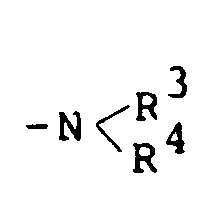
(where R³ and R⁴ independently stand for hydrogen, an alkyl of 1 to 4 carbon atoms or a phenyl) and X and Y independently hydrogen atom or a halogen atom. - The 5,6,7,8-tetrafluoroanthraquinone derivatives of the invention are the compounds which are represented by the aforementioned general formula I. In the formula, R¹ and R² independently stand for -OH or
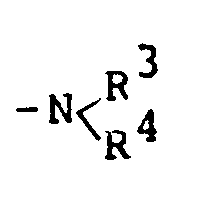
(where R³ and R⁴ independently stand for hydrogen, an alkyl of 1 to 4 carbon atoms or a phenyl) and X and Y independently for an hydrogen atom or a halogen atom. Where R¹ and R² both are -OH, X and Y are desired both to be a hydrogen atom or a halogen atom. The halogen atom may be fluorine, chlorine, bromine, or iodine. Among other halogens, bromine proves particularly desirable. The compounds meeting the description are 5,6,7,8-tetrafluoroquinizarins represented by the following general formula II.
- Where R¹ is

(where R³ and R⁴ independently stand for a hydrogen atom an alkyl of 1 to 4 carbon atoms, or a phenyl) and R² stands for -OH or
(where R³ and R⁴ have the same meanings as defined above), X and Y are desired both to be a hydrogen atom. The compounds which meet the foregoing description are 5,6,7,8-tetrafluoroanthraquinonylamines represented by the following general formula III.
- The 5,6,7,8-tetrafluoroquinizarins which are novel compounds represented by the general formula II possess more conspicuous characteristics than quinizarins containing no fluorine. For examples, they are useful as disperse dyes or pigments possessing high lightfastness and heat-resisting property or as raw materials for disperse dyes or pigments possessing high lightfastness and heat-resisting property. Further, these compounds are useful as raw materials for functional coloring matters possessing special functions different from the functions of quinizarins containing no fluorine.
- Concrete examples of the 5,6,7,8-tetrafluoroquinizarin represented by the aforementioned general formula II are 5,6,7,8-tetrafluoroquinizarin, 2,3,5,6,7,8-hexafluoroquinizarin, 2,3-dichloro-5,6,7,8-tetrafluoroquinizarin, 2,3-dibromo-5,6,7,8-tetrafluoroquinizarin, 2,3-diiodo-5,6,7,8-tetrafluoroquinizarin, 2,5,6,7,8-pentafluoroquinizarin, 2-chloro-5,6,7,8-tetrafluoroquinizarin, 2-bromo-5,6,7,8-tetrafluoroquinizarin, and 2-iodo-5,6,7,8-tetrafluoroquinizarin.
- A 5,6,7,8-tetrafluoroquinizarin represented by the general formula II is produced by causing tetrafluorophthalic anhydride to react in the presence of an effective amount of a Friedel-Crafts catalyst with a hydroquinone compound represented by the general formula IV:

wherein R⁵ and R⁶ independently stand for a hydrogen atoms or an alkyl of 1 to 4 carbon atoms, preferably a hydrogen atom or methyl, and X and Y have the same meanings as defined above. Where X and Y are both a hydrogen atom, the aforementioned 5,6,7,8-tetrafluoroquinizarin is produced by causing tetrafluorophthalic anhydride to react with hydroquinone or 1,4-dialkoxybenzene. Similarly, a 5,6,7,8-tetrafluoroquinizarin having either or both of the 2- and 3-positions thereof halogenated can be produced by the reaction of tetrafluorophthalic anhydride with a hydroquinone having either or both of the 2- and 3-positions thereof halogenated and a 1,4-dialkoxybenzene having either or both of the 2- and 3-positions thereof halogenated. It may otherwise be produced by newly halogenating the 2- and/or 3-position of a 5,6,7,8-tetrafluoroquinizarin obtained by the aforementioned method. - The amount of the hydroquinone represented by the general formula IV, to be used in the reaction mentioned above, falls in the range of 1.0 to 2.0 mols, preferably 1.2 to 1.5 mols, per mol of the tetrafluoro-phthalic anhydride.
- The Friedel-Crafts catalyst for use in the reaction mentioned above may be any of the Friedel-Crafts catalysts such as aluminum chloride and aluminum bromide which are used generally in the art. The amount of the Friedel-Crafts catalyst to be used is in the range of 2.0 to 20 mols, preferably 5 to 15 mols, per mol of the tetrafluoro-phthalic anhydride.
- The reaction is generally effected by gradually adding tetrafluoro-phthalic anhydride and the compound of the general formula IV into the molten mass of the Friedel-Crafts catalyst, stirring the resultant mixture at an elevated temperature in the range of 90 to 250°C, preferably 120 to 220°C for a period of 15 to 120 minutes, preferably 20 to 60 minutes, and pouring the stirred mixture into cold water.
- The 5,6,7,8-tetrafluoroanthraquinonylamines of the present invention which are noval compounds represented by the aforementioned general formula III possess more conspicuous characteristics than anthraquinonylamines containing no fluorine. For example, they are useful as disperse dyes or pigments of high color-fastness and heat-resisting property or as raw materials thereof.
- Further, these compounds possess special functions different from the functions of anthraquinonylamines possessing no fluorine. For example, they are useful as raw materials for such functional coloring matters as dichromatic coloring matters for liquid crystal display and coloring matters for electrochromic display elements. Particularly, 5,6,7,8-tetrafluoro-1,4-bis(methylamino)-anthraquinone shown in Example 1 possesses an absorption wavelength at 662 nm and exbibits a color tone of the so-called turkey blue hue and, therefore, proves highly useful as a transfer type subliming dye, a transfer type ink, or a liquid crystal display dichromic coloring matter.
- Typical examples of the 5,6,7,8-tetrafluoroanthraquinonylamine of this invention represented by the aforementioned general formula III are 1-amino-5,6,7,8-tetrafluoro-4-hydroxyanthraquinone, 1,4-diamino-5,6,7,8-tetrafluoroanthraquinone, 5,6,7,8-tetrafluoro-1-hydroxy-4-methylaminoanthraquinone, 5,6,7,8-tetrafluoro-1,4-bis(methylamino)-anthraquinone, 1,4-bis(isopropylamino)-5,6,7,8-tetrafluoroanthraquinone, 1,4-bis(butylamino)-5,6,7,8-tetrafluoroanthraquinone, 5,6,7,8-tetrafluoro-1,4-bis(dimethylamino)-anthraquinone, and 5,6,7,8-tetrafluoro-1,4-bis(phenylamino)-anthraquinone.
- A 5,6,7,8-tetrafluoroanthraquinonylamine represented by the general formula III is obtained by reducing the aforementioned 5,6,7,8-tetrafluoroquinizarin into a 5,6,7,8-tetrafluoroleucoquinizarin and heating the reduced product, either simultaneously with or subsequently to the reduction, in conjunction with an amine represented by the general formula V:

wherein R³ and R⁴ have the same meanings as defined above, thereby effecting substitution of the hydroxyl group at the 1- and/or 4-position thereof. - The amount of the amine of the general formula V to be used is in the range of 0.5 to 200 mols, preferably 20 to 100 mols, per mol of the 5,6,7,8-tetrafluoroquinizarin. Examples of the reducing agent are metals such as metallic tin, a stannous compound such as stannous acetate and stannous chloride, metallic zinc or an alkali metal thiosulfate such as sodium thiosulfate and potassium thiosulfate. The amount of the reducing agent to be used is in the range of 0.5 to 5 mols, preferably 1 to 3 mols, per mol of the 5,6,7,8-tetrafluoroquinizarin. The reduction reaction is carried out at a temperature in the range of 60 to 200°C, preferably 90 to 130°C for a period of 0.1 to 24 hours, preferably 0.5 to 10 hours under autogeneous pressure. This reaction may be carried out in an organic solvent such as acetic acid and propionic acid, in an aqueous hydrochloric acid solution or in water as a solvent. The amination is carried out in the aqueous solution of the amine in the presence of molecular oxygen at a temperature in the range of 50 to 200°C, preferably 80 to 150°C under autogeneous pressure for a period of 10 to 100 hours, preferably 20 to 50 hours. After completion of the reaction, the reaction solution is cooled, poured into cold water, neutralized with hydrochloric acid, nitric acid, or sulfuric acid, and separated by filtration to afford a 5,6,7,8-tetrafluoroanthraquinonylamine.
- Now, the method for the manufacture of the novel substance of this invention will be described more specifically below. The analyses of the substances obtained in the working examples for the determination of their structures will be also shown.
- In an autoclave made of stainless steel and having an inner volume of 500 ml, 200 g of benzonitrile, 80.0 g (0.301 mol) of tetrachloro-orthophthalonitrile, and 83.9 g (1.444 mols) of potassium fluoride in a dry finely divided form were placed and, with the entrapped air in the autoclave displaced with nitrogen gas, heated and stirred for reaction at 230°C for 10 hours. After completion of the reaction, the resultant reaction solution was cooled to room temperature and then filtered to remove suspended potassium chloride and unaltered potassium fluoride. The benzonitrile solution as mother liquid was analyzed by gas chromatography using a column packed with SE 52 in a length of 1 m and kept at 60°C. The analyses show that this reaction produced tetrafluoro-orthophthalonitrile in a yield of 87.7 mol% based on the tetrachloro-orthophthalonitrile used as the raw material. The mother liquid was vacuum distilled to expel benzonitrile and obtain crystals of tetrafluoro-orthophthalonitrile (m.p. 86 to 87°C) which solidified at room temperature.
-
- In 60.0 g of an aqueous solution containing sulfuric acid in a concentration of 70.0% by weight, 20.0 g (0.100 mol) of the tetrafluorophthalonitrile obtained in Example 1 was stirred and heated at 157° to 162°C for 15 hours. The resultant reaction solution was diluted by addition of 15 g of water. The diluted reaction solution was left cooling. The resultant slurry was mixed with 100 ml of ether to extract tetrafluorophthalic acid in the organic layer. This extraction was repeated twice. The ether layer consequently obtained was dried with magnesium sulfate and then evaporated to dryness. Consequently, there was obtained 22.1 g of white tetrafluorophthalic acid (in a yield of 95.0 mol% based on tetrafluorophthalonitrile).
- The amount 20.0 g of tetrafluorophthalic acid (0.0840 mol) was melted and left standing for dehydration at temperatures of 160° to 170°C for three hours. Thereafter, the dehydrated acid was left standing for sublimation at temperatures of 170° to 180°C under a vacuum (5 Torrs). Consequently, there was obtained 18.0 g of tetrafluorophthalic anhydride.
- Into a molten mixture (130° to 135°C) of 7 g of common salt and 70 g of aluminum chloride, 11.0 g (0.050 mol) of tetrafluorophthalic anhydride and 10.3 g (0.075 mol) of 1,4-dimethoxybenzene were added piecemeal. After completion of the addition, the resultant mixture was heated and stirred at 200°C for 30 minutes. Then, the resultant reaction mixture was poured into ice water. Subsequently, the cooled reaction mixture and 200 ml of concentrated hydrochloric acid added thereto were heated and stirred. The crystals which were consequently precipitated were separated by filtration, washed with cold water, and then dried. Consequently, there was obtained 11.1 g of 5,6,7,8-tetrafluoroquinizarin (in a yield of 71.1 mol% based on tetrafluorophthalic anhydride).
o Melting point: 230°C (recrystallized from benzene)
oElementary analyses: C (%) H (%) F (%) Calculated 53.85 1.28 24.36 Found 53.79 1.38 24.2
o ¹H NMR (solvent: D₆-DMSO, inner standard substance: TMC)
δ = 7.36 (s, 2H)
δ = 12.23 (b-s, 2H)
o Mass analysis spectrum
m/e = 312 (M⁺, 100)
m/e = 293 (M⁺-19, 10)
o Visible ray absorption spectrum (in benzene)
λ max; 475 nm (ε; 6700)
λ max; 497 nm (ε; 7300)
λ max; 530 nm (ε; 4400) - In 100 ml of concentrated sulfuric acid, 5.6 g (0.0179 mol) of 5,6,7,8-tetrafluoroquinizarin and 2.0 g of iodine were left standing for dissolution 125°C. The resultant solution and 17.1 g (0.107 mol) of bromine added thereto were stirred and heated at 125°C for 50 minutes. The resultant reaction mixture was poured into ice water. The crystals which were precipitated were separated by filtration and washed with water. Consequently, there was obtained 7.17 g of 2,3-dibromo-5,6,7,8-tetrafluoroquinizarin (in a yield of 85.3 mol% based on 5,6,7,8-tetrafluoroquinizarin).
o Melting point: 275°C (recrystallized from benzene)
oElementary analyses: C (%) H (%) Br (%) F (%) Calculated 35.76 0.42 34.01 16.18 Found 35.69 0.57 34.2 16.0
o Mass analysis spectrum
m/e = 468 (M⁺)
o Visible ray absorption spectrum (in benzene)
λmax; 498 nm (ε; 10200)
λmax; 505 nm (ε; 10400)
λmax; 540 nm (ε; 6200) - In 200 ml of glacial acetic acid, 7.80 g (0.025 mol) of the 5,6,7,8-tetrafluoroquinizarin obtained in Example 4 was dissolved. The resultant solution and 5.0 g of metallic tin added thereto were stirred and refluxed for one hour.
- Then, the solution and 15 ml of concentrated hydrochloric acid added thereto dropwise were thermally refluxed for one hour. After completion of the reaction, the reaction mixture was diluted with water and left cooling. The precipitate consequently occurred was separated by filtration. This treatment produced 5,6,7,8-tetrafluoro-leucoquinizarin in a substantially quantitative yield. A solution of 3.30 g (0.0105 mol) of this 5,6,7,8-tetrafluoro-leucoquinizarin in 80 ml of an aqueous 40% methylamine solution was sealed in an autoclave in conjunction with air and stirred and heated at 100°C for 35 hours. After completion of the reaction, the reaction solution was left cooling, poured into cold water, and subsequently neutralized with hydrochloric acid. The precipitate consequnetly occurred was separated by filtration, and then dried. As the result, there was obtained 3.27 g of 5,6,7,8-tetrafluoro-1,4-bis(methylamino)-anthraquinone (in a yield of 92.1 mol% based on 5,6,7,8-tetrafluoro-leucoquinizarin).
oElementary analyses: C (%) H (%) N (%) F (%) Calculated 56.80 2.96 8.28 22.48 Found 56.9 3.3 8.4 22.0
o Mass analysis spectrum
m/e = 338 (M⁺; 100)
m/e = 321 (M⁺-17; 70)
m/e = 306 (M⁺-32; 14)
m/e = 292 (M⁺-46; 9)
o Visible ray absorption spectrum (in benzene)
λmax; 662 nm (ε; 8300)
λmax; 612 nm (ε; 8300)
λmax; 580 nm (ε; 5150) - In an aqueous 25% ammonia solution, 3.30 g (0.0105 mol) of 5,6,7,8-tetrafluoro-leucoquinizarin obtained by the procedure of Example 6 was dissolved. The resultant solution was sealed in an autoclave in conjunction with air and stirred and heated at 120°C for 30 hours. After completion of the reaction, the reaction solution was left cooling, then poured into cold water, and then neutralized with hydrochloric acid. The precipitate which consequently occurred was separated by filtration and dried. As the result, 2.20 g of 1-amino-5,6,7,8-tetrafuoro-4-hydroxyanthraquinone (in a yield of 67.4 mol% based on 5,6,7,8-tetrafluoro-leucoquinizarin).
oElementary analyses: C (%) H (%) N (%) F (%) Calculated 54.02 1.61 4.50 24.44 Found 54.1 1.9 4.6 23.9
o Mass analysis spectrum
m/e = 311 (M⁺; 100)
m/e = 257 (M⁺-54; 25)
m/e = 214 (M⁺-97; 10)
m/e = 186 (M⁺-125;12)
o Visible ray absorption spectrum (in benzene)
λmax; 555 nm (ε; 6000)
λmax; 530 nm (ε; 5250)
λmax; 595 nm (ε; 4200)
Claims (16)
- A 5,6,7,8-tetrafluoroanthraquinone derivative represented by the general formula I:

- A compound according to Claim 1, wherein R¹ and R² in said general formula are independently hydroxyl, amino, or alkylamino.
- A compound according to Claim 2, wherein R¹ and R² are both hydroxyl and X and Y in said general formula are independently hydrogen atom or a halogen atom.
- A compound according to Claim 3, wherein X and Y are independently hydrogen atom or bromine atom.
- A compound according to Claim 4, which is 5,6,7,8-tetrafluoroquinizarin.
- A compound according to Claim 4, which is 2,3-dibromo-5,6,7,8-tetrafluoroquinizarin.
- A compound according to Claim 2, wherein R¹ is


- A compound according to Claim 7, wherein R³ and R⁴ are independently hydrogen atom or methyl.
- A compound according to Claim 8, wherein R¹ and R² are independently amino or methylamino.
- A compound according to Claim 8, wherein R¹ is amino or methylamino and R² is hydroxy.
- A compound according to Claim 10, which is 1-amino-5,6,7,8-tetrafluoro-4-hydroxyanthraquinone.
- A compound according to Claim 9, which is 5,6,7,8-tetrafluoro-1,4-bis-methylaminoanthraquinone.
- A method for the manufacture of a 5,6,7,8-tetrafluoroquinizarin represented by the general formula II:


- A method according to Claim 13, wherein said reaction is carried out at a temperature in the range of 120 to 220°C.
- A method for the manufacture of a 5,6,7,8-tetrafluoroanthraquinonylamine represented by the general formula III:


- A method according to Claim 15, wherein said reduction is carried out in the presence of at least one reducing agent selected from the group consisting of metallic tin, a stannous compound, metallic zinc and an alkali metal thiosulfate at a temperature in the range of 90 to 130°C and said amination is carried out in the aqueous solution of the amine of said general formula V in the presence of molecular oxygen at a temperature in the range of 80 to 150°C.
Applications Claiming Priority (4)
| Application Number | Priority Date | Filing Date | Title |
|---|---|---|---|
| JP232490/84 | 1984-11-06 | ||
| JP23249084A JPS61112041A (en) | 1984-11-06 | 1984-11-06 | 5,6,7,8-tetrafluoroquinizarin |
| JP26167/85 | 1985-02-15 | ||
| JP2616785A JPS61186354A (en) | 1985-02-15 | 1985-02-15 | 5,6,7,8-tetrafluoroanthraquinonylamine compound |
Publications (3)
| Publication Number | Publication Date |
|---|---|
| EP0183975A2 EP0183975A2 (en) | 1986-06-11 |
| EP0183975A3 EP0183975A3 (en) | 1988-11-09 |
| EP0183975B1 true EP0183975B1 (en) | 1992-01-29 |
Family
ID=26363918
Family Applications (1)
| Application Number | Title | Priority Date | Filing Date |
|---|---|---|---|
| EP85113663A Expired - Lifetime EP0183975B1 (en) | 1984-11-06 | 1985-10-26 | 5,6,7,8-tetrafluoroanthraquinone derivatives |
Country Status (3)
| Country | Link |
|---|---|
| US (1) | US4647411A (en) |
| EP (1) | EP0183975B1 (en) |
| DE (1) | DE3585315D1 (en) |
Families Citing this family (8)
| Publication number | Priority date | Publication date | Assignee | Title |
|---|---|---|---|---|
| US5608091A (en) * | 1993-12-28 | 1997-03-04 | Nippon Shokubai Co., Ltd. | Quinizarin compound, method for production thereof, and use therefor |
| KR100256392B1 (en) * | 1996-09-30 | 2000-05-15 | 겐지 아이다 | Photosensitive resin coloring composition for color filters and color filter formed therefrom and method for producing same |
| BRPI0608712A2 (en) * | 2005-03-18 | 2010-12-07 | Basf Ag | process for the preparation of compost, and use of compost |
| US7537119B2 (en) | 2005-05-12 | 2009-05-26 | Environmental Container Systems | Stackable container apparatus and methods |
| CN101583613A (en) * | 2007-01-11 | 2009-11-18 | 巴斯夫欧洲公司 | Method for producing aryl-substituted fused pyrimidines |
| US7700249B2 (en) * | 2007-04-30 | 2010-04-20 | Xerox Corporation | Single layered photoconductors |
| US7678517B2 (en) * | 2007-04-30 | 2010-03-16 | Xerox Corporation | Single layered photoconductors |
| KR101418655B1 (en) | 2012-12-17 | 2014-07-10 | 경북대학교 산학협력단 | Novel compound and detection method of iron ion using the same |
Family Cites Families (5)
| Publication number | Priority date | Publication date | Assignee | Title |
|---|---|---|---|---|
| US2013657A (en) * | 1932-08-23 | 1935-09-10 | Du Pont | Fluoroaminoanthraquinone and its preparation |
| US2871244A (en) * | 1955-06-24 | 1959-01-27 | Reynolds Metals Co | Process for the manufacture of anthraquinone and derivatives thereof |
| SU420613A1 (en) * | 1972-01-03 | 1974-03-25 | Г. Д. Алтухов, В. И. Сушков , В. К. Большаков | METHOD OF OBTAINING 1,2,5,6-TETRACHLOR-4,8 - DINITROANTHINO OR 1,2,7,8-TETRACHLOR-4,5 - DINITROANTHAINONE |
| US3947594A (en) * | 1973-05-07 | 1976-03-30 | Gaf Corporation | 4-Halo-1-hydroxyanthraquinone containing fungicidal composition |
| FR2424245A1 (en) * | 1978-04-28 | 1979-11-23 | Ciba Geigy Ag | PROCESS FOR ELIMINATE BY REDUCTION ROUTE THE HALOGEN ATOMS OF ANTHRAQUINONS |
-
1985
- 1985-10-24 US US06/790,732 patent/US4647411A/en not_active Expired - Lifetime
- 1985-10-26 DE DE8585113663T patent/DE3585315D1/en not_active Expired - Fee Related
- 1985-10-26 EP EP85113663A patent/EP0183975B1/en not_active Expired - Lifetime
Non-Patent Citations (1)
| Title |
|---|
| T. TANABE et al.: "Fluorinated organic pigments. V. Preparation of 1-amino-5,6,7,8-tetrafluoroanthraquinone and related compounds", & NIPPON KAGAKU KAISHI 1976, (5), 797-801 * |
Also Published As
| Publication number | Publication date |
|---|---|
| DE3585315D1 (en) | 1992-03-12 |
| EP0183975A2 (en) | 1986-06-11 |
| EP0183975A3 (en) | 1988-11-09 |
| US4647411A (en) | 1987-03-03 |
Similar Documents
| Publication | Publication Date | Title |
|---|---|---|
| US4647411A (en) | 5,6,7,8-tetrafluoroanthraquinone derivatives | |
| EP0330220A2 (en) | Process for the preparation and recovery of oxydiphthalic anhydrides | |
| US4036859A (en) | Method for the preparation of 2-hydroxybenzanthrone compounds | |
| US4286998A (en) | Light stable quinacridonequinone yellow pigment | |
| JP2930774B2 (en) | Method for producing quinophthalone | |
| US5247088A (en) | Process for the continuous preparation of perylenetetracarboxylic diimides | |
| US4478753A (en) | Process for the production of 11,11,12,12-tetracyano-9,10-anthraquinodimehane _or its derivatives | |
| US4544746A (en) | Process for preparing 2-anilinoacridone | |
| EP0012432B1 (en) | Light-stable quinacridonequinone yellow pigment and post treatment to improve its dispersibility | |
| CA1297485C (en) | Process for the preparation of oxydiphthalic anhydrides | |
| US4559176A (en) | Process for the production of benzanthrone | |
| US5082957A (en) | Preparation of 1-amino-2-bromo-4-hydroxyanthraquinone | |
| US3923845A (en) | Recovery of purified 1-nitroanthraquinone | |
| US2018935A (en) | Poly-halogen-derivatives of pyrene and a process of preparing them | |
| EP0129615B1 (en) | Process for the preparation of bromoanthraquinones | |
| Scalera et al. | Study of the Aqueous Esterification of Anthrahydroquinones | |
| US5117014A (en) | Process for the preparation of 1-amino-4-bromoanthraquinones | |
| EP0091225B1 (en) | Anthraquinone compounds | |
| JP3508214B2 (en) | Method for producing 1-aminoanthraquinones | |
| RU2076103C1 (en) | Method for production of derivatives of 7-hydroxy-5,6-phthalyl phenoxazine | |
| SU833974A1 (en) | Method of preparing magnesiumtetrabenzoporphine | |
| RU2076104C1 (en) | Method for production of derivatives of 5,6-phthalyl phenothiazine | |
| US4701281A (en) | Process for the preparation of anthraquinone imides | |
| EP0423583A1 (en) | Process for the preparation of hydroxyanthraquinones | |
| SU166423A1 (en) |
Legal Events
| Date | Code | Title | Description |
|---|---|---|---|
| PUAI | Public reference made under article 153(3) epc to a published international application that has entered the european phase |
Free format text: ORIGINAL CODE: 0009012 |
|
| AK | Designated contracting states |
Kind code of ref document: A2 Designated state(s): CH DE FR GB LI NL |
|
| 17P | Request for examination filed |
Effective date: 19861125 |
|
| PUAL | Search report despatched |
Free format text: ORIGINAL CODE: 0009013 |
|
| AK | Designated contracting states |
Kind code of ref document: A3 Designated state(s): CH DE FR GB LI NL |
|
| 17Q | First examination report despatched |
Effective date: 19900525 |
|
| GRAA | (expected) grant |
Free format text: ORIGINAL CODE: 0009210 |
|
| AK | Designated contracting states |
Kind code of ref document: B1 Designated state(s): CH DE FR GB LI NL |
|
| PG25 | Lapsed in a contracting state [announced via postgrant information from national office to epo] |
Ref country code: NL Effective date: 19920129 Ref country code: LI Effective date: 19920129 Ref country code: CH Effective date: 19920129 |
|
| REF | Corresponds to: |
Ref document number: 3585315 Country of ref document: DE Date of ref document: 19920312 |
|
| ET | Fr: translation filed | ||
| REG | Reference to a national code |
Ref country code: CH Ref legal event code: PL |
|
| NLV1 | Nl: lapsed or annulled due to failure to fulfill the requirements of art. 29p and 29m of the patents act | ||
| PGFP | Annual fee paid to national office [announced via postgrant information from national office to epo] |
Ref country code: FR Payment date: 19921015 Year of fee payment: 8 |
|
| PLBE | No opposition filed within time limit |
Free format text: ORIGINAL CODE: 0009261 |
|
| STAA | Information on the status of an ep patent application or granted ep patent |
Free format text: STATUS: NO OPPOSITION FILED WITHIN TIME LIMIT |
|
| 26N | No opposition filed | ||
| PG25 | Lapsed in a contracting state [announced via postgrant information from national office to epo] |
Ref country code: FR Effective date: 19940630 |
|
| REG | Reference to a national code |
Ref country code: FR Ref legal event code: ST |
|
| PGFP | Annual fee paid to national office [announced via postgrant information from national office to epo] |
Ref country code: GB Payment date: 20011024 Year of fee payment: 17 |
|
| PGFP | Annual fee paid to national office [announced via postgrant information from national office to epo] |
Ref country code: DE Payment date: 20011112 Year of fee payment: 17 |
|
| REG | Reference to a national code |
Ref country code: GB Ref legal event code: IF02 |
|
| PG25 | Lapsed in a contracting state [announced via postgrant information from national office to epo] |
Ref country code: GB Free format text: LAPSE BECAUSE OF NON-PAYMENT OF DUE FEES Effective date: 20021026 |
|
| PG25 | Lapsed in a contracting state [announced via postgrant information from national office to epo] |
Ref country code: DE Free format text: LAPSE BECAUSE OF NON-PAYMENT OF DUE FEES Effective date: 20030501 |
|
| GBPC | Gb: european patent ceased through non-payment of renewal fee |