EP0162491B1 - Procédé pour inhiber la corrosion d'une masse métallique au contact d'un bain acide contenant des ions ferriques - Google Patents
Procédé pour inhiber la corrosion d'une masse métallique au contact d'un bain acide contenant des ions ferriques Download PDFInfo
- Publication number
- EP0162491B1 EP0162491B1 EP85200527A EP85200527A EP0162491B1 EP 0162491 B1 EP0162491 B1 EP 0162491B1 EP 85200527 A EP85200527 A EP 85200527A EP 85200527 A EP85200527 A EP 85200527A EP 0162491 B1 EP0162491 B1 EP 0162491B1
- Authority
- EP
- European Patent Office
- Prior art keywords
- bath
- stack
- process according
- ferric ions
- felts
- Prior art date
- Legal status (The legal status is an assumption and is not a legal conclusion. Google has not performed a legal analysis and makes no representation as to the accuracy of the status listed.)
- Expired
Links
- 238000000034 method Methods 0.000 title claims abstract description 30
- VTLYFUHAOXGGBS-UHFFFAOYSA-N Fe3+ Chemical compound [Fe+3] VTLYFUHAOXGGBS-UHFFFAOYSA-N 0.000 title claims abstract description 29
- 229910001447 ferric ion Inorganic materials 0.000 title claims abstract description 29
- 238000005260 corrosion Methods 0.000 title claims abstract description 17
- 230000007797 corrosion Effects 0.000 title claims abstract description 17
- 230000002401 inhibitory effect Effects 0.000 title claims abstract description 6
- 230000002378 acidificating effect Effects 0.000 title 1
- VEXZGXHMUGYJMC-UHFFFAOYSA-N Hydrochloric acid Chemical compound Cl VEXZGXHMUGYJMC-UHFFFAOYSA-N 0.000 claims abstract description 19
- OKTJSMMVPCPJKN-UHFFFAOYSA-N Carbon Chemical compound [C] OKTJSMMVPCPJKN-UHFFFAOYSA-N 0.000 claims abstract description 15
- 239000002253 acid Substances 0.000 claims abstract description 15
- 229910000831 Steel Inorganic materials 0.000 claims abstract description 14
- 239000010959 steel Substances 0.000 claims abstract description 14
- XEEYBQQBJWHFJM-UHFFFAOYSA-N Iron Chemical compound [Fe] XEEYBQQBJWHFJM-UHFFFAOYSA-N 0.000 claims abstract description 12
- 229910052751 metal Inorganic materials 0.000 claims abstract description 10
- 239000002184 metal Substances 0.000 claims abstract description 10
- 229910052799 carbon Inorganic materials 0.000 claims abstract description 8
- 229910002804 graphite Inorganic materials 0.000 claims abstract description 7
- 239000010439 graphite Substances 0.000 claims abstract description 7
- 229910052742 iron Inorganic materials 0.000 claims abstract description 6
- 229910000640 Fe alloy Inorganic materials 0.000 claims abstract description 4
- 229910001018 Cast iron Inorganic materials 0.000 claims description 8
- PXHVJJICTQNCMI-UHFFFAOYSA-N Nickel Chemical compound [Ni] PXHVJJICTQNCMI-UHFFFAOYSA-N 0.000 claims description 6
- 239000007787 solid Substances 0.000 claims description 6
- 239000000835 fiber Substances 0.000 claims description 3
- 229910052759 nickel Inorganic materials 0.000 claims description 3
- VYZAMTAEIAYCRO-UHFFFAOYSA-N Chromium Chemical compound [Cr] VYZAMTAEIAYCRO-UHFFFAOYSA-N 0.000 claims description 2
- 229910001209 Low-carbon steel Inorganic materials 0.000 claims description 2
- HCHKCACWOHOZIP-UHFFFAOYSA-N Zinc Chemical compound [Zn] HCHKCACWOHOZIP-UHFFFAOYSA-N 0.000 claims description 2
- 229910045601 alloy Inorganic materials 0.000 claims description 2
- 239000000956 alloy Substances 0.000 claims description 2
- 229910052804 chromium Inorganic materials 0.000 claims description 2
- 239000011651 chromium Substances 0.000 claims description 2
- 229910017052 cobalt Inorganic materials 0.000 claims description 2
- 239000010941 cobalt Substances 0.000 claims description 2
- GUTLYIVDDKVIGB-UHFFFAOYSA-N cobalt atom Chemical compound [Co] GUTLYIVDDKVIGB-UHFFFAOYSA-N 0.000 claims description 2
- 150000002739 metals Chemical class 0.000 claims description 2
- 229910052725 zinc Inorganic materials 0.000 claims description 2
- 239000011701 zinc Substances 0.000 claims description 2
- 238000005554 pickling Methods 0.000 abstract description 11
- 238000012360 testing method Methods 0.000 description 11
- 238000010586 diagram Methods 0.000 description 8
- 238000009434 installation Methods 0.000 description 8
- 239000000243 solution Substances 0.000 description 7
- 239000003112 inhibitor Substances 0.000 description 6
- QGZKDVFQNNGYKY-UHFFFAOYSA-N Ammonia Chemical compound N QGZKDVFQNNGYKY-UHFFFAOYSA-N 0.000 description 4
- UIIMBOGNXHQVGW-UHFFFAOYSA-M Sodium bicarbonate Chemical compound [Na+].OC([O-])=O UIIMBOGNXHQVGW-UHFFFAOYSA-M 0.000 description 4
- FAPWRFPIFSIZLT-UHFFFAOYSA-M Sodium chloride Chemical compound [Na+].[Cl-] FAPWRFPIFSIZLT-UHFFFAOYSA-M 0.000 description 4
- 239000003638 chemical reducing agent Substances 0.000 description 4
- VKYKSIONXSXAKP-UHFFFAOYSA-N hexamethylenetetramine Chemical compound C1N(C2)CN3CN1CN2C3 VKYKSIONXSXAKP-UHFFFAOYSA-N 0.000 description 4
- BASFCYQUMIYNBI-UHFFFAOYSA-N platinum Chemical compound [Pt] BASFCYQUMIYNBI-UHFFFAOYSA-N 0.000 description 4
- 239000007864 aqueous solution Substances 0.000 description 3
- 238000002425 crystallisation Methods 0.000 description 3
- 230000008025 crystallization Effects 0.000 description 3
- VTYYLEPIZMXCLO-UHFFFAOYSA-L Calcium carbonate Chemical compound [Ca+2].[O-]C([O-])=O VTYYLEPIZMXCLO-UHFFFAOYSA-L 0.000 description 2
- WSFSSNUMVMOOMR-UHFFFAOYSA-N Formaldehyde Chemical compound O=C WSFSSNUMVMOOMR-UHFFFAOYSA-N 0.000 description 2
- CDBYLPFSWZWCQE-UHFFFAOYSA-L Sodium Carbonate Chemical compound [Na+].[Na+].[O-]C([O-])=O CDBYLPFSWZWCQE-UHFFFAOYSA-L 0.000 description 2
- QAOWNCQODCNURD-UHFFFAOYSA-N Sulfuric acid Chemical compound OS(O)(=O)=O QAOWNCQODCNURD-UHFFFAOYSA-N 0.000 description 2
- 229910021529 ammonia Inorganic materials 0.000 description 2
- 238000005097 cold rolling Methods 0.000 description 2
- 238000005868 electrolysis reaction Methods 0.000 description 2
- 235000010299 hexamethylene tetramine Nutrition 0.000 description 2
- 239000004312 hexamethylene tetramine Substances 0.000 description 2
- 230000005764 inhibitory process Effects 0.000 description 2
- 229910052500 inorganic mineral Inorganic materials 0.000 description 2
- 238000004519 manufacturing process Methods 0.000 description 2
- 239000011707 mineral Substances 0.000 description 2
- 235000010755 mineral Nutrition 0.000 description 2
- 229910052697 platinum Inorganic materials 0.000 description 2
- 229910000030 sodium bicarbonate Inorganic materials 0.000 description 2
- 235000017557 sodium bicarbonate Nutrition 0.000 description 2
- 239000011780 sodium chloride Substances 0.000 description 2
- TXUICONDJPYNPY-UHFFFAOYSA-N (1,10,13-trimethyl-3-oxo-4,5,6,7,8,9,11,12,14,15,16,17-dodecahydrocyclopenta[a]phenanthren-17-yl) heptanoate Chemical compound C1CC2CC(=O)C=C(C)C2(C)C2C1C1CCC(OC(=O)CCCCCC)C1(C)CC2 TXUICONDJPYNPY-UHFFFAOYSA-N 0.000 description 1
- GKQHIYSTBXDYNQ-UHFFFAOYSA-M 1-dodecylpyridin-1-ium;chloride Chemical compound [Cl-].CCCCCCCCCCCC[N+]1=CC=CC=C1 GKQHIYSTBXDYNQ-UHFFFAOYSA-M 0.000 description 1
- 229920000049 Carbon (fiber) Polymers 0.000 description 1
- VEXZGXHMUGYJMC-UHFFFAOYSA-M Chloride anion Chemical compound [Cl-] VEXZGXHMUGYJMC-UHFFFAOYSA-M 0.000 description 1
- CWYNVVGOOAEACU-UHFFFAOYSA-N Fe2+ Chemical compound [Fe+2] CWYNVVGOOAEACU-UHFFFAOYSA-N 0.000 description 1
- 229910000990 Ni alloy Inorganic materials 0.000 description 1
- 229910021626 Tin(II) chloride Inorganic materials 0.000 description 1
- 150000007513 acids Chemical class 0.000 description 1
- 150000001335 aliphatic alkanes Chemical class 0.000 description 1
- 239000011260 aqueous acid Substances 0.000 description 1
- QVGXLLKOCUKJST-UHFFFAOYSA-N atomic oxygen Chemical compound [O] QVGXLLKOCUKJST-UHFFFAOYSA-N 0.000 description 1
- 239000012267 brine Substances 0.000 description 1
- 229910000019 calcium carbonate Inorganic materials 0.000 description 1
- 229940075397 calomel Drugs 0.000 description 1
- 125000004432 carbon atom Chemical group C* 0.000 description 1
- 239000004917 carbon fiber Substances 0.000 description 1
- 239000003518 caustics Substances 0.000 description 1
- -1 cetyl- Chemical group 0.000 description 1
- 150000001805 chlorine compounds Chemical class 0.000 description 1
- 238000011109 contamination Methods 0.000 description 1
- ZOMNIUBKTOKEHS-UHFFFAOYSA-L dimercury dichloride Chemical compound Cl[Hg][Hg]Cl ZOMNIUBKTOKEHS-UHFFFAOYSA-L 0.000 description 1
- 238000006056 electrooxidation reaction Methods 0.000 description 1
- 230000008030 elimination Effects 0.000 description 1
- 238000003379 elimination reaction Methods 0.000 description 1
- 229910001448 ferrous ion Inorganic materials 0.000 description 1
- 238000005246 galvanizing Methods 0.000 description 1
- 239000012535 impurity Substances 0.000 description 1
- 150000002500 ions Chemical class 0.000 description 1
- 150000002894 organic compounds Chemical class 0.000 description 1
- 239000007800 oxidant agent Substances 0.000 description 1
- 229910052760 oxygen Inorganic materials 0.000 description 1
- 239000001301 oxygen Substances 0.000 description 1
- 238000012856 packing Methods 0.000 description 1
- 229920000915 polyvinyl chloride Polymers 0.000 description 1
- 239000004800 polyvinyl chloride Substances 0.000 description 1
- 238000002360 preparation method Methods 0.000 description 1
- 238000005057 refrigeration Methods 0.000 description 1
- 230000001105 regulatory effect Effects 0.000 description 1
- 238000005096 rolling process Methods 0.000 description 1
- 229920006395 saturated elastomer Polymers 0.000 description 1
- HPALAKNZSZLMCH-UHFFFAOYSA-M sodium;chloride;hydrate Chemical compound O.[Na+].[Cl-] HPALAKNZSZLMCH-UHFFFAOYSA-M 0.000 description 1
- 239000001119 stannous chloride Substances 0.000 description 1
- 235000011150 stannous chloride Nutrition 0.000 description 1
- RWSOTUBLDIXVET-UHFFFAOYSA-O sulfonium group Chemical group [SH3+] RWSOTUBLDIXVET-UHFFFAOYSA-O 0.000 description 1
- XLYOFNOQVPJJNP-UHFFFAOYSA-N water Substances O XLYOFNOQVPJJNP-UHFFFAOYSA-N 0.000 description 1
Images



Classifications
-
- C—CHEMISTRY; METALLURGY
- C23—COATING METALLIC MATERIAL; COATING MATERIAL WITH METALLIC MATERIAL; CHEMICAL SURFACE TREATMENT; DIFFUSION TREATMENT OF METALLIC MATERIAL; COATING BY VACUUM EVAPORATION, BY SPUTTERING, BY ION IMPLANTATION OR BY CHEMICAL VAPOUR DEPOSITION, IN GENERAL; INHIBITING CORROSION OF METALLIC MATERIAL OR INCRUSTATION IN GENERAL
- C23F—NON-MECHANICAL REMOVAL OF METALLIC MATERIAL FROM SURFACE; INHIBITING CORROSION OF METALLIC MATERIAL OR INCRUSTATION IN GENERAL; MULTI-STEP PROCESSES FOR SURFACE TREATMENT OF METALLIC MATERIAL INVOLVING AT LEAST ONE PROCESS PROVIDED FOR IN CLASS C23 AND AT LEAST ONE PROCESS COVERED BY SUBCLASS C21D OR C22F OR CLASS C25
- C23F15/00—Other methods of preventing corrosion or incrustation
-
- C—CHEMISTRY; METALLURGY
- C23—COATING METALLIC MATERIAL; COATING MATERIAL WITH METALLIC MATERIAL; CHEMICAL SURFACE TREATMENT; DIFFUSION TREATMENT OF METALLIC MATERIAL; COATING BY VACUUM EVAPORATION, BY SPUTTERING, BY ION IMPLANTATION OR BY CHEMICAL VAPOUR DEPOSITION, IN GENERAL; INHIBITING CORROSION OF METALLIC MATERIAL OR INCRUSTATION IN GENERAL
- C23G—CLEANING OR DE-GREASING OF METALLIC MATERIAL BY CHEMICAL METHODS OTHER THAN ELECTROLYSIS
- C23G1/00—Cleaning or pickling metallic material with solutions or molten salts
- C23G1/02—Cleaning or pickling metallic material with solutions or molten salts with acid solutions
Definitions
- the present invention relates to a method for inhibiting the corrosion of metallic masses in contact with acid baths containing ferric ions, for example an industrial installation subjected to a descaling operation, or metallurgical products subjected to a pickling operation.
- Corrosion inhibitors commonly used for this purpose are alkylpyridinium chlorides, hexamethylenetetramine and organic compounds comprising sulfonium groups.
- corrosion inhibitors in the acid baths, these nonetheless cause rapid corrosion of the treated metallic masses. This corrosion would be due to the presence of oxidants in the bath mainly ferric ions.
- reducing agents for example stannous chloride, in addition to corrosion inhibitors.
- reducers in the bath is generally expensive, especially in the case of non-deaerated baths because there is then an appreciable loss in reducers, due to their untimely consumption by the oxygen of the bath, this consumption being all the more important. that the temperature is higher. It also results in an increase in the contamination of the bath by reducing agents, some of which, in particular stannous ions, are generally considered dangerous for the ecology, in particular when the residual baths are discharged into lakes or watercourses. .
- the invention aims to remedy the aforementioned drawbacks by providing a method for inhibiting corrosion of metallic masses in contact with acid baths containing ferric ions, which is reliable, economical and harmless for the environment.
- the invention therefore relates to a method for inhibiting corrosion of a metallic mass in contact with an acid bath containing ferric ions; according to the invention, at least part of the bath is circulated through a stack of non-graphitic carbon or graphite felts, alternating with solid bodies of iron or an iron alloy.
- the method according to the invention applies to any acid bath containing ferric ions, capable of causing an electrochemical oxidation of the metal mass under the conditions of use of the bath.
- the ferric ions present in the bath can come from very diverse sources such as, for example, from oxidized layers on the surface of the metallic mass, from corrosion of the bath handling circuit, from incrustation on the surface of the metallic mass, of impurities present in the acid bath; in the case of aqueous acid baths, ferric ions can sometimes be provided by the water used for the preparation of the bath.
- a fraction of the bath is periodically removed and it is circulated through the stack for a predetermined time sufficient to reduce at least part of the ferric ions which it contains; the fraction is then returned to the bath.
- a second treatment method which is preferred, the entire bath is circulated through the packing, at a rate adjusted so that at the exit of the stack, its ferric ion content has fallen below d 'a predetermined value.
- the bath can be circulated through the stack periodically or continuously.
- the treatment of the bath in the stack is generally governed, so that the residual quantity of ferric ions in the bath in contact with the metallic mass does not exceed 300 mg / 1, preferably 200 mg / 1. Residual contents not exceeding 150 mg / I are recommended, especially those between 1 and 100 mg / I.
- a stack is used in which the felts are formed of fibers whose diameter does not exceed 25 microns, preferably 15 microns. It is preferred to use stacks of mild steel bodies and non-graphitic carbon felts, the fiber diameter of which is between 8 and 12 microns.
- the solid bodies of the stack can have any profile allowing a large contact surface with the felts.
- a stack is used in which the solid bodies of iron or of iron alloy are plates which alternate with carbon or graphite felts.
- a stack is used in which the solid bodies are perforated plates and the bath is circulated through the stack, in a direction transverse to the plates and the felts.
- the bath is circulated through the stack, in a direction transverse to the plates and the felts.
- the method according to the invention also applies to acid baths containing a corrosion inhibitor.
- a corrosion inhibitor may be, for example, alkylpyridinium chloride which is advantageously selected from those derived from alkanes having from 10 to 18 carbon atoms.
- alkylpyridinium chloride which is advantageously selected from those derived from alkanes having from 10 to 18 carbon atoms.
- cetyl-, myristil- or laurylpyridinium chloride in an amount regulated between 0.5 and 5000 mg per kg of the bath, preferably between 2 and 500 mg / kg.
- corrosion inhibitors which can be used in the baths treated by the process according to the invention are hexamethylenetetramine and formalin.
- the method according to the invention applies to any metallic mass treated in an acid bath containing ferric ions capable of attacking the metallic mass. It applies in particular to metallic masses comprising iron, chromium, zinc, cobalt, nickel or an alloy containing at least one of these metals. It finds a particularly interesting application in the case of metallic masses treated with aqueous baths of mineral acid containing ferric ions. It is particularly applicable to descaling, by means of such baths, of nickel or nickel alloy evaporators used to crystallize sodium chloride from caustic brines produced by electrolysis of sodium chloride brine in a cell. permeable diaphragm electrolysis.
- the acid bath can for example be an aqueous solution of sulfuric acid or hydrochloric acid.
- Aqueous solutions containing from 0.01 to 6 moles of hydrochloric acid per liter are generally suitable.
- the installation shown diagrammatically in FIG. 1 comprises a pickling tank 1, containing a mass of ordinary steel or cast iron 2 to be pickled. This consists, for example, of a stack of coils of drawn wires or of strips.
- the pickling is carried out by means of a bath 3 consisting of a normal hydrochloric acid solution.
- the pickling tank is connected, by means of a pump 4 and pipes 5 and 6, to a treatment cell 7.
- a treatment cell 7 This is formed (fig. 2) of a vertical tubular chamber 8 containing a stack of perforated horizontal steel discs 9, alternating with horizontal felt 10 made of non-graphitic carbon fibers.
- the discs 9 are crossed by tubular vertical perforations 11.
- the bath 3 is circulated from the tank 1 to the cell 7, via the pipes 5 and 6 and the pump 4.
- the circulation of the bath 3 in the cell 7 can be carried out periodically or continuously.
- the bath circulates in the perforations 11 in contact with the discs 9 and through the felts 10, and the ferric ions are reduced to ferrous ions.
- an electrochemical measuring cell comprising a rotating platinum electrode and a fixed platinum counter electrode, immersed in the hydrochloric acid bath, and a calomel reference electrode, saturated with KCI ; by means of a potentiostatic circuit, the rotating electrode was maintained at a constant potential of - 150 mV relative to the reference electrode and the intensity of the electric current in the measuring cell was measured, which is substantially proportional to the concentration of ferric ions.
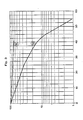
- the abscissa scale indicates the time, in minutes, and the ordinate scale indicates the concentration of the bath in ferric ions, expressed in g / I.
- the stack consisted of thirteen cast iron discs alternating with polyvinyl chloride rings.
- the flow rate of the solution through the stack was 150 l / h.
- the results of the test are reproduced on the curve (12) of the diagram in FIG. 3.
- Example 5 a stack of perforated steel discs (of area equal to 20 cm 2) was used alternating with graphite felts.
- the number of graphite felts was 6 in Example 3 and 12 in Example 4, respectively.
- Example 5 two stacks of 13 discs (and 12 felts) were used, the two stacks being mounted in bypass on the hydrochloric acid solution circuit.
- the flow rate of the solution was 200 l / h in each test.
- Example 8 The conditions of Example 8 were repeated, using two identical stacks (13 steel discs and twelve carbon felts) arranged in parallel in the solution circuit. The results of the test are reproduced by the curve (20) of the diagram of FIG. 5. It is observed there that 8 minutes are sufficient to bring the content of ferric ions in the bath, from 10 g / 1 to 0.1 g / 1 .
Landscapes
- Chemical & Material Sciences (AREA)
- Engineering & Computer Science (AREA)
- Materials Engineering (AREA)
- Mechanical Engineering (AREA)
- Metallurgy (AREA)
- Organic Chemistry (AREA)
- Chemical Kinetics & Catalysis (AREA)
- General Chemical & Material Sciences (AREA)
- Cleaning And De-Greasing Of Metallic Materials By Chemical Methods (AREA)
- Preventing Corrosion Or Incrustation Of Metals (AREA)
- Cosmetics (AREA)
Priority Applications (1)
| Application Number | Priority Date | Filing Date | Title |
|---|---|---|---|
| AT85200527T ATE31083T1 (de) | 1984-04-16 | 1985-04-04 | Verfahren zur korrosionsinhibierung einer metallmasse,die in beruehrung steht mit einem saeurebad,das eisen iii-ionen enthaelt. |
Applications Claiming Priority (2)
| Application Number | Priority Date | Filing Date | Title |
|---|---|---|---|
| FR8406098 | 1984-04-16 | ||
| FR8406098A FR2562914A1 (fr) | 1984-04-16 | 1984-04-16 | Procede pour inhiber la corrosion d'une masse metallique au contact d'un bain acide contenant un oxydant |
Publications (2)
| Publication Number | Publication Date |
|---|---|
| EP0162491A1 EP0162491A1 (fr) | 1985-11-27 |
| EP0162491B1 true EP0162491B1 (fr) | 1987-11-25 |
Family
ID=9303254
Family Applications (1)
| Application Number | Title | Priority Date | Filing Date |
|---|---|---|---|
| EP85200527A Expired EP0162491B1 (fr) | 1984-04-16 | 1985-04-04 | Procédé pour inhiber la corrosion d'une masse métallique au contact d'un bain acide contenant des ions ferriques |
Country Status (7)
| Country | Link |
|---|---|
| US (1) | US4765958A (show.php) |
| EP (1) | EP0162491B1 (show.php) |
| JP (1) | JPS60234983A (show.php) |
| AT (1) | ATE31083T1 (show.php) |
| DE (1) | DE3561072D1 (show.php) |
| ES (1) | ES542242A0 (show.php) |
| FR (1) | FR2562914A1 (show.php) |
Families Citing this family (4)
| Publication number | Priority date | Publication date | Assignee | Title |
|---|---|---|---|---|
| JPS6432197A (en) * | 1987-07-29 | 1989-02-02 | Hitachi Ltd | Plant for retreatment of nuclear fuel |
| NL8900106A (nl) * | 1989-01-18 | 1990-08-16 | Avf Chemische Ind En Handelson | Werkwijze voor het reinigen van metalen, bijvoorbeeld ijzeren of stalen, inwendige oppervlakken van industriele apparatuur. |
| US6329206B1 (en) * | 1999-06-22 | 2001-12-11 | Henkel Corporation | Method of determining inhibitor concentrations in inhibited acidic pickling solutions |
| US9896738B2 (en) | 2015-05-28 | 2018-02-20 | Savannah River Nuclear Solutions, Llc | Process for dissolving aluminum for recovering nuclear fuel |
Family Cites Families (4)
| Publication number | Priority date | Publication date | Assignee | Title |
|---|---|---|---|---|
| NL6406533A (show.php) * | 1964-06-09 | 1965-12-10 | ||
| JPS502372A (show.php) * | 1973-05-15 | 1975-01-10 | ||
| DE2457235A1 (de) * | 1974-12-04 | 1976-06-10 | Peter Vodicka | Verwendung von metallen und/oder wasserloeslichen chemischen verbindungen zum schutz der in sauren inhibierten loesungen vom zunder gebeizten oder von eisen-iii-haltigen belaegen chemisch gereinigten metallischen gegenstaenden und/oder geschlossenen anlagen vor dem angriff der ferrikationen und anordnung zum erreichen dieses schutzes |
| JPS5215496A (en) * | 1975-07-28 | 1977-02-05 | Mitsubishi Electric Corp | Method for production of ferrous nitrate |
-
1984
- 1984-04-16 FR FR8406098A patent/FR2562914A1/fr not_active Withdrawn
-
1985
- 1985-04-04 EP EP85200527A patent/EP0162491B1/fr not_active Expired
- 1985-04-04 AT AT85200527T patent/ATE31083T1/de not_active IP Right Cessation
- 1985-04-04 DE DE8585200527T patent/DE3561072D1/de not_active Expired
- 1985-04-09 US US06/721,935 patent/US4765958A/en not_active Expired - Fee Related
- 1985-04-15 ES ES542242A patent/ES542242A0/es active Granted
- 1985-04-16 JP JP60081189A patent/JPS60234983A/ja active Granted
Also Published As
| Publication number | Publication date |
|---|---|
| ATE31083T1 (de) | 1987-12-15 |
| JPH0465908B2 (show.php) | 1992-10-21 |
| US4765958A (en) | 1988-08-23 |
| JPS60234983A (ja) | 1985-11-21 |
| FR2562914A1 (fr) | 1985-10-18 |
| EP0162491A1 (fr) | 1985-11-27 |
| ES8603596A1 (es) | 1985-12-16 |
| ES542242A0 (es) | 1985-12-16 |
| DE3561072D1 (en) | 1988-01-07 |
Similar Documents
| Publication | Publication Date | Title |
|---|---|---|
| US5772919A (en) | Methods of inhibiting corrosion using halo-benzotriazoles | |
| Zhao et al. | Corrosion behavior and mechanism of carbon steel in industrial circulating cooling water system operated by electrochemical descaling technology | |
| Cornwell et al. | Pitting corrosion in copper tubes in cold water service | |
| US20020043650A1 (en) | Corrosion control utilizing a hydrogen peroxide donor | |
| CN100460564C (zh) | 一种抑制含硫循环冷却水腐蚀的方法 | |
| Abdo et al. | Anodic oxidation of a direct dye in an electrochemical reactor | |
| EP0162491B1 (fr) | Procédé pour inhiber la corrosion d'une masse métallique au contact d'un bain acide contenant des ions ferriques | |
| KR19980070381A (ko) | 수계의 부식 방지 방법 | |
| US5326478A (en) | Methods for controlling scale formation in aqueous systems | |
| EP0005297B1 (fr) | Procédé et dispositif pour contrôler l'évolution de l'état de surface d'un élément métallique d'une installation contenant une phase ionique | |
| EP0025624B1 (fr) | Procédé pour inhiber la corrosion d'une installation métallique au contact d'un bain acide | |
| WO2013147128A1 (ja) | シアン含有排水の処理方法 | |
| WO1995028358A1 (fr) | Destruction des complexes cyano metalliques par la combinaison d'oxydation chimique et d'electrolyse | |
| JPS5811279B2 (ja) | スケ−ル防止処理法 | |
| AU744545B2 (en) | Methods of inhibiting corrosion using halo-benzotriazoles | |
| AU706221B2 (en) | Methods of inhibiting corrosion using N-haloazoles | |
| Cognetti et al. | Operation of cooling towers at high cycles of concentration: Corrosion and scale control | |
| KR101190519B1 (ko) | 개방 순환 냉각시스템의 전처리용 수처리제 조성물 및수처리 방법 | |
| EP0384861B1 (fr) | Procédé de destruction des hypochlorites dans une solution de perchlorate | |
| JP6566010B2 (ja) | 冷却水用金属防食剤及び冷却水系の処理方法 | |
| EP0578537B1 (fr) | Procédé de traitement de purification d'un bain acide usé de décapage de substrats en acier | |
| JP5617863B2 (ja) | シアン含有排水の処理方法 | |
| RU2658068C1 (ru) | Способ очистки питьевой воды | |
| EP0971049A1 (en) | Methods of inhibiting corrosion using halo-benzotriazoles | |
| Nicholls et al. | Copper Plating Phenomenon During the Pickling of Steel |
Legal Events
| Date | Code | Title | Description |
|---|---|---|---|
| PUAI | Public reference made under article 153(3) epc to a published international application that has entered the european phase |
Free format text: ORIGINAL CODE: 0009012 |
|
| AK | Designated contracting states |
Designated state(s): AT BE CH DE FR GB IT LI LU NL SE |
|
| 17P | Request for examination filed |
Effective date: 19860526 |
|
| 17Q | First examination report despatched |
Effective date: 19870218 |
|
| ITF | It: translation for a ep patent filed | ||
| GRAA | (expected) grant |
Free format text: ORIGINAL CODE: 0009210 |
|
| AK | Designated contracting states |
Kind code of ref document: B1 Designated state(s): AT BE CH DE FR GB IT LI LU NL SE |
|
| REF | Corresponds to: |
Ref document number: 31083 Country of ref document: AT Date of ref document: 19871215 Kind code of ref document: T |
|
| REF | Corresponds to: |
Ref document number: 3561072 Country of ref document: DE Date of ref document: 19880107 |
|
| PLBE | No opposition filed within time limit |
Free format text: ORIGINAL CODE: 0009261 |
|
| STAA | Information on the status of an ep patent application or granted ep patent |
Free format text: STATUS: NO OPPOSITION FILED WITHIN TIME LIMIT |
|
| 26N | No opposition filed | ||
| ITTA | It: last paid annual fee | ||
| REG | Reference to a national code |
Ref country code: FR Ref legal event code: CD |
|
| ITPR | It: changes in ownership of a european patent |
Owner name: CAMBIO RAGIONE SOCIALE;SOLVAY |
|
| EPTA | Lu: last paid annual fee | ||
| REG | Reference to a national code |
Ref country code: CH Ref legal event code: PFA Free format text: SOLVAY (SOCIETE ANONYME) |
|
| NLT1 | Nl: modifications of names registered in virtue of documents presented to the patent office pursuant to art. 16 a, paragraph 1 |
Owner name: SOLVAY (SOCIETE ANONYME) TE BRUSSEL, BELGIE. |
|
| EAL | Se: european patent in force in sweden |
Ref document number: 85200527.1 |
|
| PGFP | Annual fee paid to national office [announced via postgrant information from national office to epo] |
Ref country code: LU Payment date: 19960301 Year of fee payment: 12 |
|
| PGFP | Annual fee paid to national office [announced via postgrant information from national office to epo] |
Ref country code: SE Payment date: 19960326 Year of fee payment: 12 Ref country code: GB Payment date: 19960326 Year of fee payment: 12 |
|
| PGFP | Annual fee paid to national office [announced via postgrant information from national office to epo] |
Ref country code: BE Payment date: 19960327 Year of fee payment: 12 |
|
| PGFP | Annual fee paid to national office [announced via postgrant information from national office to epo] |
Ref country code: AT Payment date: 19960410 Year of fee payment: 12 |
|
| PGFP | Annual fee paid to national office [announced via postgrant information from national office to epo] |
Ref country code: CH Payment date: 19960411 Year of fee payment: 12 |
|
| PGFP | Annual fee paid to national office [announced via postgrant information from national office to epo] |
Ref country code: NL Payment date: 19960430 Year of fee payment: 12 Ref country code: DE Payment date: 19960430 Year of fee payment: 12 |
|
| PGFP | Annual fee paid to national office [announced via postgrant information from national office to epo] |
Ref country code: FR Payment date: 19970319 Year of fee payment: 13 |
|
| PG25 | Lapsed in a contracting state [announced via postgrant information from national office to epo] |
Ref country code: LU Free format text: LAPSE BECAUSE OF NON-PAYMENT OF DUE FEES Effective date: 19970404 Ref country code: GB Effective date: 19970404 Ref country code: AT Effective date: 19970404 |
|
| PG25 | Lapsed in a contracting state [announced via postgrant information from national office to epo] |
Ref country code: SE Effective date: 19970405 |
|
| PG25 | Lapsed in a contracting state [announced via postgrant information from national office to epo] |
Ref country code: LI Free format text: LAPSE BECAUSE OF NON-PAYMENT OF DUE FEES Effective date: 19970430 Ref country code: CH Free format text: LAPSE BECAUSE OF NON-PAYMENT OF DUE FEES Effective date: 19970430 Ref country code: BE Effective date: 19970430 |
|
| BERE | Be: lapsed |
Owner name: SOLVAY Effective date: 19970430 |
|
| PG25 | Lapsed in a contracting state [announced via postgrant information from national office to epo] |
Ref country code: NL Effective date: 19971101 |
|
| GBPC | Gb: european patent ceased through non-payment of renewal fee |
Effective date: 19970404 |
|
| REG | Reference to a national code |
Ref country code: CH Ref legal event code: PL |
|
| PG25 | Lapsed in a contracting state [announced via postgrant information from national office to epo] |
Ref country code: DE Free format text: LAPSE BECAUSE OF NON-PAYMENT OF DUE FEES Effective date: 19980101 |
|
| NLV4 | Nl: lapsed or anulled due to non-payment of the annual fee |
Effective date: 19971101 |
|
| EUG | Se: european patent has lapsed |
Ref document number: 85200527.1 |
|
| PG25 | Lapsed in a contracting state [announced via postgrant information from national office to epo] |
Ref country code: FR Free format text: THE PATENT HAS BEEN ANNULLED BY A DECISION OF A NATIONAL AUTHORITY Effective date: 19980430 |
|
| REG | Reference to a national code |
Ref country code: FR Ref legal event code: ST |