EP0126095B1 - Feste ionempfindliche elektroden - Google Patents
Feste ionempfindliche elektroden Download PDFInfo
- Publication number
- EP0126095B1 EP0126095B1 EP83903425A EP83903425A EP0126095B1 EP 0126095 B1 EP0126095 B1 EP 0126095B1 EP 83903425 A EP83903425 A EP 83903425A EP 83903425 A EP83903425 A EP 83903425A EP 0126095 B1 EP0126095 B1 EP 0126095B1
- Authority
- EP
- European Patent Office
- Prior art keywords
- membrane
- glass
- silver
- contact
- glass membrane
- Prior art date
- Legal status (The legal status is an assumption and is not a legal conclusion. Google has not performed a legal analysis and makes no representation as to the accuracy of the status listed.)
- Expired
Links
Images

Classifications
-
- G—PHYSICS
- G01—MEASURING; TESTING
- G01N—INVESTIGATING OR ANALYSING MATERIALS BY DETERMINING THEIR CHEMICAL OR PHYSICAL PROPERTIES
- G01N27/00—Investigating or analysing materials by the use of electric, electrochemical, or magnetic means
- G01N27/26—Investigating or analysing materials by the use of electric, electrochemical, or magnetic means by investigating electrochemical variables; by using electrolysis or electrophoresis
- G01N27/28—Electrolytic cell components
- G01N27/30—Electrodes, e.g. test electrodes; Half-cells
- G01N27/36—Glass electrodes
Definitions
- the present invention is directed to a solid state electrode which is sensitive to selected ions.
- the invention is more particularly concerned with a method of making such an electrode which includes the steps of coating one surface of a glass membrane, sensitive to selected ions, with a suitable metallic contact agent, heating the glass membrane to cause the contact agent to provide a contact area thereon and connecting an electrical conductor to the surface of said membrane by way of said contact agent.
- the invention further pertains to an electrode as made by such method.
- United States Patent Specification No. 3853731 teaches the fabrication of an electrode of the kind with which the present invention is concerned in which a mixture of silver oxide and a salt consisting of silver chlorate, silver perchlorate, silver bromate or silver iodate; or silver hypochlorite or silver chlorite as well as the corresponding oxy acid silver silver salts of bromine and iodine is applied as a filler to the inside surface of a glass electrode. The electrode is then fired to convert the mixture to a composite of silver and silver chloride, bromide or iodide which is fused to the glass surface.
- German Patent Specification DE-A-2050050 teaches an alternative method of production of such an electrode wherein successive coatings of ion-sensitive glass are applied to the end of an electro-chemically active metal conductor, the first of these coatings including a halide of the active metal, which may be copper, silver, cobalt or cadmium.
- micro-electronic sensors such as ISFET's (lon-Sensitive Field-Effect-Transistors).
- ISFET's lasitive Field-Effect-Transistors
- a thin film of glass membrane is emp'iyed as an integral part of the micro-electronic circuit, and functions both as a potential- forming element (by exposure to liquids containing relevant cations) and as a field insulator. Since the electrical information is transferred by field effect, blocking contacts are acceptable in this instance.
- a main object of the invention is, on the basis of this known technique, to create glass electrodes with improved use properties, especially with respect to the formation of a reversible contact surface.
- the present invention provides a method of making a solid state ion-selective electrode as above discussed characterised in that the contact agent is silver fluoride which is mixed in a dispersing agent which allows the silver fluoride to coat the surface of the glass membrane evenly, the heating of the glass membrane initially causing the dispersing agent to evaporate, further heating causing the silver fluoride to etch the surface of the glass membrane and diffuse metallic ions into the etched surface to provide an ion reversible contact area, and in the further step of coating the etched membrane surface with silver.
- the contact agent is silver fluoride which is mixed in a dispersing agent which allows the silver fluoride to coat the surface of the glass membrane evenly
- silver fluoride can be used as the basis for forming good solid contacts on glass electrodes.
- AgF has previously been shown to make an excellent reversible contact on lanthanum fluoride (LaF 3 )-membranes (for example for use in fluoride analysis).
- AgF is known to be unstable in contact with oxides at the elevated temperature as needed for preparing the known contacts.
- Use of AgF causes etching of the glass surface (by the fluoride) combined with a diffusion of silver ions into the glass, both of these effects being beneficial for the establishment of a proper junction.
- FIG. 1 is a cross sectional view of a solid state ion-sensitive electrode according to the present invention
- test solution is normally given a fixed pH, usually acid, by means of a buffer. This was done in order to stabilize the degree of fluoride protonising in the reaction:
- AgF-contact material was finely dispersed in isopropanol and some few drops of the mixture were placed on the inside of the membrane bulb.
- the bulb was gradually heated in a gas flame, first gently in order to boil away the isopropanol. In the process a thin layer 2 of AgF was deposited almost uniformly over the inner surface of the bulb. Thereafter the bulb was heated until a yellow colour was produced presumably indicating fusion of AgF to the glass surface. After. cooling off to room temperature, the contact was completed by covering it with silver-conducting paint.
- a qualitative picture of the structure of the contact junction was obtained by Auger electron spectroscopy. For this purpose a fragment of the supporting glass tube immediately next to the membrane bulb (a location where the AgF contact had formed as well) was examined.
- glass membranes from "Broadley-James 9015" pH electrodes were used in combination with LaF 3 single crystalline membranes, both with AgF contacts.
- the design is shown in two representations in Fig. 2.
- the glass bulb was mounted at an end of an acrylic tube; the LaF 3 membrane and a grounded auxiliary platinum electrode were mounted on the side wall.
- Impedence matching and differential amplification circuitry is contained within the sensor body.
- the solid state pH and sodium electrodes were evaluated by determining their response in pH and sodium standard solutions respectively, and by measuring their response times for various changes in the concentration of the ions concerned. For comparison, the same measurements were carried out at the same time on conventional unmodified electrodes of the same type, that is to say "Radiometer electrodes G202B (pH) and G502 (Na + ). The solutions, which were in a volume of 50 ml, were stirred with magnetic stirrers. The reference electrode was of the type “Radiometer K 701" (double junction). For potential readings use was made of a "Radiometer PHM 64 Research” pH meter. All electrodes were pretreated in accordance with recommended procedures before use.
- Standard pH buffer solutions which were used were of the type "Merck Titrisol". Apart from a constant potential difference, there is not any apparent difference in the response of the solid state and the conventional electrodes. In fact, they follow each other even in the small deviations from the ideal log-linear behaviour.
- the pH electrodes were also tested in standard acid-base titrations. In these experiments, NaOH solutions were added periodically to HCI samples which resulted in characteristic electrode responses in the region of neutrality of the solution. Such measurements are precise methods for determining the acid content of the samples which are not treated with buffers. Titration curves for different HCI samples obtained with the two pH electrodes indicate excellent conformity between the two.
- the response curves for the sodium electrodes were obtained by pipetting known additions of standard NaCl down into a background solution of 0.1 (NH 4 ) 2 SO 4 .
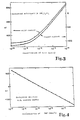
- the results for the solid state and the conventional electrodes are shown in Fig. 3. Again, the two electrodes are found to have very similar responses, both in conformity with expected responses for such electrodes.
- pH-LaF3-differential sensors The response of pH-LaF3-differential sensors was determined in the fluorine sensing mode, that is to say by the addition of known quantities of fluoride (NaF) to a particular pH-acetate buffer-background solution (0.1 m HCH 3 COOH + 0,1 M NaCH 3 COOH).
- the potential vs. fluoride-concentration response curve is shown in Fig. 4. It is clear that the log-linear response extends down to concentrations in the neighbourhood of 10- 7 M NaF, which is better than normally obtained with a conventional set-up where is better than normally obtained with a conventional set-up where a standard reference electrode is employed.
- the same effect was previously observed for other differential sensor combinations where halide membranes were used as reference elements. This lowering of the boundary of detection which occurs appears therefore to be associated with the elimination of the conventional reference electrode for the benefit of the solid membrane reference.
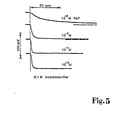
- Fig. 5 there are shown such response time measurements for successive ten-fold increases in the fluoride level in the acetate buffer background solution.
Landscapes
- Chemical & Material Sciences (AREA)
- Life Sciences & Earth Sciences (AREA)
- Health & Medical Sciences (AREA)
- Pathology (AREA)
- Chemical Kinetics & Catalysis (AREA)
- Electrochemistry (AREA)
- Physics & Mathematics (AREA)
- Analytical Chemistry (AREA)
- Biochemistry (AREA)
- General Health & Medical Sciences (AREA)
- General Physics & Mathematics (AREA)
- Immunology (AREA)
- Molecular Biology (AREA)
- Glass Compositions (AREA)
- Surface Treatment Of Glass (AREA)
- Secondary Cells (AREA)
- Contacts (AREA)
- Measuring Oxygen Concentration In Cells (AREA)
- Ceramic Capacitors (AREA)
- Fixed Capacitors And Capacitor Manufacturing Machines (AREA)
- Investigating Or Analyzing Materials By The Use Of Electric Means (AREA)
- Investigating Or Analyzing Materials By The Use Of Fluid Adsorption Or Reactions (AREA)
- Joining Of Glass To Other Materials (AREA)
- Semiconductor Memories (AREA)
- Battery Electrode And Active Subsutance (AREA)
Claims (4)
Priority Applications (1)
| Application Number | Priority Date | Filing Date | Title |
|---|---|---|---|
| AT83903425T ATE36759T1 (de) | 1982-11-11 | 1983-11-10 | Feste ionempfindliche elektroden. |
Applications Claiming Priority (2)
| Application Number | Priority Date | Filing Date | Title |
|---|---|---|---|
| NO823760 | 1982-11-11 | ||
| NO823760A NO151261C (no) | 1982-11-11 | 1982-11-11 | Faststoff ioneselektive glasselekroder |
Publications (2)
| Publication Number | Publication Date |
|---|---|
| EP0126095A1 EP0126095A1 (de) | 1984-11-28 |
| EP0126095B1 true EP0126095B1 (de) | 1988-08-24 |
Family
ID=19886794
Family Applications (1)
| Application Number | Title | Priority Date | Filing Date |
|---|---|---|---|
| EP83903425A Expired EP0126095B1 (de) | 1982-11-11 | 1983-11-10 | Feste ionempfindliche elektroden |
Country Status (6)
| Country | Link |
|---|---|
| EP (1) | EP0126095B1 (de) |
| JP (1) | JPS60500827A (de) |
| AT (1) | ATE36759T1 (de) |
| DE (1) | DE3377812D1 (de) |
| NO (1) | NO151261C (de) |
| WO (1) | WO1984002002A1 (de) |
Families Citing this family (2)
| Publication number | Priority date | Publication date | Assignee | Title |
|---|---|---|---|---|
| GB9424825D0 (en) * | 1994-12-07 | 1995-02-08 | Belford Rona E | Solid state blown glass pH and other ion sensor systems |
| DE10018750C2 (de) * | 1999-04-23 | 2003-03-27 | Kurt Schwabe Inst Fuer Mess Un | Festkontaktierte ionenselektive Glaselektrode und Verfahren zu ihrer Herstellung |
Family Cites Families (3)
| Publication number | Priority date | Publication date | Assignee | Title |
|---|---|---|---|---|
| NL101738C (de) * | 1959-06-10 | |||
| US3649506A (en) * | 1969-10-14 | 1972-03-14 | Beckman Instruments Inc | Solid state glass electrode |
| US3853731A (en) * | 1973-03-12 | 1974-12-10 | Owens Illinois Inc | Solid state junction glass electrode and method of making said electrode |
-
1982
- 1982-11-11 NO NO823760A patent/NO151261C/no unknown
-
1983
- 1983-11-10 EP EP83903425A patent/EP0126095B1/de not_active Expired
- 1983-11-10 JP JP83503499A patent/JPS60500827A/ja active Pending
- 1983-11-10 AT AT83903425T patent/ATE36759T1/de not_active IP Right Cessation
- 1983-11-10 DE DE8383903425T patent/DE3377812D1/de not_active Expired
- 1983-11-10 WO PCT/NO1983/000049 patent/WO1984002002A1/en not_active Ceased
Also Published As
| Publication number | Publication date |
|---|---|
| ATE36759T1 (de) | 1988-09-15 |
| WO1984002002A1 (en) | 1984-05-24 |
| EP0126095A1 (de) | 1984-11-28 |
| NO151261B (no) | 1984-11-26 |
| NO151261C (no) | 1985-03-06 |
| NO823760L (no) | 1984-05-14 |
| DE3377812D1 (en) | 1988-09-29 |
| JPS60500827A (ja) | 1985-05-30 |
Similar Documents
| Publication | Publication Date | Title |
|---|---|---|
| US5271820A (en) | Solid state pH sensor | |
| US4256561A (en) | Electrochemical measuring electrode | |
| US4632732A (en) | Ion-selective measuring electrode device and method for measuring hydrogen ion | |
| KR900700877A (ko) | 기준전극 및 그 제조방법 | |
| US5472590A (en) | Ion sensor | |
| EP0472398B1 (de) | pH-Messelektrode und Verfahren zur Herstellung derselben | |
| US3718569A (en) | Method of making solid state glass electrode | |
| US4744954A (en) | Amperometric gas sensor containing a solid electrolyte | |
| JP3751026B2 (ja) | 分析セル | |
| JPH08503553A (ja) | 参照電極 | |
| CA1121001A (en) | Halide electrode | |
| CN102782485A (zh) | 用置换式溶出伏安法定量测定化学物质的方法及所使用的传感芯片 | |
| JP2938514B2 (ja) | ガスセンサー | |
| CA1170722A (en) | Potentiometric electrode | |
| EP0126095B1 (de) | Feste ionempfindliche elektroden | |
| EP0393188A1 (de) | Referenzelektrode | |
| EP0188319B1 (de) | Verfahren und Gerät zur Konzentrationsmessung von Halogen-Ionen | |
| US3649506A (en) | Solid state glass electrode | |
| EP0684466B1 (de) | Ionenempfindliche Elektrode und Verfahren zur Herstellung von Ionenempfindlichen Elektroden | |
| US5122254A (en) | Solid state electrode for the determination of sodium ion concentrations in solutions | |
| Pezza et al. | Ionic medium effects on equilibrium constants Part I. Proton, copper (II), cadmium (II), lead (II) and acetate activity coefficients in aqueous solution | |
| US3824170A (en) | Ion selective electrode comprising cuprous sulfide and method of making said electrode | |
| US4111777A (en) | Ion-sensitive electrodes | |
| JPS6243560A (ja) | 混合物成分の活性を測定するための固体電池 | |
| NL8501760A (nl) | Werkwijze voor het vervaardigen van een voor fluoriden gevoelig membraan. |
Legal Events
| Date | Code | Title | Description |
|---|---|---|---|
| PUAI | Public reference made under article 153(3) epc to a published international application that has entered the european phase |
Free format text: ORIGINAL CODE: 0009012 |
|
| 17P | Request for examination filed |
Effective date: 19840710 |
|
| AK | Designated contracting states |
Designated state(s): AT BE CH DE FR GB LI LU NL SE |
|
| 17Q | First examination report despatched |
Effective date: 19860203 |
|
| GRAA | (expected) grant |
Free format text: ORIGINAL CODE: 0009210 |
|
| AK | Designated contracting states |
Kind code of ref document: B1 Designated state(s): AT BE CH DE FR GB LI LU NL SE |
|
| REF | Corresponds to: |
Ref document number: 36759 Country of ref document: AT Date of ref document: 19880915 Kind code of ref document: T |
|
| REF | Corresponds to: |
Ref document number: 3377812 Country of ref document: DE Date of ref document: 19880929 |
|
| ET | Fr: translation filed | ||
| PLBE | No opposition filed within time limit |
Free format text: ORIGINAL CODE: 0009261 |
|
| STAA | Information on the status of an ep patent application or granted ep patent |
Free format text: STATUS: NO OPPOSITION FILED WITHIN TIME LIMIT |
|
| 26N | No opposition filed | ||
| PGFP | Annual fee paid to national office [announced via postgrant information from national office to epo] |
Ref country code: GB Payment date: 19911031 Year of fee payment: 9 |
|
| PGFP | Annual fee paid to national office [announced via postgrant information from national office to epo] |
Ref country code: FR Payment date: 19911118 Year of fee payment: 9 |
|
| PGFP | Annual fee paid to national office [announced via postgrant information from national office to epo] |
Ref country code: CH Payment date: 19911120 Year of fee payment: 9 |
|
| PGFP | Annual fee paid to national office [announced via postgrant information from national office to epo] |
Ref country code: SE Payment date: 19911121 Year of fee payment: 9 |
|
| PGFP | Annual fee paid to national office [announced via postgrant information from national office to epo] |
Ref country code: DE Payment date: 19911122 Year of fee payment: 9 Ref country code: AT Payment date: 19911122 Year of fee payment: 9 |
|
| PGFP | Annual fee paid to national office [announced via postgrant information from national office to epo] |
Ref country code: LU Payment date: 19911126 Year of fee payment: 9 |
|
| PGFP | Annual fee paid to national office [announced via postgrant information from national office to epo] |
Ref country code: BE Payment date: 19911127 Year of fee payment: 9 |
|
| PGFP | Annual fee paid to national office [announced via postgrant information from national office to epo] |
Ref country code: NL Payment date: 19911130 Year of fee payment: 9 |
|
| EPTA | Lu: last paid annual fee | ||
| PG25 | Lapsed in a contracting state [announced via postgrant information from national office to epo] |
Ref country code: LU Free format text: LAPSE BECAUSE OF NON-PAYMENT OF DUE FEES Effective date: 19921110 Ref country code: GB Effective date: 19921110 Ref country code: AT Effective date: 19921110 |
|
| PG25 | Lapsed in a contracting state [announced via postgrant information from national office to epo] |
Ref country code: SE Effective date: 19921111 |
|
| PG25 | Lapsed in a contracting state [announced via postgrant information from national office to epo] |
Ref country code: LI Effective date: 19921130 Ref country code: CH Effective date: 19921130 Ref country code: BE Effective date: 19921130 |
|
| BERE | Be: lapsed |
Owner name: STIFTELSEN FOR INDUSTRIELL OG TEKNISK FORSKNING V Effective date: 19921130 |
|
| PG25 | Lapsed in a contracting state [announced via postgrant information from national office to epo] |
Ref country code: NL Effective date: 19930601 |
|
| GBPC | Gb: european patent ceased through non-payment of renewal fee |
Effective date: 19921110 |
|
| NLV4 | Nl: lapsed or anulled due to non-payment of the annual fee | ||
| PG25 | Lapsed in a contracting state [announced via postgrant information from national office to epo] |
Ref country code: FR Effective date: 19930730 |
|
| REG | Reference to a national code |
Ref country code: CH Ref legal event code: PL |
|
| PG25 | Lapsed in a contracting state [announced via postgrant information from national office to epo] |
Ref country code: DE Effective date: 19930803 |
|
| REG | Reference to a national code |
Ref country code: FR Ref legal event code: ST |
|
| EUG | Se: european patent has lapsed |
Ref document number: 83903425.3 Effective date: 19930610 |