EP0116671B1 - Zementschlämme für Tiefbohrungen mit einem Gehalt an Copolymerisaten zur Verminderung des Wasserverlustes - Google Patents
Zementschlämme für Tiefbohrungen mit einem Gehalt an Copolymerisaten zur Verminderung des Wasserverlustes Download PDFInfo
- Publication number
- EP0116671B1 EP0116671B1 EP83104506A EP83104506A EP0116671B1 EP 0116671 B1 EP0116671 B1 EP 0116671B1 EP 83104506 A EP83104506 A EP 83104506A EP 83104506 A EP83104506 A EP 83104506A EP 0116671 B1 EP0116671 B1 EP 0116671B1
- Authority
- EP
- European Patent Office
- Prior art keywords
- cement
- water
- weight
- groups
- cement slurries
- Prior art date
- Legal status (The legal status is an assumption and is not a legal conclusion. Google has not performed a legal analysis and makes no representation as to the accuracy of the status listed.)
- Expired
Links
- 239000004568 cement Substances 0.000 title claims abstract description 60
- XLYOFNOQVPJJNP-UHFFFAOYSA-N water Substances O XLYOFNOQVPJJNP-UHFFFAOYSA-N 0.000 title claims abstract description 47
- 229920001577 copolymer Polymers 0.000 title claims abstract description 35
- 239000002002 slurry Substances 0.000 title claims abstract description 32
- 238000005553 drilling Methods 0.000 title description 7
- 125000002496 methyl group Chemical group [H]C([H])([H])* 0.000 claims abstract description 10
- 239000001257 hydrogen Substances 0.000 claims abstract description 9
- 229910052739 hydrogen Inorganic materials 0.000 claims abstract description 9
- 125000004435 hydrogen atom Chemical group [H]* 0.000 claims abstract description 7
- -1 pyrrolidone radical Chemical class 0.000 claims abstract description 5
- 125000003178 carboxy group Chemical group [H]OC(*)=O 0.000 claims abstract description 4
- 239000011734 sodium Substances 0.000 claims abstract description 4
- DGAQECJNVWCQMB-PUAWFVPOSA-M Ilexoside XXIX Chemical compound C[C@@H]1CC[C@@]2(CC[C@@]3(C(=CC[C@H]4[C@]3(CC[C@@H]5[C@@]4(CC[C@@H](C5(C)C)OS(=O)(=O)[O-])C)C)[C@@H]2[C@]1(C)O)C)C(=O)O[C@H]6[C@@H]([C@H]([C@@H]([C@H](O6)CO)O)O)O.[Na+] DGAQECJNVWCQMB-PUAWFVPOSA-M 0.000 claims abstract description 3
- WHXSMMKQMYFTQS-UHFFFAOYSA-N Lithium Chemical compound [Li] WHXSMMKQMYFTQS-UHFFFAOYSA-N 0.000 claims abstract description 3
- ZLMJMSJWJFRBEC-UHFFFAOYSA-N Potassium Chemical compound [K] ZLMJMSJWJFRBEC-UHFFFAOYSA-N 0.000 claims abstract description 3
- QGZKDVFQNNGYKY-UHFFFAOYSA-O ammonium group Chemical group [NH4+] QGZKDVFQNNGYKY-UHFFFAOYSA-O 0.000 claims abstract description 3
- 125000004093 cyano group Chemical group *C#N 0.000 claims abstract description 3
- 229910052744 lithium Inorganic materials 0.000 claims abstract description 3
- 229910052700 potassium Inorganic materials 0.000 claims abstract description 3
- 239000011591 potassium Substances 0.000 claims abstract description 3
- 125000004805 propylene group Chemical group [H]C([H])([H])C([H])([*:1])C([H])([H])[*:2] 0.000 claims abstract description 3
- 229910052708 sodium Inorganic materials 0.000 claims abstract description 3
- 125000005518 carboxamido group Chemical group 0.000 claims abstract 2
- 238000010348 incorporation Methods 0.000 claims abstract 2
- 125000001495 ethyl group Chemical group [H]C([H])([H])C([H])([H])* 0.000 claims 2
- QUPDWYMUPZLYJZ-UHFFFAOYSA-N ethyl Chemical group C[CH2] QUPDWYMUPZLYJZ-UHFFFAOYSA-N 0.000 abstract 2
- FAPWRFPIFSIZLT-UHFFFAOYSA-M Sodium chloride Chemical compound [Na+].[Cl-] FAPWRFPIFSIZLT-UHFFFAOYSA-M 0.000 description 13
- HRPVXLWXLXDGHG-UHFFFAOYSA-N Acrylamide Chemical compound NC(=O)C=C HRPVXLWXLXDGHG-UHFFFAOYSA-N 0.000 description 11
- 230000032683 aging Effects 0.000 description 9
- 239000011780 sodium chloride Substances 0.000 description 9
- PNLUGRYDUHRLOF-UHFFFAOYSA-N n-ethenyl-n-methylacetamide Chemical compound C=CN(C)C(C)=O PNLUGRYDUHRLOF-UHFFFAOYSA-N 0.000 description 8
- 239000000203 mixture Substances 0.000 description 7
- 230000000694 effects Effects 0.000 description 6
- VNWKTOKETHGBQD-UHFFFAOYSA-N methane Chemical compound C VNWKTOKETHGBQD-UHFFFAOYSA-N 0.000 description 6
- 239000000047 product Substances 0.000 description 6
- NIXOWILDQLNWCW-UHFFFAOYSA-N Acrylic acid Chemical compound OC(=O)C=C NIXOWILDQLNWCW-UHFFFAOYSA-N 0.000 description 5
- WSFSSNUMVMOOMR-UHFFFAOYSA-N Formaldehyde Chemical compound O=C WSFSSNUMVMOOMR-UHFFFAOYSA-N 0.000 description 5
- WHNWPMSKXPGLAX-UHFFFAOYSA-N N-Vinyl-2-pyrrolidone Chemical compound C=CN1CCCC1=O WHNWPMSKXPGLAX-UHFFFAOYSA-N 0.000 description 5
- 230000015572 biosynthetic process Effects 0.000 description 5
- 150000001875 compounds Chemical class 0.000 description 5
- 238000005755 formation reaction Methods 0.000 description 5
- 238000005086 pumping Methods 0.000 description 5
- 229920001732 Lignosulfonate Polymers 0.000 description 4
- ROOXNKNUYICQNP-UHFFFAOYSA-N ammonium persulfate Chemical compound [NH4+].[NH4+].[O-]S(=O)(=O)OOS([O-])(=O)=O ROOXNKNUYICQNP-UHFFFAOYSA-N 0.000 description 4
- 229920003090 carboxymethyl hydroxyethyl cellulose Polymers 0.000 description 4
- 229920000642 polymer Polymers 0.000 description 4
- SMZOUWXMTYCWNB-UHFFFAOYSA-N 2-(2-methoxy-5-methylphenyl)ethanamine Chemical compound COC1=CC=C(C)C=C1CCN SMZOUWXMTYCWNB-UHFFFAOYSA-N 0.000 description 3
- LFQSCWFLJHTTHZ-UHFFFAOYSA-N Ethanol Chemical compound CCO LFQSCWFLJHTTHZ-UHFFFAOYSA-N 0.000 description 3
- OKKJLVBELUTLKV-UHFFFAOYSA-N Methanol Chemical compound OC OKKJLVBELUTLKV-UHFFFAOYSA-N 0.000 description 3
- ZMXDDKWLCZADIW-UHFFFAOYSA-N N,N-Dimethylformamide Chemical compound CN(C)C=O ZMXDDKWLCZADIW-UHFFFAOYSA-N 0.000 description 3
- DKGAVHZHDRPRBM-UHFFFAOYSA-N Tert-Butanol Chemical compound CC(C)(C)O DKGAVHZHDRPRBM-UHFFFAOYSA-N 0.000 description 3
- 239000000654 additive Substances 0.000 description 3
- 239000000440 bentonite Substances 0.000 description 3
- 229910000278 bentonite Inorganic materials 0.000 description 3
- SVPXDRXYRYOSEX-UHFFFAOYSA-N bentoquatam Chemical compound O.O=[Si]=O.O=[Al]O[Al]=O SVPXDRXYRYOSEX-UHFFFAOYSA-N 0.000 description 3
- 238000002156 mixing Methods 0.000 description 3
- 239000000178 monomer Substances 0.000 description 3
- 239000003345 natural gas Substances 0.000 description 3
- 238000007127 saponification reaction Methods 0.000 description 3
- XHZPRMZZQOIPDS-UHFFFAOYSA-N 2-Methyl-2-[(1-oxo-2-propenyl)amino]-1-propanesulfonic acid Chemical compound OS(=O)(=O)CC(C)(C)NC(=O)C=C XHZPRMZZQOIPDS-UHFFFAOYSA-N 0.000 description 2
- 239000010755 BS 2869 Class G Substances 0.000 description 2
- VTYYLEPIZMXCLO-UHFFFAOYSA-L Calcium carbonate Chemical compound [Ca+2].[O-]C([O-])=O VTYYLEPIZMXCLO-UHFFFAOYSA-L 0.000 description 2
- RTZKZFJDLAIYFH-UHFFFAOYSA-N Diethyl ether Chemical compound CCOCC RTZKZFJDLAIYFH-UHFFFAOYSA-N 0.000 description 2
- UFHFLCQGNIYNRP-UHFFFAOYSA-N Hydrogen Chemical compound [H][H] UFHFLCQGNIYNRP-UHFFFAOYSA-N 0.000 description 2
- 229920000663 Hydroxyethyl cellulose Polymers 0.000 description 2
- 239000004354 Hydroxyethyl cellulose Substances 0.000 description 2
- WYURNTSHIVDZCO-UHFFFAOYSA-N Tetrahydrofuran Chemical compound C1CCOC1 WYURNTSHIVDZCO-UHFFFAOYSA-N 0.000 description 2
- 229910001870 ammonium persulfate Inorganic materials 0.000 description 2
- 235000019395 ammonium persulphate Nutrition 0.000 description 2
- 239000007864 aqueous solution Substances 0.000 description 2
- ZQMIGQNCOMNODD-UHFFFAOYSA-N diacetyl peroxide Chemical compound CC(=O)OOC(C)=O ZQMIGQNCOMNODD-UHFFFAOYSA-N 0.000 description 2
- 238000001035 drying Methods 0.000 description 2
- 150000002170 ethers Chemical class 0.000 description 2
- 239000007789 gas Substances 0.000 description 2
- 235000019447 hydroxyethyl cellulose Nutrition 0.000 description 2
- 239000007788 liquid Substances 0.000 description 2
- 238000005259 measurement Methods 0.000 description 2
- 150000002825 nitriles Chemical class 0.000 description 2
- 239000003921 oil Substances 0.000 description 2
- 239000002685 polymerization catalyst Substances 0.000 description 2
- 238000006116 polymerization reaction Methods 0.000 description 2
- 239000011435 rock Substances 0.000 description 2
- 229920006395 saturated elastomer Polymers 0.000 description 2
- 239000000243 solution Substances 0.000 description 2
- CIHOLLKRGTVIJN-UHFFFAOYSA-N tert‐butyl hydroperoxide Chemical compound CC(C)(C)OO CIHOLLKRGTVIJN-UHFFFAOYSA-N 0.000 description 2
- 239000003643 water by type Substances 0.000 description 2
- DOGQRRGVLIGIEG-UHFFFAOYSA-N 1-(prop-2-enoylamino)butane-2-sulfonic acid Chemical compound CCC(S(O)(=O)=O)CNC(=O)C=C DOGQRRGVLIGIEG-UHFFFAOYSA-N 0.000 description 1
- ZCMUTXVQMSILSV-UHFFFAOYSA-N 3-diazo-2-methylpropanenitrile Chemical compound N#CC(C)C=[N+]=[N-] ZCMUTXVQMSILSV-UHFFFAOYSA-N 0.000 description 1
- NIXOWILDQLNWCW-UHFFFAOYSA-M Acrylate Chemical compound [O-]C(=O)C=C NIXOWILDQLNWCW-UHFFFAOYSA-M 0.000 description 1
- 239000004342 Benzoyl peroxide Substances 0.000 description 1
- OMPJBNCRMGITSC-UHFFFAOYSA-N Benzoylperoxide Chemical compound C=1C=CC=CC=1C(=O)OOC(=O)C1=CC=CC=C1 OMPJBNCRMGITSC-UHFFFAOYSA-N 0.000 description 1
- 239000002253 acid Substances 0.000 description 1
- 150000007513 acids Chemical class 0.000 description 1
- 150000003926 acrylamides Chemical group 0.000 description 1
- 239000008186 active pharmaceutical agent Substances 0.000 description 1
- 230000000996 additive effect Effects 0.000 description 1
- 239000003513 alkali Substances 0.000 description 1
- 150000008044 alkali metal hydroxides Chemical class 0.000 description 1
- 229910052936 alkali metal sulfate Inorganic materials 0.000 description 1
- 150000001340 alkali metals Chemical class 0.000 description 1
- 150000001447 alkali salts Chemical class 0.000 description 1
- 125000002947 alkylene group Chemical group 0.000 description 1
- 150000001408 amides Chemical class 0.000 description 1
- 150000003863 ammonium salts Chemical class 0.000 description 1
- 239000008346 aqueous phase Substances 0.000 description 1
- 235000019400 benzoyl peroxide Nutrition 0.000 description 1
- 229910000019 calcium carbonate Inorganic materials 0.000 description 1
- 229920003086 cellulose ether Polymers 0.000 description 1
- 239000003638 chemical reducing agent Substances 0.000 description 1
- 230000000052 comparative effect Effects 0.000 description 1
- 239000007859 condensation product Substances 0.000 description 1
- 150000001879 copper Chemical class 0.000 description 1
- 230000003111 delayed effect Effects 0.000 description 1
- 239000002270 dispersing agent Substances 0.000 description 1
- 238000005516 engineering process Methods 0.000 description 1
- 150000002148 esters Chemical class 0.000 description 1
- NLVXSWCKKBEXTG-UHFFFAOYSA-M ethenesulfonate Chemical compound [O-]S(=O)(=O)C=C NLVXSWCKKBEXTG-UHFFFAOYSA-M 0.000 description 1
- 238000001704 evaporation Methods 0.000 description 1
- 230000008020 evaporation Effects 0.000 description 1
- 238000001914 filtration Methods 0.000 description 1
- 229930195733 hydrocarbon Natural products 0.000 description 1
- 150000002430 hydrocarbons Chemical class 0.000 description 1
- 238000004519 manufacturing process Methods 0.000 description 1
- 125000005395 methacrylic acid group Chemical group 0.000 description 1
- 238000000034 method Methods 0.000 description 1
- 150000004702 methyl esters Chemical class 0.000 description 1
- UDZZIXUFKXEZND-UHFFFAOYSA-N methyl n-[(4-methylphenyl)sulfonylmethyl]carbamate Chemical compound COC(=O)NCS(=O)(=O)C1=CC=C(C)C=C1 UDZZIXUFKXEZND-UHFFFAOYSA-N 0.000 description 1
- 239000003960 organic solvent Substances 0.000 description 1
- 230000035699 permeability Effects 0.000 description 1
- 239000003208 petroleum Substances 0.000 description 1
- 239000012071 phase Substances 0.000 description 1
- 239000003505 polymerization initiator Substances 0.000 description 1
- 239000002244 precipitate Substances 0.000 description 1
- HNJBEVLQSNELDL-UHFFFAOYSA-N pyrrolidin-2-one Chemical group O=C1CCCN1 HNJBEVLQSNELDL-UHFFFAOYSA-N 0.000 description 1
- 230000000979 retarding effect Effects 0.000 description 1
- 150000003839 salts Chemical class 0.000 description 1
- 239000000523 sample Substances 0.000 description 1
- 239000007787 solid Substances 0.000 description 1
- 238000001694 spray drying Methods 0.000 description 1
- 239000004575 stone Substances 0.000 description 1
- YLQBMQCUIZJEEH-UHFFFAOYSA-N tetrahydrofuran Natural products C=1C=COC=1 YLQBMQCUIZJEEH-UHFFFAOYSA-N 0.000 description 1
- FVRDYQYEVDDKCR-DBRKOABJSA-N tiazofurine Chemical compound NC(=O)C1=CSC([C@H]2[C@@H]([C@H](O)[C@@H](CO)O2)O)=N1 FVRDYQYEVDDKCR-DBRKOABJSA-N 0.000 description 1
- 125000000391 vinyl group Chemical group [H]C([*])=C([H])[H] 0.000 description 1
- 229920002554 vinyl polymer Polymers 0.000 description 1
Classifications
-
- C—CHEMISTRY; METALLURGY
- C09—DYES; PAINTS; POLISHES; NATURAL RESINS; ADHESIVES; COMPOSITIONS NOT OTHERWISE PROVIDED FOR; APPLICATIONS OF MATERIALS NOT OTHERWISE PROVIDED FOR
- C09K—MATERIALS FOR MISCELLANEOUS APPLICATIONS, NOT PROVIDED FOR ELSEWHERE
- C09K8/00—Compositions for drilling of boreholes or wells; Compositions for treating boreholes or wells, e.g. for completion or for remedial operations
- C09K8/42—Compositions for cementing, e.g. for cementing casings into boreholes; Compositions for plugging, e.g. for killing wells
- C09K8/46—Compositions for cementing, e.g. for cementing casings into boreholes; Compositions for plugging, e.g. for killing wells containing inorganic binders, e.g. Portland cement
- C09K8/467—Compositions for cementing, e.g. for cementing casings into boreholes; Compositions for plugging, e.g. for killing wells containing inorganic binders, e.g. Portland cement containing additives for specific purposes
- C09K8/487—Fluid loss control additives; Additives for reducing or preventing circulation loss
-
- C—CHEMISTRY; METALLURGY
- C04—CEMENTS; CONCRETE; ARTIFICIAL STONE; CERAMICS; REFRACTORIES
- C04B—LIME, MAGNESIA; SLAG; CEMENTS; COMPOSITIONS THEREOF, e.g. MORTARS, CONCRETE OR LIKE BUILDING MATERIALS; ARTIFICIAL STONE; CERAMICS; REFRACTORIES; TREATMENT OF NATURAL STONE
- C04B24/00—Use of organic materials as active ingredients for mortars, concrete or artificial stone, e.g. plasticisers
- C04B24/16—Sulfur-containing compounds
- C04B24/161—Macromolecular compounds comprising sulfonate or sulfate groups
- C04B24/163—Macromolecular compounds comprising sulfonate or sulfate groups obtained by reactions only involving carbon-to-carbon unsaturated bonds
-
- C—CHEMISTRY; METALLURGY
- C09—DYES; PAINTS; POLISHES; NATURAL RESINS; ADHESIVES; COMPOSITIONS NOT OTHERWISE PROVIDED FOR; APPLICATIONS OF MATERIALS NOT OTHERWISE PROVIDED FOR
- C09K—MATERIALS FOR MISCELLANEOUS APPLICATIONS, NOT PROVIDED FOR ELSEWHERE
- C09K8/00—Compositions for drilling of boreholes or wells; Compositions for treating boreholes or wells, e.g. for completion or for remedial operations
- C09K8/42—Compositions for cementing, e.g. for cementing casings into boreholes; Compositions for plugging, e.g. for killing wells
- C09K8/46—Compositions for cementing, e.g. for cementing casings into boreholes; Compositions for plugging, e.g. for killing wells containing inorganic binders, e.g. Portland cement
Definitions
- the present invention relates to the use of copolymers for reducing the water release from cement slurries to be pumped. These connections are particularly important for cementing deep wells after geothermal heat, oil and natural gas.
- the technology of drilling and completing deep probes has reached a very high level today. After drilling a certain distance, a casing string made of pipes screwed together is inserted into the borehole. A cement slurry is then pumped into the annular space between the rock face and the casing string, which then sets. The casing is fixed by this cement jacket and all pierced formations are sealed. With increasing depth of the boreholes, these cement slurries are subject to ever increasing demands. For this purpose, various compositions made of cement, water and additives have been developed.
- Saline waters are common for drilling at sea and necessary for cementations in salt layers. These products fail completely when CaCl 2 is used as a setting accelerator.
- the prior art shows that there is currently a gap in products for reducing the water loss of cement slurries for deep drilling, especially when the cement slurries are exposed to temperatures above 100 ° C and formulated with saline waters.
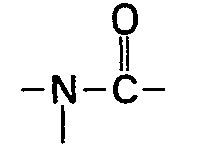
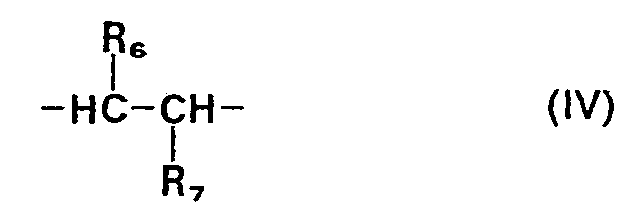
- the invention thus relates to cement slurries made from water and cement, which also ent a copolymer keep that to 5-95 wt .-% from groups of the formula or wherein R 1 is hydrogen or methyl, R 2 is C 2 -C 10 alkylene and Me is ammonium, lithium, sodium or potassium, to 5-60 wt .-% from groups of the formula in which R 3 is hydrogen, -CH 3 or -C 2 H 5 and R 4 -CH 3 or -C 2 H 5 or R 3 and R 4 together form a propylene group which includes the rest forms a pyrrolidone residue, means, and 0-90 wt .-% from groups of the formula where R e is hydrogen or methyl and R 7 is carbonamido, carboxy, cyano or carbomethoxy, the order of the components being arbitrary.
- the carboxy groups can arise from the subsequent saponification of the amides, nitriles and esters, or can be copolymerized directly in the form of the free acrylic acid.
- Preferred copolymers are those which consist of 30-80% by weight of groups of the formulas I and II, 10-30% by weight of groups of the formula III and 10-50% by weight of groups of the formula IV .
- the molecular weights of these copolymers were 250,000 to 6,000,000, preferably 500,000 to 2,000,000. They have already been described in DE-A 2931 897 and DE-B 2444108.
- the copolymers described are used in the cement slurries in concentrations of 0.1 to 3%, preferably 0.3 added up to 2%.
- the copolymers to be used can be prepared in a manner known per se by reacting the monomers at temperatures between about -10 and + 80 ° C., preferably at 20 to 60 ° C., in the presence of suitable polymerization catalysts.
- the polymerization is expediently carried out in the aqueous phase; however, aqueous solutions of water-miscible organic solvents, such as e.g. Methanol, ethanol, tert-butyl alcohol, tetrahydrofuran or dimethylformamide are used as the polymerization medium.
- Possible polymerization catalysts are, in particular, per compounds such as benzoyl peroxide, acetyl peroxide, tert-butyl hydroperoxide or alkali metal and ammonium peroxydisulfate, or else redox systems such as methyl N-p-tolylsulfonylmethylcarbamate / ammonium peroxydisulfate. If appropriate, the addition of cocatalysts such as dibutylamine hydrochloride or traces of copper salts may also be appropriate.
- compounds such as e.g. Diazoisobutyronitrile can be added.
- the copolymers are obtained as viscous, preferably aqueous solutions, which can be used in this form.
- alkali metal hydroxide is added to the polymer solutions in the required amounts and heated to higher temperatures, advantageously from about 85 to 120 ° C., until the desired degree of saponification is reached.
- the polymer solutions can be subjected to a conventional evaporation or drying process, expediently spray drying or roller drying.
- the copolymers are used in cement slurries which contain 20-85% by weight, preferably 30-70% by weight, of water, based on the dry cement used.
- the water loss was determined using the filter press according to API mentioned at the beginning.
- the examples show the wide range of applications of the compounds according to the invention in cement slurries with regard to salinities of the mixing water and water / cement ratios. Lowering the water loss of the cement slurry is the main effect, but the copolymer of Examples 3 and 4 also has a considerable setting-retarding effect.
- the comparative samples without a copolymer were already solidified after 2 hours at 80 ° C. By varying the monomer ratios in the copolymers, these can be adapted to the requirements of the very different cement slurries. For cement slurries that are not exposed to higher temperatures and where only the water loss should be low, copolymers according to Examples 1 and 2 are used. If the cement slurry is pumped around the casing string of a deep borehole to form a cement stone jacket, the water loss being very low and the setting time being delayed, then it is necessary to use a copolymer according to Examples 3 and 4.
- the water loss can be improved according to Examples 3 and 4 by adding small amounts of bentonite.
- the maximum reduction in water loss by the copolymers according to the invention is a function of the temperature, time and mixing intensity. This applies in particular to copolymers according to Examples 3 and 4. However, when used in cement slurries for deep and hot boreholes, the time required for pumping, the resulting mixing intensity and the elevated temperature are sufficient for the maximum reduction in water loss.
Landscapes
- Chemical & Material Sciences (AREA)
- Engineering & Computer Science (AREA)
- Life Sciences & Earth Sciences (AREA)
- General Life Sciences & Earth Sciences (AREA)
- Organic Chemistry (AREA)
- Materials Engineering (AREA)
- Inorganic Chemistry (AREA)
- Ceramic Engineering (AREA)
- Chemical Kinetics & Catalysis (AREA)
- Structural Engineering (AREA)
- Curing Cements, Concrete, And Artificial Stone (AREA)
- Addition Polymer Or Copolymer, Post-Treatments, Or Chemical Modifications (AREA)
- Macromonomer-Based Addition Polymer (AREA)
Description
- Die vorliegende Erfindung betrifft die Verwendung von Mischpolymerisaten zur Verminderung der Wasserabgabe von zu verpumpenden Zementschlämmen. Ganz besondere Bedeutung haben diese Verbindungen für die Zementation von Tiefbohrungen nach geothermischer Wärme, Erdöl und Erdgas. Die Technik des Erbohrens und der Komplettierung tiefer Sonden hat heute einen sehr hohen Stand erreicht. Nach dem Abbohren einer bestimmten Strecke wird in das Bohrloch ein Futterrohrstrang aus aneinandergeschraubten Rohren eingebracht. In den Ringraum zwischen Gebirgswand und Futterrohrstrang wird dann ein Zementschlamm gepumpt, der anschliessend abbindet. Durch diesen Zementmantel werden die Futterrohre fixiert und alle durchbohrten Formationen abgedichtet. An diese Zementschlämme werden mit zunehmender Tiefe der Bohrlöcher immer höhere Anforderungen gestellt. Zu diesem Zweck hat man verschiedene Kompositionen aus Zement, Wasser und Additiven entwickelt.
- Man unterscheidet 3 wesentliche Additivgruppen:
- 1. Verzögerer, welche die Abbindezeit erhöhen, damit der Zementschlamm für die volle Verpumpungsphase, die bei sehr tiefen Bohrungen mehrere Stunden beträgt, ausreichend flüssig bleibt. Die bekanntesten Produkte dieses Typs sind Lignosulfonate und Carboxymethylhydroxyethylcellulosen.
- 2. Dispergiermittel, welche die Zementschlämme homogen dispergieren und die Viskosität herabsetzen, was zu deren besseren Verpumpung führt. Als solche Produkte werden in der US-A 3465825 Kondensationsprodukte aus Mononaphthalinsulfonaten und Formaldehyd und in der US-A 4053323 N-Sulfoalkylsubstituierte Acrylamide beschrieben. Auch die Lignosulfonate und Carboxymethylhydroxyethylcelluloseether haben neben der verzögernden eine dispergierende Wirkung auf Zementschlämme.
- 3. Wasserverlustreduzierer, welche die Wasserabgabe der Zementschlämme an poröse Formationen während der Verpumpung der Zementschlämme in den Ringraum zwischen Futterrohr und Bohrlochswand reduzieren. Die bekanntesten Produkte dieses Typs sind vollsynthetische Mischpolymerisate aus Acrylat/Acrylamid gemäss DE-C 28 30528 und Blockpolymerisate aus Vinylpyrrolidon und Acrylamid gemäss GB-A 1473767 und die halbsynthetischen Carboxymethylhydroxyethyl- sowie Hydroxyethylcelluloseether.
- Die letztgenannten Additive sind deshalb von besonderer Bedeutung, da pumpbare Zementschlämme, die nur aus Zement und Wasser bestehen, hohe Volumina Wasser abgeben, wenn sie bei der Bohrlochzementation an porösen Gesteinsschichten vorbeifliessen. Das alkalische Wasser bringt in den Formationen Tone zum Quellen und bildet mit CO2 aus dem Erdgas oder Erdöl Niederschläge von Kalciumcarbonat. Beide Effekte mindern die Permeabilität der Lagerstätten und reduzieren die späteren Produktionsraten. Der Übertage für die jeweilige Zementation optimal eingestellte Zement erfährt durch die Wasserabgabe eine schwer kalkulierbare, den Pumpvorgang erschwerende Viskositätserhöhung. Die Wasserabgabe an poröse Formationen kann zu einer inhomogenen Zementmasse führen, welche nicht homogen erstarrt und für Gase, für flüssige Kohlenwasserstoffe und Wässer durchlässig ist. Dies kann zum Entweichen von Erdgas oder Erdöl durch den mit porösem Zement gefüllten Ringraum in andere Formationen und in Extremfällen bis Übertage führen. Weiterhin können aggressive saline Wasser und Gase durch den porösen Zement auf die Futterrohre wirken und diese korrodieren.
- Zur Gewährleistung einer technisch einwandfreien Bohrlochszementation ist die Herabsetzung des Wasserverlustes der eingesetzten Zementschlämme notwendig. Der Wasserverlust wird dabei vergleichend mit einer Filterpresse nach API Code 29 gemessen. Dabei ist die Filterfläche 45,8 ± 0,7 cm2, der Überdruck 7 ± 0,7 atü und die Filtrationszeit 30 Minuten. In letzter Zeit werden immer häufiger auch Messungen des Wasserverlustes mit der Hochtemperatur- und Hochdruck-Filterpresse (Baroid Nr. 387) durchgeführt. Man filtriert normalerweise mit einem Differenzdruck von 35 bar und gleicht die Temperatur der in der Praxis auftretenden an.
- Dieverbreitetste Anwendung zur Reduktion des Wasserverlustes von Zementschlämmen haben bisher die halbsynthetischen Celluloseether des Types Hydroxyethylcellulose und teilweise auch Carboxymethyl hydroxyethylcelluloseether gefunden. Ihr sinnvoller Einsatz findet seine Grenzen durch die Temperaturen, denen die Zementschlämme ausgesetzt werden. Die Wirkung fällt schon über 100° C stark ab und lässt sich dann auch durch höhere Einsatzmengen nicht mehr ausgleichen. Vollsynthetische Mischpolymere, bestehend aus Acrylamid und Acrylsäure oder Vinylpyrrolidon, haben sich in tieferen Bohrungen mit höheren Sohlentemperaturen nicht durchsetzen können. Sie zeigen, besonders wenn saline Wässer zur Formulierung von Zementschtämmen eingesetzt werden, eine sehr mässige Wirkung, die bei höheren Temperaturen weiter abfällt. Saline Wässer sind bei Bohrungen auf dem Meer üblich und bei Zementationen in Salzschichten notwendig. Vollends versagen diese Produkte, wenn als Abbindebeschleuniger CaCl2 eingesetzt wird. Der Stand der Technik zeigt, dass gegenwärtig eine Lücke bei Produkten zur Reduktion des Wasserverlustes von Zementschlämmen für Tiefbohrungen besteht, besonders wenn die Zementschlämme Temperaturen von über 100° C ausgesetzt und mit salinen Wässern formuliert werden.
- Es wurde nun gefunden, dass man diese Wasserverluste bei Zementschlämmen für Tiefbohrungen vermindern kann, wenn man dem Zementschlamm die im folgenden beschriebenen Mischpolymerisate zusetzt. Gegenstand der Erfindung sind somit Zementschlämme aus Wasser und Zement, die ausserdem noch ein Copolymerisat enthalten, das zu 5-95 Gew.-% aus Gruppen der Formel



- Die Herstellung der zu verwendenden Copolymerisate kann in an sich bekannter Weise durch Umsetzung der Monomeren bei Temperaturen zwischen etwa -10 und +80° C, vorzugsweise bei 20 bis 60° C, in Gegenwart von geeigneten Polymerisationskatalysatoren vorgenommen werden. Die Polymerisation erfolgt zweckmässig in wässeriger Phase, gegebenenfalls können jedoch auch wässerige Lösungen von wassermischbaren organischen Lösungsmitteln,wiez.B. Methanol, Äthanol, tert.-Butylalkohol, Tetrahydrofuran oder Dimethylformamid als Polymerisationsmedium dienen. Als Polymerisations-Katalysatoren kommen vor allem Perverbindungen wie Benzoylperoxid, Acetylperoxid, tert.- Butylhydroperoxyd oder Alkali- und Ammoniumperoxidisulfat oder auch Redox-Systeme wie N-p-Tolylsulfonylmethylcarbamidsäuremethylester/Ammoniumperoxidisulfat in Betracht. Gegebenenfalls kann auch der Zusatz von Cokatalysatoren wie Dibutylaminhydrochlorid oder Spuren von Kupfersalzen zweckmässig sein. Als Polymerisations-Initiatoren können gegebenenfalls auch Verbindungen wie z.B. Diazoisobutyronitril zugesetzt werden.
- Aufgrund der Formeln I, II, III und IV können als Monomere vor allem folgende Verbindungen verwendet werden:
- I. Vinyl- oder Allylsulfonsäuren oder deren Alkali- oder Ammoniumsalze,
- II. 2-Acrylamido-2-methyl-propansulfonsäure-(3),
- III. N-Vinyl-N-methylacetamid oder N-Vinylpyrrolidon
- IV. Acrylsäureamide, Acrylsäure, -nitrile oder -methylester oder die entsprechenden Methacrylverbindungen.
- Die Copolymerisate fallen als viskose, vorzugsweise wässerige Lösungen an, die in dieser Form verwendet werden können. Zur Herstellung von Verseifungsprodukten der Copolymerisate wird den Polymerisatlösungen Alkalihydroxid in den erforderlichen Mengen zugegeben und auf höhere Temperaturen, zweckmässig auf etwa 85 bis 120° C, bis zur Erreichung des gewünschten Verseifungsgrades erhitzt.
- Sofern es beabsichtigt ist, die Polymerisate in fester Form herzustellen, können die Polymerisatlösungen einem üblichen Verdampfungs- oder Trocknungsprozess, zweckmässig einer Sprüh-oder Walzentrocknung unterworfen werden.
- Die Copolymerisate werden in Zementschlämmen eingesetzt, welche 20-85 Gew.-%, vorzugsweise 30-70 Gew.-% Wasser bezogen auf den eingesetzten trockenen Zement enthalten.
- Die folgenden Beispiele zeigen die Arbeitsweise der erfindungsgemässen Verbindungen in den sehr unterschiedlichen und teilweise hochsalinen Zementschlämmen.
- Mischpolymerisat bestehend aus:
- 50 Gew.-% Acrylamid
- 27,5 Gew.-% N-Vinyl-N-Methylacetamid
- 22,5 Gew.-% Na-Vinylsulfonat
- Zementmischung:
- 250 g Wasser NaCI-gesättigt
- 500 g Zement Klasse G
- 2,5 g Mischpolymerisat (0,5% bezogen auf Zement)
- Wasserverlust = 8,4 cm3
- Viskosität = 160 mPa·s (cp) nach Fann bei 3 U/min
- Der Wasserverlust wurde hier wie auch in den folgenden Beispielen mit der eingangs erwähnten Filterpresse nach API bestimmt.
- Mischpolymerisat bestehend aus:
- 75% Acrylamid, teilverseift
- 15% N-Vinyl-N-Methylacetamid
- 10% Acrylamidomethyl-propansulfonsäure
- Zementmischung:
- 194 g Wasser 3,5% NaCl
- 440 g Zement Klasse G
- 3,3 g Mischpolymerisat (0,75% bezogen auf Zement)
- Wasserverlust = 11,3 cm3
- Viskosität = ca. 500 mPa · s (cp) nach Fann bei 3 U/min
- Mischpolymerisat bestehend aus:
- 65 Gew.-%Acrylamidomethyl-propansulfonsäure
- 20 Gew.-% N-Vinyl-N-Methylacetamid
- 15 Gew.-%Acrylamid
- Zementmischung:
- 450 g Wasser gesättigt an NaCl
- 600 g Zement Klasse D
- 12 g Mischpolymerisat (2% bezogen auf Zement) Wasserverlust nach 4 h Alterung bei 80° C = 25 cm3
-
- Mischpolymerisat wie 3 a
- Zementmischung wie 3 a
- plus 12 g Bentonit (2% bezogen auf Zement) Wasserverlust nach 4 h Alterung bei 80° C = 12,5 cm3
- Viskosität nach 4 h Alterung bei 80° C = 800 mPa·s (cp) nach Fann bei 3 U/min
- Hochtemperatur-Hochdruck-Wasserverlustwassermessung nach Alterung 2 h bei 160° C, gemessen bei 80° C und 35 bar Differenzdruck.
- Beispiel 3 a Beispiel 3 b
- 22 cm3 14 cm 3
- Zementmischung:
- 500 g Wasser
- 600 g Zement Klasse D
- 12 g Mischpolymerisat (2% bezogen auf Zement)
- Wasserverlust nach 4 h Alterung bei 80° C = 9,4 cm3
- Viskosität nach 4 h Alterung bei 80° C = 300 mPa·s (cp) nach Fann bei 3 U/min
-
- Mischpolymerisat wie Beispiel 3 a
- Zementmischung wie Beispiel 4 a
- plus 12 g Bentonit (2% bezogen auf Zement) Wasserverlust nach 4 h Alterung bei 80° C = 4,1 cm3
- Viskosität nach 4 h Alterung bei 80° C = 1200 mPd· s (cp) nach Fann bei 3 U/min
- Die Be,spiele zeigen die grosse Anwendungsbreite der erfindungsgemässen Verbindungen in Zementschlämmen bezüglich Salinitäten der Anmischwässer und Wasser/Zementverhältnissen. Das Absenken des Wasserverlustes der Zementschlämme ist die Hauptwirkung, doch besitzt das Mischpolymerisat der Beispiele 3 und 4 auch eine erhebliche abbindeverzögernde Wirkung. So waren die Vergleichsproben ohne Mischpolymerisat schon nach 2 Stunden bei 80° C verfestigt. Durch die Variation der Monomerenverhältnisse in den Mischpolymerisaten können diese den Anforderungen der sehr unterschiedlichen Zementschlämme angepasst werden. Für Zementschlämme, die keinen höheren Temperaturen ausgesetzt werden und wo nur der Wasserverlust niedrig sein soll, kommen Mischpolymerisate gemäss den Beispielen 1 und 2 zum Einsatz. Wird der Zementschlamm zur Bildung eines Zementsteinmantels um den Futterrohrstrang einer Tiefbohrung verpumpt, wobei der Wasserverlust sehr niedrig und die Abbindezeit verzögert sein muss, dann ist es notwendig, ein Mischpolymerisat gemäss den Beispielen 3 und 4 zu verwenden.
- Der Wasserverlust kann gemäss den Beispielen 3 und 4 durch Zusatz geringer Mengen Bentonit verbessert werden. Die maximale Reduktion des Wasservertustes durch die erfindungsgemässen Mischpolymerisate ist eine Funktion derTemperatur, Zeit und Mischintensität. Dies gilt besonders für Mischpolymerisate gemäss Beispiel 3 und 4. Doch reichen bei deren Verwendung in Zementschlämmen für tiefe und heisse Bohrungen die zur Verpumpung nötige Zeit, die dabei auftretende Mischintensität und die erhöhte Temperatur für die maximale Reduktion des Wasserverlustes aus.
Viskosität nach 4 h Alterung bei 80° C = 200 mPa-s (cp) nach Fann bei 3 U/min
Claims (3)


Priority Applications (1)
| Application Number | Priority Date | Filing Date | Title |
|---|---|---|---|
| AT83104506T ATE17706T1 (de) | 1983-01-24 | 1983-05-07 | Zementschlaemme fuer tiefbohrungen mit einem gehalt an copolymerisaten zur verminderung des wasserverlustes. |
Applications Claiming Priority (2)
| Application Number | Priority Date | Filing Date | Title |
|---|---|---|---|
| DE3302168 | 1983-01-24 | ||
| DE19833302168 DE3302168A1 (de) | 1983-01-24 | 1983-01-24 | Zementschlaemme fuer tiefbohrungen mit einem gehalt an copolymerisaten zur verminderung des wasserverlustes |
Publications (2)
| Publication Number | Publication Date |
|---|---|
| EP0116671A1 EP0116671A1 (de) | 1984-08-29 |
| EP0116671B1 true EP0116671B1 (de) | 1986-01-29 |
Family
ID=6189015
Family Applications (1)
| Application Number | Title | Priority Date | Filing Date |
|---|---|---|---|
| EP83104506A Expired EP0116671B1 (de) | 1983-01-24 | 1983-05-07 | Zementschlämme für Tiefbohrungen mit einem Gehalt an Copolymerisaten zur Verminderung des Wasserverlustes |
Country Status (10)
| Country | Link |
|---|---|
| US (1) | US4587283A (de) |
| EP (1) | EP0116671B1 (de) |
| JP (1) | JPS59138694A (de) |
| AT (1) | ATE17706T1 (de) |
| BR (1) | BR8400263A (de) |
| CA (1) | CA1228373A (de) |
| DE (2) | DE3302168A1 (de) |
| MX (1) | MX163275B (de) |
| NO (1) | NO840239L (de) |
| SU (1) | SU1473720A3 (de) |
Families Citing this family (51)
| Publication number | Priority date | Publication date | Assignee | Title |
|---|---|---|---|---|
| US4500357A (en) * | 1984-04-03 | 1985-02-19 | Halliburton Company | Oil field cementing methods and compositions |
| US4659793A (en) * | 1986-03-03 | 1987-04-21 | Alco Chemical Corporation | Preparation of aqueous solutions of copolymers of dicarboxylic acids having a low dicarboxylic acid monomer content |
| US4674574A (en) * | 1986-09-26 | 1987-06-23 | Diamond Shamrock Chemicals Company | Fluid loss agents for oil well cementing composition |
| US5294651A (en) * | 1987-03-23 | 1994-03-15 | Phillips Petroleum Company | Fluid loss additives for well cementing compositions |
| US5260391A (en) * | 1987-03-23 | 1993-11-09 | Michael Stephens | Tetrapolymerization product of 2-acrylamido-2-methyl propane sulfonic acid/associated salts, n-vinyl pyrrolidone, acrylamide, and acrylic acid/associated salts |
| US5109042A (en) * | 1987-03-23 | 1992-04-28 | Phillips Petroleum Company | Fluid loss additive for cement slurries containing a n-vinyl-2-pyrrolidone-ω-2-acrylamido-2-methylpropane sulfonate-ω-acrylic acid-ω-acrylamide polymer |
| US5153240A (en) * | 1987-03-23 | 1992-10-06 | Phillips Petroleum Company | Fluid loss additives for well cementing compositions containing a tetrapolymer |
| JP2541218B2 (ja) * | 1987-05-15 | 1996-10-09 | 日本油脂株式会社 | セメント用添加剤 |
| DE4034642A1 (de) * | 1990-10-31 | 1992-05-07 | Hoechst Ag | Wasserloesliche mischpolymerisate und deren verwendung |
| US5099922A (en) * | 1991-03-26 | 1992-03-31 | The Western Company Of North America | Control of gas flow through cement column |
| US5217531A (en) * | 1991-12-23 | 1993-06-08 | The Western Company Of North America | Fluid loss additives for cementing compositions |
| JPH0952749A (ja) * | 1995-08-08 | 1997-02-25 | Showa Denko Kk | 高流動コンクリート用混和剤及びそれが添加されたコンクリート材 |
| US5789349A (en) * | 1996-03-13 | 1998-08-04 | M-I Drilling Fluids, L.L.C. | Water-based drilling fluids with high temperature fluid loss control additive |
| WO1999016723A1 (en) | 1997-09-30 | 1999-04-08 | Bj Services Company | Multi-functional additive for use in well cementing |
| US6085840A (en) * | 1997-11-05 | 2000-07-11 | Fritz Industries, Inc. | Method for control of liquid loss and gas migration in well cementing |
| US6089318A (en) * | 1997-11-05 | 2000-07-18 | Fritz Industries, Inc. | Method for control of fluid loss and gas migration in well cementing |
| US5988279A (en) * | 1997-11-05 | 1999-11-23 | Fritz Industries, Inc. | Method for control of fluid loss and gas migration in well cementing |
| DE19752093C2 (de) * | 1997-11-25 | 2000-10-26 | Clariant Gmbh | Wasserlösliche Copolymere auf Acrylamid-Basis und ihre Verwendung als Zementationshilfsmittel |
| DE19806482A1 (de) * | 1998-02-17 | 1999-08-19 | Sueddeutsche Kalkstickstoff | Wasserlösliche oder wasserquellbare sulfogruppenhaltige Copolymere, Verfahren zu deren Herstellung und ihre Verwendung |
| DE19926355A1 (de) * | 1999-06-10 | 2000-12-14 | Clariant Gmbh | Wasserlösliche Mischpolymere und ihre Verwendung für Exploration und Förderung von Erdöl und Erdgas |
| US6176314B1 (en) | 1999-07-15 | 2001-01-23 | Phillips Petroleum Company | Low density well cement compositions and method of use |
| EP1132354A1 (de) * | 2000-03-09 | 2001-09-12 | Sofitech N.V. | Multifunktionelle Zusatzmittel für Zementschlämme |
| US6770604B2 (en) * | 2002-02-08 | 2004-08-03 | Halliburton Energy Services, Inc. | High temperature viscosifying and fluid loss controlling additives for well cements, well cement compositions and methods |
| JP2005075701A (ja) * | 2003-09-02 | 2005-03-24 | Nippon Shokubai Co Ltd | 水硬性組成物 |
| KR100760586B1 (ko) * | 2004-01-06 | 2007-10-04 | 가부시키가이샤 닛폰 쇼쿠바이 | 시멘트 혼화제 |
| US7670423B2 (en) * | 2005-06-03 | 2010-03-02 | Halliburton Energy Services, Inc. | Cement composition comprising environmentally compatible defoaming agents and methods of use |
| US7273103B2 (en) * | 2005-06-03 | 2007-09-25 | Halliburtoncenergy Services, Inc. | Cement compositions comprising environmentally compatible defoaming agents and methods of use |
| US20070105995A1 (en) * | 2005-11-04 | 2007-05-10 | Halliburton Energy Services, Inc. | Fluid loss control additives for foamed cement compositions and associated methods |
| US20070101905A1 (en) * | 2005-11-04 | 2007-05-10 | Halliburton Energy Services, Inc. | Fluid loss control additives for foamed cement compositions and associated methods |
| DE102007037466A1 (de) | 2007-08-08 | 2009-02-12 | Basf Construction Polymers Gmbh | Pfropfpolymer-Mischung |
| EP2285835A1 (de) * | 2008-05-21 | 2011-02-23 | Basf Se | Pfropf-copolymer, verfahren zu dessen herstellung und seine verwendung |
| DE102008063096A1 (de) | 2008-12-24 | 2010-07-01 | Clariant International Limited | Verwendung von Vinylphosphonsäure zur Herstellung biologisch abbaubarer Mischpolymere und deren Verwendung für die Exploration und Förderung von Erdöl und Erdgas |
| WO2011104061A1 (de) | 2010-02-24 | 2011-09-01 | Basf Se | Makromolekulare, amphiphile verbindungen als wasserretentionsmittel für bauchemische systeme, insbesondere zur bohrlochzementierung |
| CN104136571A (zh) | 2012-02-13 | 2014-11-05 | 巴斯夫欧洲公司 | 三元共聚物作为固井中的降失水剂的用途 |
| AU2013286265B2 (en) | 2012-07-06 | 2016-05-12 | Basf Se | Biodegradable graft copolymer anti -accretion additive for water - based drilling fluids |
| US10822917B2 (en) | 2013-09-17 | 2020-11-03 | Baker Hughes, A Ge Company, Llc | Method of cementing a well using delayed hydratable polymeric viscosifying agents |
| US10844270B2 (en) | 2013-09-17 | 2020-11-24 | Baker Hughes, A Ge Company, Llc | Method of enhancing stability of cement slurries in well cementing operations |
| US10767098B2 (en) | 2013-09-17 | 2020-09-08 | Baker Hughes, A Ge Company, Llc | Method of using sized particulates as spacer fluid |
| EP3110904B1 (de) | 2014-02-28 | 2021-05-12 | TouGas Oilfield Solutions GmbH | Method for reducing fluid loss in oil- and gas field slurries and solutions |
| BR112017014831B1 (pt) | 2015-06-17 | 2022-02-15 | Clariant International Ltd | Processo de produção de polímeros à base de dimetiltaurato de acriloíla, monômeros neutros e monômeros com grupos carboxilato, polímero hidrossolúvel ou intumescível em água, fluido de perfuração e pastas de cimento para a cimentação de perfurações profundas |
| CN107771191B (zh) | 2015-06-17 | 2020-08-28 | 科莱恩国际有限公司 | 作为水泥浆中的降失水剂的水溶性或水溶胀性聚合物 |
| US20180155478A1 (en) | 2015-06-17 | 2018-06-07 | Clariant International Ltd. | Method For Producing Polymers On The Basis Of Acryloyldimethyltaurate And Neutral Monomers |
| BR112018076264A2 (pt) | 2016-06-20 | 2019-03-26 | Clariant Int Ltd | composto que compreende um certo nível de carbono de base biológica |
| CN110300573B (zh) | 2016-12-12 | 2023-07-25 | 科莱恩国际有限公司 | 生物基聚合物在化妆、皮肤病学或药物学组合物中的用途 |
| WO2018108609A1 (en) | 2016-12-12 | 2018-06-21 | Clariant International Ltd | Polymer comprising certain level of bio-based carbon |
| EP3554644B1 (de) | 2016-12-15 | 2025-03-19 | Clariant International Ltd | Wasserlösliches und/oder in wasser quellbares hybridpolymer |
| DE102016225151A1 (de) | 2016-12-15 | 2018-06-21 | Clariant International Ltd | Hybrid-Polymere und die Verwendung als Additive bei Tiefbohrungen |
| DE102016225147A1 (de) | 2016-12-15 | 2018-06-21 | Clariant International Ltd | Hybrid-Polymere und die Verwendung als Additive bei Tiefbohrungen |
| ES3017507T3 (en) | 2016-12-15 | 2025-05-13 | Clariant Int Ltd | Water-soluble and/or water-swellable hybrid polymer |
| JP6845509B2 (ja) * | 2018-10-15 | 2021-03-17 | 丸栄コンクリート工業株式会社 | セルロースナノファイバーを分散させたセメント成形体の製造法 |
| US11028309B2 (en) | 2019-02-08 | 2021-06-08 | Baker Hughes Oilfield Operations Llc | Method of using resin coated sized particulates as spacer fluid |
Family Cites Families (10)
| Publication number | Priority date | Publication date | Assignee | Title |
|---|---|---|---|---|
| US29595A (en) * | 1860-08-14 | Machine for | ||
| US3465825A (en) * | 1966-12-02 | 1969-09-09 | Dow Chemical Co | Aqueous cementing composition adaptable to high turbulent flow and low fluid loss to porous contacting surfaces,and method of cementing a well using same |
| NL7310590A (de) * | 1972-08-07 | 1974-02-11 | ||
| DE2444108C2 (de) * | 1974-09-14 | 1978-01-19 | Hoechst Ag | Wasserbasische tonspuelung fuer tiefbohrungen und verwendung eines mischpolymerisats fuer solche spuelungen |
| US3936408A (en) * | 1974-05-01 | 1976-02-03 | Calgon Corporation | Well cementing composition having improved flow properties containing a polyamido-sulfonic additive |
| US3994852A (en) * | 1974-09-23 | 1976-11-30 | Calgon Corporation | Low fluid loss cementing compositions containing polyvinylpyrrolidone-polyacrylamide triblock polymers and their use |
| US4015991A (en) * | 1975-08-08 | 1977-04-05 | Calgon Corporation | Low fluid loss cementing compositions containing hydrolyzed acrylamide/2-acrylamido-2-methylpropane sulfonic acid derivative copolymers and their use |
| US4053323A (en) * | 1976-11-11 | 1977-10-11 | Calgon Corporation | Method of using cementing composition having improved flow properties |
| DE2830528B2 (de) * | 1978-07-12 | 1981-04-23 | Chemische Fabrik Stockhausen & Cie, 4150 Krefeld | Verwendung von wasserlöslichen anionischen Polymerisaten als Additive für Tiefbohrzementschlämme |
| DE2931897A1 (de) * | 1979-08-06 | 1981-02-26 | Cassella Ag | Wasserloesliches copolymerisat und seine herstellung |
-
1983
- 1983-01-24 DE DE19833302168 patent/DE3302168A1/de not_active Withdrawn
- 1983-05-07 AT AT83104506T patent/ATE17706T1/de not_active IP Right Cessation
- 1983-05-07 EP EP83104506A patent/EP0116671B1/de not_active Expired
- 1983-05-07 DE DE8383104506T patent/DE3361986D1/de not_active Expired
-
1984
- 1984-01-23 NO NO840239A patent/NO840239L/no unknown
- 1984-01-23 MX MX200120A patent/MX163275B/es unknown
- 1984-01-23 JP JP59008650A patent/JPS59138694A/ja active Granted
- 1984-01-23 CA CA000445860A patent/CA1228373A/en not_active Expired
- 1984-01-23 BR BR8400263A patent/BR8400263A/pt not_active IP Right Cessation
- 1984-01-23 SU SU843696438A patent/SU1473720A3/ru active
-
1985
- 1985-04-03 US US06/719,023 patent/US4587283A/en not_active Expired - Lifetime
Also Published As
| Publication number | Publication date |
|---|---|
| EP0116671A1 (de) | 1984-08-29 |
| MX163275B (es) | 1992-03-31 |
| DE3361986D1 (en) | 1986-03-13 |
| JPH0361835B2 (de) | 1991-09-24 |
| JPS59138694A (ja) | 1984-08-09 |
| CA1228373A (en) | 1987-10-20 |
| US4587283A (en) | 1986-05-06 |
| BR8400263A (pt) | 1984-08-28 |
| NO840239L (no) | 1984-07-25 |
| DE3302168A1 (de) | 1984-07-26 |
| SU1473720A3 (ru) | 1989-04-15 |
| ATE17706T1 (de) | 1986-02-15 |
Similar Documents
| Publication | Publication Date | Title |
|---|---|---|
| EP0116671A1 (de) | Zementschlämme für Tiefbohrungen mit einem Gehalt an Copolymerisaten zur Verminderung des Wasserverlustes | |
| DE2444108C2 (de) | Wasserbasische tonspuelung fuer tiefbohrungen und verwendung eines mischpolymerisats fuer solche spuelungen | |
| EP1045869B1 (de) | Zementationshilfsmittel | |
| US7523784B2 (en) | Method of using humic acid grafted fluid loss control additives in cementing operations | |
| DE19909231C2 (de) | Wasserlösliche Copolymere auf AMPS-Basis und ihre Verwendung als Bohrhilfsmittel | |
| EP1059316B1 (de) | Wasserlösliche Mischpolymere und ihre Verwendung für Exploration und Förderung von Erdöl und Erdgas | |
| EP0483638B1 (de) | Wasserlösliche Mischpolymerisate und deren Verwendung | |
| US7576040B2 (en) | Cement compositions comprising humic acid grafted fluid loss control additives | |
| US7388045B1 (en) | Cement compositions comprising lignite grafted fluid loss control additives | |
| US7360598B1 (en) | Method of using lignite grafted fluid loss control additives in cementing operations | |
| AU2002241704A1 (en) | Polymeric fluid loss additives and method of use thereof | |
| DE2830528B2 (de) | Verwendung von wasserlöslichen anionischen Polymerisaten als Additive für Tiefbohrzementschlämme | |
| WO2016202582A1 (de) | Wasserlösliche oder wasserquellbare polymere als wasserverlustreduzierer in zementschlämmen | |
| EP3310735A1 (de) | Verfahren zur herstellung von polymeren auf basis von acryloyldimethyltaurat und neutralen monomeren | |
| DE102004035515A1 (de) | Thermostabiles, wasserlösliches, bei hohen Temperaturen vernetzbares Polymer | |
| WO2010072313A1 (de) | Verwendung von vinylphosphonsäure zur herstellung biologisch abbaubarer mischpolymere und deren verwendung für die exploration und förderung von erdöl und erdgas | |
| EP0141327B1 (de) | Wasserlösliche Mischpolymerisate und deren Verwendung als Dispergatoren für Feststoffe | |
| EP2102304B1 (de) | Zementzusammensetzungen, die zusätze zur filtratkontrolle auf basis von gepfropfter huminsäure enthalten,sowie verfahren zur verwendung | |
| EP1261563B1 (de) | Multifunktionelles zusatzmittel für zementschlämme | |
| SU1657605A1 (ru) | Полимерный состав дл установки ванны при ликвидации прихватов колонны труб в скважине | |
| DE3344470A1 (de) | Fluid-loss-additive fuer tiefbohrzement |
Legal Events
| Date | Code | Title | Description |
|---|---|---|---|
| PUAI | Public reference made under article 153(3) epc to a published international application that has entered the european phase |
Free format text: ORIGINAL CODE: 0009012 |
|
| AK | Designated contracting states |
Designated state(s): AT DE FR GB IT NL |
|
| 17P | Request for examination filed |
Effective date: 19841102 |
|
| GRAA | (expected) grant |
Free format text: ORIGINAL CODE: 0009210 |
|
| AK | Designated contracting states |
Designated state(s): AT DE FR GB IT NL |
|
| REF | Corresponds to: |
Ref document number: 17706 Country of ref document: AT Date of ref document: 19860215 Kind code of ref document: T |
|
| ITF | It: translation for a ep patent filed | ||
| REF | Corresponds to: |
Ref document number: 3361986 Country of ref document: DE Date of ref document: 19860313 |
|
| ET | Fr: translation filed | ||
| PLBE | No opposition filed within time limit |
Free format text: ORIGINAL CODE: 0009261 |
|
| STAA | Information on the status of an ep patent application or granted ep patent |
Free format text: STATUS: NO OPPOSITION FILED WITHIN TIME LIMIT |
|
| 26N | No opposition filed | ||
| PGFP | Annual fee paid to national office [announced via postgrant information from national office to epo] |
Ref country code: AT Payment date: 19900430 Year of fee payment: 8 |
|
| ITTA | It: last paid annual fee | ||
| PG25 | Lapsed in a contracting state [announced via postgrant information from national office to epo] |
Ref country code: AT Effective date: 19910507 |
|
| REG | Reference to a national code |
Ref country code: FR Ref legal event code: TP |
|
| NLS | Nl: assignments of ep-patents |
Owner name: CLARIANT GMBH |
|
| REG | Reference to a national code |
Ref country code: GB Ref legal event code: 732E |
|
| REG | Reference to a national code |
Ref country code: GB Ref legal event code: IF02 |
|
| PGFP | Annual fee paid to national office [announced via postgrant information from national office to epo] |
Ref country code: DE Payment date: 20020420 Year of fee payment: 20 |
|
| PGFP | Annual fee paid to national office [announced via postgrant information from national office to epo] |
Ref country code: GB Payment date: 20020422 Year of fee payment: 20 Ref country code: FR Payment date: 20020422 Year of fee payment: 20 |
|
| PGFP | Annual fee paid to national office [announced via postgrant information from national office to epo] |
Ref country code: NL Payment date: 20020423 Year of fee payment: 20 |
|
| PG25 | Lapsed in a contracting state [announced via postgrant information from national office to epo] |
Ref country code: GB Free format text: LAPSE BECAUSE OF EXPIRATION OF PROTECTION Effective date: 20030506 |
|
| PG25 | Lapsed in a contracting state [announced via postgrant information from national office to epo] |
Ref country code: NL Free format text: LAPSE BECAUSE OF EXPIRATION OF PROTECTION Effective date: 20030507 |
|
| REG | Reference to a national code |
Ref country code: GB Ref legal event code: PE20 |
|
| NLV7 | Nl: ceased due to reaching the maximum lifetime of a patent |
Effective date: 20030507 |