EP0111549B1 - Inactivation of a lipid virus - Google Patents
Inactivation of a lipid virus Download PDFInfo
- Publication number
- EP0111549B1 EP0111549B1 EP19830902213 EP83902213A EP0111549B1 EP 0111549 B1 EP0111549 B1 EP 0111549B1 EP 19830902213 EP19830902213 EP 19830902213 EP 83902213 A EP83902213 A EP 83902213A EP 0111549 B1 EP0111549 B1 EP 0111549B1
- Authority
- EP
- European Patent Office
- Prior art keywords
- virus
- chloroform
- hepatitis
- treating agent
- viruses
- Prior art date
- Legal status (The legal status is an assumption and is not a legal conclusion. Google has not performed a legal analysis and makes no representation as to the accuracy of the status listed.)
- Expired
Links
Images
Classifications
-
- C—CHEMISTRY; METALLURGY
- C12—BIOCHEMISTRY; BEER; SPIRITS; WINE; VINEGAR; MICROBIOLOGY; ENZYMOLOGY; MUTATION OR GENETIC ENGINEERING
- C12N—MICROORGANISMS OR ENZYMES; COMPOSITIONS THEREOF; PROPAGATING, PRESERVING, OR MAINTAINING MICROORGANISMS; MUTATION OR GENETIC ENGINEERING; CULTURE MEDIA
- C12N7/00—Viruses; Bacteriophages; Compositions thereof; Preparation or purification thereof
-
- A—HUMAN NECESSITIES
- A61—MEDICAL OR VETERINARY SCIENCE; HYGIENE
- A61K—PREPARATIONS FOR MEDICAL, DENTAL OR TOILETRY PURPOSES
- A61K31/00—Medicinal preparations containing organic active ingredients
- A61K31/13—Amines
- A61K31/14—Quaternary ammonium compounds, e.g. edrophonium, choline
-
- A—HUMAN NECESSITIES
- A61—MEDICAL OR VETERINARY SCIENCE; HYGIENE
- A61K—PREPARATIONS FOR MEDICAL, DENTAL OR TOILETRY PURPOSES
- A61K35/00—Medicinal preparations containing materials or reaction products thereof with undetermined constitution
- A61K35/12—Materials from mammals; Compositions comprising non-specified tissues or cells; Compositions comprising non-embryonic stem cells; Genetically modified cells
- A61K35/14—Blood; Artificial blood
- A61K35/16—Blood plasma; Blood serum
-
- A—HUMAN NECESSITIES
- A61—MEDICAL OR VETERINARY SCIENCE; HYGIENE
- A61K—PREPARATIONS FOR MEDICAL, DENTAL OR TOILETRY PURPOSES
- A61K38/00—Medicinal preparations containing peptides
- A61K38/16—Peptides having more than 20 amino acids; Gastrins; Somatostatins; Melanotropins; Derivatives thereof
- A61K38/17—Peptides having more than 20 amino acids; Gastrins; Somatostatins; Melanotropins; Derivatives thereof from animals; from humans
- A61K38/36—Blood coagulation or fibrinolysis factors
- A61K38/37—Factors VIII
-
- A—HUMAN NECESSITIES
- A61—MEDICAL OR VETERINARY SCIENCE; HYGIENE
- A61L—METHODS OR APPARATUS FOR STERILISING MATERIALS OR OBJECTS IN GENERAL; DISINFECTION, STERILISATION OR DEODORISATION OF AIR; CHEMICAL ASPECTS OF BANDAGES, DRESSINGS, ABSORBENT PADS OR SURGICAL ARTICLES; MATERIALS FOR BANDAGES, DRESSINGS, ABSORBENT PADS OR SURGICAL ARTICLES
- A61L2/00—Disinfection or sterilisation of materials or objects, in general; Accessories therefor
- A61L2/16—Disinfection or sterilisation of materials or objects, in general; Accessories therefor using chemical substances
- A61L2/18—Liquid substances
-
- A—HUMAN NECESSITIES
- A61—MEDICAL OR VETERINARY SCIENCE; HYGIENE
- A61L—METHODS OR APPARATUS FOR STERILISING MATERIALS OR OBJECTS IN GENERAL; DISINFECTION, STERILISATION OR DEODORISATION OF AIR; CHEMICAL ASPECTS OF BANDAGES, DRESSINGS, ABSORBENT PADS OR SURGICAL ARTICLES; MATERIALS FOR BANDAGES, DRESSINGS, ABSORBENT PADS OR SURGICAL ARTICLES
- A61L2103/00—Materials or objects being the target of disinfection or sterilisation
- A61L2103/05—Living organisms or biological materials
-
- C—CHEMISTRY; METALLURGY
- C12—BIOCHEMISTRY; BEER; SPIRITS; WINE; VINEGAR; MICROBIOLOGY; ENZYMOLOGY; MUTATION OR GENETIC ENGINEERING
- C12N—MICROORGANISMS OR ENZYMES; COMPOSITIONS THEREOF; PROPAGATING, PRESERVING, OR MAINTAINING MICROORGANISMS; MUTATION OR GENETIC ENGINEERING; CULTURE MEDIA
- C12N2730/00—Reverse transcribing DNA viruses
- C12N2730/00011—Details
- C12N2730/10011—Hepadnaviridae
- C12N2730/10111—Orthohepadnavirus, e.g. hepatitis B virus
- C12N2730/10161—Methods of inactivation or attenuation
- C12N2730/10163—Methods of inactivation or attenuation by chemical treatment
-
- C—CHEMISTRY; METALLURGY
- C12—BIOCHEMISTRY; BEER; SPIRITS; WINE; VINEGAR; MICROBIOLOGY; ENZYMOLOGY; MUTATION OR GENETIC ENGINEERING
- C12N—MICROORGANISMS OR ENZYMES; COMPOSITIONS THEREOF; PROPAGATING, PRESERVING, OR MAINTAINING MICROORGANISMS; MUTATION OR GENETIC ENGINEERING; CULTURE MEDIA
- C12N2770/00—MICROORGANISMS OR ENZYMES; COMPOSITIONS THEREOF; PROPAGATING, PRESERVING, OR MAINTAINING MICROORGANISMS; MUTATION OR GENETIC ENGINEERING; CULTURE MEDIA ssRNA viruses positive-sense
- C12N2770/00011—Details
- C12N2770/24011—Flaviviridae
- C12N2770/24211—Hepacivirus, e.g. hepatitis C virus, hepatitis G virus
- C12N2770/24261—Methods of inactivation or attenuation
- C12N2770/24263—Methods of inactivation or attenuation by chemical treatment
Definitions
- Viral hepatitis has been recognized as an important and serious sequela of parenteral exposure to blood and blood components since the early 1940's. It was originally believed that all such blood- associated hepatitis was caused by the serum hepatitis virus (now called the hepatitis B virus, or HBV). Subsequently the development of sensitive assays for infection with this virus revealed that only approximately 1/3 of transfusion-associated hepatitis was caused by the HBV. It was thought that the remaining hepatitis was caused by the hepatitis A virus. However, the development of sensitive assays for HAV led to the recognition of a new hepatitis virus, the non-A, non-B hepatitis virus (NANB) in 1975.
- NANB non-A, non-B hepatitis virus
- HBV and at least one NANB agent contain lipids essential for the integrity and viability of the viruses. This was established by exposing the viruses to a potent lipid solvent (chloroform) and demonstrating that such chloroform-extracted viruses were rendered noninfectious in a suitable susceptible host, the chimpanzee (Pan troglodytes).
- chloroform potent lipid solvent
- the present invention applies to all lipid containing NANBH particles which of necessity may be more than one particle as, for example, the more recently discovered delta particle.
- the present invention relates to a method of inactivating a lipid virus in a protein carrier which is a blood product where said virus is selected from hepatitis B virus (HB) and non-A, non-B hepatitis (NANBH) virus.
- HB hepatitis B virus
- NANBH non-A, non-B hepatitis
- This is achieved by contacting said virus in the carrier for an extended period of time at generally ambient temperatures with a halohydrocarbon treating agent.
- This treating agent is selected from chloroform, (CHCI 3 ), and the most common Freon agents which are CH 2 F 2 , CC1 2 F 2 , and others, in an amount of 5 to 50% v/v.
- the period of time noted above for treatment is about one-half to five hours and the generally ambient temperature is from about 4°C to 40°C.
- the treating agent of choice is chloroform, and it is noted that the method has been utilized both in the extraction of aqueous blood products where the removal of the solvent is made by physical means such as centrifugation, and in the extraction of lyophilized dried blood products where the removal of the solvent is made by appropriate means including vacuum evaporation. Generally, these two processes can be distinguished in that in the latter there is a reduction to powder form after utilization. It has been found that there is a need for protection of products which have been lyophilized.
- HBV and NANBV have been shown in animals as with chimpanzees.
- Non-A, non-B hepatitis is the major cause of transfusion associated hepatitis in the United States.
- viruses that do contain essential lipid can be inactivated by lipid solvents such as ether or chloroform.
- This invention particularly relates to the chloroform sensitivity of the H strain of NANBH.
- diethyl ether is an effective inactivating agent for destroying endotoxin or infectivity or non hepatitis viruses and preventing clotting activation-see J. of General Microbiology V. III p. 290 1949 C. H. Andrews et al.
- it is a less efficient solvent of lipids.
- diethyl ether is not recommended for the broader use of the present agents in the nuclization of pox virus; such pox virus may be illustrated by smallpox and vaccinia virus.
- diethyl ether noted but other ethers, such as phenoxy, polyethoxy ethanol, and compounds of the general formula RC 6 H 4 (OC 2 H 4 ) n OH are also noted.
- chloroform and the Freon or Genetron fluorocarbon agents has been found useful in so-called lipid virus which include HBV and NANBH and also include those virus particles which have a lipid outer coat which is susceptible to removal by treatment.
- chloroform is preferred, but as alternative reagents which are operable there can be used a Freon which is defined as a chlorofluoro carbon of one or two carbon atoms. These may be viewed as fluorinated derivatives of methane and ethane. Additionally, there may be utilized as Freons chlorofluoro carbons as, for example, CCI 3 F, CC1 2 F 2 , CCL 2 FCCIF 2 , etc.
- the following compounds are operable: CCI 3 F, CC1 2 F 2 , CHCIF 2 , CCI Z F-CCIF 2 , and CCIF 2 CCIF, and numbered 11, 12, 22, 113, and 114, respectively.
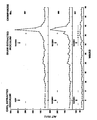
- the Figure shows a plot according to time on the ordinate of the chimpanzee treatment with chloroform extracted non-A, non-B virus and hepatitis B virus, and at the conclusion of the test these were negative 31 weeks after inoculation. Additional sham tests were made where there was no chloroform inactivation of the virus and the animals got hepatitis.
- H Human plasma, designated H, was drawn by plasmaphoresis from a patient with acute post-transfusion NANBH. A portion of the plasma unit had previously been aliquoted into 1 ml vials and a tenfold dilution series in fetal calf serum from 10° to 10 -10 was prepared, aliquoted into 1 ml quantities in vials and stored in -70°C until use. This plasma had been shown to have a chimpanzee infectivity titer of at least 10 6 . One ml of this plasma at a 10- 1 dilution was thawed and treated as described below.
- Representative chloroform sensitive and resistant viruses were selected as internal and external controls.
- the internal controls were added directly to the NANBH plasma or to the HBV serum.
- the internal control viruses were selected because the human serum or plasma containing the hepatitis agents lacked antibody to the control viruses, they would not replicate significantly in chimpanzees which were to be used to assay the hepatitis viruses, and they could be separately assayed each in the presence of the other without interference.
- Avian influenza virus H.N. was used as the chloroform sensitive internal control.
- Approximately 10 8 TCID 50 was added to each of the hepatitis specimens.
- the coliphage ⁇ 174 was used as the chloroform resistant virus and approximately 10 9 infectious particles were added to each of the hepatitis specimens.
- External control viruses were chosen because they represented typical human infectious agents and could be easily assayed.
- One ml of poliovirus type I LSC vaccine strain containing approximately 10 7 TDIC 50 /ml added to one ml of a 1:10 dilution of fetal calf serum as the chloroform resistant external control virus.
- One ml of Vaccinia virus Elstree strain containing approximately 10 6 TCID 50 was added in a similar way to fetal calf serum and served as the choroform sensitive external control virus.
- Each hepatitis and each external control featl calf serum preparation was diluted to a final volume of 10 ml or a 1:100 final concentration of serum or plasma.
- Each 10 ml specimen was then equally aliquoted into two glass screw-cap tubes.
- 0.55 ml of chloroform from a freshly opened bottle was added to make a final 10% (v/v) chloroform concentration. All tubes (both those containing and not containing chloroform) were then agitated on a vortex mixer for 10 minutes at room temperature and centrifuged at 1000 RPM for 10 minutes in a Sorvall 3B centrifuge.
- aqueous phase was then carefully pippeted off the interface of the chloroform containing samples and off any pelleted solid material from the samples not containing chloroform. These were aliquoted into 1 ml amounts and stored at -70°C until assayed.
- Avian influenza virus was assayed on MDCK cells by CPE and hemadsorption with guinea pig red blood cells. Quadruplicate wells of six well plates were inoculated for each dilution of a serial 10-fold dilution series of both the chloroform-treated and sham-treated specimen.
- Vaccinia virus infectivity was assayed by CPE in Vero cells. Quadruplicate wells of 6 well plates were inoculated with serial 10-fold dilutions of the fetal calf serum suspensions containing Vaccinia virus and the relative titers of the chloroform-treated and the sham-treated specimens were compared.
- Poliovirus was assayed by CPE in Vero cells in the same manner as the Vaccinia virus.
- chimpanzees Two chimpanzees were inoculated with one ml each of the chloroform-treated H plasma. One chimpanzee was inoculated with one ml of the chloroform-treated MS-2 serum. The chimpanzees were monitored for hepatitis by determination of alanine amion transferase (ALT) levels and aspartate amino transferase (AST) levels on weekly plasmapheresis samples.
- ALT alanine amion transferase
- AST aspartate amino transferase
- Hepatitis B surface antigen (HBsAg), antibody to HBsAg (anti-HBs) and antibody to hepatitis B core antigen (anti-HBc) were also measured in the plasma from the MS-2 inoculated chimpanzee using commercial radio-immunoassays (Ausria, Ausab and Corab, Abbott Laboratories). In addition, percutaneous liver biopsies were obtained weekly from all chimpanzees.
- biopsies were divided into three pieces and fixed in 10% buffered formalin for routine histology, glutaraldehyde for electron microscopy and snap frozen for immunofluorescence.
- Hepatitis was diagnosed in a chimpanzee if the ALT level rose to more than twice the upper limit of normal considered to be forty IU/L. Hepatitis was confirmed by light and electron microscopy on the liver biopsies.
- the Figure shows the weekly ALT levels in the two chimpanzees (nos. 889 and 947) inoculated with the chloroform-treated H plasma and the one chimpanzee (no. 967) inoculated with the chloroform-treated MS-2 serum.
- none of these animals developed biochemical evidence of hepatitis.
- Chimpanzee 967 that was inoculated with the MS-2 plasma did develop anti-HBs but not anti-HBc which is typical hepatitis B vaccine response indicating HBsAG was in the inoculum but not infectious virus. This animal was probably resistant to infection with live HBV due to its acquisition of anti-HBs. Therefore, it was not challenged with the sham-treated MS-2 plasma.
- chimpanzee 967 that had no prior exposure to NANBH developed NANBH with a 5-week incubation period.
- Chimpanzee 889 that had initially been inoculated with the chloroform-treated H plasma also developed NANBH with an incubation period of about 5 weeks after rechallenge with the sham-treated H plasma.
- chimpanzee 947 showed no evidence of hepatitis following either inoculations with the chloroform-treated or sham-treated H plasma.
- Hepatitis B virus does not contain a lipid envelope derived from a cell membrane but the coat is composed of lipoprotein. 10 4 infectious doses of HBV were completely inactivated by treatment with chloroform. Since 10 4 chimpanzee infectious doses of the H strain of NANB were also inactivated by chloroform, then it was concluded that this agent also contained essential lipid.
- This experiment was performed to determine if chloroform extraction of lyophilized antihemophilic fraction efficiently inactivated 2 lipid-containing viruses, an influenza virus and a pox virus.
- AHF avian influenza virus
- A/S8 or vaccinia virus ATCC VR 862 Lot 1
- tissue culture medium MEM complete with 10% FBS
- the product was lyophilized and extracted with chloroform at 1 or 3 temperatures: 5°, 20° or 40°C.
- the chloroform-extracted and control samples were reconstituted with water for injection and the infectivity titers of influenza virus and vaccinia virus determined in appropriate tissue culture systems.
- the tissue culture infectious dose so (TCID 50 ) titer of the avian influenza pool was 10 7.5 /ml; the vaccinia virus pool was approximately 10 6.5 /ml.
- Three 30 ml vials of AHF from the same lot were reconstituted with 30 ml of water for injection.
- To vial #1 was added 1 ml of avian influenza virus inoculum.
- To vial #2 was added 1 ml of vaccinia virus inoculum.
- each vial was distributed into 6 companion vials, labelled respectively 1A, 1 B, 1C, 1D, 1E, 1 F, 2A, 2B, 2C, 2D, 2E, 2F, etc. (see Table 1). All 18 vials were lyophilized and sealed. Vials A, B and C were extracted with chloroform as per the table; vials D, E and F were held at 5°, 20° and 40°, respectively, in the lyophilized state as controls. After chloroform extraction vials 1A through F and vials 2A through F were returned to the Hepatitis Viruses Section for performance of infectivity titrations. The vials were maintained at 5°C or lower temperature during transit and storage.
- Lyophilized Factor VIII (Factorate-Armour) was extracted with chloroform using three different procedures.
Landscapes
- Health & Medical Sciences (AREA)
- Life Sciences & Earth Sciences (AREA)
- Chemical & Material Sciences (AREA)
- General Health & Medical Sciences (AREA)
- Engineering & Computer Science (AREA)
- Zoology (AREA)
- Animal Behavior & Ethology (AREA)
- Public Health (AREA)
- Veterinary Medicine (AREA)
- Medicinal Chemistry (AREA)
- Epidemiology (AREA)
- Bioinformatics & Cheminformatics (AREA)
- Immunology (AREA)
- Hematology (AREA)
- Pharmacology & Pharmacy (AREA)
- Organic Chemistry (AREA)
- Biotechnology (AREA)
- Genetics & Genomics (AREA)
- Biomedical Technology (AREA)
- Wood Science & Technology (AREA)
- Virology (AREA)
- Cell Biology (AREA)
- General Chemical & Material Sciences (AREA)
- Proteomics, Peptides & Aminoacids (AREA)
- Biochemistry (AREA)
- Microbiology (AREA)
- Developmental Biology & Embryology (AREA)
- Chemical Kinetics & Catalysis (AREA)
- Gastroenterology & Hepatology (AREA)
- General Engineering & Computer Science (AREA)
- Medicines Containing Antibodies Or Antigens For Use As Internal Diagnostic Agents (AREA)
- Micro-Organisms Or Cultivation Processes Thereof (AREA)
- Medicines That Contain Protein Lipid Enzymes And Other Medicines (AREA)
- Investigating Or Analysing Biological Materials (AREA)
- Medicines Containing Material From Animals Or Micro-Organisms (AREA)
- Peptides Or Proteins (AREA)
Priority Applications (1)
| Application Number | Priority Date | Filing Date | Title |
|---|---|---|---|
| AT83902213T ATE37143T1 (de) | 1982-06-10 | 1983-06-07 | Inaktivierung eines lipid-virus. |
Applications Claiming Priority (2)
| Application Number | Priority Date | Filing Date | Title |
|---|---|---|---|
| US06/386,991 US4511556A (en) | 1982-06-10 | 1982-06-10 | Inactivation of a lipid virus |
| US386991 | 1989-07-28 |
Publications (3)
| Publication Number | Publication Date |
|---|---|
| EP0111549A1 EP0111549A1 (en) | 1984-06-27 |
| EP0111549A4 EP0111549A4 (en) | 1985-02-28 |
| EP0111549B1 true EP0111549B1 (en) | 1988-09-14 |
Family
ID=23527965
Family Applications (1)
| Application Number | Title | Priority Date | Filing Date |
|---|---|---|---|
| EP19830902213 Expired EP0111549B1 (en) | 1982-06-10 | 1983-06-07 | Inactivation of a lipid virus |
Country Status (11)
| Country | Link |
|---|---|
| US (1) | US4511556A (da) |
| EP (1) | EP0111549B1 (da) |
| AU (1) | AU560366B2 (da) |
| CA (1) | CA1198056A (da) |
| DE (1) | DE3377971D1 (da) |
| DK (1) | DK163210C (da) |
| ES (1) | ES8503721A1 (da) |
| FI (1) | FI79025C (da) |
| IT (1) | IT1170391B (da) |
| PT (1) | PT76845B (da) |
| WO (1) | WO1983004371A1 (da) |
Families Citing this family (21)
| Publication number | Priority date | Publication date | Assignee | Title |
|---|---|---|---|---|
| US4702909A (en) * | 1982-05-05 | 1987-10-27 | Louisiana State University A & M | Non-A, non-B hepatitis antigen, antigen compositions, vaccine and diagnostic reagent |
| US4581231A (en) * | 1982-06-10 | 1986-04-08 | The United States Of America As Represented By The Secretary Of Health And Human Services | Inactivation of viruses containing essential lipids |
| CA1208551A (en) * | 1982-12-27 | 1986-07-29 | Ricardo H. Landaburu | Solvent treatment of plasma protein products |
| US4615886A (en) * | 1983-08-31 | 1986-10-07 | The United States Of America As Represented By The Secretary Of The Department Of Health & Human Services | Utilizing a halohydrocarbon containing dissolved water to inactivate a lipid virus |
| US4490361A (en) * | 1983-12-02 | 1984-12-25 | Alpha Therapeutic Corporation | Virus inactivating heat treatment of plasma fractions |
| AT389815B (de) * | 1984-03-09 | 1990-02-12 | Immuno Ag | Verfahren zur inaktivierung von vermehrungsfaehigen filtrierbaren krankheitserregern in blutprodukten |
| DE3434472A1 (de) * | 1984-09-20 | 1986-03-27 | Lentia GmbH Chem. u. pharm. Erzeugnisse - Industriebedarf, 8000 München | Verfahren zur pasteurisation von plasmaproteinen bzw. von plasmaproteinfraktionen |
| US4673733A (en) * | 1985-04-11 | 1987-06-16 | Sudhish Chandra | Treatment of biological and pharmaceutical products adsorbed on a solid phase with virus and pyrogen inactivating agents |
| AT390374B (de) * | 1986-03-18 | 1990-04-25 | Schwab & Co Gmbh | Verfahren zum pasteurisieren von plasmaprotein und plasmaproteinfraktionen |
| US4789545A (en) * | 1986-03-31 | 1988-12-06 | New York Blood Center, Inc. | Removal of lipid soluble process chemicals from biological materials by extraction with naturally occurring oils or synthetic substitutes thereof |
| AT390560B (de) * | 1986-05-30 | 1990-05-25 | Immuno Ag | Verfahren zur inaktivierung von vermehrungsfaehigen filtrierbaren krankheitserregern |
| FR2603805A1 (fr) * | 1986-09-16 | 1988-03-18 | Transfusion Sanguine Assoc Rgl | Procede d'inactivation par ozonolyse de micro-organismes contaminants presents dans des materiaux biologiques essentiellement proteiques, les produits obtenus et leurs applications biologiques et analytiques |
| CA1339946C (en) * | 1987-03-31 | 1998-07-07 | Michael J. Griffith | Ultrapurification process for polypeptides |
| US5350671A (en) * | 1987-11-18 | 1994-09-27 | Chiron Corporation | HCV immunoassays employing C domain antigens |
| AT402891B (de) * | 1991-06-20 | 1997-09-25 | Immuno Ag | Verfahren zur herstellung eines inaktivierten blutproduktes |
| AT399818B (de) * | 1992-04-24 | 1995-07-25 | Immuno Ag | Verfahren zur herstellung einer hochgereinigten virussicheren faktor viii-präparation |
| AU6653094A (en) * | 1992-12-16 | 1994-07-04 | Immuno Aktiengesellschaft | Process for preparing a virus-safe biological composition |
| DE4320294A1 (de) * | 1993-06-18 | 1994-12-22 | Immuno Ag | Verwendung von humanem Protein C zur Verhinderung und Behandlung von Thrombozytenablagerungen |
| US6136865A (en) * | 1995-05-20 | 2000-10-24 | Octapharma Ag | Method for reduction of the infectiousness of potentially infectious material |
| US8956566B2 (en) | 2012-03-12 | 2015-02-17 | Pure Biosolutions, Llc | System and method for virus inactivation |
| ES2991988T3 (es) | 2017-10-30 | 2024-12-05 | Takeda Pharmaceuticals Co | Detergentes compatibles con el medio ambiente para la inactivación de virus con envoltura lipídica |
Family Cites Families (3)
| Publication number | Priority date | Publication date | Assignee | Title |
|---|---|---|---|---|
| US4031204A (en) * | 1976-03-30 | 1977-06-21 | Norden Laboratories, Inc. | Feline viral rhinotracheitis vaccine and combination feline viral rhinotracheitis-calicivirus vaccine prepared therefrom |
| GB1590448A (en) * | 1977-03-04 | 1981-06-03 | Akzo Nv | Vaccine and its preparations |
| US4230697A (en) * | 1978-07-03 | 1980-10-28 | Morinaga Milk Industry Co. Ltd. | Virus-inactivated HGI-glycoprotein capable of stimulating proliferation and differentiation of human granulocyte, process for preparing same and leukopenia curative containing same |
-
1982
- 1982-06-10 US US06/386,991 patent/US4511556A/en not_active Expired - Fee Related
-
1983
- 1983-06-07 DE DE8383902213T patent/DE3377971D1/de not_active Expired
- 1983-06-07 AU AU17720/83A patent/AU560366B2/en not_active Ceased
- 1983-06-07 EP EP19830902213 patent/EP0111549B1/en not_active Expired
- 1983-06-07 WO PCT/US1983/000884 patent/WO1983004371A1/en not_active Ceased
- 1983-06-09 CA CA000430020A patent/CA1198056A/en not_active Expired
- 1983-06-09 IT IT4846183A patent/IT1170391B/it active
- 1983-06-09 ES ES523117A patent/ES8503721A1/es not_active Expired
- 1983-06-09 PT PT7684583A patent/PT76845B/pt not_active IP Right Cessation
-
1984
- 1984-02-08 FI FI840512A patent/FI79025C/fi not_active IP Right Cessation
- 1984-02-09 DK DK057284A patent/DK163210C/da not_active IP Right Cessation
Non-Patent Citations (1)
| Title |
|---|
| Virologische Arbeitsmethoden, pp. 107-109 * |
Also Published As
| Publication number | Publication date |
|---|---|
| DE3377971D1 (en) | 1988-10-20 |
| PT76845B (en) | 1986-01-10 |
| DK57284A (da) | 1984-02-09 |
| AU1772083A (en) | 1983-12-30 |
| WO1983004371A1 (en) | 1983-12-22 |
| DK57284D0 (da) | 1984-02-09 |
| EP0111549A1 (en) | 1984-06-27 |
| AU560366B2 (en) | 1987-04-02 |
| FI79025C (fi) | 1989-11-10 |
| DK163210B (da) | 1992-02-10 |
| US4511556A (en) | 1985-04-16 |
| FI840512A0 (fi) | 1984-02-08 |
| CA1198056A (en) | 1985-12-17 |
| IT8348461A0 (it) | 1983-06-09 |
| DK163210C (da) | 1992-06-29 |
| FI79025B (fi) | 1989-07-31 |
| ES523117A0 (es) | 1985-03-01 |
| ES8503721A1 (es) | 1985-03-01 |
| FI840512L (fi) | 1984-02-08 |
| EP0111549A4 (en) | 1985-02-28 |
| IT1170391B (it) | 1987-06-03 |
| PT76845A (en) | 1983-07-01 |
Similar Documents
| Publication | Publication Date | Title |
|---|---|---|
| EP0111549B1 (en) | Inactivation of a lipid virus | |
| US4581231A (en) | Inactivation of viruses containing essential lipids | |
| Hollinger et al. | Transfusion-transmitted viruses study: experimental evidence for two non-A, non-B hepatitis agents | |
| FI80211B (fi) | Metod foer inaktivering av hepatit b virusin plasma och plasmaderivat. | |
| Hollinger et al. | Reduction in risk of hepatitis transmission by heat-treatment of a human factor VIII concentrate | |
| AU592757B2 (en) | Utilizing a halohydrocarbon containing dissolved water to inactivate a lipid virus | |
| Daemer et al. | Propagation of human hepatitis A virus in African green monkey kidney cell culture: primary isolation and serial passage | |
| Prince et al. | The development of virus-free labile blood derivatives—a review | |
| US4591505A (en) | Process for inactivating hepatitis B virus | |
| Yoshizawa et al. | Viruslike particles in a plasma fraction (fibrinogen) and in the circulation of apparently healthy blood donors capable of inducing non-A/non-B hepatitis in humans and chimpanzees | |
| Shikata et al. | Incomplete inactivation of hepatitis B virus after heat treatment at 60 C for 10 hours | |
| US4547367A (en) | Hepatitis B core antigen vaccine | |
| Barker et al. | Hepatitis B core antigen: immunology and electron microscopy | |
| US4164565A (en) | Vaccine for active immunization containing hepatitis B surface antigen and associated antigen | |
| US4118478A (en) | Vaccine manufacture for active immunization containing hepatitis B surface antigen and associated antigen | |
| US4118479A (en) | Vaccine for active immunization containing hepatitis B surface antigen and associated antigen | |
| Purcell et al. | Hepatitis B virus, hepatitis non‐A, non‐B virus and hepatitis delta virus in lyophilized antihemophilic factor: relative sensitivity to heat | |
| EP0110943A1 (de) | Verfahren zur herstellung eines impfstoffs gegen parasitäre krankheitserreger | |
| EP0093438B1 (en) | Non-a, non-b hepatitis antigen | |
| Lim et al. | Hepatitis C antibody assay in a longitudinal study of haemophiliacs | |
| NO161160B (no) | Inaktivering av et lipidvirus. | |
| Reesink et al. | Heat-inactivated HBsAg as a vaccine against hepatitis B | |
| Fields et al. | Unrelatedness of factor VIII‐derived non‐A/non‐B hepatitis and hepatitis B virus | |
| JPS59501161A (ja) | 脂質ウイルスの不活性化方法 | |
| Hamman et al. | Removal and inactivation of hepatitis A virus (HAV) during processing of factor VIII concentrates |
Legal Events
| Date | Code | Title | Description |
|---|---|---|---|
| PUAI | Public reference made under article 153(3) epc to a published international application that has entered the european phase |
Free format text: ORIGINAL CODE: 0009012 |
|
| AK | Designated contracting states |
Designated state(s): AT BE CH DE FR GB LI LU NL SE |
|
| 17P | Request for examination filed |
Effective date: 19840615 |
|
| GRAA | (expected) grant |
Free format text: ORIGINAL CODE: 0009210 |
|
| AK | Designated contracting states |
Kind code of ref document: B1 Designated state(s): AT BE CH DE FR GB LI LU NL SE |
|
| REF | Corresponds to: |
Ref document number: 37143 Country of ref document: AT Date of ref document: 19880915 Kind code of ref document: T |
|
| REF | Corresponds to: |
Ref document number: 3377971 Country of ref document: DE Date of ref document: 19881020 |
|
| ET | Fr: translation filed | ||
| PLBE | No opposition filed within time limit |
Free format text: ORIGINAL CODE: 0009261 |
|
| STAA | Information on the status of an ep patent application or granted ep patent |
Free format text: STATUS: NO OPPOSITION FILED WITHIN TIME LIMIT |
|
| 26N | No opposition filed | ||
| PGFP | Annual fee paid to national office [announced via postgrant information from national office to epo] |
Ref country code: FR Payment date: 19920610 Year of fee payment: 10 |
|
| PGFP | Annual fee paid to national office [announced via postgrant information from national office to epo] |
Ref country code: DE Payment date: 19920611 Year of fee payment: 10 |
|
| PGFP | Annual fee paid to national office [announced via postgrant information from national office to epo] |
Ref country code: SE Payment date: 19920615 Year of fee payment: 10 Ref country code: CH Payment date: 19920615 Year of fee payment: 10 |
|
| PGFP | Annual fee paid to national office [announced via postgrant information from national office to epo] |
Ref country code: BE Payment date: 19920617 Year of fee payment: 10 Ref country code: AT Payment date: 19920617 Year of fee payment: 10 |
|
| PGFP | Annual fee paid to national office [announced via postgrant information from national office to epo] |
Ref country code: LU Payment date: 19920619 Year of fee payment: 10 |
|
| PGFP | Annual fee paid to national office [announced via postgrant information from national office to epo] |
Ref country code: GB Payment date: 19920626 Year of fee payment: 10 |
|
| PGFP | Annual fee paid to national office [announced via postgrant information from national office to epo] |
Ref country code: NL Payment date: 19920630 Year of fee payment: 10 |
|
| EPTA | Lu: last paid annual fee | ||
| PG25 | Lapsed in a contracting state [announced via postgrant information from national office to epo] |
Ref country code: LU Free format text: LAPSE BECAUSE OF NON-PAYMENT OF DUE FEES Effective date: 19930607 Ref country code: GB Effective date: 19930607 Ref country code: AT Effective date: 19930607 |
|
| PG25 | Lapsed in a contracting state [announced via postgrant information from national office to epo] |
Ref country code: SE Effective date: 19930608 |
|
| PG25 | Lapsed in a contracting state [announced via postgrant information from national office to epo] |
Ref country code: LI Effective date: 19930630 Ref country code: CH Effective date: 19930630 Ref country code: BE Effective date: 19930630 |
|
| BERE | Be: lapsed |
Owner name: STEPHEN M. Effective date: 19930630 Owner name: FEINSTONE Effective date: 19930630 Owner name: PURCELL ROBERT H. Effective date: 19930630 |
|
| PG25 | Lapsed in a contracting state [announced via postgrant information from national office to epo] |
Ref country code: NL Effective date: 19940101 |
|
| GBPC | Gb: european patent ceased through non-payment of renewal fee |
Effective date: 19930607 |
|
| NLV4 | Nl: lapsed or anulled due to non-payment of the annual fee | ||
| PG25 | Lapsed in a contracting state [announced via postgrant information from national office to epo] |
Ref country code: FR Effective date: 19940228 |
|
| REG | Reference to a national code |
Ref country code: CH Ref legal event code: PL |
|
| PG25 | Lapsed in a contracting state [announced via postgrant information from national office to epo] |
Ref country code: DE Effective date: 19940301 |
|
| REG | Reference to a national code |
Ref country code: FR Ref legal event code: ST |
|
| EUG | Se: european patent has lapsed |
Ref document number: 83902213.4 Effective date: 19940110 |