EP0078500B1 - Method and apparatus for controlling the aerobic cultivation of yeasts - Google Patents
Method and apparatus for controlling the aerobic cultivation of yeasts Download PDFInfo
- Publication number
- EP0078500B1 EP0078500B1 EP82109930A EP82109930A EP0078500B1 EP 0078500 B1 EP0078500 B1 EP 0078500B1 EP 82109930 A EP82109930 A EP 82109930A EP 82109930 A EP82109930 A EP 82109930A EP 0078500 B1 EP0078500 B1 EP 0078500B1
- Authority
- EP
- European Patent Office
- Prior art keywords
- substrate
- rate
- yeast
- value
- products
- Prior art date
- Legal status (The legal status is an assumption and is not a legal conclusion. Google has not performed a legal analysis and makes no representation as to the accuracy of the status listed.)
- Expired
Links
Images



Classifications
-
- C—CHEMISTRY; METALLURGY
- C12—BIOCHEMISTRY; BEER; SPIRITS; WINE; VINEGAR; MICROBIOLOGY; ENZYMOLOGY; MUTATION OR GENETIC ENGINEERING
- C12M—APPARATUS FOR ENZYMOLOGY OR MICROBIOLOGY; APPARATUS FOR CULTURING MICROORGANISMS FOR PRODUCING BIOMASS, FOR GROWING CELLS OR FOR OBTAINING FERMENTATION OR METABOLIC PRODUCTS, i.e. BIOREACTORS OR FERMENTERS
- C12M41/00—Means for regulation, monitoring, measurement or control, e.g. flow regulation
- C12M41/30—Means for regulation, monitoring, measurement or control, e.g. flow regulation of concentration
- C12M41/34—Means for regulation, monitoring, measurement or control, e.g. flow regulation of concentration of gas
-
- C—CHEMISTRY; METALLURGY
- C12—BIOCHEMISTRY; BEER; SPIRITS; WINE; VINEGAR; MICROBIOLOGY; ENZYMOLOGY; MUTATION OR GENETIC ENGINEERING
- C12M—APPARATUS FOR ENZYMOLOGY OR MICROBIOLOGY; APPARATUS FOR CULTURING MICROORGANISMS FOR PRODUCING BIOMASS, FOR GROWING CELLS OR FOR OBTAINING FERMENTATION OR METABOLIC PRODUCTS, i.e. BIOREACTORS OR FERMENTERS
- C12M41/00—Means for regulation, monitoring, measurement or control, e.g. flow regulation
- C12M41/48—Automatic or computerized control
-
- C—CHEMISTRY; METALLURGY
- C12—BIOCHEMISTRY; BEER; SPIRITS; WINE; VINEGAR; MICROBIOLOGY; ENZYMOLOGY; MUTATION OR GENETIC ENGINEERING
- C12N—MICROORGANISMS OR ENZYMES; COMPOSITIONS THEREOF; PROPAGATING, PRESERVING, OR MAINTAINING MICROORGANISMS; MUTATION OR GENETIC ENGINEERING; CULTURE MEDIA
- C12N1/00—Microorganisms; Compositions thereof; Processes of propagating, maintaining or preserving microorganisms or compositions thereof; Processes of preparing or isolating a composition containing a microorganism; Culture media therefor
-
- C—CHEMISTRY; METALLURGY
- C12—BIOCHEMISTRY; BEER; SPIRITS; WINE; VINEGAR; MICROBIOLOGY; ENZYMOLOGY; MUTATION OR GENETIC ENGINEERING
- C12N—MICROORGANISMS OR ENZYMES; COMPOSITIONS THEREOF; PROPAGATING, PRESERVING, OR MAINTAINING MICROORGANISMS; MUTATION OR GENETIC ENGINEERING; CULTURE MEDIA
- C12N1/00—Microorganisms; Compositions thereof; Processes of propagating, maintaining or preserving microorganisms or compositions thereof; Processes of preparing or isolating a composition containing a microorganism; Culture media therefor
- C12N1/14—Fungi; Culture media therefor
- C12N1/16—Yeasts; Culture media therefor
- C12N1/18—Baker's yeast; Brewer's yeast
Definitions
- the invention relates to a method and an apparatus for controlling the aerobic cultivation of yeasts.
- yeasts e.g. for foodstuffs and livestock feed and baker's yeast
- a cultivation process has been employed in which small amounts of a substrate are sequentially fed to the medium.
- the substrate fed to the medium is completely consumed by the yeast and the formation of by-products such as ethanol is suppressed.
- the present invention is directed to a method and an apparatus for improving the production efficiency of the yeast cultivation by suitably controlling the substrate feeding rate during the cultivation.
- the substrate feeding method of the present invention is characterised in that the formation of by-products during cultivation is detected using a specific feeding rate a of the substrate as a parameter, and increasing the specific feeding rate a at a predetermined rate when no by-product is detected, and decreasing it when by-products are detected.
- the specific feeding rate a is decreased at-a rate greater than the predetermined increasing rate.
- the specific feeding rate a is defined as where F is the substrate feeding rate (I/h), Cs is the substrate concentration (g/I), V c is the volume of the culture solution (I) and C y is the concentration of yeast (g/I).
- the substrate feeding rate F can be expressed as
- the a value i.e. the substrate feeding rate per unit quantity of yeast, depends on the activity of the utilized enzymes.
- the yeast can be multiplied by the substrate ingested by raising the a value and increasing the substrate feeding rate if the activity is high. If the activity is low, on the other hand, the ingested substrate glucose is converted into ethanol and CO 2 , which lowers the productivity accordingly.
- the activity of the enzymes means the capacity of the enzymes to completely consume the substrate fed and to produce the yeast mass without forming by-products such as ethanol. Although it was desired to employ a method for feeding the substrate which avoids the formation of by-products, no method was hitherto available for directly measuring this activity.
- the enzyme activity can be estimated on the basis of the oxygen consumption rate, however, the oxygen consumption rate changes with the substrate feeding speed. For this reason, this method alone is not sufficient.
- an initial value of a is set at the start of the incubation, whereby the substrate is fed at a feeding rate corresponding to the set a value, and the a value is increased when no by-products are formed.
- the increasing rate of a is very critical: As a result of intensive investigation, it has been found that the a value should be increased by up to 20% and preferably 10%, in dependence of the change of the physiological enzyme activity.
- the upper limit of the increase of the a value is 20%, because the feed of substrate becomes excessive if the increase is more than 20%. If the increase is too small, on the other hand, the substrate feed becomes insufficient, and the productivity of the yeast production cannot be improved. Hence, the preferred increasing rate is set at 10%.
- the substrate feeding speed must be lowered, otherwise the by-products are formed continuously and the productivity drops.
- the formation of the by-products cannot be stopped if the a value is decreased at the same rate as the increase. This is because the mechanism of the multiplication of the yeast mass by decomposition of the substrate is different from the mechanism of the by-product formation by fermentation. It is assumed that once the enzymatic activity related to the formation of by-products becomes high, the flow of metabolic products is directed to the formation of the by-products. Accordingly, the decrease of the substrate feed becomes important. Corresponding investigations have revealed that the formation of the by-products is stopped and the by-products formed in the culture medium can be used again by the enzymes if the decreasing rate of the a value is at least 30% and preferably 50%.
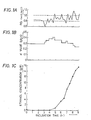
- FIGS 1, 2 and 3 illustrate examples of experiments of various substrate feeding systems using baker's yeast.
- feedback control by the respiratory quotient (RQ) was started from 1 or 2 hours after the start of incubation and the a value was changed every 15 minutes so as to control the substrate feeding speed.
- Figure 1 illustrates the behaviour of a system in which the a value was increased at a rate of 10% and was decreased at a rate of 10%.
- RQ exceeded 1,0 mol/mol when ethanol was formed in an amount of about 1 g/I (Fig. 1A). From this point the a value was reduced at a rate of 10% but the formation of ethanol was not stopped and about 15,4 g/I of ethanol were formed. It is assumed that once ethanol is thus formed (Fig. 1C), the yeast cells reach a physiological fermentation a state which is suitable for the ethanol formation and the physiological conditions cannot be rapidly changed to a state suitable for the multiplication of the yeast cells if the decreasing rate of the a value is too small (Fig. 1 B).
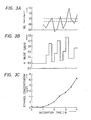
- Figure 2 illustrates the situation that the a value was increased at a rate of 20% and was decreased at a rate of 20% (Fig. 2B).
- RQ was from 0,8 to 1,0 mol/mol
- RQ exceeded 1,0 mol/mol when 8,4 g/I of ethanol were formed (Figs. 1A and 1C)
- ethanol was formed in a greater amount than in the case of Figure because the increasing rate of the a value was greater.
- the a value was thereafter reduced at a rate of 20%, the ethanol formation was not stopped and 14,7 g/I of ethanol were formed.
- Figure 3 illustrates the case in which the a value was increased at a rate of 50% and was decreased at a rate of 50% (Fig. 3B).
- RQ exceeded 1,0 mol/mol at the point when about 1,5 g/I of ethanol was formed (Figs. 3A and 3C).
- the a value was repeatedly increased and decreased, the ethanol formation was not stopped and 10,5 g/I of ethanol were formed.
- RQ caused hunching.
- the increasing rate of the a value must be up to 20% because if it is 50%, RQ causes hunching.
- the increasing rate of 10% is most suitable because the quantity of ethanol formed is great at an increase by 20%.
- the ethanol formation cannot be inhibited if the decreasing rate of the a value is below 20%.
- Figures 1 and 2 ethanol was formed even if the a value was not changed.
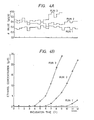
- Figure 4 shows the result of an experiment carried .out to confirm this phenomenon.
- the substrate was fed at a substantially constant rate, i.e., 0,3 g/g.h in RUN 1, 0,39 g/g.h in RUN 2 and 0,42 g/g.h in RUN 3 (Fig. 4A)
- the ethanol formation occurred after 5 hours. 7 hours and 11 hours, respectively, in the order of higher a values (Fig. 4B).
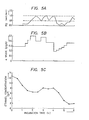
- Figure 5 illustrates the result of investigation of the decreasing rate of the a value.
- the incubation was started under a condition that 12,7 g/I of ethanol were present at the initial stage of incubation (Fig. 5C). In this case, too, the ethanol content could not be reduced effectively, though the a value was reduced at a rate of 20% at the point when RQ exceeded 1,0 mol/mol (Figs. 5A and 5B).
- the a value was decreased at a rate of 50% 4 hours after the start of incubation, the ethanol concentration was drastically reduced, and could be reduced to 2 g/I, though the a value was thereafter increased at a rate of 20%.
- the decreasing rate of the a value is 20%, the rise of the ethanol concentration in the culture solution can be prevented but the ethanol cannot be reduced.
- the decreasing rate is 50%, the physiological activity of the yeast cells can be changed so that the ethanol formation can be checked and ethanol consumption takes place. It has thus been found that the decreasing rate of the a value must be at least 30% and is preferably 50%.
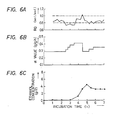
- Figure 6 illustrates data when the a value was increased at a rate of 10% and was decreased at a rate of 30% (Fig. 6B). It can be understood that though the effect can be observed at a decreasing rate of 30%, it is considerably inferior to the decreasing rate of 50%.
- the quantity of the yeast mass inside the incubation tank must be measured. Accordingly, the inventors of the present invention have found that the quantity of the yeast mass can be reasonably estimated from (1) the oxygen input and output, (2) the carbon input and output and (3) the multiplication model.
- the calculation of the quantity of the yeast cell mass from the multiplication model is based on the following formula: where c s is the substrate concentration in the solution (g/I), p is the specific multiplication speed (h -1 ), ⁇ max is the maximum specific multiplication speed (h -1 ), Y g is the yield constant of the yeast cell mass with respect to the substrate (g/g), m is a maintenance constant with respect to the substrate (g/g - h), K s is the saturation constant (g/I) and t is the time (h).
- the quantity of the yeast cell mass can be calculated by substituting the initial solution quantity V co , the initial yeast concentration c yo and the coefficients ⁇ max .
- K s , Y, and m the measured value of the substrate feeding rate F in this formula.
- the quantity of the yeast cell mass can be estimated from the oxygen input and output, the carbon input and output and the multiplication model. By combining these methods, the estimation of the quantity of the yeast cell mass can be made more reliable in practice.
- RQ>1,0 represents the ethanol formation because the amount of carbon dioxide gas is great and
- RQ ⁇ 1,0 represents that the substrate quantity is insufficient or the yeast cells consume resulting ethanol.
- the a value is reduced when RQ exceeds 1,0, assuming that ethanol is formed, and the a value is raised when RQ is considerably below 1,0, assuming that the substrate concentration becomes insufficient.
- the reason why the ethanol formation can be detected from the ratio of the outlet gas quantity to the inlet gas quantity ( ⁇ value) is that when ethanol is formed, the outlet gas quantity becomes greater than the inlet gas quantity because C0 2 is formed in a larger amount.
- This method is extremely effective because it does not need the measurement of 0 2 and C0 2 concentration that is necessary in the method using RQ.
- the method of measuring the volatile components in the outlet gas directly measure the by-products such as ethanol. Since the by-products discharged into the culture solution are present in the exhaust gas, they can be measured by gas chromatography or semiconductor sensors.
- Examples of the substrate to be used in the present invention include glucose, fructose, sucrose and molasses as industrial raw material.
- Auxiliary materials are those which are generally used for incubation, such as ammonium sulfate, urea, aqueous ammonia, potassium phosphate, yeast extract, magnesium sulfate, ferrous sulfate and various kinds of vitamines and minerals.
- FIG. 1 illustrates an example of the apparatus for practising the method of the present invention.
- a yeast seed is placed in an incubation tank 1 while the substrate is fed from a substrate tank 7 by a substrate feeding pump 8.
- data from an inlet oxygen partial pressure gauge 5, an inlet gas quantity meter 6, an outlet gas oxygen partial pressure gauge 11, a carbon dioxide partial pressure gauge 12 and an exhaust gas meter 13 are applied to a control computer 4 for calculating the quantity of the yeast mass in the incubation tank 1 from the multiplication model calculation, on the basis of the oxygen input and output and the carbon input and output and the substrate feeding rate.
- the substrate feeding rate is determined from this result and from the a value and the substrate feeding pump 8 is operated in accordance with the rate thus calculated.
- the RQ value and the ratio of the outlet gas quantity to the inlet gas quantity ( ⁇ value) are determined and the a value is changed in accordance with these values so as to control the substrate feeding rate.
- the dissolved oxygen concentration must be kept at least 2 mg/I and a signal of a dissolved oxygen sensor 9 is sent to a dissolved oxygen meter 10.
- the value of the dissolved oxygen meter 10 is then applied to the control computer 4 so as to control the number of revolutions of a stirrer 2 and the inlet gas oxygen concentration and the inlet gas quantity by an oxygen separator 3.
- the dissolved oxygen concentration is kept at a constant value.
- FIG 8 illustrates another example of the incubation apparatus of the present invention.
- This apparatus controls the substrate feed rate by means of a volatile component meter 18 disposed in the exhaust gas line in order to increase the a value when no volatile components as the by-products are detected, and to decrease the a value when they are detected.
- the construction of this apparatus is similar to that of the apparatus shown in Figure 7 with the exception of the exhaust gas line.
- the vitamine solution was prepared by dissolving 0,04 g of biotin, 0,08 g of vitame B 1 , 2.0 g of vitamine B 6 , 1,0 g of calcium pantothenate and 20 g of inositol in 1 I of distilled water.
- the mineral solution was prepared by dissolving 0,05 g of CuSO 4 ⁇ 5H 2 0, 0,8 g of ZnS0 4 - 7H 2 0 and 0,3 g of FeS0 4 (NH 4 ) 2 ⁇ 6H s O in 1 I of distilled water.
- the dissolved oxygen concentration was adjusted within the range of 4 to 6 mg/I by the number of revolutions of a stirrer, the oxygen partial pressure and the quantity of the feed gas.
- the oxygen partial pressure of the feed gas was changed by use of an air compressor in combination with an oxygen cylinder.
- the internal pressure of the incubation tank was adjusted to 0,5 kg/cm 2 and the carbon dioxide concentration of the exhaust gas was adjusted within 20%.
- the initial solution quantity was 15 the initial yeast cell concentration was 50 g/I and the a value was set to 0,3 g/g - h.
- the average of the yeast cell quantities obtained from the oxygen input and output and from the carbon input and output was used as the yeast cell quantity inside the incubation tank.
- the formation of ethanol as by-product was detected by the RQ value.
- the a value was increased at a rate of 10% when RQ ⁇ 0,8 mol/mol and was decreased at a rate of 50% when RQ>1,0 mol/mol.
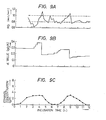
- the ethanol concentration could be kept below 3,4 g/I throughout the 12 hours' incubation period as shown in Figure 8.
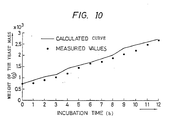
- the calculated value of the yeast cell mass quantity was substantially in agreement with the measured value as shown in Figure 10.
- the yeast cell mass concentration reached a high concentration of 104 g/I and its yield (ratio of multiplied yeast cell mass to fed glucose) was 0,43 g/g.
- the final culture solution quantity was 25,5 I.
- the ethanol concentration could be kept within the range of 0,15 to 4,2 g/I throughout the incubation period of 10 hours.
- the yeast cell mass concentration reached a high level of 100 g/I and its yield was 0,43 g/g.
- the final culture solution quantity was 24,3 I.
- the ethanol formation was detected from the ratio of the outlet gas quantity to the inlet gas quantity ( ⁇ value) and the a value was increased at a rate of 10% when ⁇ 0,95 was decreased at a rate of 50% when 13 ⁇ 1,0.
- the other conditions were the same as in Example 1.
- the ethanol concentration could be kept below 1 g/I throughout the incubation period of 10 hours.
- the yeast cell mass concentration reached a high level of 105 g/I and its yield was 0,44 g/g.
- the final culture solution quantity was 24,1 I.
- the exhaust gas was introduced into a gas chromatograph to detect the ethanol formation.
- the a value was increased at a rate of 10% when no ethanol was formed and was decreased at a rate of 50% when the ethanol concentration in the exhaust gas exceeded 1 ppm.
- the other conditions were the same as in Example 2.
- the ethanol concentration could be kept below 1,4 g/I throughout the incubation period of 12 hours.
- the yeast cell mass concentration reached a high level of 106 g/I and its yield was 0,45 g/g.
- the final culture solution quantity was 24,4 I.
- the substrate feeding can be controlled in such a manner that the formation of by-products is reduced, yeast cell mass concentrations in the culture medium of more than 100 g/I can be accomplished and hence the productivity of the process can be improved.
Landscapes
- Chemical & Material Sciences (AREA)
- Life Sciences & Earth Sciences (AREA)
- Engineering & Computer Science (AREA)
- Health & Medical Sciences (AREA)
- Bioinformatics & Cheminformatics (AREA)
- Organic Chemistry (AREA)
- Zoology (AREA)
- Wood Science & Technology (AREA)
- Genetics & Genomics (AREA)
- Biotechnology (AREA)
- General Engineering & Computer Science (AREA)
- Biomedical Technology (AREA)
- Biochemistry (AREA)
- Microbiology (AREA)
- General Health & Medical Sciences (AREA)
- Analytical Chemistry (AREA)
- Mycology (AREA)
- Tropical Medicine & Parasitology (AREA)
- Virology (AREA)
- Medicinal Chemistry (AREA)
- Sustainable Development (AREA)
- Botany (AREA)
- Computer Hardware Design (AREA)
- Micro-Organisms Or Cultivation Processes Thereof (AREA)
- Apparatus Associated With Microorganisms And Enzymes (AREA)
- Preparation Of Compounds By Using Micro-Organisms (AREA)
Applications Claiming Priority (2)
| Application Number | Priority Date | Filing Date | Title |
|---|---|---|---|
| JP177527/81 | 1981-11-04 | ||
| JP17752781A JPS5878584A (ja) | 1981-11-04 | 1981-11-04 | 培養基質の流加制御方法 |
Publications (2)
| Publication Number | Publication Date |
|---|---|
| EP0078500A1 EP0078500A1 (en) | 1983-05-11 |
| EP0078500B1 true EP0078500B1 (en) | 1985-08-28 |
Family
ID=16032476
Family Applications (1)
| Application Number | Title | Priority Date | Filing Date |
|---|---|---|---|
| EP82109930A Expired EP0078500B1 (en) | 1981-11-04 | 1982-10-27 | Method and apparatus for controlling the aerobic cultivation of yeasts |
Country Status (3)
| Country | Link |
|---|---|
| EP (1) | EP0078500B1 (enExample) |
| JP (1) | JPS5878584A (enExample) |
| DE (1) | DE3265882D1 (enExample) |
Families Citing this family (8)
| Publication number | Priority date | Publication date | Assignee | Title |
|---|---|---|---|---|
| DE3245312A1 (de) * | 1982-12-08 | 1984-06-14 | Hoechst Ag, 6230 Frankfurt | Verfahren zum durchfuehren (bio-)chemischer reaktionen |
| JPH078231B2 (ja) * | 1985-03-25 | 1995-02-01 | 株式会社日立製作所 | 培養制御方法及び培養制御装置 |
| WO1987001129A1 (en) * | 1985-08-15 | 1987-02-26 | Amgen | Fermentation methods for hepatitis vaccine production |
| JP2676511B2 (ja) * | 1987-03-23 | 1997-11-17 | 株式会社日立製作所 | 酢酸を指標とした培養方法及びその装置 |
| CA1293217C (en) * | 1987-11-09 | 1991-12-17 | Sooyoung Stanford Lee | Controlled growth rate fermentation |
| DK174835B1 (da) * | 2002-03-15 | 2003-12-15 | Pharma Nord Aps | Selengærprodukt, fremgangsmåde til fremstilling af et selengærprodukt samt anvendelse af produktet til fremstilling af en fødevare, et kosttilskud, eller et lægemiddel |
| AP2011006029A0 (en) * | 2009-05-20 | 2011-12-31 | Xyleco Inc | Processing biomass. |
| DK181562B1 (en) * | 2021-11-11 | 2024-05-17 | Dsm Ip Assets Bv | Feed control system for a fermentation system, and related method |
Family Cites Families (7)
| Publication number | Priority date | Publication date | Assignee | Title |
|---|---|---|---|---|
| DE739021C (de) * | 1937-11-17 | 1943-09-24 | Max Seidel | Verfahren und Einrichtung zum Regeln und UEberwachen des Prozessverlaufes bei der biologischen Verarbeitung von Naehrloesungen zum Zuechten von Mikroorganismen |
| US3002894A (en) * | 1958-11-14 | 1961-10-03 | Vogelbusch Gmbh | Method and device for controlling the growth of microbial cultures |
| DE1174733B (de) * | 1961-08-14 | 1964-07-30 | Heinz Von Fries Dr Ing | Verfahren zur Gewinnung von Presshefe erhoehter Haltbarkeit |
| ZA757515B (en) * | 1974-12-03 | 1976-11-24 | Sick Peter | Continuous process for the culture of micro-organisms and apparatuses for its execution |
| CS181337B1 (en) * | 1975-11-20 | 1978-03-31 | Miroslav Rut | Method of continuous aerobic cultivating microorganismus |
| US4167450A (en) * | 1977-07-13 | 1979-09-11 | University Of New Hampshire | Method and apparatus for the production of secondary metabolites by the maintenance-state cultivation of microorganisms |
| FR2483458B3 (fr) * | 1980-05-30 | 1983-04-01 | Agronomique Inst Nat Rech | Dispositif de determination automatique de parametres, notamment quotient respiratoire, de cultures microbiennes aerobies |
-
1981
- 1981-11-04 JP JP17752781A patent/JPS5878584A/ja active Granted
-
1982
- 1982-10-27 EP EP82109930A patent/EP0078500B1/en not_active Expired
- 1982-10-27 DE DE8282109930T patent/DE3265882D1/de not_active Expired
Non-Patent Citations (1)
| Title |
|---|
| Allgemeine Mikrobiologie - H.G. Schlegel, 5th Ed. 1981, pp. 192,193,250,251,261,262 * |
Also Published As
| Publication number | Publication date |
|---|---|
| JPS5878584A (ja) | 1983-05-12 |
| JPS6132957B2 (enExample) | 1986-07-30 |
| DE3265882D1 (en) | 1985-10-03 |
| EP0078500A1 (en) | 1983-05-11 |
Similar Documents
| Publication | Publication Date | Title |
|---|---|---|
| Woehrer et al. | Regulatory aspects of bakers' yeast metabolism in aerobic fed‐batch cultures | |
| Toma et al. | Inhibition of microbial growth and metabolism by excess turbulence | |
| Lin et al. | Determination of the maximum specific uptake capacities for glucose and oxygen in glucose‐limited fed‐batch cultivations of Escherichia coli | |
| Kareem et al. | Production of citric acid by Aspergillus niger using pineapple waste | |
| Weusthuis et al. | Energetics and kinetics of maltose transport in Saccharomyces cerevisiae: a continuous culture study | |
| US4064015A (en) | Control of biosynthesis in submerged culture | |
| EP0052890B1 (en) | Process and apparatus for controlling cultivation of microorganisms | |
| Minihane et al. | Fed-batch culture technology | |
| EP0078500A1 (en) | Method and apparatus for controlling the aerobic cultivation of yeasts | |
| WO2004044183A2 (en) | Feeding processes for fermentation | |
| Coello et al. | Optimisation of a culture medium containing fish silage for L-lysine production by Corynebacterium glutamicum | |
| Shibai et al. | Effects of oxygen and carbon dioxide on inosine fermentation | |
| Mou | Toward an optimum penicillin fermentation by monitoring and controlling growth through computer-aided mass balancing. w | |
| Jackson et al. | Kinetics of substrate inhibition of exponential yeast growth | |
| Toda et al. | Kinetics of biphasic growth of yeast in continuous and fed‐batch cultures | |
| Hockertz et al. | Impairment of DNA formation is an early event in Aspergillus niger under manganese starvation | |
| Ejiofor et al. | A robust fed-batch feeding strategy for optimal parameter estimation for baker's yeast production | |
| EP0199499B1 (en) | Continuous process for ethanol production by bacterial fermentation | |
| Lidén et al. | Energetics and product formation by Saccharomyces cerevisiae grown in anaerobic chemostats under nitrogen limitation | |
| JPS6214270B2 (enExample) | ||
| Aguilera et al. | Relationship between growth, fermentation, and respiration rates in Saccharomyces cerevisiae: a study based on the analysis of the yield Ypx | |
| JPS6091979A (ja) | 基質の流加制御方法及び装置 | |
| John Wase et al. | Variation in cell‐wall strength of Klebsiella pneumoniae NCTC 418 with change in agitation speed in a chemostat system | |
| Cooney et al. | The Monod constant for growth for Candida utilis on ammonium in continuous and batch cultures | |
| Cooney et al. | Computer‐aided material balancing for prediction of fermentation parameters |
Legal Events
| Date | Code | Title | Description |
|---|---|---|---|
| PUAI | Public reference made under article 153(3) epc to a published international application that has entered the european phase |
Free format text: ORIGINAL CODE: 0009012 |
|
| AK | Designated contracting states |
Designated state(s): DE FR GB |
|
| 17P | Request for examination filed |
Effective date: 19830513 |
|
| GRAA | (expected) grant |
Free format text: ORIGINAL CODE: 0009210 |
|
| AK | Designated contracting states |
Designated state(s): DE FR GB |
|
| REF | Corresponds to: |
Ref document number: 3265882 Country of ref document: DE Date of ref document: 19851003 |
|
| ET | Fr: translation filed | ||
| PLBE | No opposition filed within time limit |
Free format text: ORIGINAL CODE: 0009261 |
|
| STAA | Information on the status of an ep patent application or granted ep patent |
Free format text: STATUS: NO OPPOSITION FILED WITHIN TIME LIMIT |
|
| 26N | No opposition filed | ||
| PGFP | Annual fee paid to national office [announced via postgrant information from national office to epo] |
Ref country code: GB Payment date: 19971017 Year of fee payment: 16 Ref country code: FR Payment date: 19971017 Year of fee payment: 16 |
|
| PGFP | Annual fee paid to national office [announced via postgrant information from national office to epo] |
Ref country code: DE Payment date: 19971229 Year of fee payment: 16 |
|
| PG25 | Lapsed in a contracting state [announced via postgrant information from national office to epo] |
Ref country code: GB Free format text: LAPSE BECAUSE OF NON-PAYMENT OF DUE FEES Effective date: 19981027 |
|
| GBPC | Gb: european patent ceased through non-payment of renewal fee |
Effective date: 19981027 |
|
| PG25 | Lapsed in a contracting state [announced via postgrant information from national office to epo] |
Ref country code: FR Free format text: LAPSE BECAUSE OF NON-PAYMENT OF DUE FEES Effective date: 19990630 |
|
| REG | Reference to a national code |
Ref country code: FR Ref legal event code: ST |
|
| PG25 | Lapsed in a contracting state [announced via postgrant information from national office to epo] |
Ref country code: DE Free format text: LAPSE BECAUSE OF NON-PAYMENT OF DUE FEES Effective date: 19990803 |