EP0063373B1 - Cell-specific glycopeptide ligands - Google Patents
Cell-specific glycopeptide ligands Download PDFInfo
- Publication number
- EP0063373B1 EP0063373B1 EP82103247A EP82103247A EP0063373B1 EP 0063373 B1 EP0063373 B1 EP 0063373B1 EP 82103247 A EP82103247 A EP 82103247A EP 82103247 A EP82103247 A EP 82103247A EP 0063373 B1 EP0063373 B1 EP 0063373B1
- Authority
- EP
- European Patent Office
- Prior art keywords
- propionyl
- mannopyranosylthio
- bis
- acetyl
- lysyl
- Prior art date
- Legal status (The legal status is an assumption and is not a legal conclusion. Google has not performed a legal analysis and makes no representation as to the accuracy of the status listed.)
- Expired
Links
- 0 *CCCCC(*)C(NC(CCCC*)C(O)=O)=O Chemical compound *CCCCC(*)C(NC(CCCC*)C(O)=O)=O 0.000 description 3
- DTIUSLBYTRVUKQ-UHFFFAOYSA-N CC(C(C(C1OC(C)=O)OC(C)=O)OC(C)=O)OC1SCCC=O Chemical compound CC(C(C(C1OC(C)=O)OC(C)=O)OC(C)=O)OC1SCCC=O DTIUSLBYTRVUKQ-UHFFFAOYSA-N 0.000 description 1
- HYANGHUCVMHWOJ-UHFFFAOYSA-N OCC(C(C(C1O)O)O)OC1SCCC=O Chemical compound OCC(C(C(C1O)O)O)OC1SCCC=O HYANGHUCVMHWOJ-UHFFFAOYSA-N 0.000 description 1
Classifications
-
- C—CHEMISTRY; METALLURGY
- C07—ORGANIC CHEMISTRY
- C07H—SUGARS; DERIVATIVES THEREOF; NUCLEOSIDES; NUCLEOTIDES; NUCLEIC ACIDS
- C07H15/00—Compounds containing hydrocarbon or substituted hydrocarbon radicals directly attached to hetero atoms of saccharide radicals
- C07H15/02—Acyclic radicals, not substituted by cyclic structures
- C07H15/14—Acyclic radicals, not substituted by cyclic structures attached to a sulfur, selenium or tellurium atom of a saccharide radical
-
- A—HUMAN NECESSITIES
- A61—MEDICAL OR VETERINARY SCIENCE; HYGIENE
- A61K—PREPARATIONS FOR MEDICAL, DENTAL OR TOILETRY PURPOSES
- A61K47/00—Medicinal preparations characterised by the non-active ingredients used, e.g. carriers or inert additives; Targeting or modifying agents chemically bound to the active ingredient
- A61K47/50—Medicinal preparations characterised by the non-active ingredients used, e.g. carriers or inert additives; Targeting or modifying agents chemically bound to the active ingredient the non-active ingredient being chemically bound to the active ingredient, e.g. polymer-drug conjugates
- A61K47/51—Medicinal preparations characterised by the non-active ingredients used, e.g. carriers or inert additives; Targeting or modifying agents chemically bound to the active ingredient the non-active ingredient being chemically bound to the active ingredient, e.g. polymer-drug conjugates the non-active ingredient being a modifying agent
- A61K47/54—Medicinal preparations characterised by the non-active ingredients used, e.g. carriers or inert additives; Targeting or modifying agents chemically bound to the active ingredient the non-active ingredient being chemically bound to the active ingredient, e.g. polymer-drug conjugates the non-active ingredient being a modifying agent the modifying agent being an organic compound
- A61K47/549—Sugars, nucleosides, nucleotides or nucleic acids
-
- C—CHEMISTRY; METALLURGY
- C07—ORGANIC CHEMISTRY
- C07H—SUGARS; DERIVATIVES THEREOF; NUCLEOSIDES; NUCLEOTIDES; NUCLEIC ACIDS
- C07H15/00—Compounds containing hydrocarbon or substituted hydrocarbon radicals directly attached to hetero atoms of saccharide radicals
- C07H15/02—Acyclic radicals, not substituted by cyclic structures
- C07H15/04—Acyclic radicals, not substituted by cyclic structures attached to an oxygen atom of the saccharide radical
-
- C—CHEMISTRY; METALLURGY
- C07—ORGANIC CHEMISTRY
- C07J—STEROIDS
- C07J31/00—Normal steroids containing one or more sulfur atoms not belonging to a hetero ring
- C07J31/006—Normal steroids containing one or more sulfur atoms not belonging to a hetero ring not covered by C07J31/003
-
- C—CHEMISTRY; METALLURGY
- C07—ORGANIC CHEMISTRY
- C07J—STEROIDS
- C07J41/00—Normal steroids containing one or more nitrogen atoms not belonging to a hetero ring
- C07J41/0033—Normal steroids containing one or more nitrogen atoms not belonging to a hetero ring not covered by C07J41/0005
- C07J41/005—Normal steroids containing one or more nitrogen atoms not belonging to a hetero ring not covered by C07J41/0005 the 17-beta position being substituted by an uninterrupted chain of only two carbon atoms, e.g. pregnane derivatives
Definitions
- DNA deoxynucleic acid
- the present invention provides a tissue specific ligand which is chemically bound to a bioactive agent for administration and which is specific in its targeting ability.
- the ligand is carefully selected to avoid toxicity or side effects and is relatively easy to prepare and standardize for in vivo administration.
- the invention in the present instance includes a composition for chemically binding drugs or other bioactive substance for administration and delivery of the bioactive substance to a preselected tissue site.
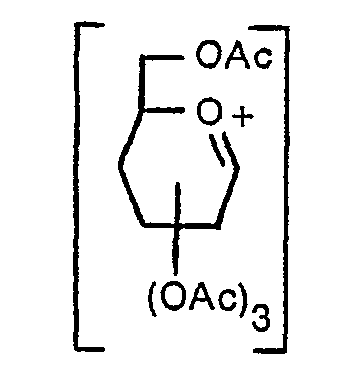
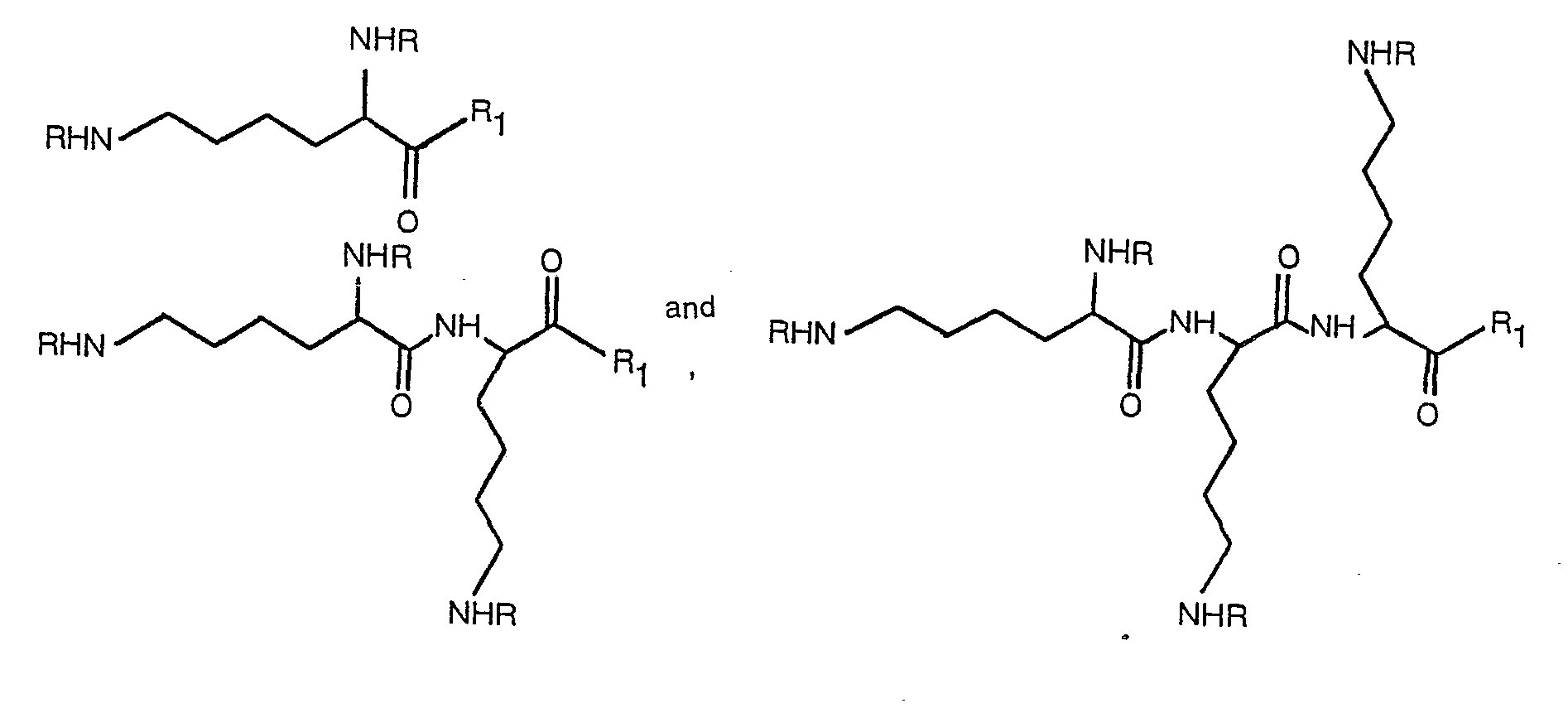
- composition prepared in accordance with the present invention include glycopeptides derived from lysine, dilysine or an oligolysine of the general formulae: wherein R is a saccharide compound selected from the group consisting of and R 1 is selected from the group consisting of hydroxyl and NHR 2 in which R 2 is 6-aminohexyl, and acid addition salts thereof.
- R is a saccharide compound selected from the group consisting of and R 1 is selected from the group consisting of hydroxyl and NHR 2 in which R 2 is 6-aminohexyl, and acid addition salts thereof.
- the invention also comprises the compound N 2 ,N 5- Bis[3-(a-D-mannopyranosylthio)-propionyl]-L-ornithine.
- compositions of the subject invention are glycopeptides of lysine or dilysine or an oligolysine and a selected sugar residue derived from galactose, fucose and mannose.
- compositions are derivatives of dilysine, lysine and oligolysine selected from N 2 - ⁇ N 2 ,N 6 - bis[3 - (a - D - mannopyranosylthio)propionyl] - L - lysyl ⁇ - N 6 - [3 - (a - D - mannopyranosylthio)propionyl] - L - lysine (5); N - 6 - aminohexyl - N 2 - ⁇ N 2 ,N 6 - bis[3 - (a - D - manopyranosylthio)propionyl - L - lysyl ⁇ - N 6 - [3 -
- compositions of the present invention are prepared by reactions of ornithine, lysine, dilysine, or an oligolysine with w-carboxylalkyl per-0-acylglycosides or -1-thioglycosides that involve amide-bond formation.
- the carbohydrates selected can be mannose, galactose or fucose.
- glycopeptide contains a terminal amino function
- a monoblocked hexylamine e.g., 6-t-butyloxycarbonylaminohexylamine
- a condensing agent such as dicyclohexylcarbodiimide followed by hydrolysis of the 6-(butyloxycarbonyl) function and resultant production of an intermediate compound of the formula and the corresponding oligolysine derivatives wherein R is as described above.
- glycopeptides of the invention can be converted to adducts with known bioactive substances, those adducts themselves not being claimed here.
- Said adducts are preferably formed by amidation of a terminal amine function of the glycopeptide compound to form an amide which is readily hydrolyzed intracellularly or is formed as an ester with a free carboxyl function of the glycopeptide compound.
- Ethyl ether is added to triturate the product, and the solvent decanted.
- the residue is purified by means of PrePakTM 500/Silica on a Waters Associates Prep LC/System 500 at 250 ml/min using chloroform-methanol-water 90:10:1 (v/v/v) as a liquid phase.
- the title compound is isolated as a foam (12.2 g, 80%): (c 0.95, CHCI 3 ).
- 6-t-Butyloxycarbonylaminohexylamine (0.648 g, 3 mmol) is added to a stirred solution of 4 (4.59 g, 3 mmol) and DCC (0.64 g, 3.1 mmol) in dichloromethane (30 ml). After 5 hours at room temperature, the mixture is filtered and the filtrate is evaporated in vacuo to a residue that is purified by means of PrePakTM 500/Silica on a Waters Associates Prep LC/System 500 at 250 mi/min using methanol-chloroform 5:95 (v/v) as a liquid phase. Compound 6 is isolated in 63% yield (3.2 g): mp 120 ⁇ 125°C (dichloromethane-ethyl ether); (c 1.02, CHCI 3 ).
- Triethylamine (10 ⁇ l) is added to a solution of 7 (124 mg, 0.1 mmol) and N-succinimidyl-3-(p-hydroxyphenyl)propionate (26.5 mg, 0.1 mmol) in DMF (2 ml). The mixture is stirred for 2 hours at room temperature, and poured into ethyl ether (50 ml). The precipitate is collected and put on a column of silica gel and eluted with chloroform-methanol-water 5:5:1 (v/v/v). The desired fractions are combined and evaporated in vacuo to a residue (52 mg, containing N-hydroxysuccinimide) that is fractionated with a Sephadex G-15 column. Lyophilization of the combined desired fractions gave 8 (46 mg): (c 1.0, H 2 O).
- a solution of raffinose pentahydrate (220 mg, 0.37 mmol) and 7 (229 mg, 0.185 mmol) in phosphate buffer (0.1 M, pH 7.0, 7.5 ml) is incubated with D-galactose oxidase (450 units, 60 ⁇ g) and catalase (18 mg) for 4 hours at 37°C.
- a solution of sodium cyanoborohydride (100 mg) in phosphate buffer (0.1 M, pH 7.0, 1.0 ml) is added, and the mixture is kept for 24 hours at room temperature.
- the solution is put on column of Bio-Rad AG 1-X8 (RCO 3 - ) ion exchange resin and eluted with water.
- p-Nitrophenylchloroformate (2.3 g, 11.4 mmol) is added to a stirred solution of dexamethasone (3.92 g, 10 mmol) in chloroform (100 ml) containing pyridine (10 ml). The resulting solution is kept overnight at room temperature, and washed successively with water, dilute hydrochloric acid, and water. The solution is dried and evaporated in vacuo to a residue that is triturated with ethyl ether to give crystals (5.5 g, 100%).
- Triethylamine (0.3 ml) is added to a solution of 7 (210 mg, 0.17 mmol) and 21-dexamethasone (p-nitrophenyl)carbonate (140 mg, 0.25 mmol) in DMF (2 ml). The solution is kept overnight at room temperature and poured with stirring into ethyl ether. The solid (340 mg) is collected and put on a column of silica gel and eluted with chloroform methanol-water 60:40:4 (v/v/v). Compound 10 is isolated in 69% yield (170 mg).
- Dexamethasone-21-methanesulfonate (69 mg, 0.15 mmol) is added under N 2 to a stirred suspension of the potassium salt of 5 [prepared by adding KOH (0.2N, 0.72 ml) to 5 (154 mg) and lyophilized] in DMF (3 ml) and the mixture is heated overnight at 50°C.
- the reaction mixture is evaporated in vacuo to a residue that is put on a column of silica gel and eluted with CHCl 3 ⁇ MeOH ⁇ H 2 O 60:40:4 (v/v/v). The desired fractions are combined and evaporated to give the title compound (42 mg, 21%), R F 0.7.
- Triethylamine (417 ⁇ l, 3 mmol) is added to a solution of 3 (1.12 g, 2 mmol) and L-lysine trifluoroacetate salt (0.26 g, 1 mmol) in DMF (10 ml). The mixture is stirred for 18 hours at room temperature and evaporated in vacuo to a residue that is put on a column of silica gel and eluted with chloroform-methanol-water 90:10:1 (v/v/v). The title compound is isolated in 69% yield (0.68 g): (c 1.0, CHCl 3 ).
- Compound 13 is prepared as for 11, and has (c 1.0, CHCI 3 ).
- This compound is prepared similarly to 12 and has identical NMR spectrum as 12: (c 1.0, H 2 O).
- a solution of 15 (52 mg, 0.025 mmol) in methanol-water-triethylamine 5:4:1 (v/v/v, 1 ml) is kept for 3 hours at room temperature, and evaporated in vacuo to a residue that is put on a Sephadex G-15 column and eluted with water.
- Cyanomethyl 2,3,4,6-tetra-O-acetyl-1-thio-a-D-mannopyranoside (2.02 g, 5 mmol) is treated with sodium methoxide (0.2 N) in methanol (50 ml) for 20 hours at room temperature, and the solution is evaporated in vacuo to a foam.
- a solution of L-lysyl-L-lysine dihydrochloride (150 mg, 0.43 mmol) in sodium borate (2.5 M, pH 10, 10 ml) is added, and the resulting solution is kept for 4 hours at room temperature.
- p-Nitrophenol (2.6 g. 18.7 mmol) is added to a solution of 23 (7.0 g, 18.5 mmol) and DCC (3.8 g, 18.5 mmol) in dichloromethane (20 ml), and the mixture is stirred for 3 hours at room temperature and diluted with ethyl ether (50 ml). The resulting mixture is poured through a sintered funnel packed with silica gel, and the filtrate is evaporated in vacuo to dryness.
- 6-(5-Cholesten-3ß-yloxy)hexylamine (100 mg, 0.21 mmol) is added to a stirred solution of 4 (315 mg, 0.21 mmol) and DCC (43 mg, 0.21 mmol) in dichloromethane (5 ml). After 2 hours at room temperature, the mixture is filtered and the filtrate is evaporated in vacuo to a residue that is put on a column of silica gel and eluted with CHCl 3 ⁇ MeOH 98:2 followed by CHCl 3 ⁇ MeOH 96:4 (v/v). The desired fractions are combined and evaporated to a syrup (428 mg) that is triturated with anhydrous ethyl ether. The solid is filtered and washed with ethyl ether to give the title compound (306 mg, 74%): mp 154-164°C; (c 1.0, CHCI 3 ).
- L-lysyl-L-lysine trifluoroacetate salt prepared from L-lysyl-L-lysine dihydrochloride (0.23 g, 0.66 mmol) and trifluoroacetic acid, and 30 (1.09 g, 2 mmol) is DMF (10 ml) containing triethylamine (400 ⁇ l) is stirred overnight at room temperature. The mixture is evaporated in vacuo to a residue that is put on a column of silica gel and eluted with chloroform-methanol-water 90:10:1 (v/v/v). The desired fractions are combined and evaporated to give 31 (0.73 g, 80%): (c 1.28, CHCI 3 ).
- 6-t-Butyloxycarbonylaminohexylamine (275 mg, 1.1 mmol) is added to a stirred solution of 11 (983 mg, 1 mmol) and DCC (220 mg, 1.07 mmol); in dichloromethane (10 ml). The mixture is stirred for 5 hours at room temperature, filtered and the filtrate is evaporated in vacuo to dryness. The residue is put on a column of silica gel and eluted with (CHl 3 ⁇ MeOH ⁇ H 2 O 95:5:5 (v/v/v) to give the title compound (1.07 g, 97%) which is triturated with Et 2 O: mp 68-71°C (sintered); (c 1.0, CHCI 3 ).
- Triethylamine 35 ⁇ l is added to a solution of 34 (180 mg, 0.24 mmol) and N-succinimidyl-3-(p-hydroxyphenyl)propionate (65 mg, 0.25 mmol) in water (0.5 ml) and DMF (0.5 ml). The mixture is stirred for 10 min and evaporated in vacuo to a residue which is put on a column of silica gel and eluted with CHCL 3 -MeOH-H 2 0 70:30:3 (v/v/v). The desired fractions are combined and evaporated to give the title compound (80 mg, 38%), R F 0.25.
Landscapes
- Chemical & Material Sciences (AREA)
- Health & Medical Sciences (AREA)
- Organic Chemistry (AREA)
- General Health & Medical Sciences (AREA)
- Life Sciences & Earth Sciences (AREA)
- Engineering & Computer Science (AREA)
- Biochemistry (AREA)
- Molecular Biology (AREA)
- Crystallography & Structural Chemistry (AREA)
- Biotechnology (AREA)
- Genetics & Genomics (AREA)
- Medicinal Chemistry (AREA)
- Bioinformatics & Cheminformatics (AREA)
- Pharmacology & Pharmacy (AREA)
- Epidemiology (AREA)
- Animal Behavior & Ethology (AREA)
- Public Health (AREA)
- Veterinary Medicine (AREA)
- Medicines That Contain Protein Lipid Enzymes And Other Medicines (AREA)
- Peptides Or Proteins (AREA)
- Pharmaceuticals Containing Other Organic And Inorganic Compounds (AREA)
- Preparation Of Compounds By Using Micro-Organisms (AREA)
- Medicinal Preparation (AREA)
- Organic Low-Molecular-Weight Compounds And Preparation Thereof (AREA)
- Saccharide Compounds (AREA)
- Steroid Compounds (AREA)
- Medicines Containing Material From Animals Or Micro-Organisms (AREA)
Abstract
Description
- The use of drugs for therapeutic purposes would be greatly enhanced by a method which would introduce them selectively into those cells where the pharmacological action is needed. Several approaches to accomplish this purpose have been investigated. Two groups of investigators; J. C. Chabala and T. Y. Shen, Carbohyd. Res., 67, 55 (1978); M. M. Ponpipom, R. L. Bugianesi, and T. Y. Shen, Canad. J. Chem. 58, 214 (1980), M. R. Mauk, R. C. Gamble and J. D. Baldeschwieler, Science 207, 309 (1980); Proc. Natl. Acad. Sci. USA 77, 4430, (1980), have synthesized and incorporated glycolipids into liposomes and studied their distribution in vivo showing the importance of carbohydrates as cell-surface determinants.
- Other investigators have studied the use of human albumin microspheres covalently coupled to succinoyl-Ala-Ala-Pro-VaICH2CI which is an active site-directed inhibitor of human leukocyte elastase. These investigators reported that such conjugates directed the inhibitor to the lungs when administered intravenously in rats, R. R. Martodam, D. Y. Twumasi, I. E. Liener, J. C. Powers, N. Nishino and G. Krejcarek, Proc. Natl. Acad. Sci. USA 76, 2128 (1979). Earlier work of G. Ashwell and A. Morell, Adv. Enzmol. 41, 99 (1974) demonstrated that exposed sugar residues in glycoproteins serve as determinants for in vivo (i.e. clearance) and in vitro (i.e. uptake) recognition.
- Many other selective drug delivery systems have been described, G. Gregoriadis (Ed.) "Drug Carriers in Biology and Medicine", Academic Press 1979; Nature 265, 407 (1977) including binding a drug or dose of radioactive atom to tumor specific antibodies. In addition, deoxynucleic acid (DNA) has been used as a carrier for antitumor drugs such as daunorubicin, adriamycin and ethidium bromide.
- These methods, although useful in certain cases have some problems. In some cases the targeting is too imprecise and the payload too small. Use of DNA and liposomes as carriers also has certain problems related to potential toxicity and pharmaceutical requirements.
- The present invention provides a tissue specific ligand which is chemically bound to a bioactive agent for administration and which is specific in its targeting ability. The ligand is carefully selected to avoid toxicity or side effects and is relatively easy to prepare and standardize for in vivo administration.
- The invention in the present instance includes a composition for chemically binding drugs or other bioactive substance for administration and delivery of the bioactive substance to a preselected tissue site.
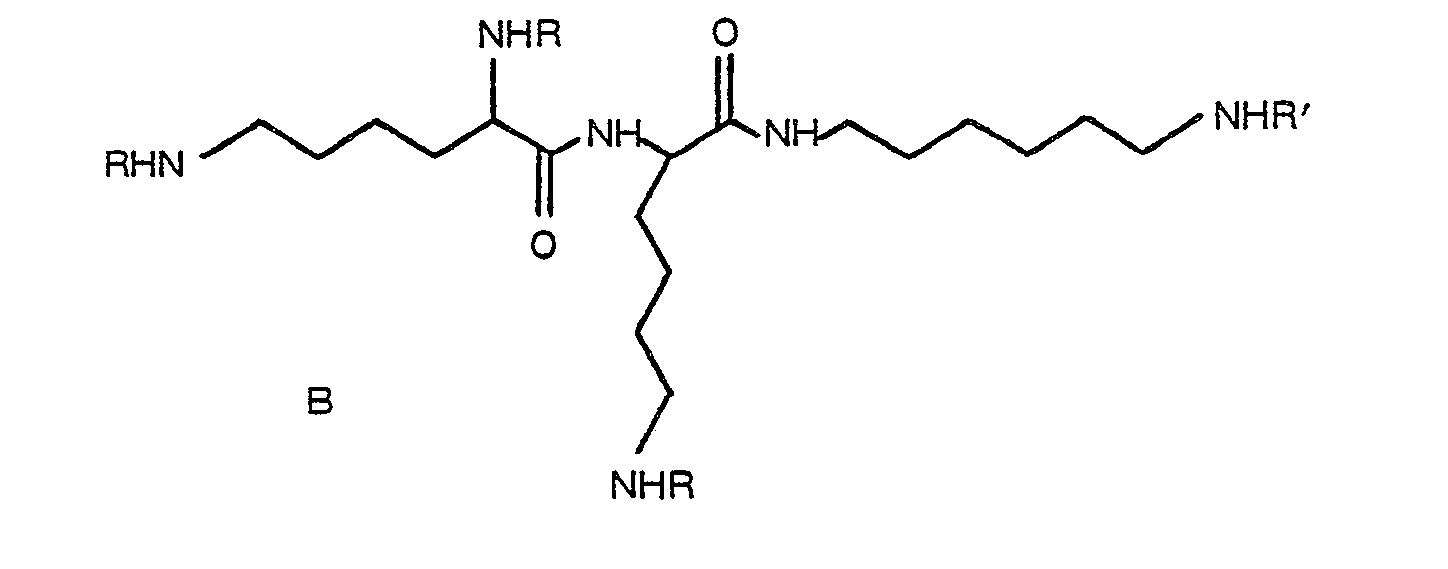
- Thus, the composition prepared in accordance with the present invention include glycopeptides derived from lysine, dilysine or an oligolysine of the general formulae:


- Preferably the compositions of the subject invention are glycopeptides of lysine or dilysine or an oligolysine and a selected sugar residue derived from galactose, fucose and mannose. Especially preferred compositions are derivatives of dilysine, lysine and oligolysine selected from N2 - {N2,N6 - bis[3 - (a - D - mannopyranosylthio)propionyl] - L - lysyl} - N6 - [3 - (a - D - mannopyranosylthio)propionyl] - L - lysine (5); N - 6 - aminohexyl - N2 - {N2,N6 - bis[3 - (a - D - manopyranosylthio)propionyl - L - lysyl} - N6 - [3 - (a - D - mannopyranosylthio)propionyl] - L - lysinamide trifluoroacetate salt (7); N2,N6 - bis[3 - (a - D - mannopyranosylthio)propionyl] - L - lysine (12); N2 - {N2,N6 - bis[1 - imino - 2 - (a - D - mannopyranosylthio)ethyl] - L - lysyl} - N6 - [1 - imino - 2 - (a - D - mannopyranosylthio)ethyl] - L - lysine (17); N2,N6 - bis[3 - (a - D - mannopyranosylthio)propionyl] - D - lysine (14); N2 - {N2,N6 - bis[3 - (a - D - mannopyranosylthio)propionyl] - L - lysyl} - N6 - [3 - (a - D - mannopyranosylthio)propionyl] - L lysyl} - N6 - [3 - (a - D - mannopyranosylthio)propionyl] - L - lysine (16); N1 - {N2,N6 - bis[3(β - D - galactopyranosylthio)propionyl] - L - lysyl} - N6 - [3 - (β - D - galactopyranosylthio)propionyl] - L - lysine (20); N - 6 - aminohexyl - N2 - {N2,N6 - bis[3 - (β - D - galactopyranosylthio)propionyl] - L - lysyl} - N6 - [3 - (β - D - galactopyranosylthio)propionyl] - L - lysinamide trifluoroacetate salt (22); N2 - {N2,N6 - bis[3 - (β - L - fucopyranosylthiolpropionyl] - L - lysyl} - N6 - [3 - (β - L - fucopyranosylthio)-propionyl] - L - lysine (26); N2 - {N2,N6 - bis[(a - D - mannopyranosylthio)acetyl] - L - lysyl} - N6 - [(a - D - mannopyranosylthio)acetyl] - L - lysine (32); N - 6 - aminohexyl - N2,N6 - bis[3 - (a - D - manno- pyranosylthio)propionyl] - L - lysinamide trifluoroacetate salt (34); N2 - {N2,N6 - bis[3 - (a - D - manno- pyranosyl)propionyl] - L - lysyl} - N6 - [3 - (a - D - mannopyranosyl)propionyl] - L - lysine (41).
- The compositions of the present invention are prepared by reactions of ornithine, lysine, dilysine, or an oligolysine with w-carboxylalkyl per-0-acylglycosides or -1-thioglycosides that involve amide-bond formation. The carbohydrates selected can be mannose, galactose or fucose.
- The corresponding compounds in which the amide linkage is replaced by an amidine linkage are prepared by reaction of lysine, dilysine, or oligolysine with 2-imino-2-methoxyethyl 1-thioglycosides of mannose, galactose or fucose. These intermediates are illustrated in the case of L-lysine by the following formula:


- Compounds of the type in which the glycopeptide contains a terminal amino function are readily prepared from the corresponding glycopeptide having a free carboxyl group by reaction of the said glycopeptide with a monoblocked hexylamine, e.g., 6-t-butyloxycarbonylaminohexylamine, in the presence of a condensing agent such as dicyclohexylcarbodiimide followed by hydrolysis of the 6-(butyloxycarbonyl) function and resultant production of an intermediate compound of the formula

- The glycopeptides of the invention can be converted to adducts with known bioactive substances, those adducts themselves not being claimed here. Said adducts are preferably formed by amidation of a terminal amine function of the glycopeptide compound to form an amide which is readily hydrolyzed intracellularly or is formed as an ester with a free carboxyl function of the glycopeptide compound.
- The following structural formulas identify structurally compounds which are disclosed in the examples which follow immediately thereafter. Compounds with biologically active moieties on R1 are not claimed but serve only for illustrating the use possibilities of the claimed compounds.
-




- A mixture of 2-S-(2,3,4,6-tetra-O-acetyl-α-D-mannopyranosyl)-2-thiopseudourea hydrobromide (1) (90 g, 0.185 mol), freshly crystallized 3-iodopropionic acid (37 g, 0.199 mol), potassium carbonate (29.6 g, 0.215 mol), and potassium metabisulfite (37 g, 0.167 mol) in acetone (150 ml) and water (150 ml) is stirred for45 minutes at room temperature. Hydrochloric acid (5%, 700 ml) and chloroform (700 ml) are added to the mixture. The organic layer is separated and washed with water, dried, and evaporated in vacuo to an oil (80 g, quantitative yield) that is used, without further purification, for the preparation of 3.
- p-Nitrophenol (15.3 g, 0.11 mol) is added to a solution of 2 (49 g, 0.112 mol) and DCC (23 g, 0.112 mol) in dry dichloromethane (250 ml). The mixture is stirred for 3 hours at room temperature, filtered, and the filtrate evaporated in vacuo to a residue that is purified by means of PrePak" 500/Silica on a Waters Associates Prep LC/System 500 at 250 ml/min using ethyl ether-dichloromethane 4:96 (v/v) as a liquid phase. Compound 3 is isolated in 55% yield (33.7 g). An analytical sample is crystallized from ethyl ether: mp 119―121°C;


-
- Anal. Calc. for C23H27NSO13: C, 49.55; H, 4.88; N, 2.51; S, 5.75. Found: C, 49.32; H, 4.75; N, 2.84; S, 6.00
- A solution of L-lysyl-L-lysine dihydrochloride (3.47 g. 10 mmol) in the trifluoroacetic acid (20 ml) is warmed to 35°C and poured into ethyl ether (180 mi) to give L-lysyl-L-lysine trifluoroacetate salt as a precipitate that is filtered and washed with ethyl ether. A solution of this ditrifluoroacetate salt and 3 (16.71 g, 30 mmol) in DMF (90 ml) containing triethylamine (9 ml, 64 mmol) is stirred for 3 hours at room temperature, and evaporated in vacuo to a small volume. Ethyl ether is added to triturate the product, and the solvent decanted. The residue is purified by means of PrePak™ 500/Silica on a Waters Associates Prep LC/System 500 at 250 ml/min using chloroform-methanol-water 90:10:1 (v/v/v) as a liquid phase. The title compound is isolated as a foam (12.2 g, 80%):

- Anal. Calc. for C63H92N4S3O33: C, 49.47; H, 6.06; N, 3.66; S, 6.29. Found: C, 49.73; H, 6.41; N, 3.85; S, 6.16.
- A solution of 4 (2.0 g) in methanol-water-triethylamine 5:4:1 (v/v/v, 20 ml) is kept overnight at room temperature, and evaporated in vacuo to a residue that is put on a column of silica gel and eluted with chloroform-methanol-water 60:40:10 (v/v/v). The desired fractions are combined and evaporated to dryness. A solution of this compound in water (15 ml) is lyophilized to give 5 (1.2 g, 90%): mp 95-100°C;

- Anal Calc for C39H68N4S3O21.0.5(CH3CH2)3N: C, 46.89; H, 7.07; N, 5.86; S, 8.94. Found: C, 46.69; H, 7.32; N, 6.13; S, 8.80.
- 6-t-Butyloxycarbonylaminohexylamine (0.648 g, 3 mmol) is added to a stirred solution of 4 (4.59 g, 3 mmol) and DCC (0.64 g, 3.1 mmol) in dichloromethane (30 ml). After 5 hours at room temperature, the mixture is filtered and the filtrate is evaporated in vacuo to a residue that is purified by means of PrePak™ 500/Silica on a Waters Associates Prep LC/System 500 at 250 mi/min using methanol-chloroform 5:95 (v/v) as a liquid phase. Compound 6 is isolated in 63% yield (3.2 g): mp 120―125°C (dichloromethane-ethyl ether);

- Anal. Calc. for C74H114N6S3O34: C, 51.44; H, 6.65; N, 4.86; S, 5.57. Found: C, 51.65; H, 6.64; N, 4.86; S, 5.41.
- A solution of 6 (2.5 g, 1.45 mmol) in 90% trifluoroacetic acid (10 ml) is kept for 10 min at room temperature and evaporated in vacuo to dryness. Methanol-water-triethylamine 5:4:1 (v/v/v, 40 ml) is added and the solution is kept overnight at room temperature and evaporated to a residue (5.7 g) which contains 7 and triethylaminetrifluoroacetate. The mixture is triturated with ethyl acetate to give 7 as a solid that is filtered and dried (1.84 g, 100%):

- Anal. Calc. for C47H83F3N6S3O22: C, 45.62; H, 6.76; N, 6.79; S, 7.77; Found: C, 45.42; H, 6.83; N, 6.77; S, 7.84.
- Triethylamine (10 µl) is added to a solution of 7 (124 mg, 0.1 mmol) and N-succinimidyl-3-(p-hydroxyphenyl)propionate (26.5 mg, 0.1 mmol) in DMF (2 ml). The mixture is stirred for 2 hours at room temperature, and poured into ethyl ether (50 ml). The precipitate is collected and put on a column of silica gel and eluted with chloroform-methanol-water 5:5:1 (v/v/v). The desired fractions are combined and evaporated in vacuo to a residue (52 mg, containing N-hydroxysuccinimide) that is fractionated with a Sephadex G-15 column. Lyophilization of the combined desired fractions gave 8 (46 mg):

- Anal. Calc. for C54H90N6S3O22.2H2O: C, 49.60; H, 7.25; N, 6.43; S, 7.36. Found: C, 49.51; H, 7.57; N, 6.30; S, 7.52.
- A solution of raffinose pentahydrate (220 mg, 0.37 mmol) and 7 (229 mg, 0.185 mmol) in phosphate buffer (0.1 M, pH 7.0, 7.5 ml) is incubated with D-galactose oxidase (450 units, 60 µg) and catalase (18 mg) for 4 hours at 37°C. A solution of sodium cyanoborohydride (100 mg) in phosphate buffer (0.1 M, pH 7.0, 1.0 ml) is added, and the mixture is kept for 24 hours at room temperature. The solution is put on column of Bio-Rad AG 1-X8 (RCO3 -) ion exchange resin and eluted with water. The desired fractions are combined and lyophilized to give a fluffy material (400 mg) that is fractionated by a Sephadex G-15 column (vo=60 ml, flow rate 0.15 ml/min). Fractions 30 and 31 (2.5 ml/fraction) are lyophilized to give 9 (58 mg, 20%):

- Anal. Calc. for C63H112N6S3O35.H2O: C, 46.49; H, 7.06; N, 5.16. Found: 46.36; H, 7.27; N, 5.16.
- p-Nitrophenylchloroformate (2.3 g, 11.4 mmol) is added to a stirred solution of dexamethasone (3.92 g, 10 mmol) in chloroform (100 ml) containing pyridine (10 ml). The resulting solution is kept overnight at room temperature, and washed successively with water, dilute hydrochloric acid, and water. The solution is dried and evaporated in vacuo to a residue that is triturated with ethyl ether to give crystals (5.5 g, 100%). An analytical sample is recrystallized from dichloromethane-ethyl ether: mp 204―205°C;

- Anal. Calc. for C29H32FNO9: C, 62.47; H, 5.79; F, 3.41; N, 2.51. Found: C, 62.21; H, 5.89; F, 3.32; N, 2.42.
- Triethylamine (0.3 ml) is added to a solution of 7 (210 mg, 0.17 mmol) and 21-dexamethasone (p-nitrophenyl)carbonate (140 mg, 0.25 mmol) in DMF (2 ml). The solution is kept overnight at room temperature and poured with stirring into ethyl ether. The solid (340 mg) is collected and put on a column of silica gel and eluted with chloroform methanol-water 60:40:4 (v/v/v). Compound 10 is isolated in 69% yield (170 mg). An analytical sample is recrystallized from methanol-ethyl ether: mp 219-220°C;

- Anal. Calc. for C68H109FN6S3O26. CH3OH: C, 52.66; H, 7.24; F, 1.21; N, 5.34; S, 6.11. Found: C, 52.42; H, 7.40; F, 1.19; N, 5.17; S, 6.26.
- Dexamethasone-21-methanesulfonate (69 mg, 0.15 mmol) is added under N2 to a stirred suspension of the potassium salt of 5 [prepared by adding KOH (0.2N, 0.72 ml) to 5 (154 mg) and lyophilized] in DMF (3 ml) and the mixture is heated overnight at 50°C. The reaction mixture is evaporated in vacuo to a residue that is put on a column of silica gel and eluted with CHCl3―MeOH―H2O 60:40:4 (v/v/v). The desired fractions are combined and evaporated to give the title compound (42 mg, 21%), RF0.7.
- Triethylamine (417 µl, 3 mmol) is added to a solution of 3 (1.12 g, 2 mmol) and L-lysine trifluoroacetate salt (0.26 g, 1 mmol) in DMF (10 ml). The mixture is stirred for 18 hours at room temperature and evaporated in vacuo to a residue that is put on a column of silica gel and eluted with chloroform-methanol-water 90:10:1 (v/v/v). The title compound is isolated in 69% yield (0.68 g):

- Anal. Calc. for C40H58N2S2O22·H2O: C, 47.99; H, 6.04; N, 2.80; S, 6.41. Found: C, 47.92; H, 5.96; N, 2.75; S,6.25.
- Compound 13 is prepared as for 11, and has

- Anal. Calc. for C40H58N2S2O22.H2O: C, 47.99; H, 6.04; N, 2.80; S, 6.41. Found: C, 48.34; H, 5.91; N, 2.74; S, 6.26.
- A solution of 11 (280 mg. 0.28 mmol) in methanol-water-triethylamine 5:4:1 (v/v/v, 7 ml) is kept for 3 hours at room temperature, and evaporated in vacuo to dryness. The residue is put on a Sephadex G-15 column and eluted with water. The desired fractions are combined and lyophilized to give 12 (140 mg, 77%):

- Anal. Calc. for C24H42N2S2O14.0.5(CH3CH2)3N: C, 46.51; H, 7.16; N, 5.02; S, 9.20. Found: C, 46.48; H, 7.10; N, 4.96; S, 9.33.
- This compound is prepared similarly to 12 and has identical NMR spectrum as 12:

- Anal. Calc. for C24H42N2S2O140.5(CH3CH2)N, 2H2O: C, 44.22; H, 7.35; N, 4.77. Found: C, 44.55; H, 7.52; N, 5.06.
- A mixture of L-lysyl-L-lysyl-L-lysine tetracetate salt (0.321 g. 0.5 mmol), and 3 (1.11 g, 2 mmol) in DMF (10 ml) containing triethylamine (348 µl, 2.5 mmol) is stirred overnight at room temperature, and evaporated in vacuo to dryness. The residue is put on a column of silica gel and eluted with chloroform-methanol 95:5 (v/v). The title compound is isolated as a crystalline material (0.135 g, 13%): mp 120―121°C (MeOH-Et20);

- Anal. Calc. for C86H126N6S4O44.3H2O: C, 48.49; H, 6.25; N, 3.95; S, 6.02. Found: C, 48.40; H, 6.24; N, 4.16; S, 5.85.
- A solution of 15 (52 mg, 0.025 mmol) in methanol-water-triethylamine 5:4:1 (v/v/v, 1 ml) is kept for 3 hours at room temperature, and evaporated in vacuo to a residue that is put on a Sephadex G-15 column and eluted with water. Fractions 1-4 (12 ml), eluted after blue dextran, are collected and lyophilized to give 16 (25.1 mg, 71%):

- Anal. calc. for C54H94N6S4O28: C, 46.21; H, 6.75; N, 5.99. Found: C, 46.17; H, 6.99; N, 6.17.
- Cyanomethyl 2,3,4,6-tetra-O-acetyl-1-thio-a-D-mannopyranoside (2.02 g, 5 mmol) is treated with sodium methoxide (0.2 N) in methanol (50 ml) for 20 hours at room temperature, and the solution is evaporated in vacuo to a foam. A solution of L-lysyl-L-lysine dihydrochloride (150 mg, 0.43 mmol) in sodium borate (2.5 M, pH 10, 10 ml) is added, and the resulting solution is kept for 4 hours at room temperature. The mixture is fractionated with a Sephadex G-25 column (1.5 x 100 cm) and fractions containing 17 are lyophilized (105 mg, 25%):

- Anal. Calc. for C36H65N7S3O18.2H2O: C, 42.55; H, 7.04; N, 9.64; S, 9.46. Found: C, 42.61; H, 7.19; N, 10.07; S, 9.25.
- 2-Carboxyethyl 2,3,4,6-tetra-O-acetyl-1-thio-β-D-galactopyranoside [MS, m/e 376 (M+-HOAc), 331




- Anal. Calc. for C23H27NSO13: C, 49.55; H, 4.88; N, 2.51; S. 5.75. Found: C, 49.52; H, 4.99; N, 2.45; S, 5.83.
- A solution of L-lysyl-L-lysine ditrifluoroacetate salt (2.2 g, 4.4 mmol) and 18 (7.41 g, 13.3 mmol) in DMF (50 ml) containing triethylamine (2.5 ml) is stirred overnight at room temperature, and evaporated in vacuo to dryness. The residue is purified by means of PrepPak™ 500/Silica on a Waters Associates Prep LC/ System 500 at 250 ml/min using chloroform-methanol-water 90:10:0.5 (v/v/v) as a liquid phase. Compound 19 is isolated in 80% yield (5.35 g):

- Anal. Calc. for C63H92N4S3O33: C, 49.47; H, 6.06; N, 3.66; S, 6.29. Found: C, 49.43; H, 6.18; N, 3.78; S, 6.12.
- A solution of 19 (50 mg) in methanol-water-triethylamine 5:4:1 (v/v/v, 2 ml) was kept for 18 hours at room temperature, and evaporated in vacuo to dryness. The residue was put on a column of silica gel and eluted with chloroform-methanol-water 60:40: 1 (v/v/v). The title compound was isolated in 61 % yield (20 mg): RF 0.15 (CHCl3―MeOH―H2O, 60:40:10); NMR (D2O) δ: 4.51 (d, J1,2=9.5 Hz, 2H, H―1), 4.52 (d, J1,2=9.5 Hz, 1 H, H―1), 4.34,4.18 (q, q, a-CH), 3.99 (d, J4,3=3.0 Hz, 3H, H-4), 3.22 (m, e CH2), 3.02 (m, SCH2), 2.70 (t, J=6.5 Hz, 2H; SCH2CH2), 2.62 (t, J=6.5 Hz, 4H, SCH2CH2);

- 6-t-Butyloxycarbonylaminohexylamine (0.432 g, 2 mmol) is added to a stirred solution of 19 (3.06 g, 2 mmol) and DCC (0.45 g, 2.2 mmol) in dichloromethane (30 ml). After 5 hours at room temperature, the mixture is processed in the same manner as for 6. The title compound is isolated in 66% yield (2.26 g): mP 50°C (softened, CH2CI2-et20); [α]27 D - 4.1 ± 0.9° (c 1.05, CHCl3).
- Anal. calc. for C74H114N6S3O34: C, 51.44; H, 6.65; N, 4.86; S, 5.57. Found: C, 51.53; H, 6.74; n, 4.61; S, 5.47.
- A solution of 21 (1.2 g, 0.69 mmol) in 90% trifluoroacetic acid (2 ml) is kept for 10 minutes at room temperature and evaporated in vacuo to dryness. Methanol-water-triethylamine 5:4:1 (v/v/v, 20 ml) is added, and the solution is kept overnight at room temperature and evaporated to a residue that is put on a column of silica gel and eluted with chloroform-methanol-water 2:2:1 (v/v/v) followed by methanol- ammonium hydroxide 1:1 (v/v) Fractions containing 22 are combined and evaporated to dryness. Methanol is added, filtered and the filtrate is evaporated in vacuo to give 22 (0.33 g, 42%):

- A solution of 2,3,4-tri-O-acetyl-1-thio-β-L-fucopyranose (1.49 g, 4.87 mmol) and freshly crystallized 3-iodopropionic acid (0.97 g, 4.86 mmol) in dichloromethane (20 ml) containing triethylamine (1.35 ml) is kept for 16 hours at room temperature. Hydrochloric acid (2.5 N, 20 ml) and dichloromethane (10 ml) are added and the solution is washed with water, dried, and evaporated in vacuo to a residue that is put on a column of silica gel and eluted with chloroform-methanol-water, 92.5: 7.5: 0.75 (v/v/v). Compound 23 is isolated in 87% yield (1.6 g), and used, without further purification, for the preparation of 24.
- p-Nitrophenol (2.6 g. 18.7 mmol) is added to a solution of 23 (7.0 g, 18.5 mmol) and DCC (3.8 g, 18.5 mmol) in dichloromethane (20 ml), and the mixture is stirred for 3 hours at room temperature and diluted with ethyl ether (50 ml). The resulting mixture is poured through a sintered funnel packed with silica gel, and the filtrate is evaporated in vacuo to dryness. The residue is purified by means of PrePak™ 500/Silica on a Waters Associates Prep LC/System 500 at 250 ml/min using ethyl ether-dichloromethane 4:96 (v/v) as a liquid phase. Compound 24 is isolated in 38% yield (3.5 g). An analytical sampleis crystallized from ethyl ether: mp 96-97°C;



- Anal. Calc. for C21H25NSO11: C, 50.49; H, 5.05; N, 2.80; S, 6.42. Found: C, 50.33, H, 5.09; N, 2.77; S, 6.41.
- A solution of L-lysyl-L-lysine ditrifluoroacetate salt (0.6 g, 1.32 mmol) and 24 (2.0 g, 4 mmol) in DMF (10 ml) containing triethylamine (900 µl, 6.5 mmol) is stirred overnight at room temperature. The reaction mixture is worked up in the same manner as for 4to give the title compound (1.55 g, 87%):

- Anal. Calc. for C57H86N4S3O27 0.5 (CH3CH2)3N: C, 51.25; H, 6.70; N, 4.48; S, 6.84. Found: C, 51.00; H, 6.53; N, 4.67; S, 6.73.
- A solution of 25 (500 mg) in methanol-water-triethylamine 5:4:1 (v/v/v, 5 ml) is kept for 3 hours at room temperature and worked-up in the same manner as for 5 to give the title compound (300 mg, 83%):

- Anal. Calc. for C39H68N4S3O180.5(CH3CH2)3N.1.5H2O: C, 47.83; H, 7.50; N, 5.98; S, 9.12. Found: C, 47.86; H, 7.44; N, 5.88; S, 9.27.
- A mixture of 6-(5-cholesten-3β-yloxy)hexyl iodide (1.0 g) and potassium phthalimide (1.0 g) in DMF (25 ml) is heated with stirring for 0.5 hours at 85-90°C (bath temperature). The mixture is filtered and the filtrate is evaporated in vacuo to a residue that is partitioned between chloroform and water. The organic layer is washed with aqueous sodium thiosulfate and water, dried, and evaporated to a syrup that crystallizes upon standing. Recrystallization from petroleum ether gives the title compound (0.92 g, 89%) mp 80°C.
- Anal. Calc. for C41H61NO3: C, 79.95; H, 9.98; N, 2.27. Found: C, 79.73; H, 10.30; N, 2.42.
- A solution of 6-phthalimido-1-(5-cholesten-3β-yloxy)hexane (500 mg) and n-butylamine (5 ml) in methanol (10 ml) and chloroform (5 ml) is heated under reflux for 1 hour. The solution is evaporated in vacuo to a residue that is put on a column of silica gel and eluted with CHCI3-MeOH-NH40H 90:10:1 (v/v/v). The ninhydrin positive fractions are combined and evaporated to give the tite compound (170 mg, 43%).
- Anal. Calc. for C33H59NO.HCI: C, 75.89; H, 11.58; N, 2.68; Cl, 6.79. Found: C, 76.42; H, 11.75; N, 2.50; Cl, 6.90.
- 6-(5-Cholesten-3ß-yloxy)hexylamine (100 mg, 0.21 mmol) is added to a stirred solution of 4 (315 mg, 0.21 mmol) and DCC (43 mg, 0.21 mmol) in dichloromethane (5 ml). After 2 hours at room temperature, the mixture is filtered and the filtrate is evaporated in vacuo to a residue that is put on a column of silica gel and eluted with CHCl3―MeOH 98:2 followed by CHCl3―MeOH 96:4 (v/v). The desired fractions are combined and evaporated to a syrup (428 mg) that is triturated with anhydrous ethyl ether. The solid is filtered and washed with ethyl ether to give the title compound (306 mg, 74%): mp 154-164°C;

- Anal. Calc. for C96H149N5S3O33: C, 57.73; B, 7.52; N, 3.51; S, 4.82. Found: C, 57.57; H, 7.64; N, 3.44; S, 5.10.
- A solution of 27 (200 mg) in methanol-water-triethylamine 5:4:1 (v/v/v, 5 ml) is kept for 2 hours at room temperature, and evaporated in vacuo to dryness. The residue is put on a column of silica gel and eluted with CHCl3―MeOH―H2O 70:30:3 (v/v/v). The desired fractions are combined and evaporated to a syrup that is triturated with ethyl ether-petroleum ether to give a glass (112 mg, 75%):

- Anal. Calc. for C72H125N5S3O21H2O: C, 57.23; H, 8.47; N, 4.64; S, 6.37. Found: C, 57.13; H, 8.40; N, 4.35; S. 6.26.
- A mixture of 1 (2.45 g, 5 mmol), iodoacetic acid (0.93 g, 5 mmol), potassium carbonate (0.8 g) and potassium metabisulfite (1.0 g) in acetone (10 ml) and water (10 ml) is stirred for 45 min at room temperature. Hydrochloric acid (5%, 40 ml) and chloroform (40 ml) are added to the mixture. The organic layer is separated, washed with water, dried, and evaporated in vacuo to give 29 (1.7 g, 41 %):


- Anal. Calc. for C16H22SO11: C, 45.49; H, 5.25; S, 7.59. Found: C, 45.15; H, 5.34; S, 7.46.
- p-Nitrophenol (0.33 g, 2.37 mmol) is added to a solution of 29 (1.0 g, 2.8 mmol) in dry dichloromethane (10 ml). The mixture is stirred for 3 hours at room temperature, filtered, and the filtrate is evaporated in vacuo to a residue (1.4 g) which is used, without further purification, for the preparation of 31.
- A solution of L-lysyl-L-lysine trifluoroacetate salt, prepared from L-lysyl-L-lysine dihydrochloride (0.23 g, 0.66 mmol) and trifluoroacetic acid, and 30 (1.09 g, 2 mmol) is DMF (10 ml) containing triethylamine (400 µl) is stirred overnight at room temperature. The mixture is evaporated in vacuo to a residue that is put on a column of silica gel and eluted with chloroform-methanol-water 90:10:1 (v/v/v). The desired fractions are combined and evaporated to give 31 (0.73 g, 80%):

- Anal. Calc. for

- A solution of 31 (50 mg) in methanol-water-triethylamine 5:4:1 (v/v/v), 1 ml) is kept overnight at room temperature, and evaporated in vacuo to a residue that is put on a column of silica gel and eluted with chloroform-methanol-water 60:40:10 (v/v/v). The title compound is isolated as a foam (10 mg), RF 0.15.
- 6-t-Butyloxycarbonylaminohexylamine (275 mg, 1.1 mmol) is added to a stirred solution of 11 (983 mg, 1 mmol) and DCC (220 mg, 1.07 mmol); in dichloromethane (10 ml). The mixture is stirred for 5 hours at room temperature, filtered and the filtrate is evaporated in vacuo to dryness. The residue is put on a column of silica gel and eluted with (CHl3―MeOH―H2O 95:5:5 (v/v/v) to give the title compound (1.07 g, 97%) which is triturated with Et2O: mp 68-71°C (sintered);

- Anal. Calc. for C51H80N4S2O23: C, 51.85; H, 6.83; N, 4.74; S, 5.43. Found: C, 51.66; H, 6.99; N, 4.66; S, 5.22.
- A solution of compound 33 (510 mg, 0.43 mmol) in dichloromethane (3 ml) and trifluoroacetic acid (1 ml) is kept for 2 hours at room temperature and evaporated in vacuo to dryness. Methanol-water-triethylamine 5:4:1 (v/v/v, 5 ml) is added and the solution is kept at room temperature for 3 hours and evaporated to a residue which is purified by a Sephadex G-5 column to give the title compound (370 mg, 100%): NMR (D20)6:5.38 (d, J1,2=1.5Hz), 5.36 (d, J1,2=1.5Hz) (H-1), 4.23 (t, a-CH) 2.98 (m, SCH2), 2.70 (t), 2.63 (t) (SCH2CH2), 1.34―1.88 (CCH2CH2CH2C).
- Triethylamine (35 µl) is added to a solution of 34 (180 mg, 0.24 mmol) and N-succinimidyl-3-(p-hydroxyphenyl)propionate (65 mg, 0.25 mmol) in water (0.5 ml) and DMF (0.5 ml). The mixture is stirred for 10 min and evaporated in vacuo to a residue which is put on a column of silica gel and eluted with CHCL3-MeOH-H20 70:30:3 (v/v/v). The desired fractions are combined and evaporated to give the title compound (80 mg, 38%), RF 0.25.
- A solution of L-ornithine hydrochloride (169 mg, 1 mmol) and 3 (1.12 g, 2 mmol) in DMF (20 ml) containing triethylamine (4.7 pl, 3 mmol) is stirred for 48 hours at room temperature. The reaction mixture is evaporated in vacuo to a residue which is partitioned between chloroform and water. The organic layer is dried and evaporated to a small volume that is put on a column of silica gel and eluted with CHCl3-MeOH-H20 90:10:1 (v/v/v). The desired fractions are combined, evaporated, and triturated with Et2O to give the title compound (250 mg, 26%).
- A solution of 36 (100 mg) in MeOH-H20-Et3N 5:4:1 (v/v/v, 3 ml) is kept for hours at room temperature, and evaporated to a residue which is put on a Sephadex G-25 column and eluted with water. The desired fractions are combined and lyophilized to give the title compound (65 mg, 100%): NMR (D2O) δ: 5.38 (d, J1,2=15 Hz), 5.35 (d, J1,2=1.5Hz) (H-1), 2.70 (t), 2.63 (t) (SCH2CH2).
Claims (7)


Priority Applications (1)
| Application Number | Priority Date | Filing Date | Title |
|---|---|---|---|
| AT82103247T ATE18562T1 (en) | 1981-04-20 | 1982-04-19 | CELL-SPECIFIC GLYCOPEPTIDE LIGANDS. |
Applications Claiming Priority (2)
| Application Number | Priority Date | Filing Date | Title |
|---|---|---|---|
| US255416 | 1981-04-20 | ||
| US06/255,416 US4386026A (en) | 1981-04-20 | 1981-04-20 | Cell-specific glycopeptide ligands |
Publications (2)
| Publication Number | Publication Date |
|---|---|
| EP0063373A1 EP0063373A1 (en) | 1982-10-27 |
| EP0063373B1 true EP0063373B1 (en) | 1986-03-12 |
Family
ID=22968229
Family Applications (1)
| Application Number | Title | Priority Date | Filing Date |
|---|---|---|---|
| EP82103247A Expired EP0063373B1 (en) | 1981-04-20 | 1982-04-19 | Cell-specific glycopeptide ligands |
Country Status (10)
| Country | Link |
|---|---|
| US (1) | US4386026A (en) |
| EP (1) | EP0063373B1 (en) |
| JP (1) | JPS57181095A (en) |
| AT (1) | ATE18562T1 (en) |
| DE (1) | DE3269778D1 (en) |
| DK (1) | DK173282A (en) |
| ES (1) | ES511516A0 (en) |
| GR (1) | GR76475B (en) |
| IE (1) | IE52473B1 (en) |
| PT (1) | PT74747B (en) |
Families Citing this family (25)
| Publication number | Priority date | Publication date | Assignee | Title |
|---|---|---|---|---|
| US4701521A (en) * | 1978-07-17 | 1987-10-20 | The Trustees Of Boston University | Method of effecting cellular uptake of molecules |
| US4466951A (en) * | 1982-11-12 | 1984-08-21 | University Of California | Intracellular trapping of therapeutics or tracer agents |
| FR2551442B1 (en) * | 1983-09-05 | 1987-04-30 | Centre Nat Rech Scient | NEW FURANIC DERIVATIVES, THEIR PREPARATION AND THEIR APPLICATION |
| US4873322A (en) * | 1986-01-24 | 1989-10-10 | Ciba-Geigy Corporation | Saccharide derivatives and processes for their manufacture |
| US4946675A (en) * | 1987-05-27 | 1990-08-07 | Xoma Corporation | Hepatic blocking agents |
| US5879680A (en) * | 1987-12-23 | 1999-03-09 | The United States Of America As Represented By The Department Of Health And Human Services | Cloned DNA for synthesizing unique glucocerebrosidase |
| ZA9010460B (en) * | 1989-12-29 | 1992-11-25 | Univ Technologies Int | Methods for modelling tertiary structures of biologically active ligands including agonists and antagonists thereto and novel synthetic antagonists based on angiotensin |
| US5432260A (en) * | 1991-05-03 | 1995-07-11 | Washington University | High affinity mannose receptor ligands |
| US5332575A (en) * | 1991-10-03 | 1994-07-26 | Parfums Christian Dior | Method of targeting melanocytes with a compound containing a fucose residue |
| AU4534593A (en) * | 1992-06-12 | 1994-01-04 | Affymax Technologies N.V. | Compositions and methods for enhanced drug delivery |
| TW263437B (en) * | 1992-09-24 | 1995-11-21 | Takeda Pharm Industry Co Ltd | |
| US5508387A (en) * | 1993-08-04 | 1996-04-16 | Glycomed Incorporated | Selectin binding glycopeptides |
| WO1995010296A1 (en) * | 1993-10-12 | 1995-04-20 | Glycomed Incorporated | A library of glyco-peptides useful for identification of cell adhesion inhibitors |
| EP0831817B1 (en) * | 1995-06-07 | 2001-03-14 | Joel K. Swadesh | Antigen-processing cell-targeted conjugates comprising a polyamino acid backbone and a non-steroidal anti-inflammatory agent |
| US5965719A (en) * | 1996-11-15 | 1999-10-12 | Sunsorb Biotech, Inc. | Combinatorial synthesis of carbohydrate libraries |
| WO1998031392A1 (en) * | 1997-01-17 | 1998-07-23 | Drug Delivery System Institute, Ltd. | Nephrotropic drugs |
| US7033765B1 (en) | 1997-02-20 | 2006-04-25 | Toronto Research Chemicals, Inc. | Site-specific drug delivery |
| NZ337924A (en) * | 1997-02-20 | 2002-09-27 | Klaus Kimmeldirk | Site-specific drug delivery compounds comprising an anchoring moiety, a linking group and a drug |
| EP0969873B1 (en) * | 1997-03-27 | 2006-06-07 | Institut Pasteur | Multiple antigen glycopeptide carbohydrate, vaccine comprising the same and use thereof |
| US6756489B1 (en) * | 1997-08-08 | 2004-06-29 | Aventis Pharma Deutschland Gmbh | Substituted tetrahydropyrane derivatives, method for producing same, their use as medicine or diagnostic agent, as well as medicine containing same |
| MXPA01004239A (en) * | 1998-10-30 | 2002-06-04 | Daiichi Seiyaku Co | Dds compounds and method for assaying the same. |
| WO2000030444A1 (en) * | 1998-11-25 | 2000-06-02 | Vanderbilt University | Cationic liposomes for gene transfer |
| AU2001260729A1 (en) * | 2000-07-26 | 2002-02-13 | Cho, Sung-Woo | Oligolysine transducing domain, oligolysine-cargo molecule complex and uses thereof |
| WO2003051113A1 (en) | 2001-12-14 | 2003-06-26 | The University Of Wyoming | Methods and compositions for controlled release of drugs |
| CN103804458B (en) * | 2014-02-25 | 2016-08-24 | 中国人民解放军第四军医大学 | The preparation of three kinds of matrix materials based on cholesterol and application thereof |
Citations (1)
| Publication number | Priority date | Publication date | Assignee | Title |
|---|---|---|---|---|
| EP0044188A2 (en) * | 1980-07-10 | 1982-01-20 | Chembiomed Ltd. | Synthesis of tumor antigenic determinant |
Family Cites Families (12)
| Publication number | Priority date | Publication date | Assignee | Title |
|---|---|---|---|---|
| US3226379A (en) * | 1964-01-14 | 1965-12-28 | Grace W R & Co | Novel 1,3-bis(polyhydroxyalkyl)-2-imidazolidinones and 1,3-bis(polyhydroxyalkyl)-imidazolidine-2-thiones |
| US3859337A (en) * | 1969-06-11 | 1975-01-07 | Stauffer Chemical Co | Ethylenediaminetetraacetic acid anhydride derivatives |
| US3953594A (en) * | 1971-08-13 | 1976-04-27 | Zaidan Hojin Biseibutsu Kagaku Kenkyu Kai | Process for preparing bleomycin group antibiotics |
| IT1050366B (en) * | 1972-10-18 | 1981-03-10 | Chinos Ind Farmacobilologica S | AMINO ACIDS SALTS WITH NATURAL GLYCOPEPTID POLY-SULPHURAL ESTERS AND THEIR PREPARATION |
| US4195128A (en) * | 1976-05-03 | 1980-03-25 | Bayer Aktiengesellschaft | Polymeric carrier bound ligands |
| SE431758B (en) * | 1977-03-04 | 1984-02-27 | Pharmacia Fine Chemicals Ab | AS THE USE OF THE TIOLATION REAGENT OR BERRY MATRIX FOR ENZYMERS DERIVATIVE OF A SH GROUPING POLYMER |
| US4120953A (en) * | 1977-04-04 | 1978-10-17 | American Cyanamid Company | Novel 2,2', 2"-[s-phenenyltris(sulfonylimino)tris]-[2-deoxy-α-D-glucopyranose], dodecakis (H-sulfate) compounds and their salts |
| US4241053A (en) * | 1978-08-25 | 1980-12-23 | Tanabe Seiyaku Co., Ltd. | Novel nitrosourea compounds and process for preparing the same |
| US4223013A (en) * | 1978-12-29 | 1980-09-16 | Syva Company | Amitriptyline conjugates to antigenic proteins and enzymes |
| US4267102A (en) * | 1979-03-05 | 1981-05-12 | Nippon Kayaku Kabushiki Kaisha | Bleomycin group antibiotics |
| JPS5646897A (en) * | 1979-09-26 | 1981-04-28 | Seiichi Shibata | Novel glycopeptide |
| US4259233A (en) * | 1979-10-23 | 1981-03-31 | Miles Laboratories, Inc. | β-Galactosyl-umbelliferone-labeled protein and polypeptide conjugates |
-
1981
- 1981-04-20 US US06/255,416 patent/US4386026A/en not_active Expired - Fee Related
-
1982
- 1982-04-13 GR GR67908A patent/GR76475B/el unknown
- 1982-04-14 PT PT74747A patent/PT74747B/en not_active IP Right Cessation
- 1982-04-16 IE IE898/82A patent/IE52473B1/en not_active IP Right Cessation
- 1982-04-19 ES ES511516A patent/ES511516A0/en active Granted
- 1982-04-19 AT AT82103247T patent/ATE18562T1/en not_active IP Right Cessation
- 1982-04-19 EP EP82103247A patent/EP0063373B1/en not_active Expired
- 1982-04-19 DE DE8282103247T patent/DE3269778D1/en not_active Expired
- 1982-04-19 DK DK173282A patent/DK173282A/en active IP Right Grant
- 1982-04-20 JP JP57064870A patent/JPS57181095A/en active Pending
Patent Citations (1)
| Publication number | Priority date | Publication date | Assignee | Title |
|---|---|---|---|---|
| EP0044188A2 (en) * | 1980-07-10 | 1982-01-20 | Chembiomed Ltd. | Synthesis of tumor antigenic determinant |
Non-Patent Citations (2)
| Title |
|---|
| Carbohydrate Research Vol. 79 (1980), pp. C1-C7 * |
| J. Amer. Chem. Soc.,Vol. 97 (1975), pp 4076-4082 * |
Also Published As
| Publication number | Publication date |
|---|---|
| ES8306162A1 (en) | 1983-05-01 |
| PT74747A (en) | 1982-05-01 |
| IE820898L (en) | 1982-10-20 |
| ES511516A0 (en) | 1983-05-01 |
| IE52473B1 (en) | 1987-11-11 |
| EP0063373A1 (en) | 1982-10-27 |
| GR76475B (en) | 1984-08-10 |
| JPS57181095A (en) | 1982-11-08 |
| PT74747B (en) | 1985-01-08 |
| ATE18562T1 (en) | 1986-03-15 |
| DE3269778D1 (en) | 1986-04-17 |
| US4386026A (en) | 1983-05-31 |
| DK173282A (en) | 1982-10-21 |
Similar Documents
| Publication | Publication Date | Title |
|---|---|---|
| US4386026A (en) | Cell-specific glycopeptide ligands | |
| US5885968A (en) | Triantennary cluster glycosides, their preparation and use | |
| AU681010B2 (en) | Substituted lactose derivatives as cell adhesion inhibitors | |
| CA2344652C (en) | Carboxymethylgalactose derivatives | |
| EP0495265B1 (en) | Acid-labile linker molecules | |
| US5693769A (en) | Glycosylated steroid derivatives for transport across biological membranes and process for making and using same | |
| US4360663A (en) | Steroid hormone-antitumor derivatives | |
| JPH0211569B2 (en) | ||
| USRE34091E (en) | Sialic acid derivatives having active carbonyl group | |
| JP3004297B2 (en) | Lysosphingolipid derivatives | |
| IE50369B1 (en) | Lipid vesicles bearing carbohydrate surfaces as lymphatic directed vehicles for therapeutic and diagnostic substances,their use and method of preparing them | |
| NZ247827A (en) | Bile acid derivatives with 3 or 4 steroid radicals and pharmaceutical compositions thereof | |
| JPH064667B2 (en) | Polysulfate esters of bis-aldamides and their derivatives, and method for producing them | |
| JPH07501341A (en) | Substituted lactose and lactosamine derivatives as cell adhesion inhibitors | |
| JP2000516224A (en) | Modified oligosaccharide | |
| EP0315113A2 (en) | Inner esters of gangliosides with analgesic-antiinflammatory activity | |
| US4742081A (en) | Carnitine coupled pharmaceutical agents | |
| CA1310962C (en) | Mannobiose derivatives | |
| US4442284A (en) | Chemical compounds, aminoacid attached to glycoside | |
| EP0315973A2 (en) | Sialocylglycerolipids and method for preparing the same | |
| AU2002222128B2 (en) | Lipids comprising an aminoxy group | |
| EP0073834B1 (en) | Water-soluble cholesterol derivatives | |
| Wong et al. | The synthesis of derivatives of lactosamine and cellobiosamine to serve as probes in studies of the combining site of the monoclonal anti-I Ma antibody | |
| KR890004136B1 (en) | Sialoxyl cholesterol, a method for producing the same, and a therapeutic agent for neurological diseases consisting of sialosil cholesterol | |
| US5693770A (en) | Process for the manufacture of 3-amino-substituted glycosylated bile acids |
Legal Events
| Date | Code | Title | Description |
|---|---|---|---|
| PUAI | Public reference made under article 153(3) epc to a published international application that has entered the european phase |
Free format text: ORIGINAL CODE: 0009012 |
|
| AK | Designated contracting states |
Designated state(s): AT BE CH DE FR GB IT LU NL SE |
|
| ITCL | It: translation for ep claims filed |
Representative=s name: SOCIETA' ITALIANA BREVETTI S.P.A. |
|
| 17P | Request for examination filed |
Effective date: 19830418 |
|
| GRAA | (expected) grant |
Free format text: ORIGINAL CODE: 0009210 |
|
| AK | Designated contracting states |
Kind code of ref document: B1 Designated state(s): AT BE CH DE FR GB IT LI LU NL SE |
|
| REF | Corresponds to: |
Ref document number: 18562 Country of ref document: AT Date of ref document: 19860315 Kind code of ref document: T |
|
| ITF | It: translation for a ep patent filed | ||
| REF | Corresponds to: |
Ref document number: 3269778 Country of ref document: DE Date of ref document: 19860417 |
|
| ET | Fr: translation filed | ||
| PLBE | No opposition filed within time limit |
Free format text: ORIGINAL CODE: 0009261 |
|
| STAA | Information on the status of an ep patent application or granted ep patent |
Free format text: STATUS: NO OPPOSITION FILED WITHIN TIME LIMIT |
|
| 26N | No opposition filed | ||
| PGFP | Annual fee paid to national office [announced via postgrant information from national office to epo] |
Ref country code: CH Payment date: 19920303 Year of fee payment: 11 |
|
| PGFP | Annual fee paid to national office [announced via postgrant information from national office to epo] |
Ref country code: SE Payment date: 19920306 Year of fee payment: 11 |
|
| PGFP | Annual fee paid to national office [announced via postgrant information from national office to epo] |
Ref country code: FR Payment date: 19920327 Year of fee payment: 11 Ref country code: BE Payment date: 19920327 Year of fee payment: 11 |
|
| PGFP | Annual fee paid to national office [announced via postgrant information from national office to epo] |
Ref country code: LU Payment date: 19920330 Year of fee payment: 11 |
|
| PGFP | Annual fee paid to national office [announced via postgrant information from national office to epo] |
Ref country code: GB Payment date: 19920401 Year of fee payment: 11 |
|
| PGFP | Annual fee paid to national office [announced via postgrant information from national office to epo] |
Ref country code: AT Payment date: 19920410 Year of fee payment: 11 |
|
| ITTA | It: last paid annual fee | ||
| PGFP | Annual fee paid to national office [announced via postgrant information from national office to epo] |
Ref country code: NL Payment date: 19920430 Year of fee payment: 11 |
|
| PGFP | Annual fee paid to national office [announced via postgrant information from national office to epo] |
Ref country code: DE Payment date: 19920527 Year of fee payment: 11 |
|
| EPTA | Lu: last paid annual fee | ||
| PG25 | Lapsed in a contracting state [announced via postgrant information from national office to epo] |
Ref country code: LU Free format text: LAPSE BECAUSE OF NON-PAYMENT OF DUE FEES Effective date: 19930419 Ref country code: GB Effective date: 19930419 Ref country code: AT Effective date: 19930419 |
|
| PG25 | Lapsed in a contracting state [announced via postgrant information from national office to epo] |
Ref country code: SE Effective date: 19930420 |
|
| PG25 | Lapsed in a contracting state [announced via postgrant information from national office to epo] |
Ref country code: LI Effective date: 19930430 Ref country code: CH Effective date: 19930430 Ref country code: BE Effective date: 19930430 |
|
| BERE | Be: lapsed |
Owner name: MERCK & CO. INC. Effective date: 19930430 |
|
| PG25 | Lapsed in a contracting state [announced via postgrant information from national office to epo] |
Ref country code: NL Effective date: 19931101 |
|
| GBPC | Gb: european patent ceased through non-payment of renewal fee |
Effective date: 19930419 |
|
| NLV4 | Nl: lapsed or anulled due to non-payment of the annual fee | ||
| PG25 | Lapsed in a contracting state [announced via postgrant information from national office to epo] |
Ref country code: FR Effective date: 19931229 |
|
| REG | Reference to a national code |
Ref country code: CH Ref legal event code: PL |
|
| PG25 | Lapsed in a contracting state [announced via postgrant information from national office to epo] |
Ref country code: DE Effective date: 19940101 |
|
| REG | Reference to a national code |
Ref country code: FR Ref legal event code: ST |
|
| EUG | Se: european patent has lapsed |
Ref document number: 82103247.1 Effective date: 19931110 |