EP0054926A2 - Verfahren zur Herstellung von reduziertem Eisen und thermische Spaltung von Schwerölen - Google Patents
Verfahren zur Herstellung von reduziertem Eisen und thermische Spaltung von Schwerölen Download PDFInfo
- Publication number
- EP0054926A2 EP0054926A2 EP81110560A EP81110560A EP0054926A2 EP 0054926 A2 EP0054926 A2 EP 0054926A2 EP 81110560 A EP81110560 A EP 81110560A EP 81110560 A EP81110560 A EP 81110560A EP 0054926 A2 EP0054926 A2 EP 0054926A2
- Authority
- EP
- European Patent Office
- Prior art keywords
- fluidized
- bed
- ore
- thermal cracking
- gas
- Prior art date
- Legal status (The legal status is an assumption and is not a legal conclusion. Google has not performed a legal analysis and makes no representation as to the accuracy of the status listed.)
- Granted
Links
Images



Classifications
-
- C—CHEMISTRY; METALLURGY
- C01—INORGANIC CHEMISTRY
- C01B—NON-METALLIC ELEMENTS; COMPOUNDS THEREOF; METALLOIDS OR COMPOUNDS THEREOF NOT COVERED BY SUBCLASS C01C
- C01B3/00—Hydrogen; Gaseous mixtures containing hydrogen; Separation of hydrogen from mixtures containing it; Purification of hydrogen
- C01B3/02—Production of hydrogen or of gaseous mixtures containing a substantial proportion of hydrogen
- C01B3/32—Production of hydrogen or of gaseous mixtures containing a substantial proportion of hydrogen by reaction of gaseous or liquid organic compounds with gasifying agents, e.g. water, carbon dioxide, air
- C01B3/34—Production of hydrogen or of gaseous mixtures containing a substantial proportion of hydrogen by reaction of gaseous or liquid organic compounds with gasifying agents, e.g. water, carbon dioxide, air by reaction of hydrocarbons with gasifying agents
- C01B3/38—Production of hydrogen or of gaseous mixtures containing a substantial proportion of hydrogen by reaction of gaseous or liquid organic compounds with gasifying agents, e.g. water, carbon dioxide, air by reaction of hydrocarbons with gasifying agents using catalysts
- C01B3/42—Production of hydrogen or of gaseous mixtures containing a substantial proportion of hydrogen by reaction of gaseous or liquid organic compounds with gasifying agents, e.g. water, carbon dioxide, air by reaction of hydrocarbons with gasifying agents using catalysts using moving solid particles
-
- C—CHEMISTRY; METALLURGY
- C10—PETROLEUM, GAS OR COKE INDUSTRIES; TECHNICAL GASES CONTAINING CARBON MONOXIDE; FUELS; LUBRICANTS; PEAT
- C10G—CRACKING HYDROCARBON OILS; PRODUCTION OF LIQUID HYDROCARBON MIXTURES, e.g. BY DESTRUCTIVE HYDROGENATION, OLIGOMERISATION, POLYMERISATION; RECOVERY OF HYDROCARBON OILS FROM OIL-SHALE, OIL-SAND, OR GASES; REFINING MIXTURES MAINLY CONSISTING OF HYDROCARBONS; REFORMING OF NAPHTHA; MINERAL WAXES
- C10G57/00—Treatment of hydrocarbon oils, in the absence of hydrogen, by at least one cracking process or refining process and at least one other conversion process
-
- C—CHEMISTRY; METALLURGY
- C10—PETROLEUM, GAS OR COKE INDUSTRIES; TECHNICAL GASES CONTAINING CARBON MONOXIDE; FUELS; LUBRICANTS; PEAT
- C10G—CRACKING HYDROCARBON OILS; PRODUCTION OF LIQUID HYDROCARBON MIXTURES, e.g. BY DESTRUCTIVE HYDROGENATION, OLIGOMERISATION, POLYMERISATION; RECOVERY OF HYDROCARBON OILS FROM OIL-SHALE, OIL-SAND, OR GASES; REFINING MIXTURES MAINLY CONSISTING OF HYDROCARBONS; REFORMING OF NAPHTHA; MINERAL WAXES
- C10G9/00—Thermal non-catalytic cracking, in the absence of hydrogen, of hydrocarbon oils
- C10G9/28—Thermal non-catalytic cracking, in the absence of hydrogen, of hydrocarbon oils with preheated moving solid material
- C10G9/32—Thermal non-catalytic cracking, in the absence of hydrogen, of hydrocarbon oils with preheated moving solid material according to the "fluidised-bed" technique
-
- C—CHEMISTRY; METALLURGY
- C21—METALLURGY OF IRON
- C21B—MANUFACTURE OF IRON OR STEEL
- C21B13/00—Making spongy iron or liquid steel, by direct processes
- C21B13/0033—In fluidised bed furnaces or apparatus containing a dispersion of the material
-
- Y—GENERAL TAGGING OF NEW TECHNOLOGICAL DEVELOPMENTS; GENERAL TAGGING OF CROSS-SECTIONAL TECHNOLOGIES SPANNING OVER SEVERAL SECTIONS OF THE IPC; TECHNICAL SUBJECTS COVERED BY FORMER USPC CROSS-REFERENCE ART COLLECTIONS [XRACs] AND DIGESTS
- Y02—TECHNOLOGIES OR APPLICATIONS FOR MITIGATION OR ADAPTATION AGAINST CLIMATE CHANGE
- Y02P—CLIMATE CHANGE MITIGATION TECHNOLOGIES IN THE PRODUCTION OR PROCESSING OF GOODS
- Y02P10/00—Technologies related to metal processing
- Y02P10/10—Reduction of greenhouse gas [GHG] emissions
- Y02P10/134—Reduction of greenhouse gas [GHG] emissions by avoiding CO2, e.g. using hydrogen
-
- Y—GENERAL TAGGING OF NEW TECHNOLOGICAL DEVELOPMENTS; GENERAL TAGGING OF CROSS-SECTIONAL TECHNOLOGIES SPANNING OVER SEVERAL SECTIONS OF THE IPC; TECHNICAL SUBJECTS COVERED BY FORMER USPC CROSS-REFERENCE ART COLLECTIONS [XRACs] AND DIGESTS
- Y02—TECHNOLOGIES OR APPLICATIONS FOR MITIGATION OR ADAPTATION AGAINST CLIMATE CHANGE
- Y02P—CLIMATE CHANGE MITIGATION TECHNOLOGIES IN THE PRODUCTION OR PROCESSING OF GOODS
- Y02P10/00—Technologies related to metal processing
- Y02P10/20—Recycling
Definitions
- the present invention relates to a process for producing reduced iron and thermal cracking of heavy oils or, more particularly, relates to a process which is a combination of the thermal cracking of heavy oils to produce lighter oils and cracked gases simultaneously along with the manufacture of reduced iron by the reduction of an iron ore utilizing the products obtained in the above mentioned thermal cracking as the reducing agent.
- FCC fluidized-bed catalytic cracking
- the so-called fluid coking process is also widely practiced in which the by-product coke formed in the thermal cracking of the heavy oil is taken out as a product.
- the principle of this method is the thermal cracking of the heavy oil with the powdery coke in the fluidized state as the medium for heat transfer as well as the fluidizing medium. Therefore, this process involves no problem of deactivation of the catalyst by the deposition of the by-product coke thereon because the powdery coke is used not as a catalyst but merely as the medium for the heat transfer and fluidization and is advantageous in the ease of processing'heavy oils to be used generally for the production of feed oils to the FCC process.
- the by-product coke is discharged out of the reactor and a part thereof is used by combustion as the heat source for pre-heating the powdery coke circulating in the reactor, the balance of the by-product coke being obtained as a product.
- this fluid coking process is advantageous in that the process can be operated as a completely continuous process and that the yields of the cracking products are high. The process is, however, defective in the quality of the coke as the product because the only use of the product coke is as a fuel.
- the iron oxides in the iron ore are reduced with the gaseous reducing agent composed of hydrogen and carbon monoxide obtained by contacting natural gas, i.e. methane, with an oxidizing gas, e.g. steam or carbon dioxide, at a high temperature in the presence of a catalyst.
- the reaction involved in this process is a solid-gas contacting reaction between iron oxides and a reducing gas irrespective of the type of the furnace for the reduction which may be a furnace using a fluidized bed or fixed bed or a shaft furnace.
- Another object of the present invention is to provide an improved process for the production of reduced iron by the high temperature operation of a fluidized bed at a temperature of from 800 to 1000°C freed from such problems of the fluidized bed reduction in the prior art as the phenomenon of sintering.
- the process of the present invention for concurrently carrying out the production of reduced iron and the thermal cracking of heavy oils comprises the steps of
- the fundamental concept of the process of this invention is, in a process for concurrently performing the production of lighter oils and cracked gas by the thermal cracking of heavy oils in a fluidized-bed thermal cracking reactor containing the fine iron ore in a fluidized state and the production of reduced iron by the reduction of the fine iron ore of which the particles are coated with the by-product carbon formed in the fluidized-bed thermal cracking reactor, the utilization of the products of the thermal cracking discharged out of the fluidized-bed thermal cracking reactor as the starting material or the feed material for the production of the reducing gas to be introduced into the fluidized-bed reducing furnace by separating the cracked gas or the residual oil therefrom and reforming them into the reducing gas.
- Another important feature of the process of this invention is the re-circulation of a part of the fine iron ore from the fluidized-bed thermal cracking reactor to the separately installed ore pre-heater along with the introduction of the exhaust gas at high temperatures discharged out of the fluidized-bed reducing furnace and/or with the introduction of preheated air by which carbonaceous material on the iron ore is partially oxidized into the ore pre-heater and is used as the heat source for the heating of the ore powder.
- the reducing furnace for the production of the reduced iron in the process of this invention is a fluidized-bed type one although such a method of reduc- .tion in a fluidized-bed per se is known in the art and, for example, a method has been proposed in which iron ore is reduced to metallic iron in a continuous process using fluidized-bed reducing furnaces in multiple steps.
- the particle size of the fine iron ore is limited not to be fine enough because the flow rate of the reducing gas is limited when the particle size of the fine iron ore is excessively small adversely affecting the productivity or the rate of reduction.
- the use of a finely divided iron ore itself is advantageous due to the increased reactivity of the iron ore with the reducing gas at a higher reaction velocity leading to an increase of the productivity but the reaction temperature sometimes becomes excessively high due to the increased reactivity so that the particles of the fine iron ore or the reduced iron tend to adhere to each other to give a detrimental effect to the state of fluidization of the fine ore eventually resulting in a phenomenon of so-called sintering and consequently in discontinuation of the operation of the fluidized-bed reaction. Therefore, it is imperative first of all in the high temperature reduction of fine iron ore to avoid this phenomenon of sintering.
- an improved method is disclosed in Japanese Patent Publication 44-14161 according to which the surface of the ore particles is coated with an oxide having a higher melting point such as magnesium oxide, calcium oxide and the like admixed in an amount of 0.1 to 5% by weight with the fine iron ore in fluidization whereby the phenomenon of sintering can be minimized and the reduction in a fluidized bed can be successfully performed at a high temperature.
- This method is, however, industrially not practicable due to the unduly high costs caused by the complicated process of coating of the ore particles with an oxide having a higher melting point.
- the process of the present invention is Very unique in this respect and provides a novel and improved method for the production of reduced iron by the high temperature operation of a fluidized bed at a temperature from 800 to 1000°C freed from such problems of the fluidized bed reduction in the prior art as the phenomenon of sintering.
- the particles of the iron ore are coated with a carbonaceous material formed and deposited thereon in the course of the thermal cracking of heavy oils and the reduction of the iron ore is performed in a fluidized state with the ore particles coated with the carbonaceous material so that the phenomenon of sintering can no longer take place.
- FIGURE 1 showing a flow sheet of the process.
- One of the starting materials used in the process of the present invention is a heavy oil.
- the grade of the heavy oil is not particularly limited but a heavy oil such as a residual oil from distillation under reduced pressure having 5 to 35% of the Conradson carbon and a specific gravity of 0.90 to 1.1 is suitably used.
- the boiling point of the heavy oil is more than 900°F (482°C), preferably more than 950°F (510°C).
- the heavy oil is stored in the oil reservoir 1 from which it is sent to the fluidized-bed thermal cracking reactor 2 through the piping 3 after being heated in an oil pre-heater 4 at a temperature insufficient to cause thermal decomposition thereof such as 400°C or below. In the fluidized-bed thermal cracking reactor 2 the heavy oil is contacted with the fine iron ore in a fluidized state.
- the fine iron ore as the other starting material in the process of this invention is finely pulverized in advance to an average particle diameter of 10 to 300 pm, preferably 20-200 pm and is stored in a hopper 5 from which the fine iron ore is sent to an ore pre-heater 6 through the piping 7, in some case together with steam injected into the piping 7a.
- the fine iron ore is heated to a temperature of 600 to 700°C by the combustion of a part of cracked gas produced by thermal cracking of the heavy oil and/or the reducing gas introduced thereinto from the undermentioned fluidized-bed reducing furnace and/or a' part of the deposited carbon on the ore particles recycled from the fluidized-bed thermal cracking reactor 2 by the air introduced into the ore pre-heater 6 through the piping 8.
- the thus heated fine iron ore is introduced into the fluidized-bed thermal cracking reactor 2 through the piping 9.
- the heavy oil introduced into the fluidized-bed thermal cracking reactor 2 is contacted with the fine iron ore introduced thereinto from the ore pre-heater 6 and usually 70% to 90% of the heavy oil is thermally cracked there into products of thermal cracking which are discharged out of the reactor 2 at the top and introduced into the fractionation system 10 through the piping 11 and separated there into the individual fractions of, for example, cracked gas, naphtha, gas oil and residual oil.
- the fine iron ore in the above mentioned thermal cracking reactor 2 is brought into fluidized state by means of steam introduced thereinto at the bottom through the piping 12.
- the feed rates of the fine iron ore and the steam are controlled such that stable fluidization is established in the reactor 2 at a temperature in the range from 400 to 630°C or, preferably, from 500 to 600°C.
- iron ore, hematite (Fe 2 0 3 ) is partially reduced to magnetite (Fe 3 0 4 ) and when the temperature of the thermal cracking is further increased, the reduction rate of the iron ore is in creased in .this stage.
- an excessively high temperature of thermal cracking is generally disadvantageous from the standpoint of lighter oil production so that the above defined range of the temperature of operation is recommended.
- the linear space velocity in the fluidized-bed thermal cracking reactor 2 is maintained preferably at'50 cm/second or smaller at a pressure inside the reactor of 3 kg/cm 2 or below which is determined taking into consideration the particle size distribution of the fine iron ore.
- about 70 to 100 % of the heavy oil introduced into the fluidized-bed thermal cracking reactor 2 is cracked therein and discharged at the top of the reactor 2 as the cracked products to be sent to the fractionation system 10 through the piping 11 while by-product carbon of comprising about 10 to 30% of the heavy oil is produced and deposited on the particles of the fine iron ore which are then transported to the next operation through the piping 13.
- the reaction of thermal cracking which takes place in the fluidized-bed thermal cracking reactor 2 is an endothermic reaction so that a sufficient quantity of heat must be supplied to the reactor 2.
- This quantity of heat is mainly brought into the reactor carried by the heated fine iron ore introduced from the ore pre-heater 6.
- a part of the fine iron ore coated with the by-product carbon in the thermal cracking reactor 2 is recycled to the ore pre-heater 6 through the piping 14 and again introduced into the thermal cracking reactor 2 after being heated in the ore pre-heater 6 through the piping 9.
- a circulating circuit for the fine iron ore is formed between the ore pre-heater 6 and the fluidized-bed thermal cracking reactor 2 connected by two pipes 9 and 14 whereby a sufficient supply of heat to the thermal cracking reactor 2 is ensured.
- the amount of the by-product carbon coated on the fine iron ore is usually from 3 to 10% based on the weight of said ore.
- the proportion of the fine iron ore recycled to the ore pre-heater 6 in the total discharge of the ore from the thermal cracking reactor 2 is naturally determined in consideration of various parameters. That is, large parts, preferably about 70% or more of the fine iron ore is recycled to the ore pre-heater 6 while the remainder is sent through the piping 13 to the reducing furnace 15 in which the iron ore is reduced to the reduced iron.
- the ore pre-heater 6 is not limited to any particular type provided that the structure is suitable for continuous heating of the fine iron ore.
- the reducing furnace 15 is also of the fluidized-bed type and the fine iron ore introduced thereinto is brought to a fluidized state by means of the reducing gas at high temperature blown into the furnace 15 at the bottom.
- the reducing gas is composed mainly of hydrogen and carbon monoxide and reacts with the iron ore to reduce it into reduced iron according to the following reaction equations in steps.
- the reducing gas at high temperature used in the above.described reaction of reduction is a reformed gas obtained by the reforming of the cracked gas and the reforming or partial oxidation of the residual oil by distillation separated from the cracking products discharged from the fluidized-bed thermal cracking reactor 2.
- the process of the reforming utilizing the cracked gas as the feed material follows.
- the cracked product discharged from the thermal cracking reactor 2 at the top thereof is introduced into the fractionation system 10 and the cracked gas separated therefrom in the system 10 is sent to a reducing gas preparation system 16 including reformer, partial oxidation furnace, gas purifier, shift convertor, etc. which is hereinafter referred to as the "reformer 16" or as the "fluidized-bed reformer 16 through the piping 17 and reacted there with the steam introduced through the piping 18 to be converted into a reformed gas mainly composed of hydrogen and carbon.monoxide.
- the reformed gas obtained in the reformer 16 is, as is mentioned before, introduced into the reducing furnace 15 at the bottom through the piping 19 as the reducing gas at high temperature also serves as the fluidizing gas for the particles of the iron ore.
- the temperature in the reducing furnace 15 can be as high as 800°C or higher since the particles of the iron formed by the reduction are not susceptible to sintering with each other in the fluidized-bed by virtue of the carbon deposition on the particles of the iron ore provided in the fluidized-bed thermal cracking in the reactor 2.
- the carbonaceous material deposited on the particles of the iron ore also acts as a reducing agent at such a high temperature and contributes to the reduction of the iron ore according to the following reaction equation:
- the fluidized-bed reducing furnace 15 is supplied with a sufficiently large quantity of heat since the heat is brought thereinto in two ways by the fine iron ore primarily heated in the ore pre-heater 6 and by the reducing gas at high- temperature.
- the temperature of the reducing gas is sufficiently high, the reducing atmosphere in the fluidized-bed reducing furnace 15 is readily maintained at a sufficiently high temperature of 800 to 1000°C and the fine iron ore is reduced by both of the deposited carbonaceous material and the reducing gas into reduced iron of 85 to 95% metalization (ratio of metallic iron to the total iron) to be discharged out of the reducing furnace 15 through the piping 20 and sent to a plant for further processing (not shown in the figure) according to any known procedure.
- the exhaust gas discharged out of the fluidized-bed reducing furnace 15 through the piping 21 is at a temperature of about 500 to 900°C and contains a large volume of hydrogen and carbon monoxide.
- the exhaust gas after cooling is subjected successively to the removal of dust, moisture, sulfur compounds and a part of carbon dioxide by passing through a dust collector 22, desulfurizer 23 and decarbonator 24 connected in series with pipings 25 and 26.
- the thus purified exhaust gas with hydrogen and carbon monoxide as the principal component is utilized as a heat source or as a reducing agent in the ore pre-heater 6 and/or in the fluidized-bed reducing furnace 15.
- a part of the gas is, according to need, sent to the ore pre-heater 6 through the piping 27 where it is used to heat the fine iron ore.
- the other part of the exhaust gas is confluently combined with the reformed gas flowing through the piping 19 via the branched piping 28 and blown into:thefluidized-bed reducing furnace 15 where it is utilized as a component of the reducing gas to form a recycling circuit including the furnace 15 and the purification system of the dust collector 22, desulfurizer 23 and decarbonator 24.
- An alternative way for the utilization of the exhaust gas at high temperature discharged out of the fluidized-bed reducing furnace 15 is to supply the gas after removal of the moisture, dust and sulfur compounds to the reformer 16 to be combined with the cracked gas coming from the.fractionation system 10 through the by-path piping 29 to be used as a part of the reducing gas. It is of course a further possible way to be taken into consideration that the exhaust gas is, after removal of the moisture, dust and sulfur compounds, directly combined with the reformed gas at the exit of the reformer 16 and recycled to the fluidized-bed reducing furnace 15 (the circuit is not shown in the figure).
- the sulfur compounds contained therein originate in the sulfureous material in the starting heavy oil. That is, the fine iron ore with carbon deposition introduced into the reducing furnace 15 necessarily contains sulfur compounds as combined with the iron ore and the deposited carbon since the heavy oil contains sulfur compounds more or less. Therefore, the reaction of reduction of the iron ore taking place in the fluidized-bed reducing furnace 15 is necessarily accompaincd by the so-called hydrogenation desulfurization which is the reaction of the sulfur constituent in the carbon-coated iron ore particles with the hydrogen gas in the reducing gas to form hydrogen sulfide.
- the exhaust gas discharged from the fluidized-bed reducing furnace 15 contains the above mentioned hydrogen sulfide along with the unreacted hydrogen and carbon monoxide as well as carbon dioxide and water as the products of the reducing reaction in the furnace 15.
- the total content of the unreacted hydrogen and carbon monoxide is usually about 40% so that the exhaust gas can be used as such as a fuel gas and may be supplied to the ore pre-heater 6 where it is burned and serves as a source for heating the iron ore.
- the exhaust gas is of course re-usable as the reducing gas in the reducing furnace 15 after removal of the moisture by condensation with cooling, removal of the dust in the dust collector 22 and removal of the hydrogen sulfide in the desulfurizer 23.
- the route for supplying the thus purified exhaust gas to the reducing furnace may be different as follows according to the composition of the gas and other parameters.
- the reducing gas at high temperature thus formed in the reformer 16 is introduced into the fluidized-bed reducing furnace 15 and cause the reduction of the iron ore as well as to the desulfurization reaction.
- a part of the residual oil discharged from the fractionation system 10 is recycled to the thermal cracking reactor 2 through piping 30a.
- An advantage of the process of the present invention is the versatility in the selection of the starting heavy oil because formation of the carbonaceous material in the step of the thermal cracking is essentially not a matter to be avoided as it is used for coating, the particles of the iron ore by the deposition thereon. Therefore, low grade residual oils by vacuum distillation such as those used in the fluid coking process may be used in the process of this invention and any other heavy oils used as the starting material in the FCC process and fluid coking process are suitable as the heavy oil in this process including residual oils by solvent deasphalting, residual oils in thermal cracking, residual oils by catalytic cracking, heavier gas oils, vacuum gas oils and the like. In addition, other oily materials obtained from the sources other than petroleum such as coals, oil sands, oil shales and the like can be used equally.
- various kinds of iron ores used in the ordinary iron making process can be used in the present composite process including, in a classification according to the mineral constituent, magnetite, hematite, pyrite, pyrrhotite, limonite, siderite and the like and, according to another classification, those belonging to the types of Kiruna, Taberg, Magnitnaya, Bilbao, Laterite, Algoma, Lake Superior, Clinton, Minette and the like.
- the process of the present invention can be successfully run irrespective of the kind or type of the iron ore when some modifications are undertaken in the process conditions.
- the first proposal for the modification of the process of the present invention is the use of a specific type of the gas reformer 16 operated as a fluidized-bed reactor of which the fluidizing medium is a part of the reduced iron transferred from the fluidized-bed reducing furnace 15 to form a recycling circuit.
- This modification gives several advantages to the process that the facilities for gas reforming may be a relatively small one constructed with much smaller costs than the conventional gas reformer.
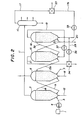
- the fine iron ore is introduced into the ore pre-heater 6 through the duct 7 and the sufficiently heated fine iron ore is sent therefrom to the fluidized-bed thermal cracking reactor 2 through the piping 9 and steam is introduced from piping 12 to form there a stable fluidized bed.
- the heavy oil in the oil reservoir 1 is introduced into the fluidized-bed thermal cracking reactor 2 through the piping 3 after being pre-heated in the oil pre-heater 4 and thermally cracked in the reactor 2 partly to the products of thermal cracking and partly to the by-product carbonaceous material which is deposited on the particles of the fine iron ore in fluidization to form a coating thereon. In this case, the iron ore is partially reduced according to the condition of the temperature in the reactor 2.
- the fine iron ore with carbon deposition formed in the fluidized-bed thermal cracking reactor 2 is mostly recycled to the ore pre-heater 6 through the piping 14 to form a circuit of ore circulation between the reactor 2 and the ore pre-heater 6.
- a part of the fine iron ore with carbon deposition is sent from the ore pre-heater 6 to the fluidized-bed reducing furnace 15 at the bottom through the piping 13a connecting the ore pre-heater 6 and the reducing furnace 15 where the ore is reduced to the reduced iron by contacting with a reducing gas at high temperature.
- a part of the thus formed reduced iron is discharged out of the reducing furnace 15 from the exit piping 20 to be further processed while the balance of the reduced iron is sent and introduced to the fluidized-bed reformer 16 through the piping 31 and acts there as the catalyst to reform the mixture of hydrocarbons and the oxidizing gases such as H 2 0 and carbon dioxide to a reducing gas.
- the reduced iron acting as the reforming catalyst is in turn partially oxidized and further recycled to the fluidized-bed reducing furnace 15 through the piping 32 to be again reduced to the reduced iron.
- a circuit for circulation is formed also between the reducing furnace 15 ' and the reformer 16, the circulating materials from the former to the latter and from the latter to the former being the reduced iron and the partially oxidized reduced iron, respectively.
- the product of thermal cracking produced in and discharged out of the fluidized-bed thermal cracking reactor 2 is sent through the piping 11 to the fractionation system 10 where the cracked gas mainly composed of C l -C 4 hydrocarbons and hydrogen is separated therefrom.
- the thus produced cracked gas is combined with the exhaust gas discharged out of the fluidized-bed reducing furnace 15 with carbon dioxide, carbon monoxide, hydrogen, hydrogen sulfide and the like as the main components and introduced into the fluidized-bed reformer 16 where it is converted to a reducing gas mainly composed of carbon monoxide and hydrogen by the catalytic reaction with the reduced iron in fluid state as the catalyst followed by the recycling into the fluidized-bed reducing furnace 15 to be utilized as the reducing agent for the reduction of the fine iron ore.
- the fine iron ore is introduced into the ore pre-heater 6 through the piping 7 and heated therein with the aid of the hot air blown thereinto through the piping 8.
- the thus heated fine iron ore is, as is mentioned before, circulated between the ore pre-heater 6 and the fluidized-bed thermal cracking reactor 2.
- the heated fine iron ore introduced into the fluidized-bed thermal cracking reactor 2 is fluidized by means of the steam blown thereinto at the bottom from the piping 12 at a temperature, stated before.
- the heavy oil introduced into the fluidized-bed thermal cracking reactor 2 is thermally cracked there to be converted mostly to the product of thermal cracking composed of the C 1 -C 4 hydrocarbon gases, naphtha, gas oil and residual oil. These hydrocarbon gases are reacted in the reactor 2 with the steam and carbon dioxide according to the following reaction equations given for methane as the C l hydrocarbon to form a reducing gas composed of carbon monoxide and hydrogen: and
- the particles of the iron ore While circulating in the recycling circuit between the ore pre-heater 6 and the fluidized-bed thermal cracking reactor 2, the particles of the iron ore are coated with an increasing amount of the carbon deposition in the reactor 2 and eventually discharged out of the ore pre-heater 6 through the piping l3a and sent to the fluidized-bed reducing furnace 15 in the next step.
- the amount of carbon deposited on iron ore which is sent to the fluidized-bed reducing furnace 15 are controlled by partial-oxidation with hot air introduced from piping 8.
- the discharge of the fine iron ore with carbon deposition out of the ore circulating circuit takes place at the ore pre-heater 6 instead of the fluidized-bed thermal cracking reactor 2 which is the site of discharge in the basic process illustrated with reference to FIGURE 1 although these two methods are alternative.
- the scheme in FIGURE 2 is somewhat more advantageous owing to the higher temperature of the fine iron ore introduced into the fluidized-bed reducing furnace 15 than in the scheme in FIGURE 1 because the fine iron-ore in the ore preheater 6 can always be at a higher temperature than the ore in the thermal cracking reactor 2.
- the reducing reaction of the iron ore in the fluidized-bed reducing furnace 15 takes place in two steps according to the reaction equations given below.
- the fine iron ore introduced into the reducing furnace 15 includes some partially reduced iron oxide, e.g. magnetite Fe 3 0 4 , formed in the fluidized-bed thermal cracking reactor 2 as is mentioned before
- the reduction in the reducing furnace 15 also includes the reduction of this Fe 3 0 4 by hydrogen and carbon monoxide so that the reduction of the iron ore with hydrogen and carbon monoxide taking place in the fluidized-bed reducing furnace is fully expressed .by the following set of the reaction equations in two steps.
- the fluidized-bed reformer 16 serves to produce reducing gas at high temperature by reforming either the cracked gas separated from the products of thermal cracking discharged out of the fluidized-bed thermal cracking reactor 2 to be supplied to the reducing furnace 15.
- the product of the thermal cracking produced in the thermal cracking reactor 2 and sent to the fractionation system 10 through the piping 11 is composed of the cracked gas and oily fractions.
- a gaseous mixture is supplied to the fluidized-bed reformer 16 through the pipings 17 and 17a after removal, according to need, of the hydrogen sulfide in the desulfurizer 23 and heating in the heater 33 at a temperature insufficient to cause thermal decomposition.
- the exhaust gas discharged from the fluidized-bed reducing furnace 15, which is another source of the feed gas to the fluidized-bed reformer 16, is at a temperature of about 700 to 1000°C and contains, in addition to the hydrogen sulfide originating in the sulfur compounds in the heavy oil, carbon dioxide and steam as the products of the reducing reaction along with the unreacted hydrogen and carbon monoxide.
- the exhaust gas discharged out of the-reducing furnace 15 at the top is sent through the piping 21 and cooled therein to the gas purifier 34 to remove the extraneous contents of dust, sulfur compounds and excessive amounts of carbon dioxide and water contained in the exhaust gas and then heated in the heater 36 at a sufficiently high temperature to be combined through the piping 29 with the cracking gas coming from the distillation system 10 and introduced into the fluidized-bed reformer . 16.
- the most unique and advantageous feature in this modified process illustrated in FIGURE 2 is that the reformer 16 is operated as a fluidized-bed reformer with the fluidized bed formed of the particles of the reduced iron produced in the fluidized-bed reducing furnace 15. That is, a part of the reduced iron formed in the reducing furnace 15 is introduced into the reformer 16 through the piping 31 at the bottom and brought into a fluidized state by means of the gases introduced through the pipings 29 and 17a.
- FIGURE 3 is a graphic showing of the percent conversion of methane to a reformed reducing gas on a catalyst which is metallic iron or an iron oxide as a function of reaction time. As is clear from this figure, the catalytic activity of metallic iron is much higher than any one of the iron oxides examined.
- the reforming reaction of the feed gas mainly composed of the Cl-C4 hydrocarbons with accompanying carbon monoxide, hydrogen, carbon dioxide, steam and the like takes place in the fluidized-bed reformer 16 with high efficiency on the particles of the reduced iron circulating from the fluidized-bed reducing furnace 15 according to the following equations given for methane and ethane, respectively.
- the thus produced reducing gas rich in the contents of hydrogen and carbon monoxide is sent through the piping 19 and, after being heated in the heater 37, introduced into the fluidized-bed reducing furnace 15 to serve as the reducing agent for the reduction of the fine iron ore.
- the reduced iron thus partially oxidized in the reformer ' 16 is recycled to the fluidized-bed reducing furnace 15 through the piping 32 to form a circuit for circulation therebetween.
- the thermal conditions in the reformer 16 are important to obtain a high efficiency in the above mentioned reactions taking place in the reformer 16 and the temperature in the reformer 16 is usually maintained at 700 to 1100°C or, preferably, 800 to 1000°C by the control of the heaters 33 and 36 for the feed gases to the reformer 16.
- the largest advantage obtained in this modification of the process of this invention is the extremely high efficiency in the reforming of the hydrocarbons contained in the cracked gas to be converted to the reducing gas in the reformer 16.
- This advantage is obtained by virtue of the characteristics of the fluidized-bed per se and the high catalytic activity of the reduced iron in the fluidized-bed reformer 16. Therefore, the reducing gas produced in the reformer 16 contains methane and other hydrocarbons in a very low proportion.
- the ordinate of the graph is graduated with the amount of weight loss in the iron oxide during reaction in % based on the initial content of the iron oxide before the reaction.
- Curve A (broken line) shows the results obtained at 860°C in typical reducing gas of low methane content composed of 36% of carbon monoxide, 55% of hydrogen, 5% of carbon dioxide and 4% of methane
- Curve B (solid line) shows the results obtained at 950°C in a example gas of this invention composed of 40% of methane, 20% of hydrogen and 40% of nitrogen.
- the weight loss of iron oxide with a low-methane reducing gas proceeds rapidly and at about 60 minutes the weight loss ratio reaches about 95% and after then its ratio is kept constantly. This means the iron oxide is rapidly reduced into metallic iron and reduction ratio reaches about 95% after 60 minutes. While, the weight loss of the iron oxide with a high-methane reducing gas also proceeds rapidly until the weight loss ratio reaches at about 75%, however, after then the weight loss ratio decreases rapidly. This means, in the high-methane atmosphere, two reactions
- the circulation of the fine iron ore in the circuit including the ore pre-heater 6 and the fluidized-bed thermal cracking reactor 2 for the heavy oil connected by the pipings 9 and 14 is just the same as in the preceding modified process and not repeated here.
- the fine iron ore circulating in this circuit and gradually coated with carbon deposition is discharged out of the circulating system and sent to an ore heater 38 through the piping 39 to be sufficiently heated there before it is introduced into the first fluidized-bed reducing furnace 15 through the piping 40.
- the fine iron ore introduced into the first fluidized-bed reducing furnace 15 is reduced there with the reducing gas blown thereinto at the bottom in just the same manner as in the previously described processes and converted to the reduced iron which may contain small amounts of iron oxide FeO in the metallic iron.
- the reduced iron formed in the first fluidized-bed reducing furnace 15 is usually sent to the fluidized-bed reformer 16 through the piping 31 and serves as a catalyst for the reforming reaction of the feed gas composed of hydrocarbons and oxidizing gases mainly of carbon dioxide and H 2 0 into a reducing gas.
- the reduced iron in this reformer 16 is in turn partially oxidized as a result of the reforming reaction with increased contents of the iron oxide FeO and, instead of being recycled to the first fluidized-bed reducing furnace 15, is sent to the second fluidized-bed reducing furnace 15a where it is again reduced completely into metallic reduced iron and discharged therefrom to be processed in the succeeding steps.
- the products of thermal cracking discharged out of the fluidized-bed thermal cracking reactor 2 are sent to the fractionation system 10 through the piping 11 and the cracked gas mainly composed of the C l -C 4 hydrocarbons is separated therefrom in this fractionation system 10.
- the cracked gas is introduced into the fluidized-bed reformer 16 through the pipings 17 and 17a together with the exhaust gas composed of carbon dioxide, H 2 0, hydrogen and the like as discharged out of the first fluidized-bed reducing furnace 15 coming through the pipings 21 and 29 and reformed in this reformer 16 into a reducing gas mainly composed of carbon monoxide and hydrogen by the catalytic activity of the reduced iron as the catalyst in the fluidized state.
- the reducing gas is introduced into the second fluidized-bed reducing furnace 15a and utilized there as the reducing agent for the finishing reduction of the partially oxidized reduced iron coming from the fluidized-bed reformer 16 through the piping 32a.
- the exhaust gas discharged out of the second fluidized-bed reducing furnace 15a which is a gaseous mixture of mainly carbon monoxide, hydrogen and small amount of carbon dioxide and water is introduced as such into the first fluidized-bed reducing furnace 15 through the piping 42 after being re-heated in the heater 43 and utilized there for the reduction of the fine iron ore.
- the fine iron ore circulating in the circuit including the ore pre-heater 6 and the fluidized-bed thermal cracking reactor 2 and having been coated with the carbon deposition is partly taken out of the ore pre-heater 6 and sent to the ore heater 38 through the piping 39 to be re-heated there before being introduced into the first fluidized-bed reducing furnace 15.
- the re-heating of the fine iron ore in the ore heater 38 is performed by the combustion of a part of the deposited carbon on the fine iron ore with the hot air blown thereinto through the piping 44 at the bottom of the ore heater 38.
- the temperature of the fine iron ore is increased in the ore heater 38 to about 700 to 1200°C or, preferably, 800 to 1000°C.
- the ore heater 38 is intermediary between the thermal cracking system composed of the ore pre-heater 6 and the thermal cracking reactor 2 and the succeeding reduction system for the production of the reduced iron with a function of re- heating the fine iron ore with carbon deposition sent from the thermal cracking system to a temperature suitable for the succeeding process of reduction. Therefore, the capacity of the ore heater 38 can be smaller with smaller volumes of the hot air supply at the bottom when the fine iron ore with carbon deposition is taken out of the ore pre-heater 6 than out of the thermal cracking reactor 2 as is illustrated in FIGURE 1 since the fine iron ore in the ore pre-heater 6 is at a temperature substantially higher than in the thermal cracking reactor 2.
- the re-heated fine iron ore sent to the reduction system may have a larger amount of the carbon deposition.
- the fine iron ore re-heated thus in the ore heater 38 is sent to the first fluidized-bed reducing furnace 15 through the piping 40 and reduced there with the reducing gas at a high temperature of 800 to 1000°C through the piping 42 after being heated in the heater 43.
- the fine iron ore is reduced in the first fluidized-bed reducing furnace 15 into reduced iron and the reduced iron is introduced into the fluidized-bed reformer 16 through the piping 31.
- the fluidized-bed reformer 16 serves to reform the cracking gas separated from the thermal cracking product in the thermal cracking reactor 2 and the exhaust gas discharged out of the first fluidized-bed reducing furnace 15 into a reformed reducing gas at high temperature.
- the exhaust gas from the first fluidized-bed reducing furnace 15 is sent to the reformer 16 through the pipes 21 and 29, in the course
- the heater 36 is preferably a furnace heated by combustion of petroleum fuels and the like and the exhaust gas at high temperature in this heater 36 is preferably sent to the heater 33 through the piping 46 to fully utilize the thermal energy for heating the cracked gas on the way from the fractionation system 10 to the fluidized-bed reformer 16.
- the reducing gas produced in this reformer 16 is introduced into the second fluidized-bed reducing furnace 15a through the piping 19a if necessary, through gas purification 34 after reheating in the heater 37a to be used as the reducing agent for the finishing reduction of the partially oxidized reduced iron as described hereinafter.
- the reduced iron acting as a catalyst for the reforming in the reformer 16 is, as is mentioned before, partially oxidized by the oxidizing gas, e.g. carbon dioxide and H 2 0, and the reduced iron containing an increased amount of iron oxide FeO is introduced into the second fluidized-bed reducing furnace 15a through the piping 32a.
- This second fluidized-bed reducing furnace 15a is for the finishing reduction of the partially oxidized reduced iron and the reducing reaction proceeds with high efficiency by the fluidizing contact of the reduced iron with the reducing gas of high reducing power at a temperature of 800 to 1200°C or, preferably, 800 to 1000°C blown into the furnace 15a at the bottom.
- the thus finished reduced iron contains metallic iron in a high proportion of, usually, at least 90% or, under favorable conditions, at least 95% based on the total content of iron and taken out of the second reducing furnace 15a to be further processed in the succeeding steps.
- the discharged gas at the top of the second fluidized-bed reducing furnace 15a still has sufficiently high reducing power so that the gas is further sent to the first fluidized-bed reducing furnace 15 through the piping 42 after being re-heated in the heater 43. That is, the gas is circulated in the circuit of the first reducing furnace 15 to the reformer 16 to second reducing furnace 15a to the first. It is of course within the scope of the present invention that the circulation of the reducing gas is reversed so that the reducing gas produced in the fluidized-bed reformer 16 is first introduced into the first fluidized-bed reducing furnace 15 and then into the second fluidized-bed reducing furnace 15a.
- the gas discharged out of the first reducing-furnace 15 is sufficiently purified in the gas purifier 34 to remove the impurities such as hydrogen sulfide and carbonyl sufide and excess volumes of carbon dioxide and H 2 0 and heated in the heater 36 before introduction into the second reducing furnace 15a.
- the largest advantage obtained is the very smooth and efficient proceeding of the reducing reaction of the fine iron ore in a fluidized state in the reducing furnace or furnaces at the temperature of more than 900°C without causing sintering.
- This is primarily due to the effect of the carbon deposition on the iron ore particles which ensures rapid.oxidation-reduction reaction between the fine iron ore and the reducing gas in the reducing furnace partly by preventing sintering phenomenon of the iron ore particles and partly by serving as a reducing agent for the reduction of the iron ore. This effect cannot be within expectation from the prior art technology.
- Thermal cracking of Ta-ch'ing vacuum residual oil was conducted in a fluidized-bed of fine iron ore having a particle size distribution that about 65% by weight thereof passed a screen of 105 ⁇ m mesh opening sieve.
- the composition of the iron ore was: total iron.(TFe) 64.57%; Feo 0.13%; and sio 2 4.98%.
- the reaction temperature was 550°C and the feed rates of the residual oil and the fine iron ore were 8 liters/ hour and 33 kilograms/hour, respectively.
- the reducing reaction in the fluidized bed could be continued no longer when the reaction temperature had reached about 800°C due to the sintering phenomenon of the iron ore particles beginning at that temperature.
- no sintering took place at all in the reduction of the fine iron ore with carbon deposition even at a temperature of 940°C or higher.
- the reduced iron produced from the fine iron ore with carbon deposition was excellent in respect of the composition containing 88.1% of total iron (TFe), 81.5% of metallic iron (MFe) and 2.4% of carbon in support of the superiority of the composite process of this invention over the conventional methods in the prior art.
- Example 2 The same comparative experiments of iron ore reduction were repeated as in Example 1 except that the reducing gas used for the reduction of the same fine iron ore with or without carbon deposition in a fluidized bed was composed of 36% by volume of carbon monoxide, 55% by volume of hydrogen, 5% by volume of carbon dioxide and 4% by volume of water.
- the reduced iron produced in this case contained 88.1% of total iron (TFe), 83.7% of metallic iron (MFe) and 2.4% of carbon to give a high metallization of 95.0%.
- the cracked gas separated from the product of thermal cracking of the heavy oil in Example 1 was composed of 60% by volume of hydrocarbons of the composition CH2-5, 20% by volume of H 2 O, 8% by volume of carbon dioxide and 12% by volume of hydrogen.
- the exhaust gas discharged out of the fluidized-bed reducing furnace operated in Example 2 was composed of 15.5% by volume of carbon dioxide, 22.0% by volume of H 2 0, 20.8% by volume of carbon monoxide and 35.6% by volume of hydrogen.
- a feed gas prepared by mixing the above described cracked gas and the exhaust gas in a proportion was supplied to a fluidized-bed gas reformer in which the fluidized-bed at 900°C was formed of the particles of the reduced iron obtained in the reducing experiment of Example 2.
- the reducing gas produced by this reforming reaction was composed of 34% by volume of carbon monoxide, 57% by volume of hydrogen and 4% by volume of C l -C 4 hydrocarbons.
- the fluidized-bed in the gas reformer was formed of the fine iron ore before reduction instead of the reduced iron and reforming of the same feed gas was tried under the same operational conditions.
- the result was that the conversion of the feed gas to the reducing gas was only about 4%.
- a second reduction of the above partially oxidized reduced iron forming a fluidized-bed was conducted at 950°C with the reducing gas produced in Example 3 as the reducing agent.
- the reducing reaction could be run smoothly without sintering of the particles.
- the reduced iron thus obtained in the finishing reduction contained 88.6% of total iron (TFe), 85.9% of metallic iron (MFe) and 2.0% of carbon with the metallization of 97.0% indicating the high quality of the reduced iron.
Landscapes
- Chemical & Material Sciences (AREA)
- Organic Chemistry (AREA)
- Chemical Kinetics & Catalysis (AREA)
- Engineering & Computer Science (AREA)
- Oil, Petroleum & Natural Gas (AREA)
- General Chemical & Material Sciences (AREA)
- Physics & Mathematics (AREA)
- Inorganic Chemistry (AREA)
- Combustion & Propulsion (AREA)
- Thermal Sciences (AREA)
- General Health & Medical Sciences (AREA)
- Health & Medical Sciences (AREA)
- Dispersion Chemistry (AREA)
- Manufacturing & Machinery (AREA)
- Materials Engineering (AREA)
- Metallurgy (AREA)
- Manufacture Of Iron (AREA)
- Production Of Liquid Hydrocarbon Mixture For Refining Petroleum (AREA)
Applications Claiming Priority (6)
| Application Number | Priority Date | Filing Date | Title |
|---|---|---|---|
| JP55182441A JPS5836034B2 (ja) | 1980-12-22 | 1980-12-22 | 重質油の熱分解と共に還元鉄を製造する方法 |
| JP182441/80 | 1980-12-22 | ||
| JP13178581A JPS5832690A (ja) | 1981-08-21 | 1981-08-21 | 重質油の熱分解と共に還元鉄を製造する方法 |
| JP131785/81 | 1981-08-21 | ||
| JP13178481A JPH0238627B2 (ja) | 1981-08-21 | 1981-08-21 | Jushitsuyunonetsubunkaitotomonikangentetsuoseizosuruhoho |
| JP131784/81 | 1981-08-21 |
Publications (3)
| Publication Number | Publication Date |
|---|---|
| EP0054926A2 true EP0054926A2 (de) | 1982-06-30 |
| EP0054926A3 EP0054926A3 (en) | 1982-08-04 |
| EP0054926B1 EP0054926B1 (de) | 1985-07-31 |
Family
ID=27316370
Family Applications (1)
| Application Number | Title | Priority Date | Filing Date |
|---|---|---|---|
| EP81110560A Expired EP0054926B1 (de) | 1980-12-22 | 1981-12-18 | Verfahren zur Herstellung von reduziertem Eisen und thermische Spaltung von Schwerölen |
Country Status (5)
| Country | Link |
|---|---|
| EP (1) | EP0054926B1 (de) |
| CA (1) | CA1164388A (de) |
| DE (1) | DE3171626D1 (de) |
| ES (1) | ES508223A0 (de) |
| MX (1) | MX157385A (de) |
Cited By (6)
| Publication number | Priority date | Publication date | Assignee | Title |
|---|---|---|---|---|
| EP0196359A3 (en) * | 1984-09-12 | 1986-11-12 | Kabushiki Kaisha Kobe Seiko Sho | Method and apparatus for fluidized bed reduction of iron ore |
| EP0209149A1 (de) * | 1985-07-19 | 1987-01-21 | Kabushiki Kaisha Kobe Seiko Sho | Verfahren zur Schmelzreduktion von Eisenerzen |
| AU570571B2 (en) * | 1984-08-03 | 1988-03-17 | Research Association For Residual Oil Processing, The | Red fe-ore and heavy oil |
| EP1042514B1 (de) * | 1997-12-02 | 2005-09-14 | Brifer International Ltd. | Verfahren zur reformierung reduziernden gases in einem fluidatbettprozess zur reduktion von erz |
| CN108018055A (zh) * | 2016-10-30 | 2018-05-11 | 何巨堂 | 非常规含固油料流化焦化过程与流态化热解过程组合方法 |
| CN109576001A (zh) * | 2018-08-13 | 2019-04-05 | 湖南叶林环保科技有限公司 | 有机危废热解气净化系统 |
Family Cites Families (4)
| Publication number | Priority date | Publication date | Assignee | Title |
|---|---|---|---|---|
| GB634933A (en) * | 1946-11-15 | 1950-03-29 | Standard Oil Dev Co | A method for the production of industrial mixtures of carbon monoxide and hydrogen |
| US3264209A (en) * | 1962-10-22 | 1966-08-02 | Phillips Petroleum Co | Simultaneously coking iron ore and cracking hydrocarbons |
| US4186079A (en) * | 1978-12-15 | 1980-01-29 | Shell Oil Company | Pyrolysis process |
| JPS5835638B2 (ja) * | 1979-04-11 | 1983-08-03 | 株式会社神戸製鋼所 | 重質油の熱分解及び還元鉄の製造法 |
-
1981
- 1981-12-15 CA CA000392341A patent/CA1164388A/en not_active Expired
- 1981-12-18 DE DE8181110560T patent/DE3171626D1/de not_active Expired
- 1981-12-18 EP EP81110560A patent/EP0054926B1/de not_active Expired
- 1981-12-21 ES ES508223A patent/ES508223A0/es active Granted
-
1982
- 1982-01-04 MX MX19081082A patent/MX157385A/es unknown
Cited By (7)
| Publication number | Priority date | Publication date | Assignee | Title |
|---|---|---|---|---|
| AU570571B2 (en) * | 1984-08-03 | 1988-03-17 | Research Association For Residual Oil Processing, The | Red fe-ore and heavy oil |
| EP0196359A3 (en) * | 1984-09-12 | 1986-11-12 | Kabushiki Kaisha Kobe Seiko Sho | Method and apparatus for fluidized bed reduction of iron ore |
| EP0209149A1 (de) * | 1985-07-19 | 1987-01-21 | Kabushiki Kaisha Kobe Seiko Sho | Verfahren zur Schmelzreduktion von Eisenerzen |
| EP1042514B1 (de) * | 1997-12-02 | 2005-09-14 | Brifer International Ltd. | Verfahren zur reformierung reduziernden gases in einem fluidatbettprozess zur reduktion von erz |
| CN108018055A (zh) * | 2016-10-30 | 2018-05-11 | 何巨堂 | 非常规含固油料流化焦化过程与流态化热解过程组合方法 |
| CN109576001A (zh) * | 2018-08-13 | 2019-04-05 | 湖南叶林环保科技有限公司 | 有机危废热解气净化系统 |
| CN109576001B (zh) * | 2018-08-13 | 2023-08-22 | 湖南叶林环保科技有限公司 | 有机危废热解气净化系统 |
Also Published As
| Publication number | Publication date |
|---|---|
| EP0054926A3 (en) | 1982-08-04 |
| MX157385A (es) | 1988-11-21 |
| ES8302786A1 (es) | 1983-02-01 |
| EP0054926B1 (de) | 1985-07-31 |
| ES508223A0 (es) | 1983-02-01 |
| DE3171626D1 (en) | 1985-09-05 |
| CA1164388A (en) | 1984-03-27 |
Similar Documents
| Publication | Publication Date | Title |
|---|---|---|
| US4420332A (en) | Process for the production of reduced iron and thermal cracking of heavy oils | |
| US8709128B2 (en) | Process for production of direct reduced iron | |
| US4874427A (en) | Methods for melting and refining a powdery ore containing metal oxides | |
| US4007034A (en) | Method for making steel | |
| EP0018184B1 (de) | Integriertes Verfahren zum thermischen Kracken eines Schweröls und zur Reduktion eines Eisenerzes | |
| US4531973A (en) | Metallurgical processes | |
| US5064467A (en) | Method and apparatus for the direct reduction of iron | |
| US5674308A (en) | Spouted bed circulating fluidized bed direct reduction system and method | |
| WO2000063141A9 (en) | Multiple reactor system and method for fischer-tropsch synthesis | |
| CA2202917C (en) | Plant and process for producing raw iron and/or sponge iron | |
| JPH0454601B2 (de) | ||
| EP0196359B1 (de) | Verfahren und Vorrichtung zur direkten Reduktion von Eisenerzen im Fluidbett | |
| NO343430B1 (no) | Fremgangsmåte og anlegg for fremstilling av titaniaslagg fra ilmenitt | |
| NL2030295B1 (en) | A method for producing iron fuel. | |
| US4600499A (en) | Combination process for upgrading reduced crude | |
| EP0054926B1 (de) | Verfahren zur Herstellung von reduziertem Eisen und thermische Spaltung von Schwerölen | |
| US4132627A (en) | Integrated coal conversion process | |
| US2990269A (en) | Refining of ores with hydrocarbon gases | |
| US3303017A (en) | Metal treating process | |
| US5382277A (en) | Process for reducing fine-grain iron oxide materials with a gas | |
| US5069716A (en) | Process for the production of liquid steel from iron containing metal oxides | |
| US4147615A (en) | Hot sand-coal-cracking to hydrodistillate fuels | |
| EP0101878A2 (de) | Kombinationsverfahren zur Aufarbeitung von Toprückstand | |
| JP4340387B2 (ja) | 炭化鉄と粒状の直接還元鉄との混合物の製造方法 | |
| US4280893A (en) | Integrated coal conversion process |
Legal Events
| Date | Code | Title | Description |
|---|---|---|---|
| PUAI | Public reference made under article 153(3) epc to a published international application that has entered the european phase |
Free format text: ORIGINAL CODE: 0009012 |
|
| PUAL | Search report despatched |
Free format text: ORIGINAL CODE: 0009013 |
|
| AK | Designated contracting states |
Designated state(s): BE DE FR GB IT |
|
| AK | Designated contracting states |
Designated state(s): BE DE FR GB IT |
|
| 17P | Request for examination filed |
Effective date: 19830125 |
|
| ITF | It: translation for a ep patent filed | ||
| GRAA | (expected) grant |
Free format text: ORIGINAL CODE: 0009210 |
|
| AK | Designated contracting states |
Designated state(s): BE DE FR GB IT |
|
| REF | Corresponds to: |
Ref document number: 3171626 Country of ref document: DE Date of ref document: 19850905 |
|
| ET | Fr: translation filed | ||
| PLBE | No opposition filed within time limit |
Free format text: ORIGINAL CODE: 0009261 |
|
| STAA | Information on the status of an ep patent application or granted ep patent |
Free format text: STATUS: NO OPPOSITION FILED WITHIN TIME LIMIT |
|
| 26N | No opposition filed | ||
| PG25 | Lapsed in a contracting state [announced via postgrant information from national office to epo] |
Ref country code: BE Effective date: 19871231 |
|
| BERE | Be: lapsed |
Owner name: RESEARCH ASSOCIATION FOR RESIDUAL OIL PROCESSING Effective date: 19871231 |
|
| PG25 | Lapsed in a contracting state [announced via postgrant information from national office to epo] |
Ref country code: FR Free format text: LAPSE BECAUSE OF NON-PAYMENT OF DUE FEES Effective date: 19880831 |
|
| REG | Reference to a national code |
Ref country code: FR Ref legal event code: ST |
|
| PGFP | Annual fee paid to national office [announced via postgrant information from national office to epo] |
Ref country code: GB Payment date: 19931215 Year of fee payment: 13 |
|
| PGFP | Annual fee paid to national office [announced via postgrant information from national office to epo] |
Ref country code: DE Payment date: 19940208 Year of fee payment: 13 |
|
| PG25 | Lapsed in a contracting state [announced via postgrant information from national office to epo] |
Ref country code: GB Effective date: 19941218 |
|
| GBPC | Gb: european patent ceased through non-payment of renewal fee |
Effective date: 19941218 |
|
| PG25 | Lapsed in a contracting state [announced via postgrant information from national office to epo] |
Ref country code: DE Effective date: 19950901 |