EP0053498A2 - Polyester laminated film - Google Patents
Polyester laminated film Download PDFInfo
- Publication number
- EP0053498A2 EP0053498A2 EP81305631A EP81305631A EP0053498A2 EP 0053498 A2 EP0053498 A2 EP 0053498A2 EP 81305631 A EP81305631 A EP 81305631A EP 81305631 A EP81305631 A EP 81305631A EP 0053498 A2 EP0053498 A2 EP 0053498A2
- Authority
- EP
- European Patent Office
- Prior art keywords
- polyester
- layer
- laminated film
- delustered
- film according
- Prior art date
- Legal status (The legal status is an assumption and is not a legal conclusion. Google has not performed a legal analysis and makes no representation as to the accuracy of the status listed.)
- Granted
Links
Images

Classifications
-
- B—PERFORMING OPERATIONS; TRANSPORTING
- B32—LAYERED PRODUCTS
- B32B—LAYERED PRODUCTS, i.e. PRODUCTS BUILT-UP OF STRATA OF FLAT OR NON-FLAT, e.g. CELLULAR OR HONEYCOMB, FORM
- B32B27/00—Layered products comprising a layer of synthetic resin
- B32B27/36—Layered products comprising a layer of synthetic resin comprising polyesters
-
- B—PERFORMING OPERATIONS; TRANSPORTING
- B32—LAYERED PRODUCTS
- B32B—LAYERED PRODUCTS, i.e. PRODUCTS BUILT-UP OF STRATA OF FLAT OR NON-FLAT, e.g. CELLULAR OR HONEYCOMB, FORM
- B32B27/00—Layered products comprising a layer of synthetic resin
- B32B27/06—Layered products comprising a layer of synthetic resin as the main or only constituent of a layer, which is next to another layer of the same or of a different material
- B32B27/08—Layered products comprising a layer of synthetic resin as the main or only constituent of a layer, which is next to another layer of the same or of a different material of synthetic resin
-
- B—PERFORMING OPERATIONS; TRANSPORTING
- B32—LAYERED PRODUCTS
- B32B—LAYERED PRODUCTS, i.e. PRODUCTS BUILT-UP OF STRATA OF FLAT OR NON-FLAT, e.g. CELLULAR OR HONEYCOMB, FORM
- B32B27/00—Layered products comprising a layer of synthetic resin
- B32B27/18—Layered products comprising a layer of synthetic resin characterised by the use of special additives
-
- B—PERFORMING OPERATIONS; TRANSPORTING
- B32—LAYERED PRODUCTS
- B32B—LAYERED PRODUCTS, i.e. PRODUCTS BUILT-UP OF STRATA OF FLAT OR NON-FLAT, e.g. CELLULAR OR HONEYCOMB, FORM
- B32B7/00—Layered products characterised by the relation between layers; Layered products characterised by the relative orientation of features between layers, or by the relative values of a measurable parameter between layers, i.e. products comprising layers having different physical, chemical or physicochemical properties; Layered products characterised by the interconnection of layers
- B32B7/04—Interconnection of layers
- B32B7/12—Interconnection of layers using interposed adhesives or interposed materials with bonding properties
-
- H—ELECTRICITY
- H04—ELECTRIC COMMUNICATION TECHNIQUE
- H04R—LOUDSPEAKERS, MICROPHONES, GRAMOPHONE PICK-UPS OR LIKE ACOUSTIC ELECTROMECHANICAL TRANSDUCERS; ELECTRIC HEARING AIDS; PUBLIC ADDRESS SYSTEMS
- H04R7/00—Diaphragms for electromechanical transducers; Cones
- H04R7/02—Diaphragms for electromechanical transducers; Cones characterised by the construction
- H04R7/12—Non-planar diaphragms or cones
- H04R7/122—Non-planar diaphragms or cones comprising a plurality of sections or layers
-
- B—PERFORMING OPERATIONS; TRANSPORTING
- B32—LAYERED PRODUCTS
- B32B—LAYERED PRODUCTS, i.e. PRODUCTS BUILT-UP OF STRATA OF FLAT OR NON-FLAT, e.g. CELLULAR OR HONEYCOMB, FORM
- B32B2264/00—Composition or properties of particles which form a particulate layer or are present as additives
- B32B2264/10—Inorganic particles
- B32B2264/102—Oxide or hydroxide
-
- B—PERFORMING OPERATIONS; TRANSPORTING
- B32—LAYERED PRODUCTS
- B32B—LAYERED PRODUCTS, i.e. PRODUCTS BUILT-UP OF STRATA OF FLAT OR NON-FLAT, e.g. CELLULAR OR HONEYCOMB, FORM
- B32B2264/00—Composition or properties of particles which form a particulate layer or are present as additives
- B32B2264/10—Inorganic particles
- B32B2264/104—Oxysalt, e.g. carbonate, sulfate, phosphate or nitrate particles
-
- B—PERFORMING OPERATIONS; TRANSPORTING
- B32—LAYERED PRODUCTS
- B32B—LAYERED PRODUCTS, i.e. PRODUCTS BUILT-UP OF STRATA OF FLAT OR NON-FLAT, e.g. CELLULAR OR HONEYCOMB, FORM
- B32B2307/00—Properties of the layers or laminate
- B32B2307/20—Properties of the layers or laminate having particular electrical or magnetic properties, e.g. piezoelectric
- B32B2307/21—Anti-static
-
- B—PERFORMING OPERATIONS; TRANSPORTING
- B32—LAYERED PRODUCTS
- B32B—LAYERED PRODUCTS, i.e. PRODUCTS BUILT-UP OF STRATA OF FLAT OR NON-FLAT, e.g. CELLULAR OR HONEYCOMB, FORM
- B32B2307/00—Properties of the layers or laminate
- B32B2307/40—Properties of the layers or laminate having particular optical properties
- B32B2307/412—Transparent
-
- B—PERFORMING OPERATIONS; TRANSPORTING
- B32—LAYERED PRODUCTS
- B32B—LAYERED PRODUCTS, i.e. PRODUCTS BUILT-UP OF STRATA OF FLAT OR NON-FLAT, e.g. CELLULAR OR HONEYCOMB, FORM
- B32B2307/00—Properties of the layers or laminate
- B32B2307/50—Properties of the layers or laminate having particular mechanical properties
- B32B2307/514—Oriented
- B32B2307/516—Oriented mono-axially
-
- B—PERFORMING OPERATIONS; TRANSPORTING
- B32—LAYERED PRODUCTS
- B32B—LAYERED PRODUCTS, i.e. PRODUCTS BUILT-UP OF STRATA OF FLAT OR NON-FLAT, e.g. CELLULAR OR HONEYCOMB, FORM
- B32B2307/00—Properties of the layers or laminate
- B32B2307/50—Properties of the layers or laminate having particular mechanical properties
- B32B2307/514—Oriented
- B32B2307/518—Oriented bi-axially
-
- B—PERFORMING OPERATIONS; TRANSPORTING
- B32—LAYERED PRODUCTS
- B32B—LAYERED PRODUCTS, i.e. PRODUCTS BUILT-UP OF STRATA OF FLAT OR NON-FLAT, e.g. CELLULAR OR HONEYCOMB, FORM
- B32B2367/00—Polyesters, e.g. PET, i.e. polyethylene terephthalate
-
- Y—GENERAL TAGGING OF NEW TECHNOLOGICAL DEVELOPMENTS; GENERAL TAGGING OF CROSS-SECTIONAL TECHNOLOGIES SPANNING OVER SEVERAL SECTIONS OF THE IPC; TECHNICAL SUBJECTS COVERED BY FORMER USPC CROSS-REFERENCE ART COLLECTIONS [XRACs] AND DIGESTS
- Y10—TECHNICAL SUBJECTS COVERED BY FORMER USPC
- Y10T—TECHNICAL SUBJECTS COVERED BY FORMER US CLASSIFICATION
- Y10T428/00—Stock material or miscellaneous articles
- Y10T428/24—Structurally defined web or sheet [e.g., overall dimension, etc.]
- Y10T428/24942—Structurally defined web or sheet [e.g., overall dimension, etc.] including components having same physical characteristic in differing degree
-
- Y—GENERAL TAGGING OF NEW TECHNOLOGICAL DEVELOPMENTS; GENERAL TAGGING OF CROSS-SECTIONAL TECHNOLOGIES SPANNING OVER SEVERAL SECTIONS OF THE IPC; TECHNICAL SUBJECTS COVERED BY FORMER USPC CROSS-REFERENCE ART COLLECTIONS [XRACs] AND DIGESTS
- Y10—TECHNICAL SUBJECTS COVERED BY FORMER USPC
- Y10T—TECHNICAL SUBJECTS COVERED BY FORMER US CLASSIFICATION
- Y10T428/00—Stock material or miscellaneous articles
- Y10T428/25—Web or sheet containing structurally defined element or component and including a second component containing structurally defined particles
-
- Y—GENERAL TAGGING OF NEW TECHNOLOGICAL DEVELOPMENTS; GENERAL TAGGING OF CROSS-SECTIONAL TECHNOLOGIES SPANNING OVER SEVERAL SECTIONS OF THE IPC; TECHNICAL SUBJECTS COVERED BY FORMER USPC CROSS-REFERENCE ART COLLECTIONS [XRACs] AND DIGESTS
- Y10—TECHNICAL SUBJECTS COVERED BY FORMER USPC
- Y10T—TECHNICAL SUBJECTS COVERED BY FORMER US CLASSIFICATION
- Y10T428/00—Stock material or miscellaneous articles
- Y10T428/25—Web or sheet containing structurally defined element or component and including a second component containing structurally defined particles
- Y10T428/258—Alkali metal or alkaline earth metal or compound thereof
-
- Y—GENERAL TAGGING OF NEW TECHNOLOGICAL DEVELOPMENTS; GENERAL TAGGING OF CROSS-SECTIONAL TECHNOLOGIES SPANNING OVER SEVERAL SECTIONS OF THE IPC; TECHNICAL SUBJECTS COVERED BY FORMER USPC CROSS-REFERENCE ART COLLECTIONS [XRACs] AND DIGESTS
- Y10—TECHNICAL SUBJECTS COVERED BY FORMER USPC
- Y10T—TECHNICAL SUBJECTS COVERED BY FORMER US CLASSIFICATION
- Y10T428/00—Stock material or miscellaneous articles
- Y10T428/25—Web or sheet containing structurally defined element or component and including a second component containing structurally defined particles
- Y10T428/259—Silicic material
-
- Y—GENERAL TAGGING OF NEW TECHNOLOGICAL DEVELOPMENTS; GENERAL TAGGING OF CROSS-SECTIONAL TECHNOLOGIES SPANNING OVER SEVERAL SECTIONS OF THE IPC; TECHNICAL SUBJECTS COVERED BY FORMER USPC CROSS-REFERENCE ART COLLECTIONS [XRACs] AND DIGESTS
- Y10—TECHNICAL SUBJECTS COVERED BY FORMER USPC
- Y10T—TECHNICAL SUBJECTS COVERED BY FORMER US CLASSIFICATION
- Y10T428/00—Stock material or miscellaneous articles
- Y10T428/26—Web or sheet containing structurally defined element or component, the element or component having a specified physical dimension
-
- Y—GENERAL TAGGING OF NEW TECHNOLOGICAL DEVELOPMENTS; GENERAL TAGGING OF CROSS-SECTIONAL TECHNOLOGIES SPANNING OVER SEVERAL SECTIONS OF THE IPC; TECHNICAL SUBJECTS COVERED BY FORMER USPC CROSS-REFERENCE ART COLLECTIONS [XRACs] AND DIGESTS
- Y10—TECHNICAL SUBJECTS COVERED BY FORMER USPC
- Y10T—TECHNICAL SUBJECTS COVERED BY FORMER US CLASSIFICATION
- Y10T428/00—Stock material or miscellaneous articles
- Y10T428/26—Web or sheet containing structurally defined element or component, the element or component having a specified physical dimension
- Y10T428/263—Coating layer not in excess of 5 mils thick or equivalent
- Y10T428/264—Up to 3 mils
- Y10T428/265—1 mil or less
-
- Y—GENERAL TAGGING OF NEW TECHNOLOGICAL DEVELOPMENTS; GENERAL TAGGING OF CROSS-SECTIONAL TECHNOLOGIES SPANNING OVER SEVERAL SECTIONS OF THE IPC; TECHNICAL SUBJECTS COVERED BY FORMER USPC CROSS-REFERENCE ART COLLECTIONS [XRACs] AND DIGESTS
- Y10—TECHNICAL SUBJECTS COVERED BY FORMER USPC
- Y10T—TECHNICAL SUBJECTS COVERED BY FORMER US CLASSIFICATION
- Y10T428/00—Stock material or miscellaneous articles
- Y10T428/26—Web or sheet containing structurally defined element or component, the element or component having a specified physical dimension
- Y10T428/266—Web or sheet containing structurally defined element or component, the element or component having a specified physical dimension of base or substrate
-
- Y—GENERAL TAGGING OF NEW TECHNOLOGICAL DEVELOPMENTS; GENERAL TAGGING OF CROSS-SECTIONAL TECHNOLOGIES SPANNING OVER SEVERAL SECTIONS OF THE IPC; TECHNICAL SUBJECTS COVERED BY FORMER USPC CROSS-REFERENCE ART COLLECTIONS [XRACs] AND DIGESTS
- Y10—TECHNICAL SUBJECTS COVERED BY FORMER USPC
- Y10T—TECHNICAL SUBJECTS COVERED BY FORMER US CLASSIFICATION
- Y10T428/00—Stock material or miscellaneous articles
- Y10T428/26—Web or sheet containing structurally defined element or component, the element or component having a specified physical dimension
- Y10T428/269—Web or sheet containing structurally defined element or component, the element or component having a specified physical dimension including synthetic resin or polymer layer or component
-
- Y—GENERAL TAGGING OF NEW TECHNOLOGICAL DEVELOPMENTS; GENERAL TAGGING OF CROSS-SECTIONAL TECHNOLOGIES SPANNING OVER SEVERAL SECTIONS OF THE IPC; TECHNICAL SUBJECTS COVERED BY FORMER USPC CROSS-REFERENCE ART COLLECTIONS [XRACs] AND DIGESTS
- Y10—TECHNICAL SUBJECTS COVERED BY FORMER USPC
- Y10T—TECHNICAL SUBJECTS COVERED BY FORMER US CLASSIFICATION
- Y10T428/00—Stock material or miscellaneous articles
- Y10T428/31504—Composite [nonstructural laminate]
- Y10T428/31786—Of polyester [e.g., alkyd, etc.]
-
- Y—GENERAL TAGGING OF NEW TECHNOLOGICAL DEVELOPMENTS; GENERAL TAGGING OF CROSS-SECTIONAL TECHNOLOGIES SPANNING OVER SEVERAL SECTIONS OF THE IPC; TECHNICAL SUBJECTS COVERED BY FORMER USPC CROSS-REFERENCE ART COLLECTIONS [XRACs] AND DIGESTS
- Y10—TECHNICAL SUBJECTS COVERED BY FORMER USPC
- Y10T—TECHNICAL SUBJECTS COVERED BY FORMER US CLASSIFICATION
- Y10T428/00—Stock material or miscellaneous articles
- Y10T428/31504—Composite [nonstructural laminate]
- Y10T428/31786—Of polyester [e.g., alkyd, etc.]
- Y10T428/31797—Next to addition polymer from unsaturated monomers
Definitions
- the present invention relates to a polyester composite or laminated film (referred to as a polyester laminated film hereinbelow) which comprises at least one delustered layer and a transparent layer.
- the present invention relates to a laminated film superior in transparency, in which the transparency thereof is not reduced despite the fact that its surface is sufficiently roughened.
- Japanese Patent Publication No.31908/1978 there is also disclosed a delustered polyester film which is produced by uniaxially or biaxially orienting a saturated linear polyester which contains 0.5 to 30% by weight of glass fibres having fibre length shorter than 0.5 mm and fibre length/fibre diameter larger than 5.
- an improved laminated film which comprises a transparent layer and a delustered layer laminated at least on one side face of said transparent layer.
- the transparent layer comprises a biaxially stretched polyester film mainly composed of polyethylene terephthalate.
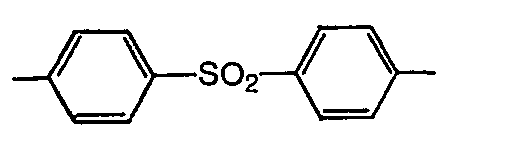
- the delustered layer comprises an at least uniaxially stretched polyester film which is mainly composed of a polyethylene terephthalate copolymer containing as a copolymer composition, 1 to 20 mol. % of or (wherein n is an integer from 2 to 140, and X represents and which also contains inert inorganic particles of 0.3 to 20 microns average diameter in an amount of 3 to 40% by weight.
- the laminates of the present invention in general have a gloss of less than 15% and more preferably, of less than 10% based on the method of JIS-Z-8741, and transparency with total light or luminous transmission ratio higher than 60% as measured by the method of JIS-K-6714.
- Fig. 1 is a fragmentary side sectional view showing, on an enlarged scale, a polyester laminated film according to one preferred embodiment of the present invention, in which delustered layers are provided on opposite surfaces of a transparent layer.
- The.transparent layer referred to in the present invention is of a polyester which is constituted by a repetition unit mainly composed of ethylene terephthalate, in which it is desirable that the ethylene terephthalate unit thereof occupies more than 98 mol. % and more preferably, more than 99 mol. % in said polyester, and that the degree of polymerization of the polyester to be employed should be such that the intrinsic viscosity of its orthochlorophenol solution at 25 0 C is higher than 0.45 and more preferably, higher than 0.60. If the ethylene terephthalate unit is less than 98 mol. %, with an intrinsic viscosity of less than 0.45, the mechanical properties inherent in the polyethylene terephthalate cannot be fully developed. In connection with the above, a polyethylene terephthalate homopolymer is particularly preferable.
- the delustered layer referred to in the present invention is constituted by the ethylene terephthalate copolymer repetition unit, and contains, in its'main chain, 1 to 20 mol. % and more preferably, 1.5 to 10 mol.
- n is an integer from 2 to 140
- X represents For example, there may be employed diethylene glycol, triethylene glycol, tetraethylene glycol, polyethylene glycol with molecular weight of less than 6000, or ethylene oxide adduct of hydroquinone, ethylene oxide adduct of resorcinol, ethylene oxide adduct of 2,2'-di (4 hydroxyphenyl) propane, or ethylene oxide adduct of 2,2'-di(4 hydroxyphenyl)sulphone.
- the content of such copolymer composition is less than 1 mol. %, the transparency is deteriorated, while if the content exceeds 20 mol. %, the mechanical properties of the laminated film become inferior. More preferably, the optimum content of the copolymer composition is in the range of 1.5 to 10 mol. %.
- copolymer chains other than the ethylene terephthalate chain may be contained in the main chain of the transparent layer in an amount within 2 mol. %, it is usually necessary for obtaining a transparent film, that the copolymer chain to be contained in the main chain of the delustered layer should be larger in amount than the copolymer chain contained in said main chain for the transparent layer.
- the delustered layer according to the present invention contains inert inorganic particles having average diameters in the range of 0.3 to 20 microns, and more preferably, of 3 to 15 microns, in an amount of 3 to 40% by weight and more preferably, of 4 to 20% by weight.
- inert inorganic particles there may be favourably employed silica, kaolin, talc, silica alumina, zinc oxide, zinc sulphidekbarium oxide, barium sulphate, zirconium oxide, calcium carbonate, titanium oxide, etc.
- any particles of inorganic compounds which will not react with the polyester used for the delustered layer may be employed, but normally solid particles of inorganic oxides or inorganic salts which do not react with said polyester are employed.
- the particle diameters of such inert inorganic particles are smaller than those in the range earlier described, if the amount of addition thereof is small, the delustering on the surface becomes inferior, and a delustered film with gloss of less than 15% cannot be obtained. Meanwhile, if the particle diameter is excessively large, it is difficult to render the delustered layer sufficiently thin, thus resulting in a difficulty in the improvement of the transparency. On the other hand, if the amount of addition is too large, the transparency is also impaired.
- the copolymerized polyester in which the inert inorganic particles as described above are added to a large amount may be produced by the normal condensation polymerization process. Particularly when a large amount of inert inorganic particles are added, it is difficult to obtain polyesters of high molecular weight due to a problem related to excessive viscosity, but by copolymerization as in the present invention, reduction in viscosity is advantageously achieved. Meanwhile, it is possible to uniformly disperse inorganic particles into the copolymerized polyester in a separate process through blending, kneading and extrusion. Moreover the master batch method can also be effectively utilized.
- the lamination thickness ratio of the delustered film B to be laminated at least on one side face of the transparent layer A employed in the present invention may be suitably selected according to end uses.
- the thickness of the delustered layer may be as thin as possible. However, if it becomes too thin, uniform distribution with respect to the inert particles is n d t readily achieved.
- the thickness of the delustered layer should desirably be in the range of 1 to 20 microns and more preferably, of 3 to 10 microns per one side face. As shown in a schematic cross section of Fig. 1, it is desirable that particles with diameters of 3 to 15 microns are aligned uniformly in one layer to form a delustered layer with gloss less than 15%.
- the thickness of the delustered layer indicates the average thickness including the fine particles in the delustered layer, as obtained through measurement of the cross section of the laminated film by an optical microscope.
- the thickness of the transparent layer may also be properly selected according to the end uses, and is normally chosen from the range between 10 and 200 microns and more preferably, between 15 and 150 microns.
- Fig. 1 there is shown one example in which delustered layers 2 are laminated on opposite side faces of a transparent layer 1, with inert inorganic particles being represented by the numeral 2'.
- the polyethylene terephthalate polymer and copolymer can be formed into an unstretched film by the ordinary polyester film forming process, for example, by T-die method, inflation method, etc.
- the transparent layer and delustered layer are formed by lamination extrusion through a simultaneous extrusion process, or the unstretched film laminate may be obtained by lamination immediately after separate extrusion from independent dies, and the laminated unstretched film thus obtained can further be subjected to stretching.
- the delustering effect according to the present invention is effectively developed by the film as obtained by biaxially stretching the transparent layer of the laminated unstretched film, and also by at least uniaxially stretching the delustered layer thereof. More specifically, although the delustered layer has no particular delustering effect in the unstretched film, a delustered surface with gloss of less than 15% is obtained only through the uniaxial stretching or biaxial stretching effected as described above. It is to be noted that subjection to the biaxial stretching is particularly preferable.
- the stretching temperature, stretching ratio, and heat treating temperature may be suitably selected.
- the stretching conditions and heat treatment conditions may be generally the same as in the case of an ordinary polyethylene terephthalate film, but in the delustered layer containing copolymer according to the present invention, the stretching can be effected at higher temperatures or the heat treatment may also be conducted at higher temperatures. It is to be noted that such high temperature as will melt the copolymer of the delustered layer is unsuitable, and therefore, should be avoided.
- a stretching temperature in the range of 80 to 150°C and heat treating temperature in the range of 150 to 245°C are employed.
- the stretching ratio is not particularly restricted, it should normally be approximately 2.5 to 6 times and more preferably, 2.5 to 4 times in the longitudinal direction and lateral direction.
- various known processes may be employed. It is needless to say that stretching processes such as multi-stage stretching, second longitudinal stretching, etc. may be applied.
- a non-stretched film or a film with a low stretching ratio lacks favourable mechanical properties and utility as a writing film, while the delustering effect of the present invention as described earlier is not readily displayed.
- of the birefringence should preferably be higher than 0.004.
- resistance to solvents is reduced, and depending on the kinds of solvents contained in ink or the like, the delustered layer may be eroded, or the film tends to be subjected to scratches when writing is effected by a hard pencil.
- the transparent layer should be biaxially oriented, and should normally have the absolute value of birefringence
- the delustered layer is opaque as compared with the transparent layer, and its opacity is further increased by the stretching, when the amount of addition of the inert inorganic particles becomes large. Furthermore, in cases where stretching is effected at high temperatures for the improvement of stretching ratio, or heat treatment is carried out at high temperatures for the improvement of the dimensional stability of the stretched film, the delustered layer becomes still more opaque. It is to be noted that the main feature of the present invention resides in that, by employing a polyester which contains, as the copolymer composition, H in the delustered layer, together with the inert particles which develop the delustering effect, the above disadvantages related to the reduction of transparency have been simultaneously eliminated by a single effort.
- the ratio of the copolymer composition in the polyester constituting the delustered layer is increased, the transparency is improved by the stretching, with a sufficient transparency being maintained even in the case of high temperature stretching or high temperature heat treatment.
- the delustered layer is laminated with the transparent layer, it is also possible to keep the thickness of the delustered layer at a low level so as to decrease the reduction in physical properties, with a further improvement of the apparent transparency. In actual use, it is desirable to provide a total luminous transmission ratio of more than 60% in the case where the overall thickness is 100 ⁇ .
- the adhesion property between the transparent layer film A and the delustered layer film B is good, and in the case of stretching after formation into a laminated film by the simultaneous extrusion process or when the stretching is effected after extrusion of the delustered layer onto the unstretched film of the transparent layer for the lamination, or in the case of stretching after extrusion of the delustered layer onto a uniaxially stretched film for the transparent layer film,etc., sufficient adhesion is achieved in any of the above cases, and a strong adhesive strength is achieved without requiring any bonding agent.
- the delustered polyester laminated film according to the present invention has particular features as described hereinbelow, so that the disadvantages of the conventional films may be eliminated;
- polyester laminated delustered film of the present invention can also be used for decorations, labelling, hot stamping and packing, through application of printing, metal deposition or the like, besides its normal use for transcribing films such as tracing film, drafting film and copying film.
- an anion anti- static agent may be added to the delustered layer according to the present invention.
- salts containing sodium, potassium and copper anion may be favourable employed. More specifically, there may be employed fatty acid salts, higher alcohol sulphate ester salts, aliphatic alcohol phosphate ester salts, sulphonates of dibasic fatty acid esters, alkylaryl sulphonates, formalin condensation naphthalene sulphonates, polyethylene glycol ether sulphate ester salts or halogeno- salts, and the amount of addition thereof should preferably be in the range of 0.1 to 10% by weight.
- the anti-static effect is not sufficiently developed, while on the contrary, if it exceeds the above range, defects such as bleeding-out onto the surface layer, may take place.
- the antistatic agent sodium dodecyl-benzene sulphonate is particularly preferable.
- the measuring methods for the characteristic values according to the present invention are as follows.
- Dimethyl terephthalate was subjected to an ester exchange reaction with ethylene glycol in the presence of a catalyst of manganese acetate at 0.04% (by weight), and, after addition of 0.03% (by weight) of trimethyl phosphate as an anti-colouring agent, caused to flow down into a polymerizing kettle so as to be subjected to polymerization reaction under a state of high vacuum at 280°C through addition thereto of 0.03% of Sb 2 0 3 as a polymerizing catalyst, and thus polyester polymer for the transparent layer was obtained.
- the resultant polymers were further subjected to composite extrusion by a simultaneous extruder to provide the structure of delustered layer/transparent layer/ delustered layer, and the sheets thus obtained were subjected to simultaneous stretching both in the longitudinal and lateral directions at a stretching ratio of 3.3 times.
- the resultant film thus obtained had a structure in which each of the delustered layers on the surface was 6 microns thick, and the transparent layer was 88 microns thick, while the intrinsic viscosity [IV] of the transparent layer was 0.65 and the intrinsic viscosity [IV] of the delustered layer was 0.615. Meanwhile,
- the resultant film as described above had a gloss of 8.5% in the 60 degree direction, and yet was sufficiently transparent, with the total luminous transmission ratio at 80%.
- Upon drawing with pencils respectively of 2B and 8H in hardness it was found possible to draw with pencils of 4H to 2B in hardness, and when diazo copies were taken by the film drawn in the above described manner as an original, their clarity and definiteness were sufficiently legible.
- clear and definite lines could be formed.
- Example 2 In a similar method as in Example 1 except for the alterations in the amount of the "Syloid 72" to 3% (by weight) as the additive for the delustered layer, with addition of anatase type Ti0 2 , (average particle diameter 5 ⁇ ) at 20% (by weight), a laminated film composed of delustered layer/transparent layer/delustered layer was obtained.
- the gloss thereof was 9.2% with writability or drawability by pencils ranging from 5H to 2B in hardness. Meanwhile, the total luminous transmission ratio could be improved from 64% with the thickness of the delustered layer at 6 microns, to 72% at a thickness of 5 microns, and to 79% at a thickness of 4 microns.
- the intrinsic viscosity [IV] of the transparent layer was 0.65, with
- the copolymer composition for the delustered layer was altered from ethylene oxide adduct of bisphenyl A to polyethylene glycol with molecular weight of 1000.
- the luminous transmission ratio of the three-layered laminated film thus obtained was 82%, with the gloss at 7.7%.
- drawing was effected with pencils of 4H to 2B in hardness.
- the intrinsic viscosity [IV] for the transparent layer was 0.65, with
- Example 2 In a similar method as in Example 1, a three-layered laminated film composed of the delustered layer/transparent layer/delustered layer was prepared. Table 1 shows the compositions and characteristics of the resultant film.
- the experiments Nos.l to 4 relate to the structure according to the present invention, each of which shows a good film forming characteristic, with simultaneous favourable transparency and delustering characteristic. These films are also superior in pencil writability and ink writability.
- Dimethyl terephthalate was subjected to ester exchange reaction with ethylene glycol in the presence of a catalyst of manganese acetate at 0.04% (by weight), and 0.023% (by weight) of monomethyl phosphate as an anti-colouring agent, 4% (by weight) of polyethylene glycol with molecular weight 2000, and 5% (by weight) of wet process Si0 2 with average particle diameter of 5 microns were added thereto, while 2% (by weight) of sodium dodecyl-benzene sulphonate was added as an anti-static agent, with further addition of 0.025% by weight of Sb 2 0 3 as a polymerizing catalyst for subsequent polymerization reaction under a high vacuum state at 280°C.
- Sb 2 0 3 sodium dodecyl-benzene sulphonate
- dimethyl terephthalate was subjected to ester exchange reaction with ethylene glycol in the presence of 0.04% (by weight) of manganese acetate catalyst, and after addition of 0.023% (by weight) of monomethyl phosphate thereto, caused to flow into the polymerizing kettle for polymerization reaction under a high vacuum state at 280°C through employment of 0.03% (by weight) of Sb 2 0 3 as a catalyst.
- Sb 2 0 3 0.03%
- the resultant material was coextruded to form three-layered composite film viz. delustered layer/transparent layer/delustered layer in a thickness ratio of 5/90/5.
- the sheet thus obtained was longitudinally stretched for 3.0 times at 95°C, with a further stretching in the lateral direction for 3.5 times by a clip tenter at 125°C for subsequent heat setting at 205 0 C.
- the resultant three-layered laminated film thus obtained had delustered layers each of 5 microns formed on the front and back faces of a transparent central layer of 90 microns.
- for the transparent layer was 0.042, while
- the above film had a gloss of 9.2% in the 60 degree direction, and a superior delustering ability equivalent to a sandblast film, and was excellent in pencil writability and also in drawability by automatic drawing machine ink. Furthermore, the film as described above had a total luminous transmission ratio of 79% and a surface resistivity of 2 x 10 11 ⁇ , and was superior in transparency and anti-static characteristics. Upontrial feeding into an automatic drawing machine through application of perforation processing to the film, workability and drawability equivalent to those in the sandblast film were achieved. When three sheets of the above film were piled up one upon another for taking diazo copies, the film of the embodiment provided a clear and definite copy, whereas in the sandblast film, the drawing at the upper portion of the piled up film was indefinite.
- the two-layered laminated film thus obtained consisted of a rear transparent layer (IV at 0.65,
- the gloss of the delustered layer in the 60 degree direction was 8.8%, while the delustering ability thereof was as good as that of sandblast items, while the film was also superior in writability by pencils in the range of 5H to 2B in hardness, and also in drawability for automatic drawing machine ink. Said film is similarly superior in transparency, with a total luminous transmission ratio of 81%.
- polyethylene terephthalate resin [II] as obtained in Example 5 was dried, and extruded into a film of 1200 microns in thickness by the extruder, and subsequently subjected to roll stretching for 3.2 times in the longitudinal direction at 95°C.
- polyethylene terephthalate copolymer [I] including polyethylene glycol as a copolymerising component and containing the wet process Si0 2 was melt-extruded to achieve a thickness ratio of 5/95, with subsequent stretching for 3.6 times at 130°C in the lateral direction, and heat setting at 205°C.
- the two-layered laminated film thus obtained consisted of a rear transparent layer (IV: 0.65,
- the gloss of the delustered layer in the 60 degree direction was 9.5%, and the film was superior in writability by pencils of 4H to 2B in hardness, and also in drawability by ink for an automatic drawing machine.
- Said film had a total luminous transmission ratio of 82%, and upon printing of a section composed of longitudinal and lateral lines on the transparent,layer, those lines could be seen through the opposite delustered layer.
- polyester polymer for the delustered layer in Example 1 a polymer was prepared in which, instead of the ethylene oxide adduct of bisphenol A, 4 mol. % of bis- hydroxyethyl hydroquinone was copolymerized with respect to the final polymer.
- the material was subjected to composite extrusion by the co-extruder in the similar manner as in Example 1, and the sheet thus obtained was subjected to simultaneous stretching for 3.3 times both in the longitudinal and lateral directions at 98°C.
- the resultant film had such a construction in thickness that the ratio of the delustered layer/transparent layer/delustered layer was 6/88/6 microns (the transparent layer IV: 0.65,
- the above film had a gloss in the 60 degree direction of 8.8%, and was superior in delustering ability, and moreover sufficiently transparent, with a total luminous transmission ratio of 74%.
Landscapes
- Engineering & Computer Science (AREA)
- Multimedia (AREA)
- Physics & Mathematics (AREA)
- Acoustics & Sound (AREA)
- Signal Processing (AREA)
- Laminated Bodies (AREA)
- Shaping By String And By Release Of Stress In Plastics And The Like (AREA)
Abstract




Description
- The present invention relates to a polyester composite or laminated film (referred to as a polyester laminated film hereinbelow) which comprises at least one delustered layer and a transparent layer.
- It should be particularly noted that the present invention relates to a laminated film superior in transparency, in which the transparency thereof is not reduced despite the fact that its surface is sufficiently roughened.
- Conventionally, there have been widely employed various kinds of tracing films produced by roughening the surface of an oriented polyethylene terephthalate film so as to be superior in writing ability (referred to as writability hereinbelow) and transcribability by pencils, ink, indian ink, etc., and moreover, capable of observing written items, printed matter, etc. placed at the back of said film through the surface thereof.
- For example, in U.S. Patent No.4 067 855, there is disclosed a biaxially oriented polyester film which contains 0.2 to 3.0% by weight of "reactive particles" consisting of lithium and phosphorus as a lithium salt of phosphoric acid ester constituent of short chain polyesters.
- Meanwhile, in Japanese Patent Publication No.31908/1978, there is also disclosed a delustered polyester film which is produced by uniaxially or biaxially orienting a saturated linear polyester which contains 0.5 to 30% by weight of glass fibres having fibre length shorter than 0.5 mm and fibre length/fibre diameter larger than 5.
- In the known films as described above, however, there have been disadvantages in that, since it is necessary for the films to contain a large amount of particles in order to increase the surface roughness, the resultant films become undesirably opaque, while films superior in writability and delustering cannot be obtained, if the amount of particles contained therein is excessively small.
- In British Patent No.1 096 064, there is also disclosed a laminated film which contains an inert additive in the outermost layer. In the above conventional film, however, there have still been drawbacks such as described hereinbelow:
- (1) Even when a large amount of inert particles is added to the outermost layer, the surface undulation or unevenness during stretching is not sufficiently deep, and therefore, favourable delustering effect as in the sandblast process is not available.
- (2) Moreover, as the amount of addition is increased, the film becomes undesirably cloudy so as to be opaque.
- (3) Meanwhile, if the delustered layer is thickened or the amount of addition of inert particles is increased for the improvement of the delustering effect, stretching ratio is limited by breakage or tearing during stretching, and thus films superior in mechanical properties are not available.
- Accordingly, it is a primary object of the present invention to provide a polyester laminated film superior in surface delustering quality and transparcney, with favourable mechanical properties peculiar to the polyethylene terephthalate film being sufficiently maintained, through elimination of disadvantages inherent in the conventional films of this type.
- It is another particular object of the present invention to provide a polyester laminated film of the above described type which has but small reduction of transparency, while having a large delustered effect and superior writability.
- According to the present invention there is provided an improved laminated film which comprises a transparent layer and a delustered layer laminated at least on one side face of said transparent layer. The transparent layer comprises a biaxially stretched polyester film mainly composed of polyethylene terephthalate. The delustered layer comprises an at least uniaxially stretched polyester film which is mainly composed of a polyethylene terephthalate copolymer containing as a copolymer composition, 1 to 20 mol. % of




- The laminates of the present invention in general have a gloss of less than 15% and more preferably, of less than 10% based on the method of JIS-Z-8741, and transparency with total light or luminous transmission ratio higher than 60% as measured by the method of JIS-K-6714.
- In the accompanying drawing, Fig. 1 is a fragmentary side sectional view showing, on an enlarged scale, a polyester laminated film according to one preferred embodiment of the present invention, in which delustered layers are provided on opposite surfaces of a transparent layer.
- The.transparent layer referred to in the present invention is of a polyester which is constituted by a repetition unit mainly composed of ethylene terephthalate, in which it is desirable that the ethylene terephthalate unit thereof occupies more than 98 mol. % and more preferably, more than 99 mol. % in said polyester, and that the degree of polymerization of the polyester to be employed should be such that the intrinsic viscosity of its orthochlorophenol solution at 250C is higher than 0.45 and more preferably, higher than 0.60. If the ethylene terephthalate unit is less than 98 mol. %, with an intrinsic viscosity of less than 0.45, the mechanical properties inherent in the polyethylene terephthalate cannot be fully developed. In connection with the above, a polyethylene terephthalate homopolymer is particularly preferable.
- Although it is desirable that other impurities should not be mixed into the polyethylene terephthalate constituting the transparent layer, catalysts, catalyst residue, and other additives, etc. may be mixed to such an extent as will not impair the transparency.
- On the other hand, the delustered layer referred to in the present invention is constituted by the ethylene terephthalate copolymer repetition unit, and contains, in its'main chain, 1 to 20 mol. % and more preferably, 1.5 to 10 mol. % of




- It should be noted here that, although copolymer chains other than the ethylene terephthalate chain may be contained in the main chain of the transparent layer in an amount within 2 mol. %, it is usually necessary for obtaining a transparent film, that the copolymer chain to be contained in the main chain of the delustered layer should be larger in amount than the copolymer chain contained in said main chain for the transparent layer.
- The delustered layer according to the present invention contains inert inorganic particles having average diameters in the range of 0.3 to 20 microns, and more preferably, of 3 to 15 microns, in an amount of 3 to 40% by weight and more preferably, of 4 to 20% by weight. For the inert inorganic particles, there may be favourably employed silica, kaolin, talc, silica alumina, zinc oxide, zinc sulphidekbarium oxide, barium sulphate, zirconium oxide, calcium carbonate, titanium oxide, etc. In other words, for the inert inorganic particles, any particles of inorganic compounds which will not react with the polyester used for the delustered layer may be employed, but normally solid particles of inorganic oxides or inorganic salts which do not react with said polyester are employed. In the case where the particle diameters of such inert inorganic particles are smaller than those in the range earlier described, if the amount of addition thereof is small, the delustering on the surface becomes inferior, and a delustered film with gloss of less than 15% cannot be obtained. Meanwhile, if the particle diameter is excessively large, it is difficult to render the delustered layer sufficiently thin, thus resulting in a difficulty in the improvement of the transparency. On the other hand, if the amount of addition is too large, the transparency is also impaired.
- The copolymerized polyester in which the inert inorganic particles as described above are added to a large amount may be produced by the normal condensation polymerization process. Particularly when a large amount of inert inorganic particles are added, it is difficult to obtain polyesters of high molecular weight due to a problem related to excessive viscosity, but by copolymerization as in the present invention, reduction in viscosity is advantageously achieved. Meanwhile, it is possible to uniformly disperse inorganic particles into the copolymerized polyester in a separate process through blending, kneading and extrusion. Moreover the master batch method can also be effectively utilized.
- The lamination thickness ratio of the delustered film B to be laminated at least on one side face of the transparent layer A employed in the present invention, may be suitably selected according to end uses. For improving the transparency, the thickness of the delustered layer may be as thin as possible. However, if it becomes too thin, uniform distribution with respect to the inert particles is ndt readily achieved. The thickness of the delustered layer should desirably be in the range of 1 to 20 microns and more preferably, of 3 to 10 microns per one side face. As shown in a schematic cross section of Fig. 1, it is desirable that particles with diameters of 3 to 15 microns are aligned uniformly in one layer to form a delustered layer with gloss less than 15%.
- It is to be noted that the thickness of the delustered layer indicates the average thickness including the fine particles in the delustered layer, as obtained through measurement of the cross section of the laminated film by an optical microscope.
- The thickness of the transparent layer may also be properly selected according to the end uses, and is normally chosen from the range between 10 and 200 microns and more preferably, between 15 and 150 microns.
- Referring now to the drawing, the laminated film according to the present invention will be explained in detail hereinbelow.
- In Fig. 1, there is shown one example in which
delustered layers 2 are laminated on opposite side faces of a transparent layer 1, with inert inorganic particles being represented by the numeral 2'. - Although the polyethylene terephthalate polymer and copolymer can be formed into an unstretched film by the ordinary polyester film forming process, for example, by T-die method, inflation method, etc., it may be so arranged that the transparent layer and delustered layer are formed by lamination extrusion through a simultaneous extrusion process, or the unstretched film laminate may be obtained by lamination immediately after separate extrusion from independent dies, and the laminated unstretched film thus obtained can further be subjected to stretching. Furthermore, it is also possible to stretch the laminated film in a direction at right angles with the uniaxial stretching direction of the transparent layer after extruding the delustered layer onto the uniaxially stretched film for forming the transparent layer of the present invention.
- The delustering effect according to the present invention is effectively developed by the film as obtained by biaxially stretching the transparent layer of the laminated unstretched film, and also by at least uniaxially stretching the delustered layer thereof. More specifically,. although the delustered layer has no particular delustering effect in the unstretched film, a delustered surface with gloss of less than 15% is obtained only through the uniaxial stretching or biaxial stretching effected as described above. It is to be noted that subjection to the biaxial stretching is particularly preferable.
- For best overall results among the delustering, transparency and mechanical properties by the stretching, the stretching temperature, stretching ratio, and heat treating temperature may be suitably selected. The stretching conditions and heat treatment conditions may be generally the same as in the case of an ordinary polyethylene terephthalate film, but in the delustered layer containing copolymer according to the present invention, the stretching can be effected at higher temperatures or the heat treatment may also be conducted at higher temperatures. It is to be noted that such high temperature as will melt the copolymer of the delustered layer is unsuitable, and therefore, should be avoided. Normally, a stretching temperature in the range of 80 to 150°C and heat treating temperature in the range of 150 to 245°C are employed. Although the stretching ratio is not particularly restricted, it should normally be approximately 2.5 to 6 times and more preferably, 2.5 to 4 times in the longitudinal direction and lateral direction. For the stretching method, various known processes may be employed. It is needless to say that stretching processes such as multi-stage stretching, second longitudinal stretching, etc. may be applied. A non-stretched film or a film with a low stretching ratio lacks favourable mechanical properties and utility as a writing film, while the delustering effect of the present invention as described earlier is not readily displayed. It may be noted that, in the case of a single layered film consisting only of the delustered layer, breakage of film may take place upon increasing the stretching ratio, but in the laminate film of the present invention, it becomes possible to adopt a high stretching ratio, while the favourable delustering effect and good mechanisal properties can be simultaneously achieved.
- By the stretching, orinetations are developed both in the delustered layer and transparent layer. In the orientation of the delustered layer, the absolute value |Δn| of the birefringence should preferably be higher than 0.004. In the case of non-orientation, resistance to solvents is reduced, and depending on the kinds of solvents contained in ink or the like, the delustered layer may be eroded, or the film tends to be subjected to scratches when writing is effected by a hard pencil.
- For maintaining a sufficient mechanical strength and stiffness, it is desirable that the transparent layer should be biaxially oriented, and should normally have the absolute value of birefringence |Δn| in the range of 0.004 to 0.2.
- The delustered layer is opaque as compared with the transparent layer, and its opacity is further increased by the stretching, when the amount of addition of the inert inorganic particles becomes large. Furthermore, in cases where stretching is effected at high temperatures for the improvement of stretching ratio, or heat treatment is carried out at high temperatures for the improvement of the dimensional stability of the stretched film, the delustered layer becomes still more opaque. It is to be noted that the main feature of the present invention resides in that, by employing a polyester which contains, as the copolymer composition,

- The adhesion property between the transparent layer film A and the delustered layer film B is good, and in the case of stretching after formation into a laminated film by the simultaneous extrusion process or when the stretching is effected after extrusion of the delustered layer onto the unstretched film of the transparent layer for the lamination, or in the case of stretching after extrusion of the delustered layer onto a uniaxially stretched film for the transparent layer film,etc., sufficient adhesion is achieved in any of the above cases, and a strong adhesive strength is achieved without requiring any bonding agent. In connection with the above, it is to be noted that favourable adhesion may also be achieved even in a two-layered laminated film composed of A/B layers, a three-layered laminated film composed of B/A/B layers, or a multilayered laminated film composed of more layers.
- It should be further noted that proper antioxidants, ultra-violet absorbers, pigments, additives such as dyes, or other additives may be simultaneously employed for the transparent layer and/or the delustered layer within a range which will not impair the particular characteristics of the present invention.
- The delustered polyester laminated film according to the present invention has particular features as described hereinbelow, so that the disadvantages of the conventional films may be eliminated;
- (1) Since the surface is roughened to have gloss of less than 15%, the writability thereof by pencils, ink, indian ink, etc. is extremely high.
- (2) The laminated film of the present invention has a superior transparency which allows written items, printed matter, etc. placed behind it to be readily observed therethrough for easy tracing, and allows a clear and definite copy of the original document.
- (3) The laminated film according to the present invention can be manufactured merely through the film forming process at high productivity and low cost, without passing through any additional conversion processes.
- (4) Even with high stretching ratio, high temperature stretching and high temprature heat treatment, films maintaining a sufficient transparency and superior mechanical properties may be obtained.
- (5) The adhesion between the transparent layer and the delustered layer is extremely favourable, and there is no drawback of separation or peeling off at the boundary faces therebetween.
- - The polyester laminated delustered film of the present invention can also be used for decorations, labelling, hot stamping and packing, through application of printing, metal deposition or the like, besides its normal use for transcribing films such as tracing film, drafting film and copying film.
- It should further be noted that an anion anti- static agent may be added to the delustered layer according to the present invention. For the antistatic agent as referred to above, salts containing sodium, potassium and copper anion, may be favourable employed. More specifically, there may be employed fatty acid salts, higher alcohol sulphate ester salts, aliphatic alcohol phosphate ester salts, sulphonates of dibasic fatty acid esters, alkylaryl sulphonates, formalin condensation naphthalene sulphonates, polyethylene glycol ether sulphate ester salts or halogeno- salts, and the amount of addition thereof should preferably be in the range of 0.1 to 10% by weight. If the amount is less than the above, the anti-static effect is not sufficiently developed, while on the contrary, if it exceeds the above range, defects such as bleeding-out onto the surface layer, may take place. As the antistatic agent, sodium dodecyl-benzene sulphonate is particularly preferable.
- By the addition of the antistatic agent as described above, there is the advantage that workability is improved during handling either as a continuous film or leaf or sheet films, for example, in feeding continuous film into an automatic drawing machine or supplying sheet films into a sheeting type drawing machine.
- Hereinbelow, Examples'are inserted for the purpose of illustrating the present invention, without any intention of limiting the scope thereof. It is to be noted that in the Examples to be described hereinafter, every "part" is represented on the basis of weight.
- The measuring methods for the characteristic values according to the present invention are as follows.
- (1) Transparency: Based on the method of JIS-K-6714.
- (2) Gloss : Measurements were taken on 60 degree specular gloss based on the method of JIS-Z-8741 for judging the degree of delustering.
- (3) Pencil writability - Lines were drawn with pencils of 2B to 8H in hardness, and after copying by a "U-BIX" (Copier made by Konisi- roku Co.), clarity and definiteness of the lines were evaluated.
- (4) Ink writability - Lines were drawn by'oil ink for an automatic drawing machine, and after copying by "U-BIX", clarity and definiteness of the lines were evaluated with 5 points set as a full mark.
- Dimethyl terephthalate was subjected to an ester exchange reaction with ethylene glycol in the presence of a catalyst of manganese acetate at 0.04% (by weight), and, after addition of 0.03% (by weight) of trimethyl phosphate as an anti-colouring agent, caused to flow down into a polymerizing kettle so as to be subjected to polymerization reaction under a state of high vacuum at 280°C through addition thereto of 0.03% of Sb203 as a polymerizing catalyst, and thus polyester polymer for the transparent layer was obtained.
- Meanwhile, after the ester exchange reaction in the similar polymerizing process as above, 6 mol. % of ethylene oxide adduct of bisphenol A was added to the final polymer with addition of 5% by weight of "Syloid 72" (Trade name of Fuji Devison Co.:)(wet process Si02 , average particle diameter 4 microns) dispersed in a slurry into ethylene glycol for further polymerization reaction under a high vacuum, and thus the polyester polymer for the delustered layer was obtained.
- After separately subjecting both of the above polymers to vacuum drying at 170°C, the resultant polymers were further subjected to composite extrusion by a simultaneous extruder to provide the structure of delustered layer/transparent layer/ delustered layer, and the sheets thus obtained were subjected to simultaneous stretching both in the longitudinal and lateral directions at a stretching ratio of 3.3 times.
- The resultant film thus obtained had a structure in which each of the delustered layers on the surface was 6 microns thick, and the transparent layer was 88 microns thick, while the intrinsic viscosity [IV] of the transparent layer was 0.65 and the intrinsic viscosity [IV] of the delustered layer was 0.615. Meanwhile, |Δn| for the transparent layer was 0.022, and |Δn| of the delustered layers was 0.010.
- The resultant film as described above had a gloss of 8.5% in the 60 degree direction, and yet was sufficiently transparent, with the total luminous transmission ratio at 80%. Upon drawing with pencils respectively of 2B and 8H in hardness, it was found possible to draw with pencils of 4H to 2B in hardness, and when diazo copies were taken by the film drawn in the above described manner as an original, their clarity and definiteness were sufficiently legible. Moreover upon drawing of lines by the oil ink to be employed for an automatic drawing machine, clear and definite lines could be formed.
- In a similar method as in Example 1 except for the alterations in the amount of the "Syloid 72" to 3% (by weight) as the additive for the delustered layer, with addition of anatase type Ti02, (average particle diameter 5µ) at 20% (by weight), a laminated film composed of delustered layer/transparent layer/delustered layer was obtained. The gloss thereof was 9.2% with writability or drawability by pencils ranging from 5H to 2B in hardness. Meanwhile, the total luminous transmission ratio could be improved from 64% with the thickness of the delustered layer at 6 microns, to 72% at a thickness of 5 microns, and to 79% at a thickness of 4 microns. The intrinsic viscosity [IV] of the transparent layer was 0.65, with |Δn| of 0.023, while the intrinsic viscosity [IV] of the delustered layer was 0.615, with |Δn| of 0.012.
- In a similar method as in Example 1, the copolymer composition for the delustered layer was altered from ethylene oxide adduct of bisphenyl A to polyethylene glycol with molecular weight of 1000. The luminous transmission ratio of the three-layered laminated film thus obtained was 82%, with the gloss at 7.7%. In the writability or drawability test with pencils, drawing was effected with pencils of 4H to 2B in hardness. The intrinsic viscosity [IV] for the transparent layer was 0.65, with |Δn| of 0.023, while the intrinsic viscosity [IV] for the delustered layer was 0.615, with |Δn| of 0.008.
- In a similar method as in Example 1, a three-layered laminated film composed of the delustered layer/transparent layer/delustered layer was prepared. Table 1 shows the compositions and characteristics of the resultant film. In Table 1, the experiments Nos.l to 4 relate to the structure according to the present invention, each of which shows a good film forming characteristic, with simultaneous favourable transparency and delustering characteristic. These films are also superior in pencil writability and ink writability.
- Experiments Nos.5 to 9 show compararive embodiments, in which it is noticed that frequent breakages take place in the single-layered film with adequate delustering agent whilst an insufficient amount of addition of the delustering agent results in inferior pencil writability and ink writability. From experiment No.8, it is seen that in laminated film where the delustered layer does not contain copolymer composition, the delustering effect is insufficient, with inferior transparency.

- Dimethyl terephthalate was subjected to ester exchange reaction with ethylene glycol in the presence of a catalyst of manganese acetate at 0.04% (by weight), and 0.023% (by weight) of monomethyl phosphate as an anti-colouring agent, 4% (by weight) of polyethylene glycol with molecular weight 2000, and 5% (by weight) of wet process Si02 with average particle diameter of 5 microns were added thereto, while 2% (by weight) of sodium dodecyl-benzene sulphonate was added as an anti-static agent, with further addition of 0.025% by weight of Sb203 as a polymerizing catalyst for subsequent polymerization reaction under a high vacuum state at 280°C. As a result, polyethylene glycol copolymerized polyethylene terephthalate with inherent viscosity of 0.62 was obtained, and this resin was used for the delustered layer.
- On the other hand, dimethyl terephthalate was subjected to ester exchange reaction with ethylene glycol in the presence of 0.04% (by weight) of manganese acetate catalyst, and after addition of 0.023% (by weight) of monomethyl phosphate thereto, caused to flow into the polymerizing kettle for polymerization reaction under a high vacuum state at 280°C through employment of 0.03% (by weight) of Sb 203as a catalyst. As a result, polyethylene terephthalate with inherent viscosity of 0.65 was obtained, and this resin was used for the transparent layer.
- After separately subjecting both of the above resins to vacuum drying at 170°C, the resultant material was coextruded to form three-layered composite film viz. delustered layer/transparent layer/delustered layer in a thickness ratio of 5/90/5. The sheet thus obtained was longitudinally stretched for 3.0 times at 95°C, with a further stretching in the lateral direction for 3.5 times by a clip tenter at 125°C for subsequent heat setting at 2050C. The resultant three-layered laminated film thus obtained had delustered layers each of 5 microns formed on the front and back faces of a transparent central layer of 90 microns. The value of |Δn| for the transparent layer was 0.042, while |Δn| for the delustered layer was 0.018. The above film had a gloss of 9.2% in the 60 degree direction, and a superior delustering ability equivalent to a sandblast film, and was excellent in pencil writability and also in drawability by automatic drawing machine ink. Furthermore, the film as described above had a total luminous transmission ratio of 79% and a surface resistivity of 2 x 10¹¹Ω , and was superior in transparency and anti-static characteristics. Upontrial feeding into an automatic drawing machine through application of perforation processing to the film, workability and drawability equivalent to those in the sandblast film were achieved. When three sheets of the above film were piled up one upon another for taking diazo copies, the film of the embodiment provided a clear and definite copy, whereas in the sandblast film, the drawing at the upper portion of the piled up film was indefinite.
- After separately subjection copolymer [I] of polyethylene terephthalate including polyethylene glycol as a copolymerizing component and containing the wet process SiO2 as obtained in Example 5 and polyethylene terephthalate resin [II] to vacuum drying at 170°C, the material was further subjected to composite extrusion by a two-layered co-extruder to form a delustered layer/transparent layer laminate with a thickness ratio of 7/93. The sheet thus obtained was subsequently subjected to roll stretching for 2.9 times in the longitudinal direction at 950C and further, to stretching for 3.6 times in the lateral direction by a clip tenter at 130°C, with subsequent heat setting at 210°C. The two-layered laminated film thus obtained consisted of a rear transparent layer (IV at 0.65, |Δn| at 0.041) of 93 microns in thickness, and a delustered layer (IV at 0.62, |Δn| at 0.022) of 7 microns in thickness in front. The gloss of the delustered layer in the 60 degree direction was 8.8%, while the delustering ability thereof was as good as that of sandblast items, while the film was also superior in writability by pencils in the range of 5H to 2B in hardness, and also in drawability for automatic drawing machine ink. Said film is similarly superior in transparency, with a total luminous transmission ratio of 81%. Upon trial use for the automatic drawing machine through application of perforating processing thereto, the film showed the same workability and drawability as the sandblast items.
- The polyethylene terephthalate resin [II] as obtained in Example 5 was dried, and extruded into a film of 1200 microns in thickness by the extruder, and subsequently subjected to roll stretching for 3.2 times in the longitudinal direction at 95°C. Onto the uniaxially stretched film thus obtained, polyethylene terephthalate copolymer [I] including polyethylene glycol as a copolymerising component and containing the wet process Si02 was melt-extruded to achieve a thickness ratio of 5/95, with subsequent stretching for 3.6 times at 130°C in the lateral direction, and heat setting at 205°C. The two-layered laminated film thus obtained consisted of a rear transparent layer (IV: 0.65, |Δn|: 0.038) of 95 microns, and a delustered layer (IV: 0.615, |Δn| : 0.065) of 5 microns in thickness in front. The gloss of the delustered layer in the 60 degree direction was 9.5%, and the film was superior in writability by pencils of 4H to 2B in hardness, and also in drawability by ink for an automatic drawing machine. Said film had a total luminous transmission ratio of 82%, and upon printing of a section composed of longitudinal and lateral lines on the transparent,layer, those lines could be seen through the opposite delustered layer.
- As a polyester polymer for the delustered layer in Example 1, a polymer was prepared in which, instead of the ethylene oxide adduct of bisphenol A, 4 mol. % of bis- hydroxyethyl hydroquinone was copolymerized with respect to the final polymer. By employing the above polymer as a delustered layer, the material was subjected to composite extrusion by the co-extruder in the similar manner as in Example 1, and the sheet thus obtained was subjected to simultaneous stretching for 3.3 times both in the longitudinal and lateral directions at 98°C. The resultant film had such a construction in thickness that the ratio of the delustered layer/transparent layer/delustered layer was 6/88/6 microns (the transparent layer IV: 0.65, |Δn| : 0.022, the delustered layers IV : 0.65, An | : 0.008). The above film had a gloss in the 60 degree direction of 8.8%, and was superior in delustering ability, and moreover sufficiently transparent, with a total luminous transmission ratio of 74%.
Claims (28)


Applications Claiming Priority (2)
| Application Number | Priority Date | Filing Date | Title |
|---|---|---|---|
| JP167973/80 | 1980-12-01 | ||
| JP55167973A JPS57123050A (en) | 1980-12-01 | 1980-12-01 | Polyester composite film |
Publications (3)
| Publication Number | Publication Date |
|---|---|
| EP0053498A2 true EP0053498A2 (en) | 1982-06-09 |
| EP0053498A3 EP0053498A3 (en) | 1982-09-22 |
| EP0053498B1 EP0053498B1 (en) | 1985-03-27 |
Family
ID=15859450
Family Applications (1)
| Application Number | Title | Priority Date | Filing Date |
|---|---|---|---|
| EP81305631A Expired EP0053498B1 (en) | 1980-12-01 | 1981-11-27 | Polyester laminated film |
Country Status (4)
| Country | Link |
|---|---|
| US (1) | US4399179A (en) |
| EP (1) | EP0053498B1 (en) |
| JP (1) | JPS57123050A (en) |
| DE (1) | DE3169601D1 (en) |
Cited By (12)
| Publication number | Priority date | Publication date | Assignee | Title |
|---|---|---|---|---|
| FR2580226A1 (en) * | 1985-04-15 | 1986-10-17 | Rhone Poulenc Films | POLYESTER FILMS, COMPOSITES, STRETCHES USED IN PARTICULAR FOR GRAPHIC ARTS. METHOD FOR OBTAINING SUCH FILMS |
| EP0164518A3 (en) * | 1984-04-16 | 1988-07-27 | Hoechst Aktiengesellschaft | Multilayer foil of polyester without scratches |
| EP0605130A1 (en) * | 1992-12-29 | 1994-07-06 | Imperial Chemical Industries Plc | Polymeric sheet |
| EP1234848A1 (en) * | 2001-02-26 | 2002-08-28 | Mitsubishi Polyester Film GmbH | Transparent biaxially oriented polyesterfilm |
| US6607808B2 (en) | 2000-10-14 | 2003-08-19 | Mitsubishi Polyester Film Gmbh | Biaxially oriented polyester film having at least one matt side |
| US6627295B2 (en) | 2000-10-14 | 2003-09-30 | Mitsubishi Polyester Film Gmbh | Coextruded, biaxially oriented polyester film having at least one matt side |
| US6913817B2 (en) | 2003-01-28 | 2005-07-05 | Mitsubishi Polyester Film Gmbh | Biaxially oriented polyester film which is matt on one side and has characteristic shrinkage properties, process for its preparation and its uses |
| US6991837B2 (en) | 2003-01-21 | 2006-01-31 | Mitsubishi Polyester Film Gmbh | Polyester film having improved oxygen barrier, comprising poly(m-xyleneadipamide) and a barrier coating, process for its production and its use |
| US7005169B2 (en) | 2003-01-21 | 2006-02-28 | Mitsubishi Polyester Film Gmbh | Polyester film having improved oxygen barrier, comprising poly(m-xyleneadipamide) and also an overlayer and a barrier coating, process for its production and its use |
| US7128968B2 (en) | 2003-01-28 | 2006-10-31 | Mitsubishi Polyester Film Gmbh | Biaxially oriented polyester film which is matt on one side, process for its production and its use |
| EP1711032A3 (en) * | 2005-04-05 | 2008-07-02 | Sony Corporation | Acoustic vibratory plate |
| CN112549720A (en) * | 2019-09-25 | 2021-03-26 | 南亚塑胶工业股份有限公司 | Biaxially oriented polyester film and process for producing the same |
Families Citing this family (53)
| Publication number | Priority date | Publication date | Assignee | Title |
|---|---|---|---|---|
| US4551390A (en) * | 1981-10-13 | 1985-11-05 | Owens-Corning Fiberglas Corporation | Method of molding multi-ply polymeric composites |
| US4550043A (en) * | 1984-02-17 | 1985-10-29 | Continental Plastic Containers, Inc. | Preform with internal barrier and internal layer of high thermal stability and products made from the same |
| US4609516A (en) * | 1984-02-17 | 1986-09-02 | Continental Pet Technologies, Inc. | Method of forming laminated preforms |
| US4621009A (en) * | 1984-09-21 | 1986-11-04 | Avery International Corporation | Tear resistant plastic sheet for use in xerographic copiers |
| US5372669A (en) | 1985-02-05 | 1994-12-13 | Avery Dennison Corporation | Composite facestocks and liners |
| US4931330A (en) * | 1985-07-03 | 1990-06-05 | Stier Sam S | Prefabricated, slip-resistant surface coating |
| JPS6270046A (en) * | 1985-09-24 | 1987-03-31 | ダイアホイルヘキスト株式会社 | Compounded biaxially oriented polyester film having excellent transparency |
| JPS62184035A (en) * | 1986-02-07 | 1987-08-12 | Mitsuo Matsui | Film for keeping freshness |
| US4713269A (en) * | 1986-03-20 | 1987-12-15 | Owens-Illinois Plastic Products Inc. | Heatset multilayer container |
| EP0239316A3 (en) * | 1986-03-24 | 1988-07-27 | Ex-Cell-O Corporation | Laminated paperboard container and blank for constructing same |
| JPS63126723A (en) * | 1986-11-17 | 1988-05-30 | Unitika Ltd | Manufacture of biaxially oriented film with improved uniformity of cloudiness |
| JPH0289631A (en) * | 1988-09-27 | 1990-03-29 | Somar Corp | Chemical mat film and photosensitive film used therewith |
| IL97546A (en) * | 1990-03-19 | 1994-10-21 | Raychem Corp | Marker device with permanent indicia |
| US5110638A (en) * | 1990-03-20 | 1992-05-05 | Raychem Corporation | Marker device with permanent indicia |
| US5132356A (en) * | 1990-11-14 | 1992-07-21 | Ici Americas Inc. | Polyester film containing minute glass spheres and fumed silica |
| US5137939A (en) * | 1990-12-19 | 1992-08-11 | Ici Americas Inc. | Polyester film containing minute glass spheres and fumed silica useful for microfilm |
| US5484632A (en) * | 1993-10-07 | 1996-01-16 | Eastman Chemical Company | Non-oriented, heat-sealing polyester film |
| DE19741878A1 (en) | 1997-09-23 | 1999-03-25 | Hoechst Diafoil Gmbh | Multi-layer, biaxially oriented polyester film, process for its production and its use |
| DE19741877A1 (en) | 1997-09-23 | 1999-03-25 | Hoechst Diafoil Gmbh | Biaxially oriented polyester film, process for its production and its use |
| EP0933199A1 (en) * | 1998-01-20 | 1999-08-04 | E.I. Du Pont De Nemours And Company | Low pigment content polyester film and process for making the same |
| DE19813264A1 (en) | 1998-03-25 | 1999-09-30 | Hoechst Diafoil Gmbh | Polyester film with surface topography adapted to the application, process for its production and its use |
| DE19813266A1 (en) | 1998-03-25 | 1999-09-30 | Hoechst Diafoil Gmbh | Polyester film with high oxygen barrier, process for its production and its use |
| DE19813269A1 (en) | 1998-03-25 | 1999-09-30 | Hoechst Diafoil Gmbh | Sealable polyester film with high oxygen barrier, process for its production and its use |
| DE19813267A1 (en) | 1998-03-25 | 1999-09-30 | Hoechst Diafoil Gmbh | Transparent polyester film with high oxygen barrier and additional functionality, process for its production and its use |
| DE19813268A1 (en) | 1998-03-25 | 1999-09-30 | Hoechst Diafoil Gmbh | Use of a transparent polyester film as a gas / aroma barrier film |
| DE19813270A1 (en) | 1998-03-25 | 1999-09-30 | Hoechst Diafoil Gmbh | Polyester film with high oxygen barrier and improved adhesion to metal layers, process for their production and their use |
| DE19813271A1 (en) * | 1998-03-25 | 1999-09-30 | Hoechst Diafoil Gmbh | Transparent polyester film with high oxygen barrier, process for its production and its use |
| DE19814710A1 (en) | 1998-04-01 | 1999-10-07 | Hoechst Diafoil Gmbh | Multilayer, biaxially oriented polyester film, process for its production and its use as magnetic tape film |
| DE19817841A1 (en) | 1998-04-22 | 1999-10-28 | Hoechst Diafoil Gmbh | Multilayer, biaxially oriented polyester film, process for its production and its use |
| DE19817842A1 (en) | 1998-04-22 | 1999-10-28 | Hoechst Diafoil Gmbh | Single-layer, biaxially oriented polyester film, process for its production and its use |
| DE19834603A1 (en) | 1998-07-31 | 2000-02-03 | Hoechst Diafoil Gmbh | Matte, co-extruded polyester film, process for its production and its use |
| DE19834602A1 (en) | 1998-07-31 | 2000-02-03 | Hoechst Diafoil Gmbh | Multilayer, biaxially oriented polypropylene film, process for its production and its use |
| DE19839007A1 (en) | 1998-08-29 | 2000-03-02 | Hoechst Diafoil Gmbh | Process for the production of biaxially oriented PET film and use thereof for film capacitors in SMD technology |
| DE19839848A1 (en) | 1998-09-02 | 2000-04-13 | Hoechst Diafoil Gmbh | Multilayer, biaxially oriented polyester film, process for its production and its use as a magnetic tape with optimized electromagnetic properties |
| DE19842376A1 (en) | 1998-09-16 | 2000-03-23 | Hoechst Diafoil Gmbh | Biaxially oriented polypropylene film, process for its preparation and its use |
| DE19849661A1 (en) | 1998-10-29 | 2000-05-04 | Mitsubishi Polyester Film Gmbh | Coextruded, biaxially oriented polyester film for metallization, process for its production and its use |
| EP0999041A3 (en) | 1998-11-03 | 2001-01-31 | Mitsubishi Polyester Film GmbH | Multilayered foil comprising a biaxial oriented polyester foil with high oxygen-barrier properties, method of making and use |
| DE19932384A1 (en) | 1999-07-14 | 2001-01-18 | Mitsubishi Polyester Film Gmbh | White, biaxially oriented polyester film with cycloolefin copolymer (COC), process for its production and its use |
| DE10002169A1 (en) | 2000-01-20 | 2001-07-26 | Mitsubishi Polyester Film Gmbh | Matte, UV stable, thermoformable, coextruded polyester film, process for its preparation and its use |
| DE10002160A1 (en) | 2000-01-20 | 2001-07-26 | Mitsubishi Polyester Film Gmbh | Co-extruded, biaxially oriented polyester film, useful for interior and exterior purposes and as printable, release of embossing film or label, contains flame retardant, ultraviolet stabilizer and polymer with sulfonate group |
| DE10002178A1 (en) | 2000-01-20 | 2001-07-26 | Mitsubishi Polyester Film Gmbh | Co-extruded, biaxially oriented, UV-stabilized, flame retardant polyester film, useful in interior or exterior applications, comprises base layer and matt covering layer(s) containing (co)polyethylene terepthalate and sulfonated polymer |
| DE10002161A1 (en) | 2000-01-20 | 2001-07-26 | Mitsubishi Polyester Film Gmbh | Matt, flame-retardant co-extruded polyester film, process for its production and its use |
| US20030039826A1 (en) | 2000-03-20 | 2003-02-27 | Sun Edward I. | Conformable and die-cuttable biaxially oriented films and labelstocks |
| KR20020030007A (en) | 2000-09-29 | 2002-04-22 | 힐커트 | Hydrolysis-Resistant, Transparent, Biaxially Oriented Film Made From a Crystallizable Thermoplastic, and Process for Its Production |
| DE10051084A1 (en) * | 2000-10-14 | 2002-04-25 | Mitsubishi Polyester Film Gmbh | Matt, biaxially oriented polyester film |
| JP4904640B2 (en) * | 2001-04-06 | 2012-03-28 | 東洋紡績株式会社 | Heat-shrinkable polyester film |
| US7655291B2 (en) * | 2003-10-14 | 2010-02-02 | Toray Plastics (America), Inc. | Smooth co-extruded polyester film including talc and method for preparing same |
| US7815996B2 (en) * | 2003-10-14 | 2010-10-19 | Toray Plastics (America), Inc. | Low gloss and low haze laminated polyester film including talc and method for preparing same |
| US7435462B2 (en) * | 2004-05-28 | 2008-10-14 | Arkema France | Thermoplastic article with a printable matte surface |
| KR100925110B1 (en) * | 2005-04-28 | 2009-11-05 | 도요 보세키 가부시키가이샤 | Thermobondable polyester film, process for production of IC cards or IC tags with the same, and IC cards and IC tags |
| JP7180251B2 (en) * | 2018-09-28 | 2022-11-30 | 三菱ケミカル株式会社 | laminated polyester film |
| TWI716080B (en) | 2019-08-20 | 2021-01-11 | 南亞塑膠工業股份有限公司 | Biaxially stretched polyester film and method for producing the same |
| CN113801442B (en) * | 2021-09-17 | 2022-12-13 | 浙江强盟实业股份有限公司 | Low-shrinkage matte polyester film master batch, polyester film and preparation method of polyester film |
Family Cites Families (11)
| Publication number | Priority date | Publication date | Assignee | Title |
|---|---|---|---|---|
| US3515626A (en) * | 1965-02-22 | 1970-06-02 | Ici Ltd | Thermoplastic laminates having improved surface properties |
| GB1096064A (en) | 1965-02-22 | 1967-12-20 | Ici Ltd | Improvements in or relating to laminates |
| US3366597A (en) * | 1965-05-26 | 1968-01-30 | Du Pont | Processes for improving polyester fiber and films with calcined kaolinite |
| US4075050A (en) * | 1968-03-26 | 1978-02-21 | Mitsubishi Petrochemical Company Limited | Method of making synthetic paper |
| GB1443109A (en) * | 1973-06-30 | 1976-07-21 | Toyo Boseki | Film having excellent slip characterisitcs and its production |
| US4020141A (en) * | 1974-06-13 | 1977-04-26 | E. I. Du Pont De Nemours And Company | Method of making heat-sealable, heat-shrinkable, biaxially oriented polyester film |
| US4067855A (en) * | 1974-07-17 | 1978-01-10 | Toray Industries, Inc. | Fiber and film forming polyester composition |
| US4003883A (en) * | 1975-10-28 | 1977-01-18 | Eastman Kodak Company | Polyesterether having commercially acceptable mold release characteristics |
| GB1568704A (en) * | 1976-04-29 | 1980-06-04 | Ici Ltd | Polyester films |
| JPS5331908A (en) * | 1976-09-06 | 1978-03-25 | Nippon Telegr & Teleph Corp <Ntt> | Preset dial unit |
| US4291084A (en) * | 1978-03-23 | 1981-09-22 | Allied Chemical Corporation | Warp-free multi-layer stampable thermoplastic sheets |
-
1980
- 1980-12-01 JP JP55167973A patent/JPS57123050A/en active Granted
-
1981
- 1981-11-16 US US06/321,713 patent/US4399179A/en not_active Expired - Fee Related
- 1981-11-27 EP EP81305631A patent/EP0053498B1/en not_active Expired
- 1981-11-27 DE DE8181305631T patent/DE3169601D1/en not_active Expired
Cited By (18)
| Publication number | Priority date | Publication date | Assignee | Title |
|---|---|---|---|---|
| EP0164518A3 (en) * | 1984-04-16 | 1988-07-27 | Hoechst Aktiengesellschaft | Multilayer foil of polyester without scratches |
| FR2580226A1 (en) * | 1985-04-15 | 1986-10-17 | Rhone Poulenc Films | POLYESTER FILMS, COMPOSITES, STRETCHES USED IN PARTICULAR FOR GRAPHIC ARTS. METHOD FOR OBTAINING SUCH FILMS |
| WO1986006024A1 (en) * | 1985-04-15 | 1986-10-23 | Rhone Poulenc Films | Stretched, composite polyester films useable particularly for graphic arts |
| US4840836A (en) * | 1985-04-15 | 1989-06-20 | Rhone-Poulenc Films | Stretched, composite polyester films usable particularly for graphic arts |
| EP0605130A1 (en) * | 1992-12-29 | 1994-07-06 | Imperial Chemical Industries Plc | Polymeric sheet |
| US5800911A (en) * | 1992-12-29 | 1998-09-01 | Imperial Chemical Industries Plc | Polymeric sheet |
| US6627295B2 (en) | 2000-10-14 | 2003-09-30 | Mitsubishi Polyester Film Gmbh | Coextruded, biaxially oriented polyester film having at least one matt side |
| US6607808B2 (en) | 2000-10-14 | 2003-08-19 | Mitsubishi Polyester Film Gmbh | Biaxially oriented polyester film having at least one matt side |
| EP1234848A1 (en) * | 2001-02-26 | 2002-08-28 | Mitsubishi Polyester Film GmbH | Transparent biaxially oriented polyesterfilm |
| US7112360B2 (en) | 2001-02-26 | 2006-09-26 | Mitsubishi Polyester Film Gmbh | Transparent, biaxially oriented polyester film |
| US6991837B2 (en) | 2003-01-21 | 2006-01-31 | Mitsubishi Polyester Film Gmbh | Polyester film having improved oxygen barrier, comprising poly(m-xyleneadipamide) and a barrier coating, process for its production and its use |
| US7005169B2 (en) | 2003-01-21 | 2006-02-28 | Mitsubishi Polyester Film Gmbh | Polyester film having improved oxygen barrier, comprising poly(m-xyleneadipamide) and also an overlayer and a barrier coating, process for its production and its use |
| US6913817B2 (en) | 2003-01-28 | 2005-07-05 | Mitsubishi Polyester Film Gmbh | Biaxially oriented polyester film which is matt on one side and has characteristic shrinkage properties, process for its preparation and its uses |
| US7128968B2 (en) | 2003-01-28 | 2006-10-31 | Mitsubishi Polyester Film Gmbh | Biaxially oriented polyester film which is matt on one side, process for its production and its use |
| EP1711032A3 (en) * | 2005-04-05 | 2008-07-02 | Sony Corporation | Acoustic vibratory plate |
| US7726441B2 (en) | 2005-04-05 | 2010-06-01 | Sony Corporation | Acoustic vibratory plate |
| CN112549720A (en) * | 2019-09-25 | 2021-03-26 | 南亚塑胶工业股份有限公司 | Biaxially oriented polyester film and process for producing the same |
| CN112549720B (en) * | 2019-09-25 | 2022-09-23 | 南亚塑胶工业股份有限公司 | Biaxially stretched polyester film and process for producing the same |
Also Published As
| Publication number | Publication date |
|---|---|
| US4399179A (en) | 1983-08-16 |
| JPS57123050A (en) | 1982-07-31 |
| EP0053498B1 (en) | 1985-03-27 |
| DE3169601D1 (en) | 1985-05-02 |
| JPS632779B2 (en) | 1988-01-20 |
| EP0053498A3 (en) | 1982-09-22 |
Similar Documents
| Publication | Publication Date | Title |
|---|---|---|
| EP0053498B1 (en) | Polyester laminated film | |
| US5422175A (en) | Void-containing composite film of polyester type | |
| KR960005297B1 (en) | Laminated polyester film | |
| KR20200005733A (en) | Multilayer film assembly suitable for use on multilayer cards | |
| JP2001322220A (en) | Biaxially stretched coextrusion sealable polyester film | |
| JP2002103549A (en) | Biaxially oriented co-extruded transparent polyester film | |
| JP7262446B2 (en) | Multilayer card and film assembly | |
| US6607815B2 (en) | Coextruded, biaxially oriented polyester film with good metal adhesion and process for its production | |
| DE69804392T2 (en) | Polyester film containing fine cells | |
| JP2004224050A (en) | Polyester film and its manufacturing method | |
| EP0795399A1 (en) | Laminated polyester film | |
| KR20040034416A (en) | Multilayer Biaxially Oriented Polyester Film, Process for its Production and Its Use | |
| JP4194686B2 (en) | White polyester film and image receiving sheet based thereon | |
| JP4433116B2 (en) | White laminated polyester film | |
| JPH08176329A (en) | Void-containing polyester resin film and sheet | |
| JPS6324532B2 (en) | ||
| JP2508615B2 (en) | Cavity-containing film | |
| JPH11157037A (en) | Microbubble-containing laminated polyester film and image receiving paper for video printer | |
| JP4644902B2 (en) | White laminated polyester film | |
| JP3326033B2 (en) | Laminated polyester film containing fine bubbles for photographic paper | |
| KR20010015159A (en) | Multilayer, biaxially oriented polyester film, process for its production and its use as a magnetic tape film without a backing coating | |
| JP3296022B2 (en) | White film | |
| JPH09239883A (en) | Laminated polyester film containing fine air bubbles and image-receiving paper for the color printer comprising the film | |
| KR0143807B1 (en) | Manufacturing method of polyester film for drawing | |
| JP3316963B2 (en) | Opaque composite film |
Legal Events
| Date | Code | Title | Description |
|---|---|---|---|
| PUAI | Public reference made under article 153(3) epc to a published international application that has entered the european phase |
Free format text: ORIGINAL CODE: 0009012 |
|
| AK | Designated contracting states |
Designated state(s): CH DE FR GB |
|
| PUAL | Search report despatched |
Free format text: ORIGINAL CODE: 0009013 |
|
| AK | Designated contracting states |
Designated state(s): CH DE FR GB |
|
| 17P | Request for examination filed |
Effective date: 19821210 |
|
| GRAA | (expected) grant |
Free format text: ORIGINAL CODE: 0009210 |
|
| AK | Designated contracting states |
Designated state(s): CH DE FR GB LI |
|
| REF | Corresponds to: |
Ref document number: 3169601 Country of ref document: DE Date of ref document: 19850502 |
|
| ET | Fr: translation filed | ||
| PLBE | No opposition filed within time limit |
Free format text: ORIGINAL CODE: 0009261 |
|
| STAA | Information on the status of an ep patent application or granted ep patent |
Free format text: STATUS: NO OPPOSITION FILED WITHIN TIME LIMIT |
|
| 26N | No opposition filed | ||
| PGFP | Annual fee paid to national office [announced via postgrant information from national office to epo] |
Ref country code: FR Payment date: 19931110 Year of fee payment: 13 |
|
| PGFP | Annual fee paid to national office [announced via postgrant information from national office to epo] |
Ref country code: GB Payment date: 19931117 Year of fee payment: 13 |
|
| PGFP | Annual fee paid to national office [announced via postgrant information from national office to epo] |
Ref country code: DE Payment date: 19931123 Year of fee payment: 13 |
|
| PGFP | Annual fee paid to national office [announced via postgrant information from national office to epo] |
Ref country code: CH Payment date: 19931129 Year of fee payment: 13 |
|
| PG25 | Lapsed in a contracting state [announced via postgrant information from national office to epo] |
Ref country code: GB Effective date: 19941127 |
|
| PG25 | Lapsed in a contracting state [announced via postgrant information from national office to epo] |
Ref country code: LI Effective date: 19941130 Ref country code: CH Effective date: 19941130 |
|
| GBPC | Gb: european patent ceased through non-payment of renewal fee |
Effective date: 19941127 |
|
| PG25 | Lapsed in a contracting state [announced via postgrant information from national office to epo] |
Ref country code: FR Effective date: 19950731 |
|
| REG | Reference to a national code |
Ref country code: CH Ref legal event code: PL |
|
| PG25 | Lapsed in a contracting state [announced via postgrant information from national office to epo] |
Ref country code: DE Effective date: 19950801 |
|
| REG | Reference to a national code |
Ref country code: FR Ref legal event code: ST |