EP0045523B1 - Alpha-substituted ureidobenzylpenicillanic acid derivatives and process for producing the same - Google Patents
Alpha-substituted ureidobenzylpenicillanic acid derivatives and process for producing the same Download PDFInfo
- Publication number
- EP0045523B1 EP0045523B1 EP81106149A EP81106149A EP0045523B1 EP 0045523 B1 EP0045523 B1 EP 0045523B1 EP 81106149 A EP81106149 A EP 81106149A EP 81106149 A EP81106149 A EP 81106149A EP 0045523 B1 EP0045523 B1 EP 0045523B1
- Authority
- EP
- European Patent Office
- Prior art keywords
- group
- acid
- protecting
- process according
- aralkyl
- Prior art date
- Legal status (The legal status is an assumption and is not a legal conclusion. Google has not performed a legal analysis and makes no representation as to the accuracy of the status listed.)
- Expired
Links
- 0 CC1(C)SC(C(C2O)N)N2C1* Chemical compound CC1(C)SC(C(C2O)N)N2C1* 0.000 description 3
Classifications
-
- C—CHEMISTRY; METALLURGY
- C07—ORGANIC CHEMISTRY
- C07D—HETEROCYCLIC COMPOUNDS
- C07D499/00—Heterocyclic compounds containing 4-thia-1-azabicyclo [3.2.0] heptane ring systems, i.e. compounds containing a ring system of the formula:, e.g. penicillins, penems; Such ring systems being further condensed, e.g. 2,3-condensed with an oxygen-, nitrogen- or sulfur-containing hetero ring
- C07D499/21—Heterocyclic compounds containing 4-thia-1-azabicyclo [3.2.0] heptane ring systems, i.e. compounds containing a ring system of the formula:, e.g. penicillins, penems; Such ring systems being further condensed, e.g. 2,3-condensed with an oxygen-, nitrogen- or sulfur-containing hetero ring with a nitrogen atom directly attached in position 6 and a carbon atom having three bonds to hetero atoms with at the most one bond to halogen, e.g. an ester or nitrile radical, directly attached in position 2
- C07D499/44—Compounds with an amino radical acylated by carboxylic acids, attached in position 6
- C07D499/48—Compounds with an amino radical acylated by carboxylic acids, attached in position 6 with a carbon chain, substituted by hetero atoms or by carbon atoms having three bonds to hetero atoms with at the most one bond to halogen, e.g. ester or nitrile radicals, attached to the carboxamido radical
- C07D499/58—Compounds with an amino radical acylated by carboxylic acids, attached in position 6 with a carbon chain, substituted by hetero atoms or by carbon atoms having three bonds to hetero atoms with at the most one bond to halogen, e.g. ester or nitrile radicals, attached to the carboxamido radical substituted in alpha-position to the carboxamido radical
- C07D499/64—Compounds with an amino radical acylated by carboxylic acids, attached in position 6 with a carbon chain, substituted by hetero atoms or by carbon atoms having three bonds to hetero atoms with at the most one bond to halogen, e.g. ester or nitrile radicals, attached to the carboxamido radical substituted in alpha-position to the carboxamido radical by nitrogen atoms
- C07D499/68—Compounds with an amino radical acylated by carboxylic acids, attached in position 6 with a carbon chain, substituted by hetero atoms or by carbon atoms having three bonds to hetero atoms with at the most one bond to halogen, e.g. ester or nitrile radicals, attached to the carboxamido radical substituted in alpha-position to the carboxamido radical by nitrogen atoms with aromatic rings as additional substituents on the carbon chain
-
- C—CHEMISTRY; METALLURGY
- C07—ORGANIC CHEMISTRY
- C07D—HETEROCYCLIC COMPOUNDS
- C07D499/00—Heterocyclic compounds containing 4-thia-1-azabicyclo [3.2.0] heptane ring systems, i.e. compounds containing a ring system of the formula:, e.g. penicillins, penems; Such ring systems being further condensed, e.g. 2,3-condensed with an oxygen-, nitrogen- or sulfur-containing hetero ring
-
- A—HUMAN NECESSITIES
- A61—MEDICAL OR VETERINARY SCIENCE; HYGIENE
- A61P—SPECIFIC THERAPEUTIC ACTIVITY OF CHEMICAL COMPOUNDS OR MEDICINAL PREPARATIONS
- A61P31/00—Antiinfectives, i.e. antibiotics, antiseptics, chemotherapeutics
- A61P31/04—Antibacterial agents
-
- Y—GENERAL TAGGING OF NEW TECHNOLOGICAL DEVELOPMENTS; GENERAL TAGGING OF CROSS-SECTIONAL TECHNOLOGIES SPANNING OVER SEVERAL SECTIONS OF THE IPC; TECHNICAL SUBJECTS COVERED BY FORMER USPC CROSS-REFERENCE ART COLLECTIONS [XRACs] AND DIGESTS
- Y02—TECHNOLOGIES OR APPLICATIONS FOR MITIGATION OR ADAPTATION AGAINST CLIMATE CHANGE
- Y02P—CLIMATE CHANGE MITIGATION TECHNOLOGIES IN THE PRODUCTION OR PROCESSING OF GOODS
- Y02P20/00—Technologies relating to chemical industry
- Y02P20/50—Improvements relating to the production of bulk chemicals
- Y02P20/55—Design of synthesis routes, e.g. reducing the use of auxiliary or protecting groups
Definitions
- This invention relates to a compound of the formula (I): (wherein R 1 is a hydrogen atom or a hydroxyl group, X is a lower alkyl group of C N-5 , Y is a substituent for X and represents the group R 2 is a hydrogen atom, a lower alkyl group of C 1-4 , a lower alkanoyl group of C 2-4 , or a lower alkyl group of C 2-4 substituted by a hydroxyl group or a lower alkoxy group of C 1-4 , R 3 is a hydrogen atom or a lower alkyl group of C 1-4 , R 4 is a hydrogen atom, nitro group or a lower alkoxy group of C 1-4 , R 5 is a hydroxyl group or the group -COOR 3 (wherein R 3 has the same meaning as defined above), n is 2 when Y is the group (OR 2 ) m and is 1 when Y is one of the other groups, m is 1, 2 or 3, is 0, 1,
- British Patent No. 1,260,882 discloses a-benzoylureido-a-benzylpenicillins having a 4-chloro-3-hydroxybenzoyl group, 3-chloro-4-hydroxybenzoyl group, or m-hydroxybenzoyl group as the benzoyl group. However, it makes no mention of a benzoyl group having two hydroxyl groups.
- West German Patent Offenlegungsschrift No. 1,904,851 discloses a variety of a-benzoylureido-a-benzylpenicillins. Although it discloses a compound wherein the benzoyl group is substituted by a hydroxyl group, that is, D-a-(N-p-hydroxybenzoylureido) benzylpenicillin, no mention is made of a compound wherein the benzoyl group is substituted by two hydroxyl groups.
- the a-substituted ureidobenzylpenicillins of the formula (I) are undocumented novel compounds. They have high antibacterial activity against Gram-positive and Gram-negative bacteria, particularly those of the genus Pseudomonas, and they have higher in vivo activity than any of the known compounds. Therefore, the compounds of the formula (I) and pharmaceutically acceptable salts thereof are useful as an antibacterial agent.
- One object of this invention is to provide an effective antibacterial compound of the formula (I) and a pharmaceutically acceptable salt thereof.
- the lower alkyl group represented by X in the formula (I), the lower alkyl group, lower alkanoyl group and lower alkoxy group included in the definition of R 2 , the lower alkyl group represented by R 3 , and the lower alkoxy group represented by R 4 are saturated hydrocarbon groups which may be linear or branched.
- the number of carbon atoms in the lower alkyl group represented by X is selected from the range of 2 to 5 when the substituent Y means -(OR 2 ) m , and is selected from the range of 1 to 5 when Y means one of the other groups, namely, the qroup
- compounds (I) are those, where X is a lower alkyl group of C 2-5 , e.g.
- Y is the group (OR 2 ) m , where m is preferably 1, and R 2 is a lower alkanoyl group of C 2-4 , e.g. an acetyl group.
- X is a lower alkyl group of C 2-3
- Y is the group (OR) m
- R 2 is a hydrogen atom, a lower alkyl group of C 1-3 or a lower alkyl group of C 2-3 substituted by a hydroxyl group
- m is 1.
- the substituent Y in the lower alkyl group represented by X may be positioned on any of the 1- to 5-position or 2- to 5-position carbon atoms.
- the a-substituted ureidobenzylpenicillins of this invention have a carboxyl group at 3- position and optionally at Y, they are capable of forming salts with various basic materials on the carboxyl group, and among the so formed salts, those with pharmaceutically acceptable basic materials are important.
- such salts include inorganic base salts, for example, salts of alkali metals (e.g. sodium and potassium) and salts of alkaline earth metals (e.g. calcium), as well as organic base salts for example procaine and dibenzylethylenediamine salts.
- These salts may be produced by the conventional technique, namely, by treating the carboxyl group with an equivalent molar amount of the basic materials described above.
- the compounds of this invention include optical isomers, i.e. DL-, D- and L-isomers, and in some cases, even a diastereomer, and these isomers are included in the definition of the ⁇ -substituted ureidobenzylpenicillins of this invention.
- the protecting group of the hydroxyl group contained in R 11 , R 6 or Y 1 of the formula (11) may be any group that can be easily removed under mild conditions.
- Examples are an acyl group such as a formyl group, acetyl group, propionyl group, butyryl group, or chloroacetyl group; an aralkyl group such as a benzyl group, benzhydryl group or trityl group; a substituted aralkyl group having a substituent such as a methoxy group or nitro group on the aryl nucleus of these aralkyl groups; a monovalent silyl group such as a trimethylsilyl group, triethylsilyl group, dimethylmethoxysilyl group, diethylmethoxysilyl group, trimethoxysilyl group, or triethoxysilyl group; a divalent silyl group such as a dimethylsilyl group in the case of protecting two adjacent
- Examples of the protecting group for the carboxyl group included in the definition of Y 1 are a ⁇ halogenated lower alkyl group such as a chloromethyl group, 2,2,2-trichloroethyl group or 2,2,2-trifluoroethyl group; an aralkyl group such as a benzyl group, benzhydryl group or trityl group; and a substituted aralkyl group having a substituent such as a methoxy group or nitro group on the aryl nucleus of these aralkyl groups.
- a ⁇ halogenated lower alkyl group such as a chloromethyl group, 2,2,2-trichloroethyl group or 2,2,2-trifluoroethyl group
- an aralkyl group such as a benzyl group, benzhydryl group or trityl group
- a substituted aralkyl group having a substituent such as a methoxy group or nitro group on the
- the reactive derivative of the a-substituted ureidophenylacetic acid of the formula (II) is such that the carboxyl group to be involved in the reaction is activated, and examples are in an acid anhydride, active ester, active amide and acid halide.
- the reactive derivative is illustrated by a mixed anhydride with an aliphatic carboxylic acid such as pivalic acid, trichloroacetic acid or pentanoic acid; a mixed anhydride with alkyl carbonic acid; a mixed anhydride with phenylphosphoric acid; a mixed anhydride with an aromatic carboxylic acid; an ester such as 1-hydroxybenzotriazolyl ester, 2,4-dinitrophenylester, N - hydroxysuccinimidyl ester, N-hydroxy-phthalimidyl ester, pentachloro- phenyl ester, phenylazophenyl ester, cyanomethyl ester and methoxymethyl ester; and an acid amide with imidazole, triazole or tetrazole.
- an aliphatic carboxylic acid such as pivalic acid, trichloroacetic acid or pentanoic acid
- a mixed anhydride with alkyl carbonic acid such as pival
- R 7 in the formula (III) means a protecting group, particularly an ester-forming group
- the amide-bond forming reaction may be performed efficiently by using a carbodiimide (e.g. N,N'-dicyclohexylcarbodiimide, N,N'-diethylcarbodiimide, N-cyclohexyl-N I- morpholinoethylcarbodiimide or N,N'- diisopropylcarbodiimide) as a condensing agent for the substituted ureidophenylacetic acid that is not converted to a reactive derivative but which remains a carboxylic acid.
- a carbodiimide e.g. N,N'-dicyclohexylcarbodiimide, N,N'-diethylcarbodiimide, N-cyclohexyl-N I- morpholinoethylcarbodiimide or N,N'- diisopropylcarbodiimi
- the a-substituted ureidophenyl acetic acid may be subjected to the reaction in the form of a halide.
- the acetic acid can be converted to a halide by either treating it with a conventionally used halogenating agent such as oxalyl choride or thionyl chloride, or by treating the same with a Vilsmeyer's reagent obtained by reaction between dimethylformamide or N-methylformanilide and thionyl chloride, phosphorous oxychloride, trichloromethyl chloroformate or phosgene.
- R 7 of the 6-aminopenicillanic acid of the formula (III) is a protecting group
- protecting groups include a salt-forming organic or inorganic base such as an alkali metal, an alkaline earth metal, triethylamine, N-methylpiperidine and pyridine; a halogenated lower alkyl group such as a chloromethyl group, 2,2,2-trichloroethyl group or 2,2,2-trifluoroethyl group; an aralkyl group such as a benzyl group, benzhydryl group or trityl group; a substituted aralkyl group having a substituent such as methoxy or nitro group on the aryl nucleus of these aralkyl groups; and a silyl group such as a trimethylsilyl group, triethylsilyl group, dimethylmethoxysilyl group, diethylmethoxysilyl group, trimethoxysilyl group or triphen
- the reactive derivative of the 6-aminopenicillanic acid means a derivative wherein the 6-amino group is activated.
- the 6-amino group may be activated by, for example, introducing a silyl group such as trimethylsilyl group into the 6-amino group.
- the amide-bond forming reaction is preferably performed in an inert organic solvent such as acetone, tetrahydrofuran, dimethylformamide, pyridine, acetonitrile, dioxane, chloroform, dichloromethane, dichloroethane or ethyl acetate.
- an inert organic solvent such as acetone, tetrahydrofuran, dimethylformamide, pyridine, acetonitrile, dioxane, chloroform, dichloromethane, dichloroethane or ethyl acetate.
- a hydrophilic inert organic solvent may be used as a mixture with water.
- the reaction is usually performed under cooling or at room temperature but it may be performed under heating.
- the reaction temperature is usually selected from the range of -30 to 30°C, and preferably it is selected from the range of 0 to 10°C when the a-substituted ureidophenylacetic acid is used in the form of an active ester or active amide, from the range of -15 to -5°C when it is used in the form of an acid anhydride, and from the range of -20 to -10°C when it is used in the form of an acid halide.
- the reaction period varies with the reaction temperature, the compound subjected to the reaction, the solvent used, etc., but it is most suitably selected from the range of 0.5 to 48 hours, preferably from 1 to 24 hours.
- any protecting group present in the reaction product is removed. If the protecting group for the hydroxyl group in R", R 6 and y1 is an acyl group, it can be removed by treatment with an inorganic or organic base.
- the inorganic base examples include a hydroxide of an alkali metal such as sodium hydroxide or potassium hydroxide; a hydroxide of an alkaline earth metal such as magnesium hydroxide or calcium hydroxide; a carbonate salt of an alkali metal such as sodium carbonate or potassium carbonate; a carbonate salt of an alkaline earth metal such as magnesium carbonate or calcium carbonate; a bicarbonate salt of an alkali metal such as sodium hydrogencarbonate or potassium hydrogencarbonate; a phosphate salt of an alkaline earth metal such as calcium phosphate; a hydrogen phosphate salt of an alkali metal such as disodium hydrogenphosphate or dipotassium hydrogenphosphate; and ammonia.
- a hydroxide of an alkali metal such as sodium hydroxide or potassium hydroxide
- a hydroxide of an alkaline earth metal such as magnesium hydroxide or calcium hydroxide
- a carbonate salt of an alkali metal such as sodium carbonate or potassium carbonate
- Examples of the organic base include an acetate salt of an alkali metal; a trialkylamine such as trimethylamine or triethylamine; and an alcoholamine such as diethylaminoethanol or triethanolamine.
- the removal of the acryl group with these bases is performed in water or organic solvents containing an alcoholic hydroxyl group (e.g. methanol, ethanol or ethanolamine) or a mixture thereof.
- Preferred examples are methanolic ammonia and a triethylamine/triethanolamine/dimethylformamide mixture.
- the protecting group is an aralkyl or a substituted aralkyl group, it may be removed by catalytic reduction, for example by catalytic reduction using palladium-carbon. If the protecting group is a t-butyl group, methoxymethyl group, phenacyl group, tetrahydropyranyl group or silyl group, it can be removed with an inorganic acid such as hydrochloric acid.
- the protecting group for the carboxyl group included in the definition of y1 in the formula (II) and the protecting group represented by R 7 in the formula (III) can be removed by reduction with a metal and acid, say, zinc-acetic acid if the protecting group is a halogenated lower alkyl group, and by catalytic reduction with, say, palladium-carbon, or by using an organic or inorganic acid such as formic acid, trifluoroacetic acid, benzenesulfonic acid, p-toluenesulfonic acid, hydrochloric acid or a cationic ion-exchange resin or a Lewis acid such as aluminum chloride if the protecting group is an aralkyl group or a substituted aralkyl group. If the protecting group is a silyl group, it can be removed by either the acids mentioned above or an alcohol such as methanol. If R 7 is a salt-forming base, it can be removed by treatment with an acid.
- a metal and acid say, zinc
- the object compound can be isolated from the reaction mixture and the isolate can be purified easily by any of the conventional techniques, for example, by extraction with an organic solvent such as dichloromethane, chloroform, tetrahydrofuran or ethyl acetate, or by various techniques of chromatography using activated carbon, silica gel, ion exchange resin, dextran crosslinked polymer or a high porous polymer of styrene-divinylbenzene or acrylic ester.
- an organic solvent such as dichloromethane, chloroform, tetrahydrofuran or ethyl acetate
- activated carbon silica gel, ion exchange resin, dextran crosslinked polymer or a high porous polymer of styrene-divinylbenzene or acrylic ester.
- the ⁇ -substituted ureidophenylacetic acid of the formula (II) is a novel compound, and it can be produced by, for example, reacting a corresponding a-aminophenylacetic acid with a corresponding N-substituted benzoyl-N-substituted alkylcarbamic acid halide having a protected hydroxyl group and/or carboxyl group, and by removing the protecting group if necessary.
- the protecting groups and the means to remove them see the foregoing description of the protecting groups for R 6 , R" and Y 1 .
- the protecting groups in R S and y2 in the formula (IV) have the same meanings as defined for the protecting groups in R 6 and Y 1 .
- the reactive derivative of the a-aminobenzylpenicillins of the formula (V) is such that the a-amino group is activated by introducing in it a silyl group such as the trimethylsilyl group.
- the reaction is preferably performed in an inert organic solvent such as acetone, tetrahydrofuran, acetonitrile, dimethylformamide, pyridine, dioxane, chloroform, dichloromethane, dichloroethane or ethyl acetate.
- a hydrophilic inert organic solvent may be used as a mixture with water.
- the reaction is usually performed under cooling or heating, preferably at a temperature between 0 and 30°C.
- the reaction period is usually selected from the range of 1 to 48 hours, preferably from 1 to 10 hours.
- the protecting group present in the reaction product is removed by the same technique as described for removal of the protecting groups from R R 7 and Y 1 .
- the object compound can be isolated from the reaction mixture and the isolate can be purified by the same method as described for the first method of producing the a-substituted ureidobenzylpenicillin.
- the N-benzoylcarbamic acid halide of the formula (IV) is a novel compound and it can be produced by treating a corresponding benzamide or its derivative with a carbonylating agent such as phosgene, trichloromethyl chloroformate in an organic solvent such as dichloromethane, tetrahydrofuran or ethyl acetate.
- a carbonylating agent such as phosgene, trichloromethyl chloroformate in an organic solvent such as dichloromethane, tetrahydrofuran or ethyl acetate.
- An isomer of the a-substituted ureidobenzylpenicillins of the formula (I) can be produced efficiently by the same method as described above except that an a-substituted ureidophenylacetic acid (formula (II)) and a-aminobenzylpenicillin (formula (V)) having the desired optical activity, or an N-benzoylcarbamic acid halide (formula (IV)) having optical activity and capable of forming the desired diastereomer are used.
- the desired optically active substance can be obtained by using a conventional optical resolution technique.
- the compound of the formula (I), and pharmaceutically acceptable salts thereof can be formulated into pharmaceutical preparations adapted to various administration routes in a manner similar to that used for other penicillin compounds. Therefore, one object of this invention is to provide various pharmaceutical compositions adapted for human beings or animals. These compositions are provided by a conventional method using a necessary pharmaceutical carrier, diluent and/or excipient. An injection may be prepared by formulating the compound into a suspension, solution or emulsion in an oily or aqueous vehicle. A suppository can also be made of the compound by using a conventional suppository base such as coconut oil or other glycerides.
- the content of the active compound varies depending on the administration route, but usually it is i above 0.1%, say between 5 and 99%, and preferably between 10 and 60%.
- the amount of administration for human beings is usually in the range of 100 to 3000 mg per day for an adult.
- the daily administration in an amount of 500 to 2000 mg is preferred for an adult though the exact amount varies with the route and frequency of administration, body weight, age, and the condition of the patient.
- the minimum inhibitory concentration (MIC, ⁇ g/ml) of some of the compounds and their efficacy (as indicated by ED 50 ) in treating mice infected with microorganisms of the genus Pseudomonas were compared with those of two compounds known to be effective against the microorganisms of the genus Pseudomonas, i.e.
- In vitro antibacterial activity was measured by the agar plate doubling dilution method described below.
- a test culture incubated overnight in a heart infusion broth was diluted by 100 to 1000 fold and one spoonful of the culture was inoculated on heart infusion agars (HI agar) containing various concentrations of a specific compound and the inoculates were incubated at 37°C for 20 hours.
- HI agar heart infusion agars
- mice Five-week old ddY male mice (five constituting one group) weighing 21 and 25 g on average were administered intraperitoneally with 5% mucin suspensions of test microorganisms that were incubated in brain heart infusion agar plates overnight at 37°C. One hour and three hours after the inoculation, the mice were injected subcutaneously with various concentrations of the test compounds. The ED 50 of each test compound was determined from the number of the mice that were still alive five days after injection of the respective doses.
- UV nm( ⁇ ) 207 (2.2 x 10 4 ), 225 (shoulder), 272 (4.0 x 10 3 ), 293 (4.3 x 10 3 )
- IR (cm -1 ): 3700 2300, 1775, 1675, 1600, 1515, 1055
- the organic layer was then washed with 300 ml of cold saturated brine, and extracted twice with 300 ml of a cold saturated aqueous solution of sodium hydrogencarbonate.
- a mixture of 250 ml of ethyl acetate and 50 ml of tetrahydrofuran was added, and its pH was adjusted to about 1.5 with cold 6N-hydrochloric acid.
- the aqueous layer was saturated with sodium chloride and the organic layer was separated.
- the organic layer was washed with 100 ml of cold saturated brine, dried with anhydrous magnesium sulfate, and the solvent was distilled off under vacuum. The residue was subjected to column chromatography on activated carbon (for chromatography) and eluted with acetone.
- Example 1 By performing extraction and purification as in Example 1 (2), 4.0 g of compound A was obtained.
- the compound had the same IR, NMR and UV data as that of the compound obtained in Example 1.
Landscapes
- Chemical & Material Sciences (AREA)
- Organic Chemistry (AREA)
- Health & Medical Sciences (AREA)
- Life Sciences & Earth Sciences (AREA)
- General Health & Medical Sciences (AREA)
- General Chemical & Material Sciences (AREA)
- Medicinal Chemistry (AREA)
- Nuclear Medicine, Radiotherapy & Molecular Imaging (AREA)
- Oncology (AREA)
- Pharmacology & Pharmacy (AREA)
- Communicable Diseases (AREA)
- Animal Behavior & Ethology (AREA)
- Chemical Kinetics & Catalysis (AREA)
- Public Health (AREA)
- Veterinary Medicine (AREA)
- Pharmaceuticals Containing Other Organic And Inorganic Compounds (AREA)
- Organic Low-Molecular-Weight Compounds And Preparation Thereof (AREA)
- Cephalosporin Compounds (AREA)
- Preparation Of Compounds By Using Micro-Organisms (AREA)
- Measuring Or Testing Involving Enzymes Or Micro-Organisms (AREA)
- Nitrogen And Oxygen Or Sulfur-Condensed Heterocyclic Ring Systems (AREA)
Abstract
Description
- This invention relates to a compound of the formula (I):


- British Patents No. 1,250,611, No. 1,301,961, No. 1,426,199 as well as USP 3,931,405, 3,933,795, 3,936,442, 3,939,149, 3,959,258, 3,974,140, 3,978,223, 3,980,792, 4,016,282, West German Patent Offenlegungsschrift No. 2,311,328, Belgian Patent 877,295 and Japanese Patent Public Disclosure No. 3532/78 disclose a variety of a-benzoylureido-a-benzylpenicillins, but none of these prior art references make mention of compounds wherein the benzoyl group is substituted by a hydroxyl group.
- British Patent No. 1,260,882 discloses a-benzoylureido-a-benzylpenicillins having a 4-chloro-3-hydroxybenzoyl group, 3-chloro-4-hydroxybenzoyl group, or m-hydroxybenzoyl group as the benzoyl group. However, it makes no mention of a benzoyl group having two hydroxyl groups.
- West German Patent Offenlegungsschrift No. 1,904,851 discloses a variety of a-benzoylureido-a-benzylpenicillins. Although it discloses a compound wherein the benzoyl group is substituted by a hydroxyl group, that is, D-a-(N-p-hydroxybenzoylureido) benzylpenicillin, no mention is made of a compound wherein the benzoyl group is substituted by two hydroxyl groups.
- The inventors of this application filed patent applications in many countries with respect to an invention directed to a group of penicillanic acid derivatives having 3- and 4-hydroxy groups on the phenyl nucleus of the α-benzoylureido moiety, and the invention has been published in some countries, for example, as U.S. patent 4,229,348 and West German Patent Offenlegungsschrift No. 921,324. However, the substituent of these derivatives corresponding to the group of -X-Y of the compound of this invention is a hydrogen atom or a lower alkyl group and, therefore, the derivatives clearly differ in chemical structure from those of this invention.
- The a-substituted ureidobenzylpenicillins of the formula (I) are undocumented novel compounds. They have high antibacterial activity against Gram-positive and Gram-negative bacteria, particularly those of the genus Pseudomonas, and they have higher in vivo activity than any of the known compounds. Therefore, the compounds of the formula (I) and pharmaceutically acceptable salts thereof are useful as an antibacterial agent.
- One object of this invention is to provide an effective antibacterial compound of the formula (I) and a pharmaceutically acceptable salt thereof.
- The lower alkyl group represented by X in the formula (I), the lower alkyl group, lower alkanoyl group and lower alkoxy group included in the definition of R2, the lower alkyl group represented by R3, and the lower alkoxy group represented by R4 are saturated hydrocarbon groups which may be linear or branched. The number of carbon atoms in the lower alkyl group represented by X is selected from the range of 2 to 5 when the substituent Y means -(OR2)m, and is selected from the range of 1 to 5 when Y means one of the other groups, namely, the qroup

- Since the a-substituted ureidobenzylpenicillins of this invention have a carboxyl group at 3- position and optionally at Y, they are capable of forming salts with various basic materials on the carboxyl group, and among the so formed salts, those with pharmaceutically acceptable basic materials are important. Examples of such salts include inorganic base salts, for example, salts of alkali metals (e.g. sodium and potassium) and salts of alkaline earth metals (e.g. calcium), as well as organic base salts for example procaine and dibenzylethylenediamine salts. These salts may be produced by the conventional technique, namely, by treating the carboxyl group with an equivalent molar amount of the basic materials described above.
- Because of the presence of an asymmetric carbon atom in the 6-acetamide group, the compounds of this invention include optical isomers, i.e. DL-, D- and L-isomers, and in some cases, even a diastereomer, and these isomers are included in the definition of the α-substituted ureidobenzylpenicillins of this invention.
- The compounds of the formula (I) can be produced by various methods. According to one method, alpha-substituted ureidophenylacetic acid of the formula (II):


- The protecting group of the hydroxyl group contained in R11, R6 or Y1 of the formula (11) may be any group that can be easily removed under mild conditions. Examples are an acyl group such as a formyl group, acetyl group, propionyl group, butyryl group, or chloroacetyl group; an aralkyl group such as a benzyl group, benzhydryl group or trityl group; a substituted aralkyl group having a substituent such as a methoxy group or nitro group on the aryl nucleus of these aralkyl groups; a monovalent silyl group such as a trimethylsilyl group, triethylsilyl group, dimethylmethoxysilyl group, diethylmethoxysilyl group, trimethoxysilyl group, or triethoxysilyl group; a divalent silyl group such as a dimethylsilyl group in the case of protecting two adjacent hydroxyl groups; and a group conventionally used to protect the hydroxyl group such as a t-butyl group, methoxymethyl group, phenacyl group or a tetrahydropyranyl group.
- Examples of the protecting group for the carboxyl group included in the definition of Y1 are a· halogenated lower alkyl group such as a chloromethyl group, 2,2,2-trichloroethyl group or 2,2,2-trifluoroethyl group; an aralkyl group such as a benzyl group, benzhydryl group or trityl group; and a substituted aralkyl group having a substituent such as a methoxy group or nitro group on the aryl nucleus of these aralkyl groups.
- The reactive derivative of the a-substituted ureidophenylacetic acid of the formula (II) is such that the carboxyl group to be involved in the reaction is activated, and examples are in an acid anhydride, active ester, active amide and acid halide. More specifically, the reactive derivative is illustrated by a mixed anhydride with an aliphatic carboxylic acid such as pivalic acid, trichloroacetic acid or pentanoic acid; a mixed anhydride with alkyl carbonic acid; a mixed anhydride with phenylphosphoric acid; a mixed anhydride with an aromatic carboxylic acid; an ester such as 1-hydroxybenzotriazolyl ester, 2,4-dinitrophenylester, N-hydroxysuccinimidyl ester, N-hydroxy-phthalimidyl ester, pentachloro- phenyl ester, phenylazophenyl ester, cyanomethyl ester and methoxymethyl ester; and an acid amide with imidazole, triazole or tetrazole.
- When R7 in the formula (III) means a protecting group, particularly an ester-forming group, the amide-bond forming reaction may be performed efficiently by using a carbodiimide (e.g. N,N'-dicyclohexylcarbodiimide, N,N'-diethylcarbodiimide, N-cyclohexyl-NI-morpholinoethylcarbodiimide or N,N'- diisopropylcarbodiimide) as a condensing agent for the substituted ureidophenylacetic acid that is not converted to a reactive derivative but which remains a carboxylic acid.
- When all of the hydroxyl and carboxyl groups contained in R", R6 and y1 of the formula (II) are protected, the a-substituted ureidophenyl acetic acid may be subjected to the reaction in the form of a halide. The acetic acid can be converted to a halide by either treating it with a conventionally used halogenating agent such as oxalyl choride or thionyl chloride, or by treating the same with a Vilsmeyer's reagent obtained by reaction between dimethylformamide or N-methylformanilide and thionyl chloride, phosphorous oxychloride, trichloromethyl chloroformate or phosgene.
- When R7 of the 6-aminopenicillanic acid of the formula (III) is a protecting group, examples of such protecting groups include a salt-forming organic or inorganic base such as an alkali metal, an alkaline earth metal, triethylamine, N-methylpiperidine and pyridine; a halogenated lower alkyl group such as a chloromethyl group, 2,2,2-trichloroethyl group or 2,2,2-trifluoroethyl group; an aralkyl group such as a benzyl group, benzhydryl group or trityl group; a substituted aralkyl group having a substituent such as methoxy or nitro group on the aryl nucleus of these aralkyl groups; and a silyl group such as a trimethylsilyl group, triethylsilyl group, dimethylmethoxysilyl group, diethylmethoxysilyl group, trimethoxysilyl group or triphenylsilyl group.
- The reactive derivative of the 6-aminopenicillanic acid means a derivative wherein the 6-amino group is activated. The 6-amino group may be activated by, for example, introducing a silyl group such as trimethylsilyl group into the 6-amino group.
- The amide-bond forming reaction is preferably performed in an inert organic solvent such as acetone, tetrahydrofuran, dimethylformamide, pyridine, acetonitrile, dioxane, chloroform, dichloromethane, dichloroethane or ethyl acetate. A hydrophilic inert organic solvent may be used as a mixture with water. The reaction is usually performed under cooling or at room temperature but it may be performed under heating. To be more specific, the reaction temperature is usually selected from the range of -30 to 30°C, and preferably it is selected from the range of 0 to 10°C when the a-substituted ureidophenylacetic acid is used in the form of an active ester or active amide, from the range of -15 to -5°C when it is used in the form of an acid anhydride, and from the range of -20 to -10°C when it is used in the form of an acid halide. The reaction period varies with the reaction temperature, the compound subjected to the reaction, the solvent used, etc., but it is most suitably selected from the range of 0.5 to 48 hours, preferably from 1 to 24 hours.
- After completion of the amide-bond forming reaction, any protecting group present in the reaction product is removed. If the protecting group for the hydroxyl group in R", R6 and y1 is an acyl group, it can be removed by treatment with an inorganic or organic base. Examples of the inorganic base include a hydroxide of an alkali metal such as sodium hydroxide or potassium hydroxide; a hydroxide of an alkaline earth metal such as magnesium hydroxide or calcium hydroxide; a carbonate salt of an alkali metal such as sodium carbonate or potassium carbonate; a carbonate salt of an alkaline earth metal such as magnesium carbonate or calcium carbonate; a bicarbonate salt of an alkali metal such as sodium hydrogencarbonate or potassium hydrogencarbonate; a phosphate salt of an alkaline earth metal such as calcium phosphate; a hydrogen phosphate salt of an alkali metal such as disodium hydrogenphosphate or dipotassium hydrogenphosphate; and ammonia. Examples of the organic base include an acetate salt of an alkali metal; a trialkylamine such as trimethylamine or triethylamine; and an alcoholamine such as diethylaminoethanol or triethanolamine. The removal of the acryl group with these bases is performed in water or organic solvents containing an alcoholic hydroxyl group (e.g. methanol, ethanol or ethanolamine) or a mixture thereof. Preferred examples are methanolic ammonia and a triethylamine/triethanolamine/dimethylformamide mixture.
- If the protecting group is an aralkyl or a substituted aralkyl group, it may be removed by catalytic reduction, for example by catalytic reduction using palladium-carbon. If the protecting group is a t-butyl group, methoxymethyl group, phenacyl group, tetrahydropyranyl group or silyl group, it can be removed with an inorganic acid such as hydrochloric acid.
- The protecting group for the carboxyl group included in the definition of y1 in the formula (II) and the protecting group represented by R7 in the formula (III) can be removed by reduction with a metal and acid, say, zinc-acetic acid if the protecting group is a halogenated lower alkyl group, and by catalytic reduction with, say, palladium-carbon, or by using an organic or inorganic acid such as formic acid, trifluoroacetic acid, benzenesulfonic acid, p-toluenesulfonic acid, hydrochloric acid or a cationic ion-exchange resin or a Lewis acid such as aluminum chloride if the protecting group is an aralkyl group or a substituted aralkyl group. If the protecting group is a silyl group, it can be removed by either the acids mentioned above or an alcohol such as methanol. If R7 is a salt-forming base, it can be removed by treatment with an acid.
- The object compound can be isolated from the reaction mixture and the isolate can be purified easily by any of the conventional techniques, for example, by extraction with an organic solvent such as dichloromethane, chloroform, tetrahydrofuran or ethyl acetate, or by various techniques of chromatography using activated carbon, silica gel, ion exchange resin, dextran crosslinked polymer or a high porous polymer of styrene-divinylbenzene or acrylic ester.
- The α-substituted ureidophenylacetic acid of the formula (II) is a novel compound, and it can be produced by, for example, reacting a corresponding a-aminophenylacetic acid with a corresponding N-substituted benzoyl-N-substituted alkylcarbamic acid halide having a protected hydroxyl group and/or carboxyl group, and by removing the protecting group if necessary. For the applicable protecting groups and the means to remove them, see the foregoing description of the protecting groups for R6, R" and Y1.
- According to another method of producing the compounds of the formula (I), an N-benzoylcarbamic acid halide of the formula (IV):


- The protecting groups in RS and y2 in the formula (IV) have the same meanings as defined for the protecting groups in R6 and Y1. The reactive derivative of the a-aminobenzylpenicillins of the formula (V) is such that the a-amino group is activated by introducing in it a silyl group such as the trimethylsilyl group. -
- The reaction is preferably performed in an inert organic solvent such as acetone, tetrahydrofuran, acetonitrile, dimethylformamide, pyridine, dioxane, chloroform, dichloromethane, dichloroethane or ethyl acetate. A hydrophilic inert organic solvent may be used as a mixture with water. The reaction is usually performed under cooling or heating, preferably at a temperature between 0 and 30°C. The reaction period is usually selected from the range of 1 to 48 hours, preferably from 1 to 10 hours. The protecting group present in the reaction product is removed by the same technique as described for removal of the protecting groups from R R7 and Y1. The object compound can be isolated from the reaction mixture and the isolate can be purified by the same method as described for the first method of producing the a-substituted ureidobenzylpenicillin.
- The N-benzoylcarbamic acid halide of the formula (IV) is a novel compound and it can be produced by treating a corresponding benzamide or its derivative with a carbonylating agent such as phosgene, trichloromethyl chloroformate in an organic solvent such as dichloromethane, tetrahydrofuran or ethyl acetate.
- An isomer of the a-substituted ureidobenzylpenicillins of the formula (I) can be produced efficiently by the same method as described above except that an a-substituted ureidophenylacetic acid (formula (II)) and a-aminobenzylpenicillin (formula (V)) having the desired optical activity, or an N-benzoylcarbamic acid halide (formula (IV)) having optical activity and capable of forming the desired diastereomer are used. The desired optically active substance can be obtained by using a conventional optical resolution technique.
- The compound of the formula (I), and pharmaceutically acceptable salts thereof can be formulated into pharmaceutical preparations adapted to various administration routes in a manner similar to that used for other penicillin compounds. Therefore, one object of this invention is to provide various pharmaceutical compositions adapted for human beings or animals. These compositions are provided by a conventional method using a necessary pharmaceutical carrier, diluent and/or excipient. An injection may be prepared by formulating the compound into a suspension, solution or emulsion in an oily or aqueous vehicle. A suppository can also be made of the compound by using a conventional suppository base such as coconut oil or other glycerides.
- The content of the active compound varies depending on the administration route, but usually it is i above 0.1%, say between 5 and 99%, and preferably between 10 and 60%. The amount of administration for human beings is usually in the range of 100 to 3000 mg per day for an adult. The daily administration in an amount of 500 to 2000 mg is preferred for an adult though the exact amount varies with the route and frequency of administration, body weight, age, and the condition of the patient.
- To demonstrate the pharmaceutical advantages of the end compounds of this invention, the minimum inhibitory concentration (MIC,µg/ml) of some of the compounds and their efficacy (as indicated by ED50) in treating mice infected with microorganisms of the genus Pseudomonas were compared with those of two compounds known to be effective against the microorganisms of the genus Pseudomonas, i.e. 6 - [D(-) - a - (4 - ethyl - 2,3 - dioxo - 1 - piperazinylcarbonylamino)phenyl- acetamido]penicillanic acid (commonly referred to as piperacillin) and 6-lD(α)-α-{3-(3,4-di-hydroxybenzoyl)-3-methyl-1-ureido}-a-phenylacetamido]-penicillanic acid (described in West German Patent Offenlegungsschrift No. 2,921,324 and hereunder referred to as compound Z). 1. MIC measurement
- In vitro antibacterial activity was measured by the agar plate doubling dilution method described below. A test culture incubated overnight in a heart infusion broth was diluted by 100 to 1000 fold and one spoonful of the culture was inoculated on heart infusion agars (HI agar) containing various concentrations of a specific compound and the inoculates were incubated at 37°C for 20 hours.
- The results of measurement of the MIC of the test compounds are shown in Table I wherein the compounds are identified by the symbols (A, B, ... L) that are keyed to those used in the Examples.


- Five-week old ddY male mice (five constituting one group) weighing 21 and 25 g on average were administered intraperitoneally with 5% mucin suspensions of test microorganisms that were incubated in brain heart infusion agar plates overnight at 37°C. One hour and three hours after the inoculation, the mice were injected subcutaneously with various concentrations of the test compounds. The ED50 of each test compound was determined from the number of the mice that were still alive five days after injection of the respective doses.
- The test results are shown in Table II.

- The data in Tables I and II shows that the end compounds of this invention have lower in vitro activity than the controls but that they have higher in vivo activity against at least certain strains of the genus Pseudomonas.
- The method for producing the end compounds of this invention is now described more specifically by reference to the following examples which are given here for illustrative purposes only and are by no means intended to limit the scope of the invention.
-
- (1) To 70 ml of a suspension of dried dichloromethane containing 5.0 g of N-(3-hydroxypropyl)-3,4-di- hydroxybenzamide and 12.9 g of trimethylsilyl chloride, 40 ml of a solution of dried dichloromethane containing 11.5 g of triethylamine was added dropwise under cooling with ice water. The resulting mixture was refluxed for 40 minutes in a nitrogen atmosphere. Under cooling, 2.8 ml of trichloromethyl chloroformate was added dropwise at a temperature between -10 and -5°C. The temperature of the mixture was elevated gradually and after stirring at between 0 and 5°C for 2 hours, excess phosgene and solvent were distilled off under vacuum. Dry dichloromethane (80 ml) was added to the residue and the insoluble portion was filtered off by gravity and subjected to a reaction which is described hereunder.
- (2) Trimethylsilyl chloride (7.8 g) was added dropwise at between 5 and 10°C to 100 ml of a solution of dried dichloromethane containing 10.8 g of anhydrous ampicillin and 7.1 g of triethylamine. After stirring the mixture at the same temperature for one hour, the dichloromethane solution prepared in (1) above was added dropwise at between 0 and 5°C under stirring. Following stirring at between 5 and 10°C for one hour, the mixture was evaporated to dryness at room temperature under vacuum, and a mixture of 300 ml of ethyl acetate and 100 ml of cold 1 N-hydrochloric acid was added to the residue and the organic layer was separated. The organic layer ws then washed with 300 ml of cold saturated brine, and extracted twice with 300 ml of a cold saturated aqueous solution of sodium hydrogencarbonate. The separated aqueous layer was washed with 100 ml of ethyl acetate. The aqueous layer was mixed with 250 ml of ethyl acetate, treated with cold 6N-hydrochloric acid to have its pH adjusted to about 1.5, and saturated with sodium chloride. The organic layer was then separated, washed with 100 ml of cold saturated brine, dried with anhydrous magnesium sulfate and the solvent was distilled off under vacuum. The residue was subjected to column chromatography on activated carbon (for chromatograph grade) and eluted with ethyl acetate. The eluates were combined and concentrated under vacuum until the volume was about 30 ml. The concentrate was added to 300 ml of n-hexane under stirring to give 5.0 g of 6-[D(-)-α-{3-(3,4-dihydroxybenzoyl)-3-(3-hydroxypropyl)-1-ureido}-α-phenylacetamido]penicillanic acid (hereunder referred to a compound (A)) as a white powder.
- IR

- NMR (DMSO-d6, 60 MHz) 8(ppm): 1.41 (3H, s), 1.55 (3H, s), 1.4-2.0 (2H, br), 3.36 (2H, t, J = 6Hz), 3.75 (2H, br), 4.20 (1 H, s), 5.3-5.8 (3H, m), 6.7-7.5 (8H, m), 9.2 (2H, br)
- UV

- Ferric chloride color reaction: positive (dark green)
- (a) By repeating the procedure of Example 1 (1) except that 5.0 g of N-(3-hydroxypropyl)-3,4-dihydroxy- benzamide was replaced by 5.0 g of N-(5-hydroxypentyl)-3,4-dihydroxybenzamide, 5.2 g of 6-[D(-)-a-{3-(3,4-dihydroxybenzoyl)-3-(5-hydroxypentyl)-1-ureido}-α-phenylacetamido)penicillanic acid (hereunder referred to as compound (C) was obtained as a white powder.
- IR

- NMR (DMSO-ds, 60 MHz) δ(ppm): 1.3 (6H, brs), 1.41 (3H, s), 1.55 (3H, s), 3.1-3.9 (4H, m), 4.21 (1 H, s), 5.3-5.8 (3H, m), 6.7-7.5 (8H, m), 9.14 (1 H, d, J = 7 Hz), 9.24 (1 H, d, J = 7 Hz)
- UV

- Ferric chloride color reaction: positive (dark green)
- (b) By repeating the procedure of Example 1 (1) except that 5.0 g of N-(3-hydroxypropyl)-3,4-di- hydroxybenzamide was replaced by 5.0 g of N-{2-(2-hydroxyethoxy)ethyl}-3,4-dihydroxybenzamide, 5.2 g of 6-[D(-)-α-[3-(3,4-dihydroxybenzoyl)-3-{2-(2-hydroxyethoxy)ethyl}-1-ureido)-α-phenylacet- amido]penicillanic acid (hereunder referred to as compound (D)) was obtained as a white powder.
- IR

- NMR (DMSO-de, 60 MHz) 8(ppm): 1.41 (3H, s), 1.55 (3H, s) 3.3-4.1 (8H, m), 4.20 (1 H, s), 5.3-5.8 (3H, m), 6.7-7.6 (8H, m), 9.08 (1 H, d, J = 7 Hz), 9.20 (1 H, d, J = 7 Hz)
- UV
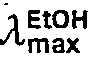
- (c) By repeating the procedure of Example 1 (1) except that 5.0 g of N-(3-hydroxypropyl)-3,4-dihydroxy- benzamide was replaced by 5.0 g of N-(2-methoxyethyl)3,4-dihydroxybenzamide, and that trimethylsilyl chloride and triethylamine were used in amounts of 9.7 g and 8.6 g, respectively, 7.0 g of 6-[D(-)-α-{3-(3,4-dihydroxybenzoyl)-3-(2-methoxyethyl)-1-ureido}-α-phenylacetamido]penicillanic acid (hereunder referred to as compound (E)) was obtained as a white powder.
- IR

- NMR (DMSO-d6, 60 MHz) δ(ppm): 1.41 (3H, s), 1.56 (3H, s), 3.18 (3H, s), 3.40 (2H, br), 3.85 (2H, br), 4.20 (1 H, s), 5.3-5.8 (3H, m), 6.7-7.6 (8H, m), 9.11 (1H, d, J = 7 Hz), 9.15 (1 H, d, J = 7 Hz)
- UV

- Ferric chloride color reaction: positive (dark green)
- (d) By repeating the procedure of Example 1 (1) except that 5.0 g of N-(3-Hydroxypropyl)-3,4-dihydroxy- benzamide was replaced by 4.0 g of N-(2-cyanoethyl)-3,4-dihydroxybenzamide and that trimethylsilyl chloride and triethylamine were used in amounts of 7.9 g and 7.1 g, 4.0 g of 6-[D(-)-a-{3-(3,4-dihydroxybenzoyl)-3-(2-cyanoethyl)-1-ureido}-α-phenylacetamido]penicillanic acid (hereunder referred to as compound (F)) was obtained as a white powder.
- IR

- NMR (DMSO-d6, 60 MHz) δ(ppm): 1.41 (3H, s), 1.55 (3H, s), 2.78 (2H, br), 3.98 (2H, br), 4.20 (1 H, s), 5.3-5.8 (3H, m), 6.7-7.5 (8H, m), 9.09 (1 H, d, J = 7 Hz), 9.14 (1 H, d, J = 7 Hz)
- UV

- Ferric chloride color reaction: positive (dark green)
- (e) By repeating the procedure of Example 1(1) except that 5.0 g of N-(3-hydroxypropyl)-3,4-di- hydroxybenzamide was replaced by 3.5 g of N-ethoxycarbonylmethyl-3,4-dihydroxybenzamide and that trimethylsilyl chloride and triethylamine were used in amounts of 5.9 g and 5.3 g, respectively, 4.0 g of 6[D(-) - a - (3 - (3,4 - dihydroxybenzoyl) - 3 - ethoxycarbonylmethyl - 1 - ureido} - a - phenyl- acetamido]penicillanic acid (hereunder referred to as compound (G)) was obtained as a white powder.
- IR vKBr max (cm-1): 3700-2200, 1770, 1730, 1685, 1600, 1515
- NMR (DMSO-d6, 60 MHz) 8(ppm): 1.0-1.4 (3H, m), 1.40 (3H, s), 1.55 (3H, s), 3.8-4.6 (4H, m), 4.20 (1 H, s), 5.3-5.9 (3H, m), 6.7-7.6 (8H, m), 9.22 (1 H, d, J = 7 Hz), 9.47 (1 H, d, J = 7 Hz)
- UV λEtOH max nm(ε): 208 (2.5 x 10⁴), 226 (shoulder), 285 (4.8 x 10³), 294 (4.8 x 10³)
- Ferric chloride color reaction: positive (dark green)
- (f) By repeating the procedure of Example 1 (1) except that 5.0 g of N-(3-hydroxypropyl)-3,4-dihydroxy- benzamide was replaced by 5.0 g of N-benzyl-3,4-dihydroxybenzamide and that trimethylsilyl chloride and triethylamine were used in amounts of 8.4 g and 7.5 g, respectively, 4.0 g of 6-[D(-) - a - (3 - (3,4 - dihydroxybenzoyl) - 3 - benzyl - 1 - ureido} - a - phenylacetamido]penicillanic acid (hereunder referred to as compound (H)) was obtained as a white powder.
- IR

- NMR (DMSO-d6), 60 MHz) δ(ppm): 1.42 (3H, s), 1.55 (3H, s), 4.21 (1 H, s), 4.8-5.1 (2H, brs), 5.3-5.8 (3H, m), 6.7-7.6 (13H, m), 9.16 (1 H, d, J = 7Hz), 9.24 (1 H, d, J = 7Hz)
- UV

- Ferric chloride color reaction: positive (dark green)
- (g) By repeating the procedure of Example 1(1) except that 5.0 g of N-(3-hydroxypropyl)-3,4-di- hydroxybenzamide was replaced by 2.7 g of N-cyanomethyl-3,4-dihydroxybenzamide and that trimethylsilyl chloride and triethylamine were used in amounts of 5.8 g and 5.2 g, respectively, 2.0 g of 6 - [D(-) - a - {3 - (3,4 - dihydroxybenzoyl) - 3 - cyanomethyl - 1 - ureido} - a - phenyl- acetamido]penicillanic acid (hereunder referred to as compound (I)) was obtained as a white powder.
- IR vKBr max (cm-1): 3700-2300, 1770, 1700, 1600, 1515 NMR (DMSO-ds), 60 MHz) 8(ppm): 1.41 (3H, s), 1.56 (3H, s) 4.20 (1 H, s), 4.6 (2H, brs), 5.3-5.8 (3H, m), 6.8-7.6 (8H, m), 9.21 (2H, d, J = 7 Hz)
- UV λEtOH max nm(e): 207 (3.3 x 10⁴), 226 (shoulder), 278 (6.9 x 10³), 296 (7.4 x 10³)
- Ferric chloride color reaction: positive (dark green)
- (h) By repeating the procedure of Example 1(1) except that 5.0 g of N-(3-hydroxypropyl)-3,4-di- hydroxybenzamide was replaced by 5.0 g of N-furfuryl-3,4-dihydroxybenzamide and that trimethylsilyl chloride and triethylamine were used in amounts of 9.2 g and 8.2 g, 5.5 g of 6 - [D(-) - a - {3 - (3,4 - dihydroxybenzoyl) - 3 - furfuryl - 1 - ureido} - a - phenylacetamido]penicillanic acid (hereunder referred to as compound (J)) was obtained as a white powder.
- IR vKBr max (cm-1): 3700-2200, 1770, 1680, 1600, 1510
- NMR (DMSO-d6, 60 MHz) 8(ppm): 1.41 (3H, s), 1.55 (3H, s), 4.20 (1 H, s), 4.8-5.1 (2H, brs), 5.3-5.8 (3H, m), 6.1-7.6 (11H, m), 9.18 (2H, d, J = 7 Hz)
- UV λEtOH max nm(ε): 208 (3.4 x 10⁴), 272 (5.3 x 10³), 294 (5.8 x 10³)
- Ferric chloride color reaction: positive (dark green)
- (i) By repeating the procedure of Example 1 (1) except that 5.0 g of N-(3-hydroxypropyl)-3,4-dihydroxy- benzamide was replaced by 5.0 g of N-(3-acetoxypropyl)-3,4-dihydroxybenzamide and that trimethylsilyl chloride and triethylamine were used in amounts of 8.1 g and 7.2 g, respectively, 4.0 g of 6 - [D(-) - a - {3 - (3,4 - dihydroxybenzoyl) - 3 - (3 - acetoxypropyl) - 1 - ureido) - a - phenyl- acetamido]penicillanic acid (hereunder referred to as compound (K)) was obtained as a white powder.
- IR

- NMR (DMSO-d6, 60 MHz) 8(ppm): 1.41 (3H, s), 1.5-2.1 (2H, br), 1.55 (3H, s), 1.88 (3H, s), 3.6-4.1 (4H, m), 4.21 (1 H, s), 5.3-5.8 (3H, m), 6.8-7.6 (8H, m) 9.17 (1 h, d, J = 7 Hz), 9.30 (1 H, d, J = 7 Hz)
- UV λEtOH max nm(ε): 205 (2.8 x 10⁴), 223 (shoulder), 272 (4.0 x 10³), 293 (4.4 x10³)
- Ferric chloride color reaction: positive (dark green)
-
- (1) To a mixture of 30 ml of dried dichloromethane and 30 ml of tetrahydrofuran that had suspended therein 5.0 g of N-(2-hydroxyethyl)-3,4-dihydroxybenzamide and 13.8 g of trimethylsilyl chloride, 30 ml of a solution of dried dichloromethane containing 12.3 g of triethylamine was added dropwise under cooling with ice water. The resulting mixture was refluxed for 40 minutes in a nitrogen atmosphere. Under cooling, 3.0 ml of trichloromethyl chloroformate was added dropwise at a temperature between -10 and -5°C. The temperature of the mixture was elevated gradually and after stirring at between 0 and 5°C for 2 hours, excess phosgene and solvent were distilled off under vacuum. Dried dichloromethane (80 ml) was added to the residue and the insoluble portion was filtered off by gravity and subjected to a reaction which is described below.
- (2) Trimethylsilyl chloride (8.4 g) was added dropwise at between 5 and 10°C to 110 ml of a solution of dried dichloromethane containing 11.6 g of anhydrous ampicilin and 7.6 g of triethylamine. After stirring the mixture at the same temperature for one hour, the dichloromethane solution prepared in (1) above was added dropwise at between 0 and 5°C under stirring. Following stirring at between 5 and 10°C for one hour, about 100 ml of cold saturated brine was added to the mixture and the organic layer was separated. The organic layer was then washed with 300 ml of cold saturated brine, and extracted twice with 300 ml of a cold saturated aqueous solution of sodium hydrogencarbonate. The separated aqueous layer was washed with 100 ml of ethyl acetate. The aqueous layer was mixed with 250 ml of ethyl acetate, treated with cold 6N-hydrochloric acid to have its pH adjusted to about 1.5, and saturated with sodium chloride. The organic layer was then separated, washed with 100 ml of cold saturated brine, dried with anhydrous magnesium sulfate and the solvent was distilled off under vacuum. The residue was subjected to column chromatography on Sephadex@Lh-20 (the trade name for a dextran crosslinked polymer produced by Fine Chemicals Corp.) and eluted with acetone. The eluate was concentrated under vacuum until the volume was about 30 ml. The concentrate was treated with 300 ml of diethyl ether to give 3.0 g of 6[D(-) - a - {3 - (3,4 - dihydroxybenzoyl) - 3 - (2 - hydroxyethyl) - 1 - ureido} - a - phenylacetamido]penicillanic acid (hereunder referred to as compound (B)) as a white powder.
- IR vKBr max (cm-1): 3700-2200, 1770, 1675, 1600, 1510 NMR (DMSO-d6, 60 MHz) 8(ppm): 1.41 (3H, s), 1.56 (3H, s), 3.3-4.1 (4H, m), 4.21 (1 H, s), 5.3-5.8 (3H, m), 6.7-7.6 (8H, m), 9.21 (1 H, d, J = 7 Hz), 9.33 (1 H, d, J = 7 Hz)
- UV

- Ferric chloride color reaction: positive (dark green)
- To 70 ml of dried dichloromethane having 12.9 g of amoxicillin trihydrate suspended therein, 12.9 g of N,O-bis(trimethylsilyl) acetamide was added at between 10 and 15°C, and stirred to form a homogeneous mixture. To the mixture, a dichloromethane solution as prepared in Example 1(1) was added dropwise at between 5 and 10°C. The mixture was stirred at the same temperature for one hour, and after evaporating the mixture to dryness at room temperature under vacuum, a mixture of 250 ml of ethyl acetate, 50 ml of tetrahydrofuran and 100 ml of cold 1 N-hydrochloric acid was added to the residue, and the organic layer was separated. The organic layer was then washed with 300 ml of cold saturated brine, and extracted twice with 300 ml of a cold saturated aqueous solution of sodium hydrogencarbonate. To the extract, a mixture of 250 ml of ethyl acetate and 50 ml of tetrahydrofuran was added, and its pH was adjusted to about 1.5 with cold 6N-hydrochloric acid. The aqueous layer was saturated with sodium chloride and the organic layer was separated. The organic layer was washed with 100 ml of cold saturated brine, dried with anhydrous magnesium sulfate, and the solvent was distilled off under vacuum. The residue was subjected to column chromatography on activated carbon (for chromatography) and eluted with acetone. The eluates were combined and concentrated under vacuum until the volume was about 30 ml. The concentrate was added to 300 ml of ethyl ether under stirring to give 4.5 g of 6 - [D(-) - a - [3 - (3,4 - dihydroxybenzoyl) - 3 - (3 - hydroxypropyl) - 1 - ureido} - a - (4-hydroxyphenyl)acetamido]penicillanic acid (hereunder referred to as compound (L)) was obtained as a white powder.
- IR

- NMR (DMSO-d6, 60 MHz) δ(ppm): 1.42 (3H, s), 1.56 (3H, s), 1.3-1.9 (2H, br), 3.1-4.0 (4H, m), 4.20 (1 H, s), 5.3-5.7 (3H, m), 6.5-7.3 (7H, m), 9.0 (2H, br)
- UV

- Ferric chloride color reaction: positive (dark green)
-
- (1) To 100 ml of suspension of dried dichloromethane containing 4.7 g of D(-)-phenylglycine and 7.8 g of trimethylsilyl chloride, 7.1 g of triethylamine was added at between 5 and 10°C. Then 1 ml of N,O-bis(trimethylsilyl)acetamide was added dropwise at the same temperature, and following stirring for one hour at room temperature, a dichloromethane solution as prepared in Example 1 (1) was added dropwise under stirring at between 5 and 10°C. The mixture was stirred at the same temperature for one hour, and after it was evaporated to dryness at room temperature under vacuum, a mixture of 300 ml of ethyl acetate and 100 ml of cold 1 N-hydrochloric acid was added to the residue, and the organic layer was separated. The organic layer was washed with 300 ml of cold saturated brine and extracted twice with 300 ml of a cold saturated aqueous solution of sodium hydrogencarbonate. To the extract, 250 ml of ethyl acetate was added, and its pH was adjusted to about 1.5 with cold 6N-hydrochloric acid. The aqueous layer was saturated with sodium chloride and the organic layer was separated. The organic layer was washed with 100 ml of cold saturated brine, dried with anhydrous magnesium sulfate and the solvent was distilled off under vacuum. The residue was crystallized with acetone-chloroform and recrystallized from the same solvent system to give 5.5 g of D(-)-a-{3-(3,4-dihydroxybenzoyl)-3-(3-hydroxypropyl)-1-ureido}phenylacetic acid as colorless crystals.
- m.p. (with decomposition): 139-141 °C

- NMR (DMSO-dg, 60 MHz) 8(ppm): 1.3-2.0 (2H, m), 3.35 (2H, t, J = 6 Hz), 3.73 (2H, t, J = 6.5 Hz), 5.22 (1 H, d, J = 7Hz), 6.7-7.5 (8H, m), 9.19 (1 H, d, J = 7 Hz)
- Ferric chloride color reaction: positive (dark green)
- (2) To 50 ml of a suspension of dried dichloromethane containing 4.0 g of the phenylacetic acid obtained in (1) above and 4.9 g of trimethylsilyl chloride, 4.2 g of triethylamine was added dropwise at between 5 and 10°C. By stirring the mixture at between 15 and 20°C for an hour, a solution of trimethylsilylated phenylacetic acid was obtained, and it was subjected to a reaction which is described below.
- (3) To 30 ml of a dried dichloromethane solution containing 1.2 g of trichloromethyl chloroformate, 0.8 g of dimethylformamide was added at -20°C, and following stirring at between 0 and 5°C for one hour, the dichloromethane solution prepared in (2) above was added at -30°C, and the mixture was stirred at between -10 and -15°C for 1.5 hours. Subsequently, a solution prepared by dissolving 5.5 g of N,O-bistrimethylsilylacetamide in 50 ml of a dried dichloromethane suspension containing 2.9 g of 6-aminopenicillanic acid was added dropwise to the mixture at between -10 and -15°C and stirred at the same temperature for one hour.
- By performing extraction and purification as in Example 1 (2), 4.0 g of compound A was obtained. The compound had the same IR, NMR and UV data as that of the compound obtained in Example 1.
- (a) By repeating the procedure of Example 4(1) except that N-(3-hydroxypropyl)-3,4-dihydroxy- benzamide was replaced by N-(2-hydroxyethyl)-3,4-dihydroxybenzamide, D(-)-a-{3-(3,4-dihydroxybenzoyl)-3-(2-hydroxyethyl)-1-ureido}phenylacetic acid was produced, and the acetic acid was subjected to the same procedure as in Example 4(2) to give compound (B). The compound had the same IR, NMR, and UV data as that of the compound obtained in Example 2.
- (b) By repeating the procedure of Example 4(1) except that N-(3-hydroxypropyl)-3,4-dihydroxy- benzamide was replaced by N-(5-hydroxypentyl)-3,4-dihydroxybenzamide, D(-)-α-{3-(3,4-dihydroxybenzoyl)-3-(5-hydroxypentyl)-1-ureido}phenylacetic acid was produced, and the acetic acid was subjected to the same procedure as in Example 4(2) to give compound (C). The compound had the same IR, NMR and UV data as that of the compound obtained in Example 1 (a).
- (c) By repeating the procedure of Example 4(1) except that N-(3-hydroxpropyl)-3,4-di- hydroxybenzamide was replaced by N-{2-(2-hydroxyethoxy)ethyl}-3,4-dihydroxybenzamide, D(-)-a-[3-(3,4-dihydroxybenzoyl)-3-{2-(2-hydroxyethoxy)ethyl-1-ureido]phenylacetic acid was produced, and the acetic acid was subjected to the same procedure as in Example 4(2) to give compound (D). The compound had the same IR, NMR and UV data as that of the compound obtained in Example 1 (b).
- (d) By repeating the procedure of Example 4(1) except that N-(3-hydroxypropyl)-3,4-dihydroxy- benzamide was replaced by N-(2-methoxyethyl)-3,4-dihydroxybenzamide and that the amount of trimethylsilyl chloride and triethylamine was decreased by one molar equivalent, D(-)-α-{3-(3,4-dihydroxybenzoyl)-3-(2-methoxyethyl)-1-ureido}phenylacetic acid was produced, and the acetic acid was subjected to the same procedure as in Example 4(2) to give compound (E). The compound had the same IR, NMR and UV data as that of the compound obtained in Example 1 (c).
- (e) By repeating the procedure of Example 4(1) except that N-(3-hydroxypropyl)-3,4-dihydroxybenz- amide was replaced by N-(2-cyanoethyl)-3,4-dihydrobenzamide and that the amount of trimethylsilyl chloride and triethylamine was decreased by one molar equivalent, D(-)-a-{3-(3,4-dihydroxybenzoyl)-3-(2-cyanoethyl)-1-ureido}phenylacetic acid was produced, and the acetic acid was subjected to the same procedure as in Example 4(2) to give compound (F). The compound had the same IR, NMR and UV data as that of the compound obtained in Example 1 (d).
- (f) By repeating the procedure of Example 4(1) except that N-(3-hydroxypropyl)-3,4-dihydroxy- benzamide was replaced by N-ethoxycarbonylmethyl-3,4-dihydroxybenzamide and that the amount of trimethylsilyl chloride and triethylamine was decreased by one molar equivalent, D(-)-α-{3-(3,4-dihydroxybenzoyl)-3-ethoxycarbonylmethyl-1-ureido}phenylacetic acid was produced, and the acetic acid was subjected to the same procedure as in Example 4(2) to give compound (G). The compound had the same IR, NMR and UV data as that of the compound obtained in Example 1 (e).
- (g) By repeating the procedure of Example 4(1) except that N-(3-hydroxypropyl)-3,4-dihydroxy- benzamide was replaced by N-benzyl-3,4-dihydroxybenzamide and that the amount of trimethylsilylchloride and triethylamine was decreased by one molar equivalent, D(-)-α-{3-(3,4-dihydroxybenzoyl)-3-benzyl-1-ureido}phenylacetic acid was produced, and the acetic acid was subjected to the same procedure as in Example 4(2) to give compound (H). The compound had the same IR, NMR and UV data as that of the compound obtained in Example 1 (f).
- (h) By repeating the procedure of Exaple 4(1) except that N-(3-hydroxypropyl)-3,4-dihydroxy- benzamide was replaced by N-cyanomethyl-3,4-dihydroxybenzamide and that the amount of trimethylsilylchloride and triethylamine was decreased by one molar equivalent, D(-)-a-{3-(3,4-dihydroxybenzoyl)-3-cyanomethyl-1-ureido}phenylacetic acid was produced. The acetic acid was subjected to the same procedure as in Example 4(2) to give compound (1). The compound had the same IR, NMR and UV data as that of the compound obtained in Example 1 (g).
- (i) By repeating the procedure of Example 4(1) except that N-(3-hydroxypropyl)-3,4-dihydroxy- benzamide was replaced by N-furfuryl-3,4-dihydroxybenzamide and that the amount of trimethylsilyl chloride and triethylamine was decreased by one molar equivalent, D(-)-α-{3-(3,4-dihydroxybenzoyl)-3-furfuryi-l-ureidolphenylacetic acid was produced, and the acetic acid was subjected to the same procedure as in Example 4(2) to give compound (J). The compound had the same IR, NMR and UV as that of the compound obtained in Example 1 (h).
- (j) By repeating the procedure of Example 4(1) except that N-(3-hydroxypropyl)-3,4-dihydroxy- benzamide was replaced by N-(3-acetoxypropyl)-3,4-dihydroxybenzamide and that the amount of trimethylsilyl chloride and triethylamine was decreased by one molar equivalent, D(-)-a-(3-(3,4-dihydroxybenzoyl)-3-(3-acetoxypropyl-1-ureido phenylacetic acid was produced, and the acetic acid was subjected to the same procedure as in Example 4(2) to give compound (K). The compound had the same IR, NMR and UV data as that of the compound obtained in Example 1 (i).
- (k) By repeating the procedure of Example 4(1) except that D(-)-phenylglycine was replaced by D(-)-4-hydroxyphenylglycine, D(-)-α-{3-(3,4-dihydroxybenzoyl)-3-(3-hydroxypropyl)-1-uriedo}-4-hydroxyphenylacetic acid was produced, and the acetic acid was subjected to the same procedure as in Example 4(2) to give compound (L). The compound had the same IR, NMR and UV data as that of the compound obtained in Example 3.
-
- (1) A suspension of 5.0 g of N-(3-hydroxypropyl)-3,4-dihydroxybenzamide in 150 ml of tetrahydrofuran was prepared. To the suspension, 7.64 g of dimethyl dichlorosilane was added, and 11.98 g of triethylamine was added dropwise slowly to the mixture under stirring at room temperature. The mixture was heated for 60 minutes under reflux, cooled to 10°C, mixed with 1.6 ml of trichloromethyl chloroformate, and the mixture was stirred at 25°C for 3 hours.
- (2) A suspension of 9.5 g of anhydrous ampicillin in 100 ml of ethyl acetate was prepared. To the suspension, 6.5 g of trimethylsilyl chloride was added, and 6.1 g of triethylamine was added dropwise slowly to the mixture under stirring while it was cooled with ice. After the mixture was stirred for another one hour at between 5 and 10°C, the tetrahydrofuran solution prepared in (1) above was added to the mixture which was then stirred for one to two hours at about 20°C. After completion of the reaction, 200 ml of water was added to the mixture which was stirred thoroughly. The mixture was left to stand to separate the organic layer. The organic layer was washed with cold saturated brine and extracted with 200 ml of a cold saturated aqueous solution of sodium hydrogencarbonate. The separating aqueous layer was washed with ethyl acetate. Then, 200 ml of ethyl acetate was added to the aqueous layer whose pH was adjusted to about between 1 and 2 with cold 6N-hydrochloric acid. The aqueous layer was saturated with sodium chloride and the organic layer was separated. The organic layer was washed with 100 ml of cold saturated brine three times, dried with anhydrous magnesium sulfate, and concentrated under vacuum. The concentrate was added to 500 ml of n-hexane under stirring to give 11.5 g of a crude compound A as a pale yellow powder. A mixture of 7.0 g of the crude compound A and 0.9 g of sodium hydrogencarbonate was dissolved in 30 ml of cold water, and the solution was subjected to column chromatography on DIAION@HP-30 (the trade name for an ion exchange resin produced by Mitsubishi Chemical Industries Limited) and eluted first with water, then with hydrous acetone (acetone conc.: 10 v/v%). The eluates were combined, mixed with 200 ml of ethyl acetate and had their pH adjusted to about 1.5 with cold 1 N-hydrochloric acid. The aqueous layer was saturated with sodium chloride and the organic layer was separated. The organic layer was washed with 100 ml of cold saturated brine, dried with anhydrous magnesium sulfate, and concentrated under vacuum until the volume was about 30 ml. The concentrate was added to 300 ml of n-hexane under stirring to provide 5.0 g of compound (A) as a white powder. The compound had the same IR, NMR and UV data as that of the compound obtained in Example 1.
-
- (a) By repeating the procedure of Example 5(1) except that N-(3-hydroxypropyl)-3,4-dihydroxy- benzamide was replaced by N-(2-hydroxyethyl)-3,4-dihydroxybenzamide, compound (B) was obtained. The compound had the same IR, NMR and UV data as that of the compound obtained in Example 2.
- (b) To 70 ml of ethyl acetate having 12.9 g of amoxicillin trihydrate suspended therein, 12.9 g of N,O-bis(trimethylsilyl)acetamide was added at between 10 and 15°C, and stirred to form a homogeneous mixture. To the mixture, a tetrahydrofuran solution as prepared in Example 4(1) was added dropwise. The mixture was stirred at about 20°C for 1 to 2 hours. By subsequently treating the mixture as in Example 5(1 4.7 g of compound (L) was produced. The compound had the same IR, NMR and UV data as that of the compound obtained in Example 3.
Claims (27)


Applications Claiming Priority (2)
| Application Number | Priority Date | Filing Date | Title |
|---|---|---|---|
| JP10677580A JPS5732289A (en) | 1980-08-05 | 1980-08-05 | Alpha-substituted ureidobenzylpenicillin |
| JP106775/80 | 1980-08-05 |
Publications (2)
| Publication Number | Publication Date |
|---|---|
| EP0045523A1 EP0045523A1 (en) | 1982-02-10 |
| EP0045523B1 true EP0045523B1 (en) | 1984-12-05 |
Family
ID=14442271
Family Applications (1)
| Application Number | Title | Priority Date | Filing Date |
|---|---|---|---|
| EP81106149A Expired EP0045523B1 (en) | 1980-08-05 | 1981-08-05 | Alpha-substituted ureidobenzylpenicillanic acid derivatives and process for producing the same |
Country Status (14)
| Country | Link |
|---|---|
| US (1) | US4355038A (en) |
| EP (1) | EP0045523B1 (en) |
| JP (1) | JPS5732289A (en) |
| KR (2) | KR850000049B1 (en) |
| AT (1) | ATE10635T1 (en) |
| AU (1) | AU542522B2 (en) |
| CA (1) | CA1203530A (en) |
| DE (1) | DE3167610D1 (en) |
| DK (1) | DK159272C (en) |
| FI (1) | FI70220C (en) |
| IL (1) | IL63456A (en) |
| MX (1) | MX6943E (en) |
| NO (1) | NO158300C (en) |
| ZA (1) | ZA815222B (en) |
Families Citing this family (3)
| Publication number | Priority date | Publication date | Assignee | Title |
|---|---|---|---|---|
| JPS5810585A (en) * | 1981-07-10 | 1983-01-21 | Chugai Pharmaceut Co Ltd | Alpha-substituted ureidobenzylpenicillanic acid |
| GB2168975A (en) * | 1984-12-20 | 1986-07-02 | Procter & Gamble | Amides and compositions thereof having anti-inflammatory and analgesic activity |
| JPH06159622A (en) * | 1992-11-19 | 1994-06-07 | Miura Kenkyusho:Kk | Combustion gas self-circulation type gasification combustion burner |
Family Cites Families (21)
| Publication number | Priority date | Publication date | Assignee | Title |
|---|---|---|---|---|
| IE32700B1 (en) | 1968-02-03 | 1973-10-31 | Beecham Group Ltd | Penicillins |
| GB1250611A (en) | 1968-02-03 | 1971-10-20 | ||
| DE1770620A1 (en) | 1968-06-12 | 1971-11-11 | Bayer Ag | New penicillins |
| US3933795A (en) * | 1970-05-25 | 1976-01-20 | Hans-Bodo Konig | Ureidoacetamido-penicillins |
| US3936442A (en) * | 1970-05-25 | 1976-02-03 | Bayer Aktiengesellschaft | Unreidoacetamido-penicilins |
| CH562249A5 (en) | 1970-05-25 | 1975-05-30 | Bayer Ag | |
| US3974140A (en) * | 1970-05-25 | 1976-08-10 | Bayer Aktiengesellschaft | Ureidoacetamido-penicillins |
| US3939149A (en) * | 1970-05-25 | 1976-02-17 | Bayer Aktiengesellschaft | Ureidoacetamido-penicillins |
| US3980792A (en) * | 1970-05-25 | 1976-09-14 | Bayer Aktiengesellschaft | Ureidoacetamido-penicillins |
| US4016282A (en) * | 1970-05-25 | 1977-04-05 | Bayer Aktiengesellschaft | Ureidoacetamido-penicillins |
| US3959258A (en) * | 1970-05-25 | 1976-05-25 | Bayer Aktiengesellschaft | Ureidoacetamido-penicillins |
| US3978223A (en) * | 1970-05-25 | 1976-08-31 | Bayer Aktiengesellschaft | Ureidoacetamido-penicillins for treating bacterial infections |
| GB1433131A (en) | 1972-03-13 | 1976-04-22 | Astra Laekemedel Ab | Penicillins |
| DE2258973A1 (en) | 1972-12-01 | 1974-06-06 | Bayer Ag | PENICILLIN, THE METHOD FOR MANUFACTURING IT AND THEIR USE AS A MEDICINAL PRODUCT |
| GB1562802A (en) | 1976-06-26 | 1980-03-19 | Beecham Group Ltd | Pharmaceutical compositions containing containing clavulanic acid |
| CA1133896A (en) * | 1978-05-26 | 1982-10-19 | Nobuhiro Oi | Penicillanic acid derivative and process for preparing the same |
| JPS54154782A (en) * | 1978-05-26 | 1979-12-06 | Chugai Pharmaceut Co Ltd | Penicillin derivative and its salt |
| JPS5524135A (en) * | 1978-08-11 | 1980-02-21 | Chugai Pharmaceut Co Ltd | Penicillin derivative and its preparation |
| JPS54163590A (en) * | 1978-06-13 | 1979-12-26 | Chugai Pharmaceutical Co Ltd | Penicilunic acid derivative and salt thereof |
| JPS5583789A (en) | 1978-12-18 | 1980-06-24 | Bristol Myers Co | Preparation of penicillin |
| US4240960A (en) * | 1979-03-19 | 1980-12-23 | Bristol-Myers Company | Trimethylsilyl substituted penicillins |
-
1980
- 1980-08-05 JP JP10677580A patent/JPS5732289A/en active Granted
-
1981
- 1981-07-29 IL IL63456A patent/IL63456A/en unknown
- 1981-07-29 ZA ZA815222A patent/ZA815222B/en unknown
- 1981-07-29 AU AU73549/81A patent/AU542522B2/en not_active Ceased
- 1981-07-30 US US06/288,402 patent/US4355038A/en not_active Expired - Fee Related
- 1981-07-31 FI FI812395A patent/FI70220C/en not_active IP Right Cessation
- 1981-07-31 DK DK343481A patent/DK159272C/en not_active IP Right Cessation
- 1981-08-03 NO NO812630A patent/NO158300C/en unknown
- 1981-08-03 KR KR1019810002807A patent/KR850000049B1/en not_active Expired
- 1981-08-04 CA CA000383181A patent/CA1203530A/en not_active Expired
- 1981-08-05 EP EP81106149A patent/EP0045523B1/en not_active Expired
- 1981-08-05 DE DE8181106149T patent/DE3167610D1/en not_active Expired
- 1981-08-05 AT AT81106149T patent/ATE10635T1/en not_active IP Right Cessation
- 1981-08-05 MX MX819591U patent/MX6943E/en unknown
-
1984
- 1984-08-21 KR KR1019840005041A patent/KR850000048B1/en not_active Expired
Also Published As
| Publication number | Publication date |
|---|---|
| FI70220B (en) | 1986-02-28 |
| KR850000048B1 (en) | 1985-02-14 |
| FI812395L (en) | 1982-02-06 |
| KR850000049B1 (en) | 1985-02-14 |
| FI70220C (en) | 1986-09-15 |
| EP0045523A1 (en) | 1982-02-10 |
| DK343481A (en) | 1982-02-06 |
| IL63456A (en) | 1984-12-31 |
| DE3167610D1 (en) | 1985-01-17 |
| JPS5732289A (en) | 1982-02-20 |
| AU7354981A (en) | 1982-02-11 |
| CA1203530A (en) | 1986-04-22 |
| NO158300C (en) | 1988-08-17 |
| US4355038A (en) | 1982-10-19 |
| MX6943E (en) | 1986-12-17 |
| ZA815222B (en) | 1982-08-25 |
| DK159272C (en) | 1991-02-18 |
| NO812630L (en) | 1982-02-08 |
| NO158300B (en) | 1988-05-09 |
| IL63456A0 (en) | 1981-10-30 |
| KR830006306A (en) | 1983-09-20 |
| ATE10635T1 (en) | 1984-12-15 |
| JPH0118916B2 (en) | 1989-04-07 |
| AU542522B2 (en) | 1985-02-21 |
| DK159272B (en) | 1990-09-24 |
Similar Documents
| Publication | Publication Date | Title |
|---|---|---|
| DD282691A5 (en) | PROCESS FOR THE PREPARATION OF CEPHALOSPORIN | |
| US4782155A (en) | Cephalosporin derivatives, processes for their preparation and antibacterial agents | |
| US4880797A (en) | Cephalosporin derivatives and antibacterial agents | |
| KR940009794B1 (en) | Method for preparing cephalosporin derivative | |
| US4935508A (en) | Process for cephem prodrug esters | |
| US5028427A (en) | "Cephalosporin" compounds | |
| US4355038A (en) | α-Substituted ureido-benzylpenicillanic acids | |
| US3925362A (en) | {60 -Alkylsulfobenzyl penicillins and production thereof | |
| US4331597A (en) | Penicillin compounds | |
| US4393058A (en) | Cephalosporin compounds | |
| EP0001715A2 (en) | Azetidinone antibiotics and their pharmaceutical formulations and use | |
| US4092309A (en) | Derivatives of amoxicillin | |
| US4814328A (en) | Cephalosporin derivatives, and antibacterial agents | |
| KR910005230B1 (en) | Process for producing azetidinones | |
| JPH0328438B2 (en) | ||
| CA1133896A (en) | Penicillanic acid derivative and process for preparing the same | |
| EP0122157A2 (en) | Improvements in or relating to indolylglycyl cephalosporin derivatives | |
| US4490370A (en) | Naphthylglycyl cephalosporin derivatives | |
| US5106842A (en) | Antibiotic c-3 cyclobutenedione substituted (1-carba)cephalosporin compounds, compositions, and methods of use thereof | |
| JPS643865B2 (en) | ||
| EP0091302A1 (en) | Beta-lactam derivatives | |
| EP0122154A2 (en) | Improvements in or relating to benzothienylglycyl cephalosporin derivatives | |
| KR910001007B1 (en) | Penicillanic acid and cephalosporin derivatives | |
| EP0122156A2 (en) | Improvements in or relating to benzothienylglycyl cephalosporin derivatives | |
| US5079242A (en) | Substituted 3-cephem compounds as antibacterial agents |
Legal Events
| Date | Code | Title | Description |
|---|---|---|---|
| PUAI | Public reference made under article 153(3) epc to a published international application that has entered the european phase |
Free format text: ORIGINAL CODE: 0009012 |
|
| AK | Designated contracting states |
Designated state(s): AT BE CH DE FR GB IT LI NL SE |
|
| 17P | Request for examination filed |
Effective date: 19820715 |
|
| ITF | It: translation for a ep patent filed | ||
| RBV | Designated contracting states (corrected) |
Designated state(s): AT BE CH DE FR GB IT LI NL SE |
|
| GRAA | (expected) grant |
Free format text: ORIGINAL CODE: 0009210 |
|
| AK | Designated contracting states |
Designated state(s): AT BE CH DE FR GB IT LI NL SE |
|
| REF | Corresponds to: |
Ref document number: 10635 Country of ref document: AT Date of ref document: 19841215 Kind code of ref document: T |
|
| REF | Corresponds to: |
Ref document number: 3167610 Country of ref document: DE Date of ref document: 19850117 |
|
| ET | Fr: translation filed | ||
| PLBE | No opposition filed within time limit |
Free format text: ORIGINAL CODE: 0009261 |
|
| STAA | Information on the status of an ep patent application or granted ep patent |
Free format text: STATUS: NO OPPOSITION FILED WITHIN TIME LIMIT |
|
| 26N | No opposition filed | ||
| PGFP | Annual fee paid to national office [announced via postgrant information from national office to epo] |
Ref country code: GB Payment date: 19900626 Year of fee payment: 10 |
|
| PGFP | Annual fee paid to national office [announced via postgrant information from national office to epo] |
Ref country code: SE Payment date: 19900720 Year of fee payment: 10 |
|
| PGFP | Annual fee paid to national office [announced via postgrant information from national office to epo] |
Ref country code: AT Payment date: 19900802 Year of fee payment: 10 |
|
| PGFP | Annual fee paid to national office [announced via postgrant information from national office to epo] |
Ref country code: CH Payment date: 19900810 Year of fee payment: 10 |
|
| PGFP | Annual fee paid to national office [announced via postgrant information from national office to epo] |
Ref country code: FR Payment date: 19900827 Year of fee payment: 10 |
|
| ITTA | It: last paid annual fee | ||
| PGFP | Annual fee paid to national office [announced via postgrant information from national office to epo] |
Ref country code: NL Payment date: 19900831 Year of fee payment: 10 |
|
| PGFP | Annual fee paid to national office [announced via postgrant information from national office to epo] |
Ref country code: BE Payment date: 19901010 Year of fee payment: 10 |
|
| PGFP | Annual fee paid to national office [announced via postgrant information from national office to epo] |
Ref country code: DE Payment date: 19901026 Year of fee payment: 10 |
|
| PG25 | Lapsed in a contracting state [announced via postgrant information from national office to epo] |
Ref country code: GB Effective date: 19910805 Ref country code: AT Effective date: 19910805 |
|
| PG25 | Lapsed in a contracting state [announced via postgrant information from national office to epo] |
Ref country code: SE Effective date: 19910806 |
|
| PG25 | Lapsed in a contracting state [announced via postgrant information from national office to epo] |
Ref country code: LI Effective date: 19910831 Ref country code: CH Effective date: 19910831 Ref country code: BE Effective date: 19910831 |
|
| BERE | Be: lapsed |
Owner name: CHUGAI SEIYAKU K.K. Effective date: 19910831 |
|
| PG25 | Lapsed in a contracting state [announced via postgrant information from national office to epo] |
Ref country code: NL Effective date: 19920301 |
|
| GBPC | Gb: european patent ceased through non-payment of renewal fee | ||
| NLV4 | Nl: lapsed or anulled due to non-payment of the annual fee | ||
| PG25 | Lapsed in a contracting state [announced via postgrant information from national office to epo] |
Ref country code: FR Effective date: 19920430 |
|
| REG | Reference to a national code |
Ref country code: CH Ref legal event code: PL |
|
| PG25 | Lapsed in a contracting state [announced via postgrant information from national office to epo] |
Ref country code: DE Effective date: 19920501 |
|
| REG | Reference to a national code |
Ref country code: FR Ref legal event code: ST |
|
| EUG | Se: european patent has lapsed |
Ref document number: 81106149.8 Effective date: 19920306 |