EP0045474B1 - Anthracyclin-Derivate - Google Patents
Anthracyclin-Derivate Download PDFInfo
- Publication number
- EP0045474B1 EP0045474B1 EP81105948A EP81105948A EP0045474B1 EP 0045474 B1 EP0045474 B1 EP 0045474B1 EP 81105948 A EP81105948 A EP 81105948A EP 81105948 A EP81105948 A EP 81105948A EP 0045474 B1 EP0045474 B1 EP 0045474B1
- Authority
- EP
- European Patent Office
- Prior art keywords
- hydroxy
- aclacinomycin
- acid
- chloroform
- formula
- Prior art date
- Legal status (The legal status is an assumption and is not a legal conclusion. Google has not performed a legal analysis and makes no representation as to the accuracy of the status listed.)
- Expired
Links
- 0 CC(C1OC(CC2)O[C@](C)C2O)O*=CC1O Chemical compound CC(C1OC(CC2)O[C@](C)C2O)O*=CC1O 0.000 description 1
Classifications
-
- C—CHEMISTRY; METALLURGY
- C07—ORGANIC CHEMISTRY
- C07H—SUGARS; DERIVATIVES THEREOF; NUCLEOSIDES; NUCLEOTIDES; NUCLEIC ACIDS
- C07H15/00—Compounds containing hydrocarbon or substituted hydrocarbon radicals directly attached to hetero atoms of saccharide radicals
- C07H15/20—Carbocyclic rings
- C07H15/24—Condensed ring systems having three or more rings
- C07H15/252—Naphthacene radicals, e.g. daunomycins, adriamycins
-
- A—HUMAN NECESSITIES
- A61—MEDICAL OR VETERINARY SCIENCE; HYGIENE
- A61P—SPECIFIC THERAPEUTIC ACTIVITY OF CHEMICAL COMPOUNDS OR MEDICINAL PREPARATIONS
- A61P35/00—Antineoplastic agents
-
- C—CHEMISTRY; METALLURGY
- C12—BIOCHEMISTRY; BEER; SPIRITS; WINE; VINEGAR; MICROBIOLOGY; ENZYMOLOGY; MUTATION OR GENETIC ENGINEERING
- C12N—MICROORGANISMS OR ENZYMES; COMPOSITIONS THEREOF; PROPAGATING, PRESERVING, OR MAINTAINING MICROORGANISMS; MUTATION OR GENETIC ENGINEERING; CULTURE MEDIA
- C12N1/00—Microorganisms; Compositions thereof; Processes of propagating, maintaining or preserving microorganisms or compositions thereof; Processes of preparing or isolating a composition containing a microorganism; Culture media therefor
- C12N1/20—Bacteria; Culture media therefor
- C12N1/205—Bacterial isolates
-
- C—CHEMISTRY; METALLURGY
- C12—BIOCHEMISTRY; BEER; SPIRITS; WINE; VINEGAR; MICROBIOLOGY; ENZYMOLOGY; MUTATION OR GENETIC ENGINEERING
- C12P—FERMENTATION OR ENZYME-USING PROCESSES TO SYNTHESISE A DESIRED CHEMICAL COMPOUND OR COMPOSITION OR TO SEPARATE OPTICAL ISOMERS FROM A RACEMIC MIXTURE
- C12P19/00—Preparation of compounds containing saccharide radicals
- C12P19/44—Preparation of O-glycosides, e.g. glucosides
- C12P19/56—Preparation of O-glycosides, e.g. glucosides having an oxygen atom of the saccharide radical directly bound to a condensed ring system having three or more carbocyclic rings, e.g. daunomycin, adriamycin
-
- C—CHEMISTRY; METALLURGY
- C12—BIOCHEMISTRY; BEER; SPIRITS; WINE; VINEGAR; MICROBIOLOGY; ENZYMOLOGY; MUTATION OR GENETIC ENGINEERING
- C12R—INDEXING SCHEME ASSOCIATED WITH SUBCLASSES C12C - C12Q, RELATING TO MICROORGANISMS
- C12R2001/00—Microorganisms ; Processes using microorganisms
- C12R2001/01—Bacteria or Actinomycetales ; using bacteria or Actinomycetales
- C12R2001/465—Streptomyces
Definitions
- the present invention relates to novel anthracycline compounds and to processes for their preparation. More particularly, the present invention relates to novel anthracycline compounds designated 2-hydroxy-aclacinomycins M, N, S and T, to processes for the preparation thereof by reduction or acid hydrolysis of 2-hydroxy-aclacinomycin A, and to the methods for their recovery and purification.
- Rhodomycinones Rhodomycinones, iso-rhodomycinone and rhodomycin-related antibiotics are described in Chem. Ber. 88, 1792-1818 (1955); Chem. Ber. 101, 1341-1348 (1968); J. Med. Chem., 20, 957-960 (1977); Pharmacie 27, 782-789 (1972); Zeit. Allg. Microbiol., 14, 551-558 (1974); Tetrahed. Lett. No. 38, 3699-3702 (1973); Folia Microbiol., 24, 293-295 (1979); and J. Antibiotics, 32, 420 (1979).
- Aclacinomycin A is disclosed in U.S. Patent No. 3,988,315 and by Oki et al. in J. Antibiotics 28, 830 (1975) and 32, 791-812 (1979).
- Cinerubins A and B are disclosed in U.K. Patent No. 846,130, U.S. Patent No. 3,864,480, Keller-Schierlein et al., "Antimicrobial Agents and Chemotherapy", page 68 (1970), Chemical Abstracts 54, 1466i (1960) and J. Antibiotics 28, 830 (1975).
- anthracycline antibiotics can be located in Index of Antibiotics from Actinomycetes, Hamao Umezawa, Editor-in-Chief, University Park Press, State college, Pennsylvania, U.S.A. (1967) as follows:
- This invention relates to anthracycline derivatives and acid addition salts thereof having the general formula: wherein
- the present invention relates to antitumor anthracycline antibiotics and more particularly to anthracycline derivatives and acid addition salts thereof having the following general formula I: wherein
- the compounds of the formula I remarkably inhibits the growth and nucleic acids synthesis of cultured mouse leukemia L1210 cells at a low concentration and may be used as an antitumor agent, after a long intensive study to try to obtain much better antitumor substances than the above-mentioned antibiotic, 2-hydroxy-aclacinomycin A.
- the present invention is based on this discovery.
- the compounds of the present invention may be obtained by reduction or hydrolysis of the compound of the formula II or acid addition salts thereof, in which the reaction process is known per se.
- 2-hydroxy-aclacinomycin A is treated with a reducing reagent such as sodium boron hydride or lithium aluminum hydride under appropriate reaction conditions to reduce the carbonyl group of the terminal sugar moiety, cinerulose A.
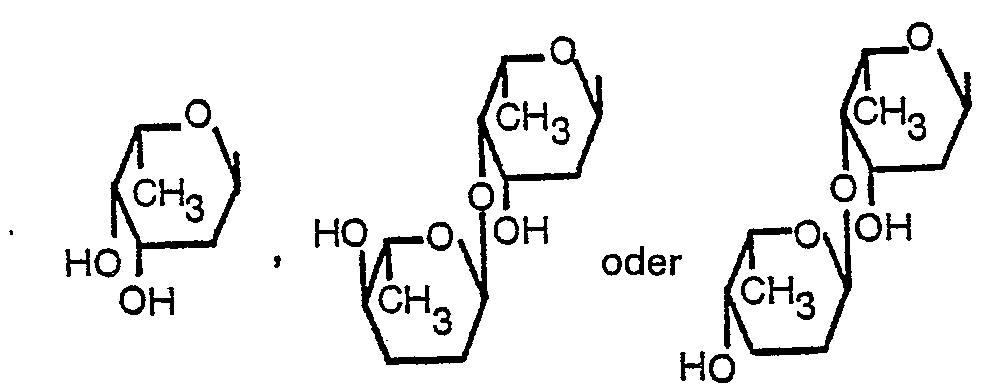
- the sugar moiety is converted to amicetose or rhodinose and 2-hydroxy-aclacinomycin M, in which R of the general formula I is a group of the formula: or 2-hydroxy-aclacinomycin N, in which R of the general formula is a group of the formula: is obtained.
- 2-hydroxy-aclacinomycin A 2-hydroxy-adacinomycin M or 2-hydroxy- aclacinomycin N is subjected to mild hydrolysis with 0.05-0.5 N hydrochloric acid or sulfuric acid to remove the terminal sugar or the two terminal chained sugars.
- 2-hydroxy- aclacinomycin S in which R of the general formula is a group of the formula:
- 2-hydroxy-aclacinomycin T in which R of the general formula I is a hydrogen atom
- 2-Hydroxyaclacinomycin T may also be produced from 2-hydroxyaclacinomycin S that is obtained according to the above-mentioned process by a mild hydrolysis further to remove the terminal sugar moiety.
- the compounds thus obtained of the general formula I may be purified according to the known isolation and purification processes that are usually used in the art of anthracycline antibiotics.
- the compounds of the present invention are basic and form addition salts with various kinds of inorganic and organic acids.
- the compounds of the general formula I may be obtained as addition salts with an acid such as hydrochloric acid, sulfuric acid, phosphoric acid, oxalic acid, nitric acid, acetic acid, propionic acid, maleic acid, oleic acid, palmitic acid, citric acid, succinic acid, tartaric acid, fumaric acid, glutamic acid, pantothenic acid, laurylsulfonic acid, benzenesulfonic acid and naphthalenesulfonic acid by the known processes for formation of salt from free bases.
- an acid such as hydrochloric acid, sulfuric acid, phosphoric acid, oxalic acid, nitric acid, acetic acid, propionic acid, maleic acid, oleic acid, palmitic acid, citric acid, succinic acid, tartaric acid, fumaric acid, glutamic acid, pan
- a representative process for salt formation consists of treating the compound of free base form of the present invention with the above-mentioned acid in an appropriate solvent and obtaining the reaction product by freeze- drying or recovering it by precipitation with a solvent in which the corresponding salt has low solubility.
- Solubilities of the compounds of the present invention are almost similar. They are soluble in acidic water, methanol, ethanol, n-butanol, acetone, ethyl acetate, chloroform, benzene, toluene, dimethylsulfoxide and methyl cellosolve, slightly soluble in water, ether and n-hexane.
- the color of the solutions, when they are dissolved, is yellow or yellowish brown, which is changed to violet in alkaline solution.
- IR absorption spectra showed absorption peaks of methoxy carbonyl group at 1730-1735 cm-', quinone carbonyl group at 1670-1675 cm- 1 , hydrogen bond-type quinone carbonyl group at 1620 cm- 1 and sugar ether group at 1010 cm -1 .
- the present compounds were confirmed to have the same chromophore as 2-hydroxy- aclacinomycin A (EP-A-30255) has, because they have a maximum absorption at 440-445 nm in the visible absorption spectra.
- 2-Hydroxy-aclacinomycins M, N, S and T were dissolved in 0.1 N hydrochloric acid and heated at 85°C for 30 minutes, respectively. Each aglycone thus formed was isolated, and the IR, UV, NMR and Mass spectra and melting point were measured. The values were in accordance with those of 2-hydroxyaklavinone (EP ⁇ A ⁇ 30255), which assures that the compounds of the present invention have the same aglycone as 2-hydroxyaclacinomycin A has.
- the sugar moieties of the compounds of the present invention were analyzed by silica gel thin-layer chromatography (Merck Co. 60F 254 , Solvent system; n-butanol:acetic acid:water, 4:1:1) with the neutralized and concentrated water-soluble fraction of the hydrolysate.
- 2-Hydroxy-aclacinomycins M and N gave 3 kinds of sugars, and 2-hydroxy-aclacinomycin S provided 2 kinds of sugars. From 2-hydroxy-aclacinomycin T, only one sugar was detected. Comparison of these sugars with authentic sugar samples obtained from MA144 M1 and MA144 N1 (J.
- Antibiotics 32, 801-819, 1979 showed that 3 kinds of sugars from 2-hydroxyaclacinomycin M were amicetose, 2-deoxy-fucose and rhodosamine and that 3 kinds of sugars from 2-hydroxyaclacinomycin N were rhodinose, 2-deoxy-fucose and rhodosamine. It was also shown that 2 kinds of sugars from 2-hydroxy-aclacinomycin S were 2-deoxy-fucose and rhodosamine and that a sugar from 2-hydroxy-aclacinomycin T was rhodosamine.
- the compounds of the present invention are novel substances having the structure of the formula I which are chemically derived from the new anthracycline antibiotic, 2-hydroxyaclacinomycin A.
- the compounds of the present invention inhibited the growth and nucleic acids synthesis of cultured mouse leukemia L1210 cells at a low concentration remarkably.
- the L1210 cells were cultivated at 37°C overnight and transferred to RPMI (Roswell Park Memorial Institute) 1640 medium containing 20% calf serum at their exponential growth phase so as to give a cell concentration of 4 x 10 4 cells/ml.
- the compounds of the present invention were added to the medium at a concentration of 0.02-0.5 pg/ml. Incubation was performed in a CO 2 -incubator at 37°C for 3 days and then the number of living cells was counted.
- the compounds of the present invention were added to an about 5 x 10 5 cells/ml L1210 cell suspension in RPMI 1640 medium containing 10% calf serum at a concentration of 0.02-2.5 ⁇ g/ml. After 15 minutes, 14 C-uridine (0.05 ⁇ Ci/ml) or 14 C-thymidine (0.05 ⁇ Ci/ml) was added to the suspension and pulse-labelling was carried out at 37°C for 60 minutes. The reaction was stopped by addition of a cold 10% trichloroacetic acid solution and an acid-insoluble fraction was precipitated. The precipitate was washed with a cold 5% trichloroacetic acid and the radioactivity was measured. Table 2 shows the concentrations of 50% inhibition for cell growth and for incorporation of radioactivity on the basis of the control value.
- novel compounds of the present invention 2-hydroxy-aclacinomycins M, N, S and T, have an antitumor effect on L1210 leukemia cells.
- 2-Hydroxy-aclacinomycin A 400 mg was dissolved in 120 ml of chloroform and 18 ml of ethanol. To the solution, 40 mg of sodium boron hydride was added and the mixture was stirred at a room temperature for 45 minutes. After the reaction was completed, 100 ml of chloroform and 100 ml of distilled water was added to decompose the excess of sodium boron hydride. The chloroform layer was washed with 10- 2 M ethylenediamine tetraacetate (EDTA), pH 7.0, and with distilled water twice, dried with anhydrous sodium sulfate, and then evaporated to dryness under reduced pressure.
- EDTA 10- 2 M ethylenediamine tetraacetate
- the residue obtained (400 mg) was spotted onto a silica gel plate for preparative layer chromatography (Merck Co. PF 254 ) in a linear manner. Development was carried out with a solvent system of chloroform:methanol (100:15, V/V). The silica gel layer at Rf 0.29 corresponding to 2-hydroxy- aclacinomycin M and at Rf 0.21 corresponding to 2-hydroxy-aclacinomycin N was peeled off respectively. Each gel was treated with a mixture of chloroform:methanol:aqueous ammonia (100:15:0.2) for extraction. Precipitation with n-hexane from each concentrated extract provided 230 mg of 2-hydroxy-aclacinomycin M and 76 mg of 2-hydroxy-aclacinomycin N as a yellowish brown powder, respectively.
- 2-Hydroxy-aclacinomycin M (170 mg) obtained according to Example 1. was dissolved in 200 ml of 0.05 N hydrochloric acid and hydrolyzed at a room temperature for 5 hours. The hydrolysate was neutralized to pH 7.5 with diluted aqueous alkali solution and treated with 200 ml of chloroform for extraction 4 times. The chloroform extracts were combined, dried with anhydrous sodium sulfate, and then evaporated to dryness under reduced pressure. The residue obtained (160 mg) was subjected to preparative layer chromatography on a silica gel plate (solvent system; chloroform:methanol, 100:15).
- the silica gel layer at Rf 0.09 corresponding to 2-hydroxy-aclacinomycin S and at Rf 0.05 corresponding to 2-hydroxy-aclacinomycin T was peeled off and treated with a mixture of chloroform:methanol:aqueous ammonia (100:15:0.2) for extraction, respectively. Each extract was concentrated and n-hexane was added to precipitate each extracted reaction product, respectively. 2-Hydroxy-aclacinomycin S (46 mg) and 2-hydroxy-aclacinomycin T (7 mg) were obtained as a yellowish brown powder.
- 2-Hydroxy-aclacinomycin N (60 mg) obtained according to Example 1 was dissolved in 100 ml of 0.05 N hydrochloric acid and hydrolyzed at a room temperature for one hour. The hydrolysate was neutralized to pH 7.5 with diluted aqueous alkali solution and treated with 120 ml of chloroform for extraction. The chloroform layers were combined, dried with anhydrous sodium sulfate, and evaporated to dryness in vacuo. The residue obtained (58 mg) was isolated and purified in the same manner as in Example 2. 2-Hydroxy-aclacinomycin S (27 mg) and 2-hydroxy-aclacinomycin T (2 mg) were obtained as a yellowish brown powder.
- 2-Hydroxy-aclacinomycin A (100 mg) was dissolved in 100 ml of 0.5 N hydrochloric acid and hydrolyzed at room temperature for 10 minutes.
- 2-Hydroxy-aclacinomycins S (9 mg) and T (23 mg) were obtained as a yellowish brown powder by the same isolation and purification procedure as described in Example 2.
- 2-Hydroxy-aclacinomycin S (27 mg) obtained in the same manner as in Example 2 was dissolved in 30 ml of 0.5 N hydrochloric acid and hydrolyzed at a room temperature for one hour.
- 2-Hydroxy-aclacinomycin T (12 mg) was obtained as a yellowish brown powder by the same isolation and purification procedure as described in Example 2.
- the following example shows the preparation of 2-hydroxy-aclacinomycin A that is used as the starting material in the present invention.
- the inoculated medium was incubated with shaking on a rotary shaker at 28°C for 48 hours to give a seed culture.
- a 50-ml-portion of a fermentation medium containing the same constituents as described above except 2% soy bean meal and 0.2% yeast extract was sterilized in a 500 ml-Erlenmeyer flask and inoculated with 1 ml of the seed culture.
- a total of 1000 flasks containing the inoculated medium was incubated with shaking on a rotary shaker (210 R.P.M.) at 28°C for 17 hours.
- the solution was applied onto 50 sheets of silica gel plate for preparative layer chromatography (Merck Co., Kieselgel 60 PF 254 ) in the manner that the spot was along a linear line with a 1.5 cm - distance from the lower end of the plate.
- Development was carried out with a solvent system of chloroform:methanol:conc. aqueous ammonia (50:10:0.3).
- Silica gel of a main band of 2-hydroxy-aclacinomycin A around Rf 0.68 was peeled off and treated with about 200 ml of chloroform:methanol mixture (4:1) for extraction.
- the extract was washed with an appropriate volume of distilled water, and the chloroform layer was collected and concentrated to dryness. The residue was dissolved again in a small amount of chloroform.
Landscapes
- Chemical & Material Sciences (AREA)
- Organic Chemistry (AREA)
- Life Sciences & Earth Sciences (AREA)
- Health & Medical Sciences (AREA)
- Engineering & Computer Science (AREA)
- Genetics & Genomics (AREA)
- Biotechnology (AREA)
- Zoology (AREA)
- Wood Science & Technology (AREA)
- General Health & Medical Sciences (AREA)
- Bioinformatics & Cheminformatics (AREA)
- Biochemistry (AREA)
- General Engineering & Computer Science (AREA)
- Microbiology (AREA)
- Chemical Kinetics & Catalysis (AREA)
- General Chemical & Material Sciences (AREA)
- Medicinal Chemistry (AREA)
- Molecular Biology (AREA)
- Biomedical Technology (AREA)
- Virology (AREA)
- Tropical Medicine & Parasitology (AREA)
- Animal Behavior & Ethology (AREA)
- Nuclear Medicine, Radiotherapy & Molecular Imaging (AREA)
- Pharmacology & Pharmacy (AREA)
- Public Health (AREA)
- Veterinary Medicine (AREA)
- Pharmaceuticals Containing Other Organic And Inorganic Compounds (AREA)
- Saccharide Compounds (AREA)
Claims (5)



Applications Claiming Priority (2)
| Application Number | Priority Date | Filing Date | Title |
|---|---|---|---|
| JP106522/80 | 1980-08-01 | ||
| JP10652280A JPS5731696A (en) | 1980-08-01 | 1980-08-01 | Anthracycline derivative |
Publications (2)
| Publication Number | Publication Date |
|---|---|
| EP0045474A1 EP0045474A1 (de) | 1982-02-10 |
| EP0045474B1 true EP0045474B1 (de) | 1984-03-28 |
Family
ID=14435728
Family Applications (1)
| Application Number | Title | Priority Date | Filing Date |
|---|---|---|---|
| EP81105948A Expired EP0045474B1 (de) | 1980-08-01 | 1981-07-28 | Anthracyclin-Derivate |
Country Status (5)
| Country | Link |
|---|---|
| US (1) | US4373094A (de) |
| EP (1) | EP0045474B1 (de) |
| JP (1) | JPS5731696A (de) |
| CA (1) | CA1167438A (de) |
| DE (1) | DE3162881D1 (de) |
Families Citing this family (9)
| Publication number | Priority date | Publication date | Assignee | Title |
|---|---|---|---|---|
| JPS57165399A (en) * | 1981-04-03 | 1982-10-12 | Sanraku Inc | Novel anthracycline antibiotic substance and its preparation |
| CA1187434A (en) * | 1981-08-11 | 1985-05-21 | Akihiro Yoshimoto | Anthracycline antibiotics and their preparation method |
| JPS5874694A (ja) * | 1981-10-29 | 1983-05-06 | Sanraku Inc | アントラサイクリン誘導体 |
| US4405713A (en) * | 1981-12-28 | 1983-09-20 | Hoffmann-La Roche Inc. | Process for the preparation of optically active anthracycline glycosides A and B |
| JPS5982395A (ja) * | 1982-11-02 | 1984-05-12 | Microbial Chem Res Found | アントラサイクリン化合物、その製造法およびその用途 |
| DE3524117A1 (de) * | 1985-07-05 | 1987-02-05 | Hoechst Ag | Neue anthracyclin-tetrasaccharide, ein verfahren zu ihrer herstellung und ihre verwendung als cytostatik |
| JPH03502327A (ja) * | 1988-01-19 | 1991-05-30 | ボード・オブ・リージェンツ,ザ・ユニバーシティ・オブ・テキサス・システム | 3’‐デアミノドキソルビシンのエステル体、そのリポソーム組成物およびその使用方法 |
| WO1990007519A1 (en) * | 1988-12-28 | 1990-07-12 | Board Of Regents, The University Of Texas System | 3'-deamino analogs of esorubicin and methods for their use |
| KR0145943B1 (ko) * | 1995-02-03 | 1998-08-01 | 김은영 | 아클라비논 c-11 히드록실라제, 그 유전자, 발현벡터 및 이를 이용한 하이브리드 항생제의 제조방법 |
Family Cites Families (3)
| Publication number | Priority date | Publication date | Assignee | Title |
|---|---|---|---|---|
| JPS5323961A (en) * | 1976-08-16 | 1978-03-06 | Microbial Chem Res Found | Antitumors |
| JPS6023679B2 (ja) * | 1979-07-13 | 1985-06-08 | メルシャン株式会社 | ロドマイシン群抗生物質とその製造法 |
| DE3071391D1 (en) * | 1979-09-07 | 1986-03-13 | Sanraku Ocean Co | 2-hydroxyaclacinomycin a, pharmaceutical composition containing it; 2-hydroxyaclavinone and fermentative process for preparing same |
-
1980
- 1980-08-01 JP JP10652280A patent/JPS5731696A/ja active Pending
-
1981
- 1981-07-28 EP EP81105948A patent/EP0045474B1/de not_active Expired
- 1981-07-28 DE DE8181105948T patent/DE3162881D1/de not_active Expired
- 1981-07-29 US US06/288,072 patent/US4373094A/en not_active Expired - Fee Related
- 1981-07-31 CA CA000382996A patent/CA1167438A/en not_active Expired
Also Published As
| Publication number | Publication date |
|---|---|
| DE3162881D1 (en) | 1984-05-03 |
| EP0045474A1 (de) | 1982-02-10 |
| JPS5731696A (en) | 1982-02-20 |
| CA1167438A (en) | 1984-05-15 |
| US4373094A (en) | 1983-02-08 |
Similar Documents
| Publication | Publication Date | Title |
|---|---|---|
| US3988315A (en) | Antibiotics aclacinomycins A and B | |
| EP0022574B1 (de) | Antibiotika der Rhodomycin-Gruppe und Verfahren zu deren Herstellung | |
| CA1100895A (en) | Antitumor anthracylcine antibiotics | |
| US4373094A (en) | Anthracycline derivatives | |
| Cassinelli et al. | Preparation and biological evaluation of 4-O-demethyldaunorubicin (carminomycin I) and of its 13-dihydro derivative | |
| US4247545A (en) | 11-Deoxy anthracycline antibiotics, their preparation and use | |
| EP0078447B1 (de) | Anthracycline-Derivate | |
| EP0012159B1 (de) | Anthracycline-Derivate und Verfahren zu deren Herstellung | |
| US4219622A (en) | Process for producing antibiotics MA 144-M1 and MA 144-M2 | |
| US4209588A (en) | Process for producing new antitumor anthracycline antibiotics | |
| US4386198A (en) | 2-Hydroxyaclacinomycin A and 2-hydroxyaklavinone and process for preparing same | |
| FI59613B (fi) | Foerfarande foer framstaellning av ett tumoerfoerhindrande rhodirubinkomplex och dess komponenter a och b | |
| US4198480A (en) | Process for producing antibiotic baumycin complex and components | |
| EP0026849B1 (de) | Verfahren zur Herstellung von Anthracyclin-Glycosiden | |
| US4474945A (en) | Anthracycline antibiotics | |
| US4309503A (en) | Preparation of 11-deoxy anthracycline antibiotics | |
| US4204038A (en) | Process for preparing antibiotics MA 144-M1 and MA 144-M2 | |
| US4071411A (en) | Antitumor antibiotics aclacinomycins A and B [RD-9187A] | |
| US4411834A (en) | Preparation of II-deoxy anthracycline antibiotics | |
| US4424342A (en) | Anthracycline antibiotic compounds | |
| US4421851A (en) | Antitumor antibiotics | |
| US4192915A (en) | Anthracycline glycosides from streptomyces |
Legal Events
| Date | Code | Title | Description |
|---|---|---|---|
| PUAI | Public reference made under article 153(3) epc to a published international application that has entered the european phase |
Free format text: ORIGINAL CODE: 0009012 |
|
| AK | Designated contracting states |
Designated state(s): DE FR GB IT |
|
| 17P | Request for examination filed |
Effective date: 19820302 |
|
| ITF | It: translation for a ep patent filed | ||
| GRAA | (expected) grant |
Free format text: ORIGINAL CODE: 0009210 |
|
| AK | Designated contracting states |
Designated state(s): DE FR GB IT |
|
| REF | Corresponds to: |
Ref document number: 3162881 Country of ref document: DE Date of ref document: 19840503 |
|
| PGFP | Annual fee paid to national office [announced via postgrant information from national office to epo] |
Ref country code: FR Payment date: 19840628 Year of fee payment: 4 |
|
| ET | Fr: translation filed | ||
| PGFP | Annual fee paid to national office [announced via postgrant information from national office to epo] |
Ref country code: DE Payment date: 19840918 Year of fee payment: 4 |
|
| PLBE | No opposition filed within time limit |
Free format text: ORIGINAL CODE: 0009261 |
|
| STAA | Information on the status of an ep patent application or granted ep patent |
Free format text: STATUS: NO OPPOSITION FILED WITHIN TIME LIMIT |
|
| 26N | No opposition filed | ||
| PG25 | Lapsed in a contracting state [announced via postgrant information from national office to epo] |
Ref country code: FR Free format text: LAPSE BECAUSE OF NON-PAYMENT OF DUE FEES Effective date: 19880331 |
|
| PG25 | Lapsed in a contracting state [announced via postgrant information from national office to epo] |
Ref country code: DE Effective date: 19880401 |
|
| GBPC | Gb: european patent ceased through non-payment of renewal fee | ||
| REG | Reference to a national code |
Ref country code: FR Ref legal event code: ST |
|
| PG25 | Lapsed in a contracting state [announced via postgrant information from national office to epo] |
Ref country code: GB Free format text: LAPSE BECAUSE OF NON-PAYMENT OF DUE FEES Effective date: 19881118 |