EP0032927B1 - System for the controlled release of biologically active substances to a body fluid - Google Patents
System for the controlled release of biologically active substances to a body fluid Download PDFInfo
- Publication number
- EP0032927B1 EP0032927B1 EP80901495A EP80901495A EP0032927B1 EP 0032927 B1 EP0032927 B1 EP 0032927B1 EP 80901495 A EP80901495 A EP 80901495A EP 80901495 A EP80901495 A EP 80901495A EP 0032927 B1 EP0032927 B1 EP 0032927B1
- Authority
- EP
- European Patent Office
- Prior art keywords
- conjugate
- medication system
- body fluid
- glucose
- insulin
- Prior art date
- Legal status (The legal status is an assumption and is not a legal conclusion. Google has not performed a legal analysis and makes no representation as to the accuracy of the status listed.)
- Expired
Links
Images
Classifications
-
- A—HUMAN NECESSITIES
- A61—MEDICAL OR VETERINARY SCIENCE; HYGIENE
- A61K—PREPARATIONS FOR MEDICAL, DENTAL OR TOILETRY PURPOSES
- A61K38/00—Medicinal preparations containing peptides
- A61K38/16—Peptides having more than 20 amino acids; Gastrins; Somatostatins; Melanotropins; Derivatives thereof
- A61K38/17—Peptides having more than 20 amino acids; Gastrins; Somatostatins; Melanotropins; Derivatives thereof from animals; from humans
- A61K38/22—Hormones
- A61K38/28—Insulins
-
- A—HUMAN NECESSITIES
- A61—MEDICAL OR VETERINARY SCIENCE; HYGIENE
- A61K—PREPARATIONS FOR MEDICAL, DENTAL OR TOILETRY PURPOSES
- A61K47/00—Medicinal preparations characterised by the non-active ingredients used, e.g. carriers or inert additives; Targeting or modifying agents chemically bound to the active ingredient
- A61K47/50—Medicinal preparations characterised by the non-active ingredients used, e.g. carriers or inert additives; Targeting or modifying agents chemically bound to the active ingredient the non-active ingredient being chemically bound to the active ingredient, e.g. polymer-drug conjugates
- A61K47/51—Medicinal preparations characterised by the non-active ingredients used, e.g. carriers or inert additives; Targeting or modifying agents chemically bound to the active ingredient the non-active ingredient being chemically bound to the active ingredient, e.g. polymer-drug conjugates the non-active ingredient being a modifying agent
- A61K47/62—Medicinal preparations characterised by the non-active ingredients used, e.g. carriers or inert additives; Targeting or modifying agents chemically bound to the active ingredient the non-active ingredient being chemically bound to the active ingredient, e.g. polymer-drug conjugates the non-active ingredient being a modifying agent the modifying agent being a protein, peptide or polyamino acid
- A61K47/64—Drug-peptide, drug-protein or drug-polyamino acid conjugates, i.e. the modifying agent being a peptide, protein or polyamino acid which is covalently bonded or complexed to a therapeutically active agent
- A61K47/6415—Toxins or lectins, e.g. clostridial toxins or Pseudomonas exotoxins
-
- A—HUMAN NECESSITIES
- A61—MEDICAL OR VETERINARY SCIENCE; HYGIENE
- A61M—DEVICES FOR INTRODUCING MEDIA INTO, OR ONTO, THE BODY; DEVICES FOR TRANSDUCING BODY MEDIA OR FOR TAKING MEDIA FROM THE BODY; DEVICES FOR PRODUCING OR ENDING SLEEP OR STUPOR
- A61M31/00—Devices for introducing or retaining media, e.g. remedies, in cavities of the body
- A61M31/002—Devices for releasing a drug at a continuous and controlled rate for a prolonged period of time
-
- A—HUMAN NECESSITIES
- A61—MEDICAL OR VETERINARY SCIENCE; HYGIENE
- A61P—SPECIFIC THERAPEUTIC ACTIVITY OF CHEMICAL COMPOUNDS OR MEDICINAL PREPARATIONS
- A61P3/00—Drugs for disorders of the metabolism
- A61P3/08—Drugs for disorders of the metabolism for glucose homeostasis
Definitions
- the present invention relates to a chemical method for the controlled release and delivery of biologically active substances to body fluids.
- Chick (Science, 187, 847 (1975)) avoids the problem of tissue rejection by culturing pancreatic islets on the outside of semipermeable tube-shaped membranes, bundles of which are enclosed by-a cylindrical shell. Blood flows through the inner tubes when the system is interposed into the circulation of an animal providing nutrients to the cells. Glucose and insulin pass across the membrane, while larger immunologically active substances remain inside.
- cultured tissue however implies that the system is only viable for short periods of time. Mechanical problems, such as clogging of the inner tubes by blood also prevent its extensive use.
- Soeldner et al (NIH publication No. 76-854 (1976), pp. 267) describe a glucose sensitive electrode which utilizes immobilized glucose oxidase to produce electric current inversely proportional to the blood glucose level.
- Glucose oxidase is a very unstable enzyme in this system, and thus limits the use of such an electrode.
- Another object of the invention is to provide a drug release system which is internally controlled. Still another object of the invention is to provide a controlled drug release system for hormone deficiency diseases.
- a further object of the invention is to provide a method for periodically and controllably delivering drugs, especially hormones, to human biological fluids.
- a controlled release medication system which comprises a reversible complex of (1) a biologically active hypoglycemic substance which is a conjugate between a carbohydrate and a hypoglycemic compound and (2) a binding macromolecule having affinity for glucose and for the carbohydrate portion of said conjugate.
- a controlled release medication system which comprises:
- the drug delivery system of the present invention comprises a reversible non-covalent complex (B:A-C) between a binding macromolecule (B) for example a lectin having affinity for glucose, and a conjugate of a biologically active hypoglycemic substance (A) with a complexing carbohydrate substance (C).
- B binding macromolecule
- A-C conjugate of a biologically active hypoglycemic substance
- C complexing carbohydrate substance
- the conjugate (A-C) contains a biologically active portion (A) and a complexing portion (C). Equations (1) and (2) show a first embodiment for the operation of the system. This embodiment will be called directly competitive in analogy to the well-known kinetic system of competitive inhibition for enzymes. (Mahler and Cordes, Biological Chemistry, 2d Edition (1971) pp. 295-297).
- the complex B:A-C is initially in reversible chemical equilibrium with the separated components B and A-C (eq. 1).
- the binding site of B can only recognize molecules of shape C, either when these are free in solution or when they are coupled to another component such as in conjugate C-A.
- the degree of association of B with conjugate A-C is ideally very high, so that when no or little C is present independently, the system lies mostly on the B:C-A side of the equilibrium (1 ), and there are very few free, unassociated B molecules present in solution (eq. 1).
- the concentration levels of C increase in the system, the molecules of C start competing for the available binding sites on B and the equilibrium represented by equation (2) becomes more important.
- a second embodiment of the system which is useful in the present invention is one wherein the displacement of conjugate A-C (or A-C'), or more precisely, the blocking of the available site on B for its complexation therewith occurs non-competitively.
- B has two sites, one of which complexes which conjugate C-A or C'-A, and the other one with free C.
- the binding sites are structurally different but they interact by negative feedback.
- C binds at its own site, this binding causes the second site, which is the site for C-A or C'-A, to change structurally so that its affinity for the conjugate is decreased.
- equation (5) In the absence of fluid component C, the affinity of B for conjugate A-C' is high.
- the A-C' conjugate is therefore complexed with B.
- the affinity of B for A-C' is much lower, and A-C' is released into the medium.
- the concentration levels of free C directly control the release of conjugate A-C' into the body fluid.
- Binding macromolecule B can be any of a number of well-known macromolecular entities which exhibit molecular recognition and reversible binding of other micro- or macromolecules.
- B is preferably a natural binding protein, such as an antibody, an enzyme, a regulatory protein or a drug receptor site. It is also possible to use synthetically modified binding molecules, such as chemically modified proteins. Such modified proteins sometimes have increased or decreased affinities for their substrates when compared to their natural unmodified counterparts.
- macromolecule is also meant a conjugate of a smaller molecule which shows binding characteristics, with a larger polymeric molecule which, by itself does not. The polymeric molecule would therefore serve as support for the binding smaller molecule and the whole arrangement would therefore be a binding macromolecule.
- binding proteins B antibodies and lectins are the most preferred.
- Antibodies can be prepared and purified from animals in standard fashion (Eisen, H.N. "Immunology", Harper & Row, 1974). Antibodies have the advantage of being induceable in an animal by challenge with an appropriate antigenic agent. Since this agent can be chosen from any chemical family, e.g., amino acids, carbohydrates or their respective polymeric derivatives, the resulting antibodies may have a wide range of binding specificity and affinity. Lectins are also particularly useful in this invention.
- Lectins are carbohydrate-binding proteins of plants and animals with a wide variety of specificities for carbohydrates, (Lis et al, Ann. Review of Biochemistry, 42 541 (1973); I.J. Goldstein and C.E. Hayes, Adv. in Carbohydrate Chemistry and Biochemistry, Vol. 35, R.S. Tipson and D. Horton, eds. (Academic Press, New York, 1978, pp. 128-341).
- concanavalin A a Jack Bean lectin
- soybean lectins are specific for a and ⁇ D ⁇ N-acetylgalactosamine and ⁇ D galactose units
- wheat germ lectin is specific for /3 ⁇ D ⁇ N-acetyi glucosamine.
- a manno-oligosaccharide containing from 2 to 7 (1,2) a-D-mannopyranosyl residues is used as the carbohydrate.
- the molecular complexation reaction between binding macromolecule B and molecule C, or the C or C' portion of conjugate A-C has to be reversible and non-covalent.
- This bonding between B and C (or B and A-C) is caused by non-covalent forces such as hydrophobic, ionic and hydrogen bonding forces.
- non-covalent forces such as hydrophobic, ionic and hydrogen bonding forces.
- the functional relation between component C present in the body fluid and the biologically active agent A is very important.
- the biologically active conjugate A-C (or A-C') is released in proportionate amounts to the levels of component C present in the body fluid.
- the hypoglycomic agent A therefore can be a hormone-type substance which directly regulates the levels of C in the fluid, by for example, causing a decrease of the levels of C.
- Agent A need not be directly functionally related to component C but only indirectly. In such case, increasing levels of C in the fluid would release conjugate A-C (or A-C') which then, via its biologically active portion A, will act on a biological system unrelated or only indirectly related to component C.
- A-C is a hormone or hormone-like substance and C is a metabolite participating in a feedback regulatory loop with A.
- Hormones are substances secreted by endocrine glands or in tissues and released into the bloodstream, by which they are transported to other tissues where, by selectively binding to specific receptors, they exert their effects. Hormones possess a wide range of chemical structures: peptides, steroids, derivatives of amino acids and derivatives of fatty acids. Hormones are glandular or tissue- originated. Among the common glandular hormones useful with the system of the present invention are the hormones having hypoglycemic activity regardless of their source, for example the hormones of the pancreas such as insulin.
- the coupling molecule C is the substance whose varying levels will proportionately release active conjugate A-C (or A-C').
- C is a fluid component whose levels are regulated by A-C.
- C has to be in functional relation to molecule A, since as explained above, its levels are regulated by A.
- C is chosen so that a feedback loop exists between C and A; i.e., when the levels of C increase in the blood, the levels of A increase under normal circumstances, thus returning the level of C, and in turn A, to their equilibrium positions.
- conjugate A-C it is crucial that after the chemical coupling of C to A, the complexing portion of the conjugate A-C corresponding to C, preserve the affinity of the original C to the binding macromolecule B and that it be displaced therefrom by increasing concentrations of free C. Furthermore, it is useful to choose or chemically modify C in such manner that it will be easily chemically coupled to A, to yield conjugate A-C.
- Examples of coupling molecules C are: glucose (regulated by insulin and also by other hypoglycemic agents such as sulfonylureas and biguanides).
- the coupling between A and C can be carried out directly by using appropriate functional groups on both molecules or by using a bridging or spacer group between them.
- Nucleophilic groups on one component such as free -OH or -NH 2 or -SH can be reacted with electrophilic groups on the other component, such as esters, ketones and aldehydes, to give covalent adducts.
- the final bond between A and C has to be stable and irreversible and is, most preferably, covalent.
- the properties of the conjugate A-C or A-C' are such that it should retain both the reversible affinity and binding characteristics of C and the biological activity of A. Its properties are therefore a composite of those of both its constituents.
- the choice of appropriate coupling partners and coupling methods are critical. Chemical attachment of the type required by the present invention might lead to a great or even total loss of binding or of regulatory activity, or both. It is crucial that none of these activities be lost after coupling.
- the B:A ⁇ C (or B:A ⁇ C') complex is brought into intimate contact with the physiological human field to be treated.
- the controlled release of active conjugate A-C (or A-C') begins when the amount of free C in the fluid contacting the complexes reach a given critical high level. Virtually no active conjugate is released when the levels of free C fall below the critical level. It is also possible to simultaneously contact the body fluid with complexes between B and active conjugates A-C', A-C" and A-C"' wherein these conjugates have different affinity towards B. In this way, increasing levels of C in the fluid would release a steadily increasing amount of active conjugate.
- Still another possibility is to contact the body fluid with complexes between B and A-C, A'-C and A"-C, where A, A' and A" represent biologically active portions of the conjugate exhibiting different biological activities.
- A, A' and A" represent biologically active portions of the conjugate exhibiting different biological activities.
- increasing levels of fluid component C will release two or more different substances which exhibit different biological effects.
- the system of the present invention is ideally suited for use in externally or internally implanted devices, such as insulin pumps.
- the complex B:A-C may be present in a semipermeable or porous tube or fiber, which is brought into contact with human fluid such as plasma.
- the pores of the tube or device are chosen so that the complex and the binding molecule B cannot pass therethrough and are "trapped" inside.
- the pores however are permeable to conjugate A-C and free component C.
- conjugate A-C (or A-C') is released into the plasma. It passes freely through the pores of the tube or fibers and is assimilated into the body, while the B:C complex remains trapped behind.
- Another embodiment of the invention is to fix the binding macromolecule B covalently either directly, or via a spacer or bridging group, to the tube itself.
- the techniques of solid-state immobilization of enzymes and other proteins on resins, films, test tubes and glass beads are well known (see e.g., Zaborsky, C. "Immobilized Enzymes” CRC Press, Cleveland, 1973; Axen et a/ USP 3,645,852; Kraemer et al, USP 4,039,413).
- this invention relates to a system for the delivery of active hypoglycemic agents, preferably insulin, to the bloodstream of patients with diabetes mellitus.
- Diabetes mellitus is a hereditary disease characterized by the relative or absolute deficiency of insulin.
- Insulin is a polypeptide hormone made of 2 chains of amino acids, molecular weight 6000. It is synthesized, stored and released from the pancreas primarily in response to blood glucose levels. Insulin carried out a variety of physiological functions such as for example, activation of transport systems for glucose and of certain enzymes involved in increased glucose utilization, glycolysis, glyco- genesis and lipogenesis. Absence of insulin thus causes an increase in the blood levels of glucose (hyperglycemia).
- A is an active hypoglycemic agent
- C is glucose or an actively binding analogue thereof with complexing characteristics similar to those of glucose
- B is a carbohydrate-binding molecule
- A-C is prepared from insulin and oligosaccharides such as maltose, and maltose- triose
- the resulting conjugate retains hormonal activity. Any of the oligosaccharides described in Lis et a/, Ann. Rev. of Biochemistry, 42, 541 (1973), can be used.
- the oligosaccharide-insulin conjugate binds to a lectin such as a concanavalin A and can be displaced therefrom by solutions with increasing glucose content.
- a lectin such as a concanavalin A
- Various hypoglycemic agent-conjugates complementary to the major combining sites of the lectins, can be synthesized and the products are stable. Since lectin binding affinity for various saccharides varies more than ten-fold, a mixture of different high- and low-affinity" semisynthetic conjugates can be combined to produce clinically desirable elution profiles.
- a number of active insulin derivatives have been prepared (Ellis, M.S. et al, Diabetologia 11: 340, 1975; Tompkins, C.V.
- glycosylated hypoglycemic agents such glycosylated sulfonylureas and biguanides (Korolkovas et al, Essentials of Medicinal Chemistry, p. 605 (Wiley, 1976)). Glucose-activated release of these agents is then carried out according to the same system.
- Another application is the preparation of glycosylated derivatives of somatostatin. This would provide glucose-controlled inhibition of the excessive glucagon secretion which is thought to exacerbate diabetic hyperglycemia.
- GBM glomerular basement membrane
- Still another application of the present invention is in the simultaneous release of a combination of hypoglycemic agents.
- Album et al (USP 3,912,807) have shown that the combination of somatostatin and insulin is very effective in the treatment of diabetes mellitus.
- Dietze et al (USP 4,150,121 ) have demonstrated that kinin-insulin combinations are useful in diabetes, and Laborit (USP 4,035,486) has shown that guanosine increases glucose utilization in diabetic animals treated with insulin or acetylcholine.
- the system of the present invention can thus be simply adapted to the glucose- dependent release of drug combinations.
- a first one comprising a lectin and a conjugate of carbohydrate and insulin
- a second one comprising a lectin and a conjugate of carbohydrate and guanosine.
- raising glucose levels will release both guanosine and insulin into the body fluid.
- the insulin conjugate was stored at 4°C and was stable for at least seven weeks regardless of whether or not reducing agent had been added.
- the conjugate prepared in I was tested using the blood-glucose depression assay modified from the U.S. Pharmoacopeia (Vol. XVIII, 883-884 (1967)). Preparations varied from 78 to 95% of unmodified insulin bioactivity. The results are given in Table 1.
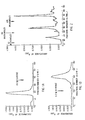
- Figure 1 shows the elution profile obtained from 20 mg of unmodified insulin (A) and maltose-insulin (B) applied to columns (24.0 x 1.5 cm I.D.) of immobilized Concanavalin A.
- Initial buffer was 1 mM MgCl 2 , 1 mM CaCl 2 , 50 mM NaCI, 25 mM sodium phosphate, pH 7.4.
- 0.2 M glucose in the column buffer was begun.
- Fractions (2.0 ml) were collected at a flow rate of 10-15 ml/h. Unmodified insulin did not bind to Concanavalin A.
- Figure 2 shows the elution profile obtained from 20 mg maltose-insulin derivative applied to a column (12.0 x 1.5 cm I.D.) of immobilized Concanavalin A.
- Initial buffer was 1 mM MgCl 2 , 1 mM CaCl 2 , 50 mM NaCI, 25 mM sodium phosphate, pH 7.4.
- Displacement of hormone was accomplished using 1.0 ml pulses of column buffer containing varying amounts of glucose. Glucose content is indicated over the appropriate arrows. Fractions (1.7 ml) were collected at a flow rate of 10-15 ml)h.
- Glucose-pulse experiments with the lectin-bound maltose-insulin derivative demonstrate that hormone release is a function of the quantity of glucose present.
Landscapes
- Health & Medical Sciences (AREA)
- Life Sciences & Earth Sciences (AREA)
- Engineering & Computer Science (AREA)
- Bioinformatics & Cheminformatics (AREA)
- Public Health (AREA)
- Animal Behavior & Ethology (AREA)
- Chemical & Material Sciences (AREA)
- Veterinary Medicine (AREA)
- General Health & Medical Sciences (AREA)
- Medicinal Chemistry (AREA)
- Proteomics, Peptides & Aminoacids (AREA)
- Pharmacology & Pharmacy (AREA)
- Diabetes (AREA)
- Epidemiology (AREA)
- Hematology (AREA)
- Endocrinology (AREA)
- Anesthesiology (AREA)
- Zoology (AREA)
- Molecular Biology (AREA)
- Gastroenterology & Hepatology (AREA)
- Immunology (AREA)
- Toxicology (AREA)
- Heart & Thoracic Surgery (AREA)
- Biomedical Technology (AREA)
- Obesity (AREA)
- Organic Chemistry (AREA)
- Nuclear Medicine, Radiotherapy & Molecular Imaging (AREA)
- General Chemical & Material Sciences (AREA)
- Chemical Kinetics & Catalysis (AREA)
- Emergency Medicine (AREA)
- Medicines That Contain Protein Lipid Enzymes And Other Medicines (AREA)
- Medicinal Preparation (AREA)
- External Artificial Organs (AREA)
- Medicines Containing Antibodies Or Antigens For Use As Internal Diagnostic Agents (AREA)
- Peptides Or Proteins (AREA)
Priority Applications (1)
| Application Number | Priority Date | Filing Date | Title |
|---|---|---|---|
| AT80901495T ATE10165T1 (de) | 1979-07-31 | 1980-07-30 | System zur kontrollierten freigabe einer biologisch aktiven substanz in einer koerperfluessigkeit. |
Applications Claiming Priority (2)
| Application Number | Priority Date | Filing Date | Title |
|---|---|---|---|
| US62484 | 1979-07-31 | ||
| US06/062,484 US4348387A (en) | 1979-07-31 | 1979-07-31 | Method and system for the controlled release of biologically active substances to a body fluid |
Publications (3)
| Publication Number | Publication Date |
|---|---|
| EP0032927A1 EP0032927A1 (en) | 1981-08-05 |
| EP0032927A4 EP0032927A4 (en) | 1982-05-10 |
| EP0032927B1 true EP0032927B1 (en) | 1984-11-07 |
Family
ID=22042805
Family Applications (1)
| Application Number | Title | Priority Date | Filing Date |
|---|---|---|---|
| EP80901495A Expired EP0032927B1 (en) | 1979-07-31 | 1980-07-30 | System for the controlled release of biologically active substances to a body fluid |
Country Status (7)
| Country | Link |
|---|---|
| US (1) | US4348387A (enExample) |
| EP (1) | EP0032927B1 (enExample) |
| JP (1) | JPH0413324B2 (enExample) |
| BR (1) | BR8008775A (enExample) |
| CA (1) | CA1168983A (enExample) |
| DE (1) | DE3069598D1 (enExample) |
| WO (1) | WO1981000354A1 (enExample) |
Families Citing this family (46)
| Publication number | Priority date | Publication date | Assignee | Title |
|---|---|---|---|---|
| US4436094A (en) * | 1981-03-09 | 1984-03-13 | Evreka, Inc. | Monitor for continuous in vivo measurement of glucose concentration |
| AU733391B3 (en) * | 1982-04-26 | 2001-05-10 | American National Can Company | Polymeric and film structure for use in heat shrinkable bags |
| EP0119650A3 (en) * | 1983-03-21 | 1987-09-30 | THE PROCTER & GAMBLE COMPANY | Galactosyl-insulin conjugates useful in treating diabetics |
| US4902505A (en) * | 1986-07-30 | 1990-02-20 | Alkermes | Chimeric peptides for neuropeptide delivery through the blood-brain barrier |
| US4801575A (en) * | 1986-07-30 | 1989-01-31 | The Regents Of The University Of California | Chimeric peptides for neuropeptide delivery through the blood-brain barrier |
| CA1329761C (en) * | 1988-07-25 | 1994-05-24 | Vettai S. Ananthanarayanan | Design of peptide hormones, chemotactic peptides and drug compounds |
| GB9200638D0 (en) * | 1992-01-10 | 1992-03-11 | Leicester Polytechnic | Drug system |
| US5429822A (en) * | 1992-03-13 | 1995-07-04 | Cambridge Scientific, Inc. | Biodegradable bursting release system |
| US5456917A (en) * | 1993-04-12 | 1995-10-10 | Cambridge Scientific, Inc. | Method for making a bioerodible material for the sustained release of a medicament and the material made from the method |
| GB9313484D0 (en) * | 1993-06-30 | 1993-08-11 | Univ Montfort | Drug system ii |
| US7169889B1 (en) * | 1999-06-19 | 2007-01-30 | Biocon Limited | Insulin prodrugs hydrolyzable in vivo to yield peglylated insulin |
| EP1346726A4 (en) * | 2000-12-25 | 2004-09-15 | Shiseido Co Ltd | Sympathetic-activating perfume composition |
| US7060675B2 (en) | 2001-02-15 | 2006-06-13 | Nobex Corporation | Methods of treating diabetes mellitus |
| US6867183B2 (en) | 2001-02-15 | 2005-03-15 | Nobex Corporation | Pharmaceutical compositions of insulin drug-oligomer conjugates and methods of treating diseases therewith |
| US6858580B2 (en) * | 2001-06-04 | 2005-02-22 | Nobex Corporation | Mixtures of drug-oligomer conjugates comprising polyalkylene glycol, uses thereof, and methods of making same |
| US6713452B2 (en) | 2001-06-04 | 2004-03-30 | Nobex Corporation | Mixtures of calcitonin drug-oligomer conjugates comprising polyalkylene glycol, uses thereof, and methods of making same |
| US6835802B2 (en) * | 2001-06-04 | 2004-12-28 | Nobex Corporation | Methods of synthesizing substantially monodispersed mixtures of polymers having polyethylene glycol moieties |
| US6828305B2 (en) | 2001-06-04 | 2004-12-07 | Nobex Corporation | Mixtures of growth hormone drug-oligomer conjugates comprising polyalkylene glycol, uses thereof, and methods of making same |
| US6828297B2 (en) | 2001-06-04 | 2004-12-07 | Nobex Corporation | Mixtures of insulin drug-oligomer conjugates comprising polyalkylene glycol, uses thereof, and methods of making same |
| US7713932B2 (en) | 2001-06-04 | 2010-05-11 | Biocon Limited | Calcitonin drug-oligomer conjugates, and uses thereof |
| US6770625B2 (en) * | 2001-09-07 | 2004-08-03 | Nobex Corporation | Pharmaceutical compositions of calcitonin drug-oligomer conjugates and methods of treating diseases therewith |
| US6913903B2 (en) * | 2001-09-07 | 2005-07-05 | Nobex Corporation | Methods of synthesizing insulin polypeptide-oligomer conjugates, and proinsulin polypeptide-oligomer conjugates and methods of synthesizing same |
| US7312192B2 (en) * | 2001-09-07 | 2007-12-25 | Biocon Limited | Insulin polypeptide-oligomer conjugates, proinsulin polypeptide-oligomer conjugates and methods of synthesizing same |
| US7196059B2 (en) | 2001-09-07 | 2007-03-27 | Biocon Limited | Pharmaceutical compositions of insulin drug-oligomer conjugates and methods of treating diseases therewith |
| US7030082B2 (en) * | 2001-09-07 | 2006-04-18 | Nobex Corporation | Pharmaceutical compositions of drug-oligomer conjugates and methods of treating disease therewith |
| US7166571B2 (en) * | 2001-09-07 | 2007-01-23 | Biocon Limited | Insulin polypeptide-oligomer conjugates, proinsulin polypeptide-oligomer conjugates and methods of synthesizing same |
| WO2003105768A2 (en) * | 2002-06-13 | 2003-12-24 | Nobex Corporation | Methods of reducing hypoglycemic episodes in the treatment of diabetes mellitus |
| CA2509382A1 (en) * | 2002-12-17 | 2004-07-08 | Todd C. Zion | Stimuli-responsive systems for controlled drug delivery |
| CN101027318B (zh) * | 2004-07-19 | 2016-05-25 | 比奥孔有限公司 | 胰岛素-低聚物共轭物,制剂及其用途 |
| WO2007047997A2 (en) * | 2005-10-19 | 2007-04-26 | Smartcells, Inc. | Methods for reducing the mitogenicity of lectin compositions |
| US9241908B2 (en) | 2007-10-16 | 2016-01-26 | Biocon Limited | Orally administrable solid pharmaceutical composition and a process thereof |
| RU2011135730A (ru) | 2009-01-28 | 2013-03-10 | Смартселлз, Инк. | Кристаллические инсулин-коньюгаты |
| JP2012516339A (ja) | 2009-01-28 | 2012-07-19 | スマートセルズ・インコーポレイテツド | 外因的刺激型制御放出物質体およびその使用 |
| WO2010088286A1 (en) | 2009-01-28 | 2010-08-05 | Smartcells, Inc. | Synthetic conjugates and uses thereof |
| WO2010088294A1 (en) | 2009-01-28 | 2010-08-05 | Smartcells, Inc. | Conjugate based systems for controlled drug delivery |
| WO2010107520A1 (en) * | 2009-03-20 | 2010-09-23 | Smartcells, Inc. | Soluble non-depot insulin conjugates and uses thereof |
| JP2012520879A (ja) | 2009-03-20 | 2012-09-10 | スマートセルズ・インコーポレイテツド | 末端官能基化コンジュゲートおよびその用途 |
| WO2012015681A2 (en) | 2010-07-28 | 2012-02-02 | Smartcells, Inc. | Drug-ligand conjugates, synthesis thereof, and intermediates thereto |
| JP2013535467A (ja) | 2010-07-28 | 2013-09-12 | スマートセルズ・インコーポレイテツド | 組換えにより発現されたインスリンポリペプチドおよびその使用 |
| WO2012015691A2 (en) | 2010-07-28 | 2012-02-02 | Smartcells, Inc. | Recombinant lectins, binding-site modified lectins and uses thereof |
| EP2925345B1 (en) | 2012-12-03 | 2018-09-05 | Merck Sharp & Dohme Corp. | Method for making o-glycosylated carboxy terminal portion (ctp) peptide-based insulin and insulin analogues |
| US9884125B2 (en) | 2013-10-04 | 2018-02-06 | Merck Sharp & Dohme Corp. | Glucose-responsive insulin conjugates |
| US11041009B2 (en) | 2017-03-23 | 2021-06-22 | Merck Sharp & Dohme Corp. | Glucose responsive insulin comprising a tri-valent sugar cluster for treatment of diabetes |
| WO2019125879A2 (en) | 2017-12-18 | 2019-06-27 | Merck Sharp & Dohme Corp. | Conjugate based systems for controlled insulin delivery |
| US11820805B2 (en) | 2017-12-18 | 2023-11-21 | Merck Sharp & Dohme Llc | Conjugate based systems for controlled insulin delivery |
| EP3586876A1 (en) * | 2018-06-21 | 2020-01-01 | Gubra ApS | Glucose-sensitive peptide hormones |
Family Cites Families (5)
| Publication number | Priority date | Publication date | Assignee | Title |
|---|---|---|---|---|
| US4003792A (en) * | 1967-07-01 | 1977-01-18 | Miles Laboratories, Inc. | Conjugates of acid polysaccharides and complex organic substances |
| DE2054446A1 (de) * | 1970-11-05 | 1972-05-10 | Henning, George Ernest von, 6800 Mannheim | Biologische Reaktionskammer |
| US3857393A (en) * | 1971-04-22 | 1974-12-31 | Bio Response Inc | Apparatus for use in the augmentation of the production of antibodies in animals and humans and the collection thereof |
| US3847890A (en) * | 1971-11-01 | 1974-11-12 | A Green | Acidic monosaccharide-substituted proteins |
| CA1040271A (en) * | 1975-01-22 | 1978-10-10 | Anthony M. Albisser | Artificial beta cell |
-
1979
- 1979-07-31 US US06/062,484 patent/US4348387A/en not_active Expired - Lifetime
-
1980
- 1980-07-23 CA CA000356872A patent/CA1168983A/en not_active Expired
- 1980-07-30 EP EP80901495A patent/EP0032927B1/en not_active Expired
- 1980-07-30 JP JP55501805A patent/JPH0413324B2/ja not_active Expired - Lifetime
- 1980-07-30 DE DE8080901495T patent/DE3069598D1/de not_active Expired
- 1980-07-30 BR BR8008775A patent/BR8008775A/pt unknown
- 1980-07-30 WO PCT/US1980/000969 patent/WO1981000354A1/en not_active Ceased
Non-Patent Citations (6)
| Title |
|---|
| CHEMICAL ABSTRACTS, vol. 79, no. 7, August 20, 1973, page 102, abstract 39405s Columbus, Ohio, US R.N. IYER et al.: "Quantitative studies on the interaction of concanavalin A, the carbohydratebinding protein of the jack bean, with model carbohydrate-protein conjugates" * |
| CHEMICAL ABSTRACTS, vol. 87, no. 15, Ocotber 10, 1977, page 390, abstract 115291j Columbus, Ohio, US D.T. ACHORD et al.: "Inhibition of the rat clearance system for agalacto-orosomucoid by yeast mannans and by mannose" * |
| CHEMICAL ABSTRACTS, vol. 88, no. 25 June 19, 1978, page 530, abstract 187858t Columbus, Ohio, US P.D. STAHL et al.: "Evidence for receptor-mediated binding of glycoproteins, glycoconjugates, and lysosomal glycosidases by alveolar macrophages" * |
| SEPARATION NEWS - PHARMACIA FINE CHEMICALS, 3. 1979 Uppsala, SE "Affinity chromatography of some plasma proteins amd membrane glycoproteins" * |
| Technology Review, issued July, 1979, "Automatic Diabetes Management" P. 90 * |
| Wall Street J., Published May 25, 1979, "Firm says Implant for Diabetes Clears Early Animal Tests" * |
Also Published As
| Publication number | Publication date |
|---|---|
| JPH0413324B2 (enExample) | 1992-03-09 |
| WO1981000354A1 (en) | 1981-02-19 |
| EP0032927A1 (en) | 1981-08-05 |
| EP0032927A4 (en) | 1982-05-10 |
| BR8008775A (pt) | 1981-05-26 |
| JPS56500965A (enExample) | 1981-07-16 |
| US4348387A (en) | 1982-09-07 |
| DE3069598D1 (en) | 1984-12-13 |
| CA1168983A (en) | 1984-06-12 |
Similar Documents
| Publication | Publication Date | Title |
|---|---|---|
| US4348387A (en) | Method and system for the controlled release of biologically active substances to a body fluid | |
| US4469681A (en) | Method and system for the controlled release of biologically active substances to a body fluid | |
| US6342225B1 (en) | Pharmaceutical active conjugates | |
| Liu et al. | Glucose-induced release of glycosylpoly (ethylene glycol) insulin bound to a soluble conjugate of concanavalin A | |
| Heller | Chemically self-regulated drug delivery systems | |
| US6063761A (en) | Hepatoselective pharmaceutical actives | |
| Farraj et al. | Nasal administration of insulin using bioadhesive microspheres as a delivery system | |
| Pardridge et al. | Chimeric peptides as a vehicle for peptide pharmaceutical delivery through the blood-brain barrier | |
| Siegel et al. | Mechanochemical approaches to self-regulating insulin pump design | |
| Baudyš et al. | Extending insulin action in vivo by conjugation to carboxymethyl dextran | |
| NZ527392A (en) | Methods of treating diabetes mellitus | |
| WO1995001186A1 (en) | Drug system | |
| WO1989001794A1 (en) | Metabolic sensor for a drug delivery system | |
| KR910700072A (ko) | 치료용 약물의 부위특이적 생체내 활성화 방법 | |
| Nitsch et al. | Implantable drug delivery | |
| Kim et al. | Self regulating insulin delivery system—a chemical approach | |
| JP2761013B2 (ja) | 生体液中の低密度リポ蛋白質の低下 | |
| Kandrotas et al. | Carbamazepine clearance in hemodialysis and hemoperfusion | |
| AU6129080A (en) | Method and system for the controlled release of biologically active substances to a body fluid | |
| Hordern et al. | Insulin detemir, does a new century bring a better basal insulin? | |
| JP3018463B2 (ja) | グルコース応答性薬物放出複合体 | |
| Seminoff et al. | A SELF-REGULATING INSULIN DELIVERY SYSTEM BASED ON COMPETITIVE BINDING OF GLUCOSE AND GLYCOSYLATED | |
| US20070190036A1 (en) | Microencapsulation of pancreatic islets within a thin coat of glucagon-like peptide-1 functionalized poly(ethylene glycol) | |
| Saeed et al. | Glucose-sensitive materials for delivery of antidiabetic drugs | |
| Al-Achi et al. | Human insulin binding to erythrocyte-membrane |
Legal Events
| Date | Code | Title | Description |
|---|---|---|---|
| PUAI | Public reference made under article 153(3) epc to a published international application that has entered the european phase |
Free format text: ORIGINAL CODE: 0009012 |
|
| 17P | Request for examination filed |
Effective date: 19810323 |
|
| AK | Designated contracting states |
Designated state(s): AT CH DE FR GB LU NL SE |
|
| GRAA | (expected) grant |
Free format text: ORIGINAL CODE: 0009210 |
|
| AK | Designated contracting states |
Designated state(s): AT CH DE FR GB LI LU NL SE |
|
| REF | Corresponds to: |
Ref document number: 10165 Country of ref document: AT Date of ref document: 19841115 Kind code of ref document: T |
|
| REF | Corresponds to: |
Ref document number: 3069598 Country of ref document: DE Date of ref document: 19841213 |
|
| ET | Fr: translation filed | ||
| PLBE | No opposition filed within time limit |
Free format text: ORIGINAL CODE: 0009261 |
|
| STAA | Information on the status of an ep patent application or granted ep patent |
Free format text: STATUS: NO OPPOSITION FILED WITHIN TIME LIMIT |
|
| 26N | No opposition filed | ||
| EPTA | Lu: last paid annual fee | ||
| PGFP | Annual fee paid to national office [announced via postgrant information from national office to epo] |
Ref country code: FR Payment date: 19920707 Year of fee payment: 13 |
|
| PGFP | Annual fee paid to national office [announced via postgrant information from national office to epo] |
Ref country code: SE Payment date: 19920713 Year of fee payment: 13 |
|
| PGFP | Annual fee paid to national office [announced via postgrant information from national office to epo] |
Ref country code: AT Payment date: 19920714 Year of fee payment: 13 |
|
| PGFP | Annual fee paid to national office [announced via postgrant information from national office to epo] |
Ref country code: GB Payment date: 19920717 Year of fee payment: 13 |
|
| PGFP | Annual fee paid to national office [announced via postgrant information from national office to epo] |
Ref country code: DE Payment date: 19920727 Year of fee payment: 13 Ref country code: CH Payment date: 19920727 Year of fee payment: 13 |
|
| PGFP | Annual fee paid to national office [announced via postgrant information from national office to epo] |
Ref country code: NL Payment date: 19920731 Year of fee payment: 13 Ref country code: LU Payment date: 19920731 Year of fee payment: 13 |
|
| PG25 | Lapsed in a contracting state [announced via postgrant information from national office to epo] |
Ref country code: LU Free format text: LAPSE BECAUSE OF NON-PAYMENT OF DUE FEES Effective date: 19930730 Ref country code: GB Effective date: 19930730 Ref country code: AT Effective date: 19930730 |
|
| PG25 | Lapsed in a contracting state [announced via postgrant information from national office to epo] |
Ref country code: SE Effective date: 19930731 Ref country code: LI Effective date: 19930731 Ref country code: CH Effective date: 19930731 |
|
| PG25 | Lapsed in a contracting state [announced via postgrant information from national office to epo] |
Ref country code: NL Effective date: 19940201 |
|
| NLV4 | Nl: lapsed or anulled due to non-payment of the annual fee | ||
| GBPC | Gb: european patent ceased through non-payment of renewal fee |
Effective date: 19930730 |
|
| PG25 | Lapsed in a contracting state [announced via postgrant information from national office to epo] |
Ref country code: FR Effective date: 19940331 |
|
| REG | Reference to a national code |
Ref country code: CH Ref legal event code: PL |
|
| PG25 | Lapsed in a contracting state [announced via postgrant information from national office to epo] |
Ref country code: DE Effective date: 19940401 |
|
| REG | Reference to a national code |
Ref country code: FR Ref legal event code: ST |
|
| EUG | Se: european patent has lapsed |
Ref document number: 80901495.4 Effective date: 19940210 |