EP0030526B1 - New phenyl-azacycloalkanes, processes for preparation and pharmaceutical preparations for such compounds - Google Patents
New phenyl-azacycloalkanes, processes for preparation and pharmaceutical preparations for such compounds Download PDFInfo
- Publication number
- EP0030526B1 EP0030526B1 EP80850183A EP80850183A EP0030526B1 EP 0030526 B1 EP0030526 B1 EP 0030526B1 EP 80850183 A EP80850183 A EP 80850183A EP 80850183 A EP80850183 A EP 80850183A EP 0030526 B1 EP0030526 B1 EP 0030526B1
- Authority
- EP
- European Patent Office
- Prior art keywords
- compound
- group
- carbon atoms
- formula
- alkyl group
- Prior art date
- Legal status (The legal status is an assumption and is not a legal conclusion. Google has not performed a legal analysis and makes no representation as to the accuracy of the status listed.)
- Expired
Links
- 150000001875 compounds Chemical class 0.000 title claims abstract description 183
- 238000002360 preparation method Methods 0.000 title claims abstract description 22
- 238000000034 method Methods 0.000 title claims description 54
- 239000000825 pharmaceutical preparation Substances 0.000 title claims description 9
- 230000008569 process Effects 0.000 title claims description 5
- 125000004432 carbon atom Chemical group C* 0.000 claims abstract description 61
- 125000000217 alkyl group Chemical group 0.000 claims abstract description 52
- 239000002253 acid Substances 0.000 claims abstract description 27
- 150000003839 salts Chemical class 0.000 claims abstract description 23
- 125000001797 benzyl group Chemical group [H]C1=C([H])C([H])=C(C([H])=C1[H])C([H])([H])* 0.000 claims abstract description 19
- 125000003903 2-propenyl group Chemical group [H]C([*])([H])C([H])=C([H])[H] 0.000 claims abstract description 16
- 125000002768 hydroxyalkyl group Chemical group 0.000 claims abstract description 16
- 125000003342 alkenyl group Chemical group 0.000 claims abstract description 11
- 125000005842 heteroatom Chemical group 0.000 claims abstract description 6
- 125000003545 alkoxy group Chemical group 0.000 claims abstract description 3
- RTZKZFJDLAIYFH-UHFFFAOYSA-N Diethyl ether Chemical compound CCOCC RTZKZFJDLAIYFH-UHFFFAOYSA-N 0.000 claims description 81
- 239000000203 mixture Substances 0.000 claims description 35
- 230000015572 biosynthetic process Effects 0.000 claims description 31
- -1 2,6-dimethylphenyl Chemical group 0.000 claims description 17
- 230000009467 reduction Effects 0.000 claims description 15
- 125000002887 hydroxy group Chemical group [H]O* 0.000 claims description 11
- 125000001997 phenyl group Chemical group [H]C1=C([H])C([H])=C(*)C([H])=C1[H] 0.000 claims description 10
- 150000002148 esters Chemical class 0.000 claims description 8
- 239000012948 isocyanate Substances 0.000 claims description 7
- 150000002513 isocyanates Chemical class 0.000 claims description 7
- 229910052757 nitrogen Inorganic materials 0.000 claims description 7
- 125000002252 acyl group Chemical group 0.000 claims description 6
- 125000000094 2-phenylethyl group Chemical group [H]C1=C([H])C([H])=C(C([H])=C1[H])C([H])([H])C([H])([H])* 0.000 claims description 5
- 238000005804 alkylation reaction Methods 0.000 claims description 5
- 150000001408 amides Chemical class 0.000 claims description 5
- 150000004820 halides Chemical class 0.000 claims description 5
- 150000003949 imides Chemical class 0.000 claims description 5
- HTSNFXAICLXZMA-UHFFFAOYSA-N 3-(1-propyl-3-piperidinyl)phenol Chemical compound C1N(CCC)CCCC1C1=CC=CC(O)=C1 HTSNFXAICLXZMA-UHFFFAOYSA-N 0.000 claims description 4
- 239000002168 alkylating agent Substances 0.000 claims description 4
- 229940100198 alkylating agent Drugs 0.000 claims description 4
- 230000029936 alkylation Effects 0.000 claims description 4
- 150000001412 amines Chemical class 0.000 claims description 4
- 125000000051 benzyloxy group Chemical group [H]C1=C([H])C([H])=C(C([H])=C1[H])C([H])([H])O* 0.000 claims description 4
- 125000004208 3-hydroxyphenyl group Chemical group [H]OC1=C([H])C([H])=C([H])C(*)=C1[H] 0.000 claims description 3
- 125000004203 4-hydroxyphenyl group Chemical group [H]OC1=C([H])C([H])=C(*)C([H])=C1[H] 0.000 claims description 3
- 150000008064 anhydrides Chemical class 0.000 claims description 3
- 125000003917 carbamoyl group Chemical group [H]N([H])C(*)=O 0.000 claims description 3
- 238000003379 elimination reaction Methods 0.000 claims description 3
- 229910052736 halogen Inorganic materials 0.000 claims description 3
- 125000005843 halogen group Chemical group 0.000 claims description 3
- 150000002430 hydrocarbons Chemical group 0.000 claims description 3
- 125000004433 nitrogen atom Chemical group N* 0.000 claims description 3
- ITXBDHMIXPKNIE-UHFFFAOYSA-N 3-(1-butylpiperidin-3-yl)phenol Chemical compound C1N(CCCC)CCCC1C1=CC=CC(O)=C1 ITXBDHMIXPKNIE-UHFFFAOYSA-N 0.000 claims description 2
- QTYFKXPXLCCNOF-UHFFFAOYSA-N 3-(1-pentylpiperidin-3-yl)phenol Chemical compound C1N(CCCCC)CCCC1C1=CC=CC(O)=C1 QTYFKXPXLCCNOF-UHFFFAOYSA-N 0.000 claims description 2
- VRNBZJJBPKLDAO-UHFFFAOYSA-N 3-(1-propan-2-ylpiperidin-3-yl)phenol Chemical compound C1N(C(C)C)CCCC1C1=CC=CC(O)=C1 VRNBZJJBPKLDAO-UHFFFAOYSA-N 0.000 claims description 2
- 239000004215 Carbon black (E152) Substances 0.000 claims description 2
- 239000004480 active ingredient Substances 0.000 claims description 2
- 239000003937 drug carrier Substances 0.000 claims description 2
- 230000008030 elimination Effects 0.000 claims description 2
- 229930195733 hydrocarbon Natural products 0.000 claims description 2
- 125000004356 hydroxy functional group Chemical group O* 0.000 claims description 2
- 150000003509 tertiary alcohols Chemical class 0.000 claims description 2
- 239000007858 starting material Substances 0.000 abstract description 14
- 239000000543 intermediate Substances 0.000 abstract description 7
- 125000002496 methyl group Chemical group [H]C([H])([H])* 0.000 abstract 2
- 125000001495 ethyl group Chemical group [H]C([H])([H])C([H])([H])* 0.000 abstract 1
- OKKJLVBELUTLKV-UHFFFAOYSA-N Methanol Chemical compound OC OKKJLVBELUTLKV-UHFFFAOYSA-N 0.000 description 58
- VYFYYTLLBUKUHU-UHFFFAOYSA-N dopamine Chemical compound NCCC1=CC=C(O)C(O)=C1 VYFYYTLLBUKUHU-UHFFFAOYSA-N 0.000 description 55
- LFQSCWFLJHTTHZ-UHFFFAOYSA-N Ethanol Chemical compound CCO LFQSCWFLJHTTHZ-UHFFFAOYSA-N 0.000 description 31
- ZMANZCXQSJIPKH-UHFFFAOYSA-N Triethylamine Chemical compound CCN(CC)CC ZMANZCXQSJIPKH-UHFFFAOYSA-N 0.000 description 31
- 229960003638 dopamine Drugs 0.000 description 30
- 239000002585 base Substances 0.000 description 23
- 239000000243 solution Substances 0.000 description 23
- 239000002904 solvent Substances 0.000 description 20
- 238000006243 chemical reaction Methods 0.000 description 19
- HEMHJVSKTPXQMS-UHFFFAOYSA-M Sodium hydroxide Chemical compound [OH-].[Na+] HEMHJVSKTPXQMS-UHFFFAOYSA-M 0.000 description 18
- 238000001704 evaporation Methods 0.000 description 18
- 230000008020 evaporation Effects 0.000 description 17
- 235000002639 sodium chloride Nutrition 0.000 description 17
- 102000007527 Autoreceptors Human genes 0.000 description 16
- 108010071131 Autoreceptors Proteins 0.000 description 16
- HEDRZPFGACZZDS-MICDWDOJSA-N Trichloro(2H)methane Chemical compound [2H]C(Cl)(Cl)Cl HEDRZPFGACZZDS-MICDWDOJSA-N 0.000 description 16
- 230000001242 postsynaptic effect Effects 0.000 description 15
- 239000000047 product Substances 0.000 description 15
- 241000700159 Rattus Species 0.000 description 14
- XLYOFNOQVPJJNP-UHFFFAOYSA-N water Substances O XLYOFNOQVPJJNP-UHFFFAOYSA-N 0.000 description 14
- 239000013543 active substance Substances 0.000 description 13
- 230000000694 effects Effects 0.000 description 13
- 239000003921 oil Substances 0.000 description 13
- 235000019198 oils Nutrition 0.000 description 13
- 238000003786 synthesis reaction Methods 0.000 description 13
- CSCPPACGZOOCGX-UHFFFAOYSA-N Acetone Chemical compound CC(C)=O CSCPPACGZOOCGX-UHFFFAOYSA-N 0.000 description 12
- UHOVQNZJYSORNB-UHFFFAOYSA-N Benzene Chemical compound C1=CC=CC=C1 UHOVQNZJYSORNB-UHFFFAOYSA-N 0.000 description 12
- VEXZGXHMUGYJMC-UHFFFAOYSA-N Hydrochloric acid Chemical compound Cl VEXZGXHMUGYJMC-UHFFFAOYSA-N 0.000 description 12
- YXFVVABEGXRONW-UHFFFAOYSA-N Toluene Chemical compound CC1=CC=CC=C1 YXFVVABEGXRONW-UHFFFAOYSA-N 0.000 description 12
- WYURNTSHIVDZCO-UHFFFAOYSA-N Tetrahydrofuran Chemical compound C1CCOC1 WYURNTSHIVDZCO-UHFFFAOYSA-N 0.000 description 10
- ILAHWRKJUDSMFH-UHFFFAOYSA-N boron tribromide Chemical compound BrB(Br)Br ILAHWRKJUDSMFH-UHFFFAOYSA-N 0.000 description 10
- YEJRWHAVMIAJKC-UHFFFAOYSA-N 4-Butyrolactone Chemical compound O=C1CCCO1 YEJRWHAVMIAJKC-UHFFFAOYSA-N 0.000 description 9
- WVDDGKGOMKODPV-UHFFFAOYSA-N Benzyl alcohol Chemical compound OCC1=CC=CC=C1 WVDDGKGOMKODPV-UHFFFAOYSA-N 0.000 description 9
- PEDCQBHIVMGVHV-UHFFFAOYSA-N Glycerine Chemical compound OCC(O)CO PEDCQBHIVMGVHV-UHFFFAOYSA-N 0.000 description 9
- VYPSYNLAJGMNEJ-UHFFFAOYSA-N Silicium dioxide Chemical compound O=[Si]=O VYPSYNLAJGMNEJ-UHFFFAOYSA-N 0.000 description 9
- 102000005962 receptors Human genes 0.000 description 9
- 108020003175 receptors Proteins 0.000 description 9
- 0 *CC(C*)c1cc(O)ccc1 Chemical compound *CC(C*)c1cc(O)ccc1 0.000 description 8
- WEVYAHXRMPXWCK-UHFFFAOYSA-N Acetonitrile Chemical compound CC#N WEVYAHXRMPXWCK-UHFFFAOYSA-N 0.000 description 8
- CPELXLSAUQHCOX-UHFFFAOYSA-N Hydrogen bromide Chemical compound Br CPELXLSAUQHCOX-UHFFFAOYSA-N 0.000 description 8
- QEVHRUUCFGRFIF-SFWBKIHZSA-N Reserpine Natural products O=C(OC)[C@@H]1[C@H](OC)[C@H](OC(=O)c2cc(OC)c(OC)c(OC)c2)C[C@H]2[C@@H]1C[C@H]1N(C2)CCc2c3c([nH]c12)cc(OC)cc3 QEVHRUUCFGRFIF-SFWBKIHZSA-N 0.000 description 8
- VMWNQDUVQKEIOC-CYBMUJFWSA-N apomorphine Chemical compound C([C@H]1N(C)CC2)C3=CC=C(O)C(O)=C3C3=C1C2=CC=C3 VMWNQDUVQKEIOC-CYBMUJFWSA-N 0.000 description 8
- 229960004046 apomorphine Drugs 0.000 description 8
- 230000007423 decrease Effects 0.000 description 8
- LNEPOXFFQSENCJ-UHFFFAOYSA-N haloperidol Chemical compound C1CC(O)(C=2C=CC(Cl)=CC=2)CCN1CCCC(=O)C1=CC=C(F)C=C1 LNEPOXFFQSENCJ-UHFFFAOYSA-N 0.000 description 8
- 230000000144 pharmacologic effect Effects 0.000 description 8
- MDMGHDFNKNZPAU-UHFFFAOYSA-N roserpine Natural products C1C2CN3CCC(C4=CC=C(OC)C=C4N4)=C4C3CC2C(OC(C)=O)C(OC)C1OC(=O)C1=CC(OC)=C(OC)C(OC)=C1 MDMGHDFNKNZPAU-UHFFFAOYSA-N 0.000 description 8
- 239000007787 solid Substances 0.000 description 8
- DNXIKVLOVZVMQF-UHFFFAOYSA-N (3beta,16beta,17alpha,18beta,20alpha)-17-hydroxy-11-methoxy-18-[(3,4,5-trimethoxybenzoyl)oxy]-yohimban-16-carboxylic acid, methyl ester Natural products C1C2CN3CCC(C4=CC=C(OC)C=C4N4)=C4C3CC2C(C(=O)OC)C(O)C1OC(=O)C1=CC(OC)=C(OC)C(OC)=C1 DNXIKVLOVZVMQF-UHFFFAOYSA-N 0.000 description 7
- YMWUJEATGCHHMB-UHFFFAOYSA-N Dichloromethane Chemical compound ClCCl YMWUJEATGCHHMB-UHFFFAOYSA-N 0.000 description 7
- NQRYJNQNLNOLGT-UHFFFAOYSA-N Piperidine Chemical compound C1CCNCC1 NQRYJNQNLNOLGT-UHFFFAOYSA-N 0.000 description 7
- LCQMZZCPPSWADO-UHFFFAOYSA-N Reserpilin Natural products COC(=O)C1COCC2CN3CCc4c([nH]c5cc(OC)c(OC)cc45)C3CC12 LCQMZZCPPSWADO-UHFFFAOYSA-N 0.000 description 7
- 239000003054 catalyst Substances 0.000 description 7
- 150000002170 ethers Chemical class 0.000 description 7
- 238000001914 filtration Methods 0.000 description 7
- BJOIZNZVOZKDIG-MDEJGZGSSA-N reserpine Chemical compound O([C@H]1[C@@H]([C@H]([C@H]2C[C@@H]3C4=C([C]5C=CC(OC)=CC5=N4)CCN3C[C@H]2C1)C(=O)OC)OC)C(=O)C1=CC(OC)=C(OC)C(OC)=C1 BJOIZNZVOZKDIG-MDEJGZGSSA-N 0.000 description 7
- 229960003147 reserpine Drugs 0.000 description 7
- 230000000638 stimulation Effects 0.000 description 7
- IJGRMHOSHXDMSA-UHFFFAOYSA-N Atomic nitrogen Chemical compound N#N IJGRMHOSHXDMSA-UHFFFAOYSA-N 0.000 description 6
- 241001465754 Metazoa Species 0.000 description 6
- JUJWROOIHBZHMG-UHFFFAOYSA-N Pyridine Chemical compound C1=CC=NC=C1 JUJWROOIHBZHMG-UHFFFAOYSA-N 0.000 description 6
- 210000004556 brain Anatomy 0.000 description 6
- 239000002775 capsule Substances 0.000 description 6
- 229920000159 gelatin Polymers 0.000 description 6
- 235000019322 gelatine Nutrition 0.000 description 6
- 238000010438 heat treatment Methods 0.000 description 6
- BWHMMNNQKKPAPP-UHFFFAOYSA-L potassium carbonate Chemical compound [K+].[K+].[O-]C([O-])=O BWHMMNNQKKPAPP-UHFFFAOYSA-L 0.000 description 6
- 229910000027 potassium carbonate Inorganic materials 0.000 description 6
- 239000000018 receptor agonist Substances 0.000 description 6
- 229940044601 receptor agonist Drugs 0.000 description 6
- 239000011734 sodium Substances 0.000 description 6
- RJKICHMOAGTIDI-UHFFFAOYSA-N 3-(3-methoxyphenyl)-1-pentylpiperidine Chemical compound C1N(CCCCC)CCCC1C1=CC=CC(OC)=C1 RJKICHMOAGTIDI-UHFFFAOYSA-N 0.000 description 5
- WFDIJRYMOXRFFG-UHFFFAOYSA-N Acetic anhydride Chemical compound CC(=O)OC(C)=O WFDIJRYMOXRFFG-UHFFFAOYSA-N 0.000 description 5
- 229910015845 BBr3 Inorganic materials 0.000 description 5
- FKLJPTJMIBLJAV-UHFFFAOYSA-N Compound IV Chemical compound O1N=C(C)C=C1CCCCCCCOC1=CC=C(C=2OCCN=2)C=C1 FKLJPTJMIBLJAV-UHFFFAOYSA-N 0.000 description 5
- WTDRDQBEARUVNC-LURJTMIESA-N L-DOPA Chemical compound OC(=O)[C@@H](N)CC1=CC=C(O)C(O)=C1 WTDRDQBEARUVNC-LURJTMIESA-N 0.000 description 5
- FAPWRFPIFSIZLT-UHFFFAOYSA-M Sodium chloride Chemical compound [Na+].[Cl-] FAPWRFPIFSIZLT-UHFFFAOYSA-M 0.000 description 5
- 230000009471 action Effects 0.000 description 5
- 230000008485 antagonism Effects 0.000 description 5
- 125000002915 carbonyl group Chemical group [*:2]C([*:1])=O 0.000 description 5
- 239000013078 crystal Substances 0.000 description 5
- 238000001035 drying Methods 0.000 description 5
- 125000001033 ether group Chemical group 0.000 description 5
- 229910052739 hydrogen Inorganic materials 0.000 description 5
- 239000012071 phase Substances 0.000 description 5
- 239000000741 silica gel Substances 0.000 description 5
- 229910002027 silica gel Inorganic materials 0.000 description 5
- 238000003756 stirring Methods 0.000 description 5
- 208000011580 syndromic disease Diseases 0.000 description 5
- 230000001225 therapeutic effect Effects 0.000 description 5
- PNBOVBWIGKATIC-UHFFFAOYSA-N 3-(1-propylpiperidin-3-yl)phenol;hydrobromide Chemical compound Br.C1N(CCC)CCCC1C1=CC=CC(O)=C1 PNBOVBWIGKATIC-UHFFFAOYSA-N 0.000 description 4
- HEDRZPFGACZZDS-UHFFFAOYSA-N Chloroform Chemical compound ClC(Cl)Cl HEDRZPFGACZZDS-UHFFFAOYSA-N 0.000 description 4
- 108010010803 Gelatin Proteins 0.000 description 4
- PXIPVTKHYLBLMZ-UHFFFAOYSA-N Sodium azide Chemical compound [Na+].[N-]=[N+]=[N-] PXIPVTKHYLBLMZ-UHFFFAOYSA-N 0.000 description 4
- WPYMKLBDIGXBTP-UHFFFAOYSA-N benzoic acid Chemical compound OC(=O)C1=CC=CC=C1 WPYMKLBDIGXBTP-UHFFFAOYSA-N 0.000 description 4
- 230000005540 biological transmission Effects 0.000 description 4
- 210000003169 central nervous system Anatomy 0.000 description 4
- 208000037265 diseases, disorders, signs and symptoms Diseases 0.000 description 4
- 239000003814 drug Substances 0.000 description 4
- 239000008273 gelatin Substances 0.000 description 4
- 235000011852 gelatine desserts Nutrition 0.000 description 4
- 229960003878 haloperidol Drugs 0.000 description 4
- 230000007062 hydrolysis Effects 0.000 description 4
- 238000006460 hydrolysis reaction Methods 0.000 description 4
- 238000002347 injection Methods 0.000 description 4
- 239000007924 injection Substances 0.000 description 4
- 229910052740 iodine Inorganic materials 0.000 description 4
- HQKMJHAJHXVSDF-UHFFFAOYSA-L magnesium stearate Chemical compound [Mg+2].CCCCCCCCCCCCCCCCCC([O-])=O.CCCCCCCCCCCCCCCCCC([O-])=O HQKMJHAJHXVSDF-UHFFFAOYSA-L 0.000 description 4
- 230000004899 motility Effects 0.000 description 4
- 230000037023 motor activity Effects 0.000 description 4
- 239000003176 neuroleptic agent Substances 0.000 description 4
- 239000012074 organic phase Substances 0.000 description 4
- KDLHZDBZIXYQEI-UHFFFAOYSA-N palladium Substances [Pd] KDLHZDBZIXYQEI-UHFFFAOYSA-N 0.000 description 4
- 229920001592 potato starch Polymers 0.000 description 4
- 239000011541 reaction mixture Substances 0.000 description 4
- 238000010992 reflux Methods 0.000 description 4
- 239000012279 sodium borohydride Substances 0.000 description 4
- 229910000033 sodium borohydride Inorganic materials 0.000 description 4
- 230000004936 stimulating effect Effects 0.000 description 4
- YLQBMQCUIZJEEH-UHFFFAOYSA-N tetrahydrofuran Natural products C=1C=COC=1 YLQBMQCUIZJEEH-UHFFFAOYSA-N 0.000 description 4
- FYSNRJHAOHDILO-UHFFFAOYSA-N thionyl chloride Chemical compound ClS(Cl)=O FYSNRJHAOHDILO-UHFFFAOYSA-N 0.000 description 4
- LONDBHTYIYKOCM-UHFFFAOYSA-N 3-(3-methylphenyl)pyridine Chemical compound CC1=CC=CC(C=2C=NC=CC=2)=C1 LONDBHTYIYKOCM-UHFFFAOYSA-N 0.000 description 3
- OFKWWALNMPEOSZ-UHFFFAOYSA-N 3-(hydrazinylmethyl)phenol Chemical compound NNCC1=CC=CC(O)=C1 OFKWWALNMPEOSZ-UHFFFAOYSA-N 0.000 description 3
- QWAMJXOIACKDRQ-UHFFFAOYSA-N 3-(phenoxymethyl)pyridine Chemical compound C=1C=CN=CC=1COC1=CC=CC=C1 QWAMJXOIACKDRQ-UHFFFAOYSA-N 0.000 description 3
- WSFSSNUMVMOOMR-UHFFFAOYSA-N Formaldehyde Chemical compound O=C WSFSSNUMVMOOMR-UHFFFAOYSA-N 0.000 description 3
- GUBGYTABKSRVRQ-QKKXKWKRSA-N Lactose Natural products OC[C@H]1O[C@@H](O[C@H]2[C@H](O)[C@@H](O)C(O)O[C@@H]2CO)[C@H](O)[C@@H](O)[C@H]1O GUBGYTABKSRVRQ-QKKXKWKRSA-N 0.000 description 3
- 229910010084 LiAlH4 Inorganic materials 0.000 description 3
- DNIAPMSPPWPWGF-UHFFFAOYSA-N Propylene glycol Chemical compound CC(O)CO DNIAPMSPPWPWGF-UHFFFAOYSA-N 0.000 description 3
- 208000028017 Psychotic disease Diseases 0.000 description 3
- 229920002472 Starch Polymers 0.000 description 3
- QAOWNCQODCNURD-UHFFFAOYSA-N Sulfuric acid Chemical compound OS(O)(=O)=O QAOWNCQODCNURD-UHFFFAOYSA-N 0.000 description 3
- 230000004913 activation Effects 0.000 description 3
- 239000000556 agonist Substances 0.000 description 3
- 239000003513 alkali Substances 0.000 description 3
- 239000011260 aqueous acid Substances 0.000 description 3
- 235000019445 benzyl alcohol Nutrition 0.000 description 3
- 229960004217 benzyl alcohol Drugs 0.000 description 3
- 229910052794 bromium Inorganic materials 0.000 description 3
- 238000009903 catalytic hydrogenation reaction Methods 0.000 description 3
- 239000003638 chemical reducing agent Substances 0.000 description 3
- 239000003795 chemical substances by application Substances 0.000 description 3
- 201000010099 disease Diseases 0.000 description 3
- 231100000673 dose–response relationship Toxicity 0.000 description 3
- 229940079593 drug Drugs 0.000 description 3
- 238000011156 evaluation Methods 0.000 description 3
- 238000000605 extraction Methods 0.000 description 3
- 239000012458 free base Substances 0.000 description 3
- 230000005764 inhibitory process Effects 0.000 description 3
- 239000008101 lactose Substances 0.000 description 3
- 230000003902 lesion Effects 0.000 description 3
- 239000007788 liquid Substances 0.000 description 3
- 239000012280 lithium aluminium hydride Substances 0.000 description 3
- HLFKAFNNGCVRIQ-UHFFFAOYSA-N methyl 3-pyridin-3-ylbenzoate Chemical compound COC(=O)C1=CC=CC(C=2C=NC=CC=2)=C1 HLFKAFNNGCVRIQ-UHFFFAOYSA-N 0.000 description 3
- 230000000701 neuroleptic effect Effects 0.000 description 3
- 239000003960 organic solvent Substances 0.000 description 3
- 239000002244 precipitate Substances 0.000 description 3
- 230000003518 presynaptic effect Effects 0.000 description 3
- UMJSCPRVCHMLSP-UHFFFAOYSA-N pyridine Natural products COC1=CC=CN=C1 UMJSCPRVCHMLSP-UHFFFAOYSA-N 0.000 description 3
- 239000011780 sodium chloride Substances 0.000 description 3
- 230000002269 spontaneous effect Effects 0.000 description 3
- 235000019698 starch Nutrition 0.000 description 3
- 239000000126 substance Substances 0.000 description 3
- 239000000725 suspension Substances 0.000 description 3
- 239000006188 syrup Substances 0.000 description 3
- 235000020357 syrup Nutrition 0.000 description 3
- LLSKXGRDUPMXLC-UHFFFAOYSA-N 1-phenylpiperidine Chemical compound C1CCCCN1C1=CC=CC=C1 LLSKXGRDUPMXLC-UHFFFAOYSA-N 0.000 description 2
- ULPCAXBPJAGPSP-UHFFFAOYSA-N 3-(1-propanoylpiperidin-3-yl)benzoic acid Chemical compound C1N(C(=O)CC)CCCC1C1=CC=CC(C(O)=O)=C1 ULPCAXBPJAGPSP-UHFFFAOYSA-N 0.000 description 2
- JQISQMHONBYOCE-UHFFFAOYSA-N 3-(1-propylpiperidin-3-yl)aniline Chemical compound C1N(CCC)CCCC1C1=CC=CC(N)=C1 JQISQMHONBYOCE-UHFFFAOYSA-N 0.000 description 2
- GWLUVEXOMYTFLE-UHFFFAOYSA-N 3-(1-propylpiperidin-3-yl)aniline;hydrochloride Chemical compound Cl.C1N(CCC)CCCC1C1=CC=CC(N)=C1 GWLUVEXOMYTFLE-UHFFFAOYSA-N 0.000 description 2
- NRHUDETYKUBQJT-UHFFFAOYSA-N 3-(1-propylpiperidin-3-yl)phenol;hydrochloride Chemical compound Cl.C1N(CCC)CCCC1C1=CC=CC(O)=C1 NRHUDETYKUBQJT-UHFFFAOYSA-N 0.000 description 2
- SDYPHBZWZMXURT-UHFFFAOYSA-N 3-(3-methoxyphenyl)-1-propylpiperidine;hydrochloride Chemical compound Cl.C1N(CCC)CCCC1C1=CC=CC(OC)=C1 SDYPHBZWZMXURT-UHFFFAOYSA-N 0.000 description 2
- OTTYFEUYCLYKFG-UHFFFAOYSA-N 3-[1-(2-hydroxyethyl)piperidin-3-yl]phenol;hydrochloride Chemical compound Cl.C1N(CCO)CCCC1C1=CC=CC(O)=C1 OTTYFEUYCLYKFG-UHFFFAOYSA-N 0.000 description 2
- NYPYPOZNGOXYSU-UHFFFAOYSA-N 3-bromopyridine Chemical compound BrC1=CC=CN=C1 NYPYPOZNGOXYSU-UHFFFAOYSA-N 0.000 description 2
- HBAQYPYDRFILMT-UHFFFAOYSA-N 8-[3-(1-cyclopropylpyrazol-4-yl)-1H-pyrazolo[4,3-d]pyrimidin-5-yl]-3-methyl-3,8-diazabicyclo[3.2.1]octan-2-one Chemical class C1(CC1)N1N=CC(=C1)C1=NNC2=C1N=C(N=C2)N1C2C(N(CC1CC2)C)=O HBAQYPYDRFILMT-UHFFFAOYSA-N 0.000 description 2
- QTBSBXVTEAMEQO-UHFFFAOYSA-N Acetic acid Chemical compound CC(O)=O QTBSBXVTEAMEQO-UHFFFAOYSA-N 0.000 description 2
- GUBGYTABKSRVRQ-XLOQQCSPSA-N Alpha-Lactose Chemical compound O[C@@H]1[C@@H](O)[C@@H](O)[C@@H](CO)O[C@H]1O[C@@H]1[C@@H](CO)O[C@H](O)[C@H](O)[C@H]1O GUBGYTABKSRVRQ-XLOQQCSPSA-N 0.000 description 2
- 229920000945 Amylopectin Polymers 0.000 description 2
- CIWBSHSKHKDKBQ-JLAZNSOCSA-N Ascorbic acid Chemical compound OC[C@H](O)[C@H]1OC(=O)C(O)=C1O CIWBSHSKHKDKBQ-JLAZNSOCSA-N 0.000 description 2
- 239000005711 Benzoic acid Substances 0.000 description 2
- 229920002261 Corn starch Polymers 0.000 description 2
- FBPFZTCFMRRESA-FSIIMWSLSA-N D-Glucitol Natural products OC[C@H](O)[C@H](O)[C@@H](O)[C@H](O)CO FBPFZTCFMRRESA-FSIIMWSLSA-N 0.000 description 2
- FBPFZTCFMRRESA-KVTDHHQDSA-N D-Mannitol Chemical compound OC[C@@H](O)[C@@H](O)[C@H](O)[C@H](O)CO FBPFZTCFMRRESA-KVTDHHQDSA-N 0.000 description 2
- FBPFZTCFMRRESA-JGWLITMVSA-N D-glucitol Chemical compound OC[C@H](O)[C@@H](O)[C@H](O)[C@H](O)CO FBPFZTCFMRRESA-JGWLITMVSA-N 0.000 description 2
- OKKJLVBELUTLKV-MZCSYVLQSA-N Deuterated methanol Chemical compound [2H]OC([2H])([2H])[2H] OKKJLVBELUTLKV-MZCSYVLQSA-N 0.000 description 2
- ROSDSFDQCJNGOL-UHFFFAOYSA-N Dimethylamine Chemical compound CNC ROSDSFDQCJNGOL-UHFFFAOYSA-N 0.000 description 2
- 239000004150 EU approved colour Substances 0.000 description 2
- IAYPIBMASNFSPL-UHFFFAOYSA-N Ethylene oxide Chemical compound C1CO1 IAYPIBMASNFSPL-UHFFFAOYSA-N 0.000 description 2
- 239000001828 Gelatine Substances 0.000 description 2
- CSNNHWWHGAXBCP-UHFFFAOYSA-L Magnesium sulfate Chemical compound [Mg+2].[O-][S+2]([O-])([O-])[O-] CSNNHWWHGAXBCP-UHFFFAOYSA-L 0.000 description 2
- 229930195725 Mannitol Natural products 0.000 description 2
- LRHPLDYGYMQRHN-UHFFFAOYSA-N N-Butanol Chemical compound CCCCO LRHPLDYGYMQRHN-UHFFFAOYSA-N 0.000 description 2
- 239000007832 Na2SO4 Substances 0.000 description 2
- OFOBLEOULBTSOW-UHFFFAOYSA-N Propanedioic acid Natural products OC(=O)CC(O)=O OFOBLEOULBTSOW-UHFFFAOYSA-N 0.000 description 2
- PMZURENOXWZQFD-UHFFFAOYSA-L Sodium Sulfate Chemical compound [Na+].[Na+].[O-]S([O-])(=O)=O PMZURENOXWZQFD-UHFFFAOYSA-L 0.000 description 2
- 229930006000 Sucrose Natural products 0.000 description 2
- CZMRCDWAGMRECN-UGDNZRGBSA-N Sucrose Chemical compound O[C@H]1[C@H](O)[C@@H](CO)O[C@@]1(CO)O[C@@H]1[C@H](O)[C@@H](O)[C@H](O)[C@@H](CO)O1 CZMRCDWAGMRECN-UGDNZRGBSA-N 0.000 description 2
- DKGAVHZHDRPRBM-UHFFFAOYSA-N Tert-Butanol Chemical compound CC(C)(C)O DKGAVHZHDRPRBM-UHFFFAOYSA-N 0.000 description 2
- GWEVSGVZZGPLCZ-UHFFFAOYSA-N Titan oxide Chemical compound O=[Ti]=O GWEVSGVZZGPLCZ-UHFFFAOYSA-N 0.000 description 2
- 108091000117 Tyrosine 3-Monooxygenase Proteins 0.000 description 2
- 102000048218 Tyrosine 3-monooxygenases Human genes 0.000 description 2
- 230000002378 acidificating effect Effects 0.000 description 2
- 230000001154 acute effect Effects 0.000 description 2
- 150000001263 acyl chlorides Chemical class 0.000 description 2
- PNEYBMLMFCGWSK-UHFFFAOYSA-N aluminium oxide Inorganic materials [O-2].[O-2].[O-2].[Al+3].[Al+3] PNEYBMLMFCGWSK-UHFFFAOYSA-N 0.000 description 2
- 235000010233 benzoic acid Nutrition 0.000 description 2
- 150000001732 carboxylic acid derivatives Chemical class 0.000 description 2
- 239000001913 cellulose Substances 0.000 description 2
- 229920002678 cellulose Polymers 0.000 description 2
- 229910052801 chlorine Inorganic materials 0.000 description 2
- 238000003776 cleavage reaction Methods 0.000 description 2
- 239000008120 corn starch Substances 0.000 description 2
- 235000013681 dietary sucrose Nutrition 0.000 description 2
- XBDQKXXYIPTUBI-UHFFFAOYSA-N dimethylselenoniopropionate Natural products CCC(O)=O XBDQKXXYIPTUBI-UHFFFAOYSA-N 0.000 description 2
- 239000012153 distilled water Substances 0.000 description 2
- 125000001301 ethoxy group Chemical group [H]C([H])([H])C([H])([H])O* 0.000 description 2
- 239000007903 gelatin capsule Substances 0.000 description 2
- 239000008187 granular material Substances 0.000 description 2
- 239000001257 hydrogen Substances 0.000 description 2
- 238000001727 in vivo Methods 0.000 description 2
- 238000011835 investigation Methods 0.000 description 2
- 230000003447 ipsilateral effect Effects 0.000 description 2
- 125000001449 isopropyl group Chemical group [H]C([H])([H])C([H])(*)C([H])([H])[H] 0.000 description 2
- 230000002197 limbic effect Effects 0.000 description 2
- 230000006742 locomotor activity Effects 0.000 description 2
- 235000019359 magnesium stearate Nutrition 0.000 description 2
- 239000000594 mannitol Substances 0.000 description 2
- 235000010355 mannitol Nutrition 0.000 description 2
- 230000001404 mediated effect Effects 0.000 description 2
- 125000000956 methoxy group Chemical group [H]C([H])([H])O* 0.000 description 2
- MGRCIJOTXSRFHT-UHFFFAOYSA-N methyl 3-(1-propanoylpiperidin-3-yl)benzoate Chemical compound C1N(C(=O)CC)CCCC1C1=CC=CC(C(=O)OC)=C1 MGRCIJOTXSRFHT-UHFFFAOYSA-N 0.000 description 2
- 210000001577 neostriatum Anatomy 0.000 description 2
- 210000005036 nerve Anatomy 0.000 description 2
- 210000002569 neuron Anatomy 0.000 description 2
- 231100000252 nontoxic Toxicity 0.000 description 2
- 230000003000 nontoxic effect Effects 0.000 description 2
- 239000012434 nucleophilic reagent Substances 0.000 description 2
- 229940006093 opthalmologic coloring agent diagnostic Drugs 0.000 description 2
- 239000003208 petroleum Substances 0.000 description 2
- TYJJADVDDVDEDZ-UHFFFAOYSA-M potassium hydrogencarbonate Chemical class [K+].OC([O-])=O TYJJADVDDVDEDZ-UHFFFAOYSA-M 0.000 description 2
- LPNYRYFBWFDTMA-UHFFFAOYSA-N potassium tert-butoxide Chemical compound [K+].CC(C)(C)[O-] LPNYRYFBWFDTMA-UHFFFAOYSA-N 0.000 description 2
- AOJFQRQNPXYVLM-UHFFFAOYSA-N pyridin-1-ium;chloride Chemical compound [Cl-].C1=CC=[NH+]C=C1 AOJFQRQNPXYVLM-UHFFFAOYSA-N 0.000 description 2
- 238000001953 recrystallisation Methods 0.000 description 2
- 230000004044 response Effects 0.000 description 2
- 201000000980 schizophrenia Diseases 0.000 description 2
- 230000007017 scission Effects 0.000 description 2
- 230000001624 sedative effect Effects 0.000 description 2
- 229910000029 sodium carbonate Inorganic materials 0.000 description 2
- 229910052938 sodium sulfate Inorganic materials 0.000 description 2
- 239000000600 sorbitol Substances 0.000 description 2
- 235000010356 sorbitol Nutrition 0.000 description 2
- 229960004793 sucrose Drugs 0.000 description 2
- 235000000346 sugar Nutrition 0.000 description 2
- LMBFAGIMSUYTBN-MPZNNTNKSA-N teixobactin Chemical compound C([C@H](C(=O)N[C@@H]([C@@H](C)CC)C(=O)N[C@@H](CO)C(=O)N[C@H](CCC(N)=O)C(=O)N[C@H]([C@@H](C)CC)C(=O)N[C@@H]([C@@H](C)CC)C(=O)N[C@@H](CO)C(=O)N[C@H]1C(N[C@@H](C)C(=O)N[C@@H](C[C@@H]2NC(=N)NC2)C(=O)N[C@H](C(=O)O[C@H]1C)[C@@H](C)CC)=O)NC)C1=CC=CC=C1 LMBFAGIMSUYTBN-MPZNNTNKSA-N 0.000 description 2
- 238000002560 therapeutic procedure Methods 0.000 description 2
- VZCYOOQTPOCHFL-UHFFFAOYSA-N trans-butenedioic acid Natural products OC(=O)C=CC(O)=O VZCYOOQTPOCHFL-UHFFFAOYSA-N 0.000 description 2
- HFVMEOPYDLEHBR-UHFFFAOYSA-N (2-fluorophenyl)-phenylmethanol Chemical compound C=1C=CC=C(F)C=1C(O)C1=CC=CC=C1 HFVMEOPYDLEHBR-UHFFFAOYSA-N 0.000 description 1
- FMCAFXHLMUOIGG-IWFBPKFRSA-N (2s)-2-[[(2s)-2-[[(2s)-2-[[(2r)-2-formamido-3-sulfanylpropanoyl]amino]-3-methylbutanoyl]amino]-3-(4-hydroxy-2,5-dimethylphenyl)propanoyl]amino]-4-methylsulfanylbutanoic acid Chemical compound O=CN[C@@H](CS)C(=O)N[C@@H](C(C)C)C(=O)N[C@H](C(=O)N[C@@H](CCSC)C(O)=O)CC1=CC(C)=C(O)C=C1C FMCAFXHLMUOIGG-IWFBPKFRSA-N 0.000 description 1
- RYHBNJHYFVUHQT-UHFFFAOYSA-N 1,4-Dioxane Chemical compound C1COCCO1 RYHBNJHYFVUHQT-UHFFFAOYSA-N 0.000 description 1
- GZGYOLIWTUXMAR-UHFFFAOYSA-N 1-(3-methoxyphenyl)piperidine Chemical compound COC1=CC=CC(N2CCCCC2)=C1 GZGYOLIWTUXMAR-UHFFFAOYSA-N 0.000 description 1
- BMHUPZKRSCBLKZ-UHFFFAOYSA-N 1-[3-(3-methoxyphenyl)piperidin-1-yl]butan-1-one Chemical compound C1N(C(=O)CCC)CCCC1C1=CC=CC(OC)=C1 BMHUPZKRSCBLKZ-UHFFFAOYSA-N 0.000 description 1
- PLDWAJLZAAHOGG-UHFFFAOYSA-N 1-bromo-3-methoxybenzene Chemical compound COC1=CC=CC(Br)=C1 PLDWAJLZAAHOGG-UHFFFAOYSA-N 0.000 description 1
- WJIFKOVZNJTSGO-UHFFFAOYSA-N 1-bromo-3-methylbenzene Chemical compound CC1=CC=CC(Br)=C1 WJIFKOVZNJTSGO-UHFFFAOYSA-N 0.000 description 1
- CYNYIHKIEHGYOZ-UHFFFAOYSA-N 1-bromopropane Chemical compound CCCBr CYNYIHKIEHGYOZ-UHFFFAOYSA-N 0.000 description 1
- HTSCVTLWZAQUOE-UHFFFAOYSA-N 1-butyl-3-(3-methoxyphenyl)piperidine;hydrochloride Chemical compound Cl.C1N(CCCC)CCCC1C1=CC=CC(OC)=C1 HTSCVTLWZAQUOE-UHFFFAOYSA-N 0.000 description 1
- BLXSFCHWMBESKV-UHFFFAOYSA-N 1-iodopentane Chemical compound CCCCCI BLXSFCHWMBESKV-UHFFFAOYSA-N 0.000 description 1
- CFLAYISSADVCJH-UHFFFAOYSA-N 2,6-dimethylbenzoyl chloride Chemical compound CC1=CC=CC(C)=C1C(Cl)=O CFLAYISSADVCJH-UHFFFAOYSA-N 0.000 description 1
- NGNBDVOYPDDBFK-UHFFFAOYSA-N 2-[2,4-di(pentan-2-yl)phenoxy]acetyl chloride Chemical compound CCCC(C)C1=CC=C(OCC(Cl)=O)C(C(C)CCC)=C1 NGNBDVOYPDDBFK-UHFFFAOYSA-N 0.000 description 1
- ICSNLGPSRYBMBD-UHFFFAOYSA-N 2-aminopyridine Chemical compound NC1=CC=CC=N1 ICSNLGPSRYBMBD-UHFFFAOYSA-N 0.000 description 1
- LQLJZSJKRYTKTP-UHFFFAOYSA-N 2-dimethylaminoethyl chloride hydrochloride Chemical compound Cl.CN(C)CCCl LQLJZSJKRYTKTP-UHFFFAOYSA-N 0.000 description 1
- VQGHOUODWALEFC-UHFFFAOYSA-N 2-phenylpyridine Chemical compound C1=CC=CC=C1C1=CC=CC=N1 VQGHOUODWALEFC-UHFFFAOYSA-N 0.000 description 1
- BABGLWPMISPDRK-UHFFFAOYSA-N 3-(1-pentylpiperidin-3-yl)phenol;hydrochloride Chemical compound Cl.C1N(CCCCC)CCCC1C1=CC=CC(O)=C1 BABGLWPMISPDRK-UHFFFAOYSA-N 0.000 description 1
- WPYVGSUSOOZONM-UHFFFAOYSA-N 3-(1-propylpyrrolidin-3-yl)phenol Chemical compound C1N(CCC)CCC1C1=CC=CC(O)=C1 WPYVGSUSOOZONM-UHFFFAOYSA-N 0.000 description 1
- GEPMFAMTOUUGTK-UHFFFAOYSA-N 3-(3-methoxyphenyl)-1-propylpiperidine;hydrobromide Chemical compound Br.C1N(CCC)CCCC1C1=CC=CC(OC)=C1 GEPMFAMTOUUGTK-UHFFFAOYSA-N 0.000 description 1
- JSUCBDBLOLGQGF-UHFFFAOYSA-M 3-(3-methoxyphenyl)-1-propylpyridin-1-ium;bromide Chemical compound [Br-].CCC[N+]1=CC=CC(C=2C=C(OC)C=CC=2)=C1 JSUCBDBLOLGQGF-UHFFFAOYSA-M 0.000 description 1
- LXCUAFVVTHZALS-UHFFFAOYSA-N 3-(3-methoxyphenyl)piperidine Chemical compound COC1=CC=CC(C2CNCCC2)=C1 LXCUAFVVTHZALS-UHFFFAOYSA-N 0.000 description 1
- KTJLKTQSWVXPPM-UHFFFAOYSA-N 3-(3-methoxyphenyl)piperidine;hydrochloride Chemical compound Cl.COC1=CC=CC(C2CNCCC2)=C1 KTJLKTQSWVXPPM-UHFFFAOYSA-N 0.000 description 1
- HLBOAQSKBNNHMW-UHFFFAOYSA-N 3-(3-methoxyphenyl)pyridine Chemical compound COC1=CC=CC(C=2C=NC=CC=2)=C1 HLBOAQSKBNNHMW-UHFFFAOYSA-N 0.000 description 1
- ARUNMVWEUWHFPG-UHFFFAOYSA-N 3-(3-phenylmethoxyphenyl)-1-propylpiperidine;hydrochloride Chemical compound Cl.C1N(CCC)CCCC1C1=CC=CC(OCC=2C=CC=CC=2)=C1 ARUNMVWEUWHFPG-UHFFFAOYSA-N 0.000 description 1
- QOXJWHAYYZUAHR-UHFFFAOYSA-N 3-(hydrazinylmethyl)phenol;hydrochloride Chemical compound Cl.NNCC1=CC=CC(O)=C1 QOXJWHAYYZUAHR-UHFFFAOYSA-N 0.000 description 1
- JXQQFEZHYJKXIM-UHFFFAOYSA-N 3-[3-[(2,6-dimethylphenyl)methoxy]phenyl]-1-propylpiperidine hydrochloride Chemical compound Cl.C(CC)N1CC(CCC1)C1=CC(=CC=C1)OCC1=C(C=CC=C1C)C JXQQFEZHYJKXIM-UHFFFAOYSA-N 0.000 description 1
- BMYNFMYTOJXKLE-UHFFFAOYSA-N 3-azaniumyl-2-hydroxypropanoate Chemical compound NCC(O)C(O)=O BMYNFMYTOJXKLE-UHFFFAOYSA-N 0.000 description 1
- HYUOAVGLJXTEGX-UHFFFAOYSA-N 3-piperidin-3-ylphenol Chemical compound OC1=CC=CC(C2CNCCC2)=C1 HYUOAVGLJXTEGX-UHFFFAOYSA-N 0.000 description 1
- ROLMZTIHUMKEAI-UHFFFAOYSA-N 4,5-difluoro-2-hydroxybenzonitrile Chemical compound OC1=CC(F)=C(F)C=C1C#N ROLMZTIHUMKEAI-UHFFFAOYSA-N 0.000 description 1
- JBPMHBLMULBWFU-UHFFFAOYSA-N 4-(1-propylpiperidin-3-yl)benzene-1,2-diol Chemical compound C1N(CCC)CCCC1C1=CC=C(O)C(O)=C1 JBPMHBLMULBWFU-UHFFFAOYSA-N 0.000 description 1
- QISOBCMNUJQOJU-UHFFFAOYSA-N 4-bromo-1h-pyrazole-5-carboxylic acid Chemical compound OC(=O)C=1NN=CC=1Br QISOBCMNUJQOJU-UHFFFAOYSA-N 0.000 description 1
- WNXNUPJZWYOKMW-UHFFFAOYSA-N 5-bromopentanoic acid Chemical compound OC(=O)CCCCBr WNXNUPJZWYOKMW-UHFFFAOYSA-N 0.000 description 1
- QTBSBXVTEAMEQO-UHFFFAOYSA-M Acetate Chemical compound CC([O-])=O QTBSBXVTEAMEQO-UHFFFAOYSA-M 0.000 description 1
- 229910002012 Aerosil® Inorganic materials 0.000 description 1
- 208000007848 Alcoholism Diseases 0.000 description 1
- OSDWBNJEKMUWAV-UHFFFAOYSA-N Allyl chloride Chemical compound ClCC=C OSDWBNJEKMUWAV-UHFFFAOYSA-N 0.000 description 1
- 102000003823 Aromatic-L-amino-acid decarboxylases Human genes 0.000 description 1
- 108090000121 Aromatic-L-amino-acid decarboxylases Proteins 0.000 description 1
- 241000282472 Canis lupus familiaris Species 0.000 description 1
- 241001631457 Cannula Species 0.000 description 1
- KXDHJXZQYSOELW-UHFFFAOYSA-M Carbamate Chemical compound NC([O-])=O KXDHJXZQYSOELW-UHFFFAOYSA-M 0.000 description 1
- CURLTUGMZLYLDI-UHFFFAOYSA-N Carbon dioxide Chemical compound O=C=O CURLTUGMZLYLDI-UHFFFAOYSA-N 0.000 description 1
- 229920002134 Carboxymethyl cellulose Polymers 0.000 description 1
- 208000009132 Catalepsy Diseases 0.000 description 1
- 102000015554 Dopamine receptor Human genes 0.000 description 1
- 108050004812 Dopamine receptor Proteins 0.000 description 1
- 206010013654 Drug abuse Diseases 0.000 description 1
- 244000165918 Eucalyptus papuana Species 0.000 description 1
- VZCYOOQTPOCHFL-OWOJBTEDSA-N Fumaric acid Natural products OC(=O)\C=C\C(O)=O VZCYOOQTPOCHFL-OWOJBTEDSA-N 0.000 description 1
- 238000003747 Grignard reaction Methods 0.000 description 1
- 229920000084 Gum arabic Polymers 0.000 description 1
- 206010019280 Heart failures Diseases 0.000 description 1
- 208000023105 Huntington disease Diseases 0.000 description 1
- UFHFLCQGNIYNRP-UHFFFAOYSA-N Hydrogen Chemical compound [H][H] UFHFLCQGNIYNRP-UHFFFAOYSA-N 0.000 description 1
- 206010021082 Hypoprolactinaemia Diseases 0.000 description 1
- WTDRDQBEARUVNC-UHFFFAOYSA-N L-Dopa Natural products OC(=O)C(N)CC1=CC=C(O)C(O)=C1 WTDRDQBEARUVNC-UHFFFAOYSA-N 0.000 description 1
- OUYCCCASQSFEME-QMMMGPOBSA-N L-tyrosine Chemical compound OC(=O)[C@@H](N)CC1=CC=C(O)C=C1 OUYCCCASQSFEME-QMMMGPOBSA-N 0.000 description 1
- JVTAAEKCZFNVCJ-UHFFFAOYSA-M Lactate Chemical compound CC(O)C([O-])=O JVTAAEKCZFNVCJ-UHFFFAOYSA-M 0.000 description 1
- 208000002740 Muscle Rigidity Diseases 0.000 description 1
- 230000006181 N-acylation Effects 0.000 description 1
- IOVCWXUNBOPUCH-UHFFFAOYSA-N Nitrous acid Chemical compound ON=O IOVCWXUNBOPUCH-UHFFFAOYSA-N 0.000 description 1
- 208000027089 Parkinsonian disease Diseases 0.000 description 1
- 206010034010 Parkinsonism Diseases 0.000 description 1
- 239000002202 Polyethylene glycol Substances 0.000 description 1
- 239000007868 Raney catalyst Substances 0.000 description 1
- NPXOKRUENSOPAO-UHFFFAOYSA-N Raney nickel Chemical compound [Al].[Ni] NPXOKRUENSOPAO-UHFFFAOYSA-N 0.000 description 1
- 229910000564 Raney nickel Inorganic materials 0.000 description 1
- KXEMQEGRZWUKJS-UHFFFAOYSA-N Raufloridine Natural products COC1=CC=C2C(CCN3CC4C(C)OC=C(C4CC33)C(=O)OC)=C3NC2=C1 KXEMQEGRZWUKJS-UHFFFAOYSA-N 0.000 description 1
- 208000020114 Schizophrenia and other psychotic disease Diseases 0.000 description 1
- 229910000831 Steel Inorganic materials 0.000 description 1
- 206010042008 Stereotypy Diseases 0.000 description 1
- 206010043118 Tardive Dyskinesia Diseases 0.000 description 1
- DTQVDTLACAAQTR-UHFFFAOYSA-N Trifluoroacetic acid Chemical compound OC(=O)C(F)(F)F DTQVDTLACAAQTR-UHFFFAOYSA-N 0.000 description 1
- 206010047853 Waxy flexibility Diseases 0.000 description 1
- FCSLJQQSIPTVNB-UHFFFAOYSA-N [3-(1-propylpiperidin-3-yl)phenyl] acetate;hydrochloride Chemical compound Cl.C1N(CCC)CCCC1C1=CC=CC(OC(C)=O)=C1 FCSLJQQSIPTVNB-UHFFFAOYSA-N 0.000 description 1
- LNTXEBVGNPZJJV-UHFFFAOYSA-N [3-(1-propylpiperidin-3-yl)phenyl] benzoate;hydrochloride Chemical compound Cl.C1N(CCC)CCCC1C1=CC=CC(OC(=O)C=2C=CC=CC=2)=C1 LNTXEBVGNPZJJV-UHFFFAOYSA-N 0.000 description 1
- IOMFBAIOVCLWEQ-UHFFFAOYSA-N [3-(1-propylpiperidin-3-yl)phenyl] n-phenylcarbamate;hydrochloride Chemical compound Cl.C1N(CCC)CCCC1C1=CC=CC(OC(=O)NC=2C=CC=CC=2)=C1 IOMFBAIOVCLWEQ-UHFFFAOYSA-N 0.000 description 1
- 239000000205 acacia gum Substances 0.000 description 1
- 235000010489 acacia gum Nutrition 0.000 description 1
- 238000005903 acid hydrolysis reaction Methods 0.000 description 1
- 150000007513 acids Chemical class 0.000 description 1
- 201000007930 alcohol dependence Diseases 0.000 description 1
- 230000001476 alcoholic effect Effects 0.000 description 1
- 238000005904 alkaline hydrolysis reaction Methods 0.000 description 1
- 150000001347 alkyl bromides Chemical class 0.000 description 1
- 125000004448 alkyl carbonyl group Chemical group 0.000 description 1
- 150000001350 alkyl halides Chemical class 0.000 description 1
- 125000003368 amide group Chemical group 0.000 description 1
- 230000003444 anaesthetic effect Effects 0.000 description 1
- 239000002269 analeptic agent Substances 0.000 description 1
- 238000004458 analytical method Methods 0.000 description 1
- 230000003042 antagnostic effect Effects 0.000 description 1
- 239000005557 antagonist Substances 0.000 description 1
- 230000003374 anti-dyskinetic effect Effects 0.000 description 1
- 230000000561 anti-psychotic effect Effects 0.000 description 1
- 239000000939 antiparkinson agent Substances 0.000 description 1
- 229940125688 antiparkinson agent Drugs 0.000 description 1
- 239000008346 aqueous phase Substances 0.000 description 1
- 239000007864 aqueous solution Substances 0.000 description 1
- 235000010323 ascorbic acid Nutrition 0.000 description 1
- 229960005070 ascorbic acid Drugs 0.000 description 1
- 239000011668 ascorbic acid Substances 0.000 description 1
- 125000004429 atom Chemical group 0.000 description 1
- 230000001042 autoregulative effect Effects 0.000 description 1
- 230000006399 behavior Effects 0.000 description 1
- 230000003542 behavioural effect Effects 0.000 description 1
- PASDCCFISLVPSO-UHFFFAOYSA-N benzoyl chloride Chemical compound ClC(=O)C1=CC=CC=C1 PASDCCFISLVPSO-UHFFFAOYSA-N 0.000 description 1
- KCXMKQUNVWSEMD-UHFFFAOYSA-N benzyl chloride Chemical compound ClCC1=CC=CC=C1 KCXMKQUNVWSEMD-UHFFFAOYSA-N 0.000 description 1
- 229940073608 benzyl chloride Drugs 0.000 description 1
- 238000009835 boiling Methods 0.000 description 1
- 239000000168 bronchodilator agent Substances 0.000 description 1
- 239000006172 buffering agent Substances 0.000 description 1
- 244000309464 bull Species 0.000 description 1
- DVECBJCOGJRVPX-UHFFFAOYSA-N butyryl chloride Chemical compound CCCC(Cl)=O DVECBJCOGJRVPX-UHFFFAOYSA-N 0.000 description 1
- CJZGTCYPCWQAJB-UHFFFAOYSA-L calcium stearate Chemical compound [Ca+2].CCCCCCCCCCCCCCCCCC([O-])=O.CCCCCCCCCCCCCCCCCC([O-])=O CJZGTCYPCWQAJB-UHFFFAOYSA-L 0.000 description 1
- 235000013539 calcium stearate Nutrition 0.000 description 1
- 239000008116 calcium stearate Substances 0.000 description 1
- 229910052799 carbon Inorganic materials 0.000 description 1
- 235000011089 carbon dioxide Nutrition 0.000 description 1
- 239000001768 carboxy methyl cellulose Substances 0.000 description 1
- 235000010948 carboxy methyl cellulose Nutrition 0.000 description 1
- 150000001731 carboxylic acid azides Chemical class 0.000 description 1
- 239000008112 carboxymethyl-cellulose Substances 0.000 description 1
- 230000000747 cardiac effect Effects 0.000 description 1
- 239000000969 carrier Substances 0.000 description 1
- 238000006555 catalytic reaction Methods 0.000 description 1
- 238000005119 centrifugation Methods 0.000 description 1
- ZPEIMTDSQAKGNT-UHFFFAOYSA-N chlorpromazine Chemical compound C1=C(Cl)C=C2N(CCCN(C)C)C3=CC=CC=C3SC2=C1 ZPEIMTDSQAKGNT-UHFFFAOYSA-N 0.000 description 1
- 229960001076 chlorpromazine Drugs 0.000 description 1
- 238000013375 chromatographic separation Methods 0.000 description 1
- 238000004587 chromatography analysis Methods 0.000 description 1
- 230000002057 chronotropic effect Effects 0.000 description 1
- 238000000576 coating method Methods 0.000 description 1
- 230000000052 comparative effect Effects 0.000 description 1
- 230000001447 compensatory effect Effects 0.000 description 1
- 238000001816 cooling Methods 0.000 description 1
- 235000005687 corn oil Nutrition 0.000 description 1
- 239000002285 corn oil Substances 0.000 description 1
- 210000001653 corpus striatum Anatomy 0.000 description 1
- HCAJEUSONLESMK-UHFFFAOYSA-N cyclohexylsulfamic acid Chemical compound OS(=O)(=O)NC1CCCCC1 HCAJEUSONLESMK-UHFFFAOYSA-N 0.000 description 1
- 230000006735 deficit Effects 0.000 description 1
- 150000001989 diazonium salts Chemical class 0.000 description 1
- 239000003085 diluting agent Substances 0.000 description 1
- 208000035475 disorder Diseases 0.000 description 1
- 238000002224 dissection Methods 0.000 description 1
- 239000003136 dopamine receptor stimulating agent Substances 0.000 description 1
- 210000005064 dopaminergic neuron Anatomy 0.000 description 1
- 230000003291 dopaminomimetic effect Effects 0.000 description 1
- 238000000921 elemental analysis Methods 0.000 description 1
- 230000000095 emetic effect Effects 0.000 description 1
- NLFBCYMMUAKCPC-KQQUZDAGSA-N ethyl (e)-3-[3-amino-2-cyano-1-[(e)-3-ethoxy-3-oxoprop-1-enyl]sulfanyl-3-oxoprop-1-enyl]sulfanylprop-2-enoate Chemical compound CCOC(=O)\C=C\SC(=C(C#N)C(N)=O)S\C=C\C(=O)OCC NLFBCYMMUAKCPC-KQQUZDAGSA-N 0.000 description 1
- RIFGWPKJUGCATF-UHFFFAOYSA-N ethyl chloroformate Chemical compound CCOC(Cl)=O RIFGWPKJUGCATF-UHFFFAOYSA-N 0.000 description 1
- 238000002474 experimental method Methods 0.000 description 1
- 238000011049 filling Methods 0.000 description 1
- 239000000796 flavoring agent Substances 0.000 description 1
- 235000013355 food flavoring agent Nutrition 0.000 description 1
- 239000001530 fumaric acid Substances 0.000 description 1
- 125000000623 heterocyclic group Chemical group 0.000 description 1
- 230000009097 homeostatic mechanism Effects 0.000 description 1
- 238000000265 homogenisation Methods 0.000 description 1
- 150000004678 hydrides Chemical class 0.000 description 1
- 125000004435 hydrogen atom Chemical group [H]* 0.000 description 1
- IXCSERBJSXMMFS-UHFFFAOYSA-N hydrogen chloride Substances Cl.Cl IXCSERBJSXMMFS-UHFFFAOYSA-N 0.000 description 1
- 229910000041 hydrogen chloride Inorganic materials 0.000 description 1
- 239000012433 hydrogen halide Substances 0.000 description 1
- 229910000039 hydrogen halide Inorganic materials 0.000 description 1
- 238000005984 hydrogenation reaction Methods 0.000 description 1
- 230000033444 hydroxylation Effects 0.000 description 1
- 238000005805 hydroxylation reaction Methods 0.000 description 1
- 239000005457 ice water Substances 0.000 description 1
- 230000000297 inotrophic effect Effects 0.000 description 1
- 150000002500 ions Chemical class 0.000 description 1
- 239000004922 lacquer Substances 0.000 description 1
- 231100000636 lethal dose Toxicity 0.000 description 1
- 210000003715 limbic system Anatomy 0.000 description 1
- 230000033001 locomotion Effects 0.000 description 1
- 230000003137 locomotive effect Effects 0.000 description 1
- 239000000314 lubricant Substances 0.000 description 1
- 239000011777 magnesium Substances 0.000 description 1
- 229910052943 magnesium sulfate Inorganic materials 0.000 description 1
- FKUUDDGRDRPAQQ-UHFFFAOYSA-M magnesium;methoxybenzene;bromide Chemical compound [Mg+2].[Br-].COC1=CC=C[C-]=C1 FKUUDDGRDRPAQQ-UHFFFAOYSA-M 0.000 description 1
- 238000012423 maintenance Methods 0.000 description 1
- VZCYOOQTPOCHFL-UPHRSURJSA-N maleic acid Chemical compound OC(=O)\C=C/C(O)=O VZCYOOQTPOCHFL-UPHRSURJSA-N 0.000 description 1
- 239000011976 maleic acid Substances 0.000 description 1
- 238000005259 measurement Methods 0.000 description 1
- 230000004060 metabolic process Effects 0.000 description 1
- 229910052751 metal Inorganic materials 0.000 description 1
- 239000002184 metal Substances 0.000 description 1
- 150000007522 mineralic acids Chemical class 0.000 description 1
- 230000004048 modification Effects 0.000 description 1
- 238000012986 modification Methods 0.000 description 1
- 125000006682 monohaloalkyl group Chemical group 0.000 description 1
- LNOPIUAQISRISI-UHFFFAOYSA-N n'-hydroxy-2-propan-2-ylsulfonylethanimidamide Chemical compound CC(C)S(=O)(=O)CC(N)=NO LNOPIUAQISRISI-UHFFFAOYSA-N 0.000 description 1
- 210000001640 nerve ending Anatomy 0.000 description 1
- 230000001537 neural effect Effects 0.000 description 1
- 230000001962 neuropharmacologic effect Effects 0.000 description 1
- ZBRJXVVKPBZPAN-UHFFFAOYSA-L nickel(2+);triphenylphosphane;dichloride Chemical compound [Cl-].[Cl-].[Ni+2].C1=CC=CC=C1P(C=1C=CC=CC=1)C1=CC=CC=C1.C1=CC=CC=C1P(C=1C=CC=CC=1)C1=CC=CC=C1 ZBRJXVVKPBZPAN-UHFFFAOYSA-L 0.000 description 1
- 239000012299 nitrogen atmosphere Substances 0.000 description 1
- 150000007524 organic acids Chemical class 0.000 description 1
- XSXHWVKGUXMUQE-UHFFFAOYSA-N osmium dioxide Inorganic materials O=[Os]=O XSXHWVKGUXMUQE-UHFFFAOYSA-N 0.000 description 1
- 230000003647 oxidation Effects 0.000 description 1
- 238000007254 oxidation reaction Methods 0.000 description 1
- 230000000803 paradoxical effect Effects 0.000 description 1
- 230000001575 pathological effect Effects 0.000 description 1
- 239000008188 pellet Substances 0.000 description 1
- 230000002093 peripheral effect Effects 0.000 description 1
- DGTNSSLYPYDJGL-UHFFFAOYSA-N phenyl isocyanate Chemical compound O=C=NC1=CC=CC=C1 DGTNSSLYPYDJGL-UHFFFAOYSA-N 0.000 description 1
- 125000003884 phenylalkyl group Chemical group 0.000 description 1
- 229920001223 polyethylene glycol Polymers 0.000 description 1
- 239000012286 potassium permanganate Substances 0.000 description 1
- 230000003389 potentiating effect Effects 0.000 description 1
- 238000001556 precipitation Methods 0.000 description 1
- 210000005215 presynaptic neuron Anatomy 0.000 description 1
- RZWZRACFZGVKFM-UHFFFAOYSA-N propanoyl chloride Chemical compound CCC(Cl)=O RZWZRACFZGVKFM-UHFFFAOYSA-N 0.000 description 1
- 235000019260 propionic acid Nutrition 0.000 description 1
- 229960004063 propylene glycol Drugs 0.000 description 1
- 235000013772 propylene glycol Nutrition 0.000 description 1
- 210000004129 prosencephalon Anatomy 0.000 description 1
- 125000006239 protecting group Chemical group 0.000 description 1
- 238000000746 purification Methods 0.000 description 1
- IUVKMZGDUIUOCP-BTNSXGMBSA-N quinbolone Chemical compound O([C@H]1CC[C@H]2[C@H]3[C@@H]([C@]4(C=CC(=O)C=C4CC3)C)CC[C@@]21C)C1=CCCC1 IUVKMZGDUIUOCP-BTNSXGMBSA-N 0.000 description 1
- 239000002464 receptor antagonist Substances 0.000 description 1
- 229940044551 receptor antagonist Drugs 0.000 description 1
- 230000001105 regulatory effect Effects 0.000 description 1
- QEVHRUUCFGRFIF-MDEJGZGSSA-N reserpine Chemical compound O([C@H]1[C@@H]([C@H]([C@H]2C[C@@H]3C4=C(C5=CC=C(OC)C=C5N4)CCN3C[C@H]2C1)C(=O)OC)OC)C(=O)C1=CC(OC)=C(OC)C(OC)=C1 QEVHRUUCFGRFIF-MDEJGZGSSA-N 0.000 description 1
- CVHZOJJKTDOEJC-UHFFFAOYSA-N saccharin Chemical compound C1=CC=C2C(=O)NS(=O)(=O)C2=C1 CVHZOJJKTDOEJC-UHFFFAOYSA-N 0.000 description 1
- 238000009738 saturating Methods 0.000 description 1
- 238000012216 screening Methods 0.000 description 1
- 125000002564 selanylmethyl group Chemical group [H][Se]C([H])([H])[*] 0.000 description 1
- 238000000926 separation method Methods 0.000 description 1
- RMAQACBXLXPBSY-UHFFFAOYSA-N silicic acid Chemical compound O[Si](O)(O)O RMAQACBXLXPBSY-UHFFFAOYSA-N 0.000 description 1
- 235000012239 silicon dioxide Nutrition 0.000 description 1
- 239000000377 silicon dioxide Substances 0.000 description 1
- 229910000030 sodium bicarbonate Inorganic materials 0.000 description 1
- 229960002668 sodium chloride Drugs 0.000 description 1
- 239000003381 stabilizer Substances 0.000 description 1
- 239000008107 starch Substances 0.000 description 1
- 239000010959 steel Substances 0.000 description 1
- 239000000021 stimulant Substances 0.000 description 1
- 238000003860 storage Methods 0.000 description 1
- 208000011117 substance-related disease Diseases 0.000 description 1
- 125000001424 substituent group Chemical group 0.000 description 1
- IIACRCGMVDHOTQ-UHFFFAOYSA-M sulfamate Chemical compound NS([O-])(=O)=O IIACRCGMVDHOTQ-UHFFFAOYSA-M 0.000 description 1
- 230000005062 synaptic transmission Effects 0.000 description 1
- 239000000454 talc Substances 0.000 description 1
- 235000012222 talc Nutrition 0.000 description 1
- 229910052623 talc Inorganic materials 0.000 description 1
- 230000002277 temperature effect Effects 0.000 description 1
- 239000002562 thickening agent Substances 0.000 description 1
- 239000004408 titanium dioxide Substances 0.000 description 1
- 235000010215 titanium dioxide Nutrition 0.000 description 1
- 239000012485 toluene extract Substances 0.000 description 1
- JOXIMZWYDAKGHI-UHFFFAOYSA-N toluene-4-sulfonic acid Chemical compound CC1=CC=C(S(O)(=O)=O)C=C1 JOXIMZWYDAKGHI-UHFFFAOYSA-N 0.000 description 1
- 230000007723 transport mechanism Effects 0.000 description 1
- ILWRPSCZWQJDMK-UHFFFAOYSA-N triethylazanium;chloride Chemical compound Cl.CCN(CC)CC ILWRPSCZWQJDMK-UHFFFAOYSA-N 0.000 description 1
- 230000028838 turning behavior Effects 0.000 description 1
- OUYCCCASQSFEME-UHFFFAOYSA-N tyrosine Natural products OC(=O)C(N)CC1=CC=C(O)C=C1 OUYCCCASQSFEME-UHFFFAOYSA-N 0.000 description 1
- 235000015112 vegetable and seed oil Nutrition 0.000 description 1
- 239000008158 vegetable oil Substances 0.000 description 1
- 239000003039 volatile agent Substances 0.000 description 1
- 238000005406 washing Methods 0.000 description 1
- 239000001993 wax Substances 0.000 description 1
- 238000005303 weighing Methods 0.000 description 1
Classifications
-
- C—CHEMISTRY; METALLURGY
- C07—ORGANIC CHEMISTRY
- C07D—HETEROCYCLIC COMPOUNDS
- C07D213/00—Heterocyclic compounds containing six-membered rings, not condensed with other rings, with one nitrogen atom as the only ring hetero atom and three or more double bonds between ring members or between ring members and non-ring members
- C07D213/02—Heterocyclic compounds containing six-membered rings, not condensed with other rings, with one nitrogen atom as the only ring hetero atom and three or more double bonds between ring members or between ring members and non-ring members having three double bonds between ring members or between ring members and non-ring members
- C07D213/04—Heterocyclic compounds containing six-membered rings, not condensed with other rings, with one nitrogen atom as the only ring hetero atom and three or more double bonds between ring members or between ring members and non-ring members having three double bonds between ring members or between ring members and non-ring members having no bond between the ring nitrogen atom and a non-ring member or having only hydrogen or carbon atoms directly attached to the ring nitrogen atom
- C07D213/06—Heterocyclic compounds containing six-membered rings, not condensed with other rings, with one nitrogen atom as the only ring hetero atom and three or more double bonds between ring members or between ring members and non-ring members having three double bonds between ring members or between ring members and non-ring members having no bond between the ring nitrogen atom and a non-ring member or having only hydrogen or carbon atoms directly attached to the ring nitrogen atom containing only hydrogen and carbon atoms in addition to the ring nitrogen atom
- C07D213/16—Heterocyclic compounds containing six-membered rings, not condensed with other rings, with one nitrogen atom as the only ring hetero atom and three or more double bonds between ring members or between ring members and non-ring members having three double bonds between ring members or between ring members and non-ring members having no bond between the ring nitrogen atom and a non-ring member or having only hydrogen or carbon atoms directly attached to the ring nitrogen atom containing only hydrogen and carbon atoms in addition to the ring nitrogen atom containing only one pyridine ring
-
- A—HUMAN NECESSITIES
- A61—MEDICAL OR VETERINARY SCIENCE; HYGIENE
- A61P—SPECIFIC THERAPEUTIC ACTIVITY OF CHEMICAL COMPOUNDS OR MEDICINAL PREPARATIONS
- A61P25/00—Drugs for disorders of the nervous system
-
- A—HUMAN NECESSITIES
- A61—MEDICAL OR VETERINARY SCIENCE; HYGIENE
- A61P—SPECIFIC THERAPEUTIC ACTIVITY OF CHEMICAL COMPOUNDS OR MEDICINAL PREPARATIONS
- A61P25/00—Drugs for disorders of the nervous system
- A61P25/18—Antipsychotics, i.e. neuroleptics; Drugs for mania or schizophrenia
-
- C—CHEMISTRY; METALLURGY
- C07—ORGANIC CHEMISTRY
- C07D—HETEROCYCLIC COMPOUNDS
- C07D207/00—Heterocyclic compounds containing five-membered rings not condensed with other rings, with one nitrogen atom as the only ring hetero atom
- C07D207/02—Heterocyclic compounds containing five-membered rings not condensed with other rings, with one nitrogen atom as the only ring hetero atom with only hydrogen or carbon atoms directly attached to the ring nitrogen atom
- C07D207/04—Heterocyclic compounds containing five-membered rings not condensed with other rings, with one nitrogen atom as the only ring hetero atom with only hydrogen or carbon atoms directly attached to the ring nitrogen atom having no double bonds between ring members or between ring members and non-ring members
- C07D207/08—Heterocyclic compounds containing five-membered rings not condensed with other rings, with one nitrogen atom as the only ring hetero atom with only hydrogen or carbon atoms directly attached to the ring nitrogen atom having no double bonds between ring members or between ring members and non-ring members with hydrocarbon radicals, substituted by hetero atoms, attached to ring carbon atoms
-
- C—CHEMISTRY; METALLURGY
- C07—ORGANIC CHEMISTRY
- C07D—HETEROCYCLIC COMPOUNDS
- C07D211/00—Heterocyclic compounds containing hydrogenated pyridine rings, not condensed with other rings
- C07D211/04—Heterocyclic compounds containing hydrogenated pyridine rings, not condensed with other rings with only hydrogen or carbon atoms directly attached to the ring nitrogen atom
- C07D211/06—Heterocyclic compounds containing hydrogenated pyridine rings, not condensed with other rings with only hydrogen or carbon atoms directly attached to the ring nitrogen atom having no double bonds between ring members or between ring members and non-ring members
- C07D211/08—Heterocyclic compounds containing hydrogenated pyridine rings, not condensed with other rings with only hydrogen or carbon atoms directly attached to the ring nitrogen atom having no double bonds between ring members or between ring members and non-ring members with hydrocarbon or substituted hydrocarbon radicals directly attached to ring carbon atoms
- C07D211/18—Heterocyclic compounds containing hydrogenated pyridine rings, not condensed with other rings with only hydrogen or carbon atoms directly attached to the ring nitrogen atom having no double bonds between ring members or between ring members and non-ring members with hydrocarbon or substituted hydrocarbon radicals directly attached to ring carbon atoms with substituted hydrocarbon radicals attached to ring carbon atoms
- C07D211/20—Heterocyclic compounds containing hydrogenated pyridine rings, not condensed with other rings with only hydrogen or carbon atoms directly attached to the ring nitrogen atom having no double bonds between ring members or between ring members and non-ring members with hydrocarbon or substituted hydrocarbon radicals directly attached to ring carbon atoms with substituted hydrocarbon radicals attached to ring carbon atoms with hydrocarbon radicals, substituted by singly bound oxygen or sulphur atoms
- C07D211/22—Heterocyclic compounds containing hydrogenated pyridine rings, not condensed with other rings with only hydrogen or carbon atoms directly attached to the ring nitrogen atom having no double bonds between ring members or between ring members and non-ring members with hydrocarbon or substituted hydrocarbon radicals directly attached to ring carbon atoms with substituted hydrocarbon radicals attached to ring carbon atoms with hydrocarbon radicals, substituted by singly bound oxygen or sulphur atoms by oxygen atoms
-
- C—CHEMISTRY; METALLURGY
- C07—ORGANIC CHEMISTRY
- C07D—HETEROCYCLIC COMPOUNDS
- C07D211/00—Heterocyclic compounds containing hydrogenated pyridine rings, not condensed with other rings
- C07D211/04—Heterocyclic compounds containing hydrogenated pyridine rings, not condensed with other rings with only hydrogen or carbon atoms directly attached to the ring nitrogen atom
- C07D211/06—Heterocyclic compounds containing hydrogenated pyridine rings, not condensed with other rings with only hydrogen or carbon atoms directly attached to the ring nitrogen atom having no double bonds between ring members or between ring members and non-ring members
- C07D211/08—Heterocyclic compounds containing hydrogenated pyridine rings, not condensed with other rings with only hydrogen or carbon atoms directly attached to the ring nitrogen atom having no double bonds between ring members or between ring members and non-ring members with hydrocarbon or substituted hydrocarbon radicals directly attached to ring carbon atoms
- C07D211/18—Heterocyclic compounds containing hydrogenated pyridine rings, not condensed with other rings with only hydrogen or carbon atoms directly attached to the ring nitrogen atom having no double bonds between ring members or between ring members and non-ring members with hydrocarbon or substituted hydrocarbon radicals directly attached to ring carbon atoms with substituted hydrocarbon radicals attached to ring carbon atoms
- C07D211/26—Heterocyclic compounds containing hydrogenated pyridine rings, not condensed with other rings with only hydrogen or carbon atoms directly attached to the ring nitrogen atom having no double bonds between ring members or between ring members and non-ring members with hydrocarbon or substituted hydrocarbon radicals directly attached to ring carbon atoms with substituted hydrocarbon radicals attached to ring carbon atoms with hydrocarbon radicals, substituted by nitrogen atoms
-
- C—CHEMISTRY; METALLURGY
- C07—ORGANIC CHEMISTRY
- C07D—HETEROCYCLIC COMPOUNDS
- C07D211/00—Heterocyclic compounds containing hydrogenated pyridine rings, not condensed with other rings
- C07D211/04—Heterocyclic compounds containing hydrogenated pyridine rings, not condensed with other rings with only hydrogen or carbon atoms directly attached to the ring nitrogen atom
- C07D211/06—Heterocyclic compounds containing hydrogenated pyridine rings, not condensed with other rings with only hydrogen or carbon atoms directly attached to the ring nitrogen atom having no double bonds between ring members or between ring members and non-ring members
- C07D211/08—Heterocyclic compounds containing hydrogenated pyridine rings, not condensed with other rings with only hydrogen or carbon atoms directly attached to the ring nitrogen atom having no double bonds between ring members or between ring members and non-ring members with hydrocarbon or substituted hydrocarbon radicals directly attached to ring carbon atoms
- C07D211/18—Heterocyclic compounds containing hydrogenated pyridine rings, not condensed with other rings with only hydrogen or carbon atoms directly attached to the ring nitrogen atom having no double bonds between ring members or between ring members and non-ring members with hydrocarbon or substituted hydrocarbon radicals directly attached to ring carbon atoms with substituted hydrocarbon radicals attached to ring carbon atoms
- C07D211/34—Heterocyclic compounds containing hydrogenated pyridine rings, not condensed with other rings with only hydrogen or carbon atoms directly attached to the ring nitrogen atom having no double bonds between ring members or between ring members and non-ring members with hydrocarbon or substituted hydrocarbon radicals directly attached to ring carbon atoms with substituted hydrocarbon radicals attached to ring carbon atoms with hydrocarbon radicals, substituted by carbon atoms having three bonds to hetero atoms with at the most one bond to halogen, e.g. ester or nitrile radicals
-
- C—CHEMISTRY; METALLURGY
- C07—ORGANIC CHEMISTRY
- C07D—HETEROCYCLIC COMPOUNDS
- C07D213/00—Heterocyclic compounds containing six-membered rings, not condensed with other rings, with one nitrogen atom as the only ring hetero atom and three or more double bonds between ring members or between ring members and non-ring members
- C07D213/02—Heterocyclic compounds containing six-membered rings, not condensed with other rings, with one nitrogen atom as the only ring hetero atom and three or more double bonds between ring members or between ring members and non-ring members having three double bonds between ring members or between ring members and non-ring members
- C07D213/04—Heterocyclic compounds containing six-membered rings, not condensed with other rings, with one nitrogen atom as the only ring hetero atom and three or more double bonds between ring members or between ring members and non-ring members having three double bonds between ring members or between ring members and non-ring members having no bond between the ring nitrogen atom and a non-ring member or having only hydrogen or carbon atoms directly attached to the ring nitrogen atom
- C07D213/24—Heterocyclic compounds containing six-membered rings, not condensed with other rings, with one nitrogen atom as the only ring hetero atom and three or more double bonds between ring members or between ring members and non-ring members having three double bonds between ring members or between ring members and non-ring members having no bond between the ring nitrogen atom and a non-ring member or having only hydrogen or carbon atoms directly attached to the ring nitrogen atom with substituted hydrocarbon radicals attached to ring carbon atoms
- C07D213/28—Radicals substituted by singly-bound oxygen or sulphur atoms
- C07D213/30—Oxygen atoms
Definitions
- the present invention is related to new substituted phenylazacycloalkanes, to processes for preparing such compounds as well as to pharmaceutical preparations thereof.
- An object of the invention is to provide compounds for therapeutic use, especially having a therapeutic activity in the central nervous system.
- Swiss Patent 526,536 describes compounds under the formula wherein R I represents H or OH and R" represents H.
- the compounds are claimed to have useful pharmacological properties especially as broncholytic agents.
- DE ⁇ A ⁇ 2 621 536 describes compounds of the formula wherein X' is hydrogen or an acyl group and R' is an alkyl, alkenyl or phenylalkyl group. The compounds are claimed to have dopaminergic properties.
- R 1 is an alkyl group having 1 ⁇ 5 carbon atoms or a phenyl, 2,6-dimethylphenyl or 3- or 4-hydroxyphenyl group or a 3- or 4-alkanoyloxyphenyl group with the formula wherein R 5 is an alkyl group having 1-6 carbon atoms, R is an alkyl group having 1-5 carbon atoms, a phenethyl, benzyl or phenyl group, R 3 is H or an alkyl group having 1-5 carbon atoms, and R 4 is an allyl or benzyl group, and R is an alkyl group having 1-5 carbon atoms, a hydroxyalkyl, dimethylaminoalkyl or methylthioalkyl group having 2-6 carbon atoms in the alkyl part and having the heteroatom bound in a
- said compounds are active as presynaptic dopamine receptor agonists when administered to animals including man.
- the compounds are thus useful for treatment of disorders in the central nervous system, especially psychotic disorders in man.
- the compounds of the invention are compounds having a positive inotropic cardiac effect, substantially lacking chronotropic effect. Such compounds are useful for treatment of cardiac insufficiency.
- An alkyl group may be a straight alkyl group or a branched alkyl group having at least 3 carbon atoms.
- Both organic and inorganic acids can be employed to form non-toxic pharmaceutically acceptable acid addition salts of the compounds of this invention.
- Illustrative acids are sulfuric, nitric, phosphoric, hydrochloric, citric, acetic, lactic, tartaric, pamoic, enthanedisulfonic, sulfamic, succinic, cyclohexylsulfamic, fumaric, maleic and benzoic acid.
- These salts are readily prepared by methods known in the art.
- the invention is related to compounds of the formula I above wherein n or 2, Y is OH, R 1 COO ⁇ or R 2 R 3 NCOO ⁇ , whereby R 1 is an alkyl group having 1 ⁇ 5 carbon atoms, or a phenyl group, and R 2 is an alkyl group having 1- 5 carbon atoms, a phenethyl, benzyl or phenyl group, and R 3 is H or an alkyl group having 1-5 carbon atoms, and R is an alkyl group having 1-5 carbon atoms, a hydroxyalkyl group having 2-6 carbon atoms in the alkyl part other than a 1-hydroxyalkyl group, or an alkenyl group having 3-5 carbon atoms other than a 1-alkenyl group.
- Preferred compounds are those wherein Y is OH or R 1 COO or R 4 0. Further preferred are compounds wherein R is an alkyl group having 3-5 carbon atoms.
- the compounds of the invention contain an asymmetric carbon atom in the heterocyclic ring moiety.
- the therapeutic properties of the compounds may to a greater or lesser degree be ascribed to either or both of the two enantiomers occurring.
- the pure enantiomers as well as mixtures thereof are within the scope of the invention.
- the invention takes into consideration that compounds which structurally deviates from the formula I, after administration to a living organism may be transformed to a compound of the formula I and in this structural form exert their effects. This consideration is a further aspect of the invention. Likewise, certain compounds of formula I may be metabolized into other compounds of formula I before exerting their effect. Compounds of the invention wherein Y is R 1 COO, R 2 R 3 NCOO or R 4 O are thus believed to exert their main activity after metabolism to compounds wherein Y is OH.
- the compounds of the invention may be obtained by one of the following methods constituting a further aspect of the invention.
- R a is a hydrocarbon residue
- the cleavage may be carried out by treating the compound of formula II with an acidic nucleophilic reagent such as aqueous HBr, or HI, HBr/CH 3 COOH, BBr 3 , AICI 3 , pyridine-HCl or (CH 3 ) 3 Sil, or with a basic nucleophilic reagent such as CH 3 C 6 H 4 ⁇ S ⁇ or C 2 H 5 ⁇ S ⁇ .
- an acidic nucleophilic reagent such as aqueous HBr, or HI, HBr/CH 3 COOH, BBr 3 , AICI 3 , pyridine-HCl or (CH 3 ) 3 Sil
- a basic nucleophilic reagent such as CH 3 C 6 H 4 ⁇ S ⁇ or C 2 H 5 ⁇ S ⁇ .
- R a is an acyl residue
- the cleavage may be carried out by hydrolysis in an aqueous acid or base or by reduction, preferably by LiAIH 4 .
- a hydroxy group may be substituted for the group Z to the formation of a compound of formula I wherein Y represents a hydroxy group.
- said reaction may be carried out by treatment with a strong alkali under heating, suitably with an alkali melt such as KOH when Z is S0 3 H, and with a strong aqueous alkali such as NaOH or KOH when Z is CI.
- Z is NH 2 the reaction may be carried out by treatment with aqueous nitrous acid to the formation of an intermediate diazonium compound which is then subjected to hydrolysis in water.
- a compound of formula I wherein Y is OH and R is other than hydroxyalkyl may be converted into a compound of the same formula wherein Y is R 1 COO, R 2 R 3 COO or R 4 O by treating the firstmentioned compound with an appropriate carboxylic acid halide R 1 COX or anhydride (R 1 CO) 2 O or with an appropriate carbamoyl halide R 2 R 3 NCOX or isocyanate R 2 NCO in the presence of a base such as triethylamine or pyridine or an acid such as H 2 SO 4 or CF 3 COOH or with an appropriate allyl or benzyl halide R 4 X in the presence of a base such as triethylamine, pyridine or potassium t-butoxide.
- X represents a halogen, preferably CI or Br.
- a compound of the formula may be converted into a compound of formula I by alkylation of the nitrogen atom with an appropriate alkylating agent.
- the starting compound may be treated with an alkyl, hydroxyalkyl, dimethylaminoalkyl, methylthioalkyl, alkenyl or benzyl halide or tosylate RX 1 , wherein X 1 represents Cl, Br, I or in an organic solvent such as acetonitrile or acetone and in the presence of a base such as K 2 CO 3 or NaOH, or the starting compound may be treated with a carboxylic acid NaBH 4 complex R b COOH-NaBH 4 , wherein R b is defined by the relation R b ⁇ CH 2 ⁇ equals R.
- the alkylation reaction may be carried out by treatment with a formaldehyde -Na(CN)BH 3 mixture.
- the synthesis may also be carried out by alkylation with an appropriate dihaloalkane giving a monohaloalkyl derivative of I followed by acid or alkaline hydrolysis and reaction with dimethylamine or CH 3 S e.
- the alkylation may also be carried out by reaction with a 1,2-epoxyalkane.
- R c is H, an alkyl or alkoxyl group containing 1-4 carbon atoms, a hydroxyalkyl, dimethylaminoalkyl or methylthioalkyl group containing 1-5 carbon atoms, or an alkenyl group containing 2 ⁇ 4 carbon atoms
- R d is H, R 1 CO, allyl or benzyl may be converted into a compound of the formula I wherein Y is a hydroxy, allyl or benzyl group by reduction of the amide or imide function, and the ester function R 1 COO if present.
- the compound of formula IV may be treated with a reducing agent, preferably a hydride reducing agent such as LiAlH 4 or BH 3 in an etheral solvent or a metal reducing agent such as Na in an alcoholic solvent such as n-butanol.
- a reducing agent preferably a hydride reducing agent such as LiAlH 4 or BH 3 in an etheral solvent or a metal reducing agent such as Na in an alcoholic solvent such as n-butanol.
- a compound of the formula wherein R e is H or benzyl and wherein R is an alkyl or hydroxyalkyl, dimethylaminoalkyl or methylthioalkyl group as further defined above, may be converted either by direct reduction or by first elimination of the tertiary alcohol to an intermediary 1-cycloalkenyl compound and then reduction into a compound of formula I wherein Y is OH and R is as just defined.
- the reduction may preferably be carried out by catalytic hydrogenation with a catalyst such as Pd or Pt0 2 , and the elimination reaction by heating in the presence of an acid.
- a compound of the formula wherein Y 1 is benzyloxy or Y, wherein Y is as originally defined, however, other than O-allyl, and R is an alkyl group containing 1-5 carbon atoms or a hydroxyalkyl, dimethylaminoalkyl or methylthioalkyl group containing 2-6 carbon atoms and having the heteroatom bound in a position other than the 1-position, may be converted by reduction into the corresponding compound of formula I.
- Y 1 is benzyloxy a compound of formula I wherein Y is OH is obtained.
- the reduction may preferably be carried out by catalytic hydrogenation using a catalyst such as Pt0 2 , or by reduction with NaBH 4 followed by catalytic hydrogenation.
- a compound according to the formula wherein one of the group Z 1 and Z 2 is a leaving group X and the other is NHR, or Z 1 and Z 2 are both leaving groups X, and X is a leaving group such as Cl, Br, I or ⁇ OSO 2 C 6 H 4 CH 3 , may be converted to a compound of formula I wherein Y is OH by treating the compound of formula VIII, or when one of Z 1 and Z 2 is NHR an acid addition salt thereof, with a base such as (C 2 H 5 ) 3 N or K 2 CO 3 , whereby the compound of formula VIII is treated together with an equivalent amount of an amine R-NH 2 or an acid addition salt thereof when Z 1 and Z 2 are both X.
- the conversion is carried out in a solvent such as tetrahydrofuran, dioxan or acetonitrile, if necessary with simultaneous or subsequent heating of the mixture.
- Free bases formed may be converted into their acid addition salts, and acid addition salts formed may subsequently be converted into the corresponding bases or other acid addition salts.
- the starting material for method a) according to formula II above may be prepared by one of the following methods:
- a group R may then be introduced in analogy with the procedure of method d) above or by modification of the first step in analogy with method e) above.
- a protective group R a being an alkyl group having 1 ⁇ 5 carbon atoms or an acyl group having 2 ⁇ 6 carbon atoms, is substituted in the hydroxy group by reaction with a halide R a X in the presence of a base.
- the compound thus formed is then hydrogenated to the formation of a compound of formula II wherein n is 2 and R a is as just defined with previous (method H) or subsequent (method A1) introduction of a group R.
- the starting material for method b) may be prepared by one of the following methods
- a group may be introduced as previously described whereupon the compound is treated with Cl 2 or H 2 SO 4 to the formation of an isomeric mixture XIV, from which the compound III wherein Z is CI or S0 3 H is obtained by chromatographic separation.
- the compound of formula XV is hydrogenated under acidic conditions in the presence of Pt0 2 to give a phenylpiperidine which is N-acylated with an appropriate carboxylic acid chloride R f COCl wherein R f is an alkyl group having 1-4 carbon atoms or an ethoxy group, in the presence of a base such as triethylamine, giving an amide, which is subjected to mild acid or basic hydrolysis of the ester function giving a compound XVI.
- Said compound XVI is treated with CICOOC 2 H 5 and triethylamine and then with sodium azide giving a carboxylic acid azide which on heating gives the isocyanate XVII.
- the starting materials for method e) may be prepared by one of the following methods
- a compound of formula XIX may be formed by N-acylation of a corresponding compound of formula X, preparable according to A1 above, with an acid chloride R°COCI in the presence of a base.
- the ether function of compound XIX is then cleaved with BBr 3 to the formation of a compound of formula IV wherein M 1 and M 2 are both -CH 2 - and R d is H.
- the hydroxy group may then be acylated with acyl chloride to form a compound of formula IV wherein R d is R 1 CO, or alkylated with an allyl or benzyl halide to form a compound of formula IV wherein R d is allyl or benzyl.
- the compound XXI obtained by one of said routes is then converted into a compound of formula IV along the following route.
- Compound XXI is treated with hydrogen in the presence of a catalyst such as Raney nickel to the obtention of compound XI, in which a substituent is introduced at the nitrogen atom, if required in the end compound, by means of a halide RX.
- a catalyst such as Raney nickel
- the starting material for method f) may be prepared by the following method.
- a Grignard reaction with compounds XXVIII and XXIX produces compound V.
- the compound XXIX may be prepared by reacting a compound of the formula with an alkyl bromide RBr in the presence of a base such as K 2 CO 3 when an alkyl group R is required.
- Starting material for method h may be prepared by the following method.
- a group Y 1 other than hydroxy is introduced by reaction of a compound XII with an appropriate acyl, carbamoyl, benzyl or allyl chloride in the presence of a base.
- a compound of formula XXI is reduced with LiAlH 4 to the formation of compound XXX, which is N-substituted with a halide RX 1 , wherein X 1 is a halogen, in the presence of a base.
- the ether function is cleaved with aqueous HBr to the formation of a compound XXXI.
- a compound of formula XXVI is reduced with LiAIH 4 .
- the ether function is cleaved with aqueous HBr to the formation of a compound of formula XXXII.
- the compounds of the present invention will-normally be administered orally, rectally, or by injection, in the form of pharmaceutical preparations comprising the active ingredient either as a free base or as a pharmaceutically acceptable non-toxic, acid addition salt, e.g. the hydrochloride, lactate, acetate or sulfamate, in association with a pharmaceutically acceptable carrier.
- a pharmaceutically acceptable non-toxic, acid addition salt e.g. the hydrochloride, lactate, acetate or sulfamate
- the carrier may be a solid, semisolid or liquid diluent or capsule.
- These pharmaceutical preparations constitute a further aspect of this invention.
- the active substance will constitute between 0.1 and 99% by weight of the preparation, more specifically between 0.5 and 20% by weight for preparation intended for injection and between 0.2 and 50% by weight for preparations suitable for oral administration.
- compositions containing a compound of the invention in a solid form of dosage units for oral application may preferably contain between 2 and 50% by weight of the active substance, in such preparations the selected compound may be mixed with a solid fine grain carrier, e.g. lactose, saccharose, sorbitol, mannitol, starches such as potato starch, corn starch or amylopectin, cellulose derivatives, or gelatin and a lubricant such as magnesium stearate, calcium stearate, polyethylene glycol waxes, and the like, and then compressed to form tablets.
- a concentrated sugar solution which may contain, e.g.
- the tablet can be coated with a lacquer dissolved in a readily volatile organic solvent or mixture of organic solvents.
- Dyestuffs may be added to these coatings in order to readily distinguish between tablets containing different active substances or different amounts of the active compound.
- soft gelatin capsules pearl-shaped closed capsules consisting of gelatin and, for example, glycerol, or similar closed capsules
- the active substance may be admixed with a vegetable oil.
- Hard gelatin capsules mayu contain granulates of the active substance in combination with solid, fine grain carriers such as lactose, saccharose, sorbitol, mannitol, starches (e.g. potato starch, corn starch or amylopectin), cellulose derivatives or gelatin.
- Liquid preparations for oral application may be in the form of syrups or suspensions, for example, solutions containing from about 0.2% to about 20% by weight of the active substance herein described, the balance being sugar and a mixture of ethanol, water, glycerol and propyleneglycol.
- Such liquid preparations may contain colouring agents, flavouring agents, saccharine and carboxymethylcellulose as a thickening agent.
- Solutions for parenteral applications by injection can be prepared in an aqueous solution of a watersoluble pharmaceutically acceptable salt of the active substance preferably in a concentration of from about 0.5% to about 10% by weight.
- These solutions may also contain stabilizing agents and/or buffering agents and may conveniently be provided in various dosage unit ampoules.
- the suitable daily doses of the compounds of the invention are 200-10000 mg for oral application, preferentially 1000-6000 mg, and 1-1000 mg for parenteral application, preferentially 50-500 mg
- This substance was prepared by a dichlorobis-(triphenylphosphine)nickel (II) catalyzed reaction between 3-methoxyphenylmagnesium bromide (from 50 g of 3-bromo-anisole and 5.9 g of Mg in THF) and 31.8 g of 3-bromopyridine. Yield 23.1 g (62%), bp. 102°/0.15 mmHg, mp. (HCI) 187.5-9°C.
- 3-(3-methylphenyl)-pyridine was prepared from 81.5 g (0.52 mol) 3-bromopyridine and 120 g (0.70 mol) 3-bromotoluene as described for the preparation of 3-(3-methoxyphenyl)-pyridine. (Example 17). B.p. 87°/0.05 mmHg. Yield 61.7 g (69%).
- the hydrochloride was prepared by dissolving the aminoester in ether followed by addition of HCI-saturated ether.
- the salt was recrystallized from methanol/ether, mp. 208-209°C.
- the toluene extract was dried (MgSO 4 ) and heated until a small sample run on IR indicated that the reaction (the conversion of the acyl azide to the isocyanate) was complete. Evaporation of the toluene gave the isocyanate as an oil.
- N-Propyl-3-(3-methoxyphenyl)piperidine hydrochloride (7.0 g, 0.026 mol) was suspended in 48% HBr (200 ml). The mixture was refluxed under nitrogen for 3 h. The hydrobromic acid was evaporated and the residue was recrystallized from ethanol/ether, yielding the pure product (6.7 g, 86%) mp. 146-7.5°C.
- N-Pentyl-3-(3-methoxyphenyl)piperidine (1.3 g, 0.005 mol) in CH 2 CI 2 (20 ml) was cooled with dry ice and BBr 3 (1.6 g, 0.006 mol) was added dropwise. The mixture was then held at -78°C for 1 h and then allowed to reach r.t. over night. The solution was made alkaline with aqueous Na 2 C0 3 , extracted with CH 2 Cl 2 and the organic phase dried with Na 2 SO 4 . Evaporation of the solvent afforded an oily residue which was treated with HCI-saturated ethanol (5 ml). After evaporation of solvent, purification by extractions and recrystallization (ethanol/ether), the desired product (0.40 g, 29%) was obtained, mp. 70-80 0 C.
- N-n-propyl-3-(3-hydroxyphenyl)piperidine (0.8 g, 0.0037 mol) was dissolved in acetic anhydride (20 ml). Triethylamine (1 ml) was added and the solution was refluxed for 1.5 h, ethanol (50 ml) was added and the volatiles were evaporated giving a residual oil. The residue was partitioned between ether and water. Separation of the two phases and evaporation of the ether gave an oily residue (700 mg).This was dissolved in dry ether (100 ml) and HCI-saturated ether was added giving the desired compound as a crystalline precipitate, which was filtered off and recrystallized from methanol/isopropyl ether. Yield 0.60 g (55%), mp. 173-175°C.
- N-n-Propyl-3-(3-hydroxyphenyl)piperidine (0.5 g, 0.0023 mol) was dissolved in CH 2 Cl 2 (50 ml). Triethylamine (1 ml) and benzoyl chloride (0.5 ml, 0.004 mol) was added and the mixture was stirred at r.t. for 48 h. The solvent was evaporated and the residue was partitioned between ether and water. The ether phase was dried (Na 2 SO 4 ) and the solvent evaporated giving an oily residue which was eluated through a short silica gel column with methanol as eluant. Evaporation of the solvent gave an oily residue (300 mg). The oil was dissolved in ether and HCI-saturated ether was added. Filtration and drying gave the desired compound in a crystalline form. Yield 13%, mp. 170°C.
- 500 g of active substance are mixed with 500 g of corn oil, whereupon the mixture is filled in soft gelatine capsules, each capsule containing 100 mg of the mixture (i.e. 50 mg of active substance).
- 0.5 kg of active substance are mixed with 0.2 kg of silicic acid of the trade mark Aerosil 0.45 kg of potato starch and 0.5 kg of lactose are mixed therewith and the mixture is moistened with a starch paste prepared from 50 g of potato starch and distilled water, whereupon the mixture is granulated through a sieve. The granulate is dried and sieved, whereupon 20 g of magnesium stearate are mixed into it. Finally the mixture is pressed into tablets each weighing 172 mg.
- Active substance hydrobromide (1 g), sodiumchloride (0.8 g) and ascorbic acid (0.1 g) are dissolved in sufficient amount of distilled water to give 100 ml of solution.
- This solution which contains 10 mg of active substance per ml, is used in filling ampoules, which are sterilized by heating at 120°C for 20 minutes.
- DA central dopamine
- haloperidol and chlorpromazine or b) inhibition of intraneuronal presynaptic events essential for the maintenance of adequate neurotransmission, e.g. granular uptake and storage (cf, the neuroleptic reserpine, which is known to deplete the monoamine stores via its actions upon granular structures), transport mechanisms and transmitter synthesis.
- granular uptake and storage e.g. the neuroleptic reserpine, which is known to deplete the monoamine stores via its actions upon granular structures
- autoreceptors located on the dopaminergic neuron itself (i.e. presynaptically located). These receptors are part of a homeostatic mechanism that modulates nerve impulse flow and transmitter synthesis and thus the amount of DA released from the nerve endings.
- the well-known direct DA-receptor agonist apomorphine is able to activate the DA autoreceptors as well as the postsynaptic DA receptors.
- the effects of autoreceptor stimulation appear to predominate, whereas at higher doses the (autoreceptor-mediated) attenuation of DA transmission is outweighed by the enhancement in postsynaptic receptor stimulation.
- the "paradoxical" antipsychotic and antidyskinetic effects demonstrated in man after low doses of apomorphine are most probably to be attributed to the autoreceptor-stimulatory properties of this DA-receptor agonist.
- the compounds under evaluation were tested biochemically for central DA-receptor (pre- and/or postsynaptic) stimulating activity.
- the concept of this biochemical screening method is that a DA-receptor agonist will stimulate the receptor and through regulatory feedback systems effect a decline in tyrosine hydroxylase activity and thus a subsequent reduction in the synthesis rate for DA in the presynaptic neuron.
- Dopa formation as determined after in-vivo inhibition of the aromatic L-amino acid decarboxylase with NSD 1015 (3-hydroxybenzyl-hydrazine hydrochloride), is taken as an indirect measure of DA synthesis rate.
- Rats (150-300 g) pretreated with reserpine were given the compounds under evaluation. Gross behavioural observations (changes in motility, stereotypies etc) were made in order to evaluate possible postsynaptic dopamine receptor activity. Subsequent administration of NSD 1015, decapitation, brain dissection (corpora striata and the limbic fore-brain), homogenization, centrifugation, ion-exchang chromatography and spectrofluorimetric measurements (all as descirbed in detail by Wikstr6m et al., in J. Med. Chem 21, 864-867, 1978 and references cited therein), gave the actual Dopa levels.
- GBL nerve impulse flow in central DA neurons
- a loss of the impulse-medicated feedback control of tyrosine hydroxylase activity and in a subsequent increase in transmitter synthesis rate (which is determined as described under 2 above). Since the GBL inhibition precludes neuronal feedback actions, antagonistic effects exerted by DA-receptor agonists upon the GBL-induced increase in synthesis are in all probability to be ascribed to their stimulating the DA autoreceptors present in the terminal area of the DA neurons.
- the Dopa levels (representing the DA-synthesis rates) were determined.
- compound 4 dose-dependently antagonized the GBL-induced increase in DA synthesis rate (Loagarithmically adjusted dose-response data in Table 11).
- the maximal reversal of the GBL-induced increase in DA synthesis rate was approximately 160% in the limbic system and 110% in corpus striatum.
- the antogonism could be blocked by haloperidol, hence confirming that the effects are due to actions on DA autoreceptors (Table III).
- DA-receptor agonists e.g. apomorphine
- DA-receptor agonists e.g. apomorphine
- Rats (150-300 g) were injected subcutaneously with several doses of compounds 4 and after 5 minutes they were individually placed in motility boxes ("M/P 40 Fc Electronic Motility Meter.” Motron Products, Sweden) and the motor activity (0-30 min) was quantified.
- Compound 4 exhibits a clear dose- dependent decrease of the initial high motor activity, the maximal effect, being a 75% decrease from control values, attained at about 8 mg/kg. No locomotor stimulation was ever seen, regardless of the dose used.
- Rats (1500-300 g) pretreated as above were given compound 4 subcutaneously at several dose levels and then the animals were observed for at least 4 h.
- compound 4 in each dose tested, made the animals turn to the side contralateral to the lesion (Table V).
- their overall appearance was indicative of a sedative action exerted by compound 4, thus corroborating the previous findings (cf. 4 above).
- the ipsilateral turning and rotatory response after administration of postsynaptically effective doses of apomorphine 1.0 mg/kg s.c
- Rats (150-300 g) pretreated with reserpine (10 mg/kg i.p., 6 H before) were given either phys. saline, compound 4 (100 pmol/kg), N-n-propyl-3-(3,4-dihydroxyphenyl)piperidine (100 l imol/kg) or apomorphine (2 pmol/kg) subcutaneously and the locomotor activity (accumulated counts 0-60 min) was quantified by means of Motron boxes (see under 4 above).
Landscapes
- Chemical & Material Sciences (AREA)
- Organic Chemistry (AREA)
- Health & Medical Sciences (AREA)
- Engineering & Computer Science (AREA)
- Bioinformatics & Cheminformatics (AREA)
- Pharmacology & Pharmacy (AREA)
- Public Health (AREA)
- Chemical Kinetics & Catalysis (AREA)
- General Chemical & Material Sciences (AREA)
- Medicinal Chemistry (AREA)
- Nuclear Medicine, Radiotherapy & Molecular Imaging (AREA)
- Neurology (AREA)
- Biomedical Technology (AREA)
- Life Sciences & Earth Sciences (AREA)
- Animal Behavior & Ethology (AREA)
- General Health & Medical Sciences (AREA)
- Neurosurgery (AREA)
- Veterinary Medicine (AREA)
- Psychiatry (AREA)
- Pharmaceuticals Containing Other Organic And Inorganic Compounds (AREA)
- Organic Low-Molecular-Weight Compounds And Preparation Thereof (AREA)
- Hydrogenated Pyridines (AREA)
- Preparation Of Compounds By Using Micro-Organisms (AREA)
- Plural Heterocyclic Compounds (AREA)
- Polysaccharides And Polysaccharide Derivatives (AREA)
- Polyamides (AREA)
Abstract
Description
- The present invention is related to new substituted phenylazacycloalkanes, to processes for preparing such compounds as well as to pharmaceutical preparations thereof.
- An object of the invention is to provide compounds for therapeutic use, especially having a therapeutic activity in the central nervous system.
- In Chemical Abstracts 69: 86776s (1968) (citing Julia, M. et al., Bull. Soc. Chim. Fr. 1968, (3), 1000-7) compounds under the general formula

- Swiss Patent 526,536 describes compounds under the formula

- DE―A―2 621 536 describes compounds of the formula

- According to the present invention it has been found that novel compounds of the formula


- An alkyl group may be a straight alkyl group or a branched alkyl group having at least 3 carbon atoms.
- Symbols for numbers, atoms or groups referred to below have the broadest meaning previously assigned unless specified otherwise.
- Both organic and inorganic acids can be employed to form non-toxic pharmaceutically acceptable acid addition salts of the compounds of this invention. Illustrative acids are sulfuric, nitric, phosphoric, hydrochloric, citric, acetic, lactic, tartaric, pamoic, enthanedisulfonic, sulfamic, succinic, cyclohexylsulfamic, fumaric, maleic and benzoic acid. These salts are readily prepared by methods known in the art.
- In a restricted embodiment the invention is related to compounds of the formula I above wherein n or 2, Y is OH, R1COO― or R2R3NCOO―, whereby R1 is an alkyl group having 1―5 carbon atoms, or a phenyl group, and R2 is an alkyl group having 1- 5 carbon atoms, a phenethyl, benzyl or phenyl group, and R3 is H or an alkyl group having 1-5 carbon atoms, and R is an alkyl group having 1-5 carbon atoms, a hydroxyalkyl group having 2-6 carbon atoms in the alkyl part other than a 1-hydroxyalkyl group, or an alkenyl group having 3-5 carbon atoms other than a 1-alkenyl group.
- Preferred compounds are those wherein Y is OH or R1COO or R40. Further preferred are compounds wherein R is an alkyl group having 3-5 carbon atoms.
- The compounds of the invention contain an asymmetric carbon atom in the heterocyclic ring moiety. The therapeutic properties of the compounds may to a greater or lesser degree be ascribed to either or both of the two enantiomers occurring. Thus the pure enantiomers as well as mixtures thereof are within the scope of the invention.
- The invention takes into consideration that compounds which structurally deviates from the formula I, after administration to a living organism may be transformed to a compound of the formula I and in this structural form exert their effects. This consideration is a further aspect of the invention. Likewise, certain compounds of formula I may be metabolized into other compounds of formula I before exerting their effect. Compounds of the invention wherein Y is R1COO, R2R3NCOO or R4O are thus believed to exert their main activity after metabolism to compounds wherein Y is OH.
- The compounds of the invention may be obtained by one of the following methods constituting a further aspect of the invention.
- a) An ether or ester of the formula

- When Ra is a hydrocarbon residue the cleavage may be carried out by treating the compound of formula II with an acidic nucleophilic reagent such as aqueous HBr, or HI, HBr/CH3COOH, BBr3, AICI3, pyridine-HCl or (CH3)3 Sil, or with a basic nucleophilic reagent such as CH3C6H4―S⊖ or C2H5―S⊖.
- When Ra is an acyl residue the cleavage may be carried out by hydrolysis in an aqueous acid or base or by reduction, preferably by LiAIH4.
- b) In a compound of the formula

- c) A compound of formula I

- Alternatively, when conversion of Y = OH into R1COO is intended and

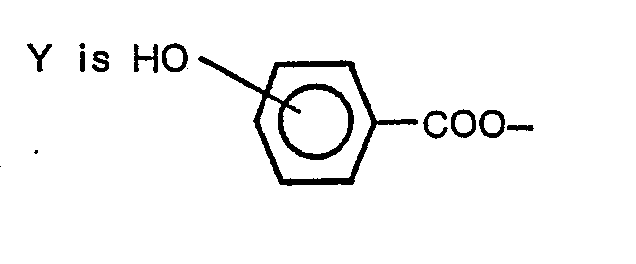
- d) A compound of the formula


- e) An amide - or imide - containing compound of the formula


- f) A compound of the formula

- h) A compound of the formula

- i) A compound according to the formula

- Free bases formed may be converted into their acid addition salts, and acid addition salts formed may subsequently be converted into the corresponding bases or other acid addition salts.
- Starting materials for the methods of preparation described above may be obtained by several methods known in the art or described below.
- The starting material for method a) according to formula II above may be prepared by one of the following methods:

- A compound of formula IX, wherein Ra is an alkyl group having 1-5 carbon atoms, is reduced e.g. with LiAlH4. In the compound X formed, a group R may then be introduced in analogy with the procedure of method d) above or by modification of the first step in analogy with method e) above.

- In a compound of formula XI, obtainable by method E2) below, the methoxy group is split off with HBr, whereupon a protective group Ra being an alkyl group having 1―5 carbon atoms or an acyl group having 2―6 carbon atoms, is substituted in the hydroxy group by reaction with a halide RaX in the presence of a base. The compound thus formed is then hydrogenated to the formation of a compound of formula II wherein n is 2 and Ra is as just defined with previous (method H) or subsequent (method A1) introduction of a group R.
- The starting material for method b) may be prepared by one of the following methods

- In a compound of formula XIII a group may be introduced as previously described whereupon the compound is treated with Cl2 or H2SO4 to the formation of an isomeric mixture XIV, from which the compound III wherein Z is CI or S03H is obtained by chromatographic separation.

- The compound of formula XV is hydrogenated under acidic conditions in the presence of Pt02 to give a phenylpiperidine which is N-acylated with an appropriate carboxylic acid chloride RfCOCl wherein Rf is an alkyl group having 1-4 carbon atoms or an ethoxy group, in the presence of a base such as triethylamine, giving an amide, which is subjected to mild acid or basic hydrolysis of the ester function giving a compound XVI. Said compound XVI is treated with CICOOC2H5 and triethylamine and then with sodium azide giving a carboxylic acid azide which on heating gives the isocyanate XVII. The isocyanate is treated with an excess of boiling benzyl alcohol giving a carbamate which is then hydrogenated in the presence of Pd/C to give a compound XVIII. A compound of formula III wherein Z is NH2 and n is 2 is then formed by subjecting the amide group of compound XVIII to splitting with an aqueous acid or base when an N-unsubstituted compound is desired, to reduction with e.g. LiAIH4 when R= an alkyl group having 2-5 carbon atoms is desired. When R=CH3 is desired a compound XVIII wherein Rf is an ethoxy group may be treated with LiAIH4.
- The starting materials for method e) may be prepared by one of the following methods

- A compound of formula XIX may be formed by N-acylation of a corresponding compound of formula X, preparable according to A1 above, with an acid chloride R°COCI in the presence of a base. The ether function of compound XIX is then cleaved with BBr3 to the formation of a compound of formula IV wherein M1 and M2 are both -CH2- and Rd is H. If desired the hydroxy group may then be acylated with acyl chloride to form a compound of formula IV wherein Rd is R1CO, or alkylated with an allyl or benzyl halide to form a compound of formula IV wherein Rd is allyl or benzyl.

- A compound of formula XX wherein Ra is alkyl having 1―5 carbon atoms is reacted with I(CH2)nCOOC2H5 or with CH2=CH―COOC2H5, in the presence of a base to the formation of a compound of formula XXI.
- The compound XXI obtained by one of said routes is then converted into a compound of formula IV along the following route.

- Compound XXI is treated with hydrogen in the presence of a catalyst such as Raney nickel to the obtention of compound XI, in which a substituent is introduced at the nitrogen atom, if required in the end compound, by means of a halide RX. The ether function is then cleaved with BBr3 giving a compound IV wherein Rd is H and M1 is ―CH2― and M2 is >C=O and, if required in compound IV, the hydroxy group is acylated with an acyl chloride R1COCl in the presence of a base, or alkylated with an allyl or benzyl halide to form a compound of formula IV wherein Rd is allyl or benzyl.

- A compound of formula XXIV is reacted with CH2=CH-CN, in the presence of a base, to the formation of a compound XXV. The subsequent route for preparation of the compound IV wherein M1 is >C=O and M2 is -CH2- is completely analogous to the route XXI to IV described above.

- A compound of formula IV wherein M1 is >C=O, M2 is ―CH2―, M3 is R, Rd is H and n is 2 may be prepared by oxidation of a compound of formula VI above e.g. with Br2.

- A compound of formula XXI is heated with an aqueous acid to the formation of a dicarboxylic acid XXVI, which is then reacted with acetic acid anhydride. Heating of the resulting cyclic anhydride with an amide R―NH2 yields an imide XXVII, in which the ether function is cleaved with BBr3 giving a compound IV wherein Rd is H and M1 and M2 are both >C=O, and, if required, the hydroxy group is acylated to the formation of compound IV, wherein Rd is R1CO, or alkylated with an allyl or benzyl halide to form a compound of formula IV wherein Rd is allyl or benzyl.
- The starting material for method f) may be prepared by the following method.

- A Grignard reaction with compounds XXVIII and XXIX produces compound V. The compound XXIX may be prepared by reacting a compound of the formula

- Starting material for method h) may be prepared by the following method.

- When a group Y1 other than hydroxy is required, such a group is introduced by reaction of a compound XII with an appropriate acyl, carbamoyl, benzyl or allyl chloride in the presence of a base. The pyridyl nitrogen is then reacted with a hydrogen halide of alkyl halide RX1 (X1 = Br or I) to the formation of an ion VII.
- Starting materials for method i) may be prepared by one of the following methods.

- A compound of formula XXI, obtainable according to method E2), is reduced with LiAlH4 to the formation of compound XXX, which is N-substituted with a halide RX1, wherein X1 is a halogen, in the presence of a base. In the compound obtained the ether function is cleaved with aqueous HBr to the formation of a compound XXXI. A leaving group X is then introduced to the formation of compound VIII, wherein Z1 is NHR and Z2 is X, by reaction with thionyl chloride, whereby X=Cl is obtained, or with an acid HX.

- A compound of formula XXV, obtainable according to method E3), is converted into a compound of formula VIII, wherein Z1 is X and Z2 is NHR, in a manner analogous to the conversion XXI to VIII under (1) above.

- A compound of formula XXVI, obtainable according to method E4), is reduced with LiAIH4. In the resulting compound the ether function is cleaved with aqueous HBr to the formation of a compound of formula XXXII. In compound XXXII two leaving groups X are introduced to the formation of a compound VIII, wherein Z1 and Z2 are each X, by reaction with thionyl chloride, whereby X=CI is obtained, or with an acid HX.
- Some of the intermediates or starting materials mentioned above and the preparation thereof are known. However, certain intermediates or starting materials are novel.
- Pharmaceutical preparations of the compounds of the invention constitute a further aspect of the invention.
- In clinical practice the compounds of the present invention will-normally be administered orally, rectally, or by injection, in the form of pharmaceutical preparations comprising the active ingredient either as a free base or as a pharmaceutically acceptable non-toxic, acid addition salt, e.g. the hydrochloride, lactate, acetate or sulfamate, in association with a pharmaceutically acceptable carrier.
- Accordingly, terms relating to the novel compounds of this invention, whether generically or specifically, are intended to include both the free amine base and the acid addition salts of the free base, unless the context in which such terms are used, e.g. in the specific examples, would be inconsistent with the broad concept. The carrier may be a solid, semisolid or liquid diluent or capsule. These pharmaceutical preparations constitute a further aspect of this invention. Usually the active substance will constitute between 0.1 and 99% by weight of the preparation, more specifically between 0.5 and 20% by weight for preparation intended for injection and between 0.2 and 50% by weight for preparations suitable for oral administration.
- Pharmaceutical preparations containing a compound of the invention in a solid form of dosage units for oral application may preferably contain between 2 and 50% by weight of the active substance, in such preparations the selected compound may be mixed with a solid fine grain carrier, e.g. lactose, saccharose, sorbitol, mannitol, starches such as potato starch, corn starch or amylopectin, cellulose derivatives, or gelatin and a lubricant such as magnesium stearate, calcium stearate, polyethylene glycol waxes, and the like, and then compressed to form tablets. If coated tablets are required, the cores, prepared as described above, may be coated with a concentrated sugar solution which may contain, e.g. gum arabic, gelatin, talcum or titanium dioxide. Alternatively the tablet can be coated with a lacquer dissolved in a readily volatile organic solvent or mixture of organic solvents. Dyestuffs may be added to these coatings in order to readily distinguish between tablets containing different active substances or different amounts of the active compound.
- For the preparation of soft gelatin capsules (pearl-shaped closed capsules) consisting of gelatin and, for example, glycerol, or similar closed capsules, the active substance may be admixed with a vegetable oil. Hard gelatin capsules mayu contain granulates of the active substance in combination with solid, fine grain carriers such as lactose, saccharose, sorbitol, mannitol, starches (e.g. potato starch, corn starch or amylopectin), cellulose derivatives or gelatin.
- Liquid preparations for oral application may be in the form of syrups or suspensions, for example, solutions containing from about 0.2% to about 20% by weight of the active substance herein described, the balance being sugar and a mixture of ethanol, water, glycerol and propyleneglycol. Optionally such liquid preparations may contain colouring agents, flavouring agents, saccharine and carboxymethylcellulose as a thickening agent.
- Solutions for parenteral applications by injection can be prepared in an aqueous solution of a watersoluble pharmaceutically acceptable salt of the active substance preferably in a concentration of from about 0.5% to about 10% by weight. These solutions may also contain stabilizing agents and/or buffering agents and may conveniently be provided in various dosage unit ampoules.
- In therapeutical treatment the suitable daily doses of the compounds of the invention are 200-10000 mg for oral application, preferentially 1000-6000 mg, and 1-1000 mg for parenteral application, preferentially 50-500 mg
- The following examples will further illustrate the invention.
- Butyryl chloride (2.0 g, 0.019 mol) in dry toluene (5 ml) was slowly added to a solution of 3-methoxyphenylpiperidine (2.45 g, 0.013 mol) and triethylamine (1.92 g, 0.013 mol) in dry toluene at 5°. The mixture was stirred at room temperature for 30 min., whereupon the triethylammonium chloride formed was filtered off and the solvent evaporated. The crude N-butyryl-3-(3-methoxyphenyl)piperidine (2.82 g) dissolved in dry tetrahydrofuran (30 ml) was added to a suspension of LiAIH4 (2.0 g) in dry tetrahydrofuran (30 ml) under nitrogen. After reflux for 3 h the mixture was hydrolysed, the precipitate filtered off and the solvent evaporated. The residue dissolved in light petroleum was passed through an alumina column. (Alternatively the residue could be distilled in vacuo). The product was precipitated as the hydrochloride and recrystallized from ethanol/ether yielding the pure product (3.6 g, 88%) mp 130-1°C.
- To a solution of 3-(3-methoxyphenyI)piperidine (3.92 g, 0.02 mol) in CH3CN (100 ml), solid K2C03 (5 g) was added and then the mixture was refluxed. A solution of pentyliodide (4.5 g, 0.021 mol) in CH3CN (10 ml) was added dropwise under 30 min. and then the mixture was refluxed for an additional 30 min. The solid was filtered off from the cooled mixture, and the solvent evaporated giving an oil which was chromatographed on a silica gel column with methanol as eluant. Yield 1.3 g (25%) of pure N-pentyl-3-(3-methoxyphenyl)piperidine (NMR) as an oil.
- NaBH4 (6.08 g, 0.16 mol) was added portionwise under stirring to a solution of propionic acid (38 g, 0.51 mol) in dry benzene (150 ml). The temperature was kept below 15°C for 2 h and then 3-(3-methoxyphenyl)-piperidine (6.1 g, 0.032 mol) dissolved in dry benzene (100 ml) was added and the mixture was refluxed for 3 h. The reaction mixture was allowed to reach room temperature and was then extracted with 2.5 M NaOH (200 ml). The aqueous phase was extracted with benzene, all the benzene phases mixed, dried (Na2S04) and the solvent evaporated giving an oily residue (6.6 g). The product was precipitated as hydrochloride and recrystallized from methanol/isopropyl ether yielding the pure product (6.2 g, 72%), mp. 191°C.
- 3-(3-pyridinyl)methoxybenzene (3.0 g, 0.016 mol) and propyl bromide (2.0 g) was dissolved in dry acetone (50 ml) and allowed to react at 110°C in a high pressure steel vessel. After 20 h the reaction was interrupted and the solvent was evaporated. The residual quartenary N-propyl-3-(3-methoxyphenyl)pyridinium bromide was hydrogenated (Pt02) in methanol at r.t. and 760 mmHg. The H2- uptake ceased after 24 h. The catalyst was filtered off and the solvent evaporated. The hydrobromide was recrystallized from ethanol/ether giving 2.63 g (70%) of the pure product, mp. 155-156°C.
- This substance was prepared by a dichlorobis-(triphenylphosphine)nickel (II) catalyzed reaction between 3-methoxyphenylmagnesium bromide (from 50 g of 3-bromo-anisole and 5.9 g of Mg in THF) and 31.8 g of 3-bromopyridine. Yield 23.1 g (62%), bp. 102°/0.15 mmHg, mp. (HCI) 187.5-9°C.
- To a solution of 3-(3-pyridinyl)methoxybenzene (22.0 g, 0.099 mol) in methanol (250 ml), Pt02 (2 g) and conc. HCI (30 ml) were added and the mixture was hydrogenated at 0.34 MPa in a Parr apparatus. After complete hydrogenation, the catalyst was filtered off. Most of the solvent was evaporated, the residue was made alkaline with 1 M NaOH and extracted with ether. The ether-phase was dried (Na2S04) and the solvent evaporated giving 18 g of the amine product. The hydrochloride was made and then recrystallized from ethanol/ether yielding 20.9 g (93%), mp. 137-138.5°C.
- 3-(3-methylphenyl)-pyridine was prepared from 81.5 g (0.52 mol) 3-bromopyridine and 120 g (0.70 mol) 3-bromotoluene as described for the preparation of 3-(3-methoxyphenyl)-pyridine. (Example 17). B.p. 87°/0.05 mmHg. Yield 61.7 g (69%).
- A mixture of 3-(3-methylphenyl)-pyridine (30 g, 0.177 mol), potassium permanganate (67.5 g, 0.427 mol) and water (825 ml) was refluxed over night with stirring. The hot mixture was filtered, acidified (conc. HCI) and evaporated in vacuo. After drying in the air the solid was dissolved in HCI-saturated methanol (2500 mi), the resulting solution was refluxed for 24 hours. The methanol was evaporated and the residue was made alkaline with saturated potassium carbonate solution. Extraction with ether followed by drying (K2C03) and evaporation of the ether gave an oil which was distilled in vacuo. The fraction distilling from 90°C to 135°C at 0.2 mm was then filtered through a Si02-column with ether as eluant. Evaporation of the ether gave the pure product (21 g, 55%) as a solid.
- The hydrochloride was prepared by dissolving the aminoester in ether followed by addition of HCI-saturated ether. The salt was recrystallized from methanol/ether, mp. 208-209°C.
- A solution of the HCI-salt of methyl-3-(3-pyridyl)-benzoate (5.54 g, 0.022 mol) in methanol was hydrogenated (atm. pressure) at r.t. using Pt02 as catalyst. After filtration and evaporation the residue was partitioned between a saturated potassium-carbonate solution and ether. The ether layer was dried (K2C03), cooled and treated with triethylamine (2.23 g, 0.022 mol) and propionylchloride (2.05 g, 0.033 mol). Stirring at r.t. for one hour followed by filtration and evaporation gave an oil which was eluated twice through an Al203-column with ether. Evaportion of the ether gave 4.8 g of pure methyl-3-(1-propionylpiperidin-3-yl)benzoate as an oil, which could not be crystallized.
- A mixture of methyl-3-(1-propionylpiperidin-3-yl)benzoate (4.8 g, 0.017 mol), sodium hydroxide pellets (5 g), methanol (80 ml) and water (20 ml) was stirred until TLC indicated that no starting material remained (4 hours). The methanol was evaporated and the alkaline water layer was washed with ether, acidified with hydrochloric acid and extracted with chloroform. Evaporation gave the product (4.0 g, 69% yield from methyl-3-(3-pyridyl)-benzoate) as an oil which crystallized after several weeks on standing (Mp. 125-126°C).
- To a cooled (-10°C) solution of 3-(1-propionylpiperidin-3-yl)benzoic acid (9.75 g, 0.036 mol) and triethylamine (3.56 g, 0.033 mol) in acetone (115 ml) ethyl chloroformate (4.34 g, 0.040 mol), was slowly added. After stirring at -10°C for one and a half hour, a solution of sodium azide (3 g, 0.046 mol) in water (10 ml) was added dropwise, and the mixture was stirred at -10°C for one hour more. The reaction mixture was poured into icewater and extracted with toluene. The toluene extract was dried (MgSO4) and heated until a small sample run on IR indicated that the reaction (the conversion of the acyl azide to the isocyanate) was complete. Evaporation of the toluene gave the isocyanate as an oil.
- The isocyanate was boiled with benzyl alcohol (20 ml) until the reaction was complete (IR; 24 hours). Evaporation of unreacted benzylalcohol gave an oil (1.5 g) which was dissolved in methanol and hydrogenated at r.t. and atmospheric pressure with 10% Pd/C as catalyst. Filtration and evaporation gave an oil which was further reacted with LiAIH4(1.0 g, 0.026 mol) in tetrahydrofuran. Refluxing for 3 h followed by hydrolysis of the reaction mixture, filtration and evaporation of the solvent gave the crude N-n-propyl-3-(3-aminophenyl)piperidine which was converted to its dihydrochloride by dissolving the base in methanol and saturating the solution with HCI. Evaporation of the methanol gave the sale as an oil. Yield: 0.40 g (4%, calculated on 3-(1-propionyipiperidin-3-yi)benzoic acid). A sample of the oil was reconverted to the base and dissolved in CDCI3 for NMR (see table).
- N-Propyl-3-(3-methoxyphenyl)piperidine hydrochloride (7.0 g, 0.026 mol) was suspended in 48% HBr (200 ml). The mixture was refluxed under nitrogen for 3 h. The hydrobromic acid was evaporated and the residue was recrystallized from ethanol/ether, yielding the pure product (6.7 g, 86%) mp. 146-7.5°C.
- N-Pentyl-3-(3-methoxyphenyl)piperidine (1.3 g, 0.005 mol) in CH2CI2 (20 ml) was cooled with dry ice and BBr3 (1.6 g, 0.006 mol) was added dropwise. The mixture was then held at -78°C for 1 h and then allowed to reach r.t. over night. The solution was made alkaline with aqueous Na2C03, extracted with CH2Cl2 and the organic phase dried with Na2SO4. Evaporation of the solvent afforded an oily residue which was treated with HCI-saturated ethanol (5 ml). After evaporation of solvent, purification by extractions and recrystallization (ethanol/ether), the desired product (0.40 g, 29%) was obtained, mp. 70-800C.
- N-n-propyl-3-(3-hydroxyphenyl)piperidine (0.8 g, 0.0037 mol) was dissolved in acetic anhydride (20 ml). Triethylamine (1 ml) was added and the solution was refluxed for 1.5 h, ethanol (50 ml) was added and the volatiles were evaporated giving a residual oil. The residue was partitioned between ether and water. Separation of the two phases and evaporation of the ether gave an oily residue (700 mg).This was dissolved in dry ether (100 ml) and HCI-saturated ether was added giving the desired compound as a crystalline precipitate, which was filtered off and recrystallized from methanol/isopropyl ether. Yield 0.60 g (55%), mp. 173-175°C.
- N-n-Propyl-3-(3-hydroxyphenyl)piperidine (0.5 g, 0.0023 mol) was dissolved in CH2Cl2 (50 ml). Triethylamine (1 ml) and benzoyl chloride (0.5 ml, 0.004 mol) was added and the mixture was stirred at r.t. for 48 h. The solvent was evaporated and the residue was partitioned between ether and water. The ether phase was dried (Na2SO4) and the solvent evaporated giving an oily residue which was eluated through a short silica gel column with methanol as eluant. Evaporation of the solvent gave an oily residue (300 mg). The oil was dissolved in ether and HCI-saturated ether was added. Filtration and drying gave the desired compound in a crystalline form. Yield 13%, mp. 170°C.
- Ethylenoxide (0.36 ml, 7.0 mmol) was added to a stirred solution of 3-(3-hydroxyphenyl)piperidine (1.0 g, 5.6 mmol) in methanol (150 ml), maintaining the temperature at -30°C, whereafter the reaction mixture was allowed to reach room temperature. (The reaction was followed by TLC). More ethylenoxide (0.5 ml, 9.8 mmol) was added in portions until the reaction was complete (two weeks). An excess of ethereal hydrogen chloride was added and the solvent was evaporated. The oily residue was passed through a silica column with 10% methanol in chloroform. After evaporation the hydrochloride was recrystallized from ethanol/ether to yield 0.6g (41%) of 2-[3-(3-hydroxyphenyl)-piperidino]ethanol hydrochloride, m.p. 116.5-120°C.
- To a solution of N-n-propyl-3-(3-aminophenyl)piperidine (0.74 g, 0.0034 mol) in 6M HsS04 (2 ml) NaN02 (0.23 g, 0.0034 mol) dissolved in water (0.6 ml) was added dropwise at 5°C and then the mixture was stirred at 5°C for 1 h. The resulting mixture was added dropwise to refluxing 10% H2SO4 (3.5 ml) and the reflux was continued for 5 min. Cooling, alkalising (Na2C03), extraction with ether, drying and evaporation of the organic phase gave the desired product as a free base. Conversion to the hydrochloride followed by recrystallization gave 0.22 g (25%) of N-n-propyl-3-(3-hydroxyphenyl)piperidine hydrochloride, mp. 143.5-146°C.
- A solution of N-n-propionyl-3-(3-allyloxyphenyl)piperidine (0.35 g, 0.0013 mol) in dried ether (25 ml) was dropped to a suspension of LiAIH4 (0.35 g) in dried ether under nitrogen and stirring, and the mixture was refluxed for 30 min. H20 (0.35 ml), 15% NaOH (0.35 ml) and H20 (1 ml) were added and the precipitated crystals were filtered off and washed with ether. The solution was dried with Na2SO4-Evaporation to dryness gave an oily residue which was dissolved in ether. Addition of HCI-saturated ether resulted in precipitation of white crystals. The crystals were centrifugated and treated with light petroleum, centrifugated and dried. Yield 0.185 g (49%).
- A mixture of N-n-propyl-3-(3-hydroxyphenyl)piperidine hydrobromide (1.0 g, 0.0033 mol), potassium t-butoxide (1.0 g, 0.009 mol) and benzylchloride (1.0 g, 0.009 mol) in t-butanol (25 ml) was refluxed for 1 h. Water was added and the mixture extracted with ether. The organic phase was dried with Na2S04 and evaporated to dryness giving a pale yellow oily residue. The residue was chromatographed through a silica gel column with methanol as eluant. The pertinent fractions were collected and evaporated to dryness. The oily residue was dissolved in ether and HCI-saturated ether was added, giving white crystals. Evaporation and treatment of the residue with acetone gave 0.60 g (52%) of the desired product as white crystals, mp. 171°C.
- A mixture of N-n-propyl-3-(3-hydroxyphenyl)piperidine hydrobromide (0.76 g, 0.0025 mol), phenylisocyanate (5.45 g, 0.046 mol), triethylamine (0.5 g, 0.049 mol) and methylene chloride (2 ml) was stirred at r.t. for 18 h. The mixture was partitioned between water and ether. The ether phase was dried and evaporated giving a partly crystalline residue. The residue was dissolved in methanol and chromatographed on a silica gel column (200 g Si02) with methanol as eluant. The fractions which according to GLC contained the desired product in pure form were continued and the solvent evaporated. The residue was dissolved in ether and treated with HCI-saturated ether giving a crystalline precipitate. Filtration and washing gave 0.18 g (20%) of the desired hydrochloride. mp. 184-190°C.
- A mixture of N-n-propyl-3-(3-hydroxyphenyl)piperidine hydrobromide (1.0 g, 0.0033 mol) 2,6-dimethylbenzoyl chloride (2.15 g, 0.0127 mol) and distilled dry pyridine (7 ml) was stirred at room temperature under N2-atmosphere for 24 h. Aqueous NaHC03 was added and the mixture was extracted with ether. The organic phase was dried and all the solvents were evaporated giving an oily residue. The residue was eluted through an alumina column with ether and then through a silica gel column with light petroleum-ether (1:1) as eluant. The product was then precipitated by addition of HCI-saturated ether. Filtering and drying yielded 1.2 g (93%) of the pure desired hydrochloride, mp. 190-191°C.
- According to the methods of the Examples above the following compounds were prepared and recrystallized as acid addition salts from ethanol/ether or isolated as the bases.


-
- *) Submitted for elemental analysis (C,H,N); All the analyses were satisfactory.
- a) Calculated on the starting phenylpiperidine or pyridinylbenzene.
- b) δ(CDCl3) 0.7―3.2 (20H,m), 3.75 (3H,s), 6.6―7.0 (3H, m), 7.0―7.4 (1H,m).
- c) δ(CDCl3) 0.7―3.2 (26H,m), 3.75 (3H,s), 6.6―6.95 (3H,m), 6.95―7.35 (1H,m).
- d) δ(CDCl3) 1.0―3.1 (10H,m), 3.7 (3H,s), 6.55―6.95 (3H, m), 6.95―7.35 (1H,m).
- e) δ(CDCl3) 1.2 (9H,s), 1.2―3.1 (11H,m), 3.7 (3H,s) 6.6―6.9 (3H,m), 6.9―7.35 (1H,m).
- f) δ(CDCl3) 1.3―3.3 (11h,m), 3.8 (3H,s), 4.9―5.4 (2H,m), 5.55―6.3 (1H,m), 6.6―7.0 (3H,m), 7.0―7.4 (1H,m).
- g) vmax 1680 (C=O), 1260 (ArOCH3)
- h) vmax 1640 (C=O), 1250 (ArOCH3)
- i) vmax 1638 (C=O), 1255 (ArOCH3)
- j) δ(CDCl3) 1.3 (9H,s), 1.4―3.0 (9H,m), 3.8 (3H,s), 6.65―6.95 (3H,m), 7.1―7.45 (1H,m); v max 1650 cm-1.
- k) δ(CDCl3) 0.9 (3H,t), 1.15―3.25 (13H,m), 3.5 (2H, br.s), 6.4―6.75 (3H,m), 6.95―7.3 (1H,m).
- I) 6(CDCI3) 0.7-3.5 (20H,m), 6.6-6.9 (3H,m), 6.9-7.35 (1H,m), 9.8 (1H,br.s).
- m) δ(CDCl3) 0.7―3.4 (26H,m), 6.55―6.9 (3H,m) 6.9―7.3 (1H,m), 9.55 (1h,br.s).
- n) 6(CD3OD) 1.1 (9H,s), 1.7―3.6 (11H,m), 5.1 (1H,br.s), 6.6―6.95 (3H,m), 6.95―7.35 (1H,m).
- o) by using dimethyl-2-chloroethylamine hydrochloride as alkylating agent.
- p) δCDCl3 0.92 (3H,t), 1.2―3.2 (16H,m), 4.45―4.65 (2H,m), 5.15―5.30 (1H,m), 5.30―5.60 (2H,m), 5.80―6.40 (1H,m), 6.55-6.90 (3H,m), 7.00-7.35 (1H,m).
- q) Methods AI and d modified by using an w-haloalkylcarboxyalkyl ester namely 3-bromoethylpropionate as alkylating agent, and effecting reduction of the intermediate ester.
- The following examples illustrate how the compounds of the present invention may be included into pharmaceutical preparations.
- 500 g of active substance are mixed with 500 g of corn oil, whereupon the mixture is filled in soft gelatine capsules, each capsule containing 100 mg of the mixture (i.e. 50 mg of active substance).
- 0.5 kg of active substance are mixed with 0.2 kg of silicic acid of the trade mark Aerosil 0.45 kg of potato starch and 0.5 kg of lactose are mixed therewith and the mixture is moistened with a starch paste prepared from 50 g of potato starch and distilled water, whereupon the mixture is granulated through a sieve. The granulate is dried and sieved, whereupon 20 g of magnesium stearate are mixed into it. Finally the mixture is pressed into tablets each weighing 172 mg.
- 100 g of active substance are dissolved in 300 g of 95% ethanol, whereupon 300 g of glycerol, aroma and colouring agents (q.s.) and 1000 ml of water are mixed therein. A syrup is obtained.
- Active substance (hydrobromide (1 g), sodiumchloride (0.8 g) and ascorbic acid (0.1 g) are dissolved in sufficient amount of distilled water to give 100 ml of solution. This solution, which contains 10 mg of active substance per ml, is used in filling ampoules, which are sterilized by heating at 120°C for 20 minutes.
- Drugs acting on central dopamine (DA) transmission have for long been known to be clinically effective in a variety of diseases originating in the CNS, e.g. parkinsonism and schizophrenia. In the former condition the nigro-neostriatal hypofunction can be restored by an increase in postsynaptic DA-receptor stimulation, whereas the latter condition can be normalized by achieving a decrease in postsynaptic DA-receptor stimulation. So far, this decrease has been mainly accomplished either by a) direct blockade of the postsynaptic DA receptors (considered to be the mode of action for classical antipsychotic agents like e.g. haloperidol and chlorpromazine) or b) inhibition of intraneuronal presynaptic events essential for the maintenance of adequate neurotransmission, e.g. granular uptake and storage (cf, the neuroleptic reserpine, which is known to deplete the monoamine stores via its actions upon granular structures), transport mechanisms and transmitter synthesis.
- In recent years a large body of pharmacological, biochemical and electrophysiological evidence has accumulated, providing considerable support in favour of the existence of a specific population of central autoregulatory DA receptors, so-called autoreceptors, located on the dopaminergic neuron itself (i.e. presynaptically located). These receptors are part of a homeostatic mechanism that modulates nerve impulse flow and transmitter synthesis and thus the amount of DA released from the nerve endings.
- The well-known direct DA-receptor agonist apomorphine is able to activate the DA autoreceptors as well as the postsynaptic DA receptors. At low doses, however, the effects of autoreceptor stimulation appear to predominate, whereas at higher doses the (autoreceptor-mediated) attenuation of DA transmission is outweighed by the enhancement in postsynaptic receptor stimulation. Thus, the "paradoxical" antipsychotic and antidyskinetic effects demonstrated in man after low doses of apomorphine are most probably to be attributed to the autoreceptor-stimulatory properties of this DA-receptor agonist. In accordance with this, and in view of current knowledge of the drawbacks linked to the use of DA-receptor antagonists in the therapy of schizophrenia and other psychotic disorders, it has been suggested that DA-receptor stimulants with a high selectivity for CNS DA autoreceptors would offer new therapeutic principles of great value in psychiatric medicine. At the moment no such drug is commonly known. While searching for new postsynaptic DA-receptor agonists (anti-Parkinson agents) we surprisingly discovered a group of substances possessing selective DA-autoreceptoragonistic properties. In order to investigate this new pharmacological profile, the following experiments were performed. For compound numbers see table of "End Compounds" above.
- Depletion of the monoamine stores with reserpine brings about a "neuroleptic syndrome" characterized by hypomotility, catalepsy, muscle rigidity, hunch-backed posture as well as a number of other central and peripheral signs of monoamine depletion. This syndrome can be reversed be the administration of drugs that stimulate postsynaptic DA receptors directly or indirectly, e.g. apomorphine, L-Dopa.
- Rats (150-300 g) pretreated with reserpine (10 mg/kg i.p., 6 h before) were given compound 4 subcutaneously at different doses. However, no antagonism of the reserpine-induced syndrome was observed, not even at nearly lethal doses. In a similar manner compound 7was tested at 20 mg/kg s.c., i.e. a dose about 100 times the ED50 in Table I. No antagonism of the reserpin-induced syndrome was seen. 2. In-vivo determination of rat brain tyrosine hydroxylation.
- The compounds under evaluation were tested biochemically for central DA-receptor (pre- and/or postsynaptic) stimulating activity. The concept of this biochemical screening method is that a DA-receptor agonist will stimulate the receptor and through regulatory feedback systems effect a decline in tyrosine hydroxylase activity and thus a subsequent reduction in the synthesis rate for DA in the presynaptic neuron. Dopa formation, as determined after in-vivo inhibition of the aromatic L-amino acid decarboxylase with NSD 1015 (3-hydroxybenzyl-hydrazine hydrochloride), is taken as an indirect measure of DA synthesis rate.
- Rats (150-300 g) pretreated with reserpine were given the compounds under evaluation. Gross behavioural observations (changes in motility, stereotypies etc) were made in order to evaluate possible postsynaptic dopamine receptor activity. Subsequent administration of NSD 1015, decapitation, brain dissection (corpora striata and the limbic fore-brain), homogenization, centrifugation, ion-exchang chromatography and spectrofluorimetric measurements (all as descirbed in detail by Wikstr6m et al., in J. Med. Chem 21, 864-867, 1978 and references cited therein), gave the actual Dopa levels. Several doses (n = 486) were tested in order to obtain dose-response curves for each compound and brain area. The dose of a compound producing a half-maximal decrease in the Dopa level in the rat brain part was then estimated. These values (EDso) are presented in Table I.
- From studies on many other compounds having autoreceptor activity as well as postsynaptic activity we know that at a dose representing the ED50 value only autoreceptor activation is likely to occur. To obtain postsynaptic activation higher doses are necessary. (At the moment no compound with selective postsynaptic DA-stimulating activity is known). Therefore, independently of other presented evidence (above or below) concerning receptor selectivity, the ED50 values are considered to represent doses eliciting selective autoreceptor stimulation.
- All the compounds in Table I were biochemically active except for the two reference compounds tested, which were completely inactive even at 180 pmol/kg and 90 pmol/kg respectively. Most of the active compounds have a potency of approximately the same order (ED50 0.6―4.4). These compounds are considered to the most suitable for medical use. Compounds with an ED50 value of about 45 pmol/kg as for N-propyl-3-(3-hydroxyphenyl)pyrrolidine may be considered to be of borderline interest.
- The absence of significant postsynaptic DA-receptor activation at any dose tested indicates that all the active compounds have selectivity for the autoreceptors (further investigated only for compound 4).
- The administration of GBL in anesthetic doses inhibits nerve impulse flow in central DA neurons, thus resulting in a loss of the impulse-medicated feedback control of tyrosine hydroxylase activity and in a subsequent increase in transmitter synthesis rate (which is determined as described under 2 above). Since the GBL inhibition precludes neuronal feedback actions, antagonistic effects exerted by DA-receptor agonists upon the GBL-induced increase in synthesis are in all probability to be ascribed to their stimulating the DA autoreceptors present in the terminal area of the DA neurons.
- Rats (150-300 g), were given compound 4 subcutaneously at several doses (n = 7) folloed by GBL (750 mg)kg i.p., 5 min later) and NSD 1015 (100 mg/kg i.p., 10 min later). By a subsequent procedure according to 2 above the Dopa levels (representing the DA-synthesis rates) were determined. In this model compound 4 dose-dependently antagonized the GBL-induced increase in DA synthesis rate (Loagarithmically adjusted dose-response data in Table 11). The maximal reversal of the GBL-induced increase in DA synthesis rate was approximately 160% in the limbic system and 110% in corpus striatum. Furthermore, the antogonism could be blocked by haloperidol, hence confirming that the effects are due to actions on DA autoreceptors (Table III).
- Untreated animals exposed to a new environment display an initial high motor activity which then gradually declines over a period of time. Administration of DA-receptor agonists (e.g. apomorphine) in doses where preferential autoreceptor stimulation is likely to occur, causes a depression of the spontaneous motility mentioned above, considered to be due to the DA autoreceptor-mediated impairment of central DA transmission.
- Rats (150-300 g) were injected subcutaneously with several doses of compounds 4 and after 5 minutes they were individually placed in motility boxes ("M/P 40 Fc Electronic Motility Meter." Motron Products, Stockholm) and the motor activity (0-30 min) was quantified. Compound 4 exhibits a clear dose- dependent decrease of the initial high motor activity, the maximal effect, being a 75% decrease from control values, attained at about 8 mg/kg. No locomotor stimulation was ever seen, regardless of the dose used. Pretreatment with a low dose of haloperidol (0.02 mg/kg i.p., 30 min before), in order to selectively DA-autoreceptor sites, at least partly reversed the sedative effect obtained with a low dose (0.5 mg/kg) of compound 4 (Table IV). Moreover, there seems to be a correlation between the decrease in spontaneous locomotion and the degree of antagonism of the GBL-induced increase in DA synthesis (cf. 3 above) in the limbic areas of rat brain exerted by compound 4. The per cent decrease of motor activity being roughly 0.6 times the per cent reversal of GBL-induced increase in DA-synthesis rate.
- In animals with an acute unilateral KCl-lesion (1 µl 25% KCl lesioned side, 1 µl 20% NaCl control side, administered through previously implanted "guide cannulaes") of the striatum, compensatory counterbalancing adjustments in the intact control lateral striatum are brought about and therefore no appreciable aysmmetry in body posture or torsion is observed. Disturbances in the balance produces, depending on the point of attack, ipsi- or alternatively contralateral turning. In this model postsynaptically active DA agonists (e.g. apomorphine, high dosage) elicit ipsilateral turning and rotary behavior whereas DA antagonists (e.g. haloperidol) cause contralateral turning. Consequently it could be expected that agents acting exclusively on DA autoreceptors would produce contralateral turning in the lesion animals.
- Rats (1500-300 g) pretreated as above were given compound 4 subcutaneously at several dose levels and then the animals were observed for at least 4 h. As predicted herein, it was demonstrated that compound 4, in each dose tested, made the animals turn to the side contralateral to the lesion (Table V).. Moreover, their overall appearance was indicative of a sedative action exerted by compound 4, thus corroborating the previous findings (cf. 4 above). It was also shown that the ipsilateral turning and rotatory response after administration of postsynaptically effective doses of apomorphine (1.0 mg/kg s.c) was not affected by pretreatment with compound 4 (Table V).
- Further preliminary investigations on the pharmacological profile of compound 4 have indicated that it, in contrast to agents stimulating postsynaptic DA receptors, is devoid of emetic activity in dogs (at least at 1 mg/kg i.m.). As opposed to postsynaptically acting DA agonists, compound 4 (8 mg/kg s.c.) also failed to lower the rat rectal temperature (0-30 min). It was in fact lacking any measurable temperature effects.
- Rats (150-300 g) pretreated with reserpine (10 mg/kg i.p., 6 H before) were given either phys. saline, compound 4 (100 pmol/kg), N-n-propyl-3-(3,4-dihydroxyphenyl)piperidine (100 limol/kg) or apomorphine (2 pmol/kg) subcutaneously and the locomotor activity (accumulated counts 0-60 min) was quantified by means of Motron boxes (see under 4 above). The results (Table VI) show that, apart from their DA-autoreceptor actions (EDso:s; cf, 2 above), N-n-propyl-3-(3,4,-dihydroxyphenyl)piperidine as well as apomorphine, exhibit strong central postsynaptic DA-receptor stimulatory effects. In contrast to the latter agonists, compound 4 appeared to selectively act on the DA autoreceptors and hence failed to elicit a motor response that differed more than slightly from control values.
- The pharmacological data affirm the hypothesis that the compounds under consideration are centrally acting selective DA autoreceptor stimulating agents, and thus of great clinical interest in the treatment of psychotic disorders such as schizophrenia and a number of other disease states such as tardive dyskinesia, Huntington's chorea, hypoprolactinemia, alcoholism and drug abuse, said psychotic disorders and other disease states possibly being associated with a pathological increase in central DA transmission.


- The compound N-n-propyl-3-(3-hydroxyphenyl)piperidine and its salts, processes for preparing said compound and methods of employing said compound in therapy represent the best mode of carrying out the invention known at present. Other compounds of great value are
- N-butyl-3-(3-hydroxyphenyl)piperidine,
- N-pentyl-3-(3-hydroxyphenyl)piperidine, and
- N-isopropyl-3-(3-hydroxyphenyl)piperidine.
Claims (8)


or an ester of such compound wherein Y is R1COO-, as the base or a pharmaceutically acceptable acid addition salt thereof.


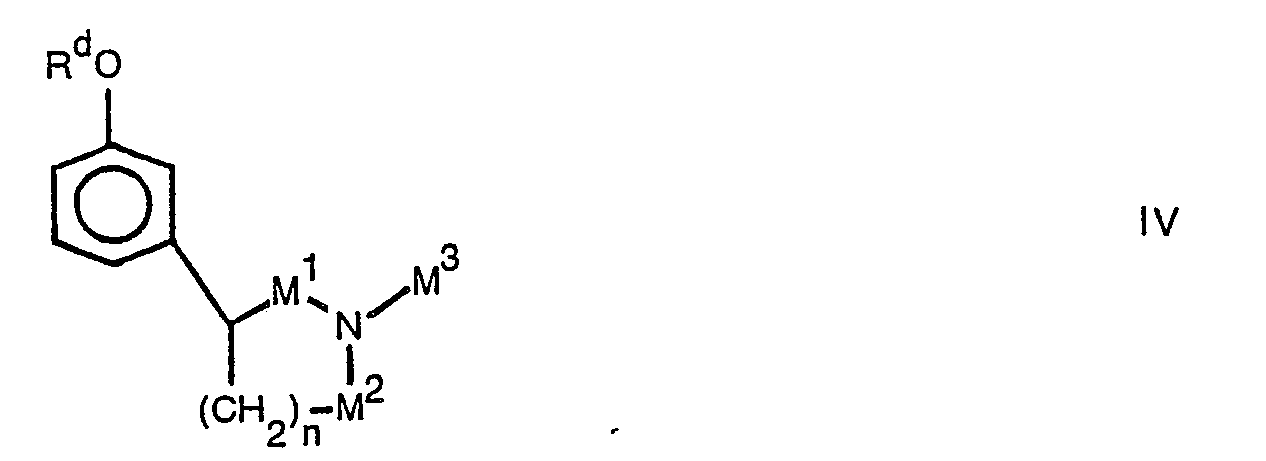


Priority Applications (2)
| Application Number | Priority Date | Filing Date | Title |
|---|---|---|---|
| DE8383200131T DE3072151D1 (en) | 1979-12-05 | 1980-12-05 | New compounds useful as intermediates or starting materials for preparation of therapeutically useful phenyl-azacycloalkanes |
| AT80850183T ATE12000T1 (en) | 1979-12-05 | 1980-12-05 | PHENYL-AZACYCLOALKANES, PROCESSES FOR THE PREPARATION AND PHARMACEUTICAL PREPARATIONS FOR THESE COMPOUNDS. |
Applications Claiming Priority (2)
| Application Number | Priority Date | Filing Date | Title |
|---|---|---|---|
| SE7910026 | 1979-12-05 | ||
| SE7910026 | 1979-12-05 |
Related Child Applications (1)
| Application Number | Title | Priority Date | Filing Date |
|---|---|---|---|
| EP83200131.7 Division-Into | 1980-12-05 |
Publications (2)
| Publication Number | Publication Date |
|---|---|
| EP0030526A1 EP0030526A1 (en) | 1981-06-17 |
| EP0030526B1 true EP0030526B1 (en) | 1985-02-27 |
Family
ID=20339477
Family Applications (2)
| Application Number | Title | Priority Date | Filing Date |
|---|---|---|---|
| EP80850183A Expired EP0030526B1 (en) | 1979-12-05 | 1980-12-05 | New phenyl-azacycloalkanes, processes for preparation and pharmaceutical preparations for such compounds |
| EP83200131A Expired EP0084920B1 (en) | 1979-12-05 | 1980-12-05 | New compounds useful as intermediates or starting materials for preparation of therapeutically useful phenyl-azacycloalkanes |
Family Applications After (1)
| Application Number | Title | Priority Date | Filing Date |
|---|---|---|---|
| EP83200131A Expired EP0084920B1 (en) | 1979-12-05 | 1980-12-05 | New compounds useful as intermediates or starting materials for preparation of therapeutically useful phenyl-azacycloalkanes |
Country Status (17)
| Country | Link |
|---|---|
| US (1) | US4426386A (en) |
| EP (2) | EP0030526B1 (en) |
| JP (1) | JPS6135175B2 (en) |
| AT (1) | ATE42281T1 (en) |
| AU (1) | AU542153B2 (en) |
| CA (1) | CA1147339A (en) |
| DD (1) | DD155065A5 (en) |
| DE (1) | DE3070247D1 (en) |
| DK (1) | DK155793C (en) |
| ES (3) | ES8205768A1 (en) |
| FI (1) | FI67371C (en) |
| GR (1) | GR72841B (en) |
| HU (1) | HU185422B (en) |
| IE (1) | IE50674B1 (en) |
| PT (1) | PT72172B (en) |
| SE (1) | SE8107742L (en) |
| WO (1) | WO1981001552A1 (en) |
Families Citing this family (15)
| Publication number | Priority date | Publication date | Assignee | Title |
|---|---|---|---|---|
| SE446335B (en) * | 1982-03-30 | 1986-09-01 | Astra Laekemedel Ab | PURE ENANTIOMES OF A METAS-SUBSTITUTED 3-PHENYL-1-PROPYLPIPERIDINE |
| US4937346A (en) * | 1979-12-05 | 1990-06-26 | Per Arvid Emil Carlsson | Phenyl-azacykloalkanes |
| SE8305362D0 (en) * | 1983-09-30 | 1983-09-30 | Astra Laekemedel Ab | NOVEL SUBSTITUTED PHENYLAZACYCLOALKANES, PROCESSES FOR PREPARATION AND PHARMACEUTICAL PREPARATIONS FOR SUCH COMPOUNDS |
| EP0077607A1 (en) * | 1981-09-17 | 1983-04-27 | Beecham Group Plc | N-substituted 3-aryl piperidines and derivatives thereof |
| US4719219A (en) * | 1982-03-30 | 1988-01-12 | Per A. E. Carlsson | Phenyl-azacycloalkanes and use thereof in treatment of central nervous system disorders |
| EP0105243B1 (en) * | 1982-10-01 | 1988-08-03 | F. HOFFMANN-LA ROCHE & CO. Aktiengesellschaft | Separation of racemic 1-propyl-3-aryl piperidines |
| US4593037A (en) * | 1984-07-26 | 1986-06-03 | Pfizer Inc. | 1,3-disubstituted piperidine compounds as neuroleptic agents |
| JPH0657695B2 (en) * | 1985-07-12 | 1994-08-03 | エーザイ株式会社 | 4-cyanopiperidine derivative |
| US4826869A (en) * | 1988-02-19 | 1989-05-02 | Syntex (U.S.A.) Inc. | N-(lower alkyl)-2-(3'ureidobenzyl)pyrrolidines |
| DE3930282A1 (en) * | 1989-09-11 | 1991-03-21 | Boehringer Ingelheim Kg | USE OF DOPAMINE AUTOREZONE AGONISTS IN THE TREATMENT OF DRUG DEPENDENCE |
| GB9113031D0 (en) * | 1991-06-17 | 1991-08-07 | Smithkline Beecham Plc | Compounds |
| SE9802546D0 (en) * | 1998-07-15 | 1998-07-15 | Ross Nicholas Waters | Medicinal product and method for treatment and prevention of dyskinesia |
| CA2368647A1 (en) * | 1999-03-31 | 2000-10-05 | The Procter & Gamble Company | Viral treatment |
| US7346938B2 (en) * | 2002-08-02 | 2008-03-25 | Roy W. Mattson, Jr. | Retrofit suction sanitation safety cover |
| EP1707558A1 (en) * | 2005-03-21 | 2006-10-04 | Ferrer Internacional, S.A. | Benzoic acid ester compounds, compositions, uses and methods related thereto |
Citations (1)
| Publication number | Priority date | Publication date | Assignee | Title |
|---|---|---|---|---|
| CH526536A (en) * | 1970-02-05 | 1972-08-15 | Sandoz Ag | 3-phenylpyrrolidine derivs - with broncholytic activity |
Family Cites Families (19)
| Publication number | Priority date | Publication date | Assignee | Title |
|---|---|---|---|---|
| US2892842A (en) | 1959-06-30 | Their preparation | ||
| DE1144279B (en) * | 1957-09-26 | 1963-02-28 | Robins Co Inc A H | Process for the preparation of 3-aryl-3-hydroxypyrrolidines and their salts |
| FR1248129A (en) * | 1959-02-12 | 1960-12-09 | Mead Johnson & Co | Process for preparing 1-acyl- and 1-carbalkoxy-3 pyrrolidinols |
| US2975193A (en) * | 1959-06-18 | 1961-03-14 | Parke Davis & Co | Organic amine compounds and method of obtaining the same |
| NO116115B (en) * | 1962-06-01 | 1969-02-03 | Parke Davis & Co | |
| DK105337C (en) * | 1962-06-20 | 1966-09-19 | Parke Davis & Company A Corp O | Process for the preparation of optically active or racemic pyrrolidine compounds or acid addition salts thereof. |
| DK104980C (en) * | 1962-06-20 | 1966-08-01 | Parke Davis & Company A Corp O | Process for the preparation of optically active or racemic 1-methylpyrrolidine derivatives or acid addition salts thereof. |
| DK104736C (en) * | 1962-06-20 | 1966-06-27 | Parke Davis & Company A Corp O | Process for the preparation of optically active or racemic pyrrolidine derivatives or acid addition salts thereof. |
| DE1470155A1 (en) * | 1963-04-11 | 1969-06-04 | Parke Davis & Co | New pyrrolidine compounds, their acid addition salts and processes for their preparation |
| GB1012008A (en) * | 1963-08-01 | 1965-12-01 | Parke Davis & Co | Process for the production of pyrrolidine compounds |
| GB1198973A (en) | 1969-02-07 | 1970-07-15 | Parke Davis & Co | Pyrrolidine Compounds with an Unsaturated Substituent and Methods for their Production |
| US3647790A (en) * | 1969-04-08 | 1972-03-07 | American Home Prod | Ouinoxalinyl-oxazolidines and -oxazines |
| GB1283452A (en) * | 1970-07-24 | 1972-07-26 | Parke Davis & Co | Substituted 1,3-dialkylpyrrolidines and processes for their production |
| US3970656A (en) * | 1974-06-11 | 1976-07-20 | Government Of The United States | 1-Alkyl-4-m-hydroxyphenyl-4-propionyl piperidines |
| FR2310762A1 (en) | 1975-05-16 | 1976-12-10 | Roussel Uclaf | NEW DERIVATIVES N-SUBSTITUTES OF PHENYL PIPERIDINE AND THEIR SALTS, METHOD OF PREPARATION AND APPLICATION AS MEDICINAL PRODUCTS |
| FR2310761A1 (en) | 1975-05-16 | 1976-12-10 | Roussel Uclaf | NEW DERIVATIVES OF PHENYL-PIPERIDINE AND THEIR SALTS, METHOD OF PREPARATION AND APPLICATION AS MEDICINAL PRODUCTS |
| DE2701705A1 (en) * | 1976-01-28 | 1977-08-04 | Sandoz Ag | NEW ORGANIC COMPOUNDS, THEIR USE AND PRODUCTION |
| FR2340734A1 (en) * | 1976-02-13 | 1977-09-09 | Roussel Uclaf | NEW DERIVATIVES OF M-TRIFLUOROMETHYLPHENYL PIPERIDINE AND THEIR SALTS, METHOD OF PREPARATION AND APPLICATION AS MEDICINAL PRODUCTS |
| FR2380261A2 (en) * | 1977-02-11 | 1978-09-08 | Roussel Uclaf | Substd. meta-tri:fluoromethyl-phenyl piperidine cpds. - having antidepressant, antiparkinson and anorexigenic activity |
-
1980
- 1980-12-05 PT PT72172A patent/PT72172B/en not_active IP Right Cessation
- 1980-12-05 ES ES497489A patent/ES8205768A1/en not_active Expired
- 1980-12-05 CA CA000366280A patent/CA1147339A/en not_active Expired
- 1980-12-05 HU HU811212A patent/HU185422B/en not_active IP Right Cessation
- 1980-12-05 EP EP80850183A patent/EP0030526B1/en not_active Expired
- 1980-12-05 IE IE2545/80A patent/IE50674B1/en not_active IP Right Cessation
- 1980-12-05 DD DD80225781A patent/DD155065A5/en not_active IP Right Cessation
- 1980-12-05 JP JP56500175A patent/JPS6135175B2/ja not_active Expired
- 1980-12-05 WO PCT/SE1980/000319 patent/WO1981001552A1/en not_active Ceased
- 1980-12-05 DE DE8080850183T patent/DE3070247D1/en not_active Expired
- 1980-12-05 GR GR63561A patent/GR72841B/el unknown
- 1980-12-05 AU AU66426/81A patent/AU542153B2/en not_active Ceased
- 1980-12-05 US US06/213,633 patent/US4426386A/en not_active Expired - Lifetime
- 1980-12-05 EP EP83200131A patent/EP0084920B1/en not_active Expired
- 1980-12-05 AT AT83200131T patent/ATE42281T1/en active
-
1981
- 1981-07-31 DK DK342881A patent/DK155793C/en not_active IP Right Cessation
- 1981-12-16 ES ES508029A patent/ES8300703A1/en not_active Expired
- 1981-12-16 ES ES508030A patent/ES8300092A1/en not_active Expired
- 1981-12-18 FI FI814080A patent/FI67371C/en not_active IP Right Cessation
- 1981-12-23 SE SE8107742A patent/SE8107742L/en not_active Application Discontinuation
Patent Citations (1)
| Publication number | Priority date | Publication date | Assignee | Title |
|---|---|---|---|---|
| CH526536A (en) * | 1970-02-05 | 1972-08-15 | Sandoz Ag | 3-phenylpyrrolidine derivs - with broncholytic activity |
Non-Patent Citations (1)
| Title |
|---|
| Bull. Soc. Chim. Fr. 3 (1968) page 1001 * |
Also Published As
| Publication number | Publication date |
|---|---|
| AU6642681A (en) | 1981-06-19 |
| DD155065A5 (en) | 1982-05-12 |
| HU185422B (en) | 1985-02-28 |
| DK155793C (en) | 1989-10-02 |
| ES497489A0 (en) | 1982-08-01 |
| ES8205768A1 (en) | 1982-08-01 |
| EP0084920A2 (en) | 1983-08-03 |
| ES508030A0 (en) | 1982-10-01 |
| ATE42281T1 (en) | 1989-05-15 |
| ES8300092A1 (en) | 1982-10-01 |
| AU542153B2 (en) | 1985-02-07 |
| EP0084920B1 (en) | 1989-04-19 |
| DK342881A (en) | 1981-07-31 |
| EP0030526A1 (en) | 1981-06-17 |
| EP0084920A3 (en) | 1985-05-22 |
| FI67371C (en) | 1985-03-11 |
| JPS56501679A (en) | 1981-11-19 |
| DK155793B (en) | 1989-05-16 |
| DE3070247D1 (en) | 1985-04-04 |
| JPS6135175B2 (en) | 1986-08-12 |
| ES508029A0 (en) | 1982-11-01 |
| GR72841B (en) | 1983-12-07 |
| FI67371B (en) | 1984-11-30 |
| IE802545L (en) | 1981-06-05 |
| PT72172B (en) | 1982-07-05 |
| PT72172A (en) | 1981-01-01 |
| IE50674B1 (en) | 1986-06-11 |
| WO1981001552A1 (en) | 1981-06-11 |
| SE8107742L (en) | 1981-12-23 |
| ES8300703A1 (en) | 1982-11-01 |
| US4426386A (en) | 1984-01-17 |
| CA1147339A (en) | 1983-05-31 |
| FI814080L (en) | 1981-12-18 |
Similar Documents
| Publication | Publication Date | Title |
|---|---|---|
| EP0064964B1 (en) | Therapeutically useful 1-alkyl-2-aminotetralin derivatives | |
| US4891379A (en) | Piperidine opioid antagonists | |
| US4426386A (en) | Substituted phenyl piperidines | |
| KR960015087B1 (en) | Piperidine opioid antagonist | |
| HUT67589A (en) | Process for producing 5-(1-aminocycloxyl)-2(1h)-pyridinone derivatives and pharmaceutical compositions comprising them | |
| JP2610784B2 (en) | Phenolalkanolamino derivative | |
| US4992450A (en) | Piperidine opioid antagonists | |
| US4719219A (en) | Phenyl-azacycloalkanes and use thereof in treatment of central nervous system disorders | |
| AU769284B2 (en) | Novel antihistaminic piperidine derivatives and intermediates for the preparation thereof | |
| US5286747A (en) | 1-alkyl-2-aminotetralin derivatives | |
| US5064834A (en) | Piperidine opioid antagonists | |
| US4937346A (en) | Phenyl-azacykloalkanes | |
| IE55261B1 (en) | Enantiomers of substituted phenylpiperidines | |
| AU2003268868B2 (en) | Novel antihistaminic piperidine derivatives and intermediates for the preparation thereof | |
| EP0062018A1 (en) | Novel phenyl-piperidines | |
| EP0062019A1 (en) | New phenyl-perhydroazepines | |
| NO160365B (en) | ANALOGY PROCEDURE FOR THE PREPARATION OF THERAPEUTICALLY ACTIVE PHENYLAZACYCLYCLANES. | |
| JPS609500B2 (en) | 1,3,4-trisubstituted-4-arylpiperidines | |
| AU2007200674A1 (en) | Novel antihistaminic piperidine derivatives and intermediates for the preparation thereof | |
| CA2491932A1 (en) | Novel antihistaminic piperidine derivatives and intermediates for the preparation thereof | |
| HK1034065B (en) | Antihistaminic piperidine derivatives and intermediates for the preparation thereof | |
| MXPA00013006A (en) | Novel antihistaminic piperidine derivatives and intermediates for the preparation thereof |
Legal Events
| Date | Code | Title | Description |
|---|---|---|---|
| PUAI | Public reference made under article 153(3) epc to a published international application that has entered the european phase |
Free format text: ORIGINAL CODE: 0009012 |
|
| AK | Designated contracting states |
Designated state(s): AT BE CH DE FR GB IT LU NL SE |
|
| 17P | Request for examination filed |
Effective date: 19811026 |
|
| ITF | It: translation for a ep patent filed | ||
| GRAA | (expected) grant |
Free format text: ORIGINAL CODE: 0009210 |
|
| AK | Designated contracting states |
Designated state(s): AT BE CH DE FR GB IT LI LU NL SE |
|
| REF | Corresponds to: |
Ref document number: 12000 Country of ref document: AT Date of ref document: 19850315 Kind code of ref document: T |
|
| REF | Corresponds to: |
Ref document number: 3070247 Country of ref document: DE Date of ref document: 19850404 |
|
| ET | Fr: translation filed | ||
| BECH | Be: change of holder |
Free format text: 850227 *CARLSSON PER ARVID EMIL |
|
| PLBE | No opposition filed within time limit |
Free format text: ORIGINAL CODE: 0009261 |
|
| STAA | Information on the status of an ep patent application or granted ep patent |
Free format text: STATUS: NO OPPOSITION FILED WITHIN TIME LIMIT |
|
| 26N | No opposition filed | ||
| REG | Reference to a national code |
Ref country code: CH Ref legal event code: PUE Owner name: DR. PER ARVID EMIL CARLSSON |
|
| ITPR | It: changes in ownership of a european patent |
Owner name: CESSIONE;CARLSSON PER ARVID EMIL |
|
| NLS | Nl: assignments of ep-patents |
Owner name: DR. PER ARVID EMIL CARLSSON TE GOTENBURG, ZWEDEN. |
|
| REG | Reference to a national code |
Ref country code: GB Ref legal event code: 732 |
|
| REG | Reference to a national code |
Ref country code: FR Ref legal event code: TP |
|
| ITTA | It: last paid annual fee | ||
| EPTA | Lu: last paid annual fee | ||
| EAL | Se: european patent in force in sweden |
Ref document number: 80850183.7 |
|
| PGFP | Annual fee paid to national office [announced via postgrant information from national office to epo] |
Ref country code: LU Payment date: 19951001 Year of fee payment: 16 |
|
| PGFP | Annual fee paid to national office [announced via postgrant information from national office to epo] |
Ref country code: NL Payment date: 19951004 Year of fee payment: 16 |
|
| PGFP | Annual fee paid to national office [announced via postgrant information from national office to epo] |
Ref country code: GB Payment date: 19951108 Year of fee payment: 16 |
|
| PGFP | Annual fee paid to national office [announced via postgrant information from national office to epo] |
Ref country code: SE Payment date: 19951120 Year of fee payment: 16 |
|
| PGFP | Annual fee paid to national office [announced via postgrant information from national office to epo] |
Ref country code: AT Payment date: 19951123 Year of fee payment: 16 |
|
| PGFP | Annual fee paid to national office [announced via postgrant information from national office to epo] |
Ref country code: FR Payment date: 19951212 Year of fee payment: 16 |
|
| PGFP | Annual fee paid to national office [announced via postgrant information from national office to epo] |
Ref country code: DE Payment date: 19951227 Year of fee payment: 16 |
|
| PGFP | Annual fee paid to national office [announced via postgrant information from national office to epo] |
Ref country code: CH Payment date: 19951229 Year of fee payment: 16 |
|
| PGFP | Annual fee paid to national office [announced via postgrant information from national office to epo] |
Ref country code: BE Payment date: 19960109 Year of fee payment: 16 |
|
| PG25 | Lapsed in a contracting state [announced via postgrant information from national office to epo] |
Ref country code: LU Free format text: LAPSE BECAUSE OF NON-PAYMENT OF DUE FEES Effective date: 19961205 Ref country code: GB Effective date: 19961205 Ref country code: AT Effective date: 19961205 |
|
| PG25 | Lapsed in a contracting state [announced via postgrant information from national office to epo] |
Ref country code: SE Effective date: 19961206 |
|
| PG25 | Lapsed in a contracting state [announced via postgrant information from national office to epo] |
Ref country code: LI Effective date: 19961231 Ref country code: CH Effective date: 19961231 Ref country code: BE Effective date: 19961231 |
|
| BERE | Be: lapsed |
Owner name: CARLSSON PER ARVID EMIL Effective date: 19961231 |
|
| PG25 | Lapsed in a contracting state [announced via postgrant information from national office to epo] |
Ref country code: NL Effective date: 19970701 |
|
| GBPC | Gb: european patent ceased through non-payment of renewal fee |
Effective date: 19961205 |
|
| REG | Reference to a national code |
Ref country code: CH Ref legal event code: PL |
|
| PG25 | Lapsed in a contracting state [announced via postgrant information from national office to epo] |
Ref country code: FR Effective date: 19970829 |
|
| NLV4 | Nl: lapsed or anulled due to non-payment of the annual fee |
Effective date: 19970701 |
|
| PG25 | Lapsed in a contracting state [announced via postgrant information from national office to epo] |
Ref country code: DE Effective date: 19970902 |
|
| EUG | Se: european patent has lapsed |
Ref document number: 80850183.7 |
|
| REG | Reference to a national code |
Ref country code: FR Ref legal event code: ST |