EP0003007B1 - Aliphatic derivatives of phosphonoformic acid, pharmaceutical compositions and methods for combating virus infections - Google Patents
Aliphatic derivatives of phosphonoformic acid, pharmaceutical compositions and methods for combating virus infections Download PDFInfo
- Publication number
- EP0003007B1 EP0003007B1 EP78850028A EP78850028A EP0003007B1 EP 0003007 B1 EP0003007 B1 EP 0003007B1 EP 78850028 A EP78850028 A EP 78850028A EP 78850028 A EP78850028 A EP 78850028A EP 0003007 B1 EP0003007 B1 EP 0003007B1
- Authority
- EP
- European Patent Office
- Prior art keywords
- formula
- compound
- carbon atoms
- adamantyl
- pharmaceutical preparation
- Prior art date
- Legal status (The legal status is an assumption and is not a legal conclusion. Google has not performed a legal analysis and makes no representation as to the accuracy of the status listed.)
- Expired
Links
- ZJAOAACCNHFJAH-UHFFFAOYSA-N hydroxycarbonylphosphonic acid Natural products OC(=O)P(O)(O)=O ZJAOAACCNHFJAH-UHFFFAOYSA-N 0.000 title claims description 127
- 238000000034 method Methods 0.000 title claims description 64
- 239000008194 pharmaceutical composition Substances 0.000 title claims description 15
- 229960005102 foscarnet Drugs 0.000 title description 21
- 230000009385 viral infection Effects 0.000 title description 9
- 125000001931 aliphatic group Chemical group 0.000 title 1
- 150000001875 compounds Chemical class 0.000 claims description 210
- -1 1-adamantyl Chemical group 0.000 claims description 145
- 125000001997 phenyl group Chemical group [H]C1=C([H])C([H])=C(*)C([H])=C1[H] 0.000 claims description 99
- 125000004432 carbon atom Chemical group C* 0.000 claims description 92
- 125000000217 alkyl group Chemical group 0.000 claims description 65
- 241000700605 Viruses Species 0.000 claims description 56
- 125000002496 methyl group Chemical group [H]C([H])([H])* 0.000 claims description 55
- 125000001797 benzyl group Chemical group [H]C1=C([H])C([H])=C(C([H])=C1[H])C([H])([H])* 0.000 claims description 53
- 239000000825 pharmaceutical preparation Substances 0.000 claims description 48
- 150000003839 salts Chemical class 0.000 claims description 48
- 125000003670 adamantan-2-yl group Chemical group [H]C1([H])C(C2([H])[H])([H])C([H])([H])C3([H])C([*])([H])C1([H])C([H])([H])C2([H])C3([H])[H] 0.000 claims description 34
- 238000006243 chemical reaction Methods 0.000 claims description 33
- 238000002360 preparation method Methods 0.000 claims description 28
- 125000001495 ethyl group Chemical group [H]C([H])([H])C([H])([H])* 0.000 claims description 26
- 238000011282 treatment Methods 0.000 claims description 26
- 206010028980 Neoplasm Diseases 0.000 claims description 25
- ABLZXFCXXLZCGV-UHFFFAOYSA-N Phosphorous acid Chemical compound OP(O)=O ABLZXFCXXLZCGV-UHFFFAOYSA-N 0.000 claims description 24
- 239000013543 active substance Substances 0.000 claims description 23
- 229910052739 hydrogen Inorganic materials 0.000 claims description 23
- 239000001257 hydrogen Substances 0.000 claims description 23
- 241001465754 Metazoa Species 0.000 claims description 22
- 201000010099 disease Diseases 0.000 claims description 22
- 208000037265 diseases, disorders, signs and symptoms Diseases 0.000 claims description 22
- 230000003287 optical effect Effects 0.000 claims description 21
- 150000002148 esters Chemical class 0.000 claims description 20
- 230000002401 inhibitory effect Effects 0.000 claims description 20
- 229910052740 iodine Inorganic materials 0.000 claims description 20
- 229910052751 metal Inorganic materials 0.000 claims description 19
- 239000002184 metal Substances 0.000 claims description 19
- 230000003612 virological effect Effects 0.000 claims description 19
- 230000000694 effects Effects 0.000 claims description 18
- 229910052794 bromium Inorganic materials 0.000 claims description 17
- 125000001316 cycloalkyl alkyl group Chemical group 0.000 claims description 17
- 125000000753 cycloalkyl group Chemical group 0.000 claims description 17
- BDAGIHXWWSANSR-UHFFFAOYSA-N methanoic acid Natural products OC=O BDAGIHXWWSANSR-UHFFFAOYSA-N 0.000 claims description 16
- 229910052801 chlorine Inorganic materials 0.000 claims description 15
- 150000001768 cations Chemical class 0.000 claims description 14
- 125000001181 organosilyl group Chemical group [SiH3]* 0.000 claims description 14
- UFHFLCQGNIYNRP-UHFFFAOYSA-N Hydrogen Chemical compound [H][H] UFHFLCQGNIYNRP-UHFFFAOYSA-N 0.000 claims description 13
- 230000001613 neoplastic effect Effects 0.000 claims description 13
- 241001529453 unidentified herpesvirus Species 0.000 claims description 13
- 125000004185 ester group Chemical group 0.000 claims description 12
- 239000002253 acid Substances 0.000 claims description 10
- 125000004108 n-butyl group Chemical group [H]C([H])([H])C([H])([H])C([H])([H])C([H])([H])* 0.000 claims description 10
- 102100034343 Integrase Human genes 0.000 claims description 9
- 108010092799 RNA-directed DNA polymerase Proteins 0.000 claims description 9
- 150000005690 diesters Chemical class 0.000 claims description 9
- 241000712461 unidentified influenza virus Species 0.000 claims description 9
- 239000004480 active ingredient Substances 0.000 claims description 8
- 235000019253 formic acid Nutrition 0.000 claims description 8
- 229910052736 halogen Inorganic materials 0.000 claims description 8
- 125000003118 aryl group Chemical group 0.000 claims description 7
- 150000002431 hydrogen Chemical class 0.000 claims description 7
- 150000005691 triesters Chemical class 0.000 claims description 7
- 229910019142 PO4 Inorganic materials 0.000 claims description 6
- 125000002947 alkylene group Chemical group 0.000 claims description 6
- 239000003054 catalyst Substances 0.000 claims description 6
- 238000007257 deesterification reaction Methods 0.000 claims description 6
- 125000003136 n-heptyl group Chemical group [H]C([H])([H])C([H])([H])C([H])([H])C([H])([H])C([H])([H])C([H])([H])C([H])([H])* 0.000 claims description 6
- 230000008569 process Effects 0.000 claims description 6
- 230000003213 activating effect Effects 0.000 claims description 5
- 241001430294 unidentified retrovirus Species 0.000 claims description 5
- 125000003545 alkoxy group Chemical group 0.000 claims description 4
- 125000004453 alkoxycarbonyl group Chemical group 0.000 claims description 4
- 125000004448 alkyl carbonyl group Chemical group 0.000 claims description 4
- 125000002843 carboxylic acid group Chemical group 0.000 claims description 4
- 230000032050 esterification Effects 0.000 claims description 4
- 238000005886 esterification reaction Methods 0.000 claims description 4
- 150000004820 halides Chemical class 0.000 claims description 4
- 150000002367 halogens Chemical class 0.000 claims description 4
- 230000007062 hydrolysis Effects 0.000 claims description 4
- 238000006460 hydrolysis reaction Methods 0.000 claims description 4
- 230000003301 hydrolyzing effect Effects 0.000 claims description 4
- 125000001280 n-hexyl group Chemical group C(CCCCC)* 0.000 claims description 4
- 125000000740 n-pentyl group Chemical group [H]C([H])([H])C([H])([H])C([H])([H])C([H])([H])C([H])([H])* 0.000 claims description 4
- 159000000000 sodium salts Chemical class 0.000 claims description 4
- 150000005621 tetraalkylammonium salts Chemical class 0.000 claims description 4
- 230000009466 transformation Effects 0.000 claims description 4
- 150000007513 acids Chemical class 0.000 claims description 3
- 125000005073 adamantyl group Chemical group C12(CC3CC(CC(C1)C3)C2)* 0.000 claims description 3
- 150000004703 alkoxides Chemical class 0.000 claims description 3
- 125000003262 carboxylic acid ester group Chemical group [H]C([H])([*:2])OC(=O)C([H])([H])[*:1] 0.000 claims description 3
- 239000010452 phosphate Substances 0.000 claims description 3
- QWUWMCYKGHVNAV-UHFFFAOYSA-N 1,2-dihydrostilbene Chemical group C=1C=CC=CC=1CCC1=CC=CC=C1 QWUWMCYKGHVNAV-UHFFFAOYSA-N 0.000 claims description 2
- CPELXLSAUQHCOX-UHFFFAOYSA-M Bromide Chemical compound [Br-] CPELXLSAUQHCOX-UHFFFAOYSA-M 0.000 claims description 2
- 241000700721 Hepatitis B virus Species 0.000 claims description 2
- JXLHNMVSKXFWAO-UHFFFAOYSA-N azane;7-fluoro-2,1,3-benzoxadiazole-4-sulfonic acid Chemical compound N.OS(=O)(=O)C1=CC=C(F)C2=NON=C12 JXLHNMVSKXFWAO-UHFFFAOYSA-N 0.000 claims description 2
- 150000007942 carboxylates Chemical class 0.000 claims description 2
- XMBWDFGMSWQBCA-UHFFFAOYSA-N hydrogen iodide Chemical compound I XMBWDFGMSWQBCA-UHFFFAOYSA-N 0.000 claims description 2
- HBYQGZUHQRKBSK-UHFFFAOYSA-N phenylmethoxycarbonyl(silyloxy)phosphinic acid Chemical compound C1=CC=C(C=C1)COC(=O)P(=O)(O)O[SiH3] HBYQGZUHQRKBSK-UHFFFAOYSA-N 0.000 claims description 2
- 238000006467 substitution reaction Methods 0.000 claims description 2
- 125000004189 3,4-dichlorophenyl group Chemical group [H]C1=C([H])C(Cl)=C(Cl)C([H])=C1* 0.000 claims 2
- 125000004172 4-methoxyphenyl group Chemical group [H]C1=C([H])C(OC([H])([H])[H])=C([H])C([H])=C1* 0.000 claims 2
- 125000003854 p-chlorophenyl group Chemical group [H]C1=C([H])C(*)=C([H])C([H])=C1Cl 0.000 claims 2
- 125000001037 p-tolyl group Chemical group [H]C1=C([H])C(=C([H])C([H])=C1*)C([H])([H])[H] 0.000 claims 1
- 238000007910 systemic administration Methods 0.000 claims 1
- LFQSCWFLJHTTHZ-UHFFFAOYSA-N Ethanol Chemical compound CCO LFQSCWFLJHTTHZ-UHFFFAOYSA-N 0.000 description 56
- 239000000243 solution Substances 0.000 description 43
- 229910001868 water Inorganic materials 0.000 description 41
- RTZKZFJDLAIYFH-UHFFFAOYSA-N Diethyl ether Chemical compound CCOCC RTZKZFJDLAIYFH-UHFFFAOYSA-N 0.000 description 38
- XLYOFNOQVPJJNP-UHFFFAOYSA-N water Substances O XLYOFNOQVPJJNP-UHFFFAOYSA-N 0.000 description 38
- YXFVVABEGXRONW-UHFFFAOYSA-N Toluene Chemical compound CC1=CC=CC=C1 YXFVVABEGXRONW-UHFFFAOYSA-N 0.000 description 34
- 238000004458 analytical method Methods 0.000 description 26
- 210000004027 cell Anatomy 0.000 description 21
- 238000003786 synthesis reaction Methods 0.000 description 20
- 230000015572 biosynthetic process Effects 0.000 description 19
- 239000000203 mixture Substances 0.000 description 19
- 239000011734 sodium Substances 0.000 description 19
- 201000006747 infectious mononucleosis Diseases 0.000 description 15
- 0 CC1CC(C)(C2)[C@@](C3)(CCC4)C34C2(*)CCC1 Chemical compound CC1CC(C)(C2)[C@@](C3)(CCC4)C34C2(*)CCC1 0.000 description 14
- 229920002873 Polyethylenimine Polymers 0.000 description 13
- 239000002244 precipitate Substances 0.000 description 13
- PEDCQBHIVMGVHV-UHFFFAOYSA-N Glycerine Chemical compound OCC(O)CO PEDCQBHIVMGVHV-UHFFFAOYSA-N 0.000 description 12
- OKKJLVBELUTLKV-UHFFFAOYSA-N Methanol Chemical compound OC OKKJLVBELUTLKV-UHFFFAOYSA-N 0.000 description 12
- HEMHJVSKTPXQMS-UHFFFAOYSA-M Sodium hydroxide Chemical compound [OH-].[Na+] HEMHJVSKTPXQMS-UHFFFAOYSA-M 0.000 description 12
- HEDRZPFGACZZDS-MICDWDOJSA-N Trichloro(2H)methane Chemical compound [2H]C(Cl)(Cl)Cl HEDRZPFGACZZDS-MICDWDOJSA-N 0.000 description 12
- 229920002477 rna polymer Polymers 0.000 description 12
- 150000003254 radicals Chemical class 0.000 description 11
- 239000003826 tablet Substances 0.000 description 11
- 238000012360 testing method Methods 0.000 description 11
- JLTDJTHDQAWBAV-UHFFFAOYSA-N N,N-dimethylaniline Chemical compound CN(C)C1=CC=CC=C1 JLTDJTHDQAWBAV-UHFFFAOYSA-N 0.000 description 10
- 201000011510 cancer Diseases 0.000 description 10
- 239000002904 solvent Substances 0.000 description 10
- 239000007921 spray Substances 0.000 description 10
- CYTQBVOFDCPGCX-UHFFFAOYSA-N trimethyl phosphite Chemical compound COP(OC)OC CYTQBVOFDCPGCX-UHFFFAOYSA-N 0.000 description 10
- 102000053602 DNA Human genes 0.000 description 9
- 108020004414 DNA Proteins 0.000 description 9
- MEFBJEMVZONFCJ-UHFFFAOYSA-N molybdate Chemical compound [O-][Mo]([O-])(=O)=O MEFBJEMVZONFCJ-UHFFFAOYSA-N 0.000 description 9
- FVAUCKIRQBBSSJ-UHFFFAOYSA-M sodium iodide Chemical compound [Na+].[I-] FVAUCKIRQBBSSJ-UHFFFAOYSA-M 0.000 description 9
- 239000000126 substance Substances 0.000 description 9
- VYPSYNLAJGMNEJ-UHFFFAOYSA-N Silicium dioxide Chemical compound O=[Si]=O VYPSYNLAJGMNEJ-UHFFFAOYSA-N 0.000 description 8
- 230000005764 inhibitory process Effects 0.000 description 8
- 239000000741 silica gel Substances 0.000 description 8
- 229910002027 silica gel Inorganic materials 0.000 description 8
- CSCPPACGZOOCGX-UHFFFAOYSA-N Acetone Chemical compound CC(C)=O CSCPPACGZOOCGX-UHFFFAOYSA-N 0.000 description 7
- KFZMGEQAYNKOFK-UHFFFAOYSA-N Isopropanol Chemical compound CC(C)O KFZMGEQAYNKOFK-UHFFFAOYSA-N 0.000 description 7
- ZMANZCXQSJIPKH-UHFFFAOYSA-N Triethylamine Chemical class CCN(CC)CC ZMANZCXQSJIPKH-UHFFFAOYSA-N 0.000 description 7
- 208000015181 infectious disease Diseases 0.000 description 7
- 239000007924 injection Substances 0.000 description 7
- 238000002347 injection Methods 0.000 description 7
- 102000039446 nucleic acids Human genes 0.000 description 7
- 108020004707 nucleic acids Proteins 0.000 description 7
- 150000007523 nucleic acids Chemical class 0.000 description 7
- 238000004448 titration Methods 0.000 description 7
- YMWUJEATGCHHMB-UHFFFAOYSA-N Dichloromethane Chemical compound ClCCl YMWUJEATGCHHMB-UHFFFAOYSA-N 0.000 description 6
- 241000699670 Mus sp. Species 0.000 description 6
- 150000001298 alcohols Chemical class 0.000 description 6
- IYYIVELXUANFED-UHFFFAOYSA-N bromo(trimethyl)silane Chemical compound C[Si](C)(C)Br IYYIVELXUANFED-UHFFFAOYSA-N 0.000 description 6
- 238000000576 coating method Methods 0.000 description 6
- 239000013078 crystal Substances 0.000 description 6
- KWGKDLIKAYFUFQ-UHFFFAOYSA-M lithium chloride Chemical compound [Li+].[Cl-] KWGKDLIKAYFUFQ-UHFFFAOYSA-M 0.000 description 6
- GRVDJDISBSALJP-UHFFFAOYSA-N methyloxidanyl Chemical compound [O]C GRVDJDISBSALJP-UHFFFAOYSA-N 0.000 description 6
- 239000000047 product Substances 0.000 description 6
- 238000010992 reflux Methods 0.000 description 6
- 239000001828 Gelatine Substances 0.000 description 5
- 241000700588 Human alphaherpesvirus 1 Species 0.000 description 5
- XQFRJNBWHJMXHO-RRKCRQDMSA-N IDUR Chemical compound C1[C@H](O)[C@@H](CO)O[C@H]1N1C(=O)NC(=O)C(I)=C1 XQFRJNBWHJMXHO-RRKCRQDMSA-N 0.000 description 5
- WYURNTSHIVDZCO-UHFFFAOYSA-N Tetrahydrofuran Chemical compound C1CCOC1 WYURNTSHIVDZCO-UHFFFAOYSA-N 0.000 description 5
- 239000003443 antiviral agent Substances 0.000 description 5
- 239000002775 capsule Substances 0.000 description 5
- 238000002512 chemotherapy Methods 0.000 description 5
- 210000004051 gastric juice Anatomy 0.000 description 5
- 229920000159 gelatin Polymers 0.000 description 5
- 235000019322 gelatine Nutrition 0.000 description 5
- 206010022000 influenza Diseases 0.000 description 5
- 125000001449 isopropyl group Chemical group [H]C([H])([H])C([H])(*)C([H])([H])[H] 0.000 description 5
- XMJHPCRAQCTCFT-UHFFFAOYSA-N methyl chloroformate Chemical compound COC(Cl)=O XMJHPCRAQCTCFT-UHFFFAOYSA-N 0.000 description 5
- VLKZOEOYAKHREP-UHFFFAOYSA-N n-Hexane Chemical compound CCCCCC VLKZOEOYAKHREP-UHFFFAOYSA-N 0.000 description 5
- 229930014626 natural product Natural products 0.000 description 5
- 150000002989 phenols Chemical class 0.000 description 5
- AHWALFGBDFAJAI-UHFFFAOYSA-N phenyl carbonochloridate Chemical compound ClC(=O)OC1=CC=CC=C1 AHWALFGBDFAJAI-UHFFFAOYSA-N 0.000 description 5
- 230000026731 phosphorylation Effects 0.000 description 5
- 238000006366 phosphorylation reaction Methods 0.000 description 5
- 239000007787 solid Substances 0.000 description 5
- ISIJQEHRDSCQIU-UHFFFAOYSA-N tert-butyl 2,7-diazaspiro[4.5]decane-7-carboxylate Chemical compound C1N(C(=O)OC(C)(C)C)CCCC11CNCC1 ISIJQEHRDSCQIU-UHFFFAOYSA-N 0.000 description 5
- 230000000699 topical effect Effects 0.000 description 5
- 210000002700 urine Anatomy 0.000 description 5
- XKRFYHLGVUSROY-UHFFFAOYSA-N Argon Chemical compound [Ar] XKRFYHLGVUSROY-UHFFFAOYSA-N 0.000 description 4
- IJGRMHOSHXDMSA-UHFFFAOYSA-N Atomic nitrogen Chemical compound N#N IJGRMHOSHXDMSA-UHFFFAOYSA-N 0.000 description 4
- CSNNHWWHGAXBCP-UHFFFAOYSA-L Magnesium sulfate Chemical compound [Mg+2].[O-][S+2]([O-])([O-])[O-] CSNNHWWHGAXBCP-UHFFFAOYSA-L 0.000 description 4
- YGYAWVDWMABLBF-UHFFFAOYSA-N Phosgene Chemical compound ClC(Cl)=O YGYAWVDWMABLBF-UHFFFAOYSA-N 0.000 description 4
- 206010039491 Sarcoma Diseases 0.000 description 4
- UIIMBOGNXHQVGW-UHFFFAOYSA-M Sodium bicarbonate Chemical compound [Na+].OC([O-])=O UIIMBOGNXHQVGW-UHFFFAOYSA-M 0.000 description 4
- 230000000840 anti-viral effect Effects 0.000 description 4
- 238000003556 assay Methods 0.000 description 4
- 239000012298 atmosphere Substances 0.000 description 4
- 239000012876 carrier material Substances 0.000 description 4
- 239000003795 chemical substances by application Substances 0.000 description 4
- 239000012043 crude product Substances 0.000 description 4
- 239000003814 drug Substances 0.000 description 4
- GUQVYDAFWJAQEF-UHFFFAOYSA-N ethyl 4-carbonochloridoyloxybenzoate Chemical compound CCOC(=O)C1=CC=C(OC(Cl)=O)C=C1 GUQVYDAFWJAQEF-UHFFFAOYSA-N 0.000 description 4
- 230000002068 genetic effect Effects 0.000 description 4
- 125000000959 isobutyl group Chemical group [H]C([H])([H])C([H])(C([H])([H])[H])C([H])([H])* 0.000 description 4
- 238000002156 mixing Methods 0.000 description 4
- 125000004123 n-propyl group Chemical group [H]C([H])([H])C([H])([H])C([H])([H])* 0.000 description 4
- 239000003921 oil Substances 0.000 description 4
- 235000019198 oils Nutrition 0.000 description 4
- 229920001223 polyethylene glycol Polymers 0.000 description 4
- 125000002914 sec-butyl group Chemical group [H]C([H])([H])C([H])([H])C([H])(*)C([H])([H])[H] 0.000 description 4
- 229910052708 sodium Inorganic materials 0.000 description 4
- 229910000030 sodium bicarbonate Inorganic materials 0.000 description 4
- 235000011121 sodium hydroxide Nutrition 0.000 description 4
- 239000000725 suspension Substances 0.000 description 4
- 125000000999 tert-butyl group Chemical group [H]C([H])([H])C(*)(C([H])([H])[H])C([H])([H])[H] 0.000 description 4
- 230000001225 therapeutic effect Effects 0.000 description 4
- YFNGWGVTFYSJHE-UHFFFAOYSA-K trisodium;phosphonoformate Chemical compound [Na+].[Na+].[Na+].OP(O)(=O)C([O-])=O.OP(O)(=O)C([O-])=O.OP(O)(=O)C([O-])=O YFNGWGVTFYSJHE-UHFFFAOYSA-K 0.000 description 4
- WUVZDJSSAGWPIE-UHFFFAOYSA-N 2-adamantyl carbonochloridate Chemical compound C1C(C2)CC3CC1C(OC(=O)Cl)C2C3 WUVZDJSSAGWPIE-UHFFFAOYSA-N 0.000 description 3
- ZCYVEMRRCGMTRW-UHFFFAOYSA-N 7553-56-2 Chemical compound [I] ZCYVEMRRCGMTRW-UHFFFAOYSA-N 0.000 description 3
- QTBSBXVTEAMEQO-UHFFFAOYSA-N Acetic acid Chemical compound CC(O)=O QTBSBXVTEAMEQO-UHFFFAOYSA-N 0.000 description 3
- QGZKDVFQNNGYKY-UHFFFAOYSA-N Ammonia Chemical compound N QGZKDVFQNNGYKY-UHFFFAOYSA-N 0.000 description 3
- BPVLRZQZGFXUTD-UHFFFAOYSA-N CCOP(C(C=C1)=CC=C1OC)(O)OCC Chemical compound CCOP(C(C=C1)=CC=C1OC)(O)OCC BPVLRZQZGFXUTD-UHFFFAOYSA-N 0.000 description 3
- 102000004190 Enzymes Human genes 0.000 description 3
- 108090000790 Enzymes Proteins 0.000 description 3
- XEKOWRVHYACXOJ-UHFFFAOYSA-N Ethyl acetate Chemical compound CCOC(C)=O XEKOWRVHYACXOJ-UHFFFAOYSA-N 0.000 description 3
- 208000029433 Herpesviridae infectious disease Diseases 0.000 description 3
- DNIAPMSPPWPWGF-UHFFFAOYSA-N Propylene glycol Chemical compound CC(O)CO DNIAPMSPPWPWGF-UHFFFAOYSA-N 0.000 description 3
- KEAYESYHFKHZAL-UHFFFAOYSA-N Sodium Chemical compound [Na] KEAYESYHFKHZAL-UHFFFAOYSA-N 0.000 description 3
- FAPWRFPIFSIZLT-UHFFFAOYSA-M Sodium chloride Chemical compound [Na+].[Cl-] FAPWRFPIFSIZLT-UHFFFAOYSA-M 0.000 description 3
- 239000007864 aqueous solution Substances 0.000 description 3
- XFKFJOZJWXBAPK-UHFFFAOYSA-N benzyl dimethoxyphosphorylformate Chemical compound COP(=O)(OC)C(=O)OCC1=CC=CC=C1 XFKFJOZJWXBAPK-UHFFFAOYSA-N 0.000 description 3
- 239000000872 buffer Substances 0.000 description 3
- 229910052791 calcium Inorganic materials 0.000 description 3
- 239000011575 calcium Substances 0.000 description 3
- 230000001413 cellular effect Effects 0.000 description 3
- KRKNYBCHXYNGOX-UHFFFAOYSA-N citric acid Chemical compound OC(=O)CC(O)(C(O)=O)CC(O)=O KRKNYBCHXYNGOX-UHFFFAOYSA-N 0.000 description 3
- 239000011248 coating agent Substances 0.000 description 3
- DDPRIBJJDYHQDB-UHFFFAOYSA-N cyclopentylmethyl carbonochloridate Chemical compound ClC(=O)OCC1CCCC1 DDPRIBJJDYHQDB-UHFFFAOYSA-N 0.000 description 3
- 238000004821 distillation Methods 0.000 description 3
- 239000008298 dragée Substances 0.000 description 3
- 229940079593 drug Drugs 0.000 description 3
- 239000003937 drug carrier Substances 0.000 description 3
- 239000008187 granular material Substances 0.000 description 3
- 125000004435 hydrogen atom Chemical group [H]* 0.000 description 3
- 238000001727 in vivo Methods 0.000 description 3
- 239000011630 iodine Substances 0.000 description 3
- 150000002500 ions Chemical class 0.000 description 3
- 210000003734 kidney Anatomy 0.000 description 3
- 229910052749 magnesium Inorganic materials 0.000 description 3
- HQKMJHAJHXVSDF-UHFFFAOYSA-L magnesium stearate Substances [Mg+2].CCCCCCCCCCCCCCCCCC([O-])=O.CCCCCCCCCCCCCCCCCC([O-])=O HQKMJHAJHXVSDF-UHFFFAOYSA-L 0.000 description 3
- 125000000956 methoxy group Chemical group [H]C([H])([H])O* 0.000 description 3
- YYWJIOYRAZIVMY-UHFFFAOYSA-N methyl [1-adamantyloxy(methoxy)phosphoryl]formate Chemical compound C1C(C2)CC3CC2CC1(OP(=O)(OC)C(=O)OC)C3 YYWJIOYRAZIVMY-UHFFFAOYSA-N 0.000 description 3
- 239000003960 organic solvent Substances 0.000 description 3
- 229910052700 potassium Inorganic materials 0.000 description 3
- 150000003242 quaternary ammonium salts Chemical class 0.000 description 3
- 235000009518 sodium iodide Nutrition 0.000 description 3
- BDZBKCUKTQZUTL-UHFFFAOYSA-N triethyl phosphite Chemical compound CCOP(OCC)OCC BDZBKCUKTQZUTL-UHFFFAOYSA-N 0.000 description 3
- 230000000381 tumorigenic effect Effects 0.000 description 3
- ZDTLCBPNKGXDMA-UHFFFAOYSA-N (3,4-dichlorophenyl) carbonochloridate Chemical compound ClC(=O)OC1=CC=C(Cl)C(Cl)=C1 ZDTLCBPNKGXDMA-UHFFFAOYSA-N 0.000 description 2
- JXVODAWCJBNFSH-UHFFFAOYSA-N (4-methoxyphenyl) diethoxyphosphorylformate Chemical compound CCOP(=O)(OCC)C(=O)OC1=CC=C(OC)C=C1 JXVODAWCJBNFSH-UHFFFAOYSA-N 0.000 description 2
- SVVQWOVZZTVIBC-UHFFFAOYSA-N 2-adamantyl dimethoxyphosphorylformate Chemical compound C1C(C2)CC3CC1C(OC(=O)P(=O)(OC)OC)C2C3 SVVQWOVZZTVIBC-UHFFFAOYSA-N 0.000 description 2
- GUBGYTABKSRVRQ-XLOQQCSPSA-N Alpha-Lactose Chemical compound O[C@@H]1[C@@H](O)[C@@H](O)[C@@H](CO)O[C@H]1O[C@@H]1[C@@H](CO)O[C@H](O)[C@H](O)[C@H]1O GUBGYTABKSRVRQ-XLOQQCSPSA-N 0.000 description 2
- 229920000945 Amylopectin Polymers 0.000 description 2
- CIWBSHSKHKDKBQ-JLAZNSOCSA-N Ascorbic acid Chemical compound OC[C@H](O)[C@H]1OC(=O)C(O)=C1O CIWBSHSKHKDKBQ-JLAZNSOCSA-N 0.000 description 2
- 208000026310 Breast neoplasm Diseases 0.000 description 2
- 208000011691 Burkitt lymphomas Diseases 0.000 description 2
- ZFZBUBNKMSZHCF-UHFFFAOYSA-N CC(C(C=C1)=CC=C1P(O)(OC)OC)=O Chemical compound CC(C(C=C1)=CC=C1P(O)(OC)OC)=O ZFZBUBNKMSZHCF-UHFFFAOYSA-N 0.000 description 2
- FDSPYEBQUQZKPJ-UHFFFAOYSA-N CCOP(C(C=C1)=CC=C1Cl)(O)OCC Chemical compound CCOP(C(C=C1)=CC=C1Cl)(O)OCC FDSPYEBQUQZKPJ-UHFFFAOYSA-N 0.000 description 2
- AHKLZLGSIBFSJW-UHFFFAOYSA-N CCOP(C(C=C1Cl)=CC=C1Cl)(O)OCC Chemical compound CCOP(C(C=C1Cl)=CC=C1Cl)(O)OCC AHKLZLGSIBFSJW-UHFFFAOYSA-N 0.000 description 2
- FWYZIIADCBAOGG-UHFFFAOYSA-N CCOP(C1=C(C)C=CC=C1C)(O)OCC Chemical compound CCOP(C1=C(C)C=CC=C1C)(O)OCC FWYZIIADCBAOGG-UHFFFAOYSA-N 0.000 description 2
- IDAIBNOSINZNDY-UHFFFAOYSA-N CCOP(C1=CC=C(CCC2)C2=C1)(O)OCC Chemical compound CCOP(C1=CC=C(CCC2)C2=C1)(O)OCC IDAIBNOSINZNDY-UHFFFAOYSA-N 0.000 description 2
- MOHGEFUQCUTCFM-UHFFFAOYSA-N COP(C1(CC(C2)C3)CC3CC2C1)(O)OC Chemical compound COP(C1(CC(C2)C3)CC3CC2C1)(O)OC MOHGEFUQCUTCFM-UHFFFAOYSA-N 0.000 description 2
- VTYYLEPIZMXCLO-UHFFFAOYSA-L Calcium carbonate Chemical compound [Ca+2].[O-]C([O-])=O VTYYLEPIZMXCLO-UHFFFAOYSA-L 0.000 description 2
- CURLTUGMZLYLDI-UHFFFAOYSA-N Carbon dioxide Chemical compound O=C=O CURLTUGMZLYLDI-UHFFFAOYSA-N 0.000 description 2
- 206010008342 Cervix carcinoma Diseases 0.000 description 2
- HEDRZPFGACZZDS-UHFFFAOYSA-N Chloroform Chemical compound ClC(Cl)Cl HEDRZPFGACZZDS-UHFFFAOYSA-N 0.000 description 2
- 229920002261 Corn starch Polymers 0.000 description 2
- FBPFZTCFMRRESA-FSIIMWSLSA-N D-Glucitol Natural products OC[C@H](O)[C@H](O)[C@@H](O)[C@H](O)CO FBPFZTCFMRRESA-FSIIMWSLSA-N 0.000 description 2
- FBPFZTCFMRRESA-KVTDHHQDSA-N D-Mannitol Chemical compound OC[C@@H](O)[C@@H](O)[C@H](O)[C@H](O)CO FBPFZTCFMRRESA-KVTDHHQDSA-N 0.000 description 2
- FBPFZTCFMRRESA-JGWLITMVSA-N D-glucitol Chemical compound OC[C@H](O)[C@@H](O)[C@H](O)[C@H](O)CO FBPFZTCFMRRESA-JGWLITMVSA-N 0.000 description 2
- 241000450599 DNA viruses Species 0.000 description 2
- ROSDSFDQCJNGOL-UHFFFAOYSA-N Dimethylamine Chemical compound CNC ROSDSFDQCJNGOL-UHFFFAOYSA-N 0.000 description 2
- QXNVGIXVLWOKEQ-UHFFFAOYSA-N Disodium Chemical class [Na][Na] QXNVGIXVLWOKEQ-UHFFFAOYSA-N 0.000 description 2
- WSFSSNUMVMOOMR-UHFFFAOYSA-N Formaldehyde Chemical compound O=C WSFSSNUMVMOOMR-UHFFFAOYSA-N 0.000 description 2
- 208000001688 Herpes Genitalis Diseases 0.000 description 2
- 208000004898 Herpes Labialis Diseases 0.000 description 2
- 206010062639 Herpes dermatitis Diseases 0.000 description 2
- 208000000903 Herpes simplex encephalitis Diseases 0.000 description 2
- 208000007514 Herpes zoster Diseases 0.000 description 2
- GUBGYTABKSRVRQ-QKKXKWKRSA-N Lactose Natural products OC[C@H]1O[C@@H](O[C@H]2[C@H](O)[C@@H](O)C(O)O[C@@H]2CO)[C@H](O)[C@@H](O)[C@H]1O GUBGYTABKSRVRQ-QKKXKWKRSA-N 0.000 description 2
- 241000701076 Macacine alphaherpesvirus 1 Species 0.000 description 2
- 229930195725 Mannitol Natural products 0.000 description 2
- MZRVEZGGRBJDDB-UHFFFAOYSA-N N-Butyllithium Chemical compound [Li]CCCC MZRVEZGGRBJDDB-UHFFFAOYSA-N 0.000 description 2
- 208000002454 Nasopharyngeal Carcinoma Diseases 0.000 description 2
- 206010067152 Oral herpes Diseases 0.000 description 2
- 239000002202 Polyethylene glycol Substances 0.000 description 2
- ZLMJMSJWJFRBEC-UHFFFAOYSA-N Potassium Chemical compound [K] ZLMJMSJWJFRBEC-UHFFFAOYSA-N 0.000 description 2
- 229920002472 Starch Polymers 0.000 description 2
- 229930006000 Sucrose Natural products 0.000 description 2
- CZMRCDWAGMRECN-UGDNZRGBSA-N Sucrose Chemical compound O[C@H]1[C@H](O)[C@@H](CO)O[C@@]1(CO)O[C@@H]1[C@H](O)[C@@H](O)[C@H](O)[C@@H](CO)O1 CZMRCDWAGMRECN-UGDNZRGBSA-N 0.000 description 2
- GWEVSGVZZGPLCZ-UHFFFAOYSA-N Titan oxide Chemical compound O=[Ti]=O GWEVSGVZZGPLCZ-UHFFFAOYSA-N 0.000 description 2
- 208000006105 Uterine Cervical Neoplasms Diseases 0.000 description 2
- 229940124532 absorption promoter Drugs 0.000 description 2
- 231100000215 acute (single dose) toxicity testing Toxicity 0.000 description 2
- 231100000403 acute toxicity Toxicity 0.000 description 2
- 230000007059 acute toxicity Effects 0.000 description 2
- 238000011047 acute toxicity test Methods 0.000 description 2
- 239000000443 aerosol Substances 0.000 description 2
- 230000029936 alkylation Effects 0.000 description 2
- 238000005804 alkylation reaction Methods 0.000 description 2
- 239000000538 analytical sample Substances 0.000 description 2
- 229910052786 argon Inorganic materials 0.000 description 2
- 229910052788 barium Inorganic materials 0.000 description 2
- 244000309464 bull Species 0.000 description 2
- AVMOQPPSZHDSEA-UHFFFAOYSA-N butyl dimethoxyphosphorylformate Chemical compound CCCCOC(=O)P(=O)(OC)OC AVMOQPPSZHDSEA-UHFFFAOYSA-N 0.000 description 2
- 230000000711 cancerogenic effect Effects 0.000 description 2
- 235000011089 carbon dioxide Nutrition 0.000 description 2
- 231100000315 carcinogenic Toxicity 0.000 description 2
- 230000010307 cell transformation Effects 0.000 description 2
- 239000001913 cellulose Substances 0.000 description 2
- 229920002678 cellulose Polymers 0.000 description 2
- 201000010881 cervical cancer Diseases 0.000 description 2
- IJOOHPMOJXWVHK-UHFFFAOYSA-N chlorotrimethylsilane Chemical compound C[Si](C)(C)Cl IJOOHPMOJXWVHK-UHFFFAOYSA-N 0.000 description 2
- 239000008120 corn starch Substances 0.000 description 2
- 239000006071 cream Substances 0.000 description 2
- ZCIOCIWGLSMXNS-UHFFFAOYSA-N cyclohexyl dimethoxyphosphorylformate Chemical compound COP(=O)(OC)C(=O)OC1CCCCC1 ZCIOCIWGLSMXNS-UHFFFAOYSA-N 0.000 description 2
- JFIMJVVUALEVAC-UHFFFAOYSA-N cyclopentylmethyl dimethoxyphosphorylformate Chemical compound COP(=O)(OC)C(=O)OCC1CCCC1 JFIMJVVUALEVAC-UHFFFAOYSA-N 0.000 description 2
- 238000000354 decomposition reaction Methods 0.000 description 2
- 235000013681 dietary sucrose Nutrition 0.000 description 2
- 239000003085 diluting agent Substances 0.000 description 2
- 239000002702 enteric coating Substances 0.000 description 2
- 238000009505 enteric coating Methods 0.000 description 2
- MSXLZDIUXZWZDO-UHFFFAOYSA-N ethyl diphenoxyphosphorylformate Chemical compound C=1C=CC=CC=1OP(=O)(C(=O)OCC)OC1=CC=CC=C1 MSXLZDIUXZWZDO-UHFFFAOYSA-N 0.000 description 2
- NUVBSKCKDOMJSU-UHFFFAOYSA-N ethylparaben Chemical compound CCOC(=O)C1=CC=C(O)C=C1 NUVBSKCKDOMJSU-UHFFFAOYSA-N 0.000 description 2
- 238000000605 extraction Methods 0.000 description 2
- 230000002349 favourable effect Effects 0.000 description 2
- 201000004946 genital herpes Diseases 0.000 description 2
- 238000010438 heat treatment Methods 0.000 description 2
- 208000006454 hepatitis Diseases 0.000 description 2
- 231100000283 hepatitis Toxicity 0.000 description 2
- 208000002672 hepatitis B Diseases 0.000 description 2
- 208000037797 influenza A Diseases 0.000 description 2
- 239000003112 inhibitor Substances 0.000 description 2
- 230000010354 integration Effects 0.000 description 2
- 230000003993 interaction Effects 0.000 description 2
- 206010023332 keratitis Diseases 0.000 description 2
- 239000008101 lactose Substances 0.000 description 2
- 239000007788 liquid Substances 0.000 description 2
- 229910052744 lithium Inorganic materials 0.000 description 2
- 239000000314 lubricant Substances 0.000 description 2
- 239000011777 magnesium Substances 0.000 description 2
- 235000019359 magnesium stearate Nutrition 0.000 description 2
- 229910052943 magnesium sulfate Inorganic materials 0.000 description 2
- 235000019341 magnesium sulphate Nutrition 0.000 description 2
- 229910052748 manganese Inorganic materials 0.000 description 2
- 239000011572 manganese Substances 0.000 description 2
- 239000000594 mannitol Substances 0.000 description 2
- 235000010355 mannitol Nutrition 0.000 description 2
- 229910021645 metal ion Inorganic materials 0.000 description 2
- UKVIEHSSVKSQBA-UHFFFAOYSA-N methane;palladium Chemical compound C.[Pd] UKVIEHSSVKSQBA-UHFFFAOYSA-N 0.000 description 2
- HEGJQRZSAFDZAW-UHFFFAOYSA-N methyl dibutoxyphosphorylformate Chemical compound CCCCOP(=O)(C(=O)OC)OCCCC HEGJQRZSAFDZAW-UHFFFAOYSA-N 0.000 description 2
- 230000002276 neurotropic effect Effects 0.000 description 2
- 229910052757 nitrogen Inorganic materials 0.000 description 2
- 239000012299 nitrogen atmosphere Substances 0.000 description 2
- 231100000252 nontoxic Toxicity 0.000 description 2
- 230000003000 nontoxic effect Effects 0.000 description 2
- 238000001668 nucleic acid synthesis Methods 0.000 description 2
- GLDOVTGHNKAZLK-UHFFFAOYSA-N octadecan-1-ol Chemical compound CCCCCCCCCCCCCCCCCCO GLDOVTGHNKAZLK-UHFFFAOYSA-N 0.000 description 2
- 239000002674 ointment Substances 0.000 description 2
- 230000035515 penetration Effects 0.000 description 2
- 150000003009 phosphonic acids Chemical class 0.000 description 2
- 235000011007 phosphoric acid Nutrition 0.000 description 2
- 150000003016 phosphoric acids Chemical class 0.000 description 2
- 239000004033 plastic Substances 0.000 description 2
- 229920003023 plastic Polymers 0.000 description 2
- BWHMMNNQKKPAPP-UHFFFAOYSA-L potassium carbonate Chemical compound [K+].[K+].[O-]C([O-])=O BWHMMNNQKKPAPP-UHFFFAOYSA-L 0.000 description 2
- 229920001592 potato starch Polymers 0.000 description 2
- 239000000843 powder Substances 0.000 description 2
- 238000001556 precipitation Methods 0.000 description 2
- 230000002035 prolonged effect Effects 0.000 description 2
- TTYOCFPPDNHPRQ-UHFFFAOYSA-N propan-2-yl dimethoxyphosphorylformate Chemical compound COP(=O)(OC)C(=O)OC(C)C TTYOCFPPDNHPRQ-UHFFFAOYSA-N 0.000 description 2
- 238000011321 prophylaxis Methods 0.000 description 2
- 238000000746 purification Methods 0.000 description 2
- 239000012088 reference solution Substances 0.000 description 2
- 125000003808 silyl group Chemical group [H][Si]([H])([H])[*] 0.000 description 2
- 235000017557 sodium bicarbonate Nutrition 0.000 description 2
- CDBYLPFSWZWCQE-UHFFFAOYSA-L sodium carbonate Substances [Na+].[Na+].[O-]C([O-])=O CDBYLPFSWZWCQE-UHFFFAOYSA-L 0.000 description 2
- 239000011780 sodium chloride Substances 0.000 description 2
- 239000000600 sorbitol Substances 0.000 description 2
- 235000010356 sorbitol Nutrition 0.000 description 2
- 238000001179 sorption measurement Methods 0.000 description 2
- 238000013112 stability test Methods 0.000 description 2
- 235000019698 starch Nutrition 0.000 description 2
- 239000007858 starting material Substances 0.000 description 2
- 210000002784 stomach Anatomy 0.000 description 2
- 229960004793 sucrose Drugs 0.000 description 2
- 235000000346 sugar Nutrition 0.000 description 2
- 239000007939 sustained release tablet Substances 0.000 description 2
- YLQBMQCUIZJEEH-UHFFFAOYSA-N tetrahydrofuran Natural products C=1C=COC=1 YLQBMQCUIZJEEH-UHFFFAOYSA-N 0.000 description 2
- 238000004809 thin layer chromatography Methods 0.000 description 2
- 125000000026 trimethylsilyl group Chemical group [H]C([H])([H])[Si]([*])(C([H])([H])[H])C([H])([H])[H] 0.000 description 2
- 239000001993 wax Substances 0.000 description 2
- 229910052725 zinc Inorganic materials 0.000 description 2
- 239000011701 zinc Substances 0.000 description 2
- JBZMNTIVMHFYSU-UHFFFAOYSA-N (2,6-dimethylphenoxy)-methoxycarbonylphosphinic acid Chemical compound COC(=O)P(O)(=O)OC1=C(C)C=CC=C1C JBZMNTIVMHFYSU-UHFFFAOYSA-N 0.000 description 1
- BIIBYWQGRFWQKM-JVVROLKMSA-N (2S)-N-[4-(cyclopropylamino)-3,4-dioxo-1-[(3S)-2-oxopyrrolidin-3-yl]butan-2-yl]-2-[[(E)-3-(2,4-dichlorophenyl)prop-2-enoyl]amino]-4,4-dimethylpentanamide Chemical compound CC(C)(C)C[C@@H](C(NC(C[C@H](CCN1)C1=O)C(C(NC1CC1)=O)=O)=O)NC(/C=C/C(C=CC(Cl)=C1)=C1Cl)=O BIIBYWQGRFWQKM-JVVROLKMSA-N 0.000 description 1
- BTAGJLHMYHTOPO-UHFFFAOYSA-N (3,4-dichlorophenoxy)-phenoxycarbonylphosphinic acid Chemical compound C=1C=CC=CC=1OC(=O)P(=O)(O)OC1=CC=C(Cl)C(Cl)=C1 BTAGJLHMYHTOPO-UHFFFAOYSA-N 0.000 description 1
- DKXJJTRYBPUAGO-UHFFFAOYSA-N (3,4-dichlorophenyl) dimethoxyphosphorylformate Chemical compound COP(=O)(OC)C(=O)OC1=CC=C(Cl)C(Cl)=C1 DKXJJTRYBPUAGO-UHFFFAOYSA-N 0.000 description 1
- MTDIMBCXMUFZNN-UHFFFAOYSA-N (4-chlorophenoxy)-phenoxycarbonylphosphinic acid Chemical compound C=1C=CC=CC=1OC(=O)P(=O)(O)OC1=CC=C(Cl)C=C1 MTDIMBCXMUFZNN-UHFFFAOYSA-N 0.000 description 1
- RYWGPCLTVXMMHO-UHFFFAOYSA-N (4-chlorophenyl) carbonochloridate Chemical compound ClC(=O)OC1=CC=C(Cl)C=C1 RYWGPCLTVXMMHO-UHFFFAOYSA-N 0.000 description 1
- UPNZNUZWFKDCQK-UHFFFAOYSA-N (4-chlorophenyl) diethoxyphosphorylformate Chemical compound CCOP(=O)(OCC)C(=O)OC1=CC=C(Cl)C=C1 UPNZNUZWFKDCQK-UHFFFAOYSA-N 0.000 description 1
- SLQQFKCXFOXHEL-UHFFFAOYSA-N (4-methoxyphenoxy)-phenoxycarbonylphosphinic acid Chemical compound C1=CC(OC)=CC=C1OP(O)(=O)C(=O)OC1=CC=CC=C1 SLQQFKCXFOXHEL-UHFFFAOYSA-N 0.000 description 1
- CCFSGQKTSBIIHG-UHFFFAOYSA-N (4-methoxyphenyl) carbonochloridate Chemical compound COC1=CC=C(OC(Cl)=O)C=C1 CCFSGQKTSBIIHG-UHFFFAOYSA-N 0.000 description 1
- XOFZPIYYMJUNRG-UHFFFAOYSA-N (4-methylphenyl) carbonochloridate Chemical compound CC1=CC=C(OC(Cl)=O)C=C1 XOFZPIYYMJUNRG-UHFFFAOYSA-N 0.000 description 1
- YHCKQPDMBOBZBH-UHFFFAOYSA-N (4-methylphenyl) dimethoxyphosphorylformate Chemical compound COP(=O)(OC)C(=O)OC1=CC=C(C)C=C1 YHCKQPDMBOBZBH-UHFFFAOYSA-N 0.000 description 1
- DPEYHNFHDIXMNV-UHFFFAOYSA-N (9-amino-3-bicyclo[3.3.1]nonanyl)-(4-benzyl-5-methyl-1,4-diazepan-1-yl)methanone dihydrochloride Chemical compound Cl.Cl.CC1CCN(CCN1Cc1ccccc1)C(=O)C1CC2CCCC(C1)C2N DPEYHNFHDIXMNV-UHFFFAOYSA-N 0.000 description 1
- 229910019934 (NH4)2MoO4 Inorganic materials 0.000 description 1
- KPWDGTGXUYRARH-UHFFFAOYSA-N 2,2,2-trichloroethanol Chemical compound OCC(Cl)(Cl)Cl KPWDGTGXUYRARH-UHFFFAOYSA-N 0.000 description 1
- QPMGKEAXZZUEFI-UHFFFAOYSA-N 2,3-dihydro-1h-inden-5-yloxy(methoxycarbonyl)phosphinic acid Chemical compound COC(=O)P(O)(=O)OC1=CC=C2CCCC2=C1 QPMGKEAXZZUEFI-UHFFFAOYSA-N 0.000 description 1
- SDTMFDGELKWGFT-UHFFFAOYSA-N 2-methylpropan-2-olate Chemical compound CC(C)(C)[O-] SDTMFDGELKWGFT-UHFFFAOYSA-N 0.000 description 1
- WDNBURPWRNALGP-UHFFFAOYSA-N 3,4-Dichlorophenol Chemical compound OC1=CC=C(Cl)C(Cl)=C1 WDNBURPWRNALGP-UHFFFAOYSA-N 0.000 description 1
- 244000215068 Acacia senegal Species 0.000 description 1
- 229920000936 Agarose Polymers 0.000 description 1
- QGZKDVFQNNGYKY-UHFFFAOYSA-O Ammonium Chemical compound [NH4+] QGZKDVFQNNGYKY-UHFFFAOYSA-O 0.000 description 1
- 235000003911 Arachis Nutrition 0.000 description 1
- 244000105624 Arachis hypogaea Species 0.000 description 1
- 241000712891 Arenavirus Species 0.000 description 1
- 241000212384 Bifora Species 0.000 description 1
- 206010006187 Breast cancer Diseases 0.000 description 1
- UDAIEGNZCRUWFC-UHFFFAOYSA-N CC(C[NH+](C)[O-])(C1O)C1=O Chemical compound CC(C[NH+](C)[O-])(C1O)C1=O UDAIEGNZCRUWFC-UHFFFAOYSA-N 0.000 description 1
- 125000006519 CCH3 Chemical group 0.000 description 1
- OYPRJOBELJOOCE-UHFFFAOYSA-N Calcium Chemical compound [Ca] OYPRJOBELJOOCE-UHFFFAOYSA-N 0.000 description 1
- 229920002134 Carboxymethyl cellulose Polymers 0.000 description 1
- 241000700198 Cavia Species 0.000 description 1
- 241000700199 Cavia porcellus Species 0.000 description 1
- 241000867607 Chlorocebus sabaeus Species 0.000 description 1
- 241000207199 Citrus Species 0.000 description 1
- 241000711573 Coronaviridae Species 0.000 description 1
- 241000701022 Cytomegalovirus Species 0.000 description 1
- 206010011831 Cytomegalovirus infection Diseases 0.000 description 1
- 102000004163 DNA-directed RNA polymerases Human genes 0.000 description 1
- 108090000626 DNA-directed RNA polymerases Proteins 0.000 description 1
- FEWJPZIEWOKRBE-JCYAYHJZSA-N Dextrotartaric acid Chemical compound OC(=O)[C@H](O)[C@@H](O)C(O)=O FEWJPZIEWOKRBE-JCYAYHJZSA-N 0.000 description 1
- XBPCUCUWBYBCDP-UHFFFAOYSA-N Dicyclohexylamine Chemical class C1CCCCC1NC1CCCCC1 XBPCUCUWBYBCDP-UHFFFAOYSA-N 0.000 description 1
- 229920003136 Eudragit® L polymer Polymers 0.000 description 1
- 229920003134 Eudragit® polymer Polymers 0.000 description 1
- 229920000084 Gum arabic Polymers 0.000 description 1
- 206010019799 Hepatitis viral Diseases 0.000 description 1
- 208000017604 Hodgkin disease Diseases 0.000 description 1
- 208000010747 Hodgkins lymphoma Diseases 0.000 description 1
- 241000701074 Human alphaherpesvirus 2 Species 0.000 description 1
- 241000701044 Human gammaherpesvirus 4 Species 0.000 description 1
- VEXZGXHMUGYJMC-UHFFFAOYSA-N Hydrochloric acid Chemical compound Cl VEXZGXHMUGYJMC-UHFFFAOYSA-N 0.000 description 1
- DGAQECJNVWCQMB-PUAWFVPOSA-M Ilexoside XXIX Chemical compound C[C@@H]1CC[C@@]2(CC[C@@]3(C(=CC[C@H]4[C@]3(CC[C@@H]5[C@@]4(CC[C@@H](C5(C)C)OS(=O)(=O)[O-])C)C)[C@@H]2[C@]1(C)O)C)C(=O)O[C@H]6[C@@H]([C@H]([C@@H]([C@H](O6)CO)O)O)O.[Na+] DGAQECJNVWCQMB-PUAWFVPOSA-M 0.000 description 1
- 241000712431 Influenza A virus Species 0.000 description 1
- 241000701372 Iridovirus Species 0.000 description 1
- 241001466453 Laminaria Species 0.000 description 1
- 206010025323 Lymphomas Diseases 0.000 description 1
- FYYHWMGAXLPEAU-UHFFFAOYSA-N Magnesium Chemical compound [Mg] FYYHWMGAXLPEAU-UHFFFAOYSA-N 0.000 description 1
- NTIZESTWPVYFNL-UHFFFAOYSA-N Methyl isobutyl ketone Chemical compound CC(C)CC(C)=O NTIZESTWPVYFNL-UHFFFAOYSA-N 0.000 description 1
- UIHCLUNTQKBZGK-UHFFFAOYSA-N Methyl isobutyl ketone Natural products CCC(C)C(C)=O UIHCLUNTQKBZGK-UHFFFAOYSA-N 0.000 description 1
- 208000034578 Multiple myelomas Diseases 0.000 description 1
- FXHOOIRPVKKKFG-UHFFFAOYSA-N N,N-Dimethylacetamide Chemical compound CN(C)C(C)=O FXHOOIRPVKKKFG-UHFFFAOYSA-N 0.000 description 1
- DXXOSXGVTABGDH-UHFFFAOYSA-N N.O.OC(=O)C(Cl)(Cl)Cl Chemical compound N.O.OC(=O)C(Cl)(Cl)Cl DXXOSXGVTABGDH-UHFFFAOYSA-N 0.000 description 1
- KKCBUQHMOMHUOY-UHFFFAOYSA-N Na2O Inorganic materials [O-2].[Na+].[Na+] KKCBUQHMOMHUOY-UHFFFAOYSA-N 0.000 description 1
- 239000007832 Na2SO4 Substances 0.000 description 1
- AJSPHGUXEYHCFL-UHFFFAOYSA-N OC([ClH]C(C=C1)=CC(Cl)=C1Cl)=O Chemical compound OC([ClH]C(C=C1)=CC(Cl)=C1Cl)=O AJSPHGUXEYHCFL-UHFFFAOYSA-N 0.000 description 1
- 101000722960 Onchocerca volvulus Onchocystatin Proteins 0.000 description 1
- 241000713112 Orthobunyavirus Species 0.000 description 1
- 241000702244 Orthoreovirus Species 0.000 description 1
- 241001631646 Papillomaviridae Species 0.000 description 1
- NBIIXXVUZAFLBC-UHFFFAOYSA-N Phosphoric acid Chemical compound OP(O)(O)=O NBIIXXVUZAFLBC-UHFFFAOYSA-N 0.000 description 1
- 241000709664 Picornaviridae Species 0.000 description 1
- 206010035226 Plasma cell myeloma Diseases 0.000 description 1
- 241000125945 Protoparvovirus Species 0.000 description 1
- 230000006819 RNA synthesis Effects 0.000 description 1
- 229940124639 Selective inhibitor Drugs 0.000 description 1
- PMZURENOXWZQFD-UHFFFAOYSA-L Sodium Sulfate Chemical compound [Na+].[Na+].[O-]S([O-])(=O)=O PMZURENOXWZQFD-UHFFFAOYSA-L 0.000 description 1
- WQDUMFSSJAZKTM-UHFFFAOYSA-N Sodium methoxide Chemical compound [Na+].[O-]C WQDUMFSSJAZKTM-UHFFFAOYSA-N 0.000 description 1
- 241000519995 Stachys sylvatica Species 0.000 description 1
- 235000021355 Stearic acid Nutrition 0.000 description 1
- FEWJPZIEWOKRBE-UHFFFAOYSA-N Tartaric acid Natural products [H+].[H+].[O-]C(=O)C(O)C(O)C([O-])=O FEWJPZIEWOKRBE-UHFFFAOYSA-N 0.000 description 1
- 229910021626 Tin(II) chloride Inorganic materials 0.000 description 1
- 208000036142 Viral infection Diseases 0.000 description 1
- 208000010094 Visna Diseases 0.000 description 1
- CXHHBMRYVJHQAM-UHFFFAOYSA-N [SiH3]OP(=O)O[SiH3] Chemical class [SiH3]OP(=O)O[SiH3] CXHHBMRYVJHQAM-UHFFFAOYSA-N 0.000 description 1
- QBQRJQGIZXXJDG-UHFFFAOYSA-N [heptyl(dimethyl)silyl]-trihydroxy-trimethylsilyl-lambda5-phosphane Chemical class CCCCCCC[Si](C)(C)P(O)(O)(O)[Si](C)(C)C QBQRJQGIZXXJDG-UHFFFAOYSA-N 0.000 description 1
- NIWVUSLHJTWEBE-UHFFFAOYSA-N [hydroxy(methoxy)phosphoryl]formic acid Chemical compound COP(O)(=O)C(O)=O NIWVUSLHJTWEBE-UHFFFAOYSA-N 0.000 description 1
- 238000010521 absorption reaction Methods 0.000 description 1
- 239000000205 acacia gum Substances 0.000 description 1
- 235000010489 acacia gum Nutrition 0.000 description 1
- 230000002378 acidificating effect Effects 0.000 description 1
- 230000004913 activation Effects 0.000 description 1
- FOWDOWQYRZXQDP-UHFFFAOYSA-N adamantan-2-ol Chemical compound C1C(C2)CC3CC1C(O)C2C3 FOWDOWQYRZXQDP-UHFFFAOYSA-N 0.000 description 1
- APUPEJJSWDHEBO-UHFFFAOYSA-P ammonium molybdate Chemical compound [NH4+].[NH4+].[O-][Mo]([O-])(=O)=O APUPEJJSWDHEBO-UHFFFAOYSA-P 0.000 description 1
- 238000010171 animal model Methods 0.000 description 1
- 239000007900 aqueous suspension Substances 0.000 description 1
- 239000011668 ascorbic acid Substances 0.000 description 1
- 235000010323 ascorbic acid Nutrition 0.000 description 1
- 229960005070 ascorbic acid Drugs 0.000 description 1
- KGMUITSJGKYWKJ-UHFFFAOYSA-N azane;tetrabutylazanium Chemical compound N.CCCC[N+](CCCC)(CCCC)CCCC KGMUITSJGKYWKJ-UHFFFAOYSA-N 0.000 description 1
- 230000004888 barrier function Effects 0.000 description 1
- FFBHFFJDDLITSX-UHFFFAOYSA-N benzyl N-[2-hydroxy-4-(3-oxomorpholin-4-yl)phenyl]carbamate Chemical compound OC1=C(NC(=O)OCC2=CC=CC=C2)C=CC(=C1)N1CCOCC1=O FFBHFFJDDLITSX-UHFFFAOYSA-N 0.000 description 1
- HSDAJNMJOMSNEV-UHFFFAOYSA-N benzyl chloroformate Chemical compound ClC(=O)OCC1=CC=CC=C1 HSDAJNMJOMSNEV-UHFFFAOYSA-N 0.000 description 1
- 210000000988 bone and bone Anatomy 0.000 description 1
- 210000004556 brain Anatomy 0.000 description 1
- 210000000481 breast Anatomy 0.000 description 1
- 201000008275 breast carcinoma Diseases 0.000 description 1
- 210000000621 bronchi Anatomy 0.000 description 1
- NRDQFWXVTPZZAZ-UHFFFAOYSA-N butyl carbonochloridate Chemical compound CCCCOC(Cl)=O NRDQFWXVTPZZAZ-UHFFFAOYSA-N 0.000 description 1
- 229910000019 calcium carbonate Inorganic materials 0.000 description 1
- 235000010216 calcium carbonate Nutrition 0.000 description 1
- 159000000007 calcium salts Chemical class 0.000 description 1
- CJZGTCYPCWQAJB-UHFFFAOYSA-L calcium stearate Chemical compound [Ca+2].CCCCCCCCCCCCCCCCCC([O-])=O.CCCCCCCCCCCCCCCCCC([O-])=O CJZGTCYPCWQAJB-UHFFFAOYSA-L 0.000 description 1
- 239000008116 calcium stearate Substances 0.000 description 1
- 235000013539 calcium stearate Nutrition 0.000 description 1
- BVKZGUZCCUSVTD-UHFFFAOYSA-N carbonic acid Chemical class OC(O)=O BVKZGUZCCUSVTD-UHFFFAOYSA-N 0.000 description 1
- 150000004649 carbonic acid derivatives Chemical class 0.000 description 1
- 239000001768 carboxy methyl cellulose Substances 0.000 description 1
- 235000010948 carboxy methyl cellulose Nutrition 0.000 description 1
- 239000008112 carboxymethyl-cellulose Substances 0.000 description 1
- 239000000969 carrier Substances 0.000 description 1
- 238000004113 cell culture Methods 0.000 description 1
- 229920002301 cellulose acetate Polymers 0.000 description 1
- 238000005119 centrifugation Methods 0.000 description 1
- 210000003679 cervix uteri Anatomy 0.000 description 1
- 229920001429 chelating resin Polymers 0.000 description 1
- 239000007795 chemical reaction product Substances 0.000 description 1
- 239000003153 chemical reaction reagent Substances 0.000 description 1
- OSVXSBDYLRYLIG-UHFFFAOYSA-N chlorine dioxide Inorganic materials O=Cl=O OSVXSBDYLRYLIG-UHFFFAOYSA-N 0.000 description 1
- 235000015165 citric acid Nutrition 0.000 description 1
- 235000020971 citrus fruits Nutrition 0.000 description 1
- 210000001072 colon Anatomy 0.000 description 1
- 210000002808 connective tissue Anatomy 0.000 description 1
- 239000000470 constituent Substances 0.000 description 1
- IWVJLGPDBXCTDA-UHFFFAOYSA-N cyclohexyl carbonochloridate Chemical compound ClC(=O)OC1CCCCC1 IWVJLGPDBXCTDA-UHFFFAOYSA-N 0.000 description 1
- 150000003946 cyclohexylamines Chemical class 0.000 description 1
- 125000001511 cyclopentyl group Chemical group [H]C1([H])C([H])([H])C([H])([H])C([H])(*)C1([H])[H] 0.000 description 1
- ISQVBYGGNVVVHB-UHFFFAOYSA-N cyclopentylmethanol Chemical compound OCC1CCCC1 ISQVBYGGNVVVHB-UHFFFAOYSA-N 0.000 description 1
- 230000006378 damage Effects 0.000 description 1
- 238000001514 detection method Methods 0.000 description 1
- SAUMVKNLVQDHMJ-UHFFFAOYSA-N dichlorine trioxide Inorganic materials ClOCl(=O)=O SAUMVKNLVQDHMJ-UHFFFAOYSA-N 0.000 description 1
- IDUSTNHRSGBKQU-UHFFFAOYSA-N diethyl phenyl phosphite Chemical compound CCOP(OCC)OC1=CC=CC=C1 IDUSTNHRSGBKQU-UHFFFAOYSA-N 0.000 description 1
- TZAVDLLJVAYKJJ-UHFFFAOYSA-N dimethoxyphosphorylcarbonyl benzoate Chemical compound COP(=O)(OC)C(=O)OC(=O)C1=CC=CC=C1 TZAVDLLJVAYKJJ-UHFFFAOYSA-N 0.000 description 1
- KCIDZIIHRGYJAE-YGFYJFDDSA-L dipotassium;[(2r,3r,4s,5r,6r)-3,4,5-trihydroxy-6-(hydroxymethyl)oxan-2-yl] phosphate Chemical class [K+].[K+].OC[C@H]1O[C@H](OP([O-])([O-])=O)[C@H](O)[C@@H](O)[C@H]1O KCIDZIIHRGYJAE-YGFYJFDDSA-L 0.000 description 1
- LQBWCEOOLDAAPB-UHFFFAOYSA-L disodium;2-adamantyl phosphonatoformate Chemical compound [Na+].[Na+].C1C(C2)CC3CC1C(OC(=O)P([O-])(=O)[O-])C2C3 LQBWCEOOLDAAPB-UHFFFAOYSA-L 0.000 description 1
- YJCCOYRZVWGZAK-UHFFFAOYSA-L disodium;benzyl phosphonatoformate Chemical compound [Na+].[Na+].[O-]P([O-])(=O)C(=O)OCC1=CC=CC=C1 YJCCOYRZVWGZAK-UHFFFAOYSA-L 0.000 description 1
- IVYUXZGZJRUCSC-UHFFFAOYSA-L disodium;butyl phosphonatoformate Chemical compound [Na+].[Na+].CCCCOC(=O)P([O-])([O-])=O IVYUXZGZJRUCSC-UHFFFAOYSA-L 0.000 description 1
- FHFXNXVBQYWQJZ-UHFFFAOYSA-L disodium;cyclohexyl phosphonatoformate Chemical compound [Na+].[Na+].[O-]P([O-])(=O)C(=O)OC1CCCCC1 FHFXNXVBQYWQJZ-UHFFFAOYSA-L 0.000 description 1
- ITBDRSWBHPIGII-UHFFFAOYSA-L disodium;cyclopentylmethyl phosphonatoformate Chemical compound [Na+].[Na+].[O-]P([O-])(=O)C(=O)OCC1CCCC1 ITBDRSWBHPIGII-UHFFFAOYSA-L 0.000 description 1
- IFRKJDWGEICRTI-UHFFFAOYSA-L disodium;ethyl phosphonatoformate Chemical compound [Na+].[Na+].CCOC(=O)P([O-])([O-])=O IFRKJDWGEICRTI-UHFFFAOYSA-L 0.000 description 1
- CQFXBUNLSSGPMK-UHFFFAOYSA-L disodium;propan-2-yl phosphonatoformate Chemical compound [Na+].[Na+].CC(C)OC(=O)P([O-])([O-])=O CQFXBUNLSSGPMK-UHFFFAOYSA-L 0.000 description 1
- 239000002270 dispersing agent Substances 0.000 description 1
- 239000006196 drop Substances 0.000 description 1
- 238000001035 drying Methods 0.000 description 1
- 241001493065 dsRNA viruses Species 0.000 description 1
- 239000007911 effervescent powder Substances 0.000 description 1
- 238000010828 elution Methods 0.000 description 1
- 210000003238 esophagus Anatomy 0.000 description 1
- CCGKOQOJPYTBIH-UHFFFAOYSA-N ethenone Chemical compound C=C=O CCGKOQOJPYTBIH-UHFFFAOYSA-N 0.000 description 1
- HHFAWKCIHAUFRX-UHFFFAOYSA-N ethoxide Chemical compound CC[O-] HHFAWKCIHAUFRX-UHFFFAOYSA-N 0.000 description 1
- HCCIYAQAHHSQLD-UHFFFAOYSA-N ethyl 4-diethoxyphosphorylcarbonyloxybenzoate Chemical compound CCOC(=O)C1=CC=C(OC(=O)P(=O)(OCC)OCC)C=C1 HCCIYAQAHHSQLD-UHFFFAOYSA-N 0.000 description 1
- SBMTTXOCKLSCDZ-UHFFFAOYSA-N ethyl 4-dimethoxyphosphorylcarbonyloxybenzoate Chemical compound CCOC(=O)C1=CC=C(OC(=O)P(=O)(OC)OC)C=C1 SBMTTXOCKLSCDZ-UHFFFAOYSA-N 0.000 description 1
- NSSLWQWQDDRFTB-UHFFFAOYSA-N ethyl bis(phenylmethoxy)phosphorylformate Chemical compound C=1C=CC=CC=1COP(=O)(C(=O)OCC)OCC1=CC=CC=C1 NSSLWQWQDDRFTB-UHFFFAOYSA-N 0.000 description 1
- RIFGWPKJUGCATF-UHFFFAOYSA-N ethyl chloroformate Chemical compound CCOC(Cl)=O RIFGWPKJUGCATF-UHFFFAOYSA-N 0.000 description 1
- 235000010228 ethyl p-hydroxybenzoate Nutrition 0.000 description 1
- 238000001704 evaporation Methods 0.000 description 1
- 238000002474 experimental method Methods 0.000 description 1
- 239000003889 eye drop Substances 0.000 description 1
- 229940012356 eye drops Drugs 0.000 description 1
- 238000001914 filtration Methods 0.000 description 1
- 150000004675 formic acid derivatives Chemical class 0.000 description 1
- 210000000232 gallbladder Anatomy 0.000 description 1
- 239000000499 gel Substances 0.000 description 1
- 210000004392 genitalia Anatomy 0.000 description 1
- 238000011554 guinea pig model Methods 0.000 description 1
- 150000004678 hydrides Chemical class 0.000 description 1
- IXCSERBJSXMMFS-UHFFFAOYSA-N hydrogen chloride Substances Cl.Cl IXCSERBJSXMMFS-UHFFFAOYSA-N 0.000 description 1
- 229910000041 hydrogen chloride Inorganic materials 0.000 description 1
- 239000012433 hydrogen halide Substances 0.000 description 1
- 229910000039 hydrogen halide Inorganic materials 0.000 description 1
- 239000001866 hydroxypropyl methyl cellulose Substances 0.000 description 1
- 235000010979 hydroxypropyl methyl cellulose Nutrition 0.000 description 1
- 229920003088 hydroxypropyl methyl cellulose Polymers 0.000 description 1
- 125000002883 imidazolyl group Chemical group 0.000 description 1
- 238000000338 in vitro Methods 0.000 description 1
- 238000011534 incubation Methods 0.000 description 1
- 239000012442 inert solvent Substances 0.000 description 1
- 208000037798 influenza B Diseases 0.000 description 1
- 210000000936 intestine Anatomy 0.000 description 1
- 238000005342 ion exchange Methods 0.000 description 1
- 235000015110 jellies Nutrition 0.000 description 1
- 230000002147 killing effect Effects 0.000 description 1
- 210000000867 larynx Anatomy 0.000 description 1
- 150000002632 lipids Chemical class 0.000 description 1
- 239000002502 liposome Substances 0.000 description 1
- 210000004185 liver Anatomy 0.000 description 1
- 231100000053 low toxicity Toxicity 0.000 description 1
- 208000020816 lung neoplasm Diseases 0.000 description 1
- 159000000003 magnesium salts Chemical class 0.000 description 1
- 201000001441 melanoma Diseases 0.000 description 1
- 210000002418 meninge Anatomy 0.000 description 1
- 230000004060 metabolic process Effects 0.000 description 1
- 239000002207 metabolite Substances 0.000 description 1
- 150000002736 metal compounds Chemical class 0.000 description 1
- XFULWVNGDGCFGD-UHFFFAOYSA-N methyl [(2,6-dimethylphenoxy)-ethoxyphosphoryl]formate Chemical compound CCOP(=O)(C(=O)OC)OC1=C(C)C=CC=C1C XFULWVNGDGCFGD-UHFFFAOYSA-N 0.000 description 1
- RPXVINQTOFHSTL-UHFFFAOYSA-N methyl [(4-acetylphenoxy)-methoxyphosphoryl]formate Chemical compound COC(=O)P(=O)(OC)OC1=CC=C(C(C)=O)C=C1 RPXVINQTOFHSTL-UHFFFAOYSA-N 0.000 description 1
- MLJVWFGPQCOELH-UHFFFAOYSA-N methyl diethoxyphosphorylformate Chemical compound CCOP(=O)(OCC)C(=O)OC MLJVWFGPQCOELH-UHFFFAOYSA-N 0.000 description 1
- 230000000394 mitotic effect Effects 0.000 description 1
- GOQYKNQRPGWPLP-UHFFFAOYSA-N n-heptadecyl alcohol Natural products CCCCCCCCCCCCCCCCCO GOQYKNQRPGWPLP-UHFFFAOYSA-N 0.000 description 1
- 239000007923 nasal drop Substances 0.000 description 1
- 229940100662 nasal drops Drugs 0.000 description 1
- 239000007922 nasal spray Substances 0.000 description 1
- 229940097496 nasal spray Drugs 0.000 description 1
- QIQXTHQIDYTFRH-UHFFFAOYSA-N octadecanoic acid Chemical compound CCCCCCCCCCCCCCCCCC(O)=O QIQXTHQIDYTFRH-UHFFFAOYSA-N 0.000 description 1
- OQCDKBAXFALNLD-UHFFFAOYSA-N octadecanoic acid Natural products CCCCCCCC(C)CCCCCCCCC(O)=O OQCDKBAXFALNLD-UHFFFAOYSA-N 0.000 description 1
- 239000004006 olive oil Substances 0.000 description 1
- 235000008390 olive oil Nutrition 0.000 description 1
- 210000000056 organ Anatomy 0.000 description 1
- 125000000962 organic group Chemical group 0.000 description 1
- 210000001672 ovary Anatomy 0.000 description 1
- RQKYHDHLEMEVDR-UHFFFAOYSA-N oxo-bis(phenylmethoxy)phosphanium Chemical compound C=1C=CC=CC=1CO[P+](=O)OCC1=CC=CC=C1 RQKYHDHLEMEVDR-UHFFFAOYSA-N 0.000 description 1
- NWVVVBRKAWDGAB-UHFFFAOYSA-N p-methoxyphenol Chemical compound COC1=CC=C(O)C=C1 NWVVVBRKAWDGAB-UHFFFAOYSA-N 0.000 description 1
- 210000000496 pancreas Anatomy 0.000 description 1
- 230000001717 pathogenic effect Effects 0.000 description 1
- 210000003899 penis Anatomy 0.000 description 1
- 230000000144 pharmacologic effect Effects 0.000 description 1
- ZLTYWIDYZFPWLI-UHFFFAOYSA-N phenyl dimethoxyphosphorylformate Chemical compound COP(=O)(OC)C(=O)OC1=CC=CC=C1 ZLTYWIDYZFPWLI-UHFFFAOYSA-N 0.000 description 1
- AQSJGOWTSHOLKH-UHFFFAOYSA-N phosphite(3-) Chemical class [O-]P([O-])[O-] AQSJGOWTSHOLKH-UHFFFAOYSA-N 0.000 description 1
- FAIAAWCVCHQXDN-UHFFFAOYSA-N phosphorus trichloride Chemical compound ClP(Cl)Cl FAIAAWCVCHQXDN-UHFFFAOYSA-N 0.000 description 1
- 238000002962 plaque-reduction assay Methods 0.000 description 1
- 239000004014 plasticizer Substances 0.000 description 1
- 239000011591 potassium Substances 0.000 description 1
- 229960003975 potassium Drugs 0.000 description 1
- 239000011736 potassium bicarbonate Substances 0.000 description 1
- 235000015497 potassium bicarbonate Nutrition 0.000 description 1
- 229910000028 potassium bicarbonate Inorganic materials 0.000 description 1
- 229910000027 potassium carbonate Inorganic materials 0.000 description 1
- 235000011181 potassium carbonates Nutrition 0.000 description 1
- NTTOTNSKUYCDAV-UHFFFAOYSA-N potassium hydride Chemical compound [KH] NTTOTNSKUYCDAV-UHFFFAOYSA-N 0.000 description 1
- 229910000105 potassium hydride Inorganic materials 0.000 description 1
- TYJJADVDDVDEDZ-UHFFFAOYSA-M potassium hydrogencarbonate Chemical compound [K+].OC([O-])=O TYJJADVDDVDEDZ-UHFFFAOYSA-M 0.000 description 1
- 229940086066 potassium hydrogencarbonate Drugs 0.000 description 1
- BDAWXSQJJCIFIK-UHFFFAOYSA-N potassium methoxide Chemical compound [K+].[O-]C BDAWXSQJJCIFIK-UHFFFAOYSA-N 0.000 description 1
- IVRIRQXJSNCSPQ-UHFFFAOYSA-N propan-2-yl carbonochloridate Chemical compound CC(C)OC(Cl)=O IVRIRQXJSNCSPQ-UHFFFAOYSA-N 0.000 description 1
- KDIBIPDUGGBUDB-UHFFFAOYSA-N propane-1,2,3-triol;propan-2-ol;hydrate Chemical compound O.CC(C)O.OCC(O)CO KDIBIPDUGGBUDB-UHFFFAOYSA-N 0.000 description 1
- 230000000069 prophylactic effect Effects 0.000 description 1
- 210000002307 prostate Anatomy 0.000 description 1
- 239000011541 reaction mixture Substances 0.000 description 1
- 210000000664 rectum Anatomy 0.000 description 1
- 230000002829 reductive effect Effects 0.000 description 1
- 230000010076 replication Effects 0.000 description 1
- CVHZOJJKTDOEJC-UHFFFAOYSA-N saccharin Chemical compound C1=CC=C2C(=O)NS(=O)(=O)C2=C1 CVHZOJJKTDOEJC-UHFFFAOYSA-N 0.000 description 1
- 210000003079 salivary gland Anatomy 0.000 description 1
- 238000006884 silylation reaction Methods 0.000 description 1
- SIFIMQMTABTXMD-UHFFFAOYSA-N silylphosphonic acid Chemical class OP(O)([SiH3])=O SIFIMQMTABTXMD-UHFFFAOYSA-N 0.000 description 1
- 235000015424 sodium Nutrition 0.000 description 1
- 235000017550 sodium carbonate Nutrition 0.000 description 1
- 229910000029 sodium carbonate Inorganic materials 0.000 description 1
- 229940001593 sodium carbonate Drugs 0.000 description 1
- 229910000104 sodium hydride Inorganic materials 0.000 description 1
- 229910052938 sodium sulfate Inorganic materials 0.000 description 1
- KXJCACHZFUMBAB-UHFFFAOYSA-M sodium;(2,6-dimethylphenoxy)-methoxycarbonylphosphinate Chemical compound [Na+].COC(=O)P([O-])(=O)OC1=C(C)C=CC=C1C KXJCACHZFUMBAB-UHFFFAOYSA-M 0.000 description 1
- WXDSCXXENAZUJG-UHFFFAOYSA-M sodium;1-adamantyloxy(methoxycarbonyl)phosphinate Chemical compound [Na+].C1C(C2)CC3CC2CC1(OP([O-])(=O)C(=O)OC)C3 WXDSCXXENAZUJG-UHFFFAOYSA-M 0.000 description 1
- KAKBGFTYVWRWFB-UHFFFAOYSA-M sodium;2,3-dihydro-1h-inden-5-yloxy(methoxycarbonyl)phosphinate Chemical compound [Na+].COC(=O)P([O-])(=O)OC1=CC=C2CCCC2=C1 KAKBGFTYVWRWFB-UHFFFAOYSA-M 0.000 description 1
- MSFWPPJYESXYPI-UHFFFAOYSA-M sodium;butoxy(methoxycarbonyl)phosphinate Chemical compound [Na+].CCCCOP([O-])(=O)C(=O)OC MSFWPPJYESXYPI-UHFFFAOYSA-M 0.000 description 1
- HXEIHZUIHQVYMN-UHFFFAOYSA-N sodium;dibenzyl phosphite Chemical compound [Na+].C=1C=CC=CC=1COP([O-])OCC1=CC=CC=C1 HXEIHZUIHQVYMN-UHFFFAOYSA-N 0.000 description 1
- VLGUOEHLZNBDNO-UHFFFAOYSA-M sodium;ethoxy(ethoxycarbonyl)phosphinate Chemical compound [Na+].CCOC(=O)P([O-])(=O)OCC VLGUOEHLZNBDNO-UHFFFAOYSA-M 0.000 description 1
- COITVUUYZWVCSY-UHFFFAOYSA-M sodium;ethoxycarbonyl(phenoxy)phosphinate Chemical compound [Na+].CCOC(=O)P([O-])(=O)OC1=CC=CC=C1 COITVUUYZWVCSY-UHFFFAOYSA-M 0.000 description 1
- PTLYWFMPCOFHDO-UHFFFAOYSA-M sodium;methoxy(phenylmethoxycarbonyl)phosphinate Chemical compound [Na+].COP([O-])(=O)C(=O)OCC1=CC=CC=C1 PTLYWFMPCOFHDO-UHFFFAOYSA-M 0.000 description 1
- 238000005507 spraying Methods 0.000 description 1
- 239000003381 stabilizer Substances 0.000 description 1
- 239000008107 starch Substances 0.000 description 1
- 239000008117 stearic acid Substances 0.000 description 1
- 238000003756 stirring Methods 0.000 description 1
- 125000003107 substituted aryl group Chemical group 0.000 description 1
- 239000006188 syrup Substances 0.000 description 1
- 235000020357 syrup Nutrition 0.000 description 1
- 230000009885 systemic effect Effects 0.000 description 1
- 239000000454 talc Substances 0.000 description 1
- 229910052623 talc Inorganic materials 0.000 description 1
- 239000011975 tartaric acid Substances 0.000 description 1
- 235000002906 tartaric acid Nutrition 0.000 description 1
- 210000001550 testis Anatomy 0.000 description 1
- 210000001685 thyroid gland Anatomy 0.000 description 1
- AXZWODMDQAVCJE-UHFFFAOYSA-L tin(II) chloride (anhydrous) Chemical compound [Cl-].[Cl-].[Sn+2] AXZWODMDQAVCJE-UHFFFAOYSA-L 0.000 description 1
- 210000001519 tissue Anatomy 0.000 description 1
- 239000004408 titanium dioxide Substances 0.000 description 1
- 238000011200 topical administration Methods 0.000 description 1
- 230000035897 transcription Effects 0.000 description 1
- 238000013518 transcription Methods 0.000 description 1
- 230000014723 transformation of host cell by virus Effects 0.000 description 1
- 230000001131 transforming effect Effects 0.000 description 1
- XTTGYFREQJCEML-UHFFFAOYSA-N tributyl phosphite Chemical compound CCCCOP(OCCCC)OCCCC XTTGYFREQJCEML-UHFFFAOYSA-N 0.000 description 1
- ILWRPSCZWQJDMK-UHFFFAOYSA-N triethylazanium;chloride Chemical compound Cl.CCN(CC)CC ILWRPSCZWQJDMK-UHFFFAOYSA-N 0.000 description 1
- WZCZNEGTXVXAAS-UHFFFAOYSA-N trifluoromethanol Chemical compound OC(F)(F)F WZCZNEGTXVXAAS-UHFFFAOYSA-N 0.000 description 1
- VMZOBROUFBEGAR-UHFFFAOYSA-N tris(trimethylsilyl) phosphite Chemical compound C[Si](C)(C)OP(O[Si](C)(C)C)O[Si](C)(C)C VMZOBROUFBEGAR-UHFFFAOYSA-N 0.000 description 1
- XUIXGKWPABGYBC-UHFFFAOYSA-N trisilyl phosphite Chemical class [SiH3]OP(O[SiH3])O[SiH3] XUIXGKWPABGYBC-UHFFFAOYSA-N 0.000 description 1
- 210000004881 tumor cell Anatomy 0.000 description 1
- 241000701161 unidentified adenovirus Species 0.000 description 1
- 210000004291 uterus Anatomy 0.000 description 1
- 210000001215 vagina Anatomy 0.000 description 1
- 201000001862 viral hepatitis Diseases 0.000 description 1
- 210000003905 vulva Anatomy 0.000 description 1
- 238000005303 weighing Methods 0.000 description 1
- 150000003751 zinc Chemical class 0.000 description 1
Classifications
-
- C—CHEMISTRY; METALLURGY
- C07—ORGANIC CHEMISTRY
- C07F—ACYCLIC, CARBOCYCLIC OR HETEROCYCLIC COMPOUNDS CONTAINING ELEMENTS OTHER THAN CARBON, HYDROGEN, HALOGEN, OXYGEN, NITROGEN, SULFUR, SELENIUM OR TELLURIUM
- C07F9/00—Compounds containing elements of Groups 5 or 15 of the Periodic Table
- C07F9/02—Phosphorus compounds
- C07F9/28—Phosphorus compounds with one or more P—C bonds
- C07F9/38—Phosphonic acids [RP(=O)(OH)2]; Thiophosphonic acids ; [RP(=X1)(X2H)2(X1, X2 are each independently O, S or Se)]
- C07F9/3804—Phosphonic acids [RP(=O)(OH)2]; Thiophosphonic acids ; [RP(=X1)(X2H)2(X1, X2 are each independently O, S or Se)] not used, see subgroups
- C07F9/3886—Acids containing the structure -C(=X)-P(=X)(XH)2 or NC-P(=X)(XH)2, (X = O, S, Se)
- C07F9/3891—Acids containing the structure -C(=X)-P(=X)(XH)2, (X = O, S, Se)
-
- A—HUMAN NECESSITIES
- A61—MEDICAL OR VETERINARY SCIENCE; HYGIENE
- A61P—SPECIFIC THERAPEUTIC ACTIVITY OF CHEMICAL COMPOUNDS OR MEDICINAL PREPARATIONS
- A61P31/00—Antiinfectives, i.e. antibiotics, antiseptics, chemotherapeutics
- A61P31/12—Antivirals
-
- A—HUMAN NECESSITIES
- A61—MEDICAL OR VETERINARY SCIENCE; HYGIENE
- A61P—SPECIFIC THERAPEUTIC ACTIVITY OF CHEMICAL COMPOUNDS OR MEDICINAL PREPARATIONS
- A61P31/00—Antiinfectives, i.e. antibiotics, antiseptics, chemotherapeutics
- A61P31/12—Antivirals
- A61P31/14—Antivirals for RNA viruses
- A61P31/16—Antivirals for RNA viruses for influenza or rhinoviruses
-
- A—HUMAN NECESSITIES
- A61—MEDICAL OR VETERINARY SCIENCE; HYGIENE
- A61P—SPECIFIC THERAPEUTIC ACTIVITY OF CHEMICAL COMPOUNDS OR MEDICINAL PREPARATIONS
- A61P35/00—Antineoplastic agents
-
- C—CHEMISTRY; METALLURGY
- C07—ORGANIC CHEMISTRY
- C07F—ACYCLIC, CARBOCYCLIC OR HETEROCYCLIC COMPOUNDS CONTAINING ELEMENTS OTHER THAN CARBON, HYDROGEN, HALOGEN, OXYGEN, NITROGEN, SULFUR, SELENIUM OR TELLURIUM
- C07F9/00—Compounds containing elements of Groups 5 or 15 of the Periodic Table
- C07F9/02—Phosphorus compounds
- C07F9/28—Phosphorus compounds with one or more P—C bonds
- C07F9/38—Phosphonic acids [RP(=O)(OH)2]; Thiophosphonic acids ; [RP(=X1)(X2H)2(X1, X2 are each independently O, S or Se)]
- C07F9/40—Esters thereof
- C07F9/4003—Esters thereof the acid moiety containing a substituent or a structure which is considered as characteristic
- C07F9/4062—Esters of acids containing the structure -C(=X)-P(=X)(XR)2 or NC-P(=X)(XR)2, (X = O, S, Se)
- C07F9/4065—Esters of acids containing the structure -C(=X)-P(=X)(XR)2, (X = O, S, Se)
Definitions
- the present invention relates to novel pharmaceutical compositions and to a novel method for selectively combating viruses, such as herpes viruses, influenza viruses, RNA tumor viruses, etc., which can cause various diseases in animals including man.
- viruses such as herpes viruses, influenza viruses, RNA tumor viruses, etc.
- diseases include both common infections and neo-plastic diseases, i.e. cancer.
- the invention also comprises the novel compounds per se and processes for their preparation.
- the effects of viruses on bodily functions is the end result of changes occurring at the cellular and subcellular levels.
- the pathogenic changes at the cellular level are different for different combinations of viruses and host cells. While some viruses cause a general destruction (killing) of certain cells, other may transform cells to neoplastic state.
- herpes dermatitis including herpes labialis
- herpes keratitis including herpes labialis
- herpes genitalis including herpes labialis
- herpes zoster including herpes encephalitis
- infectious mononucleosis and cytomegalovirus infections all of which are caused by viruses belonging to the herpesvirus group.
- Other important viral diseases are influenza A and B which are caused by influenza A and B virus respectively.
- Another important common viral disease is viral hepatitis and especially hepatitis B virus infections are widely spread. Effective and selective antiviral agents are needed for the treatment of these diseases.
- RNA tumor viruses and herpes viruses are indicated. This makes the search for selective inhibitors of tumorogenic viruses and their functions an important undertaking in the efforts to treat cancer.
- viral nucleic acids are of two kinds, deoxyribonucleic acids (DNA) or ribonucleic acids (RNA).
- DNA deoxyribonucleic acids
- RNA ribonucleic acids
- the primary genetic information of the cell is carried by cell DNA.
- DNA and RNA synthesis involves complex enzymes called DNA and RNA polymerases respectively.
- the genetic information is transferred to the new nucleic acid from a template nucleic acid.
- Processes 1 and 3 are used by cells.
- DNA viruses such as herpesviruses also use process 1 but the enzyme is different from that of the cell.
- RNA viruses such as influenza virus use process 2 and the RNA tumor viruses (retroviruses) can transcribe its RNA to DNA according to process 4.
- the viral polymerases and the viral nucleic acid syntheses are essential not only for ordinary (productive) virus infections but also for viral transformation of cells to a neoplastic state leading to cancer (tumorogenic function of virus).
- DNA viruses such as herpesvirus or transcribed from RNA of RNA tumor viruses and which carries the genetic information for cell transformation can be integrated into the host cell DNA.
- This integration, or later acts as a consequence of integration (such as interaction with cancerogenic chemicals), can then lead to the transformation of the host cell.
- the implications of inhibiting reverse transcriptase for cell transformation are also described in U.S. patent 3,979,511.
- each of R 1 and R 2 which are the same or different, is selected from hydrogen, alkyl groups containing 1-6 carbon atoms; cycloalkyl groups containing 3-6 carbon atoms; cycloalkyl-alkyl groups containing 4-6 carbon atoms; 1-adamantyl; 2-adamantyl, benzyl; and phenyl groups of the formula wherein each of R 4 and R 5 , which are the same or different, is selected from hydrogen, halogen, alkyl having 1, 2, or 3 carbon atoms, alkoxy having 1, 2 or 3 carbon atoms, alkoxycarbonyl having 2-7 carbon atoms and alkylcarbonyl groups having 2-7 carbon atoms; or R 4 and R 5 together form a straight saturated alkylene chain having 3 or 4 carbon atoms and being bound to adjacent positions, i.e.
- R 3 is selected of hydrogen, alkyl groups containing 1-8 carbon atoms; cycloalkyl groups containing 3-8 carbon atoms; cycloalkyl-alkyl groups containing 4-8 carbon atoms; 1-adamantyl; 2- adamantyl; benzyl; and phenyl groups of the formula wherein R 4 and R 5 have the meaning given above; whereby R l , R 2 and R 3 are combined as defined in the following tabulation, subject to the proviso that at least one of the groups R 1 , R 2 and R 3 is alkyl, cycloalkyl, or cycloalkyl-alkyl as defined above, or 1-adamantyl, 2-adamantyl, or benzyl; and physiologically acceptable salts thereof, inhibit certain viral functions including tumorogenic functions and the multiplication of viruses.
- R 1 and R 2 which are the same or different, are considered as equivalent and interchangeable.
- the compounds of the invention are named as derivatives of the compound hydroxycarbonylphosphonic acid, which compound also is known under the name phosphonoformic acid.
- the compounds of the formula I and physiologically acceptable salts thereof are useful in therapeutic and/or prophylactic treatment of viral diseases and may be useful in therapeutic and/or prophylactic treatment of cancer caused by viruses.
- the compounds of the formula I are esters of phosphonoformic acid.
- esters of phosphonoformic acid are described in for example U.S. Patent Nos 3 943 201, 3 155 597, 3 533 995, in French patent application with publication no. 2 238 432, in Chem. Ber. 57 p1023 (1924), Chem. Ber. 60B, p 291 (1927), in Chem. Pharm. Bull. 21 (5), p 1160 (1973), and in Chemical Abstracts Vol. 50 no. 2, 794d (1956).
- these esters have not been suggested for any pharmacological use.
- the compound dimethylcarbethoxyphosphonate is disclosed in Unlisted Drugs Vol. 17 no. 12 as slightly mitotic in vitro.
- Patent no. 77666 in Luxemburg discloses phosphonoformic acid as antiviral agent.
- the present invention provides pharmaceutical preparations containing as active ingredient a compound of the formula or a physiologically acceptable salt or an optical isomer thereof, optionally in association with a pharmaceutically acceptable carrier.
- the invention also provides novel compounds, and physiologically acceptable salts and optical isomers thereof, and processes for the preparation thereof, as defined in claims 44-60 and 71, respectively.
- the invention provides in a further aspect a compound as defined in claims 1-41, and 61
- R 1 , R 2 or R 3 are 1-adamantyl, 2- adamantyl, or phenyl groups of the formula II wherein each of the radicals R 4 and R 5 , which are the same or different, is selected from halogen, alkoxy having 1-3 carbon atoms, alkoxycarbonyl having 2-3 carbon atoms, and alkylcarbonyl having 2-7 carbon atoms, or wherein R 4 and R 5 together form a straight saturated alkylene chain having 3 or 4 carbon atoms and being bound to adjacent positions i.e.
- the compounds of the formula may be hydrolyzed in vivo to give phosphonoformic acid or ionized forms thereof, which are antiviral agents.
- Phosphonoformic acid and physiologically acceptable salts thereof inhibit viral functions such as polymerases including reverse transcriptase and virus multiplication, and have effects on virus infections and virus-related tumors in animal models.
- the antiviral effects of trisodium phosphonoformate is described by Helgstrand et. al. Science 201, 819 (1978).
- radicals R,, R z and R 3 in formula I can be chosen in such a way that the compounds of formula I and physiologically acceptable salts thereof possess more favourable pharmacokinetic properties than phosphonoformic acid and physiologically acceptable salts thereof.
- Such favourable pharmacokinetic properties include better tissue penetration, better oral absorption and prolonged activity.
- the present invention relates broadly to a novel method for selectively combating viral diseases in animals and man, and pharmaceutical preparations to be used in such treatment, it will be particularly useful in the treatment of herpesvirus infections, influenza virus infections, hepatitis B virus infections and cancer caused by herpesviruses and RNA tumor viruses.
- Herpes virus infections include herpes virus infections.
- herpesviruses may be mentioned Herpes simplex type 1 and 2, varicella (Herpes zoster), virus causing infectious mononucleosis (i.e. Epstein-Barr virus), and cytomegalovirus.
- Important diseases caused by herpes viruses are herpes dermatitis, (including herpes labialis), herpes genitalis, herpes keratitis and herpes encephalitis.
- Another important area of use for the compositions of the present invention is in the treatment of infections caused by orthomyxoviruses, i.e. influenza viruses of type A and type B.
- a further area of use is the treatment of infections caused by viruses such as heptatitis virus A and hepatitis virus B, papillomaviruses, adenoviruses and poxviruses.
- compositions of the present invention are in the treatment of infections caused by picornaviruses, togaviruses including, arboviruses, retroviruses (e.g. leucoviruses), arenaviruses, coronaviruses, rhabdoviruses, paramyxoviruses, hepatitis non A and non B virus, iridoviruses, papovaviruses, parvoviruses, reoviruses, and bunyaviruses.
- arboviruses e.g. leucoviruses
- retroviruses e.g. leucoviruses
- coronaviruses e.g. leucoviruses
- rhabdoviruses e.g. paramyxoviruses
- paramyxoviruses e.g. hepatitis non A and non B virus
- iridoviruses papovaviruses
- parvoviruses
- compositions of the present invention are in the treatment of cancer and tumors, particularly those caused by viruses. This effect may be obtained in different ways, 65 i.e. by inhibiting the transformation of virus-infected cells to a neoplastic state, by inhibiting the spread of viruses from transformed cells to other normal cells and by arresting the growth of virus-transformed cells.
- a particular area of use for the compositions of the present invention is in the inhibition of reverse transcriptases of RNA tumor viruses.
- the viruses in this group include all of the transforming sarcoma C-type viruses, the leucemia C-type viruses and the mammary B-type viruses.
- compositions of the present invention with respect to cancer chemotherapy are treatment of leucemias, lymphomas including Burkitt lymphomas and Hodgkin's disease, sarcomas, breast carcinoma, nasopharyngeal carcinomas and cervical cancers in which RNA tumor viruses and herpesviruses are indicated.
- composition of the present invention with respect to cancer chemotherapy are treatment of multiple myeloma and cancer of the lungs (and bronchus), the stomach, and liver, the colon, the bladder, the lips, the bones, the kidneys, the ovary, the prostate, the pancreas, the skin (melanoma), the rectum, the salivary glands, the mouth, the esophagus, the testis, the brain (and cranial meninges), the thyroid gland, the gallbladder (and ducts), the nose, the larynx, the connective tissues, the penis, the vulvas, the vagina, the corpus uteri, the tongue, the breasts, and the cervix.
- radicals R 1 and R 2 are unsubstituted, monosubstituted and disubstituted phenyl groups within the above formula wherein R 4 and R 5 have the meanings given above.
- R 1 and R 2 have the same meaning.
- Preferred groups of the radical R 3 are:
- Particularly preferred groups of the radical R 3 are unsubstituted, monosubstituted and distubstituted phenyl groups within the above formula wherein R 4 and R 5 have the meanings given above.
- R 1 , R 2 , and R 3 are:
- Physiologically acceptable salts of those active substances of the formula I which form salts are prepared by methods known in the art as illustrated in the following.
- metal salts which can be prepared are salts containing Li, Na, K, Ca, Mg, Zn, Mn and Ba.
- a less soluble metal salt can be precipitated from a solution of a more soluble salt by addition of a suitable metal compound.
- Ca, Ba, Zn, Mg, and Mn salts of the active substances can be prepared from sodium salts thereof.
- the metal ion of a metal salt of the active substances can be exchanged by hydrogen ions, other metal ions, ammonium ion and ammonium ions substituted by one or more organic radicals by using a cation exchanger.
- quaternary ammonium salts of the active substances i.e. salts in which the hydrogens in the active substances (structural formula I) have been substituted with quarternary ammonium ions such as (C H 3 ) 4 N, (C 3 H 7 ) 4 N, (C 4 H,) 4 N, (C s H 11 ) 4 N, (C s H, 3 ) 4 N and C 2 H 5 N(CH 2 CH 2 OH) 3 .
- Lipophilic salts of this type can also be prepared by mixing a salt of the active substances with a quaternary ammonium salt in water and extracting out the resulting quaternary ammonium salt of the active substances with an organic solvent such as dichloromethane, chloroform, ethyl acetate and methyl isobutyl ketone.
- an organic solvent such as dichloromethane, chloroform, ethyl acetate and methyl isobutyl ketone.
- the compounds utilized within the invention may be formulated for use in human and veterinary medicine for therapeutic and prophylactic use.
- the compounds may be used in the form of a physiologically acceptable salt.
- Suitable salts are e.g. amine salts, e.g. dimethylamine and triethylamine salt, ammonium salt tetrabutylammonium salt, cyclohexylamine salt, dicyclohexylamine salt; and metal salts, e.g. mono-, and disodium salt, mono- and dipotassium salt, magnesium salt, calcium salt and zinc salt.
- the compounds utilized within the invention are particularly useful for systemic treatment of virus infections, by oral administration or by injection. In comparison with phosphonoformic acid, they are generally more stable in acid solutions, and are thus less readily decomposed in the stomach.
- the compounds of the present invention are more lipophilic and are thus more suitable to treat virus infections in organs for which penetration through lipid barriers are of importance.
- the compound will normally be administered topically, orally, intranasally, by injection or by inhalation in the form of a pharmaceutical preparation comprising the active ingredient in the form of the original compound or optionally in the form of pharmaceutically acceptable salt thereof, in association with a pharmaceutically acceptable carrier which may be a solid, semi-solid or liquid diluent or an ingestible capsule, and such preparations comprise a further aspect of the invention.
- a pharmaceutically acceptable carrier which may be a solid, semi-solid or liquid diluent or an ingestible capsule, and such preparations comprise a further aspect of the invention.
- the compound may also be used without carrier material.
- pharmaceutical preparations may be mentioned tablets, drops such as nasal and eye drops, preparations for topical application such' as ointments, jellies, creams and suspensions, aerosols for inhalation, nasal spray, liposomes, etc.
- the active substance will compise between 0.05 and 99, or between 0.1 and 99% by weight of the preparation, for example
- the active ingredient may be mixed with a solid, pulverulent carrier, for example lactose, saccharose, sorbitol, mannitol, a starch such as potato starch, corn starch, amylopectin, laminaria powder or citrus pulp powder, a cellulose derivative or gelatine and also may include lubricants such as magnesium or calcium stearate or a Carbowax@ or other polyethylene glycol waxes and compressed to form tablets or cores for dragées.
- a solid, pulverulent carrier for example lactose, saccharose, sorbitol, mannitol, a starch such as potato starch, corn starch, amylopectin, laminaria powder or citrus pulp powder, a cellulose derivative or gelatine and also may include lubricants such as magnesium or calcium stearate or a Carbowax@ or other polyethylene glycol waxes and compressed to form tablets or cores for dragées.
- the cores may be coated for example with concentrated sugar solutions which may contain gum arabic, talc and/or titanium dioxide, or alternatively with a film forming agent dissolved in easily volatile organic solvents or mixtures of organic solvents.
- Dyestuffs can be added to these coatings, for example, to distinguish between different contents of active substance.
- the active substance may be admixed with a Carbowax@ or a suitable oil as e.g. sesam oil, olive oil, or arachis oil.
- Hard gelatine capsules may contain granulates of the active substance with solid, pulverulent carriers such as lactose, saccharose, sorbitol, mannitol, starches (for example potato starch, corn starch or amylopectin), cellulose derivatives or gelatine, and may also include magnesium stearate or stearic acid as lubricants.
- solid, pulverulent carriers such as lactose, saccharose, sorbitol, mannitol, starches (for example potato starch, corn starch or amylopectin), cellulose derivatives or gelatine, and may also include magnesium stearate or stearic acid as lubricants.
- sustained release tablets By using several layers of the active drug, separated by slowly dissolving coatings sustained release tablets are obtained. Another way of preparing sustained release tablets is to divide the dose of the active drug into granules with coatings of different thicknesses and compress the granules into tablets together with the carrier substance.
- the active substance can also be incorporated in slowly dissolving tablets made for instance of fat and wax substances or evenly distributed in a tablet of an insoluble substance such as a physiologically inert plastic substance.
- the tablets, dragées, etc. may be enteric coated, that is provided with a layer of a gastric juice resistant enteric film or coating having such properties that it is not dissolved at the acidic pH in the gastric juice.
- enteric coatings may be mentioned cellulose acetate phtalata, hydroxy propylmethylcellulose phtalates such as those sold under the trade names HP 55 and HP 50, and Eudragit® L and Eudragit@ S.
- Effervescent powders are prepared by mixing the active ingredient with non-toxic carbonates or hydrogen carbonates of e.g. sodium, potassium or calcium, such as calcium carbonate, potassium carbonate and potassium hydrogen carbonate, solid, non-toxic acids such as tartaric acid, ascorbic acid, and citric acid, and for example aroma.
- non-toxic carbonates or hydrogen carbonates e.g. sodium, potassium or calcium, such as calcium carbonate, potassium carbonate and potassium hydrogen carbonate, solid, non-toxic acids such as tartaric acid, ascorbic acid, and citric acid, and for example aroma.
- Liquid preparations for oral application may be in the form of elixirs, syrups or suspensions, for example solutions containing from about 0.1% to 20% by weight of active substance, sugar and a mixture or ethanol, water, glycerol, propylene glycol and optionally aroma, saccharine and/or carboxymethylcellulose as a dispersing agent.
- aqueous suspension of the active compounds according to the invention desirably in a concentration of 0.5-1 0%, and optionally also a stabilizing agent and/or buffer substances in aqueous solution. Dosage units of the solution may advantageously be enclosed in ampoules.
- the preparations are suitably in the form of a solution, ointment, gel, suspension, cream or the like.
- the amount of active substance may vary, for example between 0.05-20% by weight of the preparation.
- Such preparations for topical application may be prepared in known manner' by mixing the active substance with known carrier materials such as isopropanol, glycerol, paraffine, stearyl alcohol, polyethylene glycol, etc.
- the pharmaceutically acceptable carrier may also include a known chemical absorption promoter. Examples of absorption promoters are e.g. dimethylacetamide (U.S. Patent No.
- a carrier material for topical application to unbroken skin is also described in the British patent specification No. 1,464,975, which discloses a carrier material consisting of a solvent comprising 40-70% (v/v) isopropanol and 0-60% (v/v) glycerol, the balance, if any, being an inert constituent of a diluent not exceeding 40% of the total volume of solvent.
- the dosage at which the active ingredients are administered may vary within a wide range and will depend on various factors such as for example the severity of the infection, the age of the patient, etc., and may have to be individually adjusted.
- amount of the active substance which may be administered per day may be mentioned from about 0.1 mg to about 2000 mg or from about 1 mg to about 2000 mg, or preferably from 1 mg to about 2000 mg for topical administration, from 50 mg to about 2000 mg or from 100 to 1000 mg for oral administration and from 10 mg to about 2000 mg or from 50 to 500 mg for injection. In severe cases it may be necessary to increase these doses 5-fold to 10-fold. In less severe cases it may be sufficient to use up to 500 or 1000 mg.
- compositions containing the active ingredients may suitably be formulated so that they provide doses within these ranges either as single dosage units or as multiple dosage units and are preferably provided as sterile preparations.
- the above compounds, and the physiologically acceptable salts thereof can be used to selectively inhibit the multiplication of viruses and the compounds and physiologically acceptable salts thereof are therefore useful in therapeutic and/or propylactic treatment of virus infections and neoplastic diseases, as described above.
- hydroxycarbonylphosphonic acid triesters may be prepared by known methods for example as described in Houben-Weyl, Methoden der Organischen Chemie, Auflage 4, Band XII, Mol 1, Organische Phosphor füren, p. 433-463. Examples of such methods are the following.
- R 1 and R 3 have the meaning given above except that R 1 must not be phenyl or substituted phenyl.
- R 10 is a leaving group suitable for Arbuzov type reactions, such as Cl, Br, I, sulphonate, carboxylate, alkoxide.
- reaction is performed at 0 to 150°C for 1 to 50 hours.
- R 11 may be an alkyl, a cycloalkyl, a cycloalkyl- alkyl, a benzyl, an adamantyl or any phosphite esterifying group suitable for participation in Arbuzov type reactions.
- reaction is performed at 0 to 150°C for 1 to 50 hours.
- the phosphite diester salts are prepared by treating the phosphite diester with a suitable proton abstracting compound, such as a metal alkoxide, suitably free from alcohol, such as litium-, sodium- or potassium methoxide, ethoxide or t-butoxide, or with a hydride such as sodium- or potassium hydride, or with a base such as butyllithium.
- a suitable proton abstracting compound such as a metal alkoxide, suitably free from alcohol, such as litium-, sodium- or potassium methoxide, ethoxide or t-butoxide, or with a hydride such as sodium- or potassium hydride, or with a base such as butyllithium.
- the starting materials used in the above methods of preparation A-D are known compounds, or may be prepared by known methods commonly used for the synthesis of formate esters and phosphite triesters. Examples of methods used for the synthesis of haloformate esters may be found in, or referred to in M. Matzner et al Chem. Rev. 64 (1964) 645. Examples of methods used for the synthesis of phosphite triesters may be found in Houben-Weyl, Methoden der Organischen Chemie, Auflage 4, Band XII, Mol 2, Organische Phosphor für, p. 5-78.
- R 1 and R 3 have the meaning given above.
- the reaction is performed through the intermediary of activating agents known per se for the phosphorylation of alcohols and phenols. Examples of such methods are described for example by L. A. Slotin in Synthesis 1977, 737 and by H Seliger and H Kössel in Progress in the Chemistry of Organic Natural Products 32 (1975) 297.
- the reaction is performed through the intermediary of activating agents known per se for the phosphorylation of alcohols and phenols. Examples of such methods are described for example by L A Slotin in Synthesis 1977, 737, and by H Seliger and H K6ssel in Progress in the Chemistry of Organic Natural Products 32 (1975) 297.
- Hal is Cl, Br or I and R 1 and R 3 have the meaning given above.
- reaction is performed by methods known per se for the phosphorylation of alcohols and phenols by phosphoric and phosphonic acid halides. Examples of such methods are described for example by L A Slotin in Synthesis 1977, 737 and by H Seliger and H K6ssel in Progress in the Chemistry of Organic Natural Products 32 (1975) 297.
- hydroxycarbonylphosphonic acid dihalide esters are prepared from oxycarbonylphosphonic acid monocarboxylic esters by methods known per se for the synthesis of dihalides of phosphoric acids and phosphonic acids. References for these methods are found for example in the two publications above and in Houben-Weyl, Methoden der Organischen Chemie, Auflage 4, Band XII/1, p. 386-406 and Band XII/2 p. 211-225 and p. 274-292.
- Hydroxycarbonylphosphonic acid monocarboxylic esters are prepared by methods described below in T-X.
- Hal is Cl, Br or I and R 1 , R 2 and R 3 have the meaning given above.
- reaction is performed by methods known per se for the phosphorylation of alcohols and phenols. Examples of such methods are described for example by L A Slotin in Synthesis 1977, 737 and by H Seliger and H Kössel in Progress in the Chemistry of Organic Natural Products 32 (1975) 297.
- Hydroxycarbonylphosphonic acid monohalide diesters are prepared from oxycarbonylphosphonic acid diesters by methods known per se for the synthesis of monohalides of phosphonic and phosphoric acids. References for those methods are found for example in the two publications above and in Houben-Weyl, Methoden der Organischen Chemie, Auflage 4, Band XII/1 p. 386-406 and XII/2 p. 211-225 and p. 274-292.
- Hydroxycarbonylphosphonic acid diesters are prepared by methods described below in K-0.
- R 1 , R 2 and R 3 have the meaning given above and Rg is a suitable activating moiety, known per se as a good leaving group in substitution reactions on activated carboxylic acid groups.
- Rg is a group such as for example p-nitrophenoxy or imidazolyl.
- the activated carbonylphosphonic acid diester used as a starting material may for example be prepared by methods analogous to those described above in A-0.
- Diesters of hydroxycarbonylphosphonic acid are prepared by known methods, such as
- reaction is carried out with sodium iodide in a solvent such as for example tetrahydrofuran or acetone.
- reaction is carried out at a temperature from 20 to 100°C from 2 hours to 7 days.
- hydroxycarbonylphosphonic acid triesters may be prepared by methods analogous to these described above in A-J.
- R,, and R 3 have the meaning given above.
- R 12 is a hydrolyzable phosphate ester group.
- R 1 and R 2 may have the meaning given R 1 and R 2 and it may for example be a more generally substituted aryl group.
- the reaction is carried out with a base such as for example sodium hydrogencarbonate, sodiumcarbonate or sodium hydroxide in water at a temperature from 20 to 100°C from 2 hours to 7 days.
- a base such as for example sodium hydrogencarbonate, sodiumcarbonate or sodium hydroxide in water at a temperature from 20 to 100°C from 2 hours to 7 days.
- the hydroxycarbonylphosphonic acid triesters may be prepared by methods analogous to those described above in A-J.
- M Aqueous hydrolysis of a hydroxycarbonylphosphonic acid triester, containing one silyl esterified phosphonate group according to the formula: where R 2 and R 3 have the meaning given above and R 6 is an inert organic residue, preferably an organic group such as for example CH 3 .
- silylester groups are for example butyldiphenylsilyl compounds, which have been described by R A Jones per se Bichemistry 17 (1978) 1268 as phosphate ester derivatives.
- the formed phosphonic acid group may be neutralized.
- it may be neutralized with a base such as for example MHCO 3 , M 2 CO 3 or MOH or with a weak cation exchanger (M + ), where M + is NH + 4 or a metal such as Li + , Na , or K + .
- a base such as for example MHCO 3 , M 2 CO 3 or MOH
- M + weak cation exchanger
- M + is NH + 4 or a metal such as Li + , Na , or K + .
- the silyl esterified phosphonate group may be obtained by treating the hydroxycarbonylphosphonic acid triester with a halosilane according to the formula:
- X is Cl, Br or I and R 2 , R 3 R 6 and R 11 have the meaning given above.
- the reagents used for silylation are for example bromotrimethylsilane at -20° to 50°C for 1/2 to 20 hours, or alternatively for example chlorotrimethylsilane at 20°C to reflux temperature for several days.
- hydroxycarbonylphosphonic acid triesters are prepared by methods analogous to those described above in A-J.
- silyl esterified phosphonate group may be prepared by reacting a phosphite triester containing two silyl ester groups, with a formate ester, according to the formula:
- R 2 , R 3 , R 6 and R 10 have the meaning given above.
- the phosphite is an ester such as for example a bis-(trimethylsilylated)phosphite triester.
- ester such as for example a bis-(trimethylsilylated)phosphite triester.
- These compounds can be prepared by methods known per se. For example the synthesis of propyl- and hexyl-bis(trimethylsilyl)phosphites are described in T R Herrin et a/, J Med Chem 20 (1977) 660.
- R 1 and R 3 have the meaning given above.
- the reaction is performed through the intermediary of activating agents known per se for the phosphorylation of alcohols and phenols. Examples of such methods are described for example by L A Slotin in Synthesis 1977, 737 and by H Seliger and H Kössel in Progress in the Chemistry of Organic Natural Products 32 (1975) 297.
- the phosphonic acid group may be neutralized.
- Hal is Cl, Br or I.
- R 2 and R 3 have the meaning given above and R 8 is an alkyl radical such as for example n-butyl, n-pentyl, n-hexyl, n-heptyl and n-octyl.
- R 8 is an alkyl radical such as for example n-butyl, n-pentyl, n-hexyl, n-heptyl and n-octyl.
- n-heptyl is used and preferably the reaction is performed as an extractive alkylation as described by for example A Brändström in Preparative Ion Pair Extraction (Apotekarsocieteten, Hässle, Sweden 1976).
- the phosphonate group may be transformed to a salt where M + is for example NH + 4 or a metal such as Li + , Na + or K +.
- Monoesters of the phosphonic group of hydroxycarbonylphosphonic acid are prepared by known methods such as,
- reaction is carried out in water at 20 to 100°C for 1 to 10 hours.
- hydroxycarbonylphosphonic acid triesters are prepared by methods analogous to those described above in A-J.
- R B and R 13 have the meaning given above, and the silyl ester group is preferably a group such as exemplified above in method M.
- R 2 is as defined above except that it must not be phenyl or substituted phenyl.
- the trimethylsilyl ester group is preferably hydrolyzed with water and the free acid group is preferably converted to a salt by a weak cation exchanger (M + ) or with an aqueous base such as MHC0 3 , M Z C0 3 or MOH.
- M + weak cation exchanger
- MOH aqueous base
- the carboxylic acid ester group is preferably hydrolyzed in water and neutralized with a weak cation exchanger (M + ) or with for example an aqueous base such as MHC0 3 , M 2 CO 3 or MOH.
- M + weak cation exchanger
- MOH aqueous base
- M + is NH + 4 or a metal such as Li, Na or K.
- M + is NH + 4 , or a metal such as for example Li + , Na + or K + , and R 2 and R 6 have the meaning given above except that R 2 must not be benzyl, phenyl or substituted phenyl.
- the silyl ester group is preferably a group such as described above in method M.
- the benzyl ester group is preferably hydrogenated with a catalyst such as for example palladium carbon.
- a catalyst such as for example palladium carbon.
- the free acid groups are converted to their metal salts by the treatment with a weak cation exchanger (M + ) or with a base such as for example MHC0 3 , M 2 CO 3 or MOH.
- the silylated compound may be prepared by known methods, analogous to those described above in M.
- R 2 has the meaning given above.
- R 6 and R 7 are inert organic residues, the same or different, preferably they are the same and a group such as for example CH 3 .
- the silyl ester groups may also be for example butyldiphenylsilyl groups as described above in method M.
- M + is NH + 4 or a metal such as Li + , Na + or K + .
- the silyl ester groups are preferably hydrolyzed with for example water and neutralized with for example a weak cation exchanger (M + ) or an aqueous base such as MHC0 3 , M Z C0 3 or MOH.
- M + weak cation exchanger
- MOH aqueous base
- the bis-silylated triester of hydroxycarbonylphosphonic acid may be prepared by methods known per se, according to the formula
- Hal is Cl, Br or I and R 2 , R 6 and R 7 have the meaning given above.
- the phosphite is an ester such as for example a bis (trimethylsilylated)phosphite triester.
- ester such as for example a bis (trimethylsilylated)phosphite triester.
- haloformate silylesters may be prepared according to the formula:
- R 7 has the meaning given above.
- the reaction is carried out under anhydrous conditions, and preferably a base such as for example N,N-dimethylaniline is usd for capturing the released hydrogenchloride.
- a base such as for example N,N-dimethylaniline is usd for capturing the released hydrogenchloride.
- the reaction is preferably carried out in an inert solvent such as for example toluene or ether, at for example -10 to 25°C for 1 to 25 hours.
- Monoesters of the carboxylic group of hydroxycarbonylphosphonic acid are prepared by known methods, such as
- R 3 and R 6 have the meaning given above.
- R 6 is for example CH 3 .
- the silyl ester derivatives may also be for example butyldiphenylsilyl groups as described above in method M.
- the formed phosphonic acid groups can be neutralized.
- they may be neutralized with a weak cation exchanger (M + ) or with a base such as MHC0 3 , M 2 CO 3 or MOH.
- M + is NH4 or a metal such as Li + , Na + or K + .
- the phosphonate bis-silyl esters may be obtained according to the formula:
- R 3 , R 6 and R 11 have the meaning given above.
- R 14 has the meaning given R 11 and R 11 and R 14 may be the same or different.
- the organic residues of the silyl group are as described above.
- Hal is Cl, Br or I and preferably the reaction is performed at -20°C to reflux temperatures for 1 hour to several days.
- hydroxycarbonylphosphonic acid triesters are prepared by methods analogous to those described in A-J.
- the bis silylphosphonate esters may be prepared by reacting a trissilylphosphite with a halogenformate ester according to the formula:
- R 3 , R 6 and R 10 have the meaning given above and preferentially the organic residues of silyl groups are as described above.
- the reaction is performed at 20-150°C for 1 to 25 hours.
- tris-silyl phosphites are prepared by known methods, as described for example by Herrin et al in J. Med. Chem. 20 (1977) 660, for the preparation of tris(trimethylsilyl) phosphite.
- R 3 , R 11 and R 14 have the meaning given above.
- X is Cl, Br or I.
- HI may be used and the reaction may preferably be performed in a dry solvent such as methylene chloride or acetic acid at a temperature from 0 to 30°C.
- a dry solvent such as methylene chloride or acetic acid
- Examples of the reaction may be found in the patents USP 3,943,201 and DT-OLS 2435 407.
- the phosphonic acid groups may be neutralized.
- a weak cation exchanger M +
- a base such as MHC0 3 , M 2 CO 3 or MOH
- M + is for example NH + 4 or a metal such as Li + , Na + or K + .
- R 3 has the meaning given above, except that it should not be benzyl, phenyl or substituted phenyl.
- the reaction may be performed with a catalyst such as palladium carbon.
- a catalyst such as palladium carbon.
- the phosphonic acid groups may be neutralized.
- they may be neutralized with a weak cation exchanger (M + ) or with a base such as MHC0 3 , M 2 CO 3 or MOH.
- M + is for example NH + 4 or a metal such as Li + , Na + or K +.
- Hal is Cl, Br or I.
- R 3 has the meaning given above and R 8 is an alkyl radical, such as for example n-butyl, n-pentyl, n-hexyl, n-heptyl and n-octyl.
- n-heptyl is used and preferably the reaction is performed as an extractive alkylation, as described by for example A Brändström, Preparative Ion Pair Extraction (Apotekarsocieteten, Hassle, Sweden 1976).
- the phosphonate groups may be transformed to a disalt where M + is for example NH 4 or a metal such as Li + , Na + or K +.
- the preparations may be performed by procedures analogous to those described above in T-V.
- the oxycarbonylphosphonic acid monocarboxylic ester thus obtained may be neutralized with a weak cation exchanger or with a base such as MHC0 3 , M 2 CO 3 or MOH.
- M + is for example NH + 4 or a metal such as Li + , Na + or K +.
- the hydroxycarbonylphosphonic acid diesters may be prepared by methods described above in K ⁇ O.
- IR (neat) cm- 1 1740, 1590, 1500, 1180, 980 and 920.
- IR (neat) cm- 1 1730, 1690, 1610, 1510, 1370, 1300, 1270, 1250, 1220, 1050, 950.
- Ethanol (4.6 g) was added to a fine suspension of sodium metal (2.25 g) in dry ether (200 ml) under an atmosphere of nitrogen. The mixture was heated for 8 hours, after which dibenzylphosphite (25.7 g) in dry ether (50 ml) was added. After standing over-night the dibenzylphosphite sodium salt was added over a period of 2 hours to a cold solution of ethyl chloroformate (10.8 g) in ether, under an atmosphere of nitrogen. The reaction was heated at reflux for 1 hour, cooled, washed with water, a NaCl solution and dried over Na 2 SO 4 . The ether was evaporated. After evaporating and discarding components volatile at 0.01 mm and 150°C the residue was collected (13 g).
- IR (neat) cm- 1 2980, 1510, 1220, 1030, 920.
- IR (neat) cm- 1 2980, 1590, 1490, 1390, 1230, 1030, 920.
- IR (neat) cm- 1 2980, 1590, 1570, 1470, 1390, 1260, 1220, 1120, 1030, 900.
- Diphenyl ethoxycarbonylphosphonate (3.06 g) and sodium hydrogencarbonate (0.84 g) were stirred in water (10 ml) at room temperature for about 24 hours.
- the solvent was evaporated and the residue extracted with ethanol.
- the ethanol was evaporated and the residue was washed with ether.
- the residue was recrystallized twice from isopropanol. Colourless crystals (0.67 g, 27%) were obtained.
- IR (KBr) cm- 1 1720, 1500, 1280, 1260, 1210, 1140, 1100, 960.
- T.I.c. polyethyleneimine, 1.4M LiCI, molybdate spray
- the crude product was purified by precipitation with ethanol from a water solution. Yield 87%. T.Lc. R f 0.54. Single spot. By t.l.c. the compound was estimated to contain ⁇ 0.5% of trisodium oxycarbonylphosphonate.
- the active substance in case it can form salts is preferably used in the form of its sodium salt.
- Tablets according to Example 22 are coated with an enteric coating solution with the following composition:
- the coating is carried out by a pouring procedure in a conventional coating pan or by spraying the tablets in a pan spray tablet coater.
- the plaque reduction assay for herpes simplex type 1 was performed on GMK (Green Monkey Kidney) cells as described by Ejereito et al. J. Gen. Virol. 2 (1968) 357. Monolayers on 5 cm petri dishes were used and after virus adsorption the test compound was added in the medium. The results are shown below.
- the effect on cutaneous herpes simplex type 1 infections have been measured in a guinea pig model described by Hubler et al. J. Invest. Dermatol. 69 (1974) 92.
- the compounds have been tested as topical applications of 30 ⁇ l of 2% solution of the compound in 45% (v/v) twice daily for 4 days starting 4 hours after infection.
- the appearance of an infected treated area and a similar infected untreated (only isopropanol-glycerol-water) area was scored daily on a scale from 0 to 3. The total effect is judged from the score at day 5.
- the acid stability was investigated by dissolving 5 mg of each compound in 1 ml of 0.1 N HCI in a test tube.
- 0.2 ml of each solution was withdrawn, immediately treated with 0.2 ml of a 10% aqueous solution of NaHC0 3 and frozen. The remaining 0.8 ml of each solution was incubated at 37°C for 2 hours. After incubation, 0.8 ml of a 10% aqueous solution of NaHC0 3 was added to each solution and the solutions were frozen.
- the incubated compounds and the reference compounds were lyophilized to dryness and redissolved in distilled H 2 0, 0.2 ml and 1.0 ml respectively, for each reference solution and incubated solution.
- the silica gel plates were prepared in duplicate and eluted with a solution composed of methanol-10% aq ammonia-trichloroacetic acid-water (50-15-5-3, v/v) and the polyethylene imine plates were eluted with a 1 M aq lithium chloride solution. After elution the plates were dried.
- One of the duplicated silica gel plates was sprayed with 4% aq (NH 4 ) 2 MoO 4 and the polyethylene imine plates were sprayed with a solution composed of 60% HClO 4 -0.1 N aq HCl-4% aq (NH 4 ) 2 MoO 4 -H 2 O (5-10-25-60, v/v).
- silica gel plates were briefly dried at 80-90°C and sprayed with 1 % SnCl 2 in 10% aq HCI. Phosphorous acid and phosphonic acid groups appeared as blue spots on the silica gel plates (System 1) and as white spots on the polyethylene imine plates (System 11). The remaining duplicate silica gel plates were exposed to iodine vapor for detection of di- and triesters of phosphonoformic acid.
- Metabolization of compounds of the invention was tested in NMR I 19-20 g male mice.
- the test compound (10 ⁇ mol) was dissolved in 0.5 ml saline and injected intraperitoneally. Two mice kept in one cage (for metabolization experiment) were used for each compound.
- the urine obtained from the two mice on day 1, 2 and 3 after the injections was collected.
- the urine was diluted with Tris-HCI buffer (pH 7.9) to a constant volume of 1 ml. This volume was then diluted 1:500, 1:5000 and 1:50000 with the same buffer and assayed for phosphonoformic acid activity on cell-free influenza polymerase.
- the assay mixture which includes Mn 2+ and assay conditions are described by Bishop, Obijeski and Simpson, J. Virol. 8, 66 (1971). Phosphonoformic acid in diluted urine gave 50% inhibition at 0.5 ⁇ M in this assay and was used as a standard to estimate the amount of phosphonoformic acid activity formed in the urine
- mice A preliminary acute toxicity test was carried out in mice. Groups of two male mice of the NMR I strain weighing 20-21 g received the test compound in doses of 62.5-500 mg/kg i.p. The compound was given as a solution in 0.9% NaCI. The number of animals dead 24 hrs after injection was as follows. DISCUSSION OF TEST RESULTS
- compounds of the invention are active on herpes virus and influenza virus multiplication in cells. As seen in test compounds of the invention are also active on cutaneous herpes in the guinea pig. According to the stability test III, compounds of the invention are more stable than trisodium phosphonoformate in 0.1 M aqueous HCI, which is a model for stability in gastric juice, and the compounds of the invention should therefore be more suitable for oral administrations than phosphonoformic acid and physiologically acceptable salts thereof.
- the test on in vivo metabolism IV shows that compounds of the invention are metaholized to phosphonoformic acid measured as phosphonoformic acid activity on influenza polymarase.
Landscapes
- Chemical & Material Sciences (AREA)
- Health & Medical Sciences (AREA)
- Organic Chemistry (AREA)
- Life Sciences & Earth Sciences (AREA)
- Crystallography & Structural Chemistry (AREA)
- General Health & Medical Sciences (AREA)
- Molecular Biology (AREA)
- Biochemistry (AREA)
- Virology (AREA)
- Pharmacology & Pharmacy (AREA)
- Nuclear Medicine, Radiotherapy & Molecular Imaging (AREA)
- Animal Behavior & Ethology (AREA)
- Medicinal Chemistry (AREA)
- Public Health (AREA)
- Veterinary Medicine (AREA)
- General Chemical & Material Sciences (AREA)
- Chemical Kinetics & Catalysis (AREA)
- Communicable Diseases (AREA)
- Oncology (AREA)
- Pulmonology (AREA)
- Pharmaceuticals Containing Other Organic And Inorganic Compounds (AREA)
- Organic Low-Molecular-Weight Compounds And Preparation Thereof (AREA)
Description
- The present invention relates to novel pharmaceutical compositions and to a novel method for selectively combating viruses, such as herpes viruses, influenza viruses, RNA tumor viruses, etc., which can cause various diseases in animals including man. Such diseases include both common infections and neo-plastic diseases, i.e. cancer. In those cases where the active ingredient in the composition is a novel compound, the invention also comprises the novel compounds per se and processes for their preparation.
- ' The effects of viruses on bodily functions is the end result of changes occurring at the cellular and subcellular levels. The pathogenic changes at the cellular level are different for different combinations of viruses and host cells. While some viruses cause a general destruction (killing) of certain cells, other may transform cells to neoplastic state.
- Important common viral infections are herpes dermatitis (including herpes labialis), herpes keratitis, herpes genitalis, herpes zoster, herpes encephalitis, infectious mononucleosis and cytomegalovirus infections all of which are caused by viruses belonging to the herpesvirus group. Other important viral diseases are influenza A and B which are caused by influenza A and B virus respectively. Another important common viral disease is viral hepatitis and especially hepatitis B virus infections are widely spread. Effective and selective antiviral agents are needed for the treatment of these diseases.
- Several different viruses of both DNA and RNA type have been shown to cause tumors in animals. The effect of cancerogenic chemicals can on animals result in activation of latent tumor viruses. It is possible that tumor viruses are involved in human tumors. The most likely human cases known today are leucemias, sarcomas, breast carcinomas, Burkitt lymphomas, nasopharyngeal carcinomas and cervical cancers where RNA tumor viruses and herpes viruses are indicated. This makes the search for selective inhibitors of tumorogenic viruses and their functions an important undertaking in the efforts to treat cancer.
- A most important common feature of the interaction between viruses and cells is the replication or transcription of the specific viral genetic information carried by viral nucleic acids. These viral nucleic acids are of two kinds, deoxyribonucleic acids (DNA) or ribonucleic acids (RNA). The primary genetic information of the cell is carried by cell DNA. DNA and RNA synthesis involves complex enzymes called DNA and RNA polymerases respectively. The genetic information is transferred to the new nucleic acid from a template nucleic acid. There are four general ways in which these nucleic acids can be replicated or transcribed.

- Processes 1 and 3 are used by cells. DNA viruses such as herpesviruses also use process 1 but the enzyme is different from that of the cell. RNA viruses such as influenza virus use process 2 and the RNA tumor viruses (retroviruses) can transcribe its RNA to DNA according to process 4.
- The viral polymerases and the viral nucleic acid syntheses are essential not only for ordinary (productive) virus infections but also for viral transformation of cells to a neoplastic state leading to cancer (tumorogenic function of virus). In the latter case DNA produced by DNA viruses such as herpesvirus or transcribed from RNA of RNA tumor viruses and which carries the genetic information for cell transformation can be integrated into the host cell DNA. This integration, or later acts as a consequence of integration (such as interaction with cancerogenic chemicals), can then lead to the transformation of the host cell. The implications of inhibiting reverse transcriptase for cell transformation are also described in U.S. patent 3,979,511.
- Since the viral polymerases in most cases differ from the cellular ones these viral enzymes and viral nucleic acid syntheses are good targets for specific antiviral chemotherapy including chemotherapy of cancer caused by viruses. It should be noted that many compounds presently used for chemotherapy of cancer are inhibitors of nucleic acid synthesis. It is therefore possible that antiviral compounds which are also inhibitors of nucleic acid synthesis can affect tumor cells directly. There is a need for an effective antiviral agent preferably having a selective inhibiting effect on a specific viral function of the virus to be combated. It is, therefore, a general object of the present invention to provide a novel method for combating virus infections using an antiviral agent which exerts a selective inhibiting effect on viral functions but which exerts only a negligible inhibiting effect on functions of the host cells.
- It has been found according to the present invention that the compounds of the formula


and R3 is selected of hydrogen, alkyl groups containing 1-8 carbon atoms; cycloalkyl groups containing 3-8 carbon atoms; cycloalkyl-alkyl groups containing 4-8 carbon atoms; 1-adamantyl; 2- adamantyl; benzyl; and phenyl groups of the formula

- The proviso means that in the above table, combinations wherein R1, R2 and R3 all are H or phenyl groups of formula II are excluded.
- It is understood that R1 and R2, which are the same or different, are considered as equivalent and interchangeable.
- It is understood that the reference to "physiologically acceptable salts" of the compounds of the formula I in the present specification and claims relates only to such compounds which can form salts. Compounds wherein at least one of R1, R2 and R3 is hydrogen can form salts. Compounds wherein all of R1, R2 and R3 are different from hydrogen do not form salts.
- Since the compounds of the formula I, when R1 and R2 are different, contain an asymmetric center, they exist in the form of optically active forms, and can be resolved into their optical antipodes by known methods.
- In this specification, the compounds of the invention are named as derivatives of the compound hydroxycarbonylphosphonic acid, which compound also is known under the name phosphonoformic acid.
- The compounds of the formula I and physiologically acceptable salts thereof are useful in therapeutic and/or prophylactic treatment of viral diseases and may be useful in therapeutic and/or prophylactic treatment of cancer caused by viruses.
- The compounds of the formula I are esters of phosphonoformic acid. Various esters of phosphonoformic acid are described in for example U.S. Patent Nos 3 943 201, 3 155 597, 3 533 995, in French patent application with publication no. 2 238 432, in Chem. Ber. 57 p1023 (1924), Chem. Ber. 60B, p 291 (1927), in Chem. Pharm. Bull. 21 (5), p 1160 (1973), and in Chemical Abstracts Vol. 50 no. 2, 794d (1956). However, these esters have not been suggested for any pharmacological use. The compound dimethylcarbethoxyphosphonate is disclosed in Unlisted Drugs Vol. 17 no. 12 as slightly mitotic in vitro. Patent no. 77666 in Luxemburg discloses phosphonoformic acid as antiviral agent.
- The present invention provides pharmaceutical preparations containing as active ingredient a compound of the formula or a physiologically acceptable salt or an optical isomer thereof, optionally in association with a pharmaceutically acceptable carrier.
- The invention also provides novel compounds, and physiologically acceptable salts and optical isomers thereof, and processes for the preparation thereof, as defined in claims 44-60 and 71, respectively.
- The invention provides in a further aspect a compound as defined in claims 1-41, and 61
- (a) in the treatment of diseases caused by viruses in animals including man,
- (b) in the treatment of virus-induced neoplastic diseases in animals including man, by inhibiting the transformation of virus-infected cells,
- (c) in the treatment of diseases caused by viruses in animals including man, by inhibiting the activity of viral polymerase,
- (d) for inhibiting the activity of reverse transcriptases of viruses in animals including man. Particular reverse transcriptases are the reverse transcriptases of retroviruses, such as visna, sarcoma and leucemia viruses.
- (e) for inhibiting the multiplication of virus, in particular herpesviruses, influenza virus and hepatitis B virus, and retroviruses including man,
- (f) for inhibiting the growth of virus-transformed cells in animals including man,
- (g) for the treatment of virus-induced neoplastic diseases in animals including man, by inhibiting the multiplication of tumor viruses,
- (h) for the treatment of virus-induced neoplastic diseases in animals including man by inhibiting the activity of reverse transcriptase,
- (i) for the treatment of neoplastic diseases in animals including man,
- Compounds included in formula I wherein R1, R2 and R3 are combined as follows are generically disclosed in the prior art:

- In tables below, compounds of the formula I which are known from the prior art are indicated. The invention includes within its scope those compounds per se which are included in formula I and which are not known in the prior art. In particular compounds wherein R1, R2 or R3 are 1-adamantyl, 2- adamantyl, or phenyl groups of the formula II wherein each of the radicals R4 and R5, which are the same or different, is selected from halogen, alkoxy having 1-3 carbon atoms, alkoxycarbonyl having 2-3 carbon atoms, and alkylcarbonyl having 2-7 carbon atoms, or wherein R4 and R5 together form a straight saturated alkylene chain having 3 or 4 carbon atoms and being bound to adjacent positions i.e. 2,3- or 3,4- in the phenyl ring, are novel. Further groups of novel compounds, which also are included in the scope of the invention, are indicated in the preferred groups of radicals which are enumerated elsewhere in this specification. Those individual compounds which are enumerated in tables below, or which are exemplified in working examples, and which are not indicated as known in the art, are believed to be novel and included within the scope of the invention.
- The compounds of the formula may be hydrolyzed in vivo to give phosphonoformic acid or ionized forms thereof, which are antiviral agents.
- Phosphonoformic acid and physiologically acceptable salts thereof inhibit viral functions such as polymerases including reverse transcriptase and virus multiplication, and have effects on virus infections and virus-related tumors in animal models. The antiviral effects of trisodium phosphonoformate is described by Helgstrand et. al. Science 201, 819 (1978).
- An important aspect of the invention is that the radicals R,, Rz and R3 in formula I can be chosen in such a way that the compounds of formula I and physiologically acceptable salts thereof possess more favourable pharmacokinetic properties than phosphonoformic acid and physiologically acceptable salts thereof. Such favourable pharmacokinetic properties include better tissue penetration, better oral absorption and prolonged activity.
- Although the present invention relates broadly to a novel method for selectively combating viral diseases in animals and man, and pharmaceutical preparations to be used in such treatment, it will be particularly useful in the treatment of herpesvirus infections, influenza virus infections, hepatitis B virus infections and cancer caused by herpesviruses and RNA tumor viruses.
- An especially important area of use for the compositions of the present invention is in the treatment of herpes virus infections. Among the herpesviruses may be mentioned Herpes simplex type 1 and 2, varicella (Herpes zoster), virus causing infectious mononucleosis (i.e. Epstein-Barr virus), and cytomegalovirus. Important diseases caused by herpes viruses are herpes dermatitis, (including herpes labialis), herpes genitalis, herpes keratitis and herpes encephalitis. Another important area of use for the compositions of the present invention is in the treatment of infections caused by orthomyxoviruses, i.e. influenza viruses of type A and type B. A further area of use is the treatment of infections caused by viruses such as heptatitis virus A and hepatitis virus B, papillomaviruses, adenoviruses and poxviruses.
- Other possible areas of use for the compositions of the present invention are in the treatment of infections caused by picornaviruses, togaviruses including, arboviruses, retroviruses (e.g. leucoviruses), arenaviruses, coronaviruses, rhabdoviruses, paramyxoviruses, hepatitis non A and non B virus, iridoviruses, papovaviruses, parvoviruses, reoviruses, and bunyaviruses.
- Another possible area of use for the compositions of the present invention are in the treatment of cancer and tumors, particularly those caused by viruses. This effect may be obtained in different ways, 65 i.e. by inhibiting the transformation of virus-infected cells to a neoplastic state, by inhibiting the spread of viruses from transformed cells to other normal cells and by arresting the growth of virus-transformed cells. A particular area of use for the compositions of the present invention is in the inhibition of reverse transcriptases of RNA tumor viruses. The viruses in this group include all of the transforming sarcoma C-type viruses, the leucemia C-type viruses and the mammary B-type viruses. Possible areas of use for the compositions of the present invention with respect to cancer chemotherapy are treatment of leucemias, lymphomas including Burkitt lymphomas and Hodgkin's disease, sarcomas, breast carcinoma, nasopharyngeal carcinomas and cervical cancers in which RNA tumor viruses and herpesviruses are indicated. Other possible areas of use for the composition of the present invention with respect to cancer chemotherapy are treatment of multiple myeloma and cancer of the lungs (and bronchus), the stomach, and liver, the colon, the bladder, the lips, the bones, the kidneys, the ovary, the prostate, the pancreas, the skin (melanoma), the rectum, the salivary glands, the mouth, the esophagus, the testis, the brain (and cranial meninges), the thyroid gland, the gallbladder (and ducts), the nose, the larynx, the connective tissues, the penis, the vulvas, the vagina, the corpus uteri, the tongue, the breasts, and the cervix.
- Illustrative examples of the meanings of the radicals R1' R2 and R3 in the formula I above are:


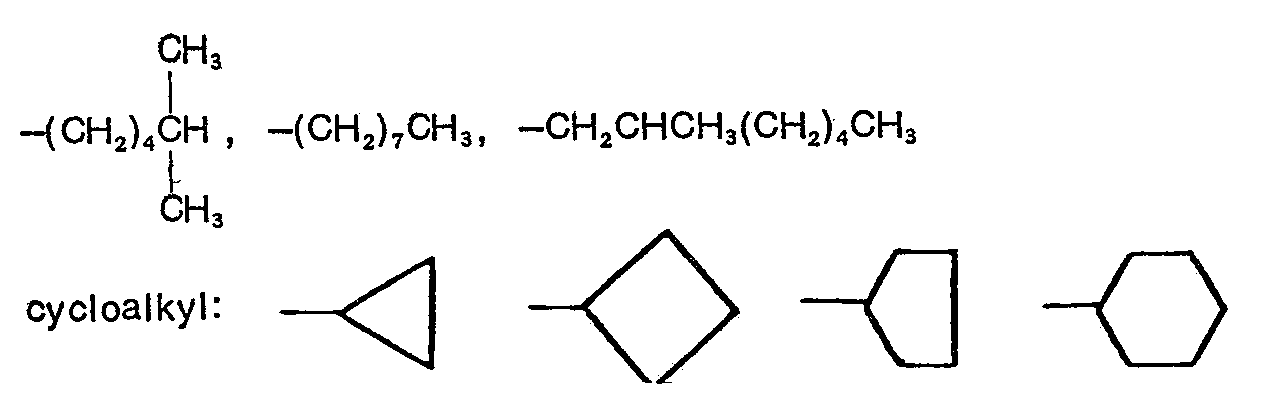


- The above illustrative examples are intended to illustrate the meanings of all the radicals R,, R2' and R3 within the boundaries with regard to number of carbon atoms which are prescribed for each radical.
- Preferred groups of the radicals R1 and R2 are:
- 1. The group consisting of straight and branched alkyl groups containing 1-6 carbon atoms, phenyl, and benzyl;
- 2. The group consisting of straight and branched alkyl groups containing 1-4 carbon atoms; phenyl, and benzyl;
- 3. The group consisting of straight and branched alkyl groups containing 1-6 carbon atoms;
- 4. The group consisting of straight and branched alkyl groups containing 1-4 carbon atoms, that is methyl, ethyl, n-propyl, i-propyl, n-butyl, i-butyl, sec-butyl and t-butyl.
- 5. Phenyl
- 6. Benzyl
- 7. 1-adamantyl (novel compounds);
- 8. 2-adamantyl (novel compounds);
- 9. monosubstituted phenyl groups (novel compounds);
- 10. disubstituted phenyl groups (novel compounds);
- 11. mono-alkyl substituted phenyl groups (novel compounds);
- 12. mono-halogen substituted phenyl groups (novel compounds);
- 13. mono-alkoxy substituted phenyl groups (novel compounds);
- 14. mono-alkoxycarbonyl substituted phenyl groups (novel compounds);
- 15. di-alkyl substituted phenyl groups (novel compounds);
- 16. di-halogen substituted phenyl groups (novel compounds);
- 17. di-alkoxy substituted phenyl groups (novel compounds);
- 18. phenyl groups of the formula
- 19. mono-alkylcarbonyl substituted phenyl groups (novel compounds)
- 20. cycloalkyl and cycloalkyl-alkyl groups (novel compounds)
- Particularly preferred groups of the radicals R1 and R2 are unsubstituted, monosubstituted and disubstituted phenyl groups within the above formula

- In a preferred embodiment, R1 and R2 have the same meaning.
- Preferred groups of the radical R3 are:
- 1. The groups consisting of straight and branched alkyl groups containing 1-8 carbon atoms; phenyl; and benzyl;
- 2. The group consisting of straight and branched alkyl groups containing 1-4 carbon atoms; phenyl; and benzyl;
- 3. The group consisting of straight and branched alkyl groups containing 1-8 carbon atoms;
- 4. The group consisting of straight and branched alkyl groups containing 1-4 carbon atoms, that is methyl, ethyl, n-propyl, i-propyl, n-butyl, i-butyl, sec-butyl and t-butyl,
- 5. Phenyl
- 6. Benzyl
- 7. 1-adamantyl (novel compounds);
- 8. 2-adamantyl (novel compounds);
- 9. monosubstituted phenyl groups;
- 10. disubstituted phenyl groups (novel compounds);
- 11. mono-alkyl substituted phenyl groups;
- 12. mono-halogen substituted phenyl groups (novel compounds);
- 13. mono-alkoxy substituted phenyl groups (novel compounds);
- 14. mono-alkoxycarbonyl substituted phenyl groups (novel compounds);
- 15. di-alkyl substituted phenyl groups (novel compounds);
- 16. di-halogen substituted phenyl groups (novel compounds);
- 17. di-alkoxy substituted phenyl groups (novel compounds);
- 18. phenyl groups of the formula
- 19. mono-alkylcarbonyl substituted phenyl groups (novel compounds);
- 20. cycloalkyl and cycloalkyl-alkyl groups (novel compounds);
- Particularly preferred groups of the radical R3 are unsubstituted, monosubstituted and distubstituted phenyl groups within the above formula

wherein R4 and R5 have the meanings given above. - Preferred combinations of R1, R2, and R3 are:
- 1. R1 and R2 are selected from straight and branched alkyl groups containing 1-6 carbon atoms, phenyl, and benzyl; and R3 selected from straight and branched alkyl groups containing 1-8 carbon atoms, phenyl, and benzyl;
- 2. R1, R2, and R3 are selected from straight and branched alkyl groups containing 1-4 carbon atoms; phenyl; and benzyl;
- 3. R1 and R2 are selected from straight and branched alkyl groups containing 1-6 carbon atoms; and R3 is selected from straight and branched alkyl groups containing 1-8 carbon atoms;
- 4. R1, R2, and R3 are selected from straight and branched alkyl groups containing 1-4 carbon atoms;
- 5. R1, R2, and R3 are benzyl (novel compound);
- 6. in each of the groups 1-4 above, R1 having the same meaning as R2;
- 7. R1 and R2 are selected from alkyl groups containing 1-4 carbon atoms and R3 is selected from an unsubstituted, monosubstituted or disubstituted phenyl group within the formula

- 8. R1 is an alkyl group containing 1-4 carbon atoms, each of R2 and R3, which are the same or different, is selected from unsubstituted, monosubstituted or disubstituted phenyl groups within the formula

- 9. Each of R1 and R2, which are the same or different, is selected from an unsubstituted, monosubstituted or disubstituted phenyl group within the formula

- 10. Each of R1 and R2, which are the same or different, is selected from alkyl groups containing 1-4 carbon atoms, and R3 is selected from 1-adamantyl and 2-adamantyl (novel compounds);
- 11. R1, R2, and R3 selected from straight and branched alkyl groups containing 1-4 carbon atoms, benzyl, unsubstituted, monosubstituted or disubstituted phenyl groups within the formula

- 12. R1 and R2 are selected from straight and branched alkyl groups containing 1-4 carbon atoms; and unsubstituted, monosubstituted or disubstituted phenyl groups with the formula

- 13. R1 and R2 are selected from straight and branched alkyl groups containing 1-4 carbon atoms; and unsubstituted, monosubstituted or disubstituted phenyl groups within the formula

- 14. in each of the groups 7, 9, 10, 11, 12, and 13 above, R1 having the same meaning as R2.
- 15. R1 and R2 are hydrogen and R3 is selected from straight and branched alkyl groups containing 1-8 carbon atoms; and benzyl;
- 16. R1 and R2 are hydrogen and R3 is selected from straight and branched alkyl groups containing 1-4 carbon atoms; and benzyl;
- 17. R1 and R2 are hydrogen and R3 is selected from straight and branched alkyl groups containing 1-8 carbon atoms;
- 18. R1 and R2 are hydrogen and R3 is selected from straight and branched alkyl groups containing 1-4 carbon atoms, that is methyl, ethyl, n-propyl, i-propyl, n-butyl, i-butyl, sec-butyl, and t-butyl;
- 19. R1 and R2 are hydrogen and R3 is benzyl;
- 20. R1 and R2 are hydrogen and R3 is 1-adamantyl (novel compound);
- 21. R1 and R2 are hydrogen and R3 is 2-adamantyl (novel compound);
- 22. R1 is H, R2 is selected from straight and branched alkyl groups containing 1-6 carbon atoms; and benzyl; and R3 is selected from the group consisting of straight and branched alkyl groups containing 1-8 carbon atoms; phenyl; and benzyl;
- 23. R1 is H, R2 and R3 are selected from straight and branched alkyl groups containing 1-4 carbon atoms; and benzyl;
- 24. R1 is H, R2 is selected from straight and branched alkyl groups containing 1-6 carbon atoms; and R3 is selected from straight and branched alkyl groups containing 1-8 carbon atoms;
- 25. R1 is H, and R2 and R3 are selected from straight and branched alkyl groups containing 1-4 carbon atoms;
- 26. R1 is H, and R2 and R3 are benzyl (novel compound);
- 27. R1 is H, R2 is monosubstituted or disubstituted phenyl groups within the formula

- 28. R1 is H, R2 is selected from straight and branched alkyl groups containing 1-6 carbon atoms; benzyl; unsubstituted, monosubstituted and disubstituted phenyl groups within the above formula

- 29. R1 is H, R2 is 1-adamantyl or 2-adamantyl, and R3 is selected from straight and branched alkyl groups containing 1-6 carbon atoms; benzyl; unsubstituted, monosubstituted and disubstituted phenyl groups within the above formula

- 30. R1 is H, R2 is selected from straight and branched alkyl groups containing 1-6 carbon atoms and benzyl; and R3 is selected from monosubstituted or disubstituted phenyl groups within the formula

- 31. R1 and R3 are H and R2 is selected from straight and branched alkyl groups containing 1-6 carbon atoms; and benzyl;
- 32. R1 and R3 are H and R2 is selected from straight and branched alkyl groups containing 1-4 carbon atoms and benzyl;
- 33. R1 and R3 are H and R2 is selected from straight and branched alkyl groups containing 1-6 carbon atoms;
- 34. R, and R2 are H and R2 is selected from straight and branched alkyl groups containing 1―4 carbon atoms, that is methyl, ethyl, n-propyl, i-propyl, n-butyl, i-butyl, sec-butyl and t-butyl;
- 35. R1 and R3 are H and R2 is benzyl;
- 36. R1 and R3 are H and R2 is 1-adamantyl (novel compounds);
- 37. R1 and R3 are H and R2 is 2-adamantyl (novel compound);
- 38. Compounds of the formula I wherein R1 and R2 are hydrogen.
- 39. Compounds of the formula I wherein R1 is hydrogen.
- 40. Compounds of the formula I wherein R1 and R3 are hydrogen.
- Examples of compounds of the invention are given in the following table. In the right margin it is indicated whether the compound has been specifically disclosed in the prior art. All the other compounds are believed to be novel, and thus constitute a further aspect of the invention.


- Physiologically acceptable salts of those active substances of the formula I which form salts are prepared by methods known in the art as illustrated in the following.
- Examples of metal salts which can be prepared are salts containing Li, Na, K, Ca, Mg, Zn, Mn and Ba. A less soluble metal salt can be precipitated from a solution of a more soluble salt by addition of a suitable metal compound. Thus for examples, Ca, Ba, Zn, Mg, and Mn salts of the active substances can be prepared from sodium salts thereof. The metal ion of a metal salt of the active substances can be exchanged by hydrogen ions, other metal ions, ammonium ion and ammonium ions substituted by one or more organic radicals by using a cation exchanger.
- Examples of other useful salts which can be prepared in this way are the salts of the formula


- Further examples of other useful salts which can be prepared by the ion exchange technique are quaternary ammonium salts of the active substances, i.e. salts in which the hydrogens in the active substances (structural formula I) have been substituted with quarternary ammonium ions such as (CH 3)4 N, (C3H7)4N, (C4H,)4N, (CsH11)4N, (CsH,3)4N and C2H5N(CH2CH2OH)3. Lipophilic salts of this type can also be prepared by mixing a salt of the active substances with a quaternary ammonium salt in water and extracting out the resulting quaternary ammonium salt of the active substances with an organic solvent such as dichloromethane, chloroform, ethyl acetate and methyl isobutyl ketone.
- The compounds utilized within the invention may be formulated for use in human and veterinary medicine for therapeutic and prophylactic use. The compounds may be used in the form of a physiologically acceptable salt. Suitable salts are e.g. amine salts, e.g. dimethylamine and triethylamine salt, ammonium salt tetrabutylammonium salt, cyclohexylamine salt, dicyclohexylamine salt; and metal salts, e.g. mono-, and disodium salt, mono- and dipotassium salt, magnesium salt, calcium salt and zinc salt.
- The compounds utilized within the invention are particularly useful for systemic treatment of virus infections, by oral administration or by injection. In comparison with phosphonoformic acid, they are generally more stable in acid solutions, and are thus less readily decomposed in the stomach.
- In comparison with phosphonoformic acid the compounds of the present invention are more lipophilic and are thus more suitable to treat virus infections in organs for which penetration through lipid barriers are of importance.
- In clinical practice the compound will normally be administered topically, orally, intranasally, by injection or by inhalation in the form of a pharmaceutical preparation comprising the active ingredient in the form of the original compound or optionally in the form of pharmaceutically acceptable salt thereof, in association with a pharmaceutically acceptable carrier which may be a solid, semi-solid or liquid diluent or an ingestible capsule, and such preparations comprise a further aspect of the invention. The compound may also be used without carrier material. As examples of pharmaceutical preparations may be mentioned tablets, drops such as nasal and eye drops, preparations for topical application such' as ointments, jellies, creams and suspensions, aerosols for inhalation, nasal spray, liposomes, etc. Usually the active substance will compise between 0.05 and 99, or between 0.1 and 99% by weight of the preparation, for example between 0.5 and 20% for preparations intended for injection and between 0.1 and 50% for preparations intended for oral administration.
- To produce pharmaceutical preparations in the form of dosage units for oral application containing a compound of the invention the active ingredient may be mixed with a solid, pulverulent carrier, for example lactose, saccharose, sorbitol, mannitol, a starch such as potato starch, corn starch, amylopectin, laminaria powder or citrus pulp powder, a cellulose derivative or gelatine and also may include lubricants such as magnesium or calcium stearate or a Carbowax@ or other polyethylene glycol waxes and compressed to form tablets or cores for dragées. If dragées are required, the cores may be coated for example with concentrated sugar solutions which may contain gum arabic, talc and/or titanium dioxide, or alternatively with a film forming agent dissolved in easily volatile organic solvents or mixtures of organic solvents. Dyestuffs can be added to these coatings, for example, to distinguish between different contents of active substance. For the preparation of soft gelatine capsules consisting of gelatine and, for example, glycerol as a plasticizer, or similar closed capsules, the active substance may be admixed with a Carbowax@ or a suitable oil as e.g. sesam oil, olive oil, or arachis oil. Hard gelatine capsules may contain granulates of the active substance with solid, pulverulent carriers such as lactose, saccharose, sorbitol, mannitol, starches (for example potato starch, corn starch or amylopectin), cellulose derivatives or gelatine, and may also include magnesium stearate or stearic acid as lubricants.
- By using several layers of the active drug, separated by slowly dissolving coatings sustained release tablets are obtained. Another way of preparing sustained release tablets is to divide the dose of the active drug into granules with coatings of different thicknesses and compress the granules into tablets together with the carrier substance. The active substance can also be incorporated in slowly dissolving tablets made for instance of fat and wax substances or evenly distributed in a tablet of an insoluble substance such as a physiologically inert plastic substance.
- In order to obtain dosage units of oral preparations - tablets, capsules, etc. - which are designed so as to prevent release of and possible decomposition of the active substance in the gastric juice, the tablets, dragées, etc. may be enteric coated, that is provided with a layer of a gastric juice resistant enteric film or coating having such properties that it is not dissolved at the acidic pH in the gastric juice. Thus, the active substance will not be released until the preparation reaches the intestines. As examples of such known enteric coatings may be mentioned cellulose acetate phtalata, hydroxy propylmethylcellulose phtalates such as those sold under the trade names HP 55 and HP 50, and Eudragit® L and Eudragit@ S.
- Effervescent powders are prepared by mixing the active ingredient with non-toxic carbonates or hydrogen carbonates of e.g. sodium, potassium or calcium, such as calcium carbonate, potassium carbonate and potassium hydrogen carbonate, solid, non-toxic acids such as tartaric acid, ascorbic acid, and citric acid, and for example aroma.
- Liquid preparations for oral application may be in the form of elixirs, syrups or suspensions, for example solutions containing from about 0.1% to 20% by weight of active substance, sugar and a mixture or ethanol, water, glycerol, propylene glycol and optionally aroma, saccharine and/or carboxymethylcellulose as a dispersing agent.
- For parenteral application by injection preparations may comprise an aqueous suspension of the active compounds according to the invention, desirably in a concentration of 0.5-1 0%, and optionally also a stabilizing agent and/or buffer substances in aqueous solution. Dosage units of the solution may advantageously be enclosed in ampoules.
- For topical application, especially for the treatment of herpes virus infections on skin, genitals and in mouth and eyes the preparations are suitably in the form of a solution, ointment, gel, suspension, cream or the like. The amount of active substance may vary, for example between 0.05-20% by weight of the preparation. Such preparations for topical application may be prepared in known manner' by mixing the active substance with known carrier materials such as isopropanol, glycerol, paraffine, stearyl alcohol, polyethylene glycol, etc. The pharmaceutically acceptable carrier may also include a known chemical absorption promoter. Examples of absorption promoters are e.g. dimethylacetamide (U.S. Patent No. 3,472,931), trichloroethanol or trifluoromethanol (U.S. Patent No. 3,891,757), certain. alcohols and mixtures thereof (British Pat. No. 1,001,949). A carrier material for topical application to unbroken skin is also described in the British patent specification No. 1,464,975, which discloses a carrier material consisting of a solvent comprising 40-70% (v/v) isopropanol and 0-60% (v/v) glycerol, the balance, if any, being an inert constituent of a diluent not exceeding 40% of the total volume of solvent.
- The dosage at which the active ingredients are administered may vary within a wide range and will depend on various factors such as for example the severity of the infection, the age of the patient, etc., and may have to be individually adjusted. As a possible range for the amount of the active substance which may be administered per day may be mentioned from about 0.1 mg to about 2000 mg or from about 1 mg to about 2000 mg, or preferably from 1 mg to about 2000 mg for topical administration, from 50 mg to about 2000 mg or from 100 to 1000 mg for oral administration and from 10 mg to about 2000 mg or from 50 to 500 mg for injection. In severe cases it may be necessary to increase these doses 5-fold to 10-fold. In less severe cases it may be sufficient to use up to 500 or 1000 mg.
- The pharmaceutical compositions containing the active ingredients may suitably be formulated so that they provide doses within these ranges either as single dosage units or as multiple dosage units and are preferably provided as sterile preparations.
- Thus, it has been found according to the invention that the above compounds, and the physiologically acceptable salts thereof can be used to selectively inhibit the multiplication of viruses and the compounds and physiologically acceptable salts thereof are therefore useful in therapeutic and/or propylactic treatment of virus infections and neoplastic diseases, as described above.
- Reference to "meaning given above" for R1' R2 and R3 as used below refers to the definitions given in formula I.
- The hydroxycarbonylphosphonic acid triesters may be prepared by known methods for example as described in Houben-Weyl, Methoden der Organischen Chemie, Auflage 4, Band XII, Teil 1, Organische Phosphorverbindungen, p. 433-463. Examples of such methods are the following.
- A. Reacting formic acid ester compounds with phosphite triesters according to the formula:

- Preferably the reaction is performed at 0 to 150°C for 1 to 50 hours.
- B. Reacting formic acid ester compounds with phosphite triesters according to the formula:

- Preferably the reaction is performed at 0 to 150°C for 1 to 50 hours.
- C. Reacting formic acid ester compounds with phosphite triesters according to the formula:

- D. Reacting formic acid ester compounds with phosphite diester salts according to the formula:

- The phosphite diester salts are prepared by treating the phosphite diester with a suitable proton abstracting compound, such as a metal alkoxide, suitably free from alcohol, such as litium-, sodium- or potassium methoxide, ethoxide or t-butoxide, or with a hydride such as sodium- or potassium hydride, or with a base such as butyllithium.
- The starting materials used in the above methods of preparation A-D are known compounds, or may be prepared by known methods commonly used for the synthesis of formate esters and phosphite triesters. Examples of methods used for the synthesis of haloformate esters may be found in, or referred to in M. Matzner et al Chem. Rev. 64 (1964) 645. Examples of methods used for the synthesis of phosphite triesters may be found in Houben-Weyl, Methoden der Organischen Chemie, Auflage 4, Band XII, Teil 2, Organische Phosphorverbindungen, p. 5-78.
- E. Esterification of the phosphonic acid groups of hydroxycarbonylphosphonic acid monoester according to the formula:

- Synthesis of monoesters of the carboxylic group of hydroxycarbonylphosphonic acid are described below in methods T-X.
- F. Esterification of hydroxycarbonylphosphonic acid diesters according to the formula:

- The reaction is performed through the intermediary of activating agents known per se for the phosphorylation of alcohols and phenols. Examples of such methods are described for example by L A Slotin in Synthesis 1977, 737, and by H Seliger and H K6ssel in Progress in the Chemistry of Organic Natural Products 32 (1975) 297.
- Synthesis of hydroxycarbonylphosphonic acid diesters are described below in methods K-0.
- G. Reacting hydroxycarbonylphosphonic acid dihalide esters according to the formula:

- Hal is Cl, Br or I and R1 and R3 have the meaning given above.
- The reaction is performed by methods known per se for the phosphorylation of alcohols and phenols by phosphoric and phosphonic acid halides. Examples of such methods are described for example by L A Slotin in Synthesis 1977, 737 and by H Seliger and H K6ssel in Progress in the Chemistry of Organic Natural Products 32 (1975) 297.
- The hydroxycarbonylphosphonic acid dihalide esters are prepared from oxycarbonylphosphonic acid monocarboxylic esters by methods known per se for the synthesis of dihalides of phosphoric acids and phosphonic acids. References for these methods are found for example in the two publications above and in Houben-Weyl, Methoden der Organischen Chemie, Auflage 4, Band XII/1, p. 386-406 and Band XII/2 p. 211-225 and p. 274-292.
- Hydroxycarbonylphosphonic acid monocarboxylic esters are prepared by methods described below in T-X.
- H. Reacting hydroxycarbonylphosphonic acid monohalide diesters according to the formula:

- Hal is Cl, Br or I and R1, R2 and R3 have the meaning given above.
- The reaction is performed by methods known per se for the phosphorylation of alcohols and phenols. Examples of such methods are described for example by L A Slotin in Synthesis 1977, 737 and by H Seliger and H Kössel in Progress in the Chemistry of Organic Natural Products 32 (1975) 297.
- Hydroxycarbonylphosphonic acid monohalide diesters are prepared from oxycarbonylphosphonic acid diesters by methods known per se for the synthesis of monohalides of phosphonic and phosphoric acids. References for those methods are found for example in the two publications above and in Houben-Weyl, Methoden der Organischen Chemie, Auflage 4, Band XII/1 p. 386-406 and XII/2 p. 211-225 and p. 274-292.
- Hydroxycarbonylphosphonic acid diesters are prepared by methods described below in K-0.
- J. Reacting a carbonylphosphonic acid diester according to the formula

- R1, R2 and R3 have the meaning given above and Rg is a suitable activating moiety, known per se as a good leaving group in substitution reactions on activated carboxylic acid groups. Preferably Rg is a group such as for example p-nitrophenoxy or imidazolyl.
- The activated carbonylphosphonic acid diester used as a starting material may for example be prepared by methods analogous to those described above in A-0.
- Diesters of hydroxycarbonylphosphonic acid are prepared by known methods, such as
- K. Reacting a hydroxycarbonylphosphonic acid triester with an iodide or a bromide anion, according to the formula:

- Preferably the reaction is carried out with sodium iodide in a solvent such as for example tetrahydrofuran or acetone. Preferably the reaction is carried out at a temperature from 20 to 100°C from 2 hours to 7 days.
- The hydroxycarbonylphosphonic acid triesters may be prepared by methods analogous to these described above in A-J.
- L. Hydrolysing the hydroxycarbonylphosphonic acid triester with a base according to the formula:

- R,, and R3 have the meaning given above. R12 is a hydrolyzable phosphate ester group. For example it may have the meaning given R1 and R2 and it may for example be a more generally substituted aryl group.
- Preferably the reaction is carried out with a base such as for example sodium hydrogencarbonate, sodiumcarbonate or sodium hydroxide in water at a temperature from 20 to 100°C from 2 hours to 7 days. The hydroxycarbonylphosphonic acid triesters may be prepared by methods analogous to those described above in A-J.
- M. Aqueous hydrolysis of a hydroxycarbonylphosphonic acid triester, containing one silyl esterified phosphonate group according to the formula:

- Optionally the formed phosphonic acid group may be neutralized. Preferably it may be neutralized with a base such as for example MHCO3, M2CO3 or MOH or with a weak cation exchanger (M+), where M+ is NH+ 4 or a metal such as Li+, Na , or K+.
- The silyl esterified phosphonate group may be obtained by treating the hydroxycarbonylphosphonic acid triester with a halosilane according to the formula:

- X is Cl, Br or I and R2, R3 R6 and R11 have the meaning given above.
- Preferably the reagents used for silylation are for example bromotrimethylsilane at -20° to 50°C for 1/2 to 20 hours, or alternatively for example chlorotrimethylsilane at 20°C to reflux temperature for several days.
- The hydroxycarbonylphosphonic acid triesters are prepared by methods analogous to those described above in A-J.
- Alternatively the silyl esterified phosphonate group may be prepared by reacting a phosphite triester containing two silyl ester groups, with a formate ester, according to the formula:

- R2, R3, R6 and R10 have the meaning given above.
- Preferably the phosphite is an ester such as for example a bis-(trimethylsilylated)phosphite triester. These compounds can be prepared by methods known per se. For example the synthesis of propyl- and hexyl-bis(trimethylsilyl)phosphites are described in T R Herrin et a/, J Med Chem 20 (1977) 660.
- N. Reacting hydroxycarbonylphosphonic acid monocarboxylic esters according to the formula:

- R1 and R3 have the meaning given above. The reaction is performed through the intermediary of activating agents known per se for the phosphorylation of alcohols and phenols. Examples of such methods are described for example by L A Slotin in Synthesis 1977, 737 and by H Seliger and H Kössel in Progress in the Chemistry of Organic Natural Products 32 (1975) 297. Optionally the phosphonic acid group may be neutralized.
- Synthesis of hydroxycarbonylphosphonic acid monocarboxylic acids are described below in methods T-X..
- 0. Reacting hydroxycarbonylphosphonic acid mono-P ester with an esterifying halide, using a tetraalkylammonium salt as a catalyst, according to the formula:

- Hal is Cl, Br or I. R2 and R3 have the meaning given above and R8 is an alkyl radical such as for example n-butyl, n-pentyl, n-hexyl, n-heptyl and n-octyl. Preferably n-heptyl is used and preferably the reaction is performed as an extractive alkylation as described by for example A Brändström in Preparative Ion Pair Extraction (Apotekarsocieteten, Hässle, Sweden 1976).
- Also as described the phosphonate group may be transformed to a salt

- The synthesis of hydroxycarbonylphosphonic acid mono-P esters are described below in methods P-S.
- Monoesters of the phosphonic group of hydroxycarbonylphosphonic acid are prepared by known methods such as,
- P. Hydrolyzing a hydroxycarbonylphosphonic acid triester according to the formula:

- Preferably the reaction is carried out in water at 20 to 100°C for 1 to 10 hours.
- The hydroxycarbonylphosphonic acid triesters are prepared by methods analogous to those described above in A-J.
- Q. By the stepwise deesterification of a phosphonic acid trisubstituted silyl ester group, and the carboxylic acid ester group, of hydroxycarbonylphosphonic acid triesters, according to the formula:

- RB and R13 have the meaning given above, and the silyl ester group is preferably a group such as exemplified above in method M. R2 is as defined above except that it must not be phenyl or substituted phenyl.
- The trimethylsilyl ester group is preferably hydrolyzed with water and the free acid group is preferably converted to a salt by a weak cation exchanger (M+) or with an aqueous base such as MHC03, MZC03 or MOH.
- The carboxylic acid ester group is preferably hydrolyzed in water and neutralized with a weak cation exchanger (M+) or with for example an aqueous base such as MHC03, M2CO3 or MOH.
- M+ is NH+ 4 or a metal such as Li, Na or K.
- Compounds containing the silylesterified phosphonate group may be prepared by known methods as described in method M above.
- R. By the stepwise deesterification of the silyl- and the benzyl ester group of alkyl, silyl benzyloxycarbonylphosphonate according to the formula:

- M+ is NH+ 4, or a metal such as for example Li+, Na+ or K+, and R2 and R6 have the meaning given above except that R2 must not be benzyl, phenyl or substituted phenyl. The silyl ester group is preferably a group such as described above in method M.
- The benzyl ester group is preferably hydrogenated with a catalyst such as for example palladium carbon. The free acid groups are converted to their metal salts by the treatment with a weak cation exchanger (M+) or with a base such as for example MHC03, M2CO3 or MOH.
- The silylated compound may be prepared by known methods, analogous to those described above in M.
- S. By the deesterification of the bis-silylester groups (on the phosphonic and on the carboxylic acid groups) of hydroxycarbonylphosphonic acid triesters according to the formula:

- R2 has the meaning given above. R6 and R7 are inert organic residues, the same or different, preferably they are the same and a group such as for example CH3. The silyl ester groups may also be for example butyldiphenylsilyl groups as described above in method M. M+ is NH+ 4 or a metal such as Li+, Na+ or K+.
- The silyl ester groups are preferably hydrolyzed with for example water and neutralized with for example a weak cation exchanger (M+) or an aqueous base such as MHC03, MZC03 or MOH.
- The bis-silylated triester of hydroxycarbonylphosphonic acid may be prepared by methods known per se, according to the formula
-

- Hal is Cl, Br or I and R2, R6 and R7 have the meaning given above.
- Preferably the phosphite is an ester such as for example a bis (trimethylsilylated)phosphite triester. These compounds can be prepared as described above in M.
- The haloformate silylesters may be prepared according to the formula:

- R7 has the meaning given above.
- The reaction is carried out under anhydrous conditions, and preferably a base such as for example N,N-dimethylaniline is usd for capturing the released hydrogenchloride. The reaction is preferably carried out in an inert solvent such as for example toluene or ether, at for example -10 to 25°C for 1 to 25 hours.
- Monoesters of the carboxylic group of hydroxycarbonylphosphonic acid are prepared by known methods, such as
- T. Aqueous hydrolysis of a hydroxycarbonylphosphonic acid triester, containing two silyl esterified phosphonate groups, according to the formula:

- R3 and R6 have the meaning given above. Preferably R6 is for example CH3. The silyl ester derivatives may also be for example butyldiphenylsilyl groups as described above in method M.
- Optionally the formed phosphonic acid groups can be neutralized. Preferably they may be neutralized with a weak cation exchanger (M+) or with a base such as MHC03, M2CO3 or MOH. M+ is NH4 or a metal such as Li+, Na+ or K+.
- The phosphonate bis-silyl esters may be obtained according to the formula:

- R3, R6 and R11 have the meaning given above. R14 has the meaning given R11 and R11 and R14 may be the same or different. Preferably the organic residues of the silyl group are as described above. Hal is Cl, Br or I and preferably the reaction is performed at -20°C to reflux temperatures for 1 hour to several days.
- The hydroxycarbonylphosphonic acid triesters are prepared by methods analogous to those described in A-J.
- Alternatively the bis silylphosphonate esters may be prepared by reacting a trissilylphosphite with a halogenformate ester according to the formula:

- R3, R6 and R10 have the meaning given above and preferentially the organic residues of silyl groups are as described above. Preferably the reaction is performed at 20-150°C for 1 to 25 hours.
- The tris-silyl phosphites are prepared by known methods, as described for example by Herrin et al in J. Med. Chem. 20 (1977) 660, for the preparation of tris(trimethylsilyl) phosphite.
- U. Reacting triesters of hydroxycarbonylphosphonic acid with hydrogenhalide acids according to the formula:

- R3, R11 and R14 have the meaning given above. X is Cl, Br or I.
- Preferably HI may be used and the reaction may preferably be performed in a dry solvent such as methylene chloride or acetic acid at a temperature from 0 to 30°C. Examples of the reaction may be found in the patents USP 3,943,201 and DT-OLS 2435 407.
- Optionally the phosphonic acid groups may be neutralized. Preferably a weak cation exchanger (M+) or a base such as MHC03, M2CO3 or MOH is used. M+ is for example NH+ 4 or a metal such as Li+, Na+ or K+.
- V. Hydrogenating dibenzyl, alkyl-oxycarbonylphonates according to the formula:

- R3 has the meaning given above, except that it should not be benzyl, phenyl or substituted phenyl.
- Preferably the reaction may be performed with a catalyst such as palladium carbon. Optionally the phosphonic acid groups may be neutralized. Preferably they may be neutralized with a weak cation exchanger (M+) or with a base such as MHC03, M2CO3 or MOH. M+ is for example NH+ 4 or a metal such as Li+, Na+ or K+.
- W. Reacting hydroxycarbonylphosphonic acid with an esterifying halide, using a tetraalkylammonium salt as a catalyst, according to the formula:
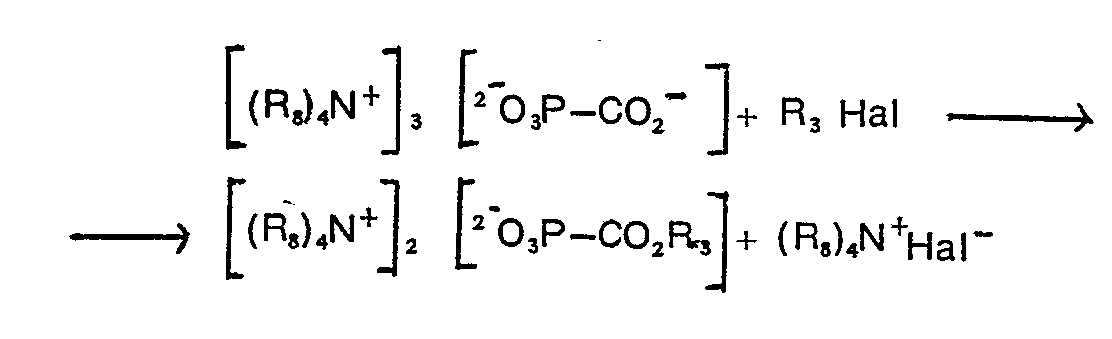
- Hal is Cl, Br or I. R3 has the meaning given above and R8 is an alkyl radical, such as for example n-butyl, n-pentyl, n-hexyl, n-heptyl and n-octyl. Preferably n-heptyl is used and preferably the reaction is performed as an extractive alkylation, as described by for example A Brändström, Preparative Ion Pair Extraction (Apotekarsocieteten, Hassle, Sweden 1976).
- Also as described, the phosphonate groups may be transformed to a disalt
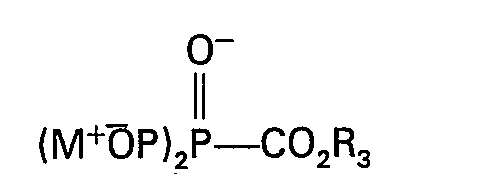
- X. Reacting oxycarbonylphosphonic acid diesters according to the formula

- R2 and R3 have the meaning described above.
- The preparations may be performed by procedures analogous to those described above in T-V.
- Optionally the oxycarbonylphosphonic acid monocarboxylic ester thus obtained may be neutralized with a weak cation exchanger or with a base such as MHC03, M2CO3 or MOH. M+ is for example NH+ 4 or a metal such as Li+, Na+ or K+.
- The hydroxycarbonylphosphonic acid diesters may be prepared by methods described above in K―O.
- Preparations of triesters of hydroxycarbonylphosphonic acid.
- 18.6 g (0.12 mole) of triethylphosphite was heated at 125-130°C in a flask with a reflux condensor. 18.6 g (0.10 mole) of 4-methoxyphenyl chloroformate (prepared according to M. J. Zabik and R. D. Schuetz, J. Org. Chem. 32 (1967) 300) was added dropwise. The reaction flask was heated additionally at about 120°C for 1,5 hours and left at room temperature overnight. The product was distilled to give 25.8 g (89%) of diethyl 4-methoxyphenoxycarbonylphosphonate. Bp0.03= 174-8°C, n21 D = 1,4940.
- Analysis for C12H17O6P. Found (calculated): C 49.79 (50.00), H 6.01 (5.95), P 10.54 (10.75).
- NMR (CDCI3) 8: 1.42 (t, CH3), 3.78 (S, OCH3), 4.13-4.63 (CH2), 6.77-7.33 (aromatic).
- IR (neat) cm-1: 1740 (CO), 1275, 1255, 1190, 1030.
- By mixing the phosphite triester and the chloroformate ester at a temperature from 20 to 130°C and by heating at 80 to 130°C for 1 to 10 hours, the following compounds were prepared analogously to example 1.
- From 20 g (0.12 mole) of triethylphosphite and 19.1 g (0.10 mole) of 4-chlorophenyl chloroformate (prepared according to M. J. Zabik and R. D. Scheutz J. Org. Chem. 32 (1967) 300). (125°C, 2 hours). Yield 26.3 g (90%). Bp0.01 153-6°C, n21 D 1.4980.
- Analysis for C11H14ClO5P. Found (calculated): C 44.85 (45.14), H 4.83 (4.82), P 10.54 (10. 59).
- NMR (CDCI3) 8: 1.45 (t, CH3), 4.17-4.63 (CH,), 7.03-7.48 (aromatic).
- From 10.3 g (85 mmole) of trimethylphosphite and 10.3 g (60 mmole) of p-tolyl chloroformate (prepared according to M. J. Zabik and R. D. Schuetz, J. Org. Chem. 32 (1967) 300). (100°C, 2 hours). Yield 93%. Bp0.2 131°C, n20 D 1.4972.
- Analysis for C10H13O5P. Found (calculated): C 49.37 (49.18), H 5.53 (5.36), P 11.71 (12.69).
- NMR (CDCI3) 8: 2.40 (CH3), 3.92 and 4.12 CH3O), 6.97-7.37 (aromatic protons).
- A second distillation gave a yield of about 80%. New analysis: C 49.13 (49.18), H 5.41 (5.36), P 12.71 (12.69).
- From 10.3 g (85 mmole) of trimethylphosphite and 13.5 g (60 mmole) of 3,4-dichlorophenyl chloroformate (100°C, 2 hours). Yield 11.4 g (64%). Bp0.04 164°C, n21 D 1.5271.
- Solidifies to colourless crystals m.p. 58-9°C.
- Analysis for C9H9CL2O5P. Found (calculated). C 36.06 (36.14), H 3.31 (3.03), CI 23.58 (23.71), P 10.50 (10.36).
- NMR (CDCI3) 8: 3.93 and 4.07 (CH3O), 7.0―7.6 (aromatic protons).
- IR (KBr) cm-1: 1740 (CO), 1265, 1200, 1165, 1055, 1020.
- From 1.5 g (12 mmole) of trimethylphosphite and 2.0 g (9.3 mmole) of 2-adamantyl chloroformate. (100-110°C, 2 hrs). Yield 1.0 g (37%). Bp0.3 160°C.
- NMR (CDCI3) 8: 1.5―2.2 (adamant), 3.87 and 4.03 (CH3O), 5.2 (CO2CH).
- From 10.0 ml (85 mmole) of trimethylphosphite and 10.0 g (64 mmole) of phenyl chloroformate. (100°C, 2 hours). Yield 11.0 g (75%). Bp-0.5 125-7°C. n25 D 1,4907.
- NMR (CDCI3) δ: 3.90 and 4.09 (CH3), 7.10―7.60 (C6H5)
- From 16.1 g (0.13 mole) of trimethylphosphite and 22.8 g (0.10 mole) of 4-ethoxycarbonylphenyl chloroformate. (100°C, 3 hours). Yield 26.7 g (88%). Bp0.5 205-7°C.
- Analysis for C12H15O7P, Found (calculated): C 47.70 (47.69), H 5.07 (5.00), P. 10.15 (10.25).
- NMR (CDCl3) δ: 1.40 (t, J 7Hz, CH3-C), 4.02 (d, J 11Hz, CH3O), 4.36 (q, J 7Hz, CH2), 7.27 and 8.10 (d, J 9Hz).
- IR (neat) cm-1: 1740 (CO).
- From 21.6 g (0.13 mole) of triethylphosphite and 22.8 g (0.10 mole) of 4-ethoxycarbonylphenyl chloroformate. (120°C, 2 hours). Yield 26.1 g (88%). Bp0.01 190-2°C. n25 D 1.4890.
- Analysis for C14H19O7P, Found (calculated): C 50.77 (50.91), H 6.20 (5.80), P. 9.53 (9.38).
- NMR (CDCI3) δ: 1.15―1.38 (CH3), 4.15―4.65 (CH2), 7.28 and 8.12 (d, J 9Hz).
- [According to A. Takamizawa and Y. Sato, Chem. Pharm. Bull. 12 (1964) 398]. Yield 97%, Bp0.03 153―5 °C. n25 D 1.5314.
- From 50 ml (0.4 mole) of trimethylphosphite and 56.9 g (0.3 mole) of benzyl chloroformate (Sigma 90―95%) (100°C, 2 hours). Yield 73 g (90%). Bp0.05 135―6°C. n25 D 1,4997.
- NMR (CDCI3) 8: 3.75 and 3.97 (CH3), 5.28 (s, CH2), 7.37 (s, C6H5).
- [According to T. Reetz et al. J. Amer. Chem. Soc. 77 (1955) 3813]. Yield 87%, Bp1 87―91°C, n22 D 1.4235.
- NMR (CDCl3) δ: 1.20 (t, J 6Hz, CH3―C), 3.83 (s, CO2CH3), 4.03―4.52 (J 6Hz, CH2).
- IR (neat) cm-1: 1725 (CO).
- From 10.0 ml (85 mmole) of trimethylphosphite and 8.7 g (64 mmole) of n-butyl chloroformate. (100°C, 1.5 hours). Yield 10.9 g (81%). Bp1.0 97―100°C. n25 D 1,4269.
- NMR (CDCl3) 8: 0.80―1.08 (CH3―C), 1.15―1.80 (CH2―CH2), 3.80 and 4.02 (CH3O), 4.20―4.41 (OCH2).
- From 10.0 ml (85 mmole) of trimethylphosphite and 7.8 g (64 mmole) of i-propyl chloroformate. (100°C, 2 hours). Yield 8.0 g (64%). Bp2 90―2°C. n25 D 1,4202.
- NMR (CDCI3) δ: 1.39 (d, J 6Hz, C―CH3), 3.80 and 3.98 (CH3O), 5.0―5.4 (CH).
- From 26.6 g (0.10 mole) of tri-n-butylphosphite and 18.9 g (0.20 mole) of methyl chloroformate (80°C, 6 hours). Yield 22.4 g (89%). Bp0.2 85―105°C, n25 D 1.4310.
- NMR (CDCI3) 8: 0.80―1.03 (CH3), 1.18―1.98 (CH2―CH2), 3.85 (s, CO2CH3), 4.23 (q, J 6Hz, OCH 2).
- [According to P. Nylén, Ber. 57 (1924) 1023]. Yield 85―90%. BP16 136―141°C, n24 D 1.4225.
- From 24.8 g (0.20 mole) of trimethylphosphite and 32.1 g (0.20 mole) of cyclohexyl chloroformate, (Y. Iwakura and A. Nabeva, J. Org. Chem. 25 (1960) 1118; M. E. Fourneau et al. Chem. Abstr. 16 (1922) 240; J. H. Saunders et al. J. Am. Chem. Soc. 73 (1951) 3797). (100°C, 2 hours). Yield 30 g (64%). Bp1.4-1.8 148-151 °C. nD*12 1.4543.
- Analysis for C9H17O5P. Found (calculated): C 45.97 (45.76), H 7.27 (7.26), P 13.37 (13.12).
- NMR (CDCI3) 8: 1.3-2.0 (CH2), 3.83 and 4.03 (CH3), 5.1 (CH).
- From 12.4 g (0.10 mole) of trimethylphosphite and 16.26 g (0.10 mole) of cyclopentylmethyl chloroformate. (100°C, 2 hrs). Yield 14.4 g (61%). BP1.5-2.0 150―4°C, n21 D 1.4549.
- Analysis for C9H17O5P. Found (calculated): C 45.80 (45.76), H 7.30 (7.26), P 12.97 (13.11).
- NMR (CDCl3) 8: 1.1-2.6 (cyclopentyl), 3.87 and 4.05 (CH3), 4.12 (CH2, d, J 7Hz).
- 24.4 g (0.10 mole) of diethyl p-methoxyphenylphosphite and 31.2 g (0.20 mole) of phenyl chloroformate were mixed at room temperature and heated 130°C for about 2 hours. The excess of phenyl chloroformate was evaporated at 130°C with a vacuum pump, to give the product as a residue.
- n25 D 1.5378. NMR (CDCI3) 8: 1.42 (t, J 7Hz, CH3―C), 3.80 (s, CH30), 4.50 (quintet, J 7Hz, CH2), 6.76-7.70 (9H).
- IR (neat) cm-1: 1740, 1590, 1500, 1180, 980 and 920.
- Analogously as described in example 3, the following compounds were prepared by heating at 20-130°C for 2-15 hours.
- From 24.9 g (0.10 mole) of diethyl p-chlorophenylphosphite and 31.3 g (0.20 mole) of phenyl chloroformate. (110°C, about 15 hours).
- NMR (CDCI3) 8: 1.47 (t, J 7Hz, CH3―C), 4.50 (quintet, J 7Hz, CH2), 7.0-7.7 (aromatic).
- From 14.2 g (0.05 mole) of diethyl 3,4-dichlorophenylphosphite and 15.7 g (0.10 mole) of phenyl chloroformate (110°C, about 15 hours).
- NMR (CDCI3) 8: 1.46 (t, J 7Hz, CH3), 4.50 (quintet, J 7Hz, CH2), 7.0-7.6 (aromatic).
- From 20.0 g (83 mmole) of diethyl 2,6-dimethylphenylphosphite and -10.0 ml (127 mmole) of methyl chloroformate. (100°C, 4 hours). Yield 22.2 g (99%). By g.l.c. (3% OV 17 column, 120-280°C) only one peak was seen.
- NMR (CDCI3) 8: 1.35 (t, J 7Hz, CH3―C), 2.37 (s, CH3―Ar), 3.92 (s, CO2CH3), 4.40 (quintet, J 7Hz, CH2), 7.03 (s, C6H3).
- An analytical sample was distilled in vacuo. Bp0.04 125-8°C. n25 D 1.4914.
- From 20.0 g (78 mmole) of diethyl 5-indanylphosphite and 10.0 ml (127 mmole) of methyl chloroformate (100°C, 4 hours). Yield 22 g (99%). By g.l.c. (3% OV17 column, 120-280°C) the purity was estimated to be about 85%.
- NMR (CDCl3) 8: 1.40 (t, J 7Hz, CH3―C), 1.85-2.35 (multiplet, CH2), 2.80-3.05 (CH2―C―CH2), 3.82 (s, CO2CH3), 4.42 (quintet, J 7Hz, CH2O), 6.9-7.3 (C6H3).
- From 24.4 g (0.1 mole) of dimethyl 1-adamantylphosphite and 18.9 g (0.2 mole) of methyl chloroformate (90°C, 2 hours).
- NMR (CDCI3) 8: 1.63 and 2.16 (broad singlets, C10H15), 3.83 (s, CO2CH3), 3.88 (d, J 12Hz, OCH3). IR (neat) cm-1: 1730, 1290, 1230, 1060, 1020, 990.
- An analytical sample was distilled in vacuo. B.p.0.01 125-7°. n25 D 1.4922.
- From 11.4 g (50 mmole) of dimethyl p-acetylphenylphosphite and 9.5 g (100 mmole) of methyl chloroformate (100°C, 1 hour and 120°C, 2 hours). n25 D 1.5178.
- NMR (CDCl3) 8: 2.60 (s, CH3―CO), 3.92 (s, CO2CH3), 4.08 (d, J 11 Hz, OCH3), 7.39 and 8.03 (doublets, J 9Hz, C6H4).
- IR (neat) cm-1: 1730, 1690, 1610, 1510, 1370, 1300, 1270, 1250, 1220, 1050, 950.
- Ethanol (4.6 g) was added to a fine suspension of sodium metal (2.25 g) in dry ether (200 ml) under an atmosphere of nitrogen. The mixture was heated for 8 hours, after which dibenzylphosphite (25.7 g) in dry ether (50 ml) was added. After standing over-night the dibenzylphosphite sodium salt was added over a period of 2 hours to a cold solution of ethyl chloroformate (10.8 g) in ether, under an atmosphere of nitrogen. The reaction was heated at reflux for 1 hour, cooled, washed with water, a NaCl solution and dried over Na2SO4. The ether was evaporated. After evaporating and discarding components volatile at 0.01 mm and 150°C the residue was collected (13 g).
- Analysis: NMR (CDCI3): 1.10-1.25 (CH3), 4.03-4.50 (COzCHz), 5.00-5.32 (CHz), 7.39 (C6H5). IR (neat): 1720 cm-1 (CO).
- Examples of methods used for the synthesis of haloformate esters.
- 40.75 g (0.25 mole) of 3,4-dichlorophenol in 135 ml of dry toluene was cautiously added to 240 ml (0.46 moles) of a 20% solution of phosgene in toluene. The reaction flask was equipped with a stirrer, a dry ice condensor and a dropping funnel, and the reaction temperature was 20-25°C. 31.5 g (0.26 moles) of N,N-dimethylaniline was added over a period of 45 min and the flask was left without stirring for 2 hours. The precipitate was filtered off and washed with 2 x 25 ml of toluene. The combined toluene solutions were cooled on ice and quickly washed with 50 ml of water, 100 ml of 0.1 N HCI and 100 ml of water. The solution was dried over magnesium sulfate and evaporated on a rotary evaporator. The residue was distilled in vacuo over a Vigreux column, to give 46.4 g (82%) of 3,4-dichlorophenylchlorformate, bP20 134°C. The product becomes slightly blue and crystallizes in long needles, m.p. 51-53°C.
- 15.2 g (0.10 mole) of 2-adamantanol and 12.1 g (0.10 mole) of N,N-dimethylaniline were dissolved in 200 ml of dry ether and added to 105 ml (0.20 mole) of phosgene in toluene (20%) over a period of 1 hour. The reaction flask was kept at 0°C and was equipped with a stirrer and a dry ice condensor. The product was stirred at room temperature for another hour, after which the solution was cooled on ice and 10 ml of ice cold water was added carefully. The water and the Toluen phases were quickly separated and the toluene was quickly washed with 50 ml of 0.5 N HCI, 50 ml of 0.5 N NaOH and 50 ml of HzO. The toluene solution was dried over magnesium sulfate and evaporated in vacuo. The residue was dissolved in dry n-hexane and filtered. The hexane was evaporated and the residue was distilled in vacuo to give 2-adamantanyl chloroformate bp15 135°C, n19 D 1.521, IR (CO) 1770 cm-1.
- A mixture of 24.2 g (0.20 mole) N,N-dimethylaniline and 20.3 g (0.20 mole) of cyclopentylmethanol was slowly added to a 20% solution of phosgene in toluene (104 ml, 0.20 mole) cooled to -5 to +5°C. After the addition the reaction mixture was allowed to attain room temperature and was kept at room temperature for 30 min. The precipitate was filtered off and the solvent was evaporated. Distillation in vacuo gave 26.3 g (81%) of cyclopentylmethyl chloroformate. Bp17-20 82-84°C, n21 D 1.4541.
- Analysis for C7H11ClO2. Found (calculated): CI 21.37 (21.80). IR (neat) cm-1: 1790 (CO).
- From 49.9 g (0.3 mole) of 4-hydroxybenzoic acid ethyl ester, 40 ml (0.3 mole) of N,N-dimethylaniline and 0.4 mole of a 20% solution of phosgene in toluene, 54.4 g (79%) of 4- ethoxycarbonylphenyl chloroformate was obtained. Bp10 146-146.5°C, n25 D 1.5140. IR (neat) cm-1: 1720 and 1790 (CO).
- Examples of methods used for the synthesis of triesters of phosphorous acid.
- The synthesis was carried out by the method described by W. G. Bentrude, E. R. Hansen, W. A. Khan, T. B. Min and P. E. Rogers, J. Amer. Chem. Soc. 95 2292 (1973) for the preparation of diethyl phenylphosphite.
- A solution of 50.0 g (0.364 mole) of phosphorous trichloride in 500 ml of anhydrous ether was stirred (mechanically) under an atmosphere of argon. The temperature was maintained at -20--15°C during the addition of 37.1 g triethylamine, followed by the slow addition of p-methoxyphenol, 45.19 g (0.364 mole) in 200 ml of dry ether over a period of 2.5 hours. When the addition was complete another portion of triethylamine 73.8 g (0.728 mole), was added, followed by the slow addition of absolute ethanol, 33.5 g (0.728 mole), in 50 ml of dry ether (1.5 hours). The mixture was stirred at room temperature over night. The mixture was warmed and allowed to reflux for 1 hour. The triethylamine hydrochloride was filtered off and was washed with dry ether. The solvent was removed under reduced pressure. Distillation of the residual oil yielded 48.6 g of diethyl p-methoxyphenylphosphite, bp110 (1.2 mm)-102 (0.6 mm). Another 4.20 g was obtained at 0.2 mm bp 92-96°C. n20 D 1.4993.
- Analysis for C11H17O4P. Found (calculated): C 54.14 (54.10), H 7.07 (7.02), P. 12.74 (12.68).
- NMR (CDCI3) δ: 1.26 (t, J 7Hz, CH3), 3.70 (s, CH30), 4.00 (quintet, J 7Hz, CH2), 6.7-7.1 (m, Cs H 4).
- IR (neat) cm-1: 2980, 1510, 1220, 1030, 920.
- Yield 43%. Bp1.5 102-104°C, n25 D 1.5047.
- NMR (CDCI3) δ: 1.17 (t, J 7Hz, CH3) 4.00 (quintet, J 7Hz, CH2), 6.9-7.3 (C6H4).
- IR (neat) cm-1: 2980, 1590, 1490, 1390, 1230, 1030, 920.
- Yield 18%. Bp0.02 110°C, n25 D 1.5188.
- Analysis for C10H13Cl2O3P. Found (calculated). C 42.47 (42.43), H 4.55 (4.63), CI 25.1 (25.05), P 10.33 (10.94).
- NMR (CDCI3) δ: 1.30 (t, J 7Hz, CH3), 4.03 (quintet, J 7Hz, CH2), 6.9-7.5 (C6H3).
- IR (neat) cm-1: 2980, 1590, 1570, 1470, 1390, 1260, 1220, 1120, 1030, 900.
- Yield 20%. Bp0.03 128-130°C, n25 D 1.5308.
- Analysis for C10H13O4P. Found (calculated). C 52.36 (52.64), H 5.74 (5.74), P. 13.33 (13.57).
- NMR (CDCI3) δ: 2.58 (s, CH2CO), 3.68 (d, J 11 Hz, CH30), 7.14 and 7.97 (d, J 9Hz).
- Yield 50%. (crude product).
- NMR (CDCI3) 8: 1.63 and 2.0-2.2 (adamantyl), 3.50 (d, J 11 Hz, CHzO).
- Yield 29%. Bp0.01 84-5°C.
- NMR (CDCI3) δ: 1.30 (t, J 7Hz, CH3-C), 2.33 (s, CH3-Ar), 4.03 (quintet, J 7Hz, CH2O), 7.00 (s, C6H3).
- Yield 29%. Bp0.01 140°C.
- NMR (CDCI3) δ: 1.30 (t, J 7Hz, CH3), 1.95-2.30 (CH2), 2.97-3.03 (CH2-C-CH2), 4.03 (quintet, J 7Hz, CHzO), 6.7-7.3 (C6H3).
- Preparation of diesters of hydroxycarbonylphosphonic acid.
-

- 3.66 g of dimethyl benzoyloxycarbonylphosphonate and 2.25 g of sodium iodide were stirred in 25 ml of dry tetrahydrofuran for 3 days. The precipitate was filtered, washed with ether and dried in a desiccator. Colourless, hygroscopic crystals of the title compound were obtained (3.15 g, 82%). By t.l.c. (polyethyleneimine, 1 M LiCI, molybdate spray) the compound was estimated to contain <0.4% of trisodium oxycarbonylphosphonate.
- Analysis for C9H10NaO5P × 1/4 H20. Found (calculated). H2O 1.7% (1.75); Na 8.8% (8.96); Molecular weight by titration 257 (256.6).
- NMR (D2O) δ: 3.57 and 2.76 (CH3), 5.28 singlet (CH2), 7.48 singlet (C6H5).
- Analogously with example 12, the following compound were prepared by treating the respective triester with sodium iodide. The purification-procedure was somewhat modified.
- From di-n-butyl methoxycarbonylphosphonate (3.78 g). The collected reaction product (1.65 g) was dissolved in water (10 ml) and added to acetone (100 ml). After filtration the solvent was evaporated. The residue was triturated with aceton, centrifuged and dried in a desiccator, to yield colourless crystals (0.46 g, 14%). Thin layer chromatography: Silica gel, eluted with ethanol and visualized with iodine vaper Rf 0.46.
- By t.l.c. (polyethyleneimine, 1 M LiCI, molybdate spray) the compound was estimated to contain <0.4% of trisodium oxycarbonylphosphonate.
- Analysis for C6H12NaO5P. Found (calculated): Na 10.8% (10.54); Molecular weight (by titration) 218.8 (218.1).
- From hydroxycarbonylphosphonic acid triethyl ester (3.15 g). The reaction precipitate (0.35 g) was centrifuged, washed with ether, dissolved in water (10 ml) and the water solution was washed with ether. The solution was evaporated in vacuo (3 mm) at room temperature. Ethanol was added to the residue and evaporated. The residue was treated with ether and dried in a desiccator. Colourless crystals (0.29 g, 9%) were obtained. By t.l.c. (polyethyleneimine, 1 M LiCl, molybdate spray) the compound was estimated to contain <0.4% of trisodium oxycarbonylphosphonate.
- Analysis for C5H10NaO5P. Found (calculated): Na 11.7% (11.26); Molecular weight (by titration) 204.0 (204.1).
-

- Diphenyl ethoxycarbonylphosphonate (3.06 g) and sodium hydrogencarbonate (0.84 g) were stirred in water (10 ml) at room temperature for about 24 hours. The solvent was evaporated and the residue extracted with ethanol. The ethanol was evaporated and the residue was washed with ether. The residue was recrystallized twice from isopropanol. Colourless crystals (0.67 g, 27%) were obtained. Thin layer chromatography on silica gel, eluted with ethanol and developed with iodine vapor: Rf 0.66. By t.l.c. the compound was estimated to contain <0.4% of trisodium oxycarbonylphosphonate.
- Analysis for C9H10NaO5P. Found (calculated): C 42.99 (42.87), H 3.73 (4.00), Na 9.12 (9.12), P 12.12 (12.28). Molecular weight by titration 253.8 (252.1).
- Reactions involving a trimethylsilyl group:
- 11.1 g (41 mmole) of ethyl 2,6-dimethylphenyl methoxycarbonylphosphonate and 12.7 g (83 mmole) of bromo trimethylsilane, were stirred under a nitrogen atmosphere for about 3 days. Excess of bromotrimethylsilane was evaporated in vacuo (0.5 mm) and 4.62 g (14 mmole) of the residue (total 12.7 g) was added to 60 ml of water and 27.8 g (60 meq.) of Amberlite® RC 50 (Na+). The mixture was stirred for about 2 days, and filtered. The solution was evaporated in vacuo, redissolved in 50 ml of water and washed with ether (3 x 25 ml). The solution was evaporated in vacuo, the residue was dissolved in 50 ml of ethanol and 200 ml of ether was added. The precipitate was recrystallized twice from i-propanol to give 1.77 g (45%) of the title compound. By t.l.c. (polyethyleneimine, 1 M LiCI, molybdate spray) the compound was shown to contain <0.4% of trisodium oxycarbonylphosphonate.
- Analysis for C10H12O5PNa. Found (calculated): Na 8.64 (9.0).
- NMR (D2O) δ: 2.30 (s, CH3-Ar), 3.91 (s, CO2CH3), 7.12 (s, C6H3). IR (KBr) cm-1: 1730, 1700, 1490, 1260, 1180, 1100, 920.
- Analogously as described in example 15, the following compounds were prepared.
- From ethyl 5-indanyl methoxycarbonylphosphonate. Yield 16%. By t.l.c. (polyethyleneimine, 1 M LiCl, molybdate spray) the compound was shown to contain <0.4% of trisodium oxycarbonylphosphonate.
- Analysis for C11H12O5PNa. Found (calculated): Na 8.3 (8.3). Equivalent weight by titration: 279.1 (278.2).
- NMR (D20) δ: 1.8-2.3 and 2.7-3.1 (CH2-CH2-CH2), 3.83 (s, C02CH3), 6.9-7.4 (C6H3).
- IR (KBr) cm-1: 1720, 1500, 1280, 1260, 1210, 1140, 1100, 960.
- From 11.5 g (0.04 mole) of methyl 1-adamantyl methoxycarbonylphosphonate.
- The crude product (11.5 g) was dissolved in 100 ml of warm water, and filtered. The solution was evaporated and the residue was dissolved in 50 ml of water. 400 ml of ethanol was added, the solution was filtered and evaporated in vacuo, to give 4.85 g (40%) of the title compound after the residue had been washed with ethanol and dried.
- By t.l.c. (polyethyleneimine, 1 M LiCI, molybdate spray) the compound was shown to contain <1% of trisodium oxycarbonylphosphonate).
- NMR (D2O) δ: 1.50 and 1.85 (broad singlets, C10H15), 3.62 (s, CO2CH3).
- Preparation of monoesters of hydroxycarbonylphosphonic acid (of the phosphonic acid group).
- The synthesis was carried out analogously by the method described in patent DT-OLS 2435407 (W. Abitz, D. F. Morf and H. A. Brauns).
- Dimethyl benzyloxycarbonylphosphonate (6.2 g) in water (50 ml) was stirred and 50% aqueous NaOH (4.0 g) was added dropwise. The mixture was heated at reflux for 1 hour, after which the solution was evaporated in vacuo. The product was redissolved in water (10 ml) and methanol (80 ml) was added slowly. The precipitate was filtered and dried (2.60 g). Later another 0.55 g of the title compound precipitated slowly from the solution in the form of its disodium salt. By t.l.c. (PEI, 1 M LiCI, molybdate spray) the compound was shown to contain <0.5% trisodium oxycarbonylphosphonate.
- Analysis for C2H3Na2O5P. Found (calculated): Na 24.9% (24.99); Equivalent weight 92.6 (92.0). (By titration).
- NMR (D20) 8: 3.45 and 3.63 (CH3).
- IR (KBr) cm-1: 1590 (CO), 1085 (P-O-), 1055 (POCH3).
- 11.5 g (0.04 mole) of methyl 1-adamantyl methoxycarbonylphosphonate and 12.5 g (0.08 mole) of bromotrimethylsilane were stirred under a nitrogen atmosphere, at room temperature overnight. Excess of bromotrimethylsilane was evaporated in vacuo (about 0.3 mm) at 50°C. The residue was stirred with 80 ml (0.08 mol) of 1 N aqueous NaOH at room temperature for two hours, after which the solvent was evaporated in vacuo.
- The residue (12.06 g) was dissolved in 150 ml of water, filtered and 350 ml of ethanol was added to the solution. The precipitate was filtered off (5.47 g) redissolved in 100 ml of water and 60 ml of ethanol was added. The new precipitate (A) was filtered off (2.83), and another 350 ml of ethanol was added to the solution to give another 2.15 g of precipitate (B). Precipitate B was redissolved in 50 ml of water; 20 ml of ethanol was added and the precipitate was discarded. Another 400 ml of ethanol was added, the precipitate was collected by centrifugation, to give, after drying, 1.49 g of the title compound. By performing twice, this purification scheme on precipitate A, another 1.92 g of the title compound could be collected.
- Both fractions could by t.l.c. (polyethyleneimine, 1M LiCI, molybdate spray) be estimated to contain <1% of trisodium oxycarbonylphosphonate.
- Rf (the same system) 0.57 single spot.
- NMR (D20) 8: 1.50 and 1.93 (broad singlets).
- IR (KBr) cm-1: 1580 (CO), 1380, 1240, 1200, 1090, 1060, 990.
- Preparation of monoesters of the carboxylic group of hydroxycarbonylphosphonic acid.
- 1.20 g (5.7 mmole) of triethyl oxycarbonylphosphonate and 2.65 g (17.2 mmole) of bromotrimethylsilane were stirred at room temperature in a dried flask under an atmosphere of argon. After about 3 hours, volatile components were evaporated in vacuo (1 mm) and the residue was added to 16 g of Amberlite IRC 50 (Na+, 1.3 meq/g) in 25 ml of water. After 1.5 hours the ion exchanger was added to a column and eluted with another 25 ml of water. The combined water phases (50 ml) were washed with diethyl ether, filtered and evaporated in vacuo (3 mm Hg) at room temperature. The residue was washed with ethanol, filtered and dried in a desiccator, to yield 1.88 (88%) of colourless crystals of the title product.
- T.I.c. (polyethyleneimine, 1.4M LiCI, molybdate spray); Rf 0.58.
- By t.l.c. (1 M LiCI) the compound was estimated to contain <0.4% of trisodium oxycarbonylphosphonate.
- Analysis for C3H5Na2O5P × 5H20. Found (calculated): H2O 11.8 (12.0), Na 20.7 (20.4). Molecular weight by titration: 232 (225).
- NMR (D2O) δ: 1.23 (t, J 7Hz, CH3), 4.18 (quartet, J 7Hz, CH2).
- Analogously as described in example 19, the following reactions and analyses were performed.
- From dimethyl n-butoxycarbonylphosphonate. Yield 92%. T.I.c. Rf 0.52. By t.l.c. (1M LiCI) compound was estimated to contain <0.5% of trisodium oxycarbonylphosphonate.
- Analysis for C5H9Na2O5P × 1.5 H20. Found (calculated): H2O 10.6 (10.7), Na 18.7 (18.2). Molecular weight 262 (253).
- NMR (D2O) 8: 0.9 (CH3), 1.2-1.8 (CH2-CH2), 4.1 (OCH2).
- From dimethyl i-propoxycarbonylphosphonate. Yield 90%. T.Lc. Rf 0.53. By t.l.c. (1M LiCI) the compound was estimated to contain <0.4% of trisodium oxycarbonylphosphonate.
- Analysis for C4H7Na2O5P × 1.5 H2O. Found (calculated): H20 9.2 (9.4), Na 16.4 (16.0). Molecular weight: 234 (239).
- NMR (D20) 8: 1.20 (d, J 6Hz, CH3), 4.93 (m, CH).
- From dimethyl benzyloxycarbonylphosphonate. Yield 88%. T.I.c. Rf 0.37. By t.l.c. (1 M LiCI) the compound was estimated to contain <0.4% of trisodium oxycarbonylphosphonate.
- Analysis for C8H7Na2O, × 1.5 H20. Found (calculated); H2O 9.2 (9.4), Na 16.4 (16.0).
- NMR (D2O) δ: 5.14 (s, CH2), 7.37 (s, C6H5).
- From dimethyl cyclohexyloxycarbonylphosphonate.
- The crude product was purified by precipitation with ethanol from a water solution. Yield 87%. T.Lc. Rf 0.54. Single spot. By t.l.c. the compound was estimated to contain <0.5% of trisodium oxycarbonylphosphonate.
- NMR (D20) 8: 1.2-2.0 (m, C6H11). IR(KBr) cm-1: 1670 (CO), 1120 and 990 (PO4 3-).
- From dimethyl cyclopentylmethoxycarbonylphosphonate. The crude product was purified by precipitation with ethanol from a water solution. Yield 67%. T.I.c. Rf 0.55. Single spot. By t.l.c. the compound was estimated to contain <0.5% of trisodium oxycarbonylphosphonate.
- NMR (D2O) δ: 1.1-1.9 [m (CH2)4], 2.0-2.3 (m, CH), 3.98 (d, J 7Hz, CO2CH2).
- IR (KBr) cm-1: 1680 (CO), 1130 and 1000 (PO4 3-).
- From dimethyl 2-adamantyloxycarbonylphosphonate. Yield 80%. T.I.c. Rf 0.56. Single spot. By t.l.c. the compound was estimated to contain <1% of trisodium oxycarbonylphosphonate.
- NMR (D2O) δ: 1.43-2.20 (C10H14), 4.93 (CO2CH).
- IR (KBr) cm-1: 1680 (CO), 1120 and 980 (PO4 3-).
- The following examples illustrate the preparation of pharmaceutical compositions of the invention. The active substance in case it can form salts, is preferably used in the form of its sodium salt.
-

-

-

-

-

-

-

-

-

-

-

-

-

-

-

- Preparations containing 0.2, 0.5, 1.0 and 2.0 g of active substance have also been prepared.
-

-

- Tablets according to Example 22 are coated with an enteric coating solution with the following composition:
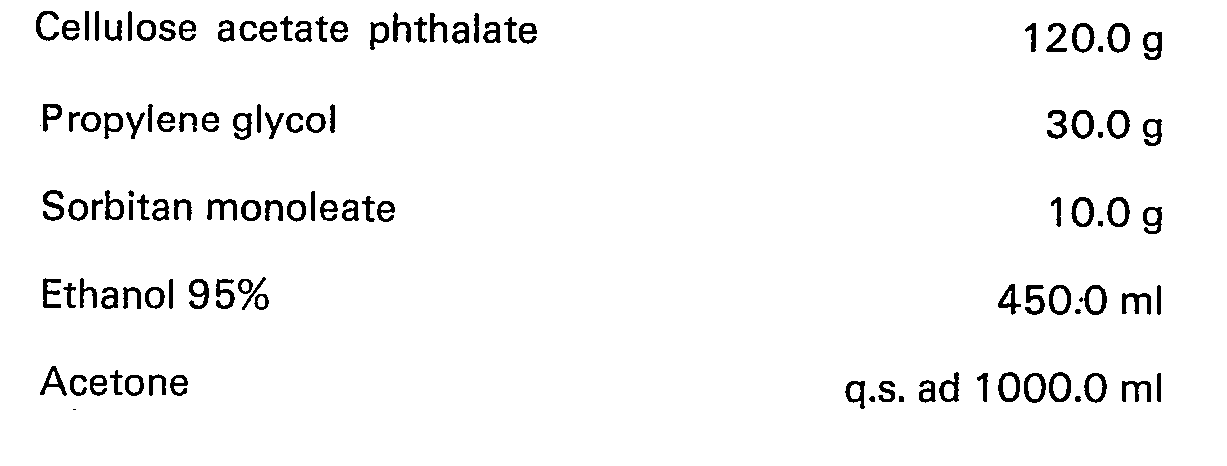
- The coating is carried out by a pouring procedure in a conventional coating pan or by spraying the tablets in a pan spray tablet coater.
-

-

-
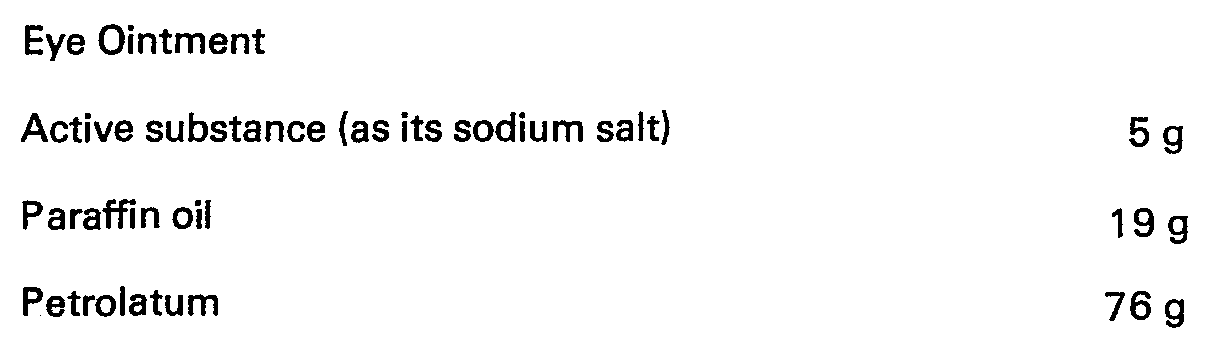
-

-

- The plaque reduction assay for herpes simplex type 1 was performed on GMK (Green Monkey Kidney) cells as described by Ejereito et al. J. Gen. Virol. 2 (1968) 357. Monolayers on 5 cm petri dishes were used and after virus adsorption the test compound was added in the medium. The results are shown below.
- Inhibition of herpes simplex type 1 plaque on GMK monolayers

- The method for plaque assay of influenza has been described by Bentley et al, Archiv für die Gesamte Virusforschung 33 (1971) 234.
- Monolayers of MDCK (Madin Darby Canine Kidney) cells on 5 cm plastic petri dishes were inoculated with 100 plaque-forming units of influenza virus (WSN). After virus adsorption, 5 ml of agarose overlay containing different concentrations of the test compound were added and the plates were incubated at 34°C for 4 days. The plaques formed at this time were counted. The results are shown below.
- Inhibition of influenza (WSN Wilson Smith Neurotropic type A) plaque on GMK monolayers.

- The effect on cutaneous herpes simplex type 1 infections have been measured in a guinea pig model described by Hubler et al. J. Invest. Dermatol. 69 (1974) 92. The compounds have been tested as topical applications of 30 µl of 2% solution of the compound in 45% (v/v) twice daily for 4 days starting 4 hours after infection. The appearance of an infected treated area and a similar infected untreated (only isopropanol-glycerol-water) area was scored daily on a scale from 0 to 3. The total effect is judged from the score at day 5.

- The acid stability was investigated by dissolving 5 mg of each compound in 1 ml of 0.1 N HCI in a test tube. For use as references 0.2 ml of each solution was withdrawn, immediately treated with 0.2 ml of a 10% aqueous solution of NaHC03 and frozen. The remaining 0.8 ml of each solution was incubated at 37°C for 2 hours. After incubation, 0.8 ml of a 10% aqueous solution of NaHC03 was added to each solution and the solutions were frozen. The incubated compounds and the reference compounds were lyophilized to dryness and redissolved in distilled H20, 0.2 ml and 1.0 ml respectively, for each reference solution and incubated solution. The solutions were applied to silica gel (Merck PF254, 20 × 20 cm) and polyethylene imine (Macherey-Nigel PEI, 20 × 20 cm) thin layer plates. A total of 20 µl of the reference solutions (100 µg compound) and 25 µl of the incubated solutions (100 µg compound) were applied. To each plate was also added, as references, solutions of phosphorous acid (H2HPO3) (5 and 20 µg) and of trisodiumphosphonoformate (5 and 20 µg). (Decomposition of phosphonoformic acid at low pH produces phosphorous acid).
- The silica gel plates were prepared in duplicate and eluted with a solution composed of methanol-10% aq ammonia-trichloroacetic acid-water (50-15-5-3, v/v) and the polyethylene imine plates were eluted with a 1 M aq lithium chloride solution. After elution the plates were dried. One of the duplicated silica gel plates was sprayed with 4% aq (NH4)2MoO4 and the polyethylene imine plates were sprayed with a solution composed of 60% HClO4-0.1 N aq HCl-4% aq (NH4)2MoO4-H2O (5-10-25-60, v/v). The silica gel plates were briefly dried at 80-90°C and sprayed with 1 % SnCl2 in 10% aq HCI. Phosphorous acid and phosphonic acid groups appeared as blue spots on the silica gel plates (System 1) and as white spots on the polyethylene imine plates (System 11). The remaining duplicate silica gel plates were exposed to iodine vapor for detection of di- and triesters of phosphonoformic acid.

- The formation of phosphorous acid and phosphonoformic acid in each incubated solution was estimated and the results are given below. The figures for the non-incubated reference compounds are given in parenthesis.

- Metabolization of compounds of the invention was tested in NMR I 19-20 g male mice. The test compound (10 µmol) was dissolved in 0.5 ml saline and injected intraperitoneally. Two mice kept in one cage (for metabolization experiment) were used for each compound. The urine obtained from the two mice on day 1, 2 and 3 after the injections was collected. The urine was diluted with Tris-HCI buffer (pH 7.9) to a constant volume of 1 ml. This volume was then diluted 1:500, 1:5000 and 1:50000 with the same buffer and assayed for phosphonoformic acid activity on cell-free influenza polymerase. The assay mixture which includes Mn2+ and assay conditions are described by Bishop, Obijeski and Simpson, J. Virol. 8, 66 (1971). Phosphonoformic acid in diluted urine gave 50% inhibition at 0.5µM in this assay and was used as a standard to estimate the amount of phosphonoformic acid activity formed in the urine from compounds of the invention.

- A preliminary acute toxicity test was carried out in mice. Groups of two male mice of the NMR I strain weighing 20-21 g received the test compound in doses of 62.5-500 mg/kg i.p. The compound was given as a solution in 0.9% NaCI. The number of animals dead 24 hrs after injection was as follows.

- As seen in test I compounds of the invention are active on herpes virus and influenza virus multiplication in cells. As seen in test compounds of the invention are also active on cutaneous herpes in the guinea pig. According to the stability test III, compounds of the invention are more stable than trisodium phosphonoformate in 0.1 M aqueous HCI, which is a model for stability in gastric juice, and the compounds of the invention should therefore be more suitable for oral administrations than phosphonoformic acid and physiologically acceptable salts thereof. The test on in vivo metabolism IV shows that compounds of the invention are metaholized to phosphonoformic acid measured as phosphonoformic acid activity on influenza polymarase. It is also shown in test IV that compounds according to the invention can give such an active metabolite in the urine of mice over a longer time period than trisodium phosphonoformate. Thus compounds of the invention have a prolonged activity in comparison with phosphonoformic acid and its physiologically acceptable salts. The acute toxicity test shows that compounds of the invention have a low acute toxicity, i.e. high LD50 values. In conclusion compounds of the invention have antiviral effects on herpes and influenza viruses and low toxicity. Furthermore compounds of the invention can be bio-transformed to phosphonoformic acid or ionized forms thereof which have strong activities against viral functions and virus multiplication.

wherein n is 3 or 4 and wherein the alkylene chain is bound to adjacent positions, i.e. 2,3- or 3,4- in the phenyl ring (novel compounds).

wherein n is 3 or 4 and wherein the alkylene chain is bound to adjacent positions, i.e. 2,3- or 3,4- in the phenyl ring (novel compounds).
Claims (72)


and R3 is selected from hydrogen, alkyl groups containing 1-8 carbon atoms; cycloalkyl groups containing 3-8 carbon atoms; cycloalkyl-alkyl groups containing 4-8 carbon atoms; 1-adamantyl;-2-adamantyl; benzyl; and phenyl groups of the formula
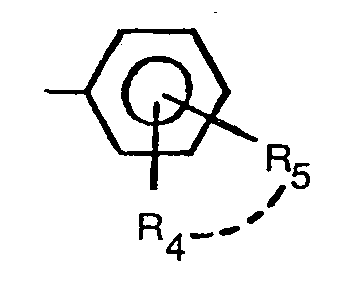
whereby R1' R2 and R3 are combined as defined in the following tabulation, subject to the proviso that at least one of the groups R1, R2 and R3 is alkyl, cycloalkyl, or cycloalkyl-alkyl as defined above, or 1- adamantyl, 2-adamantyl, or benzyl.


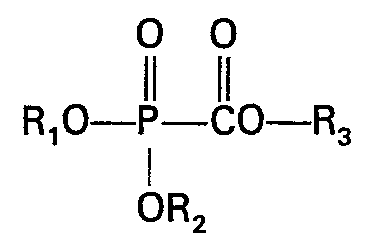


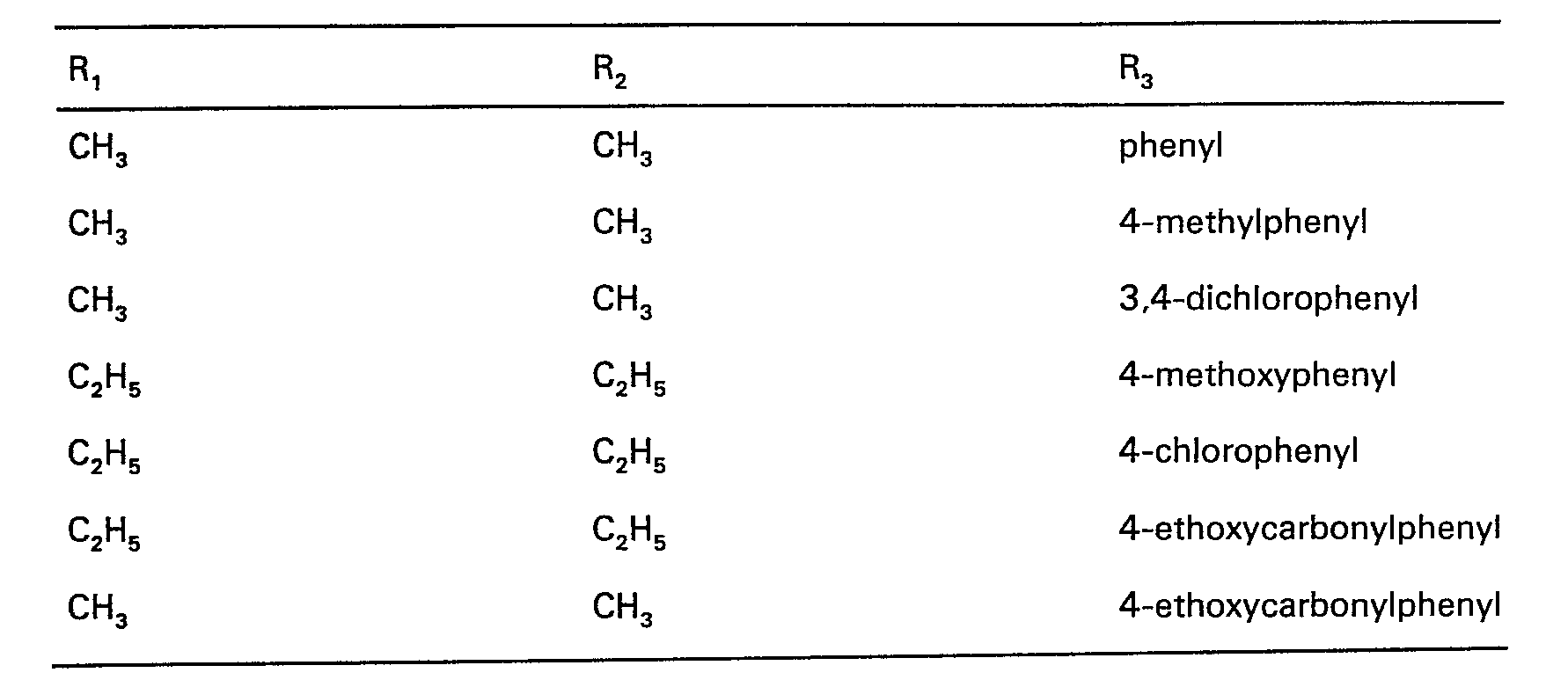








Applications Claiming Priority (16)
| Application Number | Priority Date | Filing Date | Title |
|---|---|---|---|
| GB5358177 | 1977-12-22 | ||
| GB5358177 | 1977-12-22 | ||
| GB5358377 | 1977-12-22 | ||
| GB5358277 | 1977-12-22 | ||
| GB5358077 | 1977-12-22 | ||
| GB5358277 | 1977-12-22 | ||
| GB5358377 | 1977-12-22 | ||
| GB5358077 | 1977-12-22 | ||
| GB2854878 | 1978-07-03 | ||
| GB7828555 | 1978-07-03 | ||
| GB7828553 | 1978-07-03 | ||
| GB2855278 | 1978-07-03 | ||
| GB7828552 | 1978-07-03 | ||
| GB2855578 | 1978-07-03 | ||
| GB2855378 | 1978-07-03 | ||
| GB7828548 | 1978-07-03 |
Publications (3)
| Publication Number | Publication Date |
|---|---|
| EP0003007A2 EP0003007A2 (en) | 1979-07-11 |
| EP0003007A3 EP0003007A3 (en) | 1979-08-08 |
| EP0003007B1 true EP0003007B1 (en) | 1982-04-07 |
Family
ID=27571200
Family Applications (2)
| Application Number | Title | Priority Date | Filing Date |
|---|---|---|---|
| EP78850028A Expired EP0003007B1 (en) | 1977-12-22 | 1978-12-19 | Aliphatic derivatives of phosphonoformic acid, pharmaceutical compositions and methods for combating virus infections |
| EP78850027A Expired EP0003275B1 (en) | 1977-12-22 | 1978-12-19 | Aromatic derivatives of phosphonoformic acid, processes for their preparation, pharmaceutical compositions containing them and their use for combating virus infections |
Family Applications After (1)
| Application Number | Title | Priority Date | Filing Date |
|---|---|---|---|
| EP78850027A Expired EP0003275B1 (en) | 1977-12-22 | 1978-12-19 | Aromatic derivatives of phosphonoformic acid, processes for their preparation, pharmaceutical compositions containing them and their use for combating virus infections |
Country Status (14)
| Country | Link |
|---|---|
| US (4) | US4386081A (en) |
| EP (2) | EP0003007B1 (en) |
| JP (2) | JPS54109951A (en) |
| AT (1) | AT369017B (en) |
| AU (1) | AU530031B2 (en) |
| CA (2) | CA1140049A (en) |
| DE (2) | DE2861729D1 (en) |
| DK (2) | DK148632C (en) |
| FI (2) | FI65438C (en) |
| HK (1) | HK33584A (en) |
| IE (1) | IE48011B1 (en) |
| MY (1) | MY8500058A (en) |
| NO (2) | NO156611C (en) |
| SG (1) | SG82383G (en) |
Families Citing this family (41)
| Publication number | Priority date | Publication date | Assignee | Title |
|---|---|---|---|---|
| CA1140049A (en) * | 1977-12-22 | 1983-01-25 | Dke J.E. Helgstran | Pharmaceutical preparations from derivatives of hydroxycarbonylphosphonic acid |
| GB8501374D0 (en) * | 1985-01-18 | 1985-02-20 | Wellcome Found | Treatment of aids |
| US4806532A (en) * | 1985-10-08 | 1989-02-21 | Mayo Foundation For Medical Education And Research | Inhibition of epithelial phosphate transport |
| US6492352B1 (en) * | 1985-10-31 | 2002-12-10 | Astra Lakemedel Aktiebolag | Method for the control and treatment of acquired immunodeficiency syndrome (AIDS) |
| US5166386A (en) * | 1989-09-18 | 1992-11-24 | E. R. Squibb & Sons, Inc. | Process of making isoprenoid phosphinylformic acid squalene synthetase inhibitors |
| US5025003A (en) * | 1989-09-18 | 1991-06-18 | E. R. Squibb & Sons, Inc. | Isoprenoid phosphinylformic acid squalene synthetase inhibitors |
| US5463092A (en) * | 1989-11-22 | 1995-10-31 | Vestar, Inc. | Lipid derivatives of phosphonacids for liposomal incorporation and method of use |
| US5132414A (en) * | 1990-05-10 | 1992-07-21 | Dana-Farber Cancer Institute, Inc. | Dideoxynucleoside-5'-phosphonoformic acid compounds |
| US5696277A (en) * | 1994-11-15 | 1997-12-09 | Karl Y. Hostetler | Antiviral prodrugs |
| US7517858B1 (en) | 1995-06-07 | 2009-04-14 | The Regents Of The University Of California | Prodrugs of pharmaceuticals with improved bioavailability |
| US6096730A (en) * | 1997-07-24 | 2000-08-01 | University Of Kentucky Research Foundation | Phosphonated agents and their antiangiogenic and antitumorigenic use |
| IL134619A0 (en) * | 1997-08-18 | 2001-04-30 | Univ Kingston | Phosphono-carboxylate compounds for treating amyloidosis |
| US5869469A (en) * | 1997-08-18 | 1999-02-09 | Queen's University At Kingston | Phosphonocarboxylate compounds for treating amyloidosis |
| US20020022657A1 (en) * | 1998-02-11 | 2002-02-21 | Francine Gervais | Methods for modulating neuronal cell death |
| MXPA00007815A (en) * | 1998-02-11 | 2002-04-24 | Neurochem Inc | Method for modulating macrophage activation. |
| US20040002079A1 (en) * | 1998-02-11 | 2004-01-01 | Gunn Robert B. | Sodium-phosphate cotransporter in lithium therapy for the treatment of mental illness |
| US6329356B1 (en) | 1998-04-10 | 2001-12-11 | Neurochem, Inc. | Phosphono-carboxylate compounds for treating amyloidosis |
| US6310073B1 (en) * | 1998-07-28 | 2001-10-30 | Queen's University At Kingston | Methods and compositions to treat glycosaminoglycan-associated molecular interactions |
| NZ543319A (en) * | 1999-04-28 | 2007-06-29 | Neurochem Int Ltd | Compositions and methods for treating amyloidosis using sulphonate derivatives |
| US6562836B1 (en) | 1999-05-24 | 2003-05-13 | Queen's University Of Kingston | Methods and compounds for inhibiting amyloid deposits |
| WO2001085093A2 (en) | 1999-12-23 | 2001-11-15 | Neurochem, Inc. | Compounds and methods for modulating cerebral amyloid angiopathy |
| WO2003082848A1 (en) * | 2002-04-01 | 2003-10-09 | Pfizer Inc. | Pyranon and pyrandion inhibitors of hepatitis c virus rna-dependent rna polymerase |
| DOP2003000641A (en) * | 2002-05-10 | 2003-11-15 | Pfizer | INHIBITORS OF RNA-DEPENDENT RNA POLYMERASE OF HEPATITIS C VIRUSES AND COMPOSITIONS AND TREATMENT USED |
| US7148226B2 (en) * | 2003-02-21 | 2006-12-12 | Agouron Pharmaceuticals, Inc. | Inhibitors of hepatitis C virus RNA-dependent RNA polymerase, and compositions and treatments using the same |
| US20040214178A1 (en) * | 2003-04-24 | 2004-10-28 | Agouron Pharmaceuticals, Inc. | Reporter-selectable Hepatitis C virus replicon |
| US7244764B2 (en) | 2003-06-23 | 2007-07-17 | Neurochem (International) Limited | Methods and compositions for treating amyloid-related diseases |
| US20070010573A1 (en) * | 2003-06-23 | 2007-01-11 | Xianqi Kong | Methods and compositions for treating amyloid-related diseases |
| US7414076B2 (en) | 2003-06-23 | 2008-08-19 | Neurochem (International) Limited | Methods and compositions for treating amyloid-related diseases |
| ES2361845T3 (en) * | 2004-08-18 | 2011-06-22 | Pfizer, Inc. | RNA POLYMERASE INHIBITORS DEPENDING ON HEPATITIS C VIRUS RNA AND COMPOSITIONS AND TREATMENTS USING THE SAME. |
| ITMI20041822A1 (en) * | 2004-09-24 | 2004-12-24 | Pharmaproducts Uk Ltd | "USEFUL THERAPEUTIC AGENT FOR THE TREATMENT OF PLASMACELLULAR NEOPLASIES" |
| CA2586334A1 (en) * | 2004-11-16 | 2006-06-08 | Neurochem (International) Limited | Compounds for the treatment of cns and amyloid associated diseases |
| WO2006085149A2 (en) | 2004-12-22 | 2006-08-17 | Neurochem (International) Limited | Methods and compositions for treating amyloid-related diseases |
| MX2008008213A (en) * | 2005-12-22 | 2008-09-03 | Neurochem Int Ltd | Treatment of renal disorders, diabetic nephopathy and dyslipidemias. |
| KR101608445B1 (en) | 2006-10-12 | 2016-04-01 | 비에이치아이 리미티드 파트너쉽 | Methods, compounds, compositions and vehicles for delivering 3-amino-1-propanesulfonic acid |
| EP2120905A1 (en) * | 2006-12-22 | 2009-11-25 | BELLUS Health (International) Limited | Methods, compounds, and compositions for treating metabolic disorders and diabetes |
| US20080293648A1 (en) * | 2007-01-05 | 2008-11-27 | Saha Pharmaceuticals, Inc. | Compositions and Methods for Cancer Treatment |
| DE102012103717A1 (en) * | 2012-04-27 | 2013-11-14 | Westfälische Wilhelms-Universität Münster | Use of phosphonoformic acid or its hydrate, ester and/or salt for treating tumor diseases and/or age-related macular degeneration, where tumor diseases are fibroblast growth factor-2 overexpressing tumors consisting of e.g. melanoma |
| WO2015093091A1 (en) * | 2013-12-19 | 2015-06-25 | 宇部興産株式会社 | Nonaqueous electrolyte solution, electricity storage device using same, and phosphonoformic acid compound used in same |
| ES2578902B1 (en) * | 2014-12-29 | 2017-07-07 | Agencia Pública Empresarial Sanitaria Costa Del Sol | Use of pyrophosphate ion analogs for the treatment of HPV infection |
| CN109400645A (en) * | 2017-08-18 | 2019-03-01 | 四川海思科制药有限公司 | A kind of phosphoric acid derivatives and preparation method and purposes |
| WO2025106974A1 (en) * | 2023-11-17 | 2025-05-22 | The Board Of Trustees Of The Leland Stanford Junior University | Prodrug moieties and compounds comprising the same |
Family Cites Families (16)
| Publication number | Priority date | Publication date | Assignee | Title |
|---|---|---|---|---|
| US3155597A (en) * | 1961-06-23 | 1964-11-03 | Monsanto Co | Extractive separation process |
| CH513590A (en) | 1968-05-24 | 1971-10-15 | Du Pont | Plant growth regulator containing carbamoyl phosphonate |
| US3846512A (en) * | 1968-05-24 | 1974-11-05 | Du Pont | Carbamoylphosphonates |
| US3997544A (en) * | 1968-05-24 | 1976-12-14 | E. I. Du Pont De Nemours And Company | Plant growth regulant carbamoylphosphonates |
| US3533995A (en) * | 1968-08-27 | 1970-10-13 | Fmc Corp | Heat stabilization of polyester resin with alkyl dialkoxyphosphinyl formate |
| US3849102A (en) * | 1969-08-14 | 1974-11-19 | Du Pont | Plant growth regulant method |
| GB1317768A (en) | 1969-08-14 | 1973-05-23 | Du Pont | Plant growth regulants |
| US3767795A (en) * | 1971-02-25 | 1973-10-23 | Abbott Lab | Method for combating certain virus infection |
| BR7405998D0 (en) * | 1973-07-23 | 1975-05-13 | Du Pont | COMPOUND AND COMPOSITE PROCESSES TO CONTROL PLANT GROWTH |
| US3943201A (en) * | 1973-07-23 | 1976-03-09 | E. I. Du Pont De Nemours And Comapny | Alkoxy carboxycarbonylphosphonic acid esters |
| US4017297A (en) * | 1975-08-29 | 1977-04-12 | E. I. Du Pont De Nemours And Company | Phosphonates for the control of bindweed |
| US4092412A (en) * | 1976-04-30 | 1978-05-30 | Abbott Laboratories | Treatment of herpes simplex infections |
| US4052439A (en) * | 1976-04-30 | 1977-10-04 | Abbott Laboratories | Carboxylic esters of phosphonoacetic acid |
| CA1069526A (en) * | 1976-04-30 | 1980-01-08 | Thomas R. Herrin | Phosphorus esters of phosphonoacetic acid |
| SE7607496L (en) * | 1976-07-01 | 1978-01-02 | Astra Laekemedel Ab | METHOD FOR FIGHTING VIRUS INFECTIONS |
| CA1140049A (en) * | 1977-12-22 | 1983-01-25 | Dke J.E. Helgstran | Pharmaceutical preparations from derivatives of hydroxycarbonylphosphonic acid |
-
1978
- 1978-12-06 CA CA000317487A patent/CA1140049A/en not_active Expired
- 1978-12-06 CA CA000317520A patent/CA1144937A/en not_active Expired
- 1978-12-15 DK DK564278A patent/DK148632C/en not_active IP Right Cessation
- 1978-12-15 DK DK564178A patent/DK148631C/en not_active IP Right Cessation
- 1978-12-18 IE IE2493/78A patent/IE48011B1/en not_active IP Right Cessation
- 1978-12-19 EP EP78850028A patent/EP0003007B1/en not_active Expired
- 1978-12-19 DE DE7878850028T patent/DE2861729D1/en not_active Expired
- 1978-12-19 EP EP78850027A patent/EP0003275B1/en not_active Expired
- 1978-12-19 DE DE7878850027T patent/DE2861045D1/en not_active Expired
- 1978-12-19 AU AU42682/78A patent/AU530031B2/en not_active Expired
- 1978-12-20 FI FI783931A patent/FI65438C/en not_active IP Right Cessation
- 1978-12-20 FI FI783932A patent/FI68626C/en not_active IP Right Cessation
- 1978-12-21 NO NO784331A patent/NO156611C/en unknown
- 1978-12-21 NO NO784330A patent/NO154751C/en unknown
- 1978-12-22 AT AT0921778A patent/AT369017B/en not_active IP Right Cessation
- 1978-12-22 JP JP15839878A patent/JPS54109951A/en active Granted
- 1978-12-22 JP JP15839978A patent/JPS54106431A/en active Granted
-
1979
- 1979-11-13 US US06/093,167 patent/US4386081A/en not_active Expired - Lifetime
- 1979-11-13 US US06/093,166 patent/US4372894A/en not_active Expired - Lifetime
-
1982
- 1982-09-10 US US06/416,632 patent/US4536400A/en not_active Expired - Lifetime
- 1982-12-17 US US06/450,656 patent/US4591583A/en not_active Expired - Fee Related
-
1983
- 1983-12-23 SG SG823/83A patent/SG82383G/en unknown
-
1984
- 1984-04-18 HK HK335/84A patent/HK33584A/en not_active IP Right Cessation
-
1985
- 1985-12-30 MY MY58/85A patent/MY8500058A/en unknown
Also Published As
Similar Documents
| Publication | Publication Date | Title |
|---|---|---|
| EP0003275B1 (en) | Aromatic derivatives of phosphonoformic acid, processes for their preparation, pharmaceutical compositions containing them and their use for combating virus infections | |
| DK170049B1 (en) | Phosphonomethoxyalkylene purine and pyrimidine derivatives as well as pharmaceutical preparations containing such derivatives | |
| CA2328159C (en) | Use of aminoalkylphosphonic acid derivatives for the therapeutic and preventative treatment of infections | |
| EP0671917A1 (en) | Method for inhibition of cell motility by sphingosine-1-phosphate, its derivatives and mimetics and method of synthesizing sphingosine-1-phosphate and its derivatives | |
| CA2098732C (en) | Novel methylenebisphosphonic acid derivatives | |
| IE58614B1 (en) | Derivatives of methylene-bisphosphonic acid, process f their preparation and a pharmaceutical composition | |
| EP0636134B1 (en) | Novel acylated phospholipid drugs | |
| US5254706A (en) | Process of making phosphite-borane compounds | |
| US4006204A (en) | Phosphoric acid diesters | |
| EP0583394A1 (en) | Phosphite-borane compounds, and method of making and using the same | |
| US6753324B2 (en) | Phosphorous organic compounds and their use | |
| MXPA01006456A (en) | Organo-phosphorus compounds and their utilization. | |
| EP0003008A1 (en) | Amide derivatives of phosphonoformic acid, pharmaceutical compositions and methods for combating virus infections | |
| US6903080B2 (en) | Disease treatment with novel phospholipid derivatives | |
| CA1156651A (en) | Derivatives of hydroxycarbonylphosphonic acid | |
| KR840002463B1 (en) | Process for preparing aromatic phosphono formic acid monoester | |
| EP0145739B1 (en) | Novel antiviral agents | |
| CA1108176A (en) | Arylalkyl and aryloxyalkyl phosphonates and preparation thereof | |
| IE47694B1 (en) | Aromatic derivatives of phosphonoformic acid,processes for their preparation,pharmaceutical compositions containing them and their use for combating virus infections | |
| KR840002464B1 (en) | Process for the preparation of aliphatic phosphono formic acid mong esters | |
| HUP0001524A2 (en) | Covalent phospholipid-phosphono-carboxylic acid conjugates and pharmaceutical compositions thereof | |
| AT369016B (en) | METHOD FOR PRODUCING NEW HYDROXYCARBONYL PHOSPHONIC ACID DERIVATIVES AND THEIR PHYSIOLOGICALLY ACCEPTABLE SALTS AND OPTICAL ANTIPODES | |
| GB1249072A (en) | Halogen-containing phosphonic acid derivatives, their preparation and their conversion to (bis-1,2-epoxypropyl)phosphonic acid compounds |
Legal Events
| Date | Code | Title | Description |
|---|---|---|---|
| PUAI | Public reference made under article 153(3) epc to a published international application that has entered the european phase |
Free format text: ORIGINAL CODE: 0009012 |
|
| PUAL | Search report despatched |
Free format text: ORIGINAL CODE: 0009013 |
|
| AK | Designated contracting states |
Designated state(s): BE CH DE FR GB IT LU NL SE |
|
| AK | Designated contracting states |
Designated state(s): BE CH DE FR GB IT LU NL SE |
|
| 17P | Request for examination filed | ||
| ITF | It: translation for a ep patent filed | ||
| GRAA | (expected) grant |
Free format text: ORIGINAL CODE: 0009210 |
|
| AK | Designated contracting states |
Designated state(s): BE CH DE FR GB IT LU NL SE |
|
| REF | Corresponds to: |
Ref document number: 2861729 Country of ref document: DE Date of ref document: 19820519 |
|
| ITTA | It: last paid annual fee | ||
| EPTA | Lu: last paid annual fee | ||
| EAL | Se: european patent in force in sweden |
Ref document number: 78850028.8 |
|
| PGFP | Annual fee paid to national office [announced via postgrant information from national office to epo] |
Ref country code: GB Payment date: 19961210 Year of fee payment: 19 |
|
| PGFP | Annual fee paid to national office [announced via postgrant information from national office to epo] |
Ref country code: FR Payment date: 19961211 Year of fee payment: 19 |
|
| PGFP | Annual fee paid to national office [announced via postgrant information from national office to epo] |
Ref country code: SE Payment date: 19961218 Year of fee payment: 19 |
|
| PGFP | Annual fee paid to national office [announced via postgrant information from national office to epo] |
Ref country code: CH Payment date: 19961219 Year of fee payment: 19 |
|
| PGFP | Annual fee paid to national office [announced via postgrant information from national office to epo] |
Ref country code: NL Payment date: 19961231 Year of fee payment: 19 Ref country code: DE Payment date: 19961231 Year of fee payment: 19 |
|
| PGFP | Annual fee paid to national office [announced via postgrant information from national office to epo] |
Ref country code: BE Payment date: 19970214 Year of fee payment: 19 |
|
| PGFP | Annual fee paid to national office [announced via postgrant information from national office to epo] |
Ref country code: LU Payment date: 19970407 Year of fee payment: 19 |
|
| PG25 | Lapsed in a contracting state [announced via postgrant information from national office to epo] |
Ref country code: LU Free format text: LAPSE BECAUSE OF NON-PAYMENT OF DUE FEES Effective date: 19971219 Ref country code: GB Free format text: LAPSE BECAUSE OF NON-PAYMENT OF DUE FEES Effective date: 19971219 |
|
| PG25 | Lapsed in a contracting state [announced via postgrant information from national office to epo] |
Ref country code: SE Free format text: LAPSE BECAUSE OF NON-PAYMENT OF DUE FEES Effective date: 19971220 |
|
| PG25 | Lapsed in a contracting state [announced via postgrant information from national office to epo] |
Ref country code: FR Free format text: THE PATENT HAS BEEN ANNULLED BY A DECISION OF A NATIONAL AUTHORITY Effective date: 19971231 Ref country code: CH Free format text: LAPSE BECAUSE OF NON-PAYMENT OF DUE FEES Effective date: 19971231 Ref country code: BE Free format text: LAPSE BECAUSE OF NON-PAYMENT OF DUE FEES Effective date: 19971231 |
|
| BERE | Be: lapsed |
Owner name: ASTRA LAKEMEDEL A.B. Effective date: 19971231 |
|
| PG25 | Lapsed in a contracting state [announced via postgrant information from national office to epo] |
Ref country code: NL Free format text: LAPSE BECAUSE OF NON-PAYMENT OF DUE FEES Effective date: 19980701 |
|
| GBPC | Gb: european patent ceased through non-payment of renewal fee |
Effective date: 19971219 |
|
| REG | Reference to a national code |
Ref country code: CH Ref legal event code: PL |
|
| NLV4 | Nl: lapsed or anulled due to non-payment of the annual fee |
Effective date: 19980701 |
|
| PG25 | Lapsed in a contracting state [announced via postgrant information from national office to epo] |
Ref country code: DE Free format text: LAPSE BECAUSE OF NON-PAYMENT OF DUE FEES Effective date: 19980901 |
|
| EUG | Se: european patent has lapsed |
Ref document number: 78850028.8 |
|
| REG | Reference to a national code |
Ref country code: FR Ref legal event code: ST |
|
| PLBE | No opposition filed within time limit |
Free format text: ORIGINAL CODE: 0009261 |
|
| STAA | Information on the status of an ep patent application or granted ep patent |
Free format text: STATUS: NO OPPOSITION FILED WITHIN TIME LIMIT |