EP0002096B1 - Verfahren zur Herstellung von blockierten Polyisocyanaten und danach erhältliche blockierte Polyisocyanate - Google Patents
Verfahren zur Herstellung von blockierten Polyisocyanaten und danach erhältliche blockierte Polyisocyanate Download PDFInfo
- Publication number
- EP0002096B1 EP0002096B1 EP78200311A EP78200311A EP0002096B1 EP 0002096 B1 EP0002096 B1 EP 0002096B1 EP 78200311 A EP78200311 A EP 78200311A EP 78200311 A EP78200311 A EP 78200311A EP 0002096 B1 EP0002096 B1 EP 0002096B1
- Authority
- EP
- European Patent Office
- Prior art keywords
- reaction
- polyisocyanates
- process according
- chain extension
- blocked polyisocyanates
- Prior art date
- Legal status (The legal status is an assumption and is not a legal conclusion. Google has not performed a legal analysis and makes no representation as to the accuracy of the status listed.)
- Expired
Links
- 239000005056 polyisocyanate Substances 0.000 title claims description 40
- 229920001228 polyisocyanate Polymers 0.000 title claims description 40
- 238000000034 method Methods 0.000 title claims description 20
- 238000002360 preparation method Methods 0.000 title claims description 7
- -1 cyclic amidines Chemical class 0.000 claims description 20
- 238000006243 chemical reaction Methods 0.000 claims description 17
- NIMLQBUJDJZYEJ-UHFFFAOYSA-N isophorone diisocyanate Chemical compound CC1(C)CC(N=C=O)CC(C)(CN=C=O)C1 NIMLQBUJDJZYEJ-UHFFFAOYSA-N 0.000 claims description 13
- 239000005058 Isophorone diisocyanate Substances 0.000 claims description 10
- IQPQWNKOIGAROB-UHFFFAOYSA-N isocyanate group Chemical group [N-]=C=O IQPQWNKOIGAROB-UHFFFAOYSA-N 0.000 claims description 7
- 150000001923 cyclic compounds Chemical class 0.000 claims description 4
- 239000002904 solvent Substances 0.000 claims description 4
- XLYOFNOQVPJJNP-UHFFFAOYSA-N water Substances O XLYOFNOQVPJJNP-UHFFFAOYSA-N 0.000 claims description 4
- 229920000768 polyamine Polymers 0.000 claims description 3
- 229920005862 polyol Polymers 0.000 claims description 3
- 150000003077 polyols Chemical class 0.000 claims description 3
- 125000000217 alkyl group Chemical group 0.000 claims description 2
- 125000003118 aryl group Chemical group 0.000 claims description 2
- 125000000753 cycloalkyl group Chemical group 0.000 claims description 2
- 125000001424 substituent group Chemical group 0.000 claims description 2
- 239000003795 chemical substances by application Substances 0.000 claims 6
- 239000000470 constituent Substances 0.000 claims 1
- MTHSVFCYNBDYFN-UHFFFAOYSA-N diethylene glycol Chemical compound OCCOCCO MTHSVFCYNBDYFN-UHFFFAOYSA-N 0.000 description 36
- 239000000203 mixture Substances 0.000 description 32
- 239000012948 isocyanate Substances 0.000 description 23
- 150000002513 isocyanates Chemical class 0.000 description 23
- 238000002844 melting Methods 0.000 description 19
- 230000008018 melting Effects 0.000 description 19
- 150000001875 compounds Chemical class 0.000 description 11
- 239000007795 chemical reaction product Substances 0.000 description 10
- CSCPPACGZOOCGX-UHFFFAOYSA-N Acetone Chemical compound CC(C)=O CSCPPACGZOOCGX-UHFFFAOYSA-N 0.000 description 9
- 230000000903 blocking effect Effects 0.000 description 9
- 238000002329 infrared spectrum Methods 0.000 description 8
- 229910052757 nitrogen Inorganic materials 0.000 description 8
- 239000000047 product Substances 0.000 description 8
- 239000004970 Chain extender Substances 0.000 description 7
- 239000000843 powder Substances 0.000 description 7
- 239000011541 reaction mixture Substances 0.000 description 7
- QGLRLXLDMZCFBP-UHFFFAOYSA-N 1,6-diisocyanato-2,4,4-trimethylhexane Chemical compound O=C=NCC(C)CC(C)(C)CCN=C=O QGLRLXLDMZCFBP-UHFFFAOYSA-N 0.000 description 6
- 125000001931 aliphatic group Chemical group 0.000 description 6
- QPJVMBTYPHYUOC-UHFFFAOYSA-N methyl benzoate Chemical compound COC(=O)C1=CC=CC=C1 QPJVMBTYPHYUOC-UHFFFAOYSA-N 0.000 description 6
- 150000005326 tetrahydropyrimidines Chemical class 0.000 description 6
- HALGJUKFQIYBHW-UHFFFAOYSA-N 2-phenyl-1,2,3,4-tetrahydropyrimidine Chemical compound N1C=CCNC1C1=CC=CC=C1 HALGJUKFQIYBHW-UHFFFAOYSA-N 0.000 description 5
- 239000002981 blocking agent Substances 0.000 description 5
- 229910052739 hydrogen Inorganic materials 0.000 description 5
- 238000003756 stirring Methods 0.000 description 5
- IJGRMHOSHXDMSA-UHFFFAOYSA-N Atomic nitrogen Chemical compound N#N IJGRMHOSHXDMSA-UHFFFAOYSA-N 0.000 description 4
- RTZKZFJDLAIYFH-UHFFFAOYSA-N Diethyl ether Chemical compound CCOCC RTZKZFJDLAIYFH-UHFFFAOYSA-N 0.000 description 4
- 229910052799 carbon Inorganic materials 0.000 description 4
- 238000003776 cleavage reaction Methods 0.000 description 4
- 125000005442 diisocyanate group Chemical group 0.000 description 4
- 230000007017 scission Effects 0.000 description 4
- ZWEHNKRNPOVVGH-UHFFFAOYSA-N 2-Butanone Chemical compound CCC(C)=O ZWEHNKRNPOVVGH-UHFFFAOYSA-N 0.000 description 3
- UHOVQNZJYSORNB-UHFFFAOYSA-N Benzene Chemical compound C1=CC=CC=C1 UHOVQNZJYSORNB-UHFFFAOYSA-N 0.000 description 3
- XEKOWRVHYACXOJ-UHFFFAOYSA-N Ethyl acetate Chemical compound CCOC(C)=O XEKOWRVHYACXOJ-UHFFFAOYSA-N 0.000 description 3
- LYCAIKOWRPUZTN-UHFFFAOYSA-N Ethylene glycol Chemical compound OCCO LYCAIKOWRPUZTN-UHFFFAOYSA-N 0.000 description 3
- OKKJLVBELUTLKV-UHFFFAOYSA-N Methanol Chemical compound OC OKKJLVBELUTLKV-UHFFFAOYSA-N 0.000 description 3
- ZMXDDKWLCZADIW-UHFFFAOYSA-N N,N-Dimethylformamide Chemical compound CN(C)C=O ZMXDDKWLCZADIW-UHFFFAOYSA-N 0.000 description 3
- YXFVVABEGXRONW-UHFFFAOYSA-N Toluene Chemical compound CC1=CC=CC=C1 YXFVVABEGXRONW-UHFFFAOYSA-N 0.000 description 3
- 229940058307 antinematodal tetrahydropyrimidine derivative Drugs 0.000 description 3
- 239000004305 biphenyl Substances 0.000 description 3
- 239000003054 catalyst Substances 0.000 description 3
- 150000004985 diamines Chemical class 0.000 description 3
- JBKVHLHDHHXQEQ-UHFFFAOYSA-N epsilon-caprolactam Chemical compound O=C1CCCCCN1 JBKVHLHDHHXQEQ-UHFFFAOYSA-N 0.000 description 3
- 150000002148 esters Chemical class 0.000 description 3
- 238000004519 manufacturing process Methods 0.000 description 3
- 229940095102 methyl benzoate Drugs 0.000 description 3
- OTPDWCMLUKMQNO-UHFFFAOYSA-N 1,2,3,4-tetrahydropyrimidine Chemical compound C1NCC=CN1 OTPDWCMLUKMQNO-UHFFFAOYSA-N 0.000 description 2
- PCHXZXKMYCGVFA-UHFFFAOYSA-N 1,3-diazetidine-2,4-dione Chemical group O=C1NC(=O)N1 PCHXZXKMYCGVFA-UHFFFAOYSA-N 0.000 description 2
- ZXTHWIZHGLNEPG-UHFFFAOYSA-N 2-phenyl-4,5-dihydro-1,3-oxazole Chemical compound O1CCN=C1C1=CC=CC=C1 ZXTHWIZHGLNEPG-UHFFFAOYSA-N 0.000 description 2
- KZDLWEXEXJDVSA-UHFFFAOYSA-N 6-methyl-1,2,3,4-tetrahydropyrimidine Chemical class CC1=CCNCN1 KZDLWEXEXJDVSA-UHFFFAOYSA-N 0.000 description 2
- HEDRZPFGACZZDS-UHFFFAOYSA-N Chloroform Chemical compound ClC(Cl)Cl HEDRZPFGACZZDS-UHFFFAOYSA-N 0.000 description 2
- IAZDPXIOMUYVGZ-UHFFFAOYSA-N Dimethylsulphoxide Chemical compound CS(C)=O IAZDPXIOMUYVGZ-UHFFFAOYSA-N 0.000 description 2
- PEDCQBHIVMGVHV-UHFFFAOYSA-N Glycerine Chemical compound OCC(O)CO PEDCQBHIVMGVHV-UHFFFAOYSA-N 0.000 description 2
- WYURNTSHIVDZCO-UHFFFAOYSA-N Tetrahydrofuran Chemical compound C1CCOC1 WYURNTSHIVDZCO-UHFFFAOYSA-N 0.000 description 2
- YIMQCDZDWXUDCA-UHFFFAOYSA-N [4-(hydroxymethyl)cyclohexyl]methanol Chemical compound OCC1CCC(CO)CC1 YIMQCDZDWXUDCA-UHFFFAOYSA-N 0.000 description 2
- YRKCREAYFQTBPV-UHFFFAOYSA-N acetylacetone Chemical compound CC(=O)CC(C)=O YRKCREAYFQTBPV-UHFFFAOYSA-N 0.000 description 2
- 235000010290 biphenyl Nutrition 0.000 description 2
- CDQSJQSWAWPGKG-UHFFFAOYSA-N butane-1,1-diol Chemical class CCCC(O)O CDQSJQSWAWPGKG-UHFFFAOYSA-N 0.000 description 2
- DKPFZGUDAPQIHT-UHFFFAOYSA-N butyl acetate Chemical compound CCCCOC(C)=O DKPFZGUDAPQIHT-UHFFFAOYSA-N 0.000 description 2
- MVPPADPHJFYWMZ-UHFFFAOYSA-N chlorobenzene Chemical compound ClC1=CC=CC=C1 MVPPADPHJFYWMZ-UHFFFAOYSA-N 0.000 description 2
- JHIVVAPYMSGYDF-UHFFFAOYSA-N cyclohexanone Chemical compound O=C1CCCCC1 JHIVVAPYMSGYDF-UHFFFAOYSA-N 0.000 description 2
- BGTOWKSIORTVQH-UHFFFAOYSA-N cyclopentanone Chemical compound O=C1CCCC1 BGTOWKSIORTVQH-UHFFFAOYSA-N 0.000 description 2
- 125000004435 hydrogen atom Chemical group [H]* 0.000 description 2
- LELOWRISYMNNSU-UHFFFAOYSA-N hydrogen cyanide Chemical compound N#C LELOWRISYMNNSU-UHFFFAOYSA-N 0.000 description 2
- SYSQUGFVNFXIIT-UHFFFAOYSA-N n-[4-(1,3-benzoxazol-2-yl)phenyl]-4-nitrobenzenesulfonamide Chemical class C1=CC([N+](=O)[O-])=CC=C1S(=O)(=O)NC1=CC=C(C=2OC3=CC=CC=C3N=2)C=C1 SYSQUGFVNFXIIT-UHFFFAOYSA-N 0.000 description 2
- LQNUZADURLCDLV-UHFFFAOYSA-N nitrobenzene Chemical compound [O-][N+](=O)C1=CC=CC=C1 LQNUZADURLCDLV-UHFFFAOYSA-N 0.000 description 2
- 150000002989 phenols Chemical class 0.000 description 2
- ZUOUZKKEUPVFJK-UHFFFAOYSA-N phenylbenzene Natural products C1=CC=CC=C1C1=CC=CC=C1 ZUOUZKKEUPVFJK-UHFFFAOYSA-N 0.000 description 2
- 239000000243 solution Substances 0.000 description 2
- 238000001228 spectrum Methods 0.000 description 2
- 239000007858 starting material Substances 0.000 description 2
- VZGDMQKNWNREIO-UHFFFAOYSA-N tetrachloromethane Chemical compound ClC(Cl)(Cl)Cl VZGDMQKNWNREIO-UHFFFAOYSA-N 0.000 description 2
- RUELTTOHQODFPA-UHFFFAOYSA-N toluene 2,6-diisocyanate Chemical compound CC1=C(N=C=O)C=CC=C1N=C=O RUELTTOHQODFPA-UHFFFAOYSA-N 0.000 description 2
- XFNJVJPLKCPIBV-UHFFFAOYSA-N trimethylenediamine Chemical compound NCCCN XFNJVJPLKCPIBV-UHFFFAOYSA-N 0.000 description 2
- DNIAPMSPPWPWGF-VKHMYHEASA-N (+)-propylene glycol Chemical compound C[C@H](O)CO DNIAPMSPPWPWGF-VKHMYHEASA-N 0.000 description 1
- ZWVMLYRJXORSEP-UHFFFAOYSA-N 1,2,6-Hexanetriol Chemical compound OCCCCC(O)CO ZWVMLYRJXORSEP-UHFFFAOYSA-N 0.000 description 1
- RTTZISZSHSCFRH-UHFFFAOYSA-N 1,3-bis(isocyanatomethyl)benzene Chemical compound O=C=NCC1=CC=CC(CN=C=O)=C1 RTTZISZSHSCFRH-UHFFFAOYSA-N 0.000 description 1
- OHTRJOZKRSVAOX-UHFFFAOYSA-N 1,3-diisocyanato-2-methylcyclohexane Chemical compound CC1C(N=C=O)CCCC1N=C=O OHTRJOZKRSVAOX-UHFFFAOYSA-N 0.000 description 1
- YPFDHNVEDLHUCE-UHFFFAOYSA-N 1,3-propanediol Substances OCCCO YPFDHNVEDLHUCE-UHFFFAOYSA-N 0.000 description 1
- RYHBNJHYFVUHQT-UHFFFAOYSA-N 1,4-Dioxane Chemical compound C1COCCO1 RYHBNJHYFVUHQT-UHFFFAOYSA-N 0.000 description 1
- ALQLPWJFHRMHIU-UHFFFAOYSA-N 1,4-diisocyanatobenzene Chemical compound O=C=NC1=CC=C(N=C=O)C=C1 ALQLPWJFHRMHIU-UHFFFAOYSA-N 0.000 description 1
- 229940008841 1,6-hexamethylene diisocyanate Drugs 0.000 description 1
- VXNZUUAINFGPBY-UHFFFAOYSA-N 1-Butene Chemical compound CCC=C VXNZUUAINFGPBY-UHFFFAOYSA-N 0.000 description 1
- NAMSWTSYRNWRMP-UHFFFAOYSA-N 1-isocyanato-5-(isocyanatomethyl)-3,3,5-trimethylcyclohexene Chemical compound CC1(C=C(CC(C1)(CN=C=O)C)N=C=O)C NAMSWTSYRNWRMP-UHFFFAOYSA-N 0.000 description 1
- KMQONOBDGXYSII-UHFFFAOYSA-N 2,2,4-trimethylhexane-1,1-diol Chemical compound CCC(C)CC(C)(C)C(O)O KMQONOBDGXYSII-UHFFFAOYSA-N 0.000 description 1
- QPYKYDBKQYZEKG-UHFFFAOYSA-N 2,2-dimethylpropane-1,1-diol Chemical compound CC(C)(C)C(O)O QPYKYDBKQYZEKG-UHFFFAOYSA-N 0.000 description 1
- SFWXMFQDGKFTLH-UHFFFAOYSA-N 2,3-dimethyl-2,6-dihydro-1h-pyrimidine Chemical compound CC1NCC=CN1C SFWXMFQDGKFTLH-UHFFFAOYSA-N 0.000 description 1
- ICCGPSONZQYELI-UHFFFAOYSA-N 2,4,4-trimethylhexane-1,1-diol Chemical compound CCC(C)(C)CC(C)C(O)O ICCGPSONZQYELI-UHFFFAOYSA-N 0.000 description 1
- VZSRBBMJRBPUNF-UHFFFAOYSA-N 2-(2,3-dihydro-1H-inden-2-ylamino)-N-[3-oxo-3-(2,4,6,7-tetrahydrotriazolo[4,5-c]pyridin-5-yl)propyl]pyrimidine-5-carboxamide Chemical compound C1C(CC2=CC=CC=C12)NC1=NC=C(C=N1)C(=O)NCCC(N1CC2=C(CC1)NN=N2)=O VZSRBBMJRBPUNF-UHFFFAOYSA-N 0.000 description 1
- CMBVSYQSELVHQA-UHFFFAOYSA-N 2-benzyl-1,2,3,4-tetrahydropyrimidine Chemical compound C=1C=CC=CC=1CC1NCC=CN1 CMBVSYQSELVHQA-UHFFFAOYSA-N 0.000 description 1
- GVPLALUKJMMFAU-UHFFFAOYSA-N 2-ethyl-1,2,3,4-tetrahydropyrimidine Chemical compound CCC1NCC=CN1 GVPLALUKJMMFAU-UHFFFAOYSA-N 0.000 description 1
- GKUYEWXKJWAGHB-UHFFFAOYSA-N 2-ethyl-4-methyl-1,2,3,4-tetrahydropyrimidine Chemical compound CCC1NC=CC(C)N1 GKUYEWXKJWAGHB-UHFFFAOYSA-N 0.000 description 1
- FEJIGNDKURQIRD-UHFFFAOYSA-N 2-methyl-1,2,3,4-tetrahydropyrimidine Chemical compound CC1NCC=CN1 FEJIGNDKURQIRD-UHFFFAOYSA-N 0.000 description 1
- UPMLOUAZCHDJJD-UHFFFAOYSA-N 4,4'-Diphenylmethane Diisocyanate Chemical compound C1=CC(N=C=O)=CC=C1CC1=CC=C(N=C=O)C=C1 UPMLOUAZCHDJJD-UHFFFAOYSA-N 0.000 description 1
- PMPVIKIVABFJJI-UHFFFAOYSA-N Cyclobutane Chemical compound C1CCC1 PMPVIKIVABFJJI-UHFFFAOYSA-N 0.000 description 1
- XDTMQSROBMDMFD-UHFFFAOYSA-N Cyclohexane Chemical compound C1CCCCC1 XDTMQSROBMDMFD-UHFFFAOYSA-N 0.000 description 1
- RWSOTUBLDIXVET-UHFFFAOYSA-N Dihydrogen sulfide Chemical class S RWSOTUBLDIXVET-UHFFFAOYSA-N 0.000 description 1
- BRLQWZUYTZBJKN-UHFFFAOYSA-N Epichlorohydrin Chemical compound ClCC1CO1 BRLQWZUYTZBJKN-UHFFFAOYSA-N 0.000 description 1
- 239000004593 Epoxy Substances 0.000 description 1
- PIICEJLVQHRZGT-UHFFFAOYSA-N Ethylenediamine Chemical compound NCCN PIICEJLVQHRZGT-UHFFFAOYSA-N 0.000 description 1
- VEXZGXHMUGYJMC-UHFFFAOYSA-N Hydrochloric acid Chemical compound Cl VEXZGXHMUGYJMC-UHFFFAOYSA-N 0.000 description 1
- 238000005684 Liebig rearrangement reaction Methods 0.000 description 1
- NTIZESTWPVYFNL-UHFFFAOYSA-N Methyl isobutyl ketone Chemical compound CC(C)CC(C)=O NTIZESTWPVYFNL-UHFFFAOYSA-N 0.000 description 1
- UIHCLUNTQKBZGK-UHFFFAOYSA-N Methyl isobutyl ketone Natural products CCC(C)C(C)=O UIHCLUNTQKBZGK-UHFFFAOYSA-N 0.000 description 1
- FXHOOIRPVKKKFG-UHFFFAOYSA-N N,N-Dimethylacetamide Chemical compound CN(C)C(C)=O FXHOOIRPVKKKFG-UHFFFAOYSA-N 0.000 description 1
- XBDQKXXYIPTUBI-UHFFFAOYSA-M Propionate Chemical compound CCC([O-])=O XBDQKXXYIPTUBI-UHFFFAOYSA-M 0.000 description 1
- DNIAPMSPPWPWGF-UHFFFAOYSA-N Propylene glycol Chemical class CC(O)CO DNIAPMSPPWPWGF-UHFFFAOYSA-N 0.000 description 1
- NINIDFKCEFEMDL-UHFFFAOYSA-N Sulfur Chemical compound [S] NINIDFKCEFEMDL-UHFFFAOYSA-N 0.000 description 1
- UWHCKJMYHZGTIT-UHFFFAOYSA-N Tetraethylene glycol, Natural products OCCOCCOCCOCCO UWHCKJMYHZGTIT-UHFFFAOYSA-N 0.000 description 1
- ZJCCRDAZUWHFQH-UHFFFAOYSA-N Trimethylolpropane Chemical compound CCC(CO)(CO)CO ZJCCRDAZUWHFQH-UHFFFAOYSA-N 0.000 description 1
- KXKVLQRXCPHEJC-UHFFFAOYSA-N acetic acid trimethyl ester Natural products COC(C)=O KXKVLQRXCPHEJC-UHFFFAOYSA-N 0.000 description 1
- 230000002378 acidificating effect Effects 0.000 description 1
- 230000002411 adverse Effects 0.000 description 1
- 150000001412 amines Chemical class 0.000 description 1
- 125000003277 amino group Chemical group 0.000 description 1
- 238000010539 anionic addition polymerization reaction Methods 0.000 description 1
- 239000000010 aprotic solvent Substances 0.000 description 1
- 125000003710 aryl alkyl group Chemical group 0.000 description 1
- 150000005840 aryl radicals Chemical class 0.000 description 1
- 125000002619 bicyclic group Chemical group 0.000 description 1
- 230000015572 biosynthetic process Effects 0.000 description 1
- 238000009835 boiling Methods 0.000 description 1
- RGTXVXDNHPWPHH-UHFFFAOYSA-N butane-1,3-diamine Chemical compound CC(N)CCN RGTXVXDNHPWPHH-UHFFFAOYSA-N 0.000 description 1
- IAQRGUVFOMOMEM-UHFFFAOYSA-N butene Natural products CC=CC IAQRGUVFOMOMEM-UHFFFAOYSA-N 0.000 description 1
- 239000011248 coating agent Substances 0.000 description 1
- 238000000576 coating method Methods 0.000 description 1
- BWDQQALBJCTLRJ-UHFFFAOYSA-N ctk1a6251 Chemical compound C12=CC=CC=C2C2=CC=C1C2 BWDQQALBJCTLRJ-UHFFFAOYSA-N 0.000 description 1
- 150000004292 cyclic ethers Chemical class 0.000 description 1
- VKONPUDBRVKQLM-UHFFFAOYSA-N cyclohexane-1,4-diol Chemical class OC1CCC(O)CC1 VKONPUDBRVKQLM-UHFFFAOYSA-N 0.000 description 1
- 210000003298 dental enamel Anatomy 0.000 description 1
- 150000002009 diols Chemical class 0.000 description 1
- 238000004821 distillation Methods 0.000 description 1
- 230000008030 elimination Effects 0.000 description 1
- 238000003379 elimination reaction Methods 0.000 description 1
- 230000009477 glass transition Effects 0.000 description 1
- 235000011187 glycerol Nutrition 0.000 description 1
- MHIBEGOZTWERHF-UHFFFAOYSA-N heptane-1,1-diol Chemical compound CCCCCCC(O)O MHIBEGOZTWERHF-UHFFFAOYSA-N 0.000 description 1
- RRAMGCGOFNQTLD-UHFFFAOYSA-N hexamethylene diisocyanate Chemical compound O=C=NCCCCCCN=C=O RRAMGCGOFNQTLD-UHFFFAOYSA-N 0.000 description 1
- ACCCMOQWYVYDOT-UHFFFAOYSA-N hexane-1,1-diol Chemical class CCCCCC(O)O ACCCMOQWYVYDOT-UHFFFAOYSA-N 0.000 description 1
- NAQMVNRVTILPCV-UHFFFAOYSA-N hexane-1,6-diamine Chemical class NCCCCCCN NAQMVNRVTILPCV-UHFFFAOYSA-N 0.000 description 1
- XXMIOPMDWAUFGU-UHFFFAOYSA-N hexane-1,6-diol Chemical compound OCCCCCCO XXMIOPMDWAUFGU-UHFFFAOYSA-N 0.000 description 1
- 150000001469 hydantoins Chemical class 0.000 description 1
- 239000001257 hydrogen Substances 0.000 description 1
- 229910000041 hydrogen chloride Inorganic materials 0.000 description 1
- IXCSERBJSXMMFS-UHFFFAOYSA-N hydrogen chloride Substances Cl.Cl IXCSERBJSXMMFS-UHFFFAOYSA-N 0.000 description 1
- 125000002887 hydroxy group Chemical group [H]O* 0.000 description 1
- 150000002460 imidazoles Chemical class 0.000 description 1
- 150000003949 imides Chemical class 0.000 description 1
- 150000002576 ketones Chemical class 0.000 description 1
- 230000000873 masking effect Effects 0.000 description 1
- 239000000463 material Substances 0.000 description 1
- 125000004957 naphthylene group Chemical group 0.000 description 1
- VJQGGZWPOMJLTP-UHFFFAOYSA-N octadecane-1,1-diol Chemical compound CCCCCCCCCCCCCCCCCC(O)O VJQGGZWPOMJLTP-UHFFFAOYSA-N 0.000 description 1
- CCCMONHAUSKTEQ-UHFFFAOYSA-N octadecene Natural products CCCCCCCCCCCCCCCCC=C CCCMONHAUSKTEQ-UHFFFAOYSA-N 0.000 description 1
- XKJCHHZQLQNZHY-UHFFFAOYSA-N phthalimide Chemical compound C1=CC=C2C(=O)NC(=O)C2=C1 XKJCHHZQLQNZHY-UHFFFAOYSA-N 0.000 description 1
- 229920000166 polytrimethylene carbonate Polymers 0.000 description 1
- 235000013772 propylene glycol Nutrition 0.000 description 1
- AOHJOMMDDJHIJH-UHFFFAOYSA-N propylenediamine Chemical compound CC(N)CN AOHJOMMDDJHIJH-UHFFFAOYSA-N 0.000 description 1
- KIDHWZJUCRJVML-UHFFFAOYSA-N putrescine Chemical compound NCCCCN KIDHWZJUCRJVML-UHFFFAOYSA-N 0.000 description 1
- 230000035484 reaction time Effects 0.000 description 1
- 230000009257 reactivity Effects 0.000 description 1
- 238000010992 reflux Methods 0.000 description 1
- YBBRCQOCSYXUOC-UHFFFAOYSA-N sulfuryl dichloride Chemical compound ClS(Cl)(=O)=O YBBRCQOCSYXUOC-UHFFFAOYSA-N 0.000 description 1
- 150000003509 tertiary alcohols Chemical class 0.000 description 1
- LPSXSORODABQKT-UHFFFAOYSA-N tetrahydrodicyclopentadiene Chemical compound C1C2CCC1C1C2CCC1 LPSXSORODABQKT-UHFFFAOYSA-N 0.000 description 1
- YLQBMQCUIZJEEH-UHFFFAOYSA-N tetrahydrofuran Natural products C=1C=COC=1 YLQBMQCUIZJEEH-UHFFFAOYSA-N 0.000 description 1
- YODZTKMDCQEPHD-UHFFFAOYSA-N thiodiglycol Chemical compound OCCSCCO YODZTKMDCQEPHD-UHFFFAOYSA-N 0.000 description 1
- 229950006389 thiodiglycol Drugs 0.000 description 1
- DVKJHBMWWAPEIU-UHFFFAOYSA-N toluene 2,4-diisocyanate Chemical compound CC1=CC=C(N=C=O)C=C1N=C=O DVKJHBMWWAPEIU-UHFFFAOYSA-N 0.000 description 1
- ZIBGPFATKBEMQZ-UHFFFAOYSA-N triethylene glycol Chemical compound OCCOCCOCCO ZIBGPFATKBEMQZ-UHFFFAOYSA-N 0.000 description 1
- QXJQHYBHAIHNGG-UHFFFAOYSA-N trimethylolethane Chemical compound OCC(C)(CO)CO QXJQHYBHAIHNGG-UHFFFAOYSA-N 0.000 description 1
- 150000004072 triols Chemical class 0.000 description 1
- KGLSETWPYVUTQX-UHFFFAOYSA-N tris(4-isocyanatophenoxy)-sulfanylidene-$l^{5}-phosphane Chemical compound C1=CC(N=C=O)=CC=C1OP(=S)(OC=1C=CC(=CC=1)N=C=O)OC1=CC=C(N=C=O)C=C1 KGLSETWPYVUTQX-UHFFFAOYSA-N 0.000 description 1
- XSQUKJJJFZCRTK-UHFFFAOYSA-N urea group Chemical group NC(=O)N XSQUKJJJFZCRTK-UHFFFAOYSA-N 0.000 description 1
- 239000008096 xylene Substances 0.000 description 1
- 150000003738 xylenes Chemical class 0.000 description 1
Images





Classifications
-
- C—CHEMISTRY; METALLURGY
- C07—ORGANIC CHEMISTRY
- C07D—HETEROCYCLIC COMPOUNDS
- C07D239/00—Heterocyclic compounds containing 1,3-diazine or hydrogenated 1,3-diazine rings
- C07D239/02—Heterocyclic compounds containing 1,3-diazine or hydrogenated 1,3-diazine rings not condensed with other rings
- C07D239/06—Heterocyclic compounds containing 1,3-diazine or hydrogenated 1,3-diazine rings not condensed with other rings having one double bond between ring members or between a ring member and a non-ring member
-
- C—CHEMISTRY; METALLURGY
- C08—ORGANIC MACROMOLECULAR COMPOUNDS; THEIR PREPARATION OR CHEMICAL WORKING-UP; COMPOSITIONS BASED THEREON
- C08G—MACROMOLECULAR COMPOUNDS OBTAINED OTHERWISE THAN BY REACTIONS ONLY INVOLVING UNSATURATED CARBON-TO-CARBON BONDS
- C08G18/00—Polymeric products of isocyanates or isothiocyanates
- C08G18/06—Polymeric products of isocyanates or isothiocyanates with compounds having active hydrogen
- C08G18/70—Polymeric products of isocyanates or isothiocyanates with compounds having active hydrogen characterised by the isocyanates or isothiocyanates used
- C08G18/72—Polyisocyanates or polyisothiocyanates
- C08G18/80—Masked polyisocyanates
- C08G18/8061—Masked polyisocyanates masked with compounds having only one group containing active hydrogen
- C08G18/807—Masked polyisocyanates masked with compounds having only one group containing active hydrogen with nitrogen containing compounds
Definitions
- the present invention relates to a process for the preparation of new compounds with a high latent isocyanate content and to the compounds obtainable by this process.
- masked isocyanates also called isocyanate releasers
- isocyanate releasers Tertiary alcohols, phenols, mercaptans, acetoacetic esters, malonic esters, acetylacetone, imides such as phthalimide, imidazoles, hydrogen chloride, hydrogen cyanide and E- caprolactam are known as blocking agents.
- the use of monophenols and E- caprolactam has been preferred for this purpose.
- blocked isocyanates have the property of reacting like isocyanates at elevated temperature. The more acidic the H atom of the masking group, the easier it is to remove the blocking agent. Such blocked isocyanates are described in DT-OS 21 66 423. Terminally blocked isocyanates which additionally contain uretdione groups have also been described in DT-OS 25 02 934.
- the most significant disadvantage of using these blocking agents for a number of purposes is the relatively high elimination temperature, which for most phenols is at least 190 ° C. for aliphatic polyisocyanates and approx. 30 ° C. lower for aromatic polyisocyanates.
- the splitting temperature of aliphatic E- caprolactam-blocked polyisocyanates is, for example, generally about 180-190 ° C.
- the polyisocyanates and the cyclic amidines are used in amounts such that there is 0.5-1.1, preferably 0.8-1.0 mol, of cyclic amidine per isocyanate group.
- Suitable starting compounds which can be used for blocking with the cyclic amidines are, for example, polyisocyanates, in particular diisocyanates, such as aliphatic, cycloaliphatic, araliphatic, ie aryl-substituted aliphatic and / or aromatic diisocyanates, as described, for example, in Houben-Weyl, methods of organic chemistry , Volume 14/2, pp. 61-70 and the article by W.
- the dimeric and trimeric forms of the polyisocyanates such as uretdiones and isocyanurates, which can be prepared by known methods, can of course also be used as starting materials for blocking with the tetrahydropyrimidines described in detail below.
- polyisocyanates are also understood to mean those which, prior to blocking with the tetrahydropyrimidines, have been subjected to a reaction for molecular enlargement with the so-called chain extenders customary in isocyanate chemistry, such as water, polyols, polyamines and the like, the bi- or trifunctional chain extender , that is to say compounds having 2 or 3 groups which are reactive toward isocyanate groups, such as hydroxyl and / or amino groups, are used in such quantities that the resulting new isocyanate bears at least 2 isocyanate groups on average.
- chain extenders customary in isocyanate chemistry
- the bi- or trifunctional chain extender that is to say compounds having 2 or 3 groups which are reactive toward isocyanate groups, such as hydroxyl and / or amino groups, are used in such quantities that the resulting new isocyanate bears at least 2 isocyanate groups on average.
- chain extenders such as water, polyols, polyamines and the like
- Suitable polyols include diols and triols, e.g. Ethylene glycol, propylene glycols such as 1,2- and 1,3-propanediol, 2,2-dimethylpropanediol - (1,3), butanediols such as butanediol - (1,4), hexanediols e.g.
- ethylenediamine - 1,2, propylenediamine - 1,2 and - 1,3, butylenediamine - 1,2, - 1,3 and - 1,4 as well as the hexamethylenediamines can also carry one or more C 1 -C 4 alkyl radicals.
- reaction of the polyisocyanates before blocking with the chain extenders mentioned in the stated proportions can be carried out at temperatures in the range from 0-150 ° C., preferably 80-120 ° C.
- Suitable tetrahydropyrimidine derivatives within the meaning of the present invention which correspond to the general formula described earlier are, for example, those with optionally aryl-substituted alkyl radicals, with optionally alkyl-substituted aryl radicals, such as 2-methyltetrahydropyrimidine, 2,4- (5 or 6), dimethyltetrahydropyrimidine, 2- Ethyltetrahydropyrimidine, 2 - ethyl - 4 - methyl - tetrahydropyrimidine, 2 - benzyltetrahydropyrimidine, 2 - phenyltetrahydropyrimidine, 2 - phenyl - 4 (5 or 6) - methyl - tetrahydropyrimidine, 2,4 - diaza - 3 - phenyl - 7.9 , 9 - (or 7,7,9) - trimethyl - bicyclo - (4.3.0) - nonen
- tetrahydropyrimidine derivatives which can be used according to the invention can be prepared by known processes from optionally substituted 1,3-diamines and aliphatic or aromatic monocarboxylic acids, mononitriles or monocarboxylic acid esters, optionally in the presence of elemental sulfur or sulfuryl chloride as a catalyst.
- the blocking can also be carried out in solvents.
- solvents for example ketones such as acetone, methyl ethyl ketone, methyl isobutyl ketone, cyclopentanone, cyclohexanone and others; Aromatics, such as benzene, toluene, xylenes, chlorobenzene, nitrobenzene and others; cyclic ethers such as tetrahydrofuran, dioxane and others; Esters such as methyl acetate, n-butyl acetate and others aliphatic chlorinated hydrocarbons such as chloroform and carbon tetrachloride and others; and aprotic solvents such as dimethylformamide, dimethylacetamide, dimethyl sulfoxide, etc.
- ketones such as acetone, methyl ethyl ketone, methyl isobutyl ketone, cyclopentanone, cyclohexanone and others
- the reaction mixtures are kept at the stated temperatures until the NCO content of the reaction mixture has dropped to values below 0.2% NCO, for the ratio ⁇ 1 until a constant NCO value is reached.
- Another object of the present invention is the subsequent reaction of a group of blocked polyisocyanates, namely those in which the cyclic amidines have been used in substoichiometric amounts, i.e. the ratio of cyclic amidine to isocyanate groups was ⁇ 1: 1 with the same chain extenders which have been previously described as a means of increasing molecular size.
- the reaction also takes place at temperatures in the range from 0-150 ° C, preferably 80-120 ° C, but below the deblocking temperature of the blocked polyisocyanate, excess chain extenders, if appropriate, all being removed in a skillful manner in or with solvents which may be used.
- This variant of the process allows the product range of blocked polyisocyanates to be adapted to practical requirements within very wide limits.
- This process variant is of particular interest for polyisocyanates with differently reactive NCO groups, ie asymmetric polyisocyanates.
- the invention further relates to the adducts obtainable by the processes described, the general formulas of which are set out in the claims. These are generally compounds of the molecular weight range from 250-3,000, preferably from 300-1000.
- the process products have a melting range in the temperature range of 30-220 ° C, preferably 80-160 ° C.
- the polyisocyanates blocked with the cyclic amidines are further characterized by a content of terminal isocyanate groups present in blocked form (calculated as NCO) of 4-26% by weight, preferably 7-23% by weight.
- the compounds of the invention described above are particularly suitable because of their melting points and at the same time higher molecular weights as catalysts for the anionic polymerization of E- caprolactam.
- the compounds can also be used to produce wire enamels.
- the viscous, yellow product is a mixture of compounds of the formulas below
- the C / H / N analysis gave the following values: 79.13% C, 9.3% H, 11.75% N, (Theory: 79.34% C, 9.09% H, 11.57% N) NH 2 content: 4.11 mmol NH Z / g (theor. 4.13) MW: 243.3 (theor. 242 )
- the glass transition point (DTA) of the resulting mixture was 67-75 ° C, the melting range 85-98 ° C and the splitting temperature about 160 ° C.
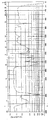
- the IR spectrum of the blocked polyisocyanate is shown in Fig. 1.
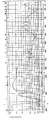
- the corresponding isocyanate adduct was prepared from 210 g of 2,2,4- or 2,4,4-trimethylhexamethylene diisocyanate (TMDI) (1: 1), 484 g of the mixture from example 1 at 100 ° C. . Melting range: 75-89 ° C, softening point (DTA): 52-75 ° C, splitting temperature: 160 ° C. The IR. Fig. 2 shows the spectrum of the blocked polyisocyanate.
- TMDI 2,2,4- or 2,4,4-trimethylhexamethylene diisocyanate
- the reaction product is a yellowish powder with a melting range of 89-101 ° C and a softening point (DTA) of 75-86 ° C with a splitting temperature of 170 ° C.
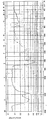
- the IR spectrum of the blocked polyisocyanate adduct obtained is shown in Fig. 4. 4b as in Example 4a, 526 g of the adduct described in Example 3b from 2 moles of TMDI and 1 mole of diethylene glycol were reacted with 484 g of the mixture according to Example 1 at 120 ° C.
- the reaction product is brittle and colored yellow. Melting range 77-93 ° C, softening point (DTA) 69-79 ° C, splitting temperature 170 ° C.
- Example 4c Analogously to Example 4a, 454 g of the adduct described in Example 3c were reacted with 484 g of the mixture corresponding to Example 1 at 135 ° C. Melting range 93-107 ° C, softening point (DTA) 79-92 ° C, splitting temperature 160 ° C.
- Example 6a 222 g of IPDI according to Example 2a were added dropwise to 360 g of the mixture according to Example 5 in such a way that the temperature in the reaction flask did not exceed 120.degree. To complete the reaction, the reaction mixture was kept at 120 ° C. for a further 3 h. These conditions were sufficient for an almost complete implementation.
- the reaction product is a yellowish crystalline powder with a melting range of 95 to 104 ° C, a softening point (DTA) of 59-74 ° C and a free NCO content of 0.1%, splitting temperature was 180 ° C.
- Fig. 5 shows the IR spectrum of the blocked polyisocyanate.
- Example 6c Analogously to Example 6a, the corresponding isocyanate product was prepared from 360 g of the mixture according to Example 5 and 174 g according to Example 2c at 125 ° C.: yellow reaction product, melting range: 98-1 11 ° C., softening point (DTA) 70-91 ° C, splitting temperature 170 ° C.
- the IR spectrum of the blocked polyisocyanate is shown in Fig. 7.
- Example 7a 360 g of the mixture according to Example 5 were added dropwise to 550 g of the adduct described in Example 3a, consisting of 2 moles of IPDI and 1 mole of diethylene glycol, so that the temperature did not rise above 130.degree. After the addition had taken place, the reaction mixture was kept at 130 ° C. for a further 2 h. No NCO could be detected in the reaction product thus produced.
- the reaction product is a fabless powder with a melting range of 103-113 ° C, a softening point of 77-92 ° C and a splitting temperature of 190 ° C.
- Fig. 8 shows the IR spectrum of the blocked polyisocyanate.
- Example 7b To 526 g of the adduct described in Example 3b, 360 g of the mixture according to Example 5 were added so that the temperature did not rise above 130.degree. After the addition was complete, the reaction mixture was kept at 130 ° C. for a further 2 h.
- the reaction product is a yellowish, NCO-free powder with a melting range of 98-106 ° C, a softening point (DTA) of 69-88 ° C.
- the splitting temperature was 180 ° C.
- Example 7c Analogously to Example 7a, 454 g of the adduct from 2 mol of TDI and 1 mol of diethylene glycol described in Example 3c were reacted with 360 g of the mixture according to Example 5 at 140.degree. The reaction product is colored yellow. Melting range 112-120 ° C, softening point (DTA) 89-101 ° C, splitting temperature 170 ° C.
Landscapes
- Chemical & Material Sciences (AREA)
- Organic Chemistry (AREA)
- Health & Medical Sciences (AREA)
- Chemical Kinetics & Catalysis (AREA)
- Medicinal Chemistry (AREA)
- Polymers & Plastics (AREA)
- Polyurethanes Or Polyureas (AREA)
Description
- Gegenstand der vorliegenden Erfindung sind ein Verfahren zur Herstellung von neuen Verbindungen mit hohem latenten Isocyanatgehalt sowie die nach diesem Verfahren erhältlichen Verbindungen.
- Die Herstellung von verkappten Isocyanaten, auch Isocyanatabspalter genannt, ist bekannt und wird im Houben-Weyl, Methoden der organischen Chemie XIV/2 S. 61-70, beschrieben. Als Blockierungsmittel sind tertiäre Alkohole, Phenole, Mercaptane, Acetessigester, Malonsäureester, Acetylaceton, Imide, wie Phthalimid, Imidazole, Chlorwasserstoff, Cyanwasserstoff und E-Caprolactam bekannt. In der Praxis ist die Verwendung von Monophenolen und E-Caprolactam für diesen Einsatzzweck bevorzugt worden.
- Diese verkappten Isocyanate besitzen die Eigenschaft, bei erhöhter Temperatur wie isocyanate zu reagieren. Die Abspaltung des Blockierungsmittels erfolgt umso leichter, je saurer das H-Atom der Maskierungsgruppe ist. Derartige blockierte Isocyanate werden in der DT-OS 21 66 423 beschrieben. Auch sind endständige blockierte Isocyanate, die zusätzlich noch Uretdiongruppen enthalten, in der DT-OS 25 02 934 beschrieben worden.
- Der bedeutendste Nachteil bei der Verwendung dieser Blockierungsmittel ist bei einer Reihe von Einsatzzwecken die relativ hohe Abspalttemperatur, die für die meisten Phenole bei aliphatischen Polyisocyanaten bei mindestens 190°C und bei aromatischen Polyisocyanaten ca. 30°C niedriger liegt. Die Aufspalttemperatur von aliphatischen E-Caprolactam- blockierten Polyisocyanaten liegt beispielsweise im allgemeinen bei ca. 180-190°C.
- Aus diesem Grunde ist in der Vergangenheit vorgeschlagen worden, Thiophenole zu verwenden, für die diese Temperatur viel niedriger ist. Der Nachteil der Thiophenole besteht jedoch in ihrem außergewöhnlich unangenehmen Geruch.
- Es wurde auch vorgeschlagen, 1-2 Prozent eines Katalysators hinzuzufügen, mittels welcher die Abspalttemperatur bis auf 125-14µ°C reduziert werden könnte. Auf diese Weise wird jedoch die Gebrauchsdauer des ungehärteten Beschichtungsmaterials ungünstig beeinflußt.
- Überraschenderweise wurde nunmehr gefunden, daß es durchaus möglich ist, auf einfache Weise blockierte Polyisocyanate herzustellen, die bei einer um mindestens 20-30°C niedrigeren Temperatur als die mit den herkömmlichen Blockierungsmitteln verkappten lsocyanaten deblockieren, wenn man das Verfahren zur Herstellung von blockierten Polyisocyanaten durch Umsetzung von Polyisocyanaten mit N-haltigen cyclischen Verbindungen so durchführt, daß man als N-haltige cyclische Verbindung cyclische Amidine der allgemeinen Formel

- Die Polyisocyanate und die cyclischen Amidine werden in solchen Mengen eingesetzt, daß auf eine Isocyanatgruppe 0,5-1,1, vorzugsweise 0,8-1,0 Mol, cyclisches Amidin kommen.
- Als Ausgansverbindungen, die zur Blockierung mit den cyclischen Amidinen eingesetzt werden können, eignen sich beispielsweise Polyisocyanate, insbesondere Diisocyanate, wie aliphatische, cycloaliphtische, araliphatische, d.h. arylsubstituierte aliphatische und/oder aromatische Diisocyanate, wie sie beispielsweise in Houben-Weyl, Methoden der organischen Chemie, Band 14/2, S. 61-70 und dem Artikel von W. Siefken in Justus Liebigs Annalen der Chemie 562, 75 bis 136, beschrieben werden, wie 1,2-Äthy)endiisocyanat, 1,4 - Tetramethylendiisocyanat, 1,6 - Hexamethylendiisocyanat, 2,2,4 - bzw. 2,4,4 - Trimethyl - 1,6 - hexamethylendiisocyanat (TMDI), 1,12 - Dodecandiisocyanat, ω,ω' - Diisocyanatodipropyläther, Cyclobutan - 1,3 - diisocyanat, Cyclohexan - 1,3 - und 1,4 - diisocyanat, 2,2- und 2,6 - Diisocyanato - 1 - methylcyclohexan, 3 - Isocyanatomethyl - 3,5,5 - trimethylcyclohexylisocyanat, welches auch als lsophorondiisocyanat bezeichnet und mit IPDI abgekürzt wird, Decahydro - 8 - methyl - (1,4 - methano - naphthalen - 2(oder 3)) - 5 - ylendimethylen-diisocyanat, Hexahydro - 4,7 - methano-indan - 1 (oder 2) - 5 - (oder 6) - ylendimethylen-diisocyanat, Hexahydro - 4,7 - methanindan, - 1-(oder 2) - 5 - (oder 6) - ylen/diisocyanat, Dicyclohexyl - 4,4' - diisocyanat, Dicyclohexyl - 2,4' - diisocyanat, 2,4 - und 2,6 - Hexahydrotoluylendiisocyanat, Perhydro - 2,4' - und/oder - 4,4' - diphenylmethan-diisocyanat, ω,ω', - Diisocyanato - 1,4 - diäthylbenzol, 1,3 - und 1,4 - Phenylendiisocyanat, 4,4' - Diisocyanato-diphenyl, 4,4' - Diisocyanato - 3,3' - dichlordiphenyl, 4,4' - Diisocyanato - 3,3' - dimethoxy-diphenyl - 4,4' - Diisocyanato - 3,3' - dimethyl-diphenyl, 4,4' - Diisocyanato - 3,3' - diphenyl - diphenyl, 2,4' - und 4,4' - Diisocyanato-diphenylmethan, Naphthylen - 1,5 - diisocyanat,Toluylendiisocyanate, 2,4 - bzw. 2,6 - Toluylen-diisocyanat, N,N' - (4,4' - Dimethyl - 3,3' - diisocyanatodiphenyl) - uretdion, m - Xylylen-diisocyanat, aber auch die Triisocyanate wie 2,4,4' - Triisocyanato-diphenyl- äther, 4,4',4" - Triisocyanatotriphenylmethan, Tris - (4 - isocyanatophenyl) - thiophosphat, sowie beliebige Gemische dieser Isomeren. Weitere geeignete Isocyanate werden in dem genannten Artikel in den Annalen auf Seite 122 f. beschrieben.
- Besonders bevorzugt werden in der Regel die technisch leicht zugängigen aliphatischen, cycloaliphatischen oder aromatischen Diisocyanate und besonders das 3 - Isocyanatomethyl - 3,5,5 - trimethyl - cyclohexylisocyanat und 2,4 - bzw. 2,6 - Toluylendiisocyanat sowie deren isomere Gemische.
- Neben den monomeren Polyisocyanaten können als Ausgangsstoffe für die Blockierung mit den nachstehend ausführlich beschriebenen Tetrahydropyrimidinen selbstverständlich auch die dimeren und trimeren Formen der Polyisocyanate, wie Uretdionen und Isocyanurate, eingesetzt werden, die nach bekannten Methoden herstellbar sind.
- Unter Polyisocyanaten im Sinne der vorliegenden Erfindung werden auch solche verstanden, die vor der Blockierung mit den Tetrahydropyrimidinen einer Umsetzung zur Molekülvergrößerung mit den in der Isocyanatchemie gebräuchlichen sogenannten Kettenverlängerungsmitteln, wie Wasser, Polyolen, Polyaminen u.a., unterworfen wurden, wobei das bi- oder trifunktionelle Kettenverlängerungsmittel, also solche mit 2 oder 3 gegenüber Isocyanatgruppen reaktionsfähigen Gruppen, wie Hydroxyl-und/oder Aminogruppen, tragende Verbindungen, in solchen Mengen verwendet wird, daß das resultierende neue Isocyanat im Durchschnitt mindestens 2 Isocyanatgruppen trägt. Bei Verwendung von Wasser als Kettenverlängerungsmittel resultieren Polyisocyanate mit einer oder mehreren Harnstoffgruppierungen. Die Molekulargewichte der geeigneten Kettenverlängerungsmittel liegen zweckmäßigerweise zwischen 18 und 250.
- Geeignete Polyole sind beispielsweise Diole und Triole, z.B. Äthylenglykol, Propylenglykole, wie 1,2 - und 1,3 - Propandiol, 2,2 - Dimethylpropandiol - (1,3), Butandiole, wie Butandiol - (1,4), Hexandiole, z.B. Hexandiol - (1,6),2,2,4 - Trimethylhexandiol - (1,6), 2,4,4 - Trimethylhexandiol - (1,6), Heptandiol - (1,7), Octadecen - 9,10 - diol - (1,12), Thiodiglykol, Octadecandiol - (1,18), 2,4 - Dimethyl - 2 - propylheptandiol - (1,3), Buten-oder Butindiol - (1,4), Diäthylenglykol, Tri- äthylenglykol, Tetraäthylenglykol, trans-und cis - 1,4 - Cyclohexandimethanol,1,4 - Cyclohexandiole, Glycerin, Hexantriol - (1,2,6), 1,1,1 - Trimethylolpropan, 1,1,1 - Trimethyloläthan u.a. Es können auch Mischungen der vorgenannten Verbindungen verwendet werden.
- Von den für die Kettenverlängerung bzw. Molekülvergrößerung geeigneten Polyaminen sollen beispielsweise das Äthylendiamin - 1,2, Propylendiamin - 1,2 und - 1,3, Butylendiamin - 1,2, - 1,3 und - 1,4 sowie die Hexamethylendiamine, die auch einen oder mehrere C1-C4 Alkylrest tragen können.
- Die Umsetzung der Polyisocyanate vor der Blockierung mit den genannten Kettenverlängerungsmitteln in den angegebenen Mengenverhältnissen kann bei Temperaturen im Bereich von 0-150°C, vorzugsweise 80-120°C durchgeführt werden.
- Geeignete Tetrahydropyrimidin-Derivate im Sinne der vorliegenden Erfindung, die der früher beschriebenen allgemeinen Formel entsprechen, sind beispielsweise solche mit gegebenenfalls arylsubstituierten Alkylresten, mit gegebenenfalls alkylsubstituierten Arylresten, wie 2 - Methyltetrahydropyrimidin, 2,4 - (5 oder 6), Dimethyltetrahydropyrimidin, 2 - Äthyltetrahydropyrimidin, 2 - Äthyl - 4 - methyl - tetrahydropyrimidin, 2 - Benzyltetrahydropyrimidin, 2 - Phenyl-tetrahydropyrimidin, 2 - Phenyl - 4 (5 oder 6) - methyl - tetrahydropyrimidin, 2,4 - Diaza - 3 - phenyl - 7,9,9 - (oder 7,7,9) - trimethyl - bicyclo - (4.3.0) - nonen - (2), 2,4 - Diaza - 3 - methyl - 7,9,9 - (oder 7,7,9) - trimethyl - bicyclo - [4,3,0] - nonen - (2) u.a.m. Es können auch Gemische der Tetrahydropyrimidin-Derivate erfindungsgemäß eingesetzt werden. Dieses ist dann besonders zweckmäßig, wenn blockierte Isocyanate mit niedrigen Schmelzpunkten bzw. - bereichen benötigt werden.
- Die erfindungsgemäß einsetzbaren Tetrahydropyrimidin-Derivate können nach bekannten Verfahren aus gegebenenfalls substituierten 1,3 - Diaminen und aliphatischen oder aromatischen Monocarbonsäuren, Mononitrilen oder Monocarbonsäureestern, gegebenenfalls in Gegenwart von elementarem Schwefel oder Sulfurylchlorid als Katalysator hergestellt werden.
- Die DE - A - 2 156 881 betrifft Epoxyisocyanate. Es werden dort Epichlorohydrin mit Hydtantoin und einem Polyisocyanat umgesetzt. Während cyclische Amidine besischen Stickstoff und eine -C=N- Doppelbindung aufweisen, besitzen die Hydantoine keimen besischen Stickstoff und keine -C=N- Doppelbindung. Unter Härtungsbedingungen triff bei mit cyclischen Amidinen blockierten Polyisocyanaten eine Rückspaltung auf, während dies bei den Verbindungen gemäß DE-AJ 2 156 881 nicht der Fall ist, Letztere werden mit Aminen vernetzt.
- Die Blockierung kann, wie bereits erwähnt, auch in Lösungsmitteln durchgeführt werden. Als Lösungsmittel für diese Reaktion kommen nur solche infrage, die mit den Polyisocyanaten nicht reagieren, beispielsweise Ketone, wie Aceton, Methyläthylketon, Methylisobutylketon, Cyclopentanon, Cyclohexanon u.a.; Aromaten, wie Benzol, Toluol, Xylole, Chlorbenzol, Nitrobenzol u.a.; cyclische Äther, wie Tetrahydrofuran, Dioxan u.a.; Ester, wie Methylacetat, n-Butylacetat u.a. aliphatische Chlorkohlenwasserstoffe, wie Chloroform, Tetrachlorkohlenstoff u.a.; sowie aprotische Lösungsmittel, wie Dimethylformamid, Dimethylacetamid, Dimethylsulfoxid usw.
- Wenn das Blockierungsmittel im Verhältnis von > 1 zur Anzahl der Isocyanatgruppen eingesetzt wird, werden, die Reaktionsmischungen so lange bei den angegebenen Temperaturen gehalten, bis der NCO-Gehalt der Reaktionsmischung auf Werte unter 0,2% NCO abgesunken ist, für das Verhältnis <1 bis zur Erreichung eines konstanten NCO-Wertes.
- Ein weiterer Gegenstand der vorliegenden Erfindung ist noch die nachträgliche Umsetzung einer Gruppe von blockierten Polyisocyanaten, nämlich solche, bei denen die cyclischen Amidine in unterstöchiometrischen Mengen eingesetzt worden sind, d.h. das Verhältnis cycHsches Amidin zu Isocyanatgruppen war <1:1 mit den gleichen Kettenverlängerungsmitteln, die bereits früher als Mittel zur Molekülvergrößerung beschrieben worden sind. Die Umsetzung erfolgt ebenfalls bei Temperaturen im Bereich von 0-150°C, vorzugsweise 80-120°C, jedoch unterhalb der Deblockierungstemperatur des blockierten Polyisocyanats wobei gegebenenfalls überschüssigen Kettenverlängerungsmittel alle in oder mit gegebenenfalls eingesetzten Lösungsmittel auf bekonnte Weise entferntwird. Durch diese Verfahrensvariante läßt sich die Produktpalette der blockierten Polyisocyanate in sehr weiten Grenzen den praktischen Erfordernissen anpassen. Diese Verfahrensvariante ist besonders von Interesse für Polyisocyanate mit unterschiedlich reaktiven NCO-Gruppen, d.h. asymmetrischen Polyisbcyanaten.
- So lassen sich durch Wechsel der Reihenfolge Adduktbildung/Blockierung blockierte Polyisocyanate mit unterschiedlicher Reaktivität, Schmelzbereich und Struktur erhalten.
- Gegenstand der Erfindung sind weiter auch die nach den beschriebenen Verfahren erhältlichen Addukte, deren allgemeinen Formeln in den Ansprüchen niedergelegt wurden. Es handelt sich dabei im allgemeinen um Verbindungen des Molekulargewichtsbereichs von 250-3 000, vorzugsweise von 300-1000. Die Verfahrensprodukte besitzen einen Schmelzbereich im Temperaturbereich von 30-220°C, vorzugsweise 80―160°C. Die mit den cyclischen Amidinen blockierten Polyisocyanate sind weiter durch einen Gehalt an endständig in blockierter Form vorliegenden Isocyanatgruppen (berechnet als NCO) von 4-26 Gew.%, vorzugsweise 7-23 Gew.%, charakterisiert.
- Die Verbindungen der vorstehend beschriebenen Erfindung eignen sich besonders wegen ihrer Schmelzpunkte bei gleichzeitig höheren Molekulargewichten als Katalysatoren für die anionische Polymerisation von E-Caprolactam. Die Verbindungen können auch zur Herstellung von Drahtlacken verwendet werden.
- Das Verfahren und die resultierenden Verbindungen werden durch die nachstehenden Beispiele illustriert:
- 312 g eines Isomerengemisches aus 1 - Amino - 2 - aminomethyl - 3.3.5 bzw. 3.5.5 - trimethylcyclopentan (TMCPD) wurden mit 136 g Benzoesäuremethylester vermischt und unter Rührung in einem Reaktor auf 190°C aufgeheizt. Die Reaktionsdauer betrug 2 Stunden. Nach dieser Zeit wurde der Diaminüberschuß zusammen mit den Abspaltprodukten Methanol und Wasser abdestilliert. Im Vakuum bei 0,1 Torr ließ sich in einem Temperaturbereich von 158-170°C ein Isomerengemisch von bicyclischen Tetrahydropyrimidinen in einer Ausbeute von 208 g ≙ 86% destillieren.
- Das zähflüssige, gelbe Produkt ist ein Gemisch von Verbindungen der nachstehenden Formeln
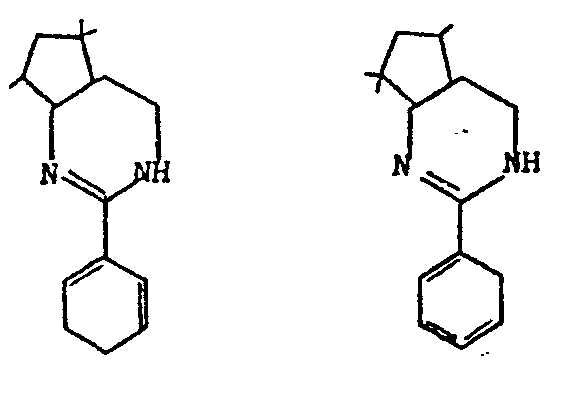
(Theorie: 79,34% C, 9,09% H, 11,57% N) NH2-Gehalt: 4,11 mMol NHZ/g (theor. 4,13) MG: 243,3 (theor. 242) - 2a 484 g des bicyclischen Isomerengemisches entsprechend Beispiel 1 wurden in einem Kolben auf 100°C erhitzt. Innerhalb von 90 Minuten wurden 222 g 3,3,5 - Trimethyl - 1 - isocyanato - 5 - isocyanatomethylcyclohexen bzw. 3,5,5 - Trimethyl - 1 - isocyanato - 3 - isocyanatomethylcyclohexan (IPDI) (1:1) zugetropft. Während dieser Zeit erhöhte sich die Viskosität sehr stark. Zur Vervollständigung der Reaktion wurde der Ansatz noch 180 Minuten auf 130°C erhitzt.
- Der Glasumwandlungspunkt (DTA) des resultierenden Gemisches lag bei 67-75°C, der Schmelzbereich bei 85-98°C und die Aufspalttemperatur bei ca. 160°C. Das IR-Spektrum des blockierten Polyisocyanates zeigt Abb. 1.
- 2b Analog Beispiel 2a wurde aus 210 g 2,2,4 - bzw. 2,4,4 - Trimethylhexamethylen - diisocyanat (TMDI) (1:1), 484 g des Gemisches aus Beispiel 1, bei 100°C das entsprechende lsocyanataddukt hergestellt. Schmelzbereich: 75-89°C, Erweichungspunkt (DTA): 52-75°C, Aufspalttemperatur: 160°C. Das IR- . Spektrum des blockierten Polyisocyanates zeigt Abb. 2.
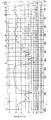
- 2c Analog Beispiel 2a wurde aus 175 g Toluylen - 2,4 - (2,6) - diisocyanat (TDI) (aus 80% 2,4 und 20% 2,6) und 484 g des Gemisches aus Beispiel 1 bei 120°C das entsprechende Isocyanataddukt hergestellt; gelbes Pulver. Schmelzbereich 93-105°C, Erweichungspunkt (DTA) 71-89°C, Aufspalttemperatur 150°C. Das IR-Spektrum des erhaltenen blockierten Polyisocyanates zeigt Abb. 3.
- 3a) Zu 444 g IPDI entsprechend Beispiel 2a wurden bei 80°C unter guter Rührung 106 g Diäthylenglykol langsam zugegeben. Nach erfolgter Diäthylenglykolzugabe wurde noch 2 h bei 80°C weiter erhitzt. Der NCO-Gehalt des Adduktes betrug dann 15,1 Gew.%.
- 3b) Zu 420 g TMDI entsprechend Beispiel 2b wurden bei 90°C unter guter Rührung 106 g Diäthylenglykol langsam zugegeben. Nach erfolgter Diäthylenglykolzugabe wurde noch 2 h bei 90°C weiter erhitzt. Der NCO-Gehalt des Adduktes betrug dann 16,0 Gew.%.
- 3c) Zu 348 g TDI entsprechend Beispiel 2c wurden bei 95°C unter guter Rührung 106 g Diäthylenglykol langsam zugegeben. Nach erfolgter Diäthylenglykolzugabe wurde noch 2 h bei 90°C weiter erhitzt. Der NCO-Gehalt des Adduktes betrug dann 18,5 Gew.%.
- 4a Zu 550 g des im Beispiel 3a beschriebenen Adduktes aus 2 Molen IPDI und 1 Mol Diäthylenglykol wurden bei 120°C 484 g des Gemisches entsprechend Beispiel 1 so zugegeben, daß die Temperatur nicht über 125°C anstieg. Nach erfolgter Zugabe wurde das Reaktionsgemisch noch weitere 2 h bei 120°C erhitzt.
- In dem so hergestellten Reaktionsprodukt konnte kein NCO mehr nachgewiesen werden. Das Reaktionsprodukt stellt ein gelbliches Pulver mit einem Schmelzbereich von 89-101°C und einem Erweichungspunkt (DTA) von 75-86°C mit Aufspalttemperatur 170°C dar. Das IR-Spektrum des erhaltenen blockierten Polyisocyanatadduktes zeigt Abb. 4. 4b Analog Beispiel 4a wurden 526 g des im Beispiel 3b beschrieben Adduktes aus 2 Molen TMDI und 1 Mol Diäthylenglykol mit 484 g des Gemisches entsprechend Beispiel 1 bei 120°C umgesetzt. Das Reaktionsprodukt ist spröde und gelb gefärbt. Schmelzbereich 77-93°C, Erweichungspunkt (DTA) 69-79°C, Aufspalttemperatur 170°C.
- 4c Analog Beispiel 4a wurden 454 g des im Beispiel 3c beschriebenen Adduktes mit 484 g des Gemisches entsprechend Beispiel 1 bei 135°C umgesetzt. Schmelzbereich 93-107°C, Erweichungspunkt (DTA) 79-92°C, Aufspalttemperatur 160°C.
- 216 g Essigsäureäthylester und 1248 g TMCPD-Isomerengemisch (Molverhältnis 1:4) wurden in einen Druckreaktor mit Rührung eingefüllt und 2,5 h bei 190°C und 6,5 bar zur Reaktion gebracht. Nach Entfernen des überschüssigen TMCPD und der Abspaltprodukte duch Destillation ließ sich im Vakuum (0,5 Torr) bei 100-119°C ein Isomerengemisch mit Tetrahydropyrimidinstruktur isolieren. Ausbeute: 274 g - 76% d. Th..
- Das hochviskose, zähflüssige Produkt ist gelblich gefärbt und enthält Verbindungen folgender Formeln

- 6a) Zu 360 g des Gemisches entsprechend Beispiel 5 wurden 222 g IPDI entsprechend Beispiel 2a so zugetropft, daß die Temperatur im Reaktionskolben nicht über 120°C stieg. Zur Vervollständigung der Reaktion wurde die Reaktionsmischung noch 3 h bei 120°C gehalten. Diese Bedingungen reichten für eine nahezu vollständige Umsetzung aus. Das Reaktionsprodukt ist ein gelbliches kristallines Pulver mit einem Schmelzbereich von 95 bis 104°C, einem Erweichungspunkt (DTA) von 59-74°C und einem freien NCO-Gehalt von 0,1%, Aufspalttemperatur lag bei 180°C. Das IR-Spektrum des blockierten Polyisocyanates zeigt Abb. 5.
- 6b) Zu 360 g des Gemisches entsprechend Beispiel 5 wurden 210 g TMDI entsprechend Beispiel 2b so zugetropft, daß die Temperatur im Reaktionskolben 120°C nicht überstieg. Zur Vervollständigung der Reaktion wurde die Reaktionsmischung noch 3 h bei 120°C gehalten. Die Bedingungen reichten für eine vollständige Umsetzung aus. Das Reaktionsprodukt hatte einen Schmelzbereich von 84-95°C, einen Erweichungspunkt (DTA) von 50-69°C und einen freien NCO-Gehalt von 0,1%. Die Aufspalttemperatur lag bei ca. 170°C. Das IR-Spektrum des blockierten Polyisocyanates zeigt Abb. 6.
- 6c) Analog Beispiel 6a wurde aus 360 g des Gemisches entsprechend Beispiel 5 und 174 g entsprechend Beispiel 2c bei 125°C das entsprechende Isocyanatprodukt hergestellt: gelbes Reaktionsprodukt, Schmelzbereich: 98-1 1 1 °C, Erweichungspunkt (DTA) 70-91 °C, Aufspalttemperatur 170°C. Das IR-Spektrum des blockierten Polyisocyanates zeigt Abb. 7.
- 7a) Zu 550 g des im Beispiel 3a beschriebenen Addukts aus 2 Molen IPDI und 1 Mol Diäthylenglykol wurden 360 g des Gemisches entsprechend Beispiel 5 so zugetropft, daß die Temperatur nicht über 130°C anstieg. Nach erfolgter Zugabe wurde das Reaktionsgemisch noch weitere 2 h bei 130°C gehalten. In dem-so hergestellten Reaktionsprodukt konnte kein NCO mehr nachgewiesen werden. Das Reaktionsprodukt ist ein fabloses Pulver mit einem Schmelzbereich von 103-113°C, einem Erweichungspunkt von 77-92°C und einer Aufspalttemperatur von 190°C. Das IR-Spektrum des blockierten Polyisocyanates zeigt Abb. 8.
- 7b) Zu 526 g des in Beispiel 3b beschriebenen Adduktes wurden 360 g des Gemisches entsprechend Beispiel 5 so zugegeben, daß die Temperatur nicht über 130°C anstieg. Nach erfolgter Zugabe wurde das Reaktion gemisch noch weitere 2 h bei 130°C gehalten. Das Reaktionsprodukt ist ein gelbliches, NCO-freies Pulver mit einem Schmelzbereich von 98-106°C, einem Erweichungspunkt (DTA) von 69-88°C. Die Aufspalttemperatur lag bei 180°C.
- 7c) Analog Beispiel 7a wurden 454 g des im Beispiel 3c beschriebenen Adduktes aus 2 Mol TDI und 1 Mol Diäthylenglykol mit 360 g des Gemisches entsprechend Beispiel 5 bei 140°C umgesetzt. Das Reaktionsprodukt ist gelb gefärbt. Schmelzbereich 112-120°C, Erweichungspukt (DTA) 89-101 °C, Aufspalttemperatur 170°C.
- 185 g 1,3-Diaminopropan wurden 136 g Benzoesäuremethylester unter Druck bei 200°C im Reaktor zur Reaktion gebracht. Nach 3 h wurde der Überschuß Diamin abdestilliert und das 2 - Phenyl - tetrahydropyrimidin in 79%iger Ausbeute isoliert. Kp 165°C/1 mm; Fp=86-87°C.
- 9a) Zu 338 g 2 - Phenyltetrahydropyrimidin wurden 222 g IPDI entsprechend Beispiel 2a so zugetropft, daß die Temperatur im Reaktionskolben nicht über 120°C stieg. Die Mischung wurde noch 3 h bei 120°C gehalten. Der Schmelzbereich des gelben Pulvers lag bei 71-85°C, Erweichungspunkt (DTA) 48-65°C, Aufspalttemperatur 160°C, NCO-Gehalt 0,1%. Das IR-Spektrum des blockierten Polyisocyanates zeigt Abb. 9.
- 9b) Eine 50%ige acetonische Lösung von 174 Gew.-Teilen Toluylendiisocyanat (TDI) entsprechend Beispiel 2c wurde zu einer 50%igen acetonischen Lösung von 338 g 2 - Phenyl - tetrahydropyrimidin in der Siedehitze zugetropft und 2 h unter Rückfluß erhitzt. Nach Abdestillieren des Acetons erhielt man ein hellgelbes Pulver. Schmelzbereich: 68 bis 91 °C, Erweichungspunkt (DTA) 52-68°C, Aufspalttemperatur: 160°C, NCO-Gehalt <0,2%. Das IR-Spektrum des blockierten Polyisocyanates zeigt Abb. 10.
- 52,8 g 1,3 - Diaminobutan wurden mit 27,2 g Benzoesäuremethylester unter Druck bei 200°C im Reaktor zur Reaktion gebracht. Nach 3 h wurde der Überschuß Diamin abdestilliert und das 2 - Phenyl - 4 - bzw. 6 - methyltetrahydropyrimidin in 68%iger Ausbeute isoliert. Kp 0.05 198°C, Äquivalentgewicht 182 (Theorie 174).
- Zu 36,6 g des Isomerengemisches gemäß Beispiel 10 wurden 22,2 g IPDI entsprechend Beispiel 2a bei 120°C zugetropft und 3 h bei dieser Temperatur gehalten. Der Schmelzbereich des gelben Produktes lag bei 70-83°C, Erweichungspunkt (DTA) 43 bis 58°C, Aufspalttemperatur 180°C, NCO-Gehalt <0,2%.
Claims (8)

Applications Claiming Priority (2)
| Application Number | Priority Date | Filing Date | Title |
|---|---|---|---|
| DE19772751805 DE2751805A1 (de) | 1977-11-19 | 1977-11-19 | Verfahren zur herstellung von blockierten polyisocyanaten |
| DE2751805 | 1977-11-19 |
Publications (2)
| Publication Number | Publication Date |
|---|---|
| EP0002096A1 EP0002096A1 (de) | 1979-05-30 |
| EP0002096B1 true EP0002096B1 (de) | 1981-09-30 |
Family
ID=6024158
Family Applications (1)
| Application Number | Title | Priority Date | Filing Date |
|---|---|---|---|
| EP78200311A Expired EP0002096B1 (de) | 1977-11-19 | 1978-11-20 | Verfahren zur Herstellung von blockierten Polyisocyanaten und danach erhältliche blockierte Polyisocyanate |
Country Status (6)
| Country | Link |
|---|---|
| US (1) | US4258186A (de) |
| EP (1) | EP0002096B1 (de) |
| JP (1) | JPS5484584A (de) |
| DE (2) | DE2751805A1 (de) |
| DK (1) | DK512878A (de) |
| IT (1) | IT7829931A0 (de) |
Families Citing this family (7)
| Publication number | Priority date | Publication date | Assignee | Title |
|---|---|---|---|---|
| DE3041834A1 (de) * | 1980-11-06 | 1982-06-09 | Bayer Ag, 5090 Leverkusen | Neue amidine und amidin/isocyanat-addukte, verfahren zu ihrer herstellung und ihre verwendung als katalysatoren fuer die haertung von epoxidharzen |
| DE3211301A1 (de) * | 1982-03-26 | 1983-09-29 | Bayer Ag, 5090 Leverkusen | Cyclische amidine, verfahren zu ihrer herstellung und die verwendung cyclischer amidine als katalysatoren fuer die haertung von epoxidharzen |
| US4490293A (en) * | 1982-08-02 | 1984-12-25 | Petrolite Corporation | 2,5,6,8,9-Penta-alkyl or penta-aralkyl-substituted 1,3,7-triazabicyclo(3,3,1) non-3-enes and trialkyl or triaralkyl-substituted tetrahydropyrimidines |
| DE3664768D1 (en) * | 1985-12-13 | 1989-09-07 | Lafon Labor | 5-phenyl-1,4,5,6-tetrahydropyrimidine derivatives, preparation process and medicinal use |
| US4798879A (en) * | 1987-03-25 | 1989-01-17 | The B.F. Goodrich Company | Catalyzed fast cure polyurethane sealant composition |
| US4952659A (en) * | 1987-03-25 | 1990-08-28 | The B. F. Goodrich Company | Catalyzed fast cure polyurethane sealant composition |
| WO2018102333A1 (en) * | 2016-11-30 | 2018-06-07 | Dow Global Technologies Llc | Isocyanate-blocked amidines as latent polyurethane catalysts |
Family Cites Families (5)
| Publication number | Priority date | Publication date | Assignee | Title |
|---|---|---|---|---|
| US3814775A (en) * | 1970-11-17 | 1974-06-04 | Ciba Geigy Ag | 3-glysidyl-hydantoin isocyanates |
| US3846442A (en) * | 1970-11-17 | 1974-11-05 | Ciba Geigy Ag | Glycidyl hydantoin compounds |
| JPS5420560B2 (de) * | 1971-11-20 | 1979-07-24 | ||
| US3857818A (en) * | 1972-09-18 | 1974-12-31 | Cook Paint & Varnish Co | Blocked polyurethane powder coating compositions |
| DE2404740C2 (de) * | 1974-02-01 | 1982-04-29 | Bayer Ag, 5090 Leverkusen | Verfahren zur Herstellung von Filmen und Überzügen und Beschichtungsmittel |
-
1977
- 1977-11-19 DE DE19772751805 patent/DE2751805A1/de not_active Withdrawn
-
1978
- 1978-11-17 DK DK512878A patent/DK512878A/da not_active Application Discontinuation
- 1978-11-17 US US05/961,562 patent/US4258186A/en not_active Expired - Lifetime
- 1978-11-18 JP JP14173378A patent/JPS5484584A/ja active Pending
- 1978-11-20 EP EP78200311A patent/EP0002096B1/de not_active Expired
- 1978-11-20 IT IT7829931A patent/IT7829931A0/it unknown
- 1978-11-20 DE DE7878200311T patent/DE2861245D1/de not_active Expired
Also Published As
| Publication number | Publication date |
|---|---|
| JPS5484584A (en) | 1979-07-05 |
| DE2861245D1 (en) | 1981-12-10 |
| IT7829931A0 (it) | 1978-11-20 |
| EP0002096A1 (de) | 1979-05-30 |
| DE2751805A1 (de) | 1979-05-23 |
| US4258186A (en) | 1981-03-24 |
| DK512878A (da) | 1979-05-20 |
Similar Documents
| Publication | Publication Date | Title |
|---|---|---|
| EP0417603B1 (de) | Verfahren zur Herstellung von Uretdiongruppen aufweisenden Polyisocyanaten | |
| EP0096210B1 (de) | Lagerstabile Polyurethan-Einkomponenten-Einbrennlacke | |
| EP0478990B1 (de) | Polyisocyanatgemisch, ein Verfahren zu seiner Herstellung und seine Verwendung in Polyurethanlacken | |
| DE3739549C2 (de) | Verfahren zur Herstellung (cyclo)aliphatischer Uretdione | |
| EP1521789B1 (de) | Uretdiongruppen aufweisende isocyanate | |
| DE69214890T3 (de) | Verfahren zur Herstellung von Allophanat- und Isocyanuratgruppen enthaltenden Polyisocyanaten | |
| EP0013880A1 (de) | Neue Isocyanato-isocyanurate, ein Verfahren zu ihrer Herstellung sowie ihre Verwendung als Isocyanatkomponente in Polyurethan-Lacken | |
| EP0010589A1 (de) | Verfahren zur Herstellung von Isocyanuratgruppen aufweisenden Polyisocyanaten und ihre Verwendung als Isocyanatkomponente in Polyurethanlacken | |
| EP0056158A1 (de) | Verfahren zur Herstellung von Isocyanuratgruppen aufweisenden Polyisocyanaten, als Katalysator-Komponente für dieses Verfahren geeignete Lösungen, sowie die Verwendung der Verfahrensprodukte als Isocyanat-Komponente bei der Herstellung von Polyurethanen | |
| EP0000963A1 (de) | Isocyanuratgruppen und endständig-blockierte Isocyanatgruppen-enthaltende Verbindungen und Verfahren zu ihrer Herstellung | |
| EP0339396A1 (de) | Verfahren zur Herstellung von Isocyanuratgruppen aufweisenden Polyisocyanaten | |
| EP0744423A1 (de) | Neue blockierte Polyisocyanate sowie ein Verfahren zu ihrer Herstellung | |
| EP0000232B1 (de) | Verfahren zur Herstellung von blockierten Polyisocyanaten und danach erhältliche blockierte Polyisocyanate | |
| EP0193828B1 (de) | Isocyanuratgruppen aufweisende Polyisocyanate, ein Verfahren zu ihrer Herstellung und ihre Verwendung als Isocyanatkomponente in Polyurethanlacken | |
| EP0355479A1 (de) | Verfahren zur Herstellung von Katalysatoren und ihre Verwendung zur Herstellung von Isocyanuratgruppen aufweisenden Polyisocyanaten | |
| EP0002096A1 (de) | Verfahren zur Herstellung von blockierten Polyisocyanaten und danach erhältliche blockierte Polyisocyanate | |
| DE3001060C2 (de) | ||
| DE2342603A1 (de) | Verfahren zur herstellung von malonsaeuredialkylesterblockierten biuretpolyisocyanaten | |
| EP0001468A1 (de) | Pulverförmige Überzugsmittel, Verfahren zu deren Herstellung und deren Anwendung | |
| DE1670812A1 (de) | Polycarbonsaeureester | |
| EP0755954A1 (de) | Verfahren zur Herstellung von Isocyanuratgruppen enthaltenden Polyisocyanaten aus aliphatischen und aromatischen Isocyanatverbindungen | |
| EP0226109A1 (de) | Verfahren zur Herstellung von Isocyanuratgruppen aufweisenden Polyisocyanaten und ihre Verwendung als Isocyanatkomponente zur Herstellung von Polyurethanen | |
| DE2946085A1 (de) | Blockierte isocyanatgruppen und isocyanuratgruppen enthaltende gemische sowie deren herstellung | |
| DE19504530A1 (de) | Blockierte Polyisocyanate, Verfahren zu ihrer Herstellung und daraus hergestellte Lacke und Beschichtungssysteme | |
| EP0727453B1 (de) | Isocyanurat-Polyisocyanate auf Basis von 1,3-Diisocyanatocycloalkanen |
Legal Events
| Date | Code | Title | Description |
|---|---|---|---|
| PUAI | Public reference made under article 153(3) epc to a published international application that has entered the european phase |
Free format text: ORIGINAL CODE: 0009012 |
|
| AK | Designated contracting states |
Designated state(s): BE CH DE FR GB LU NL |
|
| 17P | Request for examination filed | ||
| GRAA | (expected) grant |
Free format text: ORIGINAL CODE: 0009210 |
|
| AK | Designated contracting states |
Designated state(s): BE CH DE FR GB LU NL |
|
| PG25 | Lapsed in a contracting state [announced via postgrant information from national office to epo] |
Ref country code: LU Free format text: LAPSE BECAUSE OF NON-PAYMENT OF DUE FEES Effective date: 19811130 |
|
| REF | Corresponds to: |
Ref document number: 2861245 Country of ref document: DE Date of ref document: 19811210 |
|
| PGFP | Annual fee paid to national office [announced via postgrant information from national office to epo] |
Ref country code: LU Payment date: 19821007 Year of fee payment: 5 |
|
| PGFP | Annual fee paid to national office [announced via postgrant information from national office to epo] |
Ref country code: FR Payment date: 19821029 Year of fee payment: 5 |
|
| PGFP | Annual fee paid to national office [announced via postgrant information from national office to epo] |
Ref country code: NL Payment date: 19821130 Year of fee payment: 5 |
|
| PGFP | Annual fee paid to national office [announced via postgrant information from national office to epo] |
Ref country code: CH Payment date: 19821231 Year of fee payment: 5 Ref country code: BE Payment date: 19821231 Year of fee payment: 5 |
|
| PGFP | Annual fee paid to national office [announced via postgrant information from national office to epo] |
Ref country code: DE Payment date: 19831129 Year of fee payment: 6 |
|
| PG25 | Lapsed in a contracting state [announced via postgrant information from national office to epo] |
Ref country code: CH Effective date: 19831130 Ref country code: BE Effective date: 19831130 |
|
| PG25 | Lapsed in a contracting state [announced via postgrant information from national office to epo] |
Ref country code: NL Effective date: 19840601 |
|
| GBPC | Gb: european patent ceased through non-payment of renewal fee | ||
| NLV4 | Nl: lapsed or anulled due to non-payment of the annual fee | ||
| PG25 | Lapsed in a contracting state [announced via postgrant information from national office to epo] |
Ref country code: FR Free format text: LAPSE BECAUSE OF NON-PAYMENT OF DUE FEES Effective date: 19840731 |
|
| REG | Reference to a national code |
Ref country code: CH Ref legal event code: PL |
|
| REG | Reference to a national code |
Ref country code: FR Ref legal event code: ST |
|
| PG25 | Lapsed in a contracting state [announced via postgrant information from national office to epo] |
Ref country code: DE Effective date: 19850801 |
|
| PG25 | Lapsed in a contracting state [announced via postgrant information from national office to epo] |
Ref country code: GB Effective date: 19881117 |
|
| PLBE | No opposition filed within time limit |
Free format text: ORIGINAL CODE: 0009261 |
|
| STAA | Information on the status of an ep patent application or granted ep patent |
Free format text: STATUS: NO OPPOSITION FILED WITHIN TIME LIMIT |