DE69918263T2 - ETHYLENE HOMOPOLYMERISES AND COPOLYMERISATES - Google Patents
ETHYLENE HOMOPOLYMERISES AND COPOLYMERISATES Download PDFInfo
- Publication number
- DE69918263T2 DE69918263T2 DE69918263T DE69918263T DE69918263T2 DE 69918263 T2 DE69918263 T2 DE 69918263T2 DE 69918263 T DE69918263 T DE 69918263T DE 69918263 T DE69918263 T DE 69918263T DE 69918263 T2 DE69918263 T2 DE 69918263T2
- Authority
- DE
- Germany
- Prior art keywords
- copolymer
- range
- carbon atoms
- ethylene
- value
- Prior art date
- Legal status (The legal status is an assumption and is not a legal conclusion. Google has not performed a legal analysis and makes no representation as to the accuracy of the status listed.)
- Expired - Lifetime
Links
- VGGSQFUCUMXWEO-UHFFFAOYSA-N Ethene Chemical compound C=C VGGSQFUCUMXWEO-UHFFFAOYSA-N 0.000 title claims description 38
- 239000005977 Ethylene Substances 0.000 title claims description 38
- 229920001577 copolymer Polymers 0.000 claims description 135
- 229920000642 polymer Polymers 0.000 claims description 53
- 229920001519 homopolymer Polymers 0.000 claims description 40
- 125000004432 carbon atom Chemical group C* 0.000 claims description 33
- 238000001125 extrusion Methods 0.000 claims description 29
- 238000000034 method Methods 0.000 claims description 27
- 239000004711 α-olefin Substances 0.000 claims description 26
- 239000000155 melt Substances 0.000 claims description 23
- 239000012968 metallocene catalyst Substances 0.000 claims description 19
- 239000000203 mixture Substances 0.000 claims description 19
- 238000006116 polymerization reaction Methods 0.000 claims description 18
- -1 germanyl group Chemical group 0.000 claims description 10
- 125000000217 alkyl group Chemical group 0.000 claims description 9
- 229910052698 phosphorus Inorganic materials 0.000 claims description 8
- 239000007789 gas Substances 0.000 claims description 7
- 238000000196 viscometry Methods 0.000 claims description 7
- 229910052739 hydrogen Inorganic materials 0.000 claims description 6
- 239000001257 hydrogen Substances 0.000 claims description 6
- 125000004435 hydrogen atom Chemical group [H]* 0.000 claims description 6
- 239000002245 particle Substances 0.000 claims description 6
- 125000002947 alkylene group Chemical group 0.000 claims description 5
- RTAQQCXQSZGOHL-UHFFFAOYSA-N Titanium Chemical group [Ti] RTAQQCXQSZGOHL-UHFFFAOYSA-N 0.000 claims description 4
- QCWXUUIWCKQGHC-UHFFFAOYSA-N Zirconium Chemical group [Zr] QCWXUUIWCKQGHC-UHFFFAOYSA-N 0.000 claims description 4
- 150000001993 dienes Chemical class 0.000 claims description 4
- 229910052751 metal Inorganic materials 0.000 claims description 4
- 239000002184 metal Substances 0.000 claims description 4
- 229910052719 titanium Inorganic materials 0.000 claims description 4
- 239000010936 titanium Substances 0.000 claims description 4
- 229910052726 zirconium Inorganic materials 0.000 claims description 4
- KGLYHHCCIBZMLN-UHFFFAOYSA-N 1-methyl-4-[4-(4-methylphenyl)buta-1,3-dienyl]benzene Chemical compound C1=CC(C)=CC=C1C=CC=CC1=CC=C(C)C=C1 KGLYHHCCIBZMLN-UHFFFAOYSA-N 0.000 claims description 3
- 125000003277 amino group Chemical group 0.000 claims description 3
- 125000004429 atom Chemical group 0.000 claims description 3
- 125000002897 diene group Chemical group 0.000 claims description 3
- 239000011888 foil Substances 0.000 claims description 3
- 229910052735 hafnium Chemical group 0.000 claims description 3
- VBJZVLUMGGDVMO-UHFFFAOYSA-N hafnium atom Chemical group [Hf] VBJZVLUMGGDVMO-UHFFFAOYSA-N 0.000 claims description 3
- 230000000737 periodic effect Effects 0.000 claims description 3
- 229920000573 polyethylene Polymers 0.000 claims description 3
- 238000006243 chemical reaction Methods 0.000 claims description 2
- 230000003647 oxidation Effects 0.000 claims description 2
- 238000007254 oxidation reaction Methods 0.000 claims description 2
- 125000003808 silyl group Chemical group [H][Si]([H])([H])[*] 0.000 claims description 2
- 230000000379 polymerizing effect Effects 0.000 claims 4
- 239000007792 gaseous phase Substances 0.000 claims 3
- 239000012071 phase Substances 0.000 claims 2
- GUPMCMZMDAGSPF-UHFFFAOYSA-N 1-phenylbuta-1,3-dienylbenzene Chemical compound C=1C=CC=CC=1[C](C=C[CH2])C1=CC=CC=C1 GUPMCMZMDAGSPF-UHFFFAOYSA-N 0.000 claims 1
- MDFFNEOEWAXZRQ-UHFFFAOYSA-N aminyl Chemical compound [NH2] MDFFNEOEWAXZRQ-UHFFFAOYSA-N 0.000 claims 1
- YFSJFUCGCAQAJA-UHFFFAOYSA-N buta-1,3-dienyl(trimethyl)silane Chemical compound C[Si](C)(C)C=CC=C YFSJFUCGCAQAJA-UHFFFAOYSA-N 0.000 claims 1
- XZKRXPZXQLARHH-UHFFFAOYSA-N buta-1,3-dienylbenzene Chemical compound C=CC=CC1=CC=CC=C1 XZKRXPZXQLARHH-UHFFFAOYSA-N 0.000 claims 1
- 150000002430 hydrocarbons Chemical group 0.000 claims 1
- VYPSYNLAJGMNEJ-UHFFFAOYSA-N Silicium dioxide Chemical compound O=[Si]=O VYPSYNLAJGMNEJ-UHFFFAOYSA-N 0.000 description 73
- VLKZOEOYAKHREP-UHFFFAOYSA-N n-Hexane Chemical compound CCCCCC VLKZOEOYAKHREP-UHFFFAOYSA-N 0.000 description 69
- YXFVVABEGXRONW-UHFFFAOYSA-N Toluene Chemical compound CC1=CC=CC=C1 YXFVVABEGXRONW-UHFFFAOYSA-N 0.000 description 54
- 239000000377 silicon dioxide Substances 0.000 description 36
- 239000003054 catalyst Substances 0.000 description 25
- ZMANZCXQSJIPKH-UHFFFAOYSA-N Triethylamine Chemical compound CCN(CC)CC ZMANZCXQSJIPKH-UHFFFAOYSA-N 0.000 description 23
- 238000005227 gel permeation chromatography Methods 0.000 description 23
- 239000000725 suspension Substances 0.000 description 18
- 239000000463 material Substances 0.000 description 17
- IJGRMHOSHXDMSA-UHFFFAOYSA-N Atomic nitrogen Chemical compound N#N IJGRMHOSHXDMSA-UHFFFAOYSA-N 0.000 description 16
- 230000004913 activation Effects 0.000 description 15
- 239000000047 product Substances 0.000 description 15
- 239000000243 solution Substances 0.000 description 15
- 238000002360 preparation method Methods 0.000 description 14
- 238000004519 manufacturing process Methods 0.000 description 12
- 239000000843 powder Substances 0.000 description 12
- 238000000518 rheometry Methods 0.000 description 12
- 229920001684 low density polyethylene Polymers 0.000 description 10
- 239000004702 low-density polyethylene Substances 0.000 description 10
- 238000009826 distribution Methods 0.000 description 9
- 229920000098 polyolefin Polymers 0.000 description 9
- LIKMAJRDDDTEIG-UHFFFAOYSA-N 1-hexene Chemical compound CCCCC=C LIKMAJRDDDTEIG-UHFFFAOYSA-N 0.000 description 8
- 238000013459 approach Methods 0.000 description 8
- 229910052757 nitrogen Inorganic materials 0.000 description 8
- 238000012545 processing Methods 0.000 description 8
- 239000002904 solvent Substances 0.000 description 8
- 239000012190 activator Substances 0.000 description 7
- 239000003446 ligand Substances 0.000 description 7
- 238000012360 testing method Methods 0.000 description 6
- WSSSPWUEQFSQQG-UHFFFAOYSA-N 4-methyl-1-pentene Chemical compound CC(C)CC=C WSSSPWUEQFSQQG-UHFFFAOYSA-N 0.000 description 4
- 241001136792 Alle Species 0.000 description 4
- 230000003213 activating effect Effects 0.000 description 4
- 229910052782 aluminium Inorganic materials 0.000 description 4
- PNEYBMLMFCGWSK-UHFFFAOYSA-N aluminium oxide Inorganic materials [O-2].[O-2].[O-2].[Al+3].[Al+3] PNEYBMLMFCGWSK-UHFFFAOYSA-N 0.000 description 4
- 238000005259 measurement Methods 0.000 description 4
- OBAJXDYVZBHCGT-UHFFFAOYSA-N tris(pentafluorophenyl)borane Chemical compound FC1=C(F)C(F)=C(F)C(F)=C1B(C=1C(=C(F)C(F)=C(F)C=1F)F)C1=C(F)C(F)=C(F)C(F)=C1F OBAJXDYVZBHCGT-UHFFFAOYSA-N 0.000 description 4
- UFHFLCQGNIYNRP-UHFFFAOYSA-N Hydrogen Chemical compound [H][H] UFHFLCQGNIYNRP-UHFFFAOYSA-N 0.000 description 3
- XUIMIQQOPSSXEZ-UHFFFAOYSA-N Silicon Chemical group [Si] XUIMIQQOPSSXEZ-UHFFFAOYSA-N 0.000 description 3
- XAGFODPZIPBFFR-UHFFFAOYSA-N aluminium Chemical compound [Al] XAGFODPZIPBFFR-UHFFFAOYSA-N 0.000 description 3
- 239000007795 chemical reaction product Substances 0.000 description 3
- 229920001038 ethylene copolymer Polymers 0.000 description 3
- 125000003983 fluorenyl group Chemical group C1(=CC=CC=2C3=CC=CC=C3CC12)* 0.000 description 3
- 229910052809 inorganic oxide Inorganic materials 0.000 description 3
- CPOFMOWDMVWCLF-UHFFFAOYSA-N methyl(oxo)alumane Chemical compound C[Al]=O CPOFMOWDMVWCLF-UHFFFAOYSA-N 0.000 description 3
- 239000000178 monomer Substances 0.000 description 3
- 238000011084 recovery Methods 0.000 description 3
- 238000003756 stirring Methods 0.000 description 3
- 239000003760 tallow Substances 0.000 description 3
- VXNZUUAINFGPBY-UHFFFAOYSA-N 1-Butene Chemical compound CCC=C VXNZUUAINFGPBY-UHFFFAOYSA-N 0.000 description 2
- KWKAKUADMBZCLK-UHFFFAOYSA-N 1-octene Chemical compound CCCCCCC=C KWKAKUADMBZCLK-UHFFFAOYSA-N 0.000 description 2
- YBYIRNPNPLQARY-UHFFFAOYSA-N 1H-indene Natural products C1=CC=C2CC=CC2=C1 YBYIRNPNPLQARY-UHFFFAOYSA-N 0.000 description 2
- BTBUEUYNUDRHOZ-UHFFFAOYSA-N Borate Chemical compound [O-]B([O-])[O-] BTBUEUYNUDRHOZ-UHFFFAOYSA-N 0.000 description 2
- CPLXHLVBOLITMK-UHFFFAOYSA-N Magnesium oxide Chemical compound [Mg]=O CPLXHLVBOLITMK-UHFFFAOYSA-N 0.000 description 2
- BAVYZALUXZFZLV-UHFFFAOYSA-O Methylammonium ion Chemical compound [NH3+]C BAVYZALUXZFZLV-UHFFFAOYSA-O 0.000 description 2
- 238000005481 NMR spectroscopy Methods 0.000 description 2
- FAPWRFPIFSIZLT-UHFFFAOYSA-M Sodium chloride Chemical compound [Na+].[Cl-] FAPWRFPIFSIZLT-UHFFFAOYSA-M 0.000 description 2
- GWEVSGVZZGPLCZ-UHFFFAOYSA-N Titan oxide Chemical compound O=[Ti]=O GWEVSGVZZGPLCZ-UHFFFAOYSA-N 0.000 description 2
- MCMNRKCIXSYSNV-UHFFFAOYSA-N Zirconium dioxide Chemical compound O=[Zr]=O MCMNRKCIXSYSNV-UHFFFAOYSA-N 0.000 description 2
- 238000013019 agitation Methods 0.000 description 2
- 150000001450 anions Chemical class 0.000 description 2
- 230000009286 beneficial effect Effects 0.000 description 2
- 229910052799 carbon Inorganic materials 0.000 description 2
- 150000001768 cations Chemical class 0.000 description 2
- 238000012512 characterization method Methods 0.000 description 2
- 238000012937 correction Methods 0.000 description 2
- 238000009795 derivation Methods 0.000 description 2
- 230000000694 effects Effects 0.000 description 2
- 238000010438 heat treatment Methods 0.000 description 2
- 125000001183 hydrocarbyl group Chemical group 0.000 description 2
- 125000003454 indenyl group Chemical group C1(C=CC2=CC=CC=C12)* 0.000 description 2
- 150000007527 lewis bases Chemical group 0.000 description 2
- 239000012299 nitrogen atmosphere Substances 0.000 description 2
- 150000003839 salts Chemical class 0.000 description 2
- 235000012239 silicon dioxide Nutrition 0.000 description 2
- 239000002002 slurry Substances 0.000 description 2
- 125000001424 substituent group Chemical group 0.000 description 2
- 239000003039 volatile agent Substances 0.000 description 2
- 238000012935 Averaging Methods 0.000 description 1
- IKESPUYSMVFVNA-UHFFFAOYSA-N C(C=Cc1ccccc1)=Cc1ccccc1.C1C[Zr]1(C1C=Cc2ccccc12)C1C=Cc2ccccc12 Chemical group C(C=Cc1ccccc1)=Cc1ccccc1.C1C[Zr]1(C1C=Cc2ccccc12)C1C=Cc2ccccc12 IKESPUYSMVFVNA-UHFFFAOYSA-N 0.000 description 1
- QNAQHORJQXWLAZ-UHFFFAOYSA-N CN.CN.OB(O)OC(C(C(C(F)=C(C(F)=C1F)F)=C1F)=C1C(C(F)=C(C(F)=C2F)F)=C2F)=CC(C(C(F)=C(C(F)=C2F)F)=C2F)=C1O Chemical compound CN.CN.OB(O)OC(C(C(C(F)=C(C(F)=C1F)F)=C1F)=C1C(C(F)=C(C(F)=C2F)F)=C2F)=CC(C(C(F)=C(C(F)=C2F)F)=C2F)=C1O QNAQHORJQXWLAZ-UHFFFAOYSA-N 0.000 description 1
- OKTJSMMVPCPJKN-UHFFFAOYSA-N Carbon Chemical compound [C] OKTJSMMVPCPJKN-UHFFFAOYSA-N 0.000 description 1
- 241001481828 Glyptocephalus cynoglossus Species 0.000 description 1
- UATFEHGKVKOYSM-UHFFFAOYSA-N N,N-diethyl-2-(4-phenylbuta-1,3-dienyl)aniline Chemical compound C1(=CC=CC=C1)C=CC=CC1=C(C=CC=C1)N(CC)CC UATFEHGKVKOYSM-UHFFFAOYSA-N 0.000 description 1
- 239000006057 Non-nutritive feed additive Substances 0.000 description 1
- 239000004698 Polyethylene Substances 0.000 description 1
- 229910000831 Steel Inorganic materials 0.000 description 1
- 239000007983 Tris buffer Substances 0.000 description 1
- 238000002441 X-ray diffraction Methods 0.000 description 1
- 239000011954 Ziegler–Natta catalyst Substances 0.000 description 1
- 230000001133 acceleration Effects 0.000 description 1
- 239000002253 acid Substances 0.000 description 1
- 125000005210 alkyl ammonium group Chemical group 0.000 description 1
- 238000004458 analytical method Methods 0.000 description 1
- 125000003118 aryl group Chemical group 0.000 description 1
- UORVGPXVDQYIDP-UHFFFAOYSA-N borane Chemical class B UORVGPXVDQYIDP-UHFFFAOYSA-N 0.000 description 1
- 229910000085 borane Inorganic materials 0.000 description 1
- 150000001639 boron compounds Chemical class 0.000 description 1
- 150000001642 boronic acid derivatives Chemical class 0.000 description 1
- 239000012876 carrier material Substances 0.000 description 1
- 230000003197 catalytic effect Effects 0.000 description 1
- 238000006555 catalytic reaction Methods 0.000 description 1
- 239000003795 chemical substances by application Substances 0.000 description 1
- 230000000536 complexating effect Effects 0.000 description 1
- 238000001816 cooling Methods 0.000 description 1
- 125000000058 cyclopentadienyl group Chemical group C1(=CC=CC1)* 0.000 description 1
- 238000006073 displacement reaction Methods 0.000 description 1
- 238000007580 dry-mixing Methods 0.000 description 1
- 230000009977 dual effect Effects 0.000 description 1
- ZSWFCLXCOIISFI-UHFFFAOYSA-N endo-cyclopentadiene Natural products C1C=CC=C1 ZSWFCLXCOIISFI-UHFFFAOYSA-N 0.000 description 1
- 238000002474 experimental method Methods 0.000 description 1
- 239000000835 fiber Substances 0.000 description 1
- 238000001595 flow curve Methods 0.000 description 1
- 238000012685 gas phase polymerization Methods 0.000 description 1
- 238000010102 injection blow moulding Methods 0.000 description 1
- 238000001746 injection moulding Methods 0.000 description 1
- 150000008040 ionic compounds Chemical class 0.000 description 1
- 239000007788 liquid Substances 0.000 description 1
- 238000004811 liquid chromatography Methods 0.000 description 1
- 239000000395 magnesium oxide Substances 0.000 description 1
- 230000014759 maintenance of location Effects 0.000 description 1
- 238000002844 melting Methods 0.000 description 1
- 230000008018 melting Effects 0.000 description 1
- 150000004706 metal oxides Chemical group 0.000 description 1
- 229910052752 metalloid Inorganic materials 0.000 description 1
- 150000002737 metalloid compounds Chemical class 0.000 description 1
- 150000002738 metalloids Chemical class 0.000 description 1
- 239000002808 molecular sieve Substances 0.000 description 1
- 238000000465 moulding Methods 0.000 description 1
- TVMXDCGIABBOFY-UHFFFAOYSA-N n-Octanol Natural products CCCCCCCC TVMXDCGIABBOFY-UHFFFAOYSA-N 0.000 description 1
- 229920005615 natural polymer Polymers 0.000 description 1
- 230000003287 optical effect Effects 0.000 description 1
- 150000002902 organometallic compounds Chemical class 0.000 description 1
- 125000002524 organometallic group Chemical group 0.000 description 1
- 230000003534 oscillatory effect Effects 0.000 description 1
- 125000000538 pentafluorophenyl group Chemical group FC1=C(F)C(F)=C(*)C(F)=C1F 0.000 description 1
- 125000001997 phenyl group Chemical group [H]C1=C([H])C([H])=C(*)C([H])=C1[H] 0.000 description 1
- FVZVCSNXTFCBQU-UHFFFAOYSA-N phosphanyl Chemical group [PH2] FVZVCSNXTFCBQU-UHFFFAOYSA-N 0.000 description 1
- 230000000704 physical effect Effects 0.000 description 1
- 239000002861 polymer material Substances 0.000 description 1
- 238000010094 polymer processing Methods 0.000 description 1
- 239000002685 polymerization catalyst Substances 0.000 description 1
- 239000002243 precursor Substances 0.000 description 1
- 239000002516 radical scavenger Substances 0.000 description 1
- 238000004064 recycling Methods 0.000 description 1
- 229920006395 saturated elastomer Polymers 0.000 description 1
- 230000035945 sensitivity Effects 0.000 description 1
- 238000001374 small-angle light scattering Methods 0.000 description 1
- URGAHOPLAPQHLN-UHFFFAOYSA-N sodium aluminosilicate Chemical compound [Na+].[Al+3].[O-][Si]([O-])=O.[O-][Si]([O-])=O URGAHOPLAPQHLN-UHFFFAOYSA-N 0.000 description 1
- 239000011780 sodium chloride Substances 0.000 description 1
- 239000007787 solid Substances 0.000 description 1
- 238000010561 standard procedure Methods 0.000 description 1
- 239000010959 steel Substances 0.000 description 1
- 229920001059 synthetic polymer Polymers 0.000 description 1
- 239000000454 talc Substances 0.000 description 1
- 229910052623 talc Inorganic materials 0.000 description 1
- 238000012956 testing procedure Methods 0.000 description 1
- 125000005270 trialkylamine group Chemical group 0.000 description 1
- XLYOFNOQVPJJNP-UHFFFAOYSA-N water Substances O XLYOFNOQVPJJNP-UHFFFAOYSA-N 0.000 description 1
- 239000003643 water by type Substances 0.000 description 1
Classifications
-
- C—CHEMISTRY; METALLURGY
- C08—ORGANIC MACROMOLECULAR COMPOUNDS; THEIR PREPARATION OR CHEMICAL WORKING-UP; COMPOSITIONS BASED THEREON
- C08J—WORKING-UP; GENERAL PROCESSES OF COMPOUNDING; AFTER-TREATMENT NOT COVERED BY SUBCLASSES C08B, C08C, C08F, C08G or C08H
- C08J5/00—Manufacture of articles or shaped materials containing macromolecular substances
- C08J5/18—Manufacture of films or sheets
-
- C—CHEMISTRY; METALLURGY
- C08—ORGANIC MACROMOLECULAR COMPOUNDS; THEIR PREPARATION OR CHEMICAL WORKING-UP; COMPOSITIONS BASED THEREON
- C08F—MACROMOLECULAR COMPOUNDS OBTAINED BY REACTIONS ONLY INVOLVING CARBON-TO-CARBON UNSATURATED BONDS
- C08F10/00—Homopolymers and copolymers of unsaturated aliphatic hydrocarbons having only one carbon-to-carbon double bond
-
- C—CHEMISTRY; METALLURGY
- C08—ORGANIC MACROMOLECULAR COMPOUNDS; THEIR PREPARATION OR CHEMICAL WORKING-UP; COMPOSITIONS BASED THEREON
- C08F—MACROMOLECULAR COMPOUNDS OBTAINED BY REACTIONS ONLY INVOLVING CARBON-TO-CARBON UNSATURATED BONDS
- C08F10/00—Homopolymers and copolymers of unsaturated aliphatic hydrocarbons having only one carbon-to-carbon double bond
- C08F10/02—Ethene
-
- C—CHEMISTRY; METALLURGY
- C08—ORGANIC MACROMOLECULAR COMPOUNDS; THEIR PREPARATION OR CHEMICAL WORKING-UP; COMPOSITIONS BASED THEREON
- C08F—MACROMOLECULAR COMPOUNDS OBTAINED BY REACTIONS ONLY INVOLVING CARBON-TO-CARBON UNSATURATED BONDS
- C08F2/00—Processes of polymerisation
- C08F2/34—Polymerisation in gaseous state
-
- C—CHEMISTRY; METALLURGY
- C08—ORGANIC MACROMOLECULAR COMPOUNDS; THEIR PREPARATION OR CHEMICAL WORKING-UP; COMPOSITIONS BASED THEREON
- C08F—MACROMOLECULAR COMPOUNDS OBTAINED BY REACTIONS ONLY INVOLVING CARBON-TO-CARBON UNSATURATED BONDS
- C08F210/00—Copolymers of unsaturated aliphatic hydrocarbons having only one carbon-to-carbon double bond
- C08F210/16—Copolymers of ethene with alpha-alkenes, e.g. EP rubbers
-
- C—CHEMISTRY; METALLURGY
- C08—ORGANIC MACROMOLECULAR COMPOUNDS; THEIR PREPARATION OR CHEMICAL WORKING-UP; COMPOSITIONS BASED THEREON
- C08F—MACROMOLECULAR COMPOUNDS OBTAINED BY REACTIONS ONLY INVOLVING CARBON-TO-CARBON UNSATURATED BONDS
- C08F110/00—Homopolymers of unsaturated aliphatic hydrocarbons having only one carbon-to-carbon double bond
- C08F110/02—Ethene
-
- C—CHEMISTRY; METALLURGY
- C08—ORGANIC MACROMOLECULAR COMPOUNDS; THEIR PREPARATION OR CHEMICAL WORKING-UP; COMPOSITIONS BASED THEREON
- C08F—MACROMOLECULAR COMPOUNDS OBTAINED BY REACTIONS ONLY INVOLVING CARBON-TO-CARBON UNSATURATED BONDS
- C08F4/00—Polymerisation catalysts
- C08F4/42—Metals; Metal hydrides; Metallo-organic compounds; Use thereof as catalyst precursors
- C08F4/44—Metals; Metal hydrides; Metallo-organic compounds; Use thereof as catalyst precursors selected from light metals, zinc, cadmium, mercury, copper, silver, gold, boron, gallium, indium, thallium, rare earths or actinides
- C08F4/60—Metals; Metal hydrides; Metallo-organic compounds; Use thereof as catalyst precursors selected from light metals, zinc, cadmium, mercury, copper, silver, gold, boron, gallium, indium, thallium, rare earths or actinides together with refractory metals, iron group metals, platinum group metals, manganese, rhenium technetium or compounds thereof
- C08F4/62—Refractory metals or compounds thereof
- C08F4/64—Titanium, zirconium, hafnium or compounds thereof
- C08F4/659—Component covered by group C08F4/64 containing a transition metal-carbon bond
- C08F4/65908—Component covered by group C08F4/64 containing a transition metal-carbon bond in combination with an ionising compound other than alumoxane, e.g. (C6F5)4B-X+
-
- C—CHEMISTRY; METALLURGY
- C08—ORGANIC MACROMOLECULAR COMPOUNDS; THEIR PREPARATION OR CHEMICAL WORKING-UP; COMPOSITIONS BASED THEREON
- C08F—MACROMOLECULAR COMPOUNDS OBTAINED BY REACTIONS ONLY INVOLVING CARBON-TO-CARBON UNSATURATED BONDS
- C08F4/00—Polymerisation catalysts
- C08F4/42—Metals; Metal hydrides; Metallo-organic compounds; Use thereof as catalyst precursors
- C08F4/44—Metals; Metal hydrides; Metallo-organic compounds; Use thereof as catalyst precursors selected from light metals, zinc, cadmium, mercury, copper, silver, gold, boron, gallium, indium, thallium, rare earths or actinides
- C08F4/60—Metals; Metal hydrides; Metallo-organic compounds; Use thereof as catalyst precursors selected from light metals, zinc, cadmium, mercury, copper, silver, gold, boron, gallium, indium, thallium, rare earths or actinides together with refractory metals, iron group metals, platinum group metals, manganese, rhenium technetium or compounds thereof
- C08F4/62—Refractory metals or compounds thereof
- C08F4/64—Titanium, zirconium, hafnium or compounds thereof
- C08F4/659—Component covered by group C08F4/64 containing a transition metal-carbon bond
- C08F4/65916—Component covered by group C08F4/64 containing a transition metal-carbon bond supported on a carrier, e.g. silica, MgCl2, polymer
-
- C—CHEMISTRY; METALLURGY
- C08—ORGANIC MACROMOLECULAR COMPOUNDS; THEIR PREPARATION OR CHEMICAL WORKING-UP; COMPOSITIONS BASED THEREON
- C08F—MACROMOLECULAR COMPOUNDS OBTAINED BY REACTIONS ONLY INVOLVING CARBON-TO-CARBON UNSATURATED BONDS
- C08F4/00—Polymerisation catalysts
- C08F4/42—Metals; Metal hydrides; Metallo-organic compounds; Use thereof as catalyst precursors
- C08F4/44—Metals; Metal hydrides; Metallo-organic compounds; Use thereof as catalyst precursors selected from light metals, zinc, cadmium, mercury, copper, silver, gold, boron, gallium, indium, thallium, rare earths or actinides
- C08F4/60—Metals; Metal hydrides; Metallo-organic compounds; Use thereof as catalyst precursors selected from light metals, zinc, cadmium, mercury, copper, silver, gold, boron, gallium, indium, thallium, rare earths or actinides together with refractory metals, iron group metals, platinum group metals, manganese, rhenium technetium or compounds thereof
- C08F4/62—Refractory metals or compounds thereof
- C08F4/64—Titanium, zirconium, hafnium or compounds thereof
- C08F4/659—Component covered by group C08F4/64 containing a transition metal-carbon bond
- C08F4/6592—Component covered by group C08F4/64 containing a transition metal-carbon bond containing at least one cyclopentadienyl ring, condensed or not, e.g. an indenyl or a fluorenyl ring
- C08F4/65922—Component covered by group C08F4/64 containing a transition metal-carbon bond containing at least one cyclopentadienyl ring, condensed or not, e.g. an indenyl or a fluorenyl ring containing at least two cyclopentadienyl rings, fused or not
- C08F4/65927—Component covered by group C08F4/64 containing a transition metal-carbon bond containing at least one cyclopentadienyl ring, condensed or not, e.g. an indenyl or a fluorenyl ring containing at least two cyclopentadienyl rings, fused or not two cyclopentadienyl rings being mutually bridged
-
- C—CHEMISTRY; METALLURGY
- C08—ORGANIC MACROMOLECULAR COMPOUNDS; THEIR PREPARATION OR CHEMICAL WORKING-UP; COMPOSITIONS BASED THEREON
- C08J—WORKING-UP; GENERAL PROCESSES OF COMPOUNDING; AFTER-TREATMENT NOT COVERED BY SUBCLASSES C08B, C08C, C08F, C08G or C08H
- C08J2323/00—Characterised by the use of homopolymers or copolymers of unsaturated aliphatic hydrocarbons having only one carbon-to-carbon double bond; Derivatives of such polymers
- C08J2323/02—Characterised by the use of homopolymers or copolymers of unsaturated aliphatic hydrocarbons having only one carbon-to-carbon double bond; Derivatives of such polymers not modified by chemical after treatment
- C08J2323/04—Homopolymers or copolymers of ethene
Landscapes
- Chemical & Material Sciences (AREA)
- Organic Chemistry (AREA)
- Health & Medical Sciences (AREA)
- Chemical Kinetics & Catalysis (AREA)
- Medicinal Chemistry (AREA)
- Polymers & Plastics (AREA)
- Engineering & Computer Science (AREA)
- Manufacturing & Machinery (AREA)
- Materials Engineering (AREA)
- Crystallography & Structural Chemistry (AREA)
- Addition Polymer Or Copolymer, Post-Treatments, Or Chemical Modifications (AREA)
- Transition And Organic Metals Composition Catalysts For Addition Polymerization (AREA)
- Manufacture Of Macromolecular Shaped Articles (AREA)
- Artificial Filaments (AREA)
- Polymerisation Methods In General (AREA)
Description
Die vorliegende Erfindung betrifft neue Polymere und insbesondere neue Copolymere mit einer breiten Molekulargewichtsverteilung, Zähigkeit und verbesserter Verarbeitbarkeit.The The present invention relates to novel polymers, and more particularly to novel ones Copolymers with a broad molecular weight distribution, toughness and improved processability.
In den letzten Jahren wurden aufgrund der Einführung von Metallocenkatalysatoren große Fortschritte bei der Herstellung von Polyolefin-Copolymeren erzielt. Metallocenkatalysatoren bieten den Vorteil von im Allgemeinen höherer Aktivität als traditionelle Ziegler-Natta-Katalysatoren und werden gewöhnlich als Katalysatoren beschrieben, die eine einzige katalytische Stelle aufweisen, also in der Beschaffenheit Single-site sind. Aufgrund ihrer Single-Site-Beschaffenheit sind die durch Metallocenkatalysatoren hergestellten Polyolefin-Copolymere häufig in ihrer Molekularstruktur sehr gleichförmig. Im Vergleich mit traditionell hergestellten Ziegler-Materialien haben sie beispielsweise eine relativ enge Molekulargewichtsverteilung (MWD) und enge Kurz-Ketten-Verzweigungs-Verteilung (SCBD). Obwohl bestimmte Eigenschaften von Metallocenprodukten durch eine enge MWD verbessert werden, stößt man häufig auf Schwierigkeiten beim Verarbeiten dieser Materialien zu verwendbaren Gegenständen und Folien im Verhältnis zu Materialien, die nach Ziegler hergestellt wurden. Außerdem erlaubt die gleichförmige Beschaffenheit der SCBD der mit Metallocen hergestellten Materialien nicht einfach bestimmte Strukturen zu erhalten.In Recent years have been due to the introduction of metallocene catalysts size Advances in the production of polyolefin copolymers achieved. Metallocene catalysts have the advantage of generally higher activity than traditional ones Ziegler-Natta catalysts and are commonly described as catalysts, which have a single catalytic site, ie in nature Single-site are. Because of their single-site nature the polyolefin copolymers produced by metallocene catalysts often very uniform in molecular structure. In comparison with traditional They have, for example, a Ziegler material produced relatively narrow molecular weight distribution (MWD) and narrow short chain branching distribution (SCBD). Although certain properties of metallocene products by To improve a narrow MWD, one often encounters difficulties in the Processing these materials into usable items and Slides in proportion to materials that were produced according to Ziegler. Also allowed the uniform one Nature of the SCBD of metallocene-made materials not easy to get certain structures.
Ein
Ansatz zum Verbessern der Verarbeitbarkeit war der Einschluss von
Langketten-Verzweigungen (LCB), was besonders vom Standpunkt der
Verbesserung der Verarbeitbarkeit erwünscht ist, ohne Einbuße vorteilhafter
Eigenschaften. US-Patente 5 272 236; 5 278 272; 5 380 810; und
Ein weiterer Ansatz ist die Zugabe von Polymerverarbeitungshilfen zu dem Polymer vor der Herstellung zu Folien oder Gegenständen. Dies erfordert zusätzliches Verarbeiten und ist kostspielig.One Another approach is to add polymer processing aids the polymer prior to manufacture into films or articles. This requires additional Process and is expensive.
Ein anderer Ansatz für das Problem war, Zusammensetzungen herzustellen, die Blends oder Gemische von einzelnen Polymermaterialien darstellen, wobei das Ziel ist, die vorteilhaften Eigenschaften einer gegebenen Komponente zu maximieren, während ihre Verarbeitungsprobleme klein gehalten wurden. Dies erfordert auch zusätzliche Verarbeitung, was die Kosten der hergestellten Materialien erhöht. US-Patente 4 598 128; 4 547 551; 5 408 004; 5 382 630; 5 383 631; und 5 326 602; und WO 94/22948 und WO 95/25141 betreffen typische Blends.One different approach for the problem was to make compositions that blends or Represent mixtures of individual polymer materials, the The goal is the beneficial properties of a given component to maximize while their processing problems were kept small. This requires also additional Processing, which increases the cost of the materials produced. US Patents 4,598,128; 4,547,551; 5,408,004; 5,382,630; 5,383,631; and 5,326 602; and WO 94/22948 and WO 95/25141 relate to typical blends.
Ein weiterer Weg zum Bereitstellen einer Lösung für die Verarbeitbarkeitsprobleme und zum Variieren von SCBD war die Entwicklung von verschiedenen Kaskadenverfahren, wo das Material in einer Reihe von Polymerisationen unter verschiedenen Reaktorbedingungen, wie in einer Reihe von Reaktoren, hergestellt wird. Im Wesentlichen wird ein zu einem Blend gewissermaßen ähnliches Material, mit einer Modalität größer als jene für verschiedene physikalische Eigenschaften, wie die Molekulargewichtsverteilung, hergestellt. Obwohl Polyolefinzusammensetzungen mit überlegenen Verarbeitbarkeitseigenschaften auf diese Weise hergestellt werden können, sind diese Verfahren kostspielig und kompliziert bezüglich der Verwendung eines einzigen Reaktors. Diesbezügliche Verfahren werden in US-Patent 5 442 018, WO 95/26990, WO 95/07942 und WO 95/10548 offenbart.One another way to provide a solution to the processability issues and for varying SCBD was the evolution of various Cascade process, where the material in a series of polymerizations under different reactor conditions, such as in a series of reactors, will be produced. Essentially, one becomes something similar to a blend Material, with a modality greater than those for various physical properties, such as the molecular weight distribution, produced. Although polyolefin compositions with superior Processability properties are produced in this way can, These methods are expensive and complicated in terms of Use of a single reactor. Such procedures are described in U.S. Patent 5,442,018, WO 95/26990, WO 95/07942 and WO 95/10548.
Ein
weiterer, potenziell machbarer Ansatz zum Verbes sern von Verarbeitbarkeit
und Variieren von SCBD war die Verwendung eines Mehrkomponentenkatalysators.
In einigen Fällen
wird ein Katalysator, der einen Metallocenkatalysator und einen
herkömmlichen
Ziegler-Natta-Katalysator auf dem gleichen Träger aufweist, zum Herstellen
eines multimodalen Materials verwendet. In anderen Fällen wurden
zwei Metallocenkatalysatoren bei Polyolefinpolymerisationen verwendet.
Komponenten von verschiedenen Molekulargewichten und Zusammensetzungen
werden in einem einzigen Reaktor, der unter einem einzigen Satz
von Polymerisationsbedingungen betrieben wird, hergestellt. Dieser
Ansatz ist vom Standpunkt der Steuerung der Verarbeitung und Katalysatorherstellung
schwierig. Diesbezügliche
Katalysatorsysteme werden in WO 95/11264 und
WO 96/04290 lehrt die Verwendung von bevorzugten Metallocenkomplexen dieser Erfindung zum Herstellen von Ethylen-Copolymeren. Insbesondere lehren Beispiele 44 und 45 die Herstellung von Polymer, unter Anwendung von Gasphasentechniken. Dieses Beispiel lehrt nur den Vorgang für eine Stunde oder weniger im Chargenmodus und keine Einzelheiten über die ursprüngliche Polymerbettzusammensetzung werden gegeben.WHERE 96/04290 teaches the use of preferred metallocene complexes this invention for producing ethylene copolymers. In particular, examples teach 44 and 45 show the preparation of polymer using gas phase techniques. This example only teaches the process for an hour or less in batch mode and no details about the original Polymer bed composition are given.
US-Patent
5 462 999 und US-Patent 5 405 922 lehren die Herstellung von Ethylen-Copolymeren
in der Gasphase, unter Verwendung eines auf Siliziumdioxid getragenen
Metallocenkatalysators. Es wird jedoch angenommen, dass die durch
die nachstehenden Beispiele hergestellten Produkte keine Langketten-Verzweigung
enthalten und insbesondere niedrigere Werte für die Parameter δ(MS)/δ(P) und δ(MS)/δ(logγ) als hierin beansprucht
aufweisen:
Es wäre erwünscht, eine Polyolefin-Copolymerzusammensetzung herstellen zu können, die sehr leicht zu verarbeiten ist und die unter Verwendung eines einzigen Metallocenkatalysatorsystems, vorzugsweise getragen in einem Polymerisationsverfahren, unter Verwendung eines einzigen Reaktors, vorzugsweise Gasphase, unter halb-kontinuierlichem oder vorzugsweise kontinuierlichem Arbeiten bei einer einzigen Einstellung von Reaktorbedingungen hergestellt wird.It would be desirable, a To produce polyolefin copolymer composition, the very easy to work with and using a single Metallocene catalyst system, preferably carried in a polymerization process, using a single reactor, preferably gas phase, under semi-continuous or preferably continuous work produced at a single setting of reactor conditions becomes.
Es wäre erwünscht, Polymere herzustellen, die die Verarbeitbarkeit und Schlagfestigkeit, ähnlich zu hoch verzweigtem, niederdichtem Polyethylen (LDPE) aufweisen.It would be desirable polymers produce the processability and impact resistance, similar to high branched, low density polyethylene (LDPE) have.
Es wäre auch sehr erwünscht, Polymere mit den vorstehend genannten Eigenschaften herzustellen, die zur Verwendung in niederdichten Polyethylenfolienanwendungen geeignet sind.It would be too very desired, To produce polymers having the above properties, the suitable for use in low density polyethylene film applications are.
Wir haben nun gefunden, dass Copolymere von Ethylen und α-Olefinen hergestellt werden können, die verbesserte Verarbeitbarkeit aufweisen und die spezielle Schmelzfestigkeitseigenschaften zeigen. Solche Copolymere werden vorteilhafterweise unter Verwendung eines einzigen Metallocenkatalysatorsystems unter Verwendung eines Ein-Gasphasen-Wirbelschichtreaktors hergestellt.We have now found that copolymers of ethylene and α-olefins can be produced, the have improved processability and the special melt strength properties demonstrate. Such copolymers are advantageously used a single metallocene catalyst system using a A gas-phase fluidized bed reactor produced.
Somit wird gemäß einem ersten Aspekt der vorliegenden Erfindung ein Copolymer von Ethylen und einem oder mehreren α-Olefinen, die drei bis zwanzig Kohlenstoffatome enthalten, bereitgestellt, wobei das Copolymer aufweist:
- a) einen Langketten-Verzweigungswert g', wie durch GPC/online-Viskosimetrie gemessen, im Bereich von 0,5 bis 0,9 und
- b) einen Wert der Ableitungsfunktion δ(MS)/δ(P) im Bereich von 0,6–1,4, worin MS die Schmelzfestigkeit des Copolymers in cN ist, und P den Extrusionsdruck des Copolymers in MPa bedeutet.
- a) a long chain branching value g ', as measured by GPC / online viscometry, in the range of 0.5 to 0.9 and
- b) a value of the derivative function δ (MS) / δ (P) in the range of 0.6-1.4, where MS is the melt strength of the copolymer in cN, and P is the extrusion pressure of the copolymer in MPa.
In einem zweiten Aspekt der Erfindung wird ein Copolymer von Ethylen und einem oder mehreren α-Olefinen, die drei bis zwanzig Kohlenstoffatome enthalten, bereitgestellt, wobei das Copolymer aufweist:
- a) einen Langketten-Verzweigungswert g', wie durch GPC/online-Viskosimetrie gemessen, im Bereich von 0,5 bis 0,9 und
- b) einen Wert der Ableitungsfunktion δ(MS)/δ(logγ) im Bereich von 7,5–12,0, worin MS die Schmelzfestigkeit des Copolymers in cN ist, und y die Scherrate des Copolymers in s–1 bedeutet.
- a) a long chain branching value g ', as measured by GPC / online viscometry, in the range of 0.5 to 0.9 and
- b) a value of the derivative function δ (MS) / δ (logγ) in the range 7.5-12.0, where MS is the melt strength of the copolymer in cN, and y is the shear rate of the copolymer in s -1 .
Durch die vorliegende Erfindung wird auch ein Homopolymer von Ethylen oder ein Copolymer von Ethylen und einem oder mehreren α-Olefinen, die drei bis zwanzig Kohlenstoffatome enthalten, bereitgestellt, wobei das Homopolymer oder Copolymer aufweisen:
- a) einen Wert der Ableitungsfunktion δ(MS)/δ(P) von größer als 0,6 und
- b) einen Mw/Mn-Wert im Fall des Copolymers von weniger als 8 und im Fall des Homopolymers von weniger als 6,
- a) a value of the derivative function δ (MS) / δ (P) of greater than 0.6 and
- b) an M w / M n value in the case of the copolymer of less than 8 and in the case of the homopolymer of less than 6,
Der Ableitungsfunktionswert δ(MS)/δ(P) ist vorzugsweise ≥ 0,75 und bevorzugter ≥ 0,8.Of the Derivation function value δ (MS) / δ (P) is preferably ≥ 0.75 and more preferably ≥ 0.8.
In einem weiteren Aspekt der vorliegenden Erfindung, wie hierin beschrieben, wird ein Homopolymer von Ethylen oder ein Copolymer von Ethylen und einem oder mehreren α-Olefinen, die drei bis zwanzig Kohlenstoffatome enthalten, bereitgestellt, wobei das Homopolymer oder Copolymer aufweisen:
- a) einen Wert der Ableitungsfunktion δ(MS)/δ(logγ) von größer als 7,5 und
- b) einen Mw/Mn-Wert von weniger als 6,5,
- a) a value of the derivative function δ (MS) / δ (logγ) of greater than 7.5 and
- b) an M w / M n value of less than 6.5,
Ein weiterer Aspekt der vorliegenden Erfindung wird durch ein Homopolymer von Ethylen oder ein Copolymer von Ethylen und einem oder mehreren α-Olefinen, die drei bis zwanzig Kohlenstoffatome enthalten, bereitgestellt, wobei das Homopolymer oder Copolymer einen Langketten-Verzweigungswert g' zwischen 0,65 und 0,8 aufweist. Die Homopolymere und Copolymere dieses Aspekts der Erfindung können auch einen oder beide von (a) einem Wert der Ableitungsfunktion δ(MS)/δ(P) im Bereich von 0,6 bis 1,4 oder (b) einen Wert der Ableitungsfunktion δ(MS)/δ(logγ) im Bereich 7,5 bis 12,0 aufweisen, wobei MS die Schmelzfestigkeit des Copolymers in cN darstellt und P den Extrusionsdruck des Copolymers in MPa darstellt und γ die Scherrate des Copolymers in s–1 ist.Another aspect of the present invention is provided by a homopolymer of ethylene or a copolymer of ethylene and one or more α-olefins containing from three to twenty carbon atoms, wherein the homopolymer or copolymer has a long chain branching value g 'between 0.65 and 0.8. The homopolymers and copolymers of this aspect of the invention may also have one or both of (a) a value of the derivative function δ (MS) / δ (P) in the range of 0.6 to 1.4 or (b) a value of the derivative function δ ( MS) / δ (logγ) in the range 7.5 to 12.0, where MS is the melt strength of the copolymer in cN and P is the extrusion pressure of the copolymer in MPa and γ is the shear rate of the copolymer in s -1 .
Die erfindungsgemäßen Homopolymere und Copolymere, die vorstehend beschrieben wurden, zeigen beträchtliche Geschwin digkeitsvorteile, wenn für kommerzielle Verwendung verarbeitet. Somit können bezüglich jener Produkte, die bis jetzt bekannt sind, die Homopolymere und Copolymere der vorliegenden Erfindung bei niederer Schmelztemperatur mit niederem Schmelzdruck und niederem Stromverbrauch verarbeitet werden, als für früher bekannte Polymere von äquivalentem Schmelzindex. Alternativ können für die gleichen äußeren Bedingungen höhere Durchsätze erreicht werden.The homopolymers according to the invention and copolymers described above show considerable Speed advantages, if for commercial use processed. Thus, regarding those products that can be up to now known, the homopolymers and copolymers of the present Invention at low melting temperature with low melt pressure and lower power consumption than previously known Polymers of equivalent Melt index. Alternatively you can for the same external conditions higher throughputs be achieved.
Der Langketten-Verzweigungsparameter, g', kann aus den Gelpermeationschromatographiedaten (GPC) on-line-Viscosimetriedaten berechnet werden.Of the Long chain branching parameter, g ', can be obtained from gel permeation chromatography (GPC) data. calculated on-line viscometry data.
Obwohl die vorliegende Erfindung nicht in allen ihren Aspekten auf Homopolymere und Copolymere, die lange Kettenverzweigungen besitzen, beschränkt ist, ist es vorteilhaft, dass alle die erfindungsgemäßen Homopolymere und Copolymere dieses Merkmal aufweisen. In solchen Fällen sollte der Wert für den Langketten-Verzweigungsparameter g' für alle die Copolymere der vorliegenden Erfindung weniger als 0,9, vorzugsweise weniger als 0,8, oder alternativ vorzugsweise größer als 0,5, sein. Vorzugsweise liegt der Parameter im Bereich von etwa 0,5 bis etwa 0,9, vorzugsweise im Bereich von 0,55 bis 0,85, bevorzugter im Bereich von etwa 0, 6 bis etwa 0,8 und besonders bevorzugt im Bereich 0,65 bis 0,8. Für die Homopolymere sollte der Parameter g' im Bereich von etwa 0,6 bis etwa 0,9, bevorzugter 0,6 bis 0,8 und besonders bevorzugt 0,65 bis 0,8, liegen.Even though the present invention is not in all aspects homopolymers and copolymers having long chain branches is limited, it is advantageous that all the homopolymers and copolymers of the invention have this feature. In such cases, the value for the long-chain branch parameter should be g 'for all the Copolymers of the present invention less than 0.9, preferably less than 0.8, or alternatively preferably greater than 0.5. Preferably the parameter is in the range of about 0.5 to about 0.9, preferably in the range of 0.55 to 0.85, more preferably in the range of about 0, 6 to about 0.8, and more preferably in the range of 0.65 to 0.8. For the Homopolymers, the parameter g 'should be in the range of about 0.6 to about 0.9, more preferably 0.6 to 0.8, and more preferably 0.65 to 0.8.
Soweit es die Schmelzfestigkeit-(MS)-, Extrusionsdruck(P)- und die Scherraten-(γ .)-Parameter betrifft, sind die Verfahren zum Messen für diese Polymere gut bekannt. Durch Messen des MS-Parameters ist es möglich, beispielsweise graphische Beziehungen zu konstruieren, die es ermöglichen, die zwei Ableitungsfunktionen δ(MS)/δ(P) und δ(MS)/δ(logγ .) zu berechnen. Die Schmelzfestigkeit (MS) und der Extrusionsdruck bei einer Scherrate von 500/s können auf diese Weise ebenfalls berechnet werden. Obwohl die vorliegende Erfindung nicht in allen ihren Aspekten auf Homopolymere und Copolymere, worin eine oder beide von diesen Ableitungsfunktionen ein kritischer Parameter ist, beschränkt sind, ist es bevorzugt, dass alle die erfindungsgemäßen Homopolymere und Copolymere mindestens einer und vorzugsweise beiden der nachstehenden zahlenmäßigen Beschränkungen genügen. Soweit es die Ableitungsfunktion δ(MS)/δ(P) betrifft, sollte diese größer als 0,6, wünschenswerterweise größer als 0,65, erwünschter größer als 0,7 und besonders erwünscht größer als 0,80, sein. Vorzugsweise sollte der Wert der Ableitungsfunktion δ(MS)/δ(P) im Bereich größer als 0,6 bis weniger als 1,5, bevorzugter 0,65 bis weniger als 1,4, auch bevorzugter 0,7 bis 1,3 und besonders bevorzugt 0,8 bis 1,2, sein.So far it is the melt strength (MS), extrusion pressure (P) and shear rate (γ.) parameters For example, the methods of measuring for these polymers are well known. By measuring the MS parameter it is possible, for example graphical To construct relationships that allow the two derivative functions δ (MS) / δ (P) and δ (MS) / δ (logγ.) To to calculate. Melt strength (MS) and extrusion pressure at a shear rate of 500 / s can be calculated in this way as well. Although the present invention not in all aspects to homopolymers and copolymers wherein one or both of these derivative functions is a critical parameter is limited it is preferred that all of the homopolymers of the invention and copolymers of at least one and preferably both of the following numerical limitations suffice. As far as the derivative function δ (MS) / δ (P) is concerned, this should be larger than 0.6, desirably greater than 0.65, more desirable greater than 0.7 and more preferably greater than 0.80, his. Preferably, the value of the derivative function δ (MS) / δ (P) should be in the range greater than 0.6 to less than 1.5, more preferably 0.65 to less than 1.4, also more preferably 0.7 to 1.3, and more preferably 0.8 to 1.2.
Die Ableitungsfunktion δ(MS)/δ(logγ .) sollte größer als 7,5, wünschenswerterweise 7,75 oder größer und wünschenswerter 8,0 oder größer, sein. Vorzugsweise liegt der Wert dieser Ableitungsfunktion im Bereich größer als 7, 5 bis 15, 0, bevorzugter 7,75 bis 13,0, und besonders bevorzugt 8,0 bis 12,0.The Derivation function δ (MS) / δ (logγ.) Should greater than 7.5, desirably 7.75 or greater and desirable 8.0 or greater. Preferably, the value of this derivative function is greater than in the range 7, 5 to 15, 0, more preferably 7.75 to 13.0, and more preferably 8.0 to 12.0.
Die erfindungsgemäßen Copolymere können auch bezüglich der Aktivierungsenergie Ea, wie durch dynamische Rheometrie gemessen, definiert werden. Somit wird gemäß einem weiteren Aspekt der Erfindung ein Copolymer von Ethylen und einem oder mehreren α-Olefinen, die drei bis zwanzig Kohlenstoffatome enthalten, bereitgestellt, wobei das Copolymer aufweist:
- (a) eine Aktivierungsenergie, Ea, von einem Wert größer als oder gleich 40 kJ/Mol und
- (b) einen Wert der Ableitungsfunktion δ(MS)/δ(P) von größer als 0,6,
- (a) an activation energy, Ea, of greater than or equal to 40 kJ / mol and
- (b) a value of the derivative function δ (MS) / δ (P) greater than 0.6,
Vorzugsweise ist der Wert der Ableitungsfunktion δ(MS)/δ(P) größer als 0,65 und bevorzugter größer als 0,75.Preferably For example, the value of the derivative function δ (MS) / δ (P) is greater than 0.65 and more preferable greater than 0.75.
Die
Ableitungsfunktion kann auch durch die Beziehung wiedergegeben werden
In einem weiteren Aspekt der Erfindung wird ein Copolymer von Ethylen und einem oder mehreren α-Olefinen, die drei bis zwanzig Kohlenstoffatome enthalten, bereitgestellt, wobei das Copolymer aufweist:
- (a) eine Aktivierungsenergie, Ea, mit einem Wert größer als oder gleich 40 kJ/Mol und
- (b) einen Wert der Ableitungsfunktion δ(MS)/δ(logγ .) von größer als 7,5,
- (a) an activation energy, Ea, with a value greater than or equal to 40 kJ / mol and
- (b) a value of the derivative function δ (MS) / δ (logγ.) of greater than 7.5,
Vorzugsweise ist der Wert der Ableitungsfunktion δ(MS)/δ(logγ .) größer als 7,5 und besonders bevorzugt größer als 8,0.Preferably the value of the derivative function δ (MS) / δ (logγ.) is greater than 7.5 and more preferred greater than 8.0.
Die
Ableitungsfunktion kann auch durch die Beziehung wiedergegeben werden
Bei normaler Polymerextrusion, beispielsweise beim Folienverarbeiten, ist die Durchsatzrate gewöhnlich hoch und die entsprechende Scherrate wird als im Bereich von oder größer als 500/s erwartet. Die Scherviskosität η(500/s), der Extrusi onsdruck P(500/s) und die Schmelzfestigkeit MS (500/s), gemessen bei einer Scherrate von 500/s, unter Verwendung von sowohl dem Kapillarrheometer als auch Rheotens, wurden somit verwendet, um die Verarbeitbarkeit des Polymers zu charakterisieren (Tabelle 2). Obwohl die vorliegende Erfindung nicht in allen ihren Aspekten auf Homopolymere und Copolymere, worin diese Parameter kritisch sind, begrenzt ist, ist es bevorzugt, dass alle die Homopolymere und Copolymere der vorliegenden Erfindung einen MS (500/s) größer als 13 cN, wünschenswerterweise 15 cN und bevorzugter 16 cN oder größer, aufweisen; ein P(500/s)-Wert sollte weniger als oder gleich 19 MPa, wünschenswerterweise 18 MPa und erwünschter 17,5 mPa oder weniger, sein, ein η(500/s) sollte weniger als oder gleich 430 Pa.s, wünschenswerterweise 400 Pa.s und erwünschter 300 Pa.s oder weniger, sein.at normal polymer extrusion, for example in film processing, the throughput rate is usually high and the corresponding shear rate is considered in the range of or greater than 500 / s expected. The shear viscosity η (500 / s), the extrusion pressure P (500 / s) and melt strength MS (500 / s) measured at a shear rate of 500 / s, using both the capillary rheometer as also Rheotens, were thus used to improve the processability of the Characterize polymers (Table 2). Although the present Invention in its entirety to homopolymers and copolymers, wherein these parameters are critical, limited, it is preferable all of the homopolymers and copolymers of the present invention one MS (500 / s) greater than 13 cN, desirably 15 cN and more preferably 16 cN or larger; a P (500 / s) value should be less than or equal to 19 MPa, desirably 18 MPa and desirable 17.5 mPa or less, an η (500 / s) should be less than or equal to 430 Pa.s, desirably 400 Pa.s and more desirable 300 Pa.s or less.
In einem weiteren Aspekt der Erfindung wird ein Copolymer von Ethylen und einem oder mehreren α-Olefinen, die drei bis zwanzig Kohlenstoffatome enthalten, bereitgestellt, wobei das Copolymer aufweist:
- (a) einen Langketten-Verzweigungswert g' von weniger als oder gleich 0,9 und
- (b) eine Schmelzfestigkeit MS(500/s) und Extrusionsdruck P(500/s), die der Beziehung genügen: MS(500/s) > oder = P(500/s) – 4,5 MS(500/s) > oder = P(500/s) – 4 erwünscht MS(500/s) > oder = P(500/s) – 3,5 erwünschter,
- (a) a long chain branch value g 'of less than or equal to 0.9 and
- (b) Melt strength MS (500 / sec) and extrusion pressure P (500 / sec) satisfying the relationship: MS (500 / sec)> or = P (500 / sec) - 4.5 MS (500 / sec) > or = P (500 / s) - 4 desired MS (500 / s)> or = P (500 / s) - 3.5 desired,
In einem weiteren Aspekt der Erfindung wird ein Copolymer von Ethylen und einem oder mehreren α-Olefinen, die drei bis zwanzig Kohlenstoffatome enthalten, bereitgestellt, wobei das Copolymer aufweist:
- (a) eine Aktivierungsenergie, Ea, von einem Wert größer als oder gleich 40 kJ/Mol und
- (b) eine Schmelzfestigkeit MS (500/s) und den Extrusionsdruck P(500/s), die der Beziehung genügen: MS(500/s) > oder = P(500/s) – 4,5 MS(500/s) > oder = P(500/s) – 4 erwünscht MS(500/s) > oder = P(500/s) – 3,5 erwünschter,
- (a) an activation energy, Ea, of greater than or equal to 40 kJ / mol and
- (b) a melt strength MS (500 / sec) and the extrusion pressure P (500 / sec) satisfying the relationship: MS (500 / sec)> or = P (500 / sec) - 4.5 MS (500 / s)> or = P (500 / s) - 4 desirably MS (500 / s)> or = P (500 / s) - 3.5 desired,
In einem weiteren Aspekt der Erfindung wird ein Copolymer von Ethylen und einem oder mehreren α-Olefinen, die drei bis zwanzig Kohlenstoffatome enthalten, bereitgestellt, wobei das Copolymer aufweist:
- (a) eine Schmelzfestigkeit, MS(500/s) und einen Mw/Mn-Wert, die der Beziehung genügen: MS (500/s) > oder = 1, 13 (Mw/Mn) + 9, 5, und
- (b) eine Schmelzfestigkeit MS(500/s) und Extrusionsdruck P(500/s), die der Beziehung genügen: MS(500/s) > oder = P(500/s) – 4,5 MS(500/s) > oder = P(500/s) – 4 erwünscht MS(500/s) > oder = P(500/s) – 3,5 erwünschter,
- (a) Melt strength, MS (500 / s) and M w / M n , satisfying the relationship: MS (500 / s)> or = 1, 13 (M w / M n ) + 9, 5 , and
- (b) Melt strength MS (500 / sec) and extrusion pressure P (500 / sec) satisfying the relationship: MS (500 / sec)> or = P (500 / sec) - 4.5 MS (500 / sec) > or = P (500 / s) - 4 desired MS (500 / s)> or = P (500 / s) - 3.5 desired,
Als ein weiterer Aspekt der Erfindung wird ein Copolymer von Ethylen und einem oder mehreren α-Olefinen, die drei bis zwanzig Kohlenstoffatome enthalten, bereitgestellt, wobei das Copolymer aufweist:
- (a) eine Schmelzfestigkeit, MS (500/s) und einen Mw/Mn-Wert, die der Beziehung genügen: MS(500/s) > oder = 1, 13(Mw/Mn) + 9, 5, und
- (b) eine Schmelzfestigkeit MS(500/s) und Scherviskosität, η(500/s), die der Beziehung genügen: MS(500/s) > oder = 0,053 η(500/s) – 4,0 MS(500/s) > oder = 0,053 η(500/s) – 3,5 erwünscht MS(500/s) > oder = 0,053 η(500/s) – 3,0 erwünschter,
- (a) Melt strength, MS (500 / s) and M w / M n , satisfying the relationship: MS (500 / s)> or = 1, 13 (M w / M n ) + 9, 5 , and
- (b) a melt strength MS (500 / s) and shear viscosity, η (500 / s) satisfying the relationship: MS (500 / s)> or = 0.053 η (500 / s) - 4.0 MS (500 / s) s)> or = 0.053 η (500 / s) - 3.5 desirably MS (500 / s)> or = 0.053 η (500 / s) - 3.0 desirably
Der Parameter Mw/Mn wird aus den entsprechenden Werten für das gewichtsmittlere Molekulargewicht Mw berechnet und das zahlenmittlere Molekulargewicht Mn wird wiederum aus Gelpermeationschromatographie erhalten. Obwohl die vorliegende Erfindung nicht in allen ihren Aspekten auf Homopolymere und Copolymere, worin dieser Parameter kritisch ist, begrenzt ist, ist es bevorzugt, dass alle die Homopolymere und Copolymere der vorliegenden Erfindung einen Mw/Mn-Wert von weniger als 8, vorzugsweise weniger als 7, bevorzugter weniger als 6,5 und besonders bevorzugt weniger als 6, aufweisen.The parameter M w / M n is calculated from the corresponding values for the weight average molecular weight M w and the number average molecular weight M n is again obtained from gel permeation chromatography. Although the present invention is not limited in all aspects to homopolymers and copolymers in which this parameter is critical, it is preferred that all of the homopolymers and copolymers of the present invention have an M w / M n of less than 8, preferably less than 7, more preferably less than 6.5, and most preferably less than 6.
Hinsichtlich anderer Eigenschaften von Homopolymeren und Copolymeren der vorliegenden Erfindung sollte die Dichte von diesen Materialien in einem Bereich von 0,8 bis 1,0, vorzugsweise 0,85 bis 0,95 und besonders bevorzugt 0,91 bis 0,93, liegen. Es ist bevorzugt, dass das Schmelzflussverhältnis des Polymers, gemessen bei einer Last von 2,16 kg durch Standardtechniken, im Bereich 0,01 bis 100 und bevorzugter im Bereich 0,1 bis 10 dg.min–1 liegt. Typischerweise liegt das gewichtsmittlere Molekulargewicht des Materials im Bereich 25 000 bis 50 000, vorzugsweise 50 000 bis 250 000 und besonders bevorzugt 80 000 bis 200 000. Für die erfindungsgemäßen Copolymere ist es bevorzugt, dass sie zwischen 2 und 30 Gewichtsprozent, besonders bevorzugt zwischen 5 und 20 Gewichtsprozent, der von dem Vorstufen-Comonomer abgeleiteten Einheiten umfassen.As for other properties of homopolymers and copolymers of the present invention, the density of these materials should be in a range of 0.8 to 1.0, preferably 0.85 to 0.95, and more preferably 0.91 to 0.93. It is preferred that the melt flow ratio of the polymer, measured at a load of 2.16 kg by standard techniques, be in the range 0.01 to 100, and more preferably in the range 0.1 to 10 dg.min -1 . Typically, the weight average molecular weight of the material is in the range 25,000 to 50,000, preferably 50,000 to 250,000 and more preferably 80,000 to 200,000. For the copolymers of the invention, it is preferred that they are between 2 and 30% by weight, more preferably between 5 and 20 weight percent of the precursor comonomer derived units.
Die besonders bevorzugten Homopolymere und Copolymere der vorliegenden Erfindung scheinen durch die Molekulargewichtsverteilungen (wie durch Gelpermeationschromatographie gemessen) gekennzeichnet zu sein, welche variierende Grade der Abweichung von Unimodalität zeigen. In einigen Fällen zeigen sich diese nicht-unimodalen Eigenschaften durch deutliche Bimodalität oder auch kompliziertere Verteilungen, die auf eine noch höhere Ordnung der Modalität hinweisen. Diese Eigenschaft ist eine, welche insbesondere in Verbindung mit einem Single-Site-Katalysator zu beobachten ist, der in einer einzigen Reaktionsumgebung betrieben wurde.The particularly preferred homopolymers and copolymers of the present invention Invention appear to be due to molecular weight distributions (such as by gel permeation chromatography) which show varying degrees of deviation from unimodality. In some cases These non-unimodal properties show through clear bimodality or even more complicated distributions that are on an even higher order the modality clues. This property is one which in particular in connection with a single-site catalyst observed in a single reaction environment has been.
Die
erfindungsgemäßen Homopolymere
und Copolymere werden geeigneterweise durch kontinuierliche Polymerisation
des/der geforderten Monomers(e) in Gegenwart eines einzigen Metallocenkatalysatorsystems
in einem einzigen Reaktor hergestellt. Mit dem Begriff kontinuierliche
Polymerisation ist ein Verfahren gemeint, das für mindestens einen wesentlichen
Zeitraum, unter kontinuierlichem Zuführen von dem/den Monomer(en)
zu dem Reaktor, parallel mit kontinuierlichem oder periodischem Abziehen
von Homopolymer- oder Copolymerprodukt durchgeführt wird. Vorzugsweise wird
die kontinuierliche Polymerisation in der Gasphase bei erhöhter Temperatur
in Gegenwart einer Wirbelschicht von Polymerteilchen und kontinuierlichem
Zurückführen von
nicht-umgesetztem/n Monomer(en) über
eine Schleife, die den Ein- und Auslass des Reaktors verbindet,
welcher die Wirbelschicht enthält,
bewirkt. Beispiele für
zwei mögliche
Ansätze
werden in
Geeignete Metallocenkomplexe, die zum Herstellen der erfindungsgemäßen Homopolymere und Copolymere verwendet werden können, umfassen jene organometallischen Komplexe der Gruppe IVB (d. h. die Titangruppe) mit zwischen ein und drei η5-gebundenen Cyclopentadienylindenyl- oder Fluorenylliganden. Obwohl diese Liganden unsubstituiert oder an einem oder mehreren ihrer Kohlenstoffatome mit einem Substituenten substituiert sein können, einschließlich Alkylgruppen, mit einem und zehn Kohlenstoffatomen, jedoch nicht darauf begrenzt, sind die besonders bevorzugten Metallocenkomplexe jene, bei denen mindestens zwei der Cyclopentadienyl-, Indenyl- und Fluorenylliganden miteinander über eine zweiwertige Brückengruppe verbunden sind, beispielsweise eine Alkylengruppe mit ein bis acht Kohlenstoffato men oder die entsprechenden Silylen-, Germanylenderivate. Diese Alkylen-, Silylen- und Germanylengruppen können wiederum an dem Kohlenstoff- und Siliziumgerüst substituiert sein. Alternativ kann Brückenbildung durch Anwendung einer zweiwertigen Phosphino- oder Aminogruppe bewirkt werden, wobei die dritte Valenz durch eine Alkylgruppe, die zwischen ein und acht Kohlenstoffatome aufweist oder Phenyl (entweder substituiert oder unsubstituiert), gesättigt ist.Suitable metallocene complexes that can be used to prepare the homopolymers and copolymers of the invention include those Group IVB organometallic complexes (ie, the titanium group) having between one and three η 5 -bonded cyclopentadienylindenyl or fluorenyl ligands. Although these ligands may be unsubstituted or substituted at one or more of their carbon atoms with a substituent, including, but not limited to, alkyl groups having one and ten carbon atoms, the most preferred metallocene complexes are those in which at least two of the cyclopentadienyl, indenyl, and Fluorenyl ligands are connected to each other via a divalent bridging group, for example, an alkylene group having one to eight Kohlenstoffato men or the corresponding silylene, Germanylenderivate. These alkylene, silylene and germanylene groups may in turn be substituted on the carbon and silicon skeleton. Alternatively, bridging may be effected by use of a divalent phosphino or amino group, the third valency being saturated by an alkyl group having between one and eight carbon atoms or phenyl (either substituted or unsubstituted).
Die Indenyl- oder Fluorenylliganden in solchen Komplexen können auch in Form ihrer hydrierten Derivate vorliegen.The Indenyl or fluorenyl ligands in such complexes can also in the form of their hydrogenated derivatives.
Besonders
bevorzugte Metallocenkomplexe sind jene, die die allgemeine Formel
aufweisen: 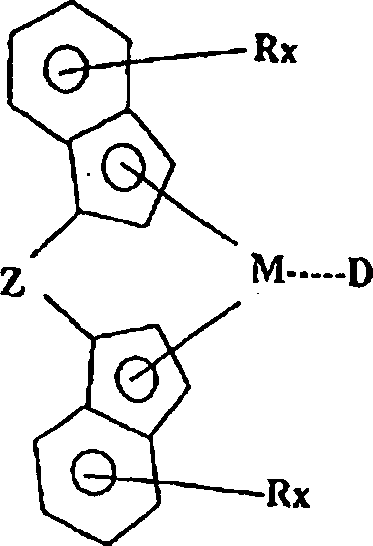
M Titan, Zirkonium
oder Hafnium darstellt,
D ein stabiles konjugiertes Dien, das
gegebenenfalls mit einer oder mehreren Kohlenwasserstoffgruppen,
Silylgruppen, Kohlenwasserstoffsilylgruppen, Silylkohlenwasserstoffgruppen
oder Gemischen davon, substituiert ist oder eine Lewis-Basen-Funktion enthalten
kann, darstellt, wobei D 4 bis 40 Nicht-Wasserstoffatome aufweist und mit M
einen n-Komplex bildet,
Z eine Brückengruppe darstellt, die eine
Alkylengruppe mit 1 bis 20 Kohlenstoffatomen oder eine Dialkylsilyl- oder
Germanylgruppe oder einen Alkylphosphin- oder Aminorest umfasst,
R
Wasserstoff oder Alkyl mit 1 bis 10 Kohlenstoffatomen darstellt
und x 1–6
ist.Particularly preferred metallocene complexes are those having the general formula:
M represents titanium, zirconium or hafnium,
D is a stable conjugated diene optionally substituted with one or more hydrocarbyl groups, silyl groups, hydrocarbylsilyl groups, silylhydrocarbyl groups or mixtures thereof or may contain a Lewis base function, wherein D has from 4 to 40 non-hydrogen atoms and M is one forms n-complex,
Z represents a bridging group comprising an alkylene group having 1 to 20 carbon atoms or a dialkylsilyl or germanyl group or an alkylphosphine or amino group,
R is hydrogen or alkyl of 1 to 10 carbon atoms and x is 1-6.
Besonders bevorzugte Metallocenkomplexe in dieser Familie sind jene, wo, wie durch Röntgenbeugung oder NMR deutlich gemacht, der Ligand D an das Atom M in einer η3-Weise π-gebunden ist. Solche Metallocenkomplexe werden durch das Atom M, das im Oxidationszustand +2 vorliegt, charakterisiert.Particularly preferred metallocene complexes in this family are those where, as evidenced by X-ray diffraction or NMR, the ligand D is π-bonded to the atom M in an η 3 -way. Such metallocene complexes are characterized by the atom M, which is in the +2 oxidation state.
Bevorzugte Komplexe sind jene, worin M Zirconium darstellt und Z Ethylen (CH2CH2) darstellt.Preferred complexes are those wherein M is zirconium and Z is ethylene (CH 2 CH 2 ).
Der
Ligand D ist besonders bevorzugt ausgewählt aus der Gruppe:
s-trans-η9,4-Diphenyl-1,3-butadien; s-trans-η9-3-Methyl-1,3-pentadien; s-trans-η4-1,4-Dibenzyl-1,3-butadien; s-trans-η4-2,4-Hexadien;
s-trans-η9-1,4-Ditolyl-1,3-butadien; s-trans-η9-1,4-Bis(trimethylsilyl)-1,3-butadien; s-cis-η4-1,4-Diphenyl-1,3-butadien; s-cis-η9-3-Methyl-1,3-pentadien;
s-cis-η4-2,4-Hexadien; s-cis-η4-2,4-Hexadien;
s-cis-η9-1,3-Pentadien; s-cis-η4-1,4-Ditolyl-1,3-butadien;
und s-cis-η4-1,4-Bis(trimethylsilyl)-1,3-butadien, wobei die s-cis-Dien-Gruppe
mit dem Metall einen π-Komplex
bildet, wie hierin definiert.The ligand D is particularly preferably selected from the group:
s-trans-η 9 , 4-diphenyl-1,3-butadiene; s-trans-η 9 -3-methyl-1,3-pentadiene; s-trans-η 4 -1,4-dibenzyl-1,3-butadiene; s-trans-η 4 -2,4-hexadiene; s-trans-η 9 -1,4-ditolyl-1,3-butadiene; s-trans-η 9 -1,4-bis (trimethylsilyl) -1,3-butadiene; s-cis-η 4 -1,4-diphenyl-1,3-butadiene; s-cis-η 9 -3-methyl-1,3-pentadiene; s-cis-η 4 -2,4-hexadiene; s-cis-η 4 -2,4-hexadiene; s-cis-η 9 -1,3-pentadiene; s-cis-η 4 -1,4-ditolyl-1,3-butadiene; and s-cis-η 4 -1,4-bis (trimethylsilyl) -1,3-butadiene, wherein the s-cis-diene group forms a π-complex with the metal as defined herein.
Besonders geeignet sind äußerlich substituierte Diene, insbesondere die 1,4-Diphenyl-substituierten Butadiene.Especially are suitable externally substituted dienes, in particular the 1,4-diphenyl-substituted butadienes.
Die Herstellung von diesen Komplexen wird ausführlich in WO 96/04290 beschrieben, welche auch Beispiele für geeignete Vertreter zur Verwendung in der vorliegenden Erfindung auflistet.The Preparation of these complexes is described in detail in WO 96/04290, which also examples for suitable agents for use in the present invention lists.
Wenn
die Diengruppe D eine Lewis-Basenfunktionalität aufweist, kann diese aus
den nachstehenden Gruppen ausgewählt
sein:
-NR2, -PR2,
-AsR2, -OR, -SR.When the diene group D has a Lewis base functionality, it may be selected from the following groups:
-NR 2 , -PR 2 , -AsR 2 , -OR, -SR.
Besonders bevorzugte Diene dieses Typs sind Dialkylami- nophenyl-substituierte Diene, beispielsweise 1-Phenyl-4-(N,N-diethylaminophenyl)-1,3-butadien.Especially preferred dienes of this type are dialkylaminophenyl-substituted dienes, for example 1-phenyl-4- (N, N-diethylaminophenyl) -1,3-butadiene.
Der
besonders bevorzugte Komplex ist Ethylen-bis(indenyl)zirconium(II)-1,4-diphenylbutadien
mit der nachstehenden 
Auch bevorzugt ist das hydrierte Analoge Ethylen-bis-(tetrahydroindenyl)zirconium(II)-1,4-diphenylbutadien.Also Preferably, the hydrogenated analog is ethylene bis (tetrahydroindenyl) zirconium (II) -1,4-diphenylbutadiene.
Die zur Verwendung mit den vorstehend genannten Metallocenkomplexen geeigneten aktivierenden Cokatalysatoren sind vorzugsweise Tri(kohlenwasserstoff)borane, insbesondere Trialkylborane oder Triarylborane. Besonders bevorzugte Cokatalysatoren sind perfluorierte Tri(aryl)borverbindungen und ganz besonders Tris(pentafluorphenyl)boran. Andere Aktivatoren schließen Boratsalze eines Kations ein, welches eine Brönstedsäure darstellt, das in der Lage ist, ein Proton zu einem der Liganden an dem Metallocenkomplex abzugeben. Der Potentialbereich von diesen beiden Arten von Aktivatoren wird in WO 96/04290 erläutert, wobei die relevanten Abschnitte hierin durch Hinweis einbezogen sind.The for use with the aforementioned metallocene complexes suitable activating cocatalysts are preferably tri (hydrocarbyl) boranes, in particular trialkylboranes or triarylboranes. Especially preferred Cocatalysts are perfluorinated tri (aryl) boron compounds and especially tris (pentafluorophenyl) borane. Other activators include borate salts a cation that represents a Brönsted acid that is capable is to donate a proton to one of the ligands at the metallocene complex. The potential range of these two types of activators is in WO 96/04290, the relevant sections being incorporated herein by reference are.
Eine weitere Art von Aktivator, der zur Verwendung mit den erfindungsgemäßen Metallocenkomplexen geeignet ist, sind die Reaktionsprodukte von (A) ionischen Verbindungen, die ein Kation und ein Anion umfassen, wobei das Anion mindestens einen Substituenten aufweist, der eine Einheit mit einem aktiven Wasserstoffatom umfasst, und (B) einer Organometall- oder Metalloidverbindung, worin das Metall oder Metalloid von den Gruppen 1–14 des Periodensystems ist.A another type of activator suitable for use with the metallocene complexes of the invention is the reaction products of (A) ionic compounds, which comprise a cation and an anion, wherein the anion is at least has a substituent which is a unit with an active Hydrogen atom, and (B) an organometallic or metalloid compound, wherein the metal or metalloid is from groups 1-14 of Periodic table is.
Geeignete Aktivatoren dieses Typs werden in WO 98/27119 beschrieben, wobei die relevanten Teile davon hierin durch diesen Hinweis einbezogen sind.suitable Activators of this type are described in WO 98/27119, wherein the relevant parts thereof are incorporated herein by this reference are.
Ein besonders bevorzugter Aktivator dieses Typs ist das aus Alkylammonium-tris(pentafluorphenyl)-4-(hydroxyphenyl)borate und Trialkylamine erhaltene Reaktionsprodukt. Beispielsweise ist ein bevorzugter Aktivator das Reaktionsprodukt von bis (hydriertem Talgalkyl)methylammoniumtris(pentafluorphenyl)-(4-hydroxyphenyl)borat und Triethylamin.One particularly preferred activator of this type is that of alkylammonium tris (pentafluorophenyl) -4- (hydroxyphenyl) borates and trialkylamines obtained reaction product. For example a preferred activator the reaction product of bis (hydrogenated Tallow alkyl) methylammonium tris (pentafluorophenyl) - (4-hydroxyphenyl) borate and triethylamine.
Das Molverhältnis von Metallocenkomplex zu in dem erfindungsgemäßen Verfahren angewendetem Aktivator kann im Bereich 1:10000 bis 100:1 liegen. Ein bevorzugter Bereich ist 1:5000 bis 10:1 und besonders bevorzugt 1:10 bis 10:1.The molar ratio of metallocene complex to activator used in the process according to the invention may be in the range 1: 10000 to 100: 1. A preferred range is 1: 5000 to 10: 1 and especially preferably 1:10 to 10: 1.
Das zur Verwendung in der vorliegenden Erfindung geeignete Metallocen-Katalysatorsystem wird am geeignetsten getragen. Typischerweise kann der Träger ein beliebiger organischer oder anorganischer inerter Feststoff sein. Jedoch sind insbesondere poröse Träger, wie Talkum, anorganische Oxide und harzartige Trägermaterialien, wie Polyolefine, welche gut bekannte Vorteile aufweisen, bei der Katalyse bevorzugt. Geeignete anorganische Oxidmaterialien, die verwendet werden können, schließen Metalloxide der Gruppe 2, 13, 14 oder 15, wie Siliziumdioxid, Aluminiumoxid, Siliziumdioxid-Aluminiumoxid und Gemische davon, ein. Andere anorganische Oxide, die entweder einzeln oder in Kombination mit Siliziumdioxid, Aluminiumoxid oder Siliziumdioxid-Aluminiumoxid angewendet werden können, sind Magnesiumoxid, Titanoxid oder Zirconiumoxid. Andere geeignete Trägermaterialien können als fein verteilte Polyolefine, wie Polyethylen, angewendet werden.The metallocene catalyst system suitable for use in the present invention is most suitably worn. Typically, the carrier may be be any organic or inorganic inert solid. However, in particular, they are porous Carrier, such as talc, inorganic oxides and resinous support materials, such as polyolefins, which have well known advantages, are preferred in catalysis. Suitable inorganic oxide materials that may be used include metal oxides Group 2, 13, 14 or 15, such as silica, alumina, Silica-alumina and mixtures thereof. Other inorganic Oxides, either individually or in combination with silicon dioxide, Alumina or silica-alumina can, are magnesia, titania or zirconia. Other suitable support materials can as finely divided polyolefins, such as polyethylene.
Das besonders bevorzugte Trägermaterial zur Verwendung in den getragenen Katalysatoren des erfindungsgemäßen Verfah rens ist Siliziumdioxid. Geeignete Siliziumdioxide schließen Crossfield ES70 und Davidson 948 Siliziumdioxide ein.The particularly preferred carrier material for use in the supported catalysts of the method according to the invention is silicon dioxide. Suitable silicas include Crossfield ES70 and Davidson 948 silicas.
Es ist bevorzugt, dass das Siliziumdioxid vor der Verwendung getrocknet wird, und dies wird typischerweise durch Erhitzen bei erhöhten Temperaturen, beispielsweise zwischen 200 und 850°C, ausgeführt.It it is preferred that the silica be dried before use and this is typically done by heating at elevated temperatures, for example, between 200 and 850 ° C, executed.
In einem weiteren Aspekt der vorliegenden Erfindung können Homopolymere von Ethylen oder Copolymere von Ethylen und einem oder mehreren α-Olefinen, die drei bis zwanzig Kohlenstoffatome enthalten, in Gegenwart eines einzigen Metallocenkatalysators, umfassend einen Metallocenkomplex und einen aktivierenden Cokatalysator, wobei der aktivierende Cokatalysator kein Alkylaluminoxan, beispielsweise Methylaluminoxan (MAO), darstellt, hergestellt werden.In Another aspect of the present invention may be homopolymers of ethylene or copolymers of ethylene and one or more α-olefins, which contain three to twenty carbon atoms, in the presence of one single metallocene catalyst comprising a metallocene complex and an activating cocatalyst, wherein the activating cocatalyst is not an alkylaluminoxane, for example methylaluminoxane (MAO), getting produced.
In solchen Fällen wird ein Copolymer von Ethylen und einem oder mehreren α-Olefinen, die drei bis zwanzig Kohlenstoffatome enthalten, bereitgestellt, wobei das Copolymer aufweist:
- a) einen Langketten-Verzweigungswert g' von weniger als oder gleich 0,9 und
- b) einen Wert der Ableitungsfunktion δ(MS)/δ(logγ .) und einen Mw/Mn, der der Beziehung genügt:
- a) a long chain branch value g 'of less than or equal to 0.9 and
- b) a value of the derivative function δ (MS) / δ (logγ.) and an M w / M n satisfying the relation:
Solche Polymere können auch definiert werden durch:
- a) einen Langketten-Verzweigungswert g' von weniger als oder gleich 0,9 und
- b) einen Wert der Ableitungsfunktion δ(MS)/δ(P) und Mw/Mn, der der Beziehung genügt:
- a) a long chain branch value g 'of less than or equal to 0.9 and
- b) a value of the derivative function δ (MS) / δ (P) and M w / M n satisfying the relation:
Die Polymere können auch bezüglich der Fließaktivierungsenergie Ea definiert werden, wie nachstehend:
- (a) eine Fließaktivierungsenergie, Ea, von einem Wert größer als oder gleich 40 kJ/Mol und
- (b) einen Wert, der der Ableitungsfunktion
δ (MS)/δ(logγ .) und einem Mw/Mn, der der Beziehung genügt:
- (a) eine Fließaktivierungsenergie, Ea, von einem Wert größer als oder gleich 40 kJ/Mol und
- (b) einen Wert der Ableitungsfunktion δ(MS)/δ(P) und einen Mw/Mn, der der Beziehung genügt:
- (a) a flow activation energy, Ea, of greater than or equal to 40 kJ / mol and
- (b) a value equal to the derivative function
δ (MS) / δ (logγ.) And an M w / M n satisfying the relation:
- (a) a flow activation energy, Ea, of greater than or equal to 40 kJ / mol and
- (b) a value of the derivative function δ (MS) / δ (P) and an M w / M n satisfying the relation:
Das Polymer kann definiert werden durch:
- (a) einen Langketten-Verzweigungswert g' von weniger als oder gleich 0,9 und
- (b) einen Wert der Ableitungsfunktion mit δ(MS)/δ(P) und eine Fließaktivierungsenergie,
Ea, die der Beziehung genügt:
- (a) einen Langketten-Verzweigungswert g' von weniger als oder gleich 0,9 und
- (b) einen Wert der Ableitungsfunktion δ(MS)/δ(logγ .) und eine Fließaktivierungsenergie
Ea, die der Beziehung genügt:
- (a) a long chain branch value g 'of less than or equal to 0.9 and
- (b) a value of the derivative function with δ (MS) / δ (P) and a flow activation energy, Ea satisfying the relationship:
- (a) a long chain branch value g 'of less than or equal to 0.9 and
- (b) a value of the derivative function δ (MS) / δ (logγ.) and a flow activation energy Ea satisfying the relationship:
Die erfindungsgemäßen Copolymere sind Copolymere von Ethylen mit einem oder mehreren α-Olefinen mit drei bis zwanzig Kohlenstoffatomen. Vorzugsweise hat das α-Olefin zwischen drei und zehn Kohlenstoffatome, besonders bevorzugt drei und acht. Beispiele für die besonders bevorzugten α-Olefine schließen 1-Buten, 1-Hexen, 4-Methyl-1-penten, 1-Octen ein. Besonders geeignet sind Copolymere von Ethylen mit 1-Hexen oder 4-Methyl-1-penten.The Copolymers of the invention are copolymers of ethylene with one or more alpha olefins with three to twenty carbon atoms. Preferably, the α-olefin has between three and ten carbon atoms, more preferably three and eight. examples for the most preferred α-olefins include 1-butene, 1-hexene, 4-methyl-1-pentene, 1-octene. Particularly suitable are copolymers of ethylene with 1-hexene or 4-methyl-1-pentene.
Hergestellte Gegenstände, die aus den erfindungsgemäßen, neuen Polymeren gemacht wurden, können unter Verwendung von herkömmlichen Polyolefinverarbeitungstechniken hergestellt werden. Geeignete Gegenstände dieses Typs schließen Folie (beispielsweise Guss, Blasen, usw.), Fasern und Formgegenstände (z. B. hergestellt unter Verwendung von Spritzformen, Blasformen oder Rotorformverfahren) ein.produced objects from the invention, new Polymers can be made using conventional Polyolefin processing techniques are produced. Suitable objects of this Close type Foil (e.g., cast, blister, etc.), fibers and molded articles (e.g. B. produced using injection molding, blow molding or Rotor molding method).
Andere verwendbare Zusammensetzungen sind auch möglich, die neue, erfindungsgemäße Polymere und mindestens ein weiteres natürliches oder synthetisches Polymer umfassen. Solche Zusammensetzungen können durch herkömmliche Verfahren, beispielswei se durch Trockenvermischen, gebildet werden. Andere geeignete Verarbeitungstechniken können angewendet werden, um solche Zusammensetzungen, die die neuen erfindungsgemäßen Polymere umfassen, herzustellen.Other Usable compositions are also possible, the novel polymers of the invention and at least one more natural or synthetic polymer. Such compositions can by conventional Process, beispielswei se by dry mixing, are formed. Other suitable processing techniques may be used to such compositions containing the novel polymers of the invention include, manufacture.
Die neuen, erfindungsgemäßen Polymere können geeigneterweise für die Herstellung von Folien verwendet werden und spezielle Eigenschaften der Folieneigenschaften werden nachstehend in den Beispielen angegeben.The new, inventive polymers can suitably for the production of films are used and special properties the film properties are given below in the examples.
Insbesondere können die neuen Polymere der vorliegenden Erfindung angewendet werden, um Folien mit einem Dart-Schlagwert, wie durch ASTM D1709 (Verfahren A) gemessen, von größer als 100 und bis zu etwa 2000 herzustellen. Solche Folien umfassen Copolymere der Erfindung mit einer Dichte von 0,910-0,930, einem I21/I2-Wert von > 35 und einem Langketten-Verzweigungswert g' im Bereich von 0,5 bis 0,9. Die Zugabe von Copolymeren zeigt die nachstehend im Einzelnen definierten Schmelzfestigkeitseigenschaften.In particular, the novel polymers of the present invention can be used to make sheets having a dart impact value as measured by ASTM D1709 (Method A) greater than 100 and up to about 2000. Such films include copolymers of the invention having a density of 0.910-0.930, an I 21 / I 2 value of> 35 and a long chain branching value g 'in the range of 0.5 to 0.9. The addition of copolymers exhibits the melt strength properties defined in detail below.
Insbesondere
zeigen sie einen Wert der Ableitungsfunktion von δ(MS)/δ(P) von ≥ 0,6. Alternativ
können
sie auch einen Wert der Ableitungsfunktion δ(MS)/δ(P) und eine Fließaktivierung
Ea von
Solche Polymere zeigen auch eine Fließaktivierung Ea von ≥ 40.Such Polymers also show flow activation Ea of ≥ 40.
Die vorliegende Erfindung wird nun weiterhin mit Bezug auf die nachstehenden Beispiele und Figuren, die die Herstellung der Copolymere gemäß der vorliegenden Erfindung und einen Vergleich mit kommerziell erhältlichen Materialien des Standes der Technik zeigen, erläutert.The The present invention will now be further described with reference to the following Examples and figures illustrating the preparation of the copolymers according to the present invention Invention and a comparison with commercially available Materials of the prior art show, explained.
Tabelle 2 gibt einen Bereich von relevanter physikalischer Information für sieben erfindungsgemäße Beispiele und Beispiele von elf kommerziell erhältlichen oder repräsentativen Materialien des Standes der Technik an.table Figure 2 gives a range of relevant physical information for seven Inventive examples and examples of eleven commercially available or representative ones Materials of the prior art.
Die
Begriffe "Exceed", "Affinity" und "Dowlex" sind eingetragene
Handelsmarken und hierin als solche gekennzeichnet. Affinity FM1570,
Exceed ML27MAX, Exceed 350D60, Dowlex 2045, NTA 101, LL7206AF, LL7209AA,
LD 5320AA, LD5310AA und Borealis LE 65 92 sind alle kommerziell
erhältliche
Produkte, deren Herkunft dem Fachmann bekannt sein wird. EBI/Zr(IV)/MAO
ist ein Versuchsmaterial, das gemäß
Die nachstehenden analytischen Verfahren wurden verwendet, um die neuen erfindungsgemäßen Polymere zu charakterisieren und um die Polymere mit dem Stand der Technik und den kommerziell verfügbaren Materialien zu vergleichen.The The following analytical procedures were used to identify the new ones polymers of the invention to characterize and the polymers of the prior art and the commercially available materials to compare.
1. Rheologische Charakterisierung1. Rheological characterization
1.1 Kapillar-Rheometrie1.1 Capillary Rheometry
Die Scherkapillarviskositäten der Polymere wurden bei 190°C unter Verwendung eines Rosand RH 7 Doppelbohrungs-Kapillar-Rheometers, mit zwei 1,0 mm Durchmesser Düsen: eine mit einer Düsenlänge von 16 mm, während die andere eine (null) Düsenlänge von 0,25 mm aufweist, gemessen. Der Düseneintrittswinkel für beide Düsen ist 190°. Alle Daten sind für die Wirkungen der Düseneinlass- und -auslassdrücke (Bagley-Korrektur) und für Nicht-Newton'schen Strömung (Rabinowitsch-Korrektur) korrigiert. Die Scherviskosität bei einer Scherrate von 500/s η(500/s) wird aus der korrigierten Strömungskurve herausgezogen.The Scherkapillarviskositäten the polymers were at 190 ° C using a Rosand RH 7 double-bore capillary rheometer, with two 1.0 mm diameter nozzles: one with a nozzle length of 16 mm while the other one (zero) nozzle length of 0.25 mm measured. The nozzle entry angle for both Nozzles is 190 °. All Data is for the effects of the nozzle inlet and outlet pressures (Bagley correction) and for Non-Newtonian flow (Rabinowitsch correction) corrected. The shear viscosity at a Shear rate of 500 / s η (500 / s) gets out of the corrected flow curve pulled out.
1.2 Rheotens-Extensional-Rheometrie1.2 Rheotens Extensional Rheometry
Die Schmelzfestigkeit des Polymers wird bei 190°C unter Verwendung eines Göttfert Rheotens Extensional-Rheometers in Verbindung mit einem Rosand RH 7 Kapillar-Rheometer gemessen. Dies wird durch Extrudieren des Polymers bei einem konstanten Druck (P) durch eine Düse von 1,5 mm Durchmesser und 30 mm Länge und mit einem 90°-Eintrittswinkel erreicht.The Melt strength of the polymer is at 190 ° C using a Göttfert Rheotens Extensional rheometers in conjunction with a Rosand RH 7 capillary rheometer measured. This is done by extruding the polymer at a constant Pressure (P) through a nozzle 1.5 mm in diameter and 30 mm in length and with a 90 ° entry angle reached.
Ist einmal ein gegebener Extrusionsdruck ausgewählt, wird der Kolben des Kapillar-Rheometers durch seinen Zylinder mit einem Durchmesser von 15 mm bei einer zum Konstanthalten des Drucks ausreichenden Geschwindigkeit unter Verwendung des Konstantdrucksystems des Rheometers durchbewegt. Die nominale Wandscherrate (γ .) für einen gegebenen Extrusionsdruck kann dann für das Polymer bei dem ausgewählten Druck berechnet werden. Das Extrudat wird mit einem Paar Zahnrädern bei einer beschleunigenden Geschwindigkeit (V) abgezogen. Die Beschleunigung reicht von 0,12 bis 1,2 cm/s2, in Abhängigkeit von den Fließeigenschaften des zu testenden Polymers. Die Zugkraft (F), die das Extrudat erfährt, wird mit einem Wandler gemessen und mit einem Bandschreiber zusammen mit einer Zuggeschwindigkeit aufgezeichnet. Die maximale Kraft beim Bruch wird als Schmelzfestigkeit (MS) bei einem konstanten Extrusionsdruck (P) oder bei seiner entsprechenden Extrusionsrate (γ) definiert. Drei oder vier Extrusionsdrücke (6, 8, 12, 16 MPa) werden typischerweise für jedes Polymer in Abhängigkeit von seinen Fließeigenschaften ausgewählt. Für jeden Extrusionsdruck wird ein Minimum von 3 MS Messungen ausgeführt und ein mittlerer MS-Wert wird dann erhalten.Once a given extrusion pressure is selected, the piston of the capillary rheometer is moved through its 15 mm diameter cylinder at a rate sufficient to maintain pressure constant using the constant pressure system of the rheometer. The nominal wall shear rate (γ) for a given extrusion pressure can then be calculated for the polymer at the selected pressure. The extrudate is withdrawn with a pair of gears at an accelerating speed (V). The acceleration ranges from 0.12 to 1.2 cm / s 2 , depending on the flow properties of the polymer to be tested. The tensile force (F) experienced by the extrudate is measured with a transducer and recorded with a tape recorder along with a pulling speed. The maximum force at break is defined as melt strength (MS) at a constant extrusion pressure (P) or at its corresponding extrusion rate (γ). Three or four extrusion pressures (6, 8, 12, 16 MPa) are typi selected for each polymer depending on its flow properties. For each extrusion pressure, a minimum of 3 MS measurements are taken and a mean MS value is then obtained.
Die
Ableitungsfunktionen des Extrusionsdrucks und Scherrate in Abhängigkeit
von Schmelzfestigkeiten, δ(MS)/δ(P) und δ(MS)/δ((logγ .), für jedes
Polymer werden aus den Anstiegen (durch die Anpassung an die Linie
der kleinsten Quadrate) von den Kurven des mittleren MS gegen Druck
bzw. Scherrate berechnet. Die Schmelzfestigkeit und der Extrusionsdruck
bei einer Scherrate von 500/s, MS(500/s) bzw. P(500/s) wurden entsprechend
auch von diesen Kurven berechnet. (Siehe
1.3 Schmelzflussrate (2,16 kg)1.3 Melt flow rate (2.16 kg)
Die Schmelzflussrate (MFR) der Polymere wurde unter Bedingungen berechnet, die ISO 1133 (1991) und BS 2782:PART 720A:1979 Verfahren bestätigen. Das Gewicht des durch die Düse von 2,095 mm Durchmesser extrudierten Polymers bei einer Temperatur von 190°C während eines Zeitraums von 600 Sekunden und unter einer Standardlast von 2,16 kg wird aufgezeichnet.The Melt flow rate (MFR) of the polymers was calculated under conditions ISO 1133 (1991) and BS 2782: PART 720A: 1979 confirm procedures. The Weight of the nozzle of 2.095 mm diameter extruded polymer at one temperature from 190 ° C while a period of 600 seconds and under a standard load of 2.16 kg is recorded.
2. Molekular-Struktur-Charakterisierung2. Molecular Structure Characterization
Verschiedene Techniken (z. B. 13C NMR, GPC/LALLS, GPC/Grenzviskosität, GPC/on-line-Viskosimetrie und rheologische Fließaktivierungsenergie, usw.) wurden entwickelt, um das Vorliegen von Langkettenverzweigungen in Polymeren anzuzeigen.Various techniques (e.g., 13 C NMR, GPC / LALLS, GPC / intrinsic viscosity, GPC / on-line viscometry, and rheological flow activation energy, etc.) have been developed to indicate the presence of long chain branching in polymers.
2.1 Molekulargewichtsverteilung (Mw/Mn) und Langketten-Verzweigungs- (LCB) Messungen durch GPC/on-line-Viskosimetrie2.1 Molecular weight distribution (M w / M n ) and long chain branching (LCB) measurements by GPC / on-line viscometry
Die Molekulargewichtsverteilung wurde durch Gel-Permeations-Chromatographie/on-line-Viskosimetrie (GPC/OLV) unter Verwendung eines Waters 150CV bestimmt. Das folgende Verfahren basierte auf jenem, beschrieben von J. Leszec et al., Journal of Liquid Chromatography, 17, 1029 (1994). Es ist dem Fachmann gut bekannt, dass diese Technik einen Gehalt an Langkettenverzweigen (LCB) als eine Funktion des Molekulargewichts bereitstellen kann. Obwohl es möglich ist, die Daten bezüglich der Anzahl von Langkettenverzweigungen pro 1000 Kohlenstoffatome zu interpretieren, ist es ein alternativer Ansatz, die Daten bezüglich des Parameters g' zu interpretieren, der das Verhältnis der gemessenen Grenzviskosität zu jenem eines linearen Polymers mit dem gleichen Molekulargewicht bedeutet. Lineare Moleküle zeigen g' von 1, während Werte weniger als 1 das Vorliegen von LCB anzeigen. Wie immer kann die Verlässlichkeit der LCB-Bestimmungen durch Kombinieren der Ergebnisse aus verschiedenen Techniken stark erhöht werden, anstatt nur auf einem einzigen Verfahren zu basieren.The Molecular weight distribution was determined by gel permeation chromatography / on-line viscosimetry (GPC / OLV) using a Waters 150CV. The following Method based on that described by J. Leszec et al. Journal of Liquid Chromatography, 17, 1029 (1994). It is good to the expert it is known that this technique has a content of long chain branches (LCB) as a function of molecular weight. Although it is possible is the data regarding the number of long chain branches per 1000 carbon atoms it is an alternative approach to interpret the data regarding the parameter to interpret g ' the relationship the measured intrinsic viscosity to that of a linear polymer of the same molecular weight means. Linear molecules show g 'of 1, while Values less than 1 indicate the presence of LCB. As always can the reliability LCB determinations by combining the results of different Techniques greatly increased instead of being based on a single process.
Mittlere Werte von g' wurden aus der Gleichung <g'>LCB = [η]/[η]lin, worin [η] = Σ(wi[η]i) und [η]lin = Σ(wi[η]i,lin) berechnet, wobei wi die Gewichtsfraktion ist, [η]i gemessene Grenzviskositäten der Fraktionen des langkettig verzweigten Polymers darstellen und [η]i,lin die Grenzviskositäten der äquivalenten linearen Polymere des gleichen Molekulargewichts für je de Scheibe sind, alle berechnet auf den Daten von Scheiben des GPC/OLV-Versuchs. Das Mitteln wurde über den Bereich des Molekulargewichts ausgeführt, für den verfügbare Messungen von [η]i gemacht werden konnten. Die Daten wurden nicht für irgendeinen Beitrag zu g' korrigiert, aufgrund von kurzkettigem Verzweigen. Eine Molekulargewichtsverteilung, korrigiert für LCB, und Molekulargewichtsmittelwerte, korrigiert für LCB, wurden in der normalen Weise berechnet. Für einige Analysen von Polymeren, von denen bekannt ist, dass sie kein LCB enthalten, wurde das on-line-Viskosimeter nicht angewendet, und unkorrigierte Daten werden angeführt und folglich wird für diese kein LCB-Wert angegeben.Mean values of g 'were calculated from the equation <g'> LCB = [η] / [η] lin , where [η] = Σ (w i [η] i ) and [η] lin = Σ (w i [η ] i, lin ), where w i is the weight fraction, [η] i represent intrinsic viscosities of the fractions of the long chain branched polymer and [η] i, lin are the intrinsic viscosities of the equivalent linear polymers of the same molecular weight for each disc, all calculated on the data of slices of the GPC / OLV experiment. The averaging was done over the range of molecular weight for which available measurements of [η] i could be made. The data was not corrected for any contribution to g 'due to short-chain branching. A molecular weight distribution corrected for LCB and molecular weight averages corrected for LCB were calculated in the normal manner. For some analyzes of polymers known to contain no LCB, the on-line viscometer was not used and uncorrected data is quoted and therefore no LCB is given for it.
Fließaktivierungsenergie-(Ea)-MessungFließaktivierungsenergie- (Ea) measurement
Rheologische Messungen wurden an einem Rheometrics RDS-2 mit Parallelplatten vom Durchmesser 25 mm in dem dynamischen Modus ausgeführt. Zwei Belastung-Sweep-(SS)-Versuche wurden anfänglich ausgeführt, um den linearen viskoelastischen Stamm zu bestimmen, der ein Drehmomentsignal erzeugen würde, welches größer als 10% des vollen Maßstabs (2000 g·cm) für den Wandler über die volle Frequenz (beispielsweise 0,01 bis 100 Rad/s) und Temperatur- (beispielsweise 170° bis 210°C)-Bereiche ist. Der erste SS-Versuch wurde bei der höchsten Temperatur (z. B. 210°C) mit einer niedrig angewendeten Frequenz von 0,1 Rad/s ausgeführt. Dieser Test wird verwendet, um die Empfindlichkeit des Drehmoments bei niedriger Frequenz zu bestimmen. Der zweite Versuch wurde bei der niedrigsten Testtemperatur (z. B. 170°C) mit der höchsten angewendeten Frequenz von 100 Rad/s ausgeführt. Dies geschieht, um zu sichern, dass der ausgewählte angewendete Stamm deutlich in dem linearen viskoelastischen Bereich des Polymers liegt, sodass die oszillatorischen rheologischen Messungen keine Strukturveränderungen des Polymers wäh rend des Testens induzieren. Dieses Verfahren wurde für alle Proben ausgeführt.Rheological measurements were carried out on a Rheometrics RDS-2 with 25 mm diameter parallel plates in the dynamic mode. Two stress sweep (SS) trials were initially performed to determine the linear viscoelastic strain that would produce a torque signal greater than 10% of the full scale (2000 g · cm) for the full frequency transducer (FIG. for example, 0.01 to 100 rad / s) and temperature (for example, 170 to 210 ° C) ranges. The first SS test was carried out at the highest temperature (eg 210 ° C) with a low applied frequency of 0.1 rad / s. This test is used to determine the sensitivity of low frequency torque. The second trial was conducted at the lowest test temperature (eg 170 ° C) with the highest applied frequency of 100 rad / s. This is done to ensure that the selected applied strain is well within the linear viscoelastic region of the polymer such that the oscillatory rheological measurements do not induce structural changes of the polymer during testing. This procedure was carried out for all samples.
Die dynamischen rheologischen Masseeigenschaften (beispielsweise G', G'' und η*) von allen den Polymeren wurden dann bei 170°, 190° und 210°C gemessen. Bei jeder Temperatur wurden Scans als eine Funktion der winkelmäßigen Scherfrequenz (von 100 bis 0,01 Rad/s) bei einer konstanten Scherlast, geeigneterweise durch das vorstehend genannte Verfahren, durchgeführt.The dynamic rheological mass properties (for example G ', G' 'and η *) of all the polymers were then at 170 °, 190 ° and 210 ° C measured. At each temperature, scans were a function of the angular shear rate (from 100 to 0.01 rad / s) at a constant shear load, suitably by the above method.
Die
dynamischen rheologischen Daten wurden dann unter Verwendung von
Rheometrics RHIOS V4.4 Software analysiert. Die nachstehenden Bedingungen
wurden für
die Zeit – Temperatur
(t – T)
Superposition und die Bestimmung der Fließaktivierungsenergien (Ea)
gemäß einer
Arrhenius-Gleichung, aT = exp(Ea/kT), welche
den Verschiebungsfaktor (aT) zu Ea betrifft, ausgewählt:
Die erfindungsgemäßen Copolymere können auch mit Bezug auf das Schmelzflussverhältnis beschrieben werden, welches das Verhältnis von I21/I2 ist, worin I21 bei 190°C gemäß ASTM-D-1238 Bedingung E gemessen wird.The copolymers of the present invention may also be described in terms of melt flow ratio, which is the ratio of I 21 / I 2 wherein I 21 is measured at 190 ° C according to ASTM D-1238 Condition E.
Die erfindungsgemäßen Copolymere haben einen I21/I2-Wert von ≥ 35, vorzugsweise ≥ 40.The copolymers according to the invention have an I 21 / I 2 value of ≥ 35, preferably ≥ 40.
BEISPIEL 1 (Herstellung und Verwendung von Zr(II)-Polymerisationskatalysator)EXAMPLE 1 (Preparation and use of Zr (II) polymerization catalyst)
(i) Behandlung von Siliziumdioxid(i) Treatment of silica
Eine Suspension von Crossfield ES70 silica (20 kg, vorher calciniert bei 500°C für 5 Stunden) in 110 Litern Hexan, wurde in einem 240-Liter-Gefäß unter Stickstoff aufgefüllt und 3,0 g Stadis 425 (verdünnt in 1 Liter Hexan) wurde zugegeben. Eine Lösung von TEA in Hexan (30,0 Mol, 0,940 M Lösung) wurde langsam zu der gerührten Suspension innerhalb 30 Minuten unter Halten der Temperatur der Suspension bei 30°C gegeben. Die Suspension wurde weitere 2 Stunden gerührt. Das Hexan wurde abdekantiert und das Siliziumdioxid mit Hexan gewaschen, sodass der Aluminiumgehalt in der Endwaschung weniger als 1 mMol Al/Liter war. Schließlich wurde die Suspension im Vakuum bei 60°C getrocknet, unter Gewinnung eines rieselfähigen, behandelten Siliziumdioxidpulvers.A Suspension of Crossfield ES70 silica (20 kg, previously calcined at 500 ° C for 5 hours) in 110 liters of hexane, was placed in a 240-liter vessel Nitrogen filled up and 3.0 g Stadis 425 (diluted in 1 liter of hexane) was added. A solution of TEA in hexane (30.0 Mole, 0.940 M solution) slowly became the most stirred Suspension within 30 minutes while keeping the temperature of the Suspension at 30 ° C given. The suspension was stirred for a further 2 hours. The Hexane was decanted off and the silica washed with hexane, so that the aluminum content in the final wash is less than 1 mmol Al / liter was. After all The suspension was dried in vacuo at 60 ° C, with recovery a free-flowing, treated silica powder.
(ii) Herstellung von Katalysator(ii) Preparation of catalyst
Toluol, getrocknet über Molekularsieben (350 ml), wurde zu 100 g des behandelten Siliziumdioxidpulvers in einem großen Schlenk-Rohr in einer trockenen Stickstoff-Glovebox gegeben. Das Rohr wurde gut geschüttelt, unter Bildung einer Suspension und 1 Stunde stehen lassen. Zu der Suspension wurde eine Lösung von Tris(pentafluorphenyl)bor in Toluol (11,3 ml, 7,85 Gewichts-%, d = 0,88 g/ml) mittels Spritze gegeben. Dann wurde rac-Ethylen-bis-indenylzirconocen-1,4-diphenylbutadien (0,845 g) zugegeben. Die Suspension wurde 5 Minuten gut geschüttelt, dann im Vakuum bei Umgebungstemperatur getrocknet, unter Gewinnung eines rieselfähigen rosa/roten Pulvers.Toluene, dried over Molecular sieves (350 ml) became 100 g of the treated silica powder in a big one Schlenk tube placed in a dry nitrogen glove box. The Pipe was well shaken, to form a suspension and stand for 1 hour. To the Suspension became a solution of Tris (pentafluorophenyl) boron in toluene (11.3 ml, 7.85% by weight, d = 0.88 g / ml) by syringe. Then, rac-ethylene-bis-indenylzirconocene-1,4-diphenylbutadiene was obtained (0.845 g) was added. The suspension was shaken well for 5 minutes, then dried in vacuo at ambient temperature to obtain a pourable pink / red powder.
(iii) Gasphasen-Wirbelschicht-Herstellung eines Ethylen/Hexen-1-Copolymers(iii) gas-phase fluidized bed production an ethylene / hexene-1 copolymer
Ethylen, Hexen-1, Wasserstoff und Stickstoff wurden unter Verwendung eines kontinuierlichen Wirbelschichtreaktorsystems vom Durchmesser 15 cm polymerisiert. Polymerprodukt wurde in regelmäßigen Intervallen aus dem Reaktor entfernt. Die Arbeitsbedingungen werden in Tabelle 1 angegeben. Das Produkt war ein weißes, rieselfähiges Pulver.ethylene, Hexene-1, hydrogen and nitrogen were prepared using a Continuous fluidized bed reactor of diameter 15 cm polymerized. Polymer product was withdrawn from the reactor at regular intervals away. The working conditions are given in Table 1. The product was a white, pourable Powder.
Beispiele 2 und 3 (Herstellung und Verwendung von Zr(II)Katalysatoren)Examples 2 and 3 (preparation and use of Zr (II) catalysts)
(i) Behandlung von Siliziumdioxidträger(i) Treatment of silica carrier
110 Liter Hexan wurden in einem 240-Liter-Gefäß unter Stickstoff vorgelegt und 1,7 g Stadis 425 (verdünnt auf 1 Gewichtsprozent in Hexan) wurden zugegeben. 11 kg ES70 Crossfield Silica (vorher bei 500°C für 5 Stunden getrocknet) wurde dann zugegeben. 16,5 Mol TEA (0,87 Mol in Hexan) wurden dann bei 30°C während eines Zeitraums von 30 Minuten zugegeben. Nach einem Haltezeitraum von 2 Stunden wurde das Hexan abdekantiert und das Siliziumdioxid wurde 6-mal mit 130 Litern Hexan gewaschen.110 liters of hexane were placed in a 240 liter vessel under nitrogen and 1.7 g of Stadis 425 (ver diluted to 1 weight percent in hexane) were added. 11 kg of ES70 Crossfield Silica (previously dried at 500 ° C for 5 hours) was then added. 16.5 moles of TEA (0.87 mole in hexane) were then added at 30 ° C over a period of 30 minutes. After a 2 hour hold, the hexane was decanted off and the silica was washed 6 times with 130 liters of hexane.
(ii) Herstellung des Katalysators(ii) Preparation of the catalyst
Das wie vorstehend behandelte Siliziumdioxid wurde getrocknet und dann wurden 38 Liter Toluol zugegeben. 11,7 kg rac-Ethylen-bis-indenylzirconocen-1,4-diphenylbutadienlösung in Toluol (1,32 Gewichtsprozent) wurden bei Umgebungstemperatur innerhalb eines Zeitraums von 15 Minuten zugegeben. 0,7 g Stadis 425 (verdünnt auf 1 Gewichtsprozent in Toluol) wurden zugegeben. Der Katalysator wurde dann unter Vakuum (4 mmHg) bei 40°C getrocknet, unter Gewinnung eines rieselfähigen Pulvers.The As above treated silica was dried and then 38 liters of toluene were added. 11.7 kg of rac-ethylene-bis-indenylzirconocene-1,4-diphenylbutadiene solution in Toluene (1.32 weight percent) was at ambient temperature within a period of 15 minutes. 0.7 g Stadis 425 (diluted on 1 weight percent in toluene) were added. The catalyst was then under vacuum (4 mmHg) at 40 ° C dried, yielding a free-flowing powder.
Dann wurden 2,33 kg Trispentafluorphenylborlösung (6,12 Gewichtsprozent in Toluol) bei Umgebungstemperatur innerhalb eines Zeitraums von 2 Stunden unter Halten von kontinuierlichem Rühren zugegeben. Nach einem Haltezeitraum von 1 Stunde wurde wiederum unter Beibehalten des Bewegens ein rosa/roter Katalysator mit darin zurückbleibendem Lösungsmittel erhalten.Then 2.33 kg of trispentafluorophenylboron solution (6.12 weight percent in toluene) at ambient temperature over a period of 2 hours while maintaining continuous stirring. After one Retention period of 1 hour was again maintained while maintaining the Moving a pink / red catalyst with it remaining behind solvent receive.
(iii) Gasphasen-Wirbelschicht-Herstellung eines Ethylen/Hexen-1-Copolymers(iii) gas-phase fluidized bed production an ethylene / hexene-1 copolymer
Ethylen, Hexen-1, Wasserstoff und Stickstoff wurden in einen kontinuierlichen Wirbelschichtreaktor mit einem Durchmesser von 45 cm gegeben. Das Polymerprodukt wurde kontinuierlich aus dem Reaktor entfernt. Die Arbeitsbedingungen werden in Tabelle 1 angegeben:ethylene, Hexene-1, hydrogen and nitrogen were in a continuous Fluidized bed reactor with a diameter of 45 cm given. The Polymer product was continuously removed from the reactor. The Working conditions are given in Table 1:
Beispiel 4Example 4
(i) Behandlung von Siliziumdioxid(i) Treatment of silica
Eine Suspension von ES70 silica (16 kg, vorher bei 500°C für 5 Stunden calciniert) in 110 Litern Hexan wurde in einem 240-Liter-Gefäß unter Stickstoff aufgefüllt. 1,7 g Stadis 425, verdünnt in 1 l Hexan, wurden zugegeben. Eine Lösung von TEA in Hexan (24,0 Mol, 1,0 M Lösung) wurde langsam zu der gerührten Suspension innerhalb 30 Minuten unter Halten der Temperatur der Suspension bei 30°C gegeben. Die Suspension wurde weitere 2 Stunden gerührt. Das Hexan wurde filtriert und das Siliziumdioxid mit Hexan gewaschen, sodass der Aluminiumgehalt in der Endwaschung weniger als 1 mMol Al/Liter war. Schließlich wurde die Suspension im Vakuum bei 60°C getrocknet, unter Gewinnung eines rieselfähigen, behandelten Siliziumdioxidpulvers.A Suspension of ES70 silica (16 kg, previously at 500 ° C for 5 hours calcined) in 110 liters of hexane was placed in a 240 liter vessel Nitrogen filled up. 1.7 g Stadis 425, diluted in 1 liter of hexane were added. A solution of TEA in hexane (24.0 Mole, 1.0 M solution) slowly became the most stirred Suspension within 30 minutes while keeping the temperature of the Suspension at 30 ° C given. The suspension was stirred for a further 2 hours. The Hexane was filtered and the silica washed with hexane, so that the aluminum content in the final wash is less than 1 mmol Al / liter was. After all The suspension was dried in vacuo at 60 ° C, with recovery a free-flowing, treated silica powder.
(ii) Katalysatorherstellung(ii) catalyst preparation
41,6 l Toluol wurden zu dem vorstehend behandelten Siliziumdioxidpulver gegeben. 12,67 kg rac-Ethylen-bis-indenylzirconocen-1,4-diphenylbutadienlösung in Toluol (1,16 Gewichtsprozent) wurden bei Umgebungstemperatur innerhalb eines Zeitraums von 15 min zugegeben, dann Halten bei 25°C für 15 min. 50 ppm Stadis 425, verdünnt in 1 l Toluol, wurden zugegeben. Der Katalysator wurde dann unter Vakuum bei 40°C getrocknet, unter Gewinnung eines rieselfähigen Pulvers.41.6 Toluene became the above-treated silica powder given. 12.67 kg of rac-ethylene-bis-indenylzirconocene-1,4-diphenylbutadiene solution in Toluene (1.16 weight percent) was at ambient temperature within for 15 minutes, then hold at 25 ° C for 15 minutes. 50 ppm Stadis 425, diluted in 1 liter of toluene were added. The catalyst was then submerged Vacuum at 40 ° C dried, yielding a free-flowing powder.
Dann wurden 2,22 kg Tris(pentafluorphenyl)borlösung in Toluol (6,12 Gewichtsprozent) bei Umgebungstemperatur innerhalb eines Zeitraums von 2 Stunden unter Beibehalten von kontinuierlichem Bewegen zugegeben. Nach einem Haltezeitraum für 1 h wurde unter erneutem Beibehalten des Bewegens ein Katalysator mit darin zurückbleibendem Lösungsmittel erhalten.Then 2.22 kg of tris (pentafluorophenyl) boron solution in toluene (6.12 weight percent) at ambient temperature within a period of 2 hours while maintaining continuous agitation. After one Holding period for 1 h became a catalyst again keeping the agitation with it remaining behind solvent receive.
(iii) Gas-Phasen-Wirbelschicht-Herstellung eines Ethylen-Hexen-1-Copolymers(iii) gas-phase fluidized bed production an ethylene-hexene-1 copolymer
Die Polymerisation wurde wie für Beispiel 1, unter in Tabelle 1 zusammengefassten Bedingungen, ausgeführt.The Polymerization was as for Example 1, under conditions summarized in Table 1, executed.
Beispiel 5Example 5
(i) Behandlung von Siliziumdioxid(i) Treatment of silica
26,24 kg TEA, behandelt mit ES70 silica, wurden in einem Trockner unter Stickstoff im Wesentlichen wie in Beispiel 4 beschrieben hergestellt.26.24 kg of TEA treated with ES70 silica were immersed in a dryer Nitrogen essentially prepared as described in Example 4.
(ii) Katalysatorherstellung(ii) catalyst preparation
10 Liter 0,0809 M Lösung in Toluol von bis (hydriertem Talgalkyl)methylammoniumtris(pentafluorphenyl)(4-hydroxyphenyl)borat wurden mit 0,9 Litern TEA (1,01 M) in Toluol vermischt. Das Gemisch wurde zu dem behandelten Siliziumdioxid unter Rühren gegeben und 45 Minuten vermischen lassen. Das Lösungsmittel wurde innerhalb 1 Stunde unter Vakuum bei einer Temperatur von 31°C entfernt. 25 Liter 0,021 M rac-Ethylen-bis-indenylzirconocen-1,4-diphenylbutadien in Toluol wurden zugegeben und 45 Minuten vermischen lassen. Das Lösungsmittel wurde innerhalb 105 Minuten unter Vakuum bei 34°C entfernt. Der fertige Katalysator war in der Farbe stahlgrau und enthielt weniger als 0,25 zurückbleibendes Lösungsmittel.10 Liter 0.0809 M solution in toluene of bis (hydrogenated tallow alkyl) methylammonium tris (pentafluorophenyl) (4-hydroxyphenyl) borate were mixed with 0.9 liters of TEA (1.01 M) in toluene. The mixture was added to the treated silica with stirring and 45 minutes mix. The solvent was removed under vacuum at a temperature of 31 ° C within 1 hour. 25 liters of 0.021 M rac-ethylene-bis-indenylzirconocene-1,4-diphenylbutadiene in toluene were added and allowed to mix for 45 minutes. The solvent was removed under vacuum at 34 ° C within 105 minutes. The finished catalyst was in the color steel gray and contained less than 0.25 remaining Solvent.
(iii) Gas-Phasen-Wirbelschicht-Herstellung eines Ethylen-Hexen-1-Copolymers(iii) gas-phase fluidized bed production an ethylene-hexene-1 copolymer
Die Polymerisation wurde wie für Beispiele 2 und 3 unter den in Tabelle 1 zusammengefassten Bedingungen ausgeführt.The Polymerization was as for Examples 2 and 3 under the conditions summarized in Table 1 executed.
Beispiel 6Example 6
(i) Behandlung von Siliziumdioxidträger(i) Treatment of silica carrier
Eine Suspension von ES70 silica (16 kg, vorher bei 500°C für 5 Stunden calciniert) in 110 Litern Hexan wurde in einem 240-Liter-Gefäß unter Stickstoff aufgefüllt. 1,7 g einer Lösung von Stadis 425 (in 1 l Hexan) wurden zugegeben. Eine Lösung von TEA in Hexan (24,0 Mol, 0,838 M Lösung) wurde langsam zu der gerührten Suspension innerhalb 30 Minuten unter Halten der Temperatur der Suspension bei 30°C gegeben. Die Suspension wurde weitere 2 Stunden gerührt. Das Hexan wurde filtriert und das Siliziumdioxid mit Hexan gewaschen, sodass der Aluminiumgehalt der Endwaschung weniger als 0,5 mMol Al/Liter war. Schließlich wurde die Suspension im Vakuum bei 60°C getrocknet, unter Gewinnung eines rieselfähigen, behandelten Siliziumdioxidpulvers.A Suspension of ES70 silica (16 kg, previously at 500 ° C for 5 hours calcined) in 110 liters of hexane was placed in a 240 liter vessel Nitrogen filled up. 1.7 g of a solution Stadis 425 (in 1 liter of hexane) was added. A solution from TEA in hexane (24.0 mol, 0.838 M solution) slowly became the stirred Suspension within 30 minutes while keeping the temperature of the Suspension at 30 ° C given. The suspension was stirred for a further 2 hours. The Hexane was filtered and the silica washed with hexane, so that the aluminum content of the final wash is less than 0.5 mmol Al / liter was. After all The suspension was dried in vacuo at 60 ° C, with recovery a free-flowing, treated silica powder.
(ii) Herstellung des Katalysators(ii) Preparation of the catalyst
Alle Handhabungen erfolgten unter einer inerten Stickstoffatmosphäre in einer Trockenbox. Zu 64,5 ml einer 0,073 M Lösung in Toluol von bis(hydriertem Talgalkyl)methylammoniumtris(pentafluorphenyl)(4-hydroxyphenyl)borat wurden 20,8 ml 0,25 M Et3Al in Toluol gegeben. 84,7 ml dieses Gemisches wurden quantitativ zu 150 g behandeltem Siliziumdioxid in einen 3-Liter-Rundkolben gegeben und das erhaltene Gemisch wurde 30 min bei Umgebungstemperatur bewegt. Das Lösungsmittel wurde unter Vakuum bei 30°C entfernt, wobei an dem Punkt keine weitere Entwicklung von flüchtigen Stoffen beobachtet wurde. Sofort danach wurden 138,3 ml 0,017 M rac-Ethylen-bis-tetrahydroindenylzirconocen-1,4-diphenylbutadien in Toluol zugegeben und das Pulver wurde erneut 30 min bei Umgebungstemperatur bewegt. Das Lösungsmittel wurde unter Vakuum bei Umgebungstemperatur entfernt, wobei an dem Punkt keine weitere Entwicklung von flüchtigen Stoffen beobachtet wurde.All manipulations were done under an inert nitrogen atmosphere in a dry box. To 64.5 ml of a 0.073 M solution in toluene of bis (hydrogenated tallow alkyl) methylammonium tris (pentafluorophenyl) (4-hydroxyphenyl) borate was added 20.8 ml of 0.25 M Et 3 Al in toluene. 84.7 ml of this mixture was added quantitatively to 150 g of treated silica in a 3 liter round bottom flask and the resulting mixture was agitated for 30 minutes at ambient temperature. The solvent was removed under vacuum at 30 ° C, at which point no further evolution of volatiles was observed. Immediately thereafter, 138.3 ml of 0.017 M rac-ethylene-bis-tetrahydroindenylzirconocene-1,4-diphenylbutadiene in toluene was added and the powder was again agitated at ambient temperature for 30 minutes. The solvent was removed under vacuum at ambient temperature, at which point no further evolution of volatiles was observed.
(iii) Gas-Phasen-Wirbelschicht-Herstellung eines Ethylen-Hexen-1-Copolymers(iii) gas-phase fluidized bed production an ethylene-hexene-1 copolymer
Die Polymerisation wurde wie für Beispiel 1 unter den in Tabelle 1 zusammengefassten Bedingungen ausgeführt.The Polymerization was as for Example 1 is carried out under the conditions summarized in Table 1.
Beispiel 7Example 7
Alle Handhabungen wurden unter einer inerten Stickstoffatmosphäre in einer Trockenbox ausgeführt.All Manipulations were carried out under an inert nitrogen atmosphere in a Drybox executed.
(i) Behandlung von Siliziumdioxid(i) Treatment of silica
Zwanzig Gramm Crosfield ES-70 silica, die an der Luft bei 500°C calciniert wurden, wurden genau in einen 250 ml-Schlenk-Kolben gewogen. 125 ml Hexan wurden zur Erzeugung einer Aufschlämmung zugesetzt. 30,8 ml 1,0 M TEA in Hexan wurden unter Schwenken des Kolbens per Hand zugegeben und der Kolben wurde 1 Stunde stehen lassen. Das behandelte Siliziumdioxid wurde auf einer Fritte abfiltriert und mit einigen Volumen Hexan gewaschen. Das Siliziumdioxid wurde zu einem Konstantgewicht unter Vakuum bei Umgebungstemperatur getrocknet. 21,7 g behandeltes Siliziumdioxid wurden gewonnen.Twenty Gram of Crosfield ES-70 silica calcined in air at 500 ° C were accurately weighed into a 250 ml Schlenk flask. 125 ml of hexane were added to make a slurry. 30.8 ml 1.0 M TEA in hexane was added by hand while swinging the flask and the flask was allowed to stand for 1 hour. The treated silica was filtered on a frit and with a few volumes of hexane washed. The silica underwent a constant weight Vacuum dried at ambient temperature. 21.7 g of treated silica were won.
(ii) Herstellung des Katalysators(ii) Preparation of the catalyst
Zwei Gramm des vorstehend behandelten Siliziumdioxids wurden genau in einen 100 ml-Schlenk-Kolben eingewogen und 8 cm3 Toluol wurden zur Erzeugung einer Aufschlämmung zugegeben.Two grams of the above treated silica were accurately weighed into a 100 mL Schlenk flask and 8 cm 3 of toluene were added to produce a slurry.
2,4 ml 0,017 M rac-Ethylen-bis-tetrahydroindenylzirconocen-1,4-diphenylbutadien in Toluol und 0,5 ml 0,127 M Tris(pentafluorphenyl)bor wurden in der Reihenfolge unter Schwenken des Kolbens per Hand zugegeben. Das Lösungsmittel wurde bis zum Konstantgewicht unter Vakuum bei Umgebungstemperatur entfernt. 1,9 g Katalysatorpulver wurden gewonnen.2.4 ml 0.017 M rac-ethylene-bis-tetrahydroindenylzirconocene-1,4-diphenylbutadiene in toluene and 0.5 ml of 0.127 M tris (pentafluorophenyl) boron were added in added by hand while swinging the piston. The solvent was up to constant weight under vacuum at ambient temperature away. 1.9 g of catalyst powder were recovered.
(iii) Gas-Phasen-Herstellung eines Ethylen-Hexen-1-Copolymers(iii) gas phase production an ethylene-hexene-1 copolymer
Die Polymerisation wurde in einem gerührten 2,5-Liter-Festbettautoklaven ausgeführt. Dieser wurde mit 300 g trockenem NaCl beschickt und das Rühren wurde bei 300 U/min begonnen. Der Reaktor wurde auf 8,39 bar Ethylen, das 500 ppm Volumen Wasserstoff enthielt und auf 71°C erhitzt wurde, unter Druck gesetzt. 1-Hexen wurde zu einem Anteil von 6000 ppm Volumen, wie auf einem Massenspektrometer gemessen, eingeführt. 0,5 g TEA wurden in den Reaktor eingeführt. In einem getrennten Gefäß wurden 0,1 g Katalysator mit zusätzlichen 0,5 g TEA-behandeltem Siliziumdioxid vermischt. Der vereinigte Katalysator und TEA-behandeltes Siliziumdioxid wurden anschließend in den Reaktor eingespritzt. Der Ethylendruck wurde auf einer Zuführung nach Bedarf gehalten und Hexen wurde als eine Flüssigkeit zu dem Reaktor zum Halten der ppm-Konzentration zugeführt. Die Temperatur wurde durch duales Erhitzen und Kühlbäder gesteuert. Nach 180 Minuten wurde der Reaktor vom Druck entlastet und das Salz und das Polymer wurden über ein Pumpventil entfernt. Das Polymer wurde mit reichlich destilliertem Wasser zum Entfernen des Salzes gewaschen, dann bei 50°C getrocknet. 282 g eines weißen Polymerpulvers wurden gewonnen.The Polymerization was done in a stirred 2.5 liter fixed bed autoclave executed. This was charged with 300 g of dry NaCl and the stirring became started at 300 rpm. The reactor was heated to 8.39 bar of ethylene, containing 500 ppm volume of hydrogen and heated to 71 ° C was put under pressure. 1-hexene was added to 6,000 ppm volume as measured on a mass spectrometer. 0.5 TEA's were introduced into the reactor. In a separate vessel were 0.1 g of catalyst with additional 0.5 g TEA-treated silica mixed. The combined catalyst and TEA-treated silica were subsequently introduced into injected the reactor. The ethylene pressure was on a feeder after Needed and witches were added to the reactor as a liquid Keep the ppm concentration supplied. The temperature was through dual heating and cooling baths controlled. After 180 minutes, the reactor was relieved of pressure and the salt and the polymer were over a pump valve removed. The polymer was distilled with plenty Washed water to remove the salt, then dried at 50 ° C. 282 g of a white one Polymer powder was recovered.
TABELLE
1 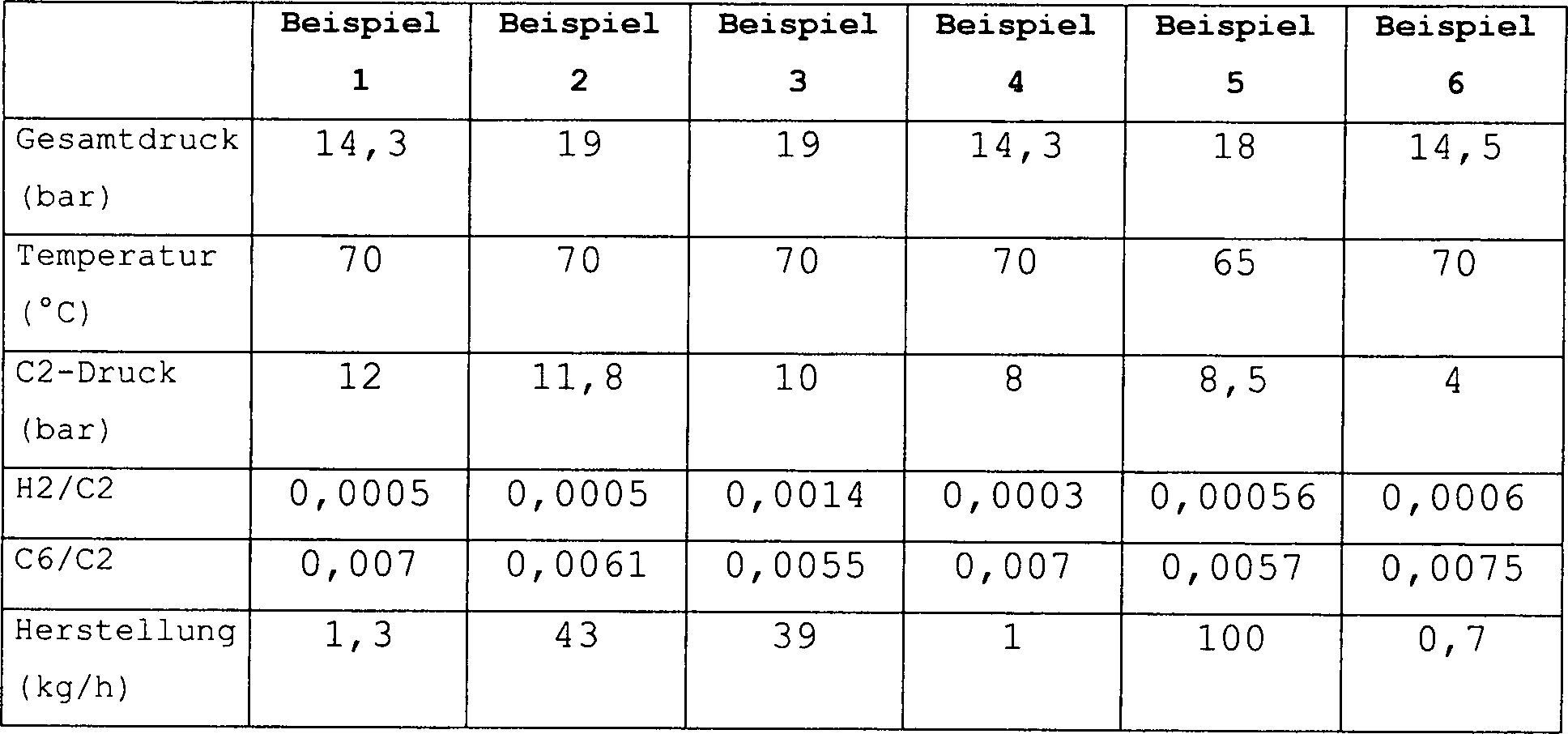
TABELLE
2 
Folientestsfilm tests
Folie wurde aus dem Produkt von Beispiel 2 und LD5310AA unter Verwendung eines Collin-Einschnecken-Folien-extruders (45 mm, 25 L/D), ausgestattet mit einer LDPE-Schnecke, unter Verwendung eines Temperaturprofils, das für jenes, welches für die Extrusion von LDPE verwendet wurde, typisch ist, hergestellt. Die Ergebnisse werden in Tabelle 3 zusammen mit den Ergebnissen von Beispielen 8–10 zusammengefasst, die unter ähnlichen Katalysator- und Polymerisationsbedingungen zu Beispiel 2 hergestellt wurden.foil was made from the product of Example 2 and LD5310AA using of a Collin single screw extruder (45 mm, 25 L / D) with an LDPE screw, using a temperature profile, that for that which for The extrusion of LDPE used was typical. The results are shown in Table 3 along with the results Examples 8-10 summarized under similar Catalyst and polymerization conditions to Example 2 prepared were.
Es kann ersichtlich werden, dass für alle Beispielpolymere das Extrusionsverhalten verbessert ist, verglichen mit dem Kontroll-LDPE-Produkt, wie durch deren niedrigeren Extrusionskopfdruck, geringere Motorlast und niedrige spezifische Energie, eingeschätzt. Zusätzlich wurde dies für Produkte mit Schmelzindizes, niedriger als das herkömmliche LDPE, erreicht; das heißt, Produkte, von denen erwartet werden könnte, dass sie schwierigeres Extrusionsverhalten zeigen. Gleichzeitig wurden mechanische Eigenschaften, ähnlich zu LDPE, oder verbessert, erhalten.It can be seen that for all of the example polymers improved extrusion performance compared with the control LDPE product, such as its lower extrusion head pressure, lower engine load and low specific energy, estimated. In addition was this for Products with melt indices, lower than the conventional one LDPE, reached; this means, Products that could be expected to be more difficult Show extrusion behavior. At the same time, mechanical properties were similar to LDPE, or improved, received.
Ähnliche Folienextrusionen wurden für Beispiele 5 und 6 ausgeführt und diese werden in Tabelle 4 angeführt. Für diese Produkte ist das Verarbeiten weniger vorteilhaft, verglichen mit LDPE, wie durch die Werte für Kopfdruck, Motorlast und spezifische Energie deutlich gemacht, jedoch die Mechanik ist beträchtlich besser als LDPE und die optischen Eigenschaften sind vergleichbar.Similar Film extrusions were for Examples 5 and 6 are executed and these are listed in Table 4. For these products is the processing less advantageous compared to LDPE, such as head pressure values, Engine load and specific energy made clear, however, the mechanics is considerable better than LDPE and the optical properties are comparable.
Folien-Test-VerfahrenFilm testing procedures
Folien-Dart-Schlagfestigkeit wurde gemäß ASTM D1709, (Verfahren A) Reißfestigkeit durch ASTM D1922 und Zugeigenschaften durch ASTM D822 gemessen. Trübung wurde durch ASTM D1003 und Glanz durch D2457 gemessen.Film dart impact strength was tested according to ASTM D1709, (Method A) Tear resistance measured by ASTM D1922 and tensile properties by ASTM D822. cloudiness was measured by ASTM D1003 and gloss by D2457.
TABELLE
3 
TABELLE
4 
Claims (18)
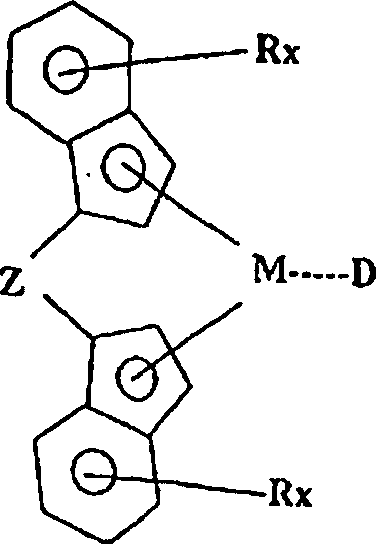

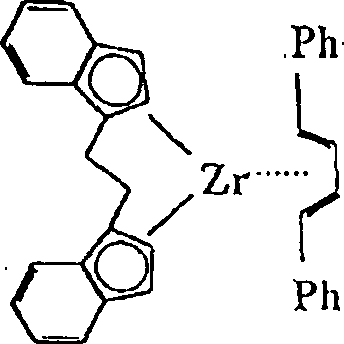
Applications Claiming Priority (3)
| Application Number | Priority Date | Filing Date | Title |
|---|---|---|---|
| GBGB9800245.4A GB9800245D0 (en) | 1998-01-07 | 1998-01-07 | Novel polymers |
| GB9800245 | 1998-01-07 | ||
| PCT/GB1999/000021 WO1999035174A1 (en) | 1998-01-07 | 1999-01-05 | Homopolymers and copolymers of ethylene |
Publications (2)
| Publication Number | Publication Date |
|---|---|
| DE69918263D1 DE69918263D1 (en) | 2004-07-29 |
| DE69918263T2 true DE69918263T2 (en) | 2005-07-21 |
Family
ID=10824911
Family Applications (1)
| Application Number | Title | Priority Date | Filing Date |
|---|---|---|---|
| DE69918263T Expired - Lifetime DE69918263T2 (en) | 1998-01-07 | 1999-01-05 | ETHYLENE HOMOPOLYMERISES AND COPOLYMERISATES |
Country Status (31)
| Country | Link |
|---|---|
| US (2) | US6518385B1 (en) |
| EP (2) | EP1045868B1 (en) |
| JP (2) | JP2002500249A (en) |
| KR (1) | KR100645271B1 (en) |
| CN (1) | CN1134463C (en) |
| AR (1) | AR014252A1 (en) |
| AT (1) | ATE269873T1 (en) |
| AU (1) | AU760130B2 (en) |
| BR (1) | BR9906811A (en) |
| CA (1) | CA2316165C (en) |
| CO (1) | CO4830472A1 (en) |
| CZ (1) | CZ302705B6 (en) |
| DE (1) | DE69918263T2 (en) |
| DK (1) | DK1045868T3 (en) |
| DZ (1) | DZ2704A1 (en) |
| EG (1) | EG22389A (en) |
| ES (2) | ES2224598T3 (en) |
| GB (1) | GB9800245D0 (en) |
| HU (1) | HU224167B1 (en) |
| MY (1) | MY122063A (en) |
| NO (1) | NO20003488L (en) |
| PL (1) | PL198209B1 (en) |
| PT (1) | PT1045868E (en) |
| RU (1) | RU2223283C2 (en) |
| SA (1) | SA99191234B1 (en) |
| SK (1) | SK10132000A3 (en) |
| TR (1) | TR200001955T2 (en) |
| TW (1) | TW557303B (en) |
| UA (1) | UA66375C2 (en) |
| WO (1) | WO1999035174A1 (en) |
| ZA (1) | ZA9811886B (en) |
Families Citing this family (38)
| Publication number | Priority date | Publication date | Assignee | Title |
|---|---|---|---|---|
| GB9800245D0 (en) * | 1998-01-07 | 1998-03-04 | Bp Chem Int Ltd | Novel polymers |
| GB9918668D0 (en) * | 1999-08-06 | 1999-10-13 | Bp Chem Int Ltd | Polymerisation catalysts |
| CA2392949A1 (en) * | 1999-12-01 | 2001-06-07 | Univation Technologies Llc | Catalyst compounds, catalyst systems thereof and their use in a polymerization process |
| EP1108749A1 (en) * | 1999-12-13 | 2001-06-20 | Fina Research S.A. | Medium density polyethylene compositions for film applications |
| US7041617B2 (en) | 2004-01-09 | 2006-05-09 | Chevron Phillips Chemical Company, L.P. | Catalyst compositions and polyolefins for extrusion coating applications |
| KR100377287B1 (en) * | 2000-05-29 | 2003-03-26 | 삼성종합화학주식회사 | Ethylene polymerization method |
| CN1478107A (en) * | 2000-10-04 | 2004-02-25 | �Ϻ���ͨ��ѧ | supported catalyst composition |
| US6734265B1 (en) | 2000-10-06 | 2004-05-11 | Univation Technologies, Llc. | Linear low density polyethylenes with high melt strength and high melt index ratio |
| US7132486B2 (en) | 2000-10-06 | 2006-11-07 | Univation Technologies, Llc | Linear low density polyethylenes with high melt strength and high melt index ratio |
| US6884747B2 (en) * | 2000-10-06 | 2005-04-26 | Univation Technologies, Llc | Linear low density polyethylenes with high melt strength and high melt index ratio |
| JP4903357B2 (en) * | 2003-03-28 | 2012-03-28 | 住友化学株式会社 | Ethylene polymer |
| US7119153B2 (en) | 2004-01-21 | 2006-10-10 | Jensen Michael D | Dual metallocene catalyst for producing film resins with good machine direction (MD) elmendorf tear strength |
| KR101216515B1 (en) * | 2004-11-02 | 2012-12-31 | 다우 글로벌 테크놀로지스 엘엘씨 | Process for producing low density polyethylene compositions and polymers produced therefrom |
| WO2006085051A1 (en) * | 2005-02-09 | 2006-08-17 | Ineos Europe Limited | Copolymers and films thereof |
| EP1845110A1 (en) * | 2006-04-13 | 2007-10-17 | Total Petrochemicals Research Feluy | Chromium-based catalysts |
| WO2007118866A1 (en) * | 2006-04-13 | 2007-10-25 | Total Petrochemicals Research Feluy | Branched low and medium density polyethylene |
| GB0610668D0 (en) * | 2006-05-30 | 2006-07-12 | Nova Chem Int Sa | Supported antistatic polymerization catalysts |
| EP1935909A1 (en) * | 2006-12-21 | 2008-06-25 | Ineos Europe Limited | Copolymers and films thereof |
| KR20080101791A (en) * | 2007-05-16 | 2008-11-21 | 주식회사 엘지화학 | Ethylene-Alphaolefin Copolymers Containing Long Chain Branches |
| US20100310799A1 (en) * | 2007-11-30 | 2010-12-09 | Sumitomo Chemical Company, Limited | ETHYLENE-a-OLEFIN COPOLYMER AND MOLDED ARTICLE |
| JP5392015B2 (en) * | 2008-11-11 | 2014-01-22 | 住友化学株式会社 | Ethylene-α-olefin copolymer and molded product |
| WO2010080871A1 (en) | 2009-01-08 | 2010-07-15 | Univation Technologies, Llc | Additive for gas phase polymerization processes |
| DE112010002188T5 (en) * | 2009-05-29 | 2012-08-30 | Sumitomo Chemical Company, Ltd. | Ethylene-α-olefin copolymer and molded article |
| JP2010276128A (en) * | 2009-05-29 | 2010-12-09 | Sumitomo Chemical Co Ltd | tube |
| EP2348057A1 (en) | 2010-01-21 | 2011-07-27 | INEOS Manufacturing Belgium NV | Novel polymers |
| CN103087240B (en) * | 2011-10-31 | 2015-07-22 | 中国石油化工股份有限公司 | Method for preparing ethylene polymer |
| US9096700B2 (en) | 2012-12-10 | 2015-08-04 | Exxonmobil Chemical Patents Inc. | Polymerization process for production of polymer |
| EP2935367B2 (en) * | 2012-12-21 | 2024-09-04 | ExxonMobil Chemical Patents Inc. | Branched polyethylene with improved processing and high tear films made therefrom |
| US9266977B2 (en) | 2012-12-21 | 2016-02-23 | Exxonmobil Chemical Patents Inc. | Bridged metallocene compounds, catalyst systems and processes for polymerization therewith |
| KR101924198B1 (en) | 2015-12-23 | 2018-11-30 | 주식회사 엘지화학 | Low density polyethylene copolymer having superior film processibility and transmittance |
| JP7004656B2 (en) * | 2015-12-31 | 2022-02-04 | ハンファ ケミカル コーポレーション | A hybrid metallocene-supported catalyst and a method for producing an olefin polymer using the catalyst. |
| CN108884184B (en) * | 2016-12-05 | 2021-06-15 | Lg化学株式会社 | Hybrid supported catalyst |
| US10442921B2 (en) | 2017-04-19 | 2019-10-15 | Nova Chemicals (International) S.A. | Means for increasing the molecular weight and decreasing the density employing mixed homogeneous catalyst formulations |
| US10442920B2 (en) | 2017-04-19 | 2019-10-15 | Nova Chemicals (International) S.A. | Means for increasing the molecular weight and decreasing the density of ethylene interpolymers employing homogeneous and heterogeneous catalyst formulations |
| US10683376B2 (en) | 2017-11-07 | 2020-06-16 | Nova Chemicals (International) S.A. | Manufacturing ethylene interpolymer products at higher production rate |
| US10995166B2 (en) | 2017-11-07 | 2021-05-04 | Nova Chemicals (International) S.A. | Ethylene interpolymer products and films |
| US10882987B2 (en) | 2019-01-09 | 2021-01-05 | Nova Chemicals (International) S.A. | Ethylene interpolymer products having intermediate branching |
| US11046843B2 (en) | 2019-07-29 | 2021-06-29 | Nova Chemicals (International) S.A. | Ethylene copolymers and films with excellent sealing properties |
Family Cites Families (11)
| Publication number | Priority date | Publication date | Assignee | Title |
|---|---|---|---|---|
| FR2532649B1 (en) * | 1982-09-07 | 1986-08-29 | Bp Chimie Sa | COPOLYMERIZATION OF ETHYLENE AND HEXENE-1 IN A FLUIDIZED BED |
| US5272236A (en) * | 1991-10-15 | 1993-12-21 | The Dow Chemical Company | Elastic substantially linear olefin polymers |
| TW274087B (en) * | 1991-08-14 | 1996-04-11 | Mitsui Petroleum Chemicals Ind | |
| DE69422410T2 (en) * | 1993-08-06 | 2000-07-06 | Exxon Chemical Patents, Inc. | POLYMERIZATION CATALYSTS, THEIR PRODUCTION AND USE |
| EP0659773B2 (en) * | 1993-12-21 | 2001-12-05 | Univation Technologies LLC | Production of polyolefins containing long chain branches by a gas phase process |
| DK1134238T3 (en) * | 1994-04-07 | 2005-11-28 | Innovene Europ Ltd | copolymers |
| US5616664A (en) * | 1994-08-02 | 1997-04-01 | The Dow Chemical Company | Polymerization process with biscyclopentadienyl diene complex containing catalysts |
| ATE202367T1 (en) * | 1994-09-07 | 2001-07-15 | Dow Chemical Co | ELASTIC LINEAR LOW DENSITY POLYETHYLENE |
| IL115911A0 (en) * | 1994-11-14 | 1996-01-31 | Dow Chemical Co | Extrusion compositions having high drawdown and substantially reduced neck-in |
| UA47394C2 (en) * | 1995-05-16 | 2002-07-15 | Юнівейшн Текнолоджіз, Ллс | Ethylene polymer with improved processability and an article containing the ethylene polymer |
| GB9800245D0 (en) * | 1998-01-07 | 1998-03-04 | Bp Chem Int Ltd | Novel polymers |
-
1998
- 1998-01-07 GB GBGB9800245.4A patent/GB9800245D0/en not_active Ceased
- 1998-12-28 ZA ZA9811886A patent/ZA9811886B/en unknown
-
1999
- 1999-01-04 EG EG599A patent/EG22389A/en active
- 1999-01-05 PT PT99901004T patent/PT1045868E/en unknown
- 1999-01-05 JP JP2000527569A patent/JP2002500249A/en active Pending
- 1999-01-05 EP EP99901004A patent/EP1045868B1/en not_active Expired - Lifetime
- 1999-01-05 TR TR2000/01955T patent/TR200001955T2/en unknown
- 1999-01-05 CA CA002316165A patent/CA2316165C/en not_active Expired - Lifetime
- 1999-01-05 AU AU20640/99A patent/AU760130B2/en not_active Ceased
- 1999-01-05 AT AT99901004T patent/ATE269873T1/en active
- 1999-01-05 BR BR9906811-7A patent/BR9906811A/en not_active IP Right Cessation
- 1999-01-05 HU HU0100366A patent/HU224167B1/en not_active IP Right Cessation
- 1999-01-05 SK SK1013-2000A patent/SK10132000A3/en unknown
- 1999-01-05 DE DE69918263T patent/DE69918263T2/en not_active Expired - Lifetime
- 1999-01-05 ES ES99901004T patent/ES2224598T3/en not_active Expired - Lifetime
- 1999-01-05 ES ES04076235.3T patent/ES2486842T3/en not_active Expired - Lifetime
- 1999-01-05 CN CNB99803648XA patent/CN1134463C/en not_active Expired - Lifetime
- 1999-01-05 CZ CZ20002454A patent/CZ302705B6/en not_active IP Right Cessation
- 1999-01-05 EP EP04076235.3A patent/EP1443062B1/en not_active Expired - Lifetime
- 1999-01-05 PL PL341677A patent/PL198209B1/en unknown
- 1999-01-05 DK DK99901004T patent/DK1045868T3/en active
- 1999-01-05 WO PCT/GB1999/000021 patent/WO1999035174A1/en not_active Ceased
- 1999-01-05 AR ARP990100016A patent/AR014252A1/en unknown
- 1999-01-05 RU RU2000120681/04A patent/RU2223283C2/en active
- 1999-01-05 KR KR1020007007551A patent/KR100645271B1/en not_active Expired - Lifetime
- 1999-01-06 MY MYPI99000031A patent/MY122063A/en unknown
- 1999-01-06 DZ DZ990005A patent/DZ2704A1/en active
- 1999-01-06 TW TW088100144A patent/TW557303B/en not_active IP Right Cessation
- 1999-01-07 CO CO99000708A patent/CO4830472A1/en unknown
- 1999-04-03 SA SA99191234A patent/SA99191234B1/en unknown
- 1999-05-01 UA UA2000084713A patent/UA66375C2/en unknown
-
2000
- 2000-07-06 NO NO20003488A patent/NO20003488L/en not_active Application Discontinuation
- 2000-07-06 US US09/600,107 patent/US6518385B1/en not_active Expired - Lifetime
-
2002
- 2002-12-09 US US10/314,367 patent/US20030139551A1/en not_active Abandoned
-
2009
- 2009-12-03 JP JP2009275833A patent/JP5804485B2/en not_active Expired - Lifetime
Also Published As
Similar Documents
| Publication | Publication Date | Title |
|---|---|---|
| EP1443062B1 (en) | Copolymers of ethylene | |
| DE69534784T2 (en) | Polymerization process and polyolefins thus obtained | |
| DE69329313T2 (en) | Ethylene copolymer composition | |
| DE69433347T2 (en) | Ethylene copolymerization | |
| DE69322082T2 (en) | COPOLYMERS OF ETHYLENE WITH BRANCHED OLEFINS | |
| DE69220077T2 (en) | ELASTIC, ESSENTIAL LINEAR OLEFIN POLYMERS | |
| DE69724607T2 (en) | METHOD FOR PRODUCING ETHYLENE COPOLYMERS AND COMPOSITIONS CONTAINING THE SAME | |
| DE69819314T2 (en) | IMPROVED AND EASY PROCESSING OF LINEAR POLYETHYLENE WITH LOW DENSITY | |
| DE69936543T9 (en) | HIGH DENSITY POLYETHYLENE AND MIXTURES THEREOF | |
| DE69619548T2 (en) | HIGH TEMPERATURE OLEFIN POLYMERIZATION PROCESS | |
| DE69839198T2 (en) | An ethylene-alpha-olefin copolymer and film made therefrom | |
| DE60005155T2 (en) | POLYMER COMPOSITION, METHOD FOR THE PRODUCTION THEREOF AND FILMS MADE THEREOF | |
| DE69936341T2 (en) | Polyethylene and process for its preparation | |
| DE69908649T2 (en) | MULTI-STAGE PROCESS FOR DISPLAYING POLYOLEFINS WITH HIGH MELT RESISTANCE | |
| DE60002056T2 (en) | olefin polymerization | |
| DE69737458T2 (en) | INTERPOLYMER COMPOSITIONS AND CASTING CAST MANUFACTURED THEREOF | |
| DE69736631T2 (en) | Process for the preparation of olefin polymers | |
| DE60117774T2 (en) | METALLOCEN POLYETHYLENE FOR GLOSSY PLASTIC CONTAINERS | |
| DE102004015309B4 (en) | ethylene copolymer | |
| DE112008001303T5 (en) | Ethylene-based polymer composition and film | |
| DE602004001210T2 (en) | COATING COMPOSITION, MANUFACTURING METHOD AND SUBSTRATE COATED THEREWITH | |
| DE102006045819A1 (en) | Ethylene-alpha-olefin copolymers for molding e.g. extrusion, injection or compression molding to film, sheet, bottle or tablets, including food packaging, have given relationship between viscoelasticity or haze and melt flow index | |
| DE69715177T2 (en) | PROPYLENE / ETHYLENE COPOLYMER, PRODUCTION PROCESS THEREFOR AND MOLDED PARTS THEREOF | |
| DE69410844T2 (en) | Ethylene / alpha olefin copolymer and film thereof | |
| DE19811934A1 (en) | Ethylene copolymers with a narrow comonomer distribution |
Legal Events
| Date | Code | Title | Description |
|---|---|---|---|
| 8364 | No opposition during term of opposition | ||
| 8327 | Change in the person/name/address of the patent owner |
Owner name: INEOS EUROPE LTD., LYNDHURST, HAMPSHIRE, GB |
|
| R082 | Change of representative |
Ref document number: 1045868 Country of ref document: EP Representative=s name: LEDERER & KELLER, 80538 MUENCHEN, DE |