CN202492400U - Iron-copper micro-electrolysis reaction tank - Google Patents
Iron-copper micro-electrolysis reaction tank Download PDFInfo
- Publication number
- CN202492400U CN202492400U CN2012200808791U CN201220080879U CN202492400U CN 202492400 U CN202492400 U CN 202492400U CN 2012200808791 U CN2012200808791 U CN 2012200808791U CN 201220080879 U CN201220080879 U CN 201220080879U CN 202492400 U CN202492400 U CN 202492400U
- Authority
- CN
- China
- Prior art keywords
- water
- micro
- copper
- electrolysis reaction
- iron
- Prior art date
- Legal status (The legal status is an assumption and is not a legal conclusion. Google has not performed a legal analysis and makes no representation as to the accuracy of the status listed.)
- Expired - Fee Related
Links
Images


Classifications
-
- Y—GENERAL TAGGING OF NEW TECHNOLOGICAL DEVELOPMENTS; GENERAL TAGGING OF CROSS-SECTIONAL TECHNOLOGIES SPANNING OVER SEVERAL SECTIONS OF THE IPC; TECHNICAL SUBJECTS COVERED BY FORMER USPC CROSS-REFERENCE ART COLLECTIONS [XRACs] AND DIGESTS
- Y02—TECHNOLOGIES OR APPLICATIONS FOR MITIGATION OR ADAPTATION AGAINST CLIMATE CHANGE
- Y02W—CLIMATE CHANGE MITIGATION TECHNOLOGIES RELATED TO WASTEWATER TREATMENT OR WASTE MANAGEMENT
- Y02W10/00—Technologies for wastewater treatment
- Y02W10/10—Biological treatment of water, waste water, or sewage
Landscapes
- Water Treatment By Electricity Or Magnetism (AREA)
Abstract
本实用新型涉及一种铁铜微电解反应槽及镀铜铁丝网板的制备方法,该装置在槽体的两端设置有进水腔和出水腔,进水腔和出水腔之间设置有微电解反应装置,污水从进水腔经进水口进入布水区,然后经布水缓冲板进入微电解反应装置中进行电解,所述的微电解反应装置包括多个相互平行的镀铜铁丝网板,每个镀铜铁丝网板相对的两边分别设置在相对的两槽体侧壁上。电解处理后的污水经出水腔的出水堰槽溢流排出,本实用新型本实用新型结构简单,适用水质范围广,成本低,使用寿命长,能有效降低有机废水色度、毒性与CODCr,提高污水可生化性。铜在铁丝网表面附着牢固,不易脱落,在污水处理过程中真正实现了低成本、低能耗。
The utility model relates to a preparation method of an iron-copper micro-electrolysis reaction tank and a copper-plated wire mesh plate. The device is provided with a water inlet chamber and a water outlet chamber at both ends of the tank body, and a micro-electrolysis chamber is arranged between the water inlet chamber and the water outlet chamber. Reaction device, the sewage enters the water distribution area from the water inlet chamber through the water inlet, and then enters the micro-electrolysis reaction device through the water distribution buffer plate for electrolysis. The micro-electrolysis reaction device includes a plurality of copper-plated wire mesh plates parallel to each other. The two opposite sides of the two copper-plated barbed wire panels are respectively arranged on the side walls of the two opposite tanks. The sewage after electrolytic treatment is discharged through the overflow of the weir and groove of the water outlet chamber. The utility model has a simple structure, a wide range of water quality, low cost, and a long service life. It can effectively reduce the chroma, toxicity and COD Cr of organic wastewater. Improve the biodegradability of sewage. Copper adheres firmly to the surface of the barbed wire and is not easy to fall off. In the process of sewage treatment, low cost and low energy consumption are truly realized.
Description
技术领域 technical field
本实用新型涉及一种铁铜微电解反应槽,属于污水处理设备技术领域。The utility model relates to an iron-copper micro-electrolysis reaction tank, which belongs to the technical field of sewage treatment equipment.
背景技术 Background technique
220世纪50年代以后,由于现代化学工业的发展,产生了大量人工合成有机化合物,如合成塑料、合成纤维、有机农药、合成橡胶、表面活性剂等,这些有机物在生产、使用过程中都会有大量的有机废水产生,据《全国环境统计公报》统计显示,到2008年年底我国废水总排放量中,工业有机废水量所占比例达44.3%,其废水中污染物成分复杂,含有多种有毒物质,浓度高,且其中往往含有许多难降解的有机物,如硝基芳烃化合物、多环芳烃、烷基苯磺酸、氯苯酚、多氯联苯及腐殖酸等,这些有机物中有些具有致癌、致畸、致突变等作用对环境和人类危害巨大。高浓度难降解有机废水一般采用预处理-生化降解技术,但当前的有机废水预处理技术适应废水种类较少且成本高难以推广。2 After the 1950s, due to the development of the modern chemical industry, a large number of artificially synthesized organic compounds, such as synthetic plastics, synthetic fibers, organic pesticides, synthetic rubber, surfactants, etc., will be produced in large quantities during the production and use of these organic compounds According to the "National Environmental Statistical Bulletin", by the end of 2008, among the total wastewater discharge in China, the industrial organic wastewater accounted for 44.3%. The pollutants in the wastewater are complex and contain a variety of toxic substances. , the concentration is high, and it often contains many refractory organic substances, such as nitroaromatic compounds, polycyclic aromatic hydrocarbons, alkylbenzenesulfonic acid, chlorophenol, polychlorinated biphenyls and humic acids, etc. Some of these organic substances have carcinogenic, The teratogenic and mutagenic effects are extremely harmful to the environment and human beings. High-concentration refractory organic wastewater generally adopts pretreatment-biochemical degradation technology, but the current organic wastewater pretreatment technology is suitable for fewer types of wastewater and is difficult to promote because of its high cost.
微电解法,又称为内电解法,于20世纪80年代引入中国。微电解法是利用铁屑中的铁和碳组成原电池,以实现废水中污染物的降解,该法具有成本低廉、适用范围广、处理效果好,工艺简单、操作维护方便等优点,尤其对于高盐度,高毒性,高COD以及色度较高的工业废水的处理较其他工艺具有更加明显的优势。难生物降解的废水经微电解工艺处理后B/C大大提高,有利于后续生物处理效果的提高,国内一般将该工艺用于废水的预处理,或者与其他工艺联合以达到去除污染物的目的。铁碳微电解作为目前国内最常见的微电解技术,已成功地应用于染料、印染、农药、制药、油分等废水的处理。但现有的铁碳微电解工艺在运行过程中暴露出如下问题:铁屑填料板结和填料床沟流,铁碳微电解法在运行一段时间后,铁屑填料结块后污水在填料中产生沟流,使出水水质变差。且铁碳微电解反应一般在酸性条件下进行,这在一定程度上限制了其适用范围。Micro-electrolysis, also known as internal electrolysis, was introduced into China in the 1980s. The micro-electrolysis method is to use the iron and carbon in the iron filings to form a primary battery to degrade the pollutants in the wastewater. This method has the advantages of low cost, wide application range, good treatment effect, simple process, convenient operation and maintenance, etc., especially for The treatment of industrial wastewater with high salinity, high toxicity, high COD and high chroma has more obvious advantages than other processes. The B/C of the refractory wastewater is greatly improved after the micro-electrolysis process, which is conducive to the improvement of the subsequent biological treatment effect. In China, this process is generally used for the pretreatment of wastewater, or combined with other processes to achieve the purpose of removing pollutants. . Iron-carbon micro-electrolysis, as the most common micro-electrolysis technology in China, has been successfully applied to the treatment of wastewater from dyes, printing and dyeing, pesticides, pharmaceuticals, and oil. However, the existing iron-carbon micro-electrolysis process has exposed the following problems during operation: iron filings packing compaction and packing bed channeling. After the iron-carbon micro-electrolysis method has been in operation for a period of time, sewage will be generated in the packing after the iron filings packing is agglomerated. Ditch flow makes the effluent water quality worse. And the iron-carbon micro-electrolysis reaction is generally carried out under acidic conditions, which limits its scope of application to a certain extent.
发明内容 Contents of the invention
针对现有技术的不足,本实用新型提供一种铁铜微电解反应槽,该反应槽采用铜作为惰性电极,铁铜两极之间的电位差大于铁碳之间的电位差,极大加速铁的氧化和有机污染物的还原,提高微电解反应速率,处理效率高;适用水质范围广,成本低,使用寿命长并且解决了填料结块及填料中产生沟流的问题。Aiming at the deficiencies of the prior art, the utility model provides an iron-copper micro-electrolysis reaction tank, which adopts copper as an inert electrode, and the potential difference between the two poles of iron and copper is greater than that between iron and carbon, greatly accelerating the Oxidation of organic pollutants and reduction of organic pollutants, increase the reaction rate of micro-electrolysis, high treatment efficiency; wide range of water quality, low cost, long service life and solve the problem of filler agglomeration and channeling in the filler.
术语解释:Explanation of terms:
1+1的盐酸:常温下,盐酸与水的体积比为1∶1。1+1 hydrochloric acid: at room temperature, the volume ratio of hydrochloric acid to water is 1:1.
本实用新型的技术方案如下:The technical scheme of the utility model is as follows:
一种铁铜微电解反应槽,包括槽体,在槽体内部相对的两端分别设置有进水腔和出水腔,进水腔和出水腔之间设置有微电解反应装置,进水腔和微电解反应装置之间设置有布水缓冲板,布水缓冲板上设有布水孔,进水腔与布水缓冲板之间的区域为布水区,进水腔通过设置在进水腔下部的进水口与布水区相连通,微电解反应装置的下部为曝气区,所述的曝气区设置有曝气器,曝气器与进气管相连通,出水腔与微电解反应装置之间的区域为出水区,所述的出水腔靠近微电解反应装置的一侧壁上设置有出水口,出水腔通过出水口与出水区相连通,所述的微电解反应装置包括多个相互平行的镀铜铁丝网板,每个镀铜铁丝网板相对的两边分别设置在相对的槽体两侧壁上。An iron-copper micro-electrolysis reaction tank, comprising a tank body, a water inlet chamber and a water outlet chamber are respectively arranged at opposite ends of the tank body, a micro-electrolysis reaction device is arranged between the water inlet chamber and the water outlet chamber, the water inlet chamber and the water outlet chamber A water distribution buffer plate is set between the micro-electrolysis reaction devices, and a water distribution hole is arranged on the water distribution buffer plate. The area between the water inlet chamber and the water distribution buffer plate is the water distribution area, and the water inlet chamber The water inlet in the lower part is connected with the water distribution area, and the lower part of the micro-electrolysis reaction device is an aeration area. The area between is the water outlet area. The water outlet chamber is provided with a water outlet near the side wall of the micro-electrolysis reaction device. The water outlet chamber communicates with the water outlet area through the water outlet. The micro-electrolysis reaction device includes a plurality of mutual Parallel copper-plated wire mesh panels, the opposite two sides of each copper-plated wire mesh panel are respectively arranged on the opposite side walls of the tank body.
所述每个镀铜铁丝网板与槽体底面垂直,与进水腔和出水腔平行设置。Each of the copper-plated wire mesh panels is perpendicular to the bottom surface of the tank body and arranged parallel to the water inlet chamber and the water outlet chamber.
所述相对的槽体两侧壁上分别设置有卡槽,镀铜铁丝网板通过卡槽卡在槽体上。The opposite side walls of the tank body are respectively provided with clamping grooves, and the copper-plated wire mesh board is clamped on the tank body through the clamping grooves.
所述的镀铜铁丝网板为60~80块,相邻两镀铜铁丝网板之间的间距为0.5~0.6cm,所述的镀铜铁丝网板的大小为55~65cm×35~40cm,铁丝网网孔的大小为0.5~0.8cm×0.5~0.8cm。There are 60-80 pieces of copper-plated wire mesh panels, the distance between two adjacent copper-coated wire mesh panels is 0.5-0.6cm, and the size of the copper-coated wire mesh panels is 55-65cm×35-40cm. The size of the hole is 0.5-0.8 cm×0.5-0.8 cm.
所述的布水孔均匀分布在布水缓冲板上,布水孔的形状为六边形或圆形。The water distribution holes are evenly distributed on the water distribution buffer plate, and the shape of the water distribution holes is hexagonal or circular.
在所述出水区的槽体侧壁上设置有出水回流口,布水区的槽体侧壁上设置有回流进水口,出水回流口通过连接管与回流进水口相连通,在连接管上设置有回流泵,回流泵将出水区的水回流到布水区。The side wall of the tank body in the water outlet area is provided with a water outlet return port, and the side wall of the tank body in the water distribution area is provided with a return water inlet. The water outlet return port is connected with the return water inlet through a connecting pipe. There is a return pump, and the return pump returns the water in the outlet area to the water distribution area.
所述的出水口设置在出水腔侧壁的下部,所述的出水腔的底部向下凹陷形成倒棱锥形沉淀收集池,沉底收集池的底部设置有泥水排出口。此种设计的优点:槽体底部的污泥可被从左至右冲洗,经出水口进入沉底收集池,后从泥水排出口而排出,从而方便清洁槽底。The water outlet is arranged at the lower part of the side wall of the water outlet chamber, and the bottom of the water outlet chamber is sunken downward to form an inverted pyramid-shaped sedimentation collection tank, and the bottom of the sinking bottom collection tank is provided with a muddy water discharge port. The advantage of this design: the sludge at the bottom of the tank can be washed from left to right, enter the bottom collection tank through the water outlet, and then be discharged from the muddy water outlet, so that it is convenient to clean the bottom of the tank.
优选的,在进气管的管路上设置有气泵,曝气器采用微孔曝气器,曝气器位于槽体底部的中间。此种设计的优点:有效防止气孔被脱落污泥阻塞,本实用新型可以根据水质进行选择性设置曝气位置。Preferably, an air pump is arranged on the pipeline of the intake pipe, and the aerator adopts a microporous aerator, and the aerator is located in the middle of the bottom of the tank body. The advantage of this design is that it can effectively prevent the pores from being blocked by the shedding sludge, and the utility model can selectively set the aeration position according to the water quality.
本实用新型铁铜微电解反应槽的工作过程如下:使用时,污水由进水腔通过进水口进入布水区,然后通过布水缓冲板进入微电解反应装置,污水在微电解反应装置内与镀铜铁丝网板的铁铜电极充分接触,并在曝气器充气的条件下发生微电解反应。经过电解处理后的污水通过出水口进入出水腔,后通过出水堰槽排出。其中电解后出水区内的污水可经出水回流口被回流泵打入布水区,形成回流,经电解后的污水被回流到布水区进入微电解反应装置进行二次电解,使废水中的有机物充分沉淀,电解槽内的污水形成内部混合循环,提高污水的处理效果。钝化的镀铜铁丝网板可以从槽中取下清洗恢复其反应活性,镀铜铁丝网板取出后槽体底部的污泥可被从左至右冲洗至冲洗沉淀收集池而排出,达到清洁池底的目的。铁铜微电解法处理废水采用铜作为惰性电极,铁铜两极之间的电位差比铁碳大,这有利于加速铁的氧化和有机污染物的还原,从而可强烈地氧化降解废水中的有机污染物,迅速降低废水中的CODCr、毒性和色度、提高污水可生化性、减轻后续生化处理有机负荷,提高微电解的反应效率。The working process of the iron-copper micro-electrolysis reaction tank of the utility model is as follows: when in use, the sewage enters the water distribution area from the water inlet chamber through the water inlet, and then enters the micro-electrolysis reaction device through the water distribution buffer plate, and the sewage is mixed with the micro-electrolysis reaction device in the micro-electrolysis reaction device The iron-copper electrodes of the copper-plated wire mesh panels are in full contact, and micro-electrolysis reactions occur under the condition of aeration in the aerator. The sewage after electrolytic treatment enters the water outlet chamber through the water outlet, and then is discharged through the outlet weir. After electrolysis, the sewage in the water outlet area can be pumped into the water distribution area by the reflux pump through the water outlet return port to form a reflux, and the electrolyzed sewage is returned to the water distribution area and enters the micro-electrolysis reaction device for secondary electrolysis, so that the wastewater in the wastewater The organic matter is fully precipitated, and the sewage in the electrolytic cell forms an internal mixing cycle to improve the treatment effect of sewage. The passivated copper-plated wire mesh plate can be removed from the tank for cleaning to restore its reactivity. After the copper-plated wire mesh plate is taken out, the sludge at the bottom of the tank body can be washed from left to right to the sediment collection tank and discharged to clean the bottom of the tank. the goal of. The iron-copper micro-electrolysis method uses copper as an inert electrode to treat wastewater. The potential difference between the iron-copper electrodes is larger than that of iron-carbon, which is conducive to accelerating the oxidation of iron and the reduction of organic pollutants, which can strongly oxidize and degrade the organic pollutants in wastewater. Pollutants, quickly reduce COD Cr , toxicity and chromaticity in wastewater, improve biodegradability of wastewater, reduce organic load in subsequent biochemical treatment, and improve reaction efficiency of micro-electrolysis.
本实用新型的特点及有益效果:Features and beneficial effects of the utility model:
1、本实用新型采用镀铜铁丝网板作为微电解反应装置的主体,铜在铁丝网上均匀分布但未全部覆盖铁丝表面,使得铁铜可以与废水充分接触。其中,铁和铜分别作微电解的阳极与阴极,单位体积反应区铁成分含量大,通过化学镀铜方式将阴极铜与阳极铁结合,铜铁充分接触,促进了电子由阳极到阴极的传递,加强了电偶腐蚀,提高微电解反应速率,使废水中的染料、有机物充分得到沉底,降低废水中的CODCr、毒性和色度、提高污水可生化性,提高处理效率。1. The utility model uses a copper-plated wire mesh plate as the main body of the micro-electrolysis reaction device. The copper is evenly distributed on the wire mesh but does not completely cover the surface of the wire, so that the iron and copper can fully contact with the wastewater. Among them, iron and copper are respectively used as the anode and cathode of micro-electrolysis, and the iron content in the unit volume reaction zone is large. The cathode copper and the anode iron are combined by electroless copper plating, and the copper and iron are fully contacted, which promotes the transfer of electrons from the anode to the cathode. , strengthen the galvanic corrosion, increase the micro-electrolysis reaction rate, make the dyes and organic matter in the wastewater fully sink to the bottom, reduce the COD Cr , toxicity and chromaticity in the wastewater, improve the biodegradability of the wastewater, and improve the treatment efficiency.
2、本实用新型的镀铜铁丝网板表面积大,网状板浸没于污水中,使污水和铜铁电极充分接触,有利于电极反应的进行。同时,镀铜铁丝网板垂直于槽底平面设置,板与板之间有空隙,电解过程中生成的絮状物可在重力作用下直接脱落,降低了反应槽冲洗的难度。2. The copper-plated wire mesh plate of the utility model has a large surface area, and the mesh plate is immersed in the sewage, so that the sewage and the copper-iron electrodes are fully contacted, which is beneficial to the electrode reaction. At the same time, the copper-plated wire mesh plate is set perpendicular to the bottom plane of the tank, and there is a gap between the plates. The flocs generated during the electrolysis process can fall off directly under the action of gravity, which reduces the difficulty of washing the reaction tank.
3、本实用新型的镀铜铁丝网板可直接取出冲洗,方便清洁,槽体内沉积物也可从左至右进行水洗,并从冲洗排水装置排出,冲洗过程简单,能耗少。3. The copper-plated wire mesh panel of the utility model can be taken out and washed directly, which is convenient for cleaning. The sediment in the tank can also be washed from left to right and discharged from the washing and drainage device. The washing process is simple and the energy consumption is low.
4、本实用新型结构简单,适用水质范围广,成本低,使用寿命长并且解决了填料结块及填料中产生沟流的问题。4. The utility model is simple in structure, applicable to a wide range of water quality, low in cost, long in service life and solves the problems of filler agglomeration and channeling in the filler.
附图说明 Description of drawings
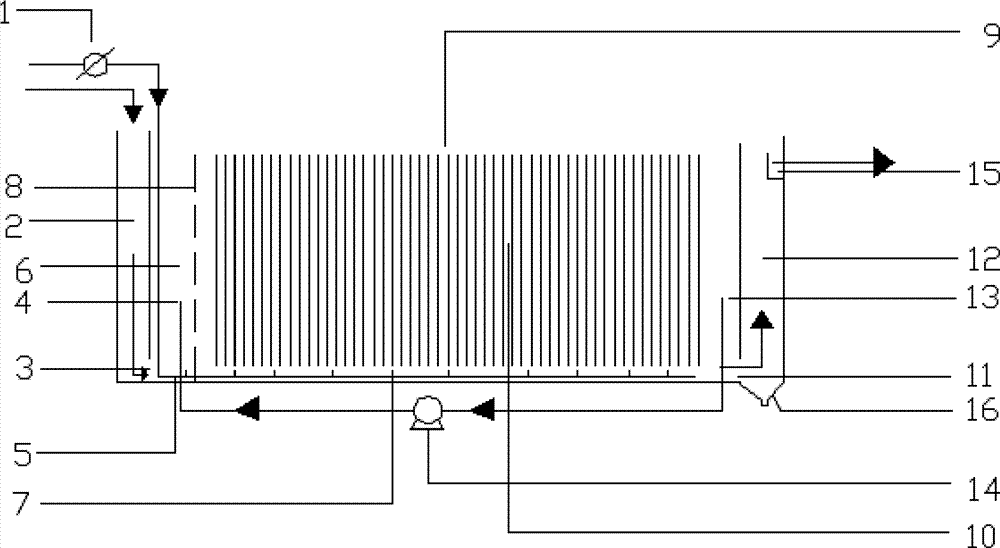
图1为铁铜微电解反应槽的纵剖图;Fig. 1 is the longitudinal sectional view of iron-copper micro-electrolysis reaction tank;
图2为镀铜铁丝网板的结构示意图;Fig. 2 is the structural representation of copper-plated wire mesh panel;
图3为布水缓冲板的示意图;Fig. 3 is the schematic diagram of water distribution buffer plate;
图4出水腔与沉淀收集池的立体结构示意图。Figure 4 is a schematic diagram of the three-dimensional structure of the water outlet chamber and the sediment collection tank.
其中,1、气泵;2、进水腔;3、进水口;4、回流进水口;5、进气管;6、布水区;7、曝气器;8、布水缓冲板;9、镀铜铁丝网板;10、卡槽;11、出水口;12、出水腔、13、出水回流口;14、回流泵;15、出水堰槽;16、沉淀收集池;17、布水孔。Among them, 1. Air pump; 2. Water inlet chamber; 3. Water inlet; 4. Return water inlet; 5. Air intake pipe; 6. Water distribution area; 7. Aerator; 8. Water distribution buffer plate; 9. Copper wire mesh plate; 10, card slot; 11, water outlet; 12, water outlet cavity, 13, water outlet return port; 14, return pump; 15, outlet weir groove; 16, sediment collection tank; 17, water distribution hole.
具体实施方式 Detailed ways
下面结合附图和实施例对本实用新型做进一步的阐述,但本实用新型的保护范围不限于此。The utility model will be further elaborated below in conjunction with the accompanying drawings and embodiments, but the protection scope of the utility model is not limited thereto.
实施例1Example 1
结构如图1所示,本实用新型的铁铜微电解反应槽,包括槽体,在槽体内部相对的两端分别设置有进水腔2和出水腔12,进水腔2和出水腔12之间设置有微电解反应装置,进水腔2和微电解反应装置之间设置有布水缓冲板8,布水缓冲板8上设有布水孔17,布水孔17均匀分布在布水缓冲板8上,布水孔17的形状优选六边形,结构如图3所示。进水腔2与布水缓冲板8之间的区域为布水区6,进水腔2通过设置在进水腔2下部的进水口3与布水区6相连通,所述的微电解反应装置包括多个相互平行的镀铜铁丝网板9,每个镀铜铁丝网板相对的两边分别设置在相对的槽体两侧壁上。所述相对的槽体两侧壁上分别设置有卡槽10,镀铜铁丝网板9相对的两边卡在卡槽内。本实用新型优选的,每个镀铜铁丝网板与槽体底面垂直,每个镀铜铁丝网板与进水腔2和出水腔12平行设置。镀铜铁丝网板9的结构如图2所示,镀铜铁丝网板9为60块,相邻两镀铜铁丝网板9之间的间距为0.5cm,所述的镀铜铁丝网板9的大小为55cm×35cm,镀铜铁丝网板上有密集的铁丝网孔,铁丝网孔的大小为0.5cm×0.5cm。极大地增加了铁铜两极与污水的接触面积,提高了电解反应效率。The structure is shown in Figure 1. The iron-copper micro-electrolysis reaction tank of the present utility model includes a tank body, and a water inlet chamber 2 and a
微电解反应装置的下部为曝气区,所述的曝气区设置有曝气器7,曝气器7与进气管5相连通,在进气管5的管路上设置有气泵1。所述的曝气器7位于槽体底部的中间,曝气器7采用微孔曝气器。可以有效防止气孔被脱落污泥阻塞,本实用新型可以根据水质进行选择性设置曝气位置。The lower part of the micro-electrolysis reaction device is an aeration area, and the aeration area is provided with an aerator 7, and the aerator 7 communicates with the air intake pipe 5, and an air pump 1 is arranged on the pipeline of the air intake pipe 5. The aerator 7 is located in the middle of the tank bottom, and the aerator 7 adopts a microporous aerator. The air hole can be effectively prevented from being blocked by the shedding sludge, and the utility model can selectively set the aeration position according to the water quality.
出水腔12与微电解反应装置之间的区域为出水区,出水腔12靠近微电解反应装置的一侧壁的下部设置有出水口11,出水腔12通过出水口11与出水区相连通,在出水腔12侧壁上靠近出水腔12端口处设置有出水堰槽15,经铁铜微电解反应槽处理净化后的水通过出水口11流进出水腔12,然后通过出水堰槽15溢流排出。本实用新型优选的,出水腔12的底部向下凹陷形成倒棱锥形沉淀收集池16,结构如图4所示,沉底收集池16的底部设置有泥水排出口。当需要清除槽体内的污泥时,取出镀铜铁丝网板9,槽体底部的污泥可被从左至右冲洗至沉底收集池16,后从泥水排出口而排出,达到清洁槽底的目的,冲洗过程简单,能耗少。The area between the
本实用新型根据需要可以在出水区的槽体侧壁上设置有出水回流口13,布水区6的槽体侧壁上设置有回流进水口4,出水回流口13通过连接管与回流进水口4相连通,在连接管上设置有回流泵14,回流泵14将出水区的水回流到布水区6,回流到布水区6的污水通过布水缓冲板8进入微电解反应装置,然后进行二次电解。The utility model can be provided with a water
待铁铜微电解反应槽运行一段时间后,铁丝消耗至较细时,可将多个经消耗变细的镀铜铁丝网板重叠固定在一起,固定在一个卡槽10内继续使用,也可将镀铜铁丝网板取出更换新的镀铜铁丝网板,电解过程中生成的絮状物可在重力作用下直接脱落,当需要清除絮状物时,把镀铜铁丝网板9从卡槽内取出直接清洁,槽体底部的沉底物用水冲洗即可。After the iron-copper micro-electrolysis reaction tank runs for a period of time, when the iron wire is consumed to be thinner, multiple thinned copper-plated wire mesh panels can be overlapped and fixed together, fixed in a
本实用新型镀铜铁丝网板的制作的方法,包括以下步骤:The method for making of the copper-plated wire mesh panel of the present utility model comprises the following steps:
(1)采用18号铁丝编织尺寸大小为55cm×35cm的铁丝网板,铁丝网孔尺寸为0.5cm×0.5cm;(1) Use No. 18 iron wire to weave a wire mesh panel with a size of 55cm×35cm, and the size of the wire mesh is 0.5cm×0.5cm;
(2)将编织好的铁丝网置于1+1的盐酸中,盐酸溶液出现浅绿色时,立即取出铁丝网并将其浸没在pH为4,温度为20℃的镀液中进行镀铜,镀铜时间为45min,所述的镀液成分为:硫酸铜0.45mol/L、乙酸钠10g/L、丙烯基硫脉0.5g/L、十二烷基硫酸钠1g/L、聚乙二醇5g/L;(2) Place the woven wire mesh in 1+1 hydrochloric acid. When the hydrochloric acid solution turns light green, immediately take out the wire mesh and immerse it in a plating solution with a pH of 4 and a temperature of 20°C for copper plating. The time is 45min, and the described plating bath composition is: copper sulfate 0.45mol/L, sodium acetate 10g/L, propenylthiourea 0.5g/L, sodium lauryl sulfate 1g/L, polyethylene glycol 5g/L L;
(3)待镀液澄清后,将铁丝网取出,真空干燥,密封存放。(3) After the plating solution is clarified, take out the wire mesh, dry it in vacuum, and store it in a sealed container.
通过实际试验,利用本实用新型的铁铜微电解反应槽,对浓度为1g/L的酸性大红G模拟废水与亚甲基蓝模拟废水进行微电解处理,在1h内色度去除率分别大于98%与90%,CODCr去除率分别为46%与60%。也可使工业焦化废水CODCr由约8000mg/L降至3200mg/L。Through actual tests, using the iron-copper micro-electrolysis reaction tank of the present utility model, the acid scarlet G simulated wastewater and the methylene blue simulated wastewater with a concentration of 1g/L are subjected to micro-electrolysis treatment, and the chromaticity removal rate is greater than 98% and 90% respectively within 1h. %, COD Cr removal rates were 46% and 60%. It can also reduce the COD Cr of industrial coking wastewater from about 8000mg/L to 3200mg/L.
实施例2Example 2
铁铜微电解反应槽的结构如实施例1所述,所不同的是:The structure of the iron-copper micro-electrolysis reaction tank is as described in Example 1, and the difference is:
镀铜铁丝网板9为80块,相邻两镀铜铁丝网板9之间的间距为0.6cm,所述的镀铜铁丝网板9的大小为65cm×40cm,镀铜铁丝网板上有密集的铁丝网孔,铁丝网孔的大小为0.8cm×0.8cm。There are 80 copper-plated wire mesh panels 9, and the distance between two adjacent copper-plated wire mesh panels 9 is 0.6cm. The size of the copper-plated wire mesh panels 9 is 65cm×40cm, and there are dense wire mesh holes on the copper-plated wire mesh panels. , The size of the wire mesh hole is 0.8cm×0.8cm.
Claims (8)
Priority Applications (1)
| Application Number | Priority Date | Filing Date | Title |
|---|---|---|---|
| CN2012200808791U CN202492400U (en) | 2012-03-06 | 2012-03-06 | Iron-copper micro-electrolysis reaction tank |
Applications Claiming Priority (1)
| Application Number | Priority Date | Filing Date | Title |
|---|---|---|---|
| CN2012200808791U CN202492400U (en) | 2012-03-06 | 2012-03-06 | Iron-copper micro-electrolysis reaction tank |
Publications (1)
| Publication Number | Publication Date |
|---|---|
| CN202492400U true CN202492400U (en) | 2012-10-17 |
Family
ID=46998636
Family Applications (1)
| Application Number | Title | Priority Date | Filing Date |
|---|---|---|---|
| CN2012200808791U Expired - Fee Related CN202492400U (en) | 2012-03-06 | 2012-03-06 | Iron-copper micro-electrolysis reaction tank |
Country Status (1)
| Country | Link |
|---|---|
| CN (1) | CN202492400U (en) |
Cited By (3)
| Publication number | Priority date | Publication date | Assignee | Title |
|---|---|---|---|---|
| CN102531110A (en) * | 2012-03-06 | 2012-07-04 | 山东大学 | Iron-copper microelectrolysis reaction tank and preparation method for copperized iron wire net plate |
| CN104045193A (en) * | 2013-03-13 | 2014-09-17 | 长江大学 | Processing method for rapidly and effectively reducing COD (chemical oxygen demand) in oilfield drilling and completion well wastewater |
| CN118724191A (en) * | 2024-08-13 | 2024-10-01 | 中冶华天工程技术有限公司 | A method and structure for fixing iron-carbon micro-electrolysis filler |
-
2012
- 2012-03-06 CN CN2012200808791U patent/CN202492400U/en not_active Expired - Fee Related
Cited By (4)
| Publication number | Priority date | Publication date | Assignee | Title |
|---|---|---|---|---|
| CN102531110A (en) * | 2012-03-06 | 2012-07-04 | 山东大学 | Iron-copper microelectrolysis reaction tank and preparation method for copperized iron wire net plate |
| CN102531110B (en) * | 2012-03-06 | 2013-11-06 | 山东大学 | Iron-copper microelectrolysis reaction tank and preparation method for copperized iron wire net plate |
| CN104045193A (en) * | 2013-03-13 | 2014-09-17 | 长江大学 | Processing method for rapidly and effectively reducing COD (chemical oxygen demand) in oilfield drilling and completion well wastewater |
| CN118724191A (en) * | 2024-08-13 | 2024-10-01 | 中冶华天工程技术有限公司 | A method and structure for fixing iron-carbon micro-electrolysis filler |
Similar Documents
| Publication | Publication Date | Title |
|---|---|---|
| CN102010107B (en) | Treatment and cyclic utilization device and method of tannery wastewater | |
| CN105084633A (en) | Eutrophication water body in-situ electromagnetic coupling flocculation precipitation device | |
| CN201770558U (en) | Equipment for deeply treating and recycling coked wastewater | |
| CN101264946B (en) | Iron-carbon pipe component capable of purifying waste water, integrated magnetoelectric oxidation biological filter chamber and application system | |
| CN102815831B (en) | Device and method for treating heavy metal wastewater and recovering heavy metal | |
| CN201762209U (en) | Integrally combined device for recycling coking wastewater | |
| CN111253003A (en) | A three-dimensional electrochemically coupled three-dimensional electrobiological coking wastewater treatment system | |
| CN114084998A (en) | Rubbish transfer station waste water and domestic sewage cooperative processing system | |
| CN102531110B (en) | Iron-copper microelectrolysis reaction tank and preparation method for copperized iron wire net plate | |
| CN109368883A (en) | A kind of electroflocculation laundry wastewater treatment method | |
| CN115028297A (en) | Sewage treatment system and method | |
| CN202492400U (en) | Iron-copper micro-electrolysis reaction tank | |
| CN209052533U (en) | A kind of device for removing phosphorous by electrolysis for rural sewage treatment integration apparatus | |
| CN111704281A (en) | Device and method for quickly treating and recycling car washing wastewater | |
| CN105731696B (en) | Silicon carbide pickling waste water reclaiming treatment process | |
| CN212403790U (en) | System for treating comprehensive wastewater generated by anodic oxidation process | |
| CN209721861U (en) | A kind of processing system of amino benzene analog waste water | |
| CN201473411U (en) | Printing and dyeing wastewater treatment machine | |
| CN208648836U (en) | A kind of equipment of locellus processing of industrial waste water by electrolysis | |
| CN201915009U (en) | Tannery wastewater treatment recycling device based on catalytic electrolysis and biochemical technique | |
| CN111115923A (en) | Oily sewage treatment system and method based on electric flocculation technology | |
| CN206266286U (en) | Pharmaceutics wastewater wastewater treatment equipment | |
| CN201665596U (en) | Pretreatment device for coking wastewater recycling and combined treatment system | |
| CN108101160B (en) | Petrochemical plant rain drainage treatment method, device and system | |
| CN103318991B (en) | Iron carbon electrolytic filter device and water treatment method thereof |
Legal Events
| Date | Code | Title | Description |
|---|---|---|---|
| C14 | Grant of patent or utility model | ||
| GR01 | Patent grant | ||
| CF01 | Termination of patent right due to non-payment of annual fee |
Granted publication date: 20121017 Termination date: 20150306 |
|
| EXPY | Termination of patent right or utility model |